Category: People and their pets

Back to getting rid of worms!

OK, so it’s another guest post but useful nonetheless.

I have published a number of posts over the years on the topic of getting rid of worms.  But this deserves republishing as it uses things around the house.

ooOOoo

How to Get Rid of Worms in Dogs At Home, Without Going to the Vet

By Ashley Turner.
Did you know that there are five different types of worms your dog can get including heartworms, hookworms, roundworms, tapeworms, and whipworms? If you don’t treat them, they can lead to several complications for your dog including poor growth, slowed development, anemia, and possibly death.

However, before you treat the worm infestation, you have to know what to look for. We’ll cover the common signs and how to get rid of worms in dogs, so you know how to safely and effectively treat this parasite before it leads to health complications for your dog.

Common Clues Your Dog Has a Parasite Infection

With some internal parasites, a diagnosis can be tricky because there may not be any obvious signs that something is wrong with your dog. However, there are also several common symptoms or clues that can point to an internal parasite infection, and they include:

  • Bloating – Does your dog look bloated whether or not they’ve eaten? Having continuous bloat or seeming generally uncomfortable can be a sign of worms.
  • Coughing – Your dog naturally coughs from time to time just like a person will. However, if you notice your dog starting to cough more than normal or go on extended coughing fits, this is a sign of worms.
  • Fever – You may notice that your dog is running a fever with this type of infection. It can come and go, and it normally won’t stay constant.
  • Lethargy – Sudden changes in appetite or lethargy is common as the worms advance. This can also come with vomiting that gets worse over time.
  • Scooting – Scooting refers to your dog dragging it’s butt across the floor. It looks like they’re “scooting” across the floor when they do this.
  • Stool Problems – Your dog’s stool may be loose or covered in mucus when they go to the bathroom. Additionally, you may notice worms in their stool or what looks like small grains of rice.

Different Types of Worms

While there are five types of worms, only four types are intestinal worms, but we’re going to cover all five types. We’ll go over what each worm is, how it’s transmitted, and symptoms specific to that type of parasite infection.

Heartworms

Heartworms are almost completely preventable, but they’re also one of the most damaging and scary types of parasitic infection your dog can get. Heartworms live and thrive in your dog’s heart and in the large blood vessels, and they can grow to be over 12 inches long.

Heartworms are transmitted by a mosquito biting your dog and transmitting the heartworm larvae into your dog’s blood where it travels to their heart. These worms can cause coughing, difficulty breathing, and death in more severe cases, so prevention is the key with this parasite.

Hookworms

Hookworms are small worms with hook-like attachments on their mouths that attach to your dog’s intestinal wall. They feed on your dog’s blood, and they eject their eggs out into your dog’s intestines and into their feces.

These parasites can get into your dog’s body through your dog licking and cleaning themselves, ingesting feces or dirt, through milk by nursing puppies, or by the worms burrowing through their pads on the bottom of their feet. Since it feeds on blood, these types of worms can cause anemia, and this is especially dangerous to young puppies or older dogs.

Roundworms

Roundworms live in your dog’s small intestine, and they’re a slightly larger parasite that grows up to seven inches long and look are long and thin like spaghetti noodles. The roundworms attach to your dog’s intestine and feed on your dog’s blood as well as the nutrients from their food.

Roundworms are one of the most common parasite infections your dog can get, and your dog can get roundworm by eating infected rodents or birds, as well as through the mother dog’s milk. Common symptoms of roundworms include a potbellied look, weight loss, dull coat, and abdominal pain.

Tapeworms

Tapeworms are flat and long worms that attach to your dog’s intestines, but you can also see them on your dog’s rear end and in their feces as small, white specs that look like grains of rice. They feed on the nutrients your dog gets from their food, and there may not be any warning signs.

There are 14 different species of tapeworms, but one of the most common ways your dog gets an infection is through flea eggs. Also, if your dog eats meat that is contaminated with these worms, they can transfer from the meat to your dog and cause lethargy and weight loss.

Whipworms

Whipworms thrive in your dog’s cecum, and they’re two to three inches long with a tapered end that resembles a whip. They attach to your dog’s mucus membrane, and they feed on your dog’s blood.

Your dog can get a whipworm infection through eating soil or drinking water that is contaminated with feces containing whipworm eggs. You may notice bloody feces with this infection and a more severe infection can lead to worse complications or even death in otherwise healthy dogs.

Preventing Worms in Dogs

Prevention is the key when it comes to these parasites because it’s much easier to take preventative steps than to treat the resulting infection. There are several things that you can do to prevent these worms, and they include:

  • Make sure that you clean your yard regularly and remove any feces that you can see, and you should plan on doing this at least once a week. Over time, these feces can get infested with worms, and they can transmit to your dog if they eat it or get it on their coat and then ingest it when they clean themselves.
  • Your vet will prescribe deworming medications, and it’s important that you give these medications to your dog as recommended by your veterinarian. It’s especially important that you do this when your dog is young because puppies usually get at least three rounds of dewormer to help prevent infections as they grow.
  • If you can’t prevent your dog from getting worms, you can help to catch it quickly before the infection advances. Make sure that you’re routinely checking your dog’s fur, feces, and rear for the worms themselves, larvae, or any eggs.

How to Get Rid of Worms Naturally

Although you may want to take your dog to the veterinarian to get a professional’s opinion, there are several things that you can do at home to keep your dog healthy, happy, and free of a parasitic infection.

Apple Cider Vinegar

Almost all homes have apple cider vinegar around because it has powerful antibacterial and antimicrobial properties that make it an excellent cleaning agent. It’s natural and safe for your dog to digest, and this makes it a popular remedy for getting rid of worms.

To give this remedy to your dog, start by adding one-fourth of a teaspoon to their food or water each day, and slowly increase this over a week until you get to one teaspoon. Once you get to a teaspoon, you can keep giving them this amount each day to keep the worms away.

Black Cumin and Pumpkin Seeds

Both black cumin and pumpkin seeds along with black cumin oil are safe for your dog, and they work to prevent, expel, and maintain your dog’s worm-free state. You want to give your dog between a half and a whole teaspoon of black cumin seed each day in their food, but remember to heat it first to get rid of the very bitter aftertaste.

Pumpkin seeds work very well if you grind them before you add them to your dog’s food, and you want to add around one-fourth of a teaspoon for every 10 pounds of body weight. For black cumin oil, use half of what you use for black cumin seeds, and it’s always a good idea to start at the lower end of the dosage and work your way up to the full dose.

Chamomile

Chamomile is popular for having anti-inflammatory properties, but it’s a slower acting herb where parasites are concerned that works by reducing any discomfort your dog may have. You can make a chamomile tincture and add it to your dog’s food or water twice a day at 0.25 to 0.50 milliliters per every 20 pounds of body weight.

To make your chamomile tincture by mixing:

  • 1/2 to 1 cup of dried Chamomile flowers
  • 1 1/2 to 1 3/4 cups of boiling water
  • 1 1/2 to 1 3/4 cups rum or vodka
  • Quart glass jar with an airtight lid

Add your flowers to the bottom of the jar and pour the boiling water over the flowers. Next, pour the rum or vodka into the water and flower mixture until the jar is full and seal the lid.

Once it’s sealed, store it in a cool and dry place for four to six weeks and shake it for a few minutes each day. After four to six weeks, open the jar, strain the liquid, and it’s now ready to add to your dog’s water or food once a day.

Dried Coconut

Dried coconut is excellent for getting rid of worms due to its fiber content, and it can help expel up to 90 percent of any parasitic worms that your dog may have in under 24 hours. You do want to start your dog on a lower quantity and slowly work your way up to the regular dose over the span of a week or two to avoid digestive upset.

The maintenance dose you want to eventually end up with is one teaspoon for small dogs, two teaspoons for medium dogs, and one tablespoon for large dogs once a day sprinkled over their food. You may want to start with half of a dose or a quarter of a dose and work your way up to the full dose.

Garlic

As long as your dog isn’t on blood thinners, feeding them garlic can help to rid them of any parasitic worms. Garlic helps to remove mucus from your dog’s stomach lining, and this makes it more difficult for the worms to attach and thrive.

You do want to give your dog fresh cloves of garlic, and let it sit at room temperature for at least 15 to 20 minutes before you chop it and add it to their food because this will allow the garlic to release an amino acid called allicin. The suggested feeding guidelines are as follows:

  • Small Dogs – One-quarter of a clove of garlic twice per day.
  • Medium Dogs – One half of a clove of garlic twice per day.
  • Large Dogs – Three-quarters of a clove of garlic twice per day.
  • Giant Dogs – One clove of garlic twice per day.

Vegetables and Fruits

Anything with high levels of vitamin A is an excellent home remedy to help slow down and eradicate an infection of parasitic worms. You don’t want to feed your dog too much of these fruits and vegetables because it can cause digestive upset, especially when you first introduce it into their diet.

You may want to start feeding your dog a half of a teaspoon of fruits or vegetables for every 10 pounds of body weight once a day for at least a week to get them used to it. After a week, you can increase this dose to a half of a teaspoon for every 10 pounds of body weight twice a day at mealtimes.

Fruits and vegetables that have high levels of vitamin A include:

  • Raw Carrot
  • Squash
  • Watercress
  • Pumpkin
  • Cantaloupe
  • Asparagus
  • Apricots
  • Apples

Getting rid of worms in dogs can be an ongoing process that takes time and effort on your part. But, once you get rid of them, keeping your dog healthy, happy, and worm free is a relatively easy process, especially if you use one or more of our natural worm remedies.

ooOOoo

I don’t know about you but we found it incredibly useful.

Pet-proofing your apartment – a guest post.

A guest post about dogs.

Or rather about protecting an apartment.

I was contacted about three weeks ago by a Jenny Harrison who wondered if I would be interested in posting a guest post. I said that I was and we settled on the following. Enjoy!

ooOOoo

What Is the Best Way to Pet-Proof an Apartment?

By Jenny Harrison.

There isn’t any doubt that pets are great companions to have around. Not only will they encourage you to be more active, but they look forward to seeing you after you have been out all day. Now the thing is if you plan on leaving your pet alone in your apartment, there is always a chance they might harm themselves. Keeping a pet in an apartment is tricky, but it is not something you can’t pull off. 

If you worry about your pet being alone at home, you should definitely look into pet-proofing your apartment. To learn more about pet-proofing your home, and the best ways you can go about doing so, read on. 

Organize your Living Space

You will find it incredibly cute that your pet pulls on anything and everything it comes across, but it is unsafe. You will not want your pet around electrical cords, blind cords, earbud cords and any wire or cord for that matter. Keep everything wrapped up and tidy. Leave no stone unturned to make your living space free from cords or laces of any type. 

For things your pet loves to chew on i.e. cushions, shoes, or even paper, make it a point to keep them away. If your pet is tearing things up, especially your dog, then it is a sign they are restless. Take your pet out as much as you can so they are calm and relaxed at home. 

Pet-Proof your Furniture 

Cats are known for leaving claw marks on couches. All cat owners are familiar with this, but that does not mean you can’t do anything about it. You can cat-proof your couch with the help of cat-deterrent sprays or stick furniture strips, that will make it uncomfortable for your cat to use your couch as a scratching post. 

Dogs aren’t any better when it comes to couches, since they shed their fur, chew and leave their scent. To deal with dogs get a blanket or cover for furniture, but keep it reserved for your pet alone. If the smell gets to you or your guests, then get a furniture spray. 

Another great way to solve this problem is by getting furniture that can’t be chewed and is unattractive to pets; so that is a no to furniture with fluffy cushions and wooden legs. Also, if your pet does not refrain from sitting or sleeping on the couch, then get a couch that matches with your pet’s coat of fur, so it is not visible. 

Install Baby Gates

For pets that are too noisy, it is a good idea to install baby gates. You can install baby gates in areas you want to keep them out from. This is especially useful for those times when you will be out for longer than usual, and can’t exactly keep an eye on them. 

If your pet is too big, and won’t be held back by baby gates, then a crate might just do the trick. If you opt for this option, ask someone to check out your pet in the apartment, and take them out for a walk, more specifically if it is a dog. 

Give your Pets their own Space

One of the biggest reasons your pet will want to sit on your bed, couch or anywhere else they should not be in the first place, is because it looks comfortable. Another reason they will want to do so is that they want to be close to you. 

Enough emphasis cannot be placed on the fact that you need to give your pet their own space. Get a bed for them and don’t be surprised if they snub it at first. Remember, it takes time for pets to get used to change, and if you want them off your bed or couch, then you will have to be consistent about teaching them to sit or sleep in their own cozy little bed. 

Keep away Cleaners

Animals are curious creatures so you need to treat them like children. You cannot expect them to stay clear of stuff, like cleaners for instance, so you might as well remove them from their sight. Since some cleaners consist of harmful chemicals, you can’t let this one slide. 

Cats love licking themselves clean, not excluding their paws, which would come in contact with the floor you just cleaned with chemicals. So the next time you go shopping for cleaning products, take your pet into consideration. You should look into “green alternatives”, or better yet, you can concoct your own with a hot water and vinegar solution.  

Prepare to Clean… A lot!

Living with a pet in an apartment means you should be ready for anything. You will have to deal with expected as well as unexpected cleanups. 

Keep a lint roller within your reach to remove fur stuck to your furniture. As for the carpets, get new ones installed, the kind that comes with a unique stain resistant technology. It may cost you a bit, but it will make cleaning accidents a breeze. 

There are a lot of great ways you can pet-proof your apartment, so it is up to you to decide what will work and what won’t. Since you know your pet better, adapt and overcome challenges as they come your way. But remember, your pet’s safety should be your top priority. 

The aforementioned tips should be part of your apartment move in checklist if you have a pet, or you are getting a pet in the apartment for the first time. No matter the case, make it a point to do a bit of homework on your own to ensure you are not getting in way over your head. 

If you need help, ask your friends or family, especially those who already know how to deal with pets. Pet-proofing your home may seem difficult at first, but it does not require much time or effort to pull off, so don’t get overwhelmed. 

ooOOoo

It is a useful document and one that would find itself valuable in the right situation.

For your reference Jenny included her bio. It is as follow:

Jenny Harrison is a passionate home and lifestyle blogger. She loves to engage with readers who are seeking home and lifestyle-related information on the internet. She is a featured blogger at various high authority blogs and magazines in which she shared her research and experience with the vast online community. Currently, she is associated with New York moving company ‘All Around Moving Services Company Inc.’ Specializes in arranging and assembling services of professional and skilled local movers locally in New York City as well as areas in New Jersey, Connecticut and the Miami Dale area in South Florida. Follow her on twitter @MJennyHarrison for more updates.

Yet more dog food recalls

These are taking priority over the text for yesterday’s Picture Parade.

And there are two of them.

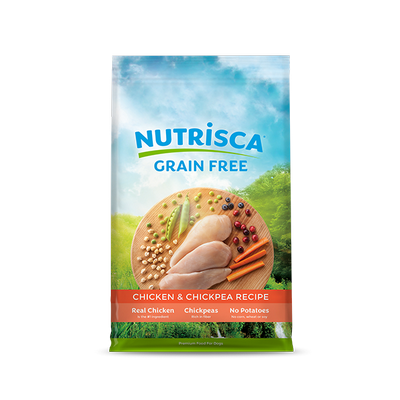
Nutrisca Dog Food Recall | November 2018

November 3, 2018 — Nutrisca, of Saint Louis, MO, is voluntarily recalling one formula of Nutrisca dry dog food because it contains elevated levels of vitamin D.

Nutrisca did not include an image with its FDA news release. So, the following image has been copied from the company’s website and provided in good faith by The Dog Food Advisor.

What’s Recalled?

  • Nutrisca Chicken and Chickpea Dry Dog Food
    Package Size: 4 pounds
    Bag UPC: 8-84244-12495-7
    Best By Dates: February 25, 2020 thru September 13, 2020
  • Nutrisca Chicken and Chickpea Dry Dog Food
    Package Size: 15 pounds
    Bag UPC: 8-84244-12795-8
    Best By Dates: February 25, 2020 thru September 13, 2020
  • Nutrisca Chicken and Chickpea Dry Dog Food
    Package Size: 28 pounds
    Bag UPC: 8-84244-12895-5
    Best By Dates: February 25, 2020 thru September 13, 2020

Bags affected have a Best By Date code of February 25, 2020 through September 13, 2020. The Best By Date code can be found on the back or bottom of each bag.

The products were distributed to retail stores nationwide.

What Caused the Recall?

Nutrisca became aware of the elevated levels of vitamin D after receiving complaints from three pet owners of vitamin D toxicity after consuming the product.

An investigation revealed a formulation error led to the elevated vitamin D in the product.

About Elevated Vitamin D

Dogs ingesting elevated levels of Vitamin D may exhibit symptoms such as vomiting, loss of appetite, increased thirst, increased urination, excessive drooling, and weight loss.

Vitamin D when consumed at very high levels can lead to serious health issues in dogs including renal dysfunction.

Consumers with dogs who have consumed any of the products listed above and are exhibiting these symptoms, should contact their veterinarian.

What to Do?

Consumers should stop feeding the products listed above.

Consumers who have purchased any of the products affected by this recall should dispose of it or return it to the place of purchase for a full refund.

Consumers with questions may contact Nutrisca at 888-279-9420 from 8 AM to 5 PM Central Standard time, Monday through Friday, or by email at consumerservices@nutrisca.com for more information.

No other Nutrisca products, including Nutrisca Chicken & Chickpea wet dog foods are impacted.

All other Nutrisca dog and cat food products are safe to feed to pets.

According to the company…

“This is a voluntary recall and is being conducted in cooperation with the U.S. Food and Drug Administration.

“We genuinely regret that this has occurred as we place the highest priority on the health of pets.”

U.S. citizens can report complaints about FDA-regulated pet food products by calling the consumer complaint coordinator in your area.

Or go to http://www.fda.gov/petfoodcomplaints.

Canadians can report any health or safety incidents related to the use of this product by filling out the Consumer Product Incident Report Form.

oooo

Natural Life Pet Products Dog Food Recall

November 3, 2018 — Natural Life Pet Products of Saint Louis, MO, is voluntarily recalling its Chicken and Potato dry dog food due to it containing elevated levels of Vitamin D.

What’s Recalled?

No product image was included with the official news release.

  • Natural Life Chicken and Potato Dry Dog Food
    Package Size: 17.5 pounds
    Bag UPC: 0-12344-08175-1

Bags affected have a Best By Date code of May 29, 2020 through August 10, 2020. The Best By Date code can be found on the back or bottom of each bag.

The products were distributed to retail stores in:

  • Alabama
  • California
  • Florida
  • Georgia
  • North Carolina
  • South Carolina
  • Tennessee
  • Virginia

What Caused the Recall?

Natural Life Pet Products became aware of the elevated levels of vitamin D after receiving complaints from three pet owners of vitamin D toxicity after consuming the product.

An investigation revealed a formulation error led to the elevated vitamin D in the product.

About Elevated Vitamin D Levels

Consumers should stop feeding the product listed above.

Dogs ingesting elevated levels of Vitamin D may exhibit symptoms such as vomiting, loss of appetite, increased thirst, increased urination, excessive drooling, and weight loss.

Vitamin D when consumed at very high levels can lead to serious health issues in dogs including renal dysfunction.

Consumers with dogs who have consumed the product listed above and are exhibiting these symptoms, should contact their veterinarian.

What to Do?

Consumers who have purchased the product affected by this recall should dispose of it or return it to the place of purchase for a full refund.

Consumers with questions may contact Natural Life Pet Products at 888-279-9420 from 8 AM to 5 PM Central Standard time, Monday through Friday, or by email at consumerservices@nutrisca.com for more information.

This is a voluntary recall and is being conducted in cooperation with the U.S. Food and Drug Administration.

U.S. citizens can report complaints about FDA-regulated pet food products by calling the consumer complaint coordinator in your area.

Or go to http://www.fda.gov/petfoodcomplaints.

oooo

Please, please good people, you take care of your dogs.

We live in the country!

Yesterday was all about a dead deer.

In fact it started on Thursday with a local owner not taking care of a couple of dogs. I’m not sure about whether or not the dogs are being cared for but there have been a number of cases suggesting that they were thin and also that they were running wild.

Then yesterday it took a turn for the worse shortly after 7am. I was on my way back to the house having fed the horses and then heard an animal calling out. I paused trying to identify this animal. It was located very close to our border on the Northern side.

Then the noise stopped and I thought nothing more of it. Later on I realised that it was animal in serious pain. Too late now to attempt to save it.

A little later I went across to the area where the calling had been coming from. There, just alongside our fence but on the other side of it, lay a young deer. It was dead but still warm.

Then about 10:30 yesterday when after I had called animal control I decided to revisit the location and take a couple of pictures.

oooo

It was tragic! The loss of a wild animal. In fairness, one that the dogs themselves are not responsible for. Dogs will be dogs.

Meantime, I pondered on what might have evolved differently had I intervened when I first heard the animal in pain.

It was not a good feeling.

What a way to spend a Sunday!

Poor little Sweeny!

Last Sunday, Sweeny not having eaten for 3 days, it was felt that we could not leave it any longer and decided to take Sweeny to Southern Oregon Veterinary Specialty Center.  They are an emergency 24-hour a day service.  It turned out to be a longer day that we had anticipated.

For we arrived at 9:15 am and didn’t leave until 5:15 pm.

Even then we were still left with some uncertainty.

For the long rigmarole of tests didn’t come to a firm conclusion.

A part of the SOVMC invoice.

Luckily we could leave taking dear Sweeny back with us but the results from the Fine needle aspirate won’t be through until Tuesday or Wednesday. (P.S. Just heard by phone that the results should be through in the next hour. Ergo: Monday evening.)

If it is Tuesday that will be better than Wednesday.

For on Wednesday we leave for a short holiday in Mexico.

In fairness, the house is being looked after by Jana Stewart but it will still be better to know before we leave.

That leads me to say that for the next ten days the regularity of blogging is going to be variable; to say the least.

Returning to Sabrina.

These next couple of weeks are going to be challenging!

So ….. I am returning to a post I published a year ago.

Sabrina’s Loyalty

Lisa Mae DeMasi offers you all a beautiful guest post.

ooOOoo

How this Handler and Service Dog Nurture One Another

by Lisa Mae DeMasi

At two years old, Lady’s ribs protruded from her coat and her belly was swollen with milk.

Like the thirteen other Labs that had arrived at a rest stop in Union, CT on the straight 12½-hour drive from Muncie, IN, she was presented to us on a crisp autumn day amid the chaos of respective adopters.

My husband Dennis had never experienced the warmth and companionship of having a dog and well, I surprised him with Lady, who we quickly renamed to Sabrina. The very afternoon we picked her up, we raced to the park, wanting her to feel the joy of freedom and play. My husband’s face lit up and while I was thrilled at the opportunity to befriend and care for Sabrina; it meant closing the 20-year gap since our beloved German Shepard from my childhood passed away.

Until laying my eyes on Sabrina’s profile, my heart couldn’t entertain loving another dog.

And what canine isn’t after the same love?

 In Sabrina’s case, she couldn’t know of the family members that awaited to embrace her presence. Within days of the initial hair-raising excitement, the cat sought out occasions to groom her ears. Our pet rat was free to waddle the kitchen floor un-bothered, and the pair of bonded bunnies in want of company stretched out beside her on the living room floor.

Dog, cat, rat, rabbit?
You bet.
And Dennis and me?
Like kids again.
Sabrina settled into the folds of our lives, well-nourished and exercised in Boston’s epic snowfall in the winter of 2009-2010, taking careful watch over all of us. The fear expressed in her eyes pre-adoption disappeared.

Eight years later, she watches over me in particular. Thirty years ago, I was struck and thrown from the passenger side of a car until my abdomen collided with the steering wheel—blunt force that called for iterative repair to my digestive system  and caused permanent damage to the nerves that signal my bladder is full.
Today when I’m busy working away, Sabrina will alert me to get up every couple of hours to make a trip to the restroom by gently placing her head in my lap.

When I suffer acute intestinal cramping, Crohns-like symptoms, she’ll sit at my side and lean her body against mine. Her calm and steady source of nurturing, helps me to relax and mitigates the cramps.

In 2008, the Department of Justice amended the Americans with Disabilities Act (ADA). This was amended to include digestive, bowel and bladder impairments that limit major life activities as the disabled, calling for employers to make reasonable accommodations and if the individual elects, to allow task-oriented service animals [dog or miniature horse] to accompany them on the job.

Sabrina, serving in the capacity of a sensory/medical assist – alerting me to get up and take care of myself –  qualifies.

The HR Director, Debra Susler of Reputation Institute in Cambridge, MA this past April would not allow Sabrina to accompany me on-the-job. I sent her an elaborate email explaining my condition and Sabrina’s certification. She did not reply to me but to my supervisor.

She said “no”.

My response?

I walked out of the place

Sabrina: rescue dog to devoted helper dog.

Respectively, Sabrina’s competencies and understanding of language cease to astound us and her behavior on-the-job at Dell EMC is so well-mannered, coworkers never run out of compliments.

And bystanders in public? The grocery store, pharmacy, gym, dentist, doctor?

Gazes from cell phones are broken, conversations fall short.

Then, come the smiles. A question. Praises. The feel-good moment.

Sabrina brings people together.

I recently read a distressing post from a woman who said every time she looks into a service dog’s eyes, she sees sadness. Even Ingrid Newkirk, CEO and Co-Founder of PETA, has told me, “the life of a typical service dog is a terrible one.”

It’s true. Any canine enslaved to servitude is doomed a dog’s life unlived.

Service animals are working animals, not pets.

The ADA confirms it.

But that’s not the relationship Sabrina and I share [and I understand it can’t be the same with other handlers and service dogs]. In addition to being my devoted helper, Sabrina teaches me to exist in the moment — just like she does. To enjoy the sight of the sun shimmering through the trees, the call of the birds, the fragrance of wildflowers, the feel of the soft soil I tread a few yards behind her when we’re on our hikes.

What more could a dog do for a girl?

ooOOoo

There is something rather special about Lisa’s guest post; special in an introspective way!

That will be better appreciated if you go across to Lisa’s blog site at Nurture Is My Nature.
In particular when you read, via her ‘About’ link, what Lisa offers about herself. Republished here in full.

ooOOoo

As time goes by and you’re getting older and stuff like that—getting older sucks. You know, I hear all this crap about, ‘Oh, you can age with dignity.’ Really? —Mickey Rourke

Lisa’s creative work has recently placed second in Fiftiness’s 2017 Writing Contest (Why I Love Bike Commuting in Boston) and been featured in the anthologies, Unmasked, Women Write About Sex & Intimacy After Fifty (9/17, print) and The Best of Vine Leaves Literary Journal (11/17, print). Her essays have been published in the lit journals and several other media outlets. She considers Massachusetts her home, but has lived in Connecticut, Vermont, New York State and two other planets called Wyoming and Arizona. She earned a B.A. from Regis College and an MBA from Babson College, and holds a Master certificate in Reiki.

Lisa is seeking a development editor [that gets her] to work on her collection of essays and her memoir.

Published work:

Contests:

Why I Love Bike Commuting in Boston, Fiftiness, Second Place Winner, 5/23/17

Anthologies:

  1. The Kickass Formula that Restored My Libido, Unmasked, Women Write About Sex & Intimacy After Fifty, print, 9/17
  2. Grievances, Vine Leaves Vignette Collection (coffee table book), 11/1/17

Literary journals:

  1. This Writer’s Secret (Fiction Southeast, 11/1/170
  2. Snowflake (Crux Magazine, 9/17) [FINALLY got picked up!]
  3. Ain’t Misbehavin’ (Gravel, 12/4/16)
  4. T-boned (Gravel, 12/4/16)
  5. Forgive Me (Slippery Elm, 12/16)
  6. What More Is There to Ask? (Foliate Oak, 9/1/16)
  7. Becoming Our Fathers (East Bay Review, 2/23/16)
  8. The Subversive Writer (Shark Reef, 7/9/14)

Media Outlets:

  1. Not Having Children Was My Perfect Path (Fiftiness, 12/16)
  2. What More Is There to Ask? (Huffpost, 9/16)
  3. The Secret to Doing What You Love (The Artist Unleashed 9/16; HuffPost 3/15)
  4. The Kickass Formula That Restored My Libido (HuffPost 2/16; Rebelle Society 4/15)
  5. My Dear Friend, the Dirty (HuffPost 1/16; Elephant Journal, 12/14)
  6. She, Mother. Me, Daughter. (Huffpost 2/16; Elephant Journal, 1/15)
  7. What the Wrong Job Can Teach You (HuffPost 1/16)
  8. What Happened When I Performed Reiki on My Conservative Mother (Elephant Journal, 1/15)
  9. Why Regret Is So Deliciously Fun (HuffPost 1/16; Midlife Boulevard 8/15)

 Write to me at lisa dot demasi at gmail

ooOOoo

Now please watch “Just Like Heaven,” the video Lisa filmed of Sabrina, post-adoption in 2009.

Not only beautiful …….

……. but also intelligent.

There is something about a Huskie that takes one’s breath away. Not only because of the grace and wit with which they conduct their lives but also because the majority of them are working dogs.

So it was with interest that I read recently about the Huskies and wanted to share it with you all.

Here it is.

ooOOoo

Why do huskies have blue eyes?

New genetic study finally solves the mystery.

BRYAN NELSON,   October 4, 2018.

A happy husky with its characteristic blue eyes. (Photo: Nancy Wong/Wiki Commons)

A dog DNA startup company called Embark, based out of Boston, Massachusetts, and Ithaca, New York, appears to have finally solved the mystery as to why huskies sport their beautiful blue eyes. The study is the first consumer genomics study ever conducted in a non-human model, as well as the largest canine genome-wide association study to date, reports Phys.org.

The key, it turns out, lies in the dogs’ 18th chromosome. A duplication on chromosome 18, near the ALX4 gene, was found to be strongly associated with blue eye color. The ALX4 gene plays an important role in mammalian eye development, so this association is not entirely out of left field. And interestingly, the study also found this same genetic quirk in non-merle Australian shepherds, which also tend to have blue eyes.

This flies in the face of how eye color is usually thought to be determined in dogs. For instance, two genetic variants are known to underlie blue eye color in many dogs, but scientists have long known that these variants do not explain the blue eyes of huskies, thus the mystery.

In fact, even though we’re seemingly in a genomic scientific age, the genetic underpinnings of many traits in non-human animals are still largely unknown, even for humans’ best friends. Embark aims to change that.

For the study, which was performed in partnership with Cornell University College of Veterinary Medicine, researchers used a diverse panel of 6,070 genetically tested dogs, with owners who contributed phenotype data — physical traits of the dogs — via web-based surveys and photo uploads. A comprehensive, consumer-driven survey of this size is largely unprecedented.

“Using genetic data from the pets of our customers, combined with eye colors reported by customers for those same animals, we have discovered a genetic duplication that is strongly associated with blue eye color. This study demonstrates the power of the approach that Embark is taking towards improving canine health,” explained Aaron J. Sams of Embark. “In a single year, we collected enough data to conduct the largest canine study of its kind. Embark is currently pursuing similar research projects in a range of morphological and health-related traits and we hope to continue to use our platform to move canine genetics and health forward in a very real way.”

It’s all in the name of improved health care options for our canine companions, as well as helping curious human owners better understand the origins of their pets. Answering why huskies have blue eyes is just the first such mystery they hope to solve.

ooOOoo

What can one say! They are such beautiful dogs!

Picture Parade Two Hundred and Fifty-Nine

Taken from the world’s most smartest dogs.

From this site,

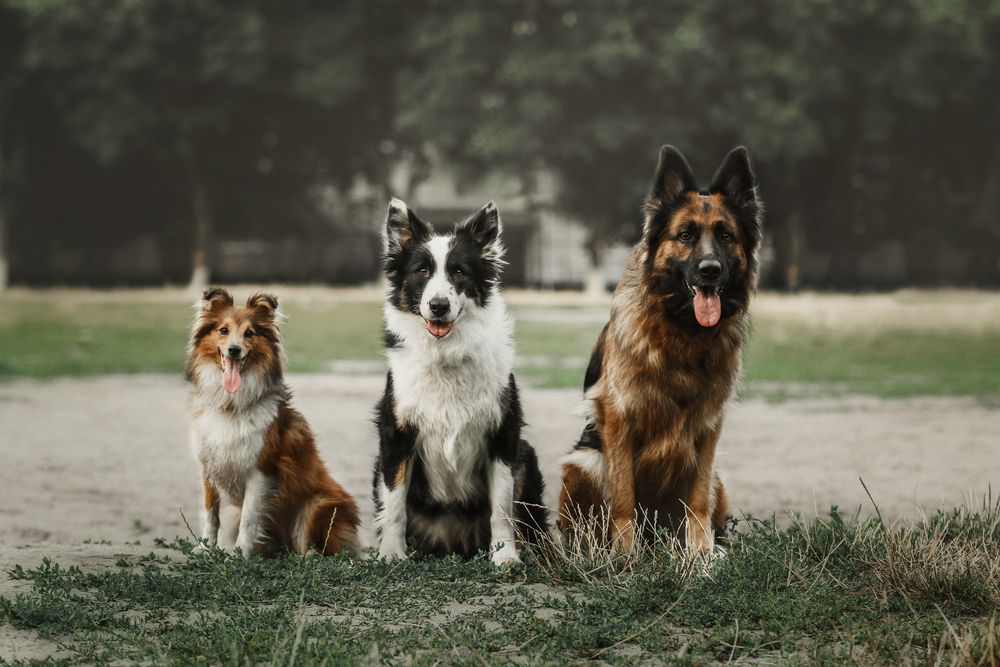
Herding dogs are often considered some of the smartest breeds.

oooo

The Border Collie

oooo

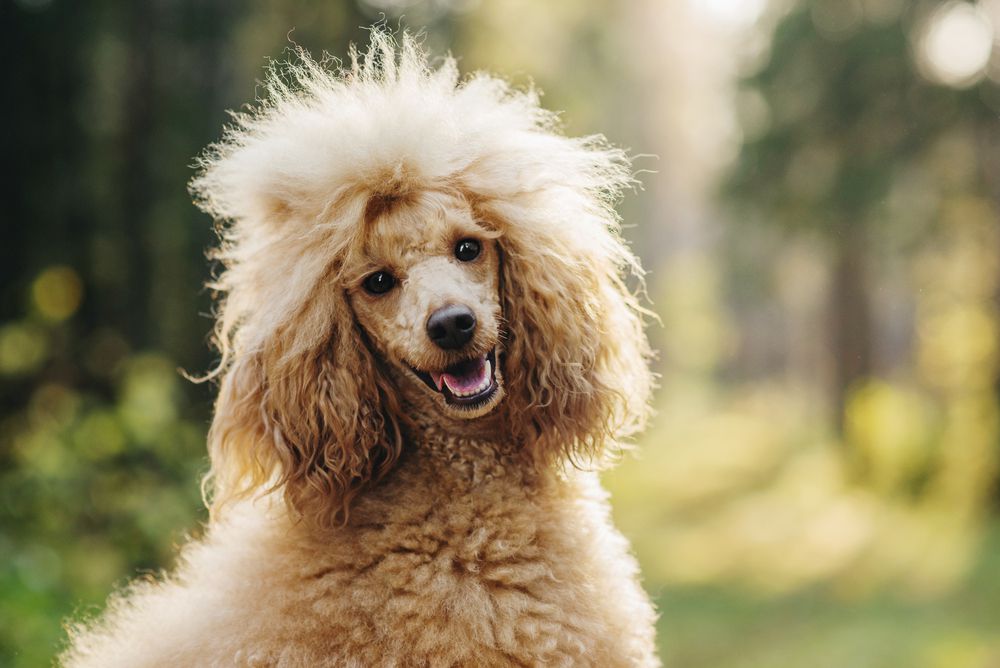
The Poodle combines brain and brawn.

oooo

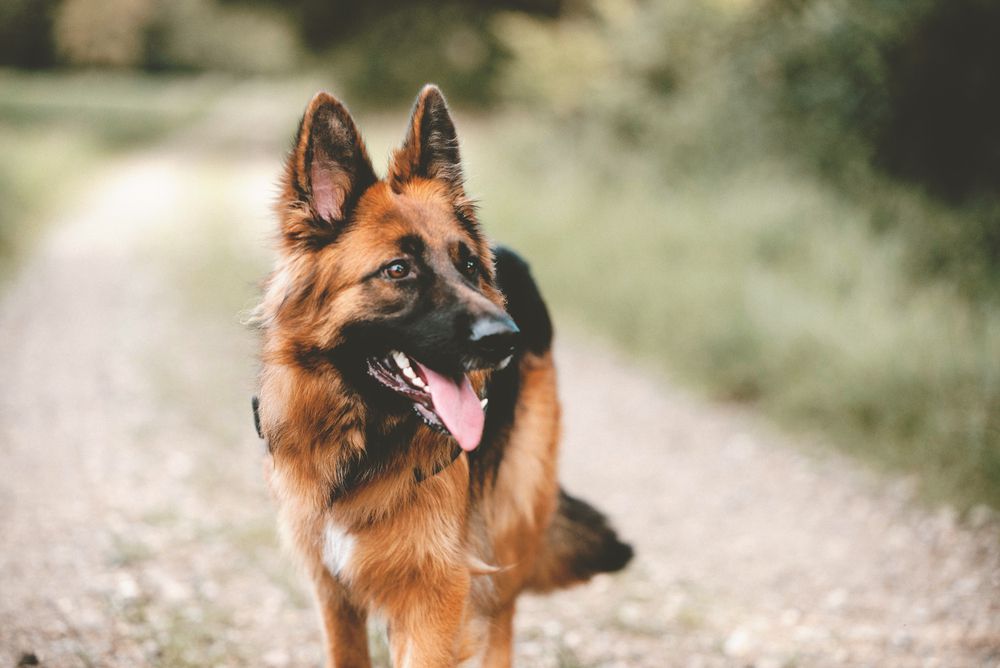
The gorgeous German Shepherd Dog

oooo

My heart goes out to a Golden Retriever

oooo

The keenest eyes in this Doberman Pinscher.

oooo

Have you seen such a face in this Shetland Sheepdog Sheltie.

oooo

Three Labrador Retrievers

oooo

The enchanting face of the Papillion.

Onward and upwards to another set.

Picture Parade Two Hundred and Fifty-Eight

The last of dear Su’s photos.

oooo

oooo

oooo

oooo

oooo

oooo

oooo

So, so beautiful! Especially loved the photo of the chimp bottle feeding the tiger.

How about your favourite?

P.S. Later on yesterday, at 13 minutes past 4pm to be precise, we had rain. Thus ended 111 days without rain.

Then shortly after we had eaten supper and I was washing the dishes, I looked up to see the most beautiful rainbow over the hills to the East of us.

This photo doesn’t do it justice!

Picture Parade Two Hundred and Fifty-Seven

Yet more of those wonderful photographs sent to me by Su.

oooo

oooo

oooo

oooo

oooo

oooo

oooo

Next Sunday will see the final set of these great pictures!