One of the blog sites that I subscribe to is Exposing the Big Game. The blog does a fabulous job in exposing the terrible ‘game’ of people hunting animals for sport! Many of the topics that author Jim Robertson exposes are incredibly painful to read but, please, do drop across there and support his efforts.
All of which is a preamble to a short item that was posted last Sunday and is republished here today.
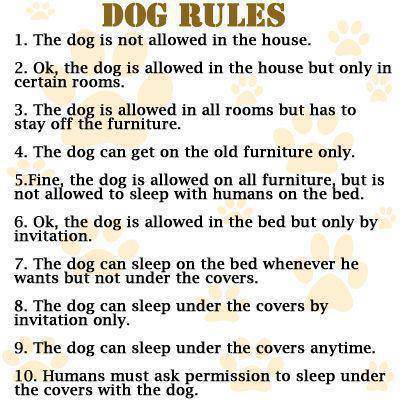
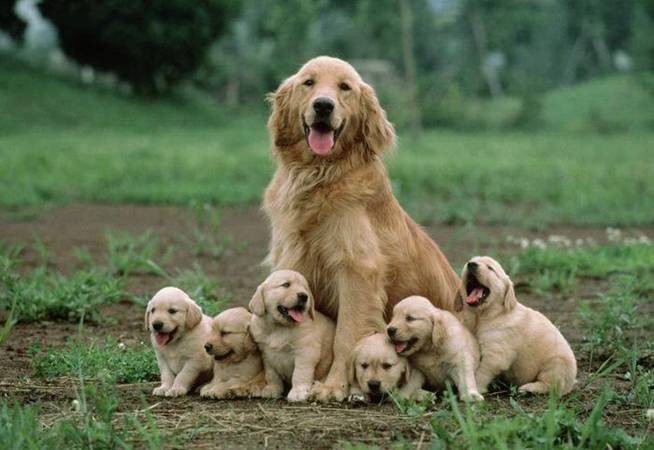
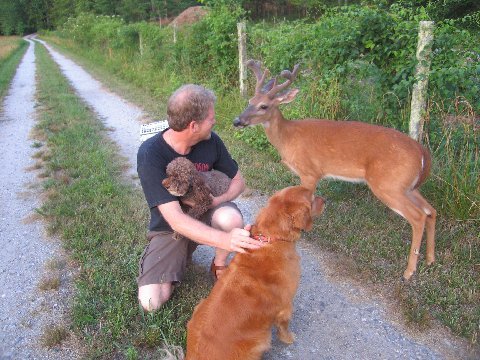
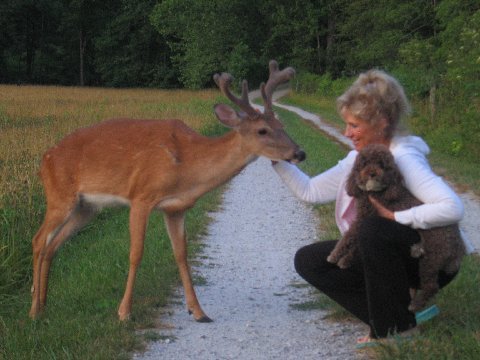
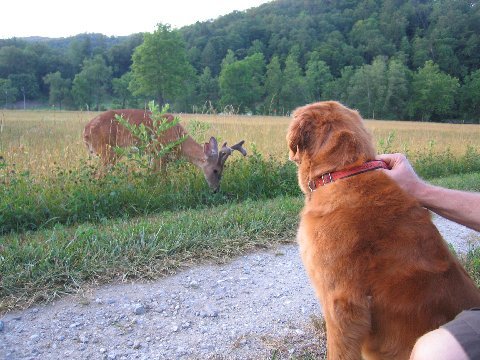
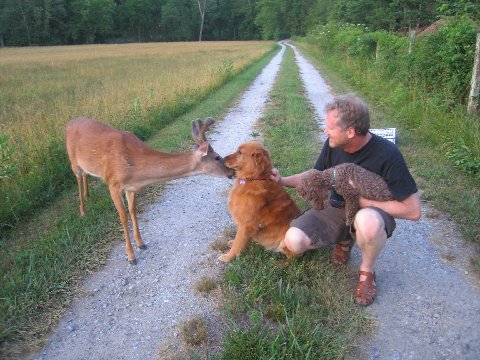
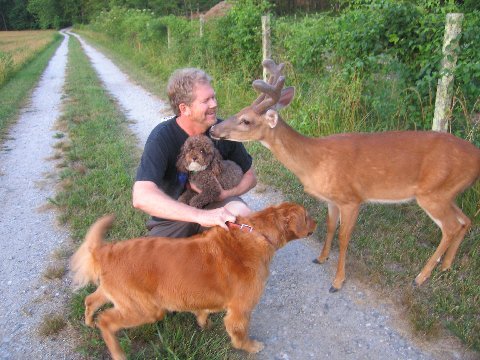
Nothing more to add to those rules than offer this photograph taken at home early one day last December, 2013.
Dearest Suzann, who invited me out to San Carlos, Mexico, for the Christmas of 2007, leading to Jean and me meeting, is heavily involved in rescuing the many feral dogs found in that part of the world.
She recently sent me the following:
Shepherd Boy will be euthanized in a few days at the CA state kennel he is at and Jeannie Wade is trying to help save his life….do you guys know of anyone? Let me know asap.
He is located in the Central Coast area of California and goes by the name ‘Shepherd Boy’ and is one year old.
He is in a high kill shelter and has days to live.
Shepherd Boy is shy and sweet tempered and the volunteers at the shelter feel he will make a very good companion/pet for a nice family or couple.
Paul, If I were up there, I would take him in a heartbeat!
Suzann
Please, please share this as far and wide as possible – urgently.
Shepherd Boy may be found at the Central Coast SPCA, Orcutt, California 93457
Suzann has given me the name of Jeannine Wade and she may be emailed at: centralcoastspca@yahoo.com
A reposting of a blog from Dog Leader Mysteries about a dog food recall.
Quickly stepping over the observation that today’s post is about as far removed, topic wise, from yesterday’s post as one could possibly imagine, nonetheless this is important and needs to be widely shared.
ooOOoo
Raw food recall: J J Fuds Frozen Pet Food
J. J. Fuds Raw dog food recall expands
Dear Fellow Dog Lover,
Because you signed up on my website and asked to be notified, I’m sending you this special recall alert.
On January 27, 2015, J. J. Fuds of Valparaiso, Indiana, announced it is expanding its recall of select lots of J. J. Fuds Raw Frozen Pet Food to include 2 other products due to unspecified contamination.
I copied this email notice from The Dog Food Advisor. I highly recommend you sign up for this list.
Please share to save dogs’ lives
We don’t feed Sydney raw meat. We do feed organic raw vegetables in limited quantities. We care about pets and want our readers to share this important news. Also we want you to know that we receive the Dog Food Advisor’s updates. Mike Sagman never stuffs our email box, but sends out notices as fast as he receives them. We asked our local pet stores if they receive notices before opening each day. You can do that. Ask when and how pet foods get pulled from their shelves, your pet’s life depends on this.
As I have mentioned in the past and undoubtedly will do so again in the future, one of the most wonderful aspects of this world of blogging is the way that connections are made. Just a few weeks ago, a connection was made between Learning from Dogs and Dog Leader Mysteries. DLM’s byline is: Saving dogs’ lives and dog lovers’ sanity. Dog Leader Mysteries is written by author Deborah Taylor-French.
Anyway, out of the exchanges that have taken place between Deborah and myself, came a reference to a post about animal happiness that was published on Deborah’s blog in October, 2013. It is very interesting and I am delighted to be given permission to share it with you.
ooOOoo
Neuroscience key to animal happiness
“…research in neuroscience has been showing that emotions drive behavior, and my thirty-five years of experience working with animals have shown me that this is true. Emotions come first. You have to go back to the brain to understand animal welfare.”
Animals Make Us Human : Creating the best life for Animals
by Temple Grandin & Catherine Johnson
Water dogs having a blast in Spring Lake Park.
By Deborah Taylor-French
Those of us who live and/or work with animals know…
animals have emotions.
Temple Grandin has made the understanding, care and handling of farm animals her life’s work. I refer to her book Animals Make Us Human because not only has she studied farm animals, but she also loves and lives with pets. In her books, especial this one, she insists that we must understand how animals brains work, how they see, hear and smell every sensory detail in their surroundings.
Animals emotions drive their behavior.
To make a better life for our pets, for domestic and wild animals we must understand the main emotions that drive behavior. This will help us to turn on their positive emotions and avoid turning on FEAR, RAGE and GRIEF.
Example: Rabbits and horses are prey animals.
Never chase either rabbits or horses.
Teach your pet rabbit or horse to come to you.
Always reward them for recognizing their name and coming when called.
When you chase a prey animal, you make him or her fearful of you!
Emotions are the gifts of our ancestors. We have them and so do other animals. We must never forget this. When it comes to animal welfare we can always do better. Most of the time “good welfare” is not “good enough.”
The Emotional Lives of Animals by Marc Bekoff.
Dogs Depend on us for freedom from fear and safety
Never tie up your dog unless it is in your company in a human training session.
A dog needs to feel he can flee to safety.
Be sensitive to your dog’s fear signals and show him you will protect and calm him.
Increase your dogs positive emotions by interesting, but not overstimulating activities.
Always stop training before your dog gets tired.
Dogs are the only animals that live with us inside of their flight zone.
Dogs depend on us for positive and playful lives
When you help increase an animal’s curiosity, you turn on his or her positive emotions of SEEKING and PLAY.
Example: Dogs love to play.
Find a time and place when both you and your dog seem relaxed.
Invite your dog to play by doing a play bow or picking up his favorite toy.
Use an excited and happy tone of voice to call your dog.
Run away.
When your dog chases you, stop.
Wait for your dog to run then chase.
Always stop before your dog seems fearful or overexcited.
Dogs love this game, which dog lovers know dogs play every chance they get.
A few days ago, we had a visit from the Wilderness Campaign Coordinator from Oregon Wild. Bridget, that being her name, took the opportunity of saying ‘hi’ as a consequence of her coming down from Northern Oregon to Ashland. Bridget was giving a presentation in Ashland regarding securing more wilderness areas in Oregon; a very worthy ambition. Jean and I have supported the organisation since we moved up to Oregon.
Anyway, I offered to use Learning from Dogs to support and promote any campaigns from OW that would be of interest to LfD readers. I sorted out some recent posts that would give Bridget and her colleagues an idea of what was published in this place and sent her the links.
One of the links that I forwarded was this post from last October. I just wanted to share it with you all again.
oooo
Embracing the poetry of nature.
The beauty of poetry.
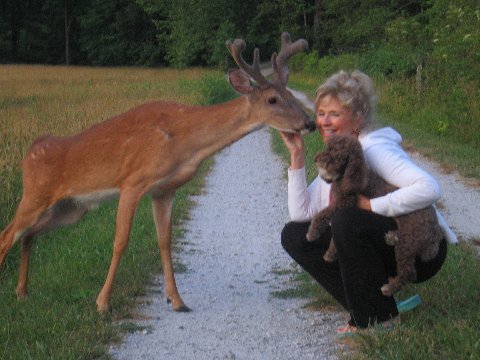
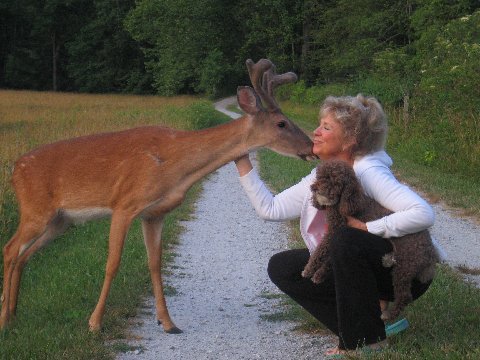
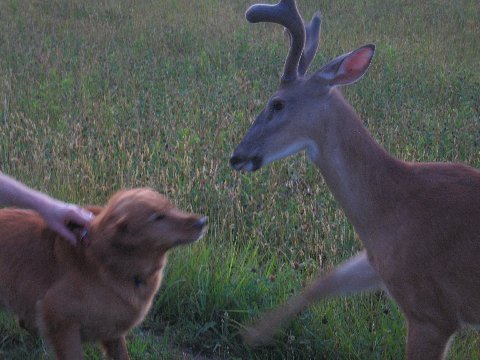
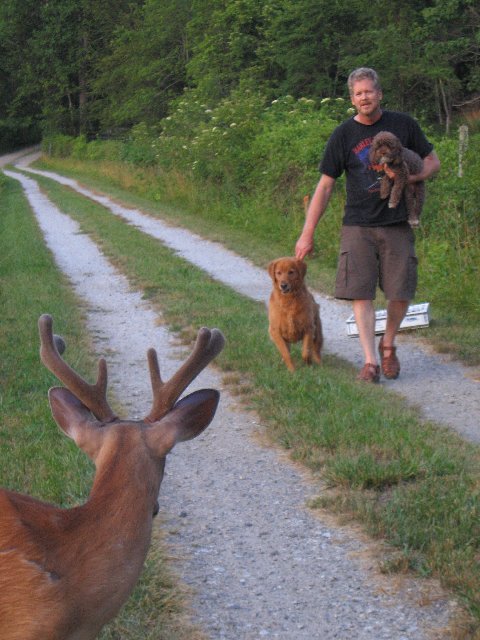
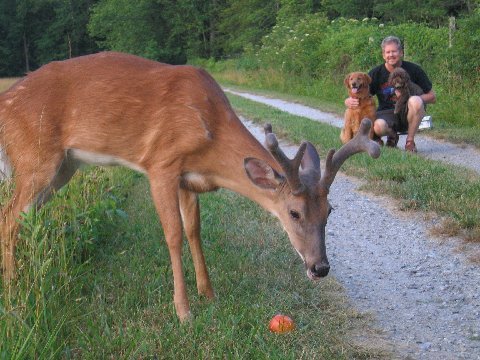
In yesterday’s post, where I wrote about how Jean and I had the wonderful privilege of feeding a wild deer from our hands, I closed it with a p.s. This is what I wrote: “P.S.It is at times like this that we need poetry. So how about it: Sue?Kim? How would you describe in poetry what Jean and I experienced?“
Well, Sue, of Sue Dreamwalker, replied with a link to a poem of hers that she published back in 2012. I will say no more than republish, with permission, Sue’s beautiful words and close with one of the photographs from yesterday.
The republication of a wonderful post about a dog that rides a bus!
I’m in the middle of reading Jean Donaldson’s book The Culture Clash. Here’s a summary of what the book is about from the Dogwise website.
Summary: The book that has shaped modern thinking about canine behavior and the relationship between dogs and humans has been revised. Dogs are not humans. Dogs are clever and complex creatures that humans need to take the time to understand in order to live together successfully. You must read this book… because your dog sure can’t!
Here’s an extract from page 13 of the first chapter: Getting the dog’s perspective.
We crave anecdotes about genius dogs and these abound. Everyone knows a story that illustrates how smart dogs are. But a fundamental question has never been answered by proponents of reasoning in dogs: if dogs are capable of these feats of brain power at all, why are they not performing them all the time? Why never in controlled conditions? What is the most upsetting about these claims is the lack of rigour in evaluating them.
You get the picture of where Jean Donaldson is coming from! (And I’m still only just into the book myself.)
Have you read about this dog? A friend shared a news clipping on this dog’s unusual behavior in Seattle, Washington. Eclipse, as an independent city dog, seems to know to walk only on the sidewalk, get on the bus, take a seat and look out the window, all without assistance from his person. Eclipse even knows, which bus stop to get off at for the dog park. “Bus riders report she hops onto seats next to strangers, and watches out the window for her stop. Says commuter Tiona Rainwater, “All the bus drivers know her … she makes everybody happy.”
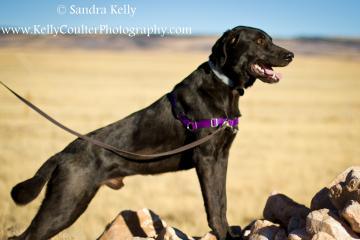
A Metro Transit spokesman said the agency loves that a dog appreciates public transit. The City of Seattle representative suggested that it would be safer for Eclipse to wear a leash and be with her human when she rides the bus, but with a dog this smart, is it a problem? I don’t know the answer. Black lab rides bus alone to dog park USA Today Network Associated Press 1:01 p.m. EST January 14, 2015.
What do you think, can dogs take the bus without their human families?
No dogs off leash.
We know that big dogs differ in temperament and dog to dog communication from little lap dogs. But what makes a dog mature and experienced enough to take on full independence in the confusion and untranslated rules of human life? Yes, free-roaming dogs ride trains in organized and peaceful groups in Russia. Yes, often those who live with dogs, like we do, find they understand far more of our human lives than we think possible. After watching dozens of dogs off leash on city streets of Baja California Sur, Mexico. No dog seemed homeless and all but one stayed on the sidewalk.
Do dogs ever become 100% street-smart?
Street smarts or leash required?
What do dogs know? What do dogs remember? We know dogs learn. We know some dogs show exceptional learning abilities, much greater than other dogs. Somewhere I read that the average dog has the intelligence of a human toddler. Now, none of us would let a toddler walk city streets, get on and off a bus alone. But what of special cases? History shows exceptions to rules and to the “average.” Clearly, Eclipse breaks the rule, the average and reshapes our expectations of what dogs can and should be able to do.
“The greatness of a nation can be judged by the way its animals are treated.” Mahatma Gandhi
Have you read Merle’s Door: Lessons from a Freethinking Dog by Ted Kerasote? Of book talks, life and books by Kerasote can be found on his Website his 2014 Pukka’s Promise: The Quest for Longer-Lived Dogs, in paperback, looks to be interesting to those of us who want our dogs to live the longest, healthiest lives possible. Find more about this top creative nonfiction author on his Website Kerasote.com.
True dog story (tearjerker ahead)
A Marin County ethical keeshond breeder shared this true story of their longtime and favorite dog. For years and years, the behavior of their family dog and top champion male looked totally stable. His nature showed pure calm and obedience. They all got into a pattern of allowing this canine patriarch time to lay on the front lawn in their neighborhood circle street. He always remained serene, watching, never chasing, barking or moving.
On afternoon as the kinglike keeshond patriarch lay on his grassy lawn – the unthinkable happened – he ran in front of car. Now fortunately, this big keeshond did not die. But he suffered, ever after with epileptic fits. Makes me wonder if we fool ourselves in imagining that dogs can navigate city streets safely.
Please share, comment and sign up for my blog updates. Thanks, Deborah Taylor-French
ooOOoo
So leave it up to you to assess the brain power of dogs, especially that bus-riding black Labrador dog. To help you make your mind up, take a look at the video.
Published on Jan 14, 2015
Seattle’s public transit system has had a ruff go of things lately, and that has riders smiling.
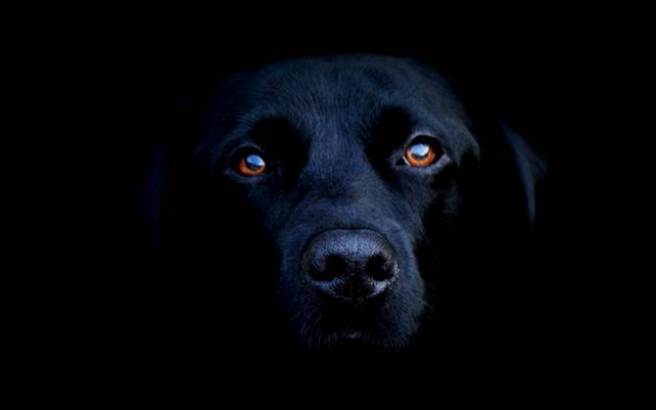
You see, of the 120 million riders who used the system last year, one of them is actually a dog. Seattle’s KOMO-TV reports the 2-year-old black Labrador mix, named Eclipse, has become a regular fixture on the city’s D-Line after she figured out how to ride the bus alone to the dog park.
“All the bus drivers know her. She sits here just like a person does,” fellow rider Tiona Rainwater told KOMO. “She makes everybody happy. How could you not love this thing?”
The dog’s owner, Jeff Young, lives next to the stop. He said Eclipse sometimes hops on board without him if he’s not yet finished smoking his cigarette when the bus arrives. The pup has become a regular on the route, riding three or four stops before exiting at her destination of choice. “I catch up with her at the dog park,” Young explained.
Miles Montgomery, a Seattle radio host and D-Line commuter, was taken by surprise when Eclipse hopped into the seat next to him on a ride last Friday, looked out the window, then got off at her stop. Montgomery snapped a bemused selfie with the commuting canine, adding the caption, “Bus is full this morning:”
A Metro Transit spokesperson told the AP they’re happy a dog can appreciate public transit, though Eclipse should really be on a leash. King County says dogs are allowed to ride buses at the discretion of the driver, provided the animal isn’t a hazard and doesn’t create a disturbance.
Seattle isn’t alone in having a streetwise dog. Stray dogs in Moscow, Russia, have learned to commute in and out of the city from the suburbs by riding the subway, even watching out for other dogs to make sure they exit at the correct stop.
Get along, little doggies.
oooo
Golly, I have just seen how long I have spent getting this post written. Poor old Shelby must be wondering if I really did want to play with him; should have made my next move simply ages ago!
Perhaps the fundamental reason why I am so hooked on this world of blogging is because there are always wonderful surprises. What do I mean by this?
Yesterday’s post, Sometimes the world seems very strange was a rather bleak affair. I had been affected by, and reported, a couple of items read elsewhere that seemed to me, in a rather dark and miserable way, to highlight what is wrong with our so-called modern society. Perhaps, no more clearly expressed than in my reply to a comment left by Sue Dreamwalker.
Here is what Sue said, and how I replied.
I agree with what Alex has to say… The super rich live in a totally different reality… Have no clues on the real structure of how their wealth is being created often on the backs of the poor. Who are squeezed ever tighter at every conceivable way of extracting more in the form of taxes, both on incomes and on everything else..
Change will come but what frightens you Paul is that when it does come it will come swiftly.. We have seen the social unrest in other nations… What is happening in many countries is the injustices and discriminations which are getting ordinary peoples backs up..
Yes Paul sometimes the world is very Strange.. and also Very Stupid!..
Thank you and wishing you and Jean a lovely week
Sue
oooo
Sue, a wonderful reply from you. Thank you. What I find so strange is this. That here I am, turned 70-years-old, having enjoyed a fabulously interesting life, full of variety and opportunities. That, to some small degree, I believe I have a better, albeit still partial, sense of how we humans tick than, say, 20 years ago. How our lives fundamentally revolve around our relationships, with the most important one being our relationship with ourself and, flowing from that, some understanding of who we are!
Yet, (and you knew there was a ‘yet’ coming, didn’t you!) beyond the very small world of loved ones, family and close friends (and I count blogging friends in that last category) the world around me becomes more strange, more remote, more alien almost on a week-by-week basis.
I was born in the middle of London six months to the day of the end of the Second World War in Europe. Those first six months would have been unrecognisable to the later world I grew up in, and got to know. My fear is that I will spend the last six months of my life in a world that is similarly unrecognisable from the world I thought I knew.
Thank my lucky stars for a wonderful, loving woman in my life and for so many fabulous doggie friends.
Sue, apologies, I went on a tad – nay, a tad and a half!
Fondest love to you and your Hubby.
Paul
I think that makes it pretty clear what my mood was like yesterday morning.
Jean and I were out from 9am until 12:30 pm and it was coming up to 3pm when I sat down in front of my PC. Frankly, I didn’t have a clue as to what to write and still felt pretty miserable about the ‘strange world’.
However, one of the first things that I saw in my ‘in-box’ was the weekly email from the Rev. Terry Hershey. Here is how his email opened up:
Live deeply and deliberately
January 12, 2015
“The purpose of life is to live it, to taste experience to the utmost, to reach out eagerly and without fear for newer and richer experience.” Eleanor Roosevelt
“To be fully alive, fully human, and completely awake is to be continually thrown out of the nest. To live fully is to be always in no-man’s-land, to experience each moment as completely new and fresh. To live is to be willing to die over and over again.” Pema Chodron
“On his right hand Billy tattooed the word love,
and on his left hand was the word fear,
And in which hand he held his fate was never clear.” Bruce Springsteen: “Cautious Man“
“To live is to be willing to die over and over again.” Wow! Did that ‘speak’ to me or what!
Then the very next item in my ‘in-box’ was a note that “Deaf Duke is now following Learning from Dogs“. I try and make it across to every new follower of this blog and thank them for their support. Seems the least I should do.
So it was with ‘Deaf Duke’. But I have to quietly admit that before clicking on the link I found myself wondering just what Deaf Duke was.
Then I went across to their place and was uplifted; hugely so! Because Deaf Duke is the name of a blog that … well in their words ….
About
Deaf Duke is an American Bulldog mix that my boyfriend (Tyler) and I got just after the Fourth of July this year. He was only 6.5 weeks old when we got him so he had some issues to begin with. When he was about 6 months old we decided to take him to a trainer, we thought he was a bad dog because he would never listen to us, we soon found out that he was becoming deaf. He wasn’t a bad dog he just couldn’t hear us. Our lives changed a lot from that moment on. Everyone says that training a deaf dog is no harder than training a dog that can hear, which is true on so many levels but they never talk about how difficult it can be for the owners who are primarily vocal beings. This blog is about the upbringing and stories about Duke and his life.
When we got Duke at 6.5 weeks old he was very under weight. Finding out that he was deaf could explain why he was. Deaf dogs generally don’t wake up for feedings because they cannot hear when the other puppies in the litter are eating. Duke is now a healthy and happy 7 month old boy learning just like his parents are to train him and us.
So thank you Terry, and thank you Duke and your Mum and Dad, for reminding me that life is utterly and whole-heartedly what we make of it!
A return to a theme previously presented in this place.
The primary motivation for today’s post was to continue the theme in my post last Wednesday: Canada – Ellesmere Island, that featured the most beautiful film from the BBC about the wolves on Ellesmere: Snow Wolf Family and Me.
Now it struck me that in writing a blog called Learning from Dogs there was a fair chance that the history of dogs had been featured before. I ran a quick search through previous posts using the search term ‘history of dogs’. There were a number of returns. Such as the republication of an article by Mark Derr: The Wolf Who Stayed last November. Then there was a post called Dogs and Wolves: Fascinating Research in February, 2014. Back in 2013, a post Dogs and Man: An eternity of a relationship.
Yet, all these and more didn’t quite offer what I am presenting today. (Well, that’s my story!)
First up was the chance finding of a blog called Bioventures. On the 11th September, 2013 there was a post published by D.K. Taylor under the title of: The Science of Dogs: Dogs Vs. Wolves. Here’s how it started:
While watching The Science of Dogs, one portion of the documentary that interested me was the comparison of domestic dogs verses wolves. I knew beforehand that dogs and wolves behaved differently, but it was not until now that I knew much about these differences. Wolves depend upon their pack only, while dogs have been taught to rely on humans to meet many of their needs. The difference must be extreme for it to have been so obvious in the demonstration with the meat and rope from the documentary! (For anyone in the class that watched the other documentary: A piece of meat was tied to a rope, and a wolf kept pulling at it and trying to solve the problem for itself while the dog almost immediately looked to the nearby human for help.)
A study by a team of American and Swedish researchers published on Jan. 23 in the Journal of Nature, shows that dogs have more genes involved in starch metabolism than wolves.
The finding suggests that this was a major factor in the evolution process of the wolf. No one knows exactly when or how our ancestors began to be so closely linked to dogs, but archaeological evidence indicates that it was thousands of years ago.
One theory suggests that modern behavior of the dogs came from the hunters that used wolves as guards or fellow hunters.
But another theory – that underpins the study – suggests that domestication began when the wolves began to approach the villages in search of food, stealing the remains left by people.
This practice became increasingly common and as a result, wolves began to live around humans. According to this second hypothesis, when we became sedentary and dependent on agriculture, waste dumps created around our settlements soon became the power source of many wolves, explains Erik Axelsson, of the University of Uppsala.
You will need to go here to read the full article, but I will offer this further piece:
Dr. Axelsson and colleagues examined the DNA of more than 50 modern breeds – from the Cocker Spaniel to the German Shepherd.
They then compared their genetic information with 12 wolves from around the world. They scanned DNA sequences of the two canids in areas with large differences. They assumed that these areas contained genes that could help explain the domestication of dogs. Axelsson’s team identified 36 regions, with more than one hundred genes.
The analysis detected the presence of two major functional categories – genes involved in brain development and starch metabolism.
The latter suggests that dogs have many more genes encoding enzymes needed to break down starch, a feature that could have been advantageous to the ancestors who rummaged among the wheat and corn of the farmers.
“The wolves also have these genes, but not used as efficiently as dogs,” said Dr. Axelsson.
“When we look at the wolf genome, we only see one copy of the gene [for the amylase enzyme] on each chromosome. When we look at the dog genome, we see a range from two to fifteen copies; and on average a dog carries seven copies more than the wolf.”
“That means the dog is a lot more efficient at making use of the nutrition in starch than the wolf.”
As for the genes related to brain development, these probably reflect some of the behavioral differences we now see in the two canids.
The dog is an animal that is much more docile, which is probably due to the past humans preferring to work with animals that were easier to tame.
“Previous experiments have indicated that when you select for a reduction in aggressiveness, you obviously get a tamer animal but you also get an animal that retains juvenile characteristics much longer during development, sometimes into adulthood,” said Dr. Axelsson.
This may help explain why it is said that dogs act like puppies throughout their lives.
The study of the origin of dogs is still, in many ways, a puzzle.
Fossil evidence suggests that some populations have been around for tens of thousands of years, long before the advent of agriculture. One reason why it is so difficult to determine the time of this change of behavior is that domestication may have occurred more than once.
Over on YouTube, there are many videos about the subject of ‘the science of dogs’, albeit many of them lengthy. But so what!
I have gone for a 2013 Documentary film that has found its way on to YouTube: Wolf and Human – The Creation of The Dog (Full Nature Documentary). It is 90-minutes long and, at the time of writing this post, Jean and I haven’t watched it. We will this evening. But it comes highly rated and I very much hope it is a good film. The title of the film is perfectly aligned with the theme of today’s post. (N.B. We had bandwidth issues last night and gave up the struggle after just eleven minutes. Despite the poor resolution of the video, it still looked like an interesting video to watch in full.)










 Learning from Dogs