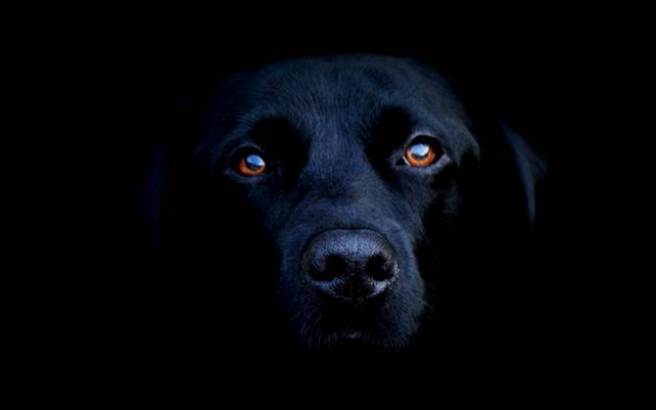
A lovely way to start a new week. Back on the 7th February, over on the blog Dog Leader Mysteries, Deborah published a post under the title of Returned to Owner: joyful dog + family. It is such a wonderful story that it is republished here, with Deborah’s kind permission.
ooOOoo
Returned to Owner: joyful dog + family
What a story plus a happy ending!
This true story comes from animal lover, dog rescuer and Redwood Writer, Brigid Wasson. I highly recommend you find and friend Brigid on Facebook and visit her Website. I posted Brigid Wasson’s bio sketch and links to her Facebook Pages at the bottom.
Brigid Wasson wrote on Facebook.
Tonight renewed my faith in the “RTO (Return To Owner) Program” that Sue Padgett and I started so long ago. Too little emphasis is placed on owner reclaims of “stray” pets in shelters, something I am working hard to change. A young couple was in a major car accident, leaving the woman disabled and in a wheelchair. Without transportation and unable to work, they fell on hard times after the accident. They had to move in with a relative who later kicked them out, and the person they trusted to care for their dog dropped him off at the County shelter. The dog wasn’t doing well at the shelter, so the director called and asked if I would take him to the humane society. We had no room, so he went to a foster home. A week later, the County shelter director called again and said the real owners had been identified. When they went to get their dog back from the person caring for him, they learned of the deception and felt devastated. Tonight, we delivered the dog to his owner in Ukiah. As soon as I turned into the parking lot of Safeway, he saw him and went crazy, whining and jumping at the window. I opened the door and he leaped into his arms, licking his face and howling “I love you.” The owner burst into tears and hugged him tight, thanking us many times. I had intended to get a photo for Facebook, but in the dark, in the rain, it was a private moment too sacred to capture. Even so, it will be in my mind forever, reaffirming why we do what we do.
I love my mom.
Return to Owner story replies on Facebook
Comments: I am so happy with this outcome and glad that you were able to play such a pivotal part in getting this dog reunited with his family! I have every confidence, that as time goes by, I will be reading more stories like this as more shelters get on board with aggressive RTO efforts! Good job, Brigid! So very touching. It’s not always easy to understand why other have to drop their beloved animals at a shelter. At the time we were so quick to condemn. So glad you were able to help. Animals always remember us. Brigid’s reply
We are so quick to judge when most of us are one injury or illness away from disaster, and life can change in a moment. We gave them our numbers and assured them that they can call us if they run into trouble again.
Awesome story! Never enough happy endings! You are good, good people. This is one thing that pulls at my heart strings. Seeing a grown man cry so hard when we open the truck door and his little dog leaped into his arms and started licking him on his teary eyed face. It was a great reunion for all of us. OH WHAT A STORY! I Love it!!! Thank you for being you Brigid. Great story Brigid. Those are priceless rewards we at shelters need to hear. What a wonderful story, reaffirms my faith in The goodness of people We live for these moments! yes, by all means
Have a dog or two in the house? Hide your feelings then!
I have previously remarked on how quickly our dogs pick up on key words and phrases spoken by either Jean or me. In my case, long before I met Jean when I was living in Devon with Pharaoh, I quickly learnt that voicing the word ‘walk’ caused an eruption of interest from his nibs. Then I foiled his intelligence by spelling the word out: w-a-l-k. That lasted all of a fortnight (or two weeks in American speak) before Pharaoh knitted the letters into that walk word.
Here in Oregon our living-room/bedroom group of dogs (Pharaoh, Hazel, Cleo, Sweeney and Oliver) pick up on so many human comments, sayings, and behaviours that at times it feels as though Jean and I need to go somewhere private in order to discuss anything that affects our lovely dogs.
Facial expressions are a key asset in our arsenal of communication methods. Without saying a word, we can alert those around us to our emotional state—ranging from elation to sorrow—simply by flexing a few muscles. Such expressions have evolved to help us connect with one another, avoid danger and work together.
Fellow humans, however, are not the only ones potentially tuning in to the information our expressions convey. According to the results of a study published today in Current Biology, dogs have hacked this silent method of communication, at least enough to distinguish between angry and happy facial expressions.
Dogs and humans share a tight evolutionary bond, which is why veterinarian researchers from the University of Vienna decided to focus on these two species for their study. Dogs are already known to be whizzes at reading us. For instance, they can discriminate between familiar and unfamiliar faces even if just part of the face is shown in a photograph. Whether they actually recognize emotions, however, had not been conclusively investigated before.
It would be wrong to republish the full article without permission but I do want to share another photograph from the article and the closing paragraphs.
A canine research subject differentiates between angry and happy eyes. Photo: Anjuli Barber, Messerli Research Institute
Before the authors delve into the greater animal kingdom, though, they plan to further explore their canine findings. Experiments with puppies could lend insight into whether facial expression recognition is something dogs learn over their lives or if it’s something more innate. And trials with wolves could indicate whether human breeders bestowed emotion recognition in their canine companions via artificial selection, or whether that trait was something dogs’ ancient relatives developed on their own simply by living in the vicinity of humans.
While the initial controlled laboratory findings don’t prove that your dog is watching your every facial move for clues about how you are feeling, they do open up the possibility that dogs are even more empathetic best friends than we thought.
Many of you who have dogs in your lives will intuitively know this to be true. But having the scientific underpinning is wonderful confirmation of that truth.
I’m sure I am not alone in having a dog come up to me and lick the tears off my face.
What incredible loving and trusting relationships we have with our dogs.
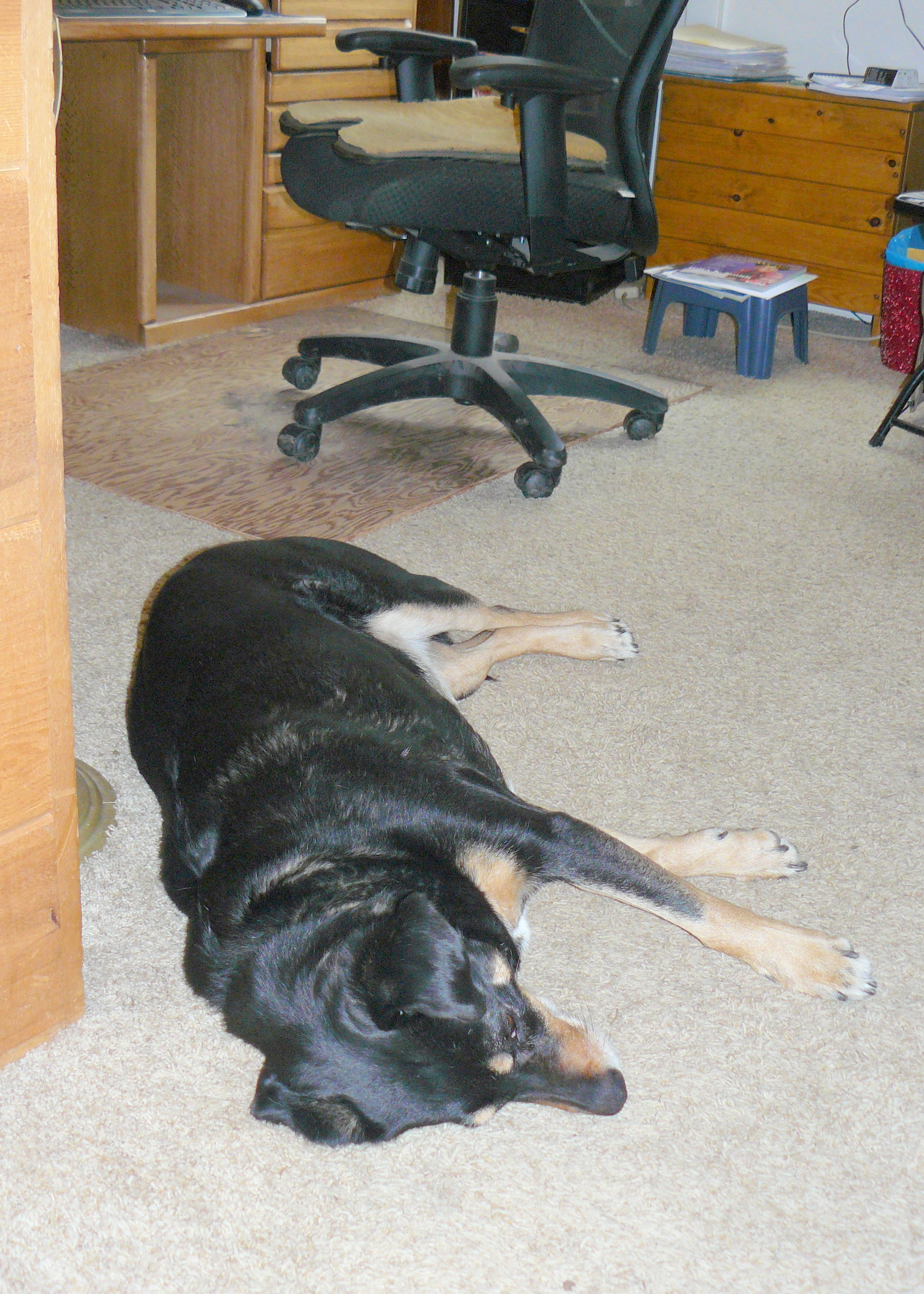
To underline my last sentence, on a whim I just took the following photograph of Hazel who very rarely isn’t by my side.
Picture taken at 10:35 yesterday morning in my ‘home office’ when I had just finished writing today’s post.
Yet again, another example of a post almost writing itself.
Let me explain.
Yesterday, I published a post about being sensitive to the world around us.
Then this morning there was a new post from Sue Dreamwalker under the title of Fear of the Future. It was uncharacteristically downbeat for Sue.
Now most who follow me know I try to bring a positive touch within my posts… Yet to be quite honest with you all I am really struggling right now to lift myself from the doldrums of my own thoughts.
The key to conquering our fears lies in awareness. When we identify the irrational thoughts that frighten us and replace them with positive affirming ones.
Argh… all easier said than done..
You would think with my inner Knowing, and my Spiritual mind I should be the last person to take a nose dive into that Pit of depression.. Especially when I dredged its depth before and vowed that I had been there done that and worn the T-shirt and I refuse to wear it again.
I could blame it on my Fall which left me feeling bruised with aching, muscles which are still healing.. And I could blame it on grief as I lost a very beloved Aunt last week. I could blame my fatigue on me deciding to move a whole wall of books out the spare bedroom with wrists still recovering from the sprains of the fall.. And I could blame it on the weather being cold and miserable.. I could even blame it on the state of the world, or the Planets .. I have a whole host of excuses I could fall back upon to justify why I am feeling tired and jaded..
Many left comments including me. I spoke of the reward of hugging a dog. My words included:
I don’t have answers other than to feel what you are feeling. All I hang onto when I spend too much time thinking of my own mortality is that the answer, the answer to the moment, is to bury one’s face into the warm, soft fur of a dog. They seem to sense my need at these times. (And that isn’t meant to sound like me devaluing the love and affection that I receive from Jean!)
In other words, that contact with the warm dog holds me in the present and before long the reinforcement of living that present, loving moment puts the unknown future into perspective.
Another comment was left by blogger Rajagopal that included this wonderful tale:
The only thing that I have seen working in my life is to keep living, as much as possible, in the present. There is nothing to fear, either of the now or of the future.
In this context, wish to leave you with the story of the pregnant deer; in a forest, a pregnant deer is about to give birth. She finds a remote field near a strong-flowing river, that looks like a safe place, as she starts going into labour. At the same moment, dark clouds gather in the sky and streaks of lightning sets off a forest fire. The deer looks to her left and sees an approaching hunter with arrow pointed at her. To her right, the deer spots a hungry lion speeding towards her. What can the pregnant deer do? She is in labour! What will happen? Will the deer survive? Will she give birth to the fawn and will it survive? Or will everything be burnt by the forest fire? Or will she perish to the hunter’s arrow? Or does a horrible end await her at the hands of the hungry lion? Constrained by the fire on one side, the flowing river on the other and boxed in by her natural predators, the deer is apparently left with no option. What does she do? Well, she focuses on delivering and giving birth to a new life.
The sequence of events that follows is the Lightning strikes and blinds the hunter, who releases the arrow which zips past the deer and strikes the hungry lion. It starts to rain heavily and the forest fire is slowly doused by rain water. The deer gives birth to a healthy fawn….In our life too there are moments when we are confronted with negative thoughts and possibilities on all sides, so powerful as to overwhelm us. May be we can learn from the deer. The priority of the deer at that given moment was to give birth as safely as possible.
The rest was not in her hands and any change in her focus would have most likely impeded giving birth to the fawn. In the midst of the severest storm, we just have to maintain presence of mind and do what is in our control…the Cosmic power will take care of the rest…best wishes… Raj.
Finally, there was a recent new follower of this place. Her name is Emma and she writes the blog The Muse in the Mirror. Emma was kind enough to grant me permission to republish a post from last December about the healing power of Llamas. Enjoy!
ooOOoo
Llama Loving; The healing power of Llamas
It’s official; I LOVE llamas. There, I said it, put out there for the world to know! I love their gentle, sensitive nature, friendly disposition and most of all their goofy, giggle-worthy expressions, which never fail to bring a smile to my face! Concerned that my llama loving status was bordering on obsession, I was beginning to question whether my love for these comical camelids was founded on anything other than sheer amusement! Thankfully as I researched further my findings confirmed that these beautiful animals are much more than a pretty (funny) face!!!
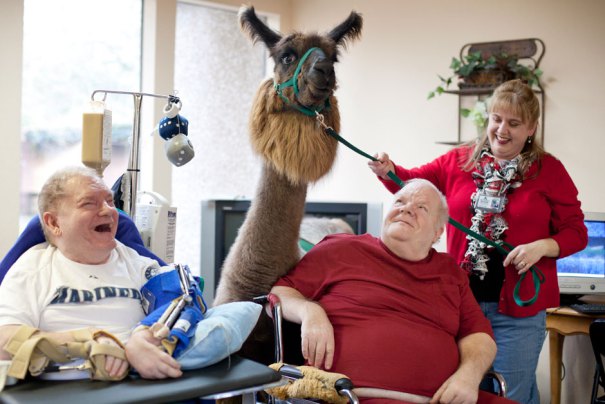
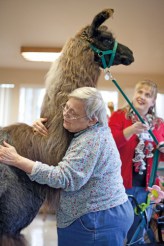
in USA. The adorable photo’s lay testament to the happiness that llama’s bring to residents at Bellingham Health and Rehabilitation Center in Washington, USA. Llama Marisco (pictured above), and Llama N.H. Flight of the Eagle (pictured right) are trained therapists, who spread comfort and joy as they stop at each bed to kiss the patients or have a hug. Resident Holly Barto remarked that…
“It was heaven. Just emotionally – to be able to touch an animal and hold an animal close.”
Another example of the profound healing benefits of llama’s can be seen in this adorable video below showing Rojo the therapy llama and Napoleon the therapy alpaca from Mtn Peaks Therapy Llamas & Alpacas, in Vancouver, WA USA. A non-profit corporation, which offers therapy teams to visit hospitals and schools in the area. The expressions on people’s faces are heart warming to say the least!
“Who knew such fluffed-up, carrot munching mammals could bring so much joy.”
Laughter is the best medicine.
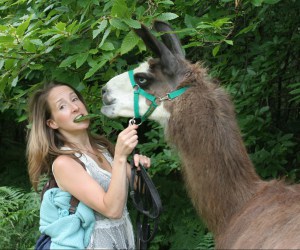
Llama Dave is disgruntled by the fact I was munching in on his dinner!
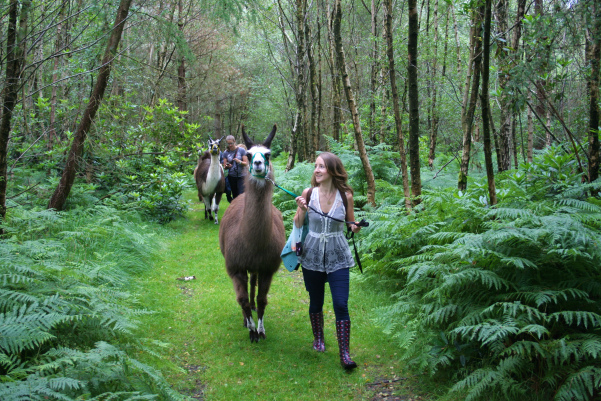
If I am having an off day, the first thing I reach for is a funny llama picture. Better still, a visit to the local llama park soon blasts my bad moon into infinity and beyond! A good giggle-fest at the Ashdown Forest Llama park, in East Sussex, dissolves the blues and confirms that laughter really is the best medicine! (See my picture gallery below to see me with some of the residents of the Ashdown Forest Llama park!).
There’s a very good reason behind the saying Laughter is the best medicine. Research suggests that people feel less pain after a good laugh, because it causes the body to release chemicals that act as a natural painkiller. ‘Professor Robin Dunbar of Oxford University, who led the research, believes that uncontrollable laughter releases chemicals called endorphins into the body which, as well as generating mild euphoria, also dull pain.’ (BBC)
It is common knowledge that animals in general make us happier and brighten our spirits. A growing body of scientific research now suggests that interacting with animals can make us not only happier, but healthier too. That helps explain the increasing use of animals for therapeutic purposes in hospitals, hospices, nursing homes, schools, jails and mental institutions.
The use of pets in medical settings actually dates back more than 150 years, says Aubrey Fine, a clinical psychologist and professor at California State Polytechnic University. Fine who has written several books on the human-animal bond says:
“One could even look at Florence Nightingale recognizing that animals provided a level of social support in the institutional care of the mentally ill,”
So there you have it, next time you’re feeling blue, you know what to do! Head on out to your nearest llama park to insight those warm fuzzy feelings from a fluffy four legged llama! Check out my favourite selection of Llama and Alpaca pics below, guaranteed to bring a smile to any face!!
ooOOoo
Note: That last photograph above is only one of a wonderful collection of Llama photographs that Emma included in her blog post. Do drop across there and admire all the wonderful pictures.
The incredible healing power of hugging an animal.
Adding to the chorus of voices criticising Budweiser.
I’m going to republish in full what arrived in my ‘in-box’ yesterday from Howling For Justice.
But before I do that, let’s consider the ancient history of the wolf and the connection with our dogs of today. I shall do that by offering a small extract from something that I will be presenting at a meeting in Grants Pass on February, 10th.
Dogs are part of the Canidae species, a family including wolves, coyotes and foxes, thought to have evolved some sixty million years ago. There is no hard evidence as to when dogs and man came together but dogs were certainly around when man developed speech and set out from Africa; about fifty thousand years ago.
What is clear is that the dog represents man’s longest domesticated animal companion; by far. Some scientists believe that we have had the benefits of dogs in our lives for thirty thousand years. Indeed, some have proposed that the benefits of having tame wolves around us humans helped man be so successful a hunter and gatherer that it was instrumental, a mere ten thousand years ago, in humans first discovering how to cultivate crops and domesticate animals. Becoming the most significant single development in human history.
Because reflect that for a previous three million years Stone Age man, the hunter-gatherer, had engaged in activities as natural as the swoop of a hawk or the grazing of a horse.
ooOOoo
OK, on to that Budweiser advertisement.
Budweiser Takes Low Road – Demonizes Wolves To Sell Suds
February 1, 2015
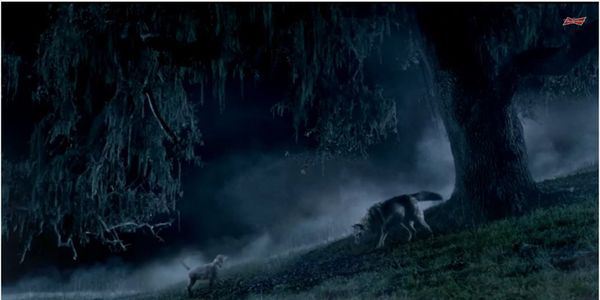
We all know about the Budweiser ad, a little lost puppy being threatened by a wolf. I won’t show the ad because it’s BS and I don’t want to give it any publicity but Budweiser should be ashamed. Are they that desperate to sell beer?
Get a grip Budweiser, very poorly played. Beer drinkers around the country should boycott Bud if the ad is not pulled. It’s a low blow to wolves, one of the most persecuted animals on the planet.
Please click the link below and sign the petition to tell Budweiser what you think of their blatant demonizing of wolves.
===
Tell Budweiser: Don’t Demonize Wolves to Sell Beer
author: Center for Biological Diversity
target: Anheuser-Busch CEO, Thomas W. Sante
Purposefully demonizing an animal that is part of America’s natural heritage is no way to sell beer.
But that hasn’t stopped Budweiser from crafting a commercial for this year’s Superbowl that intentionally drums up anti-wolf sentiment to try and capitalize on our culture’s outsized fear of wolf attacks.
The ad pits a cute puppy against a snarling, evil-looking wolf. In the ad the puppy is saved from the vicious wolf by the arrival of a team of Clydesdale horses.
Here’s a reality check: 1.2 million dogs are euthanized in shelters in the United States each year while another 1.2 million dogs are hit and killed by cars on America’s roads.
By comparison, wolves are a virtually non-existent threat to our furry canine friends, only in very rare instances attacking dogs if they feel threatened or perceive them as competitors. The real threat to both dogs and wolves, as these numbers show and as Budweiser’s cynical attempt to boost sales indicates, is people.
Take action — tell Budweiser to pull its wolf-hating ad, demonizing an endangered species is no way to sell beer.
One of the blog sites that I subscribe to is Exposing the Big Game. The blog does a fabulous job in exposing the terrible ‘game’ of people hunting animals for sport! Many of the topics that author Jim Robertson exposes are incredibly painful to read but, please, do drop across there and support his efforts.
All of which is a preamble to a short item that was posted last Sunday and is republished here today.
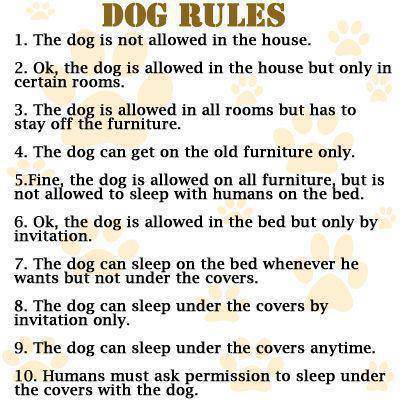
Nothing more to add to those rules than offer this photograph taken at home early one day last December, 2013.
Dearest Suzann, who invited me out to San Carlos, Mexico, for the Christmas of 2007, leading to Jean and me meeting, is heavily involved in rescuing the many feral dogs found in that part of the world.
She recently sent me the following:
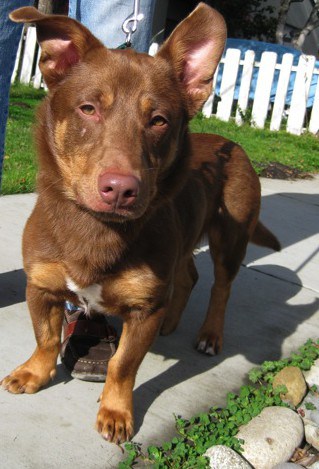
Shepherd Boy will be euthanized in a few days at the CA state kennel he is at and Jeannie Wade is trying to help save his life….do you guys know of anyone? Let me know asap.
He is located in the Central Coast area of California and goes by the name ‘Shepherd Boy’ and is one year old.
He is in a high kill shelter and has days to live.
Shepherd Boy is shy and sweet tempered and the volunteers at the shelter feel he will make a very good companion/pet for a nice family or couple.
Paul, If I were up there, I would take him in a heartbeat!
Suzann
Please, please share this as far and wide as possible – urgently.
Shepherd Boy may be found at the Central Coast SPCA, Orcutt, California 93457
Suzann has given me the name of Jeannine Wade and she may be emailed at: centralcoastspca@yahoo.com
A reposting of a blog from Dog Leader Mysteries about a dog food recall.
Quickly stepping over the observation that today’s post is about as far removed, topic wise, from yesterday’s post as one could possibly imagine, nonetheless this is important and needs to be widely shared.
ooOOoo
Raw food recall: J J Fuds Frozen Pet Food
J. J. Fuds Raw dog food recall expands
Dear Fellow Dog Lover,
Because you signed up on my website and asked to be notified, I’m sending you this special recall alert.
On January 27, 2015, J. J. Fuds of Valparaiso, Indiana, announced it is expanding its recall of select lots of J. J. Fuds Raw Frozen Pet Food to include 2 other products due to unspecified contamination.
I copied this email notice from The Dog Food Advisor. I highly recommend you sign up for this list.
Please share to save dogs’ lives
We don’t feed Sydney raw meat. We do feed organic raw vegetables in limited quantities. We care about pets and want our readers to share this important news. Also we want you to know that we receive the Dog Food Advisor’s updates. Mike Sagman never stuffs our email box, but sends out notices as fast as he receives them. We asked our local pet stores if they receive notices before opening each day. You can do that. Ask when and how pet foods get pulled from their shelves, your pet’s life depends on this.
As I have mentioned in the past and undoubtedly will do so again in the future, one of the most wonderful aspects of this world of blogging is the way that connections are made. Just a few weeks ago, a connection was made between Learning from Dogs and Dog Leader Mysteries. DLM’s byline is: Saving dogs’ lives and dog lovers’ sanity. Dog Leader Mysteries is written by author Deborah Taylor-French.
Anyway, out of the exchanges that have taken place between Deborah and myself, came a reference to a post about animal happiness that was published on Deborah’s blog in October, 2013. It is very interesting and I am delighted to be given permission to share it with you.
ooOOoo
Neuroscience key to animal happiness
“…research in neuroscience has been showing that emotions drive behavior, and my thirty-five years of experience working with animals have shown me that this is true. Emotions come first. You have to go back to the brain to understand animal welfare.”
Animals Make Us Human : Creating the best life for Animals
by Temple Grandin & Catherine Johnson
Water dogs having a blast in Spring Lake Park.
By Deborah Taylor-French
Those of us who live and/or work with animals know…
animals have emotions.
Temple Grandin has made the understanding, care and handling of farm animals her life’s work. I refer to her book Animals Make Us Human because not only has she studied farm animals, but she also loves and lives with pets. In her books, especial this one, she insists that we must understand how animals brains work, how they see, hear and smell every sensory detail in their surroundings.
Animals emotions drive their behavior.
To make a better life for our pets, for domestic and wild animals we must understand the main emotions that drive behavior. This will help us to turn on their positive emotions and avoid turning on FEAR, RAGE and GRIEF.
Example: Rabbits and horses are prey animals.
Never chase either rabbits or horses.
Teach your pet rabbit or horse to come to you.
Always reward them for recognizing their name and coming when called.
When you chase a prey animal, you make him or her fearful of you!
Emotions are the gifts of our ancestors. We have them and so do other animals. We must never forget this. When it comes to animal welfare we can always do better. Most of the time “good welfare” is not “good enough.”
The Emotional Lives of Animals by Marc Bekoff.
Dogs Depend on us for freedom from fear and safety
Never tie up your dog unless it is in your company in a human training session.
A dog needs to feel he can flee to safety.
Be sensitive to your dog’s fear signals and show him you will protect and calm him.
Increase your dogs positive emotions by interesting, but not overstimulating activities.
Always stop training before your dog gets tired.
Dogs are the only animals that live with us inside of their flight zone.
Dogs depend on us for positive and playful lives
When you help increase an animal’s curiosity, you turn on his or her positive emotions of SEEKING and PLAY.
Example: Dogs love to play.
Find a time and place when both you and your dog seem relaxed.
Invite your dog to play by doing a play bow or picking up his favorite toy.
Use an excited and happy tone of voice to call your dog.
Run away.
When your dog chases you, stop.
Wait for your dog to run then chase.
Always stop before your dog seems fearful or overexcited.
Dogs love this game, which dog lovers know dogs play every chance they get.
A few days ago, we had a visit from the Wilderness Campaign Coordinator from Oregon Wild. Bridget, that being her name, took the opportunity of saying ‘hi’ as a consequence of her coming down from Northern Oregon to Ashland. Bridget was giving a presentation in Ashland regarding securing more wilderness areas in Oregon; a very worthy ambition. Jean and I have supported the organisation since we moved up to Oregon.
Anyway, I offered to use Learning from Dogs to support and promote any campaigns from OW that would be of interest to LfD readers. I sorted out some recent posts that would give Bridget and her colleagues an idea of what was published in this place and sent her the links.
One of the links that I forwarded was this post from last October. I just wanted to share it with you all again.
oooo
Embracing the poetry of nature.
The beauty of poetry.
In yesterday’s post, where I wrote about how Jean and I had the wonderful privilege of feeding a wild deer from our hands, I closed it with a p.s. This is what I wrote: “P.S.It is at times like this that we need poetry. So how about it: Sue?Kim? How would you describe in poetry what Jean and I experienced?“
Well, Sue, of Sue Dreamwalker, replied with a link to a poem of hers that she published back in 2012. I will say no more than republish, with permission, Sue’s beautiful words and close with one of the photographs from yesterday.
The republication of a wonderful post about a dog that rides a bus!
I’m in the middle of reading Jean Donaldson’s book The Culture Clash. Here’s a summary of what the book is about from the Dogwise website.
Summary: The book that has shaped modern thinking about canine behavior and the relationship between dogs and humans has been revised. Dogs are not humans. Dogs are clever and complex creatures that humans need to take the time to understand in order to live together successfully. You must read this book… because your dog sure can’t!
Here’s an extract from page 13 of the first chapter: Getting the dog’s perspective.
We crave anecdotes about genius dogs and these abound. Everyone knows a story that illustrates how smart dogs are. But a fundamental question has never been answered by proponents of reasoning in dogs: if dogs are capable of these feats of brain power at all, why are they not performing them all the time? Why never in controlled conditions? What is the most upsetting about these claims is the lack of rigour in evaluating them.
You get the picture of where Jean Donaldson is coming from! (And I’m still only just into the book myself.)
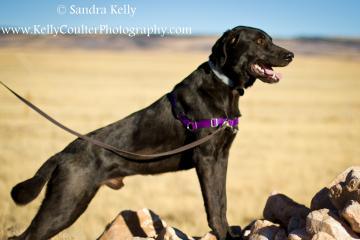
Have you read about this dog? A friend shared a news clipping on this dog’s unusual behavior in Seattle, Washington. Eclipse, as an independent city dog, seems to know to walk only on the sidewalk, get on the bus, take a seat and look out the window, all without assistance from his person. Eclipse even knows, which bus stop to get off at for the dog park. “Bus riders report she hops onto seats next to strangers, and watches out the window for her stop. Says commuter Tiona Rainwater, “All the bus drivers know her … she makes everybody happy.”
A Metro Transit spokesman said the agency loves that a dog appreciates public transit. The City of Seattle representative suggested that it would be safer for Eclipse to wear a leash and be with her human when she rides the bus, but with a dog this smart, is it a problem? I don’t know the answer. Black lab rides bus alone to dog park USA Today Network Associated Press 1:01 p.m. EST January 14, 2015.
What do you think, can dogs take the bus without their human families?
No dogs off leash.
We know that big dogs differ in temperament and dog to dog communication from little lap dogs. But what makes a dog mature and experienced enough to take on full independence in the confusion and untranslated rules of human life? Yes, free-roaming dogs ride trains in organized and peaceful groups in Russia. Yes, often those who live with dogs, like we do, find they understand far more of our human lives than we think possible. After watching dozens of dogs off leash on city streets of Baja California Sur, Mexico. No dog seemed homeless and all but one stayed on the sidewalk.
Do dogs ever become 100% street-smart?
Street smarts or leash required?
What do dogs know? What do dogs remember? We know dogs learn. We know some dogs show exceptional learning abilities, much greater than other dogs. Somewhere I read that the average dog has the intelligence of a human toddler. Now, none of us would let a toddler walk city streets, get on and off a bus alone. But what of special cases? History shows exceptions to rules and to the “average.” Clearly, Eclipse breaks the rule, the average and reshapes our expectations of what dogs can and should be able to do.
“The greatness of a nation can be judged by the way its animals are treated.” Mahatma Gandhi
Have you read Merle’s Door: Lessons from a Freethinking Dog by Ted Kerasote? Of book talks, life and books by Kerasote can be found on his Website his 2014 Pukka’s Promise: The Quest for Longer-Lived Dogs, in paperback, looks to be interesting to those of us who want our dogs to live the longest, healthiest lives possible. Find more about this top creative nonfiction author on his Website Kerasote.com.
True dog story (tearjerker ahead)
A Marin County ethical keeshond breeder shared this true story of their longtime and favorite dog. For years and years, the behavior of their family dog and top champion male looked totally stable. His nature showed pure calm and obedience. They all got into a pattern of allowing this canine patriarch time to lay on the front lawn in their neighborhood circle street. He always remained serene, watching, never chasing, barking or moving.
On afternoon as the kinglike keeshond patriarch lay on his grassy lawn – the unthinkable happened – he ran in front of car. Now fortunately, this big keeshond did not die. But he suffered, ever after with epileptic fits. Makes me wonder if we fool ourselves in imagining that dogs can navigate city streets safely.
Please share, comment and sign up for my blog updates. Thanks, Deborah Taylor-French
ooOOoo
So leave it up to you to assess the brain power of dogs, especially that bus-riding black Labrador dog. To help you make your mind up, take a look at the video.
Published on Jan 14, 2015
Seattle’s public transit system has had a ruff go of things lately, and that has riders smiling.
You see, of the 120 million riders who used the system last year, one of them is actually a dog. Seattle’s KOMO-TV reports the 2-year-old black Labrador mix, named Eclipse, has become a regular fixture on the city’s D-Line after she figured out how to ride the bus alone to the dog park.
“All the bus drivers know her. She sits here just like a person does,” fellow rider Tiona Rainwater told KOMO. “She makes everybody happy. How could you not love this thing?”
The dog’s owner, Jeff Young, lives next to the stop. He said Eclipse sometimes hops on board without him if he’s not yet finished smoking his cigarette when the bus arrives. The pup has become a regular on the route, riding three or four stops before exiting at her destination of choice. “I catch up with her at the dog park,” Young explained.
Miles Montgomery, a Seattle radio host and D-Line commuter, was taken by surprise when Eclipse hopped into the seat next to him on a ride last Friday, looked out the window, then got off at her stop. Montgomery snapped a bemused selfie with the commuting canine, adding the caption, “Bus is full this morning:”
A Metro Transit spokesperson told the AP they’re happy a dog can appreciate public transit, though Eclipse should really be on a leash. King County says dogs are allowed to ride buses at the discretion of the driver, provided the animal isn’t a hazard and doesn’t create a disturbance.
Seattle isn’t alone in having a streetwise dog. Stray dogs in Moscow, Russia, have learned to commute in and out of the city from the suburbs by riding the subway, even watching out for other dogs to make sure they exit at the correct stop.
Get along, little doggies.
oooo
Golly, I have just seen how long I have spent getting this post written. Poor old Shelby must be wondering if I really did want to play with him; should have made my next move simply ages ago!