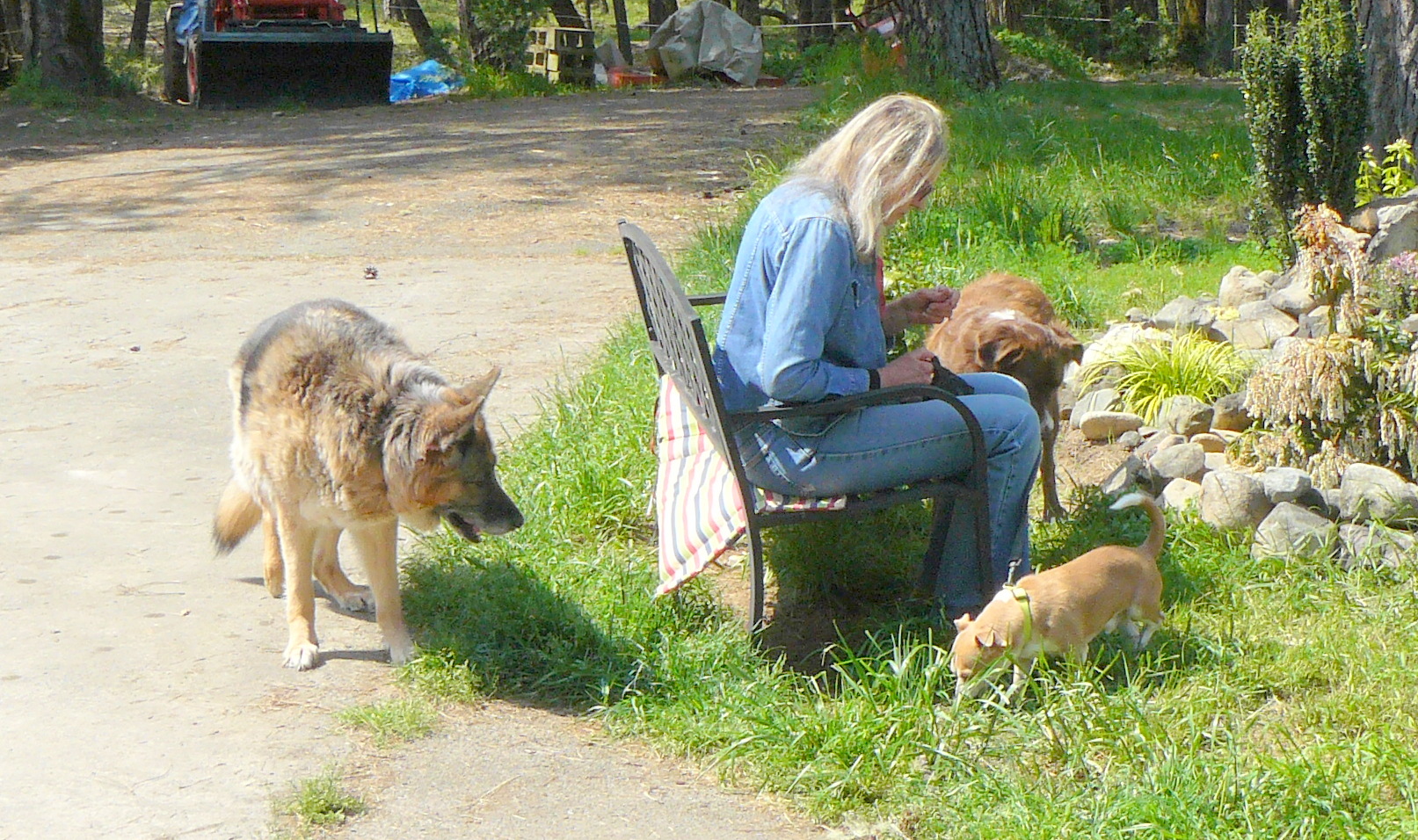
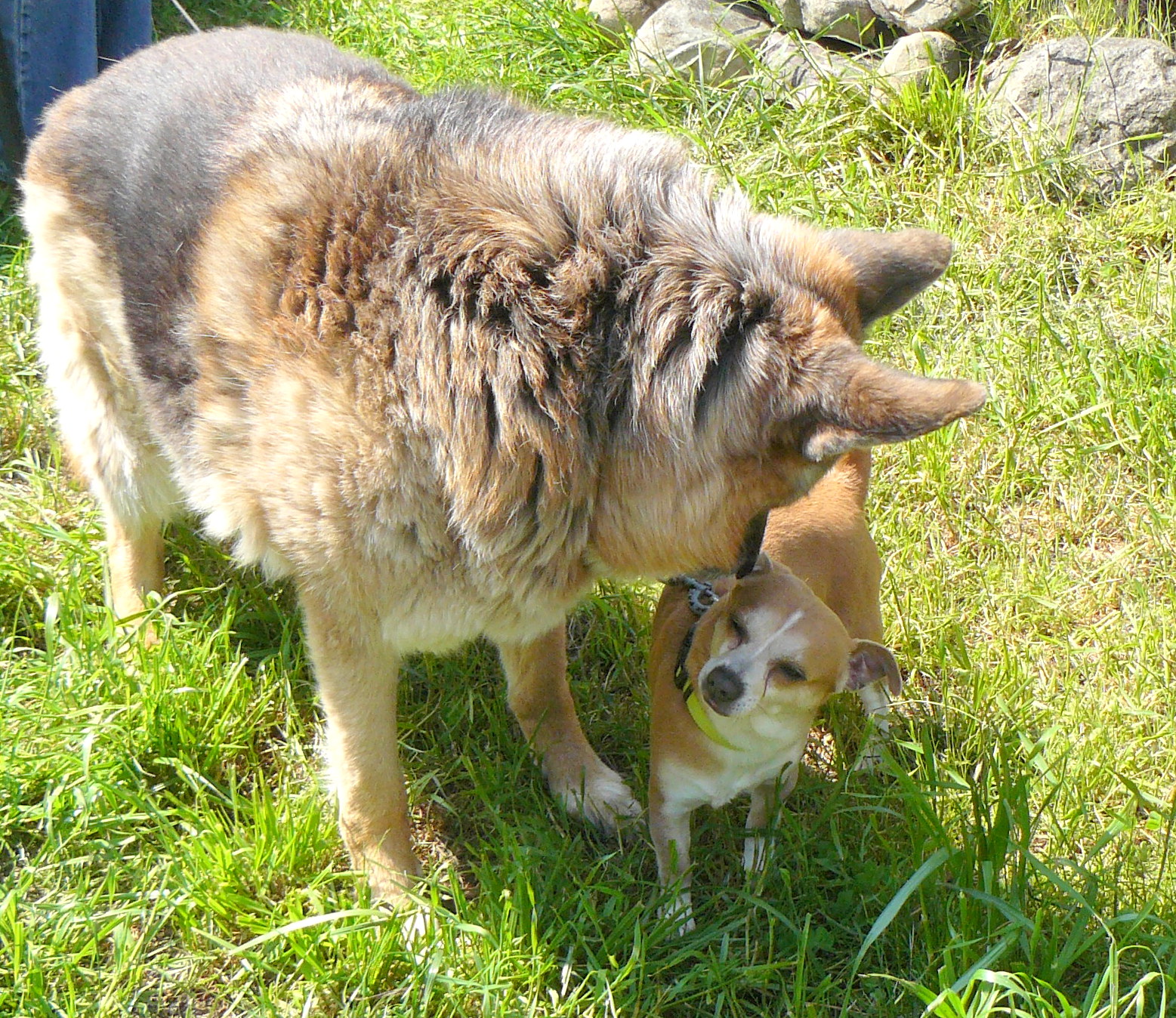
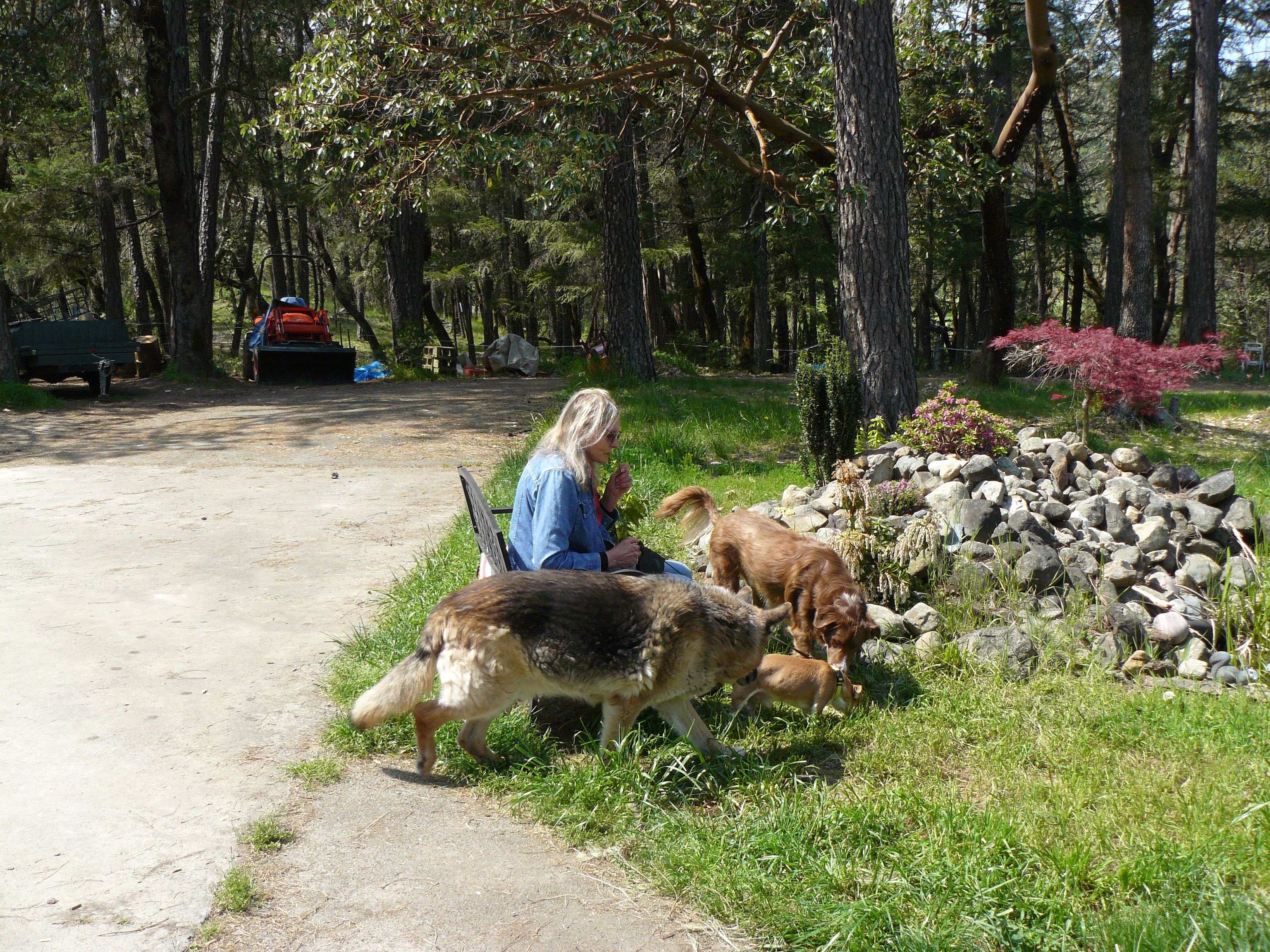
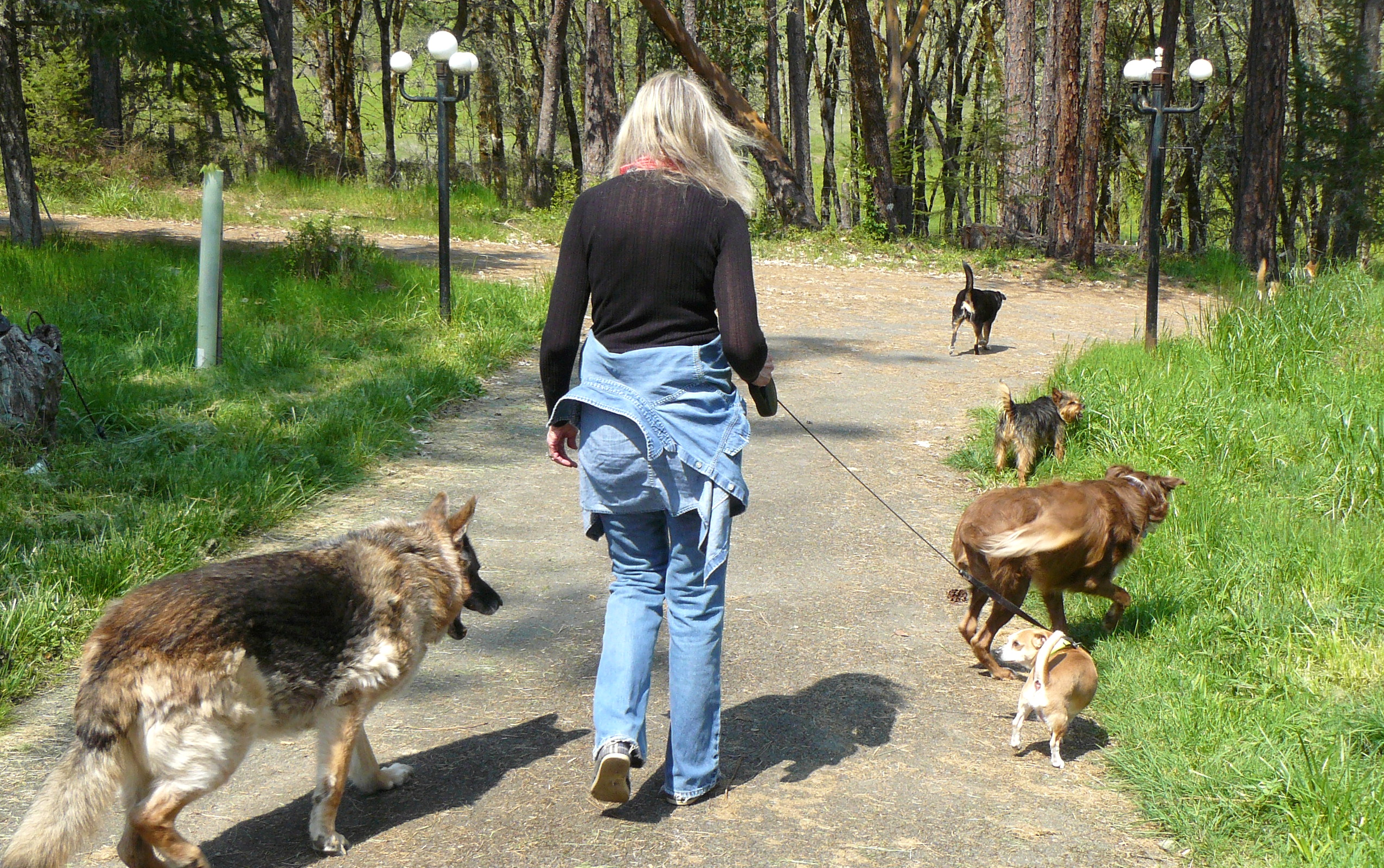
Category: People and their pets

Writing 101 Day Four

All men should strive to learn before they die, what they are running from, and to, and why.

Yet another WordPress theme:

Day Four: Serially Lost

Today’s Prompt: Write about a loss: something (or someone) that was part of your life, and isn’t any more.

This doesn’t need to be a depressing exercise; you can write about that time you lost the three-legged race at a picnic. What’s important is reflecting on this experience and what it meant for you — how it felt, why it happened, and what changed because of it.

Today’s twist: Make today’s post the first in a three-post series.

Our blogs are often made of standalone posts, but using them to take readers on longer journeys is an immersive experience for them — and you. It allows you to think bigger and go deeper into an idea, while using a hook that keeps readers coming back.

A series can take many forms:

We also have advice that might help. If you decide to go serial, we’ve got days scheduled later in Writing 101 for parts two and three, so don’t worry about writing everything now or having to shoehorn the other posts in. If you’re not sure where to start, share your trilogy ideas in The Commons first to get some feedback.

You only need to write the first post in the series today — we’ll let you know when it’s time for the next installment.

This is a very easy theme for me to write about. For I want to share an early story from my yet unfinished book. My book of the same name as this blog: Learning from Dogs. This story has appeared on the blog some years ago but what is presented today is a much-revised version.

oooo

Messages from the night.

Jean, where’s Dhalia?

Don’t know. She was here moments ago.

Jeannie, You take the other dogs back to the car and I’ll go and scout around for her. Oh, and you better put Pharaoh on the leash otherwise you know he’ll follow me.

Paul, don’t worry, Dhalia’s always chasing scents; bet she beats us back to the car. Especially as it’s going to be dark soon.

Nonetheless, I started back down the dusty, dirt road, the last rays of the sun pink on the high, tumbled cliffs of granite. This high rocky, forest plateau, known as the Granite Dells, just three miles from our home on the outskirts of Payson in Arizona, made perfect dog-walking country and rarely did we miss an afternoon out here. However this afternoon, for reasons I was unclear about, we had left home much later than usual.

There was no sign of Dhalia ahead on the road so I struck off left, hoping she was somewhere up amongst the trees and the high boulders. Soon I reached the first crest, panting hard in the thin air. Behind me, across the breath-taking landscape, the setting sun had dipped beneath faraway mountain ridges; a magnificent sight. Suddenly, in the midst of my brief pause admiring the perfect evening, a sound echoed around the cliffs. The sound of a dog barking. I bet my life on that being Dhalia. Just as quickly the barking stopped.

The barking started up again, barking that suggested Dhalia was hunting something. The sound came from an area of boulders way up above the pine trees on the other side of the small valley ahead of me.

Perhaps, Dhalia had trapped herself. More likely, I reflected, swept up in the evening scents of the wilderness, Dhalia had temporarily reverted back to the wild, hunting dog she had been all those years ago. That feral Mexican street dog who in 2005 had tentatively turned away from scavenging in a pile of rubbish in a dirty Mexican town and shyly approached Jean. Jean had named her Dhalia.

I set off down to the valley floor and after fifteen minutes of hard climbing had reached the high boulders the other side. I whistled, then called “Dhalia! Dhalia! Come, there’s a good girl.”

Thank goodness Dhalia was such a sweet, obedient dog.

I anticipated the sound of dog feet scampering through rough undergrowth. But no sound came.

I listened; no sounds, no more barking. Now where had she gone? Perhaps past these boulders down into the steep ravine beyond me, the one so densely forested with pine trees. With daylight practically gone I needed to find Dhalia very soon. I plunged down the slope, pushing through tree branches that whipped across my face, then fell heavily as a foot found empty space instead of the anticipated firm ground.

I cursed, picked myself up and paused. That fall had a message: the madness of continuing this search in the near dark. The terrain made very rough going even in daylight. At night, the boulders and plunging ravines would guarantee a busted body, at best! Plus, I ruefully admitted, I didn’t have a clue about finding my way back to the road from wherever I was!

The unavoidable truth smacked me full in the face. I would be spending this night alone in the high, open forest!

It had one hell of a very scary dimension. I forced myself not to dwell on just how scary it all felt. I needed to stay busy, find some way of keeping warm; last night at home it had dropped to within a few degrees of freezing. I looked around, seeing a possible solution. I broke a small branch off a nearby mesquite tree and made a crude brush with which I swept up the fallen pine needles I saw everywhere about me. Soon I had a stack sufficient to cover me, or so I hoped.

Thank goodness that when me and Jeannie had decided to give four of our dogs this late afternoon walk, I had jeans and a long-sleeved shirt on, a pullover thrown over my shoulders. Didn’t make Dhalia’s antics any less frustrating but I probably wasn’t going to freeze to death!

The air temperature sank as if connected with the last rays of the sun. My confidence sank in harmony with the temperature. I lay down, shuffled about, swept the pine needles across my body, tried to find a position that carried some illusion of comfort. No matter the position, I couldn’t silence his mind. No way to silence the screaming in my head, this deep, primeval fear of the dark forest about me, imagination already running away with visions of hostile night creatures, large and small, watching me, smelling me, biding their time.

Perhaps I might sleep for a while? A moment later the absurdity of that last thought hit me. Caused me to utter aloud, “You stupid sod. There’s no way you’re going to sleep through this!

My spoken words echoed off unseen cliffs in the darkness, reinforcing my sense of isolation. I was very frightened. Why? Where in my psyche did that come from? I had spent many nights alone at sea without a problem, a thousand miles from shore. Then, of course, I knew my location and always had a radio link to the outside world. But being lost in this dark, lonely forest touched something very deep inside me.

Suddenly, I started shivering. The slightest movement caused the needles to slip from me and the cold night air began to penetrate my body. I mused about how cold it might get and, by extension, thanked my lucky stars that the night was early October not, say, mid-December. So far, not too cold, but soon the fear rather than the temperature started to devour me. What stupid fool said, ‘Nothing to fear but fear itself!’ My plan to sleep under pine needles, fear or no fear, had failed! I couldn’t get warm. I had to move.

Looking around, I saw an enormous boulder a few yards away, like some giant, black shadow. No details, just this huge outline etched against the night. I carefully raised myself, felt the remaining needles fall away, and gingerly shuffled across to the dark rock. I half-expected something to bite my extended hand as I explored the surface, as I ran my hand down towards the unseen ground. Miracle of miracles, the granite gently emitted the warmth absorbed from the day’s sun. I slowly settled myself to the ground, eased my back against the rock-face and pulled my knees up to my chest. I felt so much less vulnerable than when I had been flat out on the forest floor. I let out a long sigh, then burst into tears, huge heart-rending sobs coming from somewhere deep within me.

Gradually the tears washed away my fear, restored a calmer part of my brain. That calmer brain brought the realisation that I hadn’t considered, well not up until now, of what Jeannie must be going through. At least I knew I was alive and well. Jeannie, not knowing, would be in despair. I bet she would remember that time when out walking here in the Dells we had lost little Poppy, an adorable ten-pound poodle mix, never to be found again despite ages spent combing the area, calling out her name. A year later and Jeannie still said from time to time, “I so miss Poppy!“. First Poppy and now me! No question, I had to get through this in one piece, mentally as much as physically.

Presumably, Jeannie would have called 911 and been connected to the local search and rescue unit. Would they search for me in the dark? I thought unlikely.

Thinking about Jeannie further eased my state of mind and the shivering stopped. Thank goodness for that! I fought to retain this new perspective. I would make it through, even treasure this night under the sky, this wonderful, awesome, night sky. Even the many pine tree crowns that soared way up above me couldn’t mask a sky that just glittered with starlight. Payson, at five-thousand feet, had many beautifully clear skies and tonight offered a magical example.

Frequently during my life, the night skies had spoken to me, presented a reminder of the continuum of the universe. On this night, however, I felt more humbled by the hundred, million stars surrounding me than ever before.

Time slipped by, my watch in darkness. However, above my head that vast stellar clock. I scanned the heavens, seeking out familiar pinpoints of light, companions over so much of my lifetime. Ah, there! The Big Dipper, Ursa Major, and, yes, there’s the North Pole star: Polaris. Great! Now the rotation of the planet became my watch, The Big Dipper sliding around Polaris, fifteen degrees for each hour.

What a situation I had got myself into. As with other challenging times in my life, lost in the Australian bush, at sea hunkering down through a severe storm, never a choice other than to work it out. I felt a gush of emotion from the release this changed perspective gave me.

Far away, a group of coyotes started up a howl. What a timeless sound, how long had coyotes been on the planet? I sank into those inner places of the mind noting how the intense darkness raised deep thoughts. What if this night heralded the end of my life, the last few hours of the life of Paul Handover? What parting message would I give to those that I loved?

Jeannie would know beyond any doubt how much I had adored her, how her love had created an emotional paradise for me beyond measure. But my son and daughter, dear Alex and Maija? Oh, the complexities I had created in their lives by leaving their mother so many years ago. I knew that they still harboured raw edges, and quite reasonably so. I still possessed raw edges from my father’s death, way back in 1956. That sudden death, just five days before Christmas and so soon after I had turned twelve, that had fed a life-long feeling of emotional rejection. The feeling that had lasted for fifty-one years until, coincidentally also five days before Christmas, in 2007, I had met Jean.

My thoughts returned to Alex and Maija. Did they know, without a scintilla of doubt, that I loved them. Maybe my thoughts would find them. Romantic nonsense? Who knows? Dogs had the ability to read the minds of humans, often from far out of visual range. I knew Pharaoh, my devoted German Shepherd, skilfully read my mind.

I struggled to remember that saying from James Thurber. What was it now? Something about men striving to understand themselves before they die. Would that be my parting message for Alex and Maija? Blast! I wished I could remember stuff more clearly these days and let go of worrying about the quote. Perhaps my subconscious might carry the memory back to me.

I looked back up into the heavens. The Big Dipper indicated at least an hour had slipped by. Gracious, what a sky in which to lose one’s mind. Lost in that great cathedral of stars. Then, as if through some stirring of my consciousness, the Thurber saying did come back to me: “All men should strive to learn before they die, what they are running from, and to, and why.

I reflected on those who, incarcerated in solitary confinement, had their minds play many tricks, especially when it came to gauging time. What a bizarre oddment of information; where had that come from? Possibly because I hadn’t a clue about my present time. It felt later than 11pm and earlier than 4am, but any closer guess seemed impossible. Nevertheless, from out of those terrible, heart-wrenching hours of being alone I had found calm; had found a peace within. I slept.

Suddenly, a sound slammed me awake. Something out there in the dark had made a sound, caused my whole body to become totally alert, every nerve straining to recognise what it might be. It sounded like animal feet moving through the autumn fall of dead leaves. I prayed it wasn’t a mountain lion. Surely such a wild cat preparing to attack would be silent. Now the unknown creature had definitely paused, no sound, just me knowing that out there something waited. Now what! The creature had started sniffing. I hoped not a wild pig. Javelinas, those pig-like creatures that always moved in groups, could make trouble – they had no qualms at attacking a decent-sized dog.

Poised to run, I considered rising to my feet but chose to stay still and closed my right-hand around a small rock. The sniffing stopped. Nothing now, save the sound of my rapid, beating heart. I sensed, sensed strongly, the creature looking at me. It seemed very close, ten or twenty feet away. The adrenalin hammered through my veins.

I tried to focus on the spot where I sensed the animal waited; waited for what? I pushed that idea out of my head. My ears then picked up a weird, bizarre sound. Surely not! Had I lost my senses? It sounded like a dog wagging its tail; flap, flap, flapping against something such as a tree-trunk.

A dog? If a dog, it had to be Dhalia!

Then came that small, shy bark! A bark I knew so well. Oh wow, it is Dhalia. I softly called, “Dhalia, Dhalia, come here, there’s a good girl.

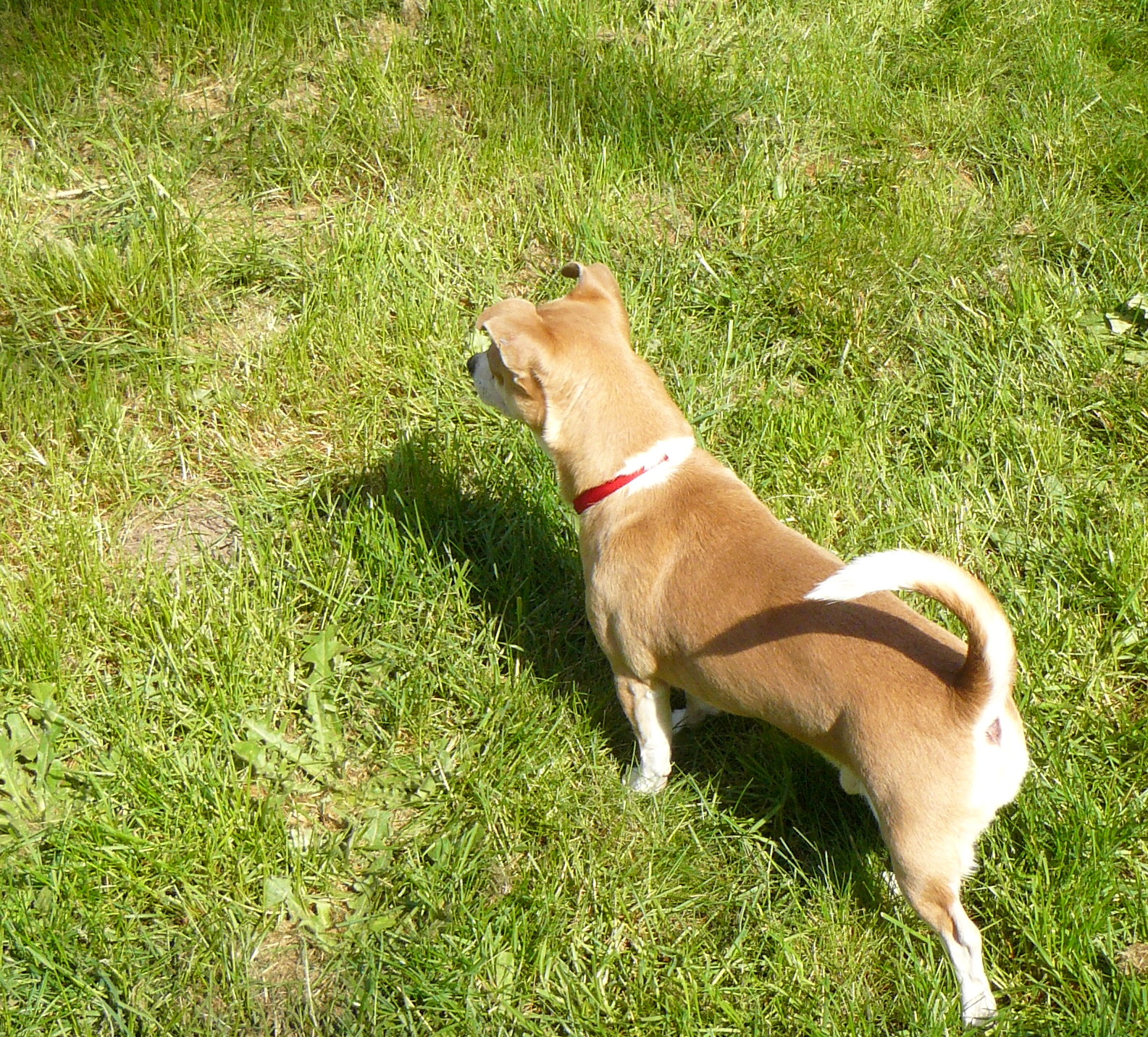
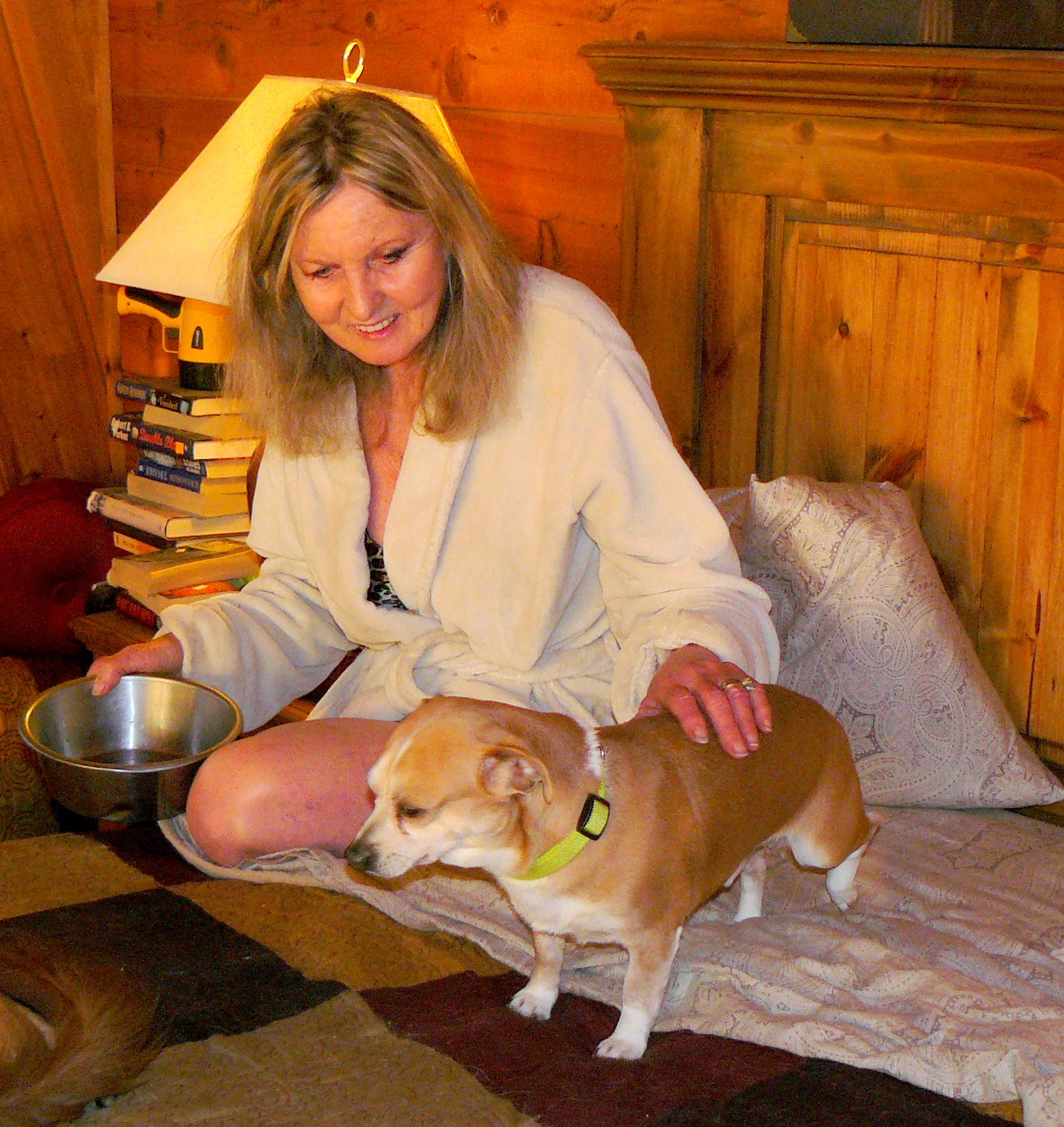
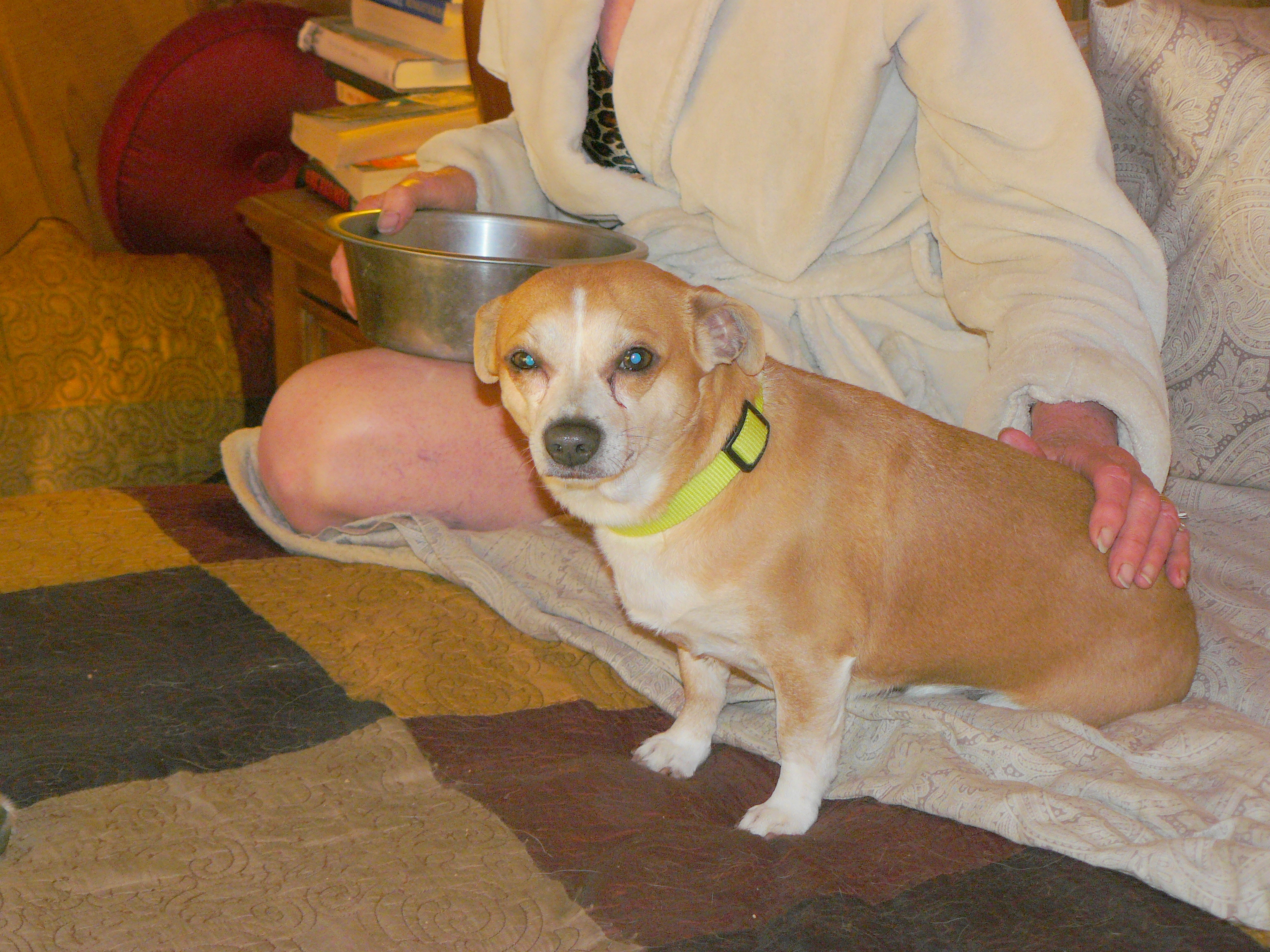
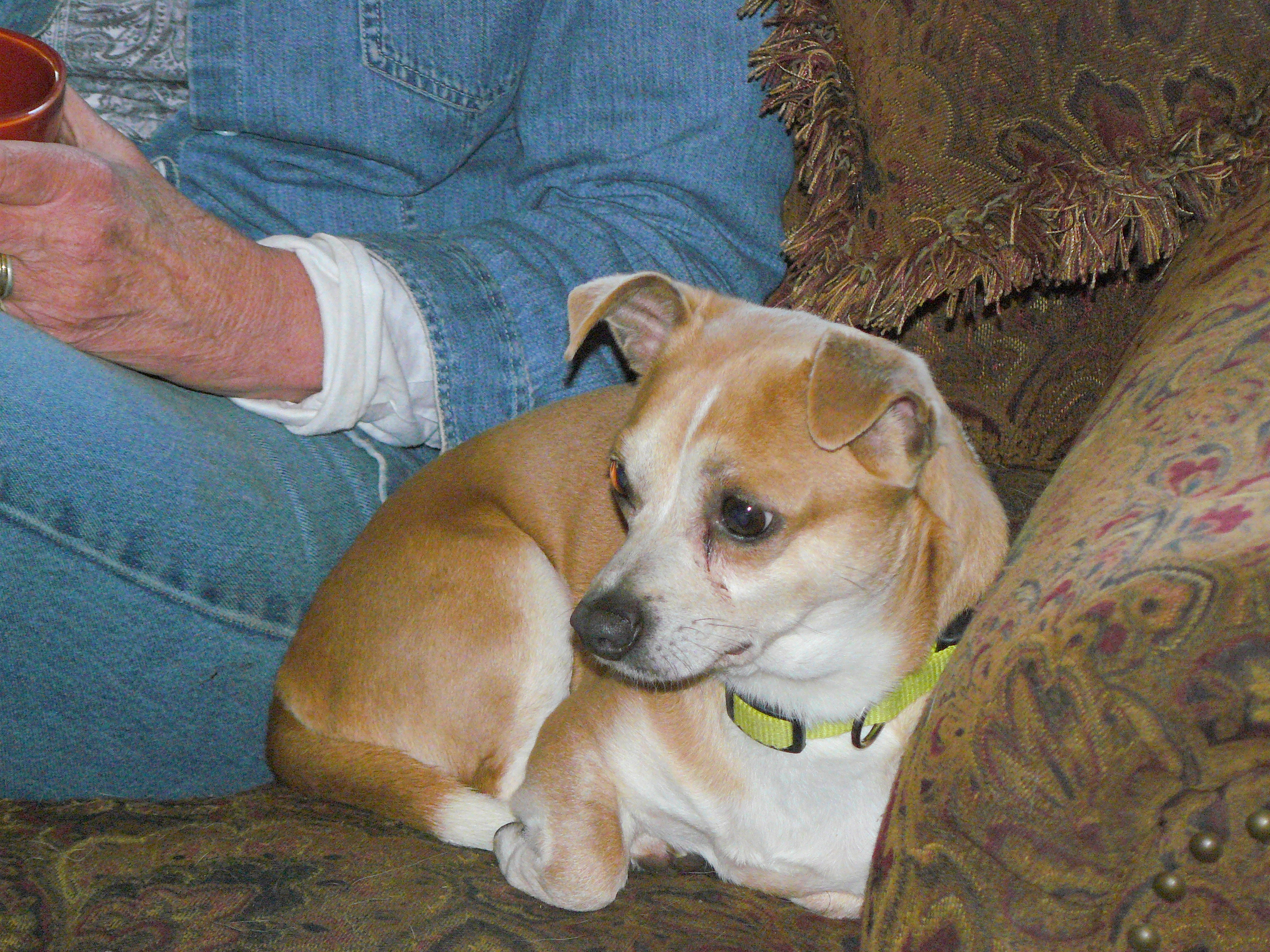
With a quick rustle of feet Dhalia leapt upon me, tail wagging furiously, her head quickly burrowing into my body warmth. I hugged her and, once more, tears ran down my face. Despite the darkness, I could see her perfectly in my mind. Her tight, short-haired coat of light-brown hair, her aquiline face, her bright inquisitive eyes and those wonderful head-dominating ears. Lovely large ears that seemed to listen to the world. A shy, loving dog when Jean had rescued her in 2005 and these years later still a shy, loving dog.

Dhalia licked my tears, her gentle tongue soft and sweet on my skin. I shuffled more onto my back which allowed her to curl up on my chest, still enveloped by my arms. My mind drifted away to an era long time ago, back to an earlier ancient man, likewise with arms wrapped around his dog under a dome of stars, bonded in a thousand mysterious ways.

The morning sun arrived as imperceptibly as an angel’s sigh. Dhalia sensed the dawn before I did, brought me out of my dreams by the slight stirring of her warm, gentle body.

Yes, there it came, the end of this night. The ancient sun galloping towards them across ancient lands; another beat of the planet’s heart. Dhalia slid off my chest, stretched herself from nose to tail, yawned and looked at me, as much to say time to go home! I could just make out the face of my watch: 4.55am. I, too, raised myself, slapped my arms around my body to get some circulation going. The cold air stung my face, yet it couldn’t even scratch my inner warmth, the gift from the loving bond Dhalia and I had shared.

We set off and quickly crested the first ridge. Ahead, about a mile away, we saw the forest road busy with arriving search and rescue trucks. I noticed Jean’s Dodge parked ahead of the trucks and instinctively knew she and Pharaoh had already disappeared into the forest; Pharaoh leading the way to us.

We set off down the slope, Dhalia’s tail wagging with unbounded excitement, me ready to start shouting for attention from the next ridge. We were about to wade through a small stream when, across from us, Pharaoh raced out of the trees. He tore through the water, barking at the top of his voice in clear dog speak, ‘I’ve found them, they’re here, they’re safe’. I crouched down to receive my second huge face lick in less than six hours.

Later, once safely home, it came to me. When we had set off in that early morning light, Dhalia had stayed pinned to me. So unusual for her not to run off. Let’s face it, that’s what got us into the mess in the first place. Dhalia had stayed with me as if she had known that during that long, dark night, it had been me who had been the lost soul.

The message from the night, as clear as the rays of this new day’s sun, the message to pass to all those I loved. If you don’t get lost, there’s a chance you may never be found.

oooo

I know it will cause Jean much angst to republish this photograph but I can’t close today’s post with sharing this picture with you.

Lost and found!

Dhalia died peacefully on April 7th, 2014.

Picture parade ninety

A few more views of home.

Two weeks ago, I presented some photographs of a pair of Canada Geese who had decided our home was their home. I promised to update you.

So here are two photographs taken last Tuesday.

P1150509

 oooo

P1150512

Plus some of our horses grazing on a misty morning last week.

P1150524

oooo

P1150522

oooo

P1150519

Finally, two more of my son’s photographs from his stay with us nearly a month ago.

Pharaoh revealing a face of aged wisdom.

oooo

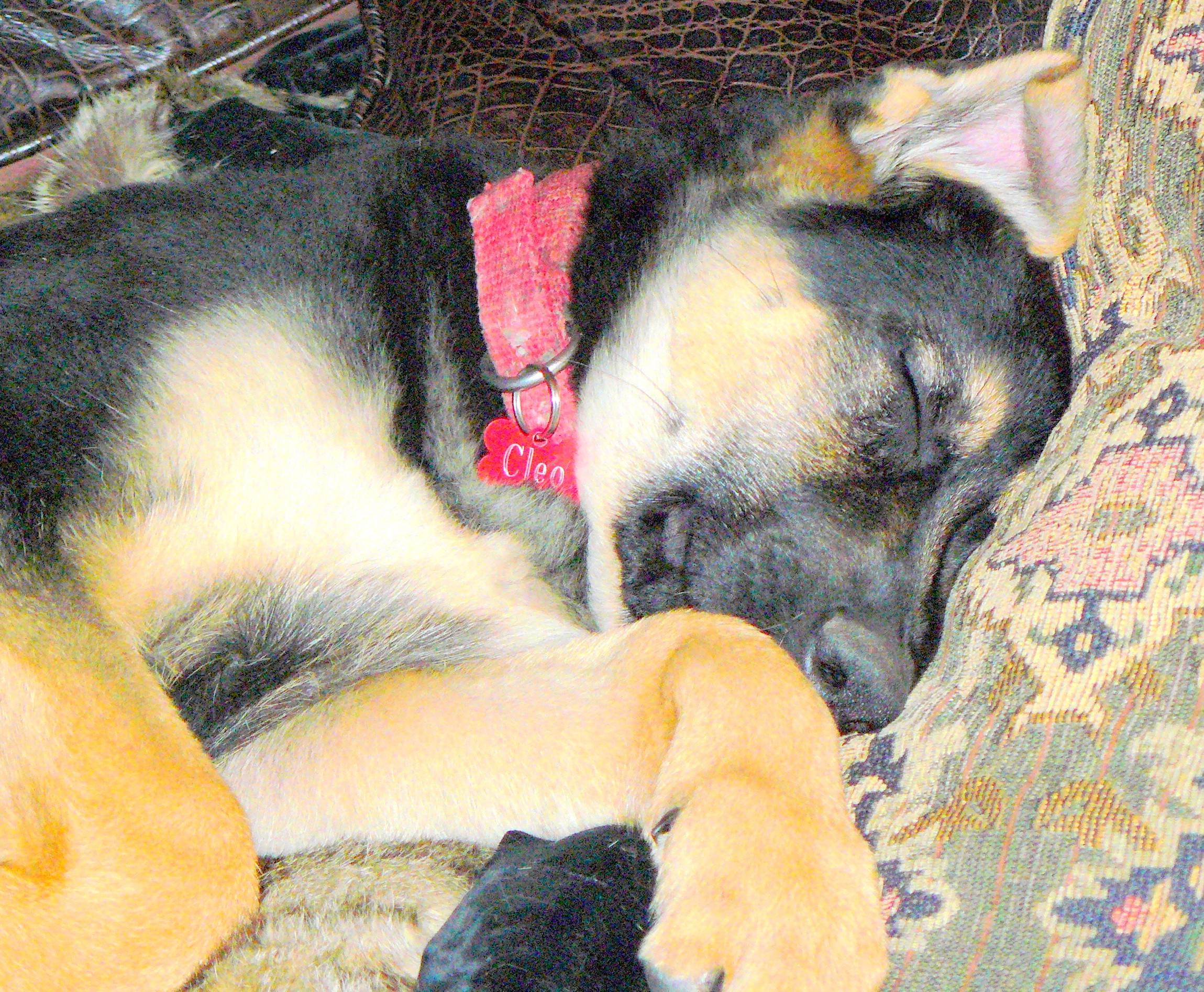
In contrast, your Cleo displaying a nose for a comfortable seating place!
In contrast, young Cleo displaying a nose for a comfortable seating place!

You all have a good week.

Dogs and the inside of our souls!

The role of dogs in helping young offenders.

In these times of terrible inequality, if there is one thing that has the power to crush a young person’s chances in life it is a criminal record, even a minor one. This is well-known in the UK. For a number of years I was a mentor with what was then called the Prince’s Youth Business Trust (PYBT) and now is just simply called The Prince’s Trust.

What was discovered, courtesy of the PYBT, was that if one taught disadvantaged youngsters the principles of forming and running your own business there were two positive outcomes. The first was that the young person performed much better at job interviews, and increased his or her odds of getting a job offer, and some young persons decided to start their own business; some very successfully so.

Thus with that background it was natural that an article in the US edition of The Economist caught my eye. It was called Pups and perps.

Pups and perps

What has four legs, a wet nose and helps young thugs grow up?

Dec 6th 2014 | LOS ANGELES | From the print edition

WHEN Jordan entered juvenile detention shortly after his 17th birthday, following a conviction for assault and robbery, all he could think about was getting out. The rowdy teenager from Anaheim, California, struggled to control his temper. But when he began working with Lulu, a poodle mix, he got a new leash on life. “I was too busy taking care of the dog to get into fights,” he says.

Jordan was taking part in “Pups and Wards”, a programme that pairs shelter dogs with young inmates. The perps train the pups and, with luck, learn something about personal responsibility. Other programmes allow prisoners to train dogs to be adopted by people with disabilities, such as traumatised veterans. Such training often requires full-time care—but prisoners have plenty of time on their hands.

The Economist article later on reports:

“All the research about the human-animal bond has buoyed these programmes,” says Gennifer Furst, a professor of criminal justice. “We have discovered that prisoners often identify with rescue dogs—they have both experienced trauma—and they are eager to become their protectors.” Crystal Wood, an officer at a maximum-security prison in Lancaster, California, says that several inmates on her yard—who are in prison for life—wept after interacting with dogs. “Many of these guys haven’t seen an animal in decades. It’s been striking to see how much working with a dog has reduced their anxiety levels.”

It was easy to find more information on Professor Gennifer Furst from the William Paterson University website:

Gennifer Furst received her B.A. in psychology (with a sociology minor) from Connecticut College and her M.A. in psychology (with a concentration in evaluation methodology) from Claremont Graduate University. She received her doctorate in criminal justice (with a concentration in corrections) from CUNY Graduate Center.

Dr. Furst is the Department of Sociology’s Criminal Justice Director. Dr. Furst’s research interests focus on issues of incarceration. She published the first national survey of prison-based animal programs in the US. A book based on that work was recently published. Additionally, she is interested in race and the administration of criminal justice, the death penalty, the use of animals in the criminal justice system, and the relationship between drugs and crime.

Read the rest of the good Professor’s background here.

Imagine my pleasure in finding that there is a film Dogs on the Inside and that YouTube carries an official trailer.

As the film website states: “Everyone deserves a second chance.

So if you are motivated to get involved then don’t hesitate to return to the film’s website and read the Get Involved page.

The power of love.
The power of love.

Humans, and one particular dog!

Returning to a favourite story about one of our dogs.

Yesterday’s post, the second this week about the long history of humans and dogs ended with me sharing a photograph of Hazel looking up at me as I was writing the post.  Here it is again.

Dogs are such wonderful animals.

Later in the evening, thinking about how much we can learn from dogs (and, thank you so much, Deborah of Dog Leader Mysteries) my mind turned to the wonderful motivation dogs are for creative writing whether that is non-fiction, creative non-fiction or fiction.

In turn that reminded me of when, in the Summer of 2011, Jean and I attended a creative writing course at our nearby college in Payson, Arizona where we were then living. Here’s a story from that time that is fictional, in the sense that the event did not take place, but the names of all concerned, photographs and location are real!

ooOOoo

Messages from the Night

by Paul Handover

Dhalia heads for the hills!

Jean, where’s Dhalia?

Don’t know. She was here moments ago.”

Jeannie, You take the other dogs back to the car and I’ll go and scout around for her. Oh, and you better put Pharaoh on the leash otherwise you know he’ll follow me.

Paul, don’t worry, Dhalia’s always chasing scents; bet she beats us back to the car. Especially as it’s going to be dark soon.

Nonetheless, Paul started back down the dusty, dirt road, the last rays of the sun pink on the high, tumbled cliffs of granite. This high rocky, forest plateau, known as the Granite Dells, just 3 miles from their home on the outskirts of Payson, made perfect dog-walking country and rarely did they miss an afternoon out here. However this afternoon, for reasons Paul was unclear about, they had left home much later than usual.

No sign of Dhalia ahead on the road so he struck off left, hoping she was somewhere up amongst the trees and the high boulders. Soon he reached the first crest, panting hard in the thin air. Behind him, across the breath-taking landscape, the setting sun had dipped beneath faraway mountain ridges; a magnificent sight. Suddenly, in the midst of that brief pause of admiring the perfect evening, a sound echoed around the cliffs. The sound of a dog barking. Paul bet his life on that being Dhalia. Just as quickly the barking stopped.

Challenging walking country.

The barking started up again, barking that suggested Dhalia was hunting something. The sound came from an area of boulders way up above the pine trees on the other side of the small valley ahead of him.

Perhaps, Dhalia had trapped herself. More likely, he reflected, swept up in the evening scents of the wilderness, Dhalia had temporarily reverted back to the wild, hunting dog she had been all those years ago. That feral Mexican street dog who in 2005 had tentatively turned away from scavenging in a pile of rubbish in a dirty Mexican town and shyly approached Jean. Jean had named her Dhalia.

He set off down to the valley floor and after fifteen minutes of hard climbing had reached the high boulders the other side. Paul whistled, then called “Dhalia! Dhalia! Come, there’s a good girl.

Thank goodness for such a sweet, obedient dog.

He anticipated the sound of dog feet scampering through rough undergrowth. But no sound came.

He listened; no sounds, no more barking. Now where had she gone? Perhaps past these boulders down into the steep ravine beyond him, the one so densely forested with pine trees. With daylight practically gone he needed to find Dhalia very soon. He plunged down the slope, pushing through tree branches that whipped across his face, then fell heavily as his foot found empty space instead of the anticipated firm ground.

Paul cursed, picked himself up and paused. That fall had a message: the madness of continuing his search in the near dark. This terrain made very rough going even in daylight. At night, the boulders and plunging ravines would guarantee a busted body, at best! Plus, he ruefully admitted, he didn’t have a clue about finding his way back to the road from wherever he was!

The unavoidable truth smacked him full in the face. He would be spending this night alone in the high, open forest!

It had one hell of a very scary dimension. He forced himself not to dwell on just how scary it all felt. He needed to stay busy, find some way of keeping warm; last night at home it had dropped to within a few degrees of freezing. Paul looked around, seeing a possible solution. He broke a small branch off a nearby mesquite tree and made a crude brush with which he swept up the fallen pine needles he saw everywhere about him. Soon he had a stack sufficient to cover him, or so he hoped.

Thank goodness that when he and Jeannie had decided to give four dogs of their dogs this late afternoon walk, he had jeans and a long-sleeved shirt on, a pullover thrown over his shoulders. Didn’t make Dhalia’s antics any less frustrating but he probably wasn’t going to freeze to death!

The air temperature sank as if connected with the last rays of the sun. Paul’s confidence sank in harmony with the temperature. He lay down, shuffled about, swept the pine needles across his body, tried to find a position that carried some illusion of comfort. No matter the position, he couldn’t silence his mind. No way to silence the screaming in his head, his deep, primeval fear of this dark forest about him, imagination already running away with visions of hostile night creatures, large and small, watching him, smelling him, biding their time.

Perhaps he might sleep for a while? A moment later the absurdity of that last thought hit him. Caused him to utter aloud, “You stupid sod. There’s no way you’re going to sleep through this!

His words echoed off unseen cliffs in the darkness, reinforcing his sense of isolation. He was very frightened. Why? Where in his psyche did that come from? He had spent many nights alone at sea without a problem, a thousand miles from shore. Then, of course, he knew his location, always had a radio link to the outside world. But being lost in this dark, lonely forest touched something very deep in him.

Suddenly, he started shivering. The slightest movement caused the needles to slip from him and the cold night air began to penetrate his body. He mused about how cold it might get and, by extension, thanked his lucky stars that the night was early October not, say, mid-December. So far, not too cold, but soon the fear rather than the temperature started to devour him. What stupid fool said, ‘Nothing to fear but fear itself!’ His plan to sleep under pine needles, fear or no fear, had failed! He couldn’t get warm. He had to move.

He looked around, saw an enormous boulder a few yards away, like some giant, black shadow. No details, just this huge outline etched against the night. Paul carefully raised himself, felt the remaining needles fall away, and gingerly shuffled across to the dark rock. He half-expected something to bite his extended hand as he explored the surface, as he ran his hand down towards the unseen ground. Miracle of miracles, the granite gently emitted the warmth absorbed from the day’s sun. He slowly settled himself to the ground, eased his back against the rock-face and pulled his knees up to his chest. He felt so much less vulnerable than when he had been flat out on the forest floor. Paul let out a long sigh, then burst into tears, huge heart-rending sobs coming from somewhere deep within him.

Gradually the tears washed away his fear, restored a calmer part of his brain. That calmer brain brought the realisation that he hadn’t considered, well not up until now, what Jeannie must be going through. At least he knew he was alive. Jeannie, not knowing, would be in despair. He bet she would remember that time when out walking here in the Dells they had lost little Poppy, an adorable ten-pound poodle mix, never to be found again despite ages spent combing the area, calling out her name. A year later and Jeannie still said from time to time, “I so miss Poppy!“. First Poppy and now him! No question, he had to get through this in one piece, mentally as much as physically.

Presumably, Jeannie would have called 911 and been connected to the local search and rescue unit. Would they search for him in the dark? He thought unlikely.

A vast stellar clock.

Thinking about her further eased his state of mind and his shivering stopped. Thank goodness for that! Paul fought to retain this new perspective. He would make it through, even treasure this night under the sky, this wonderful, awesome, night sky. Even the many pine tree crowns that soared way up above him couldn’t mask a sky that just glittered with starlight. Payson, at five-thousand feet, had many beautifully clear skies and tonight offered a magical example.

Frequently during his life, the night skies had spoken to him, presented a reminder of the continuum of the universe. On this night, however, he felt more humbled by the hundred, million stars surrounding him than ever before.

Time slipped by, his watch in darkness. However, above his head that vast stellar clock. He scanned the heavens, seeking out familiar pinpoints of light, companions over so much of his lifetime. Ah, there! The Big Dipper, Ursa Major, and, yes, there the North Pole star, Polaris. Great! Now the rotation of the planet became his watch, The Big Dipper sliding around Polaris, fifteen degrees for each hour.

What a situation he had got himself into. As with other challenging times in his life, lost in the Australian bush, at sea hunkering down through a severe storm, never a choice other than to work it out. Paul felt a gush of emotion from the release this changed perspective gave him.

Far away, a group of coyotes started up a howl. What a timeless sound, how long had coyotes been on the planet? He sank into those inner places of his mind noting how the intense darkness raised deep thoughts. What if this night heralded the end of his life, the last few hours of the life of Paul Handover? What parting message would he give to those that he loved?

Jeannie would know beyond any doubt how much he had adored her, how her love had created an emotional paradise for him beyond measure. But his son and daughter, dear Alex and Maija? Oh, the complexities he had created in their lives by leaving their mother so many years ago. He knew that they still harboured raw edges, and quite reasonably so. He still possessed raw edges from his father’s death, way back in 1956. That sudden death, five days before Christmas, so soon after he had turned twelve, that had fed a life-long feeling of emotional rejection. That feeling that lasted for fifty-one years until, coincidentally also five days before Christmas, he had met Jean in 2007.

His thoughts returned to Alex and Maija. Did they know, without a scintilla of doubt, that he loved them. Maybe his thoughts would find them. Romantic nonsense? Who knows? Dogs had the ability to read the minds of humans, often from far out of visual range. He knew Pharaoh, his devoted German Shepherd, skilfully read his mind.

Paul struggled to remember that saying from James Thurber. What was it now? Something about men striving to understand themselves before they die. Would that be his parting message for Alex and Maija? Blast, he wished he could remember stuff more clearly these days and let go of worrying about the quote. Perhaps his subconscious might carry the memory back to him.

He looked back up into the heavens. The Big Dipper indicated at least an hour had slipped by. Gracious, what a sky in which to lose one’s mind. Lost in that great cathedral of stars. Then, as if through some passing of consciousness, the Thurber saying did come back to him: All men should strive to learn before they die, what they are running from, and to, and why. As last words they would most certainly do for Alex and Maija!

Paul reflected on those who, incarcerated in solitary confinement, had their minds play many tricks, especially when it came to gauging time. What a bizarre oddment of information; where had that come from? Possibly because he hadn’t a clue about his present time. It felt later than 11pm and earlier than 4am, but any closer guess seemed impossible. Nevertheless, from out of those terrible, heart-wrenching hours of being alone he had found calm, had found something within him. He slept.

Suddenly, a sound slammed him awake. Something out there in the dark had made a sound, caused his whole body to become totally alert, every nerve straining to recognise what it might be. It sounded like animal feet moving through the autumn fall of dead leaves. He prayed it wasn’t a mountain lion. Surely such a wild cat preparing to attack him would be silent. Now the unknown creature had definitely paused, no sound, just him knowing that out there something waited. Now what, the creature had started sniffing. He hoped not a wild pig. Javelinas, those pig-like creatures that always moved in groups, could make trouble – they had no qualms at attacking a decent-sized dog.

Poised to run, he considered rising but chose to stay still and closed his right-hand around a small rock. The sniffing stopped. Nothing now, save the sound of Paul’s rapid, beating heart. He sensed, sensed strongly, the creature looking at him. It seemed very close, ten or twenty feet away. The adrenalin hammered through his veins.

He tried to focus on the spot where he sensed the animal waited; waited for what? He pushed that idea out of his head. His ears then picked up a weird, bizarre sound. Surely not! Had he lost his senses? It sounded like a dog wagging its tail; flap, flap, flapping against a tree-trunk.

A dog? If a dog, it had to be Dhalia!

Then came that small, shy bark! A bark he knew so well. Oh wow, it is Dhalia. He softly called, “Dhalia, Dhalia, come here, there’s a good girl.”

With a quick rustle of feet Dhalia leapt upon him, tail wagging furiously, her head quickly burrowing into Paul’s body warmth. He hugged her and, once more, tears ran down his face. Despite the darkness, he could see her perfectly in his mind. Her tight, short-haired coat of light-brown hair, her aquiline face, her bright inquisitive eyes and those wonderful head-dominating ears. Lovely large ears that seemed to listen to the world. A shy, loving dog when Jean had rescued her in 2005 and these years later still a shy, loving dog.

Dhalia licked his tears, her gentle tongue soft and sweet on his skin. He shuffled more onto his back which allowed her to curl up on his chest, still enveloped by his arms. His mind drifted away to an era long time ago, back to an earlier ancient man, likewise wrapped around his dog under a dome of stars, bonded in a thousand mysterious ways.

The morning sun arrived as imperceptibly as an angel’s sigh. Dhalia sensed the dawn before Paul, brought him out of his dreams by the slight stirring of her warm, gentle body.

Yes, there it came, the end of this night. The ancient sun galloping towards them across ancient lands, another beat of the planet’s heart. Dhalia slid off his chest, stretched herself from nose to tail, yawned and looked at him, as much to say time to go home! He could just make out the face of his watch; 4.55am. He, too, raised himself, slapped his arms around his body to get some circulation going. The cold air stung his face, yet it couldn’t even scratch the inner warmth of his body, the gift from the loving bond he and Dhalia had shared.

They set off and quickly crested the first ridge. Ahead, about a mile away, they saw the forest road busy with arriving search and rescue trucks. Paul noticed Jean’s Dodge parked ahead of the trucks and instinctively knew she and Pharaoh had already disappeared into the forest, Pharaoh leading the way to them.

Pharaoh and Jean heading up the search.

They set off down the slope, Dhalia’s tail wagging with unbounded excitement, Paul ready to start shouting for attention from the next ridge. They were about to wade through a small stream when, across from them, Pharaoh raced out of the trees. He tore through the water, barking at the top of his voice in clear dog speak, ‘I’ve found them, they’re here, they’re safe’.  Paul crouched down to receive his second huge face lick in less than six hours.

Later, safely home, it came to Paul. When they had set off in that early morning light, Dhalia had stayed pinned to him. So unusual for her not to run off. Let’s face it, that’s what got them into the mess in the first place. Dhalia had stayed with him as if she had known that during that long, dark night, it had been he who had been the lost soul.

The message from the night, as clear as the rays of this new day’s sun, the message to pass to all those he loved. If you don’t get lost, there’s a chance you may never be found.

Lost and found!

Copyright © 2011, Paul Handover

ooOOoo

Dhalia died peacefully on April 7th, 2014.

The continuing story of dogs and humans.

Staying with the theme of the relationship with humanity’s oldest friend.

Yesterday, I offered the first of two articles forwarded to me by local friend Jim, a vet, about the domestication of the wolf.

Here is the second.

Study narrows origin of dogs

By Krishna Ramanujan/ January 16th, 2014

Genomic sequencing of genetically divergent dogs, such as this basenji from the Congo, together with wolves and other wild canids, provides rich information about the history of domestic dogs.

The paper did not include a picture of Baa dogs but a web search found the one above. Source:https://www.basenji.org/BasenjiU/Owner/103History/103History.html
The paper did not include a picture of Basenji dogs but a web search found the one above. Source: https://www.basenji.org/BasenjiU/Owner/103History/103History.html

Dogs were domesticated between 9,000 and 34,000 years ago, suggesting the earliest dogs most likely arose when humans were still hunting and gathering – before the advent of agriculture around 10,000 years ago, according to an analysis of individual genomes of modern dogs and gray wolves.

An international team of researchers, who published their report in PLoS Genetics Jan. 16, studied genomes of three gray wolves, one each from China, Croatia and Israel – all areas thought to be possible geographic centers of dog domestication. They also studied dog genomes from an African basenji and an Australian dingo; both breeds come from places with no history of wolves, where recent mixing with wolves could not have occurred.

Their findings revealed the three wolves were more closely related to each other than to any of the dogs. Likewise, the two dog genomes and a third boxer genome resembled each other more closely than the wolves. This suggests that modern dogs and gray wolves represent sister branches on an evolutionary tree descending from an older, common ancestor. The results contrast with previous theories that speculated dogs evolved from one of the sampled populations of gray wolves.

This is an incredibly rich new dataset, and it has allowed us to carry out the most detailed analysis yet of the genetic history of dogs and wolves,” said Adam Siepel, associate professor of biological statistics and computational biology at Cornell and a co-author of the paper. “There are still many open questions, but this study moves the ball forward,” Siepel added.

Computer methods for analyzing complete genome sequences developed by Ilan Gronau, the paper’s second author and a postdoctoral associate in Siepel’s lab, played a key role in the collaboration. Gronau’s computer program, called G-PhoCS (Generalized Phylogenetic Coalescent Sampler), was previously applied with success in a 2011 Nature Genetics study of early human history and demographics.

In this case, G-PhoCS provided a detailed picture of the demographic changes that occurred during the divergence of dogs from wolves. The analysis revealed there was a sizable pruning in population of early dogs and wolves around the time of domestication. Dogs suffered a sixteenfold cut in population size as they diverged from an early wolf ancestor. Gray wolves also experienced sharp drops in population, suggesting that the genetic diversity among both species’ common ancestors was larger than represented by dogs and modern wolves. In addition, there was considerable gene flow between dogs and wolves after domestication. Accounting for gene flow was a major challenge in the analysis, and Gronau’s research on this topic proved valuable in obtaining an accurate model of canid demography.

The picture emerging from this study will allow researchers to better interpret genetic differences observed between dogs and wolves and to identify differences driven by natural selection. “This paper sets the stage for the next step in the study of dog domestication that tries to determine the genetic changes that enabled this amazing transformation,” said Gronau.

The study’s senior authors included geneticists John Novembre at the University of Chicago and Robert Wayne at the University of California, Los Angeles (UCLA). Adam Freeman, a postdoctoral fellow at UCLA, was the paper’s first author. Adam Boyko, a Cornell assistant professor of biomedical sciences, also co-authored the paper.

The study was funded by various sources, including the National Science Foundation, National Institutes of Health and Life Technologies.

Staying with the theme of our early companions, back on the 28th February, 2015 there was an article in the UK’s Guardian newspaper about the way wolves helped early modern man.  Now I don’t have permission to republish the full article but here’s a taste:

How hunting with wolves helped humans outsmart the Neanderthals

Forty thousand years ago in Europe our ancestors formed a crucial and lasting alliance that enabled us to finish off our evolutionary cousins, the Neanderthals.

 A pack of dire wolves crosses paths with two mammoths during the Upper Pleistocene Epoch. Photograph: Alamy
A pack of dire wolves crosses paths with two mammoths during the Upper Pleistocene Epoch. Photograph: Alamy

Dogs are humanity’s oldest friends, renowned for their loyalty and abilities to guard, hunt and chase. But modern humans may owe even more to them than we previously realised. We may have to thank them for helping us eradicate our caveman rivals, the Neanderthals.

According to a leading US anthropologist, early dogs, bred from wolves, played a critical role in the modern human’s takeover of Europe 40,000 years ago when we vanquished the Neanderthal locals.

The Guardian article finishes, thus:

Thus we began to change the wolf’s appearance and over the millennia turned them into all the breeds of dog we have today, from corgis to great Danes. Intriguingly, they may have changed our appearances as well, says [Professor Pat] Shipman, whose book, The Invaders: How Humans and Their Dogs Drove Neanderthals to Extinction, will be published this month. Consider the whites of our eyes, she states. The wolf possesses white sclera as does Homo sapiens though, crucially, it is the only primate that has them.

The main advantage of having white sclera is that it is very easy to work out what another person is gazing at,” added Shipman. “It provides a very useful form of non-verbal communication and would have been of immense help to early hunters. They would been able to communicate silently but very effectively.

Thus the mutation conferring white sclera could have become increasingly common among modern humans 40,000 years ago and would have conferred an advantage on those who were hunting with dogs.

By contrast, there is no evidence of any kind that Neanderthals had any relationship with dogs and instead they appear to have continued to hunt mammoths and elks on their own, a punishing method for acquiring food. Already stressed by the arrival of modern humans in Europe, our alliance with wolves would have been the final straw for Neanderthals.

Nor does the story stop in Europe, added Shipman. “I would see this as the beginning of the humans’ long invasion of the world. We took dogs with us wherever we went after our alliance formed in the palaeolithic. We took them to America and to the Pacific Islands. They made hunting easy and helped guard our food. It has been a very powerful alliance.

RISE AND FALL OF NEANDERTHALS

250,000 years ago The first Neanderthals appear in Europe.

200,000 years The first modern humans appear in Africa.

70,000 years The first modern humans leave Africa.

50-60,000 years Modern humans and Neanderthals share territory in Middle East.

45,000 years Modern humans enter Europe.

40,000 years Neanderthals disappear.

I don’t know about you but I find the history of our, as in man’s, relationship with wolves and thence with dogs to be not just romantic but spiritually significant. To know, as I hug one of our many huggable dogs here at home, that I am bonding my mind and emotions with an animal that has been my partner for tens of thousands of years is beautiful beyond words.

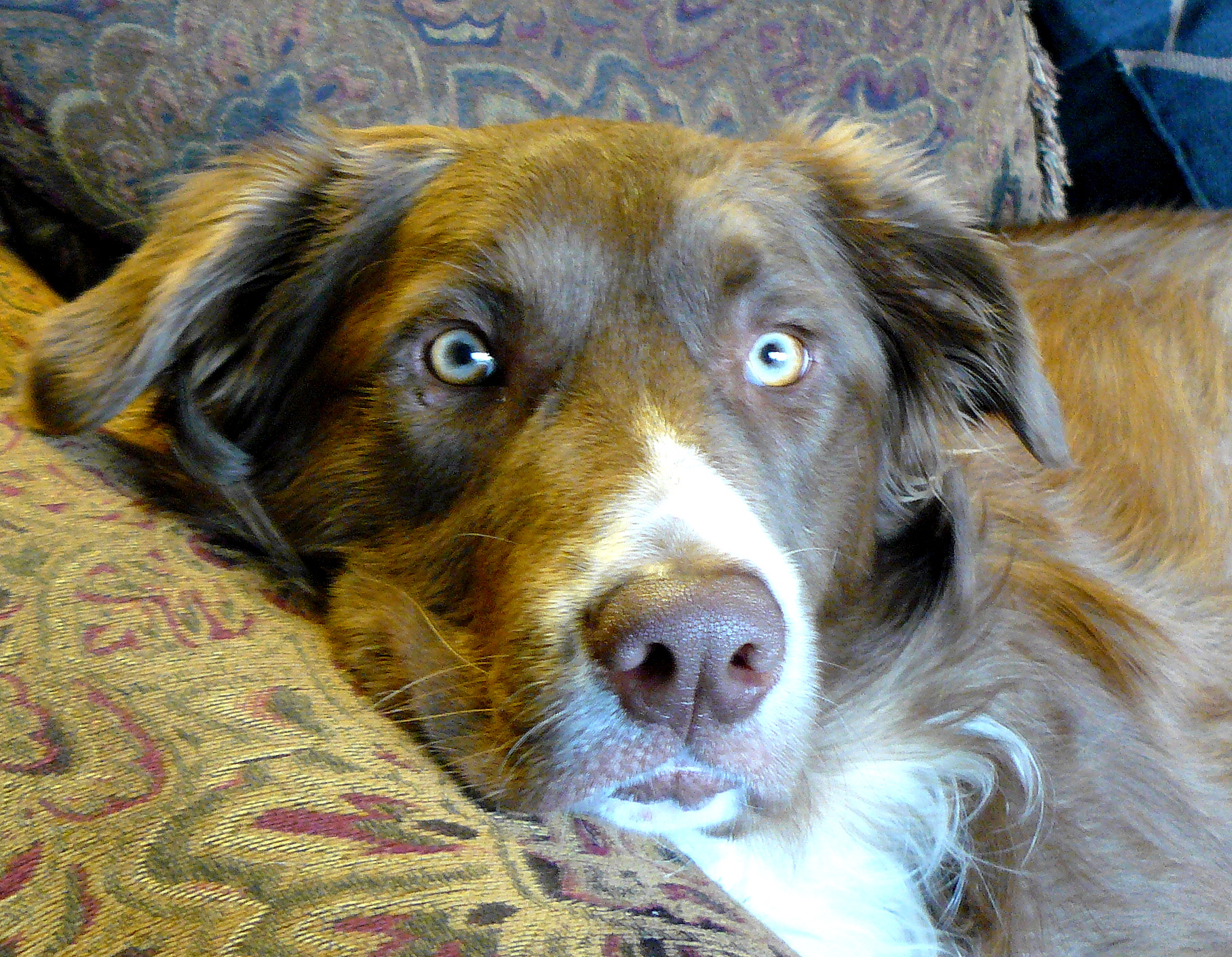
(I took a break of a couple of minutes at this point to grab my camera and take a photograph of Hazel sleeping next to my chair, as she so often does when I am writing. Then one of her when she looked up at me. Here they are:)

P1150507

oooo

P1150508

That second photograph reminds me that somewhere I read that dogs are the only animal that can look to where a human is directing a gaze or pointing a finger.

What an incredible relationship!

Humans and dogs go back a very long way!

The revised understanding of humanity’s oldest friend.

I mentioned in yesterday’s post how on Sunday afternoon, Jean and I, together with little Sweeny, went for a forest walk with friends, Janet and Jim and their dog Louie, who all live a few hundred yards from us along Hugo Road.

As Jim, a vet, and I were walking and chatting the subject, inevitably, turned to dogs! Or more precisely the history of the domestication of dogs. Jim then promised to send me a couple of papers highlighting a new study that has turned the clock back, so to speak, on when domestic dogs evolved from European wolves.

Here’s the first of those reports.

Origin of Domestic Dogs

New analysis suggests that domestic dogs evolved from European wolves that interacted with human hunter-gatherers.

By Ed Yong | November 14, 2013

Domestic dogs evolved from a group of wolves that came into contact with European hunter-gatherers between 18,800 and 32,100 years ago and may have since died out.

This origin story comes from a new study that compares DNA from dozens of dogs and wolves, including 18 ancient fossils. The results, published today (November 14) in Science, provide the clearest picture yet of where, when, and how wild predators came to be man’s best friend.

It really is a sea change from the little bits of fragmentary DNA that have been reported in the past,” said Gregor Larson from Durham University in the U.K., who was not involved in the study. “It includes really old material from a wide range of sites.

The new paper follows two earlier studies that looked at the genetic signatures of domestication in dogs, and came to differing conclusions about canine origins. One group suggested that dogs were domesticated around 10,000 years ago during the Agricultural Revolution, when wolves started scavenging human scrap heaps. Another concluded that wolves and dogs split 32,000 years ago, somewhere in East Asia.

Both studies compared the genes of a wide variety of living dogs and wolves, but modern samples can be deceptive. Dogs and wolves diverged so recently that many of their genes have not had time to separate into distinct lineages. They have also repeatedly hybridized with each other, further confusing their genealogies.

To deal with these problems, a team led by Olaf Thalmann from the University of Turku in Finland analyzed mitochondrial DNA from 18 fossil canids. They compared these ancient sequences to those from 49 modern wolves and 77 modern dogs, and built a family tree that charts their relationships.

The tree conclusively pinpointed Europe as the major nexus of dog domestication. It identified four clades of modern dogs, which are all most closely related to ancient European canids rather than wolves from China or the Middle East. “We didn’t expect the ancestry to be so clearly defined,” Thalmann told The Scientist.

This suggests that the population of wolves in Europe that gave rise to modern dogs may have gone extinct, which is plausible given how humans have wiped out wolves over the centuries,” he added.

According to this new tree, the largest clade of domestic dogs last shared a common ancestor 18,800 years ago, and collectively, they last shared a common ancestor with a wolf around 32,100 years ago. They must have been domesticated at some point during this window.

These molecular dates fit with fossil evidence. The oldest dog fossils come from Western Europe and Siberia, and are thought to be at least 15,000 years old. By contrast, those from the Middle East and East Asia are believed to be 13,000 years old, at most. “The archaeologists would be happy,” said Larson.

The dates also make it unlikely that dogs were domesticated during the Agricultural Revolution, which took place millennia later. Instead, they must have first associated with European hunter-gatherers. They may have assisted humans in bringing down large prey, or could simply have scavenged leftover carcasses. Either way, their association with humans grew stronger and stronger, until they eventually evolved into domestic dogs.

However, Thalmann acknowledged that his team’s analysis does not include any ancient DNA from the Middle East or China, nor nuclear DNA from any of the fossils. In other ancient DNA studies, nuclear DNA sequences have revised the evolutionary stories told by mitochondrial ones.

Who knows what we would find if we had ancient canid samples from East Asia or elsewhere, or were successful in amplifying nuclear DNA from ancient canids,” said Adam Boyko from Cornell University, who was not involved in the study, via email. “But that shouldn’t detract from the great work they were able to do here,” he added.

Larson cautioned that the paper is not the final word on canine origins. “It would be a mistake to jump and say that dogs were domesticated in Europe and not anywhere else,” he said. “We know pigs were domesticated independently in China and Turkey, so there’s no thinking that dog domestication had to happen in just one place.”

Indeed, Thalmann’s team showed that the famous Goyet dog—a 36,000 year old Belgian skull, supposedly belonging to the oldest known dog — is not directly ancestral to modern dogs. Instead, it represents an ancient sister lineage that died out. The same is true for other old specimens from Belgium and Russia’s Altai Mountains. “Maybe they were trial domestications that were not successful,” said Thalmann.

O. Thalmann et al., “Complete mitochondrial genomes of ancient canids suggest a European origin of domestic dogs,” Science, doi:10.1126/science.1243650, 2013.

Clearly, a blog that is entitled Learning from Dogs needs to take notice of this new evidence!

So I will return tomorrow with the second of the reports.

Remains for the older prehistoric dog, which were excavated at Goyet Cave in Belgium, suggest to the researchers that the Aurignacian people of Europe from the Upper Paleolithic period first domesticated dogs.

Dog wisdom

The magic of untold numbers of connections.

It is becoming an oft-repeated theme by me; the power of the connections that exist between the thousands of bloggers. Again, regular readers (thank you!) will not be surprised to hear me say that this power of connectivity may be the ultimate force that stops humanity from going past a point of no return in terms of the viability of our planet to sustain us and all of life. (And to reinforce that in spades, tomorrow I am republishing a recent item from Martin Lack; he of Lack of Environment.)

Let me just play a little more with this idea of the connectivity between us bloggers. Theoretically, if one had five bloggers all following each other then the number of permutations between those five bloggers would be factorial 5, or 120 connections. If there were ten bloggers all following each other, then the number of connections would be 3,628,800! (Background maths here.) I’m certain that there are more than ten bloggers whom I follow and who in turn follow me.

All of which is a preamble to a recent post from fellow blogger Mark M. Rostenko over on his wonderful blog Call Of The Wilderness. He recently published an item with the title of Dog Wisdom and I have the very great pleasure in reposting it here, with Mark’s kind permission.

ooOOoo

Dog Wisdom

We don’t have to live deep in the wilds at the end of a long dirt road to learn from Nature. She’s everywhere; in our hearts, our minds, our bodies… our pets. Frankly, I’ve learned more about living authentically from my dogs than from any authority, parent, classroom, job, book or so-called expert.

Sami’s old. Around ninety in people-years. She mounts the stairs one careful step at a time these days, however she must to curl up by her dad as she has almost every night since I rescued her from the shelter just yesterday… or was it thirteen years ago? It’s said that dogs sleep facing outward from the pack, positioned to notice and respond immediately to threats. Sami doesn’t anymore. Recently she’s taken to lying towards me, as if to say “I can’t protect you anymore… I’m old and weak and vulnerable… and I need you to watch out for me from now on.” But a glimmer of pride sparkles in her eyes as she leaps onto the bed unassisted; it’s been there a few months, ever since the night after her legs gave out and she crashed to the floor in her attempt. I think she felt my heart break, and bless her velvety, floppy Lab ears, she vowed to stay strong for her worried dad.

We don’t hike anymore; this terrain’s hard on her withering hinds. We just saunter casually down the dirt road a couple times a day, as far as makes her happy… not so far. But I still see remnants of her bouncy puppy-gait, that “stretch-and-stand-tall-so-I-can-see-as-much-of-this-deliciously-exciting-world-as-I-possibly-can” spring in her step unleashed only after time had carried away the neglect of her former life. And once in a while after a hardy dose of love she’ll still crouch down in the “let’s play!” chin-to-the-ground puppy posture before tearing off into a spastic circle of rambunctious frenzy like the young’uns do.

I like to watch her when we walk, the soft ripples of footfalls reverberating through her age-slackened flesh, how the slight bottom-curl of her ears unfurls with every bob of her moist snout. I take in as much of her as I can because any day now omens of finality will alight to the shadows and perch among the pines waiting to guide her back to the oneness from whence she came. And I see in her gait that no matter how old, no matter how tired, no matter how many tumors and aches, Sami’s as thrilled to walk as ever, her enthusiasm fading not one smidge.

Will I thrill so at ninety? Probably not. Likely I’ll dwell on aches and pains and look back at all I’ve lost, at what I no longer can, as we humans tend. But not Sami. Sami doesn’t think about what she’s lost; Sami just enjoys what’s still hers… fully and without reservation. Sami worries not of what she can’t, delighting only in what she still can.

Her joie de vivre is the effervescence of perpetual gratitude. Not submissive lip-service borne upon fears of eternal damnation but a physical affirmation of genuine grace and gratitude: living life fully, sans complaint, thoroughly consumed with blessings of the moment. Sami, I suspect, is the pride and joy of her creator who smiles fondly upon her antics, reveling in the satisfaction that at least this one critter got the point of it all: that life is to be lived.

Sami has little choice in the matter; she’s built to live here and now, to take what comes and make the best of it. We, however, have been gifted choice… a very clear choice, if you ask me…

ooOOoo

Thanks Mark. That’s a beautiful account of the wisdom and compassion of our dogs.  They offer so many examples of grace and unconditional love to us humans!

How about dogs and boredom?

A guest post on the subject.

A fascinating look at preventing dogs from becoming bored, by guest author Amber Kingsley.

ooOOoo

Dogs and Boredom

by Amber Kingsley.

The daily care and keeping of our canine friends comprises several quotidian tasks. Feeding, walking, fresh water and brushing become just another part of our busy lives, much like our morning shower, dinner preparations, or daily commute. In the hustle and bustle, it’s important to remember that just like us, our dogs, stuck in the mix of the weekly routine, can become bored.

What does a bored dog look like? Often times, a dog that is bored will resort to bad behavior, whether it’s getting into the garbage and strewing it all over the house, or chewing on an expensive pair of dress shoes. Keeping a dog free from boredom requires some simple fixes that boil down to attention and stimulation.

In the first place, it’s necessary that a dog gets enough walking exercise to stave off boredom in addition to bad behavior. A dog that is walked regularly will be better behaved and happier in general. Walking is crucial for your dog’s overall good health both physically and emotionally; dogs experience walking with an owner as quality time that reinforces both trust and bonding.


Image Courtesy of Shutterstock.com

Dogs are very much pack animals, and they enjoy meeting new people and other dogs. Take your dog to the dog park, and bring him along in the car or to new events. Socializing your dog is a great way to keep your dog interested and well-rounded.

Though walks and trips are as necessary as feeding and grooming, one area that may fall by the wayside is play. Playtime is similar to walking in that it offers stimulation for your pet. Squeaky toys and balls are a good option for playing fetch, while rawhides or rag bones are great for games of tug. Don’t be afraid to mix it up with new tricks or toys.

Dogs are intelligent and sensitive creatures. Dogs often react in ways that we do, and just like us, they get bogged down with depressing boredom and the same old routine. In order to get through our at times hectic schedules, we get stuck in routines and forget to play. With all of the daily tasks we need to complete, we sometimes ignore the excitement of imagination or the benefits of self-examination. We are social creatures too, and getting out is just as important for us as it is for our pets, even if we would rather stay at home with the TV.

Taking care of our dog’s boredom reminds us to invest in our lives. Just as it doesn’t take much to get your furry friend’s eyes sparkling, it does us good to see the value of the simple things. Whether it’s getting out in nature, moving our bodies, or setting aside time to play with our family members and friends, we need some of the same basic maintenance as our dogs do. More than that, owning dogs teaches people how to be more human. At the end of the day, we need to bond with each other and get what we can out of our surroundings.

ooOOoo

… owning dogs teaches people how to be more human“. Ain’t that the truth!

Thank you, Amber.

Amber Kingsley.
Amber Kingsley.

By way of background, Amber is a journalist as well as a lifetime pet lover. When she’s not traveling the world, she’s usually spending time at home with her pets, and wants to help others make sure that their pets are as happy as they can be.

Don’t know about you but I would love to read more guest articles from her!  Good people, do let me have your feedback!

Picture parade eighty-five

Not bad for a dog who will be the human equivalent of aged 96 this coming June.

Pictures of Pharaoh playing in our creek taken last Tuesday.

P1150396

oooo

P1150397

oooo

P1150402

oooo

P1150403

oooo

P1150405

oooo

P1150414

oooo

What a magnificent animal he is! Thank you, Pharaoh, for being the dog you are!

A very joyful dog!

A lovely way to start a new week. Back on the 7th February, over on the blog Dog Leader Mysteries, Deborah published a post under the title of Returned to Owner: joyful dog + family. It is such a wonderful story that it is republished here, with Deborah’s kind permission.

ooOOoo

Returned to Owner: joyful dog + family

What a story plus a happy ending!

This true story comes from animal lover, dog rescuer and Redwood Writer, Brigid Wasson. I highly recommend you find and friend Brigid on Facebook and visit her Website. I posted Brigid Wasson’s bio sketch and links to her Facebook Pages at the bottom.

Brigid Wasson wrote on Facebook.

Tonight renewed my faith in the “RTO (Return To Owner) Program” that Sue Padgett and I started so long ago. Too little emphasis is placed on owner reclaims of “stray” pets in shelters, something I am working hard to change. A young couple was in a major car accident, leaving the woman disabled and in a wheelchair. Without transportation and unable to work, they fell on hard times after the accident. They had to move in with a relative who later kicked them out, and the person they trusted to care for their dog dropped him off at the County shelter. The dog wasn’t doing well at the shelter, so the director called and asked if I would take him to the humane society. We had no room, so he went to a foster home. A week later, the County shelter director called again and said the real owners had been identified. When they went to get their dog back from the person caring for him, they learned of the deception and felt devastated. Tonight, we delivered the dog to his owner in Ukiah. As soon as I turned into the parking lot of Safeway, he saw him and went crazy, whining and jumping at the window. I opened the door and he leaped into his arms, licking his face and howling “I love you.” The owner burst into tears and hugged him tight, thanking us many times. I had intended to get a photo for Facebook, but in the dark, in the rain, it was a private moment too sacred to capture. Even so, it will be in my mind forever, reaffirming why we do what we do.

I love my mom.
I love my mom.

Return to Owner story replies on Facebook

Comments: I am so happy with this outcome and glad that you were able to play such a pivotal part in getting this dog reunited with his family! I have every confidence, that as time goes by, I will be reading more stories like this as more shelters get on board with aggressive RTO efforts! Good job, Brigid! So very touching. It’s not always easy to understand why other have to drop their beloved animals at a shelter. At the time we were so quick to condemn. So glad you were able to help. Animals always remember us. Brigid’s reply

We are so quick to judge when most of us are one injury or illness away from disaster, and life can change in a moment. We gave them our numbers and assured them that they can call us if they run into trouble again.

Awesome story! Never enough happy endings! You are good, good people. This is one thing that pulls at my heart strings. Seeing a grown man cry so hard when we open the truck door and his little dog leaped into his arms and started licking him on his teary eyed face. It was a great reunion for all of us. OH WHAT A STORY! I Love it!!! Thank you for being you Brigid. Great story Brigid. Those are priceless rewards we at shelters need to hear. What a wonderful story, reaffirms my faith in The goodness of people We live for these moments! yes, by all means

—-

Please visit the Website of Brigid Wasson Good Dogs Pet Sitting and her Facebook Page Animal Shelter Success. Brigid Wasson worked for the County of Santa Clara Animal Shelter as their supervisor. She now owns and runs two business, Good Dogs Pet Sitting and The Path Ahead Animal Shelter Consulting. Since it was too dark for photographs or video, here’s another wonderful Return To Owner story. http://www.youtube.com/watch?v=qLpXnoI_hJ8

ooOOoo

Here’s my closing thought. Dogs so often bring out the best in us humans!