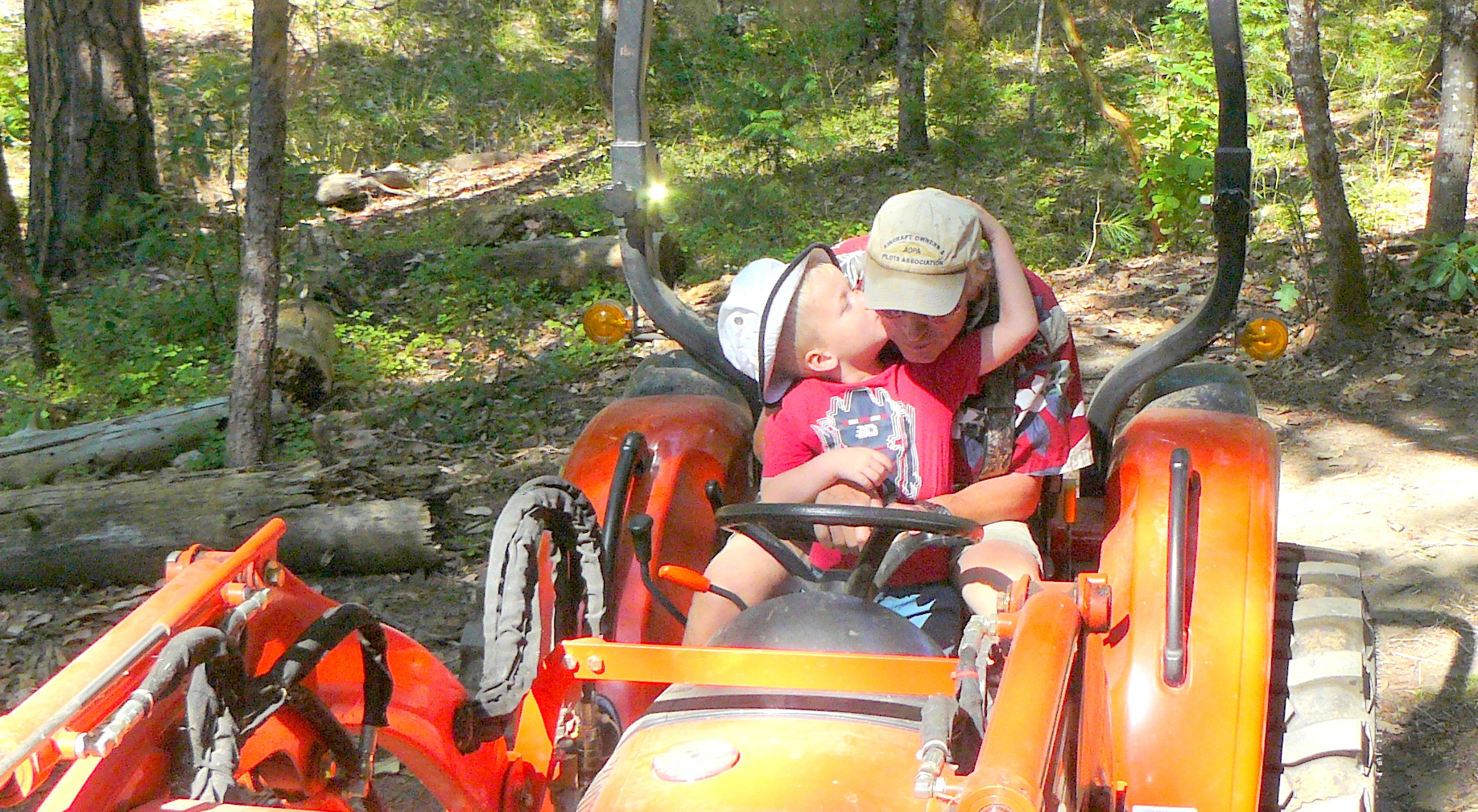
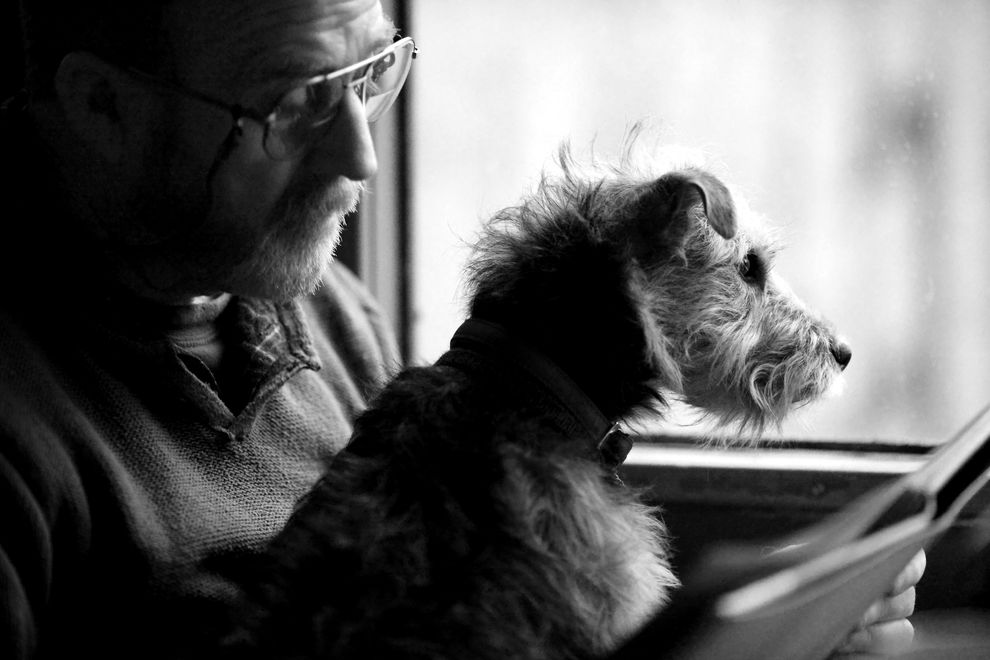
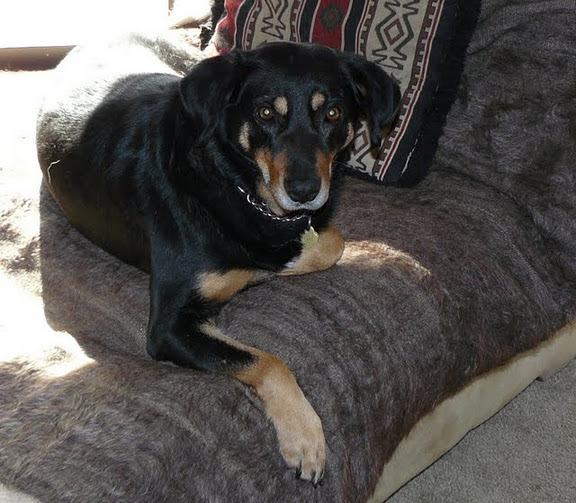
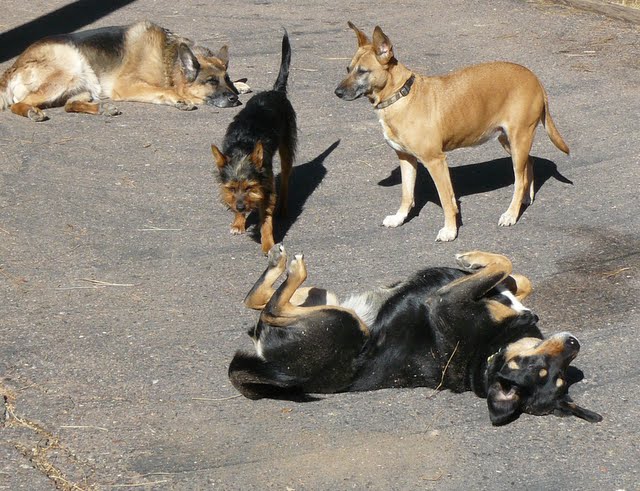
More Spring is Sprung.
(Continuing the thanks to Dordie for sending these to me.)
If you missed the first set then they may be viewed here.
Dogs are animals of integrity. We have much to learn from them.
Category: Musings
More Spring is Sprung.
(Continuing the thanks to Dordie for sending these to me.)
If you missed the first set then they may be viewed here.
And the last thing we wanted to hear.
Dear people, again I must say this:
CAUTION: The following is offered by way of information reaching out to other loving dog owners. Please do not assume I have any specialist veterinarian knowledge and please do not take the following as a replacement for seeing your own vet.
Back on the 4th May I posted the results of Hazel being scanned ultrasonically in a post Hazel’s Sonogram. Here’s a tiny extract:
Dr. Parker, who is a board-certified veterinarian doctor, came to the conclusion that the most likely cause of Hazel’s illness was the fungal lung infection, as Dr. Codd and the radiologist supposed.
But still Hazel showed too many signs that there was no improvement. Her eating was pitiful and the application of the Fluconazole (anti-fungal) medicine was not helping, bearing in mind that she was first seen by Dr. Codd over a month ago.
Dr. Codd’s advice was that we seek specialist help and yesterday morning Hazel was seen by Dr. Kimberly Winters, DVM, of Southern Oregon Veterinary Specialty Center (SOVSC) who, in addition, has a further qualification (Diplomate AVCIM) in Internal Medicine.

oooo

Jean and I were impressed by the way we were received and noted that the clinic, Southern Oregon Veterinary Specialty Center, offered a 24-hour emergency service. Here’s a piece from their home page:
At Southern Oregon Veterinary Specialty Center, we understand the special bond between a pet and their human family. Our team of highly trained doctors, certified technicians and support staff partner with your family veterinarian to provide specialized diagnostics, surgery and emergency care for your pet upon a referral or emergency basis. Our clinic is staffed 24 hours-a-day, 7 days a week, to receive emergency cases and to monitor our critical care patients. The clinic’s board-certified veterinary specialists and staff are committed to providing exceptional compassionate care utilizing state-of-the-art technology and treatments.
Then we were called in and first seen by one of the technicians to record all the details.

Then a short while later in came Dr. Winters.

Dr. Winters recommended a further xray of Hazel’s lungs and some blood work.
An hour later we had her analysis.
Dr. Winters said that while the condition of Hazel’s lungs could be an indication of a fungal infection she had her doubts. Or, in the words of her subsequent report:
There are several things that are not consistent with fungal infection – no high globulin level, no elevation in white blood cell count, no fever, negative titers, progression despite fluconazole treatment.
But the most important indicator of it being something other than a fungal infection was that the xray showed Hazel’s lungs to be worse.

This can be more readily seen if I publish the xray image of yesterday and the image taken on the 15th April; see below.


Despite not truly understanding these images both Jean and I quickly thought the top one, taken yesterday, showed a decline in Hazel’s lungs compared to the lower one, taken on the 15th April.
It was then time to seek Dr. Winters’ opinion.
Essentially, she said that she doubted the diagnosis of it being a fungal infection especially as lung fungal infections were very rare in Oregon. When I queried the fact that it might have been dormant for some time Dr. Winters thought that doubtful because the lungs, even a month ago, were displaying advanced disease.
Dr. Winters couldn’t be sure without a physical examination of the lung tissue but on the balance of probability she believed Hazel was at an advanced stage of cancer with the tumor somewhere in the body and that her lungs were showing that the cancer had metastasized!
A later discussion with Dr. Russ Codd and Jim Goodbrod confirmed this analysis with Russ thinking that the primary tumor might be in Hazel’s arteries. To a very great extent, it has become academic as Russ believes that Hazel will not have that much longer to go and that our main focus should be on keeping her quality of life as high as we can, for as long as we can.
Jean and I are devastated as you can imagine and later on when writing this post my thoughts were on some of the words added to the post Embracing Those Senior Years just last Wednesday. These words:
First from Barb of the blog Passionate about Pets:
Hariod, your comments to Paul about your GSD really touched me because I myself am in that same space now with my almost 17 year old shih-tzu. We have always had a special connection but in the last year, as her age has progressed with it’s usual complications, our relationship has moved to another level – becoming even deeper than anything I have ever experienced; so powerfully in tune with each other, it’s incredible.
As I write this, every day she is with us is a precious bonus.
Then followed by these words from Petspeopleandlife:
Our aging pets can be very troubling. I ‘ve been there and done that many times in about 60 years and even in my years before I left the farm to attend school. It doesn’t get easy and I always hate watching my pets age. It is devastating to lose them.
Then my words:
There are no favorites in our ten dogs but there are some that are more open in expressing and returning affection. It seems those dogs in particular tear us apart when they die.
For Hazel is one of those dogs.
Everything comes down to our relationships.
It is not the first time that I have written on the theme of the importance of relationships. However, I am inspired by a number of separate and discrete outcomes in the last couple of days that compell me to return to this most important principle of all: We are what we think about most.
The first outcome was a lovely reply left by Hariod Brawn to yesterday’s post. This is what she wrote:
My GSD had hip dysplasia too, Paul – if that’s what you’re alluding to with Pharaoh. He still was able to die a natural death though, as his rear quarters became paralysed with the dysplasia and he felt no pain. There were plenty of other problems resulting from his immobility, but I wouldn’t have traded those difficulties and the incredible communication we shared as a result of them, for anything – his last few weeks were some of the most powerful and precious of my entire life.
Then after my response, Hariod went on to say:
It was a deeply profound time for me, and I honestly wouldn’t have believed anyone had they told me what I experienced, but experience it I did. It was not the product of fanciful imagination, much as it might sound so in words. The communication between the two of us was quite incredible, and which really was empathic in nature, in the deepest sense of the word. We always had great communication and understanding, which all dog lovers do with their charges, of course, but this was another level altogether. Some might call it ‘psychic’, as if that meant something mystical and woo-like, but it just means ‘of the mind’. The question is, does the mind have the psychical power to share in understanding across physical borders? You will doubtless know of J. Allen Boone:
I will return to that mention of J. Allen Boone at the end of the post.
Then later on there was a further reply to the post from Barb of Passionate About Pets :
Thanks for re-publishing Gina’s post here, I found it interesting because Poppy, my little shih-tzu is an old dame now – she will be 17 in two months time. She has developed serious separation anxiety in the last year and if I am working in the garden, she barks for me to get back inside even though my husband is inside with her – she wants us BOTH with her. She is weak in her back legs so her walks are shorter. All these signs of old age make me so sad. Just like you and Pharoah, old age is creeping up on us all.
A special thank you to Hariod for including that video clip of J. Allen Boone’s dog Strongheart and the very special connection they had; he was so wise about Strongheart’s qualities – they never die. It really resonated with me.
Thank you for a wonderful post.
You can see why I entitled today’s post Relationships!
Then earlier on in my day I had a call with Jon Lavin, a friend from my days when I lived in Devon, South-West England. Jon and I still speak on a regular basis and yesterday I was complimenting Jon on a wonderful post he had written on his own business blog The People Workshop.
Jon’s post was about relationships in the workplace, his area of professional experience, and I was struck by how far the messages were relevant to all of us, in all areas of our lives. But just as key it was another reminder of the importance of all of us who express themselves on blogs; both as authors and as commentators. Because those expressions make, build and maintain great relationships.
Jon’s post is republished here with his full permission.
ooOOoo
Posted on 10 May 2016

When you look at how much of our lives we spend at work it’s really quite attention-grabbing. I did a very rough calculation based on 40 years and 40 hours a week – and I took out holidays and weekends. It works out approximately at 4900 hours. That’s a lot of hours, especially if you do lots of overtime and weekends. All of that time, you’re probably going to be mixing with people – usually, quite a large number of people.
We are ‘relationship seeking’, says Eric Berne, originator of Transactional Analysis. So for all of that time, we’re moving in and out of relationships with other people. So here, I’m categorising any interaction with another as ‘relationship’.
Then there’s what happens when we go home, another set of relationships, and where we came from – our parents and families.
So how we are in relationship with others is very important and has a major impact on the results we get generally and particularly in the context of this article, at work.
I hear a lot of talk about ’employee engagement’ at the moment. I believe that for employees to be ‘engaged’, so actively involved in what they’re doing, thinking about it, in the ‘here and now’, they’ve got to be in relationship with their manager and probably, the team they’re part of, at least, if the job is being done properly.
I see it as the role of the manager or team leader that they have the skills and ability to develop these relationships with as many team members as possible, any exclusions being the exception. This requires a lot of self-awareness and confidence, plus the ability to build high levels of trust with a wide range of character types. I think it also requires the ability to see the world from the view point of the other person – ‘putting yourself in somebody else’s shoes’, we say. That’s quite difficult to do in my experience. However, we can donate the time to get to know the people in our team and so increase the likelihood of all of us coming from the same angle.
I think this is about the ability to value the uniqueness of others in all the different forms and approaches that manifests in, and finding ways of harnessing those skills and abilities.
These are not easy things and I am aware of the relatively few, good people managers I come across in my work but it is possible to develop these skills. You need to have the intention to want the best from ALL relationships. Also, to be prepared to use the feedback we all get, especially when things don’t go to plan in a relationship, and be continually revisiting and adjusting your approach so that you get more of what works. This way, you automatically get less of what doesn’t work.
Never under estimate the power of intention.

ooOOoo
I am now going to close today’s post with those words of J. Allen Boone that Hariod had in her second reply:
To echo Jon’s closing message, let us never cease our intention of having wonderful relationships; with our dogs, with others and, not least of all, with ourselves.
And I’m speaking of our dogs as well as me!
Whether we like it or not, time flows in one direction.
I find it almost as difficult to know that I shall be 72 years old in November as I know that dear Pharaoh will be 13 on June 3rd., a little over three weeks from today. Both of us most firmly now in our senior years.
This introspection was generated by something that was read recently over on the Care2 site: 7 Steps to Help Your Senior Dog Be Happy and Fulfilled
Knowing that dozens of you dear readers will have dogs that are also in their senior years was the motivation for me republishing the article; as follows:
ooOOoo
By: Lisa Spector May 8, 2016
About Lisa Follow Lisa at @throughadogsear
I can hardly believe that my yellow Labrador, Sanchez, is turning 13 next week. I count my blessings that he is in good health and still enjoys our twice daily walks. But, I’m also aware that he can’t keep up to his activity level from even a year ago, let alone in his prime. I’m always looking for ways to provide mental stimulation to his environment without physically taxing his body.
1. Alone Time Together Daily
It’s not always easy having a multi-dog household. But, it’s important to make a priority of having time alone with your pets daily. Since Sanchez was an only dog for the first seven years of his life, he particularly appreciates this. It means walks take longer (walking Gina separately), but it’s well worth the time when I see Sanchez’s smile of contentment.
2. Keep Training
Dogs love to learn, no matter their age. I still spend time training every night with Sanchez. If it gets late, he starts whining and begging for his training time with me. The bonding time is precious and it stimulates him to keep learning and being challenged. He has no complaints about his yummy rewards either.
3. Give Him Attention in Creative Ways
Gina is a high-drive dog. We spend a lot of time retrieving and tugging. While it helps alleviate her pent up energy, Sanchez used to look neglected when she was getting the extra attention. So, I started sneaking him small treats while tugging with her. At night time, I often play ball with her inside, having her run down and up the stairs, chasing and retrieving the ball. I include Sanchez in the game by discreetly tossing him small treats while she’s running back up to me to deliver the ball. It not only makes him feel included, but it also engages his senses as his nose has to search for the tossed treat.
4. Reward. Reward. Reward.
In the video above, I am training both of my dogs together. Even though Gina is doing all of the physical activity, Sanchez is getting equally paid for staying calm and still while she jumps over and goes under him. Good Boy, Sanchez!
5. Pay Attention to New Behaviors
It’s not unusual for senior dogs to develop anxiety issues later in life that seemingly come out of nowhere. They can include sound phobias, separation anxiety or resource guarding. There are some that I just accept, such as tearing tissue out of the bathroom waste basket. I call it his puppy behavior returned. I just make sure that I don’t put anything in the trash that could be harmful when chewed. Other behaviors will only get worse if ignored, such as separation anxiety or food resource guarding. Tips for Separation Anxiety are here. For all anxiety issues, consult with your veterinarian and/or a positive reinforcement dog trainer. Ignored, they will only escalate.
6. Keep The Safe Physical Activity
Sanchez and I used to enjoy musical freestyle classes. He would weave between my legs, spin and jump on my arm on cue. While that would be too taxing on his body now, we have kept in what is safe for him. He still loves to “go back,” lift his left and right paw on cue, and show off his “downward dog.” Of course, he is well paid for his behavior.
7. Engage The Senses
National Association of Canine Scent Work (NACSW™) is the official sanctioning and organizing body for the sport of K9 Nose Work. It is a growing popular sport, and it’s great for dogs of all ages. K9 Nose Work is built on scent work where dogs use their nose to search for their prize. Sanchez loved his K9 Nose Work class. Now, at home, I put pieces of liver into a mixed variety of cardboard boxes. He is told to “find” the liver. Boy, does his tail ever wag when he is searching!
Dog training should always be fun for both 4- and 2-leggeds. Get creative with your senior pup. Because you can teach an old dog new tricks.
Mark Holtuhusen
ooOOoo
This strikes me as very sound advice.
I will close today’s post with a photograph of dear Pharoah and me, both well into our senior years, taken just a few weeks ago demonstrating that both of us are old dogs learning new tricks!

On second thoughts there’s a much better way to close this post that reflects on those precious years before the end of our days. That is by offering you the poem by John Oldham, A Quiet Soul.
Thy soul within such silent pomp did keep,
As if humanity were lull’d asleep;
So gentle was thy pilgrimage beneath,
Time’s unheard feet scarce make less noise,
Or the soft journey which a planet goes:
Life seem’d all calm as its last breath.
A still tranquillity so hush’d thy breast,
As if some Halcyon were its guest,
And there had built her nest;
It hardly now enjoys a greater rest.
Now we understand who our Brandy is!
Back on the 11th April, I published a post A loving welcome to Brandy. I explained, with regard to a garage sale that Jean and friends had gone to that Saturday morning:
It turned out to be a couple and their daughter that were selling off stuff in advance of having to move to a much smaller house including needing to re-home their dog.
There in the garage was the dog, a beautiful tan coloured Great Pyrenees, as they are known in North America.
At that time, when Jean had been speaking to the mother of the house, Jean thought she heard the dog being described as: “He’s a Pyrenean with some Mastiff in him.” In other words, a Great Pyrenees crossed with a Mastiff.
Having never before come across either a Great Pyranees or a Pyrenean Mastiff, when I first laid eyes on Brandy a couple of hours later it never occured to me to query his breed. To the extent that just last Thursday I published a post where the sub-title explained: Looking into the history of the Great Pyrenees dog.
Then, quite by chance, we came across some photographs of other Great Pyrenees.
Such as this one:
Then the penny dropped! Our Brandy didn’t even come close to looking like these dogs so he can’t be a Great Pyrenees (Pyrenean Mountain Dog in UK ‘speak’.).

It then didn’t take us long to realise that most likely the woman had described Brandy as a Pyrenean Mastiff but hadn’t spoken sufficiently clearly for Jean to hear that.
So here are some pictures of the Pyrenean Mastiff from the web.
The resemblance of our Brandy with these ‘web’ pictures is spot on: our Brandy is a Pyrenean Mastiff. Plus there is only one breeder in the USA located in Southern California. We will be speaking with them today (Monday).

Further research on this breed has turned up some very interesting information. Come back tomorrow to read that and what we discovered when we spoke to the breeder.
This rescued lovebird has found a friend for life in Jackson the dog — and unlimited free rides!
Yesterday was a rather stressful day what with worrying about Hazel and arranging for her ultra-sonic scan, and one or two other goings on.
So this short little video seemed the perfect offering for all of you good people.
First seen over on the Care2 site.
Two views on a recent science news item.
Last Wednesday, dear friend Dan Gomez sent me an email that was headed Going to be controversial. It simply contained a link to a recent ScienceAlert item: You need to stop hugging your dog, study finds. I have to admit that my response was a rather rude one! Here’s how that article opened:
With their sweet faces, soft fur, and huge dumb grins, dogs were basically born to be hugged. As a species, they evolved over thousands of years with one clear path – to garner our attention and affection, and profit from all the benefits awarded to ‘Man’s best friend’. But along the way, they’ve had to make some serious trade-offs.
A family dog will never be the leader of the pack. It will be closed in, told when and where to pee, and now, preliminary data from a new study suggests that in return for room and board, our dogs suffer through our hugs.
I know, I know, it’s tough to hear, but bear with us, because it’s not all terrible news. Maybe your dog is cool with hugs. Maybe it finds your hugs annoying, but affection is affection, so it’ll take what it can get. Or maybe it freaking hates hugs and you’re stressing the crap out of it. All dogs are different, you just need to know how to read them.
Anyway, I was delighted to see the Care2 blogsite put out a slightly different assessment. I have great pleasure in republishing that Care2 article in full.
ooOOoo
By: Laura Goldman, April 28, 2016
On the feel-good scale of one to 10, tenderly wrapping your arms around your dog and giving your pooch a gentle squeeze rates a solid 10, am I right?
But for dogs, the feeling apparently isn’t mutual, at least according to research by dog-training expert Dr. Stanley Coren, a psychology professor at the University of British Columbia.
Coren examined 250 images on Google and Flickr of people hugging dogs. In his blog “The Data Says ‘Don’t Hug the Dog!’” on Psychology Today, he noted that 81.6 percent of the dogs showed some symptoms of stress, anxiety or discomfort.
“I can summarize the data quite simply by saying that the results indicated that the Internet contains many pictures of happy people hugging what appear to be unhappy dogs,” Coren wrote.
The reason dogs dislike hugs, Coren explained, is because when they are threatened or otherwise under stress, their natural instinct is to run away, so being wrapped in our arms prevents them from doing what comes naturally. This can raise their stress levels.
“Save your hugs for your two-footed family members and lovers,” Coren wrote. “It is clearly better from the dog’s point of view if you express your fondness for your pet with a pat, a kind word and maybe a treat.”
I think it’s important to note that Coren’s study was not peer reviewed (i.e., it has not been approved by other scientists as being legit), nor was it published in any scientific journal, but only on PsychologyToday.com. “This is a set of casual observations,” Coren told the Washington Post in regard to all the recent media attention to his findings.
With this in mind, I decided to conduct my own non-peer-reviewed study for Care2.com. (I’ve been writing professionally about dogs for years and have had them as pets for most of my life, so that makes me kinda-sorta an expert, in my humble opinion.)
For my research, instead of passively Googling photos, I actively hugged two very willing study participants: my dogs, Leroy and Ella.
Leroy (that’s him getting hugged in my profile picture) seemed to enjoy the hug; he wagged his tail and the corners of his mouth curled up in what could be interpreted as a smile. Although Ella, who is a nervous dog, tensed her body at first, she relaxed after a few seconds and calmly rested her chin on my shoulder.
My conclusion: Dogs don’t hate hugs. While I wouldn’t recommend walking up to a strange dog and giving him a big ol’ bear hug, I don’t think there’s any need to stop hugging our own dogs based on Coren’s casual observations.
Neither does Corey Cohen, a companion animal behavior therapist. He told the New York Times the dogs in the photos Coren studied may have appeared anxious because they didn’t like having their pictures taken, or perhaps they were being forced to pose.
“My dogs love being hugged,” Cohen said, probably speaking on behalf of many of us dog owners. “I can definitely tell. Their facial expression changes: ‘Oh, give me more!’”
How to Tell if Your Dog Enjoys Hugs
If you’re not quite sure whether your dog likes to be hugged, here are some of the signs that he’s not into it, according to Coren and Erica Lieberman, a New York City dog trainer and behavior consultant.
If your dog shows none of these warning signals, I say go ahead – hug it out.
Photo credit: Stephen Depolo
ooOOoo
I shall be hoping that Dan Gomez gets to read today’s post!
When it comes to animals it’s practically impossible to have one without the other.
Today’s post was inspired by a comment left on yesterday’s post The most beautiful bond of all by MargfromTassie. This is what she wrote (my emphasis):
Yes, these people are inspirational as are all the people who voluntarily give their time and efforts to animal welfare work, sometimes for years. For many, it can be emotionally traumatising as well as rewarding.
It didn’t take me long to agree that for most it will be emotionally traumatising. In fact, one of the great lessons that we learn from our dogs, and all the other animals that we love, is that unconditional love brings with it emotional trauma.
So much better expressed by Suzanne Clothier in her book Bones Would Rain from the Sky: Deepening Our Relationships with Dogs
There is a cycle of love and death that shapes the lives of those who choose to travel in the company of animals. It is a cycle unlike any other. To those who have never lived through its turnings or walked its rocky path, our willingness to give our hearts with full knowledge that they will be broken seems incomprehensible. Only we know how small a price we pay for what we receive; our grief, no matter how powerful it may be, is an insufficient measure of the joy we have been given.
Our grief is always an insufficient measure of the joy we receive!
Speaking of joy, when we pulled back the bedroom curtains this morning (Thursday) the nest was empty!
For the last too many weeks to remember a mother Canadian Goose has been sitting on her nest of eggs with Father Goose staying close. We like to think that the mother returned to this place after having been born here a year ago.
Overnight five young healthy goslings were born! 🙂
May their little lives be full of love with a total absence of trauma!
Why it’s impossible to actually be a vegetarian!
Jean and I are both vegetarians. Indeed, Jean has been a ‘veggie’ for decades and I swung inline with her when we started being together in 2008.
So it was natural (pun unintended!) for my eyes to notice a recent item that was published over on The Conversation.
Not only is it an interesting article but it also saved my bacon (pun intended!) when I was running out of time and wondering what to post for today.
The article is republished here within the generous terms of The Conversation.
ooOOoo
April 26, 2016

In case you’ve forgotten the section on the food web from high school biology, here’s a quick refresher.
Plants make up the base of every food chain of the food web (also called the food cycle). Plants use available sunlight to convert water from the soil and carbon dioxide from the air into glucose, which gives them the energy they need to live. Unlike plants, animals can’t synthesize their own food. They survive by eating plants or other animals.
Clearly, animals eat plants. What’s not so clear from this picture is that plants also eat animals. They thrive on them, in fact (just Google “fish emulsion”). In my new book, “A Critique of the Moral Defense of Vegetarianism,” I call it the transitivity of eating. And I argue that this means one can’t be a vegetarian.
I’ll pause to let the collective yowls of both biologists and (erstwhile) vegetarians subside.
A transitive property says that if one element in a sequence relates in a certain way to a second element, and the second element relates in the same way to a third, then the first and third elements relate in the same way as well.
Take the well-worn trope “you are what you eat.” Let’s say instead that we are “who” we eat. This makes the claim more personal and also implies that the beings who we make our food aren’t just things.
How our food lives and dies matters. If we are who we eat, our food is who our food eats, too. This means that we are who our food eats in equal measure.
Plants acquire nutrients from the soil, which is composed, among other things, of decayed plant and animal remains. So even those who assume they subsist solely on a plant-based diet actually eat animal remains as well.
This is why it’s impossible to be a vegetarian.
For the record, I’ve been a “vegetarian” for about 20 years and nearly “vegan” for six. I’m not opposed to these eating practices. That isn’t my point. But I do think that many “vegetarians” and “vegans” could stand to pay closer attention to the experiences of the beings who we make our food.
For example, many vegetarians cite the sentience of animals as a reason to abstain from eating them. But there’s good reason to believe that plants are sentient, too. In other words, they’re acutely aware of and responsive to their surroundings, and they respond, in kind, to both pleasant and unpleasant experiences.
Check out the work of plant scientists Anthony Trewavas, Stefano Mancuso, Daniel Chamowitz and František Baluška if you don’t believe me. They’ve shown that plants share our five senses – and have something like 20 more. They have a hormonal information-processing system that’s homologous to animals’ neural network. They exhibit clear signs of self-awareness and intentionality. And they can even learn and teach.
It’s also important to be aware that “vegetarianism” and “veganism” aren’t always eco-friendly. Look no further than the carbon footprint of your morning coffee, or how much water is required to produce the almonds you enjoy as an afternoon snack.
I suspect how some biologists may respond: first, plants don’t actually eat since eating involves the ingestion – via chewing and swallowing – of other life forms. Second, while it’s true that plants absorb nutrients from the soil and that these nutrients could have come from animals, they’re strictly inorganic: nitrogen, potassium, phosphorus and trace amounts of other elements. They’re the constituents of recycled minerals, devoid of any vestiges of animality.
As for the first concern, maybe it would help if I said that both plants and animals take in, consume or make use of, rather than using the word “eat.” I guess I’m just not picky about how I conceptualize what eating entails. The point is that plants ingest carbon dioxide, sunlight, water and minerals that are then used to build and sustain their bodies. Plants consume inasmuch as they produce, and they aren’t the least bit particular about the origins of the minerals they acquire.
With respect to the second concern, why should it matter that the nutrients drawn by plants from animals are inorganic? The point is that they once played in essential role in facilitating animals’ lives. Are we who we eat only if we take in organic matter from the beings who become our food? I confess that I don’t understand why this should be. Privileging organic matter strikes me as a biologist’s bias.
Then there’s the argument that mineral recycling cleanses the nutrients of their animality. This is a contentious claim, and I don’t think this is a fact of the matter. It goes to the core of the way we view our relationship with our food. You could say that there are spiritual issues at stake here, not just matters of biochemistry.
Let’s view our relationship with our food in a different way: by taking into account the fact that we’re part of a community of living beings – plant and animal – who inhabit the place that we make our home.
We’re eaters, yes, and we’re also eaten. That’s right, we’re part of the food web, too! And the well-being of each is dependent on the well-being of all.
From this perspective, what the self-proclaimed “farmosopher” Glenn Albrecht calls sumbiotarianism (from the Greek word sumbioun, to live together) has clear advantages.
Sumbioculture is a form of permaculture, or sustainable agriculture. It’s an organic and biodynamic way of farming that’s consistent with the health of entire ecosystems.
Sumbiotarians eat in harmony with their ecosystem. So they embody, literally, the idea that the well-being of our food – hence, our own well-being – is a function of the health of the land.
In order for our needs to be met, the needs and interests of the land must come first. And in areas where it’s prohibitively difficult to acquire the essential fats that we need from pressed oils alone, this may include forms of animal use – for meat, manure and so forth.
Simply put, living sustainably in such an area – whether it’s New England or the Australian Outback – may well entail relying on animals for food, at least in a limited way.
All life is bound together in a complex web of interdependent relationships among individuals, species and entire ecosystems. Each of us borrows, uses and returns nutrients. This cycle is what permits life to continue. Rich, black soil is so fertile because it’s chock full of the composted remains of the dead along with the waste of the living.
Indeed, it’s not uncommon for indigenous peoples to identify veneration of their ancestors and of their ancestral land with the celebration of the life-giving character of the earth. Consider this from cultural ecologist and Indigenous scholar-activist Melissa Nelson:
The bones of our ancestors have become the soil, the soil grows our food, the food nourishes our bodies, and we become one, literally and metaphorically, with our homelands and territories.
You’re welcome to disagree with me, of course. But it’s worth noting that what I propose has conceptual roots that may be as old as humanity itself. It’s probably worth taking some time to digest this.
ooOOoo
In reflecting on how to close this post I couldn’t help thinking that “The bones of our ancestors have become the soil, ” presumably includes the bones of our dogs! Leading me to ponder that maybe our dogs from old are nourishing our bodies; I would like to think that is the case.