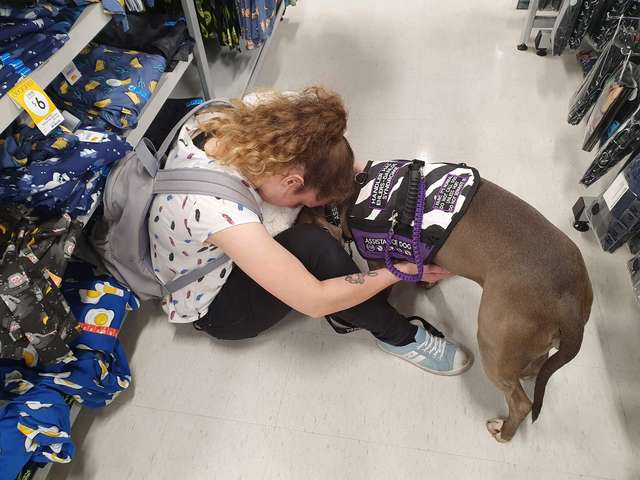
When Shauna Darcy first brought Ruby home, the plan was to have Ruby act as a service dog to help her with anxiety, depression and agoraphobia. Ruby was an incredible service dog and companion from the very beginning — and quickly showed Darcy just how far she would go to help her.
Shauna Darcy
“While she was training to be a service dog I noticed that she started picking up on changes in my heart rate and would act funny — for example, paw at me, try to get my attention, get on top of me, etc.,” Darcy told The Dodo.
Picking up on Ruby’s cues, Darcy went to the doctor and discovered she had health issues she hadn’t known about, including a rare heart condition called vascular Ehlers-Danlos syndrome. Ruby had known something was wrong even before Darcy did, and her main focus as a service dog quickly switched to Darcy’s cardiac issues.
Shauna Darcy
Every day, Ruby helps her mom with things like monitoring her heart rate and blood pressure, helping her during panic attacks and retrieving emergency medications. She also carries groceries, picks up dropped items and gets things her mom can’t reach, and is trained in deep pressure therapy.
“When I pass out she gets on top of me and applies all her pressure on me and licks my hands and face until I come around,” Darcy said.
Shauna Darcy
Ruby is there for her mom every single day — even when she doesn’t realize she needs her.
Last week, when Ruby started alerting her mom that something was wrong, she had no idea why. At that point, Darcy was feeling fine, but decided to trust Ruby and call an ambulance anyway, just in case.
“It turns out my heart was going into atrial fibrillation,” Darcy said. “By the time the paramedics came, I was in pain and barely conscious.”
Shauna Darcy
As the paramedics rushed Darcy to the hospital, she realized that Ruby had saved her life that day.
While Darcy was in the hospital and the doctors worked to get her stable again, Ruby refused to leave her mom’s side. Even while Darcy was unconscious, Ruby lay in her hospital bed, pressed up against her, hoping her mom could sense she was there and that her presence would make her feel safe.
Shauna Darcy
During their stay at the hospital, so many people stopped by to meet Ruby. She’s always very popular whenever she and her mom are at the hospital and loves saying hi to everyone — but also makes sure that she’s never too far away from her mom. She loves her so much, and her mom loves her just as much right back.
Shauna Darcy
Without Ruby, Darcy’s life would be very different. Ruby helps her mom stay healthy and safe every single day, and her mom is so grateful for everything she’s done for her.
“I wouldn’t be alive without her,” Darcy said.
ooOOoo
“I wouldn’t be alive without her,”
I’m emboldening that last statement.
This is a wonderful story.
For Darcy has articulated what millions of other dog lovers know in their hearts. That the relationship between a dog and a human is extra special!
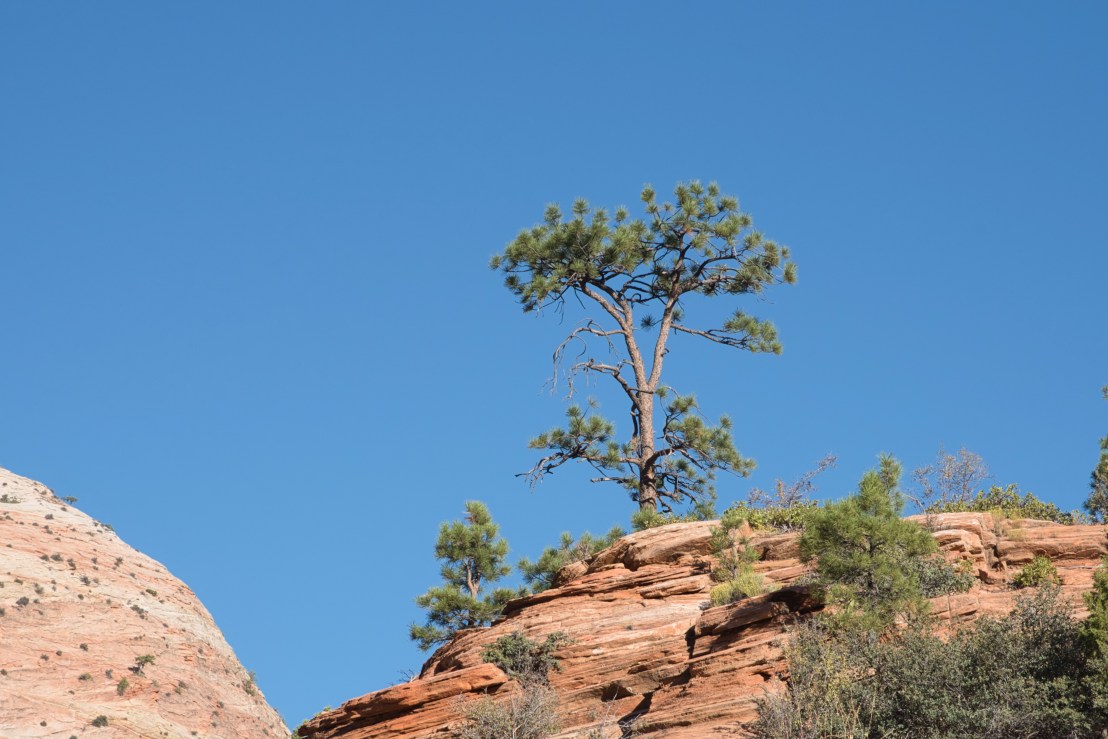
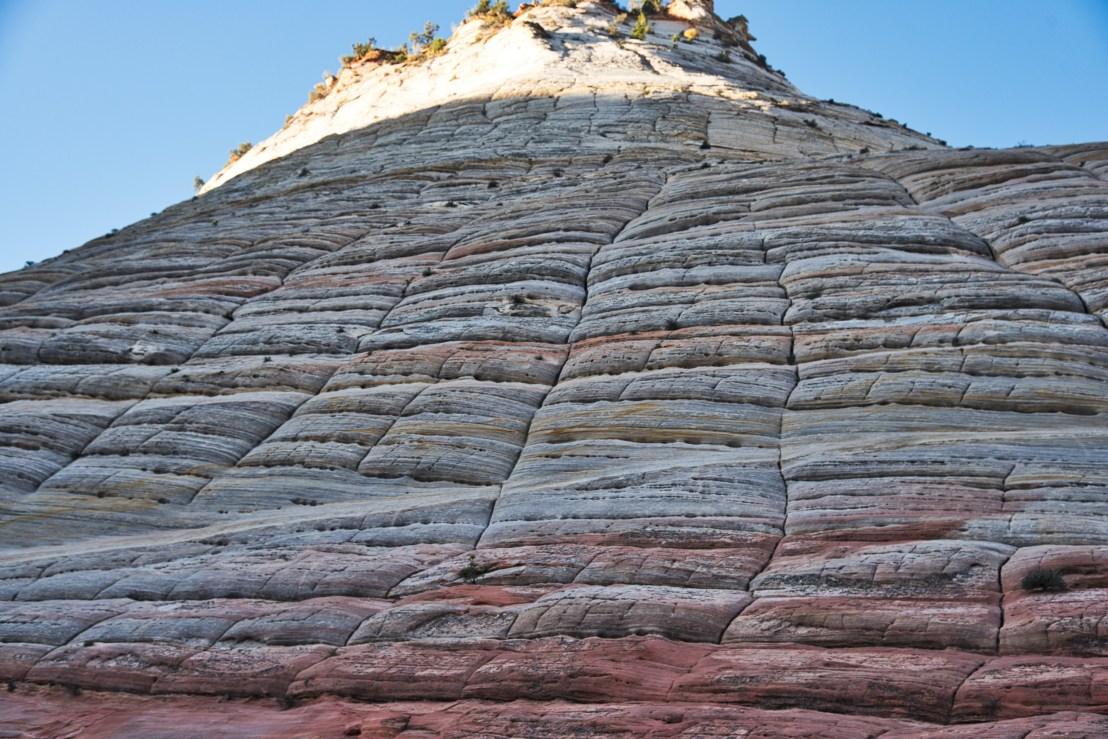
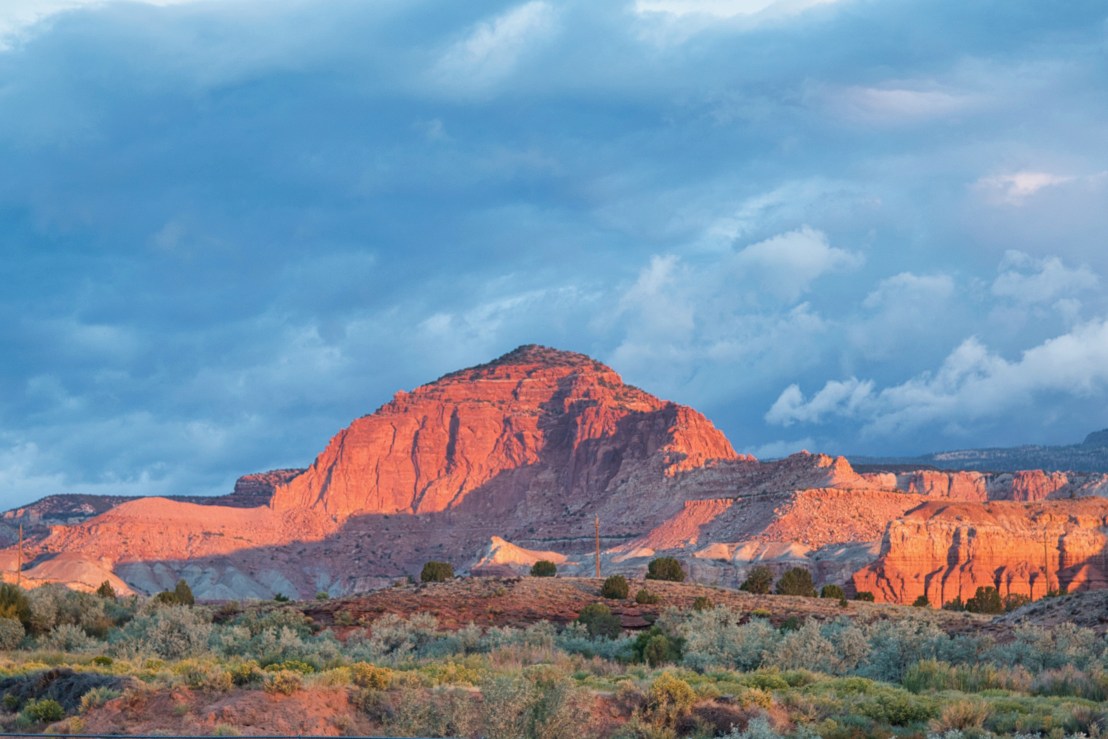
The picture below is primarily of the different rock type that is laid crossways on the top of the ridge. It was the closest that we could get without a major climb.
oooo
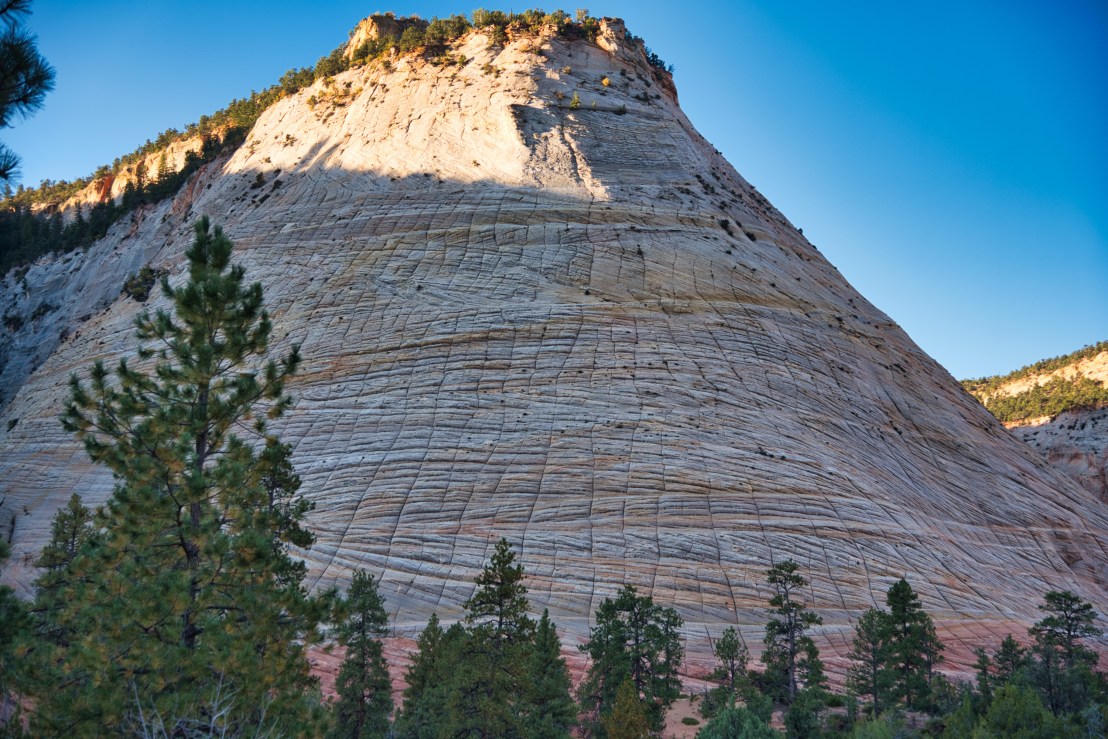
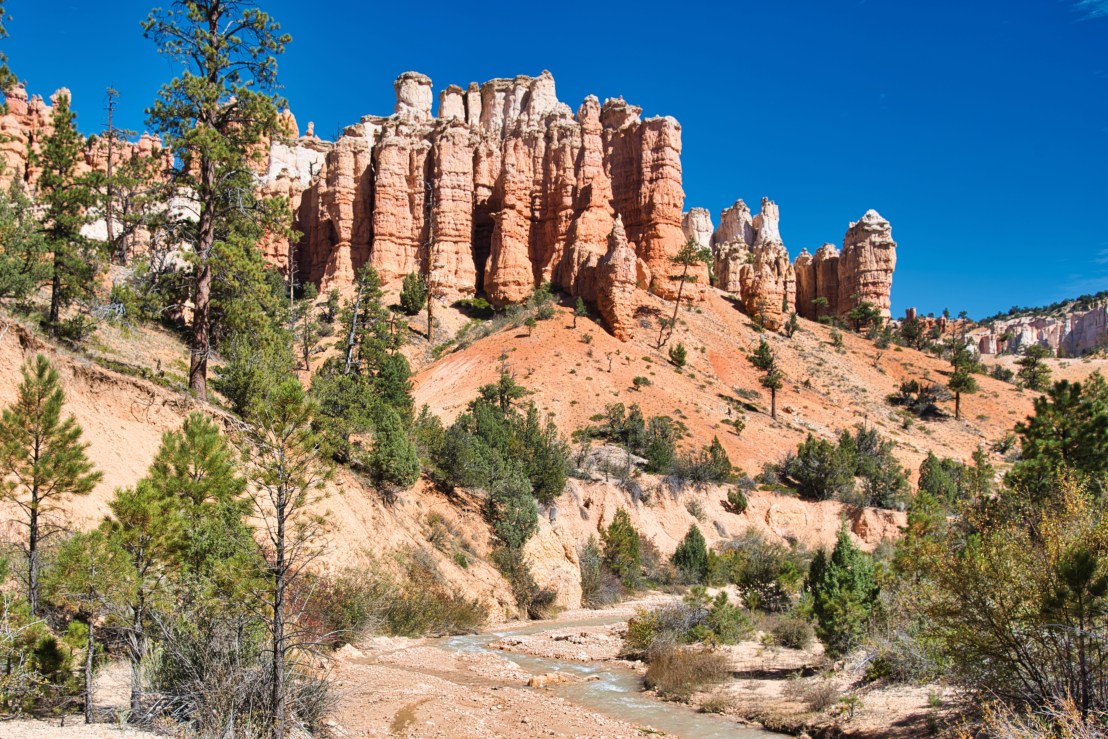
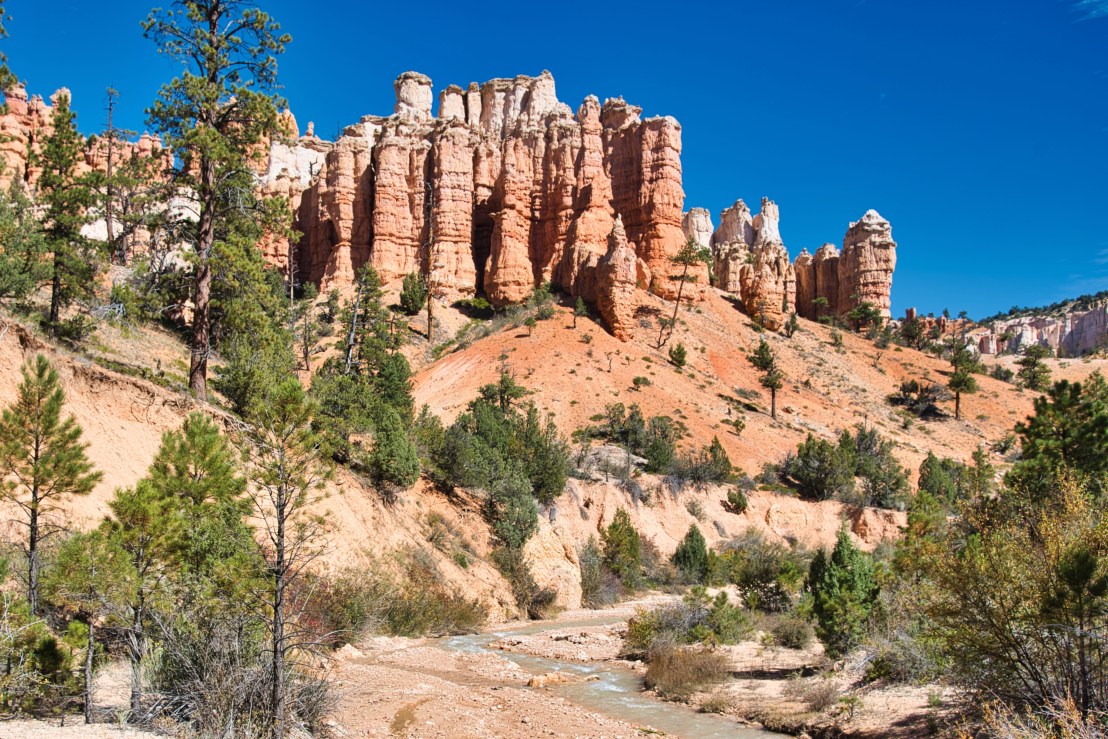
I think this is Zion National Park. The pillars above and the stream below.
I’m sure that there’s only so much you can take of our trip to Utah and back. So I have selected the more interesting photographs and will share them with you today and the next two days.
Saturday, 28th September
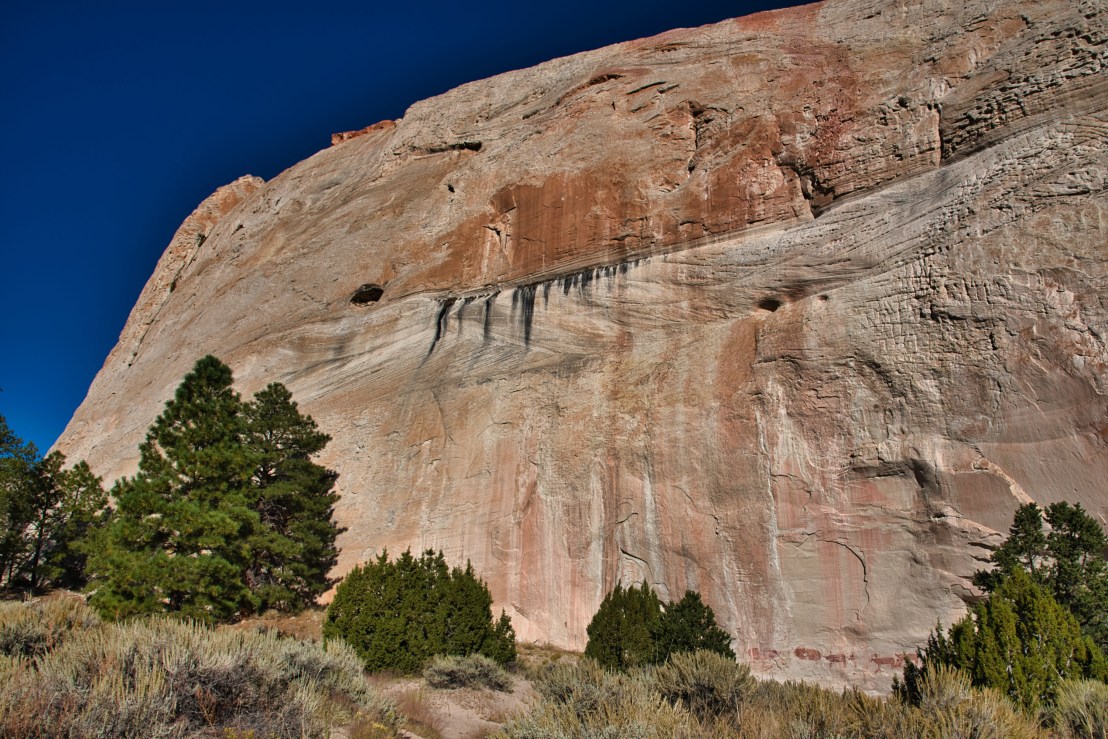
Vance, of The Flute Shop, gave us directions to some ancient petroglyphs that were painted on a rock wall quite close to where we were staying.
First, that rock wall. The petroglyphs can be seen at the bottom of the rock face.
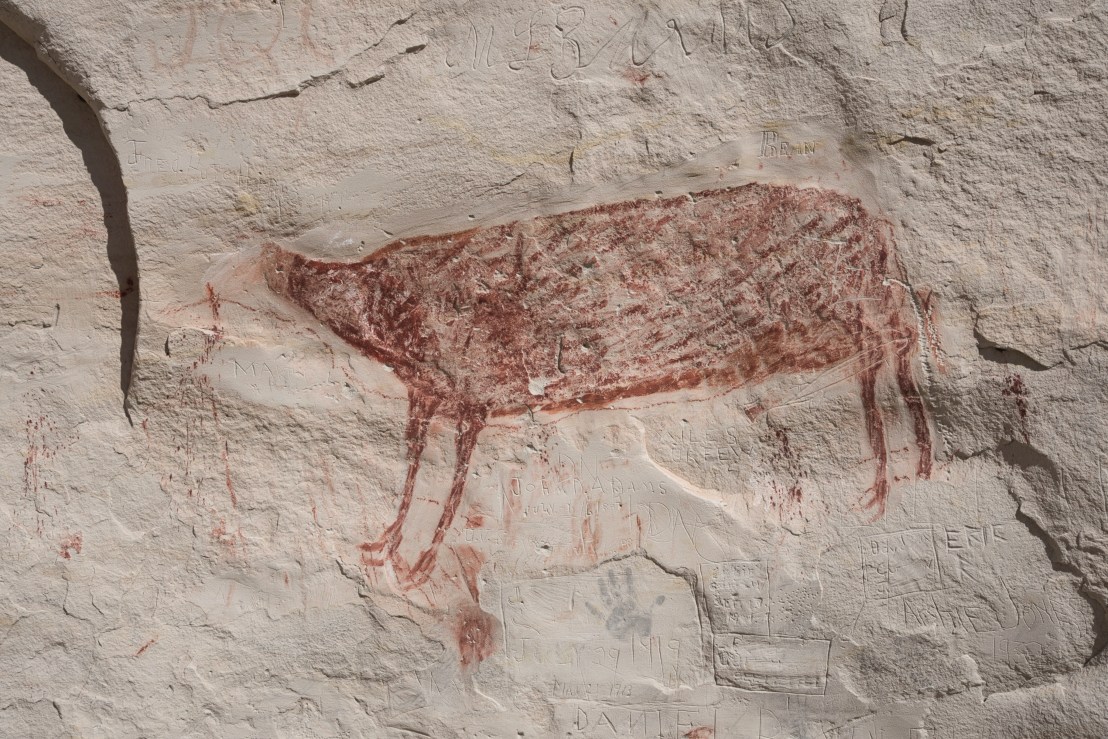
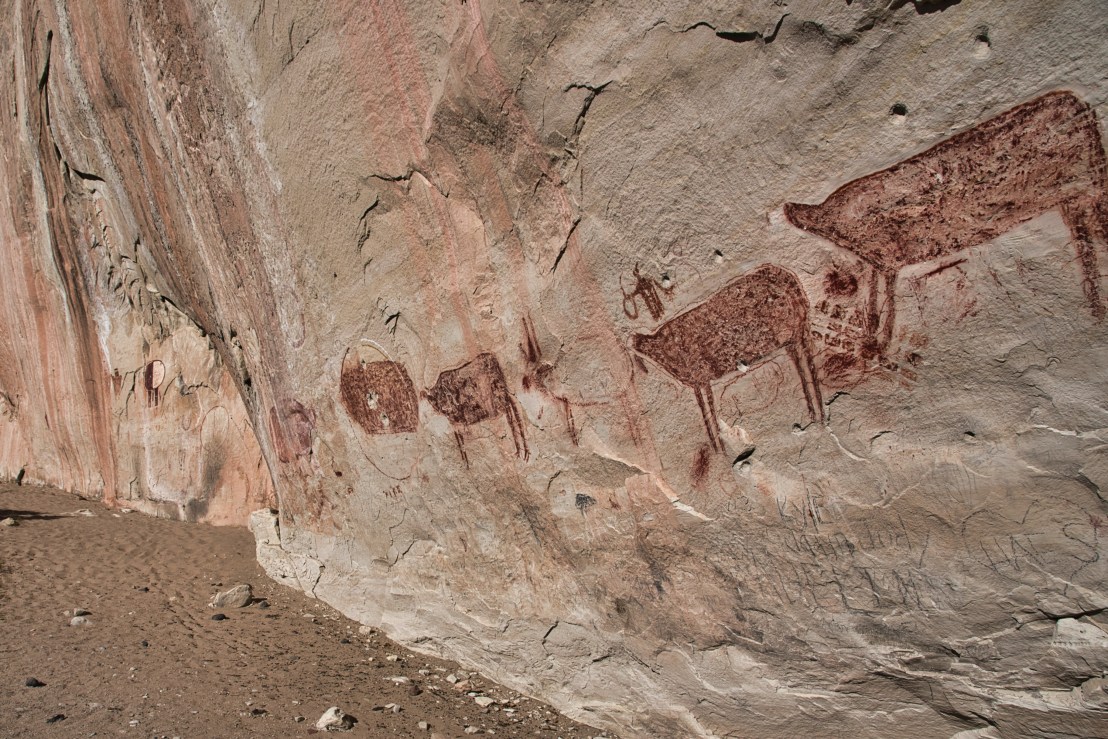
Then a close up. It was amazing that although there was a great deal of name carving close by there was none on the petroglyph images themselves.
They were about 700 years old.
Sunday, 29th September
Today it was the long drive down to Kanab, about 200 miles, but we stopped frequently to take photographs of the never-ending marvels that we saw.
We have had a taste of this a week-and-a-half ago.
We were truly alone when we went to Utah.
But then again, one of the privileges of being on 13 acres, 13 very rural acres, here in Southern Oregon is that being alone is not that far away!
I don’t want to underplay the importance of this posting, republished from The Conversation website (with permission), because we live in so busy times.
Written by three professors, it’s a very wise and profound article.
ooOOoo
Spending time alone in nature is good for your mental and emotional health
Associate Professor of Outdoor Education, Montreat College
Today Americans live in a world that thrives on being busy, productive and overscheduled. Further, they have developed the technological means to be constantly connected to others and to vast options for information and entertainment through social media. For many, smartphones demand their attention day and night with constant notifications.
As a result, naturally occurring periods of solitude and silence that were once commonplace have been squeezed out of their lives. Music, reality TV shows, YouTube, video games, tweeting and texting are displacing quiet and solitary spaces. Silence and solitude are increasingly viewed as “dead” or “unproductive” time, and being alone makes many Americans uncomfortable and anxious.
We study and teach outdoor education and related fields at several colleges and organizations in North Carolina, through and with other scholars at 2nd Nature TREC, LLC, a training, research, education and consulting firm. We became interested in the broader implications of alone time after studying intentionally designed solitude experiences during wilderness programs, such as those run by Outward Bound. Our findings reveal that time alone in nature is beneficial for many participants in a variety of ways, and is something they wish they had more of in their daily life.
On an average day in 2015, individuals aged 15 and over spent more than half of their leisure time watching TV. Bureau of Labor Statistics, Americans Time Use Survey
Reflection and challenge
We have conducted research for almost two decades on Outward Bound and undergraduate wilderness programs at Montreat College in North Carolina and Wheaton College in Illinois. For each program, we studied participants’ experiences using multiple methods, including written surveys, focus group interviews, one-on-one interviews and field notes. In some cases, we asked subjects years later to look back and reflect on how the programs had affected them. Among other questions, our research looked at participant perceptions of the value of solo time outdoors.
Our studies showed that people who took part in these programs benefited both from the outdoor settings and from the experience of being alone. These findings build on previous research that has clearly demonstrated the value of spending time in nature.
Scholars in fields including wilderness therapy and environmental psychology have shown that time outdoors benefits our lives in many ways. It has a therapeutic effect, relieves stress and restores attention. Alone time in nature can have a calming effect on the mind because it occurs in beautiful, natural and inspirational settings.
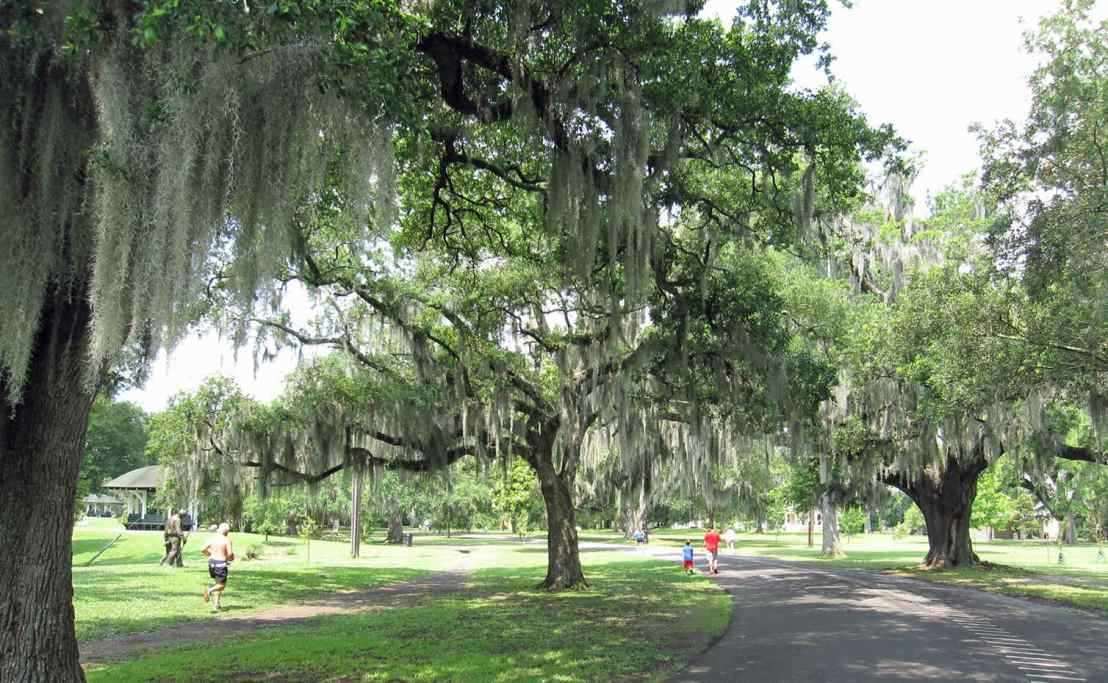
Spending time in city parks like Audubon Park in New Orleans provides some of the same benefits as time in wilderness areas, including reduced stress levels and increased energy levels. InSapphoWeTrust, CC BY-SA
Nature also provides challenges that spur individuals to creative problem-solving and increased self-confidence. For example, some find that being alone in the outdoors, particularly at night, is a challenging situation. Mental, physical and emotional challenges in moderation encourage personal growth that is manifested in an increased comfort with one’s self in the absence of others.
Being alone also can have great value. It can allow issues to surface that people spend energy holding at bay, and offer an opportunity to clarify thoughts, hopes, dreams and desires. It provides time and space for people to step back, evaluate their lives and learn from their experiences. Spending time this way prepares them to re-engage with their community relationships and full work schedules.
Putting it together: The outdoor solo
Participants in programmed wilderness expeditions often experience a component known as “Solo,” a time of intentional solitude lasting approximately 24-72 hours. Extensive research has been conducted on solitude in the outdoors because many wilderness education programs have embraced the educational value of solitude and silence.
Solo often emerges as one of the most significant parts of wilderness programs, for a variety of reasons. Alone time creates a contrasting experience to normal living that enriches people mentally, physically and emotionally. As they examine themselves in relation to nature, others, and in some cases, God, people become more attuned to the important matters in their lives and in the world of which they are part.
Solo, an integral part of Outward Bound wilderness trips, can last from a few hours to 72 hours. The experience is designed to give participants an opportunity to reflect on their own thoughts and critically analyze their actions and decisions.
Solitary reflection enhances recognition and appreciation of key personal relationships, encourages reorganization of life priorities, and increases appreciation for alone time, silence, and reflection. People learn lessons they want to transfer to their daily living, because they have had the opportunity to clarify, evaluate and redirect themselves by setting goals for the future.
For some participants, time alone outdoors provides opportunity to consider the spiritual and/or religious dimension of life. Reflective time, especially in nature, often enhances spiritual awareness and makes people feel closer to God. Further, it encourages their increased faith and trust in God. This often occurs through providing ample opportunities for prayer, meditation, fasting, Scripture-reading, journaling and reflection time.
Retreating to lead
As Thomas Carlyle has written, “In (solitary) silence, great things fashion themselves together.” Whether these escapes are called alone time, solitude or Solo, it seems clear that humans experience many benefits when they retreat from the “rat race” to a place apart and gather their thoughts in quietness.
In order to live and lead effectively, it is important to be intentional about taking the time for solitary reflection. Otherwise, gaps in schedules will always fill up, and even people with the best intentions may never fully realize the life-giving value of being alone.
ooOOoo
I would modify that advice from Thomas Carlyle and that is to include a dog.
For in my experience when one is in the mood for a bit of solitary reflection your dog seems to sense it as well.
As soon as we were on our way, first thing was to find a bed for the night in the area of the Capitol Reef NP. This was a popular time of the year and so many places were full. Our ‘fall-back’ position was to sleep in the truck but I really hoped it wouldn’t come to that.
Eventually we found a room for just tonight in The Flute Shop and Motel in Torrey, just 10 miles from the National Park. Run by Vance and Elaine Morrill it was more than just a motel, it was a scene of much fascination. For Vance made flutes the American Indian way.
But more of that later.
Oh, and there’s a dog story as well. Again, I’m writing that up as a separate post.
On to the Capitol Reef Park.
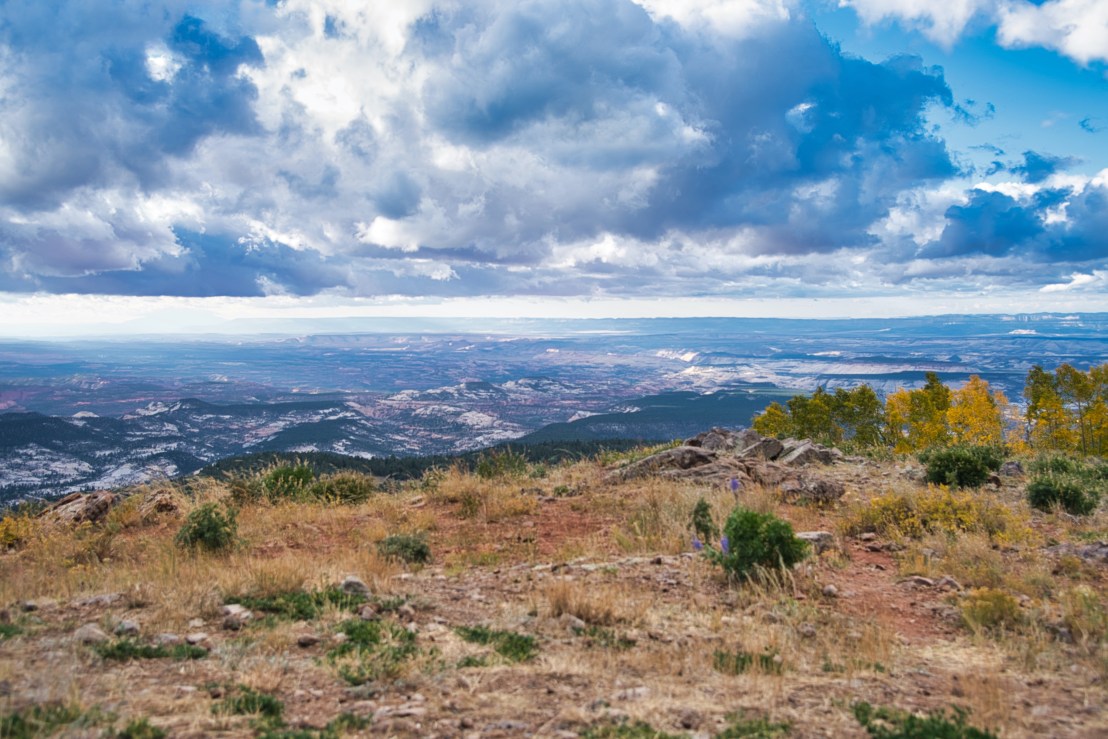
Or rather a pause before we descended off the heights that surrounded this part of Utah down to the park.
The pause was to take a photograph of an intense rain storm that had a spot quite close where the remnants of a rainbow could just be made out. It’s hardly visible in the above picture.
It was simply stunning.
Beyond words.
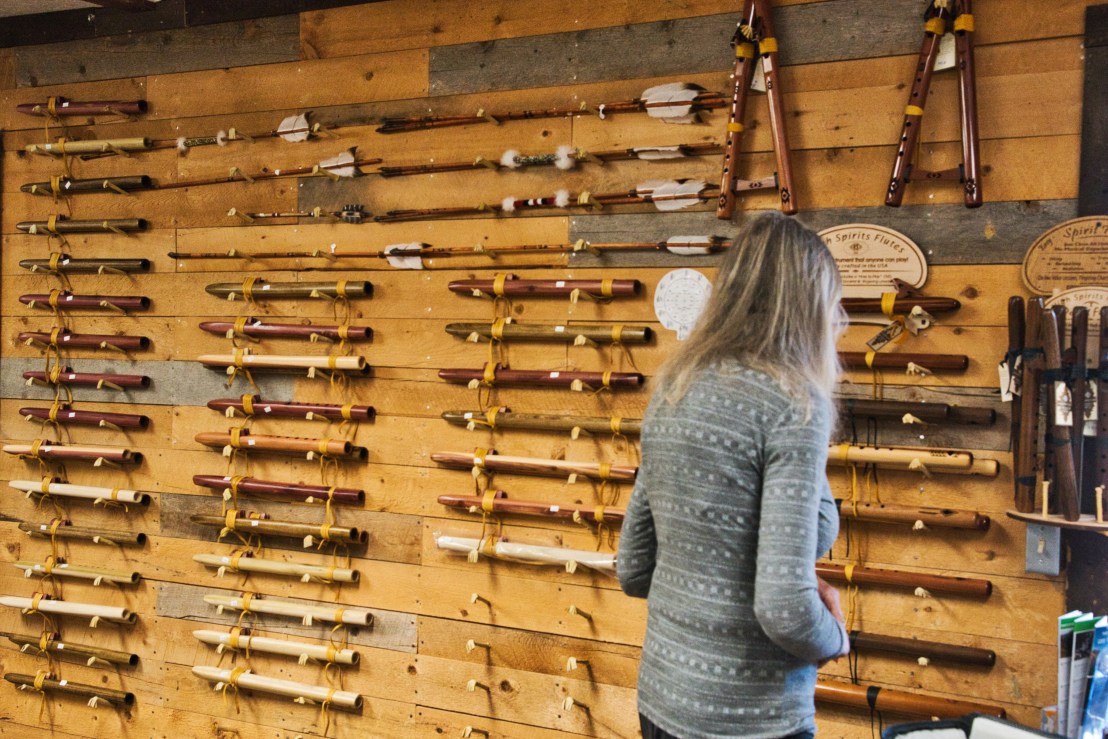
I promised you a little more about Vance Morrill and his flutes. But apart from the photograph I will delay that for a while (until the draft of the post has been approved by Vance).
Here is Jean looking at them.
Finally, Vance promised to draw some routes in the morning to some of the lesser known spots in Capitol Reef.
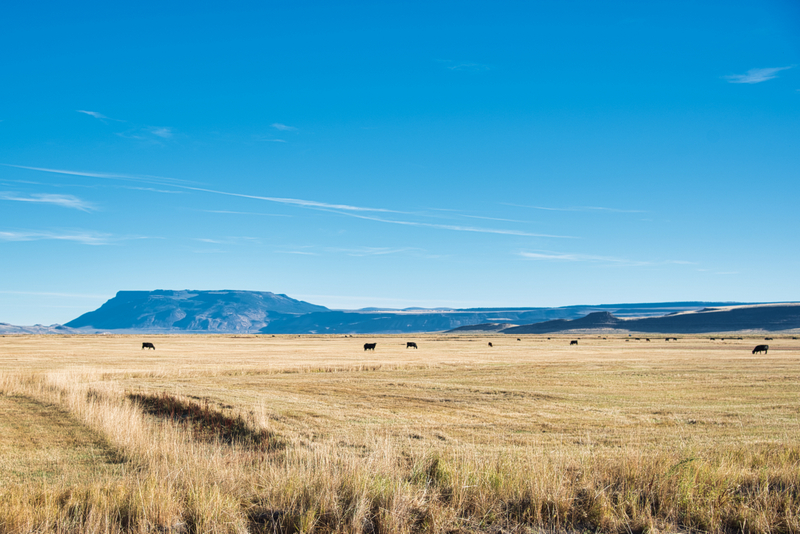
The countryside was enormous, a phrase that I will probably repeat. Our cattle experience of yesterday was repeated, albeit in a different way, today. Cattle feasting on the grass over hundreds of acres.
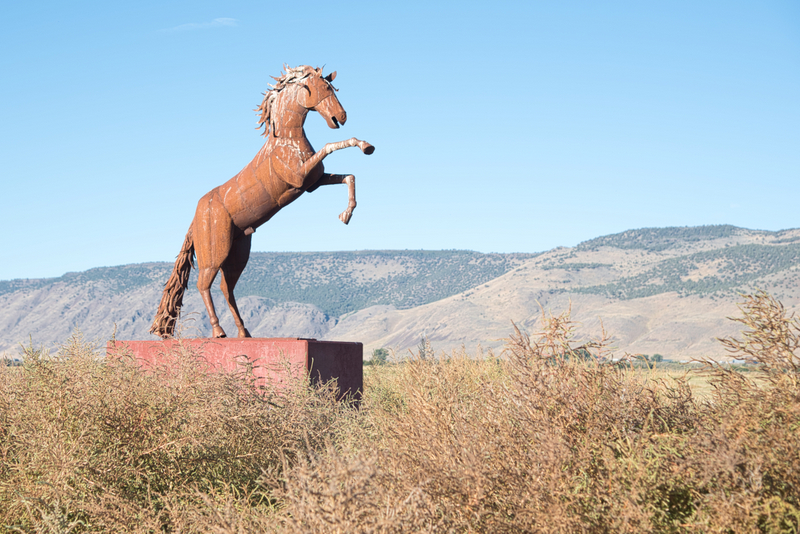
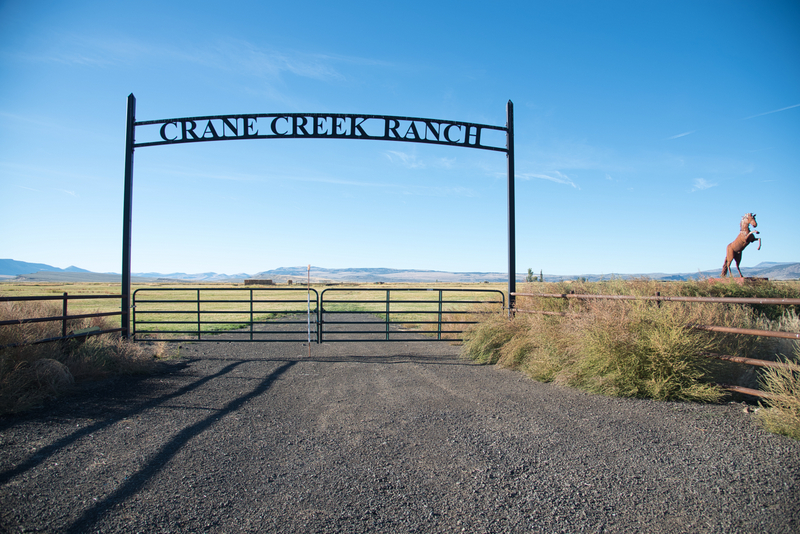
Then we came across this fine statue of a horse.
It was on the property of Crane Creek Ranch, another enormous homestead.
On and on we went.
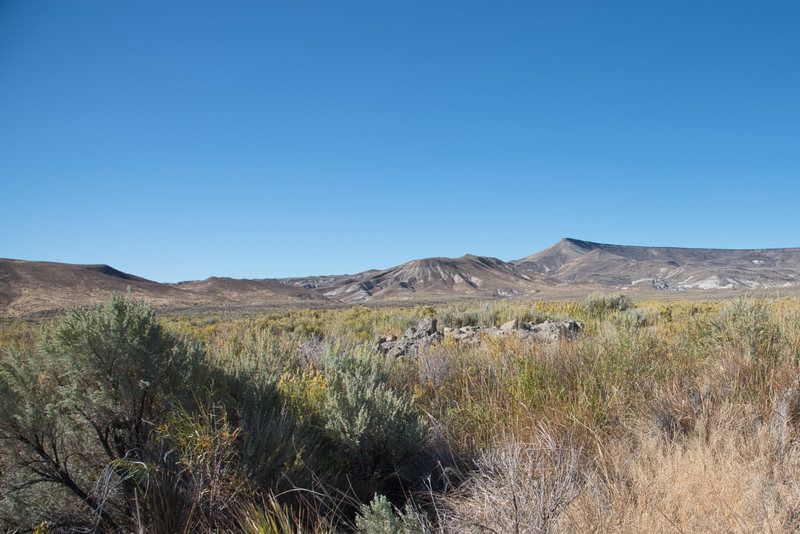
The scenery gradually changed and more rocky land came closer to the road.
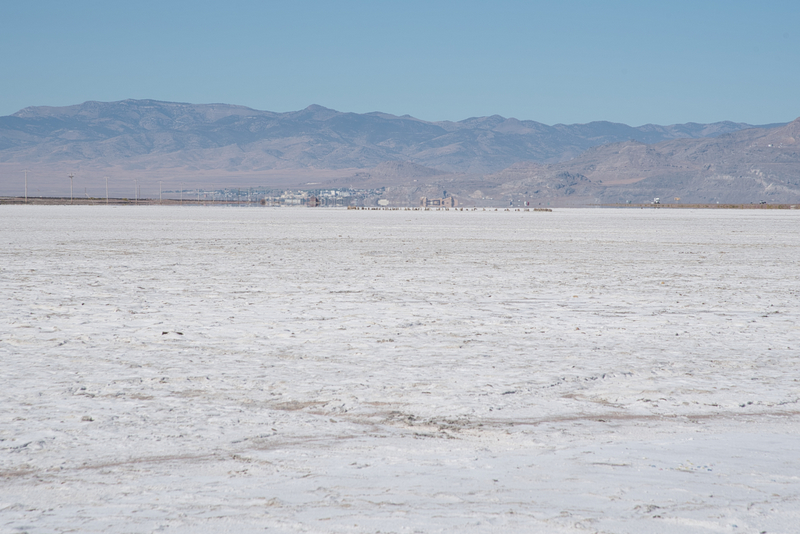
But we eventually got to the Salt Lake flats and continued to Loa, Utah, population less than 600 persons!
Where we stayed at the Sunny Motel. There was only about 20 miles to go, to the East, before we reached Capitol Reef National Park.
I’m going to post every other day or so trying to give an idea of what we experienced.
Monday, September 23rd.
This was a barn that we stopped at to photograph on the way through South-Eastern Oregon.
We had Brandy with us and he was loving the journey.
But after we reached Lakeview where we stopped for the night we found that he didn’t enjoy the motel.
Tuesday, September 24th.
So in the morning there was no question about what we had to do. Drive the 4 hours back to Merlin, reunite Brandy with his doggy friends that he missed too much, and then drive the 4 hours back to Lakeview!
(As it turned out this was a very good decision by us. There were too many places where dogs were not allowed!)
Wednesday, September 25th.
First thing in the morning we took a closer look at the water that is the origin of the name Lakeview.
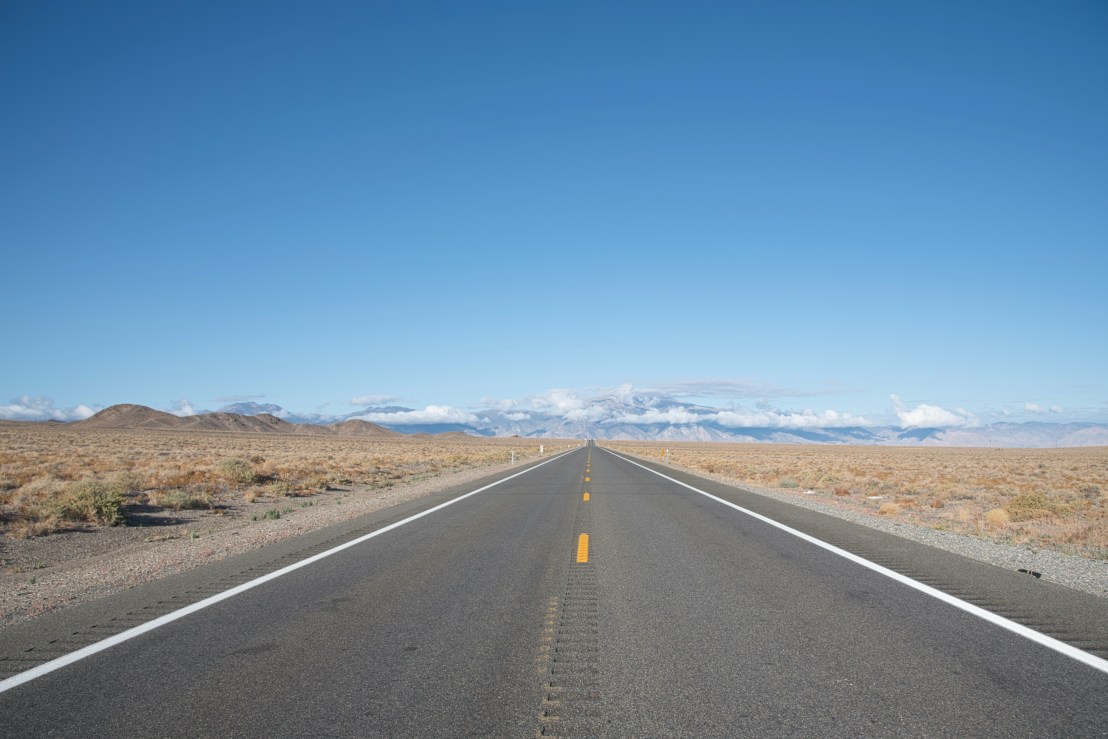
Then followed a long drive, a very long drive, out of Oregon and into Nevada. They were in the main lonely roads.
But stunning scenery alongside the lonely road.
Including a spectacular sight of the mist in the bottom of a particular valley.
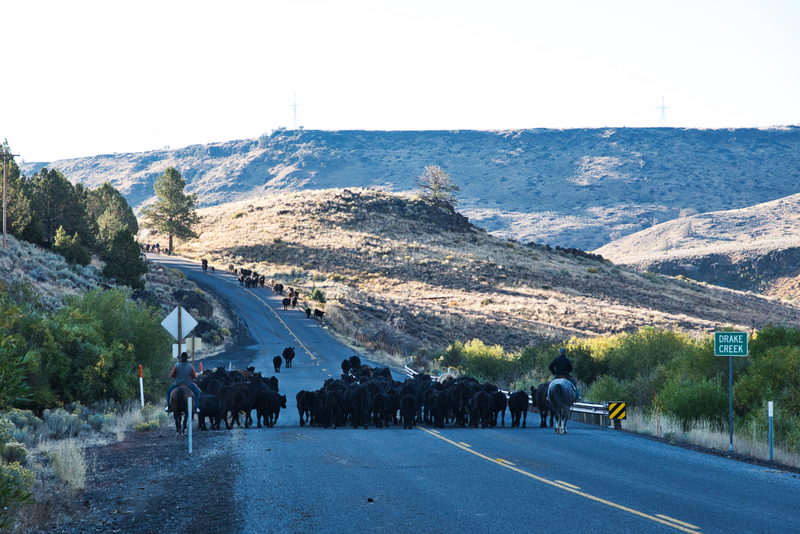
Then we came across a herd of cattle being moved along the road.
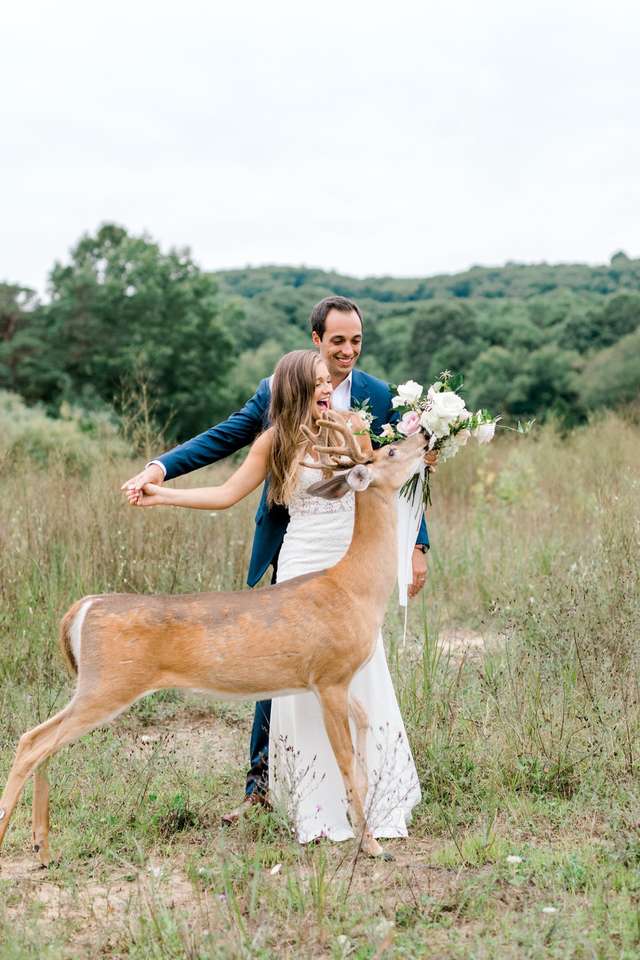
Wild Deer Crashes Wedding Shoot To Eat The Bride’s Bouquet
Wedding crashers aren’t usually a good thing. But for one Michigan couple, an uninvited guest made the day even more special.
Morgan and Luke were celebrating their nuptials on the Felt Estate, in Saugatuck, Michigan, when photographer Laurenda Marie Bennett stole the couple away for “golden hour portraits.”
“We walked over this hill and made it to a field where we saw just over a wooden fence was a deer,” Bennett told The Dodo. “As soon as we arrived, the deer looked up and just casually walked over to the bride and groom.”
The friendly deer greeted the couple and quickly spotted the bride’s bouquet. The spray of flowers was too tempting for the deer to resist.
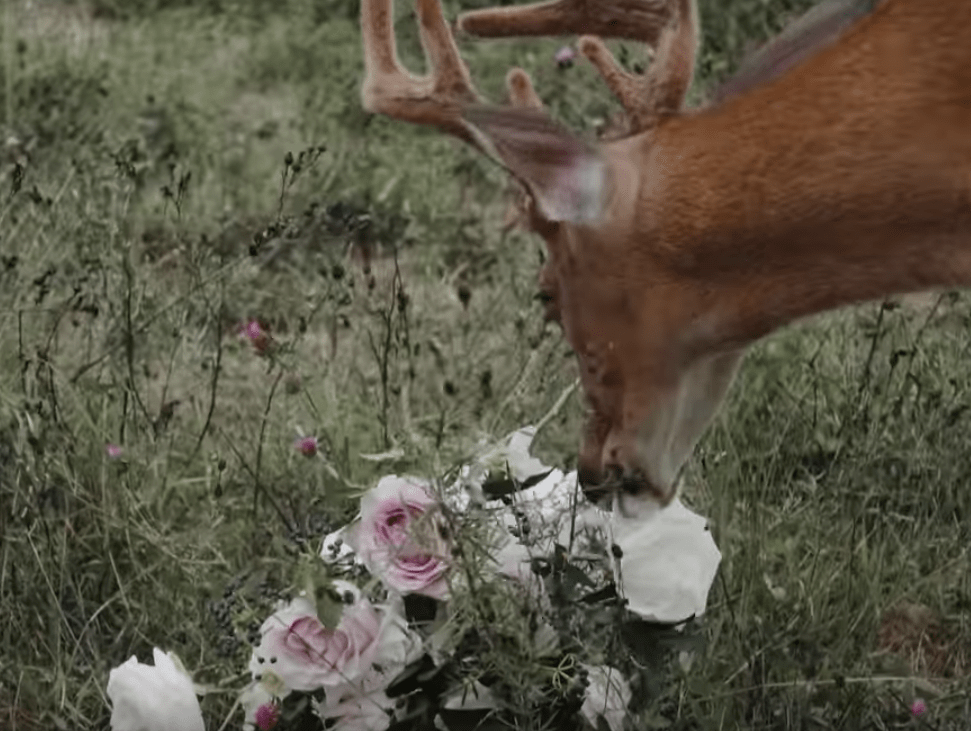
“[He] started reaching his neck over and grabbing flowers from her bouquet and just chewing away,” Bennett said. “Then he steps over the fence so he’s standing in front of them, and he’s just hanging out eating her bouquet.”
After the initial shock of the wildlife encounter wore off, Bennett started snapping photos of the bride and groom. “We were all kind of giggling and looking at each other like, ‘What’s going on? What should we do?’” Bennett said. “Morgan’s expressions were priceless — they just kind of made the photos.”
As it turned out, this specific deer is a bit of a celebrity in the area. He’s even made it to the news for photobombing a few engagement photo shoots earlier this summer.
“Never in a million years did I think I’d run into him, especially when photographing a wedding,” Bennett said. “I felt like it was meant to be.”
The deer would stop at nothing to get the flowers, so the bride eventually decided to give the hungry animal her bouquet. She had to borrow one of the bridesmaids’ arrangements for the bouquet toss — but it was worth it for the hilarious photobomb.
Videographer Patrick Hellenga, of Patrick James Films, was also on-site to capture the sweet encounter on film.
When the couple returned to the field later that night, they found that the deer had left something behind for the bride — a little wedding gift.
“When we walked back to the area where we dropped the bouquet, the deer was gone but there was one white rose still intact,” Bennett said. “She picked it up and joked, ‘It’s the final rose.’”


















 Learning from Dogs