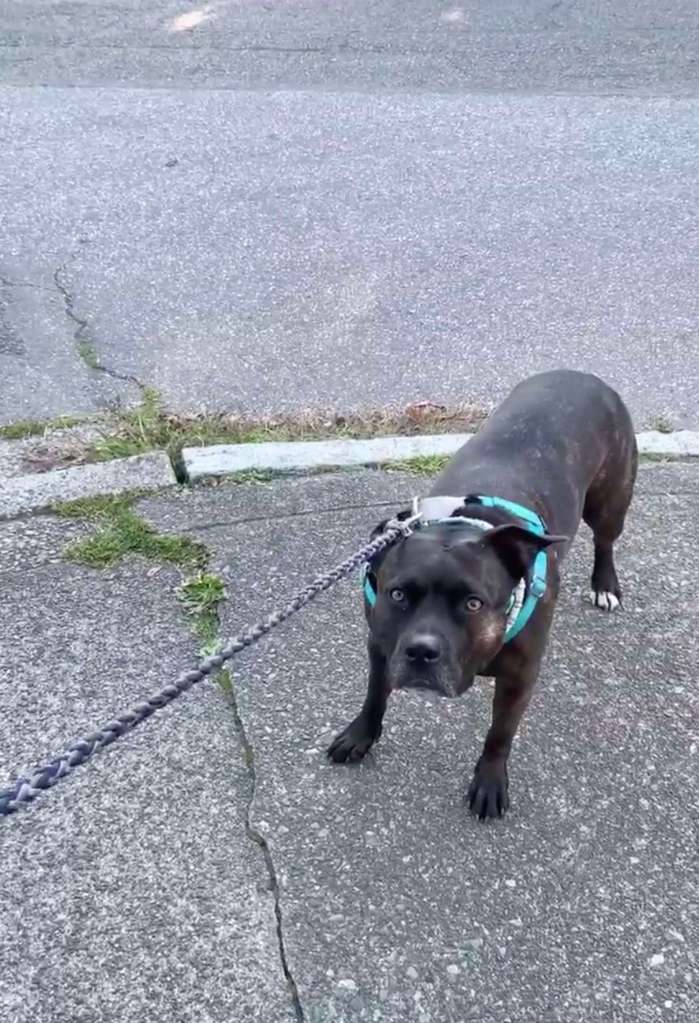
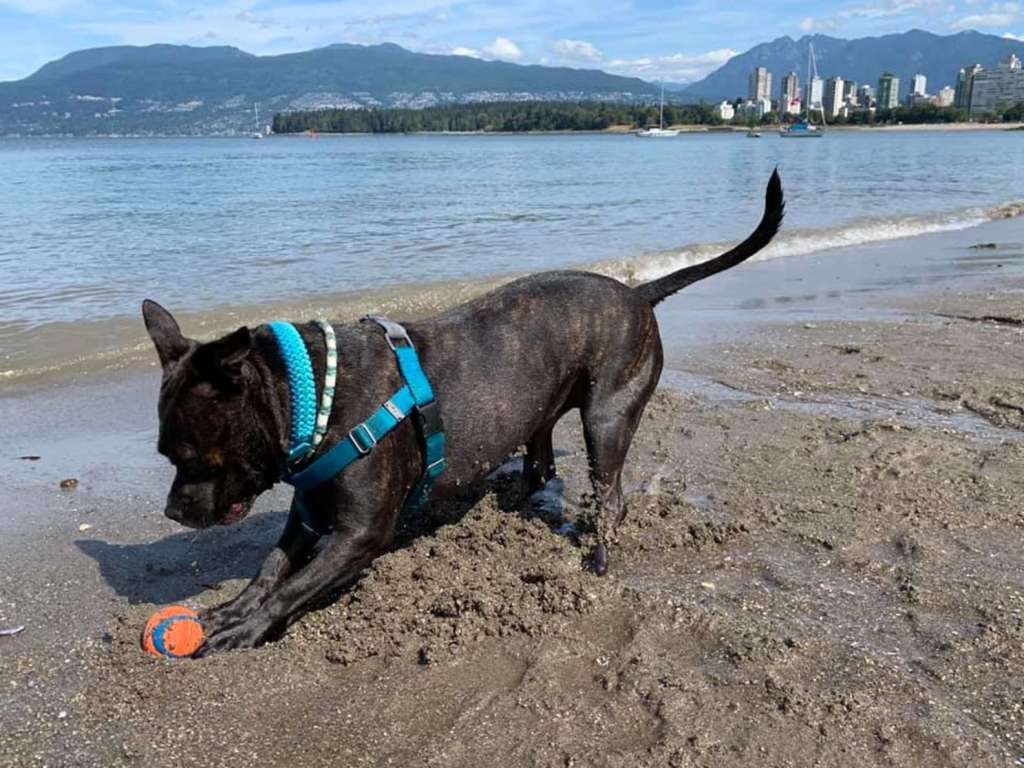
The first time Mia went to the beach when she was around 5 months old, she fell in love. She loves swimming, digging in the sand and chasing her ball around, and it quickly became one of her favorite outings.
Mia and her mom go to the beach about once a week in the summertime — but for Mia, it’s never enough. Their house isn’t far from the beach, so whenever Mia is out on a walk and they pass the way that would take them to the beach, she immediately stops walking and stands her ground.
“She knows the way by heart,” Yoshi Lok, Mia’s mom, told The Dodo. “She also knows that if she keeps heading north, she will eventually get to the beach which is why she always stops in her tracks and pulls me when we are heading in the opposite direction of the beach!”
Mia can be incredibly stubborn and has no problem engaging in a standoff with her mom. Every time, her mom pleads with her to keep walking, trying to explain that they don’t have time to go to the beach that day, but Mia always tries to wait a little bit longer. She hopes that the longer she stands there, the more likely it is that her mom will cave in and take her to the beach after all.
“She isn’t very happy when we don’t go, she does try more than once on our walks to go to the beach,” Lok said. “Sometimes I have to bribe her with treats to keep walking.”
YOSHI LOK
Even though Mia gets to go to the beach more than most dogs do, she would definitely prefer to go every day, and has made her stance on that perfectly clear.
YOSHI LOK
“She reacts this way EVERY DAY,” Lok said. “Ever since we walked to the beach three years ago (when we moved to this area in Vancouver — Kitsilano), she remembered the way and never forgot.”
YOSHI LOK
On the days when Mia finally does get to go to the beach, she’s so happy. As soon as she and her mom start walking in the direction of the beach, she gets so excited and practically runs all the way there. She swims, digs and runs as much as she possibly can until it’s time to go home — and then starts her campaign to go back to the beach all over again the next day.
ooOOoo
I think that Yoshi wouldn’t have quite the problem with Mia, if indeed it is seen as a problem, if Mia had a doggie companion. While a single dog is very common having two dogs doesn’t really increase the workload that much and the rewards in terms of the two dogs playing together is immeasurable.
This is a post about dogs being of comfort to the Californian firefighters. A post presented on The Dodo that I am republishing.
But yesterday afternoon came news that here in Oregon we have a blaze. As the Washington Post reported it, in part:
An unusually expansive outbreak of large and fast-moving wildfires threatens communities in three states Wednesday, with the greatest risks focused on Medford, Ore., and Oroville, Calif., as large fires advance in those areas.
In Oregon on Wednesday afternoon, Gov. Kate Brown (D) announced that four towns have experienced significant damage, and she warned residents to expect news of fatalities.
“Oregon has experienced unprecedented fire with significant damage and devastating consequences for the entire state,” she said. Brown said the communities of Detroit, Blue River, Vida, Phoenix and Talent are “substantially destroyed.”
But back to those Californian firefighters.
ooOOoo
Dog Helps Comfort Firefighters Fighting The California Wildfires
Ever since she was a puppy, Kerith has been the bubbliest, most joyful dog, and her mom always knew that she was born to help people.
HEIDI CARMAN
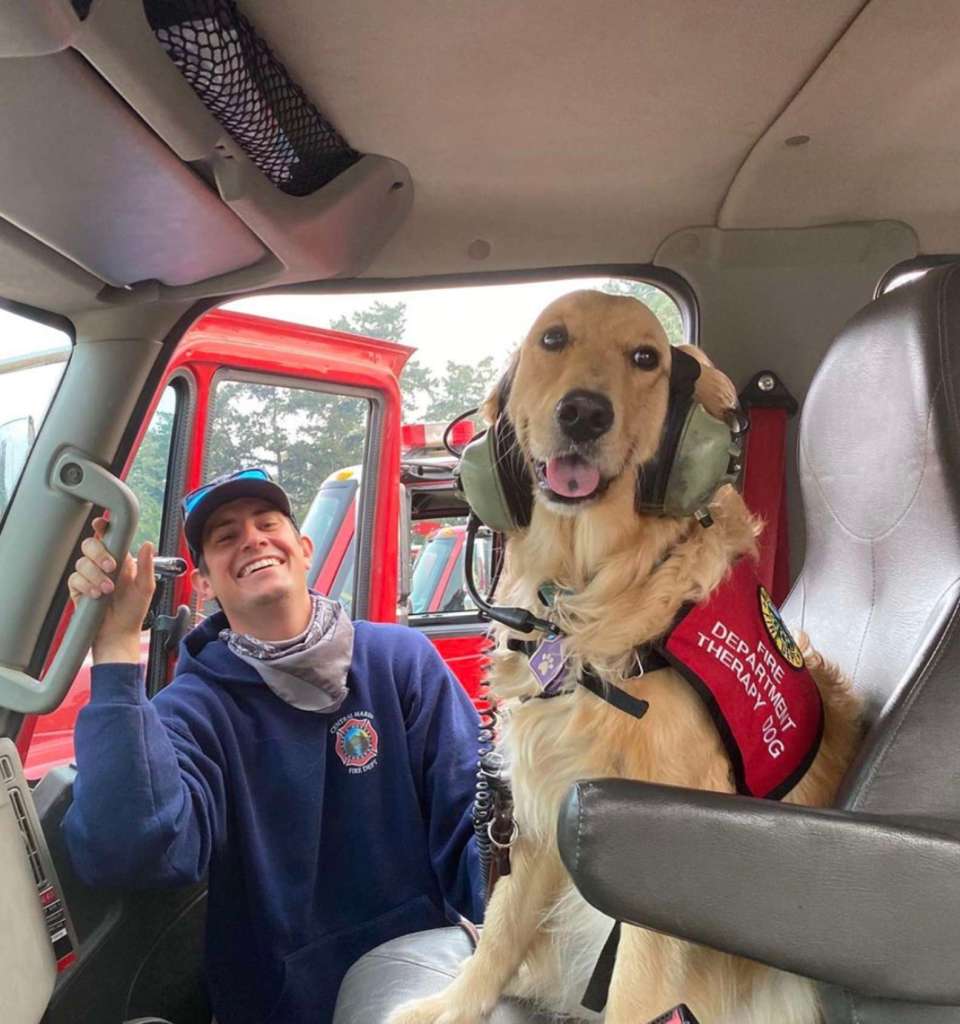
Kerith was originally being trained to be a guide dog for individuals who are blind, but ended up changing career paths to become a therapy dog instead. For the past year she’s been working with local firefighters, providing them comfort in times of need — and with the recent wildfires spreading across California, they need her now more than ever.
HEIDI CARMAN
“Kerith has been going to base camps where the crews start their day before they roll out to fight one of the many wildfires in CA,” Carman said. “She lightens the mood first thing in the morning. We walk around to visit all the crews while they are getting ready for their day of fighting fires. Everyone wants to see her to get some love.”
HEIDI CARMAN
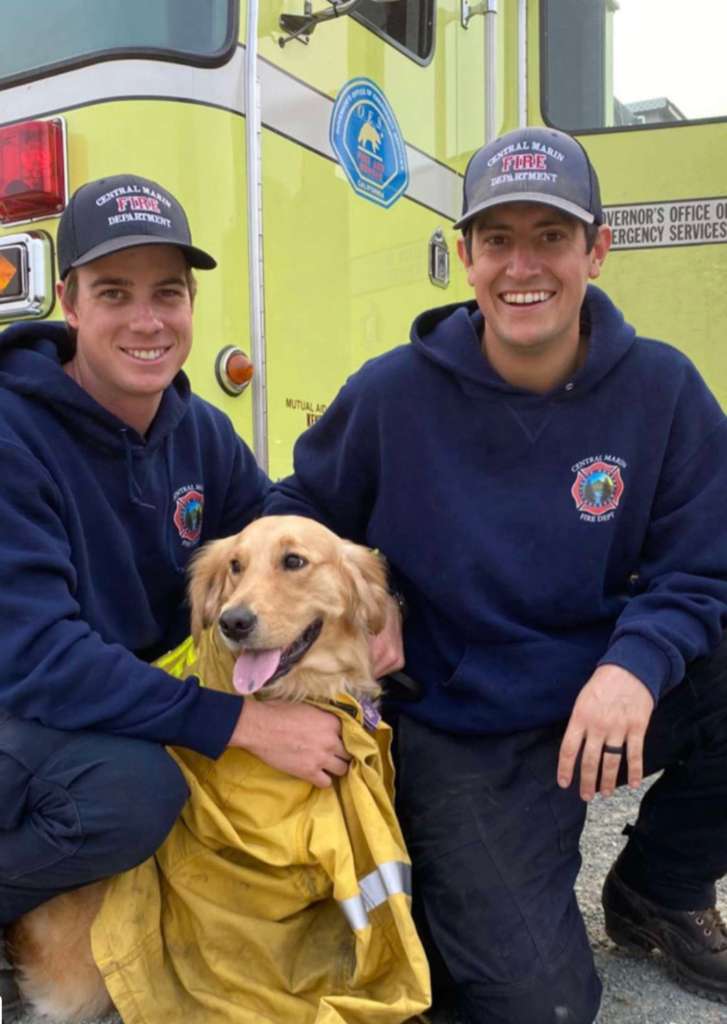
As the fires rage across California, the firefighters’ jobs become more and more stressful as they work hard every moment of the day to save homes and lives. Kerith provides them a moment of relief and joy from the realities of their job — and when many of them see her, they can’t help but envelop her in a huge hug.
HEIDI CARMAN
Kerith loves all her firefighter friends so much, and is more than happy to let them hug her close. She seems to know that what she’s doing is important, and that the hugs she’s getting are more than just hugs. She’s helping to bring comfort when the firefighters need it most.
“Kerith clearly loves what she is doing,” Carman said. “When she sees a fire engine she gets so excited because she knows she is going to see her firefighter friends.”
HEIDI CARMAN
Hopefully the wildfires will be under control soon, but until then, Kerith will continue to give her firefighter friends as many hugs as they need.
ooOOoo
I find it amazing that there are dogs such as Kerith who love to be loved. Now plenty of dogs fall into that category but Kerith is part of a team; the rest of the team are human and working their backsides off fighting fires.
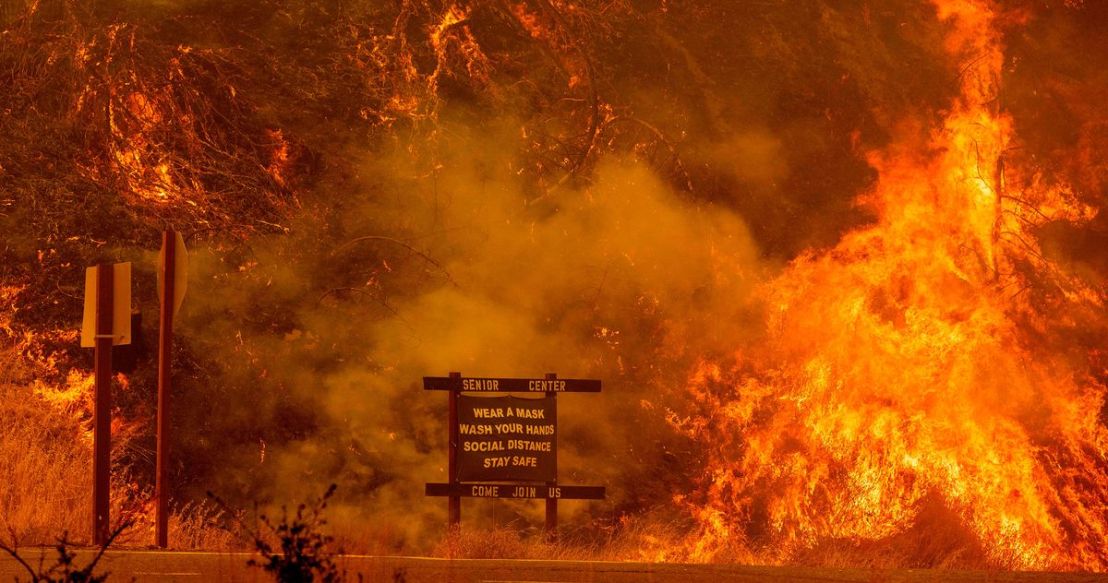
I will leave you for today with a random photograph I found from the ABC News website of one of those fires in California.
Roll on the rain!
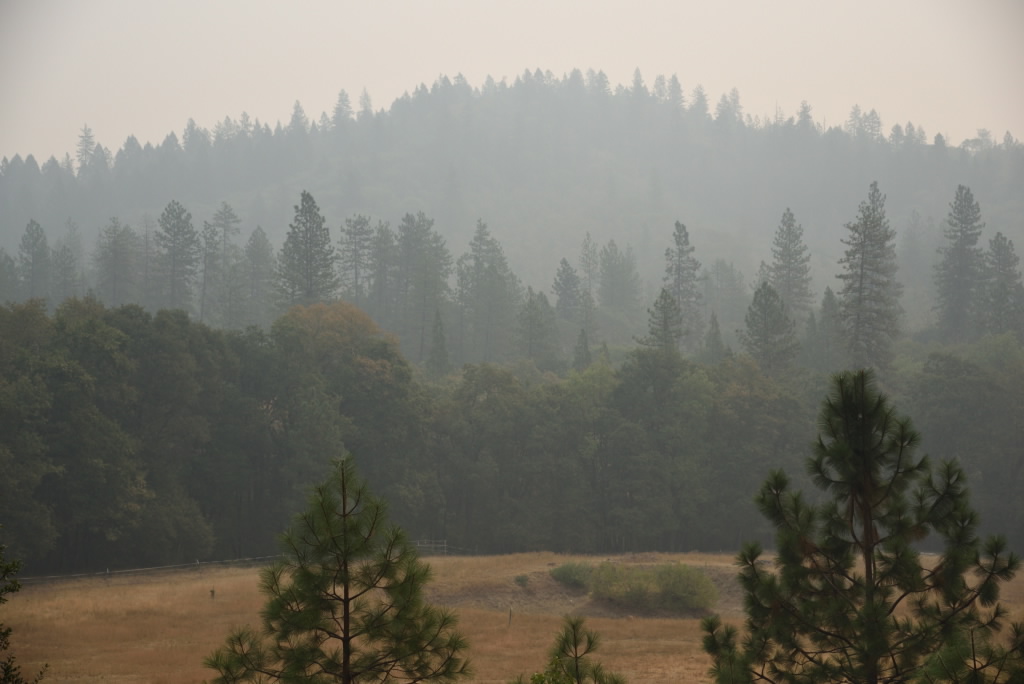
And a photograph taken at 11am PDT today of the hills to the East. It includes our own property.
It shows the extent of the smoke; the nearest run of trees across the photograph are on our property.
The instinct of dogs to come to the aid of us humans, friends and strangers alike, never fails to impress.
Here’s a recent story on The Dodo that endorses that in spades!
ooOOoo
Stray Dog Interrupts Performance To Comfort Actor Pretending To Be Injured
“I was very touched. He was like an angel who wanted to help me.”
By Stephen Messenger
Published on 9/3/2020
During a recent theatrical performance in Turkey, the script called for actor Numan Ertuğrul Uzunsoy’s character to get hurt — but, of course, it was all pretend.
The adorable reaction of one furry audience member that day, however, was not.
İZMIT BELEDIYESI
“The character I played was injured and in great pain,” Uzunsoy told The Dodo. “He’d fallen off a horse, and was breathing hard.”
As Uzunsoy lay on the ground, his pretend suffering didn’t go unnoticed. From the wings, a concerned stray dog made his entrance — interrupting the play to offer the “injured” stranger comfort.
Uzunsoy didn’t see it coming.
“I felt warmth on my face. First, I thought my costar was approaching me,” Uzunsoy said. He was wrong.
Realizing the truth, Uzunsoy couldn’t help but break character. His face gave way to a smile.
“I was very happy when I felt the dog’s kisses,” Uzunsoy said. “I was very touched. He was like an angel who wanted to help me. It was a very emotional moment for me. I was not expecting it.”
No one seemed to mind that pause in the action. Rather, the reaction to the pup’s interruption was quite the opposite.
“My castmates loved the dog, and the audience was very happy,” Uzunsoy said. “Everyone cheered.”
İZMIT BELEDIYESI
A crew member eventually escorted the sweet dog offstage, where he remained awhile before strolling away. Uzunsoy, however, hopes their meeting that day is just the first of many acts to come.
He wants to reunite with the pup and help him find a home — returning the favor for the kindness he’d shown Uzunsoy.
“The next day I went to the same place, looking for him. People told me he usually hangs out there. I went again today,” Uzunsoy said. “I’ll look for him until I find him. I’ve always loved animals.”
ooOOoo
Here’s a video of the incident (but unless you understand Turkish it will be eyes only).
Still continuing with another dog-free day because this is a supremely important topic: Dementia.
I’m well into my 75th year and have poor recall. I do everything to fight the loss of memory. We are vegan, or technically pescatarian, we both go to the nearby Club Northwest twice a week and I ride my bike every other day.
The number of cases of dementia in the U.S. is rising as baby boomers age, raising questions for boomers themselves and also for their families, caregivers and society. Dementia, which is not technically a disease but a term for impaired ability to think, remember or make decisions, is one of the most feared impairments of old age.
Incidence increases dramatically as people move into their 90s. About 5% of those age 71 to 79 have dementia, and about 37% of those about 90 years old live with it.
Older people may worry about their own loss of function as well as the cost and toll of caregiving for someone with dementia. A 2018 study estimated that the lifetime cost of care for a person with Alzheimer’s, the most common form of dementia, to be US$329,360. That figure, too, will no doubt rise, putting even more burdens on family, Medicare and Medicaid.
There’s also been a good deal of talk and reporting about dementia in recent months because of the U.S. presidential election. Some voters have asked whether one or both candidates might have dementia. But, is this even a fair question to ask? When these types of questions are posed – adding further stigma to people with dementia – it can unfairly further isolate them and those caring for them. We need to understand dementia and the impact it has on more than 5 million people in the U.S. who now live with dementia and their caregivers. That number is expected to triple by 2060.
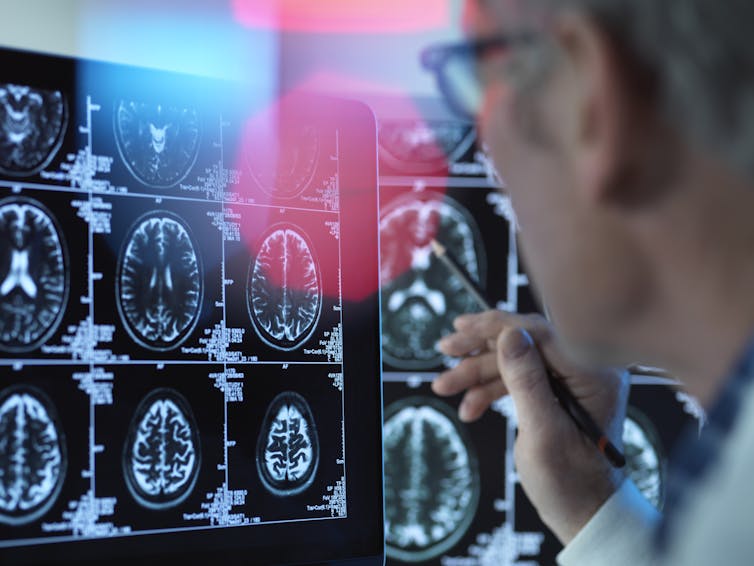
First, it is important to know that dementia cannot be diagnosed from afar or by someone who is not a doctor. A person needs a detailed doctor’s exam for a diagnosis. Sometimes, brain imaging is required. And, forgetting an occasional word – or even where you put your keys – does not mean a person has dementia. There are different types of memory loss and they can have different causes, such as other medical conditions, falls or even medication, including herbals, supplements and anything over-the-counter.
Older people wonder and worry about so-called senior moments and the memory loss they perceive in themselves and others. I see patients like this every week in my geriatric clinic, where they tell me their stories. They forget a word, get lost in a story, lose keys or can’t remember a name. Details vary, but the underlying concern is the same: Is this dementia?
As we age, we experience many physical and cognitive changes. Older people often have a decrease in recall memory. This is normal. Ever have trouble fetching a fact from the deep back part of your “mind’s Rolodex”? Suppose you spot someone at the grocery store you haven’t seen in years. Maybe you recognize the face, but don’t remember their name until later that night. This is normal, part of the expected changes with aging.
What’s more of a potential problem is forgetting the name of someone you see every day; forgetting how to get to a place you visit frequently; or having problems with your activities of daily living, like eating, dressing and hygiene.
When you have troubles with memory – but they don’t interfere with your daily activities – this is called mild cognitive impairment. Your primary care doctor can diagnose it. But sometimes it gets worse, so your doctor should follow you closely if you have mild cognitive impairment.
You want to note the timing of any impairment. Was there a gradual decline? Or did it happen all of a sudden? This too you should discuss with your doctor, who might recommend the MoCA, or Montreal Cognitive Assessment test, which screens for memory problems and helps determine if more evaluation is needed.
Also, the Centers for Disease Control and Prevention lists problems in these areas as possible signs of dementia:
Memory
Attention
Communication
Reasoning, judgment and problem solving
Visual perception beyond typical age-related changes in vision
When memory loss interferes with daily activities, see your doctor about what to do and how to make sure you’re safe at home.
There are numerous types of severe memory loss. Dementia tends to be a slow-moving progression that occurs over months or years. Delirium is more sudden and can occur over hours or days, usually when you have an acute illness. Depression can also cause memory changes, particularly as we get older.
Alzheimer’s dementia is the most common type of dementia, followed by vascular dementia. They have similar symptoms: confusion, getting lost, forgetting close friends or family, or an inability to do calculations like balance the checkbook. Certain medical conditions – thyroid disorders, syphilis – can lead to dementia symptoms, and less common types of dementia can have different kinds of symptoms. Alzheimer’s has a distinct set of symptoms often associated with certain changes in the brain.
Focusing on safety and appropriate supervision, particularly in the home, is critical for all people with dementia. Your doctor or a social worker can help you find support.
It’s also important to be aware of two other things that can lead to decreased mental functioning – delirium and depression.
Delirium, a rapid change in cognition or mental functioning, can occur in people with an acute medical illness, like pneumonia or even COVID-19 infection. Delirium can occur in patients in the hospital or at home. Risk for delirium increases with age or previous brain injuries; symptoms include decreased attention span and memory issues.
Depression can happen at any time, but it’s more common with aging. How can you tell if you’re depressed? Here’s one simple definition: when your mood remains low and you’ve lost interest or joy in activities you once loved.
Sometimes people have recurring episodes of depression; sometimes, it’s prolonged grieving that becomes depression. Symptoms include anxiety, hopelessness, low energy and problems with memory. If you notice signs of depression in yourself or a loved one, see your doctor. If you have any thoughts of harming yourself, call 911 to get help instantly.
Any of these conditions can be frightening. But even more frightening is unrecognized or unacknowledged dementia. You must, openly and honestly, discuss changes you notice in your memory or thinking with your doctor. It’s the first step toward figuring out what is happening and making sure your health is the best it can be.
And, as with any disease or disease group, dementia is not a “character flaw,” and the term should not be used to criticize a person. Dementia is a serious medical diagnosis – ask those who have it, the loved ones who care for them or any of us who treat them. Having dementia is challenging. Learn what you can do to support those with dementia in your own community.
Please, if you are of the age where this is more than an academic interest then read the article carefully and especially that piece of advice towards the end:
But even more frightening is unrecognized or unacknowledged dementia. You must, openly and honestly, discuss changes you notice in your memory or thinking with your doctor. It’s the first step toward figuring out what is happening and making sure your health is the best it can be.
As is said growing old is not for cissies.
None of us can put off the fateful day when we will die and in our case we do not believe in any form of afterlife, in other words we are confirmed atheists, so all we can do is to live out our remaining years as healthily as possible and loving each other and our precious animals.
But having said that I know that all of us want to live out our lives with healthy, active brains and it’s clear that we can’t leave it to chance.
In closing, I recently purchased the book Outsmart Your Brain written by Dr. Ginger Schechter (and others). It was just $9.99 and contains much advice regarding the best foods and exercise for a healthy brain. I recommend it!
I came upon Elizabeth when she left a comment to my post on the 26th August, The science of dog learning.
This is what she wrote:
Reblogged this on The Last Chapter and commented:
Please visit Paul’s website, something new to read and learn each day. Thank you Paul for bringing your site to the blogging world.
Naturally, I replied:
Elizabeth, thank you for leaving your response, and thank you so much for your republication of my post. I read a little about yourself and, I must say, found it fascinating. And your poem The Last Chapter – wow!
Now I will hopefully republish The Last Chapter for another day. (And I have now heard that I have permission to republish it!)
But today, I want to publish the words of Elizabeth in writing about her dear, dear, recently departed dog.
ooOOoo
Mason Murphree
A tribute
Mason Murphee
Mason Murphree was born on January 31, 2012; what can one say about Mason, I bought him off the back of a pick-up truck, only two pups left out of the litter I held both in my hands as they lay upon my chest; one yellow and the other white. I did not see their mother or father; I was told that the father was Bichon Frise and his mother Shih Tzu. The white one instantly begins to crawl into my sports bra, nuzzled himself against my warm flesh and I was instantly in love.
I did not believe that he was six-weeks-old he was still wobbly on his feet when trying to walk. I made him what the old folks call a “Sugar Tit”, a rag rolled on the end tightly and the tip soaked in warm sweet milk. I fed him laying on his back in my hand for a week, the second week I started him on baby food. Then, what I thought to be the seventh-week, he begins to walk with unsteady confidence and I thought was ready for the big world around him.
I found quickly that he had a set of razor-sharp teeth, yep, time for the hard bits of puppy food. I took him to the Vet when I brought him home, and he was given an “A” in health. But, I am getting ahead of myself. When I brought him home I sat him on a potty pad he used until he was six-months-old, then he discovered grass. I might add that in the nine years he was with me he never did his business in the house.
Alas, it was his six-month birthday, and his first time to the groomer, which I found that he had to be calmed down by medicine to get groomed. It was not too long until the Vet announced that he was out of this world’s atmosphere with anxiety. He had “MaMa” withdrawal big time when he was not with me. He would bark for half-an-hour before settling down to wait for me to come back from the store, gym, or anywhere I had gone! He disliked children, anyone less than teenagers. He loved every adult he met. He begins life attached to my hip and me to his.
Mason loved paper products; he would wait patiently to see if anyone would drop a Kleenex, paper towel, or napkin. The pursuit would begin chasing a four-legged speed demon around the floor, me never winning. We called him the Tasmanian devil, and he looked like it when he tried to defend his catch of the day. It was impossible to go on vacation without him; he would stay with one of his two-legged siblings. Of course, that was only for one day, he would accept his situation for about twenty-four-hours, then once again turn into the Tasmanian devil, the telephones would ring trying to find him another place to stay, he traveled back and forth from house to house until my return. A chore to his brothers and sisters, but finally he must have thought he had caused enough trouble for me to return home, and he did.
He loved everyone he met except children, let me explain; when he was six-months-old I took him to the park. On the playground were about a dozen small children, when they spied him, they came running. He jumped up for me to protect him, and that was that. He loved his favorite human friends and his family.
He was the best companion anyone could have; his personality was so individual those who would see him thought he would start talking at any moment. He look intently at you when you were talking, always smiling. He thought he was a Great Dane when in his protection mode, but a clap of lighting and boisterous thunder would send him under my feet. He loved to walk; he loved all the trees on his block and several other blocks.
I won’t describe Mason’s death other than it was quick and painless, he got to spend one day saying good-bye to his two-legged brothers and sisters. We covered our faces and our tears and sadness until we walked away, he knew. As his MaMa, I watched him go from a lively, wonderful, sweet little dog to one that was holding on to every minute waiting for his family to arrive. There are not enough words for me to describe the heartache and loneliness with him gone.
My heart feels much like a patchwork quilt, many little pieces sewn back together after being shattered. Saying good-bye, he took a piece of my heart and soul with him. I know that I will see him again, that is the only thing I have to hold on to this moment. And, that is how I am living my life one moment at a time until I see my four-legged fur baby again. He loved and he was loved.
Sweet dreams little boy.
ooOOoo
How we become so attached to our dogs. Elizabeth not only was beautifully attached to Mason but also wrote perfect words in her tribute.
So who is Elizabeth Ann Johnson-Murphree?
This is her biography but it doesn’t really tell me who she is; in a feeling, living, emotional sense. I suspect one has to read her writings to learn more.
Born in Alabama to a Native American father and an emotionally absent mother.
Raised by her father, her Native American Great-grandmother, her Aunt, and an African-American woman, all magnificent storytellers. Her childhood was filled with listening to the stories her great-grandmother would tell about the grandfathers and grandmothers that perished on the Trail of Tears, of she and the grandmother living in the slave quarters in northern Alabama.
Aunt Francis needed a home when her son went to prison, she would tell the stories of her parents being slaves and how she survived the Civil War. Aunt Vina, her father’s sister a fantastic storyteller; she could bring together characters and build a story that would have you at the edge of your chair, only to find it was all fiction.
As a child, Elizabeth ran free in the woods, fields, and the caves below Burleson Mountain where she grew up. Elizabeth has been writing all of her life, seriously since 2010. She has published a memoir about her daughter who passed in 2010; a small coffee table book filled with pictures of her precious Mason, and ten books of poetry. Her poetry is filled with happiness, sadness, spirit, and anger. The memoir is the private life of her daughter, living with bipolar, and schizophrenia. The books of poetry range from light to darkness that appeared during the creation of each book.
That is a special post, as I said at the start.
I look forward immensely to sharing with you Elizabeth’s poetry.
How hard could it be, really? Just a few snips here and there should do it.
I hadn’t intended to publish a post for today. But then I saw Stephen Messenger’s post over at The Dodo and I thought that it was far too good not to share with you.
ooOOoo
Well-Meaning Mom Decides To Try Cutting Dog’s Hair Herself
How hard could it be, really? Just a few snips here and there should do it.
That, apparently, was what one well-meaning dog mom thought when she decided to cut her dog’s overgrown hair herself at home.
And, well, you’ll see how that turned out.
SUSANA SOARES
The other week, Susana Soares was hanging out with her dog, Mano, when she realized his hair had gotten rather overgrown. It’d been a while since Mano had been to the groomers, and his shag was becoming a bit of an issue.
“Hair was getting in his eyes,” Soares told The Dodo.
Mano wasn’t loving it.
SUSANA SOARES
Soares, who’s actually worked as a hair stylist for humans, figured that taming Mano’s unruly mane would be no sweat.
“I decided to cut his hair at home,” she said.
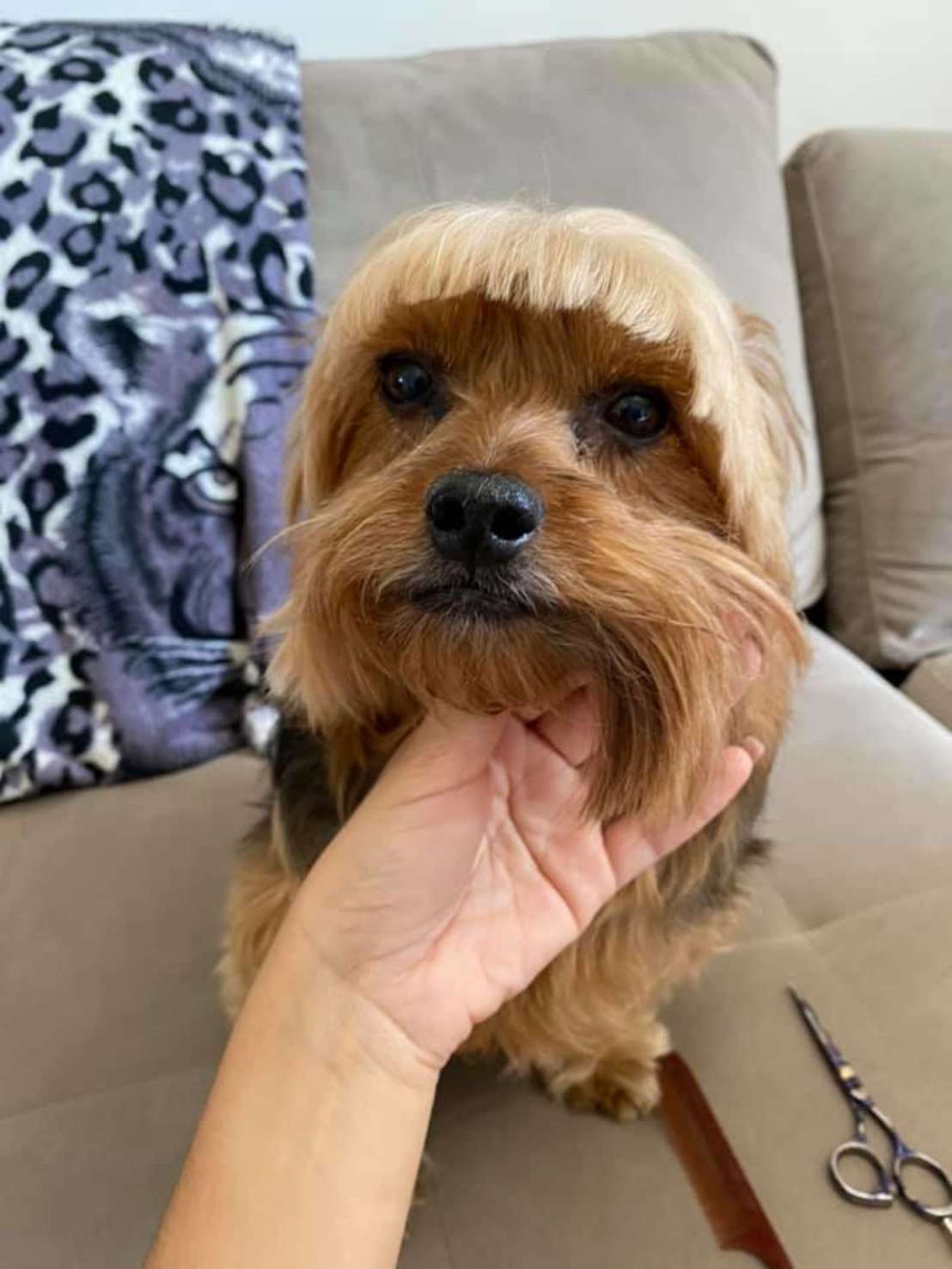
So, Soares grabbed some scissors and got down to business — and this is what resulted:
SUSANA SOARES
Soares had solved Mano’s hair-in-the-eyes issues sure enough.
She gave him bangs — bangs that inadvertently gave Mano a questionable new look.
It was almost as if the little dog had cut his bangs himself. Without a mirror.
SUSANA SOARES
Mano didn’t have to ask Soares how she thought his new ‘do’ turned out.
“I fell on the floor laughing,” she said.
SUSANA SOARES
Did the cut look ridiculous? Yes, of course it did. But Mano’s not vain. He could see clearly again, after all.
“He likes it,” Soares said.
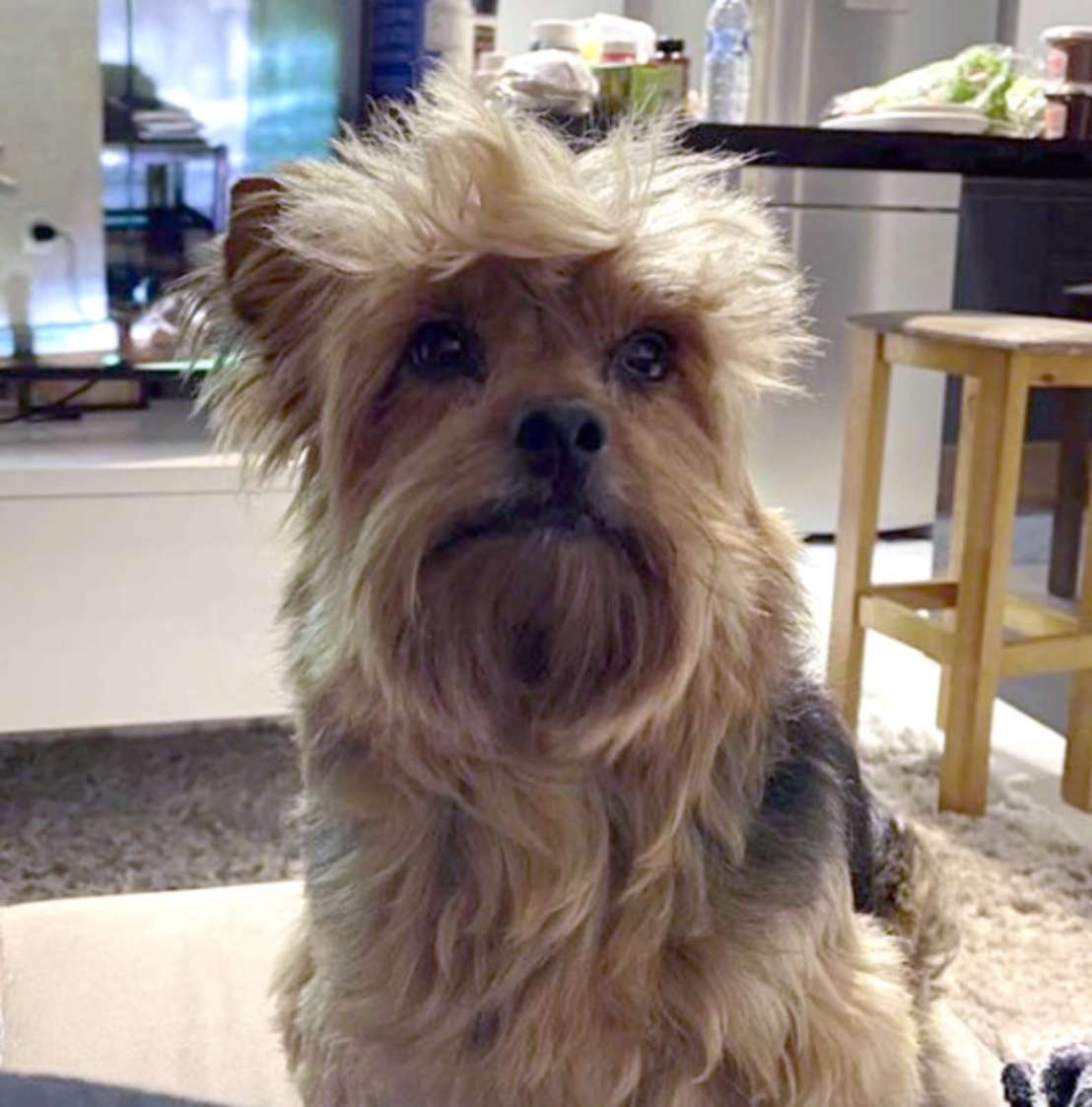
Fortunately, when tussled, Mano’s haircut looks less silly. If only slightly so.
SUSANA SOARES
Despite how things turned out, Soares did have the best intentions — and that’s what matters most.
SUSANA SOARES
Bad haircuts come and go. And thankfully, in time, Mano’s bangs will grow back into a more natural look.
When it comes time to trim them again, Soares plans to keep her scissors in the drawer and leave it to the pros.
“I will not be repeating that!” she said.
ooOOoo
See what I mean. This was a delightful story and I really have nothing to add other than joining in with the laughter!
Dog lovers have two fears in their hearts: their dog dying and their dog going missing.
I think in many ways a dog going missing is the more difficult of the two to handle. There are so many questions unanswered!
So when The Dodo published this story earlier this Summer I immediately put it in my ‘blog’ folder. Somehow I overlooked the story but that is remedied today!
ooOOoo
Dog Is Overjoyed To Reunite With His Mom After 2 Years Apart.
“[He] looked me straight in the eyes as if he was saying, ‘I gotta see that this is really you.’”
By Lily Feinn
Published on 7/1/2020.
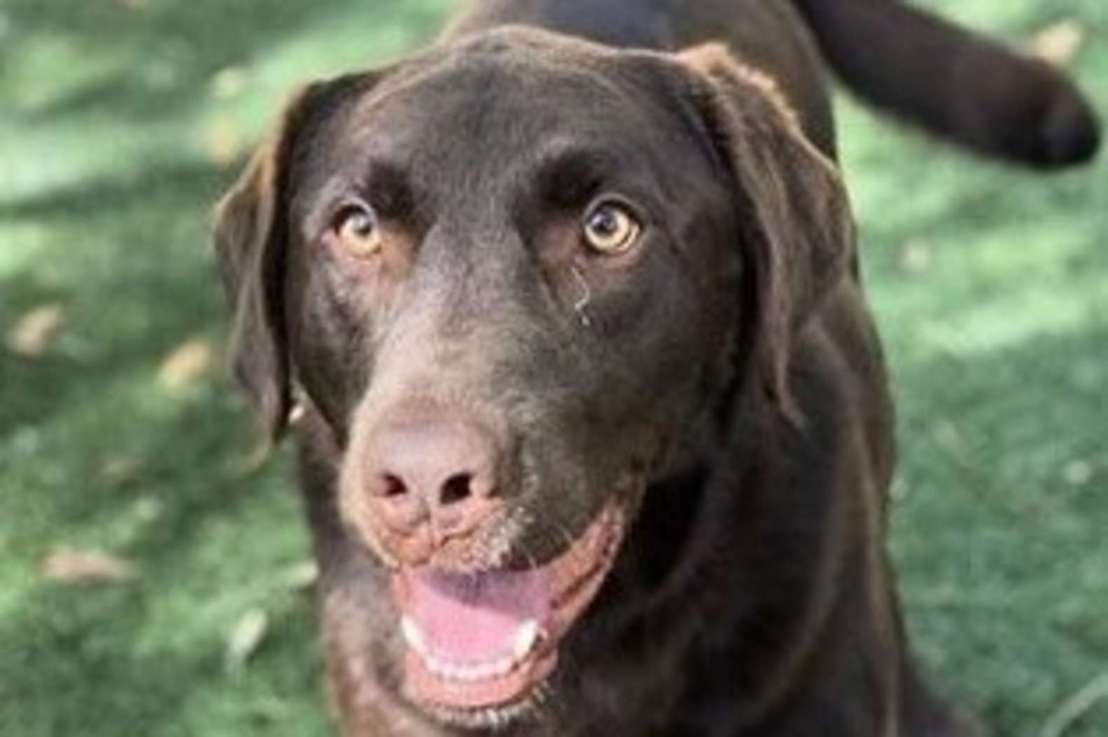
Two years ago, Linda Harmon’s beloved dog Twixx went missing from her yard.
Twixx had been a bit of an escape artist, known for digging tunnels under the fence. That’s how he ended up with a little scar on the top of his head.
Harmon’s husband had recently installed metal posts around the fence making it impossible for Twixx to get out. After checking the gate and the fence, they couldn’t find any signs of tampering — it was as if Twixx had just disappeared.
Linda Harmon
Harmon began searching the neighborhood, making posters, posting on Facebook and checking with the local animal control. Then a woman who had been following Twixx’s story on Facebook reached out to Harmon via text.
“She said, ‘I’m so sorry to send you this, but I found your Twixx. He’s been hit on the side of the road and here’s his picture,’” Harmon told The Dodo. The woman sent Harmon a photo of the top of the dog’s head, and there was Twixx’s little scar.
Linda Harmon
Harmon reported Twixx as deceased to the microchip company, but still had difficulty accepting that he was really gone. “I never truly believed it in my heart,” Harmon said. “My husband said, ‘You’ve got to let this go. You’re grieving over him.’ But I said I would never get another dog and I didn’t for two years.”
Then, earlier this month, Harmon was sitting with her church group when a miracle happened — she received a call from the local animal shelter asking if she had ever owned a chipped pet.
“I just started bawling. I was crying endlessly, and I was around quite a few church members and they rushed to me, thinking I had bad news,” Harmon said. “But when they looked at me I was smiling.”
FACEBOOK/MOBILE COUNTY ANIMAL SHELTER
After so long apart, Harmon worried that Twixx wouldn’t remember her. And the last thing she wanted was to make her dog feel scared or uncomfortable.
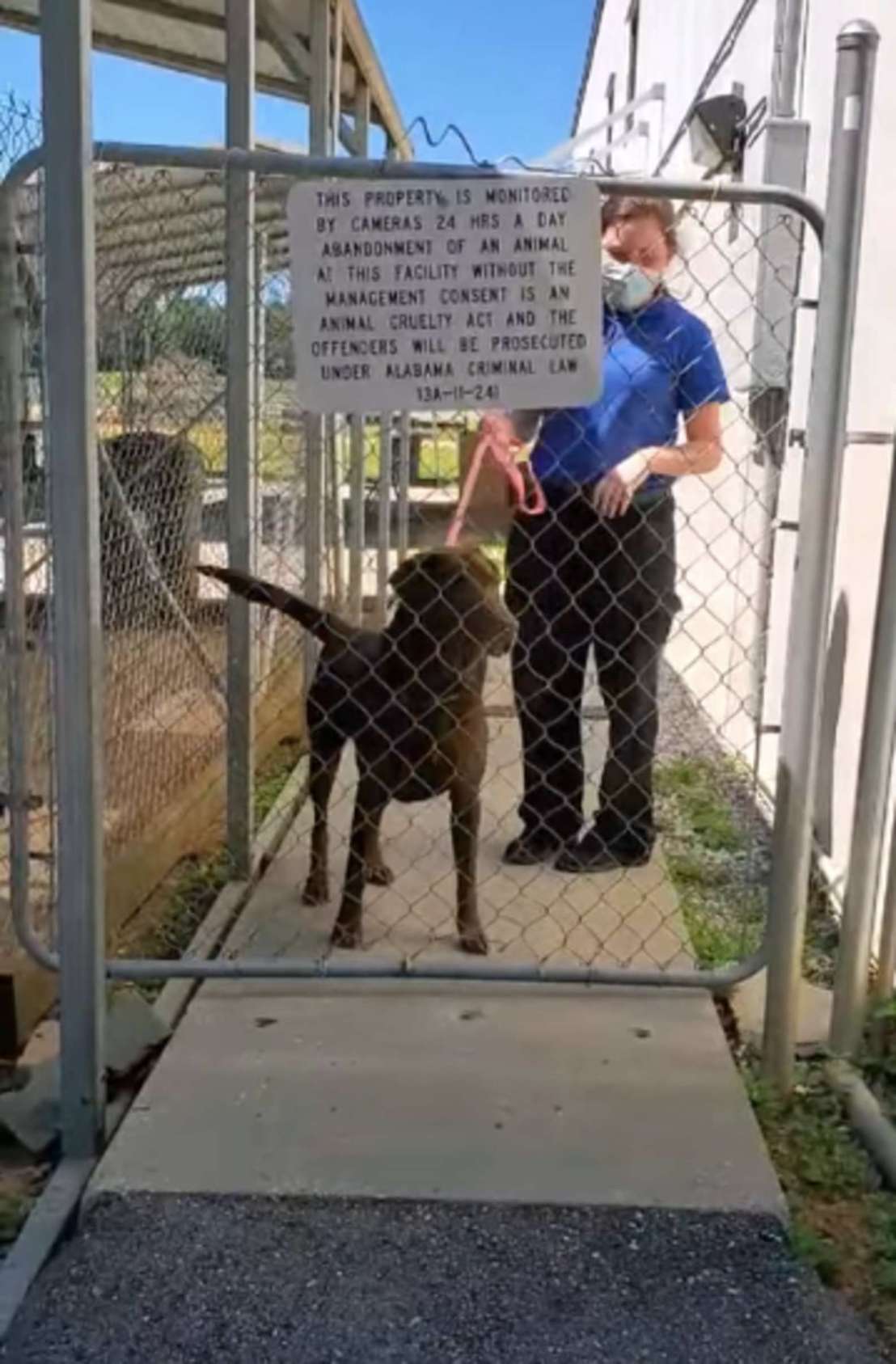
So the shelter came up with a plan: When Harmon came to pick up Twixx, they would hold him behind the gate while she called his name, and shelter staffers would watch the dog’s reaction.
FACEBOOK/MOBILE COUNTY ANIMAL SHELTER
When Twixx arrived at the shelter gate, Harmon began to gently say his nickname — Tootaroota — and as soon as the dog heard her, he put his snout on the ground as if sniffing for his mom.
“Finally, when I bellowed out ‘Twixx’ he ran to the gate and stood at attention,” Harmon said. “And I heard the lady say, ‘Let him out because he’s trying to find her.’”
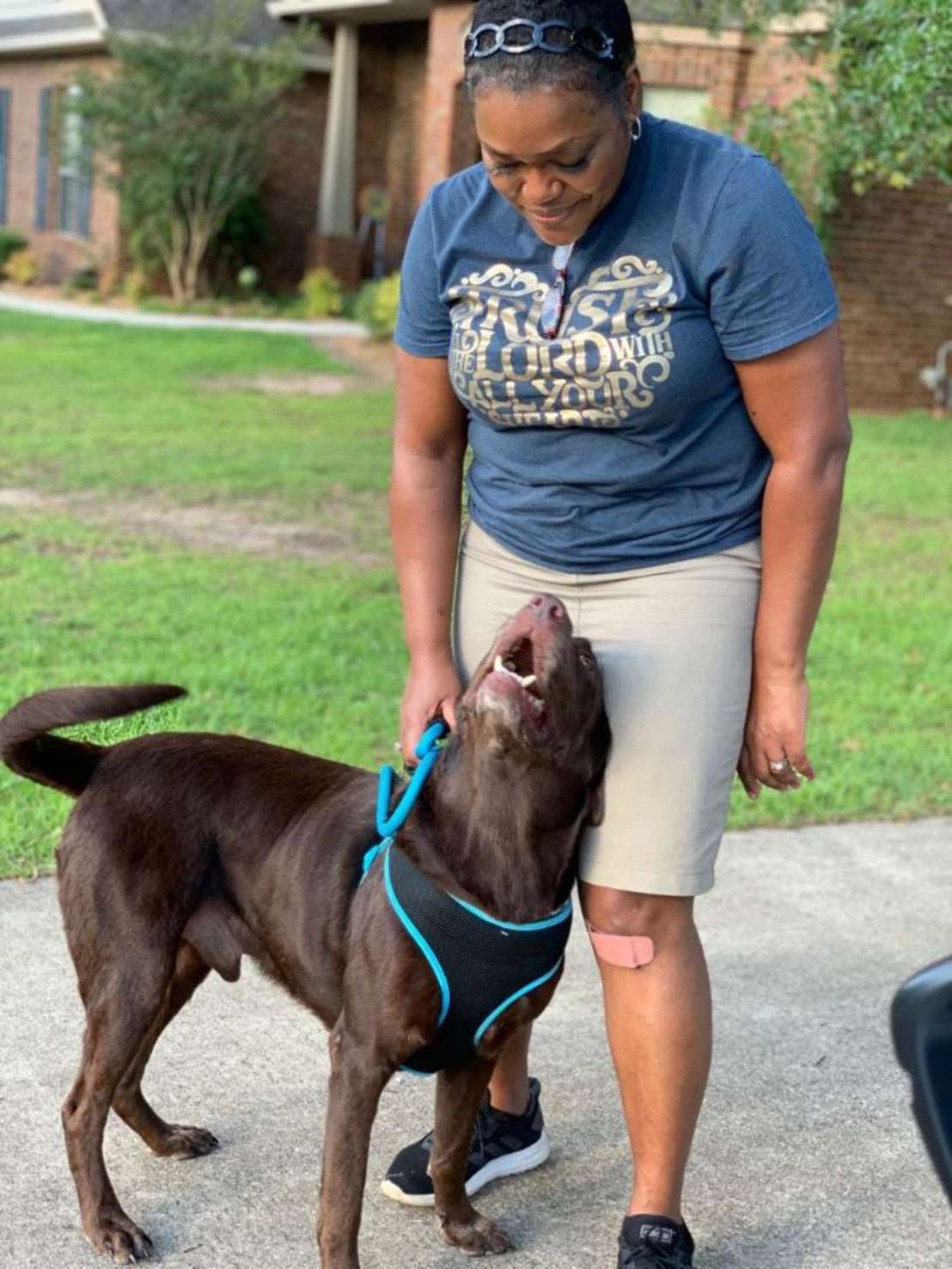
As soon as they opened the gate, Twixx turned the corner and ran straight to his mom. It was as if he remembered every minute they had spent together, and the two years apart faded away.
“He couldn’t stop wiggling — oh my goodness — and he just jumped on me,” Harmon said. “Then he laid his head in my arms and looked me straight in the eyes as if he was saying, ‘I gotta see that this is really you.’”
FACEBOOK/MOBILE COUNTY ANIMAL SHELTER
Soon everyone watching the reunion had tears in their eyes — including Harmon.
Now, Twixx is home safe and sound with the family that loves him. And he hasn’t dug another hole since.
ooOOoo
Dogs store the scents of humans that have loved them forever. In a very real sense it is part of their memory system albeit it is very different to the memories that you and I have. For dogs have a scenting ability, call in a nose, that is 100 million times better than ours. It is impossible for us humans to truly comprehend what that means to a dog.
But Twixx demonstrated this superbly because the first thing he did was to “put his snout on the ground as if sniffing for his mom.”
There was an article on the website EarthSky News yesterday that, literally, took me out of this world. It described the role of magnetic rivers in newly forming star clusters.
There’s not a dog in sight but nevertheless I wanted to share this article with you.
Astronomers have learned that the pull of gravity can sometimes overcome the strong magnetic fields found in great star-forming clouds in space. The resulting weakly magnetized gas flow can feed the growth of new stars.
See the lines – called streamlines by scientists – in this composite image of the Serpens South star cluster? They’re from magnetic fields in this great star-forming cloud. Notice the lower left, where magnetic fields have been dragged into alignment with a narrow, dark filament. In that area, astronomers say, material from interstellar space is flowing into the star-forming cloud and fueling star formation. Image via NASA/ SOFIA/ T. Pillai/ JPL-Caltech/ L. Allen/ USRA.
Astronomers have known for decades that stars like our sun form when giant clouds of gas and dust in space – sometimes called molecular clouds – collapse under their own gravity. But how does the material from interstellar space flow into these clouds, and what controls the collapse? The image above helps illustrate an answer to these questions. It’s a composite, made with data from SOFIA – an airborne telescope designed for infrared astronomy – overlaid on an image from the now-retired Spitzer Space Telescope. This composite shows that the pull of gravity can sometimes overcome the strong magnetic fields found in great star-forming clouds in space. And it shows that, when that happens, weakly magnetized gas can flow – as on a conveyor belt – to feed the growth of newly forming star clusters.
A statement from the Max Planck Institute in Bonn, Germany, explained:
A major finding in the last decade has been that extensive networks of filaments permeate every molecular cloud. A picture has emerged that stars like our own sun form preferentially in dense clusters at the intersection of filaments.
Now look back at the image above, which shows the Serpens South star cluster, a star-forming region located some 1,400 light-years from Earth. In that image, you see a dark filament in the lower left. Now notice the “stripes” on the image, which astronomers call streamlines. They represent magnetic structures, discovered by SOFIA. The astronomers said these magnetic structures act like rivers, channeling material into the great star-forming cloud.
As you can see in the image, these magnetic streamlines have been dragged by gravity to align with the narrow, dark filament on the lower left. Astronomers say this configuration helps material from interstellar space flow into the cloud.
This is different from the upper parts of the image, where the magnetic fields are perpendicular to the filaments; in those regions, the magnetic fields in the cloud are opposing gravity.
Astrophysicist Thushara Pillai led the study showing that magnetic rivers feed star birth in the Serpens South star-forming region.
The scientists said in a statement from Universities Space Research Association (USRA) that they are:
… studying the dense cloud to learn how magnetic fields, gravity and turbulent gas motions contribute to the creation of stars. Once thought to slow star birth by counteracting gravity, SOFIA’s data reveals magnetic fields may actually be working together with gravity as it pulls the fields into alignment with the filaments, nourishing the birth of stars.
The results were published in the peer-reviewed journal Nature Astronomy on August 17. The lead author of the new study is Thushara Pillai of Boston University and the Max Planck Institute for Radio Astronomy in Bonn, Germany.
In 1835, the French philosopher Auguste Comte wrote of the unknowable nature of stars:
On the subject of stars, all investigations which are not ultimately reducible to simple visual observations are … necessarily denied to us. While we can conceive of the possibility of determining their shapes, their sizes, and their motions, we shall never be able by any means to study their chemical composition or their mineralogical structure … Our knowledge concerning their gaseous envelopes is necessarily limited to their existence, size … and refractive power, we shall not at all be able to determine their chemical composition or even their density…
He was, famously, wrong.
He couldn’t have envisioned the range of tools available to modern astronomers. It’s a beautiful thing that, nowadays, astronomers can not only learn about the compositions of stars via their studies of their spectra, but also probe the deeper mysteries, going all the way to the births of these colossal, self-luminous balls in space.
SOFIA, the Stratospheric Observatory for Infrared Astronomy. The HAWC+ polarimeter on board SOFIA was used for the observations of the magnetic field in the Serpens South star-forming region. Image via NASA/ C. Thomas/ Max Planck Institute.
Bottom line: Astronomers have learned that the pull of gravity can sometimes overcome the strong magnetic fields found in great star-forming clouds in space. The resulting weakly magnetized gas flow can feed the growth of new stars.
Just read that paragraph just before the end of the article: “He couldn’t have envisioned the range of tools available to modern astronomers. It’s a beautiful thing that, nowadays, astronomers can not only learn about the compositions of stars via their studies of their spectra, but also probe the deeper mysteries, going all the way to the births of these colossal, self-luminous balls in space.”
What a long way we have come from just, say, 50 years ago.
It would be easy to get lost in the article in a scientific manner, and that would be entirely appropriate.
But there’s another beautiful way to get lost in the article; by dreaming of outer space and forgetting just for a moment or two this Earthly planet we all live on!