Category: Musings

Ageing gracefully applies to our dogs as well.

Another guest post from John Brooks.

This is an argument from John to consider dogs that are well past their prime.

It’s a good article. You will enjoy reading it and may learn something; I certainly did!

ooOOoo

Here’s Why Senior Pets Have Lots To Offer

As you may or may not know, we’ve recently celebrated Adopt a Less-Adoptable Pet Week. During this week, animal rescues around the globe join together to raise awareness about the benefits of adopting pets that society deems as ‘less adoptable’ – and sadly, senior pets make the list.

We think that senior pets are just as loving, sweet and great companions as their ‘adoptable’ counterparts. But despite the many benefits of owning a senior pet, most families choose younger pets when adopting. With that in mind, here’s why we believe seniors deserve a second look and a fur-ever home.

Why you should consider a senior pet
Since the onset of the pandemic, the number of families adopting and fostering pets since the enforcement of COVID-19 restrictions has risen dramatically across the globe. Near the commencement of stay at home orders, RSPCA received 1,600 adoption applications in a single week of April—a 45% increase in dog adoptions and a 20% increase in cat adoptions compared to 2019.

Senior pets (and other less-adoptable animals) typically spend four times as long in a shelter as a healthy, younger pet. In the U.S. alone, about 400,000 senior pets die in a shelter. Though most people do seek a puppy or kitten when adopting, families would benefit in many ways from choosing an older pet. Here’s why.

Better manners
Older pets are well past the playful, chew-everything, get-into-anything stage. Older dogs and cats sleep for 20 hours a day or more, rousing just long enough for a conversation, to greet visitors, or have a meal. They are also probably house-trained, dog-door trained, and have formal or informal obedience training.

They are much more likely to come when called, which means they are at less risk of danger younger pets encounter when escaping their yard and wandering the streets.

Easier to train
For the older dog with less than perfect manners, training is typically more straightforward. They are more focused and eager to please than puppies with short attention spans. Senior animals are smarter and more experienced, and this can mean they acclimate more quickly to the house and how the household operates.

Done growing
One of the best parts about adopting a senior is they have finished growing, and the new family knows exactly how large the pet is. When adopting a puppy, owners are often surprised at how large the dog becomes or how little it grows. With an older dog, there will be no surprises.

Seniors make better companions for seniors
Senior pets usually move at a slower pace, which makes them a better choice for older people, especially those with limited mobility or disabilities. The new owner is less likely to be toppled by a dog jumping up. It’s also safer for those that allow their pets to sleep with them. An older dog is less likely to be rambunctious and cause injury to a sleeping adult.

Laid-back company
Senior pets are content to stay close to home or in the house for the majority of the day. They are more likely to be found soaking up a sunbeam on a cosy patch of carpet than barking wildly at everything and everyone crossing past the front window.

Senior dogs are also far less distracted when out for a walk. Though they may perk up at the sight of another dog, they are less likely to drag the owner down the sidewalk in pursuit. They also walk slower, and at a pace their owner matches.

Gratitude and devotion
Senior dogs spend up to four times as long in a shelter, so when they finally find a furever home, their gratitude runs deep, and it shows. They give unconditional love and devotion and look after their families. Often they will attach to a family member and stay close at all times, moving with them from room to room. They take full responsibility for their welfare and provide comfort with a warm, wet kiss.

Years of happiness
At seven years old, most dogs and cats are considered senior. Cats often live to be 15 or even 20 years so that the owner can expect a long life with their new friend. Depending on the breed and size, dogs too can live 15 or more years. So while adopting a senior dog will mean you may spend slightly less birthdays together, you’ll still be blessed with some wonderful years and memories.

Despite the many benefits of owning a senior pet, families also worry about the costs associated with maintaining their pet’s health. Dental cleanings, blood work, and annual shots can quickly add up, but younger animals have just as many health risks and are more likely to be involved in accidents.

Final thoughts
Fostering helps many people feel fulfilled because they are making a significant contribution to a pet’s life. For them, seeing their foster move on to their forever family is reward enough. Don’t be surprised though if fostering leads to adoption. That’s always a great outcome for all involved.

ooOOoo

“In the U.S. alone, about 400,000 senior pets die in a shelter.“

Among the many interesting aspects of this post, for me the statement above that I have put into italics jumped off the page at me. What an appalling waste!

But coming back to the complete article it offers many aspects of something that I had hitherto not thought about. I suspect that I am not the only one!

We, too, have a senior foster dog. She is Sheena and is 12 years of age. We love her and there is no question of Sheena going back to the kennels.

Once again, let me offer a bit of background on John.

John Brooks is the Professional Content Marketer. He writes a lot of articles on his carrier. Last one year he is working with Orbeen.com as a digital marketing expert. The company provides various types of Digital Marketing services i.e, Search Engine Optimisation (SEO), Search Engine Marketing (SEM), Social Media Optimization (SMO), Web design & development, Link Building, Content Marketing & blogger outreach.

Fabulous!
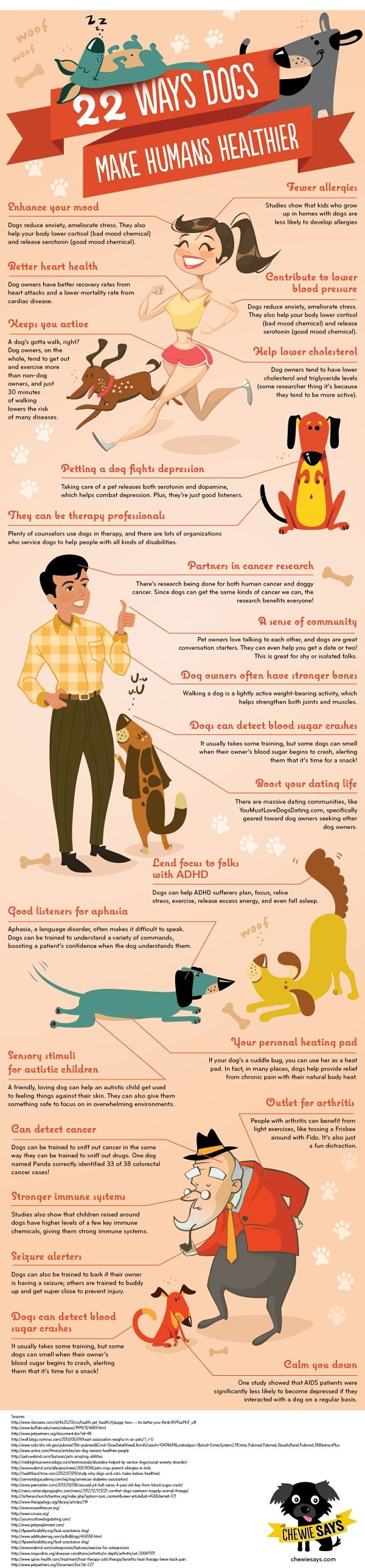
 

Dogs are not just cuddly companions.

They give us humans extra longevity.

I have long followed Tony and his blog One Regular Guy Writing About Food, Exercise and Living Past 100. Not only because he writes so well but also because he and I are in the same camp age wise (OK, Tony is just a tad older.)

So when this post came along I just had to share it with you because we know about dogs and the great things that they do for us.

ooOOoo

22 Ways Dogs Make Humans Better

By Tony,
As a dog lover and fitness enthusiast, I had to love this poster and share it with you.
Regular readers know that my dog Gabi has been my companion for 14 years. She is my first dog in over 50 years. You can read the peculiar story of how I came to own her in this post: Anatomy of an Act of Kindness.

In case some of these benefits seem nebulous, check out my post What is the Value of Hugging? and also 10 Reasons Why Oxytocin Is The Most Amazing Molecule In The World for some documentation.

ooOOoo

I hope you can read it.

If you have any problems let me know and I will try and find a clearer version.

Meantime, you all stay fit and healthy with your dogs!

The power of touch!

I am speaking of a recent BBC Radio 4 program, but …

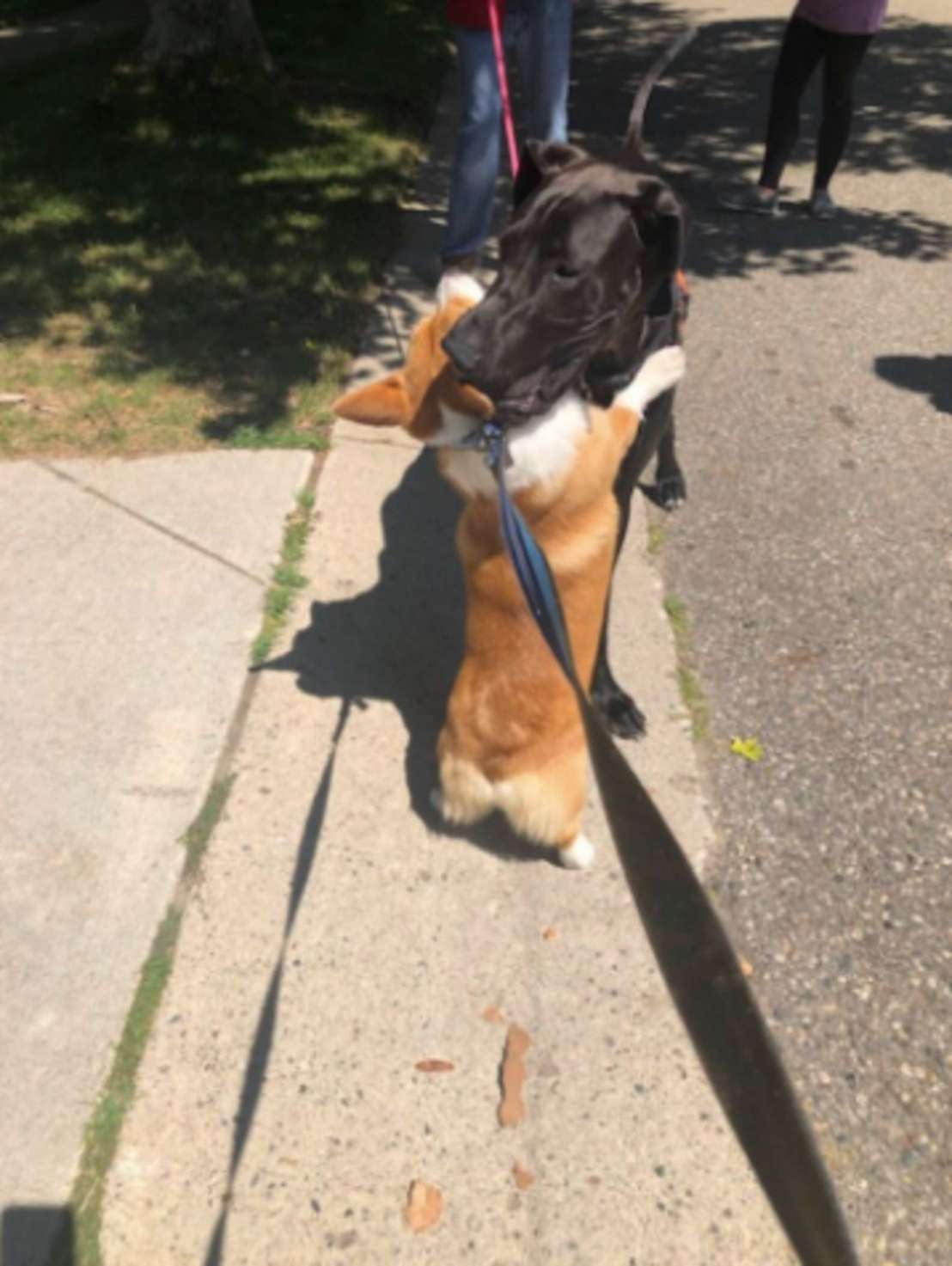
… this loving Corgi seems to have got the message.

There has been a series on BBC Radio 4 about the Anatomy of Touch. This is a small extract from the website that accompanied the program.

Touch is a crucial part of our lives. The right kind of touch can reduce pain, soothe our stress and convey emotion faster than words. It’s a sense that you can’t turn off and we should not underestimate its power.
It’s also a sense that has taken on a new resonance during the pandemic, now that we have to keep our distance and haven’t hugged friends or family we don’t live with for more than half a year.

But this is a post about a Corgi that hugs every dog he meets!

ooOOoo

Loving Corgi Hugs Every Dog He Meets On His Walks

“He’s the biggest sweetheart” ❤️️
By Lily Feinn
Published on 10/1/2020
Wallace understands that times are tough, and the loving corgi knows how to make things better — with a big hug. Well, as big as his little arms can go.

When Noah Raminick is walking Wallace, he can expect to stop every time Wallace spots another pup. The year-old corgi loves to play and won’t let another dog walk by without giving him an embrace.

INSTAGRAM/IAMWALLACETHECORGI

“He’s the biggest sweetheart,” Raminick, Wallace’s brother, told The Dodo. “He’s always very happy to be around people and other dogs. He loves to give face kisses to people and when he sees another dog, he’s always the one to initiate a play session.”

INSTAGRAM/IAMWALLACETHECORGI

When it comes to large dogs, the low-bodied pup shows no fear and will stand on his hind legs to get the best possible angle for his hug. Wallace’s best friend Daisy is a Great Dane, but the corgi knows that size doesn’t matter.

“They always hug when they see each other,” Raminick said. “And one of her paws weighs as much as Wallace’s entire body.”

INSTAGRAM/IAMWALLACETHECORGI

With smaller dogs, Wallace makes sure to play gently, so he doesn’t spook his new friend. Wallace won’t go in for the hug until he sniffs out whether the other dog is OK with it first.

“The thing I find interesting with his hugging is that he wasn’t trained to do that at all,” Raminick said. “I think it comes down to him being really excited about playing with another dog.”

INSTAGRAM/IAMWALLACETHECORGI

Wallace makes sure to spread the love when he’s with his human family, too. “His favorite things are morning and evening cuddles, playing fetch and me chasing him around the house,” Raminick said. “I don’t think Wallace has any dislikes.”

Wallace’s family is happy for their pup to continue spreading the love to the dogs and people in his neighborhood, adding a little more joy to everyone’s day.

ooOOoo

 Back to that Touch website to close:

The three most common words used to describe touch are: “comforting”, “warm” and “love”

People from 112 different countries took part in the Touch Test and it’s striking that “comforting” and “warm” were among the three most common words that people used in every region of the world.

Wallace has the message!

Twelve on twelve!

A look, courtesy of my daughter, at Sarah Nicolls’s 12 Years project.

Again, this is not about dogs, well not in a direct way. But, indirectly, it affects all of us, young and old, and, inevitably, it affects our dear dogs.

I’m writing this in response to something that came my way as an email sent from my daughter’s company, SOUND UK. The company holds to the view that: Sound UK produces extraordinary musical encounters for all.

Sarah Nicolls has her own website and on her About page this is what she presents.

My name is Sarah Nicolls. I am a visual artist who makes pictures with language, books with pictures, prints with type, and animations with words. I combine image, visual narrative, and time in prints, books, and ephemera that are often research-based. I am interested in urbanization, local history, climate change, the history of science and technology, alternative economies, found language, and the history of publishing. I have written a collection of self-help aphorisms, I publish a series of informational pamphlets, and I organize a range of participatory walks and programs around the series.

My recent books include an examination of the history of greenhouses, and a study of the stories we tell ourselves about disappearing islands, both real and imagined. My  limited edition artist books are in the collections of the Brooklyn Museum, Stanford, UCLA, and the University of Pennsylvania, among others.

For twelve years, I ran the studio programs at the Center for Book Arts in NYC, organizing classes, public programs, readings, and talks, coordinating publications, running residency programs, and teaching interns. I learned everything I know about letterpress and bookmaking while I was there. Now I teach at Pratt Institute and Parsons School of Design, and work on a variety of projects.

I also do illustration and design work for individuals and institutions. Do you have an interesting project in mind? Contact me here, I welcome commissions and collaborations.

Well back to Sound UK. This is Sarah.

ooOOoo

“What she does should be happening every week of the year” The Guardian

Acclaimed pianist and composer Sarah Nicolls’ new Inside-Out Piano project 12 Years was inspired by the 2018 IPCC Special Report saying we had just 12 years to radically change our behaviour to save the planet. Starting on the second anniversary of the report, 8 October, Sarah launches 12 nights of online performances.

With her striking vertical grand piano, Nicolls combines original music and recorded speech in an absorbing performance. Piano melodies and textures interweave with phone calls between three fictional characters challenging each other to either worry less or do more. We hear from environmental experts, survivors escaping from a wildfire and a glacier melting, eloquent speeches from Greta Thunberg and finally the sound of hope emerging. There is humour and humanity as well as time for reflection.

On selected nights leading climate scientists will also join Sarah for exclusive post-show discussions online, specifically to talk about what we can all do.

See list of speakers below.

“This should be prescribed viewing/watching/listening for anyone even remotely concerned with the welfare of our planet.” Ciaran Ryan, Galway Jazz Festival

ooOOoo

Plus, if you would care to listen to a track on Sarah playing her piano, then feel free:

I’m bound to say that I am reasonably hopeful of living another twelve years but, at the same time, reasonably expectant that life could become very interesting indeed!

What a brilliant idea!

This is a wonderful, innovative way to look after dogs.

It’s not that often that something comes along that is wonderfully refreshing, both as an idea and in practice. I am speaking of a way of housing shelter dogs.

It’s the work of Austin Pets Alive and I’m not surprised in the slightest to read from their website:

Austin Pets Alive! is not your average animal shelter. We pioneer innovative lifesaving programs designed to save the animals most at risk of euthanasia.

They are in Texas.

But back to the article which appeared on the Treehugger website.

ooOOoo

This Rescue is Building Tiny Homes for Shelter Dogs

They offer a calm alternative to the chaos of shelter life.

By Mary Jo DiLonardo, October 1st, 2020

The shelter is building two tiny homes for rescue dogs.
Austin Pets Alive!

The shelter environment can be incredibly overwhelming for any dog. There are strange sights, smells, and sounds, and the presence of unfamiliar animals and people can be constantly changing. Some pets adapt more quickly than others, while some struggle with the frenetic surroundings.

One animal shelter in Texas is building tiny houses as a solution for those anxious dogs that need a calmer place to stay. The non-profit rescue is creating two small cabins on their shelter grounds complete with heating and air conditioning, dog-friendly furniture, and their own private yards. The cabins will also provide workspaces for staff and volunteers.

The tiny homes should be ready for their first guests later this month.

“The idea is to provide more of a home-like environment for the unique population of dogs Austin Pets Alive! cares for as the safety net for shelter animals who need us most — a place for decompression, training, and quality-of-life purposes,” Director of Operations Stephanie Bilbro tells Treehugger. “It seemed like the best opportunity for the investment, and also has the benefit of being a project that can be repeated as many times as we want!”

Having tiny homes for some of the shelter’s canine residents was a long-time dream of the rescue’s executive director, veterinarian Ellen Jefferson. The rescue put together a committee of staff and volunteers in 2019 to assess the facility and see what improvement could be made.

They decided to build the tiny homes “as a way to provide a better quality of life for some of our longest-stay or most behaviorally challenged dogs”, Bilbro says.

The cabins will house one dog at a time and they will remain there for the rest of their stay until they find a foster or adoptive home. The cabins will primarily be used for dogs who are overstimulated by the standard kennel environment.

Some dogs are scared and overwhelmed by the shelter environment. Austin Pets Alive!

“Overstimulation can lead not only to higher stress in the animal, but can actually be dangerous for a handler, or other animals, if you have a dog who expresses stress by showing impulsive or aggressive behaviors,” Bilbro says.

“Overstimulation is also a big barrier to successful training or behavior modification, so it can be difficult to make progress with dogs like this in a kennel or shelter environment. The cabins will ideally provide a quiet and low-stimulation place for the dogs to decompress and relax in a way that will help our staff and volunteers get through to them easier.”

The rescue is relying on donations to keep saving lives and trying out innovations like these, Bilbro says. When the pandemic first started, the rescue increased its intakes so smaller and more rural shelters that were temporarily closing wouldn’t have to euthanize animals.

The first dogs should be moving into their tiny houses soon. And maybe they won’t be staying long.

“We also hope that the ‘home-like’ environment of the cabins will help us learn a little more about how a dog would act in a home, which could tell us more about what kind of foster or adopter they need for our matchmakers to match them with their forever families,” Bilbro says.

“Would they be calm or anxious, would they be destructive or tidy, are they possibly housetrained, will they let people come into their space without conflict? These are things we would hope to learn from a foster home but without needing to find a foster who is willing to take on a challenging dog, or a dog we don’t know a lot about.”

ooOOoo

I have nothing to do with neither Treehugger nor Austin Pets Alive.

However, I was so impressed with the way they operated that we made a very small donation. So, if there’s anybody else out there who can afford some money then this is the link to donate.

I just donated to Austin Pets Alive!, an organization that serves the animals most at-risk through innovative programs that address the animals’ needs. I’m proud to support a mission that believes that animal shelters should do just that – provide every animal the chance to find their forever home!

“Provide every animal the chance to find their forever home.“

It doesn’t get any better for our lovely dogs than that.

Picture Parade Three Hundred and Fifty-Seven

More of those delightful photos from Capt. Bob.

A republication of an earlier Picture Parade.

Stay Happy Good People!

oooo

oooo

oooo

oooo

Many thanks, Bob!

Now this is good behaviour!

An article in The Dodo describes good dogs perfectly.

When we came up from Mexico to Arizona back in 2010 we had 16 dogs. They were all pretty well behaved. When we came to Oregon in 2012 we were down to 12 dogs and, again, pretty well behaved.

But having said that getting all 12 dogs to sit still and look at the camera would have been impossible! I’m not sure I could manage it now and we have only 6 dogs.

Which makes the following article recently published in The Dodo most remarkable.

Have a read!

ooOOoo

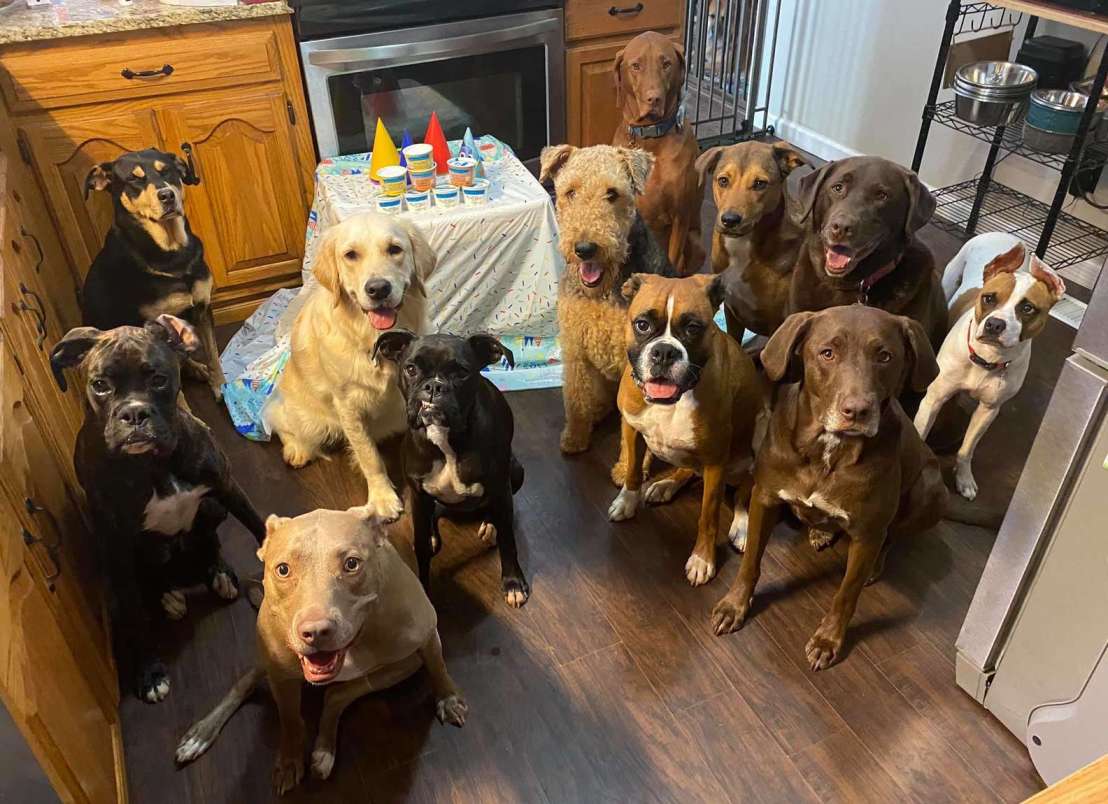
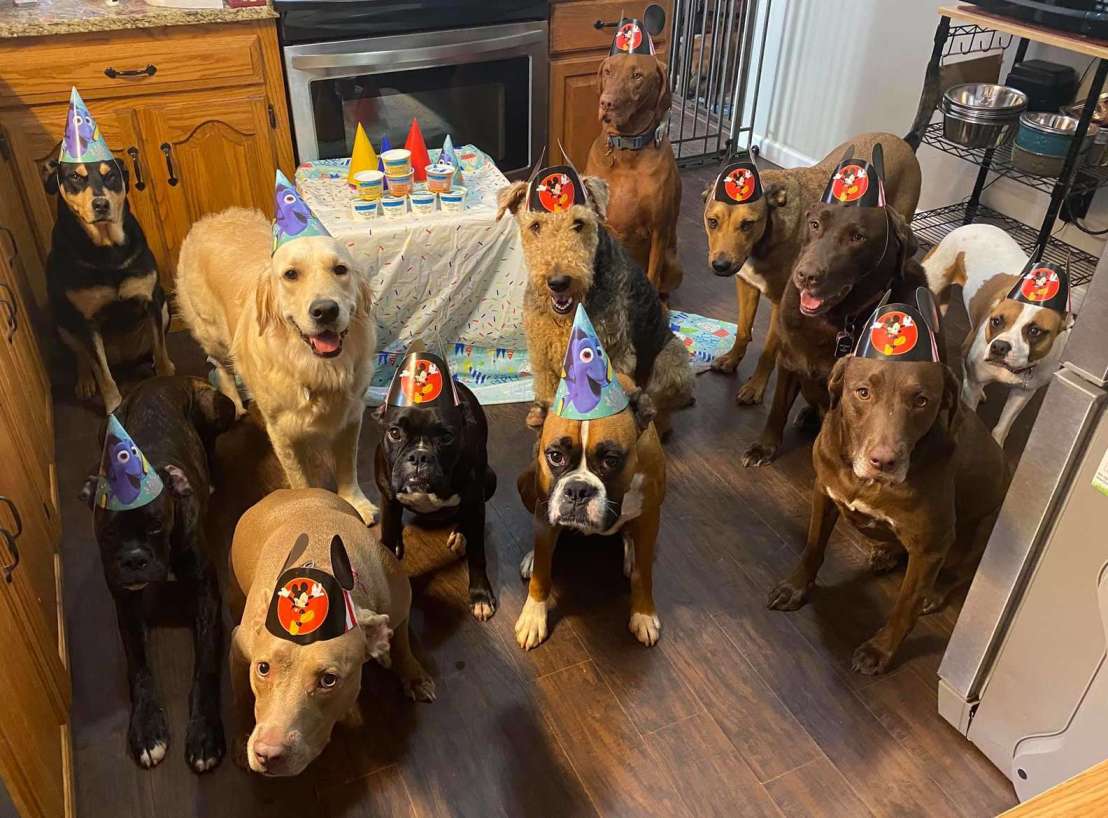
Dogs Have The Most Well-Behaved Birthday Party Ever

They literally know the phrase ‘picture time!’

By Lily Feinn Published on 9/24/2020

Throwing a party for 12 dogs can get pretty wild, but the pups at Lending Paws Pet Care are the goodest boys and girls you’ll ever meet.

Whenever a dog at the doggy day care has a birthday, Aubrey Thweatt makes sure they get a special party with all their best friends. The celebration includes goodies, party hats and cute photos to commemorate the day.

FACEBOOK/LENDING PAWS PET CARE

“I started doing birthday pics and goodies with my own dogs and so when one of my client’s pups would have a birthday … they would send goodies for the group,” Thweatt, owner of Lending Paws Pet Care, told The Dodo. “It just sort of evolved from there.”

And when it comes to posing for the birthday party photo, these dogs are pros. They don’t even mind wearing a party hat.

FACEBOOK/LENDING PAWS PET CARE

When a gray pittie named Rosemary celebrated her 4th birthday, Thweatt snapped a photo, never expecting it to go viral. But after one of the dog owners posted it on Twitter, people couldn’t get over the dogs’ unique expressions and expert sitting skills.

“They have been coming for years. We do group pictures daily so they are used to it,” Thweatt said. “We do ‘sit and stay’ for everything.”

“We have lots of fun and they literally know the phrase ‘picture time!’” Thweatt added. “They will all run in the direction I’m walking to get to a spot to sit.”

FACEBOOK/LENDING PAWS PET CARE

While at doggy day care, the pups have the run of the house. They can play in the backyard, or relax and recharge during naptime, and always get plenty of praise and treats. After spending so many years together, the pups are all best friends and look forward to spending the day with Thweatt.

“Everything I do is for them,” Thweatt said. “They have the entire house and I am just here to constantly clean up after them and make sure they have lots of playtime and socializing!”

ooOOoo

 Aubrey Thweatt knows perfectly how her dogs are to be treated. That is they are loved for being the animals that they are. Dogs are smart. They know their own names. They have a sense of smell that is literally millions of times better than ours. They are very observant of our behaviours.

And this is the result. Dogs that may be photographed in a group perfectly.

This pandemic and your dogs

These are tough times.

Recently I was contacted by a person and I thought it was a scammer. My mistake entirely but it was an unusual name; well it was to me!

As it happens this person not only writes well but does it for a job! It shows.

Because millions of people have cats and dogs and a very large percentage of those will be concerned as to what to do.

ooOOoo

I will amend the post later on this morning and remove your offering.
To be frank, I think that is a real shame. It was a good post and I was up for publishing more from you. But you insisted on advertising your products via a link and, as it were, threw the baby out with the bath water.
But there you go. First time in all my blogging that it has happened and a copy of this email will be put into the blog while at the same time your writing removed.
If you ever change your mind then I shall be pleased to hear from you.
Sincerely,
Paul

ooOOoo

I would take issue with the author over one tiny point. I think, but I have no medical experience on this, that worrying that your dogs and cats may be somehow a carrier for Covid-19 is worrying too far.

Nevertheless, this is a good guest post.

(Subsequent conversations revealed that the author wanted the post cancelled because I wouldn’t add a link to the commercial website.)

Friendships!

Some dogs make incredible friendships!

Having six dogs here at home we are used to many of them making extra-special relationships.

It’s often the dogs that are extremely different, and I thinking of size here, that form the closest bonds.

More of that later.

But the reason I refer to our dogs here is to endorse in spades what is covered in this article from The Dodo.

ooOOoo

Shelter Dog Separated From His Best Friend Won’t Stop Calling For Him

“Rocky makes him happy.”
By Lily Feinn
Published on 9/18/2020

At Miami Dade animal services, a dog named Schwabo cried for days in his kennel. He missed his family, and most importantly, his best friend Rocky.

The lonely howls pulled at the heartstrings of shelter volunteer Jani Bradford, who watched him stare out the glass divider searching for his friend.

Facebook/Jani Bradford

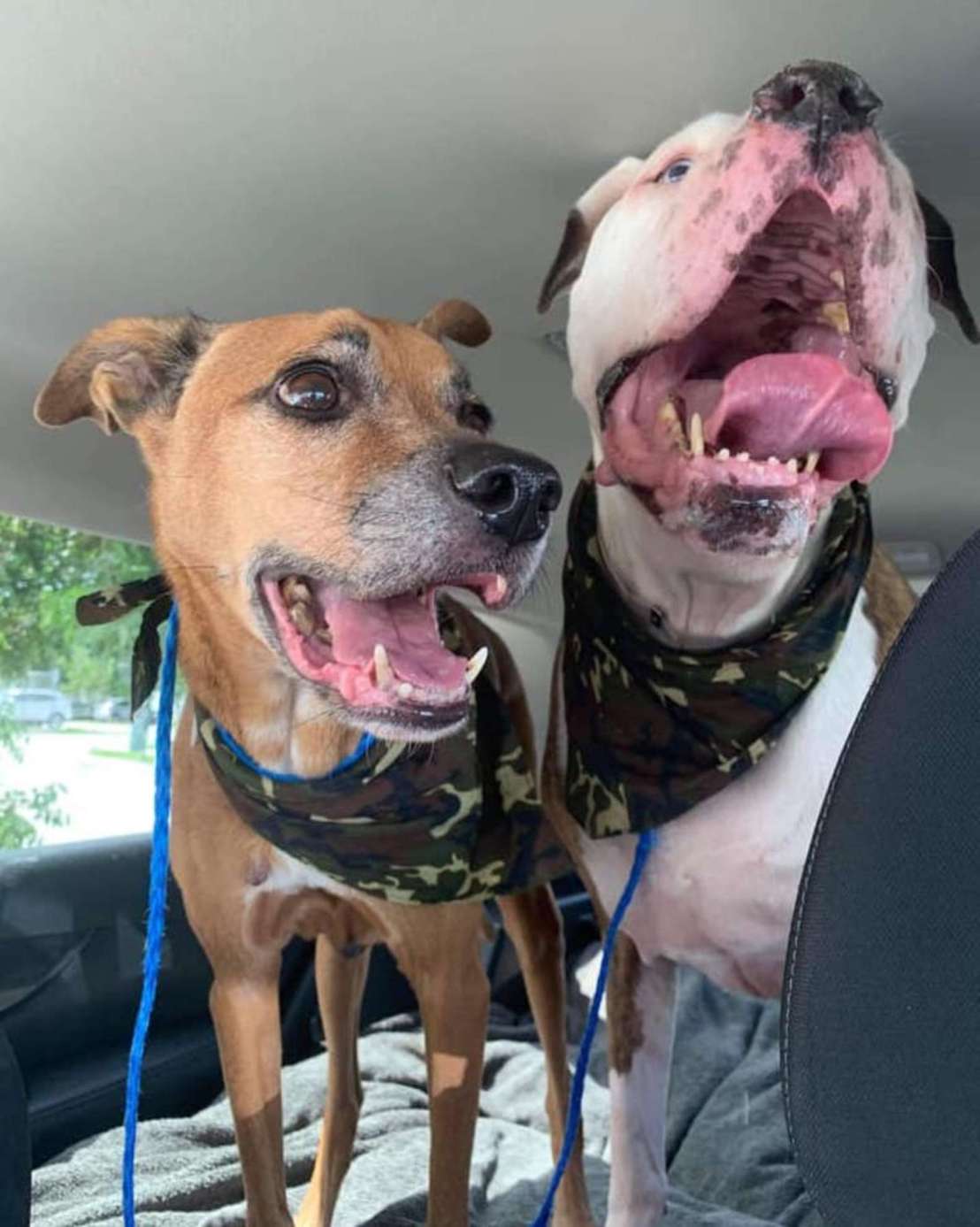
9-year-old Schwabo and 11-year-old Rocky had spent their lives together until their owner surrendered them due to landlord issues. Without Rocky, Schwabo seemed lost and refused to eat.

“He grew up looking up to Rocky and now, even though he’s older, Rocky is like his big brother,” Bradford said. “He’s very, very attached to Rocky.”

When Schwabo and Rocky first arrived at the shelter, Rocky was placed on the adoption floor while Shwabo, who was limping due to arthritis, was sent to the back for observation. Rocky quickly received an application, but the potential adopter never showed up, so the two dogs were reunited — and Schwabo couldn’t have been happier.

“Schwabo was a different dog from the moment he saw Rocky,” Bradford said.

FACEBOOK/JANI BRADFORD

Though the two are bonded, they couldn’t be more different. “Rocky’s older but he acts like a puppy. He loves playing with the ball, he can play all day long,” Bradford said. “Schwabo acts a little older … He’s very calm, very low maintenance.”

While Rocky likes to live a more active lifestyle, Schwabo just wants to hang out and watch his best friend play.

“Schwabo doesn’t do much — he lays in his bed and loves watching Rocky doing all his goofy stuff,” Bradford said. “Schwabo needs Rocky. He just loves being around him, watching him play all day. Rocky makes him happy.”

FACEBOOK/JANI BRADFORD

Thankfully, the two dogs will never need to worry about being separated again.

FACEBOOK/JANI BRADFORD

ooOOoo

All I can say is well done Jani!

This is a very beautiful story.

And to come back to our own experiences here at home, here is a picture of Oliver (LHS) and Pedi.

Pedi is wonderful at forming very close bonds with all our larger dogs. That is Brandy and Cleo as well as Oliver above.

This is very beautiful.

I probably wanted to say “This is very beautiful in a profound and spiritual way.“

One of the many things that make this funny world of blogging so delightful is the connections that are made.

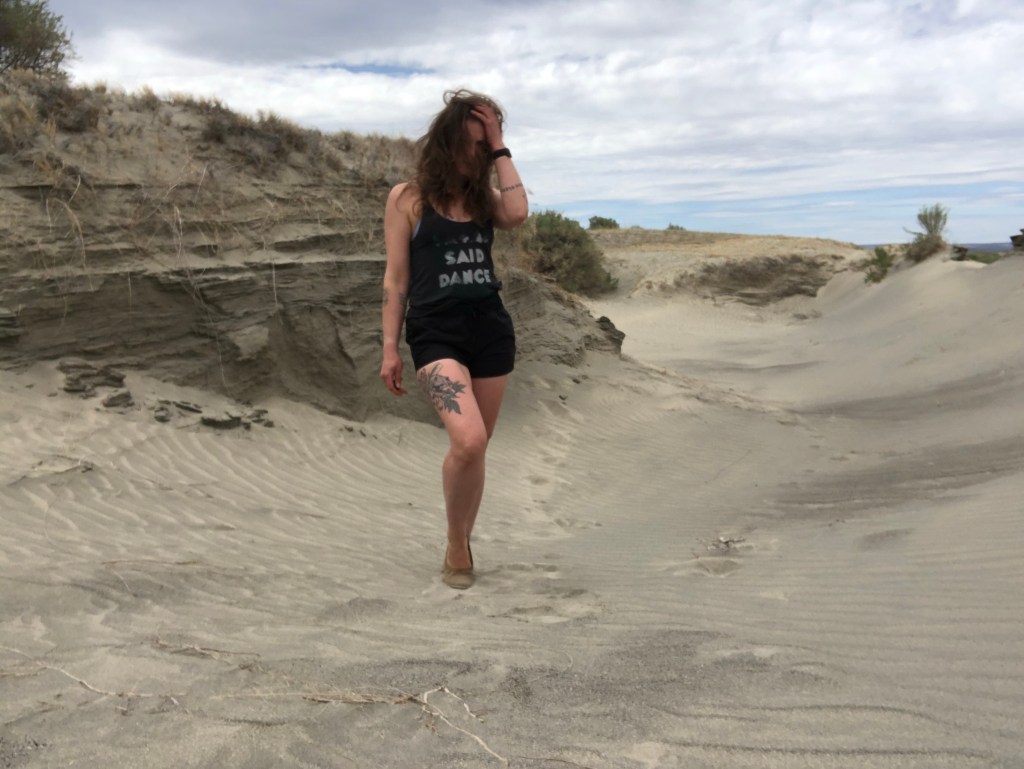
Recently Learning from Dogs got a follow from a person who herself was a blogger. This is what she wrote on her About page.

Endurance athlete, artist, and fourth generation Oregonian. I grew up on the central Oregon coast and lived in the Willamette Valley most of my adult life. My endurance work is an intersection of spiritual, personal and creative practices. I fall in love with places, like people, and dream of them often. I am not a travel writer, bucket lister, photographer, peak bagger or a competitive athlete. I seek only passage.

I was intrigued. No, more than that, I was curious about her. I wanted to know more.

When I left a message of thanks over on her blog this is what I said:

Oh my goodness. I came here ostensibly to leave a fairly standard thank you for your decision to follow Learning from Dogs. But then I saw what you had written and, also, the beautiful photographs you have taken. I was just bowled over!

Do you have a dog or two? Because if you do I would love you to write a guest post over at my place. Or give me permission to republish one of your posts? But I would prefer the former.

My dear wife, Jean, and me are both British. We met in Mexico in 2007 and I moved out permanently in late 2008 with my GSD Pharaoh. We came up to the USA in 2010 and were married and then came to Southern Oregon in 2012. We live close to Merlin, Josephine County and just love it to pieces. Originally we had 16 dogs but are now down to 6!

Regrettably she is allergic to dogs but she quickly gave me permission to republish a post of hers.

This is it. It is remarkable!

ooOOoo

Into the fold: Basin and Range

May 26th, 2020

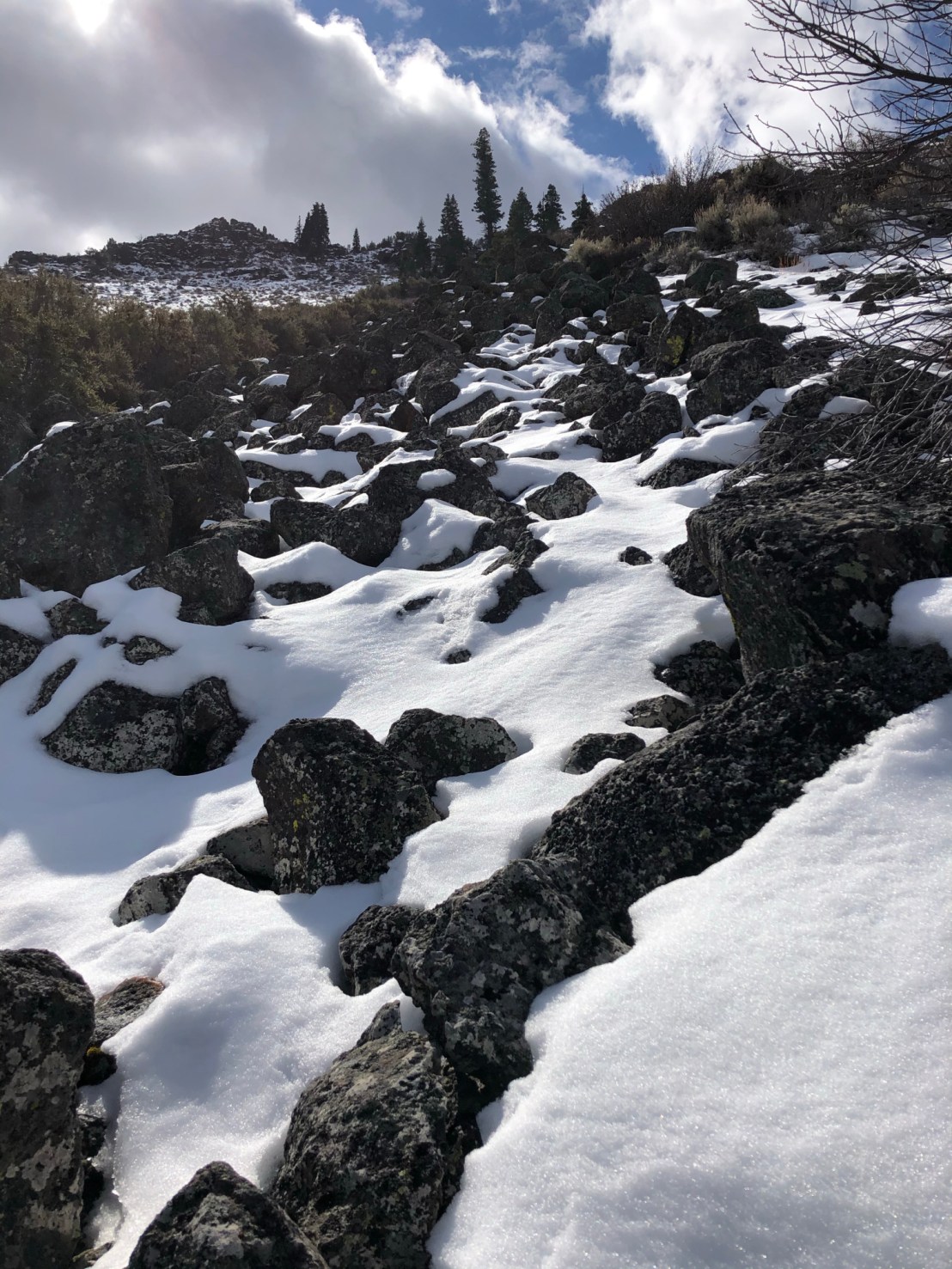
I guess I should have expected the snow, above 6000’ in the springtime. Flurries swirled around my car as I removed my leggings in the backseat and began cleaning my wounds. I was bleeding in four places, the largest of which was a grapefruit sized ooze of blood on my knee. What was supposed to be a quick, 3 mile warm up hike turned into an assorted practice of skills I’ve acquired over the last ten years in the woods.

How to navigate trailless canyons full of thorny brush.

How to step when gaining upon steep fields of melting snow.

How to traverses loose, snow covered boulder fields.

How to field dress a wound.

How to know when to turn around.

How to navigate by sight and evaluate terrain.

How to avoid getting your ankle crushed by a dislodged boulder.

How to stay calm when things get intense.

How to get your head back in the game.

How to self evacuate.

How to accept failure.

How to relish in it.

Just enough snow to mess things up.

Later, with my knee buzzing slightly from the pain, I make my way into a canyon on the western flank of the mountain. I know this canyon well. There is a safe place to hide from the rain, to collect drinking water, and I don’t have to worry about the roads turning to mud if the storms linger through the night. While my water filter drips, I follow the creek upstream. Wind swirls, aspens chatter, clouds are ripping across the sky. House sized, red violet boulders protrude from the hillside, they look like ships caught in the crest of a giant wave.

The sun is setting, the pain in my leg forgotten. I take my full water jugs and find a place to camp along the rocky beach of an alkaline lake. These lakes are the remnants of massive, Pleistocene era inland seas. Their waves are black. In the coldest parts of winter they freeze into a slurry of ice and the motion of the waves seems to slow. Like watching an inky black slurpee ocean crash against the rocky shore.

I eat instant noodles, drink tea, and think about the “real” ocean, where I was born.

To me, the desert and the ocean are like two sides of the same coin. I can watch the light change over the hills for hours, just like I can watch the waves break along the coast. Both are fascinating. The ocean always seems impassable, uncrossable, infinite, unforgiving. The desert is too, if you know the dangers well enough. I think about my close call on the mountain earlier. It’s like an old timer told me once, “…but only a fool tries to cross the desert”.

“Okay”, I said.

When the sun rises, I am already awake, shoving things around, getting ready to ride out to the canyons on the furthest side of the mountain. The dawn strikes a distant rim and is bright pink across the craggy face. I haven’t climbed that peak yet, either. I smile to myself as I toss my pack into the passenger seat, turn up the radio, and turn the ignition. I’m thankful for the warmth in my car this morning. Thankful for a shelter from the wind before my work in the canyon begins.

I found the place, but it took me a while.

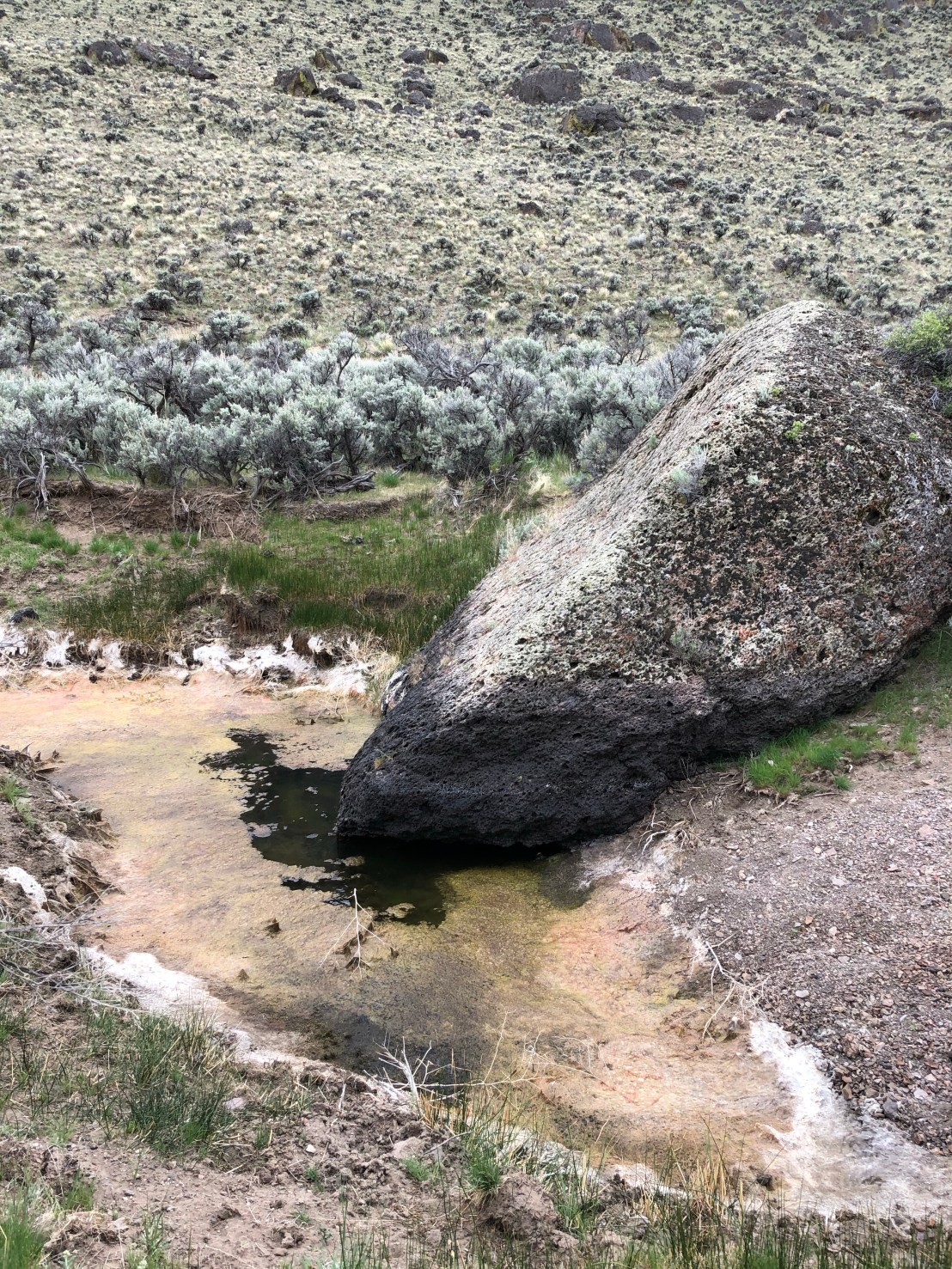
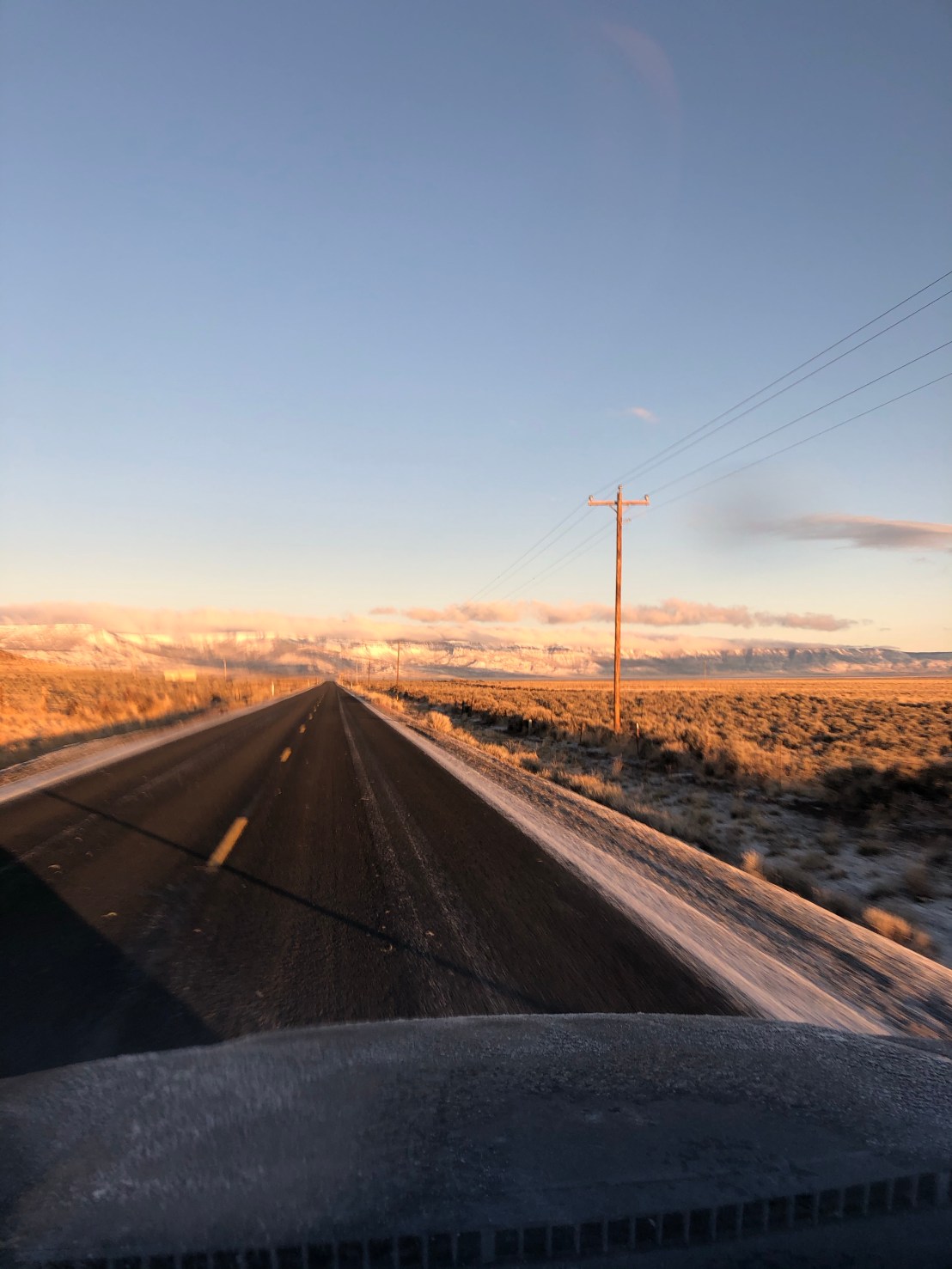
After nearly 50 miles on gravel and dirt, weaving around the backsides of sprawling, ethereal lakes, several wrong turns, and a quite sporting, rugged road granting passage across the valley floor, I had finally reached the gates of this remote, unsociable place. Rimrock lined the canyon walls, massive boulders littered the valley floor, scattered throughout the mostly dry river channel. Each possessed its own creepy, brackish pond at its base, resplendent with robust algae colonies.

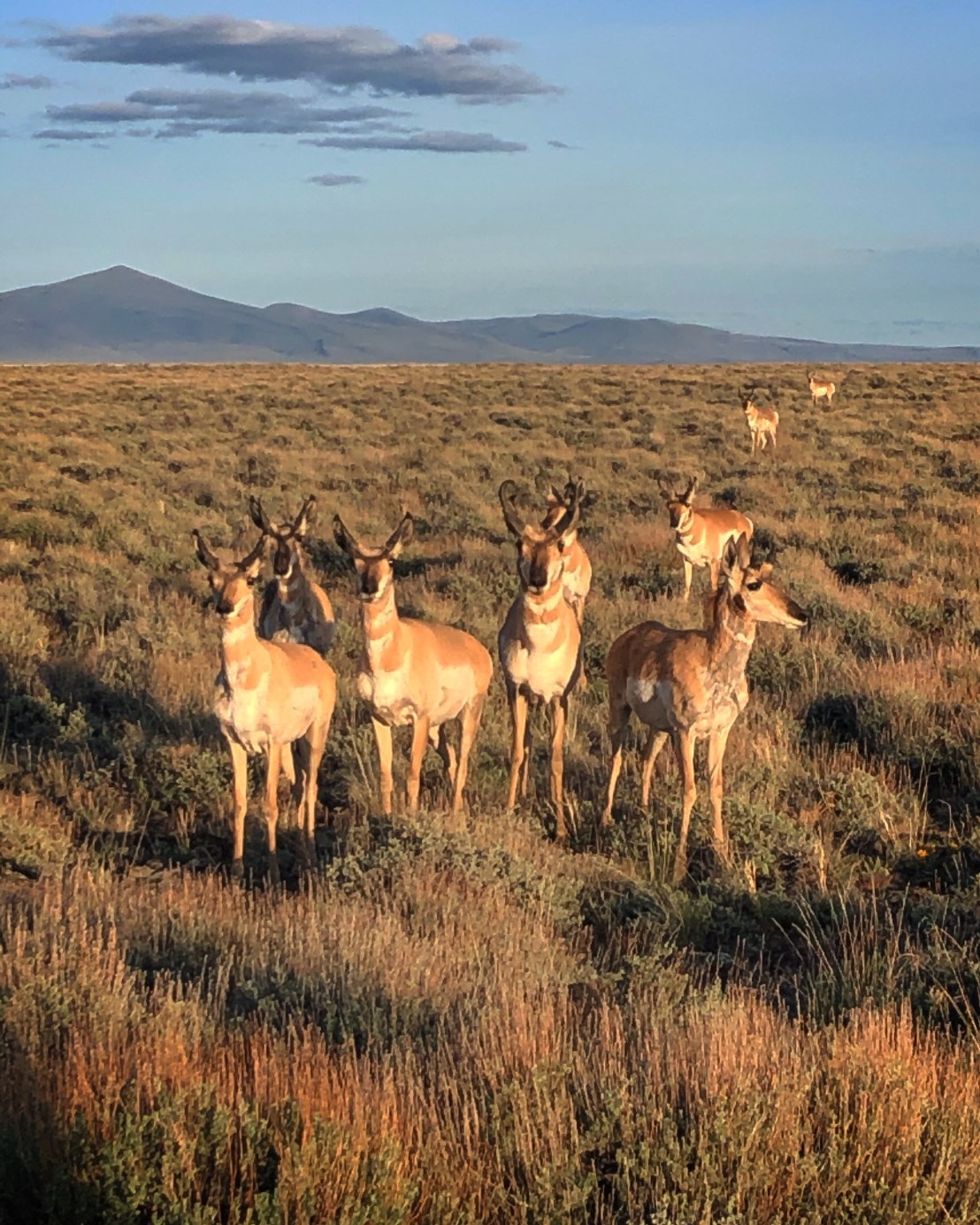
Some terrain cannot be run, and this was one of those places. I settled in to a comfortable, brisk hiking pace and made my way up the canyon; sometimes following the riverbed channel, other times taking the game trails through winding thickets of sagebrush and thorns. I never saw the animals, but I could feel myself being watched a few times. I do not mind; I always remember that I am their guest.

The otherworldly feeling of the canyon persisted, even as the landscape changed, flattened, rounded itself out. I took the old farm road out of the depths and up onto the flats again. The road leveled out as it wound it’s way around the mouth of the canyon, now obscured by the sagebrush sea spread out before me. You can see everything that is far away and nothing up close. The terrain is flat and easy here. I break into a run.

I love running downhill.

It’s all gravy until the weather blows in. I watch it coming across the valley. The first raindrops are warm and fat. A rainbow spreads across the horizon, snow clouds form on the rim of the mountain, and the wind really starts to rip. I resist the urge to increase my pace. My body is already sore; I’ve been out here nearly a week now. As the rain turns to sleet and then hail, it’s time to practice the things you’ve learned once more.

How to layer for various types of rain.

How to guard your face from the wind.

How to bundle your hands in your sleeves so they don’t go numb.

How to take your backpack off, open it and retrieve a snack without stopping.

How to run.

How to run when your feet hurt and you want to quit.

How to run when the rain turns to hail and catches you out on the flats with not even a rock to hide behind.

How to run when you are crying and you don’t know why.

Where do you go inside yourself when fatigue and boredom set it?

How do you stay present in all of it?

Everything is practice.

When I finally return to my car, the storm has passed, for now. The mountains beyond the valley are fully obscured by clouds. If I stay here, the road maybe be impassable by morning. I want to stay, but I decide the best course of action is to return the way I came. Also, the hot springs are over there, and my tired legs say, YES PLEASE. I hang my wet clothes up to dry along the windows of my car, crank the heat to 85, and hope my puffy dries out by morning. I rally back across the bumpy valley, behind the lakes, across the basin, up the face of the mountain all over again.

The hot springs are mercifully empty. I take off my clothes and stand naked in the cold air for a while, staring at the mountain. When I slip into the water, I feel like home. I feel like I belong. I am right where I want to be. Everything is just right.

But I don’t stay long.

ooOOoo

I subsequently asked where she had gone:

These photos are all from the SE corner of Oregon, reaching down into Northern Nevada. Hart Mountain, the Northern Warner Mountains, Abert Rim, Rabbit Hills, Summer Lake, and the formidable Catlow Valley.

Now you know!

But that doesn’t change my opinion that this is one unusual person who has the spirit of adventure truly in her bones!