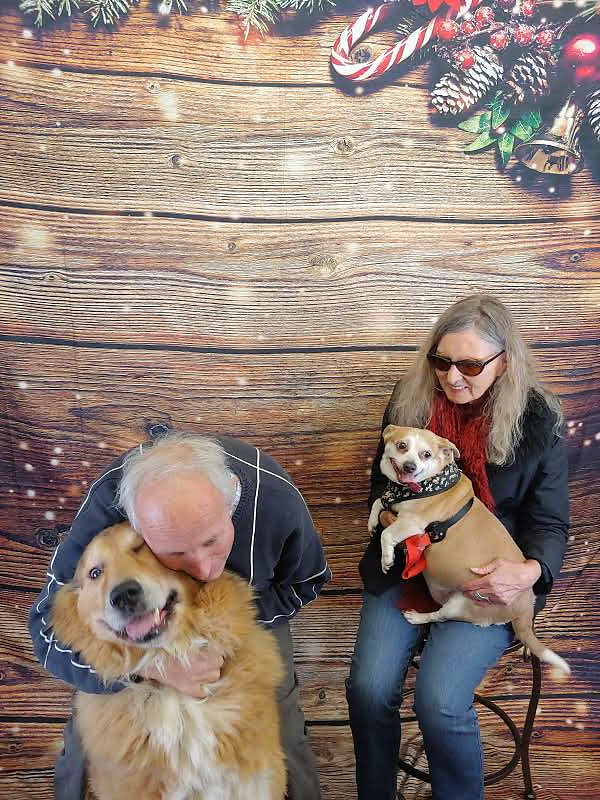
It is Jean’s birthday today.

This photograph was taken on the 8th January, 2008. Jean and I had met for the first time late in 2007.
It was close by in San Carlos, Mexico. Jean then lived in San Carlos!
Dogs are animals of integrity. We have much to learn from them.
Category: Musings
It is Jean’s birthday today.
This photograph was taken on the 8th January, 2008. Jean and I had met for the first time late in 2007.
It was close by in San Carlos, Mexico. Jean then lived in San Carlos!
This year, 2020, has been unlike any other year.
I am not saying anything new but just reiterating what has been said before: 2020 is going to go down as the year from hell! And I don’t think that is too strong a word!
Part of it are the news stories that sweep the world: Covid-19; Brexit; Climate change; up until yesterday what was President Trump going to do in his last few weeks; etc; etc.
Also part of it is the way that news and more news and, yes, more news is flashed around the globe. Most of it bad news as we all know that bad news sells!
Finally, part of it is the new world of social media especially messaging on a smartphone. President Trump isn’t the only one to communicate greatly via Twitter.
Now, speaking personally, I couldn’t have got through this year without Jeannie and our dogs.
But, nevertheless, something has changed and Mark Satta has written an article that tries to explain things.
ooOOoo
By Mark Satta, Assistant Professor of Philosophy, Wayne State University.
November 18th, 2020
An endless flow of information is coming at us constantly: It might be an article a friend shared on Facebook with a sensational headline or wrong information about the spread of the coronavirus. It could even be a call from a relative wanting to talk about a political issue.
All this information may leave many of us feeling as though we have no energy to engage.
As a philosopher who studies knowledge-sharing practices, I call this experience “epistemic exhaustion.” The term “epistemic” comes from the Greek word episteme, often translated as “knowledge.” So epistemic exhaustion is more of a knowledge-related exhaustion.
It is not knowledge itself that tires out many of us. Rather, it is the process of trying to gain or share knowledge under challenging circumstances.
Currently, there are at least three common sources that, from my perspective, are leading to such exhaustion. But there are also ways to deal with them.
1. Uncertainty
For many, this year has been full of uncertainty. In particular, the coronavirus pandemic has generated uncertainty about health, about best practices and about the future.
At the same time, Americans have faced uncertainty about the U.S. presidential election: first due to delayed results and now over questions about a peaceful transition of power.
Experiencing uncertainty can stress most of us out. People tend to prefer the planned and the predictable. Figures from 17th-century French philosopher René Descartes to 20th-century Austrian philosopher Ludwig Wittgenstein have recognized the significance of having certainty in our lives.
With information so readily available, people may be checking news sites or social media in hopes of finding answers. But often, people are instead greeted with more reminders of uncertainty.

2. Polarization
Political polarization is stressing many Americans out.
As political scientist Lilliana Mason notes in her book, “Uncivil Disagreement: How Politics Became Our Identity,” Americans have been increasingly dividing politically “into two partisan teams.”
Many writers have discussed the negative effects of polarization, such as how it can damage democracy. But discussions about the harms of polarization often overlook the toll polarization takes on our ability to gain and share knowledge.
That can happen in at least two ways.
First, as philosopher Kevin Vallier has argued, there is a “causal feedback loop” between polarization and distrust. In other words, polarization and distrust fuel one another. Such a cycle can leave people feeling unsure whom to trust or what to believe.
Second, polarization can lead to competing narratives because in a deeply polarized society, as studies show, we can lose common ground and tend to have less agreement.
For those inclined to take the views of others seriously, this can create additional cognitive work. And when the issues are heated or sensitive, this can create additional stress and emotional burdens, such as sadness over damaged friendships or anger over partisan rhetoric.
3. Misinformation
Viral misinformation is everywhere. This includes political propaganda in the United States and around the world.
People are also inundated with advertising and misleading messaging from private corporations, what philosophers Cailin O’Connor and James Owen Weatherall have called “industrial propaganda.” And in 2020, the public is also dealing with misinformation about COVID-19.
As chess grandmaster Garry Kasparov put it: “The point of modern propaganda isn’t only to misinform or push an agenda. It is to exhaust your critical thinking, to annihilate truth.”
Misinformation is often exhausting by design. For example, a video that went viral, “Plandemic,” featured a large number of false claims about COVID-19 in rapid succession. This flooding of misinformation in rapid succession, a tactic known as a Gish gallop, makes it challenging and time-consuming for fact checkers to refute the many falsehoods following one after another.
What to do?
With all this uncertainty, polarization and misinformation, feeling tired is understandable. But there are things one can do.
The American Psychological Association suggests coping with uncertainty through activities like limiting news consumption and focusing on things in one’s control. Another option is to work on becoming more comfortable with uncertainty through practices such as meditation and the cultivation of mindfulness.
To deal with polarization, consider communicating with the goal of creating empathetic understanding rather than “winning.” Philosopher Michael Hannon describes empathetic understanding as “the ability to take up another person’s perspective.”
[Deep knowledge, daily. Sign up for The Conversation’s newsletter.]
As for limiting the spread of misinformation: Share only those news stories that you’ve read and verified. And you can prioritize outlets that meet high ethical journalistic or fact-checking standards.
These solutions are limited and imperfect, but that’s all right. Part of resisting epistemic exhaustion is learning to live with the limited and imperfect. No one has time to vet all the headlines, correct all the misinformation or gain all the relevant knowledge. To deny this is to set oneself up for exhaustion.
ooOOoo
That last section, What to do?, is full of really sensible advice. In fact, the American Psychological Association has an article at the moment that appears to be freely available called Healing the political divide.
I intend to read it.
It finishes up saying:
Scientists must strive to share their research as broadly as possible. And they don’t have to do it alone. Organizations like More in Common work to conduct research and communicate findings to audiences where it can have the greatest impact.
Advocacy is essential as well. Other countries that have made strides in addressing the political divide relied heavily on government-led reconciliation efforts. The Truth and Reconciliation Commission, for example, in South Africa, has been fundamental in addressing disparities and conflict around Apartheid.
Were the United States to consider similar, government-backed efforts, psychologists must be part of the call to do so. And the behavioral expertise of the field would be central to success.
“The collective mental health of the nation is at risk,” says Moghaddam. “Just as we should rely on epidemiological science to tell us when there is a vaccine ready for mass use, we have to rely on psychological science to guide us through these mental health issues.”
And following an election that, for many, has felt like the most polarized of a lifetime, this piece seems critical. “ This is what our profession is all about,” says Moghaddam.
Good advice especially if you can take time off just losing oneself in nature.

Enough said!
Some videos of Alex, my son, and others taking a bike tour.
Now I would be the first to admit that the following videos will not be to everyone’s taste.
But there is a strong link to my son and his bike riding, and to my own bike riding. For over 5 years ago Alex persuaded me to get a better cycle than I already had. I chose the Specialized Sirrus and have been delighted with it ever since. I purchased it from the local Don’s Bike Center. There is a photograph of the bike below.

To be honest, riding the bike more or less every other day has been crucial in me staying as fit and healthy as I am.
On to the videos.
I was speaking to Alex recently and he was talking about the tour of the Isle of Wight off the south coast of England that he and friends took. That was Alex and Darren and Claire and their 14-year-old son Tom.
He mentioned the YouTube videos that had been taken and I asked Alex to forward them to me.
I reckoned that a few of you would be interested!
They are a total of 26 minutes spread across the 4 videos
oooo
oooo
oooo
Enjoy!
Finally, Alex and I still stay connected with our riding courtesy of Strava.
This uses a small GPS, in my case a Garmin EDGE 20, to upload and show the route to the Strava dashboard. We each give each other what is known as Kudos for our respective rides.
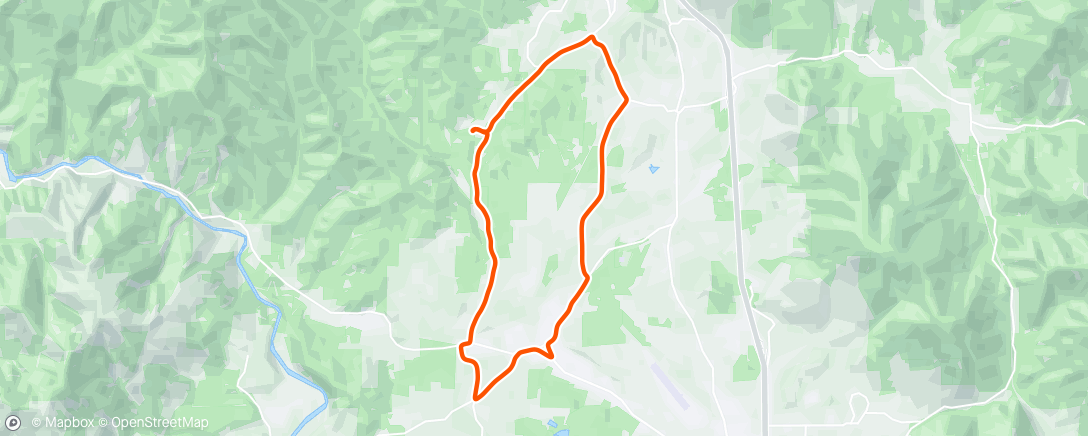
The following is my afternoon ride of a little under 13 miles around the local roads, grabbed when the rain ceased for a while. It shows me taking our driveway, a quarter-mile long, to Hugo Rd; about 10 o’clock in the diagram below. I then turned left and two miles later turned right into Three Pines Rd. then a further right into Russell Rd. and down to Pleasant Valley Rd. and back home with a small diversion along Robertson Bridge Rd. and Azalea Dr. and to the bottom of Hugo Rd. Precisely 3 miles up Hugo Rd. and back to our driveway.
That will be shared automatically with Alex when he wakes in the morning.
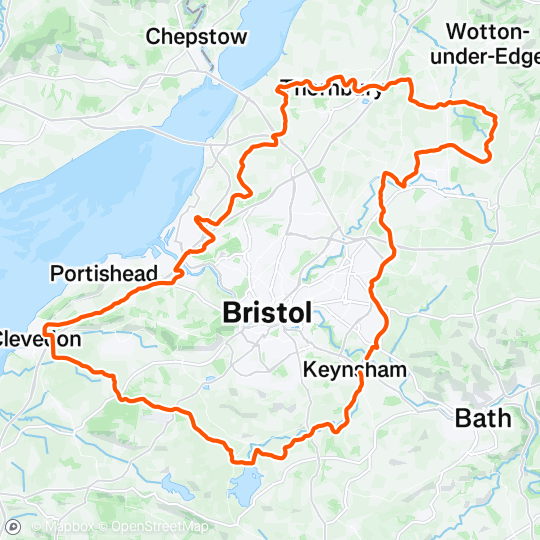
And this below was Alex’s recent ride; all 83.78 miles!
Technology, eh!
Yet another tale of smartness!
We have to be so careful here at home when we are speaking of anything to do with the dogs. For they listen even when they don’t appear to be so doing.
So, for example, me saying: “Jeannie, shall we let the dogs out?” is a no-no because almost before the sentence is finished they are up on their feet and crowding towards the front door. And there are plenty of other examples.
That requires speaking in code or sign language in an attempt to communicate something without the dogs cottoning on to what we are speaking about.
All of which is my introduction to yet another story from The Dodo to be shared with you.
ooOOoo
“He is a great actor!”
By Caitlin Jill Anders
Published on 11/11/2020
Titan was adopted by his family from Furry Friends Animal Refuge in Iowa at the end of August. His parents have had so much fun getting to know him over the past few months, and have learned that he’s pretty much the friendliest and most stubborn dog they’ve ever met.
“He has to say hello to EVERYONE when we go out,” Natalie Bretey, Titan’s mom, told The Dodo. “Everyone is his friend. While he does love being a big, friendly baby, he is also severely stubborn. He will frequently halt on walks until we go the way he has decided, or to stop and watch cars and people go by. We knew he was loving and friendly, but we had no clue how stubborn he was.”

Titan’s favorite thing in the world is going on walks, and his least favorite thing is when it’s time for his walk to end. He frequently tries to make his walks last longer, and he and his parents have already had many standoffs in the short time he’s been in their lives.
“He walks as if he has never had a walk before in his life,” Bretey said. “Which at first, may have been the case!”
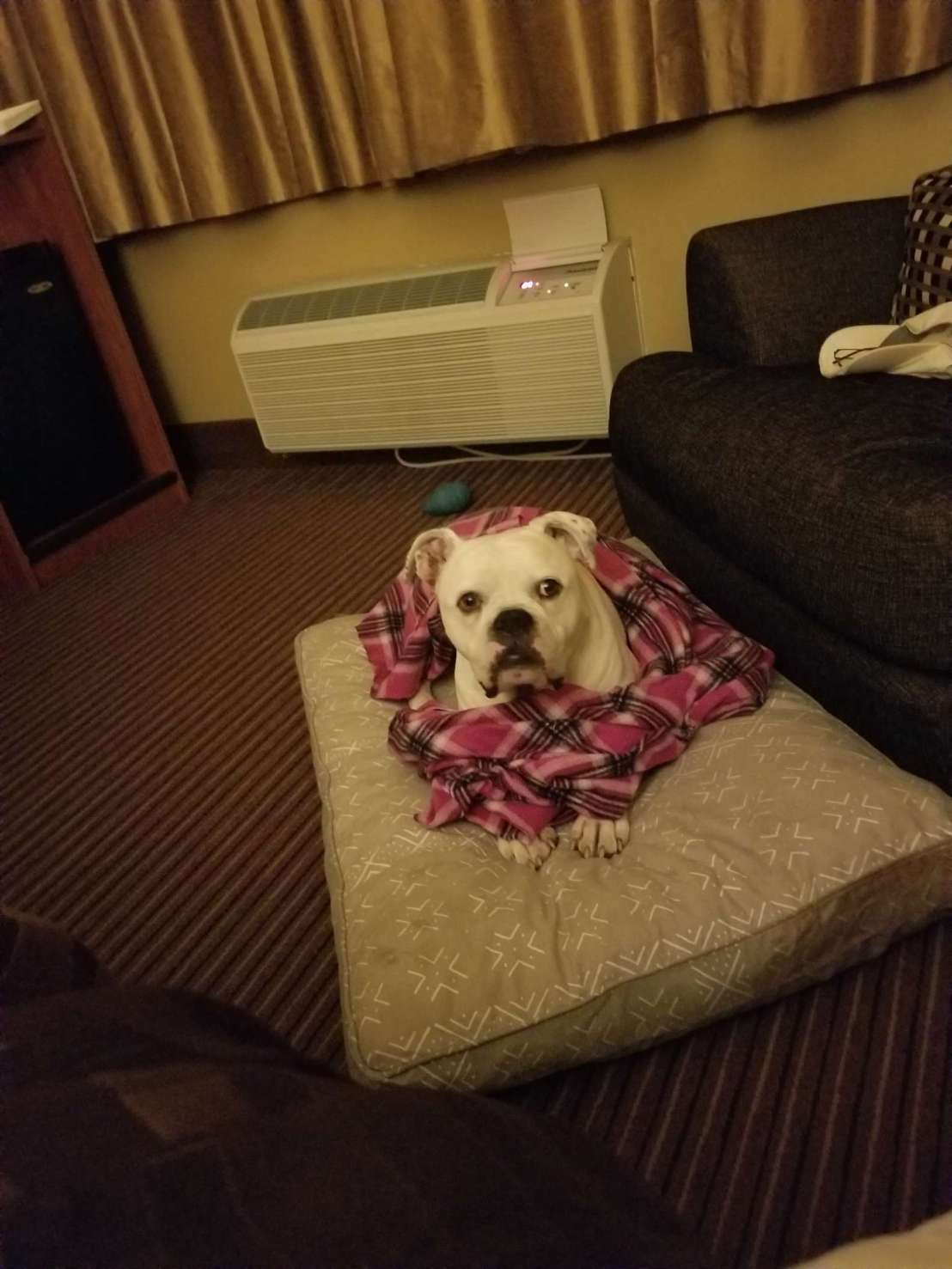
Titan is 7 years old and does have a few health issues, including chronic ear ulcers, mild hip dysplasia and allergies. While his parents are actively addressing his ear issues, his hip dysplasia hasn’t acted up yet — but they were worried it might be the very first time Titan encountered stairs.
“We realized he wasn’t a fan of stairs the very first day,” Bretey said. “We got back to my boyfriend’s apartment, and quickly realized that Titan had no intention of walking up the stairs. We started panicking; was this because of his hip dysplasia?!”
Titan’s parents were worried that his aversion to stairs might be because he was in pain — but quickly realized it was just because he didn’t feel like climbing them.

Now, every time Titan encounters the stairs, he tries to convince his parents to carry him up them. Sometimes he’ll even fake a limp, but as soon as his parents reach the top of the stairs and put him down again, the limp magically disappears and he runs down the hallway like the most athletic dog in the world.
“Titan pulls his limp trick at least once a week,” Bretey said. “This past week, he tripped on his new jammies going up the first step and stumbled back. He held his paw in the air and looked at me with the most pained look he could muster. I called his dad to come carry him up the stairs. Since he had stumbled this time, I was worried he wasn’t faking it for once! His dad came down and said, ‘He’s probably faking it again’ and hoisted him into his arms and up the stairs. Before we even reached the top, Titan was wiggling his way out of the set of arms and onto the floor. His limp was gone, and he jogged to the front door. We just laugh. He is a great actor!”
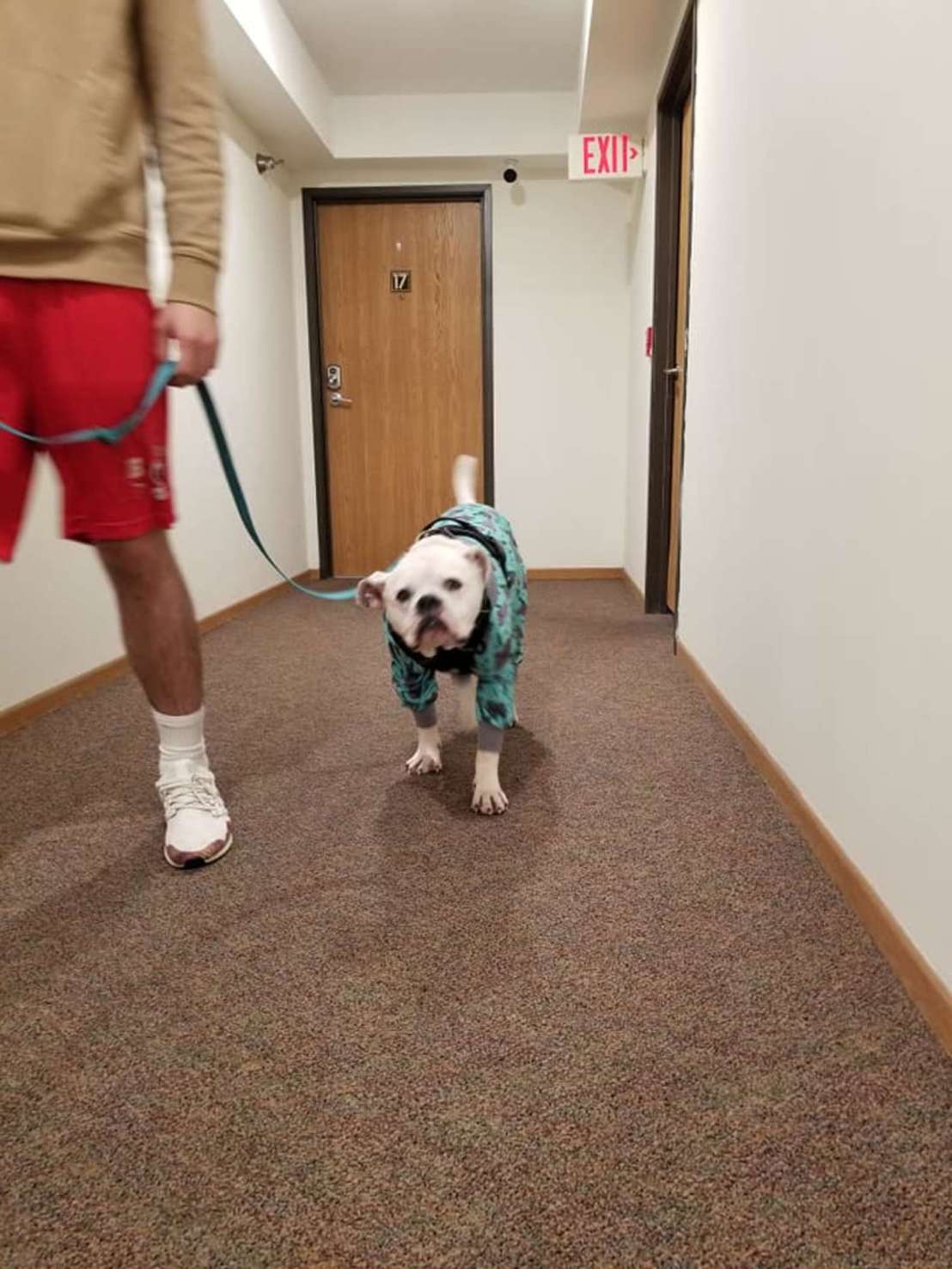
Titan’s parents are pretty sure he’d never encountered stairs before he came to live with them, and just never developed a taste for them. They’re very careful to listen and watch for any signs of actual pain and carry him up the stairs frequently — even though most of the time, it’s just Titan being Titan, but that’s OK. They love him enough to carry him anywhere.
When Titan was first adopted, there was a lot he had to learn about being a dog. His parents have absolutely adored watching him come out of his shell and explore the world around him. They want to give him the best life they possibly can, and are more than willing to put up with a little stubbornness along the way.
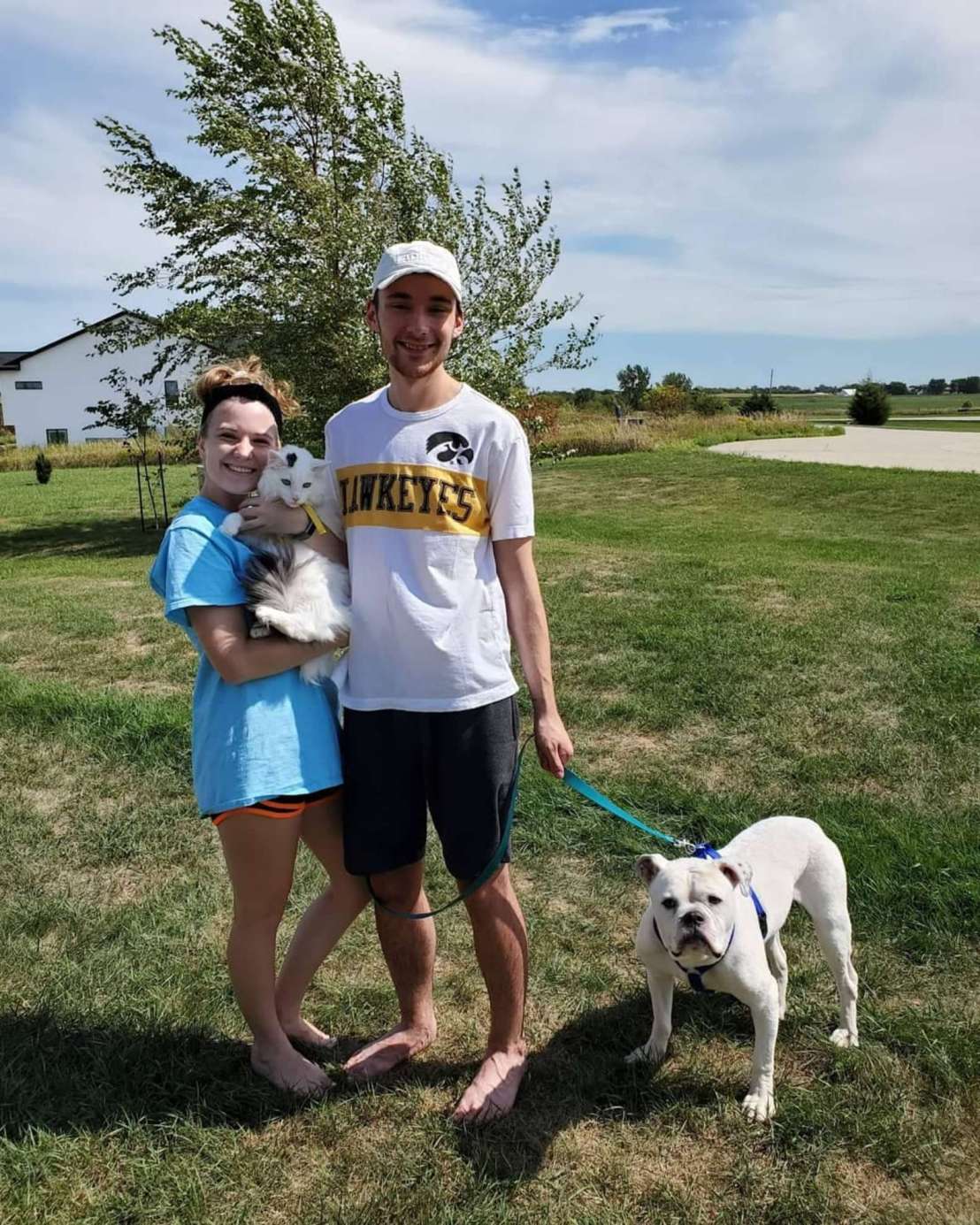
“We try not to think about all the things he went through, but have had fun watching him learn how to ride in a car, enjoy pup cups from coffee places, go on walks, and interact with everyone,” Bretey said. “His big heart has made every hard moment worth it.”
ooOOoo
It’s very true. Dogs can be stubborn. It often comes from their early days when they were unloved and had to decide what to do and what not to do.
I would like to think that over time Titan will display less stubbornness and, as was written at the end, learn lots of new things to do and, above all, to be loved.
This is yet another great story about a dog.
I came to my desk a little late in the day but wanted to share this article. Again it is from The Dodo and, apologies, I am going straight into it. It’s a very lovely story.
ooOOoo
“I think he was just really happy that someone was being nice to him.”
By Lily Feinn
Published on 10/31/2020.
On a cold rainy day, a little puppy named Chowder thought he’d found the perfect spot to stay dry. A garage behind an abandoned building had become a dumping ground for neighborhood furniture and trash, and that’s where Chowder discovered a discarded mattress and crawled underneath.
But things were about to get a whole lot better for the little stray.
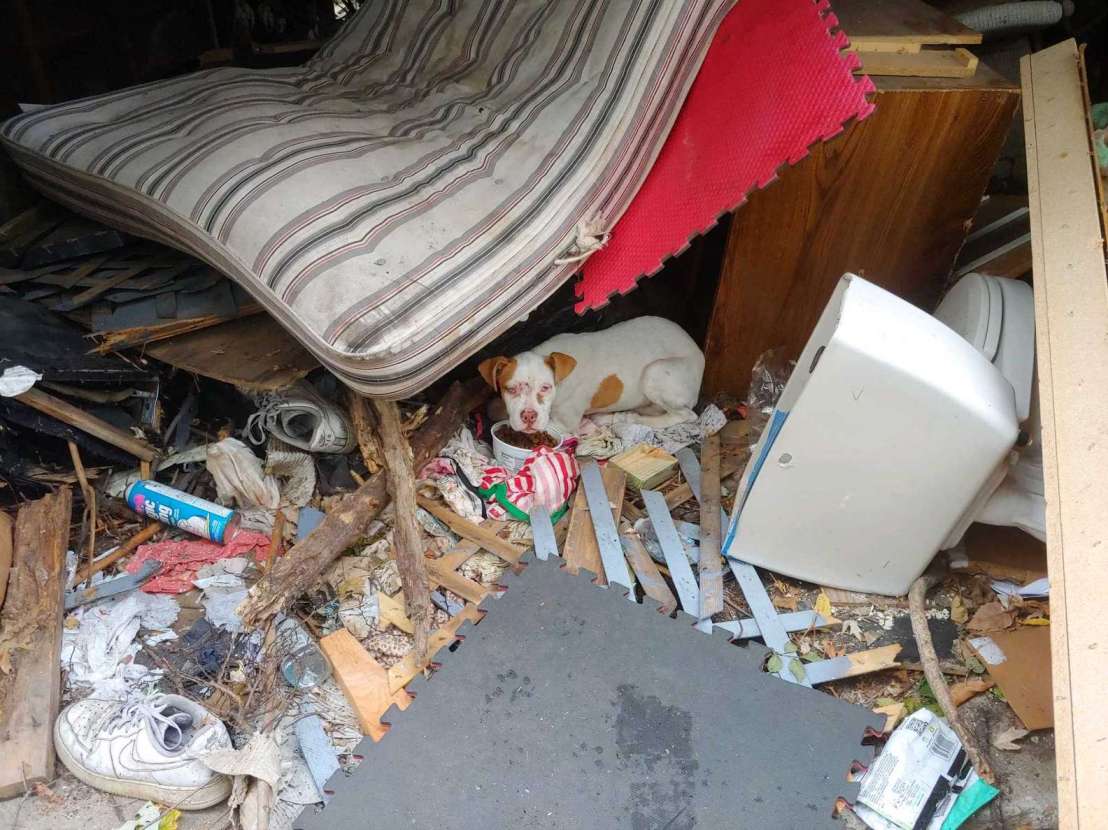
“[There’s a] super nice couple who lives in the area, and the husband had apparently gone out to the alley to throw some trash away,” Donna Lochmann, a rescuer with Stray Rescue of St. Louis, told The Dodo. “When the husband went out, he noticed that this white dog had found shelter underneath this corner of a mattress … and he gave him a little bit of food and water.”
The man called Stray Rescue of St. Louis, and Lochmann and her fellow rescuer rushed to the scene. When Lochmann met the 4-month-old puppy, she was shocked by how trusting he was.
“When we got out [of the car] he ran right up to me,” Lochmann said. “He was just the friendliest little guy. He wasn’t afraid of us or anything like that. I think he was just really happy that someone was being nice to him.”
Lochmann clipped a leash around Chowder’s neck, and the puppy was immediately excited. He put his paws on her shoulders as she picked him up to help him into the car and handed him over to her fellow rescuer.

“He went up and sat on her lap and just snuggled with her,” Lochmann said. “He had his head on her shoulder and just buried his face in her arm. He was just so thankful to be warm and to have people be nice to him.”

Chowder snuggled his rescuers the whole drive to the shelter as if he knew he was finally safe.
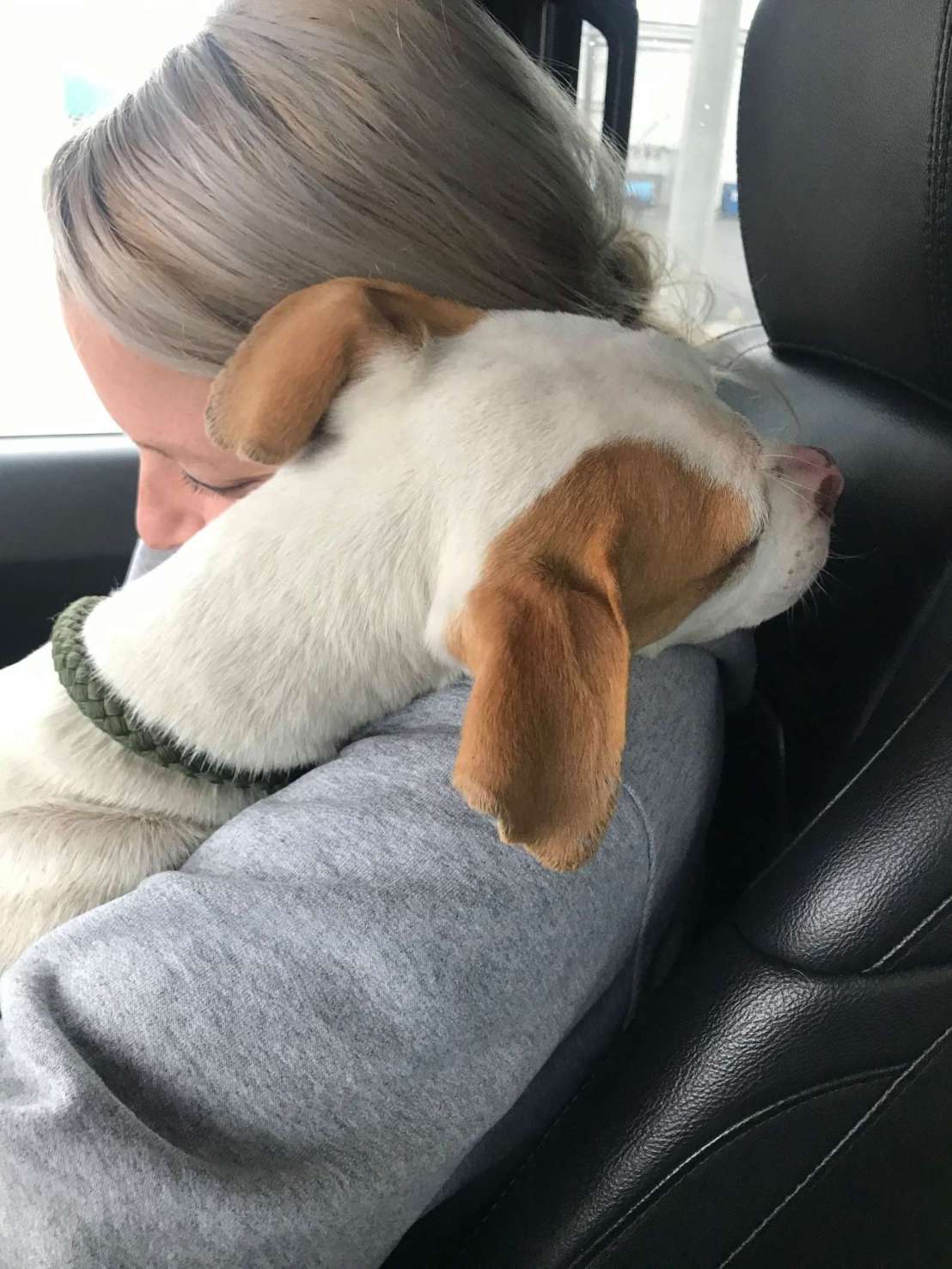
At the shelter, Chowder started to relax and let his puppy personality shine. The energetic dog became even happier to see people, get attention and play with toys.
Now in a foster home, Chowder is adjusting to indoor life and learning how to live with people.

Once he is neutered and his eye infection has cleared up, he will be ready to find his forever family. And his rescuers know whoever ends up adopting the grateful puppy will be in for plenty of snuggles and hugs in the years to come.
ooOOoo
Please, please someone adopt this puppy. He is a beautiful dog. That comes out even via these blog pages.
In case you or someone you know wants to know more then:
If you’re interested in adopting Chowder, you can fill out an adoption application here. To help other stray dogs like Chowder find their forever homes, you can make a donation to Stray Rescue of St. Louis.
Please!
I don’t think his route is near us.
But I wish it was.
I am speaking of a UPS driver who has a love for dogs and, like my Jeannie, loves Pit Bulls. The breed have got such a bad reputation for being aggressive and always fighting but the truth is that men have used a few of them as fighting dogs and trained them to be the way they are.
There’s more about the breed on WebMD and I just quote a small piece from the article.
Doberman pinschers, rottweilers, and German shepherds topped lists of dogs some considered dangerous in the not-too-distant past.
These days, pit bulls often make headlines and it’s rarely good news. If it isn’t about an attack on a child or a shooting by police, it’s a tale of neglect or abuse. The heat of such reports has forged a frightening image of the pit bull as having a hair-trigger temper and a lock-jawed bite.
But pit bull advocates and some experts say the dogs get a bad rap. They say the dogs are not inherently aggressive, but in many cases suffer at the hands of irresponsible owners drawn to the dog’s macho image who encourage aggression for fighting and protection.
Indeed, the ASPCA web site gives the breed an endorsement that could fit a golden retriever. It says, “A well-socialized and well-trained pit bull is one of the most delightful, intelligent, and gentle dogs imaginable.”
So back to that UPS driver. This is his story.
ooOOoo
“I know most, but not all, of the pitties by name” 🥰
By Caitlin Jill Anders
Published on 10/16/2020
For as long as he can remember, Scott Hodges has loved pit bulls. He used to have a pittie of his own, Sheba, but after 15 years she passed away in 2004.
Luckily, Hodges has been a UPS driver for the past 32 years, and gets to see pit bulls every single day as he goes along his route. He sees lots of animals on the job, including a very friendly pig, but he’s always had a particular soft spot for the pit bulls. He’s gotten to know them all over the years — and they love him just as much as he loves them.
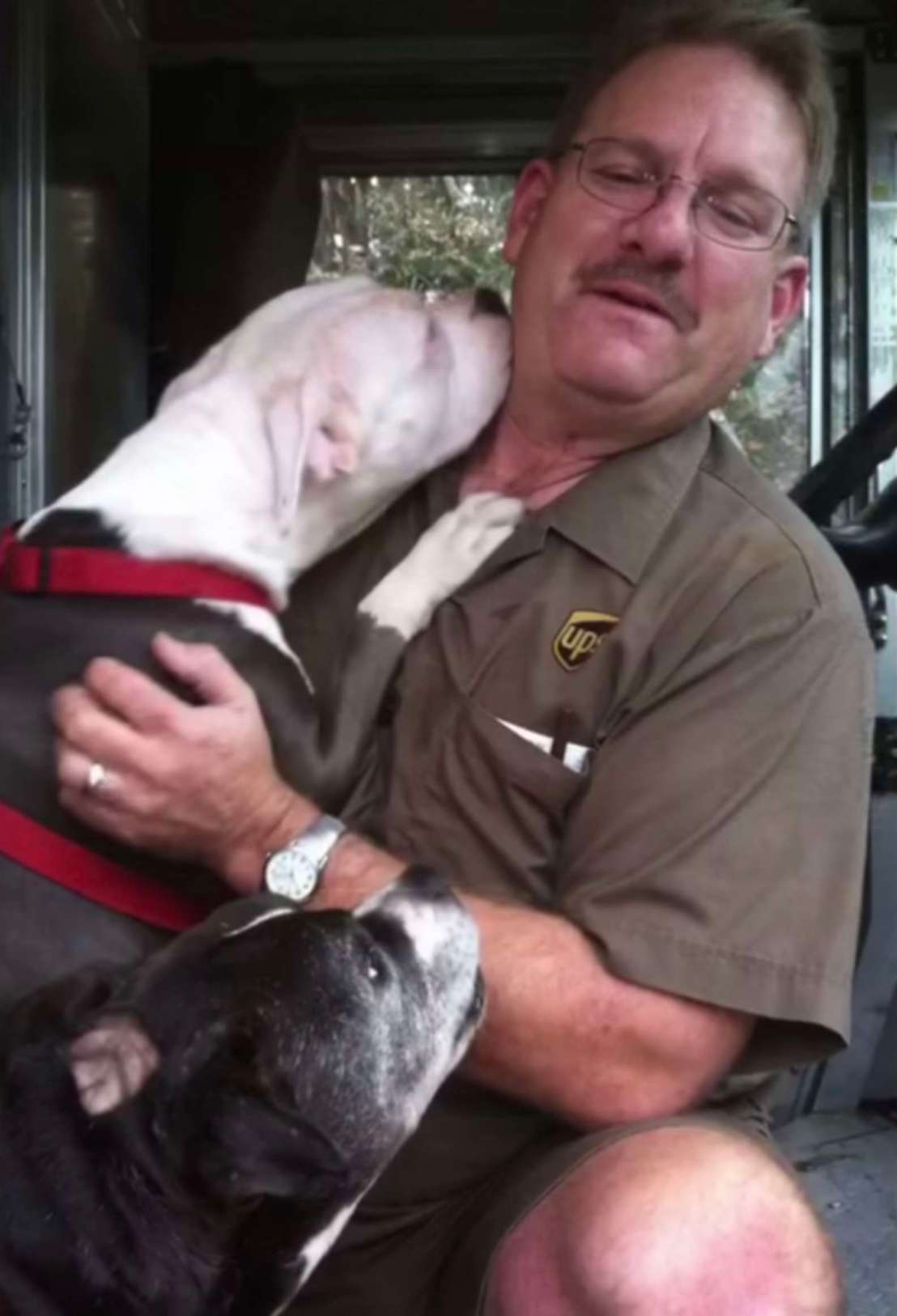
“I know most, but not all, of the pitties by name,” Hodges told The Dodo.
Every day, as Hodges does his UPS route, he stops to say hi to his pit bull friends (and all the other dogs, too). They know who he is by now and are always waiting for him, because they know Hodges can always be counted on to give them love and treats.
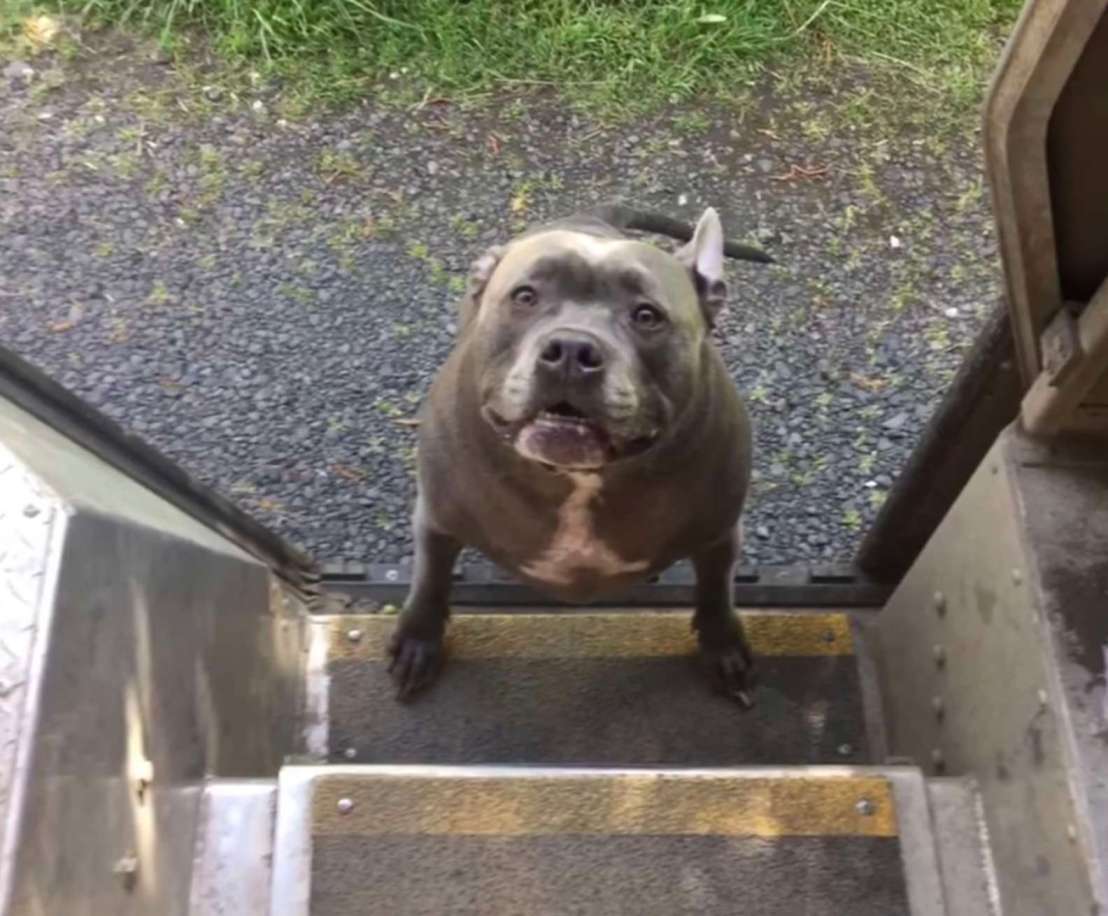
“All the pitties on my route are friendly and I give them biscuits every time I see them,” Hodges said.
In order to keep track of all the pitties he sees, he takes lots of pictures …
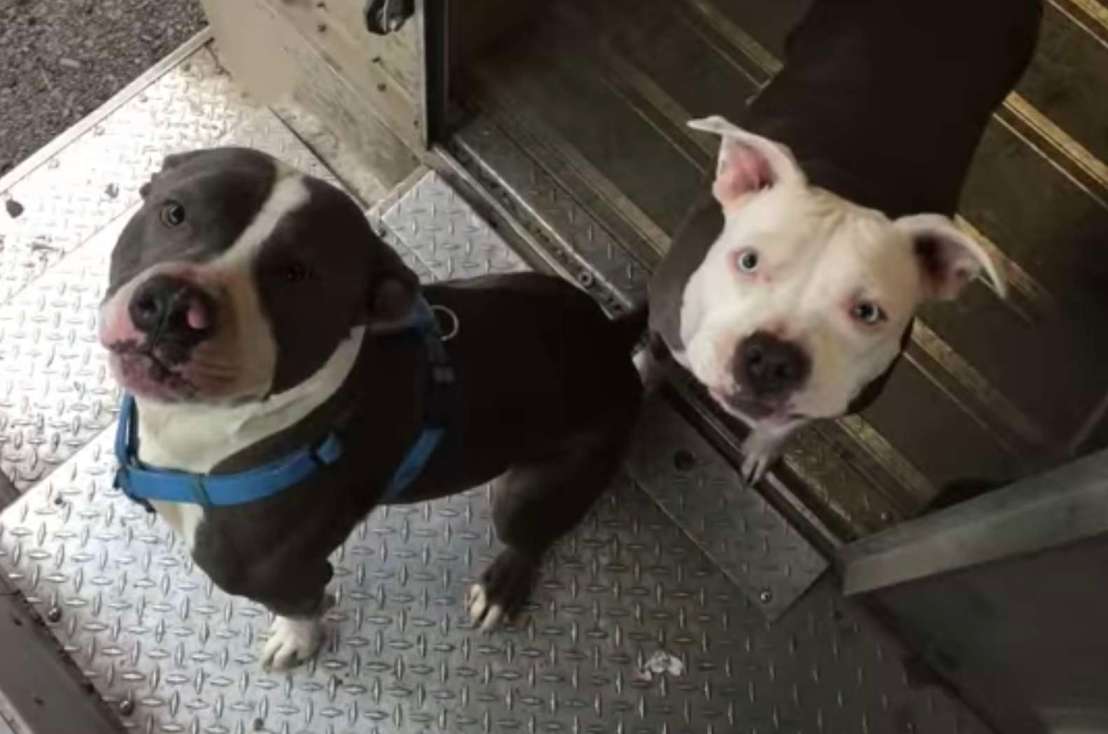
… and probably has at least one picture of every pit bull on his route by now.
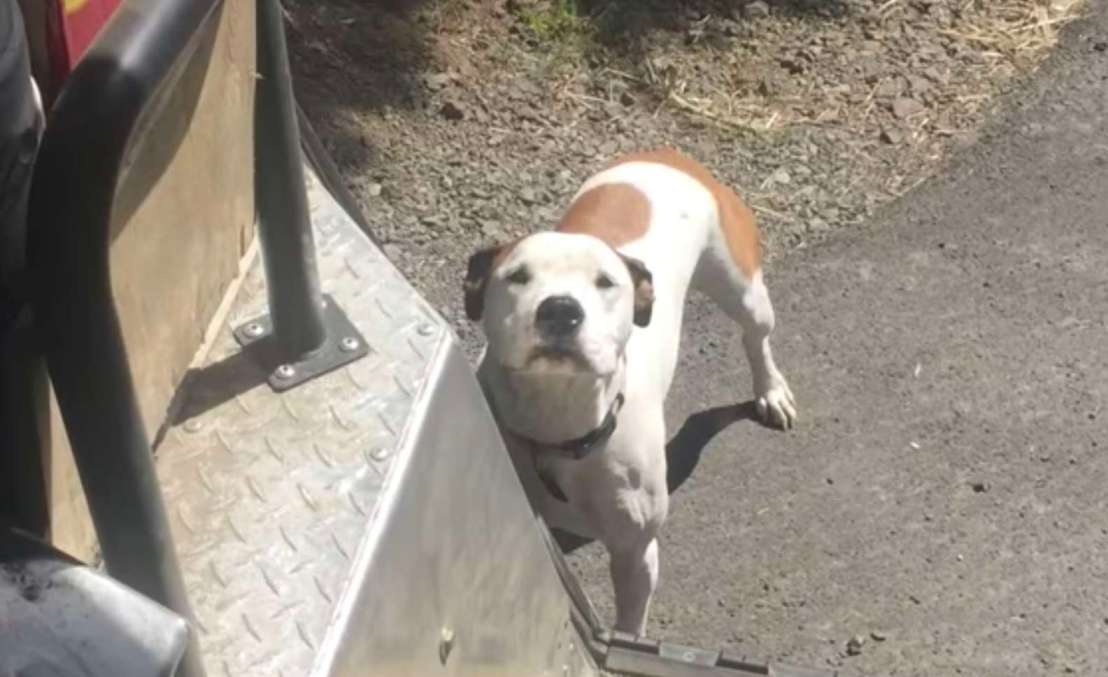
The pitties are of course always happy to see him …
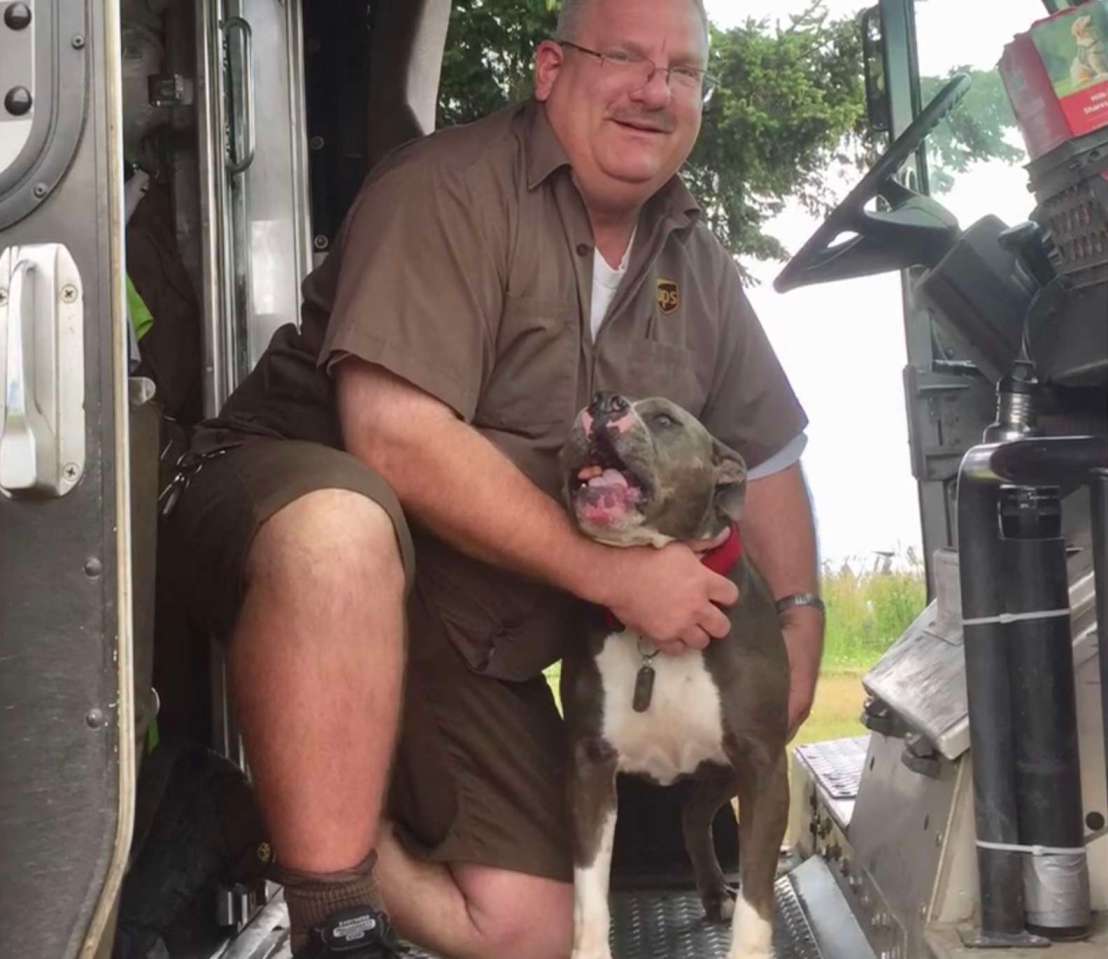
… and some like to ham it up a little more than others.
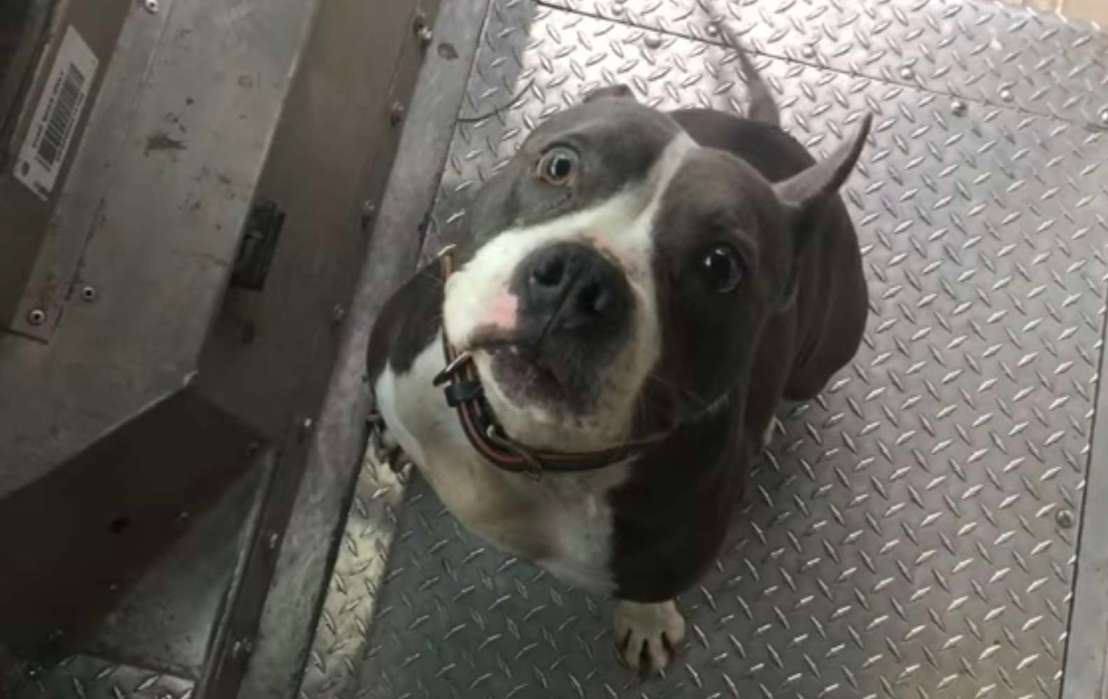
Sometimes he takes pictures of the other dogs along his route too …
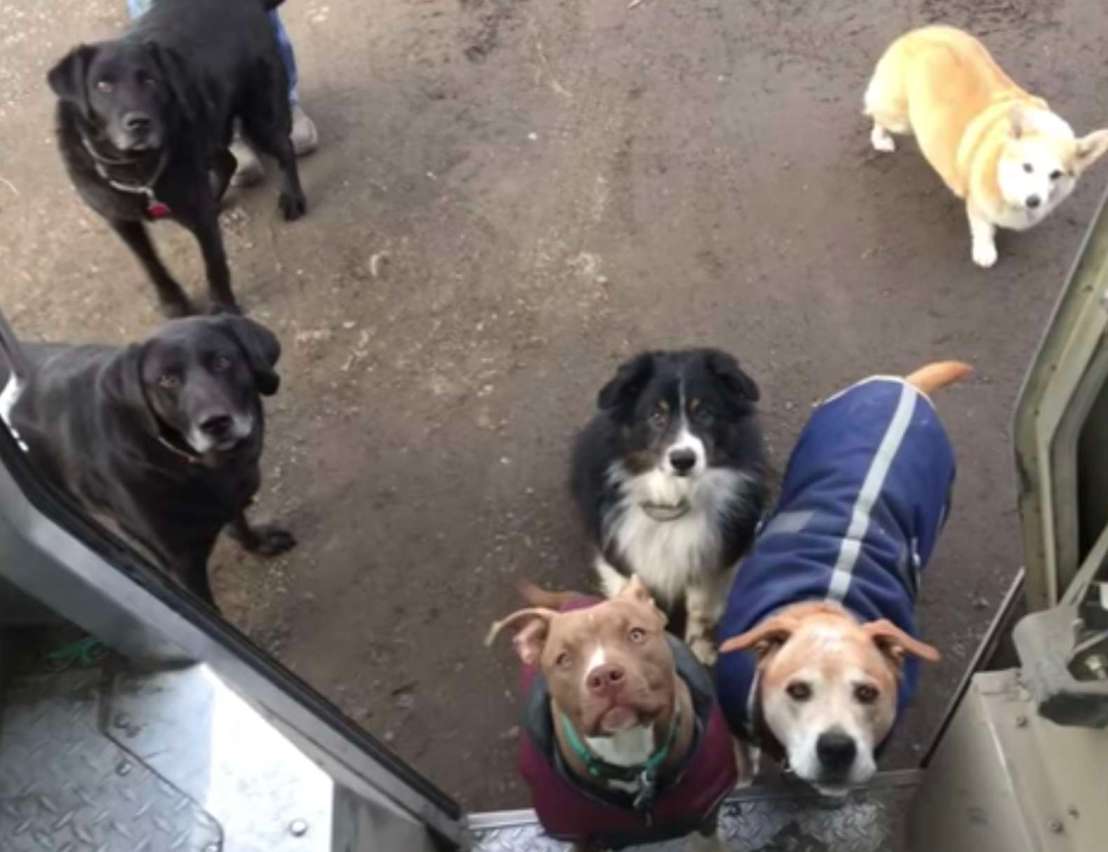
… but the pit bulls will always and forever be his favorites.

Hodges is lucky to get to work a job where he can see pit bulls every single day, and he never gets tired of stopping to say hi to all of his friends.
ooOOoo
Scott has been a UPS driver for 32 years!
My guess is that he was pretty quick at welcoming pit bulls and one can presume that he has been kind and generous to these dogs for most of the 32 years.
I think this is a delightful story and one that I am so pleased was carried by The Dodo.
A guest post from Sarah.
I have only recently made the acquaintance of Sarah’s blog The Two Of Us but it already has been a delight. So much so that I reached out to Sarah and asked if she would like to be a guest author. I am delighted to report that Sarah was pleased to do so.
First, let me add a little more about her blog. The Two Of Us has a sub-title of A college student and a Border Collie stumbling through life.
Next, Sarah explained in an email to me that:
I’m Sarah and my dog is Brèagha. She’s a Border Collie and I’m a college student hoping to become an animal behaviorist of some sort. Brèagha and I have been together for 3 years, and they have been the best three years of my life so far.
So with no further ado, here is Sarah’s guest post.
ooOOoo
By Sarah, November 6th, 2020
One of the things you get used to when you have a herdy type of dog (especially a Border Collie) is the staring. They stare. And they stare intensely. Your own personal stalker.
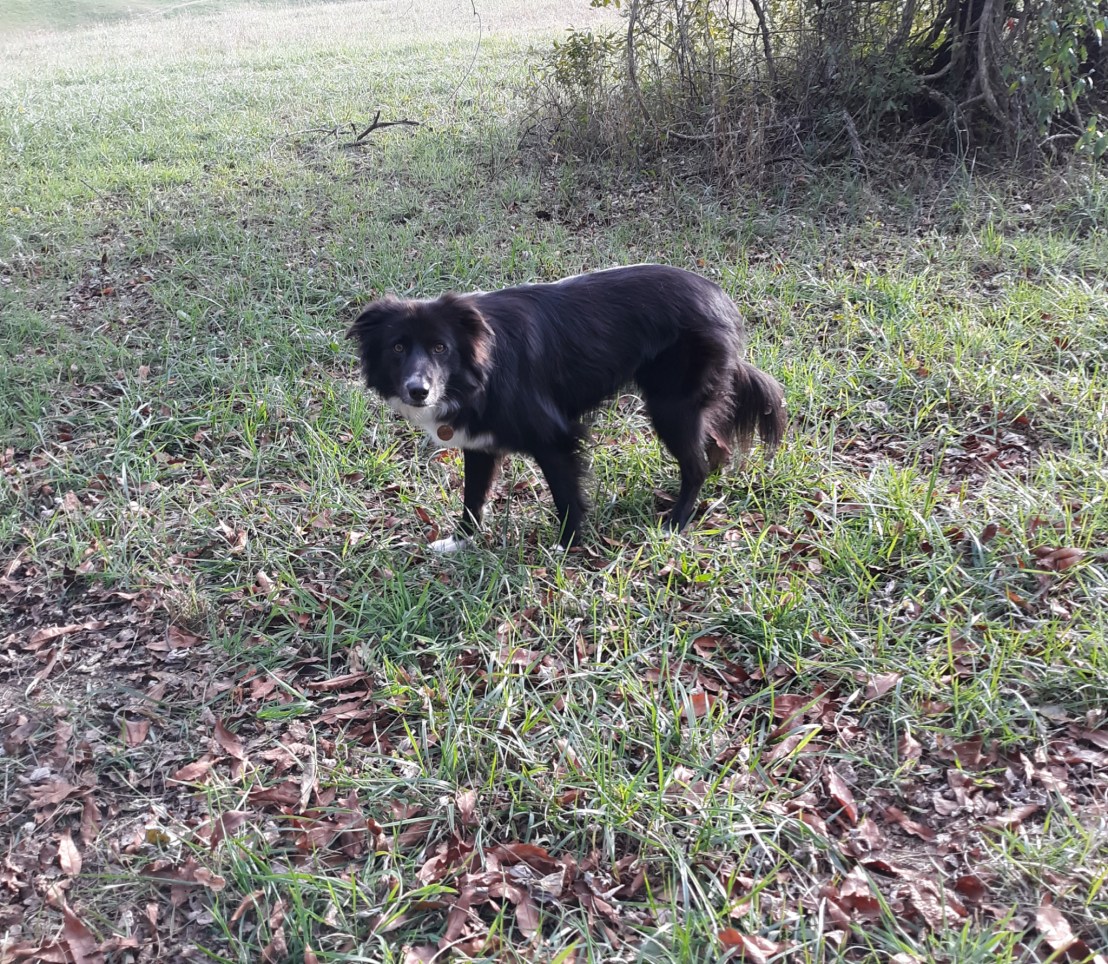
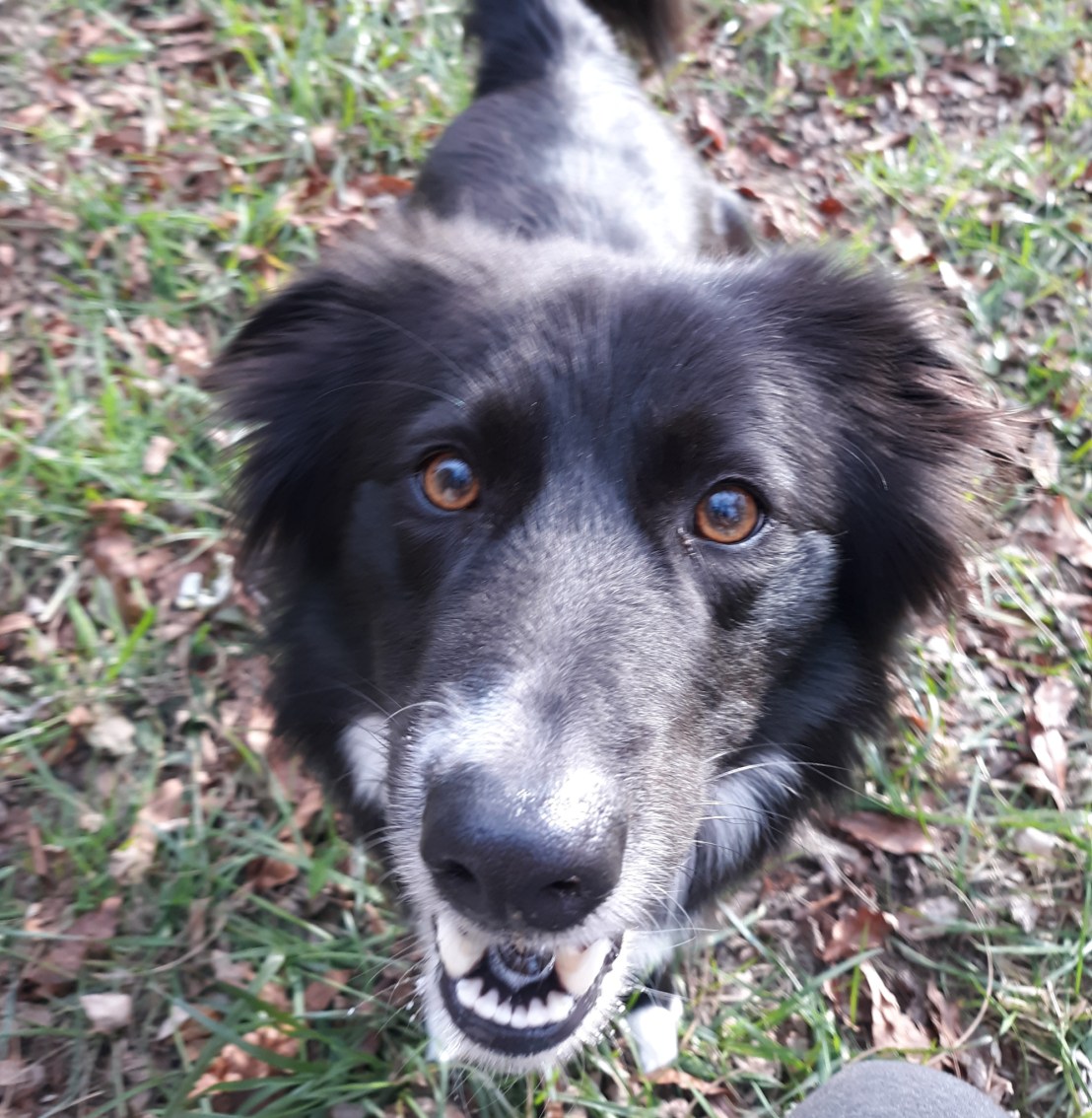
One of those things that might be rated “annoying” for some but definitely falls under “endearing” for me.
I love every last weird thing about her.
ooOOoo
Now that last picture reminds me of a recent post on Learning from Dogs, namely The dog world! where I republished the scientific work by Associate Professor of Psychology, Illinois Wesleyan University.
In her report Ellen said, and I quote an extract from that post:
A recent study found that dogs that have been deprived of food and owners choose to greet their owners before eating. Further, their brain’s reward centers “light up” upon smelling their owners. And, when your eyes meet your dog’s, both your brains release oxytocin, also know as the “cuddle hormone.”
All of this research shows that you can make your dog happier with just one ingredient: you. Make more eye contact to release that cuddle hormone. Touch it more – dogs like pats better than treats! Go ahead and “baby talk” to your dog – it draws the dog’s attention to you more and may strengthen your bond.
So that second photograph of Brèagha is a prime example of her meeting Sarah’s eyes and should be held as long as both dog and human can manage.
Wonderful!
And it is just one of many reasons!
There are so many stories about dogs that I stick into a folder to keep them separate from my general inbox. They come in on a more-or-less daily basis. I love republishing them and until I can’t tell up from down will continue to do so.
Take this article for instance. Published by The Dodo it is a supreme example of why our dogs are so treasured.
ooOOoo
“Blue was shocked for a split second, like, ‘Am I believing my eyes?’”
By Lily Feinn
Published on 10/23/2020.
In early April, the Washington County Animal Shelter received a call: a stray dog named Blue had shown up at a stranger’s house, looking for a safe place to rest. An animal control officer rushed over to pick up the pit bull mix and bring him back to the shelter.
No one knew how long Blue had been on the streets, but the homeless pup seemed to love every human he came across.

“He was a happy-go-lucky dog,” Tammy Davis, the shelter’s executive director, told The Dodo. “He was a little shy at first, and he wasn’t very fond of all the other dogs being around him, but he was extremely affectionate to people and very loving to the staff.”
Due to the COVID-19 pandemic, the shelter had to close its doors to the public and make any visits by appointment only. With less foot traffic, Blue sat waiting in his kennel for months — which turned out to be a blessing in disguise.

To introduce Blue to some potential adopters, the shelter posted a video of Blue playing with his favorite toy on their Facebook page. Moments later, a comment on the video read, “That’s my dog.”
Blue had gone missing from his Tennessee home six months before. His dad tirelessly searched for him but eventually had to relocate to Texas for work. He thought that he’d never see his dog again until his friend sent him the video of Blue on Facebook.
All that was left to do was confirm whether the man claiming to be Blue’s owner was telling the truth: “Blue’s favorite toy in the shelter was a blue squeaky ball and in our video, he was playing with that ball,” Davis said. “Once we started the conversation with the owner he said, ‘Yes, I have pictures of my dog.’ He sent us pictures of Blue in his home with that same blue ball, which was his favorite toy at home. It was crazy.”

Blue’s dad drove 1,200 miles to get his boy, and the reunion was everything they could have hoped for.

“It was very obvious that the dog had a bond with that person,” Davis said. “Blue was shocked for a split second, like, ‘Am I believing my eyes?’ And then it was just immediate kisses and the man was crying, it was great.”

You can watch the heartwarming reunion here:
Now, Blue is back with his dad and the two are starting a new life together in Texas full of love, snuggles and squeaky balls.
“We wish that every animal could have a happy ending like that,” Davis said. “It makes all of our hard work worth it to be able to have moments like this.”
To help other dogs like Blue find their forever home, you can make a donation to the Washington County Animal Shelter.
ooOOoo
See what I mean. Blue’s Dad, from the photographs a gent in the later stages of life, brought to tears by the reunion. It’s an incredible story as well as a very beautiful account of bringing together Blue and his Dad across all those miles.
Nothing more to add!
Another wonderful account!
The one thing that goes on forever and, incidentally, has been going on for a long, long time, is the human devotion to dogs. Whether it is one or two dogs being walked every day without fail or, in this case, a Mexican who opened his heart and his house to a tad more than a couple of dogs.
Read it, it is a fabulous story.
ooOOoo
“I would do it again one million more times if necessary” ❤️
By Lily Feinn
Published on 10/23/2020
In early October, Hurricane Delta roared toward the shores of Cancun, Mexico, leaving Ricardo Pimentel with few options.
Pimentel runs Tierra de Animales, an animal sanctuary on the outskirts of Cancun, surrounded by jungle. For nine years, he has cared for over 500 animals — including stray cats, dogs, chickens, turkeys, horses, sheep, pigs, cows and donkeys.
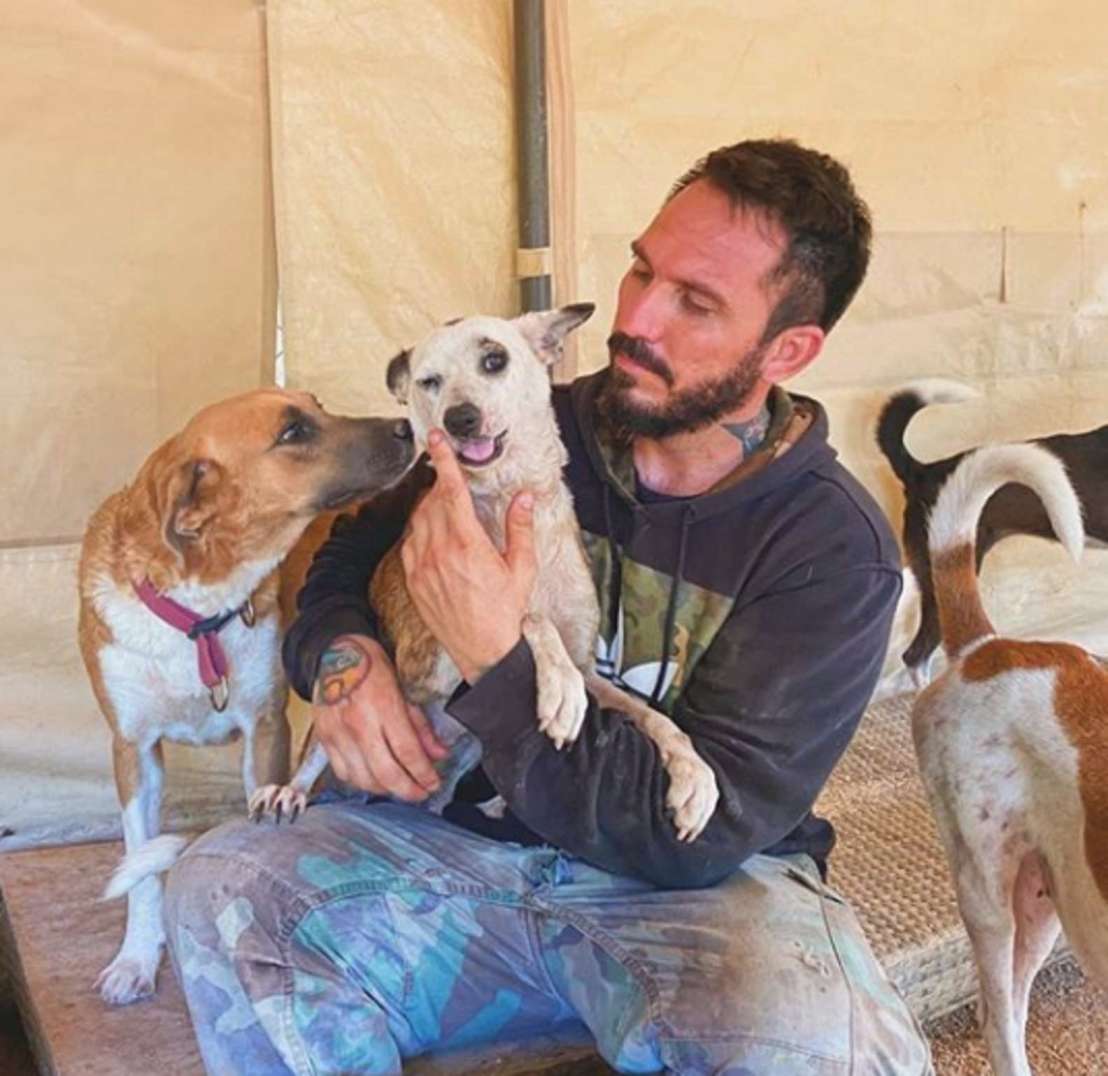
He knew the dog shelters weren’t strong enough to stand up to a Category 4 storm, so he did what any animal lover would do — he invited the pups into his home for a sleepover.
“We have two bedrooms, one kitchen and one bathroom available for volunteers who want to come and stay here to help us with all the things that we have to do,” Pimentel told The Dodo. “We decided to put almost all the dogs inside the house, simply because we don’t fully trust in the shelters that we currently have because they aren’t hurricane-proof.”
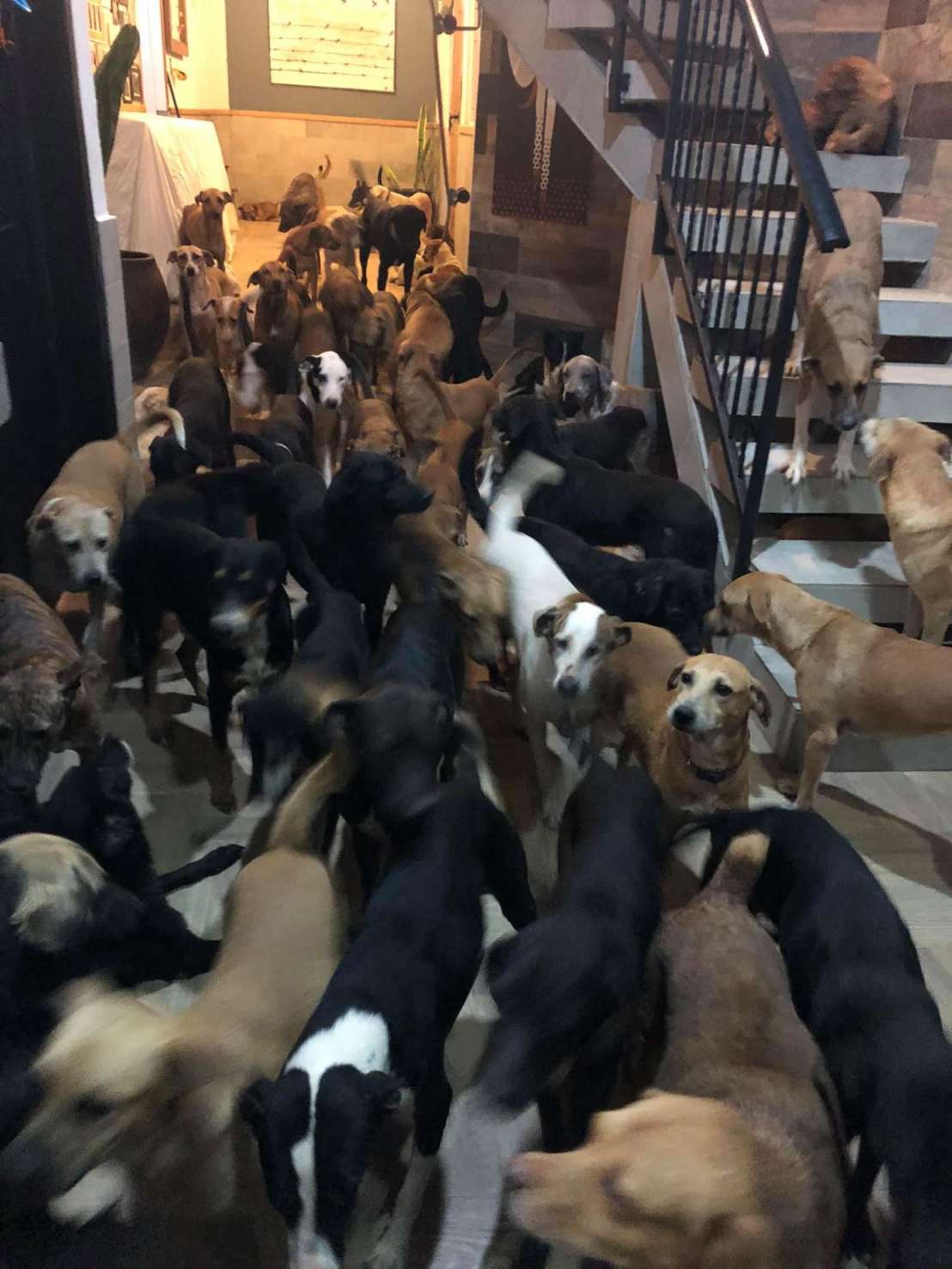
But bringing 300 dogs inside was no easy feat. For five hours, Pimentel and his volunteers rounded up the pups and helped them inside before the hurricane made landfall.
“We had to bring them in on leash two by two,” Pimentel said. “Some of them are afraid or don’t know how to walk on a leash, so we had to carry them to the house, but in the end, it was worth it because they are all safe.”
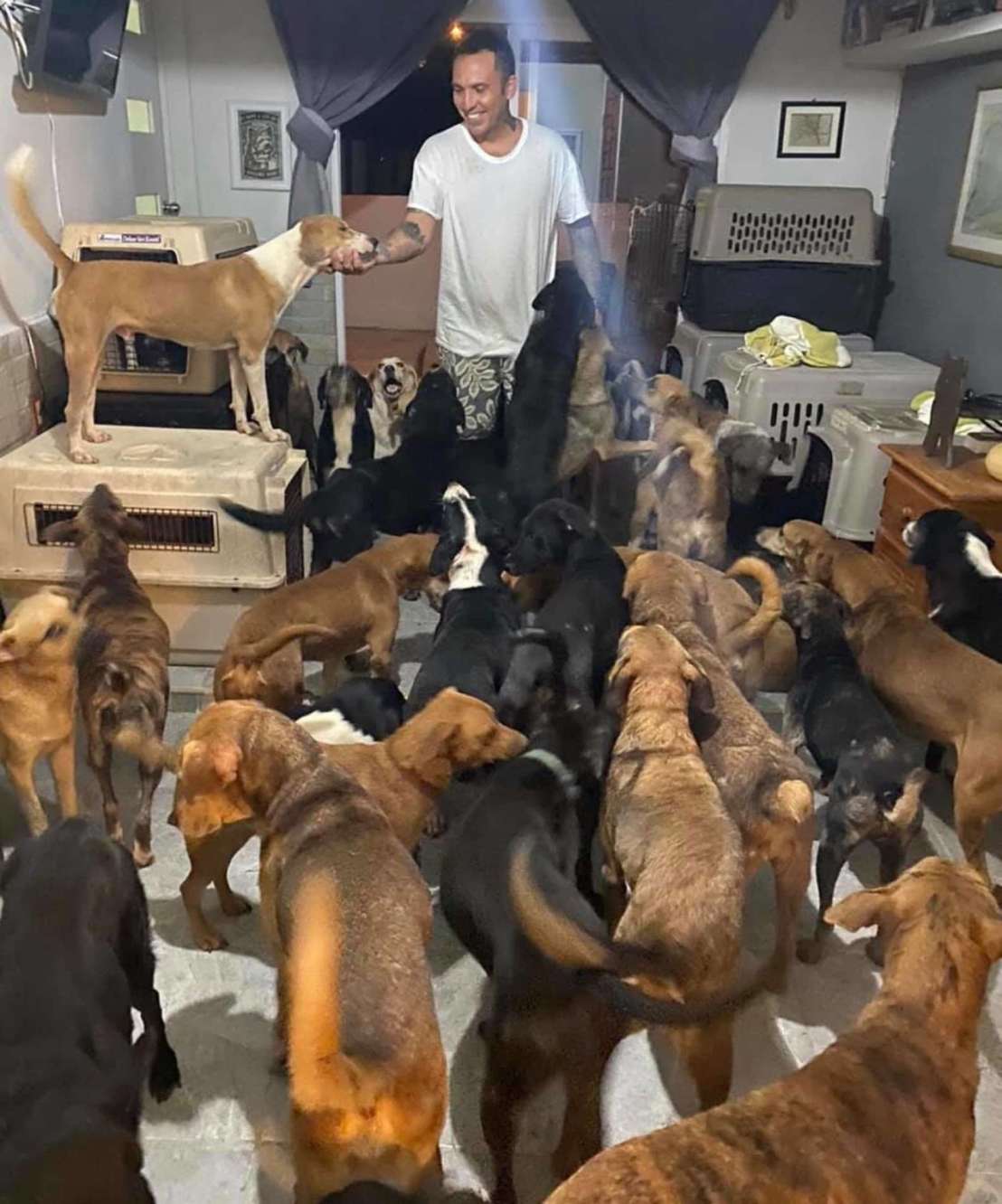
With so many animals in such a small house, Pimentel expected that they’d make a bit of a mess. But he was pleased when everyone seemed to get along.
“They were actually very well-behaved all night,” he said.
Luckily, by the time the hurricane reached the sanctuary, it was only a Category 2 storm — though the strong winds still damaged the property.
“The next morning when the hurricane finished, we had to do a lot of repairs and clean all [the animals’] areas from trees and branches,” Pimentel said. “So they stayed in the house the next day until 5 or 6 p.m.”
“Of course, there was a horrible smell in the house and they broke a few things, but there’s nothing to regret,” he added. “I would do it again one million more times if necessary.”
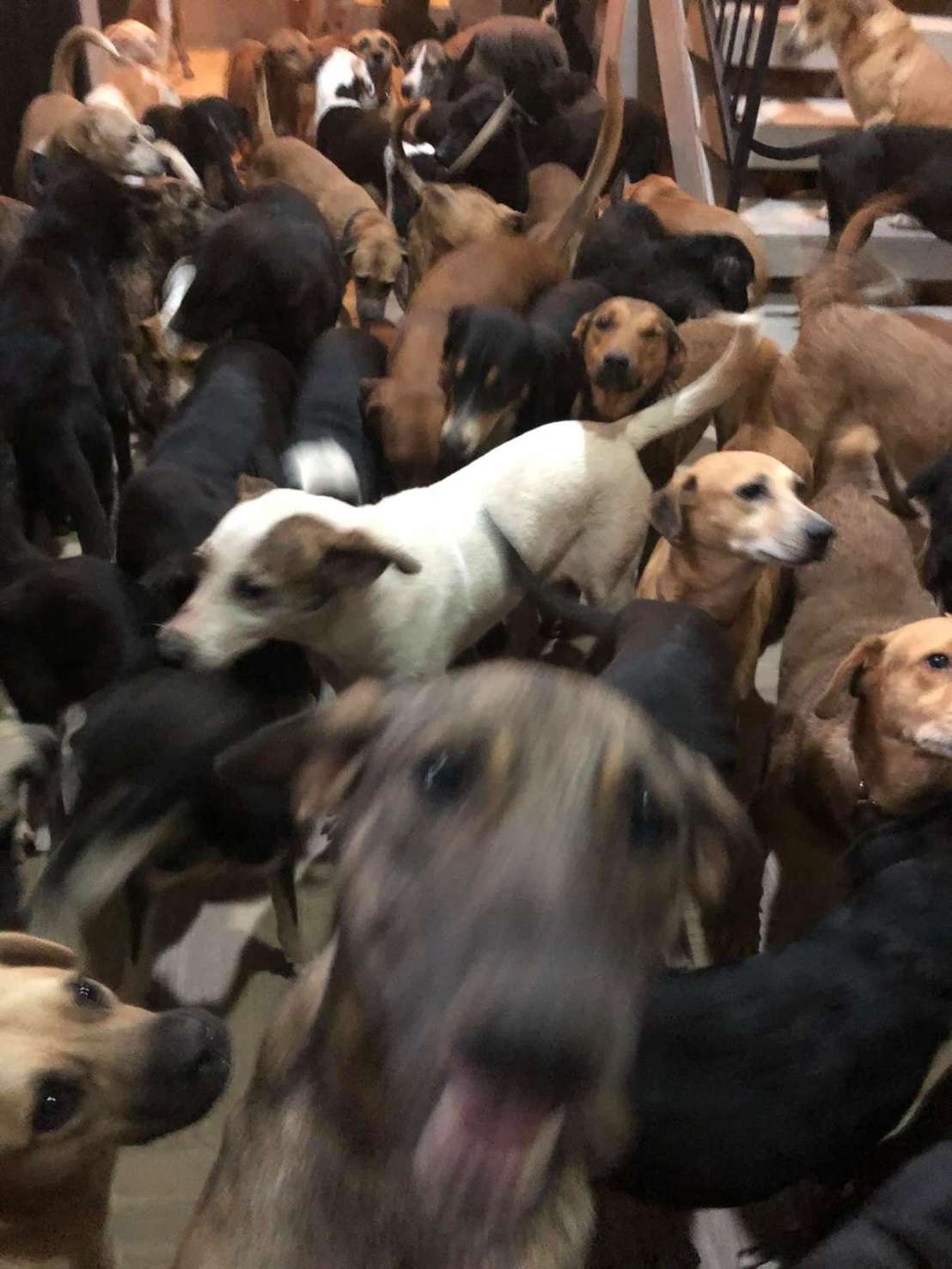
Pimentel is now working to build hurricane-proof shelters on his 10-acre property so all the animals can have adequate protection. And he hopes to take in even more animals so that no one has to spend another night on the streets.
To help Tierra De Animales build their hurricane-proof shelters, you can make a donation here.
ooOOoo
Here’s a YouTube video. Even if you don’t understand the vocabulary the pictures are inspiring!
I find this story both amazing and wonderful. For Ricardo to offer such protection from the weather and to do it in his home is staggering. Hats off to Ricardo and if a few of you can make a donation that would be perfect.
Dog wants to go to daycare? Then off she goes!
Back when I started this blog, back in July, 2009, I had no idea that there were so many stories about dogs. I mean many stories each day! I called the blog Learning from Dogs simply because when I first met Jean in 2007 she had upwards of 16 dogs. When I went out to be with her in 2008, together with my Pharaoh from England, I very quickly saw there was a huge potential in writing about them.
For example, how about this gorgeous article.
ooOOoo
“She just couldn’t wait for mom and dad to get up, so she came here herself.”
By Lily Feinn
Published on 10/21/2020
Early Saturday morning, Marty Carriere was getting ready for a busy day at Happy Tails Pet Resort and Spa when he saw someone at the door. He wasn’t expecting anyone quite so early, so he waited — then a wet nose pushed through the gates.
“It was 6:30ish when I saw her nose poking through the gate there,” Carriere told The Dodo. “Normally, I wait for the owners to come in with the dogs and see what happens but she was just poking around out there.”

When Carriere didn’t see any cars or people outside, he wandered over to the door to check things out and found Jem, a 5-year-old shepherd mix, waiting outside. Jem used to visit the day care three to four times a week before quarantine and was clearly eager to see her friends.
“I was pretty shocked when I opened the door and there was a dog there — and one of our regulars, too. So I was like, ‘Come on in, Jem. Let’s play,’” Carriere said. “I opened up the door and she ran right in — tail wagging and she was ready to go.”

Carriere called Jem’s parents, who rushed over to pick her up. It seems the independent pup had broken out of her yard when guests from the night before didn’t close the gate properly.
Jem’s parents brought her home and gave her breakfast, then drove her right back to day care since that was clearly how she wanted to spend the rest of her day. “She was definitely pretty anxious to get here,” Carriere said.

According to Carriere, Jem is a big goofball at day care and loves playing with all the other dogs.
“She comes in and does this little howling thing that not a lot of the other dogs do. She gets in and starts howling right away, she’s just so excited to be here,” he said. “I guess that morning she just couldn’t wait for Mom and Dad to get up, so she came here herself.”

In the three years that Carriere has worked for Happy Tails, he’s never experienced or heard of something like this happening before. But then again, Jem is one of a kind.
ooOOoo
Jem is special. But so are many, many other dogs.
But that doesn’t stop us in the slightest enjoying this story.