Adopting a dog is one of the most exciting ways to grow your family.
But you might be wondering if certain dog breeds are better for living with families than others.
The Dodo spoke with Iris Ulbrich, a behavior consultant and owner at Trust Your Dog in Los Angeles, who explained why you should actually pay more attention to a pup’s personality than his breed.
The best dog breeds for families
While there are some dog breeds that tend to be a bit more inclined for family life, it’s super important to remember that breed is not everything.
“Yes, there are characteristics that are tied to dog’s breed, but a lot has to do with the quality of breeding as well as the first few months of a puppy’s life,” Ulbrich told The Dodo.
What’s most important is an individual dog’s personality because, ultimately, that will determine whether or not he will work great in a family environment, regardless of his breed.
With that in mind, here are some dog breeds that — on average — tend to have traits that make them good family pets:
Labradors
Golden retrievers
Collies
Wheaten terriers
“Both [Labradors and golden retrievers] are very friendly, active, good with kids and eager to please,” Ulbrich explained.
As for wheaten terriers, they don’t shed. So if someone in your family has allergies, these terriers could be a good fit.
“Collies are very devoted family dogs and can be both very active but also know how to relax and be calm at home,” Ulbrich said.
That being said, these are just generalizations! There are some labs out there who are absolutely terrible with kids — and literally millions of individual dogs from breeds not on this list who are perfect family pets.
Which is why your best bet is to go to a rescue center, where adoption counselors can match you with a pup who has the exact personality you’re looking for.
Personality traits that make a dog the best fit for a family
Since personality is far more important than breed when finding your perfect pup, you should know which traits to look for in your family’s potential new addition.
After all, a rescue is going to help you find a dog that’ll vibe with you and your loved ones, since you’ll be able to pick a pup with a fully formed personality. If you get a puppy from a breeder, on the other hand, you’ll have no idea if he’ll grow up to be a good match for your family.
When it comes to finding the best dog for your family, here’s the personality traits Ulbrich recommends you look for.
“A healthy amount of energy in combination with eagerness to please their owner is usually a great combination,” Ulbrich said.
And since families are all different, it’s actually most important to look for a dog that’ll mesh with your family’s interests, hobbies and lifestyles.
“An active and outdoorsy family with slightly older kids that live in a house would pick a different dog to a family that lives in an apartment and has twin toddlers,” Ulbrich explained.
In those cases, both of those potential pups might not even be any of the breeds listed above, since it all boils down to each individual pup’s personality.
“A dog’s demeanor also plays a big role in [a] successful family integration,” Ulbrich said. “I try and recommend people ask a trainer to temperament test a puppy before making a final decision on breed and particular puppy within a litter.”
And since that individual temperament is so important, any dog breed can be the best dog breed for your family.
ooOOoo
I hadn’t thought of it before but Iris Ulbrich stating that personality was far more important than the breed of the dog. Of course! Perfect sense! And always take in a rescue dog!
Yet another article about a sweet dog! Keep them coming!
I know Jeannie and I are very biased but so are millions, literally, of other good folk around the world. I am speaking of people who love dogs. And thank goodness that is the case because The Dodo is just one of a number of doggie websites and in the absence of such websites Learning from Dogs would have never got started!
So I am pleased to present another story from The Dodo about Levi. Read on:
ooOOoo
Very Sweet Dog Always Welcomes Mom Home With A Gift
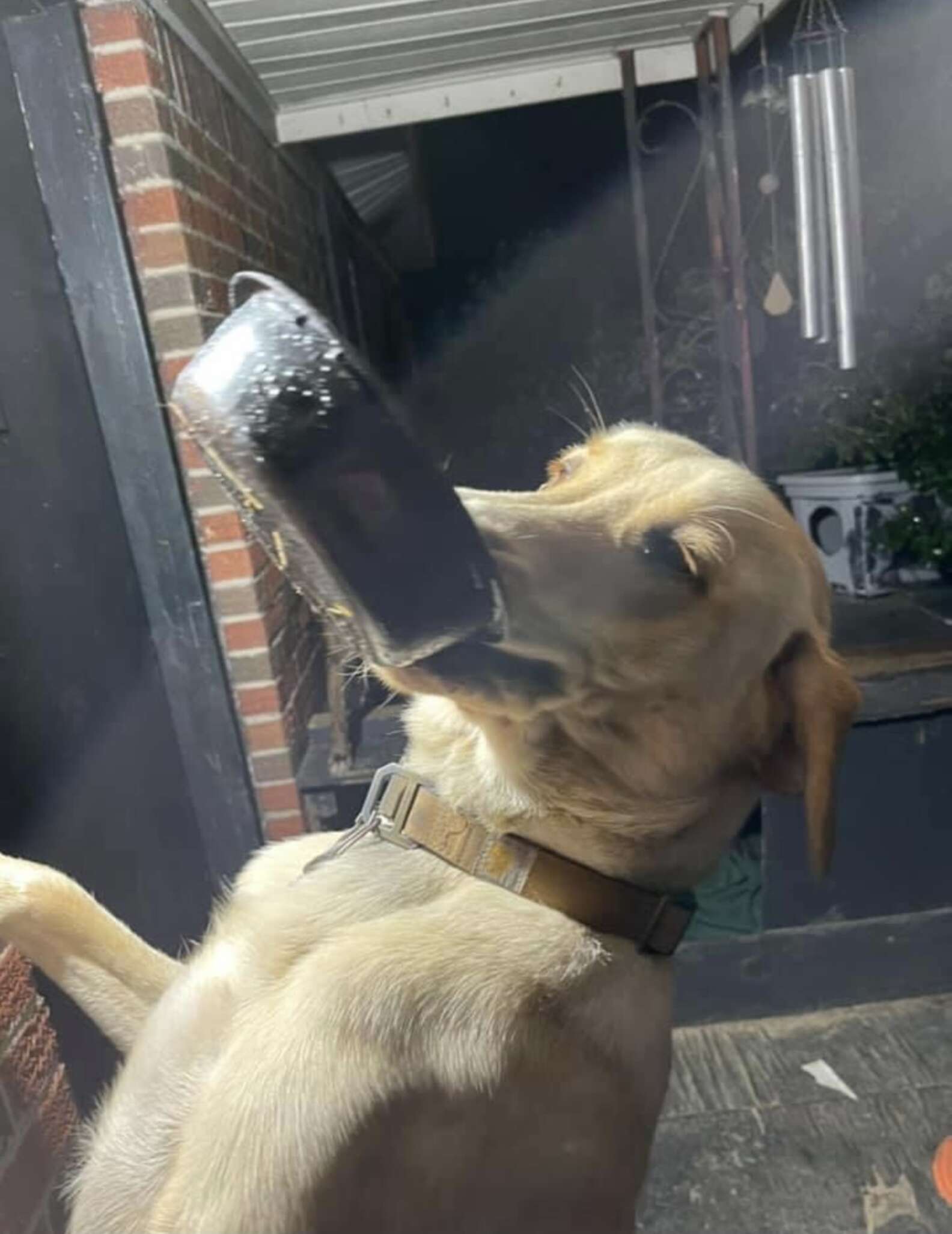
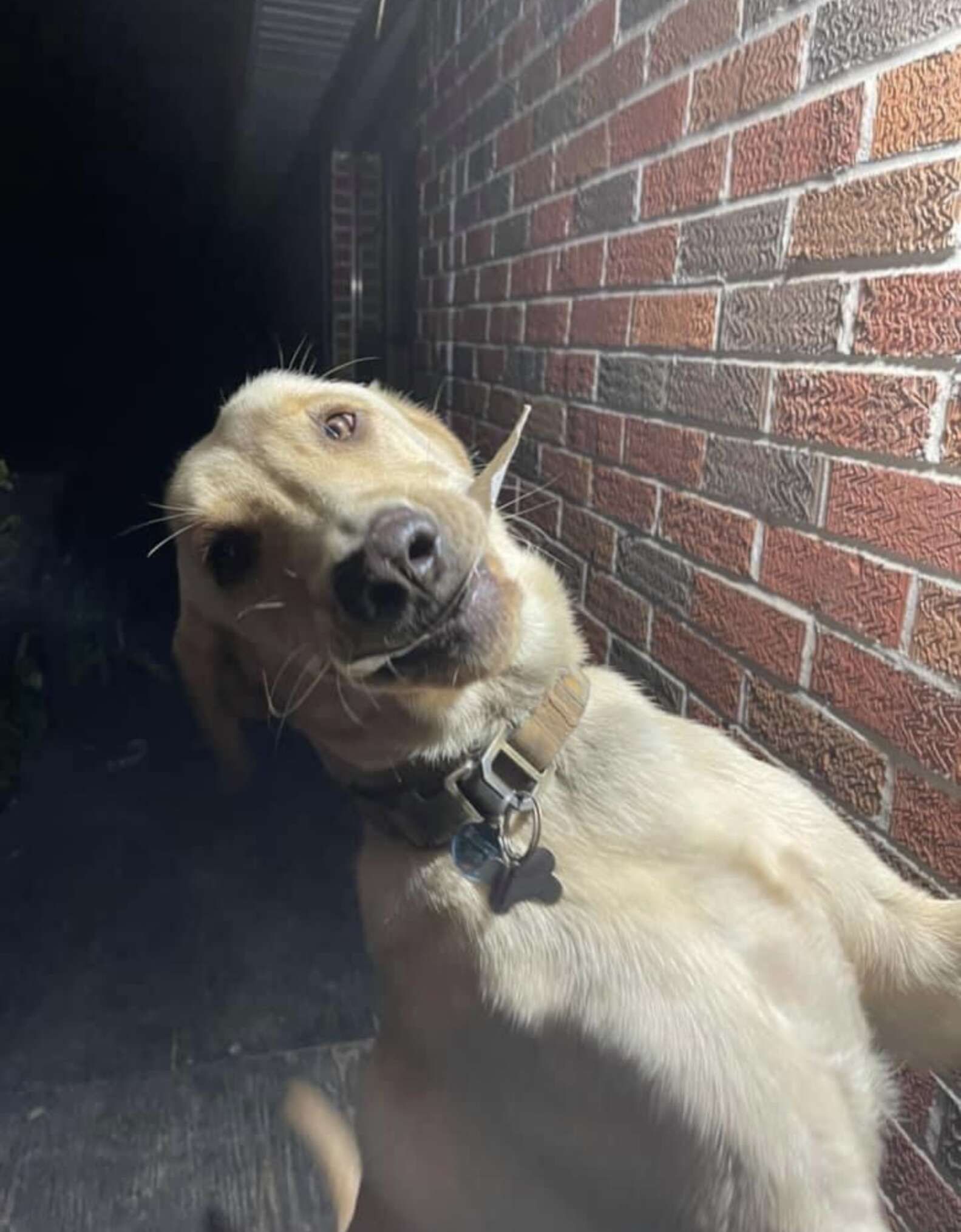
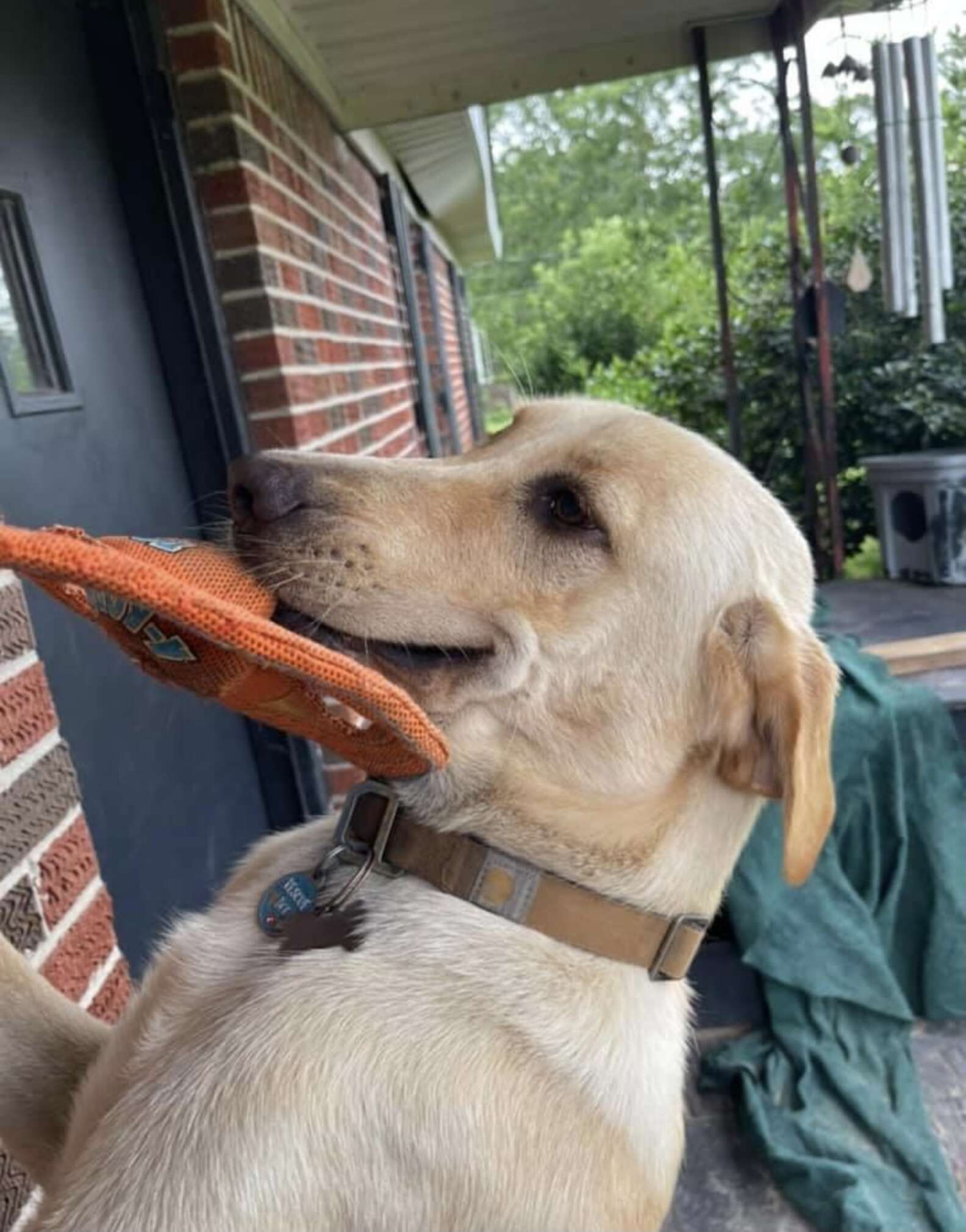
Levi knows to never greet someone empty-handed. The Lab mix gets so excited every time his mom comes home that he immediately has to find the perfect gift to show his love.
However, when it comes to Levi’s presents, his mom knows it’s the thought that counts.
LORI EDDINS
“The very first thing that stands out was when he brought me an open, half-chewed box of screws,” Lori Eddins, Levi’s mom, told The Dodo. “So I took him to the vet for X-rays.”
Thankfully, Levi hadn’t snacked on any of the hardware and got a clean bill of health, but Eddins’ reaction to the “gift” encouraged Levi to start an adorable routine.
“I think my begging and baby-talking for him to surrender the box of screws might be what inspired his deliveries,” Eddins said. “He thought it was great!”
LORI EDDINS
Now, the rescue dog always gives his mom something special when she comes home after a hard day’s work.
LORI EDDINS
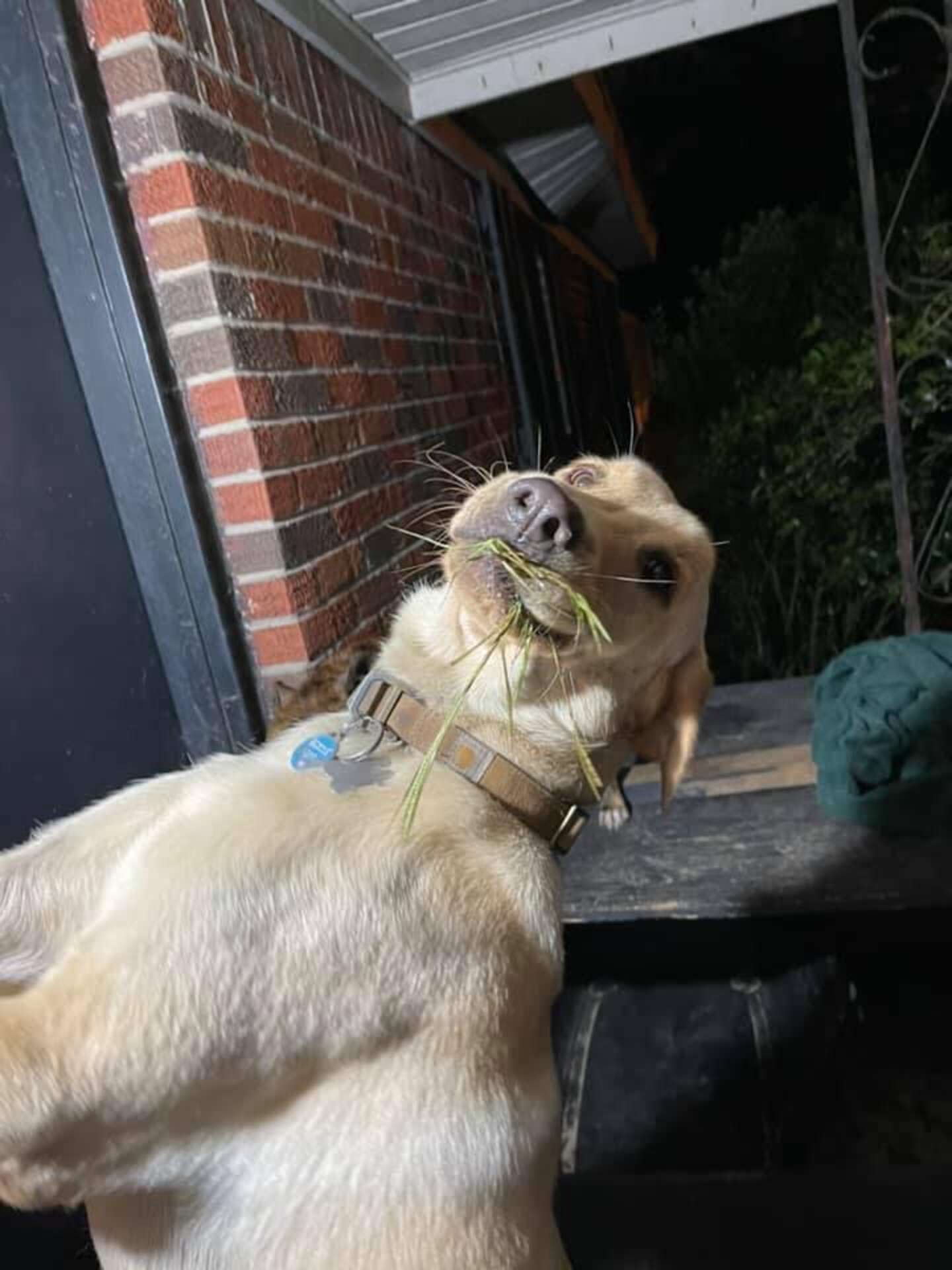
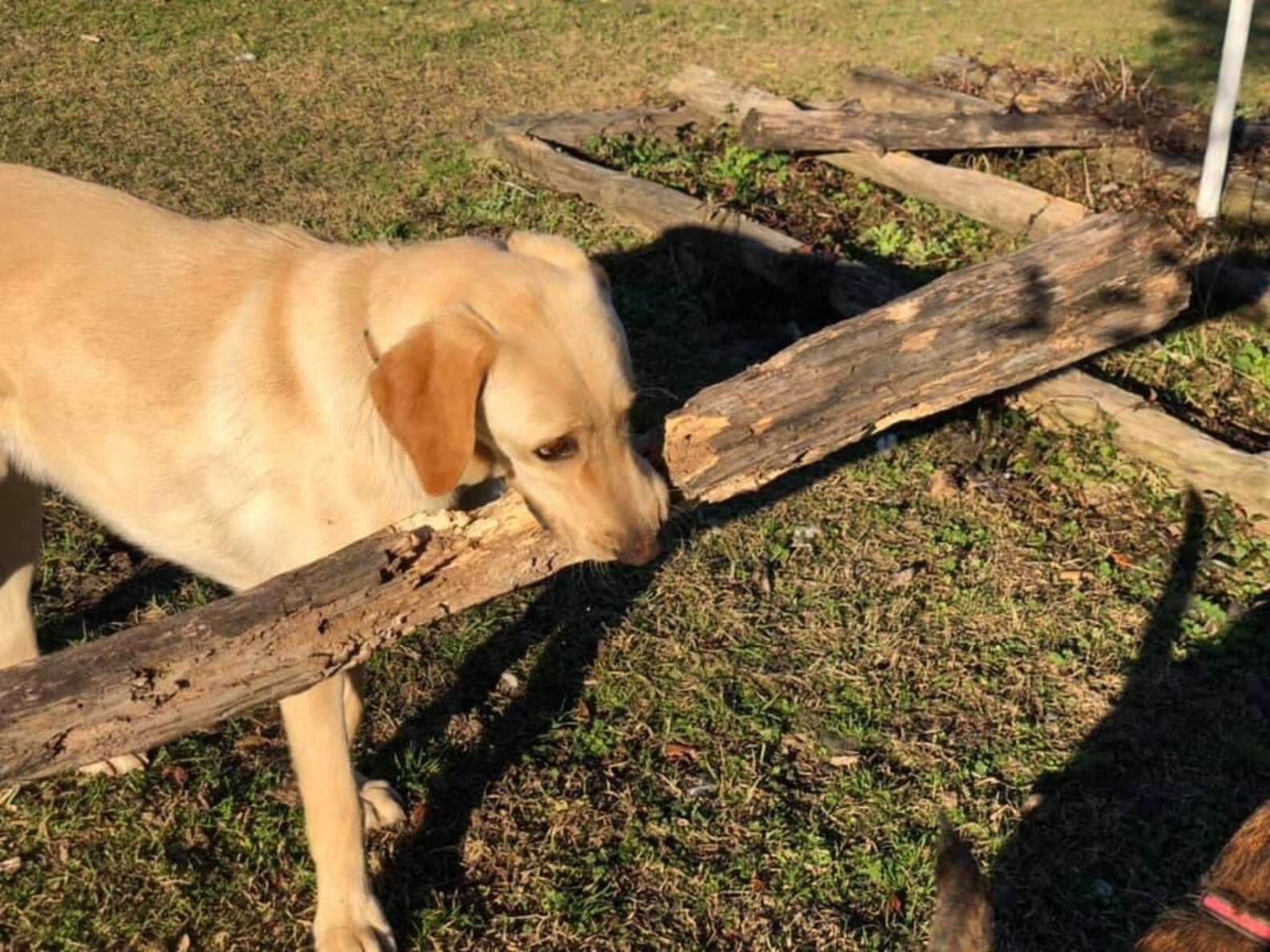
“He has brought everything from his toys, to bones and blankets, to clumps of grass, pieces of cardboard or paper (I call them ‘cards’) and landscape timber,” Eddins said. “My favorite was when he found where the flower bed had been cleaned out and he brought me flowers.”
“If he meets me at the gate empty-handed, I let him carry my keys to the door, and he is so proud,” she added.
LORI EDDINS
Some of Levi’s gifts are not necessarily what Eddins would pick out for herself. Occasionally, he’ll bring her clumps of horse manure or try to pick up one of the chickens on the property to deliver to his mom.
LORI EDDINS
Though Eddins’ chickens aren’t so fond of this gift-giving, Eddins is so grateful to have such a generous, happy-go-lucky dog bringing joy to her life — and she makes sure Levi knows it.
“I give him huge hugs and thank him as if he brought me the winning lottery ticket,” Eddins said. “Most things I give back to him, some end up in the trash. I did keep the flowers!”
ooOOoo
It is a delightful story and one that rings true for so many people. Lori knows the golden rule in the way that she praises Levi.
Always make a dog feel as though he or she is such a special animal that life wouldn’t work without that dog. Always praise them and when a dog does something negative do not punish them. Just don’t praise them.
It’s even a difficult title to write for today’s story.
There are some despicable people for whom having a dog is not a loving companion nor a humane business interest. I can’t define them and, frankly, they are not even worth the mental effort required to think of a term.
That makes it all the more important to share this article with you.
ooOOoo
Dogs Are Not Disposable
Some people dump pets that are too old, not ‘perfect,’ or to go on vacation.
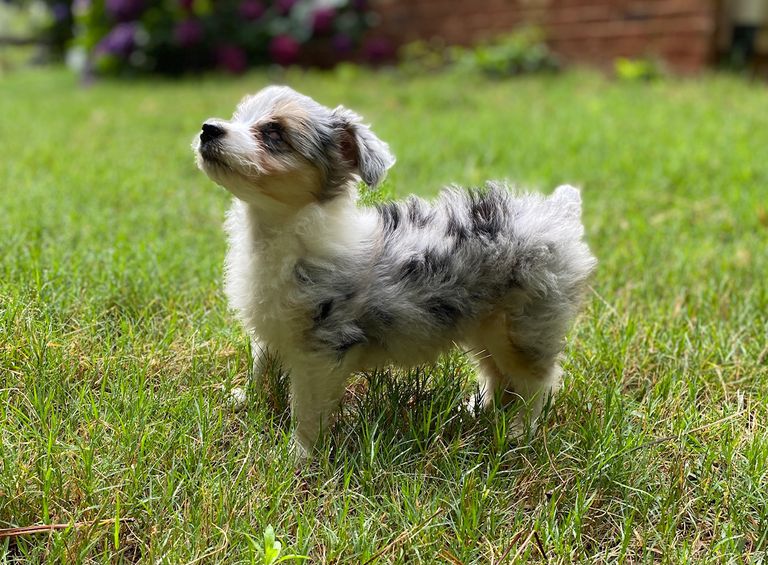
Blind puppy Gertie weighs just over 2 pounds. Mary Jo DiLonardo
This may seem like a no-brainer, but with all the news from overwhelmed shelters and rescues this summer, it’s probably worth saying out loud.
Dogs are not disposable.
Disreputable breeders toss out puppies that aren’t “perfect.” Some people give up the family pet when they go on vacation so they don’t have to pay for boarding. Others give up an older puppy whose cute behaviors are now obnoxious or a senior dog who may have other health issues.
That little mouse you see at the top of the page is one of two special needs puppies I’m fostering right now. She’s actually a 2.1-pound puppy that we were told is an Aussiedoodle. I still think she might be an exotic guinea pig.
Gertie was dropped off by a breeder at a vet’s office to be euthanized because she was blind. The vet contacted a rescue instead.
I also have a deaf puppy that was given up by a breeder. Many other fosters are also doubling up because the need is so great right now. Probably the biggest reason is that it’s the summer and people are traveling for the first time again in more than a year. That means it’s hard to find adopters and it’s hard to find fosters. Everyone wants out of the house.
I’ve seen messages and social media posts from rescuer and shelter workers who say they feel helpless because the requests for help right now are so crushing.
“My rescue cannot keep up trying to save them,” one wrote.
“I’m sickened at the number of rescue and surrender requests we are getting and I am completely heartbroken,” wrote another.
“We need a lifeline,” said another rescuer.
There are some news stories that claim many pandemic puppies are being returned, but the numbers don’t back that up. Instead, it’s just a crush of other reasons, many involving summer travel.
I think the hardest thing for most loving pet owners to fathom is the idea that some people would drop off their dog at a shelter on their way out of town. There’s just anecdotal evidence and no statistics about how often it happens, but it’s cited very often from disheartened rescuers and shelter workers.
The people who surrender their pets say they don’t want to pay for boarding and they’ll just get a new one when they return. Shelter workers say it’s heart-wrenching to hold a dog while they watch their person drive away. Some will stare out the door for hours, thinking for sure their family will return.
“Unfortunately, it doesn’t surprise us anymore which is really sad,” says Jen Schwarz, one of the directors of Speak! St. Louis, the special needs rescue I foster for. The rescuers hear the story often from shelter and humane society workers.
“They don’t want to pay for boarding or can’t find anybody to take their dog,” says Schwarz. “It’s basically being selfish.”
And people might think they’re doing their dog a favor by taking it to a shelter, hoping they’ll get adopted by someone else. But typically, if shelters have to euthanize for space, they’ll turn to owner-surrendered pets before strays because they know no one is looking for them.
“That’s the sad reality,” Schwarz says.
The other thing that happens often is people asking to have the family pet put to sleep because they’re too much hassle.
“That happens a lot. The kids are gone, they want to travel, the dog’s too much, and they have it euthanized,” Schwarz says. “That’s worse than dumping it at the shelter.”
Rescuers are saving as many as they can and that’s why I have one puppy sleeping behind me in my office and one napping in a playpen in the living room. Soon everyone will head outside for a game of tag where I’ll make sure everyone gets a chance to win.
And the only thing disposable here is an awful lot of very tiny puppy poo.
ooOOoo
When Jen Schwarz says: “That happens a lot. The kids are gone, they want to travel, the dog’s too much, and they have it euthanized,” I wonder what a lot is numerically. Anyone know?
The stories from the shelter workers breaks hearts here as well. Dogs are so intuitive; so smart. It is no surprise that they will stare for hours trying to work out what has happened.
Mikayla Sengle and her boyfriend, Anthony Noto, weren’t planning on adopting a dog. But when Wylie suddenly came into their lives, it seemed meant to be.
Last month, Noto was on his way home from work when he passed by a dog park near an apartment complex. In the back of the park, a white and brown pittie sat all alone, looking confused.
As Noto approached the dog, he noticed that he wasn’t wearing a collar and looked a bit banged up.
“He looked lost, but at the same time, he seemed like he was on a mission to find something,” Noto told The Dodo. “When I walked over towards where my work truck was, he came up [to me] all innocent with his head down, seeing if I’d accept him.”
“Maybe I was what he was looking for,” he added.
Noto slipped a loose rope around the pup’s neck and walked him around the area trying to find his owner. But when no one recognized the dog, Noto put him in his truck and drove him home.
The pup didn’t seem to want to upset his new friends and was determined to show Sengle and Noto that he had the best manners.
“With people, he would wait for them to give the OK to lick and pay attention to people,” Sengle told The Dodo. “He seemed extremely relieved and happy. He got a bath and some treats as soon as he came home.”
“He instantly would look at my boyfriend for permission for everything,” Sengle added. “When he got home and ran in the yard, he was thrilled. It seemed like he never experienced the opportunity to be free and fun.”
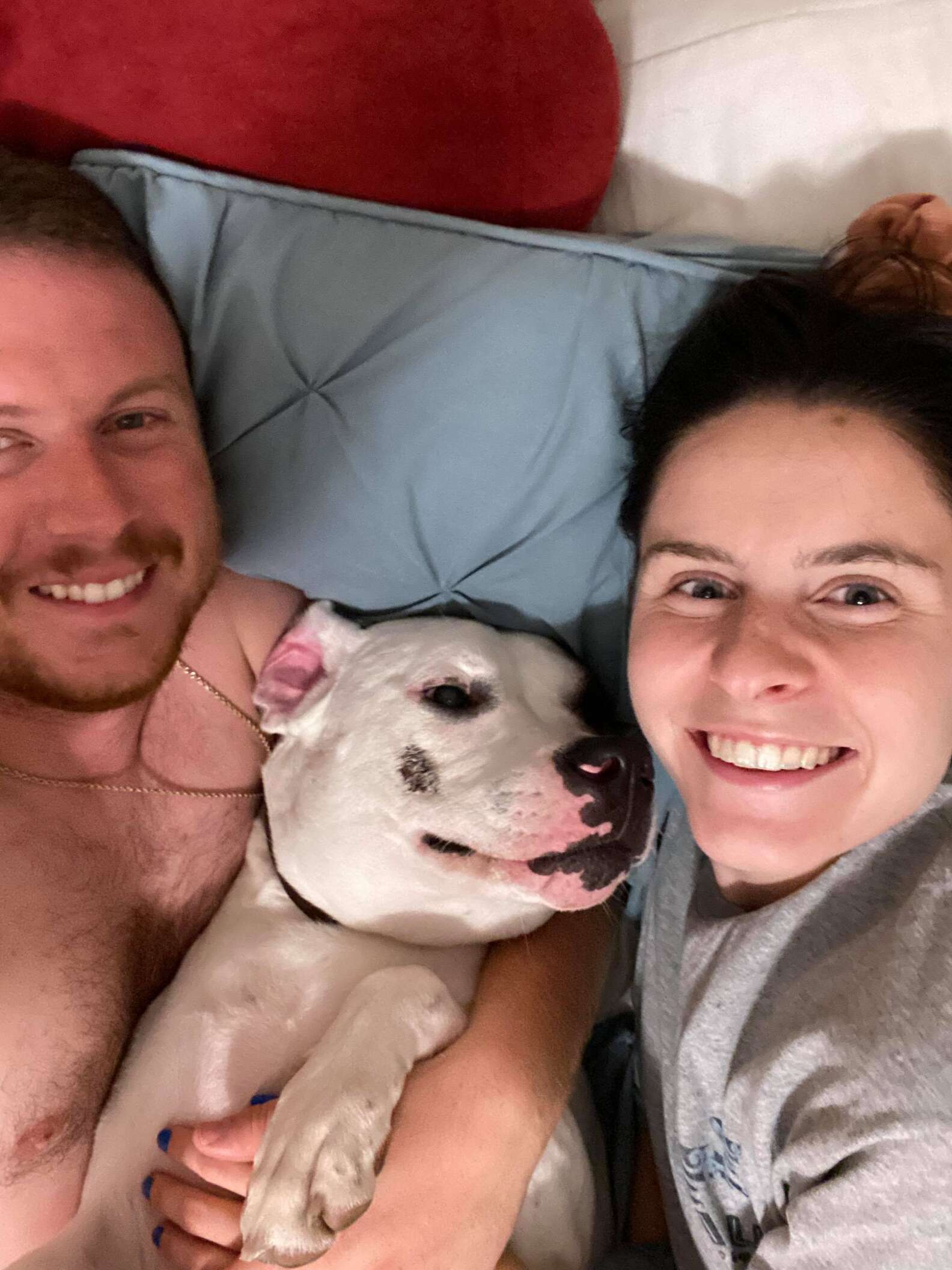
The first night, Wylie slept in bed between his rescuers, as if to make sure they wouldn’t leave him. And he’d never been more comfortable and happy in his life.
Sengle posted on social media searching for the dog’s family, but when she finally received a response, it broke her heart.
“A young girl reached out to us and basically said that it was her friend’s dog and [her friend] had seen the post and said she no longer wanted him anymore because he was annoying,” Sengle said. “She even begged us not to give him back if they did reach out to us because they used to hit him and were not nice to him.”
Sengle and Noto kept Wylie for the five-day stray hold, giving the owners time to claim him. But when the week was up, there was no question that he was staying with them — forever.
Sengle and Noto thought their family was complete, but now they can’t believe that they got so lucky.
“He is a very sweet dog and a great companion,” Sengle said. “My boyfriend and him grew a bond almost instantly. He slept right in between us the first night we got him and from then on, we knew in our hearts he was our dog.”
ooOOoo
All photographs by Mikala Sengle.
It shows again how quickly a dog can open up the heart strings of us humans. As Single and Noto remarked above, they now can’t believe they were so lucky. It’s how we feel about our dogs. It’s how countless others feel about their many, many four-legged loved ones!
I know this has been said before and no doubt I will say it again many times but dogs frequently bond closely with other dogs. There’s no knowing, frankly, what triggers the friendship but we humans can see it so clearly.
Take this recent article published on The Dodo about a dog and his sister.
ooOOoo
Dog Knows Just How To Help His Anxious Sister When She Gets Carsick
Meet Eddy — a dog who knows exactly when his family needs a little extra help.
Ashley Karlin adopted Eddy, a black Lab, from a shelter two years ago as a companion for her senior dog, Daisy. And since that day, Eddy and Daisy have been inseparable.
“Eddy and Daisy play like siblings. They egg each other on and run around in the backyard together,” Karlin told The Dodo. “They sleep next to each other and sometimes on each other.”
The 95-pound cuddle bug is also extremely perceptive. Eddy can sense immediately when something is off with a member of his family — and he hops into action.
Eddy uses this skill frequently when traveling with his sister. Daisy has always had car sickness and gets anxious when it’s time to go for a drive, but Eddy is a pro when it comes to soothing her.
“When she lies down in the back seat and starts to drool, Eddy lays the opposite way so he can rest his head on top of hers,” Karlin said. “If he doesn’t do this, Daisy constantly gets up, lies down, gets up, lies down on repeat until she vomits.”
“I think Eddy just has a sense of when others aren’t feeling well and he’s always there to comfort her,” Karlin added. “We’ve noticed every time they lie down together like this, she doesn’t puke and usually will fall asleep.”
Eddy also monitors his mom to make sure she’s OK and is always the first to know when there’s any change.
“My husband and I recently found out I’m pregnant, and one of the signs that tipped us off was that Eddy constantly would put his head on my tummy,” Karlin said. “Eddy has [also] on numerous occasions woken me while sleeping to alert me that I was going hypoglycemic, even though he’s not trained to do so.”
Eddy is always there when his mom or sister needs him — and they can’t picture their lives, or car rides, without him.
ooOOoo
All photographs by Ashley Karlin
This is yet another example of the caring and bonding that dogs make. Make with many other dogs and many of us humans.
They are an example to all of us!
And another case of ex-rescue dogs bearing no scars!
Personally, I think these should be banned in all countries!
Yes, I know that sub-heading is me being away with the fairies, but one can always hope.
The reason behind the heading and the topic is that on the 21st June this year Dexter sent me a guest post for including in this blog. Nothing gives me greater pleasure, so on with the show!
ooOOoo
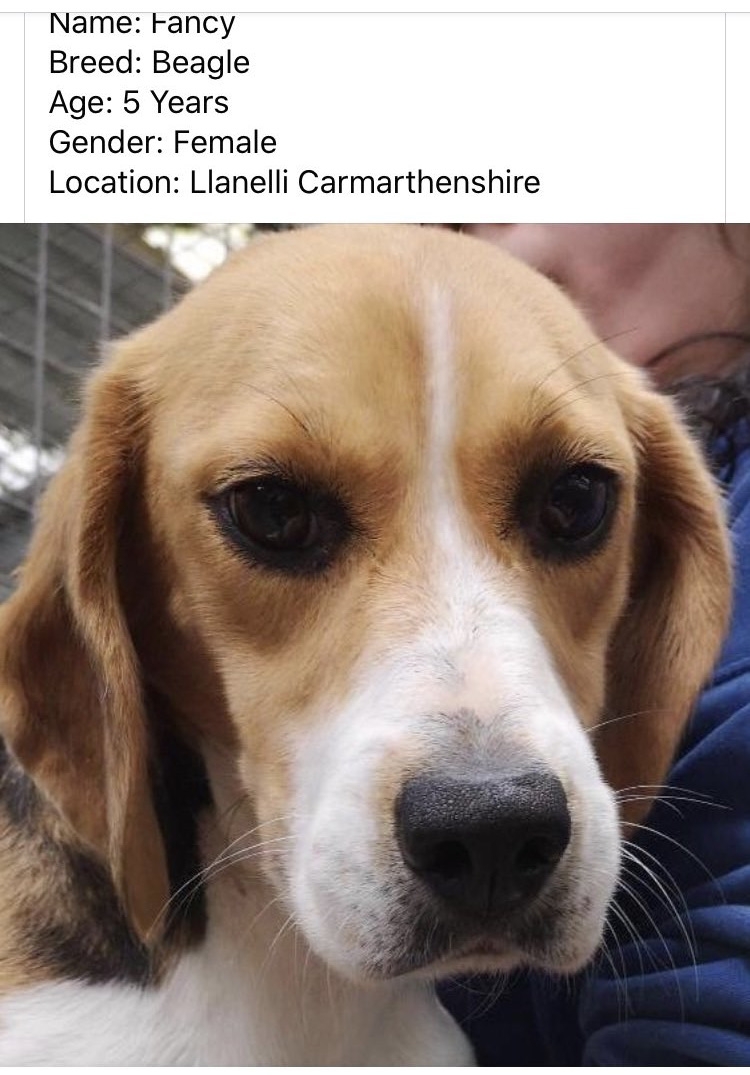
Well well, Fancy that.
By Dexter.
This blog is on a subject that I have wanted to tackle but haven’t had the chance or insight to do so. Until now.
Puppy mills are an abhorrent method of producing large sums of money at the detriment to the dogs involved. I discovered that Fancy, who is one of the Wirral & Cheshire Beagles was used in a puppy mill. As I wanted to write something on this subject, I asked for the kind assistance of her mum, auntie Karen, who has been wonderful and extremely helpful in helping me write this blog. I cannot say “enjoy it” as I hope that you find it predominantly thought provoking and enlightening as to these terrible practices.
Thank you for allowing me to ask some questions about Fancy. When we spoke you told me that she was a puppy mill dog. Can you let me know a little more about her position before she came to live with you?
She had been in a puppy farm, kept in a concrete pig pen and had 3-4 litters in just over 3 years. Many of her pups died of Parvo either there or within 24 hours of being picked up for their new homes.
That sounds awful. Do you know how old she was when you met her?
They told us she was about 5 but she turned out to be 3.6 years. She was 4 on Valentine’s Day.
So, by my calculations, she was about one year old when she would have been forced to have her first litter. This makes me feel very sad.
How did you find out that Fancy was up for rescue and rehoming?
We saw Fancy on a “Beagles missing, found and in need ” site on FaceBook and we fell in love with her immediately. She had such sad, dark eyes and it occurred to us that she had never known a day’s happiness or been loved. There were so many people applied for her we didn’t think we stood a chance. However we were contacted by Many Tears twice that week and, because I’d previously had a home check and had 2 kind caring beagles, we were chosen.
Please help me, please!
We drove over 10 hours that day to Llanelli, Camarthenshire and met her in an area used for meet and greets. She was petrified of us but not my beagles, Eddie & George. She just ignored them. There was no eye contact with us, nothing. She just paced up and down and cowered in a corner. When it was time to take her home she had to be cornered and caught to get a slip lead on her. She just wet herself. It was heartbreaking. My husband Alan carried her to the car where she laid down in the travel crate. She didn’t sleep but just kept very quiet all the way home. She came from a real lowlife puppy farmer. He’s a multi millionaire who posts “his” beagles or pups running free on fields. In actual fact they’ve never seen a blade of grass. The BBC did an undercover investigation on him.
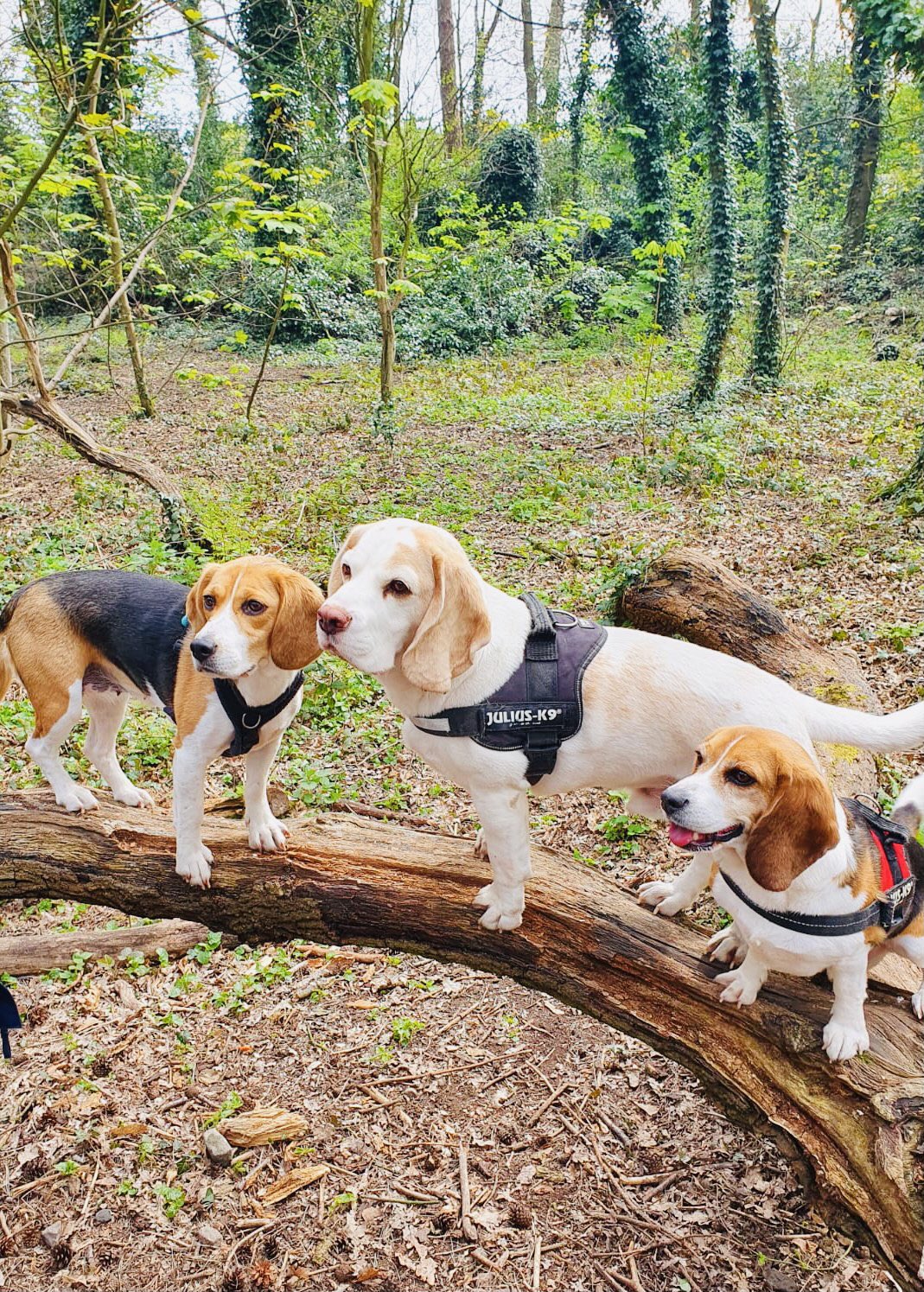
In any case, when she arrived it was a lovely Sunday evening last July 2020. So we sat outside and watched her exploring and sniffing around the garden. She kept hiding in a corner if we looked at her so we stopped. It took 8 long days before I touched her and that was only because there was a wall behind her. She went to the toilet in the house but thanks to Eddie & George she soon got the hang of going outside. They were fabulous with her and soon realised she wasn’t a boarder but a new sister. I certainly couldn’t have done this without them and the beagle field.
Is this OK? Is this what I am allowed to do?
What sort of condition was Fancy in when she arrived? I am going to assume she wasn’t in the greatest shape, given her life up to her time coming home with you?
She was in a bad condition when we got her. She had a dull dry coat and was very underweight with her ribs showing and tail between her legs. It took a few days for her to eat and she’d only do that if we weren’t around. When I first took her to the beagle field she spent the whole time pinned up against the fence. Nothing the beagles did bothered her, only the actions of the humans. I think it took about a month for her to trust one person and let them touch her. Eleven months later and she is still very wary of people she doesn’t know and she will cower away.
That sounds awful, and so sad. Looking at the pictures she seems to have come some way on her path to rehabilitation.
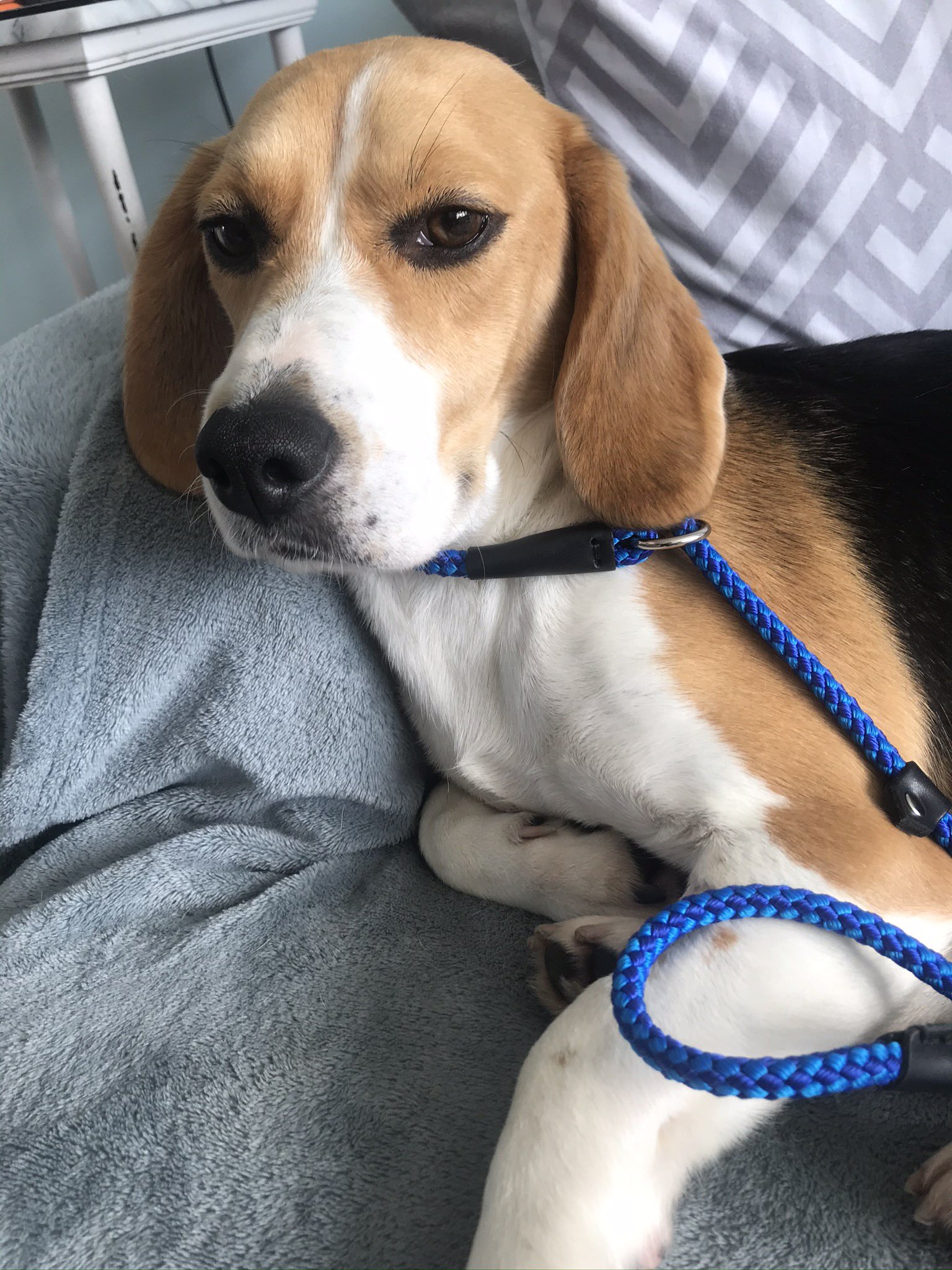
Yes,it doesn’t take much to win her round. A belly tickle, something tasty and she’s your best friend.
Give us a cuddle, says Jay.
How long did it take for Fancy to stop going toilet in the house? Was she called Fancy when you met her at the meet & Greet?
She did her toilets in the house for about 4 days. Maybe twice a day then just first thing in the morning. It tailed off after that as she went out every time with her brothers. Yes she already had the name Fancy I rescued a kitten on the A55 motorway many years ago and she was called Fancy.
You’re safe now, Fancy!
You said that Eddie & George immediately knew Fancy was in need of some help. Did they act as if they were guardians to her, showing her the ropes if you like, and making sure that she felt at least some comfort with them.
Definitely. They gave her space from day one when she needed it. Even at the busy beagle field the others knew as well. She never got the initial newbie rough welcome. They all love her very much. Beagles know these things.
Welcome to the clan, Fancy.
Erm, when did you start to see a real breakthrough in her feeling more at home and less scared of all sorts of situations? What was the thing that made you think “you know, Fancy is feeling a bit happier”.
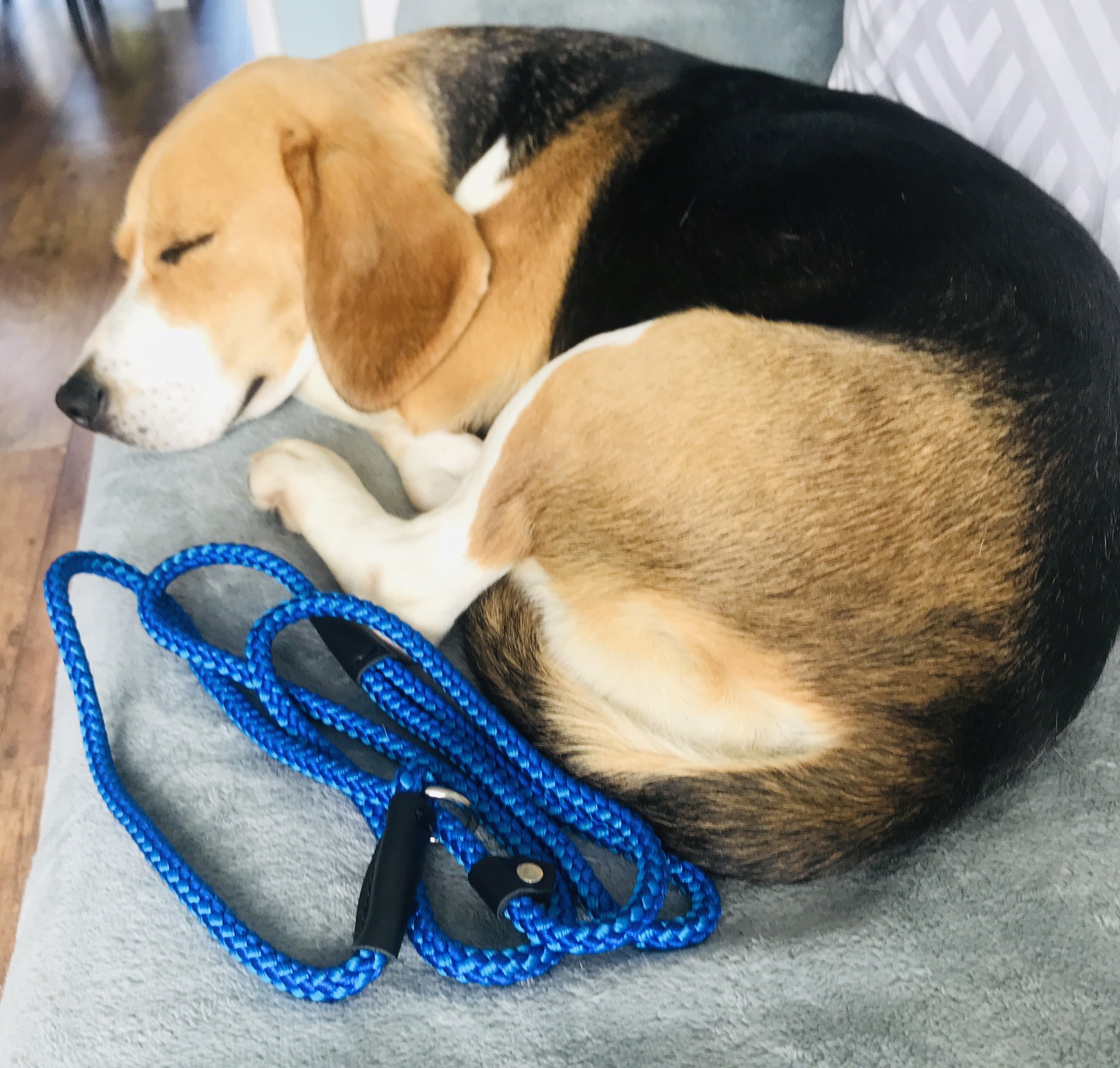
I lay that lead next to her for about a week. I started to show it to her and make a big fuss like it was a toy. She was petrified as she’d only been put in a “rape harness”. She’s still wary of it but can’t get out of it thank dogness.
A week from A to B
If you could give people a simple message regarding getting pups from a mill what would it be? Apart from “dont do it” that is.
I’ve given many messages of support to people thinking of puppy farm rescues. Don’t ever give up on them because of their fear. Beagles are so loving and trusting of us the good times far outweigh the bad and no mistake. I have a friend who 12 days ago adopted one with identical problems and the difference in her each day is amazing. Day 12 today and she was dying to jump into his arms when he got home but held back and did an excited dance. We all love his daily updates.
I wish I knew the answer to the puppy mills question I really do. They’re clever people who advertise their pups as living in loving happy homes with caring owners. When in reality they use dirty filthy concrete pig pens where they receive no vet care whatsoever. People see the advertisement and pay a large deposit, when the time comes most travel hours and they won’t leave their puppy their a minute longer so will take them home and face the consequences. Many die over 24 hours and some will be saved by a good vet. One of Fancys pups and owner I know so I know how she was fooled. She knows others.
May I ask about Wirral & Cheshire Beagles generally. Are you a registered charity and, if so, with whom do you work and co-operate?
Yes the beagle group is a charity. We give £1000’s away to beagle charities each year. Mainly Unite to Care where we got ex laboratory George from and Many Tears who are absolutely fabulous and rescue so many ex breeding beagles.
Beautiful!
To sum up I am so happy that Fancy is now safe and loved. It is wonderful that she will never again suffer the privations of puppy mill life. It is sad and wholly awful that she had to suffer in the first place. If people didn’t buy from puppy mills, then there might be a chance that they are prevented of their ability to operate. Please please think before making a decision to adopt a dog. Puppy mills are awful and make our lives a misery.
Thank you to Fancy’s mum for her wonderful help on what is a very difficult subject. Without her help, I couldn’t have written this.
Rescue dogs sometimes have a bad reputation. Cross breed rescue dogs sometimes seem to have a worse reputation. I wasn’t dangerous or bad. I was unlucky. Now I am enjoying life in my forever home and I am sharing my contentment with whoever will read my tails.
This is the essence of what having a dog in one’s life means.
I can’t voice Jean’s and my disgust at puppy mills. It is beyond terrible. All you and I can do is to never entertain buying a puppy where the commercial legitimacy is uncertain.
I was sorting through some papers over the weekend and I came across something that I wrote on the 14th September, 2007.
Let me explain.
2007 was a very important year for me. I had barely got over the fact that my ex-wife had walked out on me the previous December 20th but had been given the revelation that my fear of rejection had been brought into my conscious state after having been unconscious for 50 years. This was a fantastic outcome from just one visit to a local psychotherapist.
I had been out to California in the summer to see Dan. His sister, Suzanne, had called by and invited me to come to Mexico for Christmas. I was unaware that this trip to Mexico was to change my life for the better in every imaginable way!
Anyway, back to my writings.
ooOOoo
I am your dog and have something I would love to whisper in your ear. I know that you humans lead very busy lives. Some have to work, some have children to raise, some have to do this alone. It always seems like you are running here and there, often too fast, never noticing the truly grand things in life.
Look down at me now. While you sit at your computer. See the way my dark, brown eyes look at yours.
You smile at me. I see love in your eyes. What do you see in mine? Do you see a spirit? A soul inside who loves you as no other could in the world? A spirit that would forgive all trespasses of prior wrong doing for just a single moment of moment of your time. That is al I ask. To slow down, if even for a few minutes, to be with me.
So many times you are saddened by others of my kind passing on.
Sometimes we die young and oh so quickly, so suddenly that it wrenches your heart out of your throat. Sometimes, we age slowly before your eyes that you may not even seem to know until the very end, when we look at you with grizzled muzzles and cataract-clouded eyes. Still the love is always there even we must take that last, long sleep dreaming of running free in a distant, open land.
I may not be here tomorrow. I may not be here next week. Someday you will shed the water from your eyes, that humans have when the grief fills their souls, and you will mourn the loss of just ‘one more day’ with me. Because I love you so, this future sorrow even now touches my spirit and grieves me. I read you in so many ways that you cannot even start to contemplate.
We have now together. So come and sit next to me here on the floor and look deep into my eyes. What do you see? Do you see how if you look deeply at me we can talk, you and I, heart to heart. Come not to me as my owner but as a fellow living soul. Stroke my fur and let us look deep into the other’s eyes and talk with our hearts.
I may tell you something about the fun of working the scents in the woods where you and I go. Or I may tell you something profound about myself or how we dogs see life in general. I know you decided to have me in your life because you wanted a soul to share things with. I know how much you have cared for me and always stood up for me even when others have been against me. That gift from you has been very precious to me. I know too that you have been through troubled times and I have been there to guard you, to protect you and to be there always for you. I am very different to you but here I am. I am your dog but just as alive as you.
I feel emotion. I feel physical senses. I can revel in the differences of our spirits and our souls. I do not think of you as a dog on two feet; I know what you are. You are human, in all your quirkiness, and I love you still.
So, come and sit with me. Enter my world and let time slow down if only for a few minutes. Look deep into my eyes and whisper in my ears. Speak with your heart and I will know your true self. We may not have tomorrow but we do have now.
ooOOoo
The anniversary of Pharaoh’s death in 2017 in this Friday, June 19th. He is still missed badly.
I can’t remember when I first came to know Patrice Ayme; it was quite a few years ago. I followed him for years and then had to take a break simply because there weren’t enough hours in the day! Not because I disliked what he was writing – no siree!
Anyway, Patrice recently forwarded me an article that rightly deserved much attention. Here it is:
ooOOoo
Saving The Animals, Thus Ourselves
Animals die in great numbers trying to cross human transportation systems.
When one provides the animals with crossings, they rush to use them (so are used even before they are finished, by a Noah’s ark of species).
Respecting nature is not just about the beauty and naturalness it provides us with, it is about respecting how we became who we are, at our best. We have to learn to share the planet with animals. Not just because we are smart, but also because they are smart and our smarts evolved from interacting with their smarts. So interacting with wild animals is smart all around… and it has made our species smarter! Wildlife interaction is how we evolved our smarts.
Not book smarts, but the deepest smarts.
Hence by respecting animals, we respect how we became human… and it keeps on being human to do so. Economy means managing the house, in particular, managing earth, which is our common house. As the greenhouse heating proceeds at an accelerating pace, we then have to reserve an increasing part of our economic activity to save the animals by helping them to cope with the changes we have brought.
Morality comes from the mores, the old ways, the ways which perdured, and thus, insure survival. Having a natural environment, full of animals, is the ultimate morality. If we can’t save them, how can we learn to save ourselves?
So it is not just smart and economic to save the animals, but also moral. The money engaged so far is quite small. But the price of an unbalanced environment tottering towards ruin, is incomparably higher. For a nice article with nice videos of animals using their smarts crossing freeways and roads, consider:
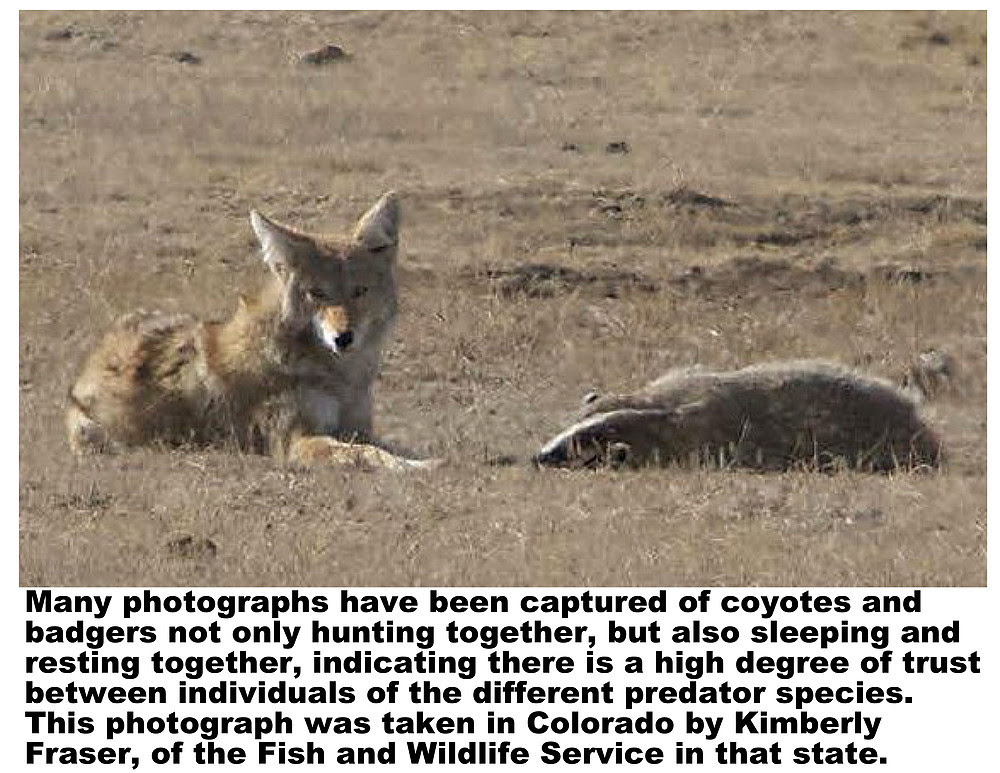
As a badger digs, say for ground squirrels whose burrows have many exits, could not it be that the coyote would seize a fleeing squirrel, and share the meal? This is basic economics and strategy, and it turns out that coyotes and badgers have figured out that behavior, and cooperate together.
The next question would be this: do the individuals concerned figure it out by themselves, as cephalopods do, or is the behavior culturally instigated, namely both badgers and coyotes learn elements of interspecific cooperation from teaching by their elders? I believe the latter.
After all, I trained the (wild) nesting birds on my balcony to benignantly ignore my weird and intrusive ways … which thus had to learn to be a bit more respectful than they usually are. But of course these ways tend to incite the red tail hawks to not land on this particular balcony on a determined culinary mission (as they have been seen doing…) And the birds know this [1].
Saving the animals is first of all about saving us… Not just our sense of beauty.
Patrice Ayme
[1] Hummingbirds set their nests below hawks’ nests, as this protects them from gays. Local hawks do attack nests of birds who are big enough (like gays, crows, etc). And I have seen them pass 10 feet from me, eyeing me suspiciously… Their feathers can be two feet long…
We are all connected as I said in the title to today’s post.
The only way we are going to survive as a species on this planet is for all of us to recognise this fundamental law of nature. Or should I say this fundamental law of Nature!
It is a little over fifty years since the inaugural celebration of the first Earth Day; on the 22nd April, 1970. In other words we are just over halfway through if one imagines the celebration of the one hundredth Earth Day: 22nd April, 2070. In 1970 the planet was home to 3.7 billion people. Today there are nearly 8 billion people. But more than that these 8 billion people are living to an average of 72 years, up from 59 years in 50 years.
Our failure to address climate change is harming the planet and all the species, including us humans, who live on Planet Earth. I shall be dead by 2070 and also a great many of my fellow humans. But for all those born in the year 2000 and later it is increasingly going to become the number one priority: Saving the planet from a total catastrophe!
This stunning photograph was taken by Roger Barnett who describes himself as a former semi-pro ski photographer now shooting wildlife, landscapes and astro….. Retired, mostly..arborist/tree service owner.
It is republished with Roger’s permission.
It was seen on the blog site Ugly Hedgehog and I also include this text from ‘kenpic’:
Often called the “flower moon,” the May full moon is nearly upon us. Earth’s nearest neighbor will reach the full stage early May 26, meaning it will appear full both Tuesday and Wednesday nights. The moon’s closest monthly approach to Earth happens at the same time, making the flower moon a supermoon, as well.
For early risers, there’s another astronomical treat in store: This year’s only total lunar eclipse happens in the hours before sunrise May 26. When Earth’s shadow begins to cover it, Luna often takes on a reddish tint, leading to the name “blood moon” for those rare times when a lunar eclipse aligns with a full moon.
Plus, two photographs to close with. Firstly, this image from Unsplash!
We live on a very beautiful planet.
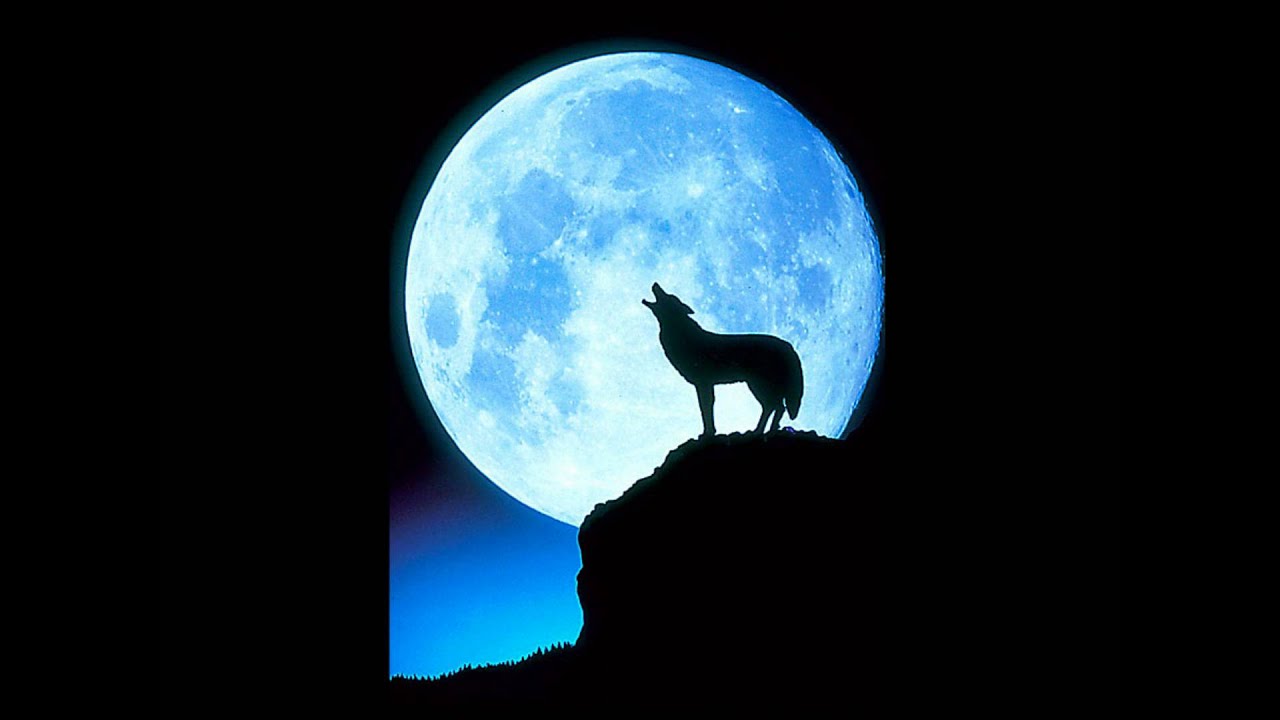
Lastly, this photograph of a dog howling at the moon. Taken from DogWalls! (And hopefully I’m alright with the copyright!)
You don’t want me waffling on so I’m going straight over to Bela’s poem. It is called River Thoughts and was published on Bela’s website on the 24th May, 2021. With Bela’s permission, I should add!
ooOOoo
River Thoughts
The river thunders, to no applause in particular; rolls along, rippling and eddying without thought or expectation of feedback, though I can’t help but think all of nature thrives under an appreciative gaze;
We once watched endangered river otters cavorting in plain sight just under the bridge of a much larger river, we told no one; fishermen dislike that they are forced to share with these sleek creatures we thought dolphins, when first they caught our eyes, out of context, having come from Hawaii only recently;
Our smaller Vallecitos river is magnificent in its own right, rushing lifeblood to this struggling ranching community, altitude too high to receive much precipitation in liquid form, preferring the snows of winter, and those have been in shortfall for years now, water levels everywhere having dropped precipitously, and with the decline comes the invariable unrest in people dependent on the bounty of the land;
And so this rainy day is particularly welcomed while the dampness is in marked contrast to the bone dry of the region, and as a fire blazes in the hearth, ranch dogs lie fidgety like grammar school children forced inside for recess in inclement weather.

:max_bytes(150000):strip_icc()/MaryJoDiLonardo-bw-treehugger-6d5044d7d4ae44298fb31df11a3d5a66.jpg)












 Learning from Dogs