Category: Musings

The relationship between us and wild animals.

In this particular case looking at the wolf.

So many times a particular article from a website that allows republishing is not only a good and relevant article but also is a quick way of me publishing a post when, as I was yesterday, a bit pressed for time.

So here is that article from The Conversation.

ooOOoo

Wolf restoration in Colorado shows how humans are rethinking their relationships with wild animals
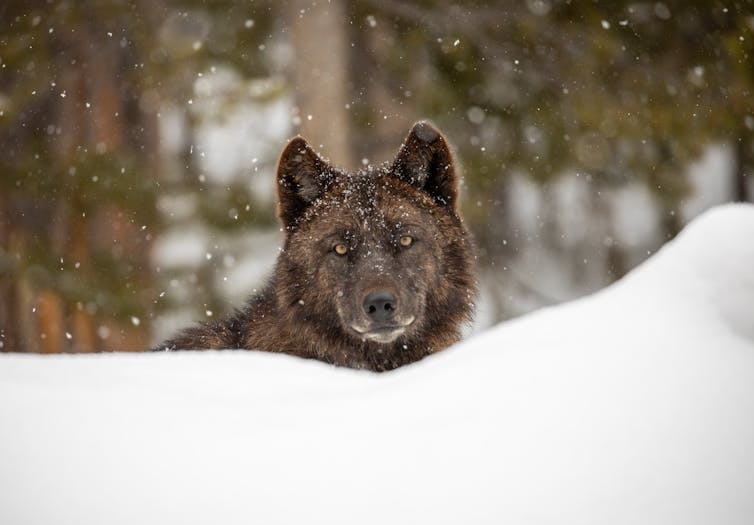
A gray wolf in Yellowstone National Park. NPS/Jim Peaco

Christopher J. Preston, University of Montana

From sports to pop culture, there are few themes more appealing than a good comeback. They happen in nature, too. Even with the Earth losing species at a historic rate, some animals have defied the trend toward extinction and started refilling their old ecological niches.

I’m a philosopher based in Montana and specialize in environmental ethics. For my new book, “Tenacious Beasts: Wildlife Recoveries That Change How We Think About Animals,” I spent three years looking at wildlife comebacks across North America and Europe and considering the lessons they offer. In every case, whether the returnee is a bison, humpback whale, beaver, salmon, sea otter or wolf, the recovery has created an opportunity for humans to profoundly rethink how we live with these animals.

One place to see the rethink in action is Colorado, where voters approved a ballot measure in 2020 mandating the reintroduction of gray wolves west of the Continental Divide. Colorado’s Parks and Wildlife Agency has released a draft plan that calls for moving 30 to 50 gray wolves from other Rocky Mountain states into northwest Colorado over five years, starting in 2024.

Aldo Leopold, the famed conservationist and professor of game management at the University of Wisconsin, believed that moral beliefs evolve over time to become more inclusive of the natural world. And what’s happening in Colorado suggests Leopold was right. Human attitudes toward wolves have clearly evolved since the mid-1940s, when bounties, mass poisoning and trapping eradicated wolves from the state.

Recovering animals encounter a world that is markedly different from the one in which they declined, especially in terms of how people think about wildlife. Here are several reasons I see why societal attitudes toward wolves have changed. The importance of keystone species

Wolves released in northwest Colorado will wear GPS collars that enable wildlife managers to track them.

The idea that certain influential species, which ecologists call keystone species, can significantly alter the ecosystems around them first appeared in scientific literature in 1974. Bison, sea otters, beavers, elephants and wolves all exert this power. One way in which wolves wield influence is by preying on coyotes, which produces ripple effects across the system. Fewer coyotes means more rodents, which in turn means better hunting success for birds of prey.

Wolves also cause nervous behaviors among their prey. Some scientists believe that newly returned predators create a “landscape of fear” among prey species – a term that isn’t positive or negative, just descriptive. This idea has shifted thinking about predators. For example, elk avoid some areas when wolves are around, resulting in ecological changes that cascade down from the top. Vegetation can recover, which in turn may benefit other species.

Insights into pack dynamics

Animal behavioral science research has provided pointers for better wolf management. Studies show that wolf packs are less likely to prey on livestock if their social structure remains intact. This means that ranchers and wildlife managers should take care not to remove the pack’s breeding pair when problems occur. Doing so can fragment the pack and send dispersing wolves into new territories.

Wildlife agencies also have access to years of data from close observation of wolf behavior in places like Yellowstone National Park, where wolves were reintroduced starting in 1995. This research offers insights into the wolf’s intelligence and social complexity. All of this information helps to show how people can live successfully alongside them.

Predators provide economic value

Research has also demonstrated that wolves provide economic benefits to states and communities. Wisconsin researchers discovered that changes in deer behavior due to the presence of wolves have saved millions of dollars in avoided deer collisions with cars. These savings far exceed what it costs the state to manage wolves.

Wolf recovery has been shown to be a net economic benefit in areas of the U.S. West where they have returned. The dollars they attract from wolf-watchers, photographers and foreign visitors have provided a valuable new income stream in many communities.

Predators do kill livestock, but improved tracking has helped to put these losses in perspective. Montana Board of Livestock numbers show that wolves, grizzly bears and mountain lions caused the loss of 131 cattle and 137 sheep in the state in 2022. This is from a total of 2,200,000 cattle and 190,000 sheep. Of the 131 cattle, 36 were confirmed to be taken by wolves – 0.0016% of the statewide herd.

According to the U.S. Department of Agriculture, dogs, foxes and coyotes in Montana all killed more sheep and lambs than wolves did in 2020. Even eagles were three times more deadly to sheep and lambs than wolves were.

Actual costs to ranchers are certainly higher than these numbers suggest. The presence of wolves causes livestock to lose weight because the animals feed more nervously when wolves are around. Ranchers also lose sleep as they worry about wolves attacking their livestock and guard dogs. And clearly, low statewide kills are small comfort to a rancher who loses a dozen or more animals in one year. Margins are always tight in the livestock business.

t

A northern Colorado rancher discusses options for protecting his cattle from wolves, which already are naturally present in the state.

What’s more, predators’ economic impacts don’t end with ranching. In Colorado, for example, elk numbers are likely to decline after wolves are reintroduced. This may affect state wildlife agency budgets that rely on license fees from elk hunters. It may also affect hunting outfitters’ incomes.

In my view, voters who supported bringing wolves back to Colorado should remain deeply aware of the full distribution of costs and support proactive compensation schemes for losses. They should be mindful that support for wolf reintroduction varies drastically between urban and rural communities and should insist that effective mechanisms are in place ahead of time to ensure fair sharing of the economic burdens that wolves generate.

A new ethical playing field

Despite these complexities, the idea of the “big bad wolf” clearly no longer dominates Americans’ thinking. And the wolf is not alone. Social acceptance of many other wildlife species is also increasing. For example, a 2023 study found that between 80% and 90% of Montanans believed grizzly bears – which are recovering and expanding their presence there – have a right to exist.

Aldo Leopold famously claimed to have experienced an epiphany when he shot a wolf in New Mexico in the 1920s and saw “a fierce green fire” dying in her eyes. In reality, his attitude took several more decades to change. Humans may have an ingrained evolutionary disposition to fear carnivorous predators like wolves, but the change ended up being real for Leopold, and it lasted.

Leopold, who died in 1948, did not live to see many wildlife species recover, but I believe he would have regarded what’s happening now as an opportunity for Americans’ moral growth. Because Leopold knew that ethics, like animals, are always evolving.

Christopher J. Preston, Professor of Philosophy, University of Montana

This article is republished from The Conversation under a Creative Commons license. Read the original article.

ooOOoo

Those last few paragraphs under the sub-heading of ‘A new ethical playing field’ show how many other wildlife species have gained a real advantage, a social acceptance as the article said. Long may it continue.
The clue to making us human

A really fascinating article from The Conversation on Imagination.

The website The Conversation had another very interesting link to something that sorts out the humans from all other life forms. It is imagination!

I have pleasure in republishing it!

ooOOoo

Imagination makes us human – this unique ability to envision what doesn’t exist has a long evolutionary history

Your brain can imagine things that haven’t happened or that don’t even exist. agsandrew/iStock via Getty Images Plus

Andrey Vyshedskiy, Boston University

Published February, 23rd, 2023

You can easily picture yourself riding a bicycle across the sky even though that’s not something that can actually happen. You can envision yourself doing something you’ve never done before – like water skiing – and maybe even imagine a better way to do it than anyone else.

Imagination involves creating a mental image of something that is not present for your senses to detect, or even something that isn’t out there in reality somewhere. Imagination is one of the key abilities that make us human. But where did it come from?

I’m a neuroscientist who studies how children acquire imagination. I’m especially interested in the neurological mechanisms of imagination. Once we identify what brain structures and connections are necessary to mentally construct new objects and scenes, scientists like me can look back over the course of evolution to see when these brain areas emerged – and potentially gave birth to the first kinds of imagination.

From bacteria to mammals

After life emerged on Earth around 3.4 billion years ago, organisms gradually became more complex. Around 700 million years ago, neurons organized into simple neural nets that then evolved into the brain and spinal cord around 525 million years ago.

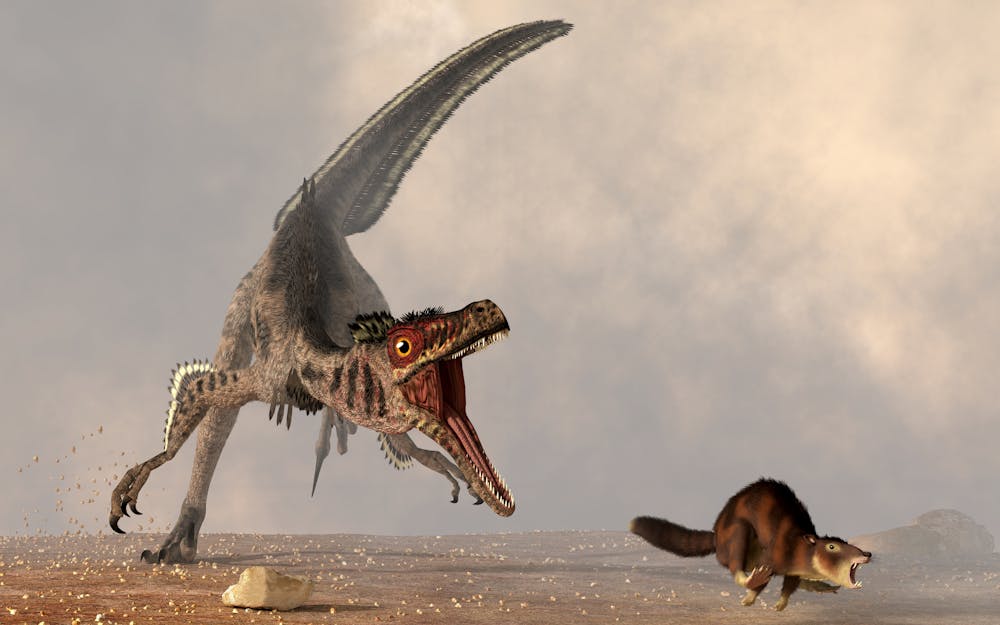
Velociraptor chasing a furry critter
It was to mammals’ advantage to hide out while cold-blooded dinosaurs hunted during the day. Daniel Eskridge/Stocktrek Images via Getty Images

Eventually dinosaurs evolved around 240 million years ago, with mammals emerging a few million years later. While they shared the landscape, dinosaurs were very good at catching and eating small, furry mammals. Dinosaurs were cold-blooded, though, and, like modern cold-blooded reptiles, could only move and hunt effectively during the daytime when it was warm. To avoid predation by dinosaurs, mammals stumbled upon a solution: hide underground during the daytime.

Not much food, though, grows underground. To eat, mammals had to travel above the ground – but the safest time to forage was at night, when dinosaurs were less of a threat. Evolving to be warm-blooded meant mammals could move at night. That solution came with a trade-off, though: Mammals had to eat a lot more food than dinosaurs per unit of weight in order to maintain their high metabolism and to support their constant inner body temperature around 99 degrees Fahrenheit (37 degrees Celsius).

Our mammalian ancestors had to find 10 times more food during their short waking time, and they had to find it in the dark of night. How did they accomplish this task?

To optimize their foraging, mammals developed a new system to efficiently memorize places where they’d found food: linking the part of the brain that records sensory aspects of the landscape – how a place looks or smells – to the part of the brain that controls navigation. They encoded features of the landscape in the neocortex, the outermost layer of the brain. They encoded navigation in the entorhinal cortex. And the whole system was interconnected by the brain structure called the hippocampus. Humans still use this memory system for remembering objects and past events, such as your car and where you parked it.

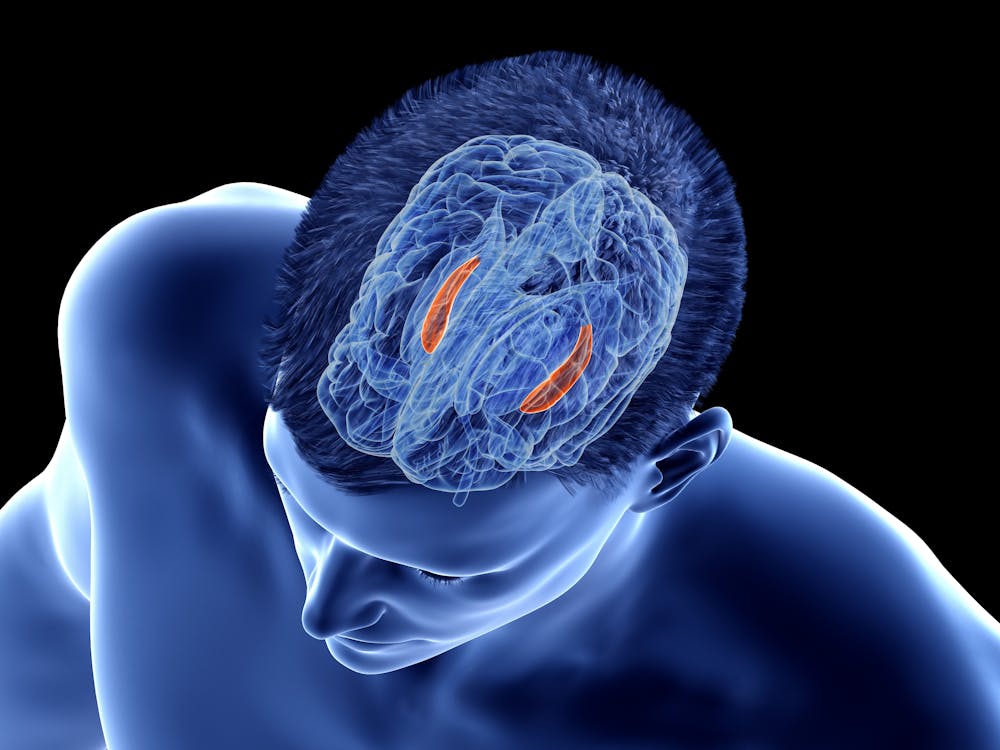
two bits of human brain are highlighted, one on each side
An interior brain structure called the hippocampus helps synthesize different kinds of information to create memories. Sebastian Kaulitzki/Science Photo Library via Getty Images

Groups of neurons in the neocortex encode these memories of objects and past events. Remembering a thing or an episode reactivates the same neurons that initially encoded it. All mammals likely can recall and re-experience previously encoded objects and events by reactivating these groups of neurons. This neocortex-hippocampus-based memory system that evolved 200 million years ago became the first key step toward imagination.

The next building block is the capability to construct a “memory” that hasn’t really happened.

Involuntary made-up ‘memories’

The simplest form of imagining new objects and scenes happens in dreams. These vivid, bizarre involuntary fantasies are associated in people with the rapid eye movement (REM) stage of sleep.

Scientists hypothesize that species whose rest includes periods of REM sleep also experience dreams. Marsupial and placental mammals do have REM sleep, but the egg-laying mammal the echidna does not, suggesting that this stage of the sleep cycle evolved after these evolutionary lines diverged 140 million years ago. In fact, recording from specialized neurons in the brain called place cells demonstrated that animals can “dream” of going places they’ve never visited before.

In humans, solutions found during dreaming can help solve problems. There are numerous examples of scientific and engineering solutions spontaneously visualized during sleep.

The neuroscientist Otto Loewi dreamed of an experiment that proved nerve impulses are transmitted chemically. He immediately went to his lab to perform the experiment – later receiving the Nobel Prize for this discovery.

Elias Howe, the inventor of the first sewing machine, claimed that the main innovation, placing the thread hole near the tip of the needle, came to him in a dream.

Dmitri Mendeleev described seeing in a dream “a table where all the elements fell into place as required. Awakening, I immediately wrote it down on a piece of paper.” And that was the periodic table.

These discoveries were enabled by the same mechanism of involuntary imagination first acquired by mammals 140 million years ago.

young professionals looking at glass wall with post-it notes
Intentionally brainstorming ideas depends on being able to control your imagination. Goodboy Picture Company/E+ via Getty Images

Imagining on purpose

The difference between voluntary imagination and involuntary imagination is analogous to the difference between voluntary muscle control and muscle spasm. Voluntary muscle control allows people to deliberately combine muscle movements. Spasm occurs spontaneously and cannot be controlled.

Similarly, voluntary imagination allows people to deliberately combine thoughts. When asked to mentally combine two identical right triangles along their long edges, or hypotenuses, you envision a square. When asked to mentally cut a round pizza by two perpendicular lines, you visualize four identical slices.

This deliberate, responsive and reliable capacity to combine and recombine mental objects is called prefrontal synthesis. It relies on the ability of the prefrontal cortex located at the very front of the brain to control the rest of the neocortex.

When did our species acquire the ability of prefrontal synthesis? Every artifact dated before 70,000 years ago could have been made by a creator who lacked this ability. On the other hand, starting about that time there are various archeological artifacts unambiguously indicating its presence: composite figurative objects, such as lion-man; bone needles with an eye; bows and arrows; musical instruments; constructed dwellings; adorned burials suggesting the beliefs in afterlife, and many more.

Multiple types of archaeological artifacts unambiguously associated with prefrontal synthesis appear simultaneously around 65,000 years ago in multiple geographical locations. This abrupt change in imagination has been characterized by historian Yuval Harari as the “cognitive revolution.” Notably, it approximately coincides with the largest Homo sapiens‘ migration out of Africa.

Genetic analyses suggest that a few individuals acquired this prefrontal synthesis ability and then spread their genes far and wide by eliminating other contemporaneous males with the use of an imagination-enabeled strategy and newly developed weapons.

So it’s been a journey of many millions of years of evolution for our species to become equipped with imagination. Most nonhuman mammals have potential for imagining what doesn’t exist or hasn’t happened involuntarily during REM sleep; only humans can voluntarily conjure new objects and events in our minds using prefrontal synthesis.

Andrey Vyshedskiy, Professor of Neuroscience, Boston University

This article is republished from The Conversation under a Creative Commons license. Read the original article.

ooOOoo

There we are! As the author of the article says: “Most nonhuman mammals have potential for imagining what doesn’t exist or hasn’t happened involuntarily during REM sleep; only humans can voluntarily conjure new objects and events in our minds using prefrontal synthesis.

It has been a very long journey for us humans to be equipped with imagination. One wonders what the next ten or twenty years will bring? Any thoughts you want to leave as comments?

Plastics in the ocean

A fascinating insight into recovered plastic.

Like so many others we do our little bit regarding plastic but do not properly think about the issue. I have to admit that I am not even sure if all plastics are harmful or just some.


But I comprehend art!

That is why I am republishing, with permission, this article from The Conversation.
ooOOoo

My art uses plastic recovered from beaches around the world to understand how our consumer society is transforming the ocean

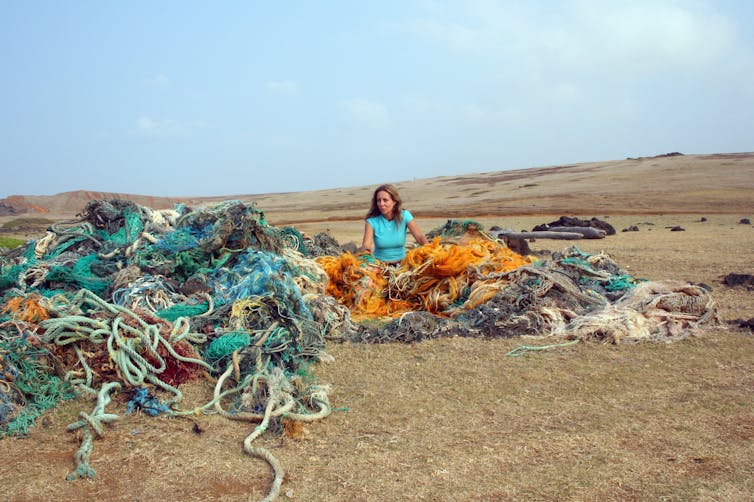
Pam Longobardi amid a giant heap of fishing gear that she and volunteers from the Hawaii Wildlife Fund collected in 2008. David Rothstein, CC BY-ND

Pam Longobardi, Georgia State University

I am obsessed with plastic objects. I harvest them from the ocean for the stories they hold and to mitigate their ability to harm. Each object has the potential to be a message from the sea – a poem, a cipher, a metaphor, a warning.

My work collecting and photographing ocean plastic and turning it into art began with an epiphany in 2005, on a far-flung beach at the southern tip of the Big Island of Hawaii. At the edge of a black lava beach pounded by surf, I encountered multitudes upon multitudes of plastic objects that the angry ocean was vomiting onto the rocky shore.

I could see that somehow, impossibly, humans had permeated the ocean with plastic waste. Its alien presence was so enormous that it had reached this most isolated point of land in the immense Pacific Ocean. I felt I was witness to an unspeakable crime against nature, and needed to document it and bring back evidence.

I began cleaning the beach, hauling away weathered and misshapen plastic debris – known and unknown objects, hidden parts of a world of things I had never seen before, and enormous whalelike colored entanglements of nets and ropes.

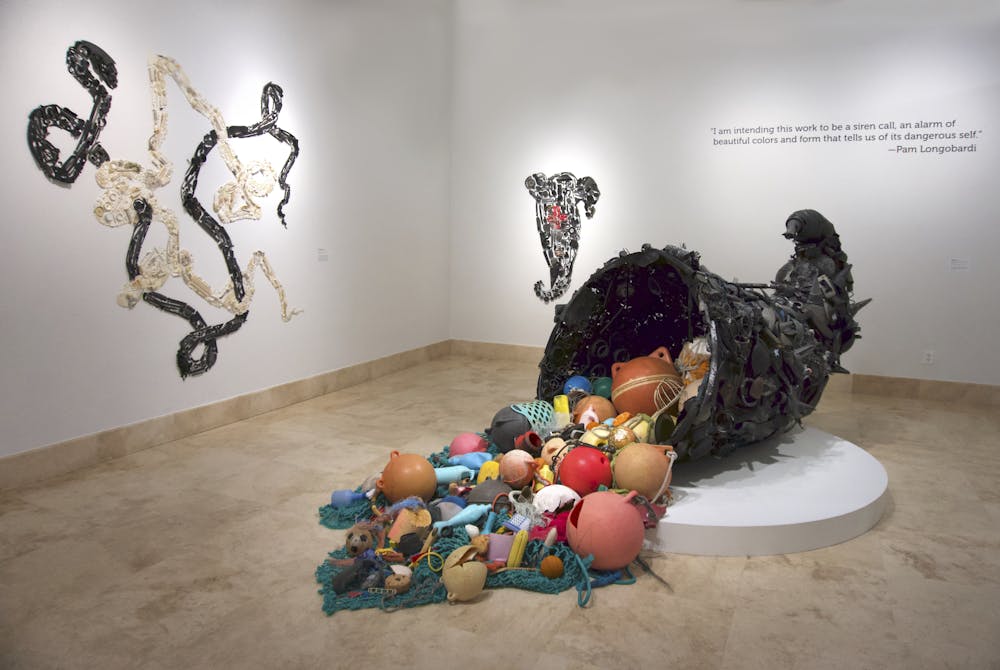
Three large plastic art installations, the central one a cornucopia spilling plastic objects onto the floor.
‘Bounty Pilfered’ (center), ‘Newer Laocoön’ (left) and ‘Threnody’ (right). All made of ocean plastic from the Atlantic, Pacific and Gulf of Mexico, installed at the Baker Museum in Naples, Fla., 2022. Pam Longobardi, CC BY-ND

I returned to that site again and again, gathering material evidence to study its volume and how it had been deposited, trying to understand the immensity it represented. In 2006, I formed the Drifters Project, a collaborative global entity to highlight these vagrant, translocational plastics and recruit others to investigate and mitigate ocean plastics’ impact.

My new book, “Ocean Gleaning,” tracks 17 years of my art and research around the world through the Drifters Project. It reveals specimens of striking artifacts harvested from the sea – objects that once were utilitarian, but have been changed by their oceanic voyages and come back as messages from the ocean.

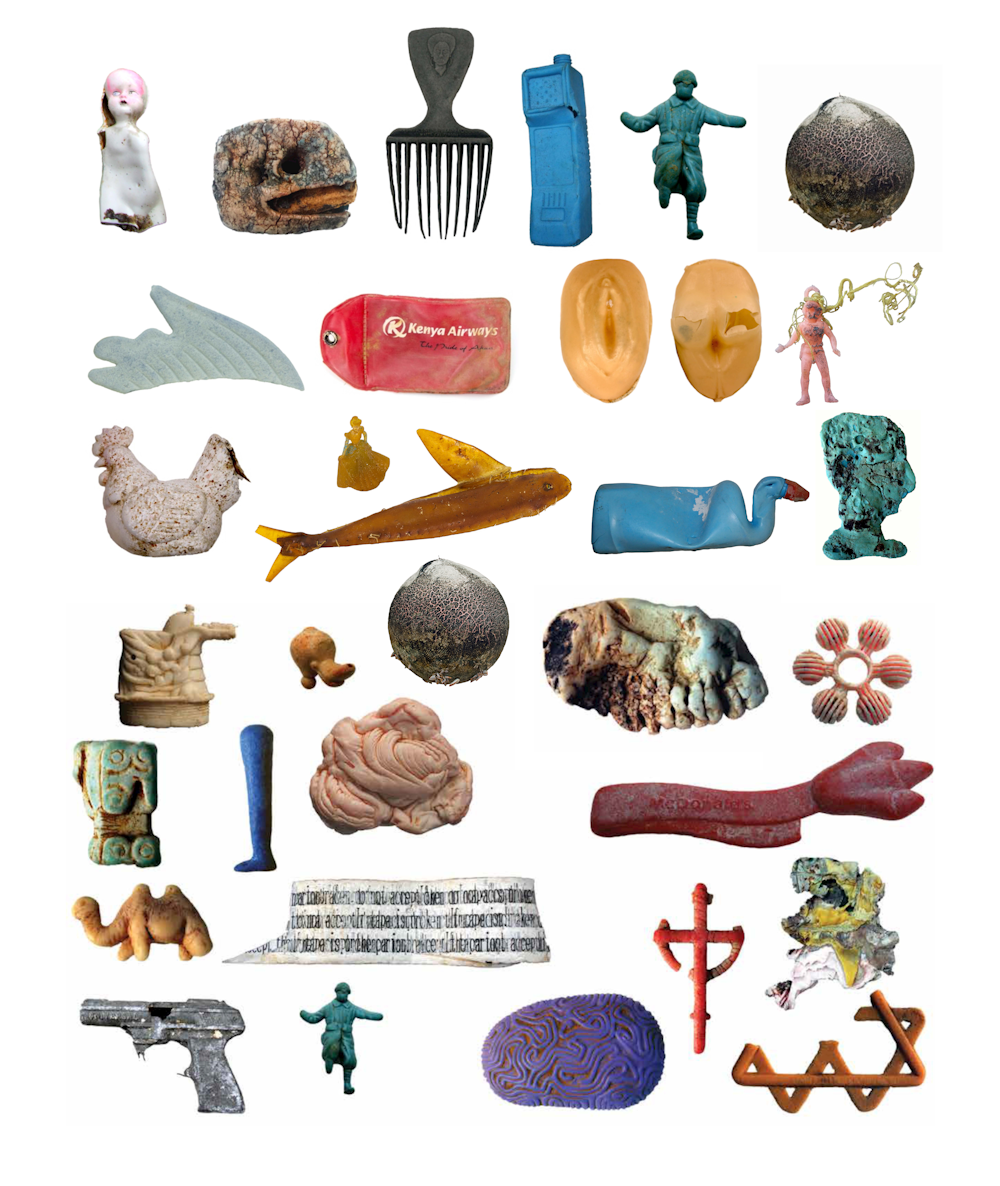
Array of plastic objects, including toys, action figures and fragments of larger objects.
‘Drifters Objects,’ a tiny sample of the plastic artifacts Pam Longobardi has collected from beaches worldwide. Pam Longobardi, CC BY-ND

Living in a plastic age

I grew up in what some now deem the age of plastic. Though it’s not the only modern material invention, plastic has had the most unforeseen consequences.

My father was a biochemist at the chemical company Union Carbide when I was a child in New Jersey. He played golf with an actor who portrayed “The Man from Glad,” a Get Smart-styled agent who rescued flustered housewives in TV commercials from inferior brands of plastic wrap that snarled and tangled. My father brought home souvenir pins of Union Carbide’s hexagonal logo, based on the carbon molecule, and figurine pencil holders of “TERGIE,” the company’s blobby turquoise mascot.

On the 2013 Gyre Expedition, Pam Longobardi traveled with a team of scientists, artists and policymakers to investigate and remove tons of oceanic plastic washing out of great gyres, or currents, in the Pacific Ocean, and make art from it.

Today I see plastic as a zombie material that haunts the ocean. It is made from petroleum, the decayed and transformed life forms of the past. Drifting at sea, it “lives” again as it gathers a biological slime of algae and protozoans, which become attachment sites for larger organisms.

When seabirds, fish and sea turtles mistake this living encrustation for food and eat it, plastic and all, the chemical load lives on in their digestive tracts. Their body tissues absorb chemicals from the plastic, which remain undigested in their stomachs, often ultimately killing them.

Two piles of tiny particles of virtually identical sizes.
Plastic ‘nurdles,’ (left), tiny pellets that serve as raw materials for manufacturing plastic products, and herring roe, or eggs (right). These visually analogous forms exemplify how fish can mistake plastic for food. Pam Longobardi, CC BY-ND

The forensics of plastic

I see plastic objects as the cultural archaeology of our time – relics of global late-capitalist consumer society that mirror our desires, wishes, hubris and ingenuity. They become transformed as they leave the quotidian world and collide with nature. By regurgitating them ashore or jamming them into sea caves, the ocean is communicating with us through materials of our own making. Some seem eerily familiar; others are totally alien.

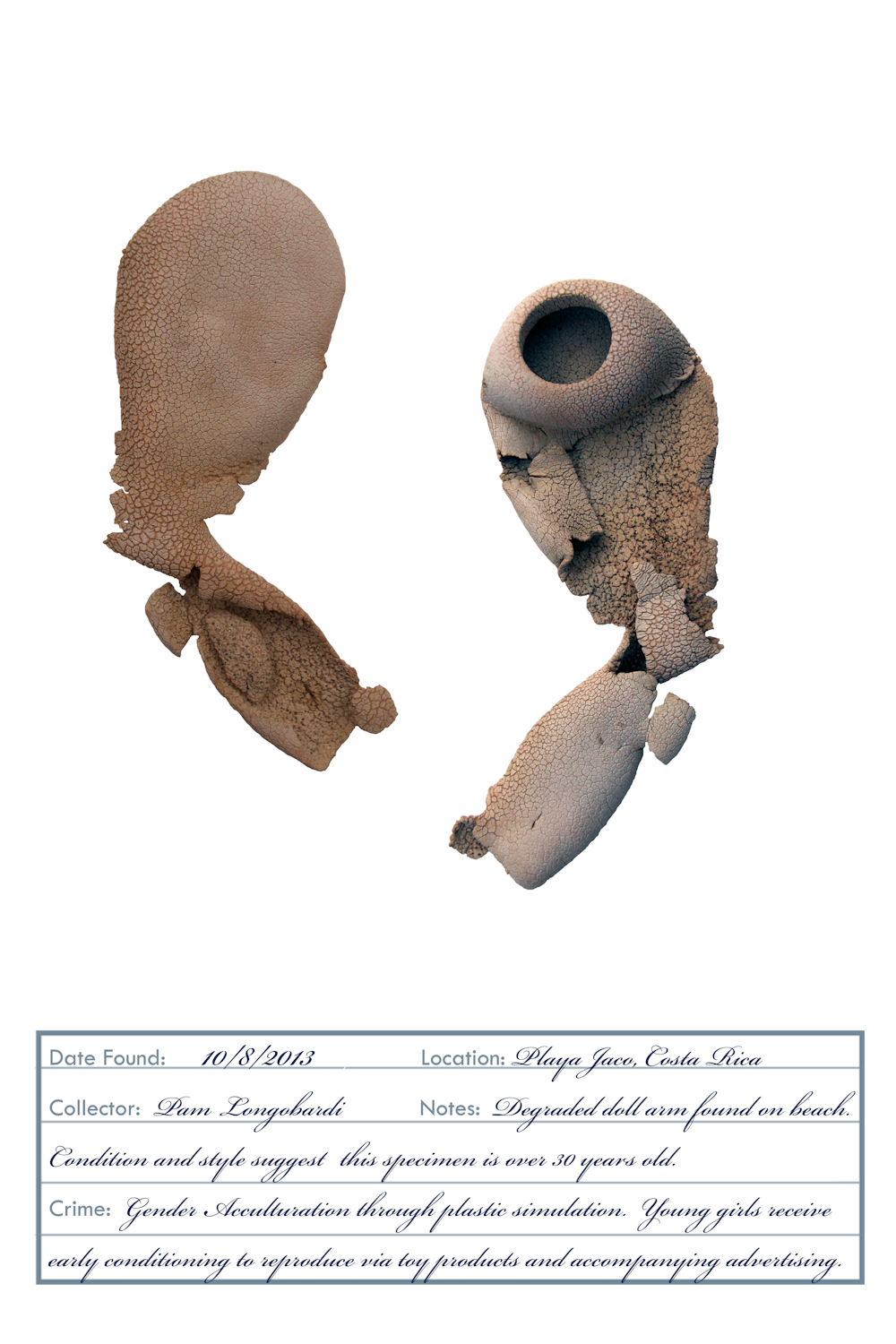
Two views of a degraded arm from a plastic doll, found on Playa Jaco in Costa Rica.
A degraded plastic doll arm, from the series ‘Evidence of Crimes.’ Pam Longobardi, CC BY-ND

A person engaging in ocean gleaning acts as a detective and a beacon, hunting for the forensics of this crime against the natural world and shining the light of interrogation on it. By searching for ocean plastic in a state of open receptiveness, a gleaner like me can find symbols of pop culture, religion, war, humor, irony and sorrow.

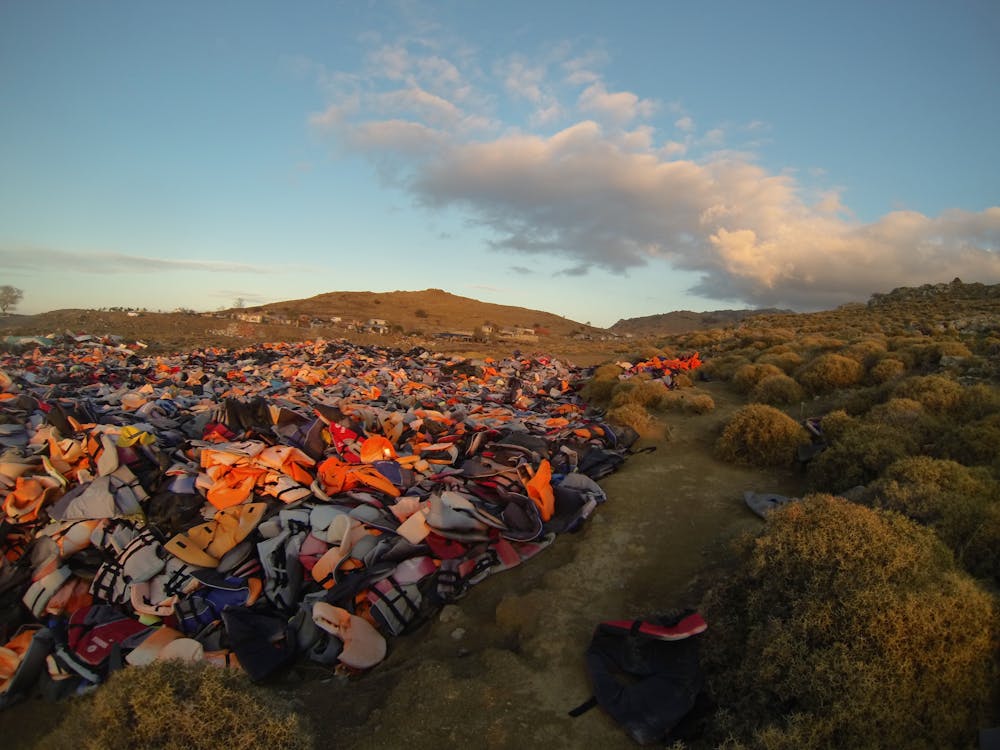
A rolling landscape covered with thousands of life vests.
‘Division Line,’ 2016. This photograph shows the ‘life-jacket cemetary’ in Lesvos, Greece. Traumatized asylum-seekers and migrants arriving by boat from Türkiye leave the life vests on shore as they stagger inland. Most of the waste is plastic. © Pam Longobardi, CC BY-ND

In keeping with the drifting journeys of these material artifacts, I prefer using them in a transitive form as installations. All of these works can be dismantled and reconfigured, although plastic materials are nearly impossible to recycle. I display some objects as specimens on steel pins, and wire others together to form large-scale sculptures.

A plastic bottle cap inscribed 'Endless' and a photograph of a beach littered with plastic objects.
From the series ‘Prophetic Objects,’ a plastic cap from a Greek manufacturer of cleaning products, found on the Greek island of Kefalonia. Pam Longobardi, CC BY-ND

I am interested in ocean plastic in particular because of what it reveals about us as humans in a global culture, and about the ocean as a cultural space and a giant dynamic engine of life and change. Because ocean plastic visibly shows nature’s attempts to reabsorb and regurgitate it, it has profound stories to tell.

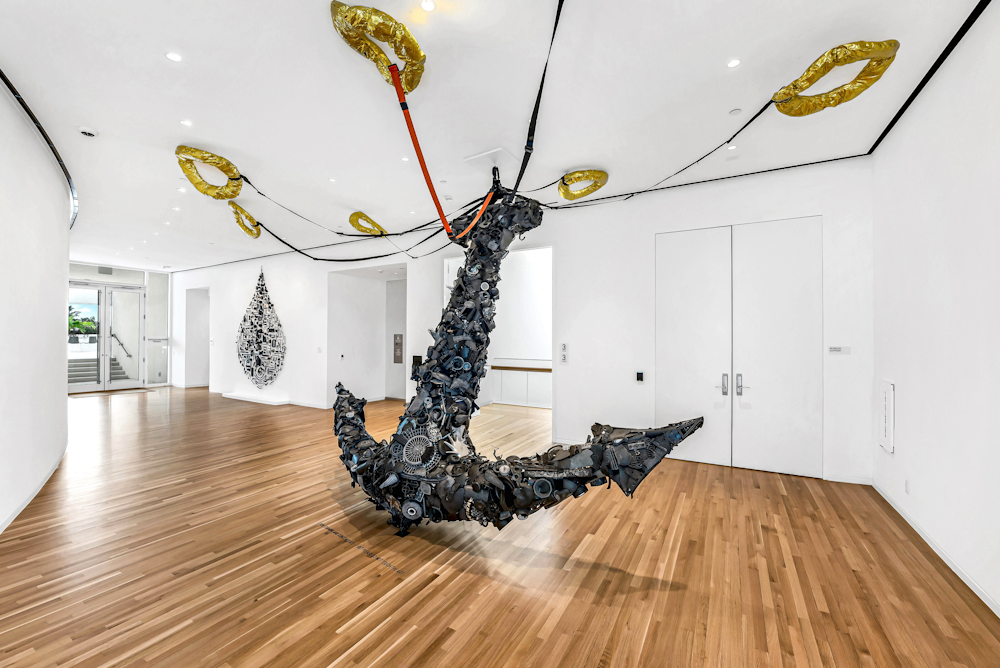
A large sculpted anchor in the center of an art gallery, with ties to life preservers mounted on the ceiling.
‘Albatross’ and ‘Hope Floats,’ 2017. Recovered ocean plastic, survival rescue blankets, life vest straps and steel. Pam Longobardi, CC BY-ND

I believe humankind is at a crossroads with regards to the future. The ocean is asking us to pay attention. Paying attention is an act of giving, and in the case of plastic pollution, it is also an act of taking: Taking plastic out of your daily life. Taking plastic out of the environment. And taking, and spreading, the message that the ocean is laying out before our eyes.

Pam Longobardi, Regents’ Professor of Art and Design, Georgia State University

This article is republished from The Conversation under a Creative Commons license. Read the original article.

ooOOoo

Pam at one point describes the ocean plastic”… because of what it reveals about us as humans in a global culture, and about the ocean as a cultural space and a giant dynamic engine of life and change …”. It raises questions that I can only ponder the answer. Ultimately, are there too many inhabitants on this planet? What does the next generation think? Is there an answer?

Picture Parade Four Hundred and Seventy-One

Unsplash with a difference.

These are all photographs of Labradors.

oooo

oooo

oooo

oooo

oooo

oooo

oooo

Gorgeous, though I say it myself.

I missed stating this last week but copyright always exists in the original photographs.

The Role of Dog Fosters

Jess forwards another stirring account of a dog rescuer.

Jess Anderson sent me this video of a Labrador, age 19 no less, being rescued. That is one senior dog!

The video and the supporters who left comments all said how wonderful were their experiences of saving senior dogs.

The video came from the Dodo Foster Diaries and at the time of writing had had nearly 600 viewings.

There is a very good article on PetFinder about the first few days with a senior dog. Go and watch it!

Picture Parade Four Hundred and Seventy

Again, a variety of photographs from Unsplash.

oooo

oooo

oooo

oooo

oooo

oooo

oooo

oooo

oooo

And the last one for today with no dogs but still a wonderful shot.

More in a week’s time.

Adding a dog to your life.

A guest post from Penny offers some advice.

Penny Martin has previously written some guest posts for Learning from Dogs and here she is again with today’s post. The subject is not directly about dogs but trying to turn around one’s life; and that is something that most of us have faced up to at some point in their past.

(I think the references to Learning from Dogs are not needed but I’m not Penny!)

ooOOoo

Six Simple Self-Improvement Strategies for Your Health and Career

By Penny Martin,

Published 24th January, 2023.

Are you trying to turn your life around? Focusing on improving your self-care habits, your relationships, and your career prospects can yield change your life for the better. Furthermore, Learning From Dogs can introduce you to all of the benefits of becoming a dog owner! Here’s how to invest in your education, upgrade your resume, explore business ownership, and adopt healthy routines.

Advance Your Education

If you’re looking to move up in your career, you may want to head back to school to earn another degree. It’s okay if you’re not able to commit to attending courses at a physical campus – instead, consider studying through an online degree program. This will allow you to simultaneously work and care for your family. Double-check that any online programs you’re considering are accredited and that you can easily afford the tuition. You can choose a major like marketing, education, information technology, business, healthcare administration, and more.

Update Your Resume

Perhaps you’re hunting for a new job. Make sure to revise and update your resume prior to sending out applications! To make the process easier, just pick out a free resume template from an online library – this free resume may help. Then, you’ll input your work history. Finally, you can spruce up this document with a photo or a color scheme.

Consider Entrepreneurship

What if you’re frustrated with your boss, and you feel like working at a traditional 9-to-5 job is holding you back? If you’ve got a business idea, you can always register for LLC status for limited liability and tax breaks. Remember, if you form an LLC, you’ll have to choose a registered agent who can handle communications regarding your formation documents with law firms, tax agencies, and the government. You can hire a registered agent or service for help in this area.

Health and Fitness

Even as you prioritize your career, it’s still important to take care of your physical and emotional well-being. As you plan out meals each week, The Every Girl recommends cooking with lots of leafy greens and incorporating plant-based protein into your diet. Furthermore, try to block off a few workout sessions per week in your schedule. You might want to sign up for a gym membership.

Pick Up a Good Book

Reading is a great use of your downtime, especially if you’re on a self-improvement journey! Healthline states that reading can reduce your stress levels, prevent cognitive decline, and even alleviate symptoms of depression. Plus, you’ll be able to learn more about topics that you’re interested in! You might want to choose books that cover subjects related to self-help, like nutrition, fitness, meditation, or time management.

If you feel like you don’t have time to read, consider how you could cut down on screen time. Alternatively, you could listen to audiobooks while you commute to work or do chores around the house.

Get a Dog

If you could use another companion, consider getting a dog! Owning a dog can significantly improve your mental health. Canadian Living states that having a dog around actually decreases your blood pressure, boosts your levels of mood-enhancing hormones, and even helps you make friends in your neighborhood – taking your dog for walks helps you connect with other local dog owners!

Self-improvement is a lifelong process. When you take small steps in the right direction, you’ll be able to look back in a year and feel proud of how far you’ve come. With these tips, you can earn another degree, put together an impressive resume, become a pet owner, open your own business, and more!

Are you thinking about getting a dog? Read all about the benefits on Learning from Dogs! Visit the blog today to find out why getting a dog might be right for you.

Photo via Pexels

ooOOoo

Thank you, Penny.

Let me publish again the opening remarks that are on the home page of this blog:

Dogs live in the present – they just are!  Dogs make the best of each moment uncluttered by the sorts of complex fears and feelings that we humans have. They don’t judge, they simply take the world around them at face value.  Yet they have been part of man’s world for an unimaginable time, at least 30,000 years.  That makes the domesticated dog the longest animal companion to man, by far!

Learning from Dogs

I cannot put it better than that!

Putting aside the pills!

A fascinating article presents an alternative.

There was a recent item on The Conversation that is being shared with you all today. It is about the role of meditation and mindfulness is keeping one healthy, and I sense this will be a popular article!

ooOOoo

Meditation and mindfulness offer an abundance of health benefits and may be as effective as medication for treating certain conditions

By Hilary A. Marusak

Assistant Professor of Psychiatry and Behavioral Neurosciences, Wayne State University

Published January 12th, 2023

Many people look to diet trends or new exercise regimens – often with questionable benefit – to get a healthier start on the new year. But there is one strategy that’s been shown time and again to boost both mood and health: meditation.

In late 2022, a high-profile study made a splash when it claimed that meditation may work as well as a common drug named Lexapro for the treatment of anxiety. Over the past couple of decades, similar evidence has emerged about mindfulness and meditation’s broad array of health benefits, for purposes ranging from stress and pain reduction to depression treatments to boosting brain health and helping to manage excessive inflammation and long COVID-19

Despite the mounting body of evidence showing the health benefits of meditation, it can be hard to weigh the science and to know how robust it is.

I am a neuroscientist studying the effects of stress and trauma on brain development in children and adolescents. I also study how mindfulness, meditation and exercise can positively affect brain development and mental health in youth.

I am very excited about how meditation can be used as a tool to provide powerful new insights into the ways the mind and brain work, and to fundamentally change a person’s outlook on life. And as a mental health researcher, I see the promise of meditation as a low- or no-cost, evidence-based tool to improve health that can be relatively easily integrated into daily life. 

Meditation requires some training, discipline and practice – which are not always easy to come by. But with some specific tools and strategies, it can be accessible to everyone.

What are mindfulness and meditation?

There are many different types of meditation, and mindfulness is one of the most common. Fundamentally, mindfulness is a mental state that, according to Jon Kabat-Zinn a renowned expert in mindfulness-based practices, involves “awareness that arises through paying attention, on purpose, in the present moment, non-judgmentally.” 

This means not ruminating about something that happened in the past or worrying about that to-do list. Being focused on the present, or living in the moment, has been shown to have a broad array of benefits, including elevating mood, reducing anxietylessening pain and potentially improving cognitive performance

Mindfulness is a skill that can be practiced and cultivated over time. The goal is that, with repetition, the benefits of practicing mindfulness carry over into everyday life – when you aren’t actively meditating. For example, if you learn that you aren’t defined by an emotion that arises transiently, like anger, then it may be harder to stay angry for long. 

The health benefits of meditation and other strategies aimed at stress reduction are thought to stem from increasing levels of overall mindfulness through practice. Elements of mindfulness are also present in practices like yoga, martial arts and dance that require focusing attention and discipline.

The vast body of evidence supporting the health benefits of meditation is too expansive to cover exhaustively. But the studies I reference below represent some of the top tier, or the highest-quality and most rigorous summaries of scientific data on the topic to date. Many of these include systematic reviews and meta-analyses, which synthesize many studies on a given topic. 

Stress and mental health

Mindfulness-based programs have been shown to significantly reduce stress in a variety of populations, ranging from caregivers of people living with dementia to children during the COVID-19 pandemic

Meta-analyses published during the pandemic show that mindfulness programs are effective for reducing symptoms of post-traumatic stress disorderobsessive-compulsive disorderattention-deficit/hyperactivity disorder and depression – including the particularly vulnerable time during pregnancy and the postnatal period.

Mindfulness-based programs also show promise as a treatment option for anxiety disorders, which are the most common mental disorders, affecting an estimated 301 million people globally. While effective treatments for anxiety exist, many patients do not have access to them because they lack insurance coverage or transportation to providers, for instance, or they may experience only limited relief.

It’s important to note, however, that for those affected by mental or substance use disorders, mindfulness-based approaches should not replace first-line treatments like medicine and psychotherapy such as cognitive behavioral therapy. Mindfulness strategies should be seen as a supplement to these evidence-based treatments and a complement to healthy lifestyle interventions like physical activity and healthy eating. 

How does meditation work? A look into the brain

Studies show that regular meditators experience better attention control and improved control of heart rate, breathing and autonomic nervous system functioning, which regulates involuntary responses in the body, such as blood pressure. Research also shows that people who meditate have lower levels of cortisol – a hormone involved in the stress response – than those who don’t. 

A recent systematic review of neuroimaging studies showed that focused attention meditation is associated with functional changes in several brain regions involved in cognitive control and emotion-related processing. The review also found that more experienced meditators had stronger activation of the brain regions involved in those cognitive and emotional processes, suggesting that the brain benefits improve with more practice. 

A regular meditation practice may also stave off age-related thinning of the cerebral cortex, which may help to protect against age-related disease and cognitive impairment. 

Limitations of meditation research

This research does have limits. These include a lack of a consistent definition for the types of programs used, and a lack of rigorously controlled studies. In gold-standard randomized controlled trials with medications, study participants don’t know whether they are getting the active drug or a placebo. 

In contrast, in trials of mindfulness-based interventions, participants know what condition they are assigned to and are not “blinded,” so they may expect that some of the health benefits may happen to them. This creates a sense of expectancy, which can be a confounding variable in studies. Many meditation studies also don’t frequently include a control group, which is needed to assess how it compares with other treatments.

Benefits and wider applications

Compared with medications, mindfulness-based programs may be more easily accessible and have fewer negative side effects. However, medication and psychotherapy – particularly cognitive behavioral therapy – work well for many, and a combination approach may be best. Mindfulness-based interventions are also cost-effective and have better health outcomes than usual care, particularly among high-risk patient populations – so there are economic benefits as well.

Researchers are studying ways to deliver mindfulness tools on a computer or smartphone app, or with virtual reality, which may be more effective than conventional in-person meditation training. 

Importantly, mindfulness is not just for those with physical or mental health diagnoses. Anyone can use these strategies to reduce the risk of disease and to take advantage of the health benefits in everyday life, such as improved sleep and cognitive performance, elevated mood and lowered stress and anxiety. 

Where to get started?

Many recreation centers, fitness studios and even universities offer in-person meditation classes. For those looking to see if meditation can help with the treatment of a physical or mental condition, there are over 600 clinical trialscurrently recruiting participants for various conditions, such as pain, cancer and depression. 

If you want to try meditation from the comfort of your home, there are many free online videos on how to practice, including meditations for sleep, stress reduction, mindful eating and more. Several apps, such as Headspace, appear promising, with randomized controlled trials showing benefits for users

The hardest part is, of course, getting started. However, if you set an alarm to practice every day, it will become a habit and may even translate into everyday life – which is the ultimate goal. For some, this may take some time and practice, and for others, this may start to happen pretty quickly. Even a single five-minute session can have positive health effects.

ooOOoo

This is a comprehensive article on a most important topic.

For whatever is happening in our world it is getting busier especially for those that are a great deal younger than me.

Picture Parade Four Hundred and Sixty-Nine

Yet more dog photographs from Unsplash.

oooo

oooo

oooo

oooo

oooo

oooo

oooo

There you are, another set of adorable photographs of dogs, and that last photo showing how special is the bond between dog and human.

More in a week’s time!

A lost, and found, dog in Utah

A story that was widely reported.

I was short on time yesterday so no pre-amble.

ooOOoo

Search and rescue team save dog near frozen waterfall in Utah 

The dog separated from its owner on Christmas Eve.

By Teddy Grant, December 27, 2022.

A dog that was stranded near a frozen waterfall in Utah on Christmas Eve was saved by search and rescue officials and reunited with her owner.

According to the Weber County Sheriff’s Office Search and Rescue, a local man was hiking near Waterfall Canyon on Saturday when he became separated from his dog Nala.

The unidentified hiker couldn’t find Nala by nightfall and resumed his search the morning of Christmas Day, the sheriff’s office wrote on its Facebook page.

The hiker’s family members contacted authorities around 1:00 p.m., local time, saying he wasn’t responding to their calls or text messages, officials said.

Nala’s owner answered one of the phone calls once he regained cellphone service and was able to let people know that Nala was around the waterfall, but couldn’t reach her because of the steepness and the icy condition of the terrain, according to Weber County Sheriff’s Office Search and Rescue.

A grab from video posted by Weber County Sheriff’s Office Search and Rescue shows the dog Nala at Waterfall Canyon in Ogden, Utah, Dec. 25, 2022.

Weber County Sheriff’s Office Search and Rescue

The search and rescue team responded to the call and were able to save a skittish Nala after a little coaxing, officials said.

“Nala was cold with a few minor injuries, but was able to hike down with the rescuers,” officials wrote. “She is one tough puppy! Once reaching the trailhead parking lot, both human and canine couldn’t have been happier to be reunited.”

According to Waterfall Canyon it is a “moderately challenging,” 2.4-mile trail near Ogden, Utah, according to AllTrails. Ogden is around 38 miles north of Salt Lake City.

ooOOoo

I’m sure you read that the human and the dog were very grateful to be reunited.