The ways we remember those close to us that have died.
I saw our neighbour at school today, and was surprised the she was wearing an old faded jacket which was torn at the back, and the feathers from the lining were coming out.
One of the other Mums was also a little surprised perhaps because the lady is the wife of a Barrister.
Yes she said “It used to belong to my cousin that died. Every time a feather falls out I think of him!”
I thought that was lovely, but we all laughed when the other parent quickly retorted.
“You must think of him a lot” – as another feather fell out.
Maybe it’s me but there must be better ways to manage foreign relationships!
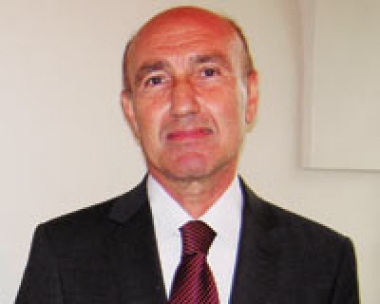
Ahmet Oguz Celikkol
Most people in their private and business lives find that a genuine interest in, and respect for, those that one engages with leads to better outcomes. Surely that is just common sense.
So a recent report from Stratfor telling of an ‘incident’ between Israel and Turkey leaves me, frankly, speechless. Here’s how the report reads:
Last week a small crisis with potentially serious implications blew up between Israel and Turkey. Israeli Deputy Foreign Minister Danny Ayalon summoned Turkish Ambassador to Israel Ahmet Oguz Celikkol to a meeting Jan. 11 to protest a Turkish soap opera that depicted Israeli agents kidnapping Palestinian children. When the ambassador arrived, he received a lower seat than Ayalon — and was photographed in that position, making it appear that Ayalon was speaking to an inferior. Ayalon wouldn’t shake hands with him during the televised parts of the meeting, and had an Israeli flag visible on the table. Topping it all off, Ayalon told an Israeli cameraman in Hebrew that the important thing was that people see Celikkol sitting down low “while we’re
Danny Ayalon
up high.”
Turks saw the images as a deliberate Israeli insult, though Ayalon argued that the episode was not meant as an insult but as a reminder that Israel does not take criticism lightly. While it is difficult to see the relative height of seats as an international incident, Ayalon clearly intended to send a significant statement to Turkey. The Turks took that statement to heart, so symbolism clearly matters. Israel’s intent is not so clear, however.
Most mornings I surface between 6 and 7 am and like to take the dogs out for an early walk. I cut across the green and into the forest, following a short route which takes me back round past the cricket pitch, which at this time of the year has some protective poles round the wicket area.
Every day is different and the colour in the trees that fringe the common is always changing. Each tree is a different type and it is the shape on the horizon that I like to watch, picked out in silhouette form as the sun comes up from behind.
As I walk round at this quiet time my mind seems to have a clarity which enables me to focus on what I should be doing during the day.
Occasionally there will be a squirrel or bird high in the tress.
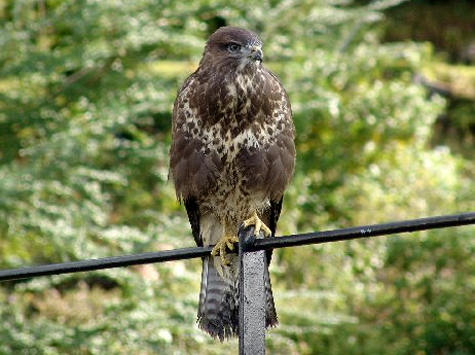
Common English buzzard
But for the last five years I have normally seen a buzzard, England’s largest bird. The colour of this bird make it hard to pick out against the background but it seems that his habit at this time of the day is to fly from post to post round the cricket pitch, and when I finally come near he will fly off into the trees.
Perhaps illogically but I have been somewhat concerned that this bird should always be on its own. Recently, though, I have heard it calling, a noise I never heard before. So you can imagine how pleased I was yesterday actually to see two birds. My buzzard has finally found a mate.
Then for me it is back home, shower, make a tray of tea for the family who are now with Mum in bed for ten minutes before they too get dressed and get ready for school.
I often feel that a situation is manipulated by fear. The word is regularly used on television and in the newspapers, and once the thought is planted it is easy to influence the masses!
I was not surprised to read that the Head of Health at the Council of Europe, Dr. Wolfgang Wodard, had said flu drug
Dr. Wodarg
makers had influenced the World Health Organisation to declare Swine flu as a pandemic so they could rake in millions.
Earlier virus outbreaks of Bird Flu, SARS, the Severe Acute Respiratory Syndrome and West Nile virus all had major news coverage lasting weeks, but despite the scare mongering, only six deaths, for example, were attributed to Bird Flu. 1.5 million chickens were slaughtered!
The initial “breaking news” regarding Swine flu warned of 65,000 possible deaths, however the campaign of panic provided a golden opportunity for representatives from the drugs companies to lay the golden egg.
To date only 251 deaths have been attributed to the N1H1 bug, and Dr Wodarg, who made the accusation, said it was just a normal flu. The swine flu scare was faked by greedy drug companies, he claimed.
I wonder how, as if by magic, the research, testing and the availability of millions of injections could be there ready for this unexpected outbreak.
In America a few years ago, the news about Anthrax being sent through the post to a government office lasted weeks. Cheap news, Scare mongering, Fear.
Have we moved on to a situation where we create commercial business at the expense of ourselves.
Big business? We wait now for the emergency debate on the issue at the end of the month.
First, here’s the story that has been fairly widely reported. While I am quoting from a BBC News website, the story has appeared in other journals.
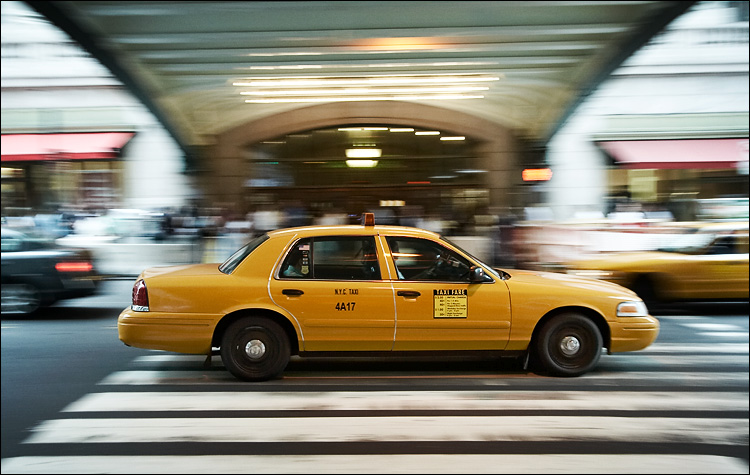
NY cab
A Bangladeshi taxi driver in New York City has gone out of his way to track down the person who left thousands of dollars in cash in the back of his cab.
Mukul Asadujjaman, a medical student, drove nearly 80kms (50 miles) to an address he found with the money.
He left his phone number when he found no one at home. The money belonged to an Italian grandmother visiting the US.
Mr Asadujjaman was offered a reward, but he turned it down saying that as a devout Muslim he could not accept it.
Felicia Lettieri, of Pompeii, Italy, and six relatives had taken two cabs on Christmas Eve, Newsday newspaper reported.
Mrs Lettieri, 72, left her purse behind, with more than $21,000 of the group’s travelling money, jewellery worth thousands more, and some of their passports.
Her sister, Francesca Lettieri, 79, of Long Island, said the honest driver had saved her family’s vacation.
“We really love what he did,” she said.
‘Be honest’
A gracious Asadujjaman was quoted by the newspaper as saying that he may be broke, but he was also honest.
“My mother is my inspiration. She always said to be honest and work hard.”
Mr Asadujjaman called a friend with a car and drove some 80km to a Long Island address in the purse.
No one was at home, so he left his phone number and a note, the report said.
His phone rang a short time later and he drove back to return the bag.
“They were so, so, so happy,” Mr Asadujjaman told the paper.
Asked if he was tempted to keep the cash, Mr Asadujjaman said the money would have allowed him more time to study, “but my heart said this is not good”.
He also turned down a reward, saying he could not accept it as a devout Muslim, Newsday reported.
“I’m needy, but I’m not greedy,” he said. “It’s better to be honest.”
Mr Asadujjaman is not the first honest American-Bangladeshi cabbie to hit the headlines for noble behaviour.
In 2007, driver Osman Chowdhury returned a lost bag containing diamond rings worth $500,000 to the rightful owner.
This is not the correct way to defend a great Nation in a fair and just manner.
In an earlier post, my colleague Paul Handover left us with an important question: Does the public’s lack of clarity about the “underwear bomber’s” status as an enemy combatant or a criminal undermine the appearance of impartiality of the U.S. judicial system?
US Attorney General Eric Holder
Paul reviewed the legal development of the “enemy combatant” designation, ending with a March 2009 pronouncement from Eric Holder, the current U.S. Attorney General, that the U.S. had abandoned the Bush administration’s use of the term. Mr. Holder continued, “As we work toward developing a new policy to govern detainees, it is essential that we operate in a manner that strengthens our national security, is consistent with our values, and is governed by law.”
A new policy that “strengthens national security?” I think it is blatantly clear that an intense and timely interrogation of the bomber does more to protect our national security than lawyering him up and giving him the right to not speak. As you read this, Michael Marinaccio, an attorney for Zarein Ahmedzay, who is suspected of plotting a terror attack on NYC, is seeking to have all the information gathered by officials after his client was represented by counsel thrown out as illegal, under the civil and criminal law of the U.S. We can likely expect the same in the underwear bomber case.
A new policy that is “consistent with our values?” Treating terrorists as terrorists is perfectly consistent with my values. I am not sure what he is trying to say here. Then again, maybe I do know what he is trying to say: that it is “wrong” to treat a terrorist as an enemy combatant, and “right” to give that person all the rights of a U.S. citizen, including the right to an attorney and the right to remain silent? Those may be Mr. Holder’s values, but they aren’t mine and, as you’ll see below, they are not those of the former U.S. Attorney General either.
A new, as yet undetermined, policy that is “governed by law?” This coming from the same legal mind that decided to try the five 9/11 terrorists in New York City federal court? A decision based on what legal precedent? There is no legal precedence. On what existing, well-formulated policy? There is no such policy.
Mukasey, US Attorney General 2007-2009
But on the legal subtleties surrounding this issue, I defer to Mr. Michael Mukasey, a former federal judge who oversaw cases relating to the 1993 World Trade Center attacks. Mr. Mukasey was the U.S. Attorney General from 2007 to 2009 before retiring and being replaced by Eric Holder. His analysis is as follows:
Had Abdulmutallab [the alleged underwear bomber. Ed.] been turned over immediately to interrogators intent on gathering intelligence, valuable facts could have been gathered and perhaps acted upon. Indeed, a White House spokesman has confirmed that Abdulmutallab did disclose some actionable intelligence before he fell silent on advice of counsel. Nor is it any comfort to be told, as we were, by the senior intelligence adviser …that we can learn facts from Abdulmutallab as part of a plea bargaining process in connection with his prosecution…Holding Abdulmutallab for a time in military custody, regardless of where he is ultimately to be charged, would have been entirely lawful—even in the view of the current administration, which has taken the position that it needs no further legislative authority to hold dangerous detainees even for a lengthy period in the United States … What the gaffes, the almost comically strained avoidance of such direct terms as “war” and “Islamist terrorism,” and the failure to think of Abdulmutallab as a potential source of intelligence rather than simply as a criminal defendant seem to reflect is that some in the executive branch are focused more on not sounding like their predecessors than they are on finding and neutralizing people who believe it is their religious duty to kill us. That’s too bad, because the Constitution vests “the executive power”—not some of it, all of it—in the president. He, and those acting at his direction, are responsible for protecting us.
“…Skiing is the best way in the world to waste time.” ~ Glen Plake
Against my better judgement, my wife talked me into going skiing in the French Alps just before Christmas. It was a good opportunity to take our 3 teenage sons on holiday because they wouldn’t have come otherwise! They put some of their money in as well so it felt like a good call.
My wife and I have done a lot of cross-country skiing in Finland where I used to live, so we planned to do the same in France, while our boys went off down-hill skiing.
Unfortunately, the resort we picked didn’t cater for cross-country skiing so we ended up learning down-hill skiing. After a lot of falling over, laughter and tips from our sons, we started to get the hang of it and decided to sign-up for a half-day skiing lesson the next day.
After some initial runs on the nursery slopes, we agreed to have a go on a Green run. Although we part fell down the
"Feel the fear"
steep bits and included me nearly falling off of the ski lift as we left the station, it was an amazing experience.
What struck me was that it was a mixture of fear and exhilaration. I realised that the secret was leaning in the opposite direction to your natural instinct and trusting that that would work.
The skiing instructor was a student at a local business school and we got talking about trusting and having faith in things turning out well. Also, that in order to progress, it is usually necessary to take a risk or two and feel uncomfortable.
I realise that I have a tendency to play it safe and pull back from the new or unpredictable. In order to progress, it is necessary to do things that push back our comfort zones and put ourselves into situations which are not always pleasant. “Do something every-day that scares you.”
This guest post is contributed by someone very different to the profile of the rest of the LfD authors. AJ is a young American girl. It’s a pleasure to publish her Post. I am told that almost every little girl goes through the ‘horse phase,’ but very few actually take it to the next level. The few who do generally end up competing, but for many different reasons. Most kids are doing it for the title. But then there is a small group of them who compete for the love of the sport and the relationship you form with your horse.
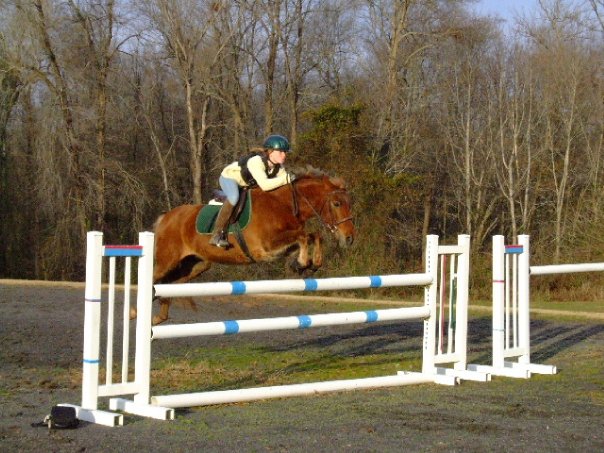
AJ (age 13) jumping Penny 3 ft 6
My name is AJ Easton and I have been riding since I was five, in other words for eight years now. I have been around some pretty incredible horses, one of whom became my best friend. Her name is Heads Up Penny (more fondly known as Penny) and she is my life. She is a 14.2 hand (a hand is four inches, so she is 4’10” tall), red dun Grade Pony. My father purchased her for me in 2005, just before I turned nine. She cost only $2,650, but to us, her disposition alone is worth millions.
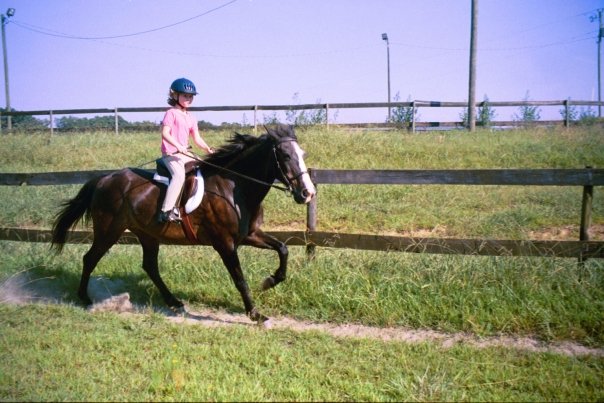
AJ (age 6 ) riding Chip
My first horse, Chocolate Chip, died a year before we bought Penny. Chip and Penny taught me almost everything I know about horses, but that isn’t all I have learned from them. Chip taught me about letting go, and how important it is to show the special people and pets in your life how much you love them. Penny has taught me how to be responsible, patient, understanding, and so much more. She has also given me endless amounts of love; she always has a look on her face that can melt your heart. Penny always tries her hardest to please and has gone way beyond our highest expectations.
We bought her to help me perfect the basics of riding to see where I might want to go with my riding career, but she has turned out to be one of the most incredible pony jumpers I have ever seen. I still remember being excited about jumping 2’6” in my first year of showing, but now we are sailing over 4′ fences together. Remember, she is only 4’ 10” tall! We have so many new goals for her this year, now that she is going consistently over 3’3”, which is what she needs to be able to do to compete successfully in the top Pony Jumper shows.
This year we are trying to qualify for the 2011 USEF [United States Equestrian Foundation. Ed.] National Pony Jumper Finals, the show where all of the top jumpers come together and compete to be the best. We don’t expect to win, or even place, but being able to show in it would be one of the greatest honors ever, especially if I was able to do it with my best friend, Heads Up Penny!
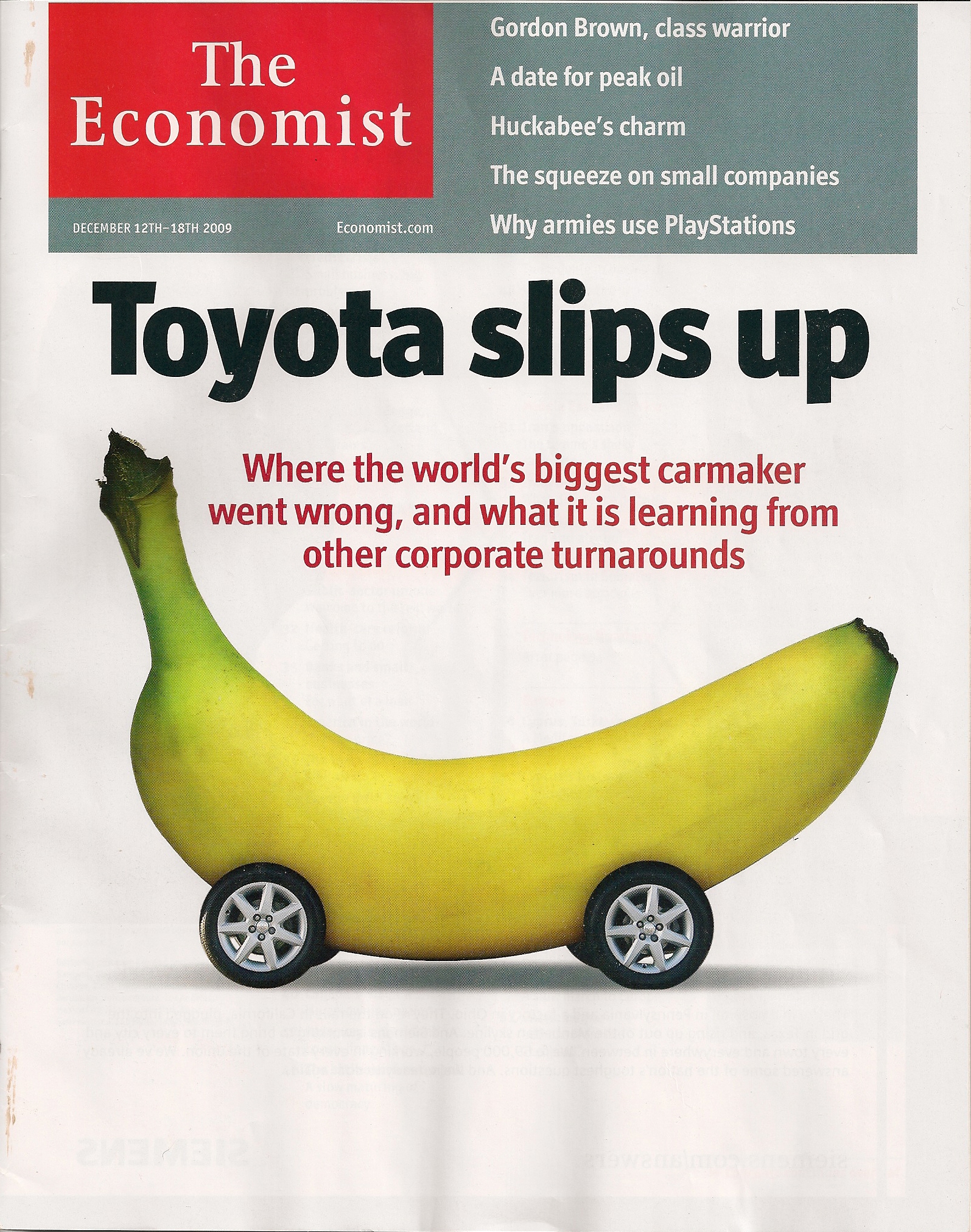
The Economist is a newspaper. It was first published in September 1843 which, of itself, makes it a notable newspaper. Many years ago, more than I can recall just now, I became a subscriber to the newsprint version of this weekly paper. It has become such a companion, so to speak, that when I left the UK in September 2008 to come to Mexico I made arrangements to continue receiving The Economist each week.
However, the Mexican postal system, despite being thoroughly reliable, is rather slow and, rather logically if you muse on it, the postman always only delivers when there is more than one item. Thus the particular copy of The Economist that carried the story about Toyota arrived late and with three other editions!
 During a recent PASSWORD AUDIT at the Bank of Ireland it was found that Paddy O’Toole was using the following password:





 Learning from Dogs