Yesterday morning while sitting up in bed I was browsing the internet on my iPad. I looked up TED Talks and fancied watching the story of Mark Pollock and Simone George. It turned out to be 19 minutes of incredible viewing and it is reproduced below as a YouTube video.
Towards the end Mark refers to his guide dog Larry. More of that later.
Then I came across a comprehensive entry on WikiPedia. From which the following is taken:
Pollock enrolled in a course to help come to terms with his disability. He left for Dublin with his guide dog Larry and began putting himself forward for job interviews. Prospective employers were uncertain as to how to approach him. Eventually the father of one of his college friends assigned him to organising corporate entertainment. He returned to rowing and won bronze and silver medals for Northern Ireland in the 2002 Commonwealth Rowing Championships. He engaged in other athletic pursuits, including running six marathons in seven days with a sighted partner across the Gobi Desert, China in 2003 when he raised tens of thousands of euro for the charity Sightsavers International. On 10 April 2004, he competed in the North Pole Marathon on the sixth anniversary of his blindness.
Then I discovered that Larry had died: “My great mate Larry The Guide Dog died on Sunday night. An amazing Guide Dog and amazing friend.”.
He died on the 2nd May, 2010 just a couple of months before Mark’s terrible accident.
Finally a photograph of Mark and Larry!
“Who do you rely on most? When I was just blind, it was my guide dog Larry who empowered me to live life independently.”
If I were to mention the name of Lea Brandspiegel I suspect that many of you wouldn’t have a clue as to whom I was referring to.
But if I were to add that Lea is the CEO and Founder of Paws Give Me Purpose Inc. and to include a little from the About page on the website then that would make you sit up!
Here it is:
ooOOoo
Welcome to Paws Give Me Purpose! We look forward to sharing our purpose, knowledge, laughter and tears with all of you. We hope you enjoy the time you spend here with us.
Paws Gives Me Purpose Incorporated is dedicated to rescuing, rehabilitating, caring for and providing sanctuary to difficult to adopt dogs. We believe that all dogs deserve a second chance at life – especially seniors, those with physical disabilities, terminal illness, behavioral issues, have been abused and need someone to care for, love, and understand them.
Located in Southern New Jersey, we provide for our pups dependent upon the donations of generous friends, family, businesses, individuals and out of our own pockets. We are limited on both space and funding, as well as physical ability. We are able to take in and provide for only a limited number of dogs at any given time.
We also feature, network and sponsor shelter and rescue dogs looking for their forever homes. All of the dogs we feature here on Paws Give Me Purpose have been waiting far too long for their chance; oftentimes, these dogs do not get the exposure they need, and we want to change that! For us, education is key; this is why one of our ultimate goals is to change the way that humans think of, and treat, dogs with special needs.
Paws Gives Me Purpose exists on the kindness of strangers, dedicated supporters who follow our efforts, the loyalty of friends, veterinarians, hospitals, rescues, shelters, and private individuals who view us as a staple in the rescue community. We are strictly a volunteer-run organization and all donations go directly towards the care of the sanctuary animals. Know that you are helping to make a difference in dogs’ lives and that you are the driving force behind us.
ooOOoo
So there is the introduction and I will have great pleasure in sharing more stories about the dogs that Lea has rescued and found homes for.
Oh, a postscript! If you fancy making a donation then that page is here. (And it really doesn’t need me to say that I have no relationship at all with Paws Give Me Purpose Inc.)
All dogs have a brilliant sense of smell. That comes from them having many times more scent receptors. As CareCredit write:
Dogs have a strong sense of smell Scientists guess the dog’s sense of smell is somewhere between 10,000 to 100,000 times more acute than ours. One of the reasons a dog has such better smelling ability than us is the number of scent receptors. For every scent receptor a human has, a dog has about 50.
So here is a story of a Husky using her sense of smell to good effect!
ooOOoo
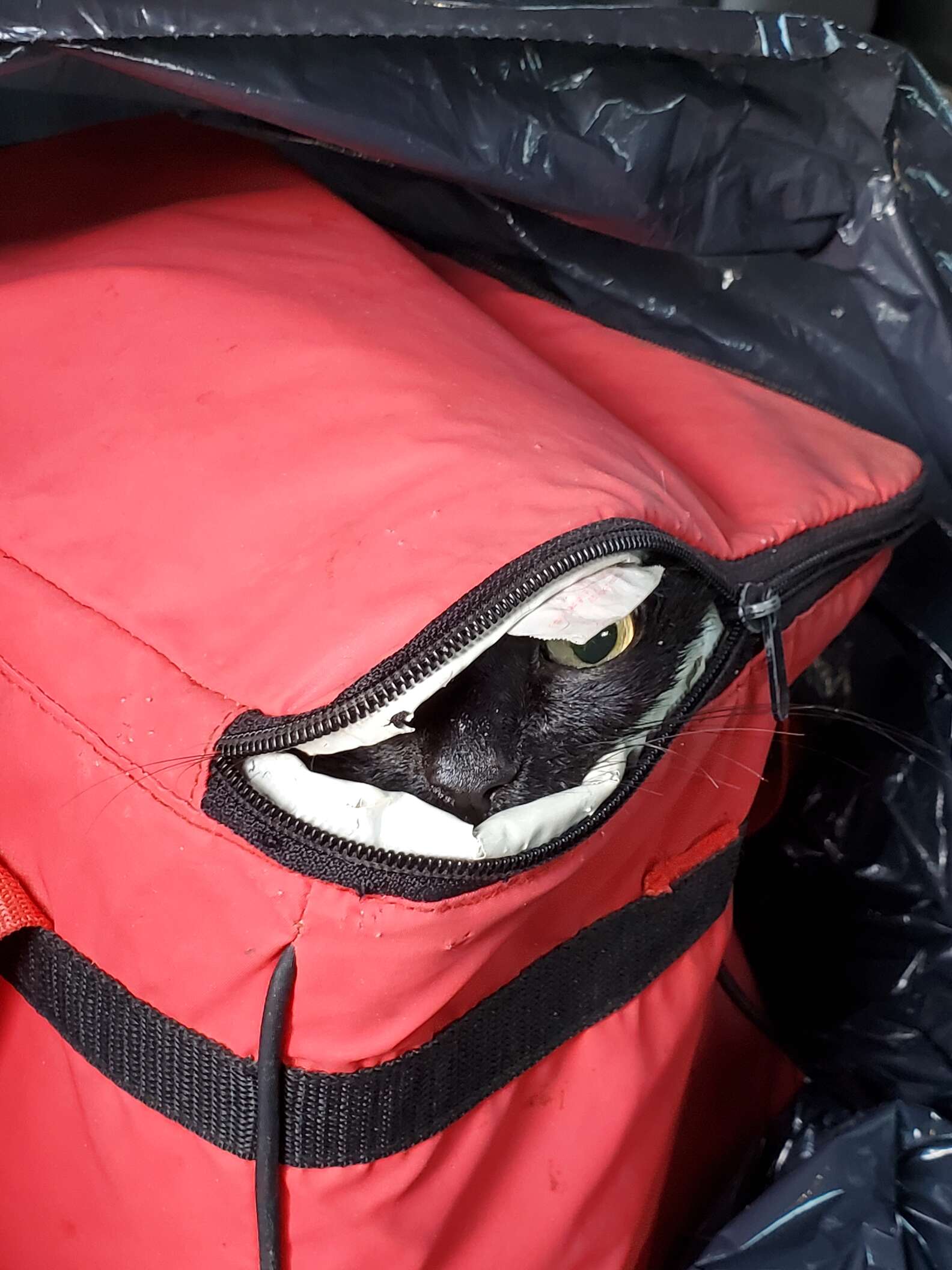
Dog On Her Morning Walk Discovers A Cooler With Someone Inside
“Koda wouldn’t leave it. She was like, ‘There’s something in there. I want in there! Mom, look!’”
When a husky named Koda set out on her morning walk earlier this month, she had no idea she was about to save a life.
Around 5:45 a.m., Koda and her mom were walking on their regular route past the Fearless Kitty Rescue building. Koda usually stops to sniff around the area, but this time something was different.
“She made a beeline to our donation bench,” Teryn Jones, events and marketing coordinator at Fearless Kitty Rescue, told The Dodo. “On our donation bench was a cooler that was zipped up, no holes, and then wrapped up in a garbage bag. Koda wouldn’t leave it. She was like, ‘There’s something in there. I want in there! Mom, look!’”
Koda’s mom was startled by her pup’s excited reaction and unzipped the cooler. A black cat popped her head out and began to gasp for air. Even though it was still early, it was already getting hot outside, and the cat seemed relieved to be free.
Koda’s mom contacted a volunteer at the rescue, who rushed over to welcome the cat inside and out of the sun.
“She was just shaken up and was kind of in freeze-mode,” Jones said. “And that’s how she’s been since.”
The little black cat, now known as Juliane, has been slowly acclimating to life at the rescue.
“She’s so sweet and very nervous and shy,” Jones said. “But she loves being pet — she purrs and rolls around on her belly. The resilience of her, in going through, what she went through is really amazing.”
“In the Danish culture, the name Juliane means ‘Fearless,’” Fearless Kitty Rescue wrote on Facebook. “And Fearless she is!”
But Juliane isn’t out of the woods just yet. A vet exam found a large mass on Juliane’s tail, which will require surgery. Once she’s healed and feeling better, Juliane will be ready to start her search for a loving forever home
“She’s very sweet and very clean — so she’s your ideal cat,” Jones said. “She sits and does her own thing, she doesn’t make a mess … She’s just very dainty.”
Thanks to Koda, Juliane has a second chance at a happy life — proving that guardian angels come in all shapes and sizes.
ooOOoo
I want to add another small remark that was on the website:
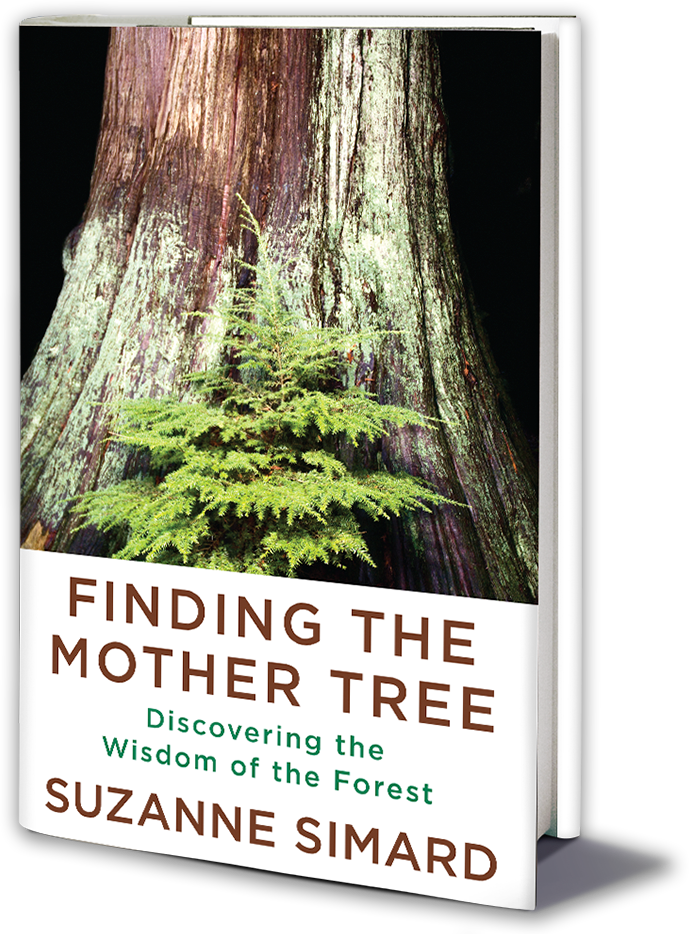
Let me make myself absolutely clear about this book, indeed I can do no better than to publish part of an email that I sent to the authors last Saturday:
To say that I was inspired by what you wrote is an understatement. More accurately it has changed my whole understanding of this planet, of the natural order of things, of the politics of the Western world, of vast numbers of us humans, and how precarious is our world just now. It has opened my eyes radically, and I thought before that I was fairly in touch with things.
Resilience is a simple idea but in its application has proved to be anything such. On page 2 the authors set out as they saw it The Drivers of Unsustainable Development. Here’s how that section develops:
Our world is facing a broad range of serious and growing resource issues. Human-induced soil degradation has been getting worse since the 1950s. About 85 percent of agriculture land contains areas degraded by erosion, rising salt, soil compaction, and various other factors. It has been estimated (Wood et al. 2000) that soil degradation has already reduced global agricultural productivity by around 15 percent in the last fifty years. In the last three hundred years, topsoil has been lost at a rate of 200 million tons per year; in the last fifty years it has more than doubled to 760 million tons per year.
As we move deeper into the twenty-first century we cannot afford to lose more of our resource base. The global population is now expanding by about 75 million people each year. Population growth rates are declining, but the world’s population will still be expanding by almost 60 million per year in 2030. The United Nations projections put the global population at nearly 8 billion in 2025. In addition, if current water consumption patterns continue unabated, half the world’s population will live in water-stressed river basins by 2025.
The Food and Agriculture Organization of the United Nations (FAO) 2004 Annual Hunger Report estimates that over 850 million people suffer from chronic hunger. Hunger kills 5 million children every year.
It goes on ….!
Now I want to quote from the end of the book, from their section on Resilience Thinking.
In our opening chapter we observed that there were many pathways into resilience thinking and suggested readers not worry too much if the finer details of a resilience framework are a bit obscure. We emphasized that what is of much more importance is an appreciation of the broader themes that underpin such a framework. Those broader themes revolve around humans existing within linked social and ecological systems. These are complex adaptive systems, and attempts to control or optimize parts of such systems without consideration of the responses that this creates in the broader system are fraught with risk. Much of this book has been spent on attempting to explore the consequences of such an approach.
In the broadest sense, optimizing and controlling components of a system in isolation of the broader system results in a decline in resilience, a reduction in options, and the shrinkage of the space in which we can safely operate. Resilience thinking moves us the other way.
It is our hope that readers who are persuaded of this basic premise will be encouraged to explore the inevitable consequences of such thinking. Even if you are not completely clear on the basins of attractions, thresholds, and adaptive cycles, if the concepts of ecological resilience and dynamic social-ecological systems have any resonance then you are in a better position to appreciate what is happening to the world around you.
The phrase complex adaptive system was new to me but intuitively I got what the authors meant. As they state on page 35: The three requirements for a complex adaptive system are:
That it has components that are independent and interacting,
There is some selection process at work on those components (and on the results of local interactions),
Variation and novelty are constantly being added to the system (through components changing over time or new ones coming in),
This was my eye-opener. It was now obvious that many processes, especially in nature, that I had hitherto regarded as constant were changing albeit usually on a timescale of many decades sometimes centuries.
And the other conclusion that was inescapable was that we humans were largely responsible for those changes because we couldn’t see the longterm consequences of what we were doing.
David writes that firstly carbon dioxide is not like other pollutants, for example like air particulants. Then later goes on to say:
The second difference is that climate change is irreversible.
As Joe Romm notes in a recent post, New York Times columnist Joe Nocera slipped up in his latest column and referred to technology that would “help reverse climate change.” I don’t know whether that reflects Nocera’s ignorance or just a slip of the pen, but I do think it captures the way many people subconsciously think about climate change. If we heat the planet up too much, we’ll just fix it! We’ll turn the temperature back down. We’ll get around to it once the market has delivered economically ideal solutions.
This paper shows that the climate change that takes place due to increases in carbon dioxide concentration is largely irreversible for 1,000 years after emissions stop. Following cessation of emissions, removal of atmospheric carbon dioxide decreases radiative forcing, but is largely compensated by slower loss of heat to the ocean, so that atmospheric temperatures do not drop significantly for at least 1,000 years. [my emphasis]
My last piece in this review is to republish a graph that is shown on the NASA Global Climate Changewebsite:
For all our sakes, dogs and humans and many other species, let us all please change our behaviours! Soon!
Back to the book: It is a remarkable book!
I will close with quoting one of the praises shown on the back cover. This one by Thomas Homer-Dixon, professor of political science, University of Toronto, and director of the Trudeau Centre for Peace and Conflict Studies.
Resilience Thinking is an essential guidebook to a powerful new way of understanding our world – and of living resiliently with it – developed in recent decades by an international team of ecologists. With five clear and compelling case studies drawn from regions as diverse as Florida, Sweden, and Australia, this book shows how all highly adaptive systems – from ecologies to economics – go through regular cycles of growth, reorganization, and renewal and how our failures to understand the basic principles of resilience have often led to disaster. Resilience Thinking gives us the conceptual tools to help us cope with the bewildering surprises and challenges of our new century.
This came in yesterday and I thought for some time that I wouldn’t be able to publish it quickly owing to me getting my knickers in a twist.
But all was resolved and therefore I am delighted to republish it.
ooOOoo
Donate to fund the dogs saving elephants
Ever heard of dogs saving elephants?
In the Serengeti, a small, specially trained team of rescue dogs sniff out poachers and sound the alarm. Just 4 dogs have helped arrest hundreds of poachers, saving countless elephants being murdered for their ivory.
Almost a quarter of the elephants in the park now live in the tiny area they protect — but poaching is on the rise everywhere else and there are thousands more elephants that still need protection.
That’s why the team behind this amazing project are asking for your help to train up more of these sniffer dogs — and save double the number of elephants.
With 96 of these gentle giants killed each day, every moment counts.
Can you chip in to help?
ooOOoo
Whatever you can spare please contribute to the donation request.
Alok Sharma on why COP26 is our best chance for a greener future.
I wanted to share the eight-minute video that appeared on TED Talks. But it hasn’t appeared on YouTube as yet.
But the link is embedded above so if you don’t want to watch the slightly longer version (just 22 minutes) then that is fine.
I will share the words that came with the TED Talks video.
Something powerful is happening around the world. The issue of climate change has moved from the margins to the mainstream, says Alok Sharma, the President-Designate of COP26, the United Nations climate conference set to take place in November 2021 in Glasgow, Scotland. He unpacks what this shift means for the world economy and the accelerating “green industrial revolution” — and lays out the urgent actions that need to happen in order to limit global temperature rise.
Plus on the speaker, Alok Sharma.
Alok Sharma is a British politician, Cabinet Minister and President-Designate of COP26, the United Nations Climate Change Conference being held in Glasgow from 31 October until 12 November.
Sharma was previously UK Secretary of State for Business, Energy and Industrial Strategy. Before that, he was UK Secretary of State for International Development. He has also served in ministerial roles in the Department of Work and Pensions, Department for Communities and Local Government, and at the Foreign and Commonwealth Office. Prior to politics, he worked in finance.
Please watch the video for all our sakes.
For the sake of our dogs, and for the sake of everyone on this planet.
It’s even a difficult title to write for today’s story.
There are some despicable people for whom having a dog is not a loving companion nor a humane business interest. I can’t define them and, frankly, they are not even worth the mental effort required to think of a term.
That makes it all the more important to share this article with you.
ooOOoo
Dogs Are Not Disposable
Some people dump pets that are too old, not ‘perfect,’ or to go on vacation.
Blind puppy Gertie weighs just over 2 pounds. Mary Jo DiLonardo
This may seem like a no-brainer, but with all the news from overwhelmed shelters and rescues this summer, it’s probably worth saying out loud.
Dogs are not disposable.
Disreputable breeders toss out puppies that aren’t “perfect.” Some people give up the family pet when they go on vacation so they don’t have to pay for boarding. Others give up an older puppy whose cute behaviors are now obnoxious or a senior dog who may have other health issues.
That little mouse you see at the top of the page is one of two special needs puppies I’m fostering right now. She’s actually a 2.1-pound puppy that we were told is an Aussiedoodle. I still think she might be an exotic guinea pig.
Gertie was dropped off by a breeder at a vet’s office to be euthanized because she was blind. The vet contacted a rescue instead.
I also have a deaf puppy that was given up by a breeder. Many other fosters are also doubling up because the need is so great right now. Probably the biggest reason is that it’s the summer and people are traveling for the first time again in more than a year. That means it’s hard to find adopters and it’s hard to find fosters. Everyone wants out of the house.
I’ve seen messages and social media posts from rescuer and shelter workers who say they feel helpless because the requests for help right now are so crushing.
“My rescue cannot keep up trying to save them,” one wrote.
“I’m sickened at the number of rescue and surrender requests we are getting and I am completely heartbroken,” wrote another.
“We need a lifeline,” said another rescuer.
There are some news stories that claim many pandemic puppies are being returned, but the numbers don’t back that up. Instead, it’s just a crush of other reasons, many involving summer travel.
I think the hardest thing for most loving pet owners to fathom is the idea that some people would drop off their dog at a shelter on their way out of town. There’s just anecdotal evidence and no statistics about how often it happens, but it’s cited very often from disheartened rescuers and shelter workers.
The people who surrender their pets say they don’t want to pay for boarding and they’ll just get a new one when they return. Shelter workers say it’s heart-wrenching to hold a dog while they watch their person drive away. Some will stare out the door for hours, thinking for sure their family will return.
“Unfortunately, it doesn’t surprise us anymore which is really sad,” says Jen Schwarz, one of the directors of Speak! St. Louis, the special needs rescue I foster for. The rescuers hear the story often from shelter and humane society workers.
“They don’t want to pay for boarding or can’t find anybody to take their dog,” says Schwarz. “It’s basically being selfish.”
And people might think they’re doing their dog a favor by taking it to a shelter, hoping they’ll get adopted by someone else. But typically, if shelters have to euthanize for space, they’ll turn to owner-surrendered pets before strays because they know no one is looking for them.
“That’s the sad reality,” Schwarz says.
The other thing that happens often is people asking to have the family pet put to sleep because they’re too much hassle.
“That happens a lot. The kids are gone, they want to travel, the dog’s too much, and they have it euthanized,” Schwarz says. “That’s worse than dumping it at the shelter.”
Rescuers are saving as many as they can and that’s why I have one puppy sleeping behind me in my office and one napping in a playpen in the living room. Soon everyone will head outside for a game of tag where I’ll make sure everyone gets a chance to win.
And the only thing disposable here is an awful lot of very tiny puppy poo.
ooOOoo
When Jen Schwarz says: “That happens a lot. The kids are gone, they want to travel, the dog’s too much, and they have it euthanized,” I wonder what a lot is numerically. Anyone know?
The stories from the shelter workers breaks hearts here as well. Dogs are so intuitive; so smart. It is no surprise that they will stare for hours trying to work out what has happened.
Personally, I think these should be banned in all countries!
Yes, I know that sub-heading is me being away with the fairies, but one can always hope.
The reason behind the heading and the topic is that on the 21st June this year Dexter sent me a guest post for including in this blog. Nothing gives me greater pleasure, so on with the show!
ooOOoo
Well well, Fancy that.
By Dexter.
This blog is on a subject that I have wanted to tackle but haven’t had the chance or insight to do so. Until now.
Puppy mills are an abhorrent method of producing large sums of money at the detriment to the dogs involved. I discovered that Fancy, who is one of the Wirral & Cheshire Beagles was used in a puppy mill. As I wanted to write something on this subject, I asked for the kind assistance of her mum, auntie Karen, who has been wonderful and extremely helpful in helping me write this blog. I cannot say “enjoy it” as I hope that you find it predominantly thought provoking and enlightening as to these terrible practices.
Thank you for allowing me to ask some questions about Fancy. When we spoke you told me that she was a puppy mill dog. Can you let me know a little more about her position before she came to live with you?
She had been in a puppy farm, kept in a concrete pig pen and had 3-4 litters in just over 3 years. Many of her pups died of Parvo either there or within 24 hours of being picked up for their new homes.
That sounds awful. Do you know how old she was when you met her?
They told us she was about 5 but she turned out to be 3.6 years. She was 4 on Valentine’s Day.
So, by my calculations, she was about one year old when she would have been forced to have her first litter. This makes me feel very sad.
How did you find out that Fancy was up for rescue and rehoming?
We saw Fancy on a “Beagles missing, found and in need ” site on FaceBook and we fell in love with her immediately. She had such sad, dark eyes and it occurred to us that she had never known a day’s happiness or been loved. There were so many people applied for her we didn’t think we stood a chance. However we were contacted by Many Tears twice that week and, because I’d previously had a home check and had 2 kind caring beagles, we were chosen.
Please help me, please!
We drove over 10 hours that day to Llanelli, Camarthenshire and met her in an area used for meet and greets. She was petrified of us but not my beagles, Eddie & George. She just ignored them. There was no eye contact with us, nothing. She just paced up and down and cowered in a corner. When it was time to take her home she had to be cornered and caught to get a slip lead on her. She just wet herself. It was heartbreaking. My husband Alan carried her to the car where she laid down in the travel crate. She didn’t sleep but just kept very quiet all the way home. She came from a real lowlife puppy farmer. He’s a multi millionaire who posts “his” beagles or pups running free on fields. In actual fact they’ve never seen a blade of grass. The BBC did an undercover investigation on him.
In any case, when she arrived it was a lovely Sunday evening last July 2020. So we sat outside and watched her exploring and sniffing around the garden. She kept hiding in a corner if we looked at her so we stopped. It took 8 long days before I touched her and that was only because there was a wall behind her. She went to the toilet in the house but thanks to Eddie & George she soon got the hang of going outside. They were fabulous with her and soon realised she wasn’t a boarder but a new sister. I certainly couldn’t have done this without them and the beagle field.
Is this OK? Is this what I am allowed to do?
What sort of condition was Fancy in when she arrived? I am going to assume she wasn’t in the greatest shape, given her life up to her time coming home with you?
She was in a bad condition when we got her. She had a dull dry coat and was very underweight with her ribs showing and tail between her legs. It took a few days for her to eat and she’d only do that if we weren’t around. When I first took her to the beagle field she spent the whole time pinned up against the fence. Nothing the beagles did bothered her, only the actions of the humans. I think it took about a month for her to trust one person and let them touch her. Eleven months later and she is still very wary of people she doesn’t know and she will cower away.
That sounds awful, and so sad. Looking at the pictures she seems to have come some way on her path to rehabilitation.
Yes,it doesn’t take much to win her round. A belly tickle, something tasty and she’s your best friend.
Give us a cuddle, says Jay.
How long did it take for Fancy to stop going toilet in the house? Was she called Fancy when you met her at the meet & Greet?
She did her toilets in the house for about 4 days. Maybe twice a day then just first thing in the morning. It tailed off after that as she went out every time with her brothers. Yes she already had the name Fancy I rescued a kitten on the A55 motorway many years ago and she was called Fancy.
You’re safe now, Fancy!
You said that Eddie & George immediately knew Fancy was in need of some help. Did they act as if they were guardians to her, showing her the ropes if you like, and making sure that she felt at least some comfort with them.
Definitely. They gave her space from day one when she needed it. Even at the busy beagle field the others knew as well. She never got the initial newbie rough welcome. They all love her very much. Beagles know these things.
Welcome to the clan, Fancy.
Erm, when did you start to see a real breakthrough in her feeling more at home and less scared of all sorts of situations? What was the thing that made you think “you know, Fancy is feeling a bit happier”.
I lay that lead next to her for about a week. I started to show it to her and make a big fuss like it was a toy. She was petrified as she’d only been put in a “rape harness”. She’s still wary of it but can’t get out of it thank dogness.
A week from A to B
If you could give people a simple message regarding getting pups from a mill what would it be? Apart from “dont do it” that is.
I’ve given many messages of support to people thinking of puppy farm rescues. Don’t ever give up on them because of their fear. Beagles are so loving and trusting of us the good times far outweigh the bad and no mistake. I have a friend who 12 days ago adopted one with identical problems and the difference in her each day is amazing. Day 12 today and she was dying to jump into his arms when he got home but held back and did an excited dance. We all love his daily updates.
I wish I knew the answer to the puppy mills question I really do. They’re clever people who advertise their pups as living in loving happy homes with caring owners. When in reality they use dirty filthy concrete pig pens where they receive no vet care whatsoever. People see the advertisement and pay a large deposit, when the time comes most travel hours and they won’t leave their puppy their a minute longer so will take them home and face the consequences. Many die over 24 hours and some will be saved by a good vet. One of Fancys pups and owner I know so I know how she was fooled. She knows others.
May I ask about Wirral & Cheshire Beagles generally. Are you a registered charity and, if so, with whom do you work and co-operate?
Yes the beagle group is a charity. We give £1000’s away to beagle charities each year. Mainly Unite to Care where we got ex laboratory George from and Many Tears who are absolutely fabulous and rescue so many ex breeding beagles.
Beautiful!
To sum up I am so happy that Fancy is now safe and loved. It is wonderful that she will never again suffer the privations of puppy mill life. It is sad and wholly awful that she had to suffer in the first place. If people didn’t buy from puppy mills, then there might be a chance that they are prevented of their ability to operate. Please please think before making a decision to adopt a dog. Puppy mills are awful and make our lives a misery.
Thank you to Fancy’s mum for her wonderful help on what is a very difficult subject. Without her help, I couldn’t have written this.
Rescue dogs sometimes have a bad reputation. Cross breed rescue dogs sometimes seem to have a worse reputation. I wasn’t dangerous or bad. I was unlucky. Now I am enjoying life in my forever home and I am sharing my contentment with whoever will read my tails.
This is the essence of what having a dog in one’s life means.
I can’t voice Jean’s and my disgust at puppy mills. It is beyond terrible. All you and I can do is to never entertain buying a puppy where the commercial legitimacy is uncertain.
Humans are great inventors! Indeed, a better way to describe H. sapiens ever since we separated from the chimpanzees, some 5 or 6 million years ago, is to describe us as explorers both outwards and inwards constantly in search for new worlds and new insights into meaning.
Thus this naturally caught me eye as Doug Thron uses a modern device, a drone, to search for animals in distress, a very ancient behaviour!
ooOOoo
Drone Pilot Rescues Animals After Natural Disasters
Doug Thron goes to devastated areas to save pets and wildlife.
Doug Thron with Duke, a dog he rescued after California wildfires.”Doug to the Rescue”
For nearly three decades, seaplane and drone pilot Doug Thron has been a professional photographer and cinematographer, primarily for nature shows and magazines. A few years ago he was using his drone to film the devastation left behind after wildfires in California when he teamed up with rescuers to help find lost pets and reunite them with their owners.
A long-time animal lover and environmentalist, Thron realized he could combine those passions, using his aerial skills. He now travels wherever there is need, using his drone to help communities dealing with the destruction after natural disasters.
Thron is featured in a six-part documentary series “Doug to the Rescue”streaming on CuriosityStream beginning June 10.
He talked to Treehugger about his first animal rescues, his drones, and some of the challenges he’s faced.
Treehugger: Which came first: the animal rescue work or the drone?
Dough Thron: I was using drones for filming for TV shows, commercials, and real estate clients before doing the animal rescue work.
Were you involved in animal rescue and realized that your drone work could come in handy?
Definitely. I was doing animal rescue work after the wildfires in Paradise, California. I was working with an expert cat rescuer named Shannon Jay, and I saw him using an infrared scope at night to help find the cats. We talked about how incredible it would be to put one on a drone and when the opportunity came up about 10 months later in the Bahamas after the category 5 Hurricane Dorian, that’s what I did and it worked incredibly.
I had raised orphaned baby animals as a kid and worked with animals such as possums, raccoons, squirrels, beavers, and even mountain lions. I’ve been using drones since 2013 for cinematography, so I’ve used them for quite a while before I got involved in the actual rescuing of animals with drones.
Duke in the Bahamas.Doug Thron / “Doug to the Rescue”
What was your first big rescue using a drone?
My first big rescue using a drone was in the Bahamas after Hurricane Dorian. I was there helping to deliver aid and film the destruction when I spotted a dog roaming around the mountains of debris. He obviously hadn’t had any water or much food for days. He was really apprehensive at first, but warmed up over the course of the day, as I just sat with him. Dog food and water helped! The next day, some animal rescuers came with me to get him. He’s such an incredible dog, and meant so much to me, so I adopted him and named him Duke after a sign I’d seen where I found him.
Where are some of the places you’ve gone to help stranded animals?
The Bahamas, Australia, Oregon, California, and Louisiana.
Thron with a rescued koala.”Doug to the Rescue”
What were some of the most challenging circumstances?
In Australia, it was challenging because the hurt koalas were deep in burnt out forests, often with a dense canopy. It was so hot out you had to fly strictly at night with spotlights and infrared and fly the drone pretty far and often drop it down through the trees to see the animals, which takes a lot of skill. Koalas are also very aggressive and strong, and not always thrilled when you go to grab them out of a tree to rescue them. On almost all these rescues, Australia and everywhere else, it’s countless long hours of work—generally about 20 hours a day—which can certainly wear you down day after day.
What is it like when you spot an animal in an area of devastation where there is no other sign of life?
It’s great to be able to rescue these animals so much more efficiently and faster and, in many cases, find animals that never would have been found. It’s different everywhere I go—finding animals when there aren’t any others alive nearby is always really hard. But in places like Louisiana, where I was searching in so many neighborhoods, it gives you a feeling of hope when you find a cat or dog, knowing it was someone’s pet.
In other places, like Australia, I’d be covering dozens of miles a night, sometimes and only finding an occasional animal. It’s really sad because you realize how many thousands of animals didn’t make it. It’s also really hard to see how fires and other natural disasters as a result of climate change are taking out the last patches of unentered habitat and endangered animals.
A dog rescued in Louisiana.”Doug to the Rescue”
How heart-wrenching can it be?
It can be really heart-wrenching to find animals that are severely wounded, but it’s wonderful to be able to save them.
How euphoric is it when you make a great save?
It’s awesome to be able to save people’s cats and dogs because frequently, that might be the only thing they have left after a fire or hurricane. Obviously, for the animal’s sake, it’s so incredible because without the infrared drone, in many cases, the animal would have never been found and would have died, sometimes a slow and painful death.
Thron with his drone.”Doug to the Rescue”
What is your drone like?
The Matrice 210 V2 are the drones I use with an infrared camera, spotlight, and 180x zoom lens. The combination of using those three attachments for animal rescue has never been done before.
How much time do you spend doing animal rescue work? What else do you do?
The rescue work is pretty continuous for 9 to 10 months during the fire and hurricane seasons. After that, there are occasional lost pets to be found.
What else do you want to accomplish?
I hope to make using infrared drones for animal rescue as popular as helicopters are for rescuing people after a natural disaster. So many more animals can be saved when you can find them so much faster and find ones that never would have been found on foot because there is just too much area to cover.
ooOOoo
This account makes me want to choke up. Doug is clearly used to being a professional photographer and, also, works with others in the field of animal rescue. But this story is about Doug and he is engaged with animal rescue with his heart as well as his head!
Doug has been reported widely I am delighted to say and there’s a YouTube video that you can watch.