Category: Morality

Our climate: Welcome to the New Normal!

An article read on Sunday is the motivation for today’s post.

The article, published by The Conversation blog site, was made public last Wednesday week.

I make no apologies for banging the climate change gong again, it is in my opinion the most important subject going.

Enough from me; now to the article.

(And it had been planned for last Tuesday but because of Pedi it is now today.)

ooOOoo

By Professor Shuang-Ye Wu

This article was written by Professor Shuang-Ye Wu. It is very good.

Professor Wu is the Professor of Geology and Environmental Geosciences at the University of Dayton, USA.

Looking back on America’s summer of heat, floods and climate change: Welcome to the new abnormal!

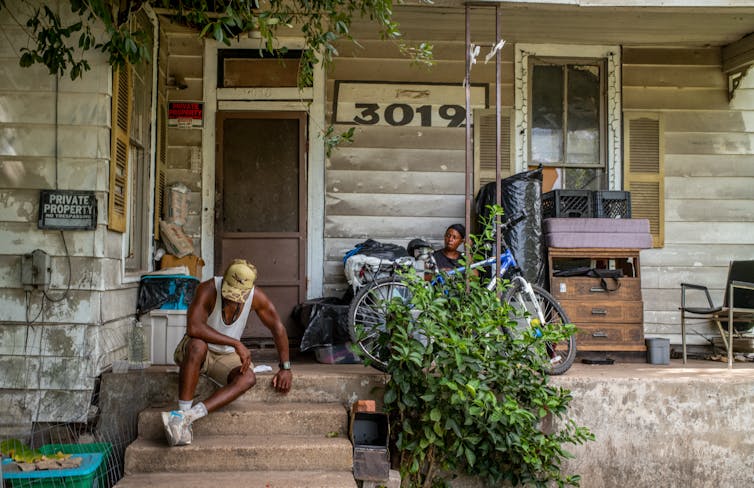
Much of the South and Southern Plains faced a dangerous heat wave in July 2022, with highs well over 100 degrees for several days. Brandon Bell/Getty Images

The summer of 2022 started with a historic flood in Montana, brought on by heavy rain and melting snow, that tore up roads and caused large areas of Yellowstone National Park to be evacuated.

It ended with a record-breaking heat wave in California and much of the West that pushed the power grid to the breaking point, causing blackouts, followed by a tropical storm that set rainfall records in southern California. A typhoon flooded coastal Alaska, and a hurricane hit Puerto Rico with more than 30 inches of rain.

In between, wildfires raged through California, Arizona and New Mexico on the background of a megadrought in Southwestern U.S. that has been more severe than anything the region has experienced in at least 1,200 years. Near Albuquerque, New Mexico, a five-mile stretch of the Rio Grande ran dry for the first time in 40 years. Persistent heat waves lingered over many parts of the country, setting temperature records.

At the same time, during a period of five weeks between July and August, five 1,000-year rainfall events occurred in St. Louis, eastern Kentucky, southern Illinois, California’s Death Valley and in Dallas, causing devastating and sometimes deadly flash floods. Extreme rainfall also led to severe flooding in Mississippi, Virginia and West Virginia.

The United States is hardly alone in its share of climate disasters.

In Pakistan, record monsoon rains inundated more than one-third of the country, killing over 1,500 people. In India and China, prolonged heat waves and droughts dried up rivers, disrupted power grids and threatened food security for billions of people.

In Europe, heat waves set record temperatures in Britain and other places, leading to severe droughts and wildfires in many parts of the continent. In South Africa, torrential rains brought flooding and mudslides that killed more than 400 people. The summer may have come to an end on the calendar, but climate disasters will surely continue.

This isn’t just a freak summer: Over the years, such extreme events are occurring in increasing frequency and intensity.

Climate change is intensifying these disasters

The most recent international climate assessment from the United Nations’ Intergovernmental Panel on Climate Change found significant increases in both the frequency and intensity of extreme temperature and precipitation events, leading to more droughts and floods.

A recent study published in the scientific journal Nature found that extreme flooding and droughts are also getting deadlier and more expensive, despite an improving capacity to manage climate risks. This is because these extreme events, enhanced by climate change, often exceed the designed levels of such management strategies.

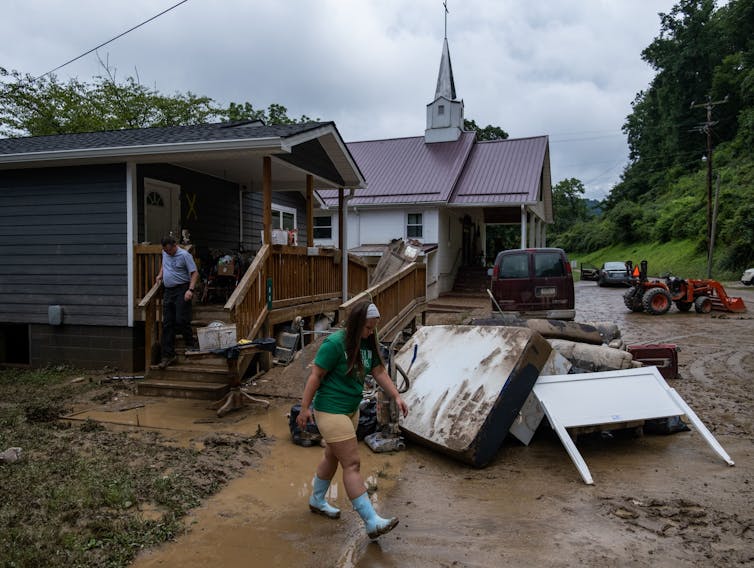
A girl in rain boots walks through a mud-filled yard. Damaged mattresses and other belongings from a flooded house are piled nearby.
Flash flooding swept through mountain valleys in eastern Kentucky in July 2022, killing more than three dozen people. It was one of several destructive flash floods. Seth Herald/AFP via Getty Images

Extreme events, by definition, occur rarely. A 100-year flood has a 1% chance of happening in any given year. So, when such events occur with increasing frequency and intensity, they are a clear indication of a changing climate state.

The term “global warming” can sometimes be misleading, as it seems to suggest that as humans put more heat-trapping greenhouse gases into the atmosphere, the world is going to get a bit warmer everywhere. What it fails to convey is that warming temperatures also lead to a more violent world with more extreme climate disasters, as we saw this past summer.

Climate models showed these risks were coming

Much of this is well-understood and consistently reproduced by climate models.

As the climate warms, a shift in temperature distribution leads to more extremes. The magnitudes of changes in extreme temperature are often larger than changes in the mean. For example, globally, a 1 degree Celsius increase in annual average temperature is associated with 1.2 C to 1.9 C (2.1 Fahrenheit to 3.4 F) of increase in the annual maximum temperature.

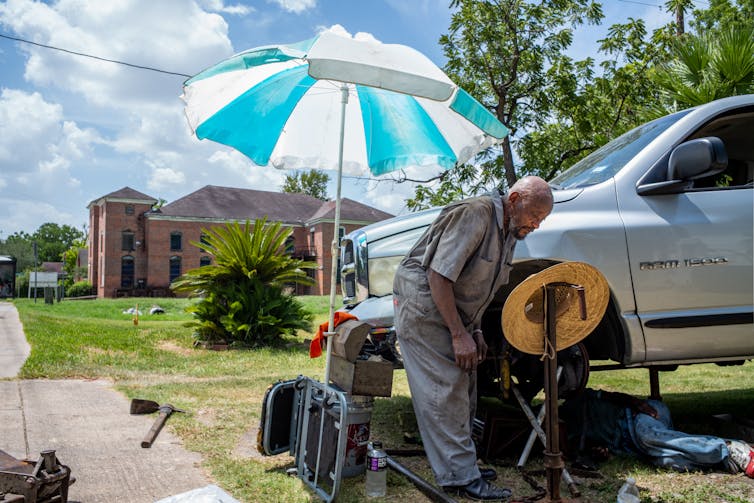
A man works on a car with an older mechanic in overalls standing next to him under the shade of a large beach umbrealla.
Heat waves, like the heat dome over the South in July 2022, can hit outdoor workers especially hard. Brandon Bell/Getty Images

In addition, global warming causes changes in the vertical profile of the atmosphere and equator-to-pole temperature gradients, leading to changes in how the atmosphere and ocean move. The temperature difference between equator and the poles is the driving force for global wind. As the polar regions warm at much higher rates then the equator, the reduced temperature difference causes a weakening of global winds and leads to a more meandering jet stream.

Some of these changes can create conditions such as persistent high-pressure systems and atmosphere blocking that favor more frequent and more intense heat waves. The heat domes over the Southern Plains and South in June and the West in September are examples.

The initial warming can be further amplified by positive feedbacks. For example, warming increases snow melt, exposing dark soil underneath, which absorbs more heat than snow, further enhancing the warming.

Warming of the atmosphere also increases its capacity to hold water vapor, which is a strong greenhouse gas. Therefore, more water vapor in the air leads to more warming. Higher temperatures tend to dry out the soil, and less soil moisture reduces the land’s heat capacity, making it easier to heat up.

These positive feedbacks further intensify the initial warming, leading to more heat extremes. More frequent and persistent heat waves lead to excessive evaporation, combined with decreased precipitation in some regions, causing more severe droughts and more frequent wildfires.

Higher temperatures increase the atmosphere’s capacity to hold moisture at a rate of about 7% per degree Celsius.

This increased humidity leads to heavier rainfall events. In addition, storm systems are fueled by latent heat, or the large amount of energy released when water vapor condenses to liquid water. Increased moisture content in the atmosphere also enhances latent heat in storm systems, increasing their intensity. Extreme heavy or persistent rainfall leads to increased flooding and landslides, with devastating social and economic consequences.

Even though it’s difficult to link specific extreme events directly to climate change, when these supposedly rare events occur with increasing frequency in a warming world, it is hard to ignore the changing state of our climate.

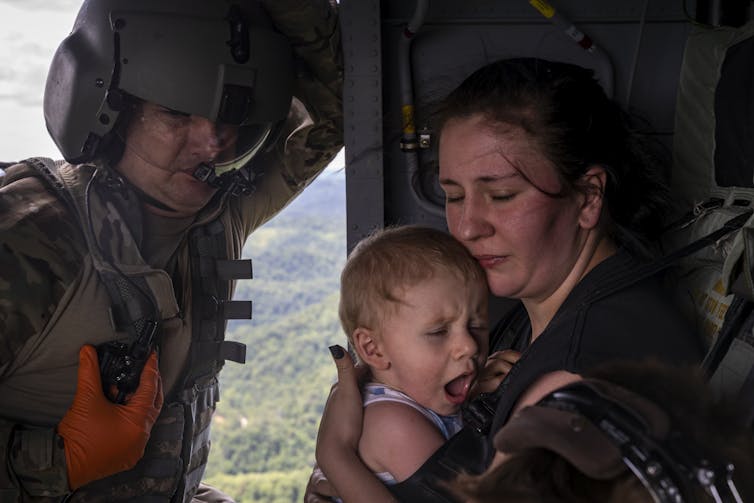
A woman with her eyes closed holds a screaming 1-year-old boy in a National Guard helicopter, with a guardsman standing in the open helicopter door.
A family had to be airlifted from their home in eastern Kentucky after it was surrounded by floodwater in July 2022. Michael Swensen/Getty Images

The new abnormal

So this past summer might just provide a glimpse of our near future, as these extreme climate events become more frequent.

To say this is the new “normal,” though, is misleading. It suggests that we have reached a new stable state, and that is far from the truth.

Without serious effort to curb greenhouse gas emissions, this trend toward more extreme events will continue. Things will keep getting worse, and this past summer will become the norm a few years or decades down the road – and eventually, it will seem mild, like one of those “nice summers” we look back on fondly with nostalgia.

This article is republished from The Conversation under a Creative Commons license. Read the original article.

ooOOoo

There is growing evidence that things are really changing globally. I used to say that I would be dead before the impacts of climate change really hit home. As in, it would be a good twenty years before things really took a hold. But it is now much more likely that the next five years are going to see a continuation of the changes and that there isn’t time to hang around.

I may not be as sharp as I used to be but the changing climate will affect me and Jean and all those in our area. Will our leaders grasp this nettle now? I wish I knew.

Pure, unconditional love (in spades)

On this occasion it was the loss of our Pedi that had hearts ‘speaking’.

When it comes to dogs millions of people open their hearts to the love that exists between a dog and a dog’s close human. And I am not sure that I have cracked it yet; I know what is felt but putting it into words is more difficult.

So I shall turn to Jess and the guest post she sent to me. But just before sending me the story of Scruffy Jess sent me this email: “Sorry for the loss. Dogs have always been an important part of my life. I’ve cried like a baby every time I lost one. Truly man’s best friend. “

ooOOoo

Scruffy is getting up there in years and it breaks my heart to even think of losing him.  He’s been my best friend for the past twelve years.  He does everything that I do.

I never paint in my studio that he isn’t there beside me.

He will be 13 in February.  I only hope that I can get a couple more years out of him.  He is one of those special dogs.  If someone said, “If there was one thing you would change about Scruffy, what would it be?”  The only thing in this world I would change about him is to give him a longer life.

He minds me better than my kids ever minded and I’ve never laid an angry hand on him.  I talk to him like I would a human, and he seems to understand everything that I say.  I just bought another Schnauzer puppy, only four months old, hoping that some of Scruffy will rub off on him as he grows up.  So far Scruffy is not too happy about sharing me with another dog, but hopefully time will change that.

So this is Scruffy at age 12.  He still is full of life.  

oooo

And this is Tux below, because of the Tuxedo that he always wears.  He’s also a Miniature Schnauzer, but in an exotic color, and he has one blue eye that I love!

Yes, you should get another puppy to fill the hole in your heart.  It seems, you are never sorry about it!  You guys have a wonderful day!   JESS

ooOOoo

Beautiful!

Climate Change

Paul Handover’s talk to the Grants Pass Humanists and Freethinkers group, Saturday, 17th September, 2022

oooo

Martin Lack, a good friend of Paul’s from England, wrote a book called The Denial of Science. The first words in the preface were from Sir Fred Hoyle, Fellow of the Royal Society (1915-2001).

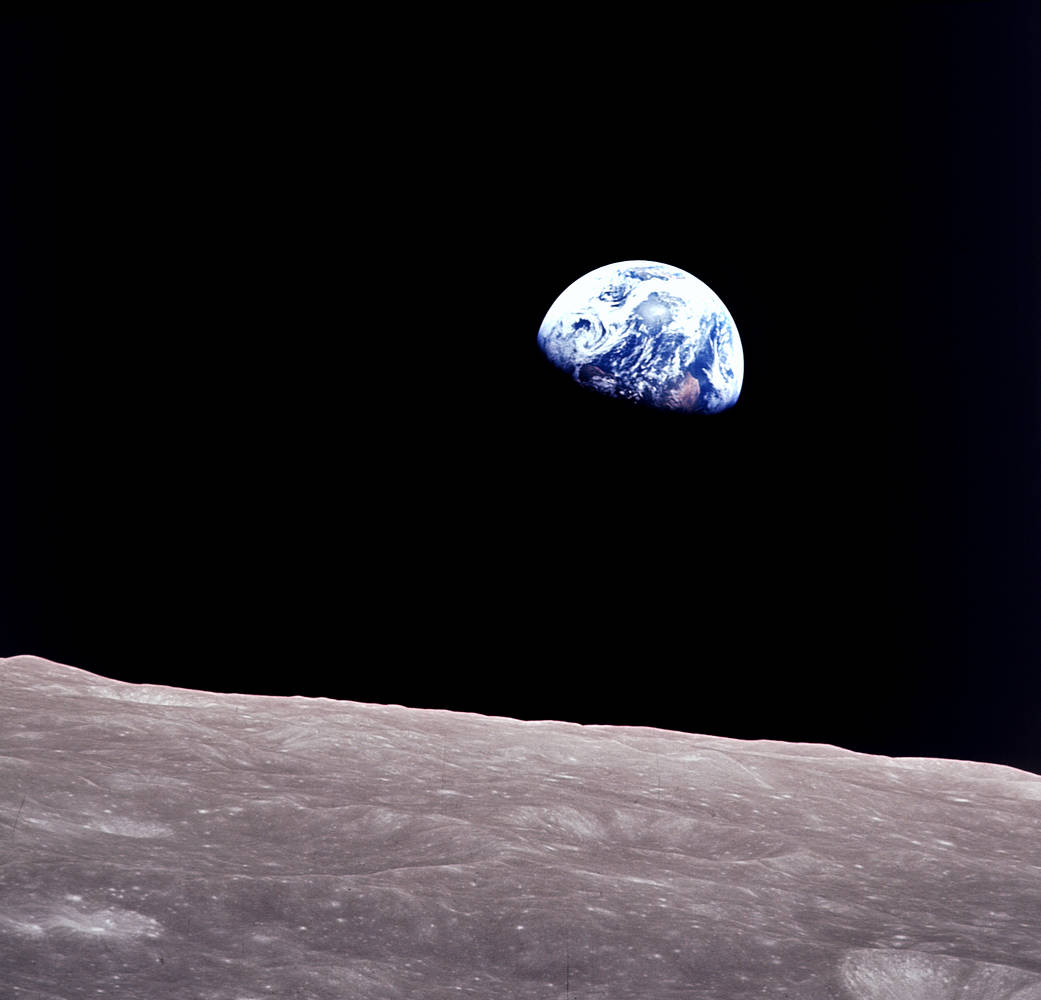
Once a photograph of the Earth taken from the outside is available, once the sheer isolation of the Earth becomes plain, a new idea as powerful as any in history will be let loose.

Here, in Paul’s opinion, is that photograph:

Taken aboard Apollo 8 by Bill Anders, this iconic picture shows Earth peeking out from beyond the lunar surface as the first crewed spacecraft circumnavigated the Moon, with astronauts Anders, Frank Borman, and Jim Lovell aboard.
Image Credit: NASA Last Updated: Dec 23, 2020
Editor: Yvette Smith

The 2021 United Nations Climate Change Conference was held in Glasgow, Scotland, UK, from 31st October to 13th November 2021. It was called COP26 because it was the 26th UN Climate Change Conference to be held. It was opened by the Prince of Wales, now King Charles III.

The Prince warned: “Time has quite literally run out.”

It is us!

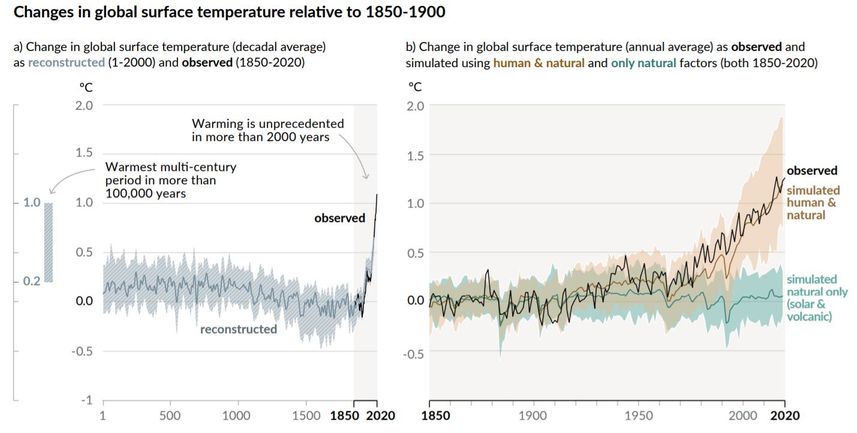
The UN’s Intergovernmental Panel on Climate Change (IPCC) kicked off its 2021 report with the following statement: “It is unequivocal that human influence has warmed the atmosphere, ocean and land.

The article also says: It took a while, but climate modelling is now refined enough to predict how things would go without human influence, within a margin of error. What we are observing today, however, is beyond that margin of error, therefore proving that we have driven the change.

It is getting hot

The last decade was the hottest in 125,000 years.

The oceans

We live on a water world. The facts are that 71% of the Earth’s surface is water-covered and the oceans hold about 96.5% of all Earth’s water. A 2019 study found that oceans had sucked up 90% of the heat gained by the planet between 1971 and 2010. Another found that it absorbed 20 sextillion joules of heat in 2020  – equivalent to two Hiroshima bombs per second. A (chiefly British) definition of a sextillion: It is the cardinal number equal to 1036. Sextillion is a number equal to a 1 followed by 21 zeros. 1,000,000,000,000,000,000,000 is an example of a sextillion.

Carbon-dioxide

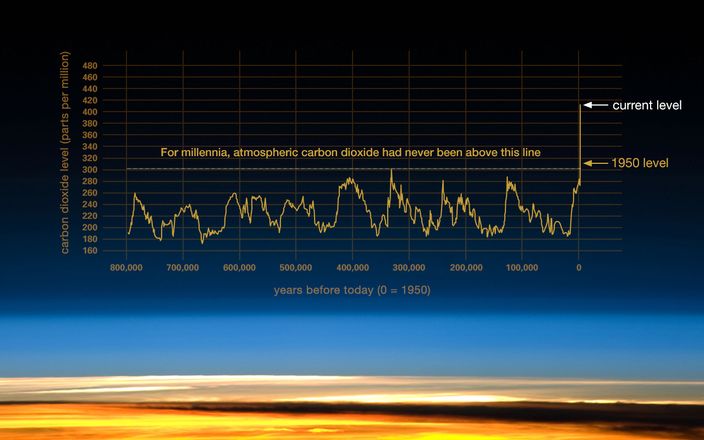
In fact CO2 levels are now the highest that they have been in 2 million years. Today, they stand at close to 420 parts per million (ppm). To put that into context pre-industrial levels, say before 1750, had CO2 levels around 280 parts per million.

We are losing ice big time

Paul can do no better than to quote from Earth.org“Since the mid-1990s, we’ve lost around 28 trillion tons of ice, with today’s melt rate standing at 1.2 trillion tons a year. To help put that into perspective, the combined weight of all human-made things is 1.1 trillion tons. That’s about the same weight as all living things on earth.”

To repeat that: Every single year we are losing 1.2 trillion tons of ice! (1,200,000,000,000).

Extreme weather

We can now attribute natural disasters to human-driven climate change with certainty. We can now say with precision how much likelier we made things like the North American summer 2021 heatwave, which the World Weather Attribution says was “virtually impossible” without climate change. Then there is the Indian heatwave that experts believe was made 30 times more likely because of climate change.

Climate change mitigation

There is a long and comprehensive article on the above subject on WikiPedia. I will quote from the paragraph Needed emissions cuts.

If emissions remain on the current level of 42 GtCO2, the carbon budget for 1.5°C (2.7°F) will be exhausted in 2028. (That’s 42 gigatons, as in 1 gigaton is a unit of explosive force equal to one billion (109) tons of trinitrotoluene (TNT).

In 2022, the Intergovernmental Panel on Climate Change (IPCC) released its Sixth Assessment Report on climate change, warning that greenhouse gas emissions must peak before 2025 at the latest and decline 43% by 2030, in order to likely limit global warming to 1.5°C (2.7°F).

Secretary-general of the United Nations António Guterres clarified that for this to happen “Main emitters must drastically cut emissions starting this year”.

WikiPedia also reports that: The United Nations Framework Convention on Climate Change, the UNFCCC, aims to stabilise greenhouse gas (GHG) concentrations in the atmosphere at a level where ecosystems can adapt naturally to climate change, food production is not threatened, and economic development can proceed in a sustainable fashion. Currently human activities are adding CO2 to the atmosphere faster than natural processes can remove it.

We need to act now, otherwise…

… it will be too late for billions of us.

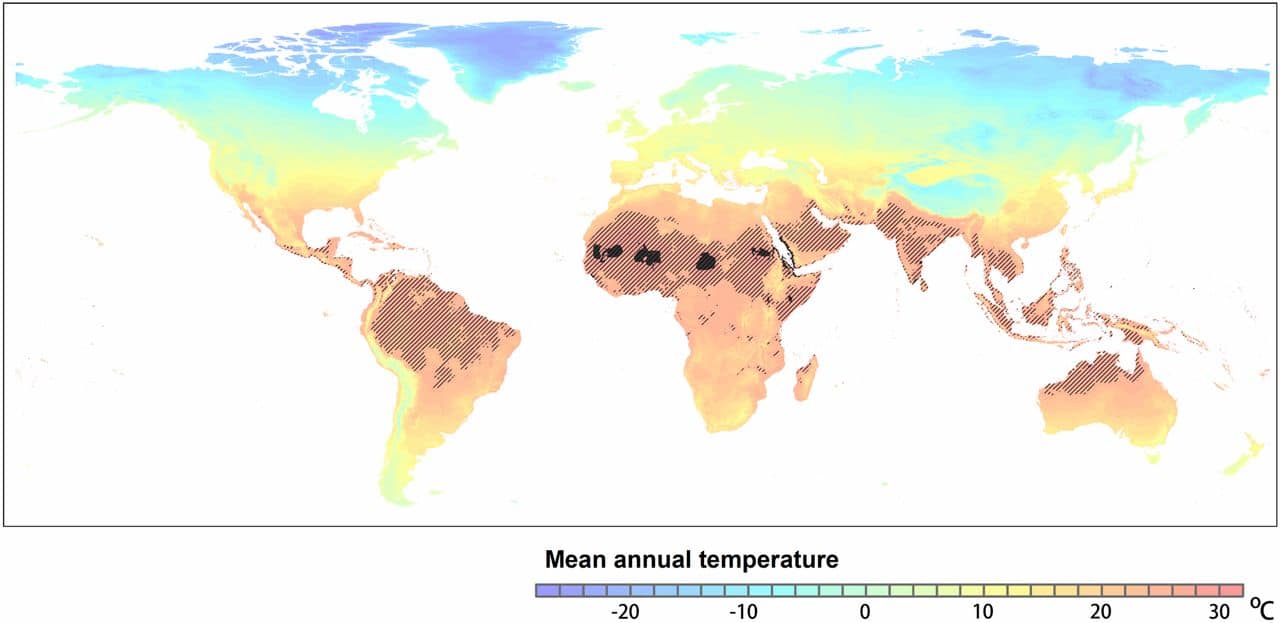
This may be the most catastrophic of our climate change facts. As of now, only 0.8% of the planet’s land surface has mean annual temperatures above 29°C (84.2°F) mostly in the Sahara desert and Saudi Arabia (solid black in the map).

study by Xu et al. (2020) called “Future of the Human Niche” found that by 2070, under a high emissions scenario, these unbearable temperatures could expand to affect up to 3 billion people (dark brown areas in the map).

Doing nothing is much worse than doing something

On the current path, climate change could end up costing us 11 to 14% of the global GDP by mid-century. Regression into a high emissions scenario would mean an 18% loss, while staying below 2°C would reduce the damage to only 4%. 

It has been proposed that ending climate change would take between $300 billion and $50 trillion over the next two decades. Even if $50 trillion is the price tag, that comes down to $2.5 trillion a year, or just over 3% of the global GDP. 

These are the facts. There is no disputing them. Paul and Jean, Paul’s wife, are relatively immune from the effects, because of their ages, but not entirely so. The last few weeks of summer (2022) with the imminent risk of their property being damaged by wildfires is one example. The last three winters being below average rainfall is another (and the prediction that next year will continue with below average rainfall). But it is the youngsters Paul fears most for. On a personal note, his daughter and husband have a son, Morten, and he is presently 12. What sort of world is Morten growing up in?

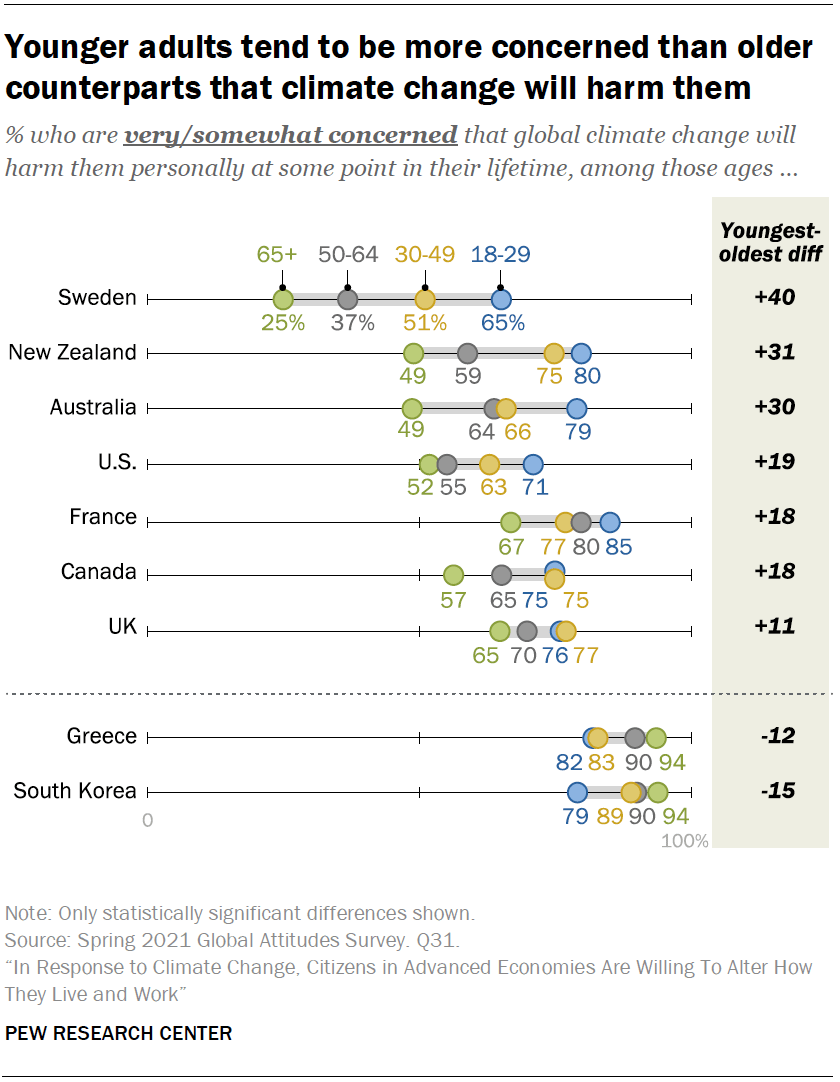
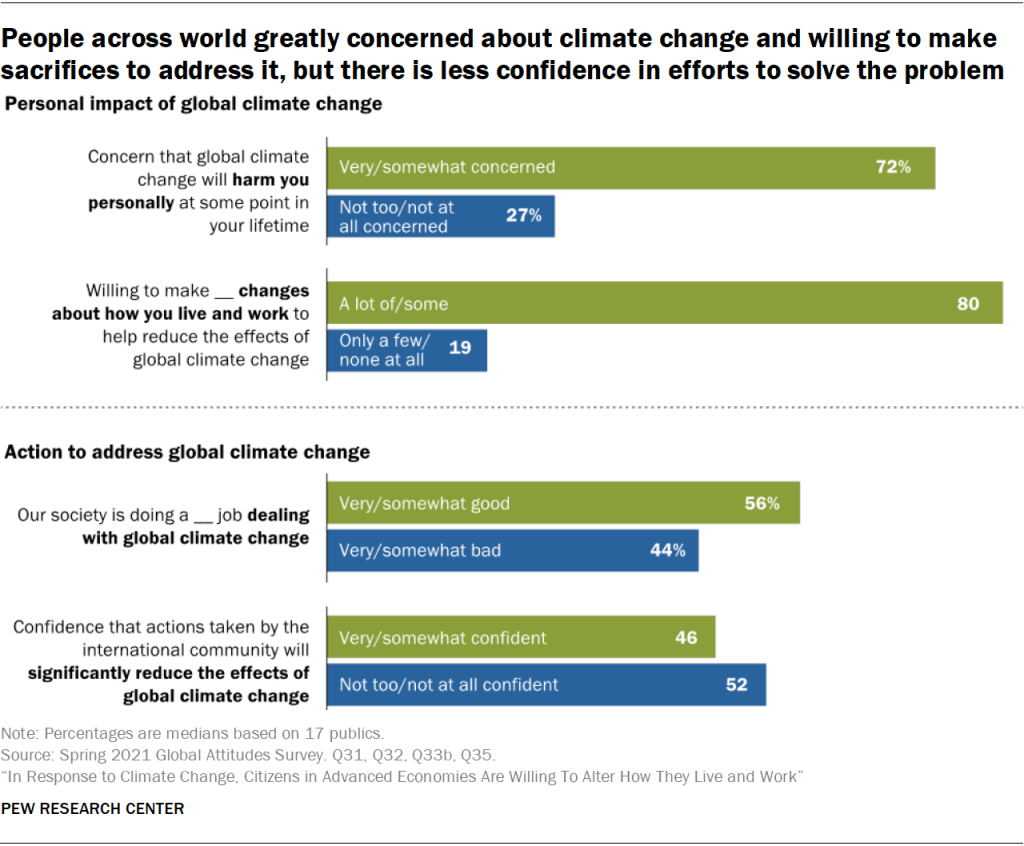
What about global attitudes to climate change?

Here is another chart setting out those concerns.

Paul is not a political animal. However he recognises that it is our leaders, globally, but especially in the top 10 countries in the world, who have to be leaders!

Here are the top 10 countries with areas of their country in square kilometres:

Russia. 17,098,242,

Canada. 9,984,670,

United States. 9,826,675,

China. 9,596,961,

Brazil. 8,514,877,

Australia. 7,741,220,

India. 3,287,263,

Argentina. 2,780,400,

Kazakhstan. 2,724,400, and

Algeria, 2,381,741.

But these are the top ten countries based on land size. That is not helpful. We have to examine the top countries in terms of CO2 emissions. Here are the top five countries, as in the top five worst, (readings from 2020):

  1. USA, 416,738 metric tons,
  2. China, 235,527 tons,
  3. Russia, 115,335 tons,
  4. Germany, 92,636 tons, and,
  5. UK, 78,161 metric tons.

This puts the USA as the top worst country, some 77% ahead of China.

So focussing on the USA, again in 2020, the split of greenhouse gas emissions, was:

  1. Transportation, 27%,
  2. Electric Power, 25%,
  3. Industry, 24%,
  4. Commercial and Residential, 13%,
  5. Agriculture, 11%.

So back again to all five countries we say, please, dear leader, make this the number one priority for your country, and for the world.

The end.

Sir David Attenborough.

There are not many who achieve so much, but Sir David most definately has!

This is our planet. It is the only one we have (stating the obvious!).

This beautiful photograph taken from the Apollo 11 mission says it all. That Commander Neil Armstrong and lunar module pilot Buzz Aldrin landed the Apollo Lunar Module Eagle on July 20, 1969 changed everything.

But one thing that was not on anyone’s mind then; the state of the planet!

This view of Earth rising over the Moon’s horizon was taken from the Apollo 11 spacecraft. The lunar terrain pictured is in the area of Smyth’s Sea on the nearside. Coordinates of the center of the terrain are 85 degrees east longitude and 3 degrees north latitude.
While astronaut Neil A. Armstrong, commander; and Edwin E. Aldrin Jr., lunar module pilot, descended in the Lunar Module (LM) “Eagle” to explore the Sea of Tranquility region of the moon, astronaut Michael Collins remained with the Command and Service Modules (CSM) “Columbia” in lunar orbit.
Image Credit: NASA

How that has changed since 1969.

David Attenborough is a giant of a man, and I say this out of humility and respect for what he has done in his long life, he was born in May, 1926, and he is still fighting hard to get us humans to wake up to the crisis that is upon us.

Wikipedia has an entry that lists all the television shows, and more, that David Attenborough has made. As is quoted: “Attenborough’s name has become synonymous with the natural history programmes produced by the BBC Natural History Unit.”

Please take 45 minutes and watch this film. It is so important.

But before you do please read this extract taken from this site about the film:

For decades David Attenborough delighted millions of people with tales of life on Earth, exploring wild places and documenting the living world in all its variety and wonder. Now, for the first time he reflects upon both the defining moments of his lifetime as a naturalist and the devastating changes he has seen.

Honest, revealing and urgent, the film serves as a witness statement for the natural world – a first-hand account of humanity’s impact on nature, from Australia’s Great Barrier Reef to the jungles of central Africa, the North Pole and Antarctica. It also aims to provide a message of hope for future generations.

“I’ve had a most extraordinary life. It’s only now I appreciate how extraordinary,” Sir David says in the film’s trailer, in which he also promises to tell audiences how we can “work with nature rather than against it”.

The film retraces Sir David’s career, his life stages and natural history films, within the context of human population growth and the loss of wilderness areas. “I don’t think that the theoretical basis for the reason why biodiversity is important is a widely understood one,” he told the Guardian in September.

This autumn, a series of publications warned that “humanity is at a crossroads” in its relationship with nature, culminating in a UN report that the world has failed to meet a single target to stop the destruction of nature in the past decade.

Sir David has been vocal about the threat of climate change in recent years, calling on politicians to take their “last chance” to act rather than continue to “neglect long-term problems”.

We need to learn how to work with nature, rather than against it”, according to Sir David. In the film, he is going to tell us how.

Now watch the film. Please!

As you can see, in the film Sir David states that the only way out of this mess is a massive focus on rewilding.

Coincidentally, Patrice Ayme last Sunday wrote about rewilding: California Grizzly: Rewilding Is A Moral Duty. In the latter half of that essay, he wrote: “One should strive to reintroduce American megafauna, starting with the more innocuous species (and that includes the grizzly). By the way, I have run and hiked in grizzly country (Alaska), with a huge bear pepper spray cannister at the ready. I nearly used the cannister on a charging moose (with her calf which was as big as a horse). The calf slipped off, and I eluded the mom through a thicket of very closely spaced tough trees. But I had my finger on the trigger, safety off. Moose attack more humans than grizzlies and wolves combined (although a bear attack is more dangerous). In any case, in the US, stinging insects kill around 100, deer around 200 (mostly through car collisions), and lightning around three dozen people, per year.

As it is, I run and hike a lot in California wilderness, out of rescue range. I generally try to stay aware of where and when I could come across bears, lions and rattlers. My last close call with a large rattlesnake, up a mountain slope, was partly due to hubris and not realizing I was moving in dangerous terrain. Fortunately I heard the slithering just in time. Dangerous animals make us aware of nature in its full glory, and the real nature of the human condition. They keep us more honest with what is real, what humanity is all about.

And that should be the primordial sense.

I will close by offering you this photograph. May it inspire you to rewild, in small ways and also, if you can, in bigger ways. All of us must be involved. Otherwise…

Photo by Cosmic Timetraveler on Unsplash

…otherwise… (sentence left unfinished).

Back again, and with a guest post!

It has been a great time and yet too short!

Last Sunday week, the 22nd May, seems both a long time ago and yet seems as though it was yesterday. Having my son here was fabulous and he was able to take plenty of mountain bike rides and photographs of birds, in particular hummingbirds at our hummingbird feeder.

But that picture does not make a post. What does is an article written by Cara Achterberg about very special mothers and their work in rescuing dogs. It was published on the website Who Will Let the Dogs Out.

ooOOoo

Moms Who Rescue

BY CARA SUE ACHTERBERG

Polk County, Florida is ranked first in Florida and fourth in the nation for the number of dogs ‘euthanized’ each year. The Polk County shelter killed 5000 dogs in 2020. Which is even more remarkable considering 2020 was the year so many shelters were emptied (momentarily).

The only way a dog labeled a bully breed can leave the Polk County Shelter alive is if a rescue pulls it. They are not allowed to adopt out any bully breeds. In 2020, the county took in 16,000 dogs; they killed nearly a third of them.

This is the harsh reality that Shannon and Angie, of the Polk County Bully Project stepped into. Like so many others, they never set out to create a rescue. They met through their children, and their relationship should have revolved around play dates and pool parties, but when they learned the plight of bully breeds in Polk County, they instead bonded over saving lives.

Initially, they volunteered with the Polk County SPCA to secure rescues and transport dogs out of Polk County a handful at a time. That simply wasn’t enough for these smart, driven, passionate women and they realized that with their own rescue they could save more than a handful of dogs. The Polk County Bully Project was born. PCBP saves about 600 dogs a year – almost all bully breeds, but also dogs with medical needs and lots of heartworm positive dogs—the dogs that would otherwise be killed at the shelter.

I asked how they were able to save so many of the breed of dog that others struggle to rescue or find placement for and Shannon shrugged, “We hustle,” she said.

But it’s also that they don’t know any different. They’ve never tried to rescue any other kind of dog. They don’t know there are easier dogs to rescue. To my mind, they jumped right in the deep end of rescue with very little swimming experience. And the remarkable thing is they are succeeding in every measure.

When we visited the rescue a few months ago, the dogs we met were sweet and happy and obviously well-cared for. The shelter is small, a remodeled brick rancher in a nondescript neighborhood. The dogs are divided into separate rooms with maybe four dogs in a room. We arrived at naptime when everyone was contentedly in their kennels, listening to soft music or watching TV. The staff had already had everyone out for walks and playtime, something that happens several times a day.

PCBP is big on enrichment—something critical to these smart, active dogs who need to be challenged. At Christmas they had 25 days of enrichment and every day brought the dogs special treats (anchovies, cheeseburgers, special individual cakes baked by a volunteer) and special activities (like a bubble machine and dog art, which they’ll be auctioning off).

On rainy days, the staff keeps the dogs busy with puzzles and their doggy treadmill. In their play area, where they also have regular play groups (all the staff has been trained to run playgroups), there is AstroTurf, lots of toys, even an agility teeter.

PCBP is a 501c3 run on 100% donations. Many of their adopters become their supporters, but they work hard with fundraising and events to pay for not just the staff (although Angie and Shannon do not take a salary and both work the rescue fulltime and more), but for their medical bills. Last year their bill was 115K! (If you’d like to donate directly towards their vet bills, give Lakeland Vet a call 863-648-4886.)

Beyond treating so many heartworm positive dogs, the rescue takes on lots of medical cases who would otherwise not make it out of the shelter. We met Aspen, a sweet little pitmix whose scarred face, protruding teeth, and wiggly butt combine to make him adorable. He was removed from a home where he’d had a leash wrapped so tightly and permanently around his nose that it was embedded in his skin. He’s had eight reconstruction surgeries to repair his face. But now he’s ready for an adopter.

Other dogs have had amputations, orthopedic surgeries, and Agatha, a sweet senior bulldog mix, has had vaginal reconstruction and eye surgery. We watched as Pippi, one of the staff brought her out to meet us off-leash. She’s 102 pounds of sweetness. When it was time to go back inside, Pippi pointed the way and Agatha ran/ambled back inside to her kennel on her own. Agatha is 11-12 years old, but the rescue would love to find an adopter, or even a foster for her because every dog deserves to live out their lives in a home not a shelter, even one as nice as this.

oooo
oooo

Polk County is a tough county for dogs, but even tougher for pit bulls. There are no animal laws, no spay/neuter vouchers available for community animals, and backyard breeders abound. At the time of our visit (January), the rescue had 64 puppies.

Beyond that, it’s simple prejudice (my words, not theirs). The leadership in Polk County judges these dogs not adoptable and condemns them based on their appearance. The rescue hopes that with education and advocacy, they can influence the commissioners in the county to enact anti-tethering laws, require dog licenses and breeder permits, and prioritize spay/neuter resources. Any of those would help to turn the tide.

To reach the next generation (these are two moms after all), they created an Ambassador program to get kids ages 8 and up involved at the rescue. They make toys, treats, and paint rocks in honor of the dogs at the shelter, but more than that they learn about the situation and how important it is we do better for our animals.

Rescues that focus on pit bulls are few and far between, but rescues who do it so well in such numbers are even harder to find. The Polk County Bully Project is saving the dogs who are the hardest to save. As their van says, “We fight for them, so they don’t have to.”

Shannon and Angie are positive people who operate on a currency of hope—that they can change the narrative here in Polk County.

They save the dogs that need them the most through sheer determination with the resourcefulness and creativity of moms, counting on their dog-loving community to come through for them. And they have.

Spending just an hour or so with them, it was clear that these two women are game-changers, rescue warriors, and then some. I believe they will do it, but they will need even more support to fight this battle.

If you’d like to help, you can donate through the secure link on their website, or by calling Lakeland Vet and donating to their vet bills directly (863-648-4886).

We are getting ready to head out on another shelter tour in two weeks. If you’d like to support our tour or sponsor one of the shelters, find out more here.

Until each one has a home,

Cara

Please help us raise awareness by subscribing and sharing this blog. You can also keep track of us on FacebookInstagramYouTube, and now Tik Tok!

The mission of Who Will Let the Dogs Out (we call it Waldo for short) is to raise awareness and resources for homeless dogs and the heroes who fight for them.

You can learn more about what is happening in our southern shelters and rescues in the book, One Hundred Dogs & Counting: One Woman, Ten Thousand Miles, and a Journey Into the Heart of Shelters and Rescues (Pegasus Books, 2020). It’s the story of a challenging foster dog who inspired me to travel south to find out where all the dogs were coming from. It tells the story of how Who Will Let the Dogs Out began. Find it anywhere books are sold. A portion of the proceeds of every book sold go to help unwanted animals in the south.

Amber’s Halfway Home  is our short documentary film produced in partnership with Farnival Films. It follows the work of a remarkable woman and one day of rescue in western Tennessee. Selected for sixteen film festivals (to date), it’s won eight awards (including Best Short Doc, Best Soundtrack, Best of Fest, and Audience Choice), and was nominated for an Emmy! It is a beautiful, heartbreaking, inspiring story we hope will compel viewers to work for change. Please watch it and share it far and wide.

For more information on any of our projects, to talk about rescue in your neck of the woods, or become a Waldo volunteer, please email whowillletthedogsout@gmail.com or carasueachterberg@gmail.com.

ooOOoo

I am privileged to be allowed to share this post with you.

Please help!

The never-ending sensitivity of dogs!

How about this for a story from Peru.

Not only do dogs come in a myriad of sizes and shapes, witness our own Brandy and Pedi, but they are also conscious creatures, as in they remember and grieve; albeit in a dog fashion.

The Dodo presented this story back on the 4th March about just a dog. Read it and be swept away in the world of dogs.

ooOOoo

Woman At The Beach Meets A Dog Who Won’t Stop Staring Out To Sea

The reason why touched her heart ❤️️

By Stephen Messenger

Published on the 4th March, 2022

The other day, Jolie Mejía and her family decided to visit Punta Negra, a small seaside community near their home in Peru.

It was there, along a rocky shore overlooking the sea, that they came to learn a story of love in its purest form.

After Mejía and her family settled down along the shore, they were approached by a random dog who appeared to be all by himself.

“He didn’t seem abandoned. He wore a ribbon around his neck and his fur was clean,” Mejía told The Dodo. “I pet him, waiting for his owner, but minutes passed and no one came.”

The dog enjoyed Mejía’s pets, but all the while his gaze remained fixed upon the ocean.

And Mejía soon came to learn the touching reason why.

Mejía and her family considered adopting the dog themselves, assuming he had indeed been abandoned. So, when a man local to the area walked by, Mejía asked him if he knew the dog’s status.

“He explained that practically everyone in the area knows the dog and is very fond of him,” Mejía said. “He told us that the dog’s owner was a fisherman who passed away some time ago, and that the dog comes to the beach every day and stares out to sea.”

The dog, it seems, has been holding vigil — awaiting the return of his friend who will never come home.

“We were very moved,” said Mejía.

Mejía believes the dog’s owner died at sea about a year ago, and that the dog has been watching out for him daily ever since.

But though the dog’s owner may never return, the dog isn’t without friends who care for him.

The dog’s sad story is evidently well-known by people in the community, who feed him, shelter him and provide him with health care when he needs it.

A local veterinarian in Punta Negra confirmed to The Dodo that the dog’s name is Vaguito, and that he’s currently in the care of a woman who lives nearby.

By day’s end, Mejía and her family eventually parted ways with Vaguito, his eyes still cast out to sea. But his bittersweet story — one of loyalty to a love he lost, and the loyalty and love he found in the community — is one she won’t soon forget.

“I have a dog at home,” Mejía said. “I love dogs in general. His story really touched my heart.”

(Photos by Jolie Mejía)

ooOOoo

This is the perfect story. But it is more! It is the perfect story of how special a dog is. For this particular dog, Vaguito, clearly was loved by his fisherman and even after a year Vaguito still holds a vigil for him. It is a very lovely article, but that is the unconditional love shown by dogs to humans who care and love them back.

Transformation

A more positive view as to how the future will pan out.

I tend to be rather pessimistic about the future. Maybe it is my age, I don’t know. But a week ago I posted an article by Ophelia Benson called Cruising over the Edge.

For this week I am republishing another climate change article but one that has a positive outlook on where we are going.

Have a read and let me know your thoughts.

ooOOoo

Climate change will transform how we live, but these tech and policy experts see reason for optimism

Authors

  1. Robert Lempert Professor of Policy Analysis, Pardee RAND Graduate School
  2. Elisabeth Gilmore Associate Professor of Climate Change, Technology and Policy, Carleton University

Published April 18th, 2022

It’s easy to feel pessimistic when scientists around the world are warning that climate change has advanced so far, it’s now inevitable that societies will either transform themselves or be transformed. But as two of the authors of a recent international climate report, we also see reason for optimism.

The latest reports from the Intergovernmental Panel on Climate Change discuss changes ahead, but they also describe how existing solutions can reduce greenhouse gas emissions and help people adjust to impacts of climate change that can’t be avoided.

The problem is that these solutions aren’t being deployed fast enough. In addition to push-back from industries, people’s fear of change has helped maintain the status quo. 

To slow climate change and adapt to the damage already underway, the world will have to shift how it generates and uses energy, transports people and goods, designs buildings and grows food. That starts with embracing innovation and change.

Fear of change can lead to worsening change

From the industrial revolution to the rise of social media, societies have undergone fundamental changes in how people live and understand their place in the world.

Some transformations are widely regarded as bad, including many of those connected to climate change. For example, about half the world’s coral reef ecosystems have died because of increasing heat and acidity in the oceans. Island nations like Kiribati and coastal communities, including in Louisiana and Alaska, are losing land into rising seas.

Other transformations have had both good and bad effects. The industrial revolution vastly raised standards of living for many people, but it spawned inequality, social disruption and environmental destruction.

People often resist transformation because their fear of losing what they have is more powerful than knowing they might gain something better. Wanting to retain things as they are – known as status quo bias – explains all sorts of individual decisions, from sticking with incumbent politicians to not enrolling in retirement or health plans even when the alternatives may be rationally better. 

This effect may be even more pronounced for larger changes. In the past, delaying inevitable change has led to transformations that are unnecessarily harsh, such as the collapse of some 13th-century civilizations in what is now the U.S. Southwest. As more people experience the harms of climate change firsthand, they may begin to realize that transformation is inevitable and embrace new solutions. 

A mix of good and bad

The IPCC reports make clear that the future inevitably involves more and larger climate-related transformations. The question is what the mix of good and bad will be in those transformations.

If countries allow greenhouse gas emissions to continue at a high rate and communities adapt only incrementally to the resulting climate change, the transformations will be mostly forced and mostly bad

For example, a riverside town might raise its levees as spring flooding worsens. At some point, as the scale of flooding increases, such adaptation hits its limits. The levees necessary to hold back the water may become too expensive or so intrusive that they undermine any benefit of living near the river. The community may wither away.

Riverside communities often scramble to raise levees during floods, like this one in Louisiana. Scott Olson/Getty Images

The riverside community could also take a more deliberate and anticipatory approach to transformation. It might shift to higher ground, turn its riverfront into parkland while developing affordable housing for people who are displaced by the project, and collaborate with upstream communities to expand landscapes that capture floodwaters. Simultaneously, the community can shift to renewable energy and electrified transportation to help slow global warming.

Optimism resides in deliberate action

The IPCC reports include numerous examples that can help steer such positive transformation.

For example, renewable energy is now generally less expensive than fossil fuels, so a shift to clean energy can often save money. Communities can also be redesigned to better survive natural hazards through steps such as maintaining natural wildfire breaks and building homes to be less susceptible to burning.

Costs are falling for key forms of renewable energy and electric vehicle batteries. IPCC Sixth Assessment Report

Land use and the design of infrastructure, such as roads and bridges, can be based on forward-looking climate information. Insurance pricing and corporate climate risk disclosures can help the public recognize hazards in the products they buy and companies they support as investors.

No one group can enact these changes alone. Everyone must be involved, including governments that can mandate and incentivize changes, businesses that often control decisions about greenhouse gas emissions, and citizens who can turn up the pressure on both.

Transformation is inevitable

Efforts to both adapt to and mitigate climate change have advanced substantially in the last five years, but not fast enough to prevent the transformations already underway.

Doing more to disrupt the status quo with proven solutions can help smooth these transformations and create a better future in the process.

Disclosure statement

Robert Lempert receives funding from the National Science Foundation, U.S. Department of Transportation and Culver City Forward. He was coordinating lead author of the IPCC WGII Sixth Assessment Report, Chapter 1, and is affiliated with RAND Corp.; Harvard; SCoPEx (Stratospheric Controlled Perturbation Experiment) Independent Advisory Committee; National Renewable Energy Laboratory; Decision Science and Analysis Technical Advisory Committee (TAC); Council on Foreign Relations; Evolving Logic; and the City of Santa Monica Commission on Environmental, Sustainability, and Environmental Justice.

Elisabeth Gilmore receives funding from Minerva Research Initiative administered by the Office of Basic Research and the Office of Policy at the U.S. Department of Defense and the National Science Foundation. She is affiliated with Carleton University, Rutgers University, the Peace Research Institute Oslo (PRIO), and was a lead author on the IPCC WGII Sixth Assessment Report.

ooOOoo

The article makes the proposition that fear gets in the way of change. I think this is true because I tend to be a person that goes around saying ‘what can be done’ or ‘it is down to governments to set the changes required’ but not taking action personally.

So this is wakeup call for me and many others to be more positive and to support those changes that are beneficial, and to undertake them ourselves if at all possible.

This changed me.

Suzanne Simard’s compelling book, and compelling life.

I have just finished reading Suzanne’s book. It is Finding the Mother Tree.

The subtitle might be: This is not a book about how we can save the trees. This is a book about how the trees might save us.

In her first book, Simard brings us into her world, the intimate world of the trees, in which she brilliantly illuminates the fascinating and vital truths – that trees are not simply the source of timber or pulp, but are a complex, interdependent circle of life; that forests are social, cooperative creatures connected through underground networks by which trees communicate their vitality and vulnerabilities with communal lives not that different from our own. Simard writes – in inspiring, illuminating, and accessible ways – how trees, living side by side for hundreds of years, have evolved, how they perceive one another, learn and adapt their behaviors, recognize neighbors, and remember the past; how they have agency about the future; elicit warnings and mount defenses, compete and cooperate with one another with sophistication, characteristics ascribed to human intelligence, traits that are the essence of civil societies – and at the center of it all, the Mother Trees: the mysterious, powerful forces that connect and sustain the others that surround them.

From Suzanne’s website

Luckily, you don’t have to wait for the book, you can learn about Suzanne and her precious scientific work by watching the following TED Talk.

Here are a couple of excerpts.

The first from page 277:

Our modern societies have made the assumption that trees don’t have the same capacities as humans. They don’t have nurturing instincts. They don’t cure one another, don’t administer care. But now we know Mother Trees can truly nurture their offspring. Douglas firs, it turns out, recognize their kin and distinguish them from other members of the community.

And the second from page 283:

I have come full circle to stumble onto some of the indigenous ideals: Diversity matters. And everything in the universe is connected – between the forests and the prairies, the land and the water, the sky and the soil, the spirits and the living, the people and all other creatures.

To say that I was amazed is an understatement. It is a book that will appeal to nature lovers all over the world. But more than that, the trees of the world have the ability to save humankind from accelerating climate change, if only enough people sign up to protecting trees, and soon. If you haven’t read it yet I implore you to read it now.

Finally, in Suzanne’s own words: Turning to the intelligence of nature itself is the key.

If you want to get involved then please go to The Mother Tree Project.

A heart-rending plea from George Monbiot

It is about global warming.

The article from George Monbiot came into my mailbox quite recently. Now of course Mr. Monbiot has a living to make and him publishing articles in the Guardian newspaper is normal. But I sensed that in this particular post he was worried. Worried about the situation regarding the planet and, by implication, all those who live on it.

I read yesterday on the UK Met Office blog about HILL events.

HILL events go beyond traditional weather extremes, potentially taking the climate system into uncharted territories. For example, much of the UK’s climate is predicated on two large elements of the climate system: the North Atlantic jet stream, a core of strong winds five to seven miles above the Earth’s surface, and the Atlantic Meridional Overturning Circulation (AMOC), a system of ocean currents which transports warm water northwards in the Atlantic.

Later on in that Met Office article it was said:

Prof Richard Betts MBE is the Head of Climate Impacts Research in the Met Office Hadley Centre and a Professor at the University of Exeter. Prof Betts, who led the team which prepared the Technical Report for the UK’s 3rd Climate Change Risk Assessment (CCRA3), is calling for a monitoring, attribution and prediction system that can provide early warning of HILLs. Professor Betts said: “With rising global temperatures, we are edging closer to the thresholds for more and more HILL events. Greater research into these events will help scientists advise policy makers on their thresholds and impacts.”

A week ago I wrote with real pride about the achievements of the James Webb Space Telescope (JWST). Later on I felt some shame that the focus on the real issue, that of climate change, was too low a priority for the US, let alone the world! Then I looked up the US expenditure on the military. Here’s a small quote from WikiPedia: “In May 2021, the President’s defense budget request for fiscal year 2022 (FY2022) is $715 billion, up $10 billion, from FY2021’s $705 billion.”[1] That puts the JWST into perspective. JWST cost ten billion dollars.

Expand one’s mind and just think of the global cost of war!

Here’s George Monbiot. Republished with his permission.

ooOOoo

Losing It

10th January, 2022

Faced with the gathering collapse of the biosphere, and governments’ refusal to take the necessary action, how do we stop ourselves from falling apart?

By George Monbiot, published in the Guardian 4th January 2022

No wonder journalists have slated it. They’ve produced a hundred excuses not to watch the climate breakdown satire Don’t Look Up: it’s “blunt”, it’s “shrill”, it’s “smug”. But they will not name the real problem: it’s about them. The movie is, in my view, a powerful demolition of the grotesque failures of public life. And the sector whose failures are most brutally exposed is the media.

While the film is fast and funny, for me, as for many environmental activists and climate scientists, it seemed all too real. I felt as if I were watching my adult life flash past me. As the scientists in the film, trying to draw attention to the approach of a planet-killing comet, bashed their heads against the Great Wall of Denial erected by the media and sought to reach politicians with 10-second attention spans, all the anger and frustration and desperation I’ve felt over the years boiled over.

Above all, when the scientist who had discovered the comet was pushed to the bottom of the schedule by fatuous celebrity gossip on a morning TV show and erupted in fury, I was reminded of my own mortifying loss of control on Good Morning Britain in November. It was soon after the Cop26 climate conference in Glasgow, where we had seen the least serious of all governments (the UK was hosting the talks) failing to rise to the most serious of all issues. I tried, for the thousandth time, to explain what we are facing, and suddenly couldn’t hold it in any longer. I burst into tears on live TV.

I still feel deeply embarrassed about it. The response on social media, like the response to the scientist in the film, was vituperative and vicious. I was faking. I was hysterical. I was mentally ill. But, knowing where we are and what we face, seeing the indifference of those who wield power, seeing how our existential crisis has been marginalised in favour of trivia and frivolity, I now realise that there would be something wrong with me if I hadn’t lost it.

In fighting any great harm, in any age, we find ourselves confronting the same forces: distraction, denial and delusion. Those seeking to sound the alarm about the gathering collapse of our life-support systems soon hit the barrier that stands between us and the people we are trying to reach, a barrier called the media. With a few notable exceptions, the sector that should facilitate communication thwarts it.

It’s not just its individual stupidities that have become inexcusable, such as the platforms repeatedly given to climate deniers. It is the structural stupidity to which the media are committed. It’s the anti-intellectualism, the hostility to new ideas and aversion to complexity. It’s the absence of moral seriousness. It’s the vacuous gossip about celebrities and consumables that takes precedence over the survival of life on Earth. It’s the obsession with generating noise, regardless of signal. It’s the reflexive alignment with the status quo, whatever it may be. It’s the endless promotion of the views of the most selfish, odious and antisocial people, and the exclusion of those who are trying to defend us from catastrophe, on the grounds that they are “worthy”, “extreme” or “mad” (I hear from friends in the BBC that these terms are still used there to describe environmental activists).

Even when these merchants of distraction do address the issue, they tend to shut out the experts and interview actors, singers and other celebs instead. The media’s obsession with actors vindicates Guy Debord’s predictions in his book The Society of the Spectacle, published in 1967. Substance is replaced by semblance, as even the most serious issues must now be articulated by people whose work involves adopting someone else’s persona and speaking someone else’s words. Then the same media, having turned them into spokespeople, attack these actors as hypocrites for leading a profligate lifestyle.

Similarly, it’s not just the individual failures by governments at Glasgow and elsewhere that have become inexcusable, but the entire framework of negotiations. As crucial Earth systems might be approaching their tipping point, governments still propose to address the issue with tiny increments of action, across decades. It’s as if, in 2008, when Lehman Brothers collapsed and the global financial system began to sway, governments had announced that they would bail out the banks at the rate of a few million pounds a day between then and 2050. The system would have collapsed 40 years before their programme was complete. Our central, civilisational question, I believe, is this: why do nations scramble to rescue the banks but not the planet?

So, as we race towards Earth system collapse, trying to raise the alarm feels like being trapped behind a thick plate of glass. People can see our mouths opening and closing, but they struggle to hear what we are saying. As we frantically bang the glass, we look ever crazier. And feel it. The situation is genuinely maddening. I’ve been working on these issues since I was 22, and full of confidence and hope. I’m about to turn 59, and the confidence is turning to cold fear, the hope to horror. As manufactured indifference ensures that we remain unheard, it becomes ever harder to know how to hold it together. I cry most days now.

http://www.monbiot.com

ooOOoo

Now there is very little that we folk can do. We can do our best but it all comes to nought. The real change is for governments, especially the governments of the US, China, Russia, the UK, and Europe, to make a difference soon.

Don’t hold your breath!

At last some hope!

Bill McKibben steps forward.

I heard yesterday from Erik Hoffner who is responsible for the Mongabay website that Bill McKibben is stepping up to the mark in wanting to take action regarding climate change.

I very quickly signed up and received the following email:

Dear Friend,

Many thanks for signing up to be a part—and we hope a big part—of Third Act.

My name is Bill McKibben, and I’m one of the volunteers helping to launch this effort for Americans 60 and older who want to build a fairer and more sustainable nation and planet.

We’re very much in the early days of this, and we need your help—especially if you’re good at the behind-the-scenes tasks like administration, development, and project management. If you’ve got some time to donate right now, write to us at info@thirdact.org.

And we will be back in touch as autumn rolls on, with some early campaigns focused on climate action and on ending voter suppression. As you can tell, we’re making this up as we go along. So it should be interesting, and also a little bumpy!

If you can assemble a sizable group of people, I’ll do my best to join you for a virtual talk to explain more about this idea. (And when the pandemic ends, we’ll try to do it in person!).

And if you can donate some small sum of money to help with the launch, here’s the place.

Thank you. This is our time to make some powerful change—we’ve got the skills, the resources, and the desire. So let’s try.

Thanks, Bill McKibben for Third Act

The website is here.

WELCOME TO YOUR THIRD ACT

We’re over 60—the Baby Boomers and the Silent Generation. We have skills, we have resources, we have time—and many of us have kids and grandkids. We also have a history. In our early years we saw remarkable shifts in politics and society; now, in our latter years, we want to see those changes made real and lasting.

We were there for the first Earth Day, and we’ve been glad to see cleaner air and water—but now we know that the climate crisis presents an unparalleled threat. The heat is on and we must act quickly to turn it down.

We watched or participated in the civil rights movement—and now we know that its gains were not enough, and that gaps in wealth have only widened in our lifetimes. We’ve got to repair divisions instead of making them worse.
We saw democracy expand—and now we’re seeing it contract, as voter suppression and gerrymandering threaten the core of the American experiment. We know that real change can only come if we all get to participate.

You are the key to this work. Maybe you’ve asked yourself: how can I give back on a scale that matters? The answer is, by working with others to build movements strong enough to matter. That’s why we hope you’ll join us.

Clearly I have signed up and I hope an enormous number of other people will do as well.

Because the time left is not very long and even me at the age of 76 fear for the near future if nothing is done urgently.

Please, please consider joining Third Act.

As the headline says: THIRD ACT — EXPERIENCED PEOPLE WORKING FOR A FAIR AND STABLE PLANET.