Category: Morality

Only outcomes matter!

The Resilience Imperative and Civil Disobedience

Introduction

I have long been a subscriber to CASSE, The Center for the Advancement of the Steady State Economy.  As Casse’s home page sets out, “Perpetual economic growth is neither possible nor desirable. Growth, especially in wealthy nations, is already causing more problems than it solves.  Recession isn’t sustainable or healthy either. The positive, sustainable alternative is a steady state economy.”  Do take a minute to see the sense and power of this fundamentally and obvious position by reading a little more here.

But as the title of today’s post sets out, all the ideas and actions and commitments come to naught if the outcomes aren’t delivered.  This recent essay by Michael Lewis on the CASSE website explores the issue of outcomes and I am very grateful for being granted permission to republish it here on Learning from Dogs.

oooOOOooo

The Resilience Imperative and Civil Disobedience

by Michael Lewis

As I was making a speech in Alberta, Canada, to a business audience, mainly from the finance and energy industries, a fully engaged participant in the front row caught my eye. He was the first to approach me after the question period and the first to get my autograph on The Resilience Imperative: Cooperative Transitions to a Steady-State Economy, the book that I co-authored with Pat Conaty.

During my talk, I had argued that economic growth and a casino-like financial system were taking us to the edge of a deadly precipice. I made the case that societies urgently need to navigate the turn to a steady-state economy, based on local and regional trade. I also offered suggestions on how we might accomplish this. The thesis has a bit of an edge to it, especially in a business crowd accustomed to globalization and growth, so I was anxious to learn more about the front-row enthusiast.

He turned out to be a warm, charming, and open senior manager at Cenovus Energy, a large player in the Athabasca Tar Sands. The corporation seems to be respected in Alberta and Saskatchewan because of its health and safety, community, and environmental initiatives. He rapidly brought the discussion to the issue of “social license,” a condition he acknowledged was a big problem for the tar sands operators. But his view, after many years around boardroom tables, is that the industry is becoming more transparent and responsible, and its performance is improving.

I believe this to be true; certainly Cenovus has been doing a lot of things right. However, I argued that he was missing the point; social license in this industry could only be understood in a global context, and it is not going to be forthcoming for two simple reasons: (1) economic growth produces carbon and (2) carbon is going to kill a lot of us and thousands of other creatures.

If the oil and gas sector wants to explore the potential for broadening its social license, it would have to stand shoulder to shoulder with scientists, governments, businesses, and civil society and argue for a stiff tax on carbon. Only by taking such responsibility can Cenovus and its fellow corporations expand their social license. At the same time they would be helping to set the stage for the transition to a steady-state economy.

“Nothing less would do,” I proclaimed.

“Well you know, Mike,” he replied, “I have not seen much evidence of such a move afoot.”

Why am I not surprised? “I know,” I said. “Shareholder interests are framed by the ideology of growth and profit maximization, and even when these interests are complemented by an ethic of corporate social responsibility, the ideology does not exactly encourage this vital and necessary conversation.”

A few days later I attended the launch conference of the New Economics Institute at Bard College in Upstate New York. It was a remarkable convergence of practitioners, researchers, and activists engaged in debates about economics, analysis of mindboggling challenges (both local and planetary in scale), and exploration of hopeful transformational pathways.

Bill McKibben delivered a Friday evening keynote speech to a packed audience. His laser focus on greenhouse gas emissions was at once absorbing, terrifying, and hopeful, precisely the kind of dynamic that is motivating more and more people to step up to the front lines of civil disobedience, including many scientists and even a few economists. Mark Jaccard, a well-known energy economist in Vancouver, is hardly considered to be a radical, but he joined the front-line battle as part of a 350.org action. He was arrested in May of this year [Ed: 2012] for blocking a coal train headed north to Vancouver’s coal port.

McKibben and Jaccard are picking up on the analysis of James Hansen et al. that oil and gas are a problem, but we do not have enough of it left to take us over 450 parts per million of carbon dioxide in the atmosphere. Coal is the real threat. Unless we phase out coal completely by 2050, we will blast beyond this concentration, and that’s an event that many climate scientists believe will trigger catastrophic consequences. What are we to do?

McKibben and Jaccard are showing us part of the answer. But to make real progress, we need to pay much more attention to Herman Daly, the outstanding chronicler of our economic and ecological lunacy. He concluded one recent essay with this strident statement befitting of our circumstances:

Even though the benefits of further growth are now less than the costs, our decision-making elites have figured out how to keep the dwindling extra benefits for themselves, while “sharing” the exploding extra costs with the poor, the future, and other species. The elite-owned media, the corporate-funded think tanks, the kept economists of high academia, and the World Bank — not to mention Gold Sacks and Wall Street — all sing hymns to growth in perfect unison, and bamboozle average citizens.

Dr. Daly has clarified and expanded the arguments for a steady-state economy that go back to John Stuart Mill, John Ruskin, Frederick Soddy, Kenneth Boulding, and Ghandi. In the same essay referenced above, Daly also noted that in spite of all the evidence of the growing crisis, “our economists, bankers, and politicians still have unrealistic expectations about growth. Like the losing gambler they try to get even by betting double or nothing on more growth.”

Well then, perhaps we need to follow the leads of McKibben, Jaccard, and Hansen, and go get arrested. Perhaps we need to breathe deeply and act courageously to make hope more concrete and despair less convincing. Perhaps those of us in the 50 to 90-year-old set need to commit to civil disobedience to honor our children, grandchildren and our hopes for their survival. The time has arrived for all of us, but especially the post-war “growth generation” to break out of our too-comfortable zones. Stopping carbon emissions is a pre-condition, but nothing will change unless we are prepared to put ourselves on the line.

Of course, this is not enough. We have many questions to answer. How are we going to meet basic needs for energy, food, and shelter? How are we going to finance the economic transition? How do we restructure property rights to overcome the pervasive me-first culture? How do we achieve more local and democratic ownership of the means of production? How do we share jobs and income in a transition that will require less stuff and thus less making of stuff?

These are the questions we concentrate on in The Resilience Imperative. Pat Conaty and I put 42 months of serious forehead pressing into the book, and the early results are gratifying. People as divergent as John Fullerton, former managing director of JP Morgan whose focus is now on resilience and transition (good-bye Wall Street), and Robin Murray from the London School of Economics have endorsed it — they believe we have presented hopeful ideas for getting the transition going.

After presenting numerous positive examples of how people are changing the economy today, we end the book on this note:

The tasks of transition are many. The challenges are daunting. The outcomes are uncertain. Our courage remains untested. But we are a resilient species. We are not alone; there is “blessed unrest” all about. If we but open our eyes, we will SEE change is possible. If we act in ways that recognize we are interdependent, we will continue to innovate co-operative transitions to a steady-state economy.

There is one key question we need to ask ourselves. What stories will we be able to tell our loved ones about what we did to advance the Great Transition?

oooOOOooo

One sentence really jumped out at me from Michael’s essay and it was this one, “Perhaps we need to breathe deeply and act courageously to make hope more concrete and despair less convincing.”  Reminds me of the quotation ascribed to Napoleon Bonaparte:

Courage isn’t having the strength to go on, it is going on when you don’t have strength.

It is all about outcomes.

Can you give a dog a home?

Please take two minutes to read this now.

Back over two years ago, when Jean and I were living in Payson, Arizona, I wrote a post called Tara’s Babies.  Here’s a flavour of that post:

oooOOOooo

Many who follow this Blog will know that my beautiful wife, Jean, is totally devoted to dogs, especially rescue dogs.  Over the years that she and her previous husband Ben lived in Mexico, Jean must have rescued at least 70 dogs.  Even today, we have 11 ex-rescue dogs enjoying a fabulous life in our mountain home here in Payson, Arizona.

So it was a big surprise to come across a dog rescue organisation called Tara’s Babies and find that their sanctuary is in our neighbourhood.

Photo by Wib Middleton

Here’s a description of the organisation taken from the local newspaper from September 9th, 2009.

By Alan R. Hudson
Gazette/Connection Correspondent
It has been nearly five years since Tara’s Babies Animal Welfare began rescuing animals displaced by Hurricane Katrina. Tara’s Babies operates a no-kill animal rescue and sanctuary “off the grid” at the Ellinwood Ranch, near Young.

oooOOOooo

Anyway, Alan Hudson left a comment a few minutes ago to the effect that Tara’s Babies is closing.  Confirmed by going to their website.

The reason why this post is being published straightaway is because of the urgent need to find homes for 24 dogs.  Take a look at those dogs; please!

I’m republishing what you can read on the Tara’s Babies website – please share this news as far and wide as you can.  These dogs need good homes.

oooOOOooo

Tara’s Babies Animal Welfare

No Kill Animal Rescue and Sanctuary

Practice kindness, save a life…change the world

Tara’s Babies began in 2005 as a desperate cry from New Orleans after Hurricane Katrina left thousands of dogs and cats, homeless and suffering. Our founder sent a crew of volunteers to search the flooded buildings for animals in need. We rescued 17 dogs and a kitten. and thus began Tara’s Babies Animal Welfare (TBAW).

While down there, we paired with Best Friends and arranged an airlift to bring 150 dogs and cats from Tylertown, MS to Phoenix, AZ. Waiting at the airport when we arrived was a cattle transporter, volunteers and SUV’s to take the animals to Dakini Valley, AZ.

Our sanctuary at Dakini Valley is located on 157 acres in the remote Hell’s Gate Wilderness. Here the dogs and cats were cared for with love and attention three full-time volunteers until every one of the Katrina dogs were re-homed or found forever homes, with the exception of 15 dogs who were non-adoptable needing lifetime sanctuary. As the original Katrina animals were placed, we found our true mission evolve into saving animals from death row.

Since then we have worked tirelessly networking with other rescues, shelters, and sanctuaries to continuously save dogs from death row. Connections were made as far as Taiwan! Pipi, a Taiwanese dog, was brought to our sanctuary through this connection.

We have had as many as 71 dogs at once at the sanctuary. Even those dogs considered non-adoptable, who are human or dog aggressive, have benefited from the peaceful surroundings of the land and our love. These dogs have demonstrated good behavior with their caretakers and some have even been paired with a companion dog.

Due to unforeseen medical and other issues we lost our director and several volunteers bringing the number of volunteers down to only one. Out of concern for the safety of the dogs coupled with ongoing financial difficulties, the Tara’s Babie’s board made the difficult and heartbreaking decision to close our doors.

We will continue to lovingly care for each of the dogs until ALL are placed.

Please help the remaining dogs at the sanctuary. Click HERE to see them!. If you can help us with adoptions or placement in another sanctuary please contact us at  wggnrclr@yahoo.com or call 928-301-1392. You can also visit our Facebook page for photos and stories.

oooOOOooo

(Tara’s Babies sanctuary is located outside Payson, Arizona. Most administrative and support operations are in Sedona Arizona. The telephone number is 928-301-1392. Leave a message.)

Once again, if there is anything you can do, please be in direct contact with Tara’s Babies.  Feel free to leave any comments or news here.

Thank you so much.

Be in peace, dear Lupe.

Forgive the shortness of today’s post.

I’m writing this at 3pm on the Tuesday, i.e. yesterday afternoon.

In under an hour’s time we have to leave to travel to Grants Pass to see the vet and have poor Lupe euthenised.  She has been suffering from dementia since before Christmas and has got to the point where she has little or no quality of life left.  Jeannie has been a saint in patiently administering to Lupe’s needs; feeding her, cleaning her up, and more.  All for many weeks now.  It was about 2 hours ago that Jean knew the time had come.

A few pictures from better times.

P1030118

From Mexico days back in 2008.  Lupe is second from the left.

P1100990

Lupe leading Lilly, taken in February of 2012 at our home in Payson, AZ.

P1120522

Picture of Lupe taken just 8 weeks ago, showing clearly the effects of the dementia in terms of her posture.

Lupe was always a challenge having been terribly treated as a feral dog in Mexico.  In fact, it was 6 months before Jean could fondle her after she had been rescued by Jean.  But slowly she learnt to trust Jean and then to offer Jean lots of doggie love.  I, too, have fond memories of being cheek-to-cheek with Lupe; her love and trust overcoming all fears.

Yet again, so much to learn from dogs.

Sweet, dear Lupe.


In search of intelligent life!

One does have to wonder at times!

The title of today’s post comes from that silly anecdote as to why Planet Earth has never been visited by a species of intergalactic explorers from a far, distant world?

Answer: Because as they passed by and looked down upon our planet they saw no signs of intelligent life!

So what triggered all this?

Well last Wednesday, Christine over at 350 or bust published a review of the recently released film Greedy Lying Bastards.  Christine offered an insightful review of the film but more importantly went on to reveal a whole raft of issues that deserve to be widely promoted.  She has been generous in allowing me to republish her post on Learning from Dogs.

What has this to do with dogs?  On the face of it, very little.  But then again, everything.  Because if humans reverted to the standards of trust, loyalty and openness that we see every day in our dogs then we wouldn’t be in the mess that we are in!

oooOOOooo

Greedy Lying Bastards: Exposing The Fossil Fools Who Put Profit Before Human Lives

GreedyLyingBastards.com

*

One of the few-and-far-between perks of being a climate blogger is that occasionally I get access to books and movies before the general public does. This past weekend I got to watch “Greedy Lying Bastards” before it hit movie screens across the U.S. on Monday. Sunday night I, along with some fellow Citizens Climate Lobby volunteers, got together to watch this 90 minute documentary. This movie exposes the American fossil fuel interests that have been blocking action on climate change for decades, taking a page – and some of the same PR firms and lobbyists – right out of the tobacco companies’ playbook.  Like the tobacco lobby, these fossil fools have opposed government action on the science showing their product is harmful and have actively disseminated lies about the science.

After the movie, I surveyed group members for their responses; we all gave it 10 out of 10 for its topic, but for actual delivery the movie was rated between 6 to 8 out of 10.

Some of the comments were:

“I really appreciated the whistle-blowing, the naming of names. I also really appreciated first-hand accounts of people in the U.S. who are already suffering the consequences of climate change.”

“I haven’t watched a documentary about this topic before, and really appreciated the great graphics. They made the connections for me.”

Two viewers had recently watched “The Age of Stupid” and felt that it spelled out the greed and petro-corruption as well as the consequences of inaction on climate change more clearly than did GLB.

I enjoyed the movie. Of course as a climate hawk I’m thrilled that this corruption and interference in democracy is receiving more attention at this critical juncture in the planet’s history, and for that I want to give a big shout-out to writer and director Scott Rosebraugh and producer Darryl Hannah. Compared to “Age of Stupid” which totally overwhelmed and depressed me and my companion, GLB left me riled up and ready to fight back at these soulless corporate monsters. One critique I have is that the movie ended with a whimper. Rosebraugh offers – in 60 seconds – four actions for people to take in response to the information they’ve just heard (possibly for the first time). It’s not that the actions mentioned (boycotting Exxon & Koch products, asking your Congressional representatives to take action to curb greenhouse gases, “joining the campaign” to stop fossil fuel subsidies and campaigning to overturn Citizens United) aren’t important, they are but to spend 89 minutes of the movie focused on the fossil fools who are destroying U.S. democracy as well as our children’s future without giving viewers more information on taking action may well foster more futility and despair. And, frankly, just signing a petition or writing a letter to your congressperson isn’t going to cut it at this point. The movie doesn’t give enough specifics on responses; the shocking amount of fossil fuel subsidies companies are given every year ($4 Billion in the United States, $775 Billion globally) isn’t even mentioned even while people are encouraged to get active on this issue. To move people from outrage to action, more information and empowerment is necessary. For example, viewers should know that there are governments (Australia, and the Canadian province of British Columbia) who have enacted a tax on carbon pollution, one of the first actions that governments can take to counter the fossil fuel stranglehold on our democracies and our economies.There are groups like 350.org and Citizens Climate Lobby (to name the ones I’m most familiar with) who are working to mobilize people at the grassroots; these important resources are not mentioned in the movie or on the movie’s “take action” website. This silo mentality is one of the biggest stumbling blocks to climate action, so I would beg the fine people involved in GLB and its website to expand their resources and “take action” focus. For that reason I would give the movie a ranking of 7.5 out of 10. Having said that, get out and watch the movie if it’s showing in a theatre near you, and take some friends with you.

For my part as a Canadian, I’d like to add a few more GLBs to the rogues’ gallery compiled by Rosebraugh:

Tim Ball worked as a professor of geography at the University of Winnipeg for eight years between 1988 and 1996. I am personally offended by Mr. Ball because not only did he work at my alma mater, and employed a family member for several years as his research assistant, he has been quoted back to me by acquaintances of mine from rural Manitoba where he’s gone on paid lecturing junkets. I hear that he can be very persuasive, and he’s told these good people that climate change is nothing to worry about (“the climate has always changed”), and so they don’t worry, even while this inaction puts their children’s future at risk. He even lies about his credentials – in this 2007 movie that purports to debunk climate science, you can see he’s identified as being from a department that never existed, in the university that he left 11 years earlier. Now that’s what I call a GLB!

SwindleTimBall

And this Canadian GLB gallery wouldn’t be complete without a portrait of our current prime minister, Stephen Harper, son (spawn? LOL) of an Imperial Oil employee who went on to work for the oil company himself. Harper and his party’s ties to Big Oil are well-documented and are clearly playing themselves out in the current federal government’s policy decisions (see Murray Dobbin’s “Stephen Harper and the Big Oil Party of Canada, or DesmogBlog’s new series, Blame Canada).

406305_339945026024087_278550055496918_1365624_697749516_n

*

More links:

Dr. Jeff Masters’ WunderBlog: Greedy Lying Bastards: A Movie Review

Washington Post: Greedy Lying Bastards: Movie Review

GreedyLyingBastards.com

ExposeTheBastards.com: Take Action

Welcome Home

Sharing the truth of who each of us really is!

I subscribe to Christine’s blog 350 or bust.  As the home page declares, Christine is “a mother, an educator, and a former registered nurse, concerned about climate change.”

Being a follower of Christine’s blog I automatically received an email on Tuesday about her latest post.  This is what that email said,

It’s TED Talk Tuesday on 350orbust. Here’s a fascinating TEDx talk by South African trainer and speaker Bruce Muzik whose “passion is having people experience unprecedented freedom and happiness, through being Authentic.

To be perfectly honest, it didn’t strike me as something that I would watch anytime soon.  However, fate decided to intervene!

Because yesterday, Wednesday, I went up to Portland for an interview today to convince the authorities that I was safe to have my US Residency renewed (aka Green Card).  So last Tuesday, when I was writing these words, I thought I would just grab something quickly for today’s post.  Christine’s TED talk seemed an easy answer.

I started to watch the video and within just a few minutes was overwhelmed with Bruce Muzik’s story.  At the 7 minute mark I paused the video and wrote these words.  The title of today’s post comes from the video just a moment after the 7 minute point.

While the video is about Bruce confronting his inner fears over his racial prejudices, and is no less moving for doing that, there was another message surfacing in parallel in my consciousness.

As I wrote not so long ago under the title of Going beyond the self, “the human psyche lives in a bubble of delusion.”  In the same way that Bruce had to cast aside his delusions and embrace the reality of black people, we have to cast aside our delusions about the way the world is heading.  Which is why Christine’s title How Our Secrets Steal Our Lives was just perfect.

So without further ado, here is that speech by Bruce Muzik. Twenty minutes of pure, gorgeous inspiration.

Want more? Bruce has a blog here.

E Pluribus Unum

From Many, One.

There were a great number of ‘Likes’ for John Hurlburt’s writings which were published most recently on the 1st March, Making sense of life? and on the 25th February, Fear versus Faith.

So it is with very great pleasure that I pass the baton for today’s post once more across to John.

oooOOOooo

E Pluribus Unum

We know we’re in trouble when we no longer pay serious attention to the weather, the foundations of our economy are imaginary, our pumps don’t work because our wells are running dry.  Then how we distract ourselves and loudly complain more often than we make a honest effort to maintain our balance and understand our inclusive situation.

We know we’re in trouble when we’ve moved into the rut of a manufactured illusion and furnished it, when we consume more than we produce, when equality has become a dirty word, when we believe that more guns reduce gun violence, when contempt of Congress has become a national pastime and when our supreme court has become a corporate political tool.

We know we’re in trouble when we fund both sides of a global oil war and neglect the needs of our war veterans, when we believe that we can adapt to change by standing still, when we’ve taken the culture out of agriculture, when we wage cyber war against our planetary neighbors, when an obsessive focus on money systemically corrupts our world and when democracy has a price tag.

We know we’re in trouble when there is virulent opposition to change, when a corporate backed element of our civilization insists upon obfuscation denial and obstruction, when ignorance has become more common than common sense, when a global religious faith and a major university are fractured by inappropriate physical conduct with children in the name of God and sports respectively, and when our primary purpose appears to be to consume our planet as cost effectively as practicable.

We know we’re in trouble when our rivers run dry, when our food is laced with pesticide residues, when our air is contaminated by fuel and chemical waste products, when living species are becoming extinct from the bottom of the food chain and up at a rapidly increasing rate, when we chose to ignore the realities of our natural condition as transitory inhabitants of a living planet and when we arrogantly choose to believe that we own planet earth either as a species or as individual members of a species.

We know that we’re in trouble when free speech is thought to include an unbalanced right to be aggressively ignorant, intolerant and uncompassionate despite all facts to the contrary, when we no longer believe in simple science and arithmetic and when we concentrate on undoing social issues which have been resolved in our lifetimes rather than honestly facing the confluence of problems we all share.

We know we’re in trouble when our politics are more about posturing than policy, when prisons have become a growth industry, when levels of state secrecy exceed open disclosure, when justice has a price tag, when bigotry is stronger than progress, when education is based upon opinion rather than fact and when one nation under God, with liberty and justice for all, has become a fractured nation with a dysfunctional government.

We know we’re in trouble when our legislatures have been purchased, when faith in our financial system has been willfully damaged, when political leaders engage in childish tantrums to get their way regardless of anything or anyone else, when awareness of moral reality has become meaningless and when we fail to appreciate the depths of a looming abyss. What do we gain by purposefully destabilizing our economy, reopening settled social issues and blatantly risking our inclusive future as a species for a mess of pottage?  Who do we think we are?

We know we’re on the right track when nature is more important to us than profit, when open mindedness is stronger than private interests, when media reports facts rather than conjecture and when freedom of speech is not taken to wretched excess as a psychological tool of cultural management employed for the exclusive benefit of an affluent minority.

We know we’re on the right track when our faith in power greater than our species is more significant than short-term profit, when we create equitable employment which benefits our environment, when we repair our crumbling infrastructure, when we make an effort to improve our inclusive quality of life, when war is no longer a first remedy for misunderstanding or disagreement and when we make an effort to reverse our established patterns of self destruction.

We know we’re on the right track when we tax our world stock markets because of our need for revenue based upon the fact that market trades are the only major form of financial transaction that remains untaxed, when we cultivate our cities and towns based on biological needs for clean air, water, food, and energy and when we begin to recognize the massive burden which world population growth places on our planet and take steps to balance our birth rate accordingly.

We know we’re on the right track when we realize that algae based bio-fuel will run every diesel engine in the world without modification, when we realize that our future must be beyond the earth and when we take further steps beyond our garden cradle on a journey of exploration to the stuff of the stars from which our life on earth emerges.

Change is a constant. Today is the tomorrow we dreamed of yesterday. We know we’re growing as a consciously aware life form when our faith is stronger than our fear, when we trust each other to do the next right thing and when the nature of the energy of our spiritual being is more important to us than the immediate comforts of our transitory material being. One day at a time. In God we trust.

Happy trails,

an old lamplighter

Go on, adopt a dog!

A delightful example of a dog teaching a puppy.

(Watched over 3,100,000 times!)

Published on Dec 26, 2012

If you would like to donate to Manitoba Mutts Dog Rescue in Winnipeg, MB please go here.

Our 6 month old lab mix rescue pup taught our 8 week old foster pup (adopted now) from Manitoba Mutts Dog Rescue in Winnipeg to go down the stairs once she got up and couldn’t get down! Please adopt and do not shop. This video is hoping to spread awareness to adopt a dog rather than shop around for one.

Rescue animals are just as great, if not more!

Please search your area for local rescues if you are looking for a dog or cat. These lovely pups are from Manitoba Mutts Dog Rescue in Winnipeg, Manitoba, Canada.

Walking Away from Empire; a book review

“Once you eliminate the impossible, whatever remains, no matter how improbable, must be the truth.” Arthur Conan Doyle.

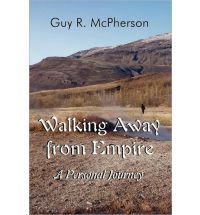
Ten days ago, I finished reading the book Walking Away from Empire: A Personal Journey. It had been sent to me by the author.

Let me explain how this came about.

A few weeks ago, I published an item under the title of Doggedly seeking the truth.  I included the video “The Twin Sides of the Fossil-Fuel Coin: Developing Durable Living Arrangements in Light of Climate Change and Energy Decline.“  That video was a presentation by Prof. Guy McPherson.

Subsequently, during an exchange of emails with Prof. McPherson there was an offer to receive a free copy of his book, Walking Away from Empire: A Personal Journey.  Naturally, I accepted.

Having finished reading the book it seemed only fair to write a review.

So far, so good!

I tried to marshal my thoughts for well over a week.   Couldn’t get started.  Strange, because when immersed in the book the messages were crystal clear.

Why the struggle to embrace Guy McPherson’s messages?  Then in a moment of insight I realised that I was struggling to understand why I was struggling!

walkingaway
Published by PublishAmerica, LLLP

Because the blunt truth of the matter is that this book spells out the bleedin’ obvious.  Humanity is between a rock and a hard place!

Look no further than the very first paragraph of the first chapter, Reason,:

At this late juncture in the era of industry, it seems safe to assume we face one of two futures. If we continue to burn fossil fuels, we face imminent environmental collapse. If we cease burning fossil fuels, the industrial economy will collapse. Industrial humans express these futures as a choice between your money or your life, and tell you that, without money, life isn’t worth living. As should be clear by now, industrial humans — or at least our “leaders” — have chosen not door number one (environmental collapse) and not door number two (economic collapse), but both of the above.

Sandy Krolick of Transition Voice wrote a review of Guy McPherson’s book in September, 2011.  His last sentence was, “This is a book you will not put down; and having read it, you’ll no longer be able to ignore its conclusions.

Again, what Sandy Krolick writes is perfectly correct. No argument.  Yet …. something about that sentence from Sandy doesn’t speak to me.  That struggle again.

Then I got it!

Let me go straight to page 177 of Prof. McPherson’s book and quote this:

It’s no longer just the living planet we should be concerned about. It’s us. The moral question, then: What are you going to do about it?

Then one paragraph later, come this:

There is simply no feeding the hollow spot in my gut and my psyche, as there was when I replaced my invisible, omnipotent friend in the sky with reason. Instead of abandoning the mirage of eternal life, I’m abandoning the mirage of globalization. Instead of giving up an everloving god, I’m giving up a comfortable life spent with my best friend. I’m taking yet another step in the path from make-believe to reality. And, as we all know, reality is a harsh, dispassionate mistress who doesn’t give a damn about the emptiness in my fragile little psyche. Fortunately, I still have the amusing memories of the absurdity of my former life, in which I believed I was saving the world by conducting and publishing mundane research and teaching irrelevant concepts to a largely disinterested audience.

I found the first step to be the most difficult. Simply recognizing the industrial economy as an omnicidal imperial beast forced me to cross a threshold most people find far too formidable to attempt.

Just reflect on those key words, “a threshold most people find far too formidable to attempt.”

Keep those words in mind as I quote the next paragraph from the book.

We’ve never been here as a species, much less as individuals. And every cultural message tells us we’re wrong, that the industrial age will last forever, that justice and goodness will prevail over every enemy (i.e., terrorist), that progress is a one-way street to industrial nirvana, that the harbinger of hope will keep the oil coming and the cars running and the planes flying so we can all soak up the sun on a sandy beach any time we need a break from our tumultuous lives in the cube farms of empire.

This, then, was the result of reading the book.  The realisation of the reality of our existence.  The immensity of the truth of where mankind is.  The here and NOW!

Sorry, let me amend those last sentences.  My realisation of the reality of my existence.  The immensity of the truth of where I am.  My here and NOW!

No wonder I struggled.

So not much of a book review, more a review of yours truly!  That is the power of this book.  Sandy Krolick was right; “This is a book you will not put down; and having read it, you’ll no longer be able to ignore its conclusions.

Be warned.  When you read this book brace yourself for what you see staring out of the mirror back at you. There will be no room left for delusion.

As Carl Sagan said, “It is far  better to grasp the universe as it really is than to persist in delusion, however satisfying and reassuring.

Soldier saviour.

This beautiful story recently sent to me from Cynthia.

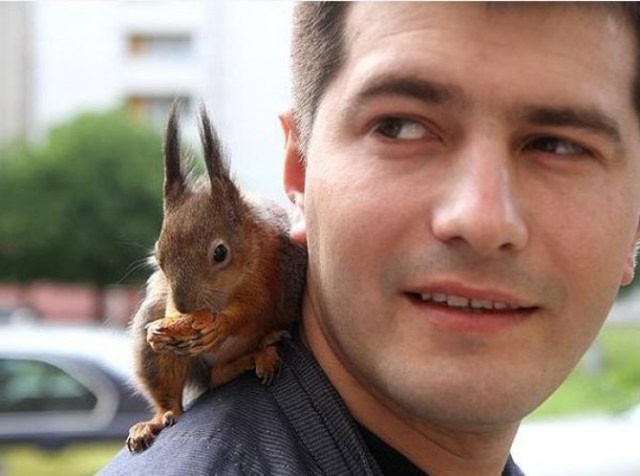
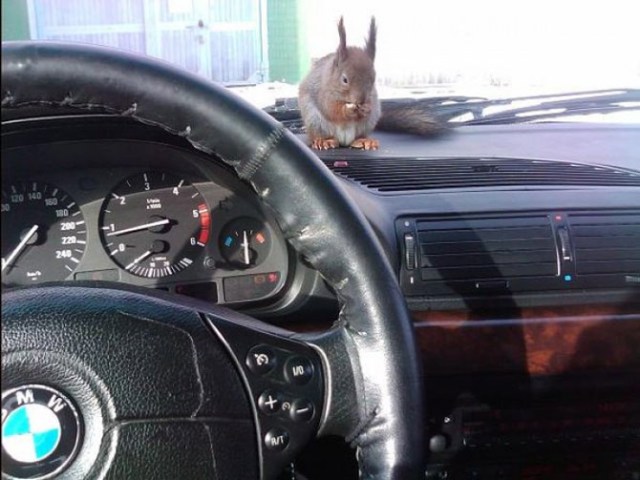
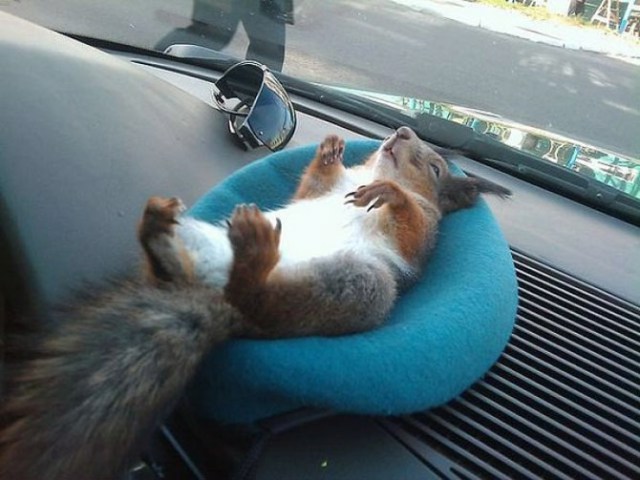
Soldiers in Belarus found a little squirrel and brought it to their Warrant Officer. The squirrel was very weak and close to death. Remarkably, the officer took care of it, feeding it like a baby every four hours.

Now he has left the army and works as a humble taxi driver.  But his reward for saving the squirrel is beyond measure, as the following sequence of photographs show so clearly.

sq1

oooo

sq2

oooo

sq3

oooo

sq4

oooo

sq5

oooo

sq6

oooo

sq7

oooo

sq8

oooo

sq9

oooOOOooo

There are some very special people out there!

The instinct of trust.

Yet another learning message from our animal kingdom.

As I wrote in Monday’s post, this week I was going to “Enjoy the beauty of the world around me and offer a few essays on the meaning of life.

Hopefully the subsequent essays on Carl Sagan and how our beautiful planet can change our consciousness, under the title of To see is to understand, have partly achieved that aim.

We hear so much that is unsettling that it is easy to lose sight of the core qualities of a sustainable society.  And one of the most fundamental requirements is that of trust.

A loving dog owner will most likely take their dog’s trust for granted.

However, think of the incredible differences, at so many levels, between man and dog.  Then reflect on how a dog learns to trust a human.

P1120189

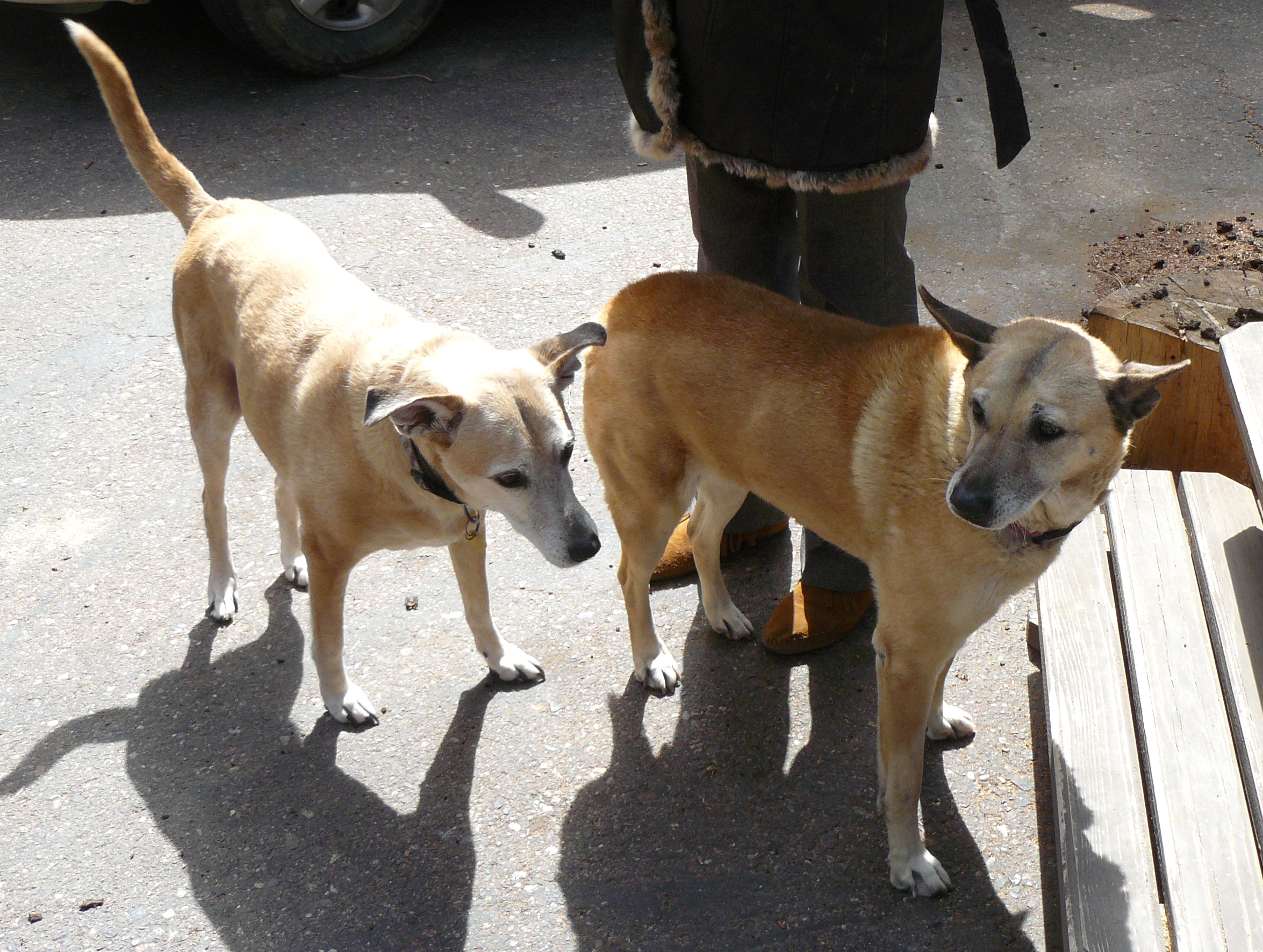
This picture is of Dhalia taken less than a couple of months ago.  She was found by Jean in 2005 running wild in the Mexican desert with a companion dog.  As Jean explains,

With friend, Suzann, I was driving out to a fishing village to medicate and feed the many starving dogs.  The two dogs were in a very desolate part of the desert prowling the roadside for road-kill. We stopped to feed them and give them water.  One of the dogs ran off but as I put down food, I saw the smaller brown dog walking slowly towards me.

She was emaciated and full of mange. She looked up at me, ignoring the food.  I reached out with my hand and she gently nudged it with her nose.

The food was irrelevant to her at this moment. She just seemed to know that I was there to help. I scooped her up and took her home, curled up in my arms as we drove away.

No better example of a dog instinctively trusting a human, almost immediately.

OK, from dogs to elephants.

I recently became aware of Lawrence Anthony.  Here’s a brief extract from WikiPedia:

Lawrence Anthony (17 September 1950 – 7 March 2012) was an international conservationist, environmentalist, explorer, and bestselling author.

He was the long-standing head of conservation at the Thula Thula game reserve in Zululand, South Africa and the Founder of The Earth Organization, a privately registered, independent, international conservation and environmental group with a strong scientific orientation. He was an international member of the esteemed Explorers Club of New York and a member of the National Council of the Southern Africa Association for the Advancement of Science, South Africa’s oldest scientific association.

Anthony had a reputation for bold conservation initiatives, including the rescue of the Baghdad zoo at the height of the US lead Coalition 2003 invasion of Iraq, and negotiations with the infamous Lord’s Resistance rebel army in Southern Sudan, to raise awareness of the environment and protect endangered species, including the last of the Northern White Rhinoceros.

Lawrence Anthony died of a heart attack at the young age of 62.  In just a short time that will be a year ago.

In doing research for today’s post, I quickly came across this story.

elephant-Lawrence-Anthony

Lawrence Anthony, a legend in South Africa and author of 3 books including the bestseller The Elephant Whisperer, bravely rescued wildlife and rehabilitated elephants all over the globe from human atrocities, including the courageous rescue of Baghdad Zoo animals during the US invasion in 2003.

On March 7, 2012 Lawrence Anthony died. He is remembered and missed by his wife, 2 sons, 2 grandsons and numerous elephants.

Two days after his passing, a remarkable thing happened! The wild elephants showed up at his home led by two large matriarchs. Separate wild herds arrived in droves to say ”goodbye” to their beloved man-friend. A total of 20 elephants had patiently walked over 12 miles to get to his South African house. [my emphasis.]

Was this true?  A quick web search came across this video, (overlook the last few seconds!)

Françoise Malby-Anthony, wife of the late Lawrence Anthony, talks about the entire herd of elephants returning to the main house to pay their respects to their rescuer and friend ‘The Elephant Whisperer’.

lawrence-anthony-tribute

oooOOOooo

We humans have so much to learn from our animals.