Category: Morality

MaxMello – We Can All Help

This is a very simple message – please help MaxMello.

(Please note: To ensure the widest readership of this post I am running it for two days. I.e. the next post will be on Thursday, 11th.)

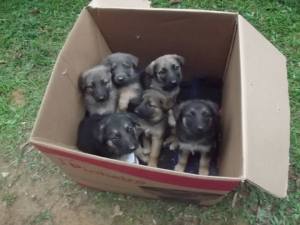
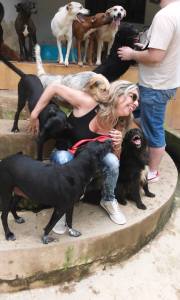
Yesterday I republished a post from John Zande. It explained how Sandra Guilarducci and her husband, Francisco, in Ibiuna, Brazil were caring for over 350 dogs and 32 cats. If you haven’t read that post then go no further in today’s post until you have read about the desparate need for funds.

Here’s a section from yesterday’s post (but please do read it in full):

food-e1454493203915Today, MaxMello burns through 5 tonnes of food every month, and a small army of vets help with reduced fees. But it all adds up. It has added up, and over this past weekend, Sandra was forced to admit that she and Francisco (weighed down with over 30,000 reis debt, about $10,000 US, to vets and pet food suppliers) had reached the point beyond which they simply could no longer afford to keep the shelter open. Sandra put out an urgent call to other NGO’s, saying she will keep the sick, the crippled, and the old (the one’s that stand little to no chance of adoption) but new shelter-homes would have to be found for the hundreds of other rescues under their care. With every NGO we know of here in Sao Paulo being already full, this is, in all honesty, an impossible situation. These are good people, and they (and their keep) are in genuine need of a hand.
Please, help keep MaxMello open and donate to the MaxMello PayPal account: associacaomaxmello@gmail.com.

But just as important as making whatever donation you can is letting Sandra and Francisco know you care.

Yesterday, Jean and I sent a letter to John for John’s wife to translate from English into Portugese as Sandra and Francisco do not speak English. We wanted them to read our letter in this post.

So this is the letter in Portugese:

Sandra e Francisco,

Aqui no sul do Oregon, hoje temos 9 cachorros e 4 gatos; há três anos, quando viemos para cá, eram 14 cães e 7 gatos. Eu simplesmente não consigo imaginar o que deve ser cuidar de 350 cachorros e 32 gatos, ainda mais divididos entre duas propriedades diferentes, separadas por 200 km!

Entretanto, Jean sabe bem o tamanho do amor e da dedicação que movem sua paixão por esses animais maravilhosos – porque ela vivia em San Carlos, no México (na Península Baja) e dedicava a vida a recolher os cachorros de rua de lá, tratando de sua saúde, dando-lhes amor e conseguindo adotantes para eles nos EUA. Ao longo de vários anos, Jean acredita ter resgatado mais de 200 cães. A alimentação e tratamento de todos esses animais foram custeados por ela e o marido, Ben, que morreu em 2005.

Foi meio por acaso que a conheci, em San Carlos, no Natal de 2007, e me via com os olhos cheios de lágrimas ao ver a afeição que os cachorros dela demonstravam ao me ver, toda vez que ia visitá-la em sua casa. E essa afeição deve ter causado um efeito profundo em mim, pois, quando voltei para a Inglaterra, em janeiro de 2008, Jean e eu percebemos que queríamos ficar juntos para o resto da vida. Mais tarde, nesse mesmo ano, ao lado do meu pastor alemão, Pharaoh, voltei para San Carlos. Não demorou muito, com 14 cachorros e 7 gatos, fomos para o Arizona, onde nos casamos, e por fim, no segundo semestre de 2012, viemos para o Oregon, onde estamos até hoje.

Pouco antes de sairmos de San Carlos, em 2010, uma cachorra foi deixada na porta de nossa casa. Era uma mestiça de rottweiler e devia ter acabado de dar cria porque ainda estava cheia de leite. Nós a batizamos de Hazel e quase de cara ela mostrou sua natureza amorosa para Jean, para mim e os outros animais. Hazel é uma inspiração para a humanidade graças ao perdão e ao amor incondicional que oferece ao mundo.

Por isso, aceite essas poucas palavras minhas e de Jean, endereçadas aos dois, como uma pequena amostra de amor e gratidão que sentimos por vocês e que certamente também serão sentidos pelos leitores e seguidores do Learning from Dogs

And here is the letter in English:

Sandra and Francisco,

Here in Southern Oregon we have 9 dogs and 4 cats, down from the 14 dogs and 7 cats when we moved here some 3 years ago. I cannot simply imagine what it must entail to care for 350 dogs and 32 cats let alone care for them in two locations seperated by 200 kms!


However Jean can imagine the level of love and commitment that fuels your passion for looking after these wonderful animals. For Jean, when she lived in San Carlos, Mexico (on the Baja Peninsula) devoted her life to rescuing Mexican street dogs, loving them back to health and then finding homes for them in the USA. Over the many years Jean believes she found homes for well over 200 dogs. The feeding and caring of these animals was funded personally by Jean and her late husband, Ben, who died in 2005.


Quite by chance, I met Jean in San Carlos the Christmas of 2007 and was moved to tears on numerous occasions by the loving affection shown by her dogs to this visitor to Jean’s home. That affection must have rubbed off on me for by the time I returned to England in January, 2008 Jean and I wanted to be together for the rest of our lives. Later in 2008, together with my German Shepherd, Pharaoh, I travelled out to San Carlos. Subsequently, with 14 dogs and 7 cats, we moved to Arizona to be married and then, in the Autumn of 2012, came up here to our home in Oregon.


Shortly before we left San Carlos in 2010 to go to Arizona, a female dog was dumped outside the house. She was a Rottweiler crossbreed and must have just given birth to puppies for she was still in milk. We named her Hazel and she very quickly showed her most beautiful and loving nature to Jean and me and to the other animals. Hazel is an inspiration to humankind of what flows from offering forgiveness and unconditional love to the world.


So please take these few words from Jean and me, sent to you both, as a small measure of the love and gratitude that we feel for you, and I know will be felt by many of the readers and followers of Learning from Dogs.

I also want to republish a comment from yesterday’s post, left by Mr. Merveilleux, because it speaks such perfect common-sense:

As Zande’s explained, the current exchange rate means donations go a very long way. Keep in mind the minimum wage in Brazil is only around £130 p/month. By skipping one little luxury this month, like going out for a meal today, and sending what one would have spent on that to the shelter, we can all make make a substantial difference to the lives of these animals.
My suggestion is for people not to just reach for the change they’ve got in the car ashtray, but consider a little, insignificant sacrifice that will do one no harm, but will have a disproportionately positive effect.
Skip one bottle of champagne, or a bottle of wine, or don’t buy flowers this week… skip any little thing that one doesn’t really *need*, and put that money to good use.

Let me move on a tad.

As is obvious to any visitors to this place in the last 6 weeks, I have just published my first book. It learningfromdogs_3dbook_500xis called Learning from Dogs, the same name as this blog. I am also donating 50% of the net proceeds from all sales of my book to our local Rogue Valley Humane Society.
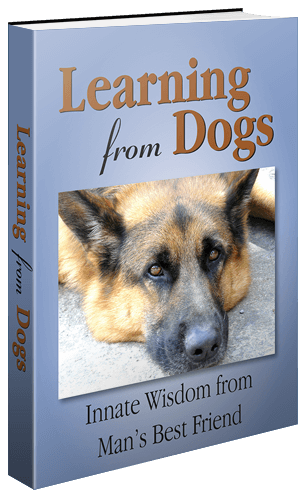
However, for the whole of the month of February I shall be donating the other 50% of net proceeds to MaxMello.

So, please, buy the book and help two fabulous charities. The book is available as a paperback, priced $15.95, or either of two eBook formats, MOBI and EPUB, priced at $5:39. Full details here: Buy the Book.

Of course, you may also buy the book from Amazon or you can order it from most booksellers.

If you prefer to purchase it direct from me but do not wish to pay online, then mail me (as in Paul Handover) a cheque for $18.67 ($15.95 + P&P of $2.72) and I will send it to any part of the USA. (For overseas paperback purchasers who do not wish to pay online then email me your address details and I will respond within 48 hours.) My email address is learningfromdogs (at) gmail (dot) com

All of this is part of never forgetting how important it is to care for our dogs – they are man’s oldest companion and have devoted themselves to caring for us for possibly 40,000 years. Is it asking too much to help these dogs in Brazil in return!
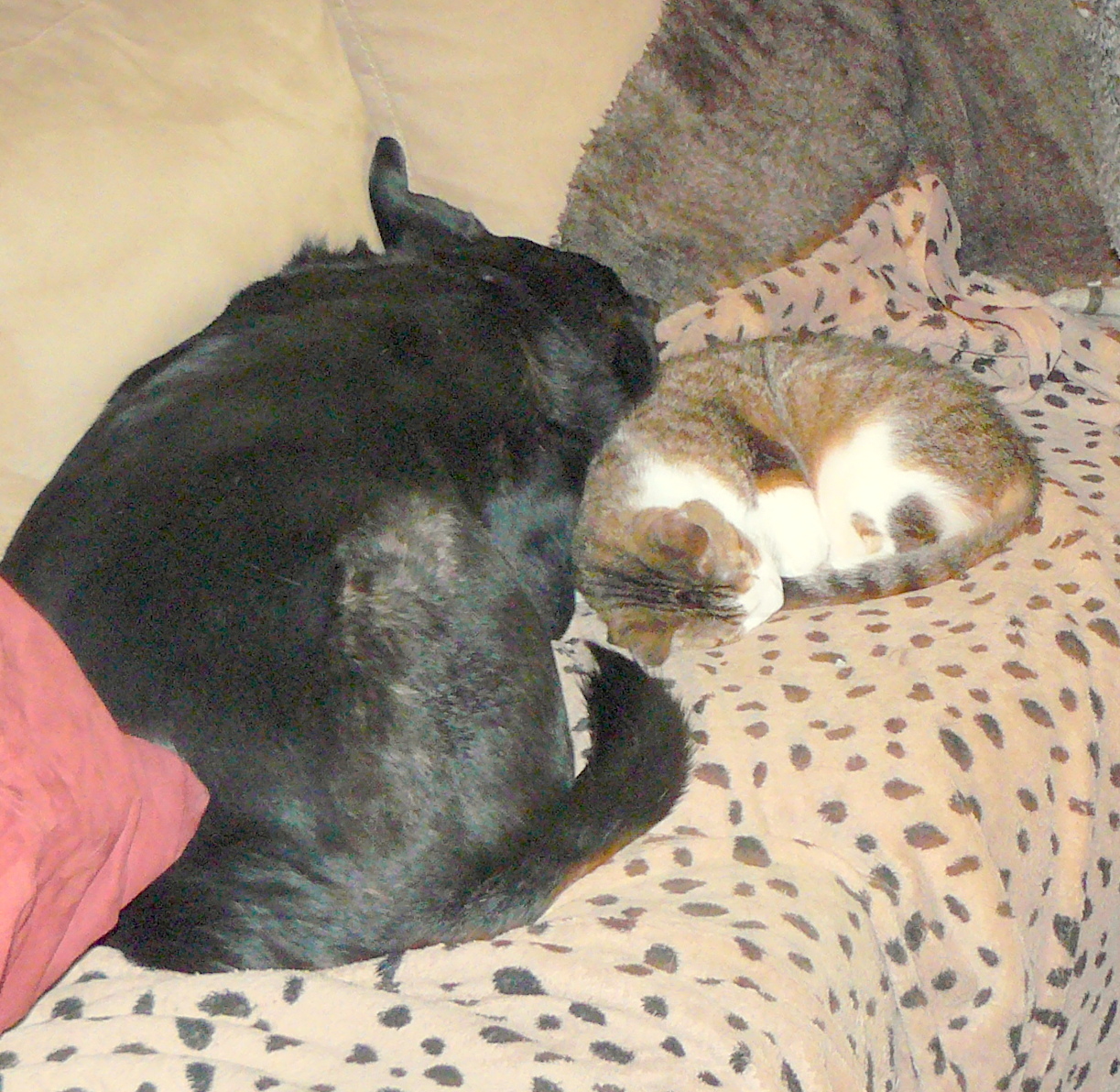

P1150895
Hazel showing her love and caring for our cat, George. Both animals are ex rescues from Mexico. Picture taken last Sunday evening.


A bottomless font of love.

A wonderful story of the love for dogs and cats shown by two people in Brazil.

As is the way in this world of blogging, a few months ago I connected with John Zande. He is an Australian living in Brazil and blogs under the name of The Superstitious Naked Ape. John is also the author of the book The Owner of All Infernal Names, which I reviewed last October (and greatly enjoyed!).

John Zande cover_zpsz7wuq9ccAll the proceeds from the sale of John’s book go towards animal rescue and shelter in Brazil and that offers a strong clue to the purpose of today’s post.

So with that in mind, please read the following post published by John on February 3rd and republished here with John’s permission. (And please make a note to return tomorrow and read the sequel that will explain how you and I can make a positive difference.)

ooOOoo

The MaxMello Association for the Support of Animal Life needs an urgent hand

Loving, caring dogs!

A lovely reminder of our fabulous dogs.

Before moving on to the story, can I just say that the link to this report was emailed to me by a follower of Learning from Dogs. It underlines something that I had no idea about when I first started up this blog in July 2009. The wonderful sense of community that develops between a blogger and his or her readers and followers.

So many of you that interact with this place feel like long-established friends, and are treasured.

Marg, thank you for sending me the link to the following. It’s a wonderful item that appeared on the Australian outlet of The Huffington Post.

ooOOoo

Dog Escapes Cage To Comfort Rescue Puppies During Their First Night In Kennel

“We’ve never really seen it before, where a dog sneaks out to some puppies and is so excited to see them.”

02/03/2016
Kimberly Yam, Associate Good News Editor, The Huffington Post

This concerned dog just wanted to make sure some young pups would be OK in a new place.

Maggie the dog was staying at the Barker’s Pet Motel and Grooming in Alberta, Canada, when she was caught on a surveillance camera sitting outside a kennel that held two 9-week-old rescue puppies named Hannah and Kari last week.

Barkers Pet Motel and Grooming last Saturday
Barkers Pet Motel and Grooming
last Saturday

The canine sneaked out of her own kennel to comfort them on their first night there, and after pet motel owner Sandy Aldred let Maggie into the pups’ cage, the older dog spent the entire night cuddling with the two new guys on the block, according to ABC News.

“We’ve never really seen it before, where a dog sneaks out to some puppies and is so excited to see them.” Aldred’s son, Alex, who also works at the pet motel, told ABC News.

Anna Cain, office manager at the pet motel, told The Huffington Post that Maggie, who is a former shelter dog herself, had been staying there while her owners were on vacation. The puppies were dropped off at the facility after they were rescued by Alberta Animal Rescue Crew Society.

Barkers Pet Motel and Grooming last Saturday
Barkers Pet Motel and Grooming
last Saturday

The thoughtful dog, who recently had puppies of her own that were adopted out by a humane society, likely heard Hannah and Kari crying, according to a Facebook post from the motel. So Maggie squeezed her way out of her kennel after pushing aside a water bowl built into her door. She then went right to the pups’ cage.

“She paid them a lot of attention and you could see her little tail wagging. And she’d do the little bow down to them and poke them through the chainlink gate of their room,” Aldred told CBC News. “She just decided that was where she was going to stay until we came to get her.”

When Aldred returned to the kennels and let Maggie into the puppies’ cage, she supervised to see if all the dogs would get along. And of course they did.

“They were just all so happy to be together,” Aldred told CBC. “She was nuzzling them really gently and nudging them, and then she laid down and let them cuddle with her.”

The trio stayed together and were even found snuggling the next morning, ABC News reported. While Maggie’s actions are sweet, it’s not uncommon for dogs who have had puppies, to act compassionately like she did.

“It’s innate in a lot of female dogs, especially if they’ve had a litter in the past. It’s just in their nature,” Deanna Thompson of AARCS told ABC News. “We’ve seen it in a lot of dogs even with male dogs, when they hear other puppies crying they want to console them and make sure they’re feeling safe.”

Maggie and the pups have parted ways unfortunately as her owners have returned from their trip. There are pending adoption applications for both puppies, but for the time being, the pair are in the motel, Cain said.

ooOOoo

Other readers who know and love dogs will endorse my claim that it is not just crying puppies that are consoled by adult dogs; we humans as well experience a fair degree of compassion from our dogs!

Lovely story!

Oil, corruption and public money.

Nothing at all to do with dogs, or with integrity if it comes to that!

Regular followers of this place know that I am a tremendous fan of George Monbiot, the Englishman who so regularly exposes stuff that needs to be aired and discussed. As his About page explains:

Here are some of the things I love: my family and friends, salt marshes, arguments, chalk streams, Russian literature, kayaking among dolphins, diversity of all kinds, rockpools, heritage apples, woods, fishing, swimming in the sea, gazpacho, ponds and ditches, growing vegetables, insects, pruning, forgotten corners, fossils, goldfinches, etymology, Bill Hicks, ruins, Shakespeare, landscape history, palaeoecology, Gavin and Stacey and Father Ted.

Here are some of the things I try to fight: undemocratic power, corruption, deception of the public, environmental destruction, injustice, inequality and the misallocation of resources, waste, denial, the libertarianism which grants freedom to the powerful at the expense of the powerless, undisclosed interests, complacency.

Here is what I fear: other people’s cowardice.

I still see my life as a slightly unhinged adventure whose perpetuation is something of a mystery. I have no idea where it will take me, and no ambitions other than to keep doing what I do. So far it’s been gripping.

Way back in the early days of Learning from Dogs, the blog that is, not the book, George was very gracious in giving me blanket permission to republish his posts, and many of them have appeared in this place.

So now read George Monbiot’s latest Rigging the Market. It is yet another example of what is going wrong in these times.

ooOOoo

Rigging the Market

The love of a German Shepherd.

Towards a baby elephant!

The following beautiful example of the unconditional love of a dog was seen by my on the Care2 Petitions and Causes site.  It just had to be shared with you, dear reader, because it is such a powerful reminder of what love and caring for others delivers.  It was originally seen here and is republished within the terms of Care2.

ooOOoo

Baby Elephant, Rejected By His Herd, Finds Hope Again With German Shepherd

3166406.largeBy: Judy M. January 31, 2016

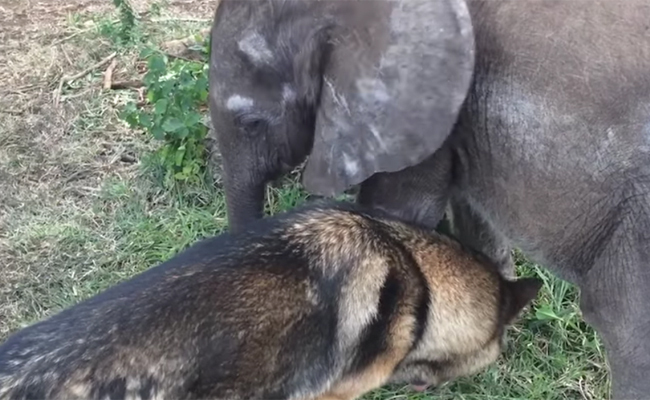
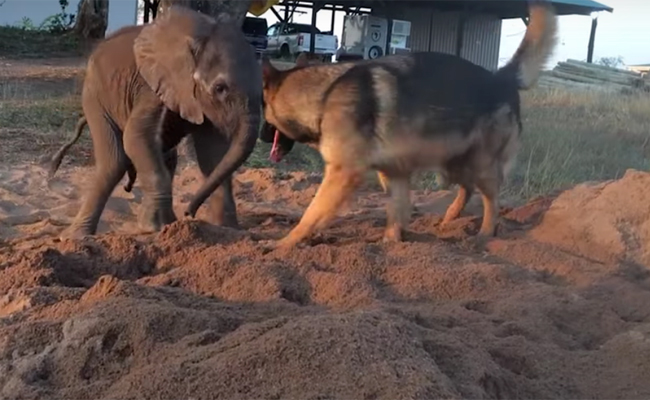
In Zululand, South Africa, an unlikely pair has become best friends: a baby elephant and a German Shepherd.

Ellie the baby elephant was shunned and rejected by his herd, and he also had big health problems. For most young elephants, all of this would mean an early death. Luckily for him, he was discovered by the Thula Thula Rhino Orphanage in South Africa, and he made a new best friend: Duma, the German Shepherd puppy.

When Ellie arrived at the rhino orphanage he was critically ill with an umbilical hernia and had little chance of survival.

The game reserve usually rehabilitates baby rhinos, victims of South Africa’s poaching crisis, but is also home to other African wildlife like elephants, buffalo, leopards, giraffes, zebras, hyenas, and crocodiles.

 So why is Ellie here? He was brought to the orphanage after he was rejected by his herd, in spite of numerous attempts to reunite him with his family.

When Ellie the elephant first arrived, his rescuers didn’t think he would make it, but they nursed him day and night.

Photo Credit: Screenshot from Youtube video

As Maren Trendler, a rehabilitation and crisis response expert at the orphanage, explains, “He also had a huge umbilical hernia and abscess. … In about 99 percent of these cases an umbilical abscess of that nature is fatal. … Against all odds, this little elephant is still with us.” 

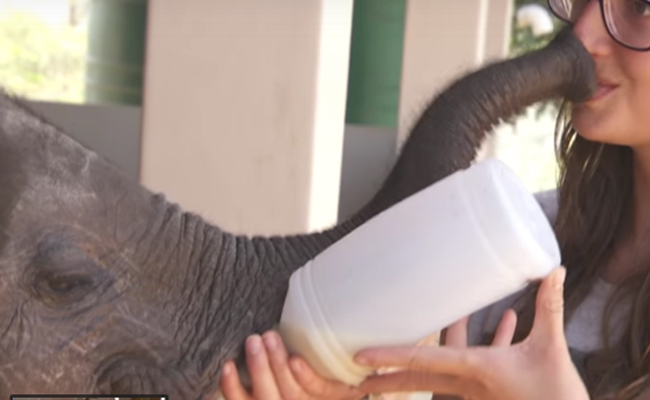
Ellie had an intolerance to milk and nothing seemed to work. So the orphanage decided to make him a special milk formula, and he slowly started to stabilize.

Eventually Ellie’s physical health improved, but his mental health did not, because elephants are social animals and known to be hard to raise away from a herd. He was depressed and lethargic until Duma, the German shepherd hero, swooped in.

With the arrival of Duma, a former service and sniffer dog, things seemed to turn around for Ellie. The young elephant had been lethargic, not interested in anything, until the orphanage introduced the two at a sand pile. Immediately Ellie started being interested in life again. Duma and Ellie became friends, bonding in spite of their many differences.

Photo Credit: Screenshot from Youtube video

For the past few weeks, their relationship has been growing so much that the carers have a “hard time keeping Duma away from the elephant,” Trendler explains.

Ellie’s future is still uncertain, since elephants generally need to be part of a herd to develop and grow. But right now, Ellie and Duma are happy together.

Published on Jan 14, 2016

Everyone loves a canine companion, and this baby elephant is no exception! The tiny pachyderm arrived at the Thula Thula Rhino Orphanage in South Africa after being rejected by his herd. Critically ill, the youngster had very little chance of survival. But thanks to round-the-clock care from sanctuary staff, and a bit of help from a special canine companion, the baby elephant is on the road to a full recovery.
http://www.earthorganization.org/proj…
https://www.facebook.com/rhinoorphanage

ooOOoo

Time and time again, the world of dogs reminds us humans of what we need to learn, and to learn reasonably quickly, if we are to leave a sustainable, fair and equitable world for our grandchildren.

Talk about fiddling while Rome burns!

romeburns

Embracing all those who care for our wild animals!

So many who devote so much time and energy, and money no doubt!

Let me state quite clearly my position with regard to hunting wild animals – I abhor it! Technically speaking if someone’s only means of feeding themselves, as in staying alive, is through hunting then I guess that is acceptable. But hunting for any other purposes is beyond the pale. I know that many people, including friends, who live in this part of America would heartedly disagree with my position on hunting. So be it.

Thus when Jean and I look at those who work so hard to protect, sustain and support wild animals we are almost speachless with our admiration for them.

So what’s brought all this on today?

For a long time I have been a follower of the blogsite Canis Lupus 101. On the home page of Canis Lupus 101, on the left-hand sidebar, one can read a plea from Maggie Caldwell, Press Secretary for @Earthjustice, that, in part, says:

For centuries, wolves have been viewed with suspicion and hostility, based in humankind’s deep-rooted fear of the unknown and need to control the natural world.

“The Fable of the Wolf,” a new animated short film produced by Earthjustice, explores this idea, celebrating the wild nature of a deeply misunderstood species.

The film offers an abbreviated history of the relationship between wolves and people—told from the wolf’s perspective—from a time when they coexisted to an era in which people began to fear and exterminate the wolves.

The return of wolves to the northern Rocky Mountains has been called one of America’s greatest conservation stories. But wolves are facing new attacks by members of Congress who are gunning to remove Endangered Species Act protections before the species has recovered.

The film encourages viewers to “join the pack” and sound the alarm about the political threats to this species. Please help us spread the message that wolves are to be celebrated, not feared, by watching this film and sharing it with your friends.

Sincerely,

Maggie Caldwell

Our millions of magnificient and adorable dogs owe their place in today’s world to the wolf. The fact that those who care are still fighting hard to save the wild wolf shows how disgraceful it is for those that see no harm in hunting wolves. Hunting a wolf in my book is hardly any different than going out and hunting a dog!

So with all that out of me, now read about the following glorious efforts to save the wild Mexican wolf. Originally published over on Canis Lupus 101.

ooOOoo

Thursday, January 28, 2016

Poaching slows Mexican wolf population recovery (video)

Brandon Loomis, The Republic | January 27, 2016

After the wild Mexican wolf population tops 100 for the first time, 15 illegal shootings may slow recovery.

(Photo: Mark Henle, Mark Henle/The Republic)

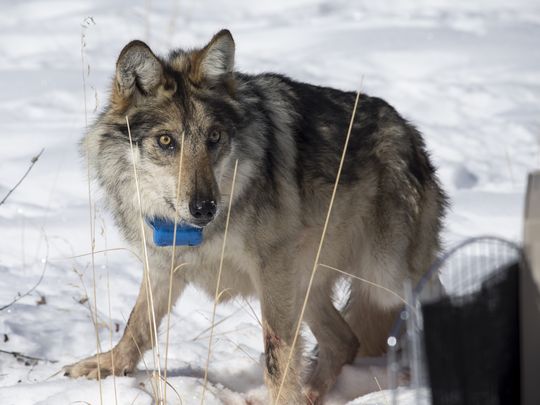
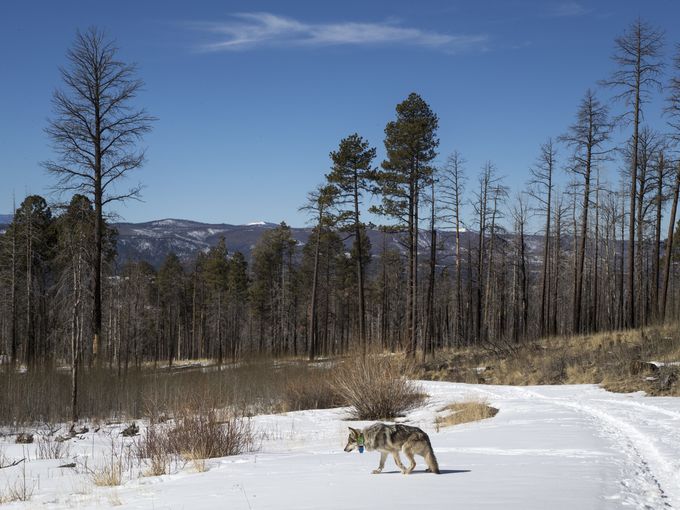
ALPINE — Biologists hauled a 60-pound Mexican gray wolf from the chopper on Monday, limp but healthy with a lush winter mane. They called it the wolf’s worst day in months — dazed from having been darted from above, still rapidly licking his nose through a blindfold muzzle — but the male wolf was one of the fortunate among a divisive and still-embattled breed that has weathered an especially perilous year of poachings.

Unknown shooters have illegally killed at least 15 Mexican wolves since officials reported a year ago that a record 110 were roaming wild in eastern Arizona and western New Mexico, according to a lead state biologist on the recovery program.

The poaching losses tripled from 2014, and were likely unprecedented in the 18 years since the first captive-bred lobos brought their once-exiled howls back to the Blue Range spanning the Apache and Gila national forests.

Wolf-recovery specialists, like those in Alpine this week, are working to make sure the survivors flourish instead of backsliding to a more critically endangered status.

The team of federal and state biologists carried Wolf No. M1342 on a mesh sling. They brought the wolf inside their pine-ringed Alpine field station and slid him onto a slab wooden table for a checkup and shots to keep him robust for an important breeding season this spring. They injected a second sedative that would put the wolf out cold for about an hour.

The scientists gathered round the Elk Horn pack’s would-be alpha male, prodding veins for intravenous fluids and pushing an oxygen tube up his black nostrils.They were counting on the wolf to return healthy to his young mate on snowy Escudilla Mountain, and produce their first successful litter to help extend recent annual gains in a slow-recovering population.

As recently as five years ago, there were an estimated 50 Mexican wolves in the wild, less than half of last year’s count. Whether this year’s survey finds the population continuing to grow will depend on the 40 or so pups observed since last spring. Historically, about half of pups have survived their first year.

Besides the wolves that were shot, about a dozen more adults are missing, “fate unknown.”
M1342 was lucky to have a dart dangling from his paw, and not a trail of lead fragments through his chest. Shootings have always been a key threat since the 1998 reintroduction.

The anti-wolf mentality commonly known as “shoot, shovel and shut up” is hard to combat. Bullets typically pass through a wolf’s body and leave little useful evidence, said Jeff Dolphin, Mexican wolf field supervisor for the Arizona Game and Fish Department. “You just can’t be everywhere at once,” Dolphin said.

Only a handful of what may be dozens of shooters have faced charges related to killing one of the protected wolves since 1998. Federal, state and non-governmental organizations offer a combined reward of up to $58,000 for information leading to the arrest and conviction of a wolf poacher.

A controversial task

Susan Dicks, a U.S. Fish and Wildlife veterinarian examines Wolf No. M1342. (Photo: Mark Henle/The Republic)

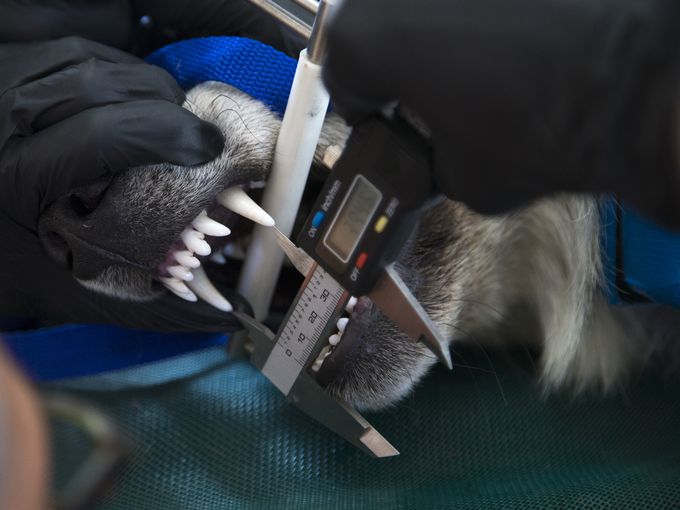
U.S. Fish and Wildlife Service veterinarian Susan Dicks coached the team of biologists and field technicians tending to M1342: how to draw blood for DNA and other tests; where to inject a rabies vaccine; how to determine age by measuring teeth; how to increase fluids or pour cooling alcohol on the paws if his temperature rises past 103 or so.

Besides the preventive medicine and data collection, the prime objective for M1342’s capture during a yearly aerial wolf survey was to fit it with a new transmitter collar. The collar he had received in a similar operation last year hadn’t functioned, so biologists only knew the wolf’s whereabouts by occasional observation. Uncollared wolves are difficult to track to ensure they’re not getting into trouble, such as by attacking livestock.

Not every wild Mexican wolf is collared, but scientists like to have them on a wolf of every generation in a pack. Last year’s survey counted 19 packs, including eight known to have a breeding pair.

Studies show that these free-ranging wolves eat elk upward of 80 percent of the time, but cows are also occasionally on the menu. A government and non-profit fund pays for the losses. So far, the wolf program has paid out $68,000 for 50 confirmed livestock losses in 2015, and another $25,000 in claims is awaiting action by a compensation council. “It’s such a controversial program, and (people) want us to manage these animals,” Dicks explained. “The way we manage is with that collar. It communicates and tells us what they’re doing.”

The latest in a string of political struggles over the lightweight cousin of more plentiful northern gray wolves involves where they should be allowed.
Wolf advocates say they need unoccupied territory such as the forests around the Grand Canyon to sustain a population large and dispersed enough to withstand sudden die-offs. The governors of Arizona, New Mexico, Colorado and Utah recently co-signed a letter to the federal program opposing such a northern expansion into previously undocumented wolf territory and instead backing a push south into Mexico.

The number of wolves needed to ensure long-term survival also is in dispute. Some want to hold the line around today’s numbers, but others say at least a sevenfold increase is needed.

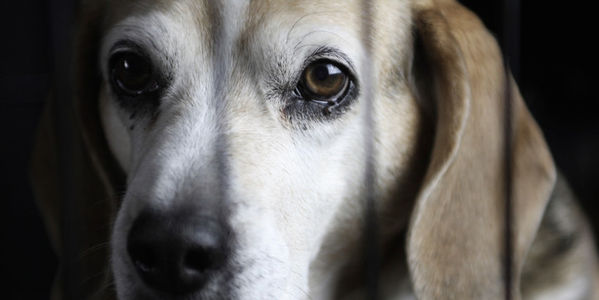
Beagle puppies would like a loving New Year!

Please, please sign this petition to stop Beagle puppies being bred for slaughter!

Not going to add anything more than to republish in full a recent CARE2 Petition.

ooOOoo

471427-1438026925-wideStop the Beagle puppy animal testing breeding facility!

  • BY: Jen Johnson
  • TARGET: Greg Clark, Secretary of State for Communities and Local government

Unless we take action to stop it, a new puppy farm will open in the UK with the purpose of breeding beagles for animal testing experiments.

Click here to sign the petition demanding the government revoke its approval for this horrific facility.

According to the National Anti-Vivisection Society, dogs taking part in scientific experiments are made to inhale toxic substances through masks, force feed through tubes, and are strapped in harnesses while being injected with drugs.

The facility is owned by a US firm and would be Britain’s second facility for breeding beagles specifically to be cut open and experimented on while still alive.

The other facility breeds 3,000 beagles for animal testing each year.

Dozens of celebrities have spoken out against this farm. Join Ricky Gervais, Queen guitarist Dr Brian May and Downton Abbey’s Peter Egan: sign this petition to demand the government stop the construction of a new cruelty-laden dog breeding facility.

PLEASE SIGN NOW

ooOOoo

As at 09:30 PST yesterday, the target of 310,000 supporters of the petition was just short by 761 persons. Fingers and toes crossed that by the time this post is published the target will have been met. I know there are many caring readers of this blog who wouldn’t hesitate for a moment to sign the petition.

Thank you!

Let them grow up as happy beagles!

This is dog’s love!

More fabulous examples of the love from a dog.

Yesterday, I offered the account of physicist Paul Dirac falling in love with Margit Wigner, the sister of a Hungarian physicist.  It was my way of opening a window into the mind of one individual, albeit a very clever one, falling in love. However, the conclusion, that won’t surprise anyone, is that the state of love in us humans is more mystery than fact!

Dogs have no such problem in showing their state of love!

A few days ago, in comments to a recent post, the author, John Zande wrote:

We were so heartbroken after losing Arthur so unexpectedly (an astonishing dog we found with a massive tumor in his eye) in Sao Paulo we literally moved cities. I couldn’t stand being in the same neighbourhood. Too much reminded me of him.

Then in response to my reply went on to say:

They are amazing creatures. The dog across the street from us died almost a year ago to the day. Beautiful dog, not so good owners (never paid her any attention, fed her crap… we’d sneakily feed her mince and chicken and treats every night). She had many male visitors (they never neutered her), but one in particular, Hop-along, a crippled dog from a street over considered her his wife/girlfriend. When she died it was only us and Hop-along who grieved. It was amazing. He held vigil outside her house for 2 weeks solid after she died, day and night. He never left. He just stood there. 

More than thirty-five years ago, when I was working in Colchester, Essex, England, I met Roger Davis. It was Roger that introduced me to gliding (sailplaning in American speak!) courtesy of Rattlesden Gliding Club. Roger and I have stayed in touch ever since including, of course, keeping in touch with Sheila, Roger’s wife, and much of the family.

Yesterday, in an exchange of emails, Roger sent this:

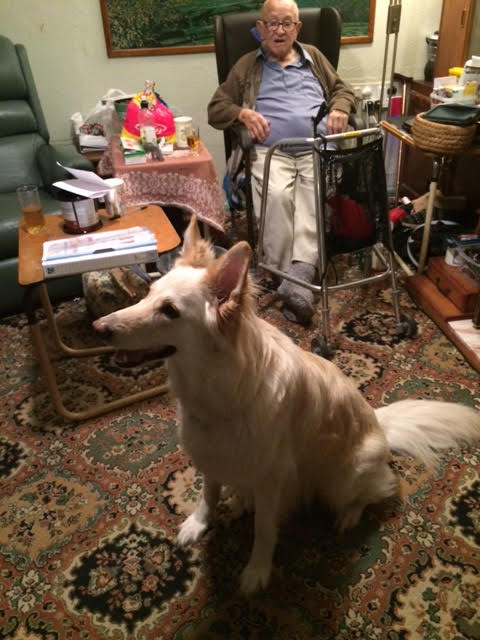
Just back from taking Ralph (now 89) to day surgery at Broomfields.His companion since Freda his wife died two years ago is Sasha, a blonde Alsatian. He always had Alsatians so no surprise when this one appeared.

The love and companionship offered by Sasha.
The love and companionship offered by Sasha to Ralph.

I was moved equally by John’s love for Arthur, Hop-along’s love for his female canine love, and the love of Sasha for Ralph.

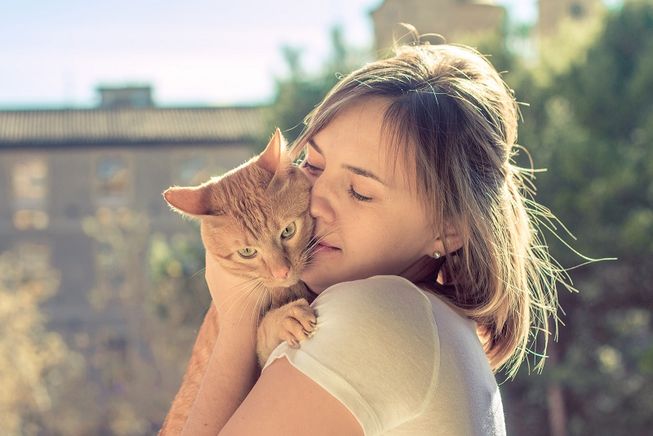
Hug a pet and extend your life!

With seventeen pets here at home Jean and I should live forever!

Another Saturday and another gentle post about the power of our wonderful pets. (Oh, and who, as I did, missed the fact that yesterday was not only a Friday the Thirteenth but the third one this year!)

Anyway, back to the plot!

Last Monday, Mother Nature Network published an item about how good pets are for our health. It seemed the perfect item to share with all of you this Saturday.

ooOOoo

11 studies that prove pets are good for your health

Check out the ways your 4-legged friends enhance your physical and emotional health.

By: Sidney Stevens, November 9, 2015.

Pets strengthen our hearts, calm our nerves and a whole lot more. (Photo: Juanedc.com /flickr)

If you have pets you already know the joy and love they bring to your life. Now science is confirming just how good they really are for you — both mentally and physically.

How do they help? One theory is that pets boost our oxytocin levels. Also known as the “bonding hormone” or “cuddle chemical,” oxytocin enhances social skills, decreases blood pressure and heart rate, boosts immune function and raises tolerance for pain. It also lowers stress, anger and depression.

PHOTO BREAK: 12 astonishing facts about horses

No surprise then that keeping regular company with a dog or cat (or another beloved beast) appears to offer all these same benefits and more. Read on to discover the many impressive ways a pet can make you healthier, happier and more resilient.

1. Pets alleviate allergies and boost immune function

One of your immune system’s jobs is to identify potentially harmful substances and unleash antibodies to ward off the threat. But sometimes it overreacts and misidentifies harmless stuff as dangerous, causing an allergic reaction. Think red eyes, itchy skin, runny nose and wheezing. You’d think that having pets might trigger allergies by kicking up sneeze-and-wheeze-inducing dander and fur. But it turns out that living with a dog or cat during the first year of life not only cuts your chances of having pet allergies in childhood and later on but also revs up your immune system and lowers your risk of eczema and asthma. In fact, just a brief pet encounter can invigorate your disease-defense system. In one study, petting a dog for only 18 minutes raised immunoglobulin A (IgA) levels in college students’ saliva, a sign of robust immune function.

2. Pets up your fitness quotient

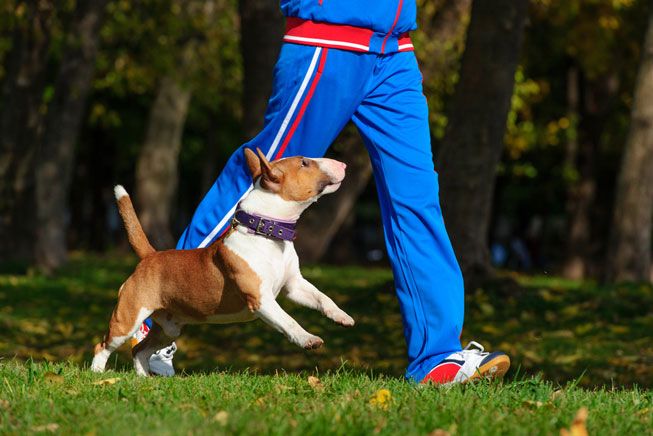
This one applies more to dog owners. If you like walking with your favorite canine, chances are you’re fitter and trimmer than your non-dog-walking counterparts and come closer to meeting recommended physical activity levels. One study of more than 2,000 adults found that regular dog walkers got more exercise and were less likely to be obese than those who didn’t walk a dog. In another study, older dog walkers (ages 71-82) walked faster and longer than non-pooch-walkers, plus they were more mobile at home.

Dog owners who take their canine companions on walks tend to be trimmer and fitter than their fellow dog-less peers. (Photo: AMatveev/Shutterstock)

3. Pets dial down stress

When stress comes your way, your body goes into fight-or-flight mode, releasing hormones like cortisol to crank out more energy-boosting blood sugar and epinephrine to get your heart and blood pumping. All well and good for our ancestors who needed quick bursts of speed to dodge predatory saber-toothed tigers and stampeding mastodons. But when we live in a constant state of fight-or-flight from ongoing stress at work and the frenetic pace of modern life, these physical changes take their toll on our bodies, including raising our risk of heart disease and other dangerous conditions. Contact with pets seem to counteract this stress response by lowering stress hormones and heart rate. They also lower anxiety and fear levels (psychological responses to stress) and elevate feelings of calmness.

4. Pets boost heart health

Pets shower us with love so it’s not surprising they have a big impact on our love organ: the heart. Turns out time spent with a cherished critter is linked to better cardiovascular health, possibly due to the stress-busting effect mentioned above. Studies show that dog owners have a lower risk of heart disease, including lower blood pressure and cholesterol. Dogs also benefit patients who already have cardiovascular disease. They’re not only four time more likely to be alive after a year if they own a dog, but they’re also more likely to survive a heart attack. And don’t worry, cat owners — feline affection confers a similar effect. One 10-year study found that current and former cat owners were 40 percent less likely to suffer a heart attack and 30 percent less likely to die of other cardiovascular diseases.

5. Make you a social — and date — magnet

Four-legged companions (particularly the canine variety that pull us out of the house for daily walks) help us make more friends and appear more approachable, trustworthy and date-worthy. In one study, people in wheelchairs who had a dog received more smiles and had more conversations with passersby than those without a dog. In another study, college students who were asked to watch videos of two psychotherapists (depicted once with a dog and once without) said they felt more positively toward them when they had a dog and more likely to disclose personal information. And good news for guys: research shows that women are more willing to give out their number to men with a canine buddy.

A dog can make you appear friendlier and more approachable to others. (Photo: CandyBox Images/Shutterstock)

6. Provides a social salve for Alzheimer’s patients

Just as non-human pals strengthen our social skills and connection, cats and dogs also offer furry, friendly comfort and social bonding to people suffering from Alzheimer’s and other forms of brain-destroying dementia. Several canine caregiver programs now exist to assist at-home dementia patients with day-to-day tasks, such as fetching medication, reminding them to eat and guiding them home if they’ve wandered off course. Many assisted-living facilities also keep resident pets or offer therapy animal visits to support and stimulate patients. Studies show creature companions can reduce behavioral issues among dementia patients by boosting their moods and raising their nutritional intake.

7. Enhances social skills in kids with autism

One in nearly 70 American kids has autism (also known as autism spectrum disorder, or ASD), a developmental disability that makes it tough to communicate and interact socially. Not surprisingly, animals can also help these kids connect better to others. One study found that youngsters with ASD talked and laughed more, whined and cried less and were more social with peers when guinea pigs were present. A multitude of ASD animal-assisted therapy programs have sprung up in recent years, featuring everything from dogs and dolphins to alpacas, horses and even chickens.

Animal-assisted therapy helps kids with autism and other developmental disabilities learn social skills. (Photo: UCI UC Irvine/flickr)

8. Dampens depression and boosts mood

Pets keep loneliness and isolation at bay and make us smile. In other words, their creature camaraderie and ability to keep us engaged in daily life (via endearing demands for food, attention and walks) are good recipes for warding off the blues. Research is ongoing, but animal-assisted therapy is proving particularly potent in deterring depression and other mood disorders. Studies show that everyone from older men in a veterans hospital who were exposed to an aviary filled with songbirds to depressed college students who spent time with dogs reported feeling more positive.

9. Defeats PTSD

People haunted by trauma like combat, assault and natural disasters are particularly vulnerable to a mental health condition called post-traumatic stress disorder (PTSD). Sure enough, studies show that the unconditional love — and oxytocin boost — of a pet can help remedy the flashbacks, emotional numbness and angry outbursts linked to PTSD. Even better, there are now several programs that pair specially trained service dogs and cats with veterans suffering from PTSD.

10. Fights cancer

Animal-assisted therapy helps cancer patients heal emotionally and physically. Preliminary findings of an on-going clinical trial by the American Humane Association shows that therapy dogs not only erase loneliness, depression and stress in kids fighting cancer, but canines can also motivate them to eat and follow treatment recommendations better — in other words participate more actively in their own healing. Likewise, new research reveals a similar lift in emotional well-being for adults undergoing the physical rigors of cancer treatment. Even more astounding, dogs (with their stellar smelling skills) are now being trained to literally sniff out cancer.

11. Puts the kibosh on pain

Millions live with chronic pain, but animals can soothe some of it away. In one study, 34 percent of patients with the pain disorder fibromyalgia reported pain relief (and a better mood and less fatigue) after visiting for 10-15 minutes with a therapy dog compared to only 4 percent of patients who just sat in a waiting room. In another study, those who had undergone total joint replacement surgery needed 28 percent less pain medication after daily visits from a therapy dog than those who got no canine contact.

ooOOoo

When I was setting this post up and copying across all the many links I was aware that there was a mountain of information out there. You may want to take some time and explore those links. For example, the link to HABRI- Human-Animal Research Initiative looks incredibly interesting. Then there was the link to the work being undertaken by the American Humane Association, that link being to this video that I am presenting here to close off today’s post.

Wherever you are in the world look after yourself and care for all those lovely pets out there. Love them so dearly!

Our caring dogs.

Staying with the theme of our lives being “rebooted” by our dogs.

Again, as so often occurs, a thought or reply left by someone to a previous post kicked off a new post for me.

So it was yesterday when Hariod commented: “This is the organisation that brought dogs into the care home my father lived in: http://www.petsastherapy.org/

That website is full of great information and any readers living in the UK who have not come across them before are highly recommended to have a good browse. One item that caught my eye was the Precious Memories link.

The loss of a pet is always a devastating and traumatic experience but even more so for the owner of a PAT dog or cat who has brought much love and companionship to many people, as well as to their owners.

This page contains lasting memorials to some PAT dogs and PAT cats who have given much to society by regularly visiting in Hospitals, Hospices, Residential homes or Day Care Centres.

PETS AS THERAPY

They will not be forgotten.

Here is one of those memories:

Baggy

Baggy

Baggy was a Finnish Lapphund and a wonderful and loving companion. She enjoyed taking part in many canine events including passing the KCGC Bronze, Silver & Gold awards, agility, showing and heel work to music, Baggy loved to go on a camping trip in the caravan or a trip down the river in our boat.

Baggy had two litters of puppies and two sons one from each litter are PAT dogs and her grand daughter is also a PAT dog. Baggy was my first PAT dog and she loved to go visiting in our local Residential home bringing joy and love to many people.

We love and miss Baggy so much our special sweet little friend.

Sheila Hall

The last aspect of the Pets As Therapy site that I want to refer to is their blog: Dog Dog Dog. Do drop in there and read some of the wonderful stories of those caring dogs.

That very nicely leads on to two videos that I quickly came across.

The first is described, thus:

Published on Dec 19, 2013
Follow Fraser, a black lab-golden mix, who has been a part of HCA Virginia’s unique Pet Therapy program since 2007. For several years, Fraser has spread comfort, compassionate care and joy to the faces of countless patients and staff at Chippenham and Johnston-Willis Hospitals from Tucker Pavilion and the Thomas Johns Cancer Hospital to many other areas. Catch a glimpse of how pet therapy is a source of alternative care for those in need.

While the second is about the therapy dog test.

Published on Dec 16, 2012
Achilles, my German Shepherd Dog, taking the Therapy Dog International test for certification.

Having this certification will allow Achilles and I to visit people in the hospital and other health care facilities.

Achilles is an AKC Obedience trained competitor and was able to pass the TDI test using that training and experience rather than special training for the test.

If you are interested in making your dog a TDI Therapy Dog go to their web site for information on how to accomplish that.

Here is the website for Therapy Dogs International, who are based in New Jersey, USA.

Can’t get those words from Per out of my mind: It is all about those huge small things. The huge consequences that flow from a small, adorable puppy.

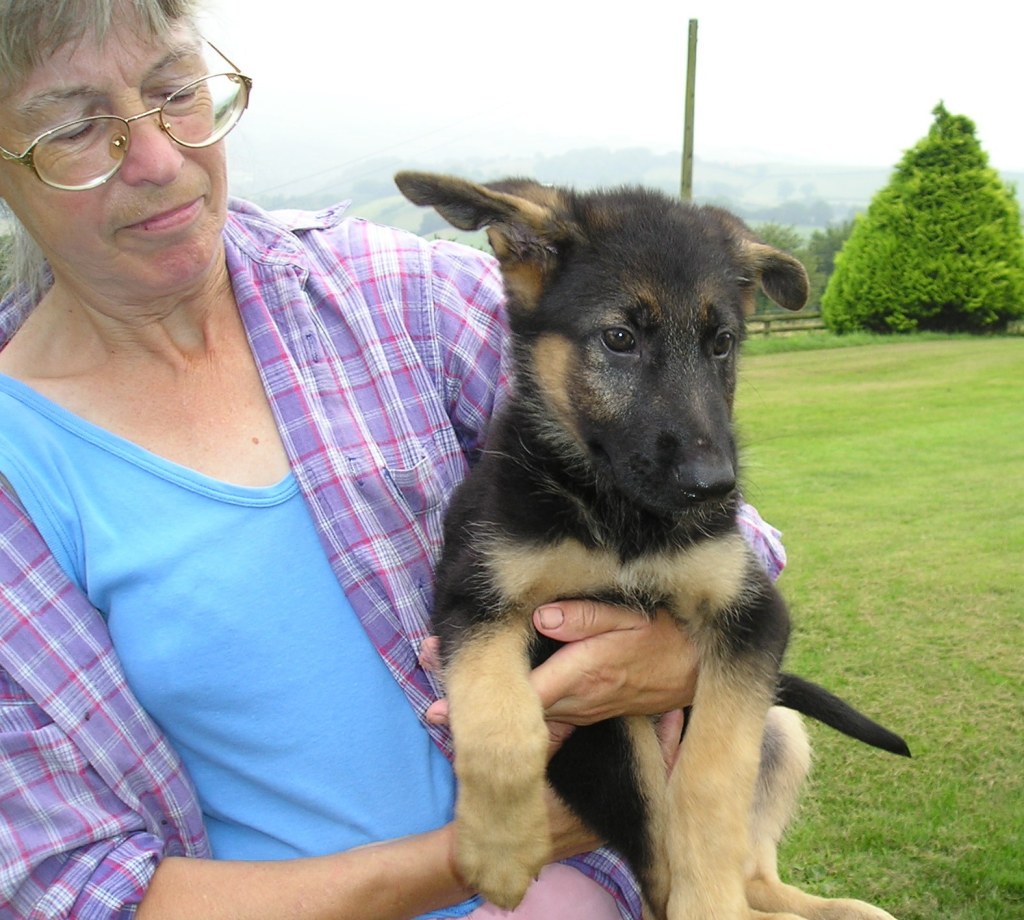
Puppy Pharaoh in the arms of Sandra Tucker of Jutone Breeders in Devon, UK. September, 2003.