The village of Chalhuani in Peru has a horrific annual tradition where a dog is tied to the back of a bull at a bullfight as punishment for “bad” behavior. Both of the animals are then painfully killed during the fight.
Video posted by the Mirror exposed this cruel Virgen de la Asuncion tradition in action, sparking global outrage. The video shows a dog being forced onto the back of a bull while it yelps and barks in fear. The terrified dog is tied spread-eagle to the bull, with the ropes so tight it cannot move.
The bull then enters the ring, where it is viciously killed. All the while, the dog is trapped on the bull’s back, unable to save itself from an excruciating death.
One villager tried to justify the cruelty in an interview with a local news station:
“We pick a dog that was disobedient over the past 12 months and has caused trouble,” the villager said. “As a community we see this as a fitting punishment for the dog’s bad behavior.”
But “bad” behavior is no excuse for animal cruelty. No dog deserves this horror.
These bullfights are barbaric and must be stopped. Sign this petition to urge the Peruvian ambassador to the United States to end this terrible practice, so no more animals suffer this horrific fate.
This petition will be delivered to: Ambassador Miguel Castilla
ooOOoo
Good people!
This is the letter to be delivered to the Ambassador:
Letter to Ambassador Miguel Castilla
Stop Tying Dogs to Bulls’ Backs in Cruel Bullfighting ‘Punishment’
The village of Chalhuani in Peru has a horrific annual tradition where a dog is tied to the back of a bull at a bullfight as punishment for “bad” behavior. Both of the animals are then painfully killed during the fight.
These bullfights are barbaric and must be stopped. Not only is animal cruelty an unacceptable form of punishment for dogs, but bulls do not deserve to be forced into fights, where they are tortured and killed for entertainment.
I urge the Peruvian government to ban this horrific practice at once, so no more animals must suffer for this cruel “tradition.”
I am really sorry folks but both today and tomorrow I am adding my tiny shoulder to a very large and heavy wheel. Endeavouring to make a very small difference before I leave this land of the living.
But before going on to share something that was sent to me by Scott Beckstead, the Senior Oregon and Rural Outreach Director of The Humane Society, I want to repeat something that I wrote in response to a comment left to yesterday’s Picture Parade. Because it may be seen as utterly irrelevant to today’s complex world but, nonetheless, it does explain where my love of this planet comes from.
In yesterday’s post, Yvonne of the blog Pets, People and Life left the following comment:
Those beautiful dog’s spirit lives on in the air you breathe, the green of the trees, the beating wings of a hummingbird, the house where they lived and where ever they ran and played. I hope you and Jean feel their presence when things are rough and in the quiet of the night.
I was so moved by those words that almost without any further thought I replied, thus:
Wow! Wow! And Wow!
There is something wondrous about the nature of the human consciousness that still escapes science. Neither me nor Jean are believers in a ‘God’ or subscribe to religious ‘factions’ for so much pain, war and suffering may be laid at the feet of religions (excuse my rant!), but ….
But there is something magical in “the air you breathe, the green of the trees, the beating wings of a hummingbird,” that defies definition. I like to think of it as a deep, connection with the planet that is our womb and sustains us.
This really smacked into me in back in the early 90’s; something that forever changed me. That something I experienced roughly about 4 days out in a solo sailing passage from the Azores to Plymouth. I came up on deck, clipped on, and looked around me. Primarily on the lookout for steaming lights that might indicate a ship in the same patch of ocean. It was after midnight. Having checked there wasn’t a ship in sight, I looked up at what was a totally cloud-free night sky.
What I saw were stars in that night sky that were visible 360 degrees around me. Not only visible in every single direction but visible right down to the edge of that black, ocean horizon. A huge celestial dome centered over this tiny me on my tiny boat. (A Tradewind 33: Songbird of Kent.)
It put into perspective, emotionally, visibly, intellectually and spiritually, how irrelevant one human being is and yet, how each of us is, or should be, the custodian of something immeasurably precious and beautiful: Planet Earth.
(Whoops! Sorry about that! Rather wandered off topic!)
OK, here’s what Scott sent me:
In the past two weeks, USDA Wildlife Services has:
1. Killed an Idaho family’s beloved pet dog;
2. Sent the family’s 14 year-old to the hospital with suspected cyanide poisoning;
3. Killed a Wyoming family’s two beloved pet dogs; and
4. Killed a protected Oregon wolf.
All of these incidents were caused by the M-44, a device used by Wildlife Services that fires a cyanide pellet into an animal’s mouth, causing a slow and agonizing death.
Wildlife Services’ greatest regret in all of these incidents is that they brought the agency more negative press – and given their history, they will probably use all of the incidents as “teaching moments” to instruct their agents to “shoot, shovel, and shut up.”
PLEASE CONTACT YOUR SENATORS AND U.S. REP AND URGE THEM TO ELIMINATE FUNDING FOR USDA WILDLIFE SERVICES.
A three-year-old Labrador retriever died and a 14-year boy was knocked to the ground when a cyanide device deployed by the federal government exploded in Pocatello, Idaho.
The Idaho State Journal reported the boy, who had been on a walk with his dog Thursday on a ridge near their home, watched his dog die. According to the Bannock County Sheriff’s Office, the boy was also “covered in an unknown substance” when the device known as an M-44 detonated. He was evaluated at a hospital and released.
“That little boy is lucky,” Sheriff Lorin Nielsen told the Pocatello newspaper. “His guardian angel was protecting him.”
The Idaho incident comes a few weeks after a gray wolf was accidentally killed by an M-44 on private land in Oregon’s Wallowa County. The controversial type of trap is used by the U.S. Department of Agriculture’s Wildlife Services crews around the country primarily to kill coyotes and other predators.
U.S. Rep. Peter DeFazio, D-Ore., introduced legislation as recently as 2012 to ban the trap.
DeFazio has said he would reintroduce a similar bill in Congress.
The wolf death was the first documented “incidental take” of its kind in Oregon involving the protected animal and the M-44, fish and wildlife officials said.
Federal Wildlife Services officials said there were 96 M-44 devices dispersed across Oregon as of last week and the agency was looking to remove devices that were near known wolf habitat. Oregon fish and wildlife officials have said the devices were not allowed in areas of known wolf activity.
Oregon has long paid Wildlife Services to kill invasive species and specific predators. But Gov. Kate Brown’s’ recommended budget doesn’t include $460,000 typically set aside to pay the federal agency to kill animals in Oregon.
Bannock County officials described the device as “extremely dangerous to animals and humans.”
The department circulated photos of the trap. “If a device such as this is ever located please do not touch or go near the device and contact your local law enforcement agency,” officials said.
Government officials have said the number of deaths of domestic animals and non-target animals each year is low, and officials say they are conducting an “internal review” of the wolf death.
Wildlife Services killed 121 coyotes in Oregon in 2016 with M-44 devices, along with three red foxes, according to the government’s figures. No gray wolf was killed in the U.S. last year with the cyanide capsules, according to the government.
A Eugene nonprofit says the government isn’t being truthful about the number of pets and non-target animals – such as wolves – killed each year.
“Yesterday’s Idaho poisoning of a dog and the near poisoning of a child is yet another example of what we’ve been saying for decades: M-44s are really nothing more than land mines waiting to go off, no matter if it’s a child, a dog, or a wolf,” Brooks Fahy, executive director of Predator Defense, said in a statement.
“It’s time to ban these notoriously dangerous devices on all lands across the United States.”
— Andrew Theen
atheen@oregonian.com
503-294-4026
@andrewtheen
ooOOoo
I will be writing about another terrible example of cruelty to animals tomorrow. One where you have the opportunity to add your name to a petition trying to have this cruel ‘tradition’ stopped.
Because as Anna Sewell (1820-1878), the English author who was the author of many books including Black Beauty is recorded as saying:
My doctrine is this, that if we see cruelty or wrong that we have the power to stop, and do nothing, we make ourselves sharers in the guilt.
As many of you will know, yesterday I published a post under the heading of Dogs: Aren’t They Incredible. It was the first of three essays that have been published by The Smithsonian about the wonderful ways of the dog.
So when I was wondering just what to share with you today and was browsing ‘stuff’ this story over on the Care2 site struck me as a perfect companion to yesterday’s post.
ooOOoo
Man Hears Barking From Under Pavement and Rescues Buried-Alive Dog
Editor’s note: This post is a Care2 favorite, back by popular demand. It was originally published on October 4, 2015. Enjoy!
A pregnant dog buried alive under paving stones for two days was rescued by local hero Rustam Vadim who heard a soft barking sound as he walked home with family in the Russian city of Voronezh.
Concerned about the dog’s survival, Rustam immediately went to the public utilities office to ask for help in rescuing her but was told that that department had not made the repair to a long-standing large hole in the street and they could not help.
Apparently, workers from a different government agency had made the repair and were unaware of the dog hiding in the hole as they sealed it over with paving stones.
[Ed: This video has a Russian commentary but you don’t need words to understand it!]
“My husband started to hammer to pull out the cobblestone and to hand dig out the sand because he did not have a shovel,” Rustam’s wife explains. “There was a gap that laid between the large cobblestones. My husband removed one stone and saw the face of a dog. He started to slowly pull out the dog as she is pregnant. After rescuing the dog, we recovered the hole so there is no threat to people.”
The dog was reportedly taken to a shelter and is being cared for. How many of you would like a man like Rustam as your friend or neighbor?
In fact, it underlines the truth that despite all the gloom and doom we read about on a daily basis most of the people out there are nice people!
Finally, I was curious as to where Voronezh was in Russia. Thanks to ‘Google’ that question was quickly answered:
Voronezh is a city and the administrative center of Voronezh Oblast, Russia, straddling the Voronezh River and located 12 kilometers from where it flows into the Don. Wikipedia
It appears to be about an eight-hour drive South-south-east of Moscow and here’s a picture of the city.
As you all know, my world is dominated by love. My love for my Jeannie and all the wonderful creatures that inhabit this home and these few acres here in Southern Oregon. Time and time again I share with you stories and articles that I come across that underpin that loving umbrella. Time and time again I am deeply moved by your interest in my scribbles. As I said, my world is dominated by love, and your friendship across this blogging world added to Jean’s love for and attachment to me, has created a little paradise for me.
But! (And you may have sensed there was a ‘But’ coming up.)
But that doesn’t mean that I am immune to being deeply affected by other, more worldly issues, that are as far away from love as one could imagine; more accurately, as far away from love for this wonderful planet as one could imagine.
So for today and the next two days I am going to share with you the pain and angst that I do feel, and feel all too easily, at what we, as in the collective global ‘we’, are up to. Madness doesn’t even seem to touch it!
Today, I am going to republish a recent TomDispatch essay, with Tom’s very kind permission. Tomorrow, I am going to contrast what fellow Brit James Lovelock has been predicting for years with where we really are heading in terms of the future of Planet Earth. Then on Friday, I will finish up with an essay by Professor Ronald Pies regarding the “twisted relationships to truth”.
Donald Trump, now preparing to lead the country into the latest version of our endless wars, recently offered this look back at American military prowess: “We have to start winning wars again. I have to say, when I was young, in high school and college, everybody used to say we never lost a war. We never lost a war, remember?… And now we never win a war. We never win. And don’t fight to win.”
It was a curious bit of “history.” Logically, his memories should have been of victory-less wars, given the ones of his growing up years: Korea and Vietnam (which he evidently avoided thanks to a trumped-up medical condition and whose massive oppositional movement he seems to have ignored).
Born in July 1944, [Ed: I’m a November 1944 baby.] I’m two years older than President Trump and so understand just where he’s coming from: the movies. In those years of his youth and mine, sitting in the darkness catching Hollywood’s vivid version of reality, we both watched Americans win wars ad infinitum. In fact, this is hardly the first time I’ve thought about the on-screen wars of my childhood, actual war, and an American president. Here’s what I wrote back in January 2006, while considering the experiences of George W. Bush and Dick Cheney:
“In the 1940s and 1950s, when the generation of men now ruling over us were growing up, boys could disappear into a form of war play — barely noticed by adults and hardly recorded anywhere — that was already perhaps a couple of hundred years old. In this kind of play, there was no need to enact the complicated present by recreating a junior version of an anxiety-ridden Cold War garrison state… For children in those years, there was still a sacramental, triumphalist version of American history, a spectacle of slaughter in which they invariably fell before our guns. This spectacle could be experienced in any movie theater, and then played out in backyards and on floors with toy six guns (or sticks) or little toy bluecoats, Indians, and cowboys, or green, inch-high plastic sets of World War II soldiers. As play, for those who grew up in that time, it was sunshine itself, pure pleasure. The Western (as well as its modern successor, the war film) was on screen everywhere then.
“When those children grew up (barely), some of them went off to Vietnam, dreaming of John Wayne-like feats as they entered what they came to call ‘Indian country,’ while others sallied off to demonstrate against the war dressed either in the cast-off World War II garb of their fathers or in the movie-inspired get-ups of the former enemy of another age — headbands and moccasins, painted faces, love beads… as well as peace (now drug) pipes. Sometimes, they even formed themselves into ‘tribes.’
“As it turns out, though, there was a third category of young men in those years: those who essentially steered clear of the Vietnam experience, who, as our vice president put it inelegantly but accurately, had ‘other priorities in the sixties.’ Critics have sometimes spoken of such Bush administration figures as ‘chickenhawks’ for their lack of war experience. But this is actually inaccurate. They were warriors of a sort — screen warriors. They had an abundance of combat experience because, unlike their peers, they never left the confines of those movie theaters, where American war was always glorious, our military men always out on some frontier, and the Indians, or their modern equivalents, always falling by their scores before our might as the cavalry bugle sounded or the Marine Hymn welled up. By avoiding becoming either the warriors or the anti-warriors of the Vietnam era, they managed to remain quite deeply embedded in centuries of triumphalist frontier mythology. They were, in a sense, the Peter Pans of American war play.
“…From that same childhood undoubtedly came President Bush’s repeated urge to dress up in an assortment of ‘commander-in-chief’ military outfits, much in the style of a G.I. Joe ‘action figure.’ (Think: doll). It’s visibly clear that our president has long found delight — actual pleasure — in his war-making role, as he did in his Top Gun, ‘mission accomplished’ landing on that aircraft carrier back in 2003…”
Only the other day, Donald Trump made his own landing on an aircraft carrier and strode its deck togged out in a USS Gerald R. Ford green bomber jacket and baseball cap, showing similar pleasure in the experience. It should have had an eerie resonance for us all as we pondered just where our next movie commander-in-chief might lead us. Who could have imagined that, so many decades after the onscreen childhood that The Donald and I shared, we’d all still be at the movies and, as TomDispatch regular and American Nuremberg author Rebecca Gordon points out today, in an American world of forever war as well? Tom American Carnage Fighting the Forever War
By Rebecca Gordon
In his inaugural address, President Trump described a dark and dismal United States, a country overrun by criminal gangs and drugs, a nation stained with the blood seeping from bullet-ridden corpses left at scenes of “American carnage.” It was more than a little jarring.
Certainly, drug gangs and universally accessible semi-automatic weapons do not contribute to a better life for most people in this country. When I hear the words “American carnage,” however, the first thing I think of is not an endless string of murders taking place in those mysterious “inner cities” that exist only in the fevered mind of Donald Trump. The phrase instead evokes the non-imaginary deaths of hundreds of thousands of people in real cities and rural areas outside the United States. It evokes the conversion of millions of ordinary people into homeless refugees. It reminds me of the places where American wars seem never to end, where new conflicts seem to take up just as the old ones are in danger of petering out. These sites of carnage are the cities and towns, mountains and deserts of Iraq, Afghanistan, Yemen, Libya, and other places that we don’t even find out about unless we go looking. They are the places where the United States fights its endless wars.
During the 2016 election campaign, Donald Trump often sounded like a pre-World War II-style America First isolationist, someone who thought the United States should avoid foreign military entanglements. Today, he seems more like a man with a uniform fetish. He’s referred to his latest efforts to round up undocumented immigrants in this country as “a military operation.” He’s similarly stocked his cabinet with one general still on active duty, various retired generals, and other military veterans. His pick for secretary of the interior, Montana Congressman Ryan Zinke, served 23 years as a Navy SEAL.
Clearly, these days Trump enjoys the company of military men. He’s more ambivalent about what the military actually does. On the campaign trail, he railed against the folly that was — and is — the (second) Iraq War, maintaining with questionable accuracy that he was “totally against” it from the beginning. It’s not clear, however, just where Trump thinks the folly lies — in invading Iraq in the first place or in failing to “keep” Iraq’s oil afterward. It was a criticism he reprised when he introduced Mike Pompeo as his choice to run the CIA. “Mike,” he explained, “if we kept the oil, you probably wouldn’t have ISIS because that’s where they made their money in the first place.” Not to worry, however, since as he also suggested to Pompeo, “Maybe we’ll have another chance.” Maybe the wrong people had just fought the wrong Iraq war, and Donald Trump’s version will be bigger, better, and even more full of win!
Perhaps Trump’s objection is simply to wars we don’t win. As February ended, he invited the National Governors Association to share his nostalgia for the good old days when “everybody used to say ‘we haven’t lost a war’ — we never lost a war — you remember.” Now, according to the president, “We never win a war. We never win. And we don’t fight to win. We don’t fight to win. So we either got to win, or don’t fight it at all.”
The question is, which would Trump prefer: Winning or not fighting at all? There’s probably more than a hint of an answer in his oft-repeated campaign promise that we’re “going to win so much” we’ll “get tired of winning.” If his fetish for winning — whether it’s trade wars or shooting wars — makes you feel a little too exposed to his sexual imagination, you’re probably right. In one of his riffs on the subject, he told his audience that they would soon be pleading they had “a headache” to get him to stop winning so much — as if they were 1950s housewives trying to avoid their bedroom duty. But daddy Trump knows best:
“And I’m going to say, ‘No, we have to make America great again.’ You’re gonna say, ‘Please.’ I said, ‘Nope, nope. We’re gonna keep winning.’”
There’s more than a hint of where we’re headed in Trump’s recent announcement that he’ll be asking Congress for a nearly 10% increase in military spending, an additional annual $54 billion for the Pentagon as part of what he calls his “public safety and national security budget.” You don’t spend that kind of money on toys unless you intend to play with them.
Trump explained his reasoning, in his trademark idiolect, his unique mangling of syntax and diction:
“This is a landmark event, a message to the world, in these dangerous times of American strength, security, and resolve. We must ensure that our courageous servicemen and women have the tools they need to deter war and when called upon to fight in our name only do one thing, win. We have to win.”
So it does look like the new president intends to keep on making war into the eternal future. But it’s worth remembering that our forever wars didn’t begin with Donald J. Trump, not by a long shot.
The Forever Wars
Joe Haldeman’s 1974 novel, The Forever War, which won the three major science fiction prizes, a Hugo, a Nebula, and a Locus, was about a soldier involved in a war between human beings and the Taurans, an alien race. Because of the stretching of time when traveling at near light-speed (as Einstein predicted), while soldiers like Haldeman’s hero passed a few years at a time at a front many light-years from home, the Earth they’d left behind experienced the conflict as lasting centuries. Published just after the end of the Vietnam War — fought for what seemed to many Americans like centuries in a land light-years away — The Forever War was clearly a reflection of Haldeman’s own experience in Vietnam and his return to an unrecognizable United States, all transposed to space.
In 1965, Haldeman had been drafted into that brutal conflict, probably one of those that Donald Trump thinks we didn’t “fight to win.” It certainly seemed like a forever war while it lasted, especially if you included the French colonial war that preceded it. But it did finally end, decisively, with an American loss (although, in a sense, it’s still being fought out by the thousands of Vietnam veterans who live on the streets of our country).
After the attacks of 9/11 and George W. Bush’s declaration of a Global War on Terror, some people found the title of Haldeman’s novel a useful shorthand for what seemed to be an era of permanent war. It gave us a way of describing then-Secretary of Defense Donald Rumsfeld’s vision of a new kind of war against an enemy located, as he told NBC’s Meet the Press on September 30, 2001, “not just in Afghanistan. It is in 50 or 60 countries and it simply has to be liquidated. It has to end. It has to go out of business.”
More than 15 years later, after a decade and a half of forever war in the Greater Middle East and parts of Africa, al-Qaeda and the Taliban are still in business, along with a set of new enemies, including Boko Haram in Nigeria, Chad, Niger, and Cameroon; al-Shabaab in Somalia; and ISIS, which, if we are to believe the president and his cronies, is pretty much everywhere, including Mexico. In a war against a tactic (terrorism) or an emotion (terror), it’s hardly surprising that our enemies have just kept proliferating, and with them, the wars. It’s as if Washington were constantly bringing jets, drones, artillery, and firepower of every sort to bear on a new set of Taurans in another galaxy.
Decades before Haldeman’s Forever War, George Orwell gave us an unforgettable portrait of a society controlled by stoking permanent hatred for a rotating cast of enemies. In 1984, the countries of the world have coalesced into three super-nations — Oceania, Eurasia, and Eastasia. Winston Smith, the novel’s protagonist, recalls that, since his childhood, “war had been literally continuous, though strictly speaking it had not always been the same war.” Smith joins thousands of other citizens of Oceania in their celebration of Hate Week and observes the slick substitution of one enemy for another on the sixth day of that week:
“…when the great orgasm was quivering to its climax and the general hatred of Eurasia had boiled up into such delirium that if the crowd could have got their hands on the two thousand Eurasian war-criminals who were to be publicly hanged on the last day of the proceedings, they would unquestionably have torn them to pieces — at just this moment it had been announced that Oceania was not after all at war with Eurasia. Oceania was at war with Eastasia. Eurasia was an ally.”
Except that there is no actual announcement. Rather, the Party spokesman makes the substitution in mid-oration:
“The speech had been proceeding for perhaps twenty minutes when a messenger hurried onto the platform and a scrap of paper was slipped into the speaker’s hand. He unrolled and read it without pausing in his speech. Nothing altered in his voice or manner, or in the content of what he was saying, but suddenly the names were different. Without words said, a wave of understanding rippled through the crowd. Oceania was at war with Eastasia!
And it had always been thus. “Oceania was at war with Eastasia. Oceania had always been at war with Eastasia.”
1984 is, of course, a novel. In our perfectly real country, human memories work better than they do in Orwell’s Oceania. Or do they? The United States is at war with Iraq. The United States has always been at war with Iraq. Except, of course, when the United States sided with Iraq in its vicious, generation-destroying conflict with Iran in the 1980s. Who today remembers Ronald Reagan’s “tilt toward Iraq” and against Iran? They’re so confusing, those two four-letter countries that start with “I.” Who can keep them straight, even now that we’ve tilted back toward what’s left of Iraq — Trump has even removed it from his latest version of his Muslim ban list — and threateningly against Iran?
Many Americans do seem to adapt to a revolving enemies list as easily as the citizens of Oceania. Every few years, I ask my college students where the terrorists who flew the planes on 9/11 came from. At the height of the (second and still unfinished) Iraq War, when many of them had brothers, sisters, lovers, even fathers fighting there, my students were certain the attackers had all been Iraqis. A few years later, when the “real men” were trying to gin up a new opportunity to “go to Tehran,” my students were just as sure the terrorists had been from Iran. I haven’t asked in a couple of years now. I wonder whether today I’d hear that they were from Syria, or maybe that new country, the Islamic State?
I don’t blame my students for not knowing that the 9/11 attackers included 15 Saudis, two men from the United Arab Emirates (UAE), one Egyptian, and one Lebanese. It’s not a fact that’s much trumpeted anymore. You certainly wouldn’t guess it from where our military aid and American-made weaponry goes. After Afghanistan ($3.67 billion) and Israel ($3.1 billion), Egypt is the next largest recipient of that aid at $1.31 billion in 2015.
Of course, military aid to other countries is a windfall for U.S. arms manufacturers. Like food money and other forms of foreign aid from Washington, the countries receiving it are often obligated to spend it on American products. In other words, much military “aid” is actually a back-door subsidy to companies like Boeing and Lockheed Martin. Being wealthy oil states, the Saudis and the UAE, of course, don’t need subsidies. They buy their U.S. arms with their own money — $3.3 billion and $1.3 billion worth of purchases respectively in 2015. And they’re putting that weaponry to use, with U.S. connivance and — yes, it should make your head spin in an Orwellian fashion — occasional support from al-Qaeda in the Arabian Peninsula, by taking sides in a civil war in Yemen. U.S.-made fighter planes and cluster bombs have put more than seven million Yemenis in imminent danger of starvation.
War Without End, When Did You Begin?
When did our forever war begin? When did we start to think of the president as commander-in-chief first, and executor of the laws passed by Congress only a distant second?
Was it after 9/11? Was it during that first Iraq war that spanned a few months of 1990 and 1991? Or was it even earlier, during the glorious invasion of the tiny Caribbean island of Grenada in 1983, codenamed Operation Urgent Fury? That was the first time the military intentionally — and successfully — kept the press sequestered from the action for the first 48 hours of that short-lived war. They did the same thing in 1989, with the under-reported invasion of Panama, when somewhere between 500 and 3,500 Panamanians died so that the United States could kidnap and try an erstwhile ally and CIA asset, the unsavory dictator of that country, Manuel Noriega.
Or was it even earlier? The Cold War was certainly a kind of forever war, one that began before World War II ended, as the United States used its atomic attacks on Hiroshima and Nagasaki to, as we now say, “send a message” to the Soviet Union. And it didn’t end until that empire imploded in 1991.
Maybe it began when Congress first abdicated its constitutional right and authority to declare war and allowed the executive branch to usurp that power. The Korean War (1950-1953) was never declared. Nor were the Vietnam War, the Grenada invasion, the Panama invasion, the Afghan War, the first and second Iraq wars, the Libyan war, or any of the wars we’re presently involved in. Instead of outright declarations, we’ve had weasely, after-the-fact congressional approvals, or Authorizations for the Use of Military Force, that fall short of actual declarations of war.
The framers of the Constitution understood how important it was to place the awesome responsibility for declaring war in the hands of the legislative branch — of, that is, a deliberative body elected by the people — leaving the decision on war neither to the president nor the military. Indeed, one of the charges listed against King George III in the Declaration of Independence was: “He has affected to render the Military independent of and superior to the Civil power.”
Thomas Jefferson, John Adams, and the others who met in the stifling heat of that 1776 Philadelphia summer, close enough to battle to hear the boom of British cannons, decided they could no longer abide a king who allowed the military to dominate a duly constituted civil government. For all their many faults, they were brave men who, even with war upon them, recognized the danger of a government controlled by those whose sole business is war.
Since 9/11, this country has experienced at least 15 years of permanent war in distant lands. Washington is now a war capital. The president is, first and foremost, the commander-in-chief. The power of the expanding military (as well as paramilitary intelligence services and drone assassination forces, not to mention for-profit military contractors of all sorts) is emphatically in presidential hands. Those hands, much discussed in the 2016 election campaign, are now Donald Trump’s and, as he indicated in his recent address to Congress, he seems hell-bent on restoring the military to the superiority it enjoyed under King George. That is a danger of the first order.
What with one thing and another this has been a bit of a week.
So when recently I came across a wonderful story on the Care2 site of how a Fire Department put so much energy into saving a dog’s life it seemed an automatic action to share it with all you good people out there.
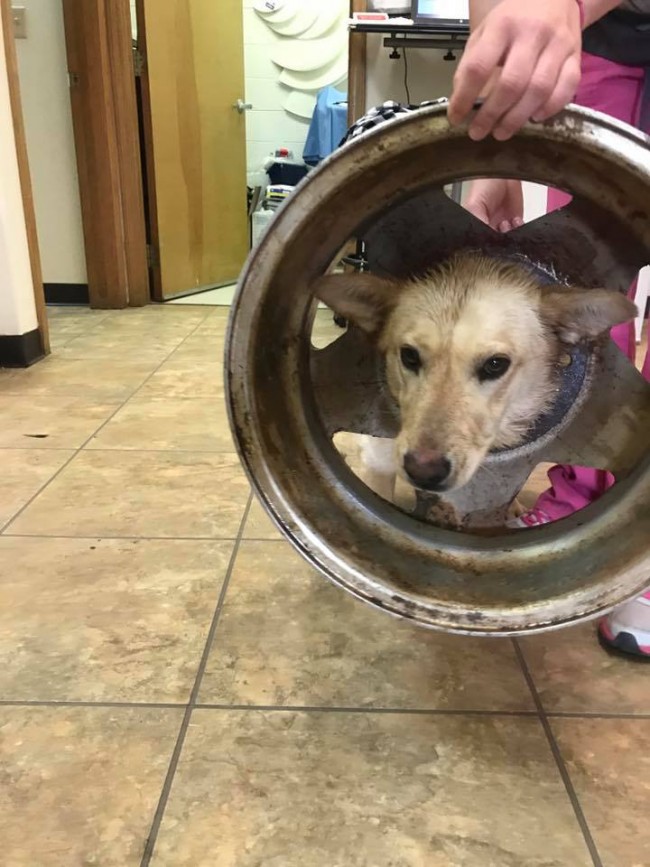
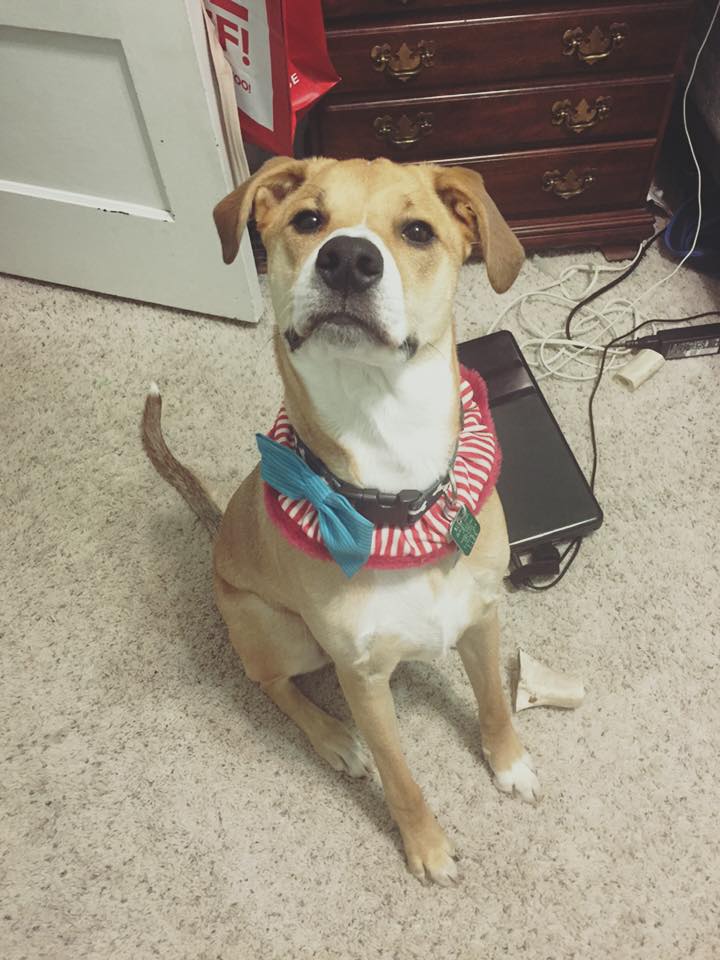
Any fire chief will tell you that a fire department’s role is not just fighting fires, but sometimes helping community members out of a tight spot. And for the McDowell County Rescue Squad in North Carolina, that form of service required a delicate touch last week when they were called upon to free a dog named Sadie from the grips of a truck tire rim.
Sadie’s family told rescuers that they believe she may have been chasing another animal when she got wedged inside the Ford F-350 tire rim.
Credit: Kristi Sisk/ Facebook
Sadie was taken to the Animal Hospital of Marion where she showed everyone her new necklace with her characteristic charm. But for her own safety, Sadie would have to be sedated.
Credit: Kristi Sisk/ Facebook
“The tire rim probably weighed 20 or 30 pounds so she couldn’t even lift her head up when she came in,” hospital staffer Kristi Sisk said.
“We used hydraulic cutters as well as a couple of other power tools,” McDowell County Rescue Squad Captain Jordan Harrell told Fredericksburg.com. “It was a lot of trial and error. It was very big, it was a tough metal, and not the text book type extrication.”
Credit: Kristi Sisk/ Facebook
“Thank you so much McDowell rescue squad and volunteers that showed up, took their time, and put the animals safety first getting this tire rim off!” Sisk said. “Happy to say miss Sadie had a happy ending. Went home tail wagging. I love my job!”
Credit: McDowell County Rescue Squad/ Facebook
ooOOoo
Time and time again, we see how dogs bring out so much good in us!
Yesterday I used as a sub-heading “I will never, ever tire of the wonderful connections made by this blog!”
I wrote that before Sydney sent in a guest post which reached out to me, to Jeannie and, undoubtedly, will reach out to many others. Sydney further validated the power of the wonderful connections that blogging brings.
Here’s how it came about.
Not that long ago, there was a new follower to this place. As is so frequently the case that new follower was also a blogger. Their blog is called very beautifully: Recovery For All Of My Heart. As I always try to do, I went across to leave a ‘thank you’ note. I also read the About page that I want to republish here by way of my introduction to Sydney.
Hello, I am in recovery from an eating disorder, depression and anxiety. The way I got to the best place in my mind is by changing my perspective.
In this blog, I use my new open-mindedness to show the world the beauty I see in hopes that others will then see the beauty in themselves. For me, all it took was to see the beauty in myself, but I needed someone to help me see it first. My hope is to be that person for others.
There is a way to see the good in every piece of you. You can get your mindset to see what others love about you. The proof of everyone’s beauty lies in changing your perspective and this blog hopes to put into light the beauty in everyone that ever existed.
So now to Sydney’s post. (And if you want to understand why I chose the title to this post, then please read right down to the end.)
ooOOoo
Mindfulness and a dog named Bailey
By Sydney R. February 23rd., 2017
Bailey
When I was 21 years old, I got a hound boxer puppy named Bailey. Previously, I had a dog my mom and I raised when I was seven; she was named Rachel.
I only speak of Bailey in this post because of a certain situation I want to talk about, but I also wanted to mention how amazing Rachel was too.
Anyway, I raised Bailey to be the sweet almost two-year-old he is today. He is not a normal dog to me. This is because I believe him to be extraordinary (so original for dog owners, I know), and also because I have struggled with my mental health.
I have struggled with depression and he has changed my life for the better. One day last year I was having a very hard time with my depression. I wanted to just lay in bed and quit my job and begin isolating again. I wanted to just sleep and not fight the thoughts and just let them rattle on inside of my mind while I lay there.
I grabbed my dog as he was lying next to me and held onto him ready to remain in my negative thoughts for all eternity. Then something changed: I felt his fur. I felt my cheek against his fur. I heard his sweet little breathing that used to put me to sleep when he laid on my chest when he was a puppy. I was being mindful without even realizing it.
I was aware of everything I was feeling when holding this thing that is so dear to my heart.
Suddenly, all the pain went away. I was reminded of this feeling I can have while holding my dog. I can fight this depression and I can have a wonderful life. If you ever are feeling extremely sad or have any type of negative urges, and this can be about anything, grab your furry little one and just stay in the moment until they pass.
And why is this?
Research has shown that if you look into your dogs eyes, the hormonal response is activated just like the one that is activated when you look at infants. Scientists took blood samples of dogs and their owners before and during time spent petting. The results were that the levels of oxytocin went up in humans during a petting session of a dog and it was at very similar levels of new mothers and their infants.
Even more amazing, dogs had the same levels in their blood as well, showing how happy they are around their owners. During my depression that night, holding onto my dog was not just helping me overcome my sadness, he was having a nice time as well.
Now what I am guessing is that if you are sitting down, petting your dog, but not really paying much attention, your dog will be happy, but your oxytocin levels will not be as high as they could be. When you are mindful and staying in the moment whilst petting your dog, you could be seriously happy, to the point where your oxytocin levels from your dog stops you from ruminating on your negative thoughts.
Don’t just pet your dog when you are upset…make sure you are completely in the moment.
Notice your body and notice what your hands and arms are feeling as you wrap your arms around your dog. Let your hands and all of your arms feel the fur. Use all of your senses. Make sure you hear your dog and do not let your thoughts block out being in the moment. Regular petting of the dog is enjoyable. Mindful petting of a dog could change your life, like it did mine.
Now I will always know that I have something to go to when I feel depressed. This is extremely important because one huge part of depression is hopelessness. This is the feeling that you will always feel depressed.
With a dog, you have hope to get out of those feelings. I know that I have my dog to go to and I will never fear being sad forever again. I always have the mindful petting of Bailey or Rachel that will make the negative thoughts drain away.
ooOOoo
Good people, I am genuinely humbled by both Sydney’s desire to share this with you, and by the magic of having a dog in our life.
Yesterday, in came an email that brought a tear to my eye:
Dear Paul,
I came across your blog this morning and saw the post on ‘We shall not forget them’ to pay tribute to our fur babies.
My black Labrador, Max, crossed the Rainbow Bridge on November 28th. He’s on my mind all the time and I have constantly been trying to do little things that make me feel his presence.
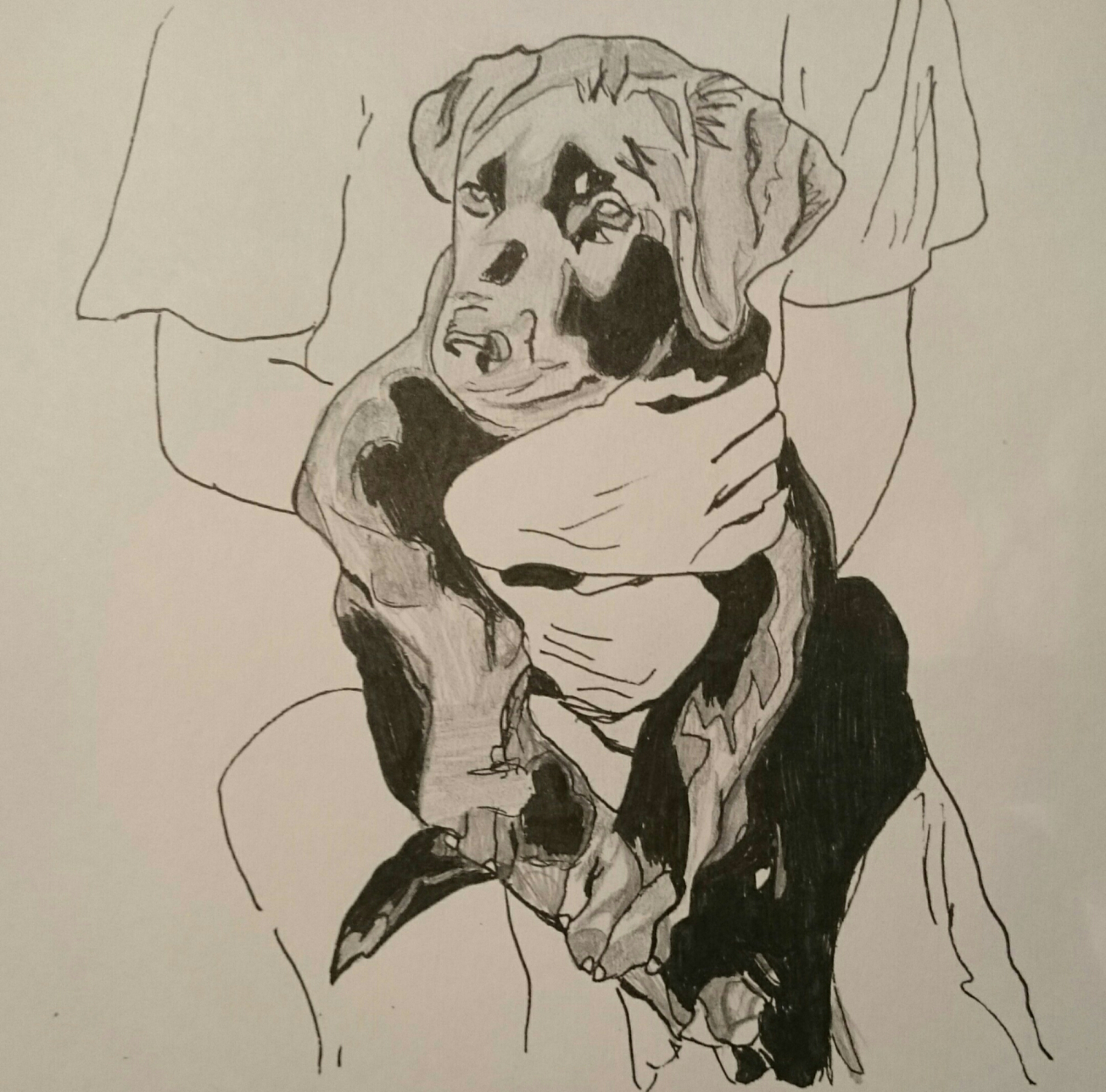
I was hoping I could pay a tribute to him on your blog. Please find a small poem and a portrait of him that I had penned down earlier. This is the original picture I sketched of him.
The email came from Samyuktha Sridharand it is a wonderful honour and privelege to offer Sam’s tribute to Max.
ooOOoo
Max, our dark Prince
by Samyuktha Sridhar
Max, our handsome black labrador who was eleven and a half years old crossed to the other side of the Rainbow Bridge on 28 November, 2016. We miss him like crazy and it hasn’t yet fully sunk in.
There is no way we can make the pain go away, but we need to move on and learn to live with the beautiful memories. Every person has a different way of dealing with loss and sadness. I like to put my thoughts on paper. It helps me get things out of my system.
So here’s what I did..
If memories could bring us closer, if tears could bridge the gap
I’d cross the oceans to see you, in warm wet hugs we’d wrap
I opened my eyes to reality, to warm wet tears instead
The pain in my heart was real, as the voices in my head
Echoed, “No teary goodbyes were exchanged, no words of farewell spoken,
Would it have made it easier, if we had that chance?” I’m torn!
If I knew t’was the last time, that you’d look into my eyes
I’d have cradled your head upon my lap, stayed by you as you lay.
Were you in pain that fateful night, when the big brown clock struck three?
Sadly I’ll never know, would I? If you’d reached out to me.
With every breath you took you filled, my heart with so much love
You took a piece of my heart with you, the piece that belonged to you.
ooOOoo
Again and again we are reminded of what our dogs mean to us. So beautifully expressed by Sam.
Please, if you want to offer a tribute to your dearly departed dog do share it on these pages.
One can never have too many examples of love in a life!
These are interesting times. If we took even a small percentage of what we read about or see in the news media to heart we would think that life is hardly worth living for. So stuff the bad news out of sight!
Over 80 percent of the students who attend Los Amigos Elementary School in Rancho Cucamonga, Calif., are from socioeconomically disadvantaged families, but that didn’t stop them from doing everything they could to raise money to save an animal in need.
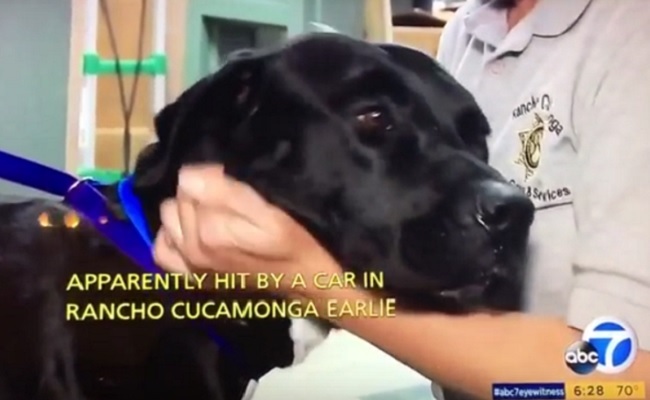
It began in early December, when a school employee found an injured black Lab mix hiding in bushes near the parking lot.
“There’s this really hurt dog,” Vice Principal Sharon Linville heard over a walkie-talkie, according to the Inland Valley Daily Bulletin. “I’m sure this dog is going to die, he’s in so much pain.” She and other employees brought the dog blankets and water, and contacted the Rancho Cucamonga Animal Care and Adoption Center.
The center’s staff veterinarian, Cynthia Servantez, visited the school a few days later to give the students a not-so-good update on the dog they’d named “Black Bart.” He’d been hit by a car and would probably survive, but he needed surgery that would cost about $3,000.
An X-ray had revealed that both of Bart’s hips were dislocated. As Dr. Servantez told the students, Bart’s “puzzle pieces had come undone.”
The schoolchildren immediately took action to help put those pieces back together. The school launched a “Pennies for Paws” campaign to collect spare change for Bart’s surgery.
Every single student made a donation. “They looked through sofa cushions, they gave up their allowance, some of them gave us IOUs,” Linville told KABC. “We have a bunch of Chuck E. Cheese coins that we got.”
One week later, the school gave the animal care center a check in the amount of $471.37.
Servantez told the Daily Bulletin it was the first time ever that anyone had offered to pay for the medical care of an injured stray dog.
The Los Amigos students continued their Pennies for Paws campaign and the momentum continued to build. Yvonne and Art Alvarez, owners of Doggie Couture in Rancho Cucamonga, were so impressed by the students’ efforts that they matched the funds that had been raised.
“We wanted them to know if they do something nice, it can make other people do it and then it becomes something big,” Yvonne Alvarez told the Daily Bulletin.
Several weeks after he’d been discovered at the school, “Who Let the Dogs Out” played over the speakers as Bart returned for a special guest appearance at a Jan. 23 rally in his honor.
Linville announced that the Los Amigos students had surpassed their $3,000 goal – by over $4,200. The extra money would be donated to the animal shelter to help other pets in need.
Veterinarian Victoria Impett, who accompanied Bart, told the schoolchildren to give themselves a pat on the back. Most of them complied. “It might not have seemed like big deal to go home and dig in the couch for a few pennies, but each and every one of you made a huge difference in someone’s life,” she told them.
Bart had no ID tag or microchip, and no one has come forward to claim him. He still needs surgery on his right hip. Once he recovers, he’ll be ready for adoption. “He’s starting to kind of blossom into a fabulous dog,” Impett said.
As Linville told the students, “This has been an incredible journey, and it’s really cool to be kind.”
She grew and filled our lives with joy. We loved her Boxer curl and the way that she would sit on the couch with us and just lean against our sides. Then around her 7th year, we noticed that she lost her appetite. Concerned like any parents, we took her to the vet. We received the worst news possible.
She had cancer that had metastasized in her liver. Her last few months with us were precious.
Bob Derham and his wife, Julie, are long-term friends back in the UK.
They recently lost their two dogs.
Bob sent me this:
Millie and Summer both had a fun life.
They were cross breed dogs, partly Springer Spaniel and part Collie. They were born in Wales, but as there are quite a lot of similar dogs there, the owner advertised in a local paper, and brought them up to Dorset one weekend 13 years ago.
Initially we had been looking for only one dog, but it seemed such a shame to separate the two puppies so we decided to take both. Most people were of the opinion that two girls from the same litter was not a good idea, but nevertheless we trained them, and the two animals were always together.
Family holidays, walking the children to the school bus, visiting friends, etc., always included Millie and Summer.
Just over two years ago, Summer became diabetic. Had this been only ten years ago, nothing could have been done for her, but we were able to inject her twice a day, and keep her healthy, apart from failing sight as a result of the insulin. It was not long after that Millie developed the same problem, so both dogs had the same routine.
Summer went to the vets on the right day for her, and was put to sleep peacefully, and two weeks later Millie needed the same choice to be made.
They enjoyed an almost identical lifespan, and we enjoyed them to the full.
Bob and Julie’s daughter Stephanie then made the following video in memory of their two beloved dogs.
Back to me.
Going to close today’s post with this poem by Rudyard Kipling.
ooOOoo
The Power of the Dog
There is sorrow enough in the natural way
From men and women to fill our day;
And when we are certain of sorrow in store,
Why do we always arrange for more?
Brothers and Sisters, I bid you beware
Of giving your heart to a dog to tear.
…
Buy a pup and your money will buy
Love unflinching that cannot lie–
Perfect passion and worship fed
By a kick in the ribs or a pat on the head.
Nevertheless it is hardly fair
To risk your heart for a dog to tear.
…
When the fourteen years which Nature permits
Are closing in asthma, or tumour, or fits,
And the vet’s unspoken prescription runs
To lethal chambers or loaded guns,
Then you will find–it’s your own affair–
But…you’ve given your heart for a dog to tear.
…
When the body that lived at your single will,
With its whimper of welcome, is stilled (how still!);
When the spirit that answered your every mood
Is gone–wherever it goes–for good,
You will discover how much you care,
And will give your heart for the dog to tear.
…
We’ve sorrow enough in the natural way,
When it comes to burying Christian clay.
Our loves are not given, but only lent,
At compound interest of cent per cent.
Though it is not always the case, I believe,
That the longer we’ve kept ’em, the more do we grieve:
For, when debts are payable, right or wrong,
A short-time loan is as bad as a long–
So why in Heaven (before we are there)
Should we give our hearts to a dog to tear?









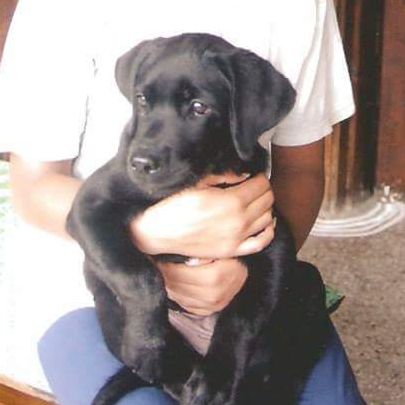
 Once upon a time, there lived a beautiful Boxer named Sophie. My husband fell in love with her at first sight. He had to talk me into taking her home. It didn’t take long for me to see the light. The next thing I know I was carrying her in my arms.
 The vet had her on steroids and there for a time she returned to her happy-go-lucky Boxer self. We were fortunate to give her one last Christmas.