Category: Innovation

Benoit Mandelbrot and the roughness of life.

There is so much about the lives of humans that is astoundingly beautiful.

Before I get started on this article, a few words about the Blog in general.  In recent times, the readership of Learning from Dogs has increased, frankly, to quite amazing levels.  Not really sure why but grateful, nonetheless.

Readers will recognize that articles written specifically about dogs are in the minority.  Even using dogs as a metaphor would still limit what could be published.  But as is written elsewhere on the Blog, ‘The underlying theme of Learning from Dogs is about truth, integrity, honesty and trust in every way.’  Dogs are integrous creatures; that’s all the example required.

We are at a point in the history of man where truth, integrity, honesty and trust are critically important (they have always been important but the economic and ecological pressures bearing down on us all make these values critical to mankind’s survival).  Thus the aspiration of Learning from Dogs is to offer insights on truth from as many perspectives as possible – and to make your experience as a reader sufficiently enjoyable that you will wish to return!

OK!  On to the topic for today!

There are many aspects of the world in which we live that are mysterious beyond our imagination.  Take the circle.  Practically everyone is aware that to calculate either the area or the circumference of a circle one needs to use a mathematical constant π or ‘pi’.  As a mathematician would put it,  π (sometimes written pi) is a mathematical constant whose value is the ratio of any circle’s circumference to its diameter; this is the same value as the ratio of a circle’s area to the square of its radius. π is approximately equal to 3.14159.

Note the word ‘approximately’!  Now read this,

(PhysOrg.com) — A computer scientist in France has broken all previous records for calculating Pi, using only a personal computer. The previous record was approximately 2.6 trillion digits, but the new record, set by Fabrice Bellard, now stands at almost 2.7 trillion decimal places.

Bellard, of Paris Telecom Tech, made and checked the calculation by running his own software algorithms for 131 days. The previous record calculation, set by Daisuke Takahashi at the University of Tsukuba in Japan in August 2009, took only 29 hours to complete, but used a super-computer costing millions of dollars, and running 2000 times faster than Bellard’s PC.

Full article is here.

Apart from the wonderful aspect of the need of a human being to go on determining the n’th value of π there is a deeper and more beautiful aspect (well to me there is!) and that is the acknowledgement that something as simple as, say, that round coin in your hand is an expression of the infinite.

Now to Benoit Mandelbrot, who died a little over six months ago, but in his lifetime also explored the wonder and magic of the infinite.

Here’s a video of Mandelbrot recorded in February 2010 in what would be his last year of his life on earth.

If you found that video fascinating then try this series of six videos presented by the one and only Arthur C. Clarke.

Benoit Mandelbrot died on the 14th October, 2010, a little over a month before his eighty-sixth birthday (born 20th November, 1924).  Here’s a nice tribute from the The New York Times.

Tomorrow, some more insights into the mysterious beauty of fractals.

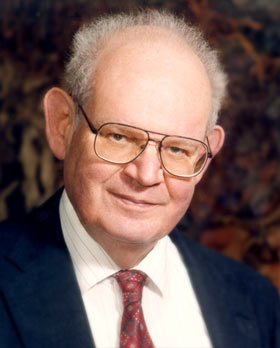
Benoit Mandelbrot

Amazing man!

Earth Policy Release

Finding the right solutions for the 21st century and the next generation.

Just before presenting the release from the Earth Policy Institute that came out on the 20th, here’s a reminder about watching the film, Plan B, that I wrote about on the 4th April.  It’s a very good film from an excellent and creditable source.  You can watch it for FREE from PBS, BUT ONLY UNTIL THE END OF APRIL!

Here’s the link – Plan B, the film

Now to the release published in full on Learning from Dogs.

Earth Policy Release
World on the Edge
Book Byte
April 19, 2011

“LET NO MAN SAY IT CANNOT BE DONE”

www.earth-policy.org/book_bytes/2011/wotech13_ss5

By Lester R. Brown

We need an economy for the twenty-first century, one that is in sync with the earth and its natural support systems, not one that is destroying them. The fossil fuel-based, automobile-centered, throwaway economy that evolved in western industrial societies is no longer a viable model—not for the countries that shaped it or for those that are emulating them. In short, we need to build a new economy, one powered with carbon-free sources of energy—wind, solar, and geothermal—one that has a diversified transport system and that reuses and recycles everything. We can change course and move onto a path of sustainable progress, but it will take a massive mobilization—at wartime speed.

Whenever I begin to feel overwhelmed by the scale and urgency of the changes we need to make, I reread the economic history of U.S. involvement in World War II because it is such an inspiring study in rapid mobilization. Initially, the United States resisted involvement in the war and responded only after it was directly attacked at Pearl Harbor. But respond it did. After an all-out commitment, the U.S. engagement helped turn the tide of war, leading the Allied Forces to victory within three-and-a-half years.

In his State of the Union address on January 6, 1942, one month after the bombing of Pearl Harbor, President Franklin D. Roosevelt announced the country’s arms production goals. The United States, he said, was planning to produce 45,000 tanks, 60,000 planes, and several thousand ships. He added, “Let no man say it cannot be done.”

No one had ever seen such huge arms production numbers. Public skepticism abounded. But Roosevelt and his colleagues realized that the world’s largest concentration of industrial power was in the U.S. automobile industry. Even during the Depression, the United States was producing 3 million or more cars a year.

After his State of the Union address, Roosevelt met with auto industry leaders, indicating that the country would rely heavily on them to reach these arms production goals. Initially they expected to continue making cars and simply add on the production of armaments. What they did not yet know was that the sale of new cars would soon be banned. From early February 1942 through the end of 1944, nearly three years, essentially no cars were produced in the United States.

In addition to a ban on the sale of new cars, residential and highway construction was halted, and driving for pleasure was banned. Suddenly people were recycling and planting victory gardens. Strategic goods—including tires, gasoline, fuel oil, and sugar—were rationed beginning in 1942. Yet 1942 witnessed the greatest expansion of industrial output in the nation’s history—all for military use. Wartime aircraft needs were enormous. They included not only fighters, bombers, and reconnaissance planes, but also the troop and cargo transports needed to fight a war on distant fronts. From the beginning of 1942 through 1944, the United States far exceeded the initial goal of 60,000 planes, turning out a staggering 229,600 aircraft, a fleet so vast it is hard even today to visualize it. Equally impressive, by the end of the war more than 5,000 ships were added to the 1,000 or so that made up the American Merchant Fleet in 1939.

In her book No Ordinary Time, Doris Kearns Goodwin describes how various firms converted. A sparkplug factory switched to the production of machine guns. A manufacturer of stoves produced lifeboats. A merry-go-round factory made gun mounts; a toy company turned out compasses; a corset manufacturer produced grenade belts; and a pinball machine plant made armor-piercing shells.

In retrospect, the speed of this conversion from a peacetime to a wartime economy is stunning. The harnessing of U.S. industrial power tipped the scales decisively toward the Allied Forces, reversing the tide of war. Germany and Japan, already fully extended, could not counter this effort. British Prime Minister Winston Churchill often quoted his foreign secretary, Sir Edward Grey: “The United States is like a giant boiler. Once the fire is lighted under it, there is no limit to the power it can generate.”

The point is that it did not take decades to restructure the U.S. industrial economy. It did not take years. It was done in a matter of months. If we could restructure the U.S. industrial economy in months, then we can restructure the world energy economy during this decade.

With numerous U.S. automobile assembly lines currently idled, it would be a relatively simple matter to retool some of them to produce wind turbines, as the Ford Motor Company did in World War II with B-24 bombers, helping the world to quickly harness its vast wind energy resources. This would help the world see that the economy can be restructured quickly, profitably, and in a way that enhances global security.

The world now has the technologies and financial resources to stabilize climate, eradicate poverty, stabilize population, restore the economy’s natural support systems, and, above all, restore hope. The United States, the wealthiest society that has ever existed, has the resources and leadership to lead this effort.

One of the questions I hear most frequently is, What can I do? People often expect me to suggest lifestyle changes, such as recycling newspapers or changing light bulbs. These are essential, but they are not nearly enough. Restructuring the global economy means becoming politically active, working for the needed changes, as the grassroots campaign against coal-fired power plants is doing. Saving civilization is not a spectator sport.

Inform yourself. Read about the issues. Share the Earth Policy Institute’s publications with friends. Pick an issue that’s meaningful to you, such as tax restructuring to create an honest market, phasing out coal-fired power plants, or developing a world class-recycling system in your community. Or join a group that is working to provide family planning services to the 215 million women who want to plan their families but lack the means to do so. You might want to organize a small group of like-minded individuals to work on an issue that is of mutual concern. You can begin by talking with others to help select an issue to work on.

Once your group is informed and has a clearly defined goal, ask to meet with your elected representatives on the city council or the state or national legislature. Write or e-mail your elected representatives about the need to restructure taxes and eliminate fossil fuel subsidies. Remind them that leaving environmental costs off the books may offer a sense of prosperity in the short run, but it leads to collapse in the long run.

During World War II, the military draft asked millions of young men to risk the ultimate sacrifice. But we are called on only to be politically active and to make lifestyle changes. During World War II, President Roosevelt frequently asked Americans to adjust their lifestyles and Americans responded, working together for a common goal. What contributions can we each make today, in time, money, or reduced consumption, to help save civilization?

The choice is ours—yours and mine. We can stay with business as usual and preside over an economy that continues to destroy its natural support systems until it destroys itself, or we can be the generation that changes direction, moving the world onto a path of sustained progress. The choice will be made by our generation, but it will affect life on earth for all generations to come.
Adapted from Chapter 13, “Saving Civilization,” in Lester R. Brown, World on the Edge: How to Prevent Environmental and Economic Collapse (New York: W.W. Norton & Company, 2011), available online at www.earth-policy.org/books/wote

Additional data and information sources at www.earth-policy.org

Nothing ‘knows’ like a dog’s nose

Lovely what comes across one’s PC screen.

It started when someone we know in Payson, Peter N, posted an item on Facebook about dogs being able to smell out cancer.  The Facebook item referred to an article in Natural News.  That item here went as follows:

(NaturalNews) The mainstream media is suddenly reporting on the idea that dogs can sniff out cancer in human beings. This concept is no surprise to NaturalNews readers, of course, as we’ve talked about this before, but until now the idea that cancer patients could be detected by smelling them was considered pure quackery by conventional doctors.

Of course, conventional doctors are once again wrong:Cancer patients do have a particular smelldue to the metabolic off-gassing of cancer cell tumors. But here’s the real story the mainstream media isn’t telling you: It’s not just dogs that can smell cancer — manyhealth practitionerscan also smell cancer patients.

I’ve personally spoken to numerous natural health practitioners who say they can smell cancer in patients. It’s not really a difficult thing to do, it turns out. With a bit of training, I believe most doctors could even be trained to do it, much like this dog in Japan which correctly identified cancer from stool samples 37 out of 38 times.

It doesn’t mean doctors have to sniff patients’ poo, either: You can also smell cancer on someone’s breath, so just talking to a patient can give a doctor an opportunity to do that. (Historically, by the way, physicians use to taste patients’ urine, from which they could diagnose a number of diseases, especially diabetes.)

This particular research on dogs’ ability to sniff out cancer was conducted by researchers at the Kyushu University in Japan. Dr Hideto Sonoda, who conducted the research, told the BBC, “The specific cancer scent indeed exists, but the chemical compounds are not clear. Only the dog knows the true answer.”

An important point in all this is thatthe cancer-sniffing dogs were able to detect early-stage bowel cancer— something that is extremely difficult for modern medical technology to detect. And it only takes a dog a few seconds — at virtually zero cost — to make the assessment.

Now, of course, medical scientists are busy trying to build an electronic device to replace the dog, because conventional medicine can’t stand the fact that something built by nature (the dog’s nose) might be better than some million-dollar electronic gizmo they come up with that can be billed out at $500 a test. So rather than just using dogs who can already detect cancer right now, they’re going to wait around a few years and try to create some high-tech equipment that will probably be a poor replacement for the dog.

That’s how modern medicine works: It steals good ideas from nature and replicates them, but the results are almost always a poor imitation of what Mother Nature has provided for free. Here’s how the end results would likely stack up:

CANCER-SNIFFING DOG
Accuracy: 98%
Cost: One dog biscuit and a pat on the head

CANCER-SNIFFING HIGH-TECH MACHINE
Accuracy: 60%
Cost: $500 billed to Medicare [the US medical system for those unfamiliar with the term. Ed.]

Gee, which one do you think conventional medicine will end up using?

In fact, a quick web search finds much information on the topic including these YouTube videos.

Now how to get our dogs to tell us ……… we’re OK; assuming we are!

Then from HousePet online magazine comes this:

The British Medical Journal published a ground-breaking research reporting how dogs have been trained to detect bladder cancer by its smell in urine, bringing together dogs’ exceptional sense of smell, with the theory that cancer produces chemicals with distinctive odours. (on September 24th, 2004 )

Six dogs, none of which had any prior experience in scent discrimination, were trained over seven months to distinguish between urine samples from bladder cancer patients and those from healthy people and individuals with non-cancerous diseases. For the final tests, each dog was offered a set of seven urine samples, and their task was to determine which of them was from a patient with bladder cancer. All of the samples used in the tests were completely new and unfamiliar to the dogs.

The dogs, comprising three spaniels, one papillon, one Labrador and one mongrel, correctly selected the bladder cancer urine on 22 out of 54 occasions – an average success rate of 41% compared to the 14% which would have been expected if the dogs had randomly selected a sample each time. This was statistically significant.

The research was undertaken by a unique partnership of medical scientists, including a statistician, and dog trainers. An orthopaedic surgeon from Buckinghamshire, Mr John Church, brought together colleagues from the Department of Dermatology, Buckinghamshire Hospitals NHS Trust (funded by the Erasmus Wilson Dermatological Research Fund) to develop and supervise the scientific protocol for the research, and Hearing Dogs for Deaf People (based near Princes Risborough) for the purpose of training the dogs for the trial.

“We were flattered to be asked to assist in this study on the basis of our reputation in the field of training dogs,” Claire Guest, Operations Director at Hearing Dogs said, “although we have been very careful not to let this project affect our normal work which involves training dogs for deaf people. The four of us who trained these cancer detection dogs did so using our own pet dogs, in our own homes, in our own spare time.”

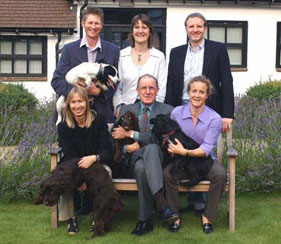
Back row: And Cook, Claire Guest, Martin Church. Front row: Carolyn Willis, John Church, Susannah Church

I rather loved the quote from John Church, “I am a passionate believer that animals have a huge amount to teach us, and I have heard many stories of people who have been alerted to the presence of cancer in their bodies by their pet dogs. I was delighted to find that the two charities were open-minded enough to participate in this study, so that we could really examine this phenomenon scientifically.”

As I keep going on about – we really can learn from dogs!

Thanks Peter.

Total, utter madness, Pt 1.

The way we are most likely treating Planet Earth is almost beyond comprehension.

I have mentioned before the Earth Policy Institute and Lester Brown’s latest book, World on the Edge.  Details of the book are here.

At the time of writing this Post (10am US Mountain Time on the 4th Feb.) I have read through to the end of Chapter 5 of the book and will have it completed soon.  It’s opening my eyes hugely!

I have decided over the next week or so to summarise each chapter, hoping that this encourages many readers of Learning from Dogs to reflect, go to the EPI website, buy the book or think about making a difference in any way that you can.

Chapter One, On the Edge, sets the background:

  • Summer of 2010 sees record-high temperates in Moscow, Russia’s grain harvest shrank by 40 million tons (40%) to 60 million tons.
  • Record high temperatures in south-central Pakistan were recorded. Snow and glaciers in the Himalayas melted fast, 20 million Pakistanis were affected by the resultant flooding, 2,000 died, 6 million acres of crops damaged.
  • A 2002 study by Mathis Wackernagel concluded that, “humanity’s collective demands first surpassed the earth’s regenerative capacity around 1980.  By 1999, global demand’s on the earth’s natural systems exceeded sustainable yields by 20 percent.  Ongoing calculations show it at 50 percent in 2007.  Stated otherwise, it would take 1.5 Earths to sustain our current consumption.” [my emphasis]
  • “No previous civilisation has survived the ongoing destruction of its natural supports.  Nor will ours.”

Let’s turn to NOAA.  A few salient points from there State of the Climate – Global Review for 2010.

  • For 2010, the combined global land and ocean surface temperature tied with 2005 as the warmest such period on record, at 0.62°C (1.12°F) above the 20th century average of 13.9°C (57.0°F). 1998 is the third warmest year-to-date on record, at 0.60°C (1.08°F) above the 20th century average.
  • The 2010 Northern Hemisphere combined global land and ocean surface temperature was the warmest year on record, at 0.73°C (1.31°F) above the 20th century average. The 2010 Southern Hemisphere combined global land and ocean surface temperature was the sixth warmest year on record, at 0.51°C (0.92°F) above the 20th century average.
  • The global land surface temperature for 2010 tied with 2005 as the second warmest on record, at 0.96°C (1.73°F) above the 20th century average. The warmest such period on record occurred in 2007, at 0.99°C (1.78°F) above the 20th century average.


Russian forest fires.


From the UK Guardian newspaper.

2010 is becoming the year of the heatwave, with record temperatures set in 17 countries.

Record highs have occurred in Russia, Belarus and Ukraine – the three nations at the centre of the eastern European heatwave which has lasted for more than three weeks – but also African, Middle Eastern and Latin American countries.

Temperatures in Moscow, which have been consistently 20C above normal, today fell to 31C (86F), and President Dmitry Medvedev cancelled a state of emergency in three out of seven Russian regions affected by forest fires.

Thousand of hectares of forest burned in the fires, killing 54 people and leaving thousands homeless. For days, Moscow was shrouded in smog, and environmentalists raised fears that the blaze could release radioactive particles from areas contaminated in the 1986 Chernobyl disaster.

Wildfires have also swept through northern Portugal, killing two firefighters and destroying 18,000 hectares (44,500 acres) of forests and bushland since late July. Some 600 firefighters were today struggling to contain 29 separate fires.

But the extreme heat experienced in Europe would barely have registered in Iraq, Saudi Arabia, Niger, Pakistan and Sudan, all of which have recorded temperatures of more than 47C (115F) since June. The number of record highs is itself a record – the previous record was for 14 new high temperatures in 2007.

The freak weather conditions, which have devastated crops and wildlife, are believed to have killed thousands of elderly people, especially in Russia and northern India. The 2003 European heatwave killed about 15,000 people.

Be worried, be concerned but don’t panic – you and I, all of us, have the collective power to sort this all out.  More about this soon.

So near, so far!

Mixed emotions about those other worlds out there.

In recent times, Learning from Dogs has been reflecting on the magic, and fragility, of the planet we all live on.

There was the photograph of the Earthrise that attracted quite a few comments.  That was followed up by the amazing photograph of the Earth from Voyager 1 taken in 1990 from 3,762,136,324 miles away!  Then the lovely poem from Sue.

So it was interesting to note my mixed emotions to a piece on the BBC News website yesterday.  Here’s a flavour.

Worlds away

Astronomers have identified some 54 new planets where conditions may be suitable for life.

Five of the candidates are Earth-sized.

The announcement from the Kepler space telescope team brings the total number of exoplanet candidates they have identified to more than 1,200.

The data release also confirmed a unique sextet of planets around a single star and 170 further solar systems that include more than one planet circling far-flung stars.

Read the rest of the item here. (and there’s a fuller version on NetworkWorld)

So here are those mixed emotions.

  • Man has been, and still continues to be, wonderfully curious to the point of spending huge sums of money on projects that appear to do nothing more than satisfy that curiosity. (The (Kepler) mission‘s life-cycle cost is estimated at US$600 million, including funding for 3.5 years of operation, from here.)  That’s a beautiful trait, in my humble opinion.
  • Homo Sapiens is a wonderfully innovative and creative species, as so wonderfully presented by Alan Alda on a recent PBS Programme called The Human Spark.  (See the YouTube intro at the end of this Post.)
  • Look at all the inventions and incredible advances to our species that are all around us – including the PC I am using and the World Wide Web that is aiding this message!
  • For such an intelligent species as us, why is it that we are treating Planet Earth in such a suicidal manner through greed, pollution and over-consumption!
  • As was reported yesterday, we could be on the verge of total and utter chaos in terms of food.  Then also yesterday was a small item about food prices reaching a new global record.
  • It always struck me as absurd to conclude that this planet is the only habitable planet in the universe – ‘Astronomers estimate there are 1021 stars in the universe. With a conservative estimate of three planets per star (some could have many more, some would have none at all) this puts the estimated number of planets into millions of billions.‘ From here.
  • So the data coming in from Kepler is truly astounding and, personally, underlines this era as a great time to be alive.
  • But there simply is no choice in that for decades ahead, if not centuries ahead, Planet Earth is all there is for us.  So why do we do it so much harm!
  • Our civilisation is likely to go to the very limits of survivability before the message that the existing ‘model’ is broken is picked up by every major political party in the world.  That is very, very scary to contemplate.
  • So it looks as though, soon, mankind will face the ultimate decision of all time.  Give up and let the chaos overwhelm us all, or … or what?  In other words millions of us will have to live with the consequences of our greed.
  • The ‘or what?’ can only be a faith that it will be OK.
  • A faith that mankind will use the power of dreams, imagination and energy to create a new future that will, at long last, be a new dawn of democratic and just, integrous existence.
  • And maybe, just maybe, that could be the Second Coming and maybe, just maybe, the world’s Churches and religions will be our saving grace.

But of that day and hour knoweth no man, no, not the angels of heaven, but my Father only. Matthew 24:36

Fascinating times – a Chinese proverb, ‘It’s better to be a dog in a peaceful time than be a man in a chaotic period.’

Finally, here’s that video of the series preview to The Human Spark.

The learning curve.

A guest post from Dr John W Lewis.  John and I have known each other for some years now, both of us sharing a group aircraft that was based in Exeter, SW England.  His areas of interest and competence are described here.  But these days when John and I chat about the world in general and nothing in particular we often come back to the topic of innovation.  So bear that in mind as John muses on the rather gloomy nature of a recent post on Learning from Dogs.

John writes:

John Lewis

Having read the recent Post, Group Human Insanity, my first instinct is that I have nothing particular worthwhile to say that has not been said before.  But, of course, the time to apply minds is exactly when the answers don’t readily come to mind, so I will continue!

In a way, it’s probably a case of applying the sentiment on the old wartime poster, “Keep calm and carry on!” or as Winston Churchill said, “I’f you’re going through hell, keep going!”.

That doesn’t mean that we don’t need to change, because we do. It doesn’t mean that we don’t need to put a lot more effort into things that matter, because we do. But, as has been said before, “you can’t connect the dots looking forward, only looking backwards”. In other words, “it is very difficult to make predictions, especially about the future”.

Reading about this kind of thing in books, such as  “Freakonomics” or “Drive” or “Switch” suggests that we don’t really understand the mechanism by which behavioural changes happen in populations, although some of the discoveries of Everett Rogers about the diffusion of innovations is relevant here. To refer to another book, there is probably going to be a lot of “Who moved my cheese?” hemming and hawing behaviour going on too.

All we really know is that when the environment (in the most general sense) is changing rapidly, populations are much better off if they are diverse in their characteristics and behaviour; also I believe (but am not sure) that it’s true to say that increased communication assists populations in adapting to changes in the environment.

So the most important thing to do is to let lots of different people do lots of different things in search of ways forward.  If you like, we need to split up (within the multidimensional behavioural space in which we operate) into smaller groups to dodge the big boulders.

We need to communicate lots of information and lots of ways of interpreting and verifying not only the information itself, but also the operational implications of that information (which may be very different things). Hopefully this will reduce (but it will never eliminate) instances of mass movements (as in stampedes) based on partial information which misdirect substantial resources into activities that turn out to be dead ends.

If we don’t believe that there are any viable ways forward, then we might as well give up and just enjoy what’s left of the good times!

But if there are ways forward, then the way to find them is to have lots of people scouting ahead on lots of fronts and passing information around so that we maximise the chances of finding those ways forward, and having lots of other people striving to find ways to make use of that information and testing out those ways forward.

Whether this is all obvious, or not, I don’t know; but it probably is. One thing we do know is that telling people what to do is emphatically not going to work! Just look at some of the stories on the Breaking The Mould website.

Instead, we are better off when people are asking questions, gathering information and passing it around. I believe that if these behaviours are adopted in a population, as a result of ‘external’ pressures building up, then changes and innovations will inevitably occur, and this is about the best that we can do! Fortunately, I think that is what tends to happen anyway.

So, in a sense, as I referred to above: “Keep calm and carry on”  (By the way, a Google search on that phrase unearths a variety of interesting stuff and variations such as “Get excited and make stuff”)

Regards,
John

Dr John W Lewis
holosoft

Email: john.lewis@holosoft.com
Skype: john_w_lewis
Twitter: @JohnWLewis

Blog: http://observations.johnwlewis.info
LinkedIn: http://www.linkedin.com/in/johnwlewis
FriendFeed: johnwlewis

Phone humour!

Just a little light-heartedness for today.

From John Z. here in Payson, AZ.

I see LG have recognised that many people the wrong side of 60 now use a mobile phone and have recently launched …..


Cell phone for seniors


and from John L. from Devon, England this lovely story.

Several men are in the changing room of a golf club.  A mobile phone on a
bench rings and a man engages the hands-free speaker function and begins to
talk.  Everyone else in the room stops to listen.

MAN:  “Hello”

WOMAN:  “Hi Honey, it’s me. Are you at the club?”

MAN:  “Yes.”

WOMAN:  “I’m at the shops now and found this beautiful leather coat.  It’s
only £2,000.  Is it OK if I buy it?”

MAN:  “Sure, go ahead if you like it that much.”

WOMAN: “I also stopped by the Lexus dealership and saw the new models.
I saw one I really liked..”

MAN:  “How much?”

WOMAN:  “£60,000.”

MAN: “OK, but for that price I want it with all the options.”

WOMAN: “Great! Oh, and one more thing.  I was just talking to Janie and

found out that the house I wanted last year is back on the market.  They’re

asking £980,000 for it.”

MAN: “Well, then go ahead and make an offer of £900,000. They’ll probably
take it. If not, we can go the extra eighty-thousand if it’s what you really
want.”

WOMAN: “OK. I’ll see you later!  I love you so much!”

MAN: “Bye! I love you, too.”

The man hangs up.  The other men in the locker room are staring at him in
astonishment, mouths wide open.


He turns and asks, “Anyone know whose phone this is?”


Power of social networks in the area of finance

The nature and reach of social conversations in the investment arena.

The above sub-heading is from a recent Post on Naked Capitalism that rather spookily comes hot on the heels of one of my recent musings.  Here’s what I published on the 12th January although I wrote it on the 9th.

In the past opinion and commentary has been in the hands, more or less, of the giant media moguls.  But technology has changed that.  Now more than ever a huge people have access to the Internet.  Indeed, a quick Google search reveals that of a world population of 6.85 billion people, just under 2 billion (29%) have internet access.  In North America that percentage is 77.4% (226 million) and in Europe the percentage is 58.4% (475 million).  I.e. nearly a billion people in just North America and Europe!

My point is that, in a manner never before experienced in human history, the vast majority of us have the ability to read, learn and muse about the critically important issues facing us today, coming to conclusions that carry political weight.  We have almost infinite choice as to where and how we form opinions.

Thus having access, via the internet, to the scribblings of so many wise people may end up giving democracy the boost it really needs in the face of overwhelming powerful plutocratic forces.

Coincidentally, also on the 12th Yves Smith of Naked Capitalism published an article entitled, The 20 most influential blogs in financial media.  You can find that article here.  Here’s a flavour of what was written.

Thanks to Minyanville for publicizing this study by MindfulMoney on the nature and reach of social conversations in the investment arena. But even bigger thanks go to loyal readers and contributors for their frequent comments, leads, and critiques. The success of a blog depends on its community and I am very grateful for all the input so many of you have generously provided.

Perhaps the most interesting finding (boldface ours):

The research confirms the existence of a network of investment super-connectors with extraordinary media influence and reach. These super-connected new influentials are, for the most part, not well established voices in the media but individual bloggers who fiercely champion their independence….In the US, the network functions as the unofficial voice of Wall Street & the US federal bank with no mainstream media players at the centre of the network.

Given how many of these top blogs are critical of the status quo, this map may be hopeful sign that the blogosphere is beginning to become a important channel of discourse outside the reach of the PR machinery of major corporations and government entities.

And rather than publish all the top 20 names, you can see that list here, the top 10 are as follows:

1. Naked Capitalism
2. Infectious Greed
3. The Big Picture
4. Jesse’s Cross Roads Cafe
5. Zerohedge
6. Mish’s Global Economic Analysis
7. Calculated Risk
8. Paul Krugman’s Blog
9. FT Alphaville
10. Ludwig von Mises Institute

Anyone interested in downloading the original report as published on the MindfulMoney website can go to the article here; the link to the pdf, requiring prior registration, is towards the end of the article.  The article opens thus:

Most investors would acknowledge that social media is playing an increasing role in their investment decisions. Yet no-one has mapped the emerging network of influence likely to be playing a crucial part in those decisions.

Until now that is.  MindfulMoney’s ‘Social Finance: The New Influentials” report is aiming to better understand what this network looks like and to see if a number of super connections, so beloved of writers like Malcolm Gladwell, exist.

The research indicates that they do.

As I said, to download the article you need to register first – that link is here.

It’s a very interesting new world that we are living in and one, I pray, that is returning real power to the electorates.


The Future of Content

A fascinating piece by John Maudlin.

I came across John Maudlin’s web site some time ago and ended up subscribing to one of his Blogs, Outside the Box.  To be frank, much of what John writes is a little bit too technical for me but this item did catch my eye to the extent that I read the item in full and was intrigued by it.

The article was called, “Apple, Google, NewsCorp and the Future of Content”  You can read it directly here.  But just to whet your appetite, here’s a small extract of what is primarily an interview with Michael Whalen:

In this issue of The Institutional Risk Analyst, we speak to Michael Whalen, [Emmy] award winning composer and new media observer about the outlook for the business of creating and delivering content.  Since graduating from Berklee College of Music, Michael has taught a business for music class that has saved thousands of young artists from making terrible mistakes with content and other contractual rights.  Think Frank Zappa and Warner Brothers.   And yes, Michael is IRA co-founder Chris Whalen’s younger brother.

and later …

Whalen: Frankly, I think we’re going back to the 19th century in terms of the “status” of artists. They’ll be figureheads. Imagine: like Paris or Vienna of the 1900s, we’ll have wealthy patrons and small clutches of people who support the art of “real” artists. In this environment, the work we will try to sell is simply a loss leader and an inducement for us to perform or create a “custom” song, TV show or film… Yup, it’s all here now… What will be really interesting is what happens next… I am not pretending to be the “Grim Reaper” but I think the record business, the film studio system and the television networks are over as we think we know them. I think there is a new business emerging in gathering creative investment, content and creative marketing…. It will be in a structure that’s more akin to a stock market than the traditional structure we’ve seen for artistic and creative content and the platform for it will be the digital ocean we have already discussed. Based on the “buzz”, there will be a “futures” market and the idea is commoditized and funded in days – not months or years. For decades, most record companies and networks have been little more than funding sources for artists – now the truly visionary artist won’t even need these ancient businesses – the market itself will generate everything it needs to create content efficiently. It’s a little overwhelming the change that is here now vs. five years ago and that will be coming in torrents in the next few years. Amazing.

Read the full interview here – I promise you won’t regret it.

By Paul Handover