Taken in the round I don’t think I’m ageing too badly. But there is one aspect of my world that does drive me bonkers from time to time. That is a decline (and that’s putting it politely) in my short-term memory. Everything from forgetting what it was I wanted to say to Jeannie to still being unsure of finding regularly visited places in Grants Pass, our local city. To put that last point into context we moved here to Merlin, some 12 miles from Grants Pass, back in September, 2012.
Turning to the cognitive skills of our wonderful dogs it is clear to me that we can only go so far in understanding how our dogs think and how much of their world is dealing with the present supported by their memories of previous events. (Frankly, in writing the last sentence I realised how even that premise was more of a guess than a known fact.)
A recent study at Eotvos Lorand University in Budapest about the memories of dogs has been widely referred to across many news outlets. So when it appeared on the Care2 site it was a natural to republish it for all you good people.
My doorbell has been broken for a few years, but every time my 9-year-old dog, Leroy, hears one chiming on a TV show, he looks at the front door.
Many pet owners have similar tales to tell about their dogs being able to remember long-ago experiences and events. And now we have proof that this really is possible. A new study found that dogs may have a more complex form of memory than most other nonhuman animals (sorry, elephants).
“Every move you make, every step you take, I’ll be watching you,” Sting once sang, and these lyrics could apply to our dogs, too. They’re not only watching us, but they’re remembering what they’re observing, no matter how trivial it may seem to us.
In the study at Eotvos Lorand University in Budapest, published Nov. 23 in Current Biology, 17 dogs were taught a training method called “Do As I Do.” The dogs would watch their owners perform an action. When the dogs were told, “Do it” and imitated their owners’ action, they were rewarded with a treat.
Next, the owners performed various actions but told the dogs to lie down instead of “Do it.” After a while, the dogs began lying down without being told to do so. The study’s authors noted that this showed the dogs had lost the expectation that they would be given the “Do it” command to imitate their owners.
Finally, the owners performed various actions, and when their dogs would lie down, the owners would wait either a minute or an hour and then give them the “Do it” command.
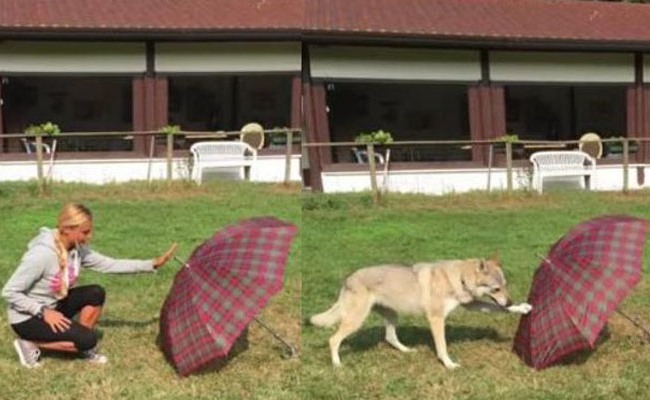
Some of the actions were unfamiliar to the dogs, such as their owners tapping on an open umbrella. The dogs would be led behind a partition, and a minute to an hour later would be led back to the umbrella and given the “Do it” command.
The dogs were able to remember what their owners had done, and tapped the umbrella with their paws.
“We cannot directly investigate what is in the dog’s mind,” psychologist Claudia Fugazza, an author of the study and owner of a Czechoslovakian Wolfdog who participated, told the Washington Post. “So we have to find behavioral evidence of what they expect or not.”
Remembering events in our lives is known as episodic memory. Until recently, only humans were thought to have this ability, but studies have found evidence that rats, monkeys and birds also have it, and so do dogs.
However, the researchers said the dogs don’t have full-fledged episodic memory, which would give them self awareness. Fugazza told NPR she didn’t think there was a method available to test whether dogs are self aware.
Victoria Templer, a behavioral neuroscientist at Providence College who wasn’t involved in the study, told NPR the results could be useful in helping scientists understand how episodic memory developed in humans and how it’s helped us to survive.
One interesting possibility Templer suggested is that “we evolved the ability to relive the past in order to imagine the future.”
ooOOoo
Of course what would be a marvelous aspect of a dog’s memory is being able to take note and remember where his male human companion left items around the house!
This was a day when a massage would have been perfect treatment!
On Wednesday afternoon Jean and I hooked a big flatbed trailer, borrowed from a neighbour, to our pickup truck and went into town to collect a new sectional settee that we had recently purchased at a furniture sale.
Yesterday, Michael who comes in to help us on a regular basis turned up at 8:30 and we all set to. First up was to dismantle an old sectional in our den that had seen much better days and then carry that out to the front.
Next we moved a settee from our living-room to the den.
Last up was to unpack all three units that comprised the new sectional. Oh, nearly forgot! Then the old sectional from the den was loaded on to the trailer and taken to the tip!
By the end of the day this Brit, who will be 72 in a couple of weeks time, was feeling the odd aching muscle or two!
Most animals can benefit from massage, but whether it’s theraputic or not, they sure enjoy it, just like we do. (Photo: Serjey Saraschenko/Shutterstock)
I get massages whenever I’m able, and it’s my answer to the fun party question: “What would you do with a million dollars?” Well, first I’d pay off my grad school loans, but second on the list would definitely be weekly massage. Every time I get one, I end up walking on air; for me it’s like doing a yoga class without the effort.
But watching massage can be relaxing too — not watching people (that’s icky), but animals. I’m not the only one: My Facebook feed is littered with people posting and reposting cute furry animals both wild and domesticated getting backs kneaded and shoulders rubbed. My favorites are below, so if you need a moment of chill, check out a couple of these and relax.
This corgi’s face massage is a joy to watch, and it’s funny too — check out his reclining position which is more guy-napping-on-a-pool-float than canine.
This sweet gray kitten getting an ever-so-gentle facial massage in the sunshine starts out asleep and seems to get more relaxed as you watch. Is that even possible?
Guinea pigs are known for being snuggly creatures, but also nervous ones. Watching this one slowly relax does the same thing for me.
If you get sucked into this video like I did, you’ll be rewarded with a soft-as-marshmallow white bunny, which follows the gray bunny. Spoiler alert: Both get lots of love.
The relaxation and happiness of this pregnant cow getting a solid rubdown is crystal clear even though the video quality is low.
Aside from dogs, horses are probably the domesticated animal that gets the most serious massage attention, since many of them are performers and athletes, either in the dressage ring or on a racecourse. So there are lots of instructional videos about horse massage, but I think Jess, a trained horse massage therapist, shows it best.
There are a lot of animals that give themselves massages, especially otters. This one is clearly an expert — after a solid minute of scalp massage, she has a nap!
ooOOoo
Well I have to say that receiving a massage directly would have been a tad better than watching these animals get their massages, but it was way, way better than nothing!
NB: Regular readers will find that today’s post is rather different to my usual run of things. But I do hope that you end up sharing my feelings of mystery; sharing what seems to me utterly incomprehensible. I am speaking of The Infinite.
Let me start with this quotation:
The infinite has always stirred the emotions of mankind more deeply than any other question.
The infinite has stimulated and fertilised reason as few other ideas have. But also the infinite, more than another other notion, is in need of clarification.
Let me now take you back many years, back to the Autumn of 1969 when I left Gibraltar bound for The Azores on my yacht Songbird of Kent. I was sailing solo.
My home for five years – Songbird of Kent; a Tradewind 33.
Despite me being very familiar with my boat, and with sailing in general, there was nonetheless a deep sense of trepidation as I headed out into a vast unfamiliar ocean.
On the third or fourth night, I forget which, when some four hundred miles into the Atlantic and therefore far from the light pollution from the land, I came on deck and was emotionally moved in a way that has never ever been surpassed.
For way up in the heavens above me was the Andromeda galaxy, clearly visible with the naked eye.
Josh Blash captured this image of the Andromeda galaxy.
Although a couple of dozen minor galaxies lie closer to our Milky Way, the Andromeda galaxy is the closest major galaxy to ours. Excluding the Large and Small Magellanic Clouds, which can’t be seen from northerly latitudes, the Andromeda galaxy – also known as M31 – is the brightest galaxy in all the heavens. It’s the most distant thing you can see with your unaided eye, at 2.3 million light-years. To the eye, it appears as a smudge of light larger than a full moon.
Not only could I not take my mind off seeing the Andromeda galaxy, I couldn’t easily comprehend seeing the stars come all the way down to the horizon; all 360 degrees about me. Right down to the edge of my ocean horizon; a swirling blackness out to where it kissed that glorious night sky.
That image of that dome of stars would be forever burnt into my memory. An image that both made no sense, yet made every sense
Fast forward forty-seven years to now!
Recently we have had some beautiful clear nights here in Southern Oregon. Just the other night, before the moon had risen, there up in the night sky just a short distance from the constellation Cassiopeia was Andromeda. Immediately, my memory of that dark night sky out in the Atlantic came rushing back at me
The Andromeda galaxy is 2.3 million light-years away. But how can one possibly comprehend the distance? The fact that light travels at 186,000 miles per second or 671 million miles per hour (the exact value is 299,792,458 metres per second (approximately 3.00×10⁸ m/s) has no meaning whatsoever. Think about it! Light is traveling at the equivalent speed of going around our planet 7.46 times every second!
But if you can’t fathom the distance to the Andromeda galaxy try this!
Back in March, 2016 a new galaxy that has been named GN-z11 was spotted by the Hubble space telescope 13.4 billion light years away. That’s approximately 5,830 times more distant than the Andromeda galaxy!
Now it is starting to become very difficult to comprehend.
But it was episode eight that made me lose my mind. Just like that night so many years ago on Songbird of Kent.
For that episode was called The Cosmos. You can listen to it here. Please, please do so! This is how that episode is presented:
Does space go on for ever? Are there infinitely many stars? These are some of the questions Adrian Moore explores in the eighth episode in his series about philosophical thought concerning the infinite.
With the help of the theories of the Ancient Greeks through to those of modern cosmologists, Adrian examines the central question of whether our universe is finite or infinite.
For most of us, looking up at the stars gives us a sense of infinity but, as Adrian discovers, there is a strong body of opinion which suggests that space is finite, albeit unbounded. This is a difficult idea to grasp, but by inviting us to think of ourselves as ants, astrophysics professor Jo Dunkley attempts to explain it.
Adrian also tackles the idea of the expanding universe and the logic that leads cosmologists to argue that it all started with a big bang, and may all end with a big crunch.
Finally, we discover from cosmologist John Barrow how the appearance of an infinity in scientists’ calculations sends them straight back to the drawing board. The infinite, which the Ancient Greeks found so troubling, has lost none of its power to disturb.
A Juniper production for BBC Radio 4.
If you find that episode compelling beyond belief then all the episodes are available on the BBC iPlayer and may be found here.
I started with a quotation that is the opening of the final episode. It is a quotation from the German mathematician David Hilbert. As Wikipedia explains, in part:
David Hilbert (German: [ˈdaːvɪt ˈhɪlbɐt]; 23 January 1862 – 14 February 1943) was a German mathematician. He is recognized as one of the most influential and universal mathematicians of the 19th and early 20th centuries.
I will return to that first sentence in Hilbert’s quotation:
The infinite has always stirred the emotions of mankind more deeply than any other question.
For me that sight of the Andromeda galaxy and the stars back in 1969 was in every meaning of the word a sight of the infinite and it has forever stirred my emotions very deeply indeed!
Here Are Some Heavy Duty Dog Toys You Can Make Yourself
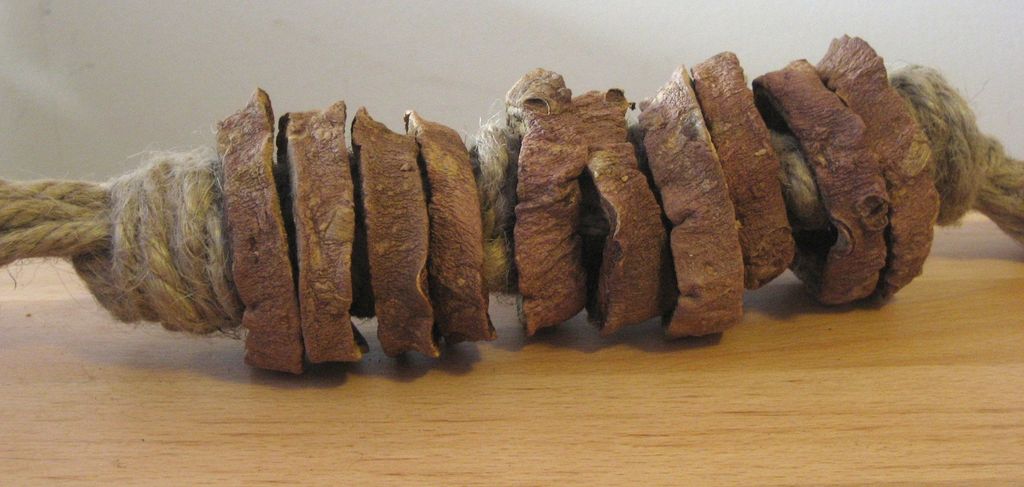
#1: “Indestructible Dog Toy (Made with Dried Sweet Potato)
I love this toy because it’s both healthy for my dog and has no unnecessary additives. It’s a great chew toy and treat all in one.
Shesparticular on instructibles.com came up with this idea for a DIY chew toy for her mom’s dog. Her mom’s dog, Molly, loves to play. She says when Molly plays it “usually involves rounding up all her toys and ripping them to shreds.”
In Shesparticular’s pictures of Molly, you can tell she’s a little dog. It may seem surprising, but little dogs can do just as much damage as big ones. So this recipe she’s come up with is pure genius if you want to make strong dog toys that are healthy for your dog.
Here’s what you’ll need and instructions on how to make this toy at home:
Hemp or jute rope. Nine 2 1/2 foot ropes braided together to make a larger rope works for medium sized dogs. You’ll need to adjust the length of the rope based on your dog’s size.
Sweet potatoes or yams. One potato for a smaller toy, two for a medium toy and three to four for a larger toy
Sheet pan and parchment or foil
A sharp knife
Round cookie cutter a bit larger than the diameter of your rope
Vegetable peeler (optional)
Instructions:
Preheat your oven to 250 degrees Fahrenheit
Wash your sweet potatoes well. Peeling them isn’t necessary unless you prefer it.
Slice the sweet potato into rounds approximately 1/2″ thick
Using the cookie cutter, remove the center of each round
Place rounds on cookie sheet and bake for 2 1/2 hours then flip them over and bake for another 2 1/2 hours.
They’re done when they’re dried out and hard. If there are any soft parts, bake them longer and check them every 30 minutes.
Once they’re done, allow them to cool.
These sweet potato rings look like hollowed out dog bones, without the risk of splintering
Once your sweet potato rings have cooled, you can start making your toy.
Start by tying a knot at the end of your hemp rope. If you’re using many thinner pieces, braid them together. This will make it easier to string the sweet potato pieces on.
String two potato rings onto your rope then tie a knot in the rope. Continue adding two rings at a time and tying a knot after each pair until you reach the end of the rope.
When you’ve finished, hand this toy over to your dog and watch them chew for hours.
# 2: Knotted Hand Towel Toy
I have so many old hand towels that I didn’t know what to do with until I saw this clever idea.
This toy’s so easy to make, even a dog could do it. Taylor Martin from cnet.com came up with this simple way to repurpose old linens and make a great dog toy.
All you have to do is take an old, tattered hand towel and tie a knot in the middle. You can even use a full sized towel and make several knots.
My dog is a Pitbull mix, so though this is a tough toy, he would likely still rip it to shreds. The good news is, it doesn’t cost a cent. So even if it only lasts a few days, you didn’t lose any money on it.
#3: Ring Dog Toy
Just looking at this toy, you can tell it’s tough. No way my Pitt mix will be able to destroy this.
A user called J3443RY at instructables.com designed this indestructible dog toy. This is just a basic rope knot toy.
If you know how to tie a crown knot, all you need to do is create two lengths of rope by tying 4 lengths of rope in crown knots. All you need to make this toy is some nylon repelling rope.
Here are some step by step instructions for creating this toy
Cut 4 equal lengths of rope. You can adjust the size of the toy based on the size of your dog. 4 Inches of rope is equal to 1 inch of the finished toy. For example; for a 6 inch finished knot you would need 24 inches of rope to start.
Use 2 of the 4 ropes to create a 7″ long finished crown knot.
For step three, the user has included an instructional video. This will help you to combine the two finished knots into one ring.
When you’re finished with this toy, you will have a nearly chew proof dog toy that your dog can enjoy for hours.
For more advice on caring for your dog and other great recipes, visit metroeastrba.com.
Now Check Out Some Cool Doggy Dental Treats
#4: Darla Cook’s Homemade Greenies
I can’t get over how adorable these little tooth brush shapes are.
Darla Cook is a blogger and a lover of culinary arts. She is a student at The Culinary Institute of America, so you know her recipes must be the best.
Darla’s blog focuses on general cooking and there aren’t many dog recipes on her blog. But I found a pretty great recipe there for homemade Greenies for dogs. She calls these adorable toothbrush shaped treats Franks Breath Brushes.
If you’re a pet owner, you know that Greenies are a great dental treat for your dog, but they’re expensive to buy.
If you want to save money and have more control over what goes into your dog’s treats, make them yourself at home.
Here is Darla’s recipe.
Franks Breath Brushes
Ingredients:
3 1/2 brown rice flour plus 2 cups more (rice flour for crunch)
1 tablespoon of activated charcoal (I opened 12 capsules for 1 tablespoon.)
Preheat over to 400F. Line your baking sheet with parchment paper.
Combine the charcoal with 3 1/2 cups brown rice flour and set it aside.
Put parsley, mint oil and 1/4 cup of broth or water into food processor. Process until chopped, like pesto. Add 3-4 droppers full of chlorophyll. Pulse a few times to mix. Add this green paste to flour mixture and mix well. Beat egg and mix in. Knead adding the rest of water/broth. By this time you should have a sticky dough ball. Flour the work surface and knead dough until an even green color. Divide dough into workable portions and roll out to about 1/4 inch thick. Add flour to the work surface and dough surface as needed to take away stickiness as you work. Cut out with your favorite shapes, and dock with a fork to keep puffiness down. Bake for 25 or 20 minutes. Cool and store in an airtight container in the fridge.
I will be trying these treats on my dog, for sure. I feel much more confident in the treats I feed my dog when I can make them myself and I know what’s in them.
#5 DIY Doggy Breath Mints
These treats look good enough for even humans to eat.
I’ve found yet another great dog breath freshening recipe. This recipe, by Clifford Genece at skinnyms.com, has something in common with Darla’s recipe. It doesn’t contain any wheat flour.
It is so important to avoid giving your dog anything that contains wheat flour. Many dogs are allergic to wheat products. It can cause some pretty intense itching and skin irritation.
Rather than using flower at all, this recipe calls for oatmeal. This recipe also calls for eggs. So Clifford even provides advice for people whose dogs are allergic to poultry products.
Here’s Clifford’s simple recipe for these yummy treats.
Ingredients:
2 1/2 cups old-fashioned oats
1/2 cup fresh parsley, finely chopped
1/2 cup fresh mint, finely chopped
1 large egg
1/4 cup of water, plus 1 teaspoon
3 tablespoons coconut oil (unrefined extra-virgin is best)
Directions:
Preheat the oven to 325° F
Add oats to a blender and pulse to a flour like consistency. In a large bowl whisk together diced parsley and mint, egg, water, and oil. Add oat flour and stir to combine. Knead dough a few times then turn out onto a lightly floured surface.
Using your hands or a rolling pin, flatten dough to about 1/8″ thick. Using a cookie cutter or knife cut out approximately 40 (1-inch mints) mints. Place mints about 1/4-inch apart on a parchment lined or non-stick cookie sheet. Bake 35-40 minutes, or until golden and crispy.
Allow mints to cool completely before serving. Store in an airtight container.
Tip: For dogs with allergies to chicken products, substitute one large egg with 1/4 cup unsweetened applesauce.
These are some of my favorite DIY dental treats and dog toys for powerful chewers. These treats and toys are a great way to keep your dog’s jaws strong and breath fresh. Don’t forget to take a look in your dog’s mouth every now and then and make sure their teeth are in good condition.
Description: Dental treats and dog toys for powerful chewers can be expensive, so why not make your own at home? Give these helpful recipes and DIY dog toys a try.
ooOOoo
Don’t know about you but we think this has been a very valuable and useful article from Sarah!
I was contacted by Sarah a few weeks ago with regard to her writing a guest post for you good people. For reasons that have escaped me I kept overlooking to publish it. That is now being corrected; indeed it has so much great information that I am splitting it over today and tomorrow.
ooOOoo
Top 5 Homemade Treats and Dog Toys for Powerful Chewers
I’ve never met a dog that didn’t love to chew, but it’s not just a fun canine pastime. It’s necessary for their dental health and for training Fido to stay away from your shoes. Are you too busy to brush your dog’s teeth every day? There’s no need to feel guilty, I am too.
Not everyone has time to do a full dental routine for their dog every day. However, there are other ways to ensure your dog’s dental health. I’ve done some research and found that there are many ways to do this without lifting a finger. Including some dog toys for powerful chewers and even some yummy dental treats.
Why Your Dog’s Dental Health is Important
Dogs aren’t in the habit of brushing and flossing. Most dog owners don’t even realize how important a dog’s dental health is. In fact, I didn’t even know that it was necessary to brush my dog’s teeth until I did some research on the subject.
There are other things you can do to keep your dog’s teeth sparkling if you don’t have time to brush them every day. You need to give them fun things to chew on and snack on in place of regular brushing. Such as some sturdy dog toys or rawhide chews.
According to PetMD “Actively encouraging the dog to utilize chew treats that require some “exercising” of the teeth, such as is provided by compressed rawhide chewies, hard rubber or nylon chew toys, can assist in keeping the mouth structures vital.”
If you do have time to brush your dog’s teeth, it’s important that you do it correctly. Here is how you should do it, according to Banfield.com.
Use a toothbrush that is just for dogs.
Never use your toothpaste to brush your dog’s teeth. There is toothpaste that you can buy just for your dog that is not toxic if swallowed.
Give Fido a small sample of the toothpaste so that they become familiar with the flavor.
Lift your dog’s lips to expose the gums and teeth. Brush the teeth like you would your own, but be gentle.
Most dogs won’t allow you to brush the inside surface of the teeth. Focus on the outside surfaces.
The molars and canines tend to build up tartar, so make sure you give them a good brushing. And of course, reward your dog for letting you put them through that. They are likely confused to why you were all in their mouth, so pats, play, and healthy treats are in order.
Now that you know how to brush your dog’s teeth, let’s learn other ways to improve their dental health.
Rawhide Treat Benefits
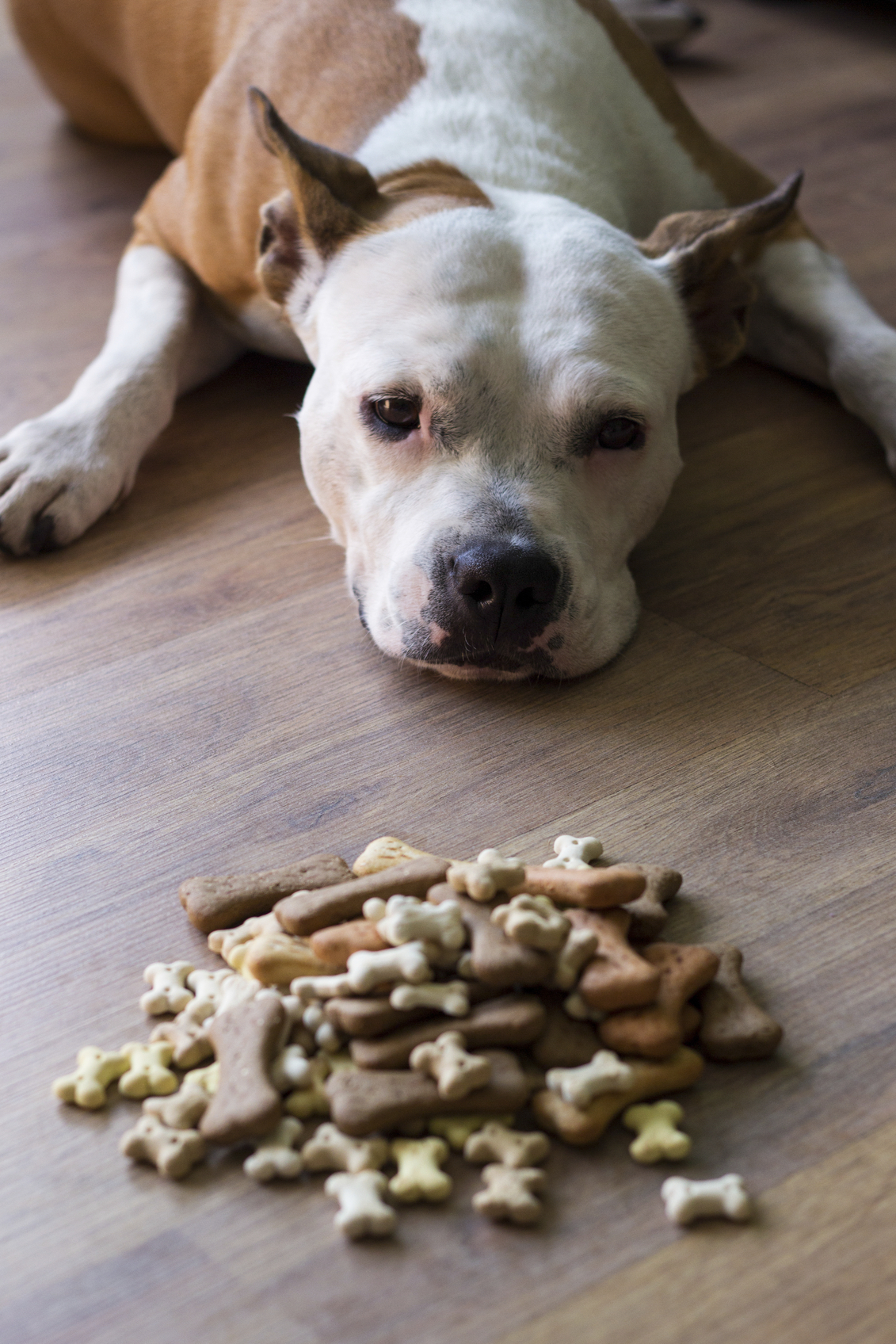
Dog tired of waiting to eat a treats
Rawhide treats and chews are a tasty way for your dog to keep their teeth clean and jaws strong. It’s good for cleaning their teeth and keeping their breath fresh but it also gives their jaws a good workout.
All dogs need to chew. Providing treats like rawhide keeps them from chewing on your nice leather shoes.
There’s not a whole lot of risk to letting your dog chew on rawhide. But there are some risks you should know about. For example, rawhide can sometimes contain small amounts of chemicals, according to Pets. WebMD. Your dog can even come in contact with E. Coli or Salmonella when chewing on rawhide.
Some dogs can be allergic to rawhide anything that’s used to make rawhide treats. This can cause unpleasant discomfort associated with diarrhea.
Sometimes rawhide can be a choking hazard. If a piece breaks off it can become lodged in the esophagus. If this happens, in some cases, a vet can remove any lodged pieces through the throat.
You should always talk to your vet before you decide to introduce any new treats into your dog’s diet. Here Are Some Heavy Duty Dog Toys You Can Make Yourself
ooOOoo
Come back tomorrow to learn how to make these great toys.
Returning to the fascinating topic of how dogs understand us humans.
At the beginning of the month I published a post called Be Careful What You Say. It featured an item on BBC Radio Four regarding the science report from a team in Hungary seeking better to understand how dogs process human vocal sounds, as in speech. (The science report was rapidly featured in many other media outlets.)
Anyway, I am delighted to say that the Rights & Permissions Department of the AAAS pointed out that:
Virginia’s article is freely available on our open news website (http://www.sciencemag.org/news) so rather than post, please link to it (http://www.sciencemag.org/news/2016/08/video-your-dog-understands-more-you-think). Your site visitors will encounter no barriers to viewing the article on our website. We welcome hyperlinks to Science articles provided a plain text link is used and providing our content is not framed. We also ask that the text surrounding the hyperlink not imply any endorsement of your website, products or services by AAAS/Science.
The article, written by Virginia Morell, primarily features a video (see below) but I will just republish Virginia’s opening paragraphs.
It’s the eternal question for pet owners: Does your dog understand what you’re saying? Even if Fido doesn’t “get” your words, surely he gets your tone when you let loose about another accident on the carpet. But a new imaging study shows that dogs’ brains respond to actual words, not just the tone in which they’re said. The study will likely shake up research into the origins of language, scientists say, as well as gratify dog lovers.
“It’s an important study that shows that basic aspects of speech perception can be shared with quite distant relatives,” says Tecumseh Fitch, a cognitive biologist at the University of Vienna, who was not involved in the work.
The new results add to scientists’ knowledge of how canine brains process human speech. Dogs have brain areas dedicated to interpreting voices, distinguishing sounds (in the left hemisphere), and analyzing the sounds that convey emotions (in the right hemisphere).
The finding “doesn’t mean that dogs understand everything we say,” says Julie Hecht, who studies canine behavior and cognition at City University of New York in New York City and who was not involved in the study. “But our words and intonations are not meaningless to dogs.” Fitch hopes that similar studies will be done on other domestic animals and on human-raised wolves to see how much of this ability is hardwired in dogs and how much is due to growing up among talking humans.
What a wonderful relationship dogs and humans have with each other!
Coping with an emergency includes looking after our dogs.
Most of us live our daily lives without paying too much attention to the likelihood of an emergency. But as Hurricane Hermine and the recent explosion of that SpaceX rocket show the unexpected does come along.
All of which is my preamble to a recent item over on the Mother Network Nature site that reviewed taking care of our beloved pets when an emergency does strike.
I have pleasure in sharing it with you.
ooOOoo
5 steps to ensure your pet is cared for in an emergency
Jaymi Heimbuch August 31, 2016
When an unexpected problem pops up, have a back-up plan for your pet. (Photo: Africa Studio/Shutterstock)
A car crash, an arrest, a natural disaster or a medical emergency. While no one wants to think about these awful possibilities, sometimes we should to protect and provide for those we love, in case one day we can’t make it home as planned. And those we love include our pets.
Imagine something happens to you and you can’t get home to your dogs, cats, birds or other critters. You need a way to not only alert others to the fact that you have pets at home, but also the information they need to care for your pets in your absence. Here are five ways you can ensure that your pets will be looked after.
Carry a card in your wallet
Create a card that you can carry in your wallet or purse. If you’re ever in a medical emergency, a rescue worker or paramedic looking through your wallet for identification will also know that there are animals at your home that need care.
The card can be as simple as a note that you have pets at home on one side, and on the other side lists contact information for friends or family members you’ve designated to care for them. Or it can be detailed, listing how many pets you have at home, their names and the kind of animal each pet is, your address, and emergency contact information for two people you trust to care for your pets. How much information you want to include is entirely up to you.
You can create your own card, download a free template online to print out, or buy cards online that you can fill in information with a pen.
Add a sign on your door or windows to save your pet
Another place to put an alert card is in your window or on the door to your home. An emergency pet alert sticker is ideal when you can’t get to your home but someone like a firefighter or rescue worker can.
Like a wallet card, a sticker should list how many pets are inside and what species they are, so any rescue worker would know if they’d found all the animals inside.
This is a small but potentially life-saving step in preparing for emergency situations such as after an earthquake, tornado, fire or flood, so that someone who is searching through homes can rescue your pet even if you can’t — or aren’t allowed — to get back to your home.
Ensure at least 2 separate people you trust have access to your home
Your emergency wallet card states contact information for people you trust to care for your pet if you’re in an emergency situation and can’t get home to them. The next step is ensuring they can get to your pet when needed.
Make sure each person listed as an emergency guardian has a set of keys, or that they know the secret hiding place for your spare set of keys. If you have an alarm system on your home, you’ll need to provide these friends with the access code.
Because these friends or family members not only have access to your home but also will take responsibility for your animal companion, you’ll need to put some thought into who you’ll have in place as a temporary caregiver or as a permanent caregiver.
When choosing a temporary caregiver, consider someone who lives close to your residence. He or she should be someone who is generally home during the day while you are at work or has easy access to your home. When selecting a permanent caregiver, you’ll need to consider other criteria. This is a person to whom you are entrusting the care of your pet in the event that something should happen to you. Be sure to discuss your expectations at length with a permanent caregiver, so he or she understands the responsibility of caring for your pet.
You may want to put down temporary caregiver contact information on your emergency cards, and ensure they know who is designated as the permanent caregiver should you not be able to return home to your pets for a long time, or at all.
An emergency kit with your pet’s medical information, extra food and other supplies will help rescuers. (Photo: rSnapshotPhotos/Shutterstock)
Create a kit for your pet
A disaster preparedness kit is a great idea both for you and your pet. This also benefits your pet not just for a natural disaster, but if you’re in an emergency and can’t get to them.
An emergency supply kit should include a document that a temporary caregiver or potential permanent guardian can use to understand your pet’s needs. This includes:
vet and vaccination records
pet insurance details
information about any medications your pet needs
an extra leash and collar
a carrier if you have a smaller pet
information on any behavior problems, quirks or habits that a caregiver should know about
Be sure to tell your emergency contacts and temporary caregivers where this information is located in your home, so they can access it should they need it.
Make formal long-term arrangements for your pet
We briefly discussed designating someone as a permanent caregiver for your pet should you not be able to return to them. You may want to consider setting up a formal arrangement for this to ensure that your pet definitely goes to the person you’ve designated and receives the care they need.
This could be a formal written arrangement with a permanent caregiver or it may be part of your will. You might also consider creating a trust or other financial arrangement to ensure your pet is cared for if you’re incapacitated. However, Petfinder notes:
Before making formal arrangements to provide for the long-term care of your pet, seek help from professionals who can guide you in preparing legal documents that can protect your interests and those of your pet. However, you must keep in mind the critical importance of making advance personal arrangements to ensure that your pet is cared for immediately if you die or become incapacitated. The formalities of a will or trust may not take over for some time.
Such a document may at first seem like a lot to handle for a “what if” situation, but by taking the appropriate precautions ahead of time, you can be sure that your pets are immediately cared for should something occur that prevents you from returning home to them.
ooOOoo
This all seems like very sound advice and, believe me, advice that Jeannie and I will review and adopt wherever we can.
Please, good people, do take care of yourselves including all your pets.
I know there are times when giving Brandy a big hug feeds something very deep inside me. That unconditional affection Brandy shows me has a very strong healing sense.
I know that Jean shares my sense of being loved by Brandy, and by all our other dear dogs.
I am without doubt that hundreds of thousands of other people experience this.
Yet there must always be room for more therapy dogs which is why an item on Care2 just a few days ago is being shared with you today.
(P.S. When a photo of me hugging Brandy was sought his nibs did not comply!)
If you have a pet who’s mellow and loves being around people, and the idea of helping your pet bring joy to others appeals to you, you might just have a therapy animal in the making.
Accompanied by their owners, therapeutic visitation animals – which are most commonly dogs, but can also be cats, rabbits, pot-bellied pigs, horses, etc. – regularly visit people in hospitals, nursing homes, schools and other facilities, providing furry comfort and compassion.
“Four-footed therapists give something special to enhance the health and well-being of others,” says the website of Therapy Dogs International (TDI), a nonprofit organization that regulates, tests and registers therapy dogs and their handlers. “It has been clinically proven that through petting, touching and talking with animals, patients’ blood pressure is lowered, stress is relieved and depression is eased.”
What It Takes to Be a Therapy Animal
Therapy animals are “born, not made,” according to TDI. They must have an outstanding temperament, and be outgoing and friendly to people of all ages. They must also behave well with other animals.
In general, therapy animals must also be at least one year old; current on all vaccines required by local laws; and be clean and well groomed when visiting people.
As for dogs, along with the ability to obey basic commands like “Sit,” “Stay,” “Come” and “Leave it,” they are tested by therapy dog certification organizations to ensure they can do the following, according to TDI (most of these requirements apply to other species of potential therapy animals as well):
Listen to their handlers
Allow strangers to touch them all over
Not jump on people when interacting
Not mind strange noises and smells
Be calm for petting
Not be afraid of people walking unsteadily
Getting Your Pet Certified as a Therapy Animal
Think your pet has the right stuff to be a therapy animal? To get an idea of the type of testing involved, this TDI brochure describes each of the 13 tests a dog must pass in order to be certified. The tests are similar for other animals.
Some therapy animal organizations, including Pet Partners, offer workshops so you and your pet can practice the required skills before being tested for certification.
The AKC website has a list of therapy animal organizations all across the U.S. from which your pet can receive certification. Contact the one nearest you for further information.
The Difference Between Therapy and Service Animals
Although the two are often confused, therapy animals are not the same as service animals, which “have been individually trained to do work or perform tasks for the benefit of a person with a disability,” according to the Americans with Disabilities Act (ADA).
“An example of a service dog is a dog who guides an owner who is blind or assists someone who has a physical disability,” the American Kennel Club (AKC) explains. “Service dogs stay with their person and have special access privileges in public places such as planes, restaurants, etc.”
Therapy dogs, on the other hand, are privately owned. Unlike service animals and their handlers, in most U.S. states, therapy animals and their owners don’t have protections under federal law (ADA, the Fair Housing Act, etc.), reports the National Service Animal Registry.
Additional Resources
You can find out more about therapy animals and getting your pet certified from these organizations:
A republication of a post from exactly one year ago.
Yesterday, I was at our local Three Rivers Hospital having a colonoscopy. The procedure was a breeze but I wouldn’t recommend the bowel prep one has to take before the procedure! 😦
However, it ran on much longer than we expected and, consequently, there wasn’t sufficient time to do a new post for you good people for today.
So as I do in these situations, I republish the post that came out exactly a year ago: on the 12th August, 2015. As it happens it seemed a wonderful follow-on to yesterday’s post: Have A Lovely Day.
ooOOoo
More on those happy dogs.
Indebted, again, to Chris Gomez.
Jean and I were out for much of yesterday resulting in me not sitting down to compose today’s post until nearly 5pm (PDT) in the afternoon. I must admit I didn’t have a clue as to what to write about. Then sitting in my email inbox was another email from Chris Gomez with this short but valuable sentence, “Love is real….Check this out! (via ABC7 Los Angeles local news iOS app) Study reveals scientific reason your dog is happy to see you.” Chris included a link to the ABC7 news item. I’m republishing it here.
ooOOoo
STUDY REVEALS SCIENTIFIC REASON YOUR DOG IS HAPPY TO SEE YOU
A new study explains why your dog gets so happy to see you. (Shutterstock)
Tuesday, August 11, 2015 11:04AM
Is your dog overwhelmed with joy anytime you walk through the door? There’s a scientific reason behind their excitement, a new study shows, and it’s not just because you feed them.
Researchers at Emory University used functional magnetic resonance imaging (fMRI) to scan dogs’ brains for activity when they were shown images of dog faces, human faces and ordinary objects.
The dogs’ temporal lobes lit up “significantly more” when presented with the faces than with the objects. These findings suggest that dogs may recognize both human and dog faces.
Facial recognition causes dog brains to activate in the same areas as in monkey and human brains, the study found. This is separate from the “reward areas” that would be triggered by anticipation of food.
“What we’re finding with the imaging work is that dogs love their humans-and not just for food,” researcher Gregory Berns told io9. “They love the company of humans simply for its own sake.”
“The existence of a face-selective region in the temporal dog cortex opens up a whole range of new questions to be answered about their social intelligence,” the researchers explained, such as whether dogs can understand different facial expressions and whether they can read body language.
This isn’t the first time scientists have explored what makes dogs’ tails wag with excitement when reunited with their owners. A January study that Berns was also involved in found that dogs have a positive reaction to the scent of familiar humans compared with other smells, even those of other dogs.
The results of that study “suggested that not only did the dogs discriminate that scent [of familiar humans] from the others, they had a positive association with it.”
A 2013 behavioral study found that dogs can show when they’re happy to see their owners by lifting their eyebrows. Their left eyebrow went up when they saw their respective owners, the study found. They didn’t have this reaction for other things that may excite them, such as attractive toys.
….
Granted there was some overlap with Monday’s post but there was more than enough in the ABC7 article to warrant sharing it with you.
 By: Laura Goldman December 2, 2016







 By: Laura Goldman August 16, 2016


 Learning from Dogs