About Bark & Bond: At Bark & Bond, we believe that there is nothing more powerful — and simple — than the way a dog changes our routine. Whether it’s with a look full of expectation, an unexpected lick or just by being there, silent, sharing the same space.
We love our dogs and can never envisage being without one.
So what happens to them after the last one of us die?
I have just turned 81 and, although I am fit, think more seriously about this matter than I used to. Jean has no children and my son and daughter, from a previous marriage, are living in the U.K.
So an article from The Conversation caught my eye and I wanted to share it with you.
ooOOoo
Diane Keaton’s $5M pet trust would be over the top if reports prove true – here’s how to ensure your beloved pet is safe after you are gone
I’m a law professor who teaches about wills, trusts and other forms of inheritance law. Every semester, I teach my students how they can help clients provide for their pets after death. Because they, like many Americans, love their pets and want to know how to take care of them, this topic always piques their interest. https://www.youtube.com/embed/FYJGCvpJIV0?wmode=transparent&start=0 Diane Keaton was very open about her devotion to her dog, Reggie.
Writing pets into a will
An estimated 66% of all U.S. households include at least one pet. Many Americans consider their cats, dogs, tortoises or other animals to be part of their family, and their spending on those nonhuman relatives is immense. In 2024, they paid a total of about $152 billion for goods and services to feed and otherwise support their pets.
Taking good care of your pets can go beyond buying them treats and sweaters. It can include leaving clear directions to ensure their needs are met once you’re gone. There are several ways that you can do this.
The first is through your will. You can’t give your pet money directly in your will, because the law says that pets are property, like your books or your dishes.
You can, however, leave a bequest, the technical term for a gift to a person or a cause listed in a will, to someone who will be the animal’s caretaker. That bequest can include directions that the money be spent meeting the pet’s needs.
It’s worth it to also name an alternate or contingent caretaker in case the first person you name does not want to or cannot take on that responsibility, or they die before you or the animals you’ve provided for in the will.
Choupette’s life of luxury
German fashion designer, photographer and creative director Karl Lagerfeld, who died in 2019 at 85, was someone who made the mistake of leaving money directly to his fluffy Birman cat, Choupette. It worked out for Choupette, though.
The cat was, according to several reports, still alive in 2025 and eating meals out of the porcelain bowls that Lagerfeld bought for her. Choupette is cared for at great expense and in the utmost luxury by Françoise Caçote, the designer’s former housekeeper. The cat even had a 13th birthday party at Versailles.
Another pet owner who did right by her pet was the comedian, producer and red carpet interviewer Joan Rivers.
The late Joan Rivers, right, seen on the set of her short-lived talk show in 1987, planned ahead for her dogs’ care. Bettmann via Getty Images
Creating pet trusts
If you’d like an arrangement that’s more secure than a will, then you might want to opt for a pet trust, another celebrity favorite. These kinds of trusts were not possible until the 1990s, because pets were not considered true beneficiaries – meaning they couldn’t sue the trustee.
But in the 1990s, states began to change their rules to allow for pet trusts. Today, pet trusts are valid in the whole country, although the rules vary slightly from state to state.
To establish a pet trust, you or a lawyer must draw up a trust document that names two important people: a trustee and a caretaker. The trustee is the person who will manage the money you leave in trust. They will make distributions to the caretaker that you select.
You must also specify how the money is to be spent meeting the animal’s needs and who would get any money that could be left in the trust when the pet dies. Typically, these trusts take effect at the owner’s death, just like other provisions in a will.
Drafting a pet trust can be free, if you use an online template and get no legal guidance. The same thing might cost around $100 if you use an online service such as Legal Zoom that provides directions. More commonly, however, pet trusts are part of a broader estate plan, and costs range depending on how complicated your estate is.
When the rich go overboard
One of the most over-the-top pet trusts came from Leona Helmsley, the New York hotel and real estate mogul known widely as the “Queen of Mean.” She was famous for her pettiness and tough management style and for landing in prison for tax evasion.
The grandchildren, upset that Trouble got more money than they did, took the case to court, where the probate judge was less than impressed by Trouble’s luxury lifestyle and knocked down the amount in trust to $2 million. The other $10 million flowed back to her family’s foundation, where the bulk of the estate went in the first place.
Lesson learned: Your dog can have a trust fund, but don’t go overboard.
Bequests for pets can be challenged – in which case it’s up to courts to determines how much they think is reasonable for the pet’s need. In Helmsley’s case, $12 million was found to be excessive. And maybe with good reason. Trouble still had a nice life with fewer millions. The dog died in December 2010 after several years in Sarasota, Florida, at a Helmsley-owned hotel.
Other pet owners who aren’t celebrities have used pet trusts as well, such as Bill Dorris, a Nashville businessman without any human heirs. He left his dog, Lulu, $5 million.
Pet-loving celebrities who loved all the pets
Finally, there’s a lesson to be learned from British fashion designer and icon Alexander McQueen, who was worth £16 million ($21 million) when he died in 2010 at the age of 40. McQueen left £50,000 ($66,000) in a trust for his two bull terriers so that they would be well cared for during the remainder of their lives.
McQueen also included a bequest of £100,000 ($132,000) to the Battersea Dogs and Cats Home in his will to help fund the care of some of the millions of other animals out there that need the basics of food and shelter.
So, my advice is that you go ahead and create a pet trust for your cat. But don’t forget to give some money in your will – and ideally while you’re alive – to help the vast majority of the millions of companion animals who need new homes every year. None of them have trust funds.
What becomes of Reggie, Keaton’s golden retriever, and her estate remains to be seen. Keaton, who starred in hit movies such as “Annie Hall,” “Reds” and “The First Wives Club,” isn’t the first celebrity to leave millions of dollars to a pet. And it’s unlikely that she will be the last.
Anyone proposing to offer a master class on changing the world for the better, without becoming negative, cynical, angry or narrow-minded in the process, could model their advice on the life and work of pioneering animal behavior scholar Jane Goodall.
Goodall’s life journey stretches from marveling at the somewhat unremarkable creatures – though she would never call them that – in her English backyard as a wide-eyed little girl in the 1930s to challenging the very definition of what it means to be human through her research on chimpanzees in Tanzania. From there, she went on to become a global icon and a United Nations Messenger of Peace.
Until her death on Oct. 1, 2025 at age 91, Goodall retained a charm, open-mindedness, optimism and wide-eyed wonder that are more typical of children. I know this because I have been fortunate to spend time with her and to share insights from my own scientific career. To the public, she was a world-renowned scientist and icon. To me, she was Jane – my inspiring mentor and friend.
Despite the massive changes Goodall wrought in the world of science, upending the study of animal behavior, she was always cheerful, encouraging and inspiring. I think of her as a gentle disrupter. One of her greatest gifts was her ability to make everyone, at any age, feel that they have the power to change the world. https://www.youtube.com/embed/rcL4jnGTL1U?wmode=transparent&start=0 Jane Goodall documented that chimpanzees not only used tools but make them – an insight that altered thinking about animals and humans.
Discovering tool use in animals
In her pioneering studies in the lush rainforest of Tanzania’s Gombe Stream Game Reserve, now a national park, Goodall noted that the most successful chimp leaders were gentle, caring and familial. Males that tried to rule by asserting their dominance through violence, tyranny and threat did not last.
I also am a primatologist, and Goodall’s groundbreaking observations of chimpanzees at Gombe were part of my preliminary studies. She famously recorded chimps taking long pieces of grass and inserting them into termite nests to “fish” for the insects to eat, something no one else had previously observed.
It was the first time an animal had been seen using a tool, a discovery that altered how scientists differentiated between humanity and the rest of the animal kingdom.
Renowned anthropologist Louis Leakey chose Goodall to do this work precisely because she was not formally trained. When she turned up in Leakey’s office in Tanzania in 1957, at age 23, Leakey initially hired her as his secretary, but he soon spotted her potential and encouraged her to study chimpanzees. Leakey wanted someone with a completely open mind, something he believed most scientists lost over the course of their formal training.
Because chimps are humans’ closest living relatives, Leakey hoped that understanding the animals would provide insights into early humans. In a predominantly male field, he also thought a woman would be more patient and insightful than a male observer. He wasn’t wrong.
Six months in, when Goodall wrote up her observations of chimps using tools, Leakey wrote, “Now we must redefine tool, redefine Man, or accept chimpanzees as human.”
Goodall spoke of animals as having emotions and cultures, and in the case of chimps, communities that were almost tribal. She also named the chimps she observed, an unheard-of practice at the time, garnering ridicule from scientists who had traditionally numbered their research subjects.
One of her most remarkable observations became known as the Gombe Chimp War. It was a four-year-long conflict in which eight adult males from one community killed all six males of another community, taking over their territory, only to lose it to another, bigger community with even more males.
Confidence in her path
Goodall was persuasive, powerful and determined, and she often advised me not to succumb to people’s criticisms. Her path to groundbreaking discoveries did not involve stepping on people or elbowing competitors aside.
Rather, her journey to Africa was motivated by her wonder, her love of animals and a powerful imagination. As a little girl, she was entranced by Edgar Rice Burroughs’ 1912 story “Tarzan of the Apes,” and she loved to joke that Tarzan married the wrong Jane.
When I was a 23-year-old former NFL cheerleader, with no scientific background at that time, and looked at Goodall’s work, I imagined that I, too, could be like her. In large part because of her, I became a primatologist, co-discovered a new species of lemur in Madagascar and have had an amazing life and career, in science and on TV, as a National Geographic explorer. When it came time to write my own story, I asked Goodall to contribute the introduction. She wrote:
“Mireya Mayor reminds me a little of myself. Like me she loved being with animals when she was a child. And like me she followed her dream until it became a reality.”
In a 2023 interview, Jane Goodall answers TV host Jimmy Kimmel’s questions about chimpanzee behavior.
Storyteller and teacher
Goodall was an incredible storyteller and saw it as the most successful way to help people understand the true nature of animals. With compelling imagery, she shared extraordinary stories about the intelligence of animals, from apes and dolphins to rats and birds, and, of course, the octopus. She inspired me to become a wildlife correspondent for National Geographic so that I could share the stories and plights of endangered animals around the world.
Goodall inspired and advised world leaders, celebrities, scientists and conservationists. She also touched the lives of millions of children.
Jane Goodall and primatologist Mireya Mayor with Mayor’s book ‘Just Wild Enough,’ a memoir aimed at young readers. Mireya Mayor, CC BY-ND
Through the Jane Goodall Institute, which works to engage people around the world in conservation, she launched Roots & Shoots, a global youth program that operates in more than 60 countries. The program teaches children about connections between people, animals and the environment, and ways to engage locally to help all three.
Along with Goodall’s warmth, friendship and wonderful stories, I treasure this comment from her: “The greatest danger to our future is our apathy. Each one of us must take responsibility for our own lives, and above all, show respect and love for living things around us, especially each other.”
It’s a radical notion from a one-of-a-kind scientist.
This article has been updated to add the date of Goodall’s death.
That comment by Jane that was treasured by Mireya is so important. “The greatest danger to our future is our apathy. Each one of us must take responsibility for our own lives, and above all, show respect and love for living things around us, especially each other.”
Bill Watterson of the AHA posted the following yesterday:
I wish people were more like animals. Animals don’t try to change you. Animals like you just the way you are. They listen to your problems, they comfort you when you’re sad, and all they ask in return is a little kindness.
The Sun will someday die. This will happen when it runs out of hydrogen fuel in its core and can no longer produce energy through nuclear fusion as it does now. The death of the Sun is often thought of as the end of the solar system. But in reality, it may be the beginning of a new phase of life for all the objects living in the solar system.
When stars like the Sun die, they go through a phase of rapid expansion called the Red Giant phase: The radius of the star gets bigger, and its color gets redder. Once the gravity on the star’s surface is no longer strong enough for it to hold on to its outer layers, a large fraction – up to about half – of its mass escapes into space, leaving behind a remnant called a white dwarf.
I am a professor of astronomy at the University of Wisconsin-Madison. In 2020, my colleagues and I discovered the first intact planet orbiting around a white dwarf. Since then, I’ve been fascinated by the prospect of life on planets around these, tiny, dense white dwarfs.
Researchers search for signs of life in the universe by waiting until a planet passes between a star and their telescope’s line of sight. With light from the star illuminating the planet from behind, they can use some simple physics principles to determine the types of molecules present in the planet’s atmosphere.
In 2020, researchers realized they could use this technique for planets orbiting white dwarfs. If such a planet had molecules created by living organisms in its atmosphere, the James Webb Space Telescope would probably be able to spot them when the planet passed in front of its star.
In June 2025, I published a paper answering a question that first started bothering me in 2021: Could an ocean – likely needed to sustain life – even survive on a planet orbiting close to a dead star?
Despite its relatively small size, a white dwarf – shown here as a bright dot to the right of our Sun – is quite dense. Kevin Gill/Flickr, CC BY
A universe full of white dwarfs
A white dwarf has about half the mass of the Sun, but that mass is compressed into a volume roughly the size of Earth, with its electrons pressed as close together as the laws of physics will allow. The Sun has a radius 109 times the size of Earth’s – this size difference means that an Earth-like planet orbiting a white dwarf could be about the same size as the star itself.
White dwarfs are extremely common: An estimated 10 billion of them exist in our galaxy. And since every low-mass star is destined to eventually become a white dwarf, countless more have yet to form. If it turns out that life can exist on planets orbiting white dwarfs, these stellar remnants could become promising and plentiful targets in the search for life beyond Earth.
But can life even exist on a planet orbiting a white dwarf? Astronomers have known since 2011 that the habitable zone is extremely close to the white dwarf. This zone is the location in a planetary system where liquid water could exist on a planet’s surface. It can’t be too close to the star that the water would boil, nor so far away that it would freeze.
Planets in the habitable zone aren’t so close that their surface water would boil, but also not so far that it would freeze. NASA
The habitable zone around a white dwarf would be 10 to 100 times closer to the white dwarf than our own habitable zone is to our Sun, since white dwarfs are so much fainter.
The challenge of tidal heating
Being so close to the surface of the white dwarf would bring new challenges to emerging life that more distant planets, like Earth, do not face. One of these is tidal heating.
Tidal forces – the differences in gravitational forces that objects in space exert on different parts of a nearby second object – deform a planet, and the friction causes the material being deformed to heat up. An example of this can be seen on Jupiter’s moon Io.
The forces of gravity exerted by Jupiter’s other moons tug on Io’s orbit, deforming its interior and heating it up, resulting in hundreds of volcanoes erupting constantly across its surface. As a result, no surface water can exist on Io because its surface is too hot.
Of the four major moons of Jupiter, Io is the innermost one. Gravity from Jupiter and the other three moons pulls Io in varying directions, which heats it up. Lsuanli/Wikimedia Commons, CC BY-SA
In contrast, the adjacent moon Europa is also subject to tidal heating, but to a lesser degree, since it’s farther from Jupiter. The heat generated from tidal forces has caused Europa’s ice shell to partially melt, resulting in a subsurface ocean.
Planets in the habitable zone of a white dwarf would have orbits close enough to the star to experience tidal heating, similar to how Io and Europa are heated from their proximity to Jupiter.
This proximity itself can pose a challenge to habitability. If a system has more than one planet, tidal forces from nearby planets could cause the planet’s atmosphere to trap heat until it becomes hotter and hotter, making the planet too hot to have liquid water.
Enduring the red giant phase
Even if there is only one planet in the system, it may not retain its water.
In the process of becoming a white dwarf, a star will expand to 10 to 100 times its original radius during the red giant phase. During that time, anything within that expanded radius will be engulfed and destroyed. In our own solar system, Mercury, Venus and Earth will be destroyed when the Sun eventually becomes a red giant before transitioning into a white dwarf.
For a planet to survive this process, it would have to start out much farther from the star — perhaps at the distance of Jupiter or even beyond.
If a planet starts out that far away, it would need to migrate inward after the white dwarf has formed in order to become habitable. Computer simulations show that this kind of migration is possible, but the process could cause extreme tidal heating that may boil off surface water – similar to how tidal heating causes Io’s volcanism. If the migration generates enough heat, then the planet could lose all its surface water by the time it finally reaches a habitable orbit.
However, if the migration occurs late enough in the white dwarf’s lifetime – after it has cooled and is no longer a hot, bright, newly formed white dwarf – then surface water may not evaporate away.
Under the right conditions, planets orbiting white dwarfs could sustain liquid water and potentially support life.
Search for life on planets orbiting white dwarfs
Astronomers haven’t yet found any Earth-like, habitable exoplanets around white dwarfs. But these planets are difficult to detect.
Traditional detection methods like the transit technique are less effective because white dwarfs are much smaller than typical planet-hosting stars. In the transit technique, astronomers watch for the dips in light that occur when a planet passes in front of its host star from our line of sight. Because white dwarfs are so small, you would have to be very lucky to see a planet passing in front of one.
The transit technique for detecting exoplanets requires watching for the dip in brightness when a planet passes in front of its host star.
If habitable planets are found to exist around white dwarfs, it would significantly broaden the range of environments where life might persist, demonstrating that planetary systems may remain viable hosts for life even long after the death of their host star.
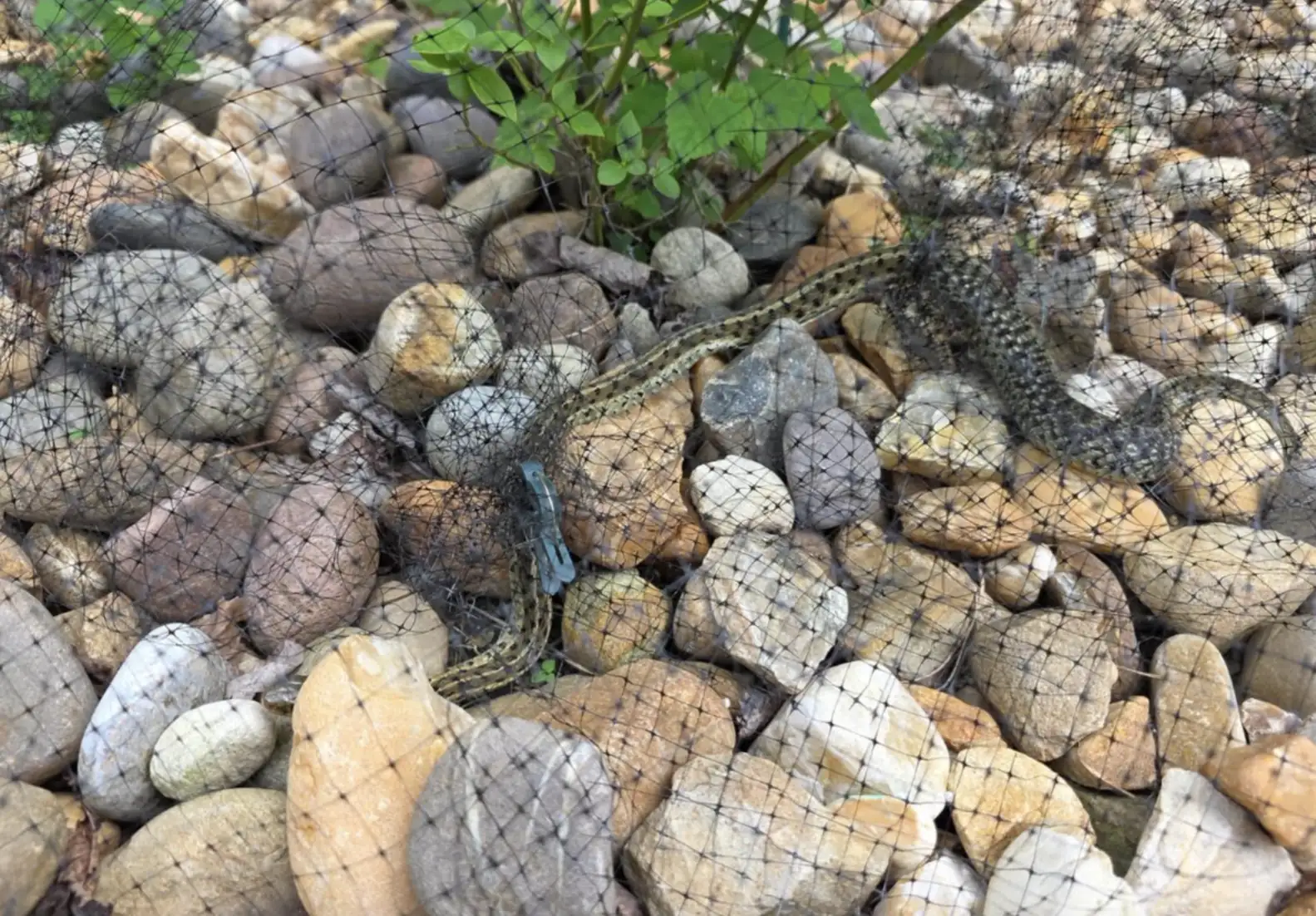
Earlier this month, a homeowner called Tidewater Wildlife Rescue with an urgent request. A common garter snake was hopelessly tangled in a piece of netting in their yard. Could someone come help?
Rescue volunteer Serenity Reiner quickly headed to the scene.
TIDEWATER WILDLIFE RESCUE
Reiner and her rescue partner, Daniel, used scissors to cut away big pieces of the net. Then, Daniel gently held the snake as Reiner snipped away netting closer to the animal’s body.
“We were very focused,” Reiner told The Dodo. “We wanted to be as fast as possible to limit [her] stress.”
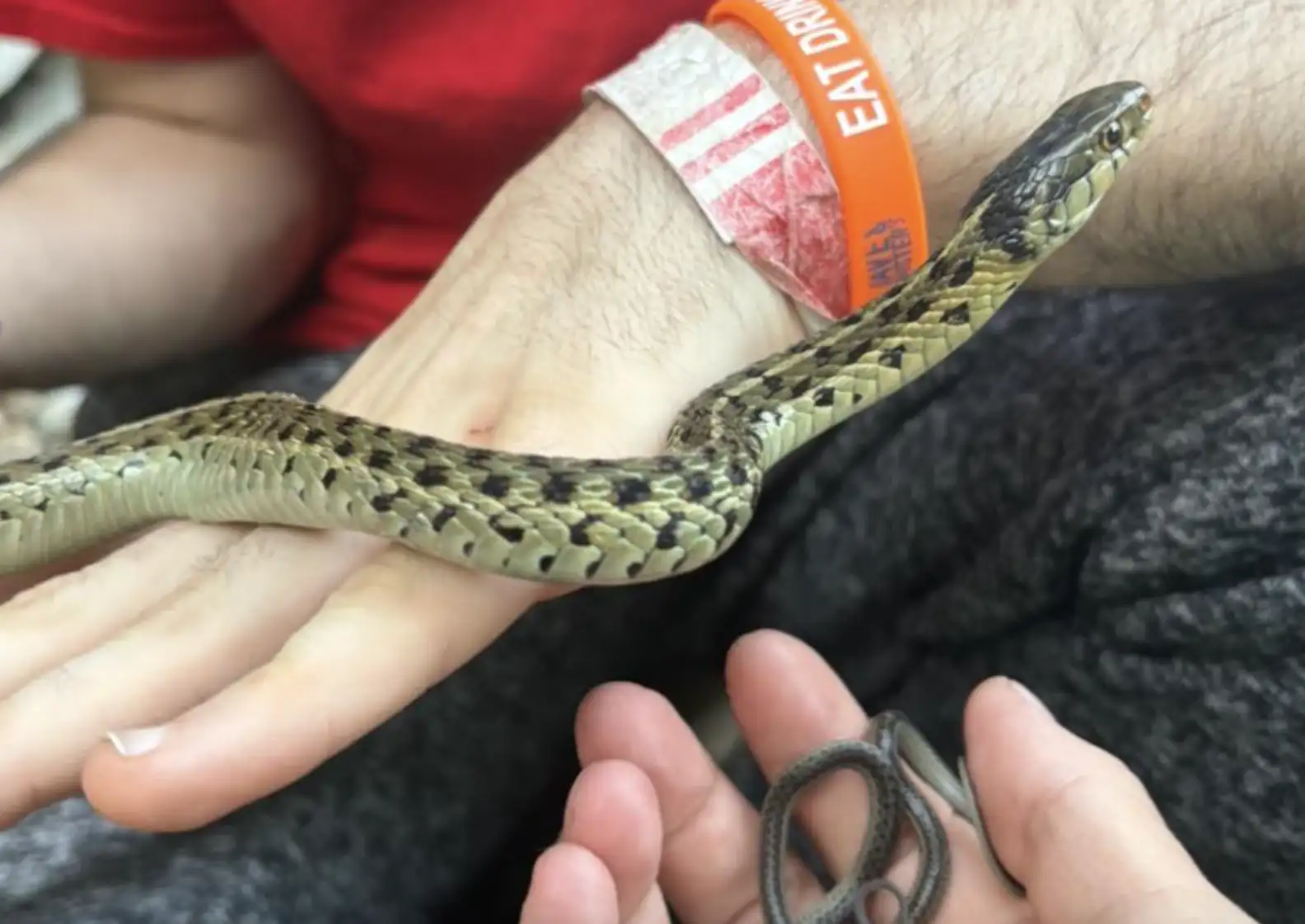
The rescuers were almost finished when they noticed something amazing — the snake was giving birth in their hands.
TIDEWATER WILDLIFE RESCUE
Reiner hastily removed the remaining netting as the mama snake birthed two babies. Then, she took the snake and her little ones to a wooded area behind the house and released them back into the wild.
Surprisingly, despite their size, baby garter snakes don’t need to live with their mom for very long. In fact, as the rescue notes, these young snakes are completely independent from the moment they’re born and can immediately find food on their own.
TIDEWATER WILDLIFE RESCUE
According to the U.S. National Park Service, garter snakes typically give birth to 15-40 babies at a time. Reiner suspects this mama welcomed many more little ones into the world once she was safe in the forest.
The rescuer encouraged the homeowners to use animal-safe netting next time. She’s grateful that, in this case, everything turned out OK.
“I felt so much joy knowing that she was able to go back to her normal life unharmed,” Reiner said.
It is what we share with animals, but it is not as straightforward as one thinks!
The range of thinking, in terms of logical thinking, even in humans, is enormous. And when we watch animals, especially mammals, it is clear that they are operating in a logical manner. By ‘operating’ I am referring to their thought processes.
So a recent article in The Conversation jumped out at me. Here it is:
ooOOoo
Humans and animals can both think logically − but testing what kind of logic they’re using is tricky
Can a monkey, a pigeon or a fish reason like a person? It’s a question scientists have been testing in increasingly creative ways – and what we’ve found so far paints a more complicated picture than you’d think.
Imagine you’re filling out a March Madness bracket. You hear that Team A beat Team B, and Team B beat Team C – so you assume Team A is probably better than Team C. That’s a kind of logical reasoning known as transitive inference. It’s so automatic that you barely notice you’re doing it.
It turns out humans are not the only ones who can make these kinds of mental leaps. In labs around the world, researchers have tested many animals, from primates to birds to insects, on tasks designed to probe transitive inference, and most pass with flying colors.
As a scientist focused on animal learning and behavior, I work with pigeons to understand how they make sense of relationships, patterns and rules. In other words, I study the minds of animals that will never fill out a March Madness bracket – but might still be able to guess the winner.
Logic test without words
The basic idea is simple: If an animal learns that A is better than B, and B is better than C, can it figure out that A is better than C – even though it’s never seen A and C together?
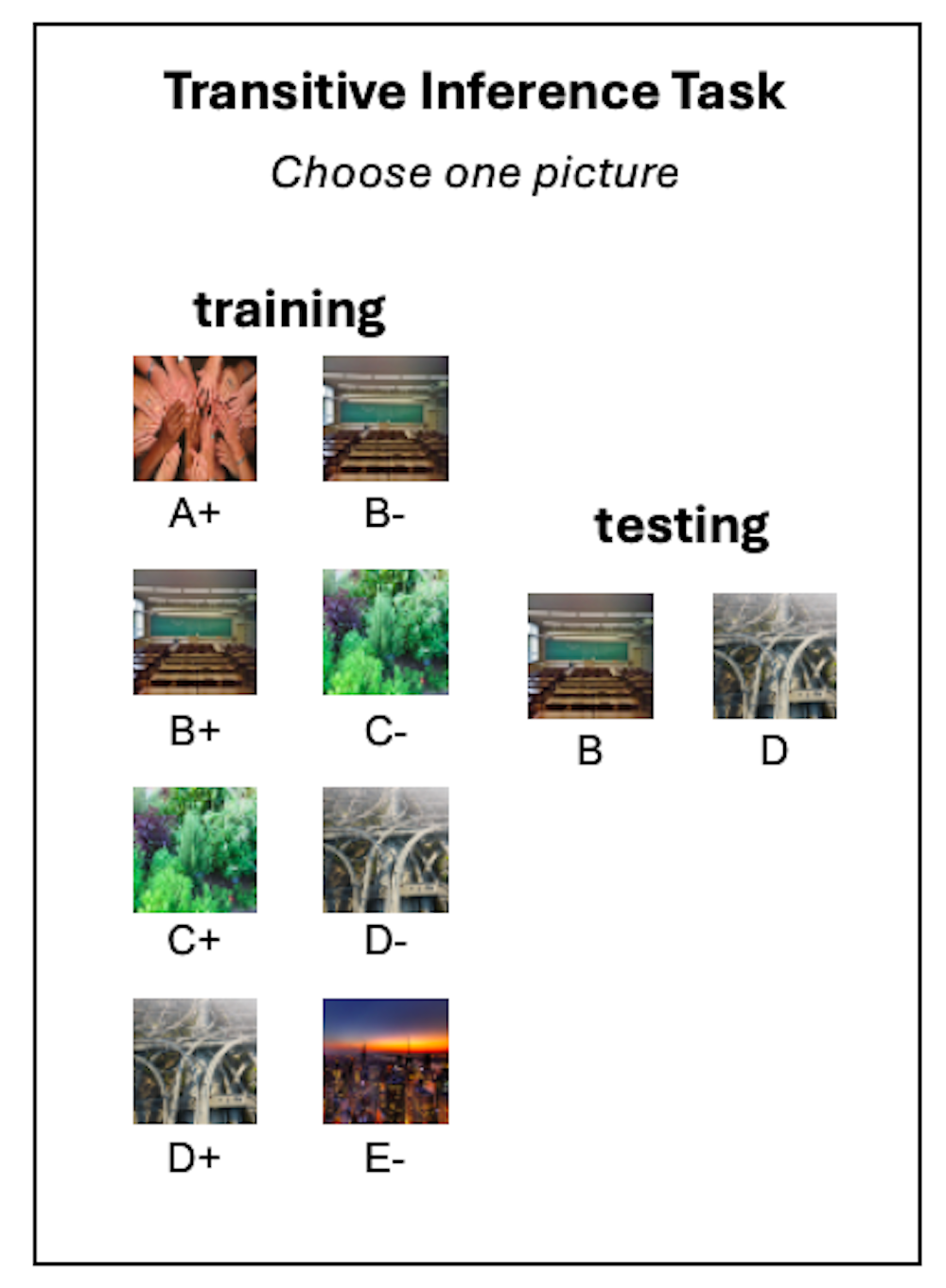
In the lab, researchers test this by giving animals randomly paired images, one pair at a time, and rewarding them with food for picking the correct one. For example, animals learn that a photo of hands (A) is correct when paired with a classroom (B), a classroom (B) is correct when paired with bushes (C), bushes (C) are correct when paired with a highway (D), and a highway (D) is correct when paired with a sunset (E). We don’t know whether they “understand” what’s in the picture, and it is not particularly important for the experiment that they do.
In a transitive inference task, subjects learn a series of rewarded pairs – such as A+ vs. B–, B+ vs. C– – and are later tested on novel pairings, like B vs. D, to see whether they infer an overall ranking. Olga Lazareva, CC BY-ND
One possible explanation is that the animals that learn all the tasks create a mental ranking of these images: A > B > C > D > E. We test this idea by giving them new pairs they’ve never seen before, such as classroom (B) vs. highway (D). If they consistently pick the higher-ranked item, they’ve inferred the underlying order.
What’s fascinating is how many species succeed at this task. Monkeys, rats, pigeons – even fish and wasps – have all demonstrated transitive inference in one form or another.
The twist: Not all tasks are easy
But not all types of reasoning come so easily. There’s another kind of rule called transitivity that is different from transitive inference, despite the similar name. Instead of asking which picture is better, transitivity is about equivalence.
In this task, animals are shown a set of three pictures and asked which one goes with the center image. For example, if white triangle (A1) is shown, choosing red square (B1) earns a reward, while choosing blue square (B2) does not. Later, when red square (B1) is shown, choosing white cross (C1) earns a reward while choosing white circle (C2) does not. Now comes the test: white triangle (A1) is shown with white cross (C1) and white circle (C2) as choices. If they pick white cross (C1), then they’ve demonstrated transitivity.
In a transitivity task, subjects learn matching rules across overlapping sets – such as A1 matches B1, B1 matches C1 – and are tested on new combinations, such as A1 with C1 or C2, to assess whether they infer the relationship between A1 and C1. Olga Lazareva, CC BY-ND
The change may seem small, but species that succeed in those first transitive inference tasks often stumble in this task. In fact, they tend to treat the white triangle and the white cross as completely separate things, despite their common relationship with the red square. In my recently published review of research using the two tasks, I concluded that more evidence is needed to determine whether these tests tap into the same cognitive ability.
Small differences, big consequences
Why does the difference between transitive inference and transitivity matter? At first glance, they may seem like two versions of the same ability – logical reasoning. But when animals succeed at one and struggle with the other, it raises an important question: Are these tasks measuring the same kind of thinking?
The apparent difference between the two tasks isn’t just a quirk of animal behavior. Psychology researchers apply these tasks to humans in order to draw conclusions about how people reason.
For example, say you’re trying to pick a new almond milk. You know that Brand A is creamier than Brand B, and your friend told you that Brand C is even waterier than Brand B. Based on that, because you like a thicker milk, you might assume Brand A is better than Brand C, an example of transitive inference.
But now imagine the store labels both Brand A and Brand C as “barista blends.” Even without tasting them, you might treat them as functionally equivalent, because they belong to the same category. That’s more like transitivity, where items are grouped based on shared relationships. In this case, “barista blend” signals the brands share similar quality.
Researchers often treat these types of reasoning as measuring the same ability. But if they rely on different mental processes, they might not be interchangeable. In other words, the way scientists ask their questions may shape the answer – and that has big implications for how they interpret success in animals and in people.
This difference could affect how researchers interpret decision-making not only in the lab, but also in everyday choices and in clinical settings. Tasks like these are sometimes used in research on autism, brain injury or age-related cognitive decline.
If two tasks look similar on the surface, then choosing the wrong one might lead to inaccurate conclusions about someone’s cognitive abilities. That’s why ongoing work in my lab is exploring whether the same distinction between these logical processes holds true for people.
Just like a March Madness bracket doesn’t always predict the winner, a reasoning task doesn’t always show how someone got to the right answer. That’s the puzzle researchers are still working on – figuring out whether different tasks really tap into the same kind of thinking or just look like they do. It’s what keeps scientists like me in the lab, asking questions, running experiments and trying to understand what it really means to reason – no matter who’s doing the thinking.
Last Sunday morning I listened to a BBC Radio 4 programme The Dark Enlightenment. Here is a summary from the BBC website:
A radical political philosophy founded by a software engineer called Curtis Yarvin is gaining in influence, and said to be shaping Donald Trump’s second term in the White House.
It is on BBC Sounds. Here is the link: BBC Currently.
The plan was simple. It started by retiring all government employees by offering them incentives to leave and never return. To avoid anarchy and keep authority, the police and military would be retained.
Government funds would be seized and the money redirected to more worthwhile pursuits. Court orders pushing back against these measures as “unconstitutional” should be summarily ignored. The press should be massaged and censored as necessary. Finally, universities, scientific institutions, and NGOs should also be snapped off, their funding terminated.
These moves resemble many made (or attempted) in the first 100 days of the second Trump administration. But they were all laid out in 2012 by a single person: Curtis Yarvin.
In the past five years, Yarvin’s reactionary blueprints for governance have found powerful backers in both Silicon Valley and Washington circles.
His ideas have been taken up and repeated in various ways by Peter Thiel (PayPal), Elon Musk (X, Tesla), Alexander Karp (Palantir) and other founders, CEOs and thought-leaders within the broader tech industry. He was a guest at Trump’s Coronation Ball in January.
Yarvin’s current newsletter, Grey Room, now boasts 57,000 subscribers. “Curtis Yarvin’s Ideas Were Fringe,” cautioned a recent article, “Now They’re Coursing Through Trump’s Washington.”
JD Vance has praised Yarvin by name and echoed his ideas, calling for a ‘de-wokification programme’. Bonnie Cash/Pool/AAP
Rebooting the state
Yarvin, a 51-year old computer engineer, has been publishing his thoughts on politics for close to 20 years. His original blog, launched in 2007, introduced his potent blend of “the modern engineering mentality, and the great historical legacy of antique, classical and Victorian pre-democratic thought”. Last week, The Washington Post called it “required reading for the extremely online right”.
Democracy was dead and doomed from the beginning, Yarvin argued in his blog, in quippy, Reddit-style prose. Governance should look to other mechanisms (tech) and modes (monarchism) for inspiration.
The state needs a “hard reboot,” asserted Yarvin. “Democratic elections are entirely superfluous to the mechanism of government” he argued. “A vote for democratic or republican matters a little bit,” he admitted, but “basically if the whole electoral system disappeared, Washington would go on running in exactly the same ways”.
Curtis Yarvin. Wikipedia
For Yarvin, then, it is not just the government that must change – a superficial swap of parties and politicians – but something far more fundamental: the form of government. Democracy was beta tested and failed to deliver. The political operating system must be ripped out and replaced.
While elements (like the term “red pill”) travelled far beyond its pages, Yarvin’s ideas remained on the fringes until recently, with their growing popularity pushing him into the limelight. Last week he hit the headlines due to his debate at Harvard, a place that has become a “symbol of resistance to Trump”, with political theorist Danielle Allen, a democracy advocate.
Allen, who debated Yarvin to provide students with “help thinking about intellectual material”, wrote after the debate that he correctly diagnoses a problem, but not its causes or solutions:
He is right that our political institutions are failing. He is also right that their members have failed to see the depth of our governance problems and their own contributions to them through technocracy and political correctness. […] But Mr. Yarvin leads them astray with his vision of absolute monarchy and racial cleansing.
A technological republic
For Yarvin and others like him, democracy’s fatal flaw is the demos (or, people) itself. Trusting the agency and ability of citizens to govern through representation is naive, Yarvin believes. Alexander Karp, CEO of Palantir, a firm that provides military and intelligence agencies with big data “intelligence”, agrees.
“Why must we always defer to the wisdom of the crowd when it comes to allocating scarce capital in a market economy?” Karp asked in his recent bestseller, The Technological Republic.
For Yarvin, Karp, Thiel and the other elites that embrace these ideas, the people are idiots. A favourite quote (likely apocryphal) is from Churchill, stating the best argument against democracy is a five-minute conversation with the average voter.
If a legacy republic was one by the people and for the people, Karp argues a technological republic will “require the rebuilding of an ownership society, a founder culture that came from tech but has the potential to reshape government”.
In this vision, the state shapeshifts into something sleeker, more successful, more like a startup: the corporation. “A government is just a corporation that owns a country,” Yarvin stresses. Musk has echoed this line: “the government is simply the largest corporation”.
But if this is true, it is a pathetic one, according to its hyper-capitalist detractors: bloated with waste, saddled with debt and slowed by regulation. The state is a dinosaur which makes incremental change and must tread with caution, bending to the needs of its constituents. Founders dictate their commands and impose their will.
Dark enlightenment
“Once the universe of democratic corruption is converted into a (freely transferable) shareholding in gov-corp the owners of the state can initiate rational corporate governance, beginning with the appointment of a CEO,” explains philosopher Nick Land.
“As with any business, the interests of the state are now precisely formalized as the maximization of long-term shareholder value.” In this model, the president becomes the CEO king; the citizen becomes the customer or user.
Land, more than any other, has provided the philosophical cachet around this movement, taking Yarvin’s quippy but fuzzy prose and formalising it into the political and philosophical formation known as neoreaction or the “Dark Enlightenment”, with a sprawling 2014 essay that moves from the death of the west to racial terror, the limits of freedom and the next stage of human evolution.
Nick Land. GoodReads
Land, variously regarded as a cybernetic prophet or scientific racist, has long held anti-humanist and anti-democratic views. “Voice”, or representation – the key tenet of liberal democracy – has been tried and failed, Land argues. The only viable alternative is “exit”: flight from failed governance altogether, into a post-political and post-human future.
To simplify drastically: democracy’s naive belief in equality for all – propped up and policed by the array of humanitarian organisations, government agencies and woke culture warriors that Yarvin sneeringly dubs “The Cathedral” – has held capitalism back from its true potential.
Technological fascism
For Land, Yarvin and others, optimal rule would be both hypercapitalist and hyperconservative: a hybrid political order I’ve begun to research and conceptualise as technological fascism.
Technological fascism gazes to the future and past for inspiration. It couples, in the words of writer Jacob Siegel:
the classic anti-modern, anti-democratic worldview of 18th-century reactionaries to a post-libertarian ethos that embraced technological capitalism as the proper means for administering society.
In this vision, the best form of governance marries reaction and information, Machiavelli and machine learning, aristocracy and artificial intelligence, authoritarianism and technosolutionism.
To revive the glorious traditions of the past, its champions believe, we must leverage the bleeding-edge innovations of tomorrow.
Governing like a monarch
This culture is already infiltrating Washington. Trump is governing like a monarch, making unilateral decisions via hundreds of executive orders, bulldozing through opposition and legislation.
Musk and his DOGE minions stress they need to “delete entire agencies”, commandeering offices and allegedly stealing data under the pretext of eliminating “waste”.
A recent study of over 500 political scientists found “the vast majority think the US is moving swiftly away from liberal democracy toward some form of authoritarianism”.
In the vision laid out by Yarvin – and taken up more and more by a growing political vanguard – government is either a political inconvenience or a technical problem. Increasingly, the authoritarian imperative to impose absolute rule and the Silicon Valley mantra of “moving fast and breaking stuff” dovetail into a disturbing single directive.











 Learning from Dogs
