Earlier this month, a homeowner called Tidewater Wildlife Rescue with an urgent request. A common garter snake was hopelessly tangled in a piece of netting in their yard. Could someone come help?
Rescue volunteer Serenity Reiner quickly headed to the scene.
TIDEWATER WILDLIFE RESCUE
Reiner and her rescue partner, Daniel, used scissors to cut away big pieces of the net. Then, Daniel gently held the snake as Reiner snipped away netting closer to the animal’s body.
“We were very focused,” Reiner told The Dodo. “We wanted to be as fast as possible to limit [her] stress.”
The rescuers were almost finished when they noticed something amazing — the snake was giving birth in their hands.
TIDEWATER WILDLIFE RESCUE
Reiner hastily removed the remaining netting as the mama snake birthed two babies. Then, she took the snake and her little ones to a wooded area behind the house and released them back into the wild.
Surprisingly, despite their size, baby garter snakes don’t need to live with their mom for very long. In fact, as the rescue notes, these young snakes are completely independent from the moment they’re born and can immediately find food on their own.
TIDEWATER WILDLIFE RESCUE
According to the U.S. National Park Service, garter snakes typically give birth to 15-40 babies at a time. Reiner suspects this mama welcomed many more little ones into the world once she was safe in the forest.
The rescuer encouraged the homeowners to use animal-safe netting next time. She’s grateful that, in this case, everything turned out OK.
“I felt so much joy knowing that she was able to go back to her normal life unharmed,” Reiner said.
It is what we share with animals, but it is not as straightforward as one thinks!
The range of thinking, in terms of logical thinking, even in humans, is enormous. And when we watch animals, especially mammals, it is clear that they are operating in a logical manner. By ‘operating’ I am referring to their thought processes.
So a recent article in The Conversation jumped out at me. Here it is:
ooOOoo
Humans and animals can both think logically − but testing what kind of logic they’re using is tricky
Can a monkey, a pigeon or a fish reason like a person? It’s a question scientists have been testing in increasingly creative ways – and what we’ve found so far paints a more complicated picture than you’d think.
Imagine you’re filling out a March Madness bracket. You hear that Team A beat Team B, and Team B beat Team C – so you assume Team A is probably better than Team C. That’s a kind of logical reasoning known as transitive inference. It’s so automatic that you barely notice you’re doing it.
It turns out humans are not the only ones who can make these kinds of mental leaps. In labs around the world, researchers have tested many animals, from primates to birds to insects, on tasks designed to probe transitive inference, and most pass with flying colors.
As a scientist focused on animal learning and behavior, I work with pigeons to understand how they make sense of relationships, patterns and rules. In other words, I study the minds of animals that will never fill out a March Madness bracket – but might still be able to guess the winner.
Logic test without words
The basic idea is simple: If an animal learns that A is better than B, and B is better than C, can it figure out that A is better than C – even though it’s never seen A and C together?
In the lab, researchers test this by giving animals randomly paired images, one pair at a time, and rewarding them with food for picking the correct one. For example, animals learn that a photo of hands (A) is correct when paired with a classroom (B), a classroom (B) is correct when paired with bushes (C), bushes (C) are correct when paired with a highway (D), and a highway (D) is correct when paired with a sunset (E). We don’t know whether they “understand” what’s in the picture, and it is not particularly important for the experiment that they do.
In a transitive inference task, subjects learn a series of rewarded pairs – such as A+ vs. B–, B+ vs. C– – and are later tested on novel pairings, like B vs. D, to see whether they infer an overall ranking. Olga Lazareva, CC BY-ND
One possible explanation is that the animals that learn all the tasks create a mental ranking of these images: A > B > C > D > E. We test this idea by giving them new pairs they’ve never seen before, such as classroom (B) vs. highway (D). If they consistently pick the higher-ranked item, they’ve inferred the underlying order.
What’s fascinating is how many species succeed at this task. Monkeys, rats, pigeons – even fish and wasps – have all demonstrated transitive inference in one form or another.
The twist: Not all tasks are easy
But not all types of reasoning come so easily. There’s another kind of rule called transitivity that is different from transitive inference, despite the similar name. Instead of asking which picture is better, transitivity is about equivalence.
In this task, animals are shown a set of three pictures and asked which one goes with the center image. For example, if white triangle (A1) is shown, choosing red square (B1) earns a reward, while choosing blue square (B2) does not. Later, when red square (B1) is shown, choosing white cross (C1) earns a reward while choosing white circle (C2) does not. Now comes the test: white triangle (A1) is shown with white cross (C1) and white circle (C2) as choices. If they pick white cross (C1), then they’ve demonstrated transitivity.
In a transitivity task, subjects learn matching rules across overlapping sets – such as A1 matches B1, B1 matches C1 – and are tested on new combinations, such as A1 with C1 or C2, to assess whether they infer the relationship between A1 and C1. Olga Lazareva, CC BY-ND
The change may seem small, but species that succeed in those first transitive inference tasks often stumble in this task. In fact, they tend to treat the white triangle and the white cross as completely separate things, despite their common relationship with the red square. In my recently published review of research using the two tasks, I concluded that more evidence is needed to determine whether these tests tap into the same cognitive ability.
Small differences, big consequences
Why does the difference between transitive inference and transitivity matter? At first glance, they may seem like two versions of the same ability – logical reasoning. But when animals succeed at one and struggle with the other, it raises an important question: Are these tasks measuring the same kind of thinking?
The apparent difference between the two tasks isn’t just a quirk of animal behavior. Psychology researchers apply these tasks to humans in order to draw conclusions about how people reason.
For example, say you’re trying to pick a new almond milk. You know that Brand A is creamier than Brand B, and your friend told you that Brand C is even waterier than Brand B. Based on that, because you like a thicker milk, you might assume Brand A is better than Brand C, an example of transitive inference.
But now imagine the store labels both Brand A and Brand C as “barista blends.” Even without tasting them, you might treat them as functionally equivalent, because they belong to the same category. That’s more like transitivity, where items are grouped based on shared relationships. In this case, “barista blend” signals the brands share similar quality.
Researchers often treat these types of reasoning as measuring the same ability. But if they rely on different mental processes, they might not be interchangeable. In other words, the way scientists ask their questions may shape the answer – and that has big implications for how they interpret success in animals and in people.
This difference could affect how researchers interpret decision-making not only in the lab, but also in everyday choices and in clinical settings. Tasks like these are sometimes used in research on autism, brain injury or age-related cognitive decline.
If two tasks look similar on the surface, then choosing the wrong one might lead to inaccurate conclusions about someone’s cognitive abilities. That’s why ongoing work in my lab is exploring whether the same distinction between these logical processes holds true for people.
Just like a March Madness bracket doesn’t always predict the winner, a reasoning task doesn’t always show how someone got to the right answer. That’s the puzzle researchers are still working on – figuring out whether different tasks really tap into the same kind of thinking or just look like they do. It’s what keeps scientists like me in the lab, asking questions, running experiments and trying to understand what it really means to reason – no matter who’s doing the thinking.
Last Sunday morning I listened to a BBC Radio 4 programme The Dark Enlightenment. Here is a summary from the BBC website:
A radical political philosophy founded by a software engineer called Curtis Yarvin is gaining in influence, and said to be shaping Donald Trump’s second term in the White House.
It is on BBC Sounds. Here is the link: BBC Currently.
The plan was simple. It started by retiring all government employees by offering them incentives to leave and never return. To avoid anarchy and keep authority, the police and military would be retained.
Government funds would be seized and the money redirected to more worthwhile pursuits. Court orders pushing back against these measures as “unconstitutional” should be summarily ignored. The press should be massaged and censored as necessary. Finally, universities, scientific institutions, and NGOs should also be snapped off, their funding terminated.
These moves resemble many made (or attempted) in the first 100 days of the second Trump administration. But they were all laid out in 2012 by a single person: Curtis Yarvin.
In the past five years, Yarvin’s reactionary blueprints for governance have found powerful backers in both Silicon Valley and Washington circles.
His ideas have been taken up and repeated in various ways by Peter Thiel (PayPal), Elon Musk (X, Tesla), Alexander Karp (Palantir) and other founders, CEOs and thought-leaders within the broader tech industry. He was a guest at Trump’s Coronation Ball in January.
Yarvin’s current newsletter, Grey Room, now boasts 57,000 subscribers. “Curtis Yarvin’s Ideas Were Fringe,” cautioned a recent article, “Now They’re Coursing Through Trump’s Washington.”
JD Vance has praised Yarvin by name and echoed his ideas, calling for a ‘de-wokification programme’. Bonnie Cash/Pool/AAP
Rebooting the state
Yarvin, a 51-year old computer engineer, has been publishing his thoughts on politics for close to 20 years. His original blog, launched in 2007, introduced his potent blend of “the modern engineering mentality, and the great historical legacy of antique, classical and Victorian pre-democratic thought”. Last week, The Washington Post called it “required reading for the extremely online right”.
Democracy was dead and doomed from the beginning, Yarvin argued in his blog, in quippy, Reddit-style prose. Governance should look to other mechanisms (tech) and modes (monarchism) for inspiration.
The state needs a “hard reboot,” asserted Yarvin. “Democratic elections are entirely superfluous to the mechanism of government” he argued. “A vote for democratic or republican matters a little bit,” he admitted, but “basically if the whole electoral system disappeared, Washington would go on running in exactly the same ways”.
Curtis Yarvin. Wikipedia
For Yarvin, then, it is not just the government that must change – a superficial swap of parties and politicians – but something far more fundamental: the form of government. Democracy was beta tested and failed to deliver. The political operating system must be ripped out and replaced.
While elements (like the term “red pill”) travelled far beyond its pages, Yarvin’s ideas remained on the fringes until recently, with their growing popularity pushing him into the limelight. Last week he hit the headlines due to his debate at Harvard, a place that has become a “symbol of resistance to Trump”, with political theorist Danielle Allen, a democracy advocate.
Allen, who debated Yarvin to provide students with “help thinking about intellectual material”, wrote after the debate that he correctly diagnoses a problem, but not its causes or solutions:
He is right that our political institutions are failing. He is also right that their members have failed to see the depth of our governance problems and their own contributions to them through technocracy and political correctness. […] But Mr. Yarvin leads them astray with his vision of absolute monarchy and racial cleansing.
A technological republic
For Yarvin and others like him, democracy’s fatal flaw is the demos (or, people) itself. Trusting the agency and ability of citizens to govern through representation is naive, Yarvin believes. Alexander Karp, CEO of Palantir, a firm that provides military and intelligence agencies with big data “intelligence”, agrees.
“Why must we always defer to the wisdom of the crowd when it comes to allocating scarce capital in a market economy?” Karp asked in his recent bestseller, The Technological Republic.
For Yarvin, Karp, Thiel and the other elites that embrace these ideas, the people are idiots. A favourite quote (likely apocryphal) is from Churchill, stating the best argument against democracy is a five-minute conversation with the average voter.
If a legacy republic was one by the people and for the people, Karp argues a technological republic will “require the rebuilding of an ownership society, a founder culture that came from tech but has the potential to reshape government”.
In this vision, the state shapeshifts into something sleeker, more successful, more like a startup: the corporation. “A government is just a corporation that owns a country,” Yarvin stresses. Musk has echoed this line: “the government is simply the largest corporation”.
But if this is true, it is a pathetic one, according to its hyper-capitalist detractors: bloated with waste, saddled with debt and slowed by regulation. The state is a dinosaur which makes incremental change and must tread with caution, bending to the needs of its constituents. Founders dictate their commands and impose their will.
Dark enlightenment
“Once the universe of democratic corruption is converted into a (freely transferable) shareholding in gov-corp the owners of the state can initiate rational corporate governance, beginning with the appointment of a CEO,” explains philosopher Nick Land.
“As with any business, the interests of the state are now precisely formalized as the maximization of long-term shareholder value.” In this model, the president becomes the CEO king; the citizen becomes the customer or user.
Land, more than any other, has provided the philosophical cachet around this movement, taking Yarvin’s quippy but fuzzy prose and formalising it into the political and philosophical formation known as neoreaction or the “Dark Enlightenment”, with a sprawling 2014 essay that moves from the death of the west to racial terror, the limits of freedom and the next stage of human evolution.
Nick Land. GoodReads
Land, variously regarded as a cybernetic prophet or scientific racist, has long held anti-humanist and anti-democratic views. “Voice”, or representation – the key tenet of liberal democracy – has been tried and failed, Land argues. The only viable alternative is “exit”: flight from failed governance altogether, into a post-political and post-human future.
To simplify drastically: democracy’s naive belief in equality for all – propped up and policed by the array of humanitarian organisations, government agencies and woke culture warriors that Yarvin sneeringly dubs “The Cathedral” – has held capitalism back from its true potential.
Technological fascism
For Land, Yarvin and others, optimal rule would be both hypercapitalist and hyperconservative: a hybrid political order I’ve begun to research and conceptualise as technological fascism.
Technological fascism gazes to the future and past for inspiration. It couples, in the words of writer Jacob Siegel:
the classic anti-modern, anti-democratic worldview of 18th-century reactionaries to a post-libertarian ethos that embraced technological capitalism as the proper means for administering society.
In this vision, the best form of governance marries reaction and information, Machiavelli and machine learning, aristocracy and artificial intelligence, authoritarianism and technosolutionism.
To revive the glorious traditions of the past, its champions believe, we must leverage the bleeding-edge innovations of tomorrow.
Governing like a monarch
This culture is already infiltrating Washington. Trump is governing like a monarch, making unilateral decisions via hundreds of executive orders, bulldozing through opposition and legislation.
Musk and his DOGE minions stress they need to “delete entire agencies”, commandeering offices and allegedly stealing data under the pretext of eliminating “waste”.
A recent study of over 500 political scientists found “the vast majority think the US is moving swiftly away from liberal democracy toward some form of authoritarianism”.
In the vision laid out by Yarvin – and taken up more and more by a growing political vanguard – government is either a political inconvenience or a technical problem. Increasingly, the authoritarian imperative to impose absolute rule and the Silicon Valley mantra of “moving fast and breaking stuff” dovetail into a disturbing single directive.
I was just catching up on emails and saw this item from Nature.
I do not have the permission to share the whole article with you but feel that it is alright to share these two paragraphs:
Keith Krehbiel lived with Parkinson’s disease for nearly 25 years before agreeing to try a brain implant that might alleviate his symptoms. He had long been reluctant to submit to the surgery. “It was a big move,” he says. But by 2020, his symptoms had become so severe that he grudgingly agreed to go ahead.
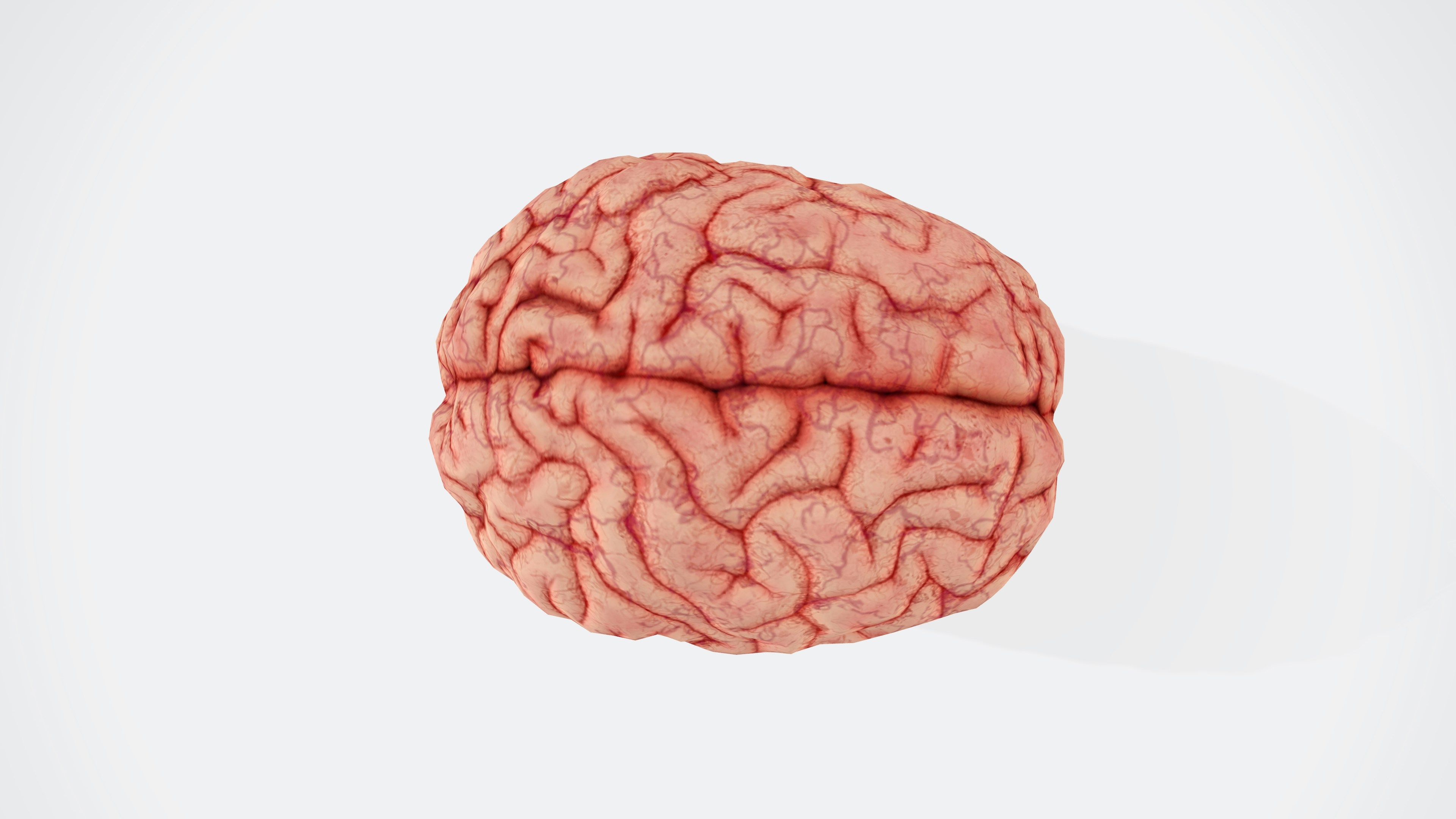
Deep-brain stimulation involves inserting thin wires through two small holes in the skull into a region of the brain associated with movement. The hope is that by delivering electrical pulses to the region, the implant can normalize aberrant brain activity and reduce symptoms. Since the devices were first approved almost three decades ago, some 200,000 people have had them fitted to help calm the tremors and rigidity caused by Parkinson’s disease. But about 40,000 of those who received devices made after 2020 got them with a special feature that has largely not yet been turned on. The devices can read brain waves and then adapt and tailor the rhythm of their output, in much the same way as a pacemaker monitors and corrects the heart’s electrical rhythms, says Helen Bronte-Stewart, a neurologist at Stanford University in California.
I am going to try and contact Helen at Stanford University to gather more details and, hopefully, to obtain her permission to share the complete article with you.
The scientists who precisely measure the position of Earth are in a bit of trouble. Their measurements are essential for the satellites we use for navigation, communication and Earth observation every day.
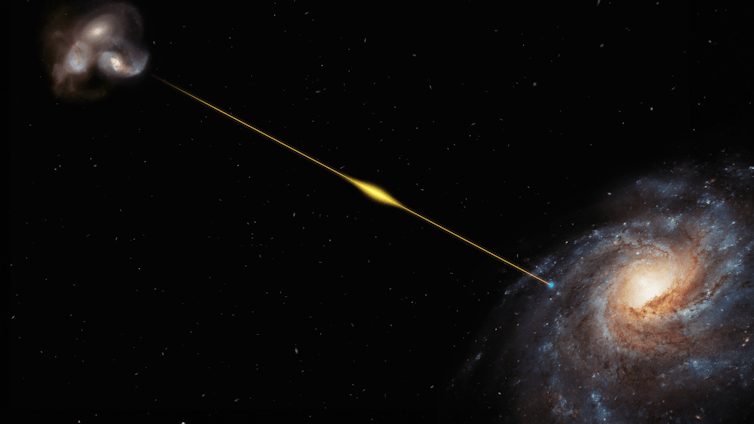
But you might be surprised to learn that making these measurements – using the science of geodesy – depends on tracking the locations of black holes in distant galaxies.
The problem is, the scientists need to use specific frequency lanes on the radio spectrum highway to track those black holes.
Satellites and the services they provide have become essential for modern life. From precision navigation in our pockets to measuring climate change, running global supply chains and making power grids and online banking possible, our civilisation cannot function without its orbiting companions.
To use satellites, we need to know exactly where they are at any given time. Precise satellite positioning relies on the so-called “global geodesy supply chain”.
This supply chain starts by establishing a reliable reference frame as a basis for all other measurements. Because satellites are constantly moving around Earth, Earth is constantly moving around the Sun, and the Sun is constantly moving through the galaxy, this reference frame needs to be carefully calibrated via some relatively fixed external objects.
These black holes are the most distant and stable objects we know. Using a technique called very long baseline interferometry, we can use a network of radio telescopes to lock onto the black hole signals and disentangle Earth’s own rotation and wobble in space from the satellites’ movement.
Different lanes on the radio highway
We use radio telescopes because we want to detect the radio waves coming from the black holes. Radio waves pass cleanly through the atmosphere and we can receive them during day and night and in all weather conditions.
Radio waves are also used for communication on Earth – including things such as wifi and mobile phones. The use of different radio frequencies – different lanes on the radio highway – is closely regulated, and a few narrow lanes are reserved for radio astronomy.
However, in previous decades the radio highway had relatively little traffic. Scientists commonly strayed from the radio astronomy lanes to receive the black hole signals.
To reach the very high precision needed for modern technology, geodesy today relies on more than just the lanes exclusively reserved for astronomy.
Radio traffic on the rise
In recent years, human-made electromagnetic pollution has vastly increased. When wifi and mobile phone services emerged, scientists reacted by moving to higher frequencies.
However, they are running out of lanes. Six generations of mobile phone services (each occupying a new lane) are crowding the spectrum, not to mention internet connections directly sent by a fleet of thousands of satellites.
Today, the multitude of signals are often too strong for geodetic observatories to see through them to the very weak signals emitted by black holes. This puts many satellite services at risk.
What can be done?
To keep working into the future – to maintain the services on which we all depend – geodesy needs some more lanes on the radio highway. When the spectrum is divided up via international treaties at world radio conferences, geodesists need a seat at the table.
Other potential fixes might include radio quiet zones around our essential radio telescopes. Work is also underway with satellite providers to avoid pointing radio emissions directly at radio telescopes.
Any solution has to be global. For our geodetic measurements, we link radio telescopes together from all over the world, allowing us to mimic a telescope the size of Earth. The radio spectrum is primarily regulated by each nation individually, making this a huge challenge.
But perhaps the first step is increasing awareness. If we want satellite navigation to work, our supermarkets to be stocked and our online money transfers arriving safely, we need to make sure we have a clear view of those black holes in distant galaxies – and that means clearing up the radio highway.
Everything in space – from the Earth and Sun to black holes – accounts for just 15% of all matter in the universe. The rest of the cosmos seems to be made of an invisible material astronomers call dark matter.
Astronomers know dark matter exists because its gravity affects other things, such as light. But understanding what dark matter is remains an active area of research.
With the release of its first images this month, the Vera C. Rubin Observatory has begun a 10-year mission to help unravel the mystery of dark matter. The observatory will continue the legacy of its namesake, a trailblazing astronomer who advanced our understanding of the other 85% of the universe.
As a historian of astronomy, I’ve studied how Vera Rubin’s contributions have shaped astrophysics. The observatory’s name is fitting, given that its data will soon provide scientists with a way to build on her work and shed more light on dark matter.
Wide view of the universe
From its vantage point in the Chilean Andes mountains, the Rubin Observatory will document everything visible in the southern sky. Every three nights, the observatory and its 3,200 megapixel camera will make a record of the sky.
This camera, about the size of a small car, is the largest digital camera ever built. Images will capture an area of the sky roughly 45 times the size of the full Moon. With a big camera with a wide field of view, Rubin will produce about five petabytes of data every year. That’s roughly 5,000 years’ worth of MP3 songs.
After weeks, months and years of observations, astronomers will have a time-lapse record revealing anything that explodes, flashes or moves – such as supernovas, variable stars or asteroids. They’ll also have the largest survey of galaxies ever made. These galactic views are key to investigating dark matter.
Galaxies are the key
Deep field images from the Hubble Space Telescope, the James Webb Space Telescope and others have visually revealed the abundance of galaxies in the universe. These images are taken with a long exposure time to collect the most light, so that even very faint objects show up.
Researchers now know that those galaxies aren’t randomly distributed. Gravity and dark matter pull and guide them into a structure that resembles a spider’s web or a tub of bubbles. The Rubin Observatory will expand upon these previous galactic surveys, increasing the precision of the data and capturing billions more galaxies.
In addition to helping structure galaxies throughout the universe, dark matter also distorts the appearance of galaxies through an effect referred to as gravitational lensing.
Light travels through space in a straight line − unless it gets close to something massive. Gravity bends light’s path, which distorts the way we see it. This gravitational lensing effect provides clues that could help astronomers locate dark matter. The stronger the gravity, the bigger the bend in light’s path.
The white galaxies seen here are bound in a cluster. The gravity from the galaxies and the dark matter bends the light from the more distant galaxies, creating contorted and magnified images of them. NASA, ESA, CSA and STScI
Discovering dark matter
For centuries, astronomers tracked and measured the motion of planets in the solar system. They found that all the planets followed the path predicted by Newton’s laws of motion, except for Uranus. Astronomers and mathematicians reasoned that if Newton’s laws are true, there must be some missing matter – another massive object – out there tugging on Uranus. From this hypothesis, they discovered Neptune, confirming Newton’s laws.
With the ability to see fainter objects in the 1930s, astronomers began tracking the motions of galaxies.
California Institute of Technology astronomer Fritz Zwicky coined the term dark matter in 1933, after observing galaxies in the Coma Cluster. He calculated the mass of the galaxies based on their speeds, which did not match their mass based on the number of stars he observed.
He suspected that the cluster could contain an invisible, missing matter that kept the galaxies from flying apart. But for several decades he lacked enough observational evidence to support his theory.
In 1965, Vera Rubin became the first women hired onto the scientific staff at the Carnegie Institution’s Department of Terrestrial Magnetism in Washington, D.C.
She worked with Kent Ford, who had built an extremely sensitive spectrograph and was looking to apply it to a scientific research project. Rubin and Ford used the spectrograph to measure how fast stars orbit around the center of their galaxies.
In the solar system, where most of the mass is within the Sun at the center, the closest planet, Mercury, moves faster than the farthest planet, Neptune.
“We had expected that as stars got farther and farther from the center of their galaxy, they would orbit slower and slower,” Rubin said in 1992.
“And that really leads to only two possibilities,” Rubin explained. “Either Newton’s laws don’t hold, and physicists and astronomers are woefully afraid of that … (or) stars are responding to the gravitational field of matter which we don’t see.”
Data piled up as Rubin created plot after plot. Her colleagues didn’t doubt her observations, but the interpretation remained a debate. Many people were reluctant to accept that dark matter was necessary to account for the findings in Rubin’s data.
Rubin continued studying galaxies, measuring how fast stars moved within them. She wasn’t interested in investigating dark matter itself, but she carried on with documenting its effects on the motion of galaxies.
A U.S quarter honors Vera Rubin’s contributions to our understanding of dark matter. United States Mint, CC BY
Vera Rubin’s legacy
Today, more people are aware of Rubin’s observations and contributions to our understanding of dark matter. In 2019, a congressional bill was introduced to rename the former Large Synoptic Survey Telescope to the Vera C. Rubin Observatory. In June 2025, the U.S. Mint released a quarter featuring Vera Rubin.
Rubin continued to accumulate data about the motions of galaxies throughout her career. Others picked up where she left off and have helped advance dark matter research over the past 50 years.
In the 1970s, physicist James Peebles and astronomers Jeremiah Ostriker and Amos Yahil created computer simulations of individual galaxies. They concluded, similarly to Zwicky, that there was not enough visible matter in galaxies to keep them from flying apart.
They suggested that whatever dark matter is − be it cold stars, black holes or some unknown particle − there could be as much as 10 times the amount of dark matter than ordinary matter in galaxies.
Throughout its 10-year run, the Rubin Observatory should give even more researchers the opportunity to add to our understanding of dark matter.
Join us on an incredible Wildlife photography adventure through the wilds of Oregon, as we search for and capture stunning images of three iconic raptors: the Great Grey Owl, the Bald Eagle, and the Osprey. What was amazing is that we did not see another photographer whilst photographing these magnificent raptors! From dense forests to riverbanks and high mountain meadows, Oregon is a paradise for birdwatchers and wildlife photographers alike. In this video, we take you behind the scenes of our journey—tracking elusive owls, watching bald eagles, and photographing ospreys.
It makes us extremely proud to be living in this part of America!
We live on 13 acres. Even the land near to the house is difficult to keep tidy so when Jean and I saw this TED Talk given by Rebecca McMacin we were overjoyed. For having a tidy garden does much greater harm to wildlife than keeping it wild.
Before I get to the TED video, I just want to show you some photos I took last Saturday.
oooo
oooo
Now to the TED Talk
Here is the description of the talk.
Many gardeners work hard to maintain clean, tidy environments … which is the exact opposite of what wildlife wants, says ecological horticulturist Rebecca McMackin. She shows the beauty of letting your garden run wild, surveying the success she’s had increasing biodiversity even in the middle of New York City — and offers tips for cultivating a garden that can be home to birds, bees, butterflies and more.
Here is Rebecca’s background.
Rebecca McMackin is an ecologically obsessed horticulturist who helps people create and care for beautiful gardens that provide habitat for birds, butterflies and soil microorganisms.
Why you should listen
Rebecca McMackin spent a decade as director of horticulture at Brooklyn Bridge Park, where she employed organic principles to manage 85 acres of diverse parkland. During her time overseeing the park’s ecology, stick bugs, rare mantids, threatened bees and lady bugs all returned to the park. The park’s urban biodiversity and successful use of ethical management strategies influenced thousands of people and other urban parks to adopt similar approaches.
In addition to her work designing public gardens, McMackin writes, lectures and teaches on ecological landscape management and pollination ecology. She recently installed an 8,000-square-foot native wildflower garden for the entrance to the Brooklyn Museum. She was a Loeb Fellow at the Harvard Graduate School of Design, while her work has been published by and featured in The New York Times, the Landscape Institute and on NPR and PBS.
oooo
The video is just 12 minutes long and I encourage you to view it.
Penny Martin regularly sends me content that I can publish as a post for you kind people.
And so it is with this one.
ooOOoo
Going Green with Fur and Grit: How to Launch an Eco-Friendly Pet Care Business That Actually Work
You’ve been sitting on the idea for a while now. Maybe it started with that pile of single-use plastic baggies after your dog’s walk, or the ingredient list on your cat’s kibble that read more like a chemistry project than actual food. Maybe you just got tired of feeling like you had to choose between loving your pet and loving the planet. Whatever the reason, you’re here now, staring down the reality of launching a business that’s not only built for animals—but built for good. You want to make something that matters. And you can. But you need to know exactly what you’re walking into.
Anchor Yourself in a Real Way
You can’t build this kind of business on good vibes and a cool logo. Before anything else—before the business plan, the branding, or the Instagram account—you’ve got to know exactly why you’re doing this. If your reason isn’t rooted in something deeply personal, something that makes your chest tighten when you think about it, you’ll burn out fast. Maybe it’s watching your senior dog react to over-processed treats, or maybe it’s the garbage island growing in the ocean—whatever it is, let that be your compass.
Streamline the Chaos with the Right Tools
When you’re building a mission-driven business from scratch, the backend can get messy fast. That’s where using an all-in-one business platform becomes a game-changer—it keeps your focus on your values instead of your paperwork. Whether you’re forming an LLC, managing compliance, creating a website, or handling finances, this type of platform can provide comprehensive services and expert support to ensure business success. Platforms like ZenBusiness are built for entrepreneurs like you, giving you the structure to stay organized while you pour your energy into the work that really matters.
Get Ruthlessly Local with Sourcing
If you’re serious about sustainability, you’ve got to look hard at where your products come from. Local sourcing doesn’t just reduce your carbon footprint—it tells your community that you care about it. Reach out to nearby farms, independent makers, and ethical manufacturers who align with your mission. Not only will this lower your shipping emissions, it’ll also create real relationships with partners who have skin in the game—and people can feel that authenticity the moment they walk through your door.
Know That Packaging Will Be a Battle
You’re going to lose sleep over packaging. You’ll try compostable options that fall apart in humid weather. You’ll learn that “recyclable” doesn’t mean the same thing in every city. And somewhere along the way, you’ll realize that the most sustainable solution might be the least convenient one. This is the part where you have to experiment, ask questions, and stay transparent with your customers. No one expects perfection—but they’ll appreciate your effort to figure it out.
Make the Community Your Co-Founders
You’re not building this business for yourself. You’re building it for every person who loves their animal and wants to do better by the planet. So bring them in early. Host small events, set up “ask me anything” nights, partner with local shelters, and turn your customer base into a real community. These people won’t just buy your products—they’ll give you feedback, advocate for your brand, and make you feel less alone when the grind gets real.
Ditch the Guilt, Offer Solutions
You’re not here to shame anyone. The pet parent buying big-box kibble isn’t your enemy—they’re someone who probably hasn’t been offered a better option yet. So don’t lecture. Instead, educate through action. Make eco-friendly choices feel fun, feel doable, and feel worth it. When you center your messaging on empowerment instead of guilt, people are way more likely to stick around—and tell their friends.
Teach Through Curiosity, Not Preaching
People want to learn, but they don’t want to be condescended to. Your job is to become the kind of brand that shares knowledge without turning it into a TED Talk. Drop bite-sized facts on your packaging, start conversations in-store, and use your social platforms to casually open people’s eyes. Think of it like planting seeds—not every customer will bloom overnight, but the ones who do will remember how you made them feel when they were just getting started.
Hire with Heart, Not Just Skill
You can train someone to trim nails or restock shelves, but you can’t teach them to care. The team you build needs to believe in the mission as much as you do. They’re the ones explaining the difference between corn-based and petroleum-based bags to a frazzled pet parent who’s late for pickup. If your staff is just collecting paychecks, your message won’t land. But if they’re aligned with your values? That’s when your business becomes a movement.
Don’t Let Perfect Be the Point
You will mess up. You’ll stock a “sustainable” product that turns out to be greenwashed. You’ll order packaging that gets held up in customs. You’ll have days where you wonder if any of this actually matters. That’s normal. Progress in this space is messy, nonlinear, and full of trade-offs. The key is to keep going, stay honest, and let your customers come along for the ride. They don’t need you to be flawless—they just need to believe you’re trying.
Starting an eco-conscious pet care business means doing things the hard way on purpose. It means waking up early to answer emails from suppliers and staying up late comparing compostable labels. It means showing up for your customers, your team, your animals—and the planet. But if your heart’s in the right place and your feet stay on the ground, you’ll build something that matters. And really, that’s the kind of work worth doing.
Discover the wisdom of our loyal companions and explore the journey of life with Learning from Dogs, where every post is a step towards understanding and fulfillment.
ooOOoo
As a very ex-entrepreneur, I can tell you that there is much in Penny’s article that applies to starting any business.
And as an ex-salesman, everything starts with the customer. The persons who are attracted to what you are selling. It is hard work but pleasing work. Before I started Dataview I worked for IBM UK in their office products division, as a salesman. I loved the job!
NASA hasn’t landed humans on Mars yet. But thanks to robotic missions, scientists now know more about the planet’s surface than they did when the movie, The Martian, was released.
Our human knowledge is constantly growing. In many, many directions. Here is a fascinating (well it is to me!) article from The Conversation.
ooOOoo
A decade after the release of ‘The Martian’ and a decade out from the world it envisions, a planetary scientist checks in on real-life Mars exploration
‘The Martian’ protagonist Mark Watney contemplates his ordeal. 20th Century Fox
Andy Weir’s bestselling story “The Martian” predicts that by 2035 NASA will have landed humans on Mars three times, perfected return-to-Earth flight systems and collaborated with the China National Space Administration. We are now 10 years past the Hollywood adaptation’s 2015 release and 10 years shy of its fictional timeline. At this midpoint, Mars exploration looks a bit different than how it was portrayed in “The Martian,” with both more discoveries and more controversy.
Although concepts for crewed missions to Mars have gained popularity, NASA’s actual plans for landing humans on Mars remain fragile. Notably, over the last 10 years, it has been robotic, rather than crewed, missions that have propelled discovery and the human imagination forward.
NASA’s 2023 Moon to Mars Strategy and Objectives Development document lays out the steps the agency was shooting for at the time, to go first to the Moon, and from there to Mars. NASA
Robotic discoveries
Since 2015, satellites and rovers have reshaped scientists’ understanding of Mars. They have revealed countless insights into how its climate has changed over time.
As Earth’s neighbor, climate shifts on Mars also reflect solar system processes affecting Earth at a time when life was first taking hold. Thus, Mars has become a focal point for investigating the age old questions of “where do we come from?” and “are we alone?”
The Opportunity, Curiosity and Perseverance rovers have driven dozens of miles studying layered rock formations that serve as a record of Mars’ past. By studying sedimentary layers – rock formations stacked like layers of a cake – planetary geologists have pieced together a vivid tale of environmental change that dwarfs what Earth is currently experiencing.
Mars was once a world of erupting volcanoes, glaciers, lakes and flowing rivers – an environment not unlike early Earth. Then its core cooled, its magnetic field faltered and its atmosphere drifted away. The planet’s exposed surface has retained signs of those processes ever since in the form of landscape patterns, sequences of layered sediment and mineral mixtures.
Layered sedimentary rocks exposed within the craters of Arabia Terra, Mars, recording ancient surface processes. Photo from the Mars Reconnaissance Orbiter High Resolution Imaging Science Experiment. NASA/JPL/University of Arizona
Arabia Terra
One focus of scientific investigation over the last 10 years is particularly relevant to the setting of “The Martian” but fails to receive mention in the story. To reach his best chance of survival, protagonist Mark Watney, played by Matt Damon, must cross a vast, dusty and crater-pocked region of Mars known as Arabia Terra.
In 2022 and 2023, I, along with colleagues at Northern Arizona University and Johns Hopkins University, published detailed analyses of the layered materials there using imagery from the Mars Reconnaissance Orbiter and Mars Odyssey satellites.
By using infrared imagery and measuring the dimensions of surface features, we linked multiple layered deposits to the same episodes of formation and learned more about the widespread crumbling nature of the terrain seen there today. Because water tends to cement rock tightly together, that loose material indicates that around 3.5 billion years ago, that area had a drying climate.
To make the discussions about this area easier, we even worked with the International Astronomical Union to name a few previously unnamed craters that were mentioned in the story. For example, one that Watney would have driven right by is now named Kozova Crater, after a town in Ukraine.
More to explore
Despite rapid advances in Mars science, many unknowns remain. Scientists still aren’t sure of the precise ages, atmospheric conditions and possible signatures of life associated with each of the different rock types observed on the surface.
For instance, the Perseverance rover recently drilled into and analyzed a unique set of rocks hosting organic – that is, carbon-based – compounds. Organic compounds serve as the building blocks of life, but more detailed analysis is required to determine whether these specific rocks once hosted microbial life.
The in-development Mars Sample Return mission aims to address these basic outstanding questions by delivering the first-ever unaltered fragments of another world to Earth. The Perseverance rover is already caching rock and soil samples, including ones hosting organic compounds, in sealed tubes. A future lander will then need to pick up and launch the caches back to Earth.
Sampling Mars rocks could tell scientists more about the red planet’s past, and whether it could have hosted life.
Once home, researchers can examine these materials with instruments orders of magnitude more sensitive than anything that could be flown on a spacecraft. Scientists stand to learn far more about the habitability, geologic history and presence of any signs of life on Mars through the sample return campaign than by sending humans to the surface.
This perspective is why NASA, the European Space Agency and others have invested some US$30 billion in robotic Mars exploration since the 1960s. The payoff has been staggering: That work has triggered rapid technological advances in robotics, telecommunications and materials science. For example, Mars mission technology has led to better sutures for heart surgery and cars that can drive themselves.
A selfie from NASA’s Perseverance Mars rover with the Ingenuity helicopter, taken with the rover’s extendable arm on April 6, 2021. NASA/JPL-Caltech/MSSS
Calling the red planet home?
Colonizing Mars has a seductive appeal. It’s hard not to cheer for the indomitable human spirit while watching Watney battle dust storms, oxygen shortages and food scarcity over 140 million miles from rescue.
Much of the momentum toward colonizing Mars is now tied to SpaceX and its CEO Elon Musk, whose stated mission to make humanity a “multi-planetary species” has become a sort of rallying cry. But while Mars colonization is romantic on paper, it is extremely difficult to actually carry out, and many critics have questioned the viability of a Mars habitation as a refuge far from Earth.
Now, with NASA potentially facing a nearly 50% reduction to its science budget, the U.S. risks dissolving its planetary science and robotic operations portfolio altogether, including sample return.
Nonetheless, President Donald Trump and Musk have pushed for human space exploration to somehow continue to progress, despite those proposed cuts – effectively sidelining the robotic, science-driven programs that have underpinned all of Mars exploration to date.
Yet, it is these programs that have yielded humanity’s richest insights into the red planet and given both scientists and storytellers like Andy Weir the foundation to imagine what it must be like to stand on Mars’ surface at all.
Nothing to add from yours truly except to say that this quote is highly relevant: “Challenges are what make life interesting and overcoming them is what makes life meaningful.” – Joshua J. Marine
(And this was the result of me looking online for quotes and coming across 50 quotes from USA Today.)