I’m taking a little gamble that the owners of the copyright in the following article will not mind the complete re-publishing of this piece.
While I have practically zero knowledge of the geology of much of the USA living here close to the Mogollon Rim makes it almost impossible not to sense the ageless beauty of the surrounding hills and mountains. Anyway, this article was found on the Arizona Geology website. It is called Putting Earth Science Back in its Place, written by STEVEN SEMKEN of ARIZONA STATE UNIVERSITY.
The ancient landscape of Arizona
One of the most universal and fundamental things that humans do is to make places. We do this by sensing and experiencing the space around us, and attaching meanings to parts of it: here is a beautiful mountain, here is where my house is, here is where we have found copper, here is where my ancestors lived. The meanings that we affix to places can be aesthetic, ceremonial, historic, practical, and mythical, as well as scientific. Humans develop emotional attachments to meaningful places, sometimes to the point of making significant personal sacrifices to preserve or protect them. The combination of meanings and attachments that connect us to places is called the sense of place.
We study and teach about Earth through its places. From Monument Valley to Organ Pipe, the landscapes of Arizona are set with places that are not only great geological exemplars, but meaningful to people for all kinds of reasons. It is only human for us to become interested in these diverse place meanings even as we explore our surroundings scientifically. Our students may also have, or can be encouraged to develop, rich senses of these places—particularly ones that are relevant to their personal interests, family experiences, or cultural backgrounds. This is the nature ofplace-based teaching, which encourages students to explore, and become involved in, local environments and communities. Urban places are just as meaningful, and can be just as instructive, as rural or remote places.
It is not simply teaching about the geology of a place such as Grand Canyon or the Río Salado Valley. It is finding ways for your students to experience the place: if possible by bringing them there, but alternatively by bringing them local rock specimens, images, maps, and readings to investigate, or enabling them to explore virtually using Google Earth. It is also helping them to become moreinvested in local places: by being able to explain how they get their weather, drinking water, fuel, and electrical power; by doing a community-service project; by creating art that celebrates the beauty of land and environment. And authentically place-based teaching and learning are as trans-disciplinary as place meanings themselves are. Here are reason and motivation for Earth science teachers to collaborate with their colleagues in life sciences, geography, history, language, literature, and so on, to develop ways to explore and understand the natural and cultural landscapes of Arizona across the curriculum.
Why is this important? On one hand, cultural forces such as the pervasiveness and popularity of digital entertainment and the homogenizing effects of global commerce conspire against student and community interest in local places and concerns. There is mounting research and anecdotal evidence that children and families spend less time outdoors. To be oblivious to the importance of local places is to forego opportunities to learn from them and protect them from environmental and cultural degradation. On the other hand, right here in Arizona we are already faced with a number of what many scientists and policymakers have labeled “grand challenges” to sustainability if not human existence, including depletion of water resources, lessened biodiversity, declining air quality, continued dependence on fossil energy, and climate change. Place-based teaching is an appropriate response. And it is intellectually and emotionally delightful to reacquaint yourself and your students with the places of home.
SELECTED, RECOMMENDED READINGS
ONE PLACE-BASED TEACHING AND LEARNING:
Gruenewald, D. A., & Smith, G. A. (Eds.). (2008). Place-Based Education In The Global Age: Local Diversity.
New York: Lawrence Erlbaum. ISBN 978-0-8058-5864-8.
Sobel, D. (2004). Place-Based Education: Connecting Classrooms And Communities.
Great Barrington, MA: The Orion Society. ISBN 0-913098-54-X.
ON THE MANY PLACE MEANINGS OF ARIZONA AND THE SOUTHWEST: Basso, K. H. (1996). Wisdom Sits In Places: Landscape And Language Among The Western Apache.
Albuquerque, NM: University Of New Mexico Press. ISBN 0-8263-1724-3.
Ffolliott, P. F., & Davis, O. K. (2008). Natural Environments Of Arizona: From Deserts To Mountains.
Tucson, AZ: University Of Arizona Press. ISBN 978-0-8165-2697-0.
Granger, B.H. (1982). Will C. Barnes’s Arizona Place Names, Facsimile Edition.
Tucson, AZ: University Of Arizona Press. ISBN 0-8165-0729-5.
Kamilli, R. J., & Richard, S. M. (Eds.). (1998). Geologic Highway Map Of Arizona, Map M-33.
Tucson, AZ: Arizona Geological Society And Arizona Geological Survey. ISBN 1-891924-00-1.
McNamee, G. (1993). Named In Stone And Sky: An Arizona Anthology. Tucson, AZ: University Of Arizona Press. ISBN 0-8165-1348-1.
Nations, D., & Stump, E. (1996). Geology Of Arizona, Second Edition.
Dubuque, IA: Kendall-Hunt Publishing. ISBN 0-7872-2525-8.
Trimble, M. (1986). Roadside History Of Arizona.
Missoula, MT: Mountain Press Publishing Company. ISBN 978-0-8784-2198-5.
Wiewandt, T., & Wilks, M. (2001). The Southwest Inside Out: An Illustrated Guide To The Land And Its History.
Tucson, Arizona: Wild Horizons Publishing. ISBN 1-879728-03-6.
Last Wednesday, I set out to explain why the blog is called Learning from Dogs. If you missed that then it is here. The focus was on the very special relationship between man and dog that goes back thousands of years. It has been a critically important relationship for both species.
But there is another aspect to this Blog, as follows: The relationship between dogs and man goes back thousands of years. The theory is that dogs were domesticated between 15,000 and 40,000 years ago although DNA evidence suggests dogs split away from the grey wolf around 100,000 years ago. Certainly, the dog was the first animal to be domesticated by man. In fact, some archaeologists speculate that man could not have been a successful ‘hunter-gatherer’ without his relationship with the dog and thus been able to progress to farming the earth for food.
The relationship between Planet Earth and man, as in H. sapiens, goes back around 200,000 years. There is little doubt that most people, even with a minimum of awareness about the world that we live in, are deeply worried. On so many fronts there are forbidding and scary views. It feels as though all the certainty of past times has gone; as if all the trusted models of society are now broken. Whether we are talking politics, economics, employment or the environment, nothing seems to be working.
Why is this? What’s the cause?
It would be easy to condemn man’s drive for progress and an insatiable self-centredness as root causes. But it’s not the case.
The root cause is clear. It is this. How mankind has developed is the result of mankind’s behaviours. All of us behave in many ways that are hugely damaging to the survival of our species. It is likely that these behaviours are little unchanged over thousands of years.
But 2000 years ago, the global population of man was just 300 million.
Twelve-hundred years later, in 1800, it was 1 billion. In 1927, just 127 years later, the two-billionth baby was born. In 1960, only 33 years on, the three-billionth baby. (Remember the moon landing in 1969? Well, of course you do! There were about three and a half billion people on the planet!)
Just 16 years on, in 1974, the four-billionth baby was born. In 1987, 13 years later, five billion. Around October 1999, the sixth-billionth baby was born!
It’s trending to a billion every decade. 100 million population growth every year, or about 270,000 every single day!
Combine man’s behaviours with this growth of population and we have the present situation. A totally unsustainable situation disconnected from the planet that supports us.
The only viable solution is to amend our behaviours. To tap into the powers of integrity, self-awareness and mindfulness and change our game.
We all have to work with the fundamental, primary relationships we have with each other and with the planet upon which we all depend. We need a level of consciousness with each other and with the living, breathing planet that will empower change. We need spiritual enlightenment on a grand scale.
That’s why we have so much to learn from dogs. They are man’s best friend. They are man’s oldest friend. They have a relationship with us that is very special; almost certainly telepathic. They can show us how we need to live our lives.
Man's oldest, and wisest, friend.
That’s the real reason why this Blog gets written. Phew! Glad that’s off my chest!
It struck me recently that many of you readers that come to Learning from Dogs on a regular basis, say, over the last 18 months, may not be clear as to why it’s called what it is, and the deeper issues behind the name.
First, the name. Quite a few years ago I was sitting chatting with Jon Lavin, the co-founder of the Blog, in his home in South-West England. My German Shepherd, Pharaoh (that’s him on the home page) was sleeping on the floor while Jon and I were nattering about the works of Dr David Hawkins of Veritas Publishing. Jon mentioned that David Hawkins had measured the consciousness of dogs and that they came out about 205. In other words they were integrous creatures and firmly on the truthful side of the boundary between truth and falsehood.
I was fascinated by that idea. Later, back at my home, less than an hour away from Jon’s house, I was idly looking at domain names that were available, and imagine my glee when I discovered that learningfromdogs (dot) com was free. It was rapidly grabbed.
A rather chaotic period of my life descended upon me but the notion that we have much to learn from dogs stayed with me. Much later, when I was happily settled with Jean, the vision and purpose of the Blog got me under way. The first post was published on 15th July, 2009.
The ideas behind the theme that dogs have an extraordinary relationship with man is contained in a very early piece written for the Blog back in July 19th, 2009. That article is called Dogs and integrity. But nothings stays still. In that piece, I wrote,
Because of this closeness between dogs and man, we (as in man!) have the ability to observe the way they live. Now I’m sure that scientists would cringe with the idea that the way that a dog lives his life sets an example for us humans, well cringe in the scientific sense.
However, on Sunday evening we watched a video from PBS that showed that scientists are now taking a very close interest in dogs and why they have such a special relationship with man, perhaps even a critical part in enabling man to prosper as hunter-gatherers. Here’s a preview of that video programme.
Unfortunately, the video is not freely available from PBS. However, it was based on the BBC Horizon programme, The Secret Life of the Dog, which I wrote about back in the 25th January, 2011. (The YouTube link on that post appears to have been curtailed.)
Luckily there are a couple of options to watch this fascinating and very revealing documentary. You can either watch it in sections from YouTube, the first 10 minutes is below, or you can watch it in full, if you don’t mind some Chinese translations here. Your choice.
That’s enough for today, I shall return to this theme next week.
A wonderful tribute to Yuri Gagarin and all his team.
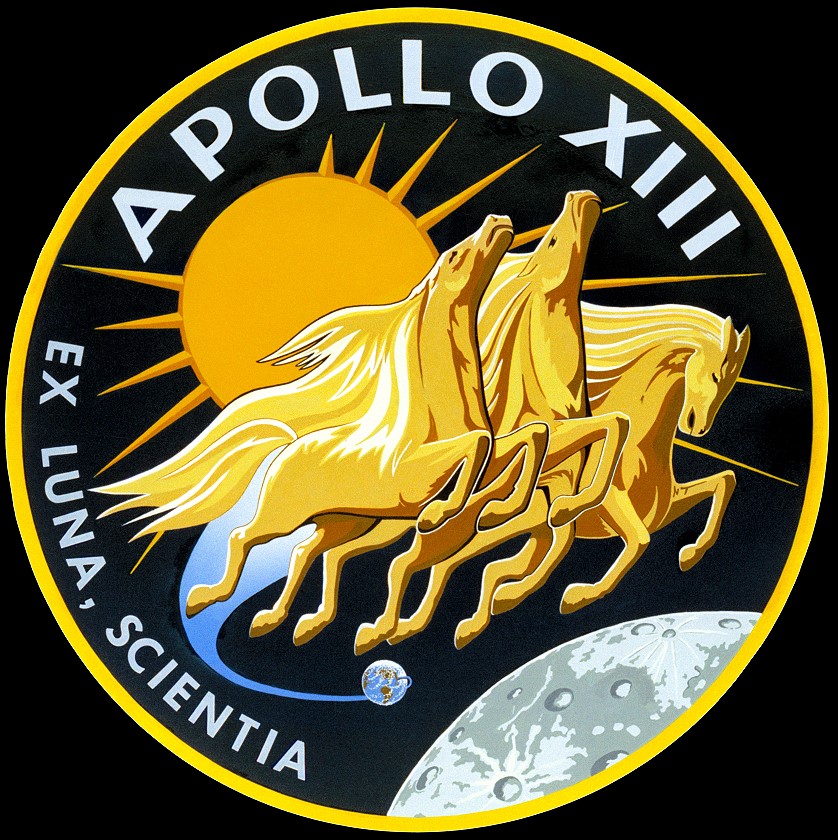
When I recently wrote of it being 41 years since Swigert on board Apollo 13 transmitted “Okay, Houston, we’ve had a problem here.” I also included a closing reflection as follows,
Finally, this Post is published, not only on the 41st anniversary of that memorable Apollo Flight but the day after the 50th anniversary of Yuri Gagarin’s first flight of a human into space, the 12th April, 1961.
Coincidentally, our favourite documentary film website, Top Documentary Films, featured on April 14th the new film First Orbit. We watched the film that night. It was a most unusual format for a film, yet a most haunting experience. Watching the credits, it then became clear that the film was a co-operative venture made especially for the 50th anniversary of that remarkable, historic flight.
Of course, had I previously been aware of the venture and this remarkable film then it would have been promoted on Learning from Dogs in good time before the anniversary date. However, better late than never!
Indeed, there is a dedicated website in recognition of this First Orbit. Here’s the background to the film,
April 12th 1961 – Yuri Gagarin is about to see what no other person has seen in the history of humanity – the Earth from space. In the next 108 minutes he’ll see more than most people do in a lifetime. What sights awaited the first cosmonaut silently gliding over the world below? What was it like to view the oceans and continents sailing by from such a height?
By matching the orbital path of the Space Station, as closely as possible, to that of Gagarin’s Vostok 1spaceship and filming the same vistas of the Earth through the new giant cupola window, astronaut Paolo Nespoli, and documentary film maker Christopher Riley, have captured a new digital high definition view of the Earth below, half a century after Gagarin first witnessed it.
Weaving these new views together with historic, recordings of Gagarin from the time, (subtitled in Englsih) and an original score by composer Philip Sheppard, we have created a spellbinding film to share with people around the world on this historic anniversary.
The music in the film is most beautiful, quite moving. Here’s the background to the music from the First Orbit website,
First Orbit’s producer Christopher Riley first worked with Philip in 2006 on the Sundance Award winning feature documentary film ‘In the Shadow of the Moon‘ and since then Philip had been working on a new suite of music inspired by spaceflight.
“We’d been working with some of these tracks on another project” says Chris, “and we suddenly realised how perfectly they could compliment ‘First Orbit’ as well. We contacted Philip to ask his permission to use them, only to find that his entire Cloud Song album was already in orbit onboard the International Space Station!”
“NASA astronaut Cady Coleman, had them on her iPod” says Philip. “Her husband Josh Simpson is a friend of mine and they’d listened to a lot of my music together before she left, so I made up a playlist for her!”
Quite by coincidence Cady had been listening to the music in ‘First Orbit’ at one end of the Space Station whilst European Space Agency astronaut Paolo Nespoli was shooting for the film at the other end, without either of them knowing the connection!
Back on Earth Chris and the film’s editor Stephen Slater took Philip’s tracks from Cloud Song and weaved them together with Paolo’s new views of the Earth to create the different moods of the film; from the first views of snowy Siberia to the darkness of night over the Pacific Ocean and the homecoming over Africa, as Gagarin starts to re-enter the atmosphere.
The result is a mesmerising combination of imagary and music which we hope convey the spectrum of emotions which no doubt went through Yuri’s mind as he gazed down upon the Earth.
Finally, here’s the film. It’s an hour and thirty-nine minutes and, as I said, an unconventional film experience. But if any part of you either remembers the event or wonders what it was like, those 50 years ago, then find somewhere out of reach of interruptions and watch the film.
On April 12th, I introduced to you, dear reader, the philosopher, Alain de Botton. I promised that I would soon give you more.
On Top Documentary Films, there are links to all six parts of a series on philosophy presented by this popular British philosopher featuring six thinkers who have influenced history, and their ideas about the pursuit of the happy life.
The first part is about Socrates; Socrates and self-confidence. But before linking to that specific programme, a little about this enigmatic man, Socrates, who lived about 2,500 years ago (469–399 B.C.E). Here’s an extract from the Stanford Encyclopaedia of Philosophy.
The philosopher Socrates remains, as he was in his lifetime (469–399 B.C.E.),an enigma, an inscrutable individual who, despite having written nothing, is considered one of the handful of philosophers who forever changed how philosophy itself was to be conceived. All our information about him is second-hand and most of it vigorously disputed, but his trial and death at the hands of the Athenian democracy is nevertheless the founding myth of the academic discipline of philosophy, and his influence has been felt far beyond philosophy itself, and in every age. Because his life is widely considered paradigmatic for the philosophic life and, more generally, for how anyone ought to live, Socrates has been encumbered with the admiration and emulation normally reserved for founders of religious sects—Jesus or Buddha—strange for someone who tried so hard to make others do their own thinking, and for someone convicted and executed on the charge of irreverence toward the gods. Certainly he was impressive, so impressive that many others were moved to write about him, all of whom found him strange by the conventions of fifth-century Athens: in his appearance, personality, and behavior, as well as in his views and methods.
Full entry may be read here, and very interesting it is, by the way.
Anyway, back to the programme from Alain de Botton. The part on Socrates is introduced thus,
Why do so many people go along with the crowd and fail to stand up for what they truly believe? Partly because they are too easily swayed by other people’s opinions and partly because they don’t know when to have confidence in their own.
You can either watch the video by clicking here, or view it as three sections from YouTube, as follows.
Things do not change; we change.Henry David Thoreau
To a great extent, my thoughts in this article will make less sense if one hasn’t watched the Rupert Sheldrake video included in the Post on the 10th January, 2011. It’s 1 hour 20 minutes long but every minute will captivate you, trust me.
But if, for whatever reason, you don’t watch that video then the following YouTube videos are offered where Sheldrake speaks of the evidence supporting telepathy between cats and dogs and humans. The demonstration of a dog knowing when their owner is coming home is enthralling.
The science behind this link between, for example, the dog and its owner, is what Dr. Sheldrake calls an example of Morphic Fields.
I must confess that if someone had said to me, say 10 or even 5 years ago, that some form of energy field links the brains of dogs and their owners, or of cats and their owners, I would have been at least confused, at best very skeptical. Then comes the evidence, statistically valid, that being rung on the ‘phone by someone close to you can be anticipated frequently before the phone is picked up creates even more uncertainty.
Settle down and listen to these videos (they are sound recordings only but nonetheless fascinating),
55:55:20 – Swigert: “Okay, Houston, we’ve had a problem here.”
Apollo 13
Probably one of the most famous phrases from the whole Apollo program, these immortal words were uttered shortly before 10.10 PM EST on April 13th, 1970.
There is so much material around that it would be pointless covering too much ground in this Post. So why the Post today?
Because today, too, is the 13th April. So on this day, 41 years ago, the world came together held its collective breath and prayed for a successful outcome to this scary disaster.
There are some wonderful archives around from NASA. Here’s one that covers the chronology of events of that famous accident.
The following includes events from 2.5 minutes before the accident to about 5 minutes after. Times given are in Ground Elapsed Time (G.E.T.), that is, the time elapsed since liftoff of Apollo 13 on April 11, 1970, at 2:13 PM Eastern Standard Time (EST). 55:52:00 G.E.T. is equal to 10:05 PM EST on April 13, 1970.
Also, those who want more information, may wish to go here, here and here
And 41 years ago, this coming Sunday, i.e. April 17th 1970, with the whole world praying for their safe return, Apollo 13 splashed down near Samoa.
Four hours before landing, the crew shed the service module; Mission Control had insisted on retaining it until then because everyone feared what the cold of space might do to the unsheltered CM heat shield. Photos of the Service Module showed one whole panel missing, and wreckage hanging out, it was a sorry mess as it drifted away. Three hours later the crew left the Lunar Module Aquarius and then splashed down gently in the Pacific Ocean near Samoa. From here.
In a very real sense, Apollo 13, like a number of the other historic Apollo flights, is a wonderful reminder of something that this Planet needs right now. A coming together of all the peoples of this beautiful planet, a unity of mankind, to remind us in these fragile and difficult times of the saying, ‘United we stand, divided we fall.’
Finally, this Post is published, not only on the 41st anniversary of that memorable Apollo Flight but the day after the 50th anniversary of Yuri Gagarin’s first flight of a human into space, the 12th April, 1961.
The son of one of our neighbours called us round last Thursday to show us the skeletal remains he recently found in their front garden together with a most beautiful pot. Here are a few pictures.
Discovery siteMogollon culture pot?Ancient and modern!
On the website Desert USA there is a section dealing with the culture of the Prehistoric Desert Peoples including the peoples of The Mogollon. Here’s an extract.
In addition to wild edible and utilitarian plants, the mountain flanks and desert basins harbored a thriving community of game, including bighorn sheep, elk, mule deer, white-tail deer, antelope, beaver, badger, blacktail jackrabbits, desert cottontails, turkeys and various other species. Rock exposures served as quarries for the raw materials for making projectile points and tools. Clay exposures provided the raw material for making ceramic vessels and figurines.
Even as the Mogollon people gradually adopted village life and farming, they would continue to count on the ranges and basins to supplement their larder and provide essential material resources. They would never be able to rely on corn, beans, squash and other crops to the exclusion of wild plant foods because the Mogollon region held relatively few areas suitable for agriculture. Most of them occurred along lower mountain river valleys, along the few desert river basins and near a few desert playas. Even those areas which were suitable experienced erratic rainfall year in and year out.
The article includes the following photograph which shows how close the resemblance of the pot found next door to the one in the article.
All very fascinating. Indeed, when one reflects that European descendants have only been in the area for about 500 years and Payson considers it’s founding year as recent as 1882 it really isn’t that long ago, in historical terms, that the land around here will have borne the footprints of peoples very different to us today.
Maybe on still, dark nights, their memories are very close to us.
When I posted my introductory piece on Joseph Campbell on the 14th February, I was tight on time. So it was pretty brief, as a piece.
But I was amazed at the number of people who read that Post; clearly this man Campbell has reached out to many across the world. Plus there was this comment from Michelle, better known as Dogkisses.
What a wonderful man! My hero. I cried when he passed on. He is the first person who reached me in my mid-twenties.
A friend of mine introduced me to “The Power of Myth,” and gave me a video series, which is so old now the VHS won’t play. Bill Moyers (I think I have that name right) interviewed him in the series.
The last book I had about him was, “Radio Interviews with Joseph Campbell.” I gave it to my teenage son. He loved it so much, but his girlfriend said reading that book made him act differently. I laughed and said thank goodness. He said the book disappeared. I wondered how. She said it made him not want to work full time. He was only barely seventeen, and I was trying to get him to take a different path in life.
The world would be a better place if everyone could appreciate what Joseph Campbell said and for the great work he did in his life.
Thank you. A very nice way to start a hectic Monday.
And in reply to me thanking DK for her comment and offering her the chance to guest post on Learning from Dogs, this further comment,
I certainly look forward to the future posts.
I’m having a hard time with my memory and mental fatigue lately. I would have to re-read myself to be able to write about what I learned from Joseph Campbell, which actually might help me and I know I would enjoy it.
I’ve been turning back for the past few months, looking back to when I stood on more solid ground spiritually. Hearing Joseph Campbell again would certainly help me remember that time in my life, because I was reading his work. I have daily quotes from him that come to my Google reader.
Thank you for the invitation and I am truly honored that you ask. I can do some reading and see if my brain gives me anything to share.
More musings on how this present civilisation is going to change, as change it must.
I have a sense that this article is going to spread across a number of posts. Regular readers of Learning from Dogs will be aware that I am summarising Lester Brown’s excellent book, World on the Edge. If you have missed those summaries, the last one, Part 4, was here. (Part 3 here, Part 2 here, Part 1 here.)
Details of this excellent book are on the Earth Policy Institute website including the opportunity to download the book for free.
OK, back to the theme of this article, very much connected with the mission of the EPI.
Jean and I watched a video last night from the website Top Documentary Films; great site by the way. It was called 2210: The Collapse. This was how the film was described on that website.
Imagine if hundreds of years from now, scientists excavated the abandoned ruins of some of our largest cities, what conclusions would they come to?
It happened to the Romans, the Anasazi, and the Mayans and, inevitably, one day our own modern civilization will also fall. In this two hour special discover how a future civilization might be baffled as to why the population of these once-great cities would suddenly abandon their technology and architecture, and turn their homes into ghost towns.
Some experts believe that there is a very real risk this could happen, and the collapse of the world as we know it is closer than we think.
Examining the parallels between cultures separated by hundreds of years, explore whether the key to preventing such a global collapse today could lie in finding renewable alternatives to our dwindling energy supplies and sustainable resources. Can we learn from the mistakes of the past before it’s too late?
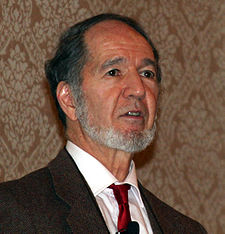
Jared Diamond
In some ways the film didn’t cover any new ground despite it being an interesting way of approaching the subject of the future of our present civilisation. But what was really worthwhile were the clips from three experts in their various fields. They were the author Jared Diamond, Daniel Gilbert who is Professor of Psychology at Havard, and Joseph Tainter also an author. There is much material around from these three gentlemen.
So I am going to start with Jared Diamond. WikiPedia has Jared’s details. The following is a video going back to 2003 which is no less relevant in terms of where we are in 2011. (If you want more of Jared’s ideas, just let me know and they will be included in a future Post.)
“I’ve set myself the modest task of trying to explain the broad pattern of human history, on all the continents, for the last 13,000 years. Why did history take such different evolutionary courses for peoples of different continents? This problem has fascinated me for a long time, but it’s now ripe for a new synthesis because of recent advances in many fields seemingly remote from history, including molecular biology, plant and animal genetics and biogeography, archaeology, and linguistics.”
JARED DIAMOND is Professor of Geography at the University of California, Los Angeles. Until recently he was Professor of Physiology at the UCLA School of Medicine. He is the author of the recently published Collapse: How Societies Choose to Fail or Succeed, and the Pulitzer Prize-winning author of the widely acclaimed Guns, Germs, and Steel: the Fates of Human Societies, which also is the winner of Britain’s 1998 Rhone-Poulenc Science Book Prize. (From here)