Category: History

Are today’s friends tomorrow’s enemies?

Sometimes looking down the other end of the telescope reveals more, much more!

Afghanistan - where is it leading?

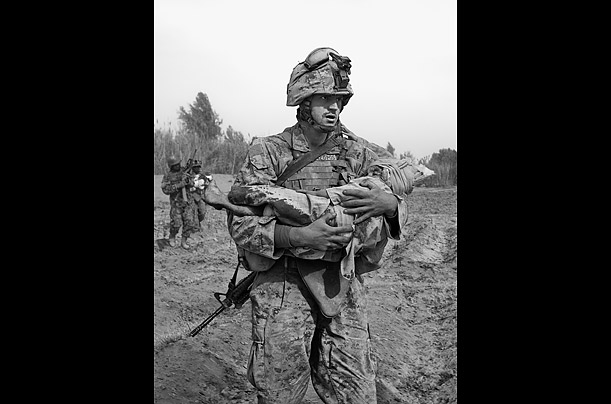
Now that coalition forces have just recently suffered their deadliest month yet in the conflict in Afghanistan, it now has become more crucial than ever to rethink the strategy of the United States and its allies in the region.  Currently, the cornerstone of this strategy rests upon two key factors – winning over the local peoples of the region, and training local forces to carry the burden when, and if, coalition forces leave the region.

At least on the exterior, these goals in Afghanistan do make some sense.  The only possible way to succeed via a continued military occupation of Afghanistan is to attain and bank on the support of the local peoples.  Also, if western powers are ever to withdraw from the region, local forces will have to be able to maintain whatever structure these forces leave in their wake.

However, while this strategy is not completely outlandish and does show some merit on the part of military strategists in that they are leaning more towards localized models that entail comprehension of diverse local factors, the question still must be asked – is this strategy actually possible to carry out and have the sought-after effects in the region?  Can the United States and its allies actually win over the peoples of Afghanistan and western Pakistan, and can these same powers possibly train forces that will remain peacekeepers in the years to come?

Despite the fact that I admire the intentions of the military’s current strategy in this region, I do not think that their plan is in fact possible.  It seems to me that rather we are fighting an unwinnable war to win over a people that we do not and cannot understand, and that by funding the Afghani security forces of today, we are inevitably funding our enemy of tomorrow, just as our nation has mistakenly done so many times in the past in this very region.

I cannot foretell the future.  Nor can anyone else.  However, I can comment on what is likely to occur.  And, in constructing such a model, two of the most important subjects to understand are history and praxeology, or human behavior.

An attempt by the United States to make Afghanistan a stable, western-friendly state is by no means a new happening.  The date of the beginnings of our intervention in the region could be debated, but a decent starting point is the late 1970’s when President Carter put forth the Carter Doctrine, which stated that the United States would defend its interests in the Middle East.

This doctrine just barely preceded the Soviet invasion of Afghanistan, and it was this invasion that saw the beginnings of American forces, at this point being mostly CIA and other such agencies, which were attempting to hamper the Soviet forces by funding the Afghani resistance.

Now, there is no room here for a history of American involvement in Afghanistan.  However, what must be noted is that during the 1980’s and 1990’s, a pattern developed in the Middle East – the United States would fund a group in the hope of combating some common enemy, and then in later years the group funded with American taxpayer money would inevitably end up turning against the United States.

A few prominent examples of this are Al Qaeda, who received $6 billion from the United States from 1989 to 1992, the Afghani Taliban, who was receiving US foreign aid up to the very minute American forces entered their country (and continues to receive US foreign aid through Pakistani backchannels) and Saddam Hussein, who received chemical weapons from the US during the Iraq-Iran War of the 1980’s, weapons he later used to kill American soldiers.

This, though briefly put, is the history, or the “what.”  So now must come an examination of the “why,” or the element of praxeology.  For obviously, our attempts to forge friendships in the region in the past have failed.  Our friends have become our enemies, in fact our worst enemies.

There are several possible explanations for why this occurs.  However, mine is quite simple – we do not understand these people, we do not understand this region, we do not understand Islamic culture, and, to be quite blunt, we never will.  It is not a wrongdoing by the West to look at the Middle East through Western eyes.  Rather, it is the only way that a westerner possibly can look at the Middle East.

On top of this extremely problematic misunderstanding of the Middle East by Western peoples then comes another layer of problems, these being the base problems of intervention in any context, amplified by the extreme foreignness and instability of the Middle East as a whole.  The consequences of intervention in any scenario are so unpredictable, so many, and so far-reaching that no one can possibly intervene and successfully fulfil their objectives without in the process creating a dozen new problems.  This is seen with the federal government intervening in states in their own country – how much greater then are the problems when intervening in a region like the Middle East?

All this now brings us back to the point on considering the future.  As I mentioned previously, I cannot say what the future holds.  However, I can make an educated guess.  And, based on analyses of both history and human behavior, it is safe to say that by both indirectly and directly funding the training of a new military force in Afghanistan, we very likely are creating our enemy of tomorrow.  For when these people that we are now training realize that the United States is not leaving, that they are not in fact a free state, that they have become a part of the American empire, and that if they want to live culturally independent of western influence they will have to forcibly remove Western elements within their borders, it seems extremely probable that they will do exactly that.

To say that we are creating a force that will do what we expect it to do in the future is a wish at best.  The reality is that we do not and cannot understand what is truly a foreign mindset, and our best course of action would be to distance ourselves from what is and will be for many years of region of perpetual conflict.

By Elliot Engstrom

Mau Piailug

A Pacific master navigator sails into the sunset

The Economist, for me, is one of the great newspapers of our time.  I have often referred to it on Learning from Dogs.

Last Saturday’s edition (July 24th – 30th 2010) carried a most beautiful obituary about Mau Piailug who in 1976 demonstrated that ancient seafarers could indeed have voyaged from Hawaii to Tahiti, a distance of some 2,500 miles, before the age of compasses, sextants or charts.  Here is an extract from that obituary (you may need to register to view it):

As a Micronesian he did not know the waters or the winds round Tahiti, far south-east. But he had an image of Tahiti in his head. He knew that if he aimed for that image, he would not get lost. And he never did. More than 2,000 miles out, a flock of small white terns skimmed past the Hokule’a heading for the still invisible Mataiva Atoll, next to Tahiti. Mau knew then that the voyage was almost over.

On that month-long trip he carried no compass, sextant or charts. He was not against modern instruments on principle. A compass could occasionally be useful in daylight; and, at least in old age, he wore a chunky watch. But Mau did not operate on latitude, longitude, angles, or mathematical calculations of any kind. He walked, and sailed, under an arching web of stars moving slowly east to west from their rising to their setting points, and knew them so well—more than 100 of them by name, and their associated stars by colour, light and habit—that he seemed to hold a whole cosmos in his head, with himself, determined, stocky and unassuming, at the nub of the celestial action.

Mau Piailug creating model of his canoe - Steve Thomas Photo

Here’s an extract from the website Suite101.com:

Mau Piailug was born in 1932 on Satawal, a tiny Pacific island no wider than a mile in Micronesia. When he was still a little baby, his grandfather put him in a tide pool as though he were putting him in a cradle. There the sea gently rocked him back and forth with the rhythm of the tides.

When Mau was six, his grandfather began to teach him about navigation. He started by telling him about the stars; the grandfather made a star compass out of a circle of coral rocks, and in the center he put a little canoe he had made of palm fronds. Then he explained how the stars rose in the sky and traveled from east to west.

As he grew older, Mau spent his evenings in the canoe house. There he asked the elders to teach him about navigation. In this way, and with his grandfather’s help, he learned the paths of more than a hundred stars. He also learned that when clouds covered the sky, he could use the direction of the ocean waves to guide the canoe. He could also follow the birds toward land when they headed home in the evening, and he studied the creatures of the sea, for in times of trouble they, too, could help him find land.

A film was made about Mau called The Last Navigator.  Do click on the link and read more about what Steve ‘learnt’ from Mau – here’s a closing taste:

It has been nearly fifteen years since I first met Piailug. In that time I have been blessed with relative fame and prosperity – an eventuality, by the way, that Piailug foretold to me. As I look back, I am impressed now by the twin qualities in the man that impressed me then: his generosity and his courage. Piailug took me into his family, assumed responsibility for my material and political well-being, and taught me his navigation without reserve. The knowledge he gave me about navigation is considered priceless in his culture. The knowledge he gave me about myself, I have come to see, is priceless as well. I often think of Piailug, and the fierceness and determination with which he defends a way of life he knows will die as the wise elders died. He has the courage to live and teach and voyage in spite of the certain knowledge that his struggle can never stem the tide of Westernization, which will change the character of his archipelago and may well eliminate the very role of the navigator as steward of his island’s sustenance and keeper of the flame of cultural knowledge.

Mau - asleep in the waves

A remarkable man.

By Paul Handover

Realism as an argument against war

Let’s be real about Realism.

Usually when I talk with supporters of America’s current wars in the Middle East, those who discover that I am vehemently opposed to an American presence in the region find me to be naïve.  In their minds, I just do not understand realism or how power politics actually functions.  My anti-war sentiments are the idealistic notions of an inexperienced youth who thinks that everyone should just get along.

The great irony here is that when followed to its logical end, the realist school of internationalist relations which so

The 'fog' of war.

many use to justify the American presence all over the world is in fact one of the greatest arguments against our current foreign policy.  I do not argue against America’s wars in Iraq, Afghanistan, and Pakistan because I think that we would all just get along if these wars ceased to happen.  I argue against these wars because I come from a perspective that sees the people we are fighting as human beings with the same base motivations as myself, and when these people see their livelihood threatened, they take the best course of action that they can find, which unfortunately often involves siding with whatever group holds the most regional power.

The great mistake in logic made by many advocates of an interventionist foreign policy is to merely think of the world in terms of the international stage.  Such people look at the world in terms of what Iran, Al Qaeda, Russia, China, OPEC, or other entities have done or might do, rather than considering actions based on their effects on individuals, and what these individuals are likely to do in response.

Read more of this post

Gulf Oil Spill – that feeling of déjà vu!

Rachel Maddow on how we have been here before.

Rachel M

(Thanks to Peter Nauman for this tip.)

Well done the Rachel Maddow on MSNBC-TV.

Watch this YouTube video of a recent show and run out of words!

By Paul Handover

Stonehenge – a place of healing

Incredible outcomes from the dig in 2008

Stonehenge is one of Britain’s most famous historical sites, deservedly so because Stonehenge was one of the most important places in ancient Europe.

Stonehenge
Professors Tim Darvill and Geoff Wainwright are the world-renowned archaeologists who believe they have cracked the conundrum of Stonehenge’s original purpose.

But evidence from a dig that was authorised in 2008 has shown that not only is Stonehenge a much older site of human habitation but that it’s purpose is altogether different to what has been assumed.  It was, indeed, a healing place, possibly the most important in Europe.

Those living in the UK can watch the Timewatch programme on the BBC iPlayer.  But for those living outside the UK then the following web site has reams of wonderfully fascinating information.  That site is here.

By Paul Handover

Radio Caroline

A real blast from the past!

Recently we rented the film, Pirate Radio, a somewhat ‘true’ story about the days of broadcasting rock and roll from a ship moored just outside British waters.  Here’s the official trailer of the film (somewhat glitzy as is the manner of Hollywood):

Anyone of my sort of vintage living in England during the 1960s will recall the fun and excitement of Radio Caroline, the name of the radio station that started up in 1964.

Here’s a good extract from the WikiPedia entry:

Radio Caroline is an English radio station founded in 1964 by Ronan O’Rahilly, to circumvent the tight hold the record companies had on the broadcast of popular music in the UK. It originally commenced transmissions as an offshore radio station broadcasting from a ship anchored in international waters off the coast of South East England. Originally unlicensed by any government, for the majority of its early life, it was labelled as a pirate radio station.

Radio Caroline

Amazingly, at its peak Radio Caroline had an audience of 23 million listeners.  In a very real way Radio Caroline was another symbol of what became known as the Swinging Sixties, a transformation period for post-war Britain.

Tony Blackburn was just one of many famous disk jockeys who started life out on Radio Caroline, with Tony being the first presenter of the BBC’s Radio 1 station, broadcasting popular music, when it came on air on the 30th September, 1967.

Tony Blackburn, some while ago!

Anyway, if you are nostalgic towards the ‘good’ old days of the sixties, do watch the film.

By Paul Handover

3 mins of pure nostalgia

Wonderful short film of the P-38 Lightning (thanks to Steve).

The Lockheed P-38 Lightning was a WWII American fighter aircraft. Equipped with droppable fuel tanks under its wings, the P-38 was used as a long-range escort fighter and saw action in every major combat area of the world.

A very versatile aircraft, the Lightning was also used for dive bombing, level bombing, ground strafing and photo reconnaissance missions.

The Lockheed team chose twin booms to accommodate the tail assembly, engines, and turbo superchargers, with a central nacelle for the pilot and armament. The nose was designed to carry two Browning .50 machine guns, two .30″ Brownings and an Oldsmobile 37 mm cannon.

The P-38 was the only American fighter aircraft in active production throughout the duration of American involvement in the war, from Pearl Harbor to VJ Day.
Music: Benny Goodman with Helen Forrest – ‘It’s Always You’.

The WikiPedia entry is here.

P-38 Lightning

By Paul Handover

Question for Elliot About Public Education

Hello Elliot!

I’d love to engage in a discussion with you — and interested others — about the appropriate role of government in education.

The Federalist Papers made it clear, to me at least, that our founding fathers believed that the government, our federal government in particular, should have nothing to do with educating the populace.

The government providing public education? How did THAT happen?

I realize it sounds a bit radical now, but I believe that any discussion of what is right and wrong about public education today must begin with a healthy debate about whether the federal government should be involved in public education at all.

Your thoughts?  Thanks!

by Sherry Jarrell

Arizona Immigration Law

Introduction

[As a newcomer to Arizona with only a couple of months experience of living in Payson, North-East of Phoenix, I have no right to pass comment on what has been big news both inside and outside the State.  I have observed that feelings run strong about illegal immigrants, with many reacting to the complicated process that I am going through applying for US residency by saying “It’s not fair”.  Not fair in the sense that they see so many Mexicans just walking over the long border that Arizona has with it’s neighbour to the south.

Thus this thoughtful Post from Gordon Coons is a chance for Learning from Dogs to air a point of view from someone who does have a right to an opinion. Ed.]

My fellow Americans, friends and relatives:

I am writing you to express my concerns over the recently passed law regarding immigration in my former state of Arizona.

As most (if not all) of you know, I lived in Arizona for 10 years, my children still live there and Linda and I have been living in Mexico. I mention this only in that it gives me a certain perspective on the events that have transpired recently.

The Border

The spate of marches and protests around the country would lead us to believe that the state of Arizona has completely lost its collective and legislative mind. The feeling is that enforcing such a law would lead to rampant profiling of Mexicans (and other Chicanos) who DO live in this country legally.

First of all, let’s examine WHY all of those Latinos want to come here. There are 2 basic, and yet profound, reasons:

  1. they want jobs and
  2. they want their children to be born here so that they become naturalized citizens and are the beneficiaries of all of our rights.

Do I blame them? Of course not….if I were in their shoes, I would want to come here as well.

I do take exception to the growing group of “banditos Mexicano” who are bent on illegal activities on both sides of the border.

Read the rest of this Post

The Big Alienation

Uncontrolled borders and Washington’s lack of self-control

[This article appeared in the online version of the Wall Street Journal on May 1st. Copyright exists with the WSJ and it is reproduced below without permission. However, it seems to me to be such an insightful commentary on present conditions that the decision was taken to publish it on Learning from Dogs. Ed.]

By Peggy Noonan

Peggy Noonan

We are at a remarkable moment. We have an open, 2,000-mile border to our south, and the entity with the power to enforce the law and impose safety and order will not do it. Wall Street collapsed, taking Main Street’s money with it, and the government can’t really figure out what to do about it because the government itself was deeply implicated in the crash, and both political parties are full of people whose political careers have been made possible by Wall Street contributions. Meanwhile we pass huge laws, bills so comprehensive, omnibus and transformative that no one knows what’s in them and no one—literally, no one—knows how exactly they will be executed or interpreted. Citizens search for new laws online, pore over them at night, and come away knowing no more than they did before they typed “dot-gov.”

It is not that no one’s in control. Washington is full of people who insist they’re in control and who go to great lengths to display their power. It’s that no one takes responsibility and authority. Washington daily delivers to the people two stark and utterly conflicting messages: “We control everything” and “You’re on your own.”

All this contributes to a deep and growing alienation between the people of America and the government of America in Washington.

This is not the old, conservative and long-lampooned “I don’t trust gummint” attitude of the 1950s, ’60s and ’70s. It’s something new, or rather something so much more broadly and fully evolved that it constitutes something new. The right never trusted the government, but now the middle doesn’t. I asked a campaigner for Hillary Clinton recently where her sturdy, pantsuited supporters had gone. They didn’t seem part of the Obama brigades. “Some of them are at the tea party,” she said.

None of this happened overnight. It is, most recently, the result of two wars that were supposed to be cakewalks, Katrina, the crash, and the phenomenon of a federal government that seemed less and less competent attempting to do more and more by passing bigger and bigger laws.

Add to this states on the verge of bankruptcy, the looming debt crisis of the federal government, the likelihood of ever-rising taxes. Shake it all together, and you have the makings of the big alienation. Alienation is often followed by full-blown antagonism, and antagonism by breakage.

Which brings us to Arizona and its much-criticized attempt to institute a law aimed at controlling its own border with Mexico. It is doing this because the federal

The US-Mexico border

government won’t, and because Arizonans have a crisis on their hands, areas on the border where criminal behavior flourishes, where there have been kidnappings, murders and gang violence. If the law is abusive, it will be determined quickly enough, in the courts. In keeping with recent tradition, they were reading parts of the law aloud on cable the other night, with bright and sincere people completely disagreeing on the meaning of the words they were reading. No one knows how the law will be executed or interpreted.

Every state and region has its own facts and experience. In New York, legal and illegal immigrants keep the city running: They work hard jobs with brutal hours, rip off no one on Wall Street, and do not crash the economy. They are generally considered among the good guys. I’m not sure New Yorkers can fairly judge the situation in Arizona, nor Arizonans the situation in New York.

But the larger point is that Arizona is moving forward because the government in Washington has completely abdicated its responsibility. For 10 years—at least—through two administrations, Washington deliberately did nothing to ease the crisis on the borders because politicians calculated that an air of mounting crisis would spur mounting support for what Washington thought was appropriate reform—i.e., reform that would help the Democratic and Republican parties.

Both parties resemble Gordon Brown, who is about to lose the prime ministership of Britain. On the campaign trail this week, he was famously questioned by a party voter about his stand on immigration. He gave her the verbal runaround, all boilerplate and shrugs, and later complained to an aide, on an open mic, that he’d been forced into conversation with that “bigoted woman.”

He really thought she was a bigot. Because she asked about immigration. Which is, to him, a sign of at least latent racism.

The establishments of the American political parties, and the media, are full of people who think concern about illegal immigration is a mark of racism. If you were Freud you might say, “How odd that’s where their minds so quickly go, how strange they’re so eager to point an accusing finger. Could they be projecting onto others their own, heavily defended-against inner emotions?” But let’s not do Freud, he’s too interesting. Maybe they’re just smug and sanctimonious.

The American president has the power to control America’s borders if he wants to, but George W. Bush and Barack Obama did not and do not want to, and for the same reason, and we all know what it is. The fastest-growing demographic in America is the Hispanic vote, and if either party cracks down on illegal immigration, it risks losing that vote for generations.

But while the Democrats worry about the prospects of the Democrats and the Republicans about the well-being of the Republicans, who worries about America?

No one. Which the American people have noticed, and which adds to the dangerous alienation—actually it’s at the heart of the alienation—of the age.

In the past four years, I have argued in this space that nothing can or should be done, no new federal law passed, until the border itself is secure. That is the predicate, the commonsense first step. Once existing laws are enforced and the border made peaceful, everyone in the country will be able to breathe easier and consider, without an air of clamor and crisis, what should be done next. What might that be? How about relax, see where we are, and absorb. Pass a small, clear law—say, one granting citizenship to all who serve two years in the armed forces—and then go have a Coke. Not everything has to be settled right away. Only controlling the border has to be settled right away.

Instead, our national establishments deliberately allow the crisis to grow and fester, ignoring public unrest and amusing themselves by damning anyone’s attempt to deal with the problem they fear to address.

Why does the federal government do this? Because so many within it are stupid and unimaginative and don’t trust the American people. Which of course the American people have noticed.

If the federal government and our political parties were imaginative, they would understand that it is actually in their interests to restore peace and order to the border. It would be a way of demonstrating that our government is still capable of functioning, that it is still to some degree connected to the people’s will, that it has the broader interests of the country in mind.

The American people fear they are losing their place and authority in the daily, unwinding drama of American history. They feel increasingly alienated from their government. And alienation, again, is often followed by deep animosity, and animosity by the breaking up of things. If our leaders were farsighted not only for themselves but for the country, they would fix the border.

Peggy Noonan is a columnist for The Wall Street Journal whose work appears weekly in the Journal’s Weekend Edition and on OpinionJournal.com.

She is the author of eight books on American politics and culture. The most recent, “Patriotic Grace,” was published in October 2008. Her first book, the bestseller “What I Saw at the Revolution: A Political Life in the Reagan Era,” was published in 1990.

She was a special assistant to the president in the White House of Ronald Reagan. Before that she was a producer at CBS News in New York. In 1978 and 1979 she was an adjunct professor of journalism at New York University.