Category: History

What part of the word ‘no’ are you having trouble with?

So long overdue to saying ‘no’ to more drilling for oil and gas!

Just five days ago, I republished an essay from Tom Engelhardt of TomDispatch fame called The more it changes, the more it’s the same thing.  Despite Tom’s permission for me to republish any of the essays that appear on TomDispatch, I do try to be very selective and not republish too often.

However, what was published by Tom on the 18th, just three days ago, is so powerful that it requires the widest readership possible.  That’s why Tomgram: Ellen Cantarow, “Little Revolution,” Big Fracking Consequences is being republished on Learning from Dogs today and tomorrow.  The reason I have split the essay into two parts is because I want to add some other material. Tom’s publication is in one part so if you can’t wait for my sequel tomorrow, then click here.

Here’s something that I want to draw your attention to:

If you’re 27 or younger, you’ve never experienced a colder-than-average month

By Philip Bump
This image sums up 2012, temperature-wise.

Nowhere on the surface of the planet have we seen any record cold temperatures over the course of the year so far. Every land surface in the world saw warmer-than-average temperatures except Alaska and the eastern tip of Russia. The continental United States has been blanketed with record warmth — and the seas just off the East Coast have been much warmer than average, for which Sandy sends her thanks.
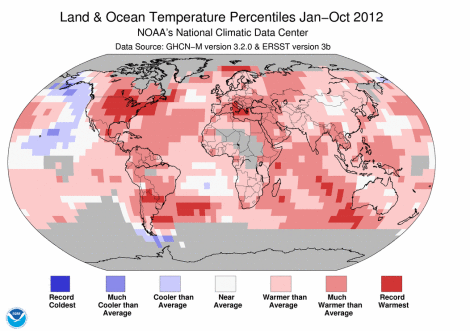
I saw this on the Grist website yesterday.  Here are the next couple of paragraphs from that Grist article:

The National Oceanic and Atmospheric Administration summarizes October 2012:

The average temperature across land and ocean surfaces during October was 14.63°C (58.23°F). This is 0.63°C (1.13°F) above the 20th century average and ties with 2008 as the fifth warmest October on record. The record warmest October occurred in 2003 and the record coldest October occurred in 1912. This is the 332nd consecutive month with an above-average temperature.

If you were born in or after April 1985, (i.e. now 27 years old or younger), you have never lived through a month that was colder than average. That’s beyond astonishing.

You might want to go to the NOAA State of the Climate report just issued to read more.  Indeed, go to read this: (my emboldening)

The average temperature across land and ocean surfaces during October was 14.63°C (58.23°F). This is 0.63°C (1.13°F) above the 20th century average and ties with 2008 as the fifth warmest October on record. The record warmest October occurred in 2003 and the record coldest October occurred in 1912. This is the 332nd consecutive month with an above-average temperature. The last below-average month was February 1985. The last October with a below-average temperature was 1976. The Northern Hemisphere ranked as the seventh warmest October on record, while the Southern Hemisphere ranked as second warmest, behind 1997.

So with all that in mind, here’s the first half of Ellen Cantarow‘s essay including the ‘must-read’ introduction from Nick Turse.

oooOOOooo

Tomgram: Ellen Cantarow, “Little Revolution,” Big Fracking Consequences

Posted by Ellen Cantarow at 5:59pm, November 18, 2012.
Follow TomDispatch on Twitter @TomDispatch.

[Note for TomDispatch Readers: Back in May 2005, this site posted “Against Discouragement,” a graduation speech by the late, great Howard Zinn.  Though it hardly needs be said, it was, of course, inspiring.  I also interviewed him for TomDispatch and hewrote for the site.  A last book of his has just been published, Howard Zinn Speaks: Collected Speeches (1963-2009).  How could I not recommend it?  After all, he still speaks to us all. 

Also a reminder for TD readers: we don’t encourage you to become Amazon customers, but if you already are, and you go to that site via a TomDispatch book link like the one in the previous paragraph (or any book cover image link on the site), we get a modest cut of anything you buy, book or otherwise.  It’s a way to support this site at absolutely no cost to you!  Tom]

To say the Central Intelligence Agency has had an uneven record over its 65 years would be kind.  It found early “success” in plotting to overthrow the legitimate governments of Iran and Guatemala (even if it did fail to foresee the Soviet Union going nuclear in 1949).  Then, it had a troubled adolescence.  The Bay of Pigs.  Vietnam.  Laos.  Spying on Americans.  As the Agency matured, it managed to miss all signs of the oncoming Iranian revolution — the natural endpoint of its glorious 1953 coup that brought the Shah to power — and the Soviet invasion of Afghanistan.  (It did, however, manage to arm America’s future enemies there, sowing the seeds of 9/11.)  Then there was the Reagan era Iran-Contra affair, the failure to notice the fall of the Berlin Wall until it was on CNN, the WMD “intelligence” of the Iraqi leaker codenamed “Curveball,” the Iraq debacle that followed, and…

Well, you get the picture.  Recently, however, things seemed to be looking up.  The most popular general in a generation or two, a soldier-scholar-superman who could do no wrong, became its director.  Just before that, the Agency helped take out America’s public enemy number one in a daring night raid about which Hollywood is soon to release a celebratory movie.

But just as things were looking up, the rock star general was caught with his pants down, resigning in disgrace after an extramarital affair became public.  That titillating development overshadowed another more serious one: a cry for help about a looming threat from the Agency and its brethren in the American intelligence community (IC).  In late October, the National Research Council was toissue a report commissioned by the CIA and the IC.  Superstorm Sandy intervened and so it was only recently released, aptly titled “Climate and Social Stress: Implications for Security Analysis.” And what a dire picture it painted: security analysts should, it explained “expect climate surprises in the coming decade… and for them to become progressively more serious and more frequent thereafter, most likely at an accelerating rate… It is prudent to expect that over the course of a decade some climate events… will produce consequences that exceed the capacity of the affected societies or global systems to manage and that have global security implications serious enough to compel international response.”

Think failed states, water wars, forced mass migrations, famine, drought, and epidemics that will spill across borders, overwhelm national and international mitigation efforts, and leave the United States scrambling to provide disaster response, humanitarian relief, or being drawn into new conflicts.  That’s bad news for everyone, including the intelligence community.  Even worse, the 206-page report calls for more study, more analysis, and more action — and yet none of that is likely to happen without the assent of Congress.

Keep in mind that Republican members of Congress opposed even the creation of a CIA climate change center and tried starve it of funding while, as Kate Sheppard of Mother Jones noted last year, “Republican lawmakers — including the chairman and ranking member of the House and Senate intelligence committees, respectively — have also expressed skepticism about the CIA’s climate work.”

In other words, add Republicans to the list of those who, like Cuban and Laotian communists of yore, have worked to thwart the Agency.  And cross the CIA off any list of potential environmental saviors.  In fact, when it comes to the health of this planet, saviors seem distinctly in short supply.  As TomDispatch regular Ellen Cantarow reports from the frontlines of a full-scale climate conflict, the only hope for the environment may come from unlikely groups of people in the unlikeliest of places fighting a shadow war more important than any ever waged by the CIA. Nick Turse

Frack Fight
A Secret War of Activists — With the World in the Balance
By Ellen Cantarow

There’s a war going on that you know nothing about between a coalition of great powers and a small insurgent movement.  It’s a secret war being waged in the shadows while you go about your everyday life.

In the end, this conflict may matter more than those in Iraq and Afghanistan ever did.  And yet it’s taking place far from newspaper front pages and with hardly a notice on the nightly news.  Nor is it being fought in Yemen or Pakistan or Somalia, but in small hamlets in upstate New York.  There, a loose network of activists is waging a guerrilla campaign not with improvised explosive devices or rocket-propelled grenades, but with zoning ordinances and petitions.

The weaponry may be humdrum, but the stakes couldn’t be higher. Ultimately, the fate of the planet may hang in the balance.

All summer long, the climate-change nightmares came on fast and furious. Once-fertile swathes of American heartland baked into an aridity reminiscent of sub-Saharan Africa. Hundreds of thousands of fish dead in overheated streams. Six million acres in the West consumed by wildfires.  In September, a report commissioned by 20 governments predicted that as many as 100 million people across the world could die by 2030 if fossil-fuel consumption isn’t reduced.  And all of this was before superstorm Sandy wreaked havoc on the New York metropolitan area and the Jersey shore.

Washington’s leadership, when it comes to climate change, is already mired in failure. President Obama permitted oil giant BP to resume drilling in the Gulf of Mexico, while Shell was allowed to begin drilling tests in the Chukchi Sea off Alaska.  At the moment, the best hope for placing restraints on climate change lies with grassroots movements.

In January, I chronicled upstate New York’s homegrown resistance to high-volume horizontal hydraulic fracturing, an extreme-energy technology that extracts methane (“natural gas”) from the Earth’s deepest regions.  Since then, local opposition has continued to face off against the energy industry and state government in a way that may set the tone for the rest of the country in the decades ahead.  In small hamlets and tiny towns you’ve never heard of, grassroots activists are making a stand in what could be the beginning of a final showdown for Earth’s future.

oooOOOooo

The second part of Ellen’s essay will be published tomorrow.

Ellen Cantarow first wrote from Israel and the West Bank in 1979. A TomDispatch regular, her writing has been published in The Village Voice, Grand Street, Mother Jones, Alternet, Counterpunch, and ZNet, and anthologized by the South End Press. She is also lead author and general editor of an oral-history trilogy, Moving the Mountain: Women Working for Social Change, published in 1981 by The Feminist Press/McGraw-Hill, widely anthologized, and still in print.

Follow TomDispatch on Twitter @TomDispatch and join us on Facebook.  Check out the newest Dispatch book, Nick Turse’s The Changing Face of Empire: Special Ops, Drones, Proxy Fighters, Secret Bases, and Cyberwarfare.

Copyright 2012 Ellen Cantarow

The more it changes, the more it’s the same thing.

Tom Engelhardt’s essay on the recent US Presidential election.

Introduction

Regular readers will be aware that republishing essay’s from Tom Engelhardt’s superb blog site TomDispatch has been a regular event on Learning from Dogs.  Again, readers will surely be aware that shortly after this blog got under way and I requested permission to republish a TomDispatch essay, Tom not only promptly gave me permission but added that I was free to republish any others that caught my fancy.  That was very generous and, by way of example, here are links to the last three that have appeared here.  There was the essay on Ernest Callenbach in May, Magic and the Machine in June, and The West in flames at the end of July.

So on to this essay that was recently published by Tom and is called The Meaning of a Do-Nothing Election.  As someone who is not entitled to vote in American elections and is far from understanding local cultures let alone American politics, reading an essay like this is deeply educational and I trust is for you as well.  The full essay including the introduction now follows:

oooOOOooo

[Note for TomDispatch Readers: Recently, I went back to a piece I wrote just days after the 2008 election titled “Don’t Let Barack Obama Break Your Heart.”  It reminded me that sometimes a good deal about our American future can be mined from the post-election moment.  So today, I’ve tried my hand at it again.  I’ll have to check it out in November 2016.  In the meantime, if you want to read more of my writings about the years in between, pick up a copy of The United States of Fear — or for $75 that will help this website stay afloat, you can get a signed, personalized copy (with my appreciation) via our donation page. Tom]

The Mandate of Hell 
How Not to Change the World 
By Tom Engelhardt

In the fall of 1948, Harry Truman barnstormed the country by train, repeatedly bashing a “do-nothing Congress,” and so snatched victory from the jaws of defeat in that year’s presidential campaign.  This year, neither presidential candidate focused on blasting a do-nothing Congress or, in Obama’s case, “Republican obstructionism,” demanding that the voters give them a legislative body that would mean an actual mandate for change.

We now know the results of such a campaign and, after all the tumult and the nation’s first $6 billion election, they couldn’t be more familiar.  Only days later, you can watch a remarkably recognizable cast of characters from the reelected president and Speaker of the House John Boehner to the massed pundits of the mainstream media picking up the pages of a well-thumbed script.

Will it be bipartisanship or the fiscal cliff?  Are we going to raise new revenues via tax reform or raise tax rates for the wealthiest Americans?  Will the president make up with Israeli Prime Minister Benjamin Netanyahu or not?  Will it be war or something less with Iran?  And so on and so forth.  It’s the moment the phrase déjà vu all over again was made for.

A Hell of Our Own Making

When a new Chinese dynasty came to power, it was said that it had received “the mandate of heaven.”  We’ve just passed through an election campaign that, while the noisiest in memory, was enveloped in the deepest of silences on issues that truly matter for the American future.  Out of it, a “mandate” has indeed been bestowed not just on Barack Obama, but on Washington, where a Republican House of Representatives, far less triumphant but no less fully in the saddle than the president, faces media reports that its moment is past, that its members are part of “the biggest loser demographic of the election,” and that its party — lacking the support of young people, single women, those with no religious affiliation, Hispanics, African Americans, and Asian Americans — is heading for the trash barrel of history.

If true, that does sound like a mandate for something, sooner or later — assuming you happen to have years of demographic patience.  In the meantime, there will be a lot more talk about how the Republicans need to reorient their party and about a possible “civil war” over its future.  And while we’re at it, bet on one thing: we’re also going to hear a ton more talk about how much deeply unhappy Americans — the very ones who just reinstalled a government that’s a senatorial blinkaway from the previous version of the same — really, really want everyone to make nice and work together.

But isn’t it time to cut the b.s., turn off those talking heads, and ask ourselves: What does election 2012 really mean for us and for this country?

Let’s start with one basic reality: we’ve just experienced a do-nothing election that represents a mandate from a special American kind of hell. (Admittedly, Mitt Romney’s election, which would have put the House of Representatives and Big Energy in the Oval Office, undoubtedly represented a more venal circle of that fiery establishment.)

That, in turn, ensures two different but related outcomes, both little discussed during the campaign: continuing gridlock on almost any issue that truly matters at home and a continuing damn-the-Hellfire-missiles, full-speed-ahead permanent state of war abroad (along with yet more militarization of the “homeland”).  The only winners — and don’t believe the outcries you’re hearing about sequestration “doom” for the military — are likely to be the national security complex, the Pentagon, and in a country where income inequality has long been on the rise, the wealthy.  Yes, in the particular circle of hell to which we’re consigned, it’s likely to remain springtime for billionaires and giant weapons manufacturers from 2012 to 2016.

How do we know that gridlock and a permanent state of war are the only two paths open to the people’s representatives, that Washington is quite so constrained?  Because we’ve just voted in a near-rerun of the years 2009-2012, which means that the power to make domestic policy (except at the edges) will continue to slowly seep out of the White House, while the power of the president and the national security state to further abridge evaporating liberties at home and make war abroad will only be enhanced.  The result is likely to be stasis for the globe’s last superpower at a moment when much of the world — and the planet itself — is in the process of tumultuous transformation.

Here are things not to expect: a major move to rebuild the country’s tattered infrastructure; the genuine downsizing of the American global military mission; any significant attempt to come to grips with a changing planet and global warming; and the mobilization of a younger generation that, as Hurricane Sandy showed, is ready to give much and do much to help others in need, but in the next four years will never be called to the colors.

In other words, this country is stuck in a hell of its own making that passes for everyday life at a moment when the world, for better and/or worse, is coming unstuck in all sorts of ways.

Fiddling While the Planet Burns

The United States remains a big, powerful, wealthy country that is slowly hollowing out, breaking down.  Meanwhile, on planet Earth, the global economy is up for grabs.  Another meltdown is possible, as the European, Chinese, Japanese, and Indian economies all continue to take hits.  Power relations have been changing rapidly, from the rise of Brazil in what was once Washington’s “backyard” to the Chinese miracle (and the military muscle that goes with it).  A largely American system that long helped keep the Greater Middle East, the energy heartlands of the globe, under grim, autocratic control is unraveling with unknown consequences.  Above all, from increasingly iceless Arctic waters to ever more extreme weather, rising sea levels, and the acidification of the oceans, this planet is undergoing a remarkably rapid transformation based largely on the release into the atmosphere of carbon dioxide from the burning of fossil fuels.

Other than a few curious Republican comparisons of an American economy under the Democrats to “Greece,” a near obsessive focus on the death of Ambassador J. Christopher Stephens and three other Americans in Libya, and various denunciations of China as a currency manipulator, not a single one of these matters came up in any meaningful way in the election campaign.  In other words, election 2012 boiled down to little more than a massive case of Washington-style denial.  And don’t for a second think that that’s just an artifact of election year artifice.

Take climate change, which like the Arab Spring blasted its way into our unprepared midst in 2011-2012.  There was the wildfire season of all seasons in a parching Southwest and West, a devastating drought that still hasn’t fully lifted in the Midwestern breadbasket (or corncob) of the country, and a seemingly endless summer that may make this the hottest year on record for the continental United States.  It was staggering and, if opinion polls are to be believed, noted by increasing numbers of concerned Americans who could literally feel the world changing around them.

And yet none of this made global warming an election issue.  Month after month, it was The Great Unmentionable.  The silence of emboldened Republicans plugging their drill-baby-drill and lay-those-pipelines policies and of cowed Democrats who convinced themselves that the issue was a no-win zone for the president proved deafening — until the campaign’s last days.  It was then, of course, that Hurricane Sandy, the “Frankenstorm,” swept through my town and devastated New Jersey.  It provided the extreme weather coup de grâce of 2012.  (And yes, there’s little doubt that climate-change-induced rising sea levels contributed to its fury.)  Superstorm Sandy also revealed just how unprepared the U.S. infrastructure is for predicted climate-change events.

The extremity of Sandy and its 14-foot storm surge was stunning enough that global warming was suddenly forced out of the closet.  It made magazine covers and gubernatorial press conferences.  There was even a last-minute Romney vs. Sandy web ad (“Tell Mitt Romney: Climate Change Isn’t a Joke”), and in his victory statement on election night, President Obama did manage to briefly acknowledge the changed post-Sandy moment, saying, “We want our children to live in an America that isn’t… threatened by the destructive power of a warming planet.”

Still, in just about every sense that matters in Washington, real planning for climate change is likely to remain off that table on which all “options” always sit.  Expect the president to offer Shell further support for drilling in Arctic waters, expect a new push for the Keystone XL pipeline which will transport some of the “dirtiest” energy from Canada to the Gulf of Mexico, and so on.

Don’t count on anyone doing the obvious: launching the sort of Apollo-style R&D program that once got us to the moon and might speed the U.S. and the planet toward an alternative energy economy, or investing real money in the sort of mitigation projects for the new weather paradigm that might prevent a coastal city like New York — or even Washington — from turning into an uninhabitable disaster zone in some not so distant future.

Climate science is certainly complex and filled with unknowns.  As it happens, many of those unknowns increasingly seem focused on two questions: How extreme and how quickly?  It’s suggested that sea levels are already rising faster than predicted and some recent scientific studies indicate that, by century’s end, the planet’s average temperature could rise by up to eight degrees Fahrenheit, an almost unimaginable disaster for humanity.

Whatever the unknowns, certain things are obvious enough.  Here, for instance, is a simple reality: any set of attempts, already ongoing, to make North America the “Saudi Arabia” of the twenty-first century in energy production are guaranteed to be a climate-change disaster.  Unfortunately, this election ensures once again that, no matter what the planetary realities or the actual needs of this country, no significant money will flow into alteration or mitigation projects.

Among the truly bizarre aspects of this situation, one stands out: thanks in part to a long-term climate-change-denial campaign, well-funded by the giant energy companies, the subject has become “political.”  The idea that it is a liberal or left-wing “issue,” rather than a global reality that must be dealt with, is now deeply embedded.  And yet there may never have been a more basic conservative issue (at least in the older sense of the term): the preserving, above all else, of what is already most valuable in our lives.  And what qualifies more for that than the health of the planet on which humanity “grew up”?

The phrase “fiddling while Rome burns” seems to catch something of the essence of this post-election moment — and it has special meaning when the fiddlers turn out to be slipping matches to the arsonists.

Mobilize Yourself

Just a week after the election, the Republican Party is already gearing up to produce a new, better-looking, more “diverse,” better-marketed version of itself for the 2014 and 2016 Hispanic and Asian American “markets.”  The Democratic Party is no doubt following suit.  In American politics these days, presidential elections last at least four years.  The first poll for Iowa 2016 is already out.  (Hillary’s way ahead).  Elections are the big business, sometimes just about the only significant political business Washington focuses on with any success, aided and abetted by the media.  So look forward to the $7 billion or $8 billion or $9 billion elections to come and the ever-greater hoopla surrounding them.

But stop waiting for change, “big” or otherwise, to come from Washington.  It won’t.  Don’t misunderstand me: as the residents of the Midwestern drought zone and the Jersey shore now know all too well, change is coming, like it or not.  If, however, you want this country to be something other than its instigator and its victim, if you want the U.S. to engage a world of danger (and also of opportunity), you’d better call yourself and your friends and neighbors to the colors.  Don’t wait for a Washington focused on its own well-being in 2014 or 2016.  Mobilize yourself.  It’s time to occupy this country before it’s blown away in a storm.

Tom Engelhardt, co-founder of the American Empire Project and author of The United States of Fear as well as The End of Victory Culture, his history of the Cold War, runs the Nation Institute’s TomDispatch.com. His latest book, co-authored with Nick Turse, is Terminator Planet: The First History of Drone Warfare, 2001-2050.  You can see his recent interview with Bill Moyers on supersized politics and election 2012 by clicking here.

Follow TomDispatch on Twitter @TomDispatch and join us on Facebook.  Check out the newest Dispatch book, Nick Turse’s The Changing Face of Empire: Special Ops, Drones, Proxy Fighters, Secret Bases, and Cyberwarfare.

Copyright 2012 Tom Engelhardt

oooOOOooo

So what made me select the heading?  Well, it’s the English translation of the well-known French saying, “plus ça change, plus c’est la même chose” that translates to “The more things change, the more they stay the same.”  As Wikipedia tells us, “An epigram by Jean-Baptiste Alphonse Karr in the January 1849 issue of his journal Les Guêpes (“The Wasps”). Literally “The more it changes, the more it’s the same thing.”  Seems to pick up Tom’s theme very nicely.

The power of consequences

That unwritten law of the power of unintended consequences strikes again.

Before moving on to today’s post, just wanted to say that our recent move to Merlin, Oregon continues to take up huge (and enjoyable) demands on our time so the opportunity to write lengthy posts on Learning from Dogs is still some way off.  Having said that with the quality of analysis that is available from others, some readers may prefer it as it currently is!

There is no better example of this than the post that follows.  It is from the blog site of Peter Sinclair ‘Climate Crocks‘.  As the ‘About‘ page says,

Peter Sinclair is a long time advocate of environmental awareness and energy alternatives. An award winning graphic artist, illustrator, and animator, Mr. Sinclair runs Greenman Studio from his home in Midland, MI.

Mr. Sinclair’s syndicated cartoons have appeared worldwide, and his work has been profiled in numerous publications, including the New York Times.  He is the producer of the YouTube series, “Climate Denial Crock of the Week”.

A couple of days ago, Peter published a post called, ““La La La I Can’t Hear You” Comes Home to Haunt GOP, in the Election, and on Climate”. I read it with interest and asked Peter if I might republish it.  In a matter of moments, I received a reply giving me such permission; here it is.

oooOOOooo

When Al Jazeera and The American Conservative are in agreement that you have a problem, you probably have a problem.

The American Conservative:

But the problem wasn’t just that conservative media gave Romney supporters bad information. The people in conservative media also seem to have been fully taken in by the idea that Romney would win and would do so in decisive fashion, and the campaign came to believe its own propaganda, too. As York notes, Romney didn’t have a prepared concession speech. It apparently never occurred to his campaign that he would lose. That’s not so remarkable by itself, but it is just one part of the overall pattern of the Romney campaign and the conservative movement’s reaction to Obama. Romney spent years running against a fantasy record and campaigning on a series of gross distortions and falsehoods, and so it shouldn’t be too surprising that his campaign and his conservative media boosters didn’t have the firmest grip on political reality.

Al Jazeera:

After the election, a number of different people tweeted about a rather obvious connection – how the same people who didn’t believe the polls don’t believe global warming, either. There’s a further correlation here: On the polling side, the supposedly most liberally-biased pollsters actually came closest to hitting the mark, both in the Fordham analysis of national polls and a more sophisticated analysis of state polls by Emory political scientist Drew Linzer at his Votamatic website.

On the global warming side, a new study comparing climate models finds that those predicting the largest climate impacts by 2100 are the most accurate in modelling climate change that’s already occurred – specifically, humidity levels related to cloud formation. In short, the reality being denied in both cases is even worse than it first appears, so attempts to “compromise” or give conservatives “the benefit of the doubt” actually lead us further astray (since I first wrote this, David Roberts of Grist has written an excellent comparison of the twin delusions).

But there is more than just a correlation here. There is a common causal factor involved: Conservatives, trusting their guts, have created their own separate reality, with their own authorities, and their reasoning dominated by ideology, where certain sorts of facts simply cannot intrude. Election day was one of those rare moments in which the bubble they live inside collapsed.

Dave Roberts in Grist:

In the face of model projections like Silver’s, Jonah Goldberg said that “the soul … is not so easily number-crunched.” David Brooks warnedthat “experts with fancy computer models are terrible at predicting human behavior.” Joe Scarborough said “anybody that thinks that this race is anything but a tossup right now is such an ideologue.” Peggy Noonan said that “the vibrations are right” for a Romney win. All sorts of conservative pundits were convinced the Romney campaign just felt like a winner.

–

Empiricism won. It didn’t win because it’s a truer faith or a superior ideology. It won because it works. It is the best way humans have figured out to set aside their perceptual limitations and cognitive shortcomings, to get a clear view of what’s happening and what’s to come.

As it happens, there’s another issue in American politics where empiricists are forecasting the future and being ignored. Here’s what the Nate Silvers of climate science are up to:

Looking back at 10 years of atmospheric humidity data from NASA satellites, [John Fasullo and Kevin Trenberth of the National Center for Atmospheric Research] examined two dozen of the world’s most sophisticated climate simulations. They found the simulations that most closely matched actual humidity measurements were also the ones that predicted the most extreme global warming.

In other words, by using real data, the scientists picked simulation winners and losers.

“The models at the higher end of temperature predictions uniformly did a better job,” Fasullo said. The simulations that fared worse — the ones predicting smaller temperature rises — “should be outright discounted,” he added.

The Washington Post spells out what that means:

That means the world could be in for a devastating increase of about eight degrees Fahrenheit by 2100, resulting in drastically higher seas, disappearing coastlines and more severe droughts, floods and other destructive weather.

Just reread that last paragraph a couple of times – and make a promise to yourself, and those loved ones around you, to make a positive difference starting now.  And subscribe to Peter’s blogsite!

Deeper insights into who we are.

Two fascinating perspectives.

1. A conversation with Charles Taylor – THE 2008 KYOTO PRIZE

Video Messages from Dr. Charles MargraveTaylor, the Laureate of 2008 KYOTO PRIZE, Arts and Philosophy. “Feelings on receiving the Kyoto Prize” “What philosophers can do for society” “Future interest and theme”(2008/11/11)

Wikipedia describes Charles Taylor thus,

Charles Margrave Taylor, CC GOQ FRSC (born November 5, 1931) is a Canadian philosopher from Montreal, Quebec best known for his contributions to political philosophy, the philosophy of social science, and intellectual history. This work has earned him the prestigious Kyoto Prize and the Templeton Prize, in addition to widespread esteem among philosophers. In 2007, Taylor served with Gérard Bouchard on the Bouchard-Taylor Commission on Reasonable Accommodation with regard to cultural differences in the province of Quebec. Taylor currently teaches at McGill University in the Department of Religious Studies. He is a practicing Roman Catholic.

There is also a fuller biography presented here.

2. How we see circumstances is so much more important – Rory Sutherland on Perspectives.

The circumstances of our lives may matter less than how we see them, says Rory Sutherland. At TEDxAthens, he makes a compelling case for how reframing is the key to happiness.

The TED profile of Rory Sutherland explains that:

From unlikely beginnings as a classics teacher to his current job as Vice Chairman of Ogilvy Group, Rory Sutherland has created his own brand of the Cinderella story. He joined Ogilvy & Mather’s planning department in 1988, and became a junior copywriter, working on Microsoft’s account in its pre-Windows days. An early fan of the Internet, he was among the first in the traditional ad world to see the potential in these relatively unknown technologies.

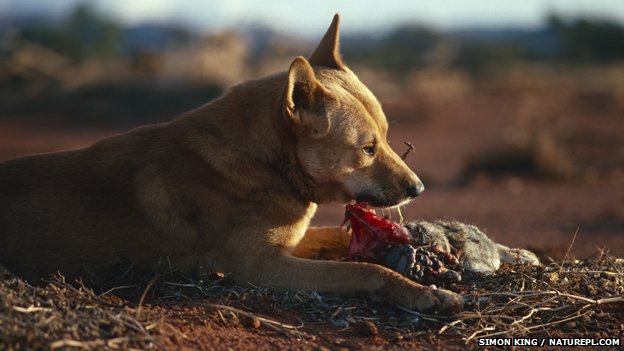
Gnawing on a bone!

Dogs’ evolution shows why they ‘love’ gnawing on bones.

This is the second article on the BBC Nature website following yesterday’s item about why dogs enjoy a healthy breakfast.

oooOOOooo

Dogs’ evolution shows why they ‘love’ gnawing on bones

By Victoria Gill
Science reporter, BBC Nature, Ottawa, Canada

Social living drove dogs to evolve the “tools” for chewing bones, scientists say

Scientists say they have discovered why dogs love to eat meat and bones.

Ancient canines adopted pack-living about eight million years ago, to hunt larger prey, according to researchers.

The resulting evolution of their jaws gradually turned the ancestors of modern wolves, and ultimately our own pets, into “hypercarnivores”.

Dr Joao Munoz-Doran presented the findings at the First Joint Congress for Evolutionary Biology in Ottawa, Canada.

He and his colleagues from the National University of Colombia have created a canine “family tree”, piecing together the relationships between each of the more than 300 dog species.

“We compared species that have very different diets,” Dr Munoz-Doran explained to BBC Nature. “So we classified them as carnivores, hypercarnivores [animals that eat more than 70% meat] and omnivores [animals that eat meat and vegetation].”

The ancestors of modern wolves belong to this hypercarnivorous group.

The team’s analysis showed that the skull features that now distinguish a wolf – strong jaw muscles and enlarged canine teeth – first started to develop when their ancestors first began hunting in groups.

“We found a common evolutionary history for these traits,” Dr Munoz-Doran explained. “Eight million years ago was when [less forested, more] open habitats were spreading through Asia, Europe and North America. And when there are open habitats, the big prey group together. So there will be more eyes watching for a predator.”

The only way that dogs roaming the open plains could snatch very large prey from a herd was to work together.

“And after many generations of this grouping behaviour, there are new selective pressures on their [skull shape],” said the researcher.

This pressure meant that animals with larger teeth and stronger jaws were more likely to succeed in hunting, and to survive to pass on their large-toothed, strong-jawed genes to the next generation.

Animals with stronger jaws and larger canine teeth would have been more successful hunters

“They developed strength in their muscles – especially the muscles that close their mouth,” said Dr Munoz-Doran. “And bones that are more resistant to bending, so they could support the mechanical strains of biting the prey. “Over time, they became adapted to be ‘hypercarnivorous’.”

The researcher pointed out that domestic dogs had “very good evolutionary reasons to enjoy chewing a bone”.

“They have the tools to do that,” he told BBC Nature, “and they want to use their tools.”

oooOOOooo

Finally, to the side of that BBC Nature webpage were a few canine facts, as follows:

  • Common canines: Foxes, wolves, jackals, coyotes and dingoes are all members of this well-known group
  • Familiar faces: Wild canids are found on every continent except Antarctica
  • Communication is key: Previous studies of dog evolution have revealed that calls were essential for forming social groups and hunting larger prey
  • Pets’ past: All domestic dogs are descendants of the grey wolf

And don’t close without going here and listening to Steve Backshall howling with a wolf pack – (it’s a video as well – unmissable).

Start the day right!

How a good breakfast is as relevant to dogs as it is to humans.

A little over three weeks ago, on the 10th October to be precise, there was a fascinating article on Nature news from the BBC.  This was how it opened,

Dogs’ breakfasts boost search performance, says study

By Jeremy Coles
Reporter, BBC Nature

How important is breakfast for a wild dog?

Eating a morning meal increases search accuracy in dogs, a new study suggests.

Researchers at the University of Kentucky tested the search performance of trained dogs after either consuming breakfast or fasting.

The study found the canines searched more accurately 30 minutes after a meal than those that searched when hungry.

Findings from the research by Dr Holly Miller and colleague Charlotte Bender were recently published in the journal Behavioural Processes.

Studies demonstrating that children do better in cognitive exercises when they have eaten breakfast led Dr Miller to “wonder if a breakfast would also improve performance by dogs”.

So how on earth does one ‘study’ such a behaviour in a scientific manner?

So Dr Miller and Ms Bender tested trained domestic dogs’ (Canis familiaris) accuracy when finding hidden food, after either eating a morning meal or completing the task without eating.

To ensure that all dogs had depleted energy levels before the search test began, the dogs were required to exhibit self-control for 10 minutes in a ‘sit and stay’ exercise.

A previous study by Dr Miller demonstrated that the exertion of self-control depletes dogs’ energy levels as well as their ability to perform certain tasks.

The dogs were shown a treat that was subsequently hidden in one of six containers. Dogs that had eaten breakfast 30 minutes beforehand navigated to the treat more accurately than those that hadn’t eaten for 12 hours.

“The key finding here is rather simple: breakfast can aid performance by dogs,” Dr Miller told BBC Nature.

But is the same true for their wild relatives – the closely related wolves, coyotes and jackals?

“Here is where it gets a bit complicated,” she said.

A well-balanced diet

When “dogs eat a diet that is rich with carbohydrates [such as commercial dog food], their brains are more dependent on glucose and more affected by fluctuations in glucose levels,” explained Dr Miller.

But with a diet of hunted meat, where the carbohydrate level is low but fat content is high, the brain switches to its secondary fuel source of ketone bodies instead of the preferential glucose.

“If these animals are consuming a natural diet, that is not scavenged from the dump, they are probably in a state of ketosis where energy for neural processes does not fluctuate much,” Dr Miller explained.

This means that a single small meal may not have a big effect on problem-solving and may make “wolves and coyotes less impulsive and more cautious”.

But Dr Miller continued, “When hungry they become less able to control their behaviour and this might be why, when hungry, they are so much more dangerous and unpredictable.”

So now you know!  But as well as the article on that BBC Nature webpage, there was also a link to this:

Dogs’ evolution shows why they ‘love’ gnawing on bones

But you will have to wait until tomorrow for that story!

Lets try not to get stuck in a rut…

A fascinating look back at making tracks!

This came in from Suzann, Su to her friends, a few days ago.  Suzann is Dan Gomez’s sister and if Dan’s name is familiar it’s because he, too, sends in items for Learning from Dogs, the recent Tad too much cabin pressure being an example.  It was Su that invited me out to San Carlos, Mexico for Christmas 2007 which resulted in me meeting Jean, a long-time friend of Su, and, as they say, the rest is history!  OK, to the article from Su.

oooOOOooo

Here’s a question?

Think about railroad (railways in ‘English’!) tracks.  The US standard railroad gauge (distance between the rails) is 4 feet, 8.5 inches.  That’s an exceedingly odd number.

Why was that gauge used? Because that’s the way they built them in Scotland, and Scots expatriates designed the US railroads.

Why did the Scots build them like that? Because the first rail lines were built by the same people who built the pre-railroad tramways, and that’s the gauge they used.

Why that gauge then?  Because the people who built the tramways used the same jigs and tools that they had used for building wagons, which used that wheel spacing.

Why did the wagons have that particular odd wheel spacing?  Well, if they tried to use any other spacing, the wagon wheels would break on some of the old, long-distance roads in Scotland, because that’s the spacing of the wheel ruts.

So who built those old rutted roads?  Imperial Rome built the first long distance roads in Europe (including Scotland) for their legions.  Those roads have been used ever since. [And rarely repaired! 😉 Ed. ]

And the ruts in the roads? Roman war chariots formed the initial ruts.  Which forever more everyone else had to match for fear of destroying their wagon wheels.

Since the chariots were made for Imperial Rome, they were all alike in the matter of wheel spacing.  Therefore the United States standard railroad gauge of 4 feet, 8.5 inches is derived from the original specifications for an Imperial Roman war chariot.

Bureaucracies live forever….

So the next time you are handed a specification or a procedure or process and wonder ‘What horse’s ass came up with this?‘, you may be exactly right.  Imperial Roman army chariots were made just wide enough to accommodate the rear ends of two war horses.

Now, the twist to the story. When you see a Space Shuttle sitting on its launch pad, there are two big booster rockets attached to the sides of the main fuel tank. These are solid rocket boosters, or SRBs.  The SRBs are made by Thiokol at their factory in Utah.

The engineers who designed the SRBs would have preferred to make them a bit fatter, but the SRBs had to be shipped by train from the factory to the launch site. The railroad line from the factory happens to run through a tunnel in the mountains, and the SRBs had to fit through that tunnel.

The tunnel is slightly wider than the railroad track, and the railroad track, as you now know, is about as wide as two horses’ behinds.

oooOOOooo

Just a fabulously interesting account of something we all take for granted, or had done until now! Thank you so much, Su, for sharing that with everyone.

The death of the USA?

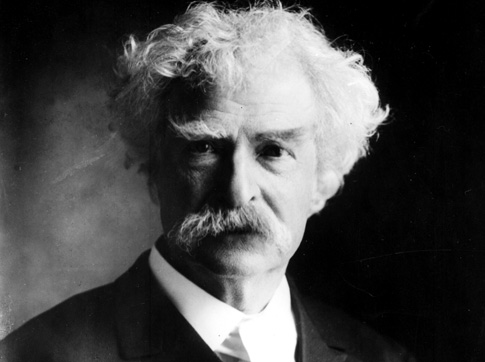
The reports of my death are greatly exaggerated! Mark Twain.

Mark Twain

Origin

Mark Twain quotation after hearing that his obituary had been published in the New York Journal.

Mistaken publications of obituaries aren’t as rare as you might expect. A recent example is of Dave Swarbrick, the British folk/rock violinist, who was killed off mistakenly by the Daily Telegraph in April 1999 when they reported that his visit to hospital in Coventry had resulted in his death. He did at least get the opportunity to read a rather favourable account of his life, not something we all get to do, and to deliver the gag “It’s not the first time I have died in Coventry”.

So why have I opened with this quote from Mark Twain?  Read on and I hope all will be clear.

Integrity is always about getting to the truth!

A little under a week ago I published a couple of posts that proposed that the United States of America is an empire in decline.  The first was What goes up? and the second Might just come down! As a Brit I well know that aspect of British history!

However a recent conversation with a friend of many years back in England, who has also been a shrewd and wise entrepreneur for longer than I care to remember, argued that the evidence for the ‘end of the USA’ could be challenged.

He cited five reasons why he thought the USA would remain, more or less, in its dominant position.  They were:

  1. Spirit of innovation
  2. Relaxed labour laws
  3. The importance of Mexico
  4. The uncertainty of China in terms of the next ’empire’
  5. The likely energy self-sufficiency for the USA in the near-term.

So let me expand on each of those points.

Spirit of innovation

Let me quote from an article in TIME Magazine of the 5th June, 2011,

Innovation is as American as apple pie. It seems to accord with so many elements of our national character — ingenuity, freedom, flexibility, the willingness to question conventional wisdom and defy authority. But politicians are pinning their hopes on innovation for more urgent reasons. America’s future growth will have to come from new industries that create new products and processes. Older industries are under tremendous pressure. Technological change is making factories and offices far more efficient. The rise of low-wage manufacturing in China and low-wage services in India is moving jobs overseas. The only durable strength we have — the only one that can withstand these gale winds — is innovation.

Now there are plenty to argue both ways in terms of the future innovation potential for the USA, as a recent article in The Atlantic does, see American Innovation: It’s the Best of Times and the Worst of Times.  But the spirit of innovation will be a powerful economic potential for the USA for many years to come.

Relaxed labour laws.

Definitely an area that I have little knowledge of except for the subjective notion that compared to many other nations, the laws in the USA are much less of a restraint on economic productivity than elsewhere.

The importance of Mexico.

Importance in the context of providing the USA with a source of cheaper manufacturing facilities.  My English friend thought that this was a significant competitive advantage for the USA.  Now, as it happens, we had a couple staying with us over the week-end of the 6th/7th October.  The husband is a senior manager of Horst Engineering, an American firm based in Guaymas, Sonora County, Mexico.  Here’s a picture from their website,

We are a contract manufacturer of precision machined components and assemblies for aerospace, medical, and other high technology industries. Our core processes include Swiss screw machining, turning, milling, thread rolling, centerless grinding, and assembly. Our extensive supply chain offers our customers a full service logistics solution for managing their precision product requirements. We are ISO9001:2008 and AS9100 registered and proud of our 66 year, three-generation legacy of quality and performance.

I was told that many American and British firms were using Mexico rather than China for a number of reasons.  Not least because Chinese suppliers require full payment before shipment.  Plus that taking into account that financial aspect together with shipping costs and other logistical issues, China wasn’t as ‘cheap’ over all.  Here’s a recent announcement from Rolls Royce,

Rolls-Royce plans new Sonora hub

The burgeoning aerospace industry in Guaymas had its efforts validated recently when the venerable Rolls-Royce chose it as the site for its newest global purchasing office.

Surrounded by several of its aerospace manufacturing suppliers, London-based Rolls-Royce will move into a Guaymas industrial park owned by Tucson-based The Offshore Group to develop a supply hub for commercial jets and military aircraft around the globe.

“Rolls-Royce has very robust booking orders for the next 10 years,” said Joel Reuter, director of communications for Rolls-Royce in North America. “We need to double our production.”

Because a number of Rolls-Royce suppliers already operate in Guaymas, the city was a logical choice, Reuter said.

The uncertainty of China in terms of the next ’empire’

The point made in terms of China taking over ’empire’ status from the USA, as Simon Johnson argues over at Baseline Scenario, is countered by the fact that politically China is an unknown quantity.  Until China endorses some form of democratic process, that unknowingness is not going to disappear.

The likely energy self-sufficiency for the USA in the near-term.

I can’t do better than to ask you to watch this video!  Just 27-minutes long, it is a very interesting review of the energy future of the USA.

As the TED website suggests in terms of why you should listen to Amory Lovins,

Amory Lovins was worried (and writing) about energy long before global warming was making the front — or even back — page of newspapers. Since studying at Harvard and Oxford in the 1960s, he’s written dozens of books, and initiated ambitious projects — cofounding the influential, environment-focused Rocky Mountain Institute; prototyping the ultra-efficient Hypercar — to focus the world’s attention on alternative approaches to energy and transportation.

His critical thinking has driven people around the globe — from world leaders to the average Joe — to think differently about energy and its role in some of our biggest problems: climate change, oil dependency, national security, economic health, and depletion of natural resources.

More on Reinventing Fire may be found here.

So, don’t know about you, but I found those five points deeply convincing.  How about you?  Are the reports of the death of the USA  greatly exaggerated? Do leave a comment.

What goes up?

Civilizations die from suicide, not by murder. Arnold J Toynbee

I’m not sure where to start but as a result of finishing a particular book, plus a recent essay on Tom Dispatch, then another recent essay from Simon Johnson of Baseline Scenario fame, there were so many thoughts bumping around this aged brain that I had no alternative than to offer them to you, dear reader.  You should also be warned that this is going to be two posts, covering today and tomorrow.

So let’s start with the book: The United States of Fear by Tom Engelhardt.  To be brutally honest, I purchased the book more as a gesture of support to Tom who has been very supportive of Learning from Dogs, in particular allowing me permission to reproduce any essays that were published on TomDispatch, as a number have so been.  What an error of judgment!  Tom’s book provided another one of those rare but inspirational occasions where you know the world will never look quite the same again!

The back cover page of the book sets out the theme, thus,

Published 2011

In 2008, when the US National Intelligence Council issued its latest report meant for the administration of newly elected President Barack Obama, it predicted that the planet’s “sole superpower” would suffer a modest decline and a soft landing fifteen years hence. In his new book The United States of Fear, Tom Engelhardt makes clear that Americans should don their crash helmets and buckle their seat belts, because the United States is on the path to a major decline at a startling speed. Engelhardt offers a savage anatomy of how successive administrations in Washington took the “Soviet path”—pouring American treasure into the military, war, and national security—and so helped drive their country off the nearest cliff.This is the startling tale of how fear was profitably shot into the national bloodstream, how the country—gripped by terror fantasies—was locked down, and how a brain-dead Washington elite fiddled (and profited) while America quietly burned.

Think of it as the story of how the Cold War really ended, with the triumphalist “sole superpower” of 1991 heading slowly for the same exit through which the Soviet Union left the stage twenty years earlier.

One of the fascinating aspects of the book is that it was put together from 32 essays previously published online by Tom; the complete list with titles and dates is on pps. 205 & 206.  So giving you a real feel for the book is easy!  I’m going to do that by linking to one of those essays available in the archives of TomDispatch here.  That essay was called Washington’s Echo Chamber and appears in the book starting on page 170 under the sub-heading of Five Ways to Be Tone Deaf in Washington. Let me quote you a little,

So much of what Washington did imagine in these last years proved laughable, even before this moment swept it away.  Just take any old phrase from the Bush years.  How about “You’re either with us or against us”?  What’s striking is how little it means today.  Looking back on Washington’s desperately mistaken assumptions about how our globe works, this might seem like the perfect moment to show some humility in the face of what nobody could have predicted.

It would seem like a good moment for Washington — which, since September 12, 2001, has been remarkably clueless about real developments on this planet and repeatedly miscalculated the nature of global power — to step back and recalibrate.

As it happens, there’s no evidence it’s doing so.  In fact, that may be beyond Washington’s present capabilities, no matter how many billions of dollars it pours into “intelligence.”  And by “Washington,” I mean not just the Obama administration, or the Pentagon, or our military commanders, or the vast intelligence bureaucracy, but all those pundits and think-tankers who swarm the capital, and the media that reports on them all.  It’s as if the cast of characters that makes up “Washington” now lives in some kind of echo chamber in which it can only hear itself talking.

As a result, Washington still seems remarkably determined to play out the string on an era that is all too swiftly passing into the history books.  While many have noticed the Obama administration’s hapless struggle to catch up to events in the Middle East, even as it clings to a familiar coterie of grim autocrats and oil sheiks, let me illustrate this point in another area entirely — the largely forgotten war in Afghanistan.  After all, hardly noticed, buried beneath 24/7 news from Egypt, Bahrain, Libya, and elsewhere in the Middle East, that war continues on its destructive, costly course with nary a blink.

That was published by Tom a little over 18 months ago!  Seems as relevant today as then!  Let me stay with perspectives from 2011.

Chomsky, visiting Vancouver, Canada in March 2004

On the 24th August 2011 Noam Chomsky wrote an essay entitled American Decline: Causes and Consequences.  Chomsky, as Wikipedia relates, is Professor (Emeritus) in the Department of Linguistics & Philosophy at MIT, where he has worked for over 50 years.  Here is how that essay opens,

In the 2011 summer issue of the journal of the American Academy of Political Science, we read that it is “a common theme” that the United States, which “only a few years ago was hailed to stride the world as a colossus with unparalleled power and unmatched appeal — is in decline, ominously facing the prospect of its final decay.” It is indeed a common theme, widely believed, and with some reason. But an appraisal of US foreign policy and influence abroad and the strength of its domestic economy and political institutions at home suggests that a number of qualifications are in order. To begin with, the decline has in fact been proceeding since the high point of US power shortly after World War II, and the remarkable rhetoric of the several years of triumphalism in the 1990s was mostly self-delusion. Furthermore, the commonly drawn corollary — that power will shift to China and India — is highly dubious. They are poor countries with severe internal problems. The world is surely becoming more diverse, but despite America’s decline, in the foreseeable future there is no competitor for global hegemonic power.

So, according to Chomsky, it’s not as ‘black and white’ as Engelhardt sets out.  But do read the full essay.

Nevertheless, the idea that the USA is ‘fiddling while Rome burns’ is supported in an essay published by Mattea Kramer on TomDispatch on the last day of September.  I’m going to end Part One by republishing the essay in full.  (Note that this is being published here after the first ‘debate’ had taken place.)

oooOOOooo

Tough Talk for America

A Guide to the Presidential Debates You Won’t Hear 
By Mattea Kramer

Five big things will decide what this country looks like next year and in the 20 years to follow, but here’s a guarantee for you: you’re not going to hear about them in the upcoming presidential debates. Yes, there will be questions and answers focused on deficits, taxes, Medicare, the Pentagon, and education, to which you already more or less know the responses each candidate will offer. What you won’t get from either Mitt Romney or Barack Obama is a little genuine tough talk about the actual state of reality in these United States of ours. And yet, on those five subjects, a little reality would go a long way, while too little reality (as in the debates to come) is a surefire recipe for American decline.

So here’s a brief guide to what you won’t hear this Wednesday or in the other presidential and vice-presidential debates later in the month. Think of these as five hard truths that will determine the future of this country.

1. Immediate deficit reduction will wipe out any hope of economic recovery: These days, it’s fashionable for any candidate to talk about how quickly he’ll reduce the federal budget deficit, which will total around $1.2 trillion in fiscal 2012. And you’re going to hear talk about the Simpson-Bowles deficit reduction plan and more like it on Wednesday. But the hard truth of the matter is that deep deficit reduction anytime soon will be a genuine disaster. Think of it this way: If you woke up tomorrow and learned that Washington had solved the deficit crisis and you’d lost your job, would you celebrate? Of course not. And yet, any move to immediately reduce the deficit does increase the likelihood that you will lose your job.

When the government cuts spending, it lays off workers and cancels orders for all sorts of goods and services that would generate income for companies in the private sector. Those companies, in turn, lay off workers, and the negative effects ripple through the economy. This isn’t atomic science. It’s pretty basic stuff, even if it’s evidently not suitable material for a presidential debate. The nonpartisan Congressional Research Service predicted in a September report, for example, that any significant spending cuts in the near-term would contribute to an economic contraction. In other words, slashing deficits right now will send us ever deeper into the Great Recession from which, at best, we’ve scarcely emerged.

Champions of immediate deficit reduction are likely to point out that unsustainable deficits aren’t good for the economy. And that’s true — in the long run. Washington must indeed plan for smaller deficits in the future. That will, however, be a lot easier to accomplish when the economy is healthier, since government spending declines when fewer people qualify for assistance, and tax revenues expand when the jobless go back to work. So it makes sense to fix the economy first. The necessity for near-term recovery spending paired with long-term deficit reduction gets drowned out when candidates pack punchy slogans into flashes of primetime TV.

2. Taxes are at their lowest point in more than half a century, preventing investment in and the maintenance of America’s most basic resources: Hard to believe? It’s nonetheless a fact. By now, it’s a tradition for candidates to compete on just how much further they’d lower taxes and whether they’ll lower them for everyone or just everyone but the richest of the rich. That’s a super debate to listen to, if you’re into fairy tales. It’s not as thrilling if you consider that Americans now enjoy the lightest tax burden in more than five decades, and it happens to come with a hefty price tag on an item labeled “the future.” There is no way the U.S. can maintain a world-class infrastructure — we’re talking levees, highways, bridges, you name it — and a public education system that used to be the envy of the world, plus many other key domestic priorities, on the taxes we’re now paying.

Anti-tax advocates insist that we should cut taxes even more to boost a flagging economy — an argument that hits the news cycle nearly every hour and that will shape the coming TV “debate.” As the New York Times recently noted, however, tax cuts might have been effective in giving the economy a lift decades ago when tax rates were above 70%. (And no, that’s not a typo, that’s what your parents and grandparents paid without much grumbling.) With effective tax rates around 14% for Mitt Romney and many others, further cuts won’t hasten job creation, just the hollowing out of public investment in everything from infrastructure to education. Right now, the negative effects of tax increases on the most well-off would be small — read: not a disaster for “job creators” — and those higher rates would bring in desperately-needed revenue. Tax increases for middle-class Americans should arrive when the economy is stronger.

Right now, the situation is clear: we’re simply not paying enough to fund the basic ingredients of prosperity from highways and higher education to medical research and food safety. Without those funds, this country’s future won’t be pretty.

3. Neither the status quo nor a voucher system will protect Medicare (or any other kind of health care) in the long run: When it comes to Medicare, Mitt Romney has proposed a premium-support program that would allow seniors the option of buying private insurance. President Obama wants to keep Medicare more or less as it is for retirees. Meanwhile, the ceaseless rise in health-care costs is eating up the wages of regular Americans and the federal budget. Health care now accounts for a staggering 24% of all federal spending, up from 7% less than 40 years ago. Governor Romney’s plan would shift more of those costs onto retirees, according to David Cutler, a health economist at Harvard, while President Obama says the federal government will continue to pick up the tab. Neither of them addresses the underlying problem.

Here’s reality: Medicare could be significantly protected by cutting out waste. Our health system is riddled with unnecessary tests and procedures, as well as poorly coordinated care for complex health problems. This country spent $2.6 trillion on health care in 2010, and some estimates suggest that a staggering 30% of that is wasted. Right now, our health system rewards quantity, not quality, but it doesn’t have to be that way. Instead of paying for each test and procedure, Medicare could pay for performance and give medical professionals a strong incentive to provide more efficient and coordinated care. President Obama’s health law actually pilot tests such an initiative. But that’s another taboo topic this election season, so he scarcely mentions it. Introducing such change into Medicare and the rest of our health system would save the federal government tens of billions of dollars annually. It would truly preserve Medicare for future generations, and it would improve the affordability of health coverage for everyone under 65 as well. Too bad it’s not even up for discussion.

4. The U.S. military is outrageously expensive and yet poorly tailored to the actual threats to U.S. national security: Candidates from both parties pledge to protect the Pentagon from cuts, or even, in the case of the Romney team, to increase the already staggering military budget. But in a country desperate for infrastructure, education, and other funding, funneling endless resources to the Pentagon actually weakens “national security.” Defense spending is already mind-numbingly large: if all U.S. military and security spending were its own country, it would have the 19th largest economy in the world, ahead of Saudi Arabia, Taiwan, and Switzerland. Whether you’re counting aircraft carriers, weapons systems, or total destructive power, it’s absurdly overmatched against the armed forces of the rest of the world, individually or in combination. A couple of years ago, then-Secretary of Defense Robert M. Gates gave a speech in which he detailed that overmatch. A highlight: “The U.S. operates 11 large carriers, all nuclear powered. In terms of size and striking power, no other country has even one comparable ship.” China recently acquired one carrier that won’t be fully functional for some time, if ever — while many elected officials in this country would gladly build a twelfth.

But you’ll hear none of this in the presidential debates. Perhaps the candidates will mention that obsolete, ineffective, and wildly expensive weapons systems could be cut, but that’s a no-brainer. The problem is: it wouldn’t put a real dent in national defense spending. Currently almost one-fifth of every dollar spent by the federal government goes to the military. On average, Americans, when polled, say that they would like to see military funding cut by 18%.

Instead, most elected officials vow to pour limitless resources into more weapons systems of questionable efficacy, and of which the U.S. already owns more than the rest of the world combined. Count on one thing: military spending will not go down as long as the U.S. is building up a massive force in the Persian Gulf, sending Marines to Darwin, Australia, and special ops units to Africa and the Middle East, running drones out of the Seychelles Islands, and “pivoting” to Asia. If the U.S. global mission doesn’t downsize, neither will the Pentagon budget — and that’s a hit on America’s future that no debate will take up this month.

5. The U.S. education system is what made this country prosperous in the twentieth century — but no longer: Perhaps no issue is more urgent than this, yet for all the talk of teacher’s unions and testing, real education programs, ideas that will matter, are nonexistent this election season. During the last century, the best education system in the world allowed this country to grow briskly and lift standards of living. Now, from kindergarten to college, public education is chronically underfunded. Scarcely 2% of the federal budget goes to education, and dwindling public investment means students pay higher tuitions and fall ever deeper into debt. Total student debt surpassed $1 trillion this year and it’s growing by the month, with the average debt burden for a college graduate over $24,000. That will leave many of those graduates on a treadmill of loan repayment for most or all of their adult lives.

Renewed public investment in education — from pre-kindergarten to university — would pay handsome dividends for generations. But you aren’t going to hear either candidate or their vice-presidential running mates proposing the equivalent of a GI Bill for the rest of us or even significant new investment in education. And yet that’s a recipe for and a guarantee of American decline.

Ironically, those in Washington arguing for urgent deficit reduction claim that we’ve got to do it “for the kids,” that we must stop saddling our grandchildren with mountains of federal debt. But if your child turns 18 and finds her government running a balanced budget in an America that’s hollowed out, an America where she has no chance of paying for a college education, will she celebrate? You don’t need an economist to answer that one.

Mattea Kramer is senior research analyst at National Priorities Project and a TomDispatch regular. She is lead author of the new book A People’s Guide to the Federal Budget.

Copyright 2012 Mattea Kramer

oooOOOooo

Let me close with another quote from Arnold J. Toynbee:

Of the twenty-two civilizations that have appeared in history, nineteen of them collapsed

when they reached the moral state the United States is in now.

Part Two continues tomorrow.

The thinking dog

Science embraces what many intuitively know: Animals have consciousness.

This was published on the Big Think website at the end of August.

Scientists Give Animals Consciousness

Nick Clairmont on August 29, 2012, 2:34 PM

What’s The Big Idea?

Scientists have given animals consciousness. Not through complex manipulation of the brain or through genetic manipulation, but by publicly acknowledging the consensus, for the first time in such a straightforward way, that non-human animals, including some of our evolutionarily distant cousins, have awareness and experience like we do.

The declaration, called The Cambridge Declaration On Consciousness, was signed at the Francis Crick Memorial Conference of Consciousness in Human and Non-Human Animals in the presence of Stephen Hawking in July in Cambridge, U.K. by an international group of scientists including cognitive neuroscientists, neuropharmacologists, neurophysiologists, neuroanatomists and computational neuroscientists.

What do they mean by consciousness? The Declaration treats it as the same as the phrase, “subjective experience.” Philosophers who share this view of consciousness with the scientists often say that something is conscious if there is “something that it is like” to be that thing. So, according to this, a rock is not conscious, because there is nothing “that it is like to be a rock.”

The signing marked the first formalization of the scientific consensus about the consciousness of several non-mammals, including birds, octopuses and even bees.

So if we now turn to that Conference held in Cambridge, England under the subject of Consciousness in Human and and Non Human Animals, we see how that declaration reads,

We declare the following: “The absence of a neocortex does not appear to preclude an organism from experiencing affective states. Convergent evidence indicates that non-human animals have the neuroanatomical, neurochemical, and neurophysiological substrates of conscious states along with the capacity to exhibit intentional behaviors. Consequently, the weight of evidence indicates that humans are not unique in possessing the neurological substrates that generate consciousness. Nonhuman animals, including all mammals and birds, and many other creatures, including octopuses, also possess these neurological substrates.”

The full document is really worth reading, by the way.

There is much more about the conference including some remarkable videos here, from which I will select two.  The first one, in particular, is very moving, and upsetting!  Be warned!

OK, forgive me but I’m going to state the obvious!  Just read the entry on Wikipedia about Orangutans.

Orangutans are among the most intelligent primates and use a variety of sophisticated tools, also constructing elaborate sleeping nests each night from branches and foliage. The apes have been extensively studied for their learning abilities. There may even be distinctive cultures within populations. Field studies of the apes were pioneered by primatologist Birutė Galdikas. Both orangutan species are considered to be Endangered with the Sumatran orangutan being Critically Endangered. Human activities have decimated the populations and ranges of both species. Threats to wild orangutan populations include poaching, habitat destruction and the illegal pet trade. There are several conservation and rehabilitation organisations dedicated to the survival of orangutans in the wild.

‘Among the most intelligent primates‘! Yet again, an example of mankind treating the planet as a disposable item!  A quick web search came across the Orangutan Foundation so as well as being saddened and angry, there is something we can do; support them.

The second video from that Conference website is about the intelligence of dolphins – enjoy!

Back to the Big Think article, which concludes,

What’s The Significance?

The signatories have indicated that we cannot, at least certainly not for the reasons we have been giving, ignore the fact that animals have the same type of experiences that gives us a reason to treat other humans humanely.

Beyond the ethical ramifications, this declaration is another step in a long line of conclusions that the animal brain displays remarkable plasticity and is able to accomplish highly complex tasks in multiple ways.

While anyone who has gone to a zoo or owned a pet has at least temporarily thought of animals as conscious, there is still a large contingent that strongly believes that humans are exceptional in some morally and scientifically significant way. But, as Christof Koch, who co-presented the declaration notes, “The belief in human exceptionalism, so strongly rooted in the Judeo-Christian view of the world, flies in the face of all evidence for the structural and behavioral continuity between animals and people.”

Well done those scientists!