Regular visitors to this blog probably now don’t notice my home page where I state, in part:
Dogs live in the present – they just are! Dogs make the best of each moment uncluttered by the sorts of complex fears and feelings that we humans have. They don’t judge, they simply take the world around them at face value. Yet they have been part of man’s world for an unimaginable time, at least 30,000 years.
Just as likely, I expect, readers do not go across to my sideline Dogs and integrity that includes, in part:
Dogs are part of the Canidae, a family including wolves, coyotes and foxes, thought to have evolved 60 million years ago. There is no hard evidence about when dogs and man came together but dogs were certainly around when man developed speech and set out from Africa, about 50,000 years ago. See an interesting article by Dr. George Johnson.
Recently Patrice Ayme published a post under the title of Neanderthal Superiority. In that post he set out very convincing arguments about the origins of the Neanderthals and I do recommend you read it in full.
However, what I would like to republish is the part of Patrice’s essay that explains the origins of the domesticated dog, as it is very different to what I have been presenting on Learning from Dogs. Here it is:
Previously unknown Neanderthal technologies are found every year. Neanderthals invented needle and thread, way back (80,000 years ago, at least; probably much older). Necessity was the mother of invention: Europeans (aka Neanderthals) needed clothing more than Africans did, as the latter wore none. Moreover, appropriate fibers are more easily found in the temperate zone (everything rots quickly in the very warm, wet tropics, including DNA).
NEANDERTHALS INVENTED DOGS, COAL BURNING, SHELL FISH DINING:
Some of the arguments against Neanderthals have been outright ridiculous: not only we were told, without any evidence, that they could not talk, but that the superiority of Africans came from eating shell fish, about 70,000 years ago (along the East Coast of Africa).
Neanderthals also used coal, as long ago as 73,000 years. Once again, making a fire in present day France, then suffering from a pretty bad glaciation, made more sense than trying to stay warm in the Congo.
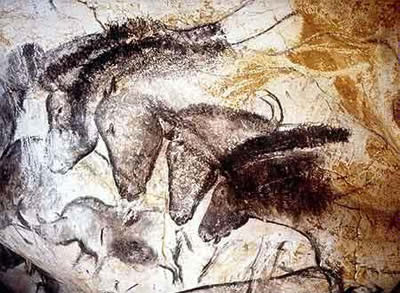
Earlier and earlier prehistoric art has been found. It’s getting ever harder to claim that Neanderthals had nothing to do with it. This is from the enormous Chauvet cave in France, at least 32,000 years old:
If Not Neanderthal, Probably Mostly Neanderthal
(42,000 year old art was also found in Spain.)
Neanderthals also domesticated, and genetically engineered dogs, from European wolves. That’s very clear.
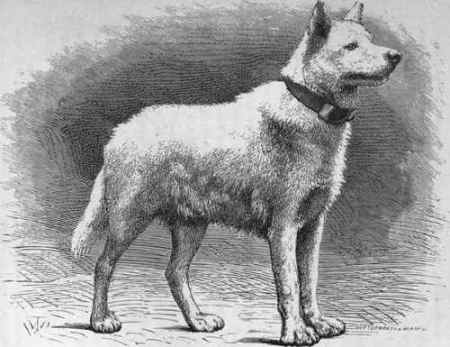
How do I know this? Simple. The Goyet dog, pictured below was dated around 32,000 years. In 2010, an even older dog was found in the Altai mountains. Both dogs were derived from Canis Lupus Familiaris, the European wolf, but were quite distant from it, genetically, they had been evolved probably on a time scale of more than 10,000 years, thus well before any arrival of Sapiens Sapiens from Africa.
Those dogs were completely compatible with people, just as contemporary dogs are. Proof? Ancient, 26,000-year-old footprints made by a child and a dog deep in the Chauvet Cave, France. (OK, by then Neanderthals had been deemed “extinct” by some… However, these are still the same dogs Neanderthals invented.)
It Took Many Thousands Years To Breed Such Large Dogs From European Wolves.
It is perplexing that other human groups did not domesticate the local canids. There are (still!) wolves in Africa and India. And also Lycaons (“African Wild Dogs”). Those are supremely intelligent, and sort of domesticate readily in the wild (I tried this myself as a child).
The argument that Africans would have moved to Europe to domesticate European wolves, when they had a similar fauna, including wolves, to domesticate in Africa, is simply extravagant.
In the next few days I will amend those static pages to incorporate this fascinating update to my knowledge. I shall also seek permission to republish the articles linked to by Patrice as they are full of detailed knowledge about the oldest man-animal relationship; by far!
Normally, there’s always a selection of bits and pieces in my LfD Blog folder from which to construct a new post.
But yesterday afternoon as I trawled a number of articles and blog sites I ended up feeling sick to the back teeth. Disgusted about the inequalities and injustices that seem to be in the news just now. (I use the word ‘news’ liberally!)
It started with me reading, even before I was out of bed, the latest essay from George Monbiot entitled The Shooting Party.
As the food queues lengthen, the government is giving our money to the super-rich.
Then I went back to re-read an essay from Patrice Ayme that came out on the 22nd called USA: Rich Plutos, Poor People. Here’s a snippet from there:
Plutocracy is a redistribution of wealth, power, income, from We The People to a small minority of controlling parasites. Plutocracy paralyzes the minds with a warped case of inverted decency. Plutocracy is neither optimal for the society, nor the economy.
Plutocracy affects the USA more than Europe, and the minds, even more than the stomachs. The fact that average Americans feel that they are much better off than in the rest of the world reinforces the plutocratization of the USA. Including astounding tolerance for the amazingly corrupt so called Supreme Court (Supremely plutocratic!).
On to another of Patrice’s essays. Or more specifically to a comment left by Eugen to a post from Patrice published yesterday.
I would like to share with you my thought about the major defaults of the economic system called “Market economy” or “Capitalism”, or in the language of this blog, the moral deficiency of the system run by Plutocracy.
The major problem of the contemporary economic system on the macro level is that it enabled on one hand to pour into the economy too much financial liquidity at times of boom and overheated economy, by investing too much money in wrong and too expensive assets, and on the other hand at times of bust, when the economy needs liquidity to sustain employment, the system is rather greedy with helping investments in the same assets for even very reduced price. This system a-priory has to cause bust and boom, situations.
The economist since the great depression of 1929-1933 which had disastrous consequences learned from the lesson, and since then the governments and the central banks took as their major task in economy (and be the price whatever it takes), to act as anti bust and boom instrument. This is why they made the economic stimulus of trillions that saved the banks and financial system from total collapse (luckily the collapse came during the time of republican presidency and they couldn’t resist this decision), and the quantitative easing that poured liquidity of government money into the economy as alternative to the private money from banks who stopped to borrow.
So if it is so easy to solve the economic crisis situations, what is the problem? Let the economy run on the waves of bust and boom, and whenever the bust comes the government interferes, and at the times of booms let the boys play and enjoy themselves. If economics would be only about mathematical formulas, probably it could work, but the truth is all the economic decisions have their moral-political aspects. [Ed. My emphasis] And here lies the problem.
Because it is morally and politically very hard to neglect the principle of punish those who do wrong and give tribute to those who has done good. And this is actually what happens when the government comes to rescue the “credit boomers”, the bankers who created a distorted financial system, that channeled the financial and material resources to wrong places to invest in wrong assets, and when the D day came, they did not have to pay the price for their wrong doings. The same happened to those who took the loans, without to ask themselves if and when are they going to pay them back.
These Financiers and their creditors, who get loans of other peoples’ money enjoy free lunch twice. Once when they give and get these loans with knowledge that it will never be repaid, and second time when they enjoy the debt reduction, when the governments come to rescue them.
On the other hand those who use the wealth generated at times of boom to accumulate reserves for the bad times have to pay twice. First time when they restrain their activities during the times of prosperity and reduce by it their profits, second time at times of bust, when still they have to fulfill all their obligations, and get no praise for their responsible behavior in the times of boom.
Of course this system of Boom and Bust causes with each wave a major shift of wealth from one sector to the other, and generally from the decent and responsible entrepreneurs to the irresponsible gamblers, who happen to make bid on other people’s money.
This is one of the reasons why the pension systems are all in deficit, the wages stagnate while the profits and mainly the rewards of corporate managers of publicly traded companies surge.
Plutocrats have a certain grudging respect for one another. Naturally, they would like to put each other out of business unless it impacted their own business adversely. So I conclude that Obama’s sanctions are an attempt to isolate Putin from his plutocratic supporters (although perhaps supporters is too strong a word; Putin keeps his plutocrats on a pretty tight leash, just ask Mikhail Khodorkovsky).
But what if under the table the West is inviting Putin’s plutocrats to join them, where the grass is greener and you don’t have old Vlad busting your chops. We’re not going to mention that we’re going to give you a haircut on the way, but are you really ready for the rebirth of the Soviet Union? The London bankers must certainly be for it.
On the other hand, you have the Chinese promising big business… but China’s biggest real estate investor is unloading everything as China replicates the Western real estate bubble and collapse….
It’s tough being a Russian plutocrat these days. It’s tough being a plutocrat anywhere, really, with all this talk that plutocrats are *too* wealthy (and are actually mass murdering their fellow humans with their insatiable greed by hording wealth and depriving others of health care, education and jobs).
Come to America! Come to the UK! Plutocrats rule! This is the subtext of what the Russian plutocrats are hearing.
Finally, an essay published on Naked Capitalism had me reaching for the bowl. It was by Rob Johnson on the Breakdown of Democracy. Read it. It included this video.
Published on Apr 26, 2014
Rob Johnson: The influx of additional campaign finance dollars and central bank policies have contributed to the destruction of democratic institutions
That was enough for me.
Couldn’t take any more. Certainly wasn’t feeling inspired and creative. Just wanted to go out and find a horse to kiss.
Sanity is a warm, loving horse!
Sorry! Hopefully back to being more positively creative tomorrow!
Nature imposes herself on us humans in absolute terms.
I do not believe in any form of life after death. Jean is uncertain. Many good people do believe in some form of spiritual afterlife.
However, one thing is sure. Our living mind and body will die.
These few words are an introduction to the first essay under the broad title of The Natural order. On the 23rd April I introduced the idea of writing a regular essay “about the past, present and future of man’s relationship with Nature.”
Thus it did seem entirely appropriate to ‘kick off’ the essays with reflections about life and death.
Posted on April 27, 2014 | Nature reminds me life and death is a circle.
The circle of life and death.
I visit a house, the noise of hungry little birds emanating from a nest hidden in the roof, busy parents flying in and out feeding their brood. Less than a week before summer (1st May) I encounter life all about me, like a vast fountain of creativity, as plant and animal erupt into growth and creation. I feel a sense of joy at the life all about me, like dipping my feet in crystal clear spring waters.
Amongst this carnival of life a reminder that with life there is also death. Helix our cat is an effective hunter, a blue tit is found dead upon the ground. I feel no sadness for the death, it is a natural part of the cycle of nature, my animistic viewpoint is of a small spirit returning to the source, and from then renewing. No anger for Helix, since this is the nature of cats, despite being fed, a cat must follow the primal instinct of its nature to hunt. I carry the dead blue tit to an overgrown spot of trees and grass, here I place the blue tit to decay and thus become part of the life of plant and animal of that place, such is the circle of life and death.
ooOOoo
There can’t be a single person on this planet who does not understand that our human life is finite.
Life span of early man: Until fairly recently, little information existed about how long prehistoric people lived. Too few fossilized human remains made it tough for historians to estimate the demographics of any population. Anthropology professors Rachel Caspari and Sang-Hee Lee chose instead to analyze the relative ages of skeletons found in archeological digs in eastern and southern Africa, Europe, and elsewhere. Comparing the proportion of those who died young, with those who died at an older age, the team concluded that longevity only began to significantly increase (that is, past the age of 30 or so) about 30,000 years ago – quite late in the span of human evolution.
In an article published in 2011 in Scientific American, Caspari calls the shift the “evolution of grandparents”, as it marks the first time in human history that three generations might have co-existed. ( Source: Longevity Throughout History.)
Thus given that living much past the age of thirty years is a relatively recent experience, it baffles me beyond comprehension that we, as in mankind, have become so short-sighted about reinvesting in the one and only natural planet that sustains us.
Beautifully expressed in another wonderful essay from John Hurlburt.
ooOOoo
Notes on the Human Dilemma
The metanexus of Faith, Nature and Science form an integral vision of the reality in which we exist. We are components of Creation living in an emerging universe. As consciously aware life forms we are each and all responsible to the Nature of God in a steadily emerging universe. Change is both constant and inevitable. Species that don’t adapt, do not survive.
Our human problems are obvious.
The essential growth of human conscious awareness remains questionable.
There is a blatant disregard for Nature. The rate of Natural disasters is increasing everywhere on Earth
Civil unrest is bordering on a second Civil War and is already in that state in many other nations of the world.
Imminent economic collapse remains probable as long our world economy is based on a foundation that has been leveraged at least twenty-five times above any realistic material foundation on Earth.
Are we a moral species?
A steady increase in natural disasters worldwide is inevitable until we change in response to Nature’s warnings or become extinct. The collapse of morality threatens the existence of global civilization.
The virtual extinction of the human race in its present state is all but assured within the next century unless we adapt to the Reality we presently blithely ignore or chose to vilify.
We still have a choice.
Our alternative to what has been euphemistically referred to as “new reality” is the process of education, reformation and transformation on a personal level. The objectives are an obvious need to adapt to constant natural change and create a species renaissance in harmony with the reality of God, Nature and Science.
There is clearly a need for a global economy that is based on our primal need for clean air, clean water, clean food and clean energy. We need to maintain our balance through gratitude for the blessings of the life we share and equal justice for all. We need to remember that we are not in charge of anything except our responsibilities to God, Nature and each other.
Under these simple guidelines, a healthy, growing future remains possible as we prepare to migrate from our home planet and relieve the consumptive consequences of an exponentially growing and ravenous demographic ruled by the artificial symbol of Money.
Sound impossible? Au contraire…
The world is being forced to re-evaluate its economic premises. Here are a few proven solutions to help create a naturally invigorated economy.
We can cut air pollution dramatically overnight by converting commercial diesel engines to far more cost-effective bio-fuels without a single change to the diesel mechanisms.
Bio-diesel distillation plants can filter and recycle the clean water we need to live.
We are capable of growing our own food with recycled organic fertilizers.
We have begun the process of harnessing the limitless clean renewable energy provided by the sun, the wind and hydraulic power.
Electric cars that may be fueled by solar energy are winning world class races.
The list of what we are capable of doing is only limited by our imaginations.
The questions to ask ourselves are:
Are we at the beginning of a new world or at the end of an old world?
“Are we a part of the problem or part of a realistic solution?”
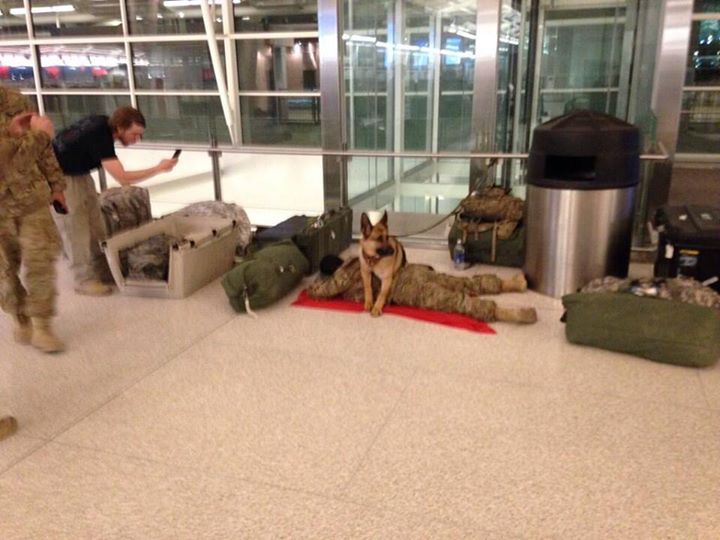
The following photograph was sent to me by Suzann who in turn received it from Joyce. Thanks to you both. Included with the photograph is the background to the picture.
Indianapolis International Airport
“One of our photographers returning to the Indianapolis International Airport took this photo of a soldier getting special guard duty from man’s best friend as she catches a nap in the terminal. About 10 soldiers and two dogs were in a group at the airport tonight. It wasn’t clear if they were coming home or heading out, but we thank them (and the dogs!) for their service!” – WTHR-TV
I’m going to skip the many comments that have been attached to the photograph, however smart and witty they are, and focus on the fundamental lesson that dogs, and many other creatures, offer mankind. It is this.
Our society only functions in a civilised manner when there is a predominance of trust about us. When we trust the socio-politico foundations of our society. When we trust the legal processes. When we trust that while greed and unfairness are never absent, they are kept well under control.
Having trust in the world around us is an intimate partner to having faith in our world.
At a time when inequality is making frequent headlines and Russia is sabre-rattling over Ukraine let us never lose sight of the primary importance of trust.
For without trust there can be no faith and without trust there can be no love.
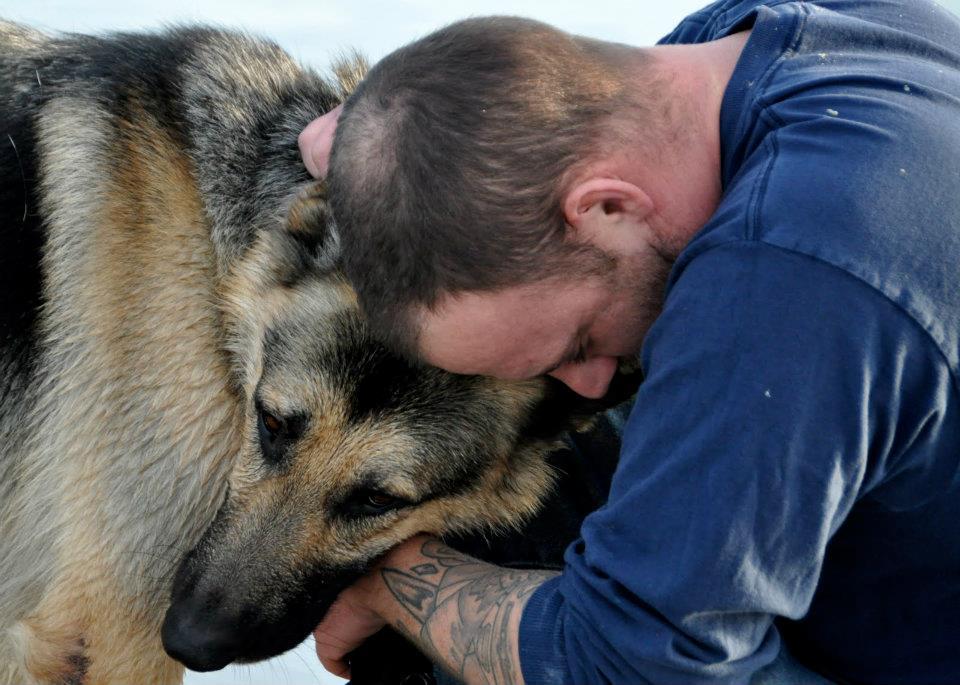
Here’s another photograph of the greatest ‘dog-teacher’ of them all; the German Shepherd dog.
Regular readers of Learning from Dogs will recall that just under a week ago I published an essay under the title of A bedtime story for mankind. The post centred around an essay from Patrice Ayme. Patrice’s essay could be summarised as follows: “At the present rate of greenhouse gases emissions, within nine years, massively lethal climate and oceanic changes are guaranteed.”
Then just last Sunday, Patrice published a second essay reinforcing that first one. The subsequent essay was called Ten Years to Catastrophe. I was minded to republish that but upon reflection thought that there was a better option. That was to explore the deep, core questions that both of Patrice’s essays raised in my mind and, presumably, must be raised in the minds of countless thousands of others. Questions along the lines of a comment I submitted to that subsequent post from Patrice.
Do you have an idea, even a sense, of when global leaders, elected Governments, the ‘movers and shakers’ in societies, will truly embrace the global catastrophe that is heading our way?
And a supplementary question: What would be the indicators that Governments were acknowledging the task ahead?
Frankly, they weren’t especially good questions but they were an attempt by me to open up a debate on whether or not this is the “beginning of the end” of life for us humans. Central to what was going through my mind was the core question of how did it all go wrong?
Welcome to Payson, AZ
On Monday evening, I rang John Hurlburt, a close friend of Jean and me from our Payson, Arizona days and kicked around those questions . It was a most enlightening conversation. John is an active founder member of Transition Town Payson and Payson recently welcomed the Great March for Climate Action in their walk from Los Angeles to Washington D.C. (An essay on that event coming soon.)
Anyway, from out of that conversation with John came the idea of a series of essays here on Learning from Dogs about the past, present and future of man’s relationship with Nature. The aim is to offer an essay on a weekly basis but we’ll see how it goes. Wherever possible, I will use the essays and posts from other bloggers that reinforce the vision. As always, your feedback in the form of ‘Likes’ or comments will reflect on the value of the essays to you.
After John and I finished the call, he sent me an email with what could be best described as his vision for these essays. Here is that email [my emphasis].
Integral Vision
Everything fits together. Otherwise, we’d simply be disassociated atoms.
Human beings are a consciously aware component of Nature. We have a DNA-level directive to survive as a species and as individual members of a species …. in that order!
We are consciously aware components of the conscious interaction between energy and matter in a predominently smoothly emerging cyclic universe with departures from time to time into pockets of chaos.
We disconnect from reality when we become self-centered, often during the various stages of our lives. When we are blessed we continue to live and learn.
Issues of ideology, rational thought, economics, politics, religion, history and science become insignificant in comparison to the whelming power of Nature.
Such is life. It comes with the territory. Spirituality, Nature and Science describe the metanexus in which we live.
Maintain an even strain,
an old lamplighter
Ref: Episcopal “Catechism of Creation”
Ideas, feedback and comments, as always, hugely welcomed.
Hardly seems necessary to say this but natural forces are ‘top of the pyramid‘!
As is so often the case, a few outwardly disconnected events offered a deeper picture; well they did for me!
The first was a recently published post by Alex Jones over on his blog The Liberated Way. Alex lives in Colchester, Essex, North-East of London, a place where I ran a business way back in the ’80’s’ and lived not far away in the village of Great Horkesley. Many people, including many Brits are unaware that Colchester, or Camulodunon as the Celtics called it, meaning “the Fortress of Camulos” (Camulos was the Celtic god of war), was the Capitol city in Roman days and that evidence of man’s settlement goes back 3,000 years.
Anyway, back to the thread of today’s post.
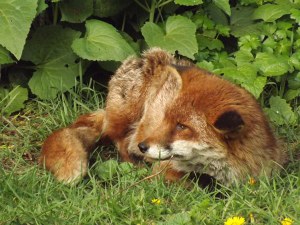
That first post from Alex. A post under the title of Catching a fox. Alex has generously given me permission to republish it.
Catching a fox.
After two years of hunting I catch a fox with my camera.
After two years of frustration I finally photograph a fox, which appeared out of nowhere in my garden.
Nature is a shifting tapestry of life, often catching me by surprise with magical manifestations of wildlife that abruptly vanish before I can catch a brief record of its passing through my life. It is a matter of chance that I get lucky with my camera, and I was in luck today.
This morning a fox manifested in my garden. The fox sat looking at me, it had a forlorn look about it, but the fox was content to sit and watch me as it sun bathed in the warmth of a tranquil garden. I had my camera with me, so I made up for two years of frustration by firing off dozens of photographs of my elusive wary model. The fox made my day.
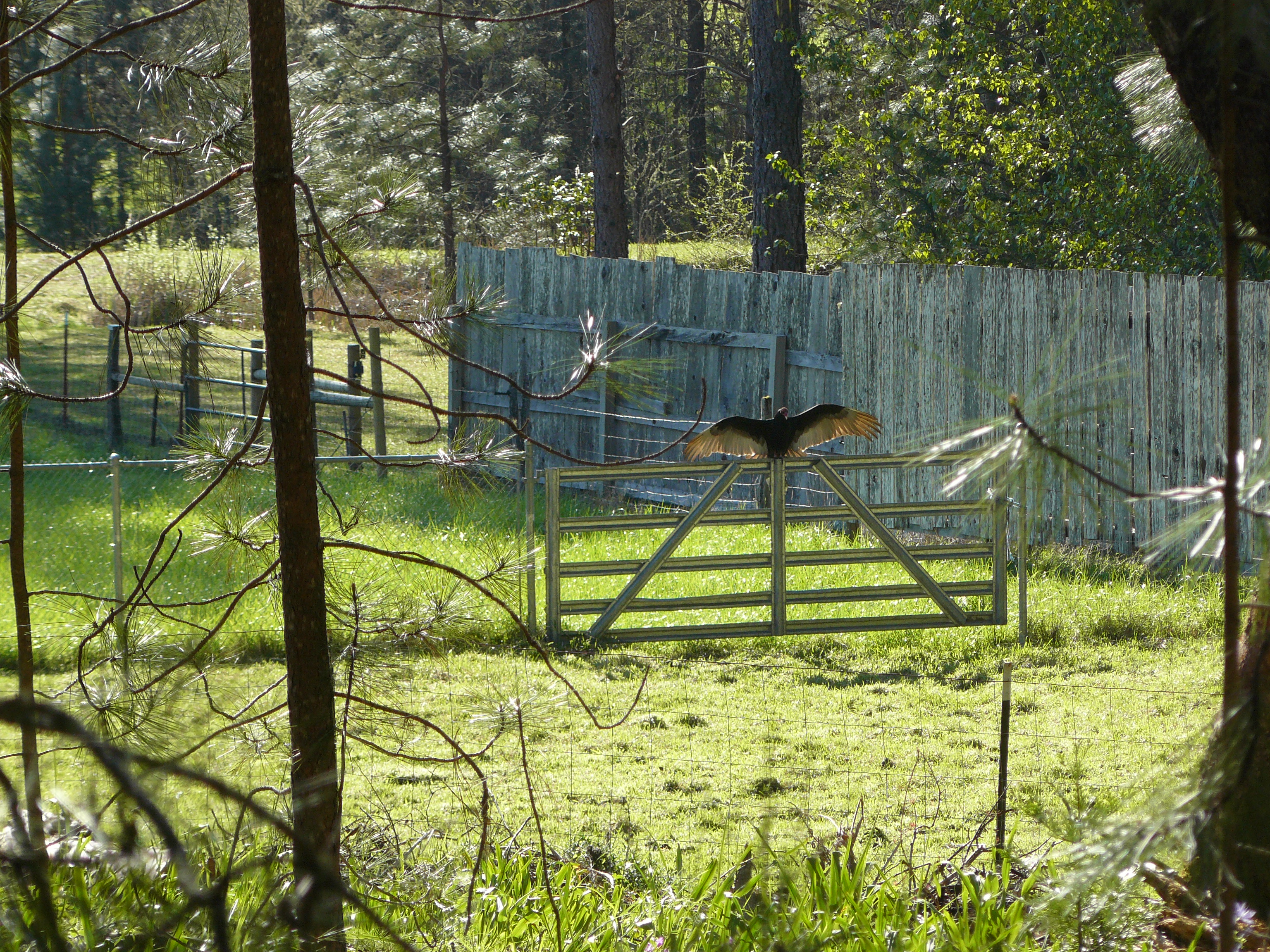
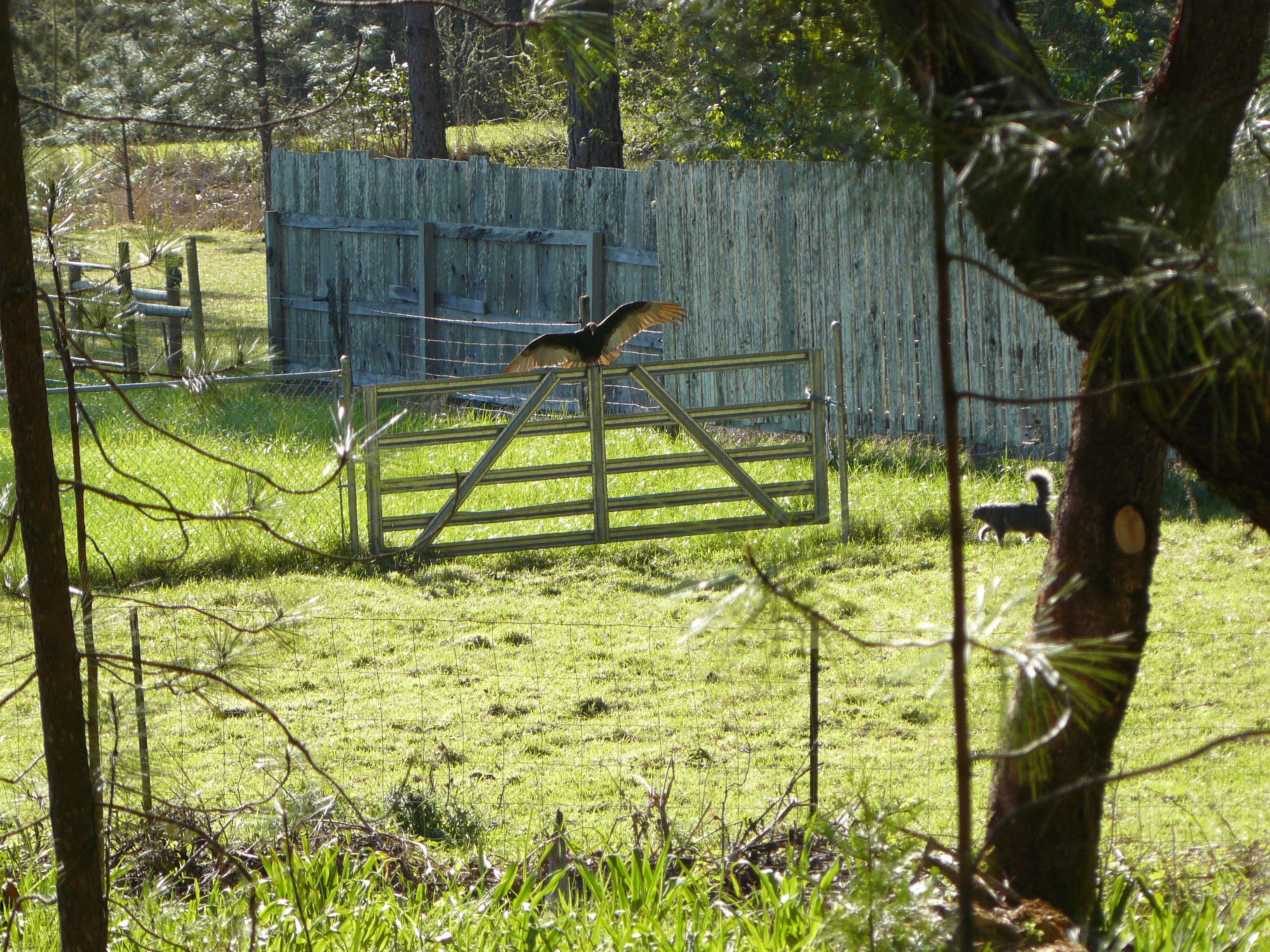
The second event was a chance photograph of a vulture taken two days ago here at home.
Ah, that early morning sun feels good on my back feathers!
oooo
Damn! Thought it was too good to last!
Now I’m sure that readers so far will find these three photographs, of the fox and the vulture, are producing feelings of pleasure; feelings of wonderment about the natural world around us.
That world of nature ‘speaks’ to us. If we are prepared to listen.
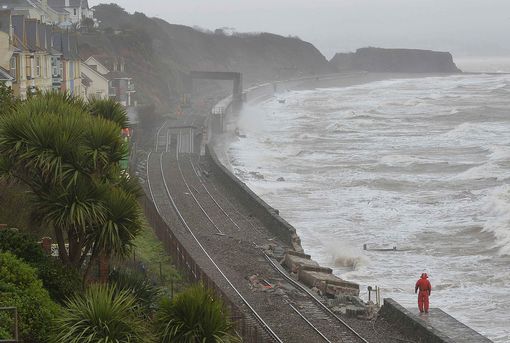
It spoke to South-West England in February earlier this year:
Dawlish – Rail emergency workers inspect damaged track along the seafront.
There are signs that Mother Nature will be speaking to us again; fairly soon. From EarthSky:
Warm water in Pacific could spark a monster El Nino in 2014
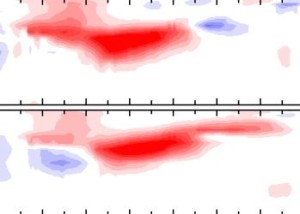
Scientists are watching a giant mass of sub-surface water in the Pacific. When this water reaches the sea surface, it could set off a powerful El Nino.
The giant red blob in this image is a huge, unusual mass of warm water that currently spans the tropical Pacific Ocean. Eric Holthaus, a meteorologist who writes about weather and climate for Slate, says the volume of water is big enough to cover the United States 300 feet deep. And that’s a lot of warm water, he says. Holthaus also says that, as the sub-surface warm water in the Pacific moves eastward – propelled by anomalous trade winds – it’s getting closer to the ocean’s surface. Once the warm water hits the sea surface, it will begin to interact with the atmosphere. Why? Because Earth’s oceans and atmosphere are always interacting. In this case, the warm water will likely boost temperatures and change weather patterns … and possibly bring on a monster El Nino in 2014. There are signs this is already beginning to happen. Read more at Slate.
If one clicks on the link to that Slate article, one then reads:
By Eric Holthaus
The odds are increasing that an El Niño is in the works for 2014—and recent forecasts show it might be a big one.
As we learned from Chris Farley, El Niños can boost the odds of extreme weather (droughts, typhoons, heat waves) across much of the planet. But the most important thing about El Niño is that it is predictable, sometimes six months to a year in advance.
That’s an incredibly powerful tool, especially if you are one of the billions who live where El Niño tends to hit hardest—Asia and the Americas. If current forecasts stay on track, El Niño might end up being the biggest global weather story of 2014.
The most commonly accepted definition of an El Niño is a persistent warming of the so-called “Niño3.4” region of the tropical Pacific Ocean south of Hawaii, lasting for at least five consecutive three-month “seasons.” A recent reversal in the direction of the Pacific trade winds appears to have kicked off a warming trend during the last month or two. That was enough to prompt U.S. government forecasters to issue an El Niño watch last month.
Forecasters are increasingly confident in a particularly big El Niño this time around because, deep below the Pacific Ocean’s surface, off-the-charts warm water is lurking:
Now I’m not going to post the whole of that article so for that reason strongly recommend you read the rest here. However, I am going to offer a couple more extracts.
Like this:
The warm water just below the ocean’s surface is on par with that of the biggest El Niño ever recorded, in 1997-98. That event caused $35 billion in damages and was blamed for around 23,000 deaths worldwide, according to the University of New South Wales. The 1997-98 El Niño is also the only other time since records begin in 1980 that sub-surface Pacific Ocean water has been this warm in April.
Or like this:
One of the theories put forth by the mainstream scientific community to explain the slow-down since 1998 has been increased storage of warm water in the Pacific Ocean. If that theory is true, and if a major El Niño is indeed in the works, the previously rapid rate of global warming could resume, with dramatic consequences.
As I wrote last fall, the coming El Niño could be enough to make 2014 the hottest year in recorded history, and 2015 could be even warmer than that. The 1997-98 super El Niño was enough to boost global temperatures by nearly a quarter of a degree Celsius. If that scale of warming happens again, the world could approach a 1ºC departure from pre-industrial times as early as next year. As climate scientist James Hansen has warned, that’s around the highest that temperatures have ever been since human civilization began.
Now I’m not trying to be a ‘drama queen’ but there are times when one does wonder what it will take for those who govern us to wake up to the fact that Mother Nature is getting more and more restless.
One might be forgiven for thinking that community is an odd bed-fellow with trust and truth. Many might think that faith would be a more logical third leg, so to speak.
However, I hope to show that in today’s world where trust and truth are beleaguered qualities a rethinking of community is critically vital for the long-term health of mankind.
Community
Can’t resist a third look-up in Roget’s Thesaurus.
community noun
Persons as an organised body: people, public, society.
For me two words jump out from that definition: persons; organised.
The challenge is that the word organised is easily interpreted as an organisation with leaders and followers. But that’s not how community is regarded in the context of this third essay.
“No man is an island”, John Donne wrote in 1624.
This is a quotation from John Donne (1572-1631). It appears in Devotions upon emergent occasions and seuerall steps in my sicknes – Meditation XVII, 1624:
“All mankind is of one author, and is one volume; when one man dies, one chapter is not torn out of the book, but translated into a better language; and every chapter must be so translated…As therefore the bell that rings to a sermon, calls not upon the preacher only, but upon the congregation to come: so this bell calls us all: but how much more me, who am brought so near the door by this sickness….No man is an island, entire of itself…any man’s death diminishes me, because I am involved in mankind; and therefore never send to know for whom the bell tolls; it tolls for thee.”
Thus for the vast majority of people on the face of this planet, we are linked to others and how we live our lives is fundamentally influenced by those others about us. In a past life, I lived in the village of Harberton in South Devon. The population of Harberton was 300 persons.
An E. M. Morison (Totnes) postcard, bearing a 3p stamp, which gives a sending date between Feb 1971 and Sept 1973.
Now I was lucky when I moved into Harberton because my two sisters, Rhona and Corinne, had lived in the area for many years and it was easy for me to be positioned as ‘the brother’. Nevertheless, the way that the village embraced all newcomers was wonderful and within a very short time one felt a settled member of the community.
Same for Jean and me as relative newcomers to our property just 4 miles from Merlin, Oregon. All of our neighbours have embraced us and helped us understand this new rural life that we have embarked on. We feel part of the local community.
Yet it doesn’t stop there.
Obviously, I’m a WordPress user! Learning from Dogs is a WordPress blog! But were you aware of the size of the WordPress community? (As of now!)
How many posts are being published?
Users produce about 44.5 million new posts and 56.7 million new comments each month.
How many people are reading blogs?
Over 409 million people view more than 14.7 billion pages each month.
Even my funny little blog has 959 followers!
What that figure doesn’t reveal is how many of my followers have offered support, openness and real loving friendship. None better demonstrated than by the comments left by readers when I announced the recent death of Dhalia.
Think of the way that untold numbers of internet users rely on that ‘worldwide web’ for referrals, opinions or knowledge about anything ‘under the sun’.
So while there might be many aspects of our new technological world that create unease, the opportunities for having ‘virtual’ friends to complement our social friends make this era unprecedented.
I would go so far as to say this. That the way that knowledge and information can be shared around the world in no time at all may be our ultimate protection against those who would seek to harm us and this planet.
How to close these essays? Perhaps no better than as follows:
On Wednesday evening we were joined by neighbours, Dordie and Bill. My post on truth came up in discussion. Bill mentioned that he had read about a person who had spent many years studying the texts of all the world’s major religions. What had emerged was that across all those great religions there was a common view as to what the long-term health and survival of societies requires.
It is this: the telling of truth and the keeping of promises!
Dhalia, as with so many other dogs, offered lasting lessons.
Inevitably, as Jean and I went around our ‘stuff’ yesterday after burying Dhalia in the morning, there were moments of quiet contemplation and gentle discussion. Interludes over a hot drink where we reflected on the special dog that she was.
Much has already been written in this place but there can’t be too many reminders for us quirky humans of how valuable are the qualities of trust and love given to us by our dogs.
We need reminding how dogs are so intuitive and can reach out to a stranger without a moment of hesitation. As Jean described when recalling how she first came across Dhalia.
Dhalia – domesticated but still the wild dog shows through.
It was a Sunday around the middle of the month of September in the year 2005. My friend, Gwen, and I had set off for La Manga, a small fishing village three miles from San Carlos, Mexico. As the trip would take us through areas of desolate desert and the day was forecast to be a sizzler, we left early. The purpose of the journey was to feed a pack of dogs that were living on the outskirts of La Manga. These wild dogs were gradually getting used to our presence and with the aid of a humane trap we had previously caught two of them, a small puppy and her mother. Those two dogs were at my home and were gradually becoming tame so that good homes could be found for them.
Half-way to our destination, we saw two dogs running by the side of the road. It wasn’t unusual to see strays searching for road-kill. I stopped the car and prepared food and water for them. One dog took off almost immediately but the other just stood perfectly still looking intently at me. She was rail-thin and full of mange. Her ears and chest were scabbed with blood, and I could see that previously she had had pups. Tentatively, I pushed the food towards her. She took a bite and sat on her haunches; her eyes never leaving mine. Then she lifted a paw and reached out to me. Immediately, I burst into tears and scooped her into my arms. I carried her back to the car where she lay quietly in my lap whilst we went on to do our feeding. She was bloody and very smelly. However, I didn’t care.
Dhalia was always a gentle dog. One that would mix with any of the other dogs. A dog that loved people, of all types and ages.
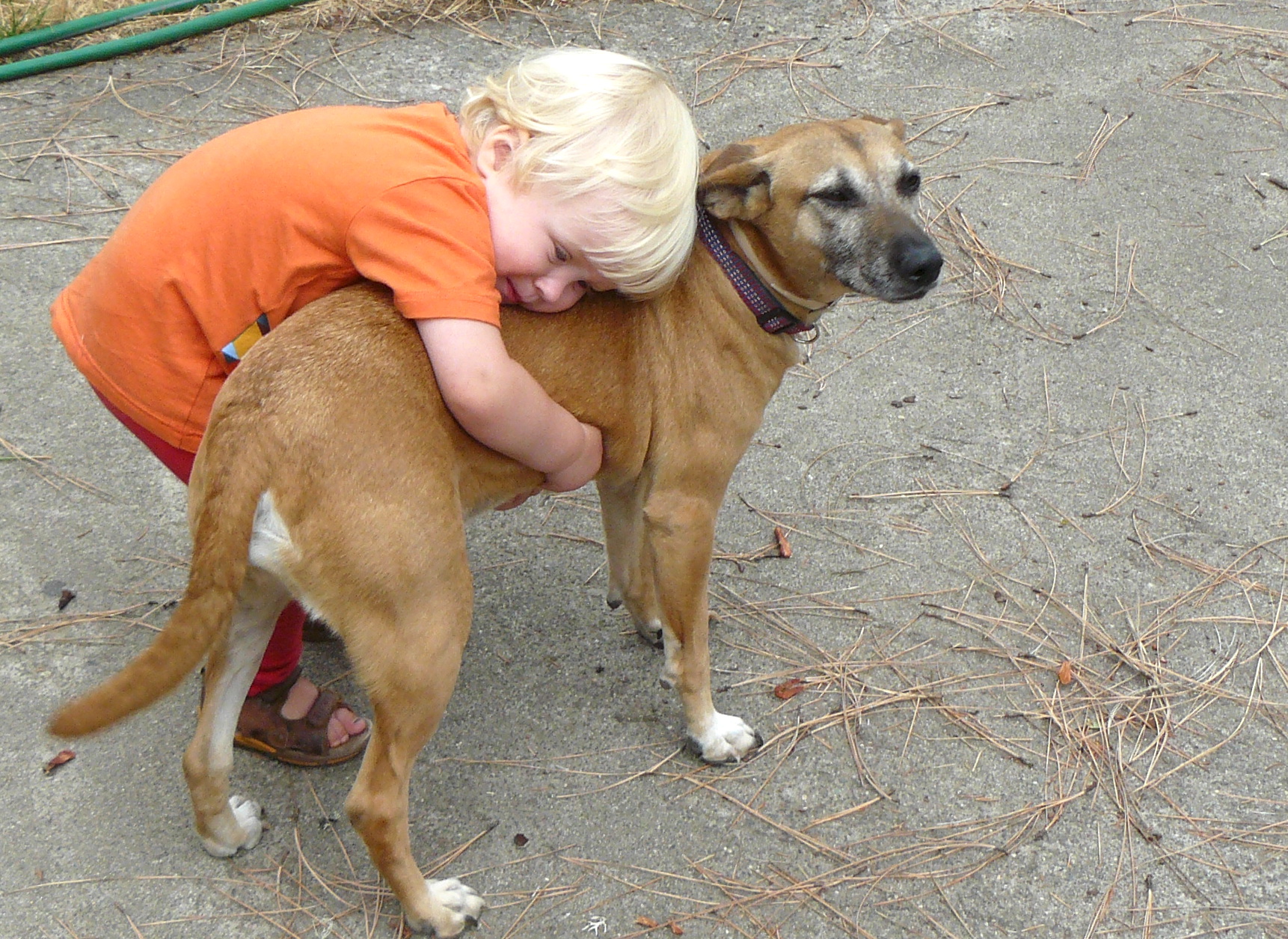
Love and Trust – Grandson Morten hugging Dhalia, September 2013.
It was Dhalia who inspired me to write a short story a couple of years ago: Messages from the Night.
So to the last couple of weeks. Back just a couple of weeks to when the vet’s assessment of Dhalia was that she had bone cancer that, in turn, inspired me to write the post Life, and mortality. So little time to say goodbye to Dhalia. (Dr. Codd’s assessment when we went to him with Dhalia yesterday morning was that the cancer must have been well-established for it to have metastasised so quickly; the normal interval between diagnosis of cancer and death would be six to eight weeks.)
That Dhalia reached out to the other dogs in our ‘bedroom’ pack was evident these past six or seven nights. For it has been in the last week that Dhalia was unable to go through the night without needing to pee.
The first night that this happened, I was awakened by Cleo coming to my side of the bed and running her head past my arm. It was 3am. Cleo repeated that for the next few nights and each time I was able to take Dhalia outside so she could relieve herself. Then as Dhalia’s internal organs started to fail it was Pharaoh who in the middle of the night uttered a couple of tiny barks; just sufficient to wake me and allow me and Jean to look after Dhalia’s needs.
When the bedroom door was opened to allow Dhalia to go through the house and, thence, to the front gardens, all the rest of the dogs remained still in the bedroom. They sensed the nature of what was going on.
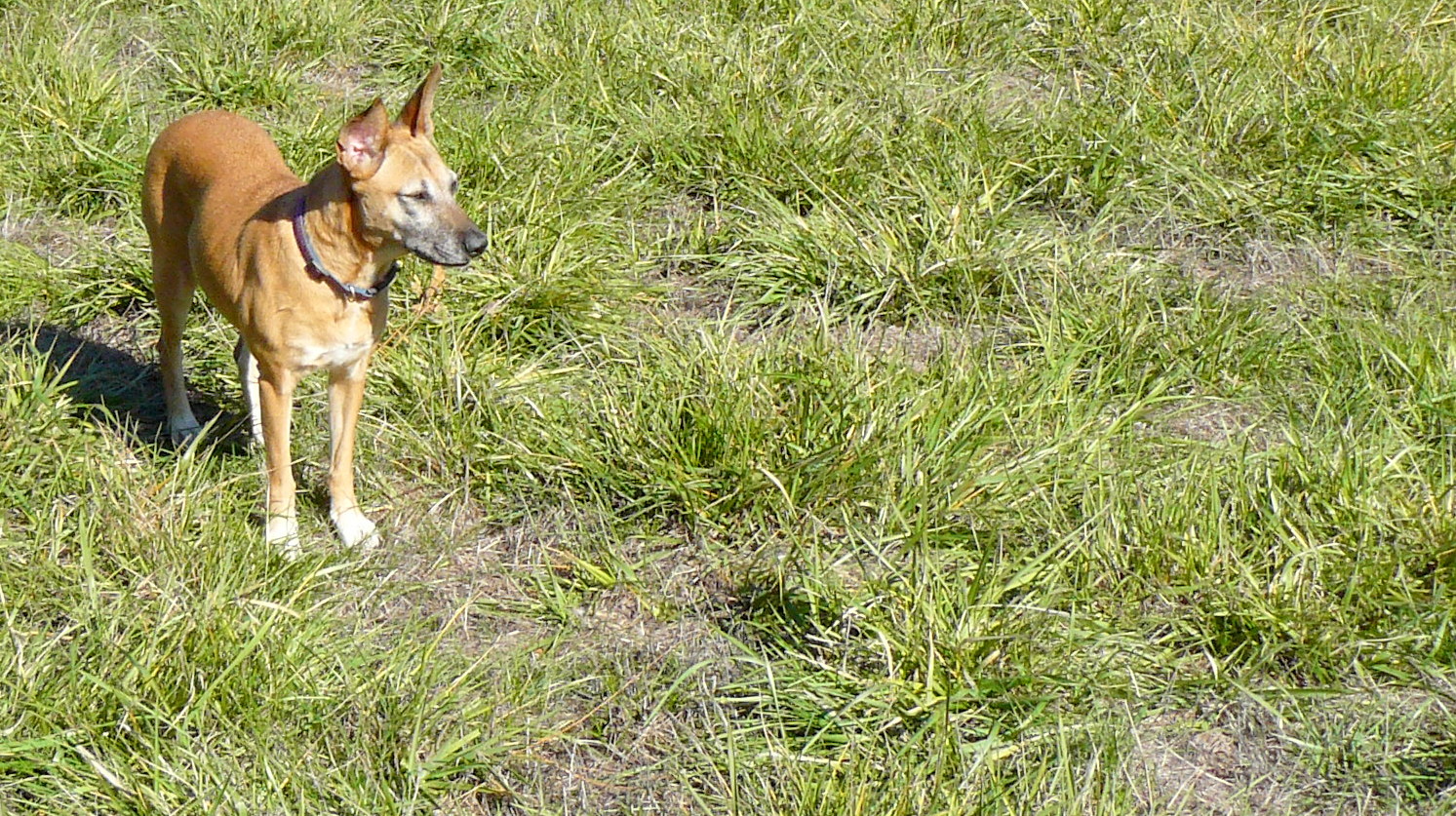
So to the last photograph. Taken last October here at home in Oregon showing Dhalia in typical independent spirits.
In 1968 I emigrated to Australia; to the city of Sydney. It was an easy move in many ways. For before I left I was working in the sales office of British Visqueen Ltd in Stevenage in Hertfordshire. ‘BVL’ were part of Imperial Chemical Industries (ICI).
On Day Three of my new life in Sydney I noticed that ICIANZ (Australia & New Zealand) had their headquarters building on Macquarie Street near North Circular Quay. On impulse I went in and two hours later had been offered a job in the sales office of ICI’s Inorganic Chemicals Division.
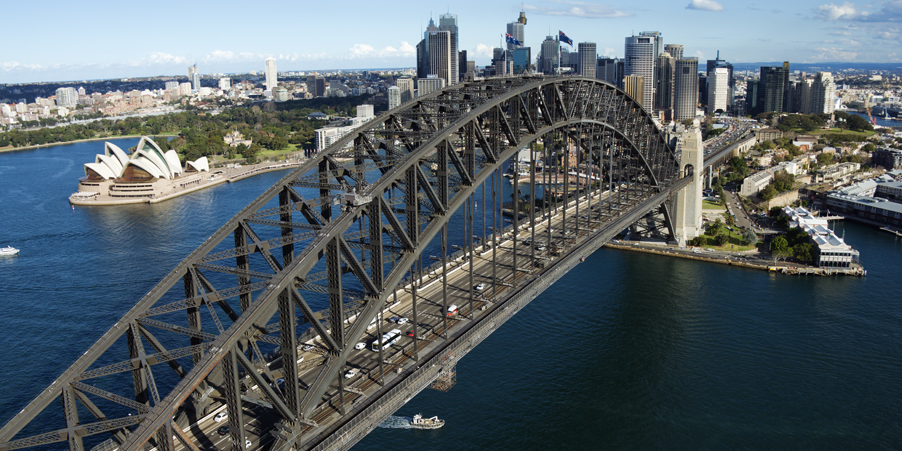
From the window of my office I had a stupendous view of the Sydney Harbour Bridge. This is a picture taken the other side of the Bridge looking back at the office complex to the right of the Sydney Opera House; the office block partially obscured by the top curve of the bridge.
Anyway, back to the story.
I was dating a Finnish woman who with her sister and parents had emigrated from Finland some years previously. That woman’s name was Britta and later we were married and then upon returning to England in 1970 we had two children; a son and a daughter. In Australia I didn’t miss England and when back in England I didn’t miss Australia.
I was 26 when we returned to England.
Fast forward forty-four years to now.
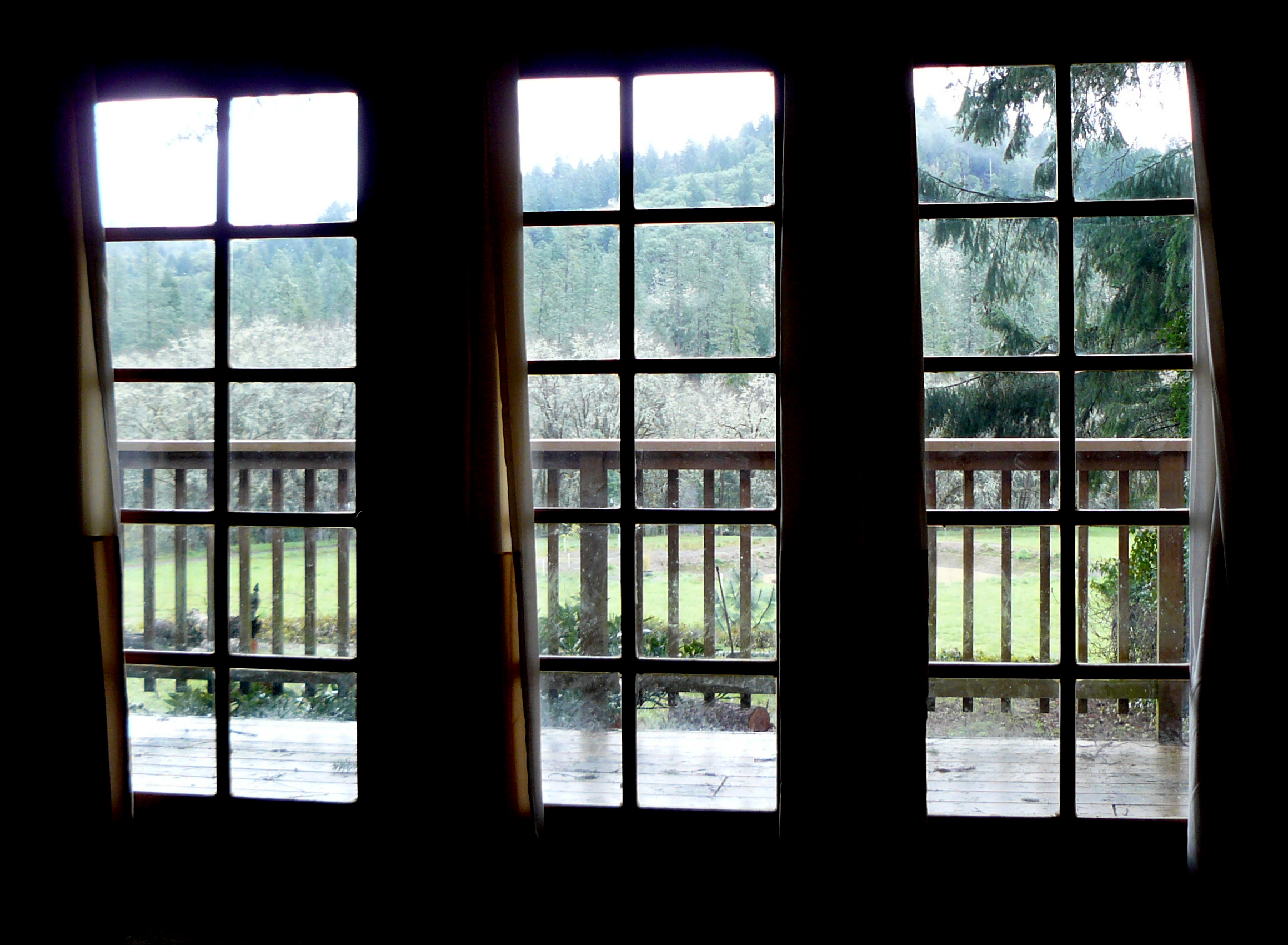
This is the view through our bedroom window in the morning when Jean and I awake.
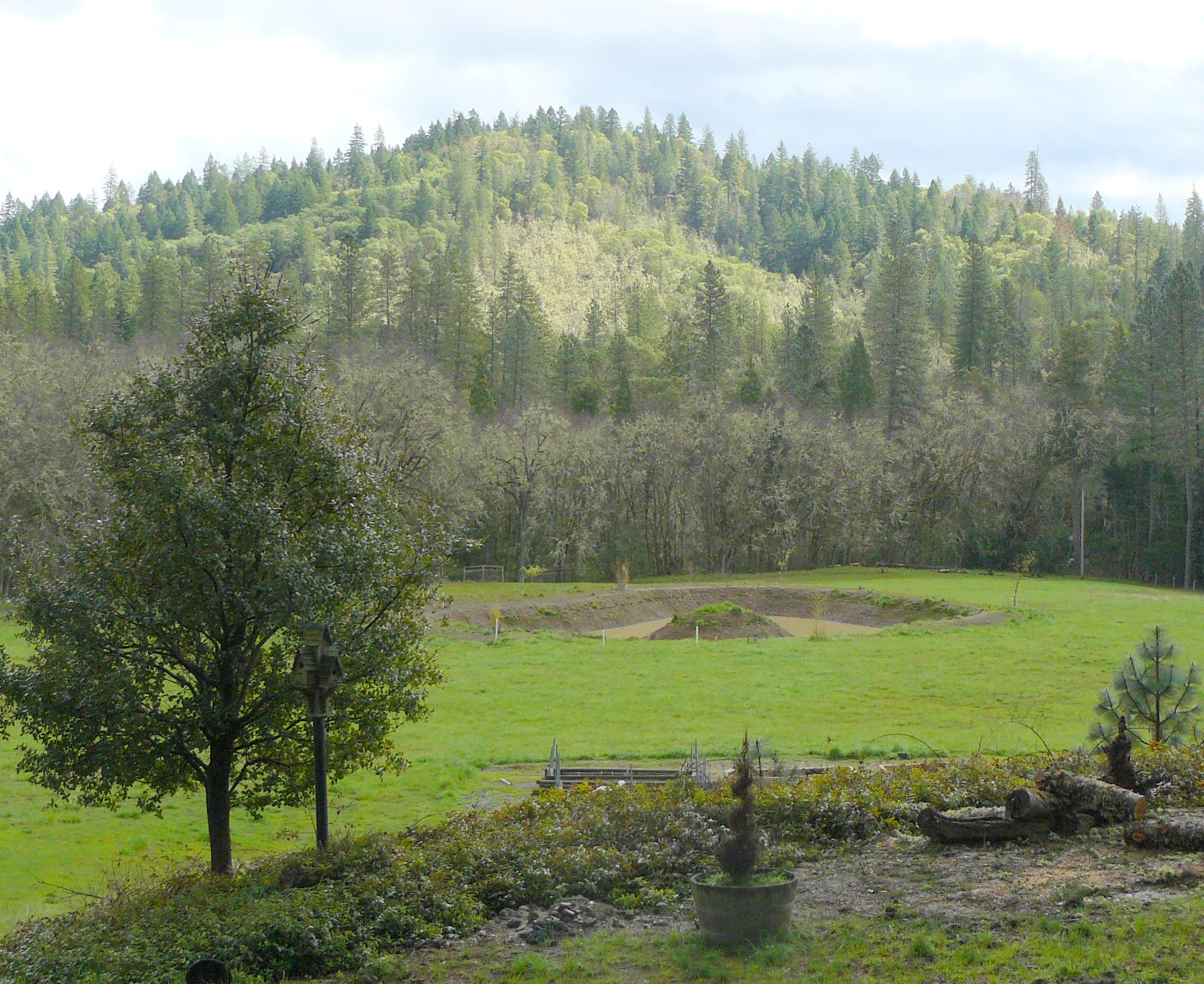
This is another view of the same scene but taken from outside the windows.
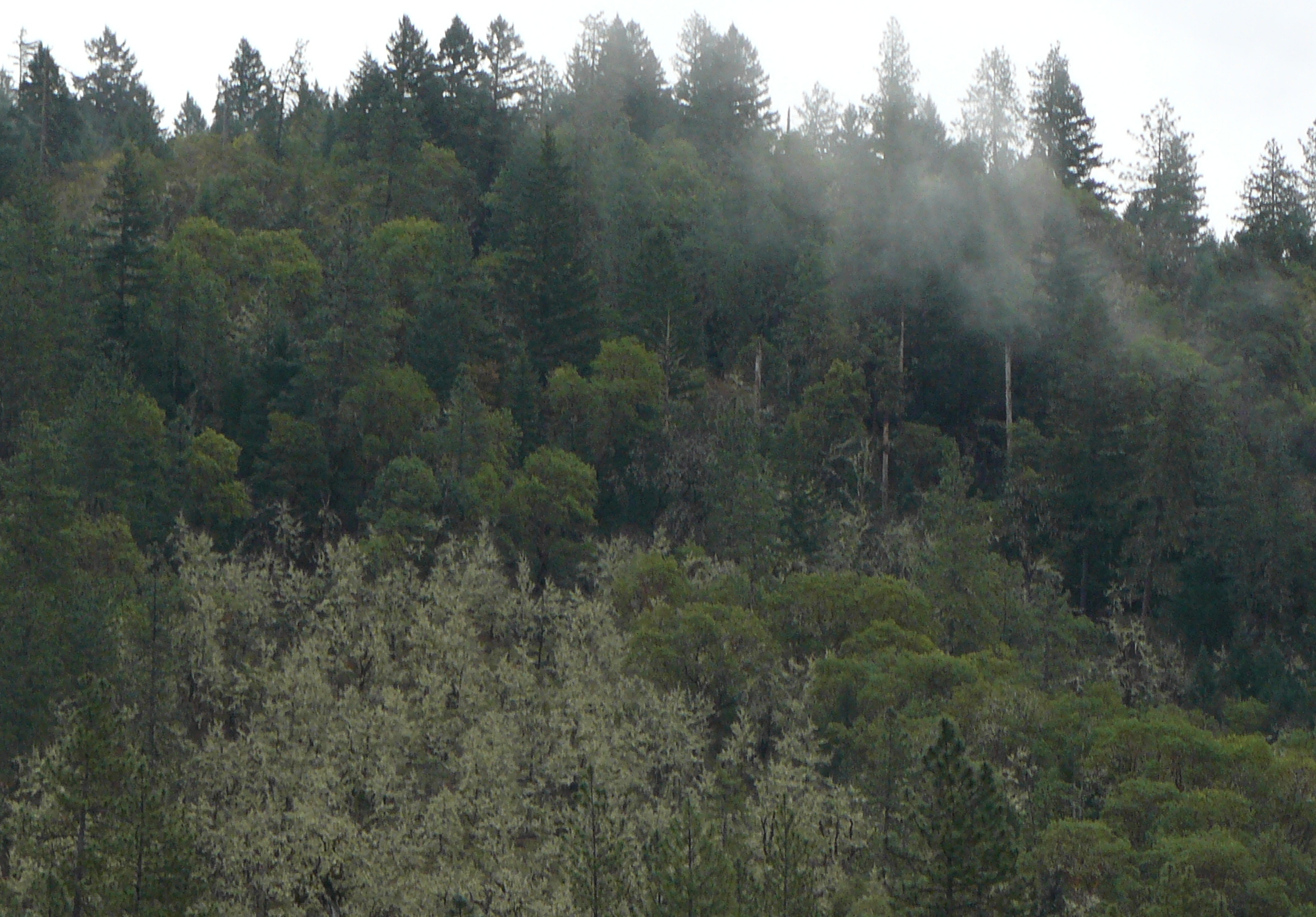
When the air is really moist and there are clouds hanging low over the ridge, it’s common to see mist swirling through the trees.
It is a beautiful place to live, for us and for all our animals …. yet …. we don’t feel perfectly settled.
Back to Britta’s parents. After they had been living in Australia for quite a few years, in Brisbane in those days, and all settled with jobs and their own house, they still didn’t feel perfectly settled. So they gave up their jobs, sold the house and transported themselves and their belongings all the way back to Helsinki, Finland.
Only to find that in less than three months that they had made a ghastly mistake and so, yes you know what’s coming, they transported themselves and all their belongings all the way back to Australia; this time settling in Sydney.
OK, to the point of this tale.
In many, many ways this life that Jean and I have here in Oregon is better than anything we have previously experienced.
Yet, there are times when I hear the sirens of Devon calling out to me and for Jean there are times when she hears the sirens of Mexico calling out to her; Jean lived in San Carlos, Mexico for twenty-five years, off and on, with her late American husband, Ben, who died in 2005.
I’m 70 in November this year.
What does it all mean?
When Jean and I were living in Payson, Arizona we were talking one day to a woman who in previous times had been a personal counsellor. She asked how we were settling in. We mentioned that we were not yet settled. The woman went on to say that people over the age of 60 frequently had a much more difficult time adjusting to major moves and changes in their lives than younger persons.
Jean and I wouldn’t rewind our lives for all the tea in China but what, dear reader, do you think?
Anyone out there the ‘wrong’ side of 60 who can relate to this?
The fabulous story of the restoration of a British Navy Supermarine Seafire Mk.XV
From time to time I let on that in the past I was a keen private pilot and before that a glider (sailplane) pilot. My son has been a commercial airline pilot for many years. Inevitably, one gets to know other pilots, a few of whom become firm friends. One such friend is Bob Derham who recently sent me this story about the restoration of a Supermarine Seafire. For anyone interested in classic aircraft, the story of this particular aircraft is fascinating.
Seafire Mk. XV
While WikiPedia has a good description of the type, there’s a fine description of this particular aircraft over at the Salute website, (the photo above came from that website) from which I offer:
Supermarine Seafire Mk. XV
This airplane is one of only four known Seafire Mk. XVs to exist in the world and it may be the only flying Supermarine Seafire Mk. XV in the world. Dr. Wes Strickler’s immaculate Supermarine Seafire Mk. XV (also known as the “hooked Spitfire”) is based in Columbia, MO, was restored by Jim Cooper, and made its first post-restoration flight in 2010. The Supermarine Seafire was a naval version of the Supermarine Spitfire specially adapted for operation from aircraft carriers. The Seafire’s mission was primarily as a short range interceptor. The name Seafire was derived by abbreviating the longer name “Sea Spitfire”.
The Mk XV variant of the Seafire was powered by a Griffon VI (single-stage supercharger, rated at 1,850 hp driving a 10 ft 5 in Rotol propeller. It appeared to be a naval Spitfire F Mk XII but was an amalgamation of a strengthened Seafire III airframe and wings with the wing fuel tanks, retractable tailwheel, larger elevators and broad-chord “pointed” rudder of the Spitfire VIII. The engine cowling was from the Spitfire XII series, being secured with a larger number of fasteners and lacking the acorn shaped blister behind the spinner. A vee-shaped guard forward of the tailwheel prevented arrestor wires getting tangled up with the tailwheel.
One problem which immediately surfaced was the poor deck behavior of this mark, especially on take-off. At full power the slipstream of the propeller, which swung to the left (as opposed to the Merlin, which swung to the right), often forced the Seafire to swing to starboard, even with the rudder hard over on opposite lock. This sometimes led to a collision with the carrier’s island. The undercarriage oleo legs were still the same as the much lighter Merlin engined Spitfires, meaning that the swing was often accompanied by a series of hops. This undercarriage also gave it a propensity of the propeller tips “pecking” the deck during an arrested landing and occasionally bouncing over the arrestor wires and into the crash barrier.
Wing span: 36ft 10in. Max takeoff weight: 7,640 lb. Max speed: 359 mph. Power: 1,850 hp.
This is an example of incredible dedication! Jim Cooper in front of the Seafire.
When you watch the film, Jim Cooper makes it clear that there were others on the restoration project. But the film also makes it clear that without Jim this beautiful aircraft would never have been restored, let alone restored to a flying machine.
Settle back and enjoy!
Uploaded on Aug 18, 2010 by Scott Schaefer
“While Sarah Hill and I were taping the first Central Missouri Honor Flight special in the Ozark Hangar at Columbia Regional Airport in January 2009, I noticed Jim Cooper working on a plane in the corner of the hangar. I love airplanes and this sight piqued my interest.
The corner was enclosed by plastic from floor to ceiling and inside sat a plane, wings folded toward the ceiling and a paint job that left more to be desired. It was the Seafire XV – one of only a handful still in existence. As soon as I saw the plane and learned a few facts about it, I knew I wanted to do a story on it and follow Cooper through the rest of the restoration process.
Cooper had already been working on the Seafire for nearly a year and half by the time we met, but there was still plenty of work that had to be done. I started shooting that night and throughout the next year and half, whenever Cooper would move to a different stage in the restoration, he’d call and I would head to the hangar to shoot video. I didn’t shoot every part of the process, but tried to capture the big ones ?cleaning the plane, painting, revealing the paint job, testing the landing gear, testing the engine and of course the first flight.
After 10 trips to the airport, 130 miles and nearly 6 hours of video, it was time to start the editing process. Once all the video was in the system, I spent 14 hours typing the details from of every sound and interview captured in the video. That log was essential in writing the story. I needed to know exactly what was said in order to organize everything into a story that would hopefully hold people’s interest. After I had a rough script written, I began to edit the video. After about 15 hours in the edit bay tweaking every little audio and video cut? then re-tweaking them? I was finally finished. Nineteen months later. It was a tough job picking the best four minutes from six hours of video, but in the end, I think I accomplished what I set out to do.”
Leave you with another photograph.
One of a kind!
If you wanted to see the aircraft in the air, then it will be at this year’s EAA OSHKOSH. I’ve always wanted to go but never made it! Anyone fancy baby-sitting some dogs and horses around the end of July? 😉