Category: History

Wherein lays the truth?

It is said that the first casualty in war is truth!
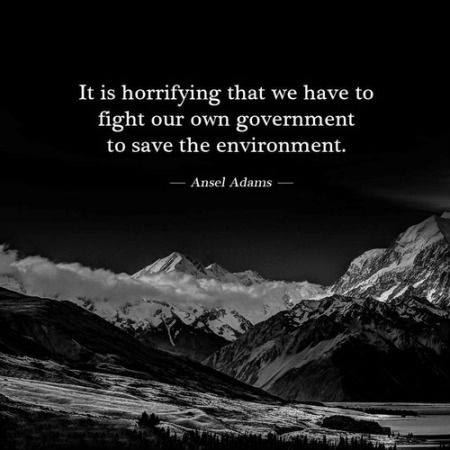
Ansel Adams

In yesterday’s post Vested interests, perhaps, I featured an article brought to my attention by dear friend, Dan Gomez. Namely an article featured in the UK’s Daily Mail newspaper that was headlined: ‘There is NO climate crisis’: Man-made global warming is a lie and not backed up by science, claims leading meteorologist.

Dan’s strong belief is that labelling the natural change in the world’s climate as anthropogenic global warming (AGW) serves governments and many large institutions incredibly well because it offers greater leverage to raise taxes.  In other words, Dan has no doubt that the climate is changing, but as a result of natural forces that go back long before the days of man.  In other words, it is being ‘sold’ as the direct result of man’s activities because it makes it easier to apply taxes and levies for purposes not related to climate matters.

As John Coleman was reported as saying:

John Coleman, who co-founded the Weather Channel, claims that the belief humans are causing climate change is not backed up by science.

In an open letter attacking the UN, the 80-year-old from San Diego, said that what ‘little evidence’ there is for global warming points to natural cycles in temperature.

‘There is no climate crisis,’ he wrote. ‘The ocean is not rising significantly. The polar ice is increasing, not melting away. Polar bears are increasing in number. ‘Heat waves have actually diminished, not increased. There is not an uptick in the number or strength of storms.

‘I have studied this topic seriously for years. It has become a political and environment agenda item, but the science is not valid.’

Now I am as sceptical about the workings of governments as the next man. But I find it incredibly difficult to believe that AGW is a myth, hoax or conspiracy.  There is a wall of science to say that we, as in man, are dangerously close to going over the edge, going beyond ‘tipping points’ from which there is no returning.

A quick dip into Wikipedia tells us [my emphasis]:

Scientific understanding of the cause of global warming has been increasing. In its fourth assessment (AR4 2007) of the relevant scientific literature, the Intergovernmental Panel on Climate Change (IPCC) reported that scientists were more than 90% certain that most of global warming was being caused by increasing concentrations of greenhouse gases produced by human activities. In 2010 that finding was recognized by the national science academies of all major industrialized nations.

Affirming these findings in 2013, the IPCC stated that the largest driver of global warming is carbon dioxide (CO2) emissions from fossil fuel combustion, cement production, and land use changes such as deforestation.

Only last Wednesday there was an item on Naked Capitalism that opened [again, my emphasis]:

J.D. Alt: Have We Passed the Tipping Point of Biological Collapse?

alt1The squiggle illustrated here may look like the Ebola virus, but it isn’t. The resemblance is just an eerie coincidence. It’s actually a graphical snapshot of the classic “Predator-Prey Model.” This mathematical exercise, first developed in the 1920s, serves as the introductory basis for a more recent NASA funded effort which produced—amidst a brief flurry of news and commentary last spring—the startling conclusion that a complete collapse of modern civilization may now be “irreversible.”

The NASA study involved the creation and running of a more elaborate model—HANDY (Human and Nature Dynamics)—which simulates the human consumption of naturally replenishing systems, as well as (intriguingly, given today’s news cycle) wealth and income inequality between two classes of citizens: “Elites” and “Commoners.” Now a new study, just released by the World Wildlife Fund, reports a grim statistic suggesting the abstract mathematics of the HANDY Model may be more than just a theoretical exercise. According to the WWF, in the last forty years—from 1970 to 2010—the Earth has lost over HALF (52%) of its wildlife population.

There are yards and yards of solid information all over the internet about our changing climate. The loss of wildlife, the destruction of forests and wild lands is beyond argument, and those aspects of this ‘modern’ world are most certainly the direct result of man’s activities!  Our inability to stop growing as a global population is insane.  Our inability to stop seeing continual economic and material growth as a ‘good thing’ is insane. We need massive change  – now!

Therein lays the problem.  Because, whether or not there is an approaching climate catastrophe as a result of man’s activities is, in a very real sense, irrelevant. If that seems a bizarre thing to write, I mean it is irrelevant in terms of what you and I, ordinary people trying to lead civilised lives, can do to make a difference.

Patrice Ayme recently published a post under the title of Total Plutocracy covering the death of Christophe de Margerie when his jet hit a snow plough on a Moscow runway at midnight, flipped on its back, caught fire, and skidded across. All four on board died.

Now the accidental death of any person is a tragedy, make no mistake, but as Patrice revealed in his post, this particular accident did raise some interesting aspects.  Here’s a little of what Patrice wrote:

With 200 billion Euros in revenue, TOTAL SA is not far behind the French government budget. TOTAL’s profits are 14 billion Euros (“Soyons serieux!” laughed Margerie). It pays nearly no tax in France, having concentrated there its money losing refineries.

Other countries get nearly all their fuel from French refineries; TOTAL has also a green light to frack in Britain. So this is not just a French situation. TOTAL is one of the five great oil companies concentrating the fossil fuel firepower. Those companies have the best technology. Some of TOTAL’s specialties are very deep water drilling, and using steam to extract tar oil in Canada.

What was de Margerie doing at midnight? Flying back to France, after meeting with Putin and Medvedev, late at night.

That’s how these guys are: great fun. Putin was recently invited to Milan for a big time European meeting. He arrived several hours late to visit with Merkel, who was not amused. After keeping her up past midnight, he motored to Berlusconi’s mansion, and the two plutocrats reveled together until 4 am. (We don’t know how many female teenagers were in attendance to further their studies.)

The next European meeting was at 8am, and Putin showed up.

Supposedly Margerie had just told Medvedev and Putin to cool it with Ukraine. At least that’s the massaging message Margerie’s minions floated after his death.

Why was Margerie so important to the Russian dictators? Because the six “supermajor” oil companies have the advanced technology. After all, they recruit from the best universities in the world (that’s paid by taxpayers). TOTAL SA was the spearhead of high tech development for hydrocarbon production in Russia. Among other things, it’s helping to build a gas liquefaction plant in the far north, to load special ships with methane (something TOTAL does with Qatar, in the world’s largest such installation).

Once a ship is fully loaded, it has several times the explosive power deployed at Hiroshima (such a catastrophic accident has not happened yet, but it’s just a matter of time).

When citizen Lambda dies, Mr. Anybody, nobody official cares. When a major plutocrat dies, our leaders, even our socialist leaders, weep, and present the accident as a national, even international tragedy.

Is the death of a plutocrat worth that much more, that all this public weeping has to occur?

And, by the way, who and what has authorized Mr. Margerie to lead his own foreign policy? Who authorized him to make nice with thermonuclear dictators? To the point of allowing their survival?

I recommend that you read it in full for it says so much about what is wrong with these present times: so much inequality and so many abuses of power.

Just the other day the Guardian newspaper published an article under the title of: Richest 1% of people own nearly half of global wealth, says report.

The richest 1% of the world’s population are getting wealthier, owning more than 48% of global wealth, according to a report published on Tuesday which warned growing inequality could be a trigger for recession.

According to the Credit Suisse global wealth report (pdf), a person needs just $3,650 – including the value of equity in their home – to be among the wealthiest half of world citizens. However, more than $77,000 is required to be a member of the top 10% of global wealth holders, and $798,000 to belong to the top 1%.

“Taken together, the bottom half of the global population own less than 1% of total wealth. In sharp contrast, the richest decile hold 87% of the world’s wealth, and the top percentile alone account for 48.2% of global assets,” said the annual report, now in its fifth year.

On October 8th, George Monbiot published an essay in The Guardian newspaper under the title of The Toll-Booth Economy.  The opening lines set the theme.

Corporate power is the real enemy within, but none of the major parties will confront it.

The more power you possess, the more insecure you feel. The paranoia of power drives people towards absolutism. But far from curing them of the conviction that they are threatened and beleaguered, it becomes only stronger.

On Friday, the Chancellor of the Exchequer, George Osborne, claimed that business is under political attack on a scale it has not faced since the fall of the Berlin wall. He was speaking at the Institute of Directors, where he was introduced with the claim that “we are in a generational struggle to defend the principles of the free market against people who want to undermine it or strip it away.” A few days before, while introducing Osborne at the Conservative party conference, Digby Jones, formerly the head of the Confederation of British Industry, warned that companies are at risk of being killed by “regulation from Big Government” and of drowning “in the mire of anti-business mood music encouraged by vote-seekers.” Where is that government and who are these vote-seekers? They are a figment of his imagination.

Read the full essay here.

Yes, one could go on and on.

Indeed, I will. Go on with just one more reference.  From the Smithsonian. An article that started, as follows:

Five Conflicts and Collapses That May Have Been Spurred by Climate Change

Earth’s changing climate has been a spectre in centuries of civil conflict and, at times, the collapse of whole civilizations

By Natasha Geiling
smithsonian.com
October 20, 2014

Is climate change a matter of national security? In a warming world, sea-level rise, drought and soil degradation are putting basic human needs such as food and shelter at risk. In March, the U.S. Department of Defense called climate change a “threat multiplier,” saying that competition for resources “will aggravate stressors abroad such as poverty, environmental degradation, political instability and social tensions—conditions that can enable terrorist activity and other forms of violence.”

Connecting climate change to a global increase in violence is tricky, and attempts to make such a link receive a fair amount of criticism. A hotter planet doesn’t automatically become a more conflict-ridden one. The 2000s, for instance, saw some of the highest global temperatures in recorded history—and some of the lowest rates of civil conflict since the 1970s.

But there are historical examples of civilizations that did not fare well when faced with drastic environmental change, and those examples may offer a window into the future—and even help prevent catastrophe. “We can never know with 100-percent certainty that the climate was the decisive factor [in a conflict],” says Solomon Hsiang, assistant professor of public policy at the University of California, Berkeley. “But there’s a lot of cases where things look pretty conspicuous.”

Read the five historical examples and realise that we are not immune.

Earlier on I ventured the idea that whether or not an approaching climate catastrophe was a result of man’s activities was, in a very real sense, irrelevant.  Because of the lack of individual power to make a real difference, especially a political difference.

What is relevant is improving the way we govern ourselves. The abuses of money and power are too widespread to be ignored.  We need to start with strong local democracies and thence building a system of global governance that really is of the people by the people for the people.

Phew – I need a dog to hug!
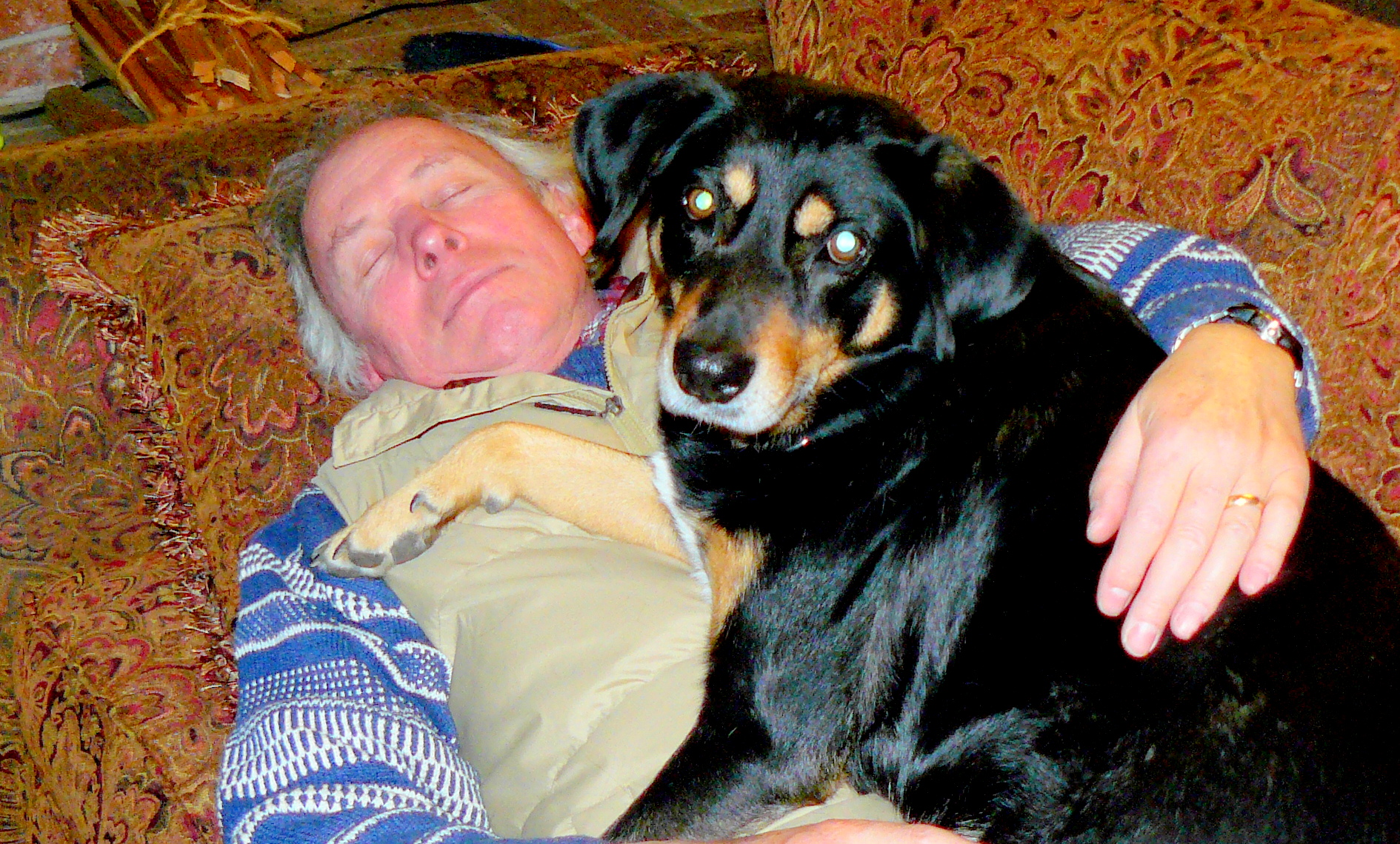
The truest of love between a man and a dog!
Hazel providing the ‘love-in’.

Vested interests, perhaps.

I’m being very brave and stepping into the climate change cauldron!

Learning from Dogs has been posting a wide range of items for well over five years. Indeed, today’s post is number 2,238!

Over those five years, my position regarding climate change or global warming has been pretty clear: a belief in the proposition that man’s behaviours are changing the very climate of our planet.  For instance, a little over a year ago I posted under the title Sceptical about global warming?  It opened:

Learning from Dogs is not a blogsite about climate change!

Why, you may ask, do I start today’s post with that sub-heading?  Because, I am conscious that many of my posts do touch on this subject.  For example, just two days ago there was Breaking news.  Then there was the piece about the climate implications for Phoenix, Arizona.  Followed the next day by the changes in the flow of the jet stream across the North Atlantic with all the weather implications for North-West Europe.

Indeed, as the heading to today’s post makes clear, this is also about the changes going on to our planet.

Learning from Dogs is about a different way of living and behaving.  A campaign, if one wants to call it that, to show that the way that modern man is living is corrupt.  Not with a big ‘C’ but still in the sense of living a dishonest life.  Learning from Dogs attempts to show that our wonderful dogs, a source of so much love and pleasure for so many millions, offer us an example of a life in and of this planet.

If there was ever a time in the history of man when we needed being reminded of our frailty and vulnerability, it is now.  As the following so starkly illustrates.

Peter Sinclair of Climate Crocks recently republished an item from Skeptical Science that opened up as follows:

A new study of ocean warming has just been published in Geophysical Research Letters by Balmaseda, Trenberth, and Källén (2013).  There are several important conclusions which can be drawn from this paper.

  • Completely contrary to the popular contrarian myth, global warming has accelerated, with more overall global warming in the past 15 years than the prior 15 years.  This is because about 90% of overall global warming goes into heating the oceans, and the oceans have been warming dramatically.

Then last week-end, Dan Gomez, friend for over 40 years, sent me the following:

Weather Channel Founder: Global Warming Science ‘Not Valid’

Meteorologist John Coleman, who co-founded The Weather Channel, says the claim that human activity is leading to global warming is no longer scientifically credible.

Instead, the “little evidence” there is for rising global temperatures points to a “natural phenomenon,” Coleman asserts.

In an open letter to the United Nations’ Intergovernmental Panel on Climate Change (IPCC), he wrote: “There is no climate crisis. The ocean is not rising significantly. The polar ice is increasing, not melting away. Polar bears are increasing in number.

“Heat waves have actually diminished, not increased. There is not an uptick in the number or strength of storms.

“I have studied this topic seriously for years. It has become a political and environmental agenda item, but the science is not valid.”

Coleman says he based his views on the findings of the Nongovernmental International Panel on Climate Change (not to be confused with the U.N. panel), a body of scientists and scholars who assess the science of global warming.

“There is no significant man-made global warming at this time. There has been none in the past and there is no reason to fear any in the future,” says Coleman, who was the original meteorologist on “Good Morning America.”

“Efforts to prove the theory that carbon dioxide is a significant greenhouse gas and pollutant causing significant warming or weather effects have failed.

“There has been no warming over 18 years.”

The U.N.’s IPCC argues that their research shows man-made global warming will lead to extreme weather events becoming more frequent and unpredictable, the Express in Britain reported.

Climate expert William Happer, a professor at Princeton University, expressed support for Coleman’s claims.

“No chemical compound in the atmosphere has a worse reputation than CO2, thanks to the single-minded demonization of this natural and essential atmospheric gas by advocates of government control [of] energy production,” Happer said.

“The incredible list of supposed horrors that increasing carbon dioxide will bring the world is pure belief disguised as science.”

What Dan had seen was an article in the UK Daily Mail that, in turn, was echoed on the US WesternJournalism blogsite.  Here’s how that Daily Mail story opens:

Climate change has been proven to be a lie, according to a leading meteorologist.

John Coleman, who co-founded the Weather Channel, claims that the belief humans are causing climate change is not backed up by science.

In an open letter attacking the UN, the 80-year-old from San Diego, said that what ‘little evidence’ there is for global warming points to natural cycles in temperature.

‘There is no climate crisis,’ he wrote. ‘The ocean is not rising significantly. The polar ice is increasing, not melting away. Polar bears are increasing in number. ‘Heat waves have actually diminished, not increased. There is not an uptick in the number or strength of storms.

‘I have studied this topic seriously for years. It has become a political and environment agenda item, but the science is not valid.’

The WesternJournalism post runs with the story explaining (in part):

John Coleman, the original meteorologist for ABC’s Good Morning America and the founder of The Weather Channel, which launched in 1982, wrote an open letter to the UCLA’s Hammer Forum urging them “to re-examine their plan” for their forum, scheduled for this past Thursday, after they announced their experts, both of whom believe in climate change science.

Coleman has made his position against climate change science clear in the past.

“There is no significant man-made global warming at this time, there has been none in the past and there is no reason to fear any in the future. Efforts to prove the theory that carbon dioxide is a significant ‘greenhouse’ gas and pollutant causing significant warming or weather effects have failed. There has been no warming over 18 years.”

The Weather Channel founder cites professors from Princeton University, Massachusetts Institute of Technology (MIT), Harvard Smithsonian Observatory, and the University of Alabama, along with “9,000 Ph.D scientists” who agree with him.

“Yet at your October 23 Hammer Forum on Climate Change you have scheduled as your only speakers two people who continue to present failed science as though it is the final and complete story on global warming/climate change. This is a major mistake.”

Coleman urged the UCLA group to reconsider, noting he is not a “flat Earther,” or a “paid shill of the Koch Brothers.”

In a discussion yesterday with Dan, he was of the clear mind that, yes, the climate is changing, as it always has over eons of time, but that the degree of change that is directly attributed to man’s affairs is minute.  Then all around me I see sign after sign, read article after article, that we, as in mankind, are relentlessly ‘fouling our own nest’ and the time left for us to learn how to live sustainably on this planet is fast running out.

Can we get to the truth? The topic will be continued tomorrow!

Spying and security: Further thoughts.

My follow-up to yesterday’s post.

Yesterday, the central theme of my post was the essay from Tom Engelhardt where he interviews Laura Poitras on the back of the recent release of her film Citizenfour. You will recall that I closed the post as follows:

On first reading the TomGram I found myself nodding vigorously, metaphorically speaking, with the whole thrust of the essay.

Then what appeared to be small uncertainties started appearing in my mind.

Those will be the subject of tomorrow’s post.

To set the background to what follows, you need to know a little about my own military experiences; which is not saying very much!

I was born in London six months to the day before WWII ended; at least the European side of things. When I got to the age of being vulnerable to a call-up if circumstances so dictated, I thought I would influence things by volunteering to join the United Kingdom’s Royal Naval Reserve or the RNR.  The world in the early 60’s especially in Europe was far from stable.  Thus, I signed up with London Division, RNR that was headquartered on HMS President, moored on the River Thames in the centre of London.

HMS President.
HMS President.

I served as a Radio Operator in the RNR from 1963 to 1968.  Inevitably, as a radio operator I was security cleared and, in time, as I was promoted up the ranks, allowed to handle traffic up to but not including “Top Secret: Captain’s Eyes Only”.

In 1968 I decided to emigrate to Australia and resigned from the RNR.  The parting advice was that the knowledge I had acquired prevented me, for my own safety, from entering any country hostile to NATO for a period of a further 5 years. Including the Soviet Union; naturally.

At the end of 1970, living and working in Sydney, I was planning to attend Expo70 in Japan and then travel on to Helsinki, Finland.  One look at the atlas made it clear that a wonderful way of travelling westwards was via the Russian Trans-Siberian express.

So off I trotted to the British Embassy in Sydney to seek advice about entering Russia in this fashion.  One of the military guys, on hearing about my concerns, laughed his head off and said, “The Russians will know more about you than we do!”  Then, becoming more serious, he added: “My friend, if you ever find yourself in a difficult corner anywhere in a country hostile to the West, just find a way of transmitting your RNR Service Number to us and we’ll take care of things”.  To this day, well over 40 years later, I still remember my service number.

Returning to the subject of the American security ‘apparatus’, Laura Poitras answered a question from Tom Engelhardt that seems very pertinent.

TE: To ask the same question another way, what would the world be like without Edward Snowden? After all, it seems to me that, in some sense, we are now in the Snowden era.

LP: I agree that Snowden has presented us with choices on how we want to move forward into the future. We’re at a crossroads and we still don’t quite know which path we’re going to take. Without Snowden, just about everyone would still be in the dark about the amount of information the government is collecting. I think that Snowden has changed consciousness about the dangers of surveillance. We see lawyers who take their phones out of meetings now. People are starting to understand that the devices we carry with us reveal our location, who we’re talking to, and all kinds of other information. So you have a genuine shift of consciousness post the Snowden revelations.

What struck me was the point about a changed consciousness.  That is healthy. Without doubt.

The technology available to the governments of countries with regard to the gathering of all sorts of data represents a place where we haven’t been before.  Inevitably, learning how best to govern that data, with both a small ‘g’ and a large ‘G’, is going to be a traveled road where some wrong turnings are made from time to time.

If the Edward Snowden affair has accelerated that learning process, then that seems nothing but good.

Mind you, not everyone applauds Mr. Snowden.

Fred Kaplan, a serious political scientist, published a critical article, Sins of Omission, recently on the Slate web news site from which I quote:

If all I knew about Edward Snowden were his portrait in Laura Poitras’ documentary, Citizenfour, I’d probably regard him as a conscientious, brave young man, maybe an American hero. But Poitras, a very talented filmmaker who flipped from journalist to collaborator in this story long ago, has chosen to leave a lot out.

Snowden’s claim as a whistleblower, exposing the National Security Agency’s violations of civil liberties, rests on some of the documents that he leaked, which reveal that the NSA’s domestic surveillance was far more extensive than anyone had imagined—and, in a few instances, conducted in defiance of orders from the Foreign Intelligence Surveillance Court.

However, many other documents—which he downloaded at the NSA facility in Hawaii and turned over to Poitras and the Guardian’s Glenn Greenwald in Hong Kong—go far beyond exposures of spying on Americans.

Judging from Snowden-derived stories in the Guardian and the Washington Post, some of these documents also detail NSA intercepts of email and cellphone conversations by Taliban fighters in Pakistan; assessments of CIA assets in several foreign countries; and surveillance of cellphone calls “worldwide” that (in the Post’s words) allows the NSA “to look for unknown associates of known intelligence targets by tracking people whose movements intersect.” In Snowden’s first interview abroad, with the South China Morning Post, he disclosed that the NSA routinely hacks into hundreds of computers in Hong Kong and China. Just last week a story co-authored by Poitras in Greenwald’s new publication, the Intercept, revealed—again, based on Snowden-supplied documents—that the NSA has undercover operatives in Germany and China.

Whatever you think about foreign intelligence operations, the NSA’s core mission is to intercept communications of foreign governments and agents. If Snowden and company wanted to take down an intelligence agency, they should say so. But that has nothing to do with whistleblowing or constitutional rights.

As the Mission Statement on the NSA website explains, in part,:

The National Security Agency/Central Security Service (NSA/CSS) leads the U.S. Government in cryptology that encompasses both Signals Intelligence (SIGINT) and Information Assurance (IA) products and services, and enables Computer Network Operations (CNO) in order to gain a decision advantage for the Nation and our allies under all circumstances.

The Information Assurance mission confronts the formidable challenge of preventing foreign adversaries from gaining access to sensitive or classified national security information. The Signals Intelligence mission collects, processes, and disseminates intelligence information from foreign signals for intelligence and counterintelligence purposes and to support military operations. This Agency also enables Network Warfare operations to defeat terrorists and their organizations at home and abroad, consistent with U.S. laws and the protection of privacy and civil liberties.

I read, “to gain a decision advantage for the Nation and our allies under all circumstances” as meaning maintaining a positive security for the Nation.  My home nation as it happens.

While the scale may be beyond comparison, the principle of maintaining a secure nation or home strikes me as no different as locking the doors of our house when we go off somewhere.  And that’s even with nine dogs in the house!

Given that what any ex-head of GCHQ might say, the recent words from Sir Iain Lobban, as reported by the BBC, were not extreme; far from it.

Sir Iain Lobban.
Sir Iain Lobban.

A dimly lit bunker beneath Whitehall – perhaps a suitable venue for a man to say farewell to a 31-year career in what had been one of the most secret parts of the British state.

Sir Iain Lobban was joined by an assortment of spies and securocrats including former heads of GCHQ and the current chief of MI6. It was a venue not chosen by chance.

As he leaves his position as director of GCHQ, Sir Iain used his speech to try to connect the work of today’s GCHQ with its predecessor at Bletchley Park which supplied vital information to Sir Winston Churchill who, from the same bunker, directed Britain’s wartime efforts.

Then, the mission was intercepting and breaking the Enigma code used by the German military to communicate. Dealing with today’s threats, Sir Iain argued, involved going online.

“Those who would do us harm don’t want to be found. They choose certain routers or applications to hide in the darkest places of the internet. We have to enter that labyrinth to find them. We work to crack their defences,” he told the audience.

Sir Iain took aim at those who saw spy agencies polluting a free internet. “We all now know that the beautiful dream of the internet as a totally ungoverned space was just that – a beautiful dream.

“Like all utopian visions, it was flawed because it failed to account for the persistence of the worst aspects of human nature.

“Alongside the blessings – the comprehensive information, the communities of interest, the commercial opportunities and efficiencies – there are the plotters, the proliferators and the paedophiles.”

Being reported later on as saying:

“The people who work at GCHQ would sooner walk out the door than be involved in anything remotely resembling ‘mass surveillance’.” he asserted.

“Secret does not have to equal sinister,” he went on to say, blaming the idea partly on the portrayal of intelligence in popular culture.

Finally, in an article by Jill Serjeant over on Yahoo News, she offers:

Poitras hopes the documentary will allow audiences to reach their own conclusions about Snowden, who is wanted in the United States on charges brought under the Espionage Act and is viewed as either a traitor or a hero.

Only time will tell if the USA is overdoing the ‘mass’ aspect of surveillance, or if it’s right for this age in the affairs of man.

That nothing can be constructed perfectly the first time around is a truism for life at all scales. Thank goodness I’m living in a country where I feel able to offer these thoughts.

The golden age of spying; or whistleblowing?

Maybe an open debate is the most important aspect of this important topic – the one about national security.

I am frequently a republisher of essays that are presented over on TomDispatch, as regulars of this place know well.  As the TD ‘About’ page explains, in part and my emphasis,:

In December 2002, it gained its name, became a project of The Nation Institute, and went online as “a regular antidote to the mainstream media.

No bad thing as the ‘media’ is a vast machine and it’s long been difficult, nay impossible, to separate fact from fiction.  Perhaps, better expressed as impossible to separate fact from agenda!

TD’s ‘About’ page goes on to add, and again my emphasis:

Tomdispatch is intended to introduce readers to voices and perspectives from elsewhere (even when the elsewhere is here). Its mission is to connect some of the global dots regularly left unconnected by the mainstream media and to offer a clearer sense of how this imperial globe of ours actually works.

Stay with that last thought, the one about having a clearer sense of how this imperial globe works, and I am assuming Tom Engelhardt has in mind the USA when he uses the word “imperial”,  for both today and tomorrow.  Why? Because in this particular instance I’m not sure that I have ended up with a clearer sense about how the security apparatus works across the USA and much of the rest of the ‘Western world’.  I want to explore this very important topic over two days.

Back to TomDispatch.

On the 19th October, Tom published a joint essay, or TomGram as he calls it, with Laura Poitras about her film Citizenfour.  This film is about Edward Snowden. The TomGram was called: Laura Poitras and Tom Engelhardt, The Snowden Reboot.

Here is the trailer to the film.

Next to the TomGram.  But first a note about hyperlinks.  There are many links in the TomGram, many of which offer great insight into the background to the essay.  However, there are too many to carry across to my republication so, please, do go across to TomDispatch if you wish to pursue a link or two.

Finally, a thank you to both Tom and Laura for giving me permission to republish.

ooOOoo

Tomgram: Laura Poitras and Tom Engelhardt, The Snowden Reboot

Posted by Laura Poitras and Tom Engelhardt at 5:01pm, October 19, 2014.

[Note for TomDispatch Readers: Call me moved. I recently went to the premiere of Citizenfour, Laura Poitras’s engrossing new film on Edward Snowden, at the New York Film Festival. The breaking news at film’s end: as speculation had it this summer, there is indeed at least one new, post-Snowden whistleblower who has come forward from somewhere inside the U.S. intelligence world with information about a watchlist (that includes Poitras) with “more than 1.2 million names” on it and on the American drone assassination program.

Here’s what moved me, however. My new book, Shadow Government: Surveillance, Secret Wars, and a Global Security State in a Single-Superpower World, ends with a “Letter to an Unknown Whistleblower,” whose first lines are: “I don’t know who you are or what you do or how old you may be. I just know that you exist somewhere in our future as surely as does tomorrow or next year… And how exactly do I know this? Because despite our striking inability to predict the future, it’s a no-brainer that the national security state is already building you into its labyrinthine systems.” And now, of course, such a whistleblower is officially here and no matter how fiercely the government may set out after whistleblowers, there will be more. It’s unstoppable, in part thanks to figures like Poitras, who is the subject of today’s TomDispatch interview. Tom]

Edward Snowden and the Golden Age of Spying

A TomDispatch Interview With Laura Poitras

Here’s a Ripley’s Believe It or Not! stat from our new age of national security. How many Americans have security clearances? The answer: 5.1 million, a figure that reflects the explosive growth of the national security state in the post-9/11 era. Imagine the kind of system needed just to vet that many people for access to our secret world (to the tune of billions of dollars). We’re talking here about the total population of Norway and significantly more people than you can find in Costa Rica, Ireland, or New Zealand. And yet it’s only about 1.6% of the American population, while on ever more matters, the unvetted 98.4% of us are meant to be left in the dark.

For our own safety, of course. That goes without saying.

All of this offers a new definition of democracy in which we, the people, are to know only what the national security state cares to tell us. Under this system, ignorance is the necessary, legally enforced prerequisite for feeling protected. In this sense, it is telling that the only crime for which those inside the national security state can be held accountable in post-9/11 Washington is not potential perjury before Congress, or the destruction of evidence of a crime, or torture, or kidnapping, or assassination, or the deaths of prisoners in an extralegal prison system, but whistleblowing; that is, telling the American people something about what their government is actually doing. And that crime, and only that crime, has been prosecuted to the full extent of the law (and beyond) with a vigor unmatched in American history. To offer a single example, the only American to go to jail for the CIA’s Bush-era torture program was John Kiriakou, a CIA whistleblower who revealed the name of an agent involved in the program to a reporter.

In these years, as power drained from Congress, an increasingly imperial White House has launched various wars (redefined by its lawyers as anything but), as well as a global assassination campaign in which the White House has its own “kill list” and the president himself decides on global hits. Then, without regard for national sovereignty or the fact that someone is an American citizen (and upon the secret invocation of legal mumbo-jumbo), the drones are sent off to do the necessary killing.

And yet that doesn’t mean that we, the people, know nothing. Against increasing odds, there has been some fine reporting in the mainstream media by the likes of James Risen and Barton Gellman on the security state’s post-legal activities and above all, despite the Obama administration’s regular use of the World War I era Espionage Act, whistleblowers have stepped forward from within the government to offer us sometimes staggering amounts of information about the system that has been set up in our name but without our knowledge.

Among them, one young man, whose name is now known worldwide, stands out. In June of last year, thanks to journalist Glenn Greenwald and filmmaker Laura Poitras, Edward Snowden, a contractor for the NSA and previously the CIA, stepped into our lives from a hotel room in Hong Kong. With a treasure trove of documents that are still being released, he changed the way just about all of us view our world. He has been charged under the Espionage Act. If indeed he was a “spy,” then the spying he did was for us, for the American people and for the world. What he revealed to a stunned planet was a global surveillance state whose reach and ambitions were unique, a system based on a single premise: that privacy was no more and that no one was, in theory (and to a remarkable extent in practice), unsurveillable.

Its builders imagined only one exemption: themselves. This was undoubtedly at least part of the reason why, when Snowden let us peek in on them, they reacted with such over-the-top venom. Whatever they felt at a policy level, it’s clear that they also felt violated, something that, as far as we can tell, left them with no empathy whatsoever for the rest of us. One thing that Snowden proved, however, was that the system they built was ready-made for blowback.

Sixteen months after his NSA documents began to be released by the Guardian and the Washington Post, I think it may be possible to speak of the Snowden Era. And now, a remarkable new film, Citizenfour, which had its premiere at the New York Film Festival on October 10th and will open in select theaters nationwide on October 24th, offers us a window into just how it all happened. It is already being mentioned as a possible Oscar winner.

Director Laura Poitras, like reporter Glenn Greenwald, is now known almost as widely as Snowden himself, for helping facilitate his entry into the world. Her new film, the last in a trilogy she’s completed (the previous two being My Country, My Country on the Iraq War and The Oath on Guantanamo), takes you back to June 2013 and locks you in that Hong Kong hotel room with Snowden, Greenwald, Ewen MacAskill of the Guardian, and Poitras herself for eight days that changed the world. It’s a riveting, surprisingly unclaustrophic, and unforgettable experience.

Before that moment, we were quite literally in the dark. After it, we have a better sense, at least, of the nature of the darkness that envelops us. Having seen her film in a packed house at the New York Film Festival, I sat down with Poitras in a tiny conference room at the Loews Regency Hotel in New York City to discuss just how our world has changed and her part in it.

Tom Engelhardt: Could you start by laying out briefly what you think we’ve learned from Edward Snowden about how our world really works?

Laura Poitras: The most striking thing Snowden has revealed is the depth of what the NSA and the Five Eyes countries [Australia, Canada, New Zealand, Great Britain, and the U.S.] are doing, their hunger for all data, for total bulk dragnet surveillance where they try to collect all communications and do it all sorts of different ways. Their ethos is “collect it all.” I worked on a story with Jim Risen of the New York Times about a document — a four-year plan for signals intelligence — in which they describe the era as being “the golden age of signals intelligence.” For them, that’s what the Internet is: the basis for a golden age to spy on everyone.

This focus on bulk, dragnet, suspicionless surveillance of the planet is certainly what’s most staggering. There were many programs that did that. In addition, you have both the NSA and the GCHQ [British intelligence] doing things like targeting engineers at telecoms. There was an article published at The Intercept that cited an NSA document Snowden provided, part of which was titled “I Hunt Sysadmins” [systems administrators]. They try to find the custodians of information, the people who are the gateway to customer data, and target them. So there’s this passive collection of everything, and then things that they can’t get that way, they go after in other ways.

I think one of the most shocking things is how little our elected officials knew about what the NSA was doing. Congress is learning from the reporting and that’s staggering. Snowden and [former NSA employee] William Binney, who’s also in the film as a whistleblower from a different generation, are technical people who understand the dangers. We laypeople may have some understanding of these technologies, but they really grasp the dangers of how they can be used. One of the most frightening things, I think, is the capacity for retroactive searching, so you can go back in time and trace who someone is in contact with and where they’ve been. Certainly, when it comes to my profession as a journalist, that allows the government to trace what you’re reporting, who you’re talking to, and where you’ve been. So no matter whether or not I have a commitment to protect my sources, the government may still have information that might allow them to identify whom I’m talking to.

TE: To ask the same question another way, what would the world be like without Edward Snowden? After all, it seems to me that, in some sense, we are now in the Snowden era.

LP: I agree that Snowden has presented us with choices on how we want to move forward into the future. We’re at a crossroads and we still don’t quite know which path we’re going to take. Without Snowden, just about everyone would still be in the dark about the amount of information the government is collecting. I think that Snowden has changed consciousness about the dangers of surveillance. We see lawyers who take their phones out of meetings now. People are starting to understand that the devices we carry with us reveal our location, who we’re talking to, and all kinds of other information. So you have a genuine shift of consciousness post the Snowden revelations.

TE: There’s clearly been no evidence of a shift in governmental consciousness, though.

LP: Those who are experts in the fields of surveillance, privacy, and technology say that there need to be two tracks: a policy track and a technology track. The technology track is encryption. It works and if you want privacy, then you should use it. We’ve already seen shifts happening in some of the big companies — Google, Apple — that now understand how vulnerable their customer data is, and that if it’s vulnerable, then their business is, too, and so you see a beefing up of encryption technologies. At the same time, no programs have been dismantled at the governmental level, despite international pressure.

TE: In Citizenfour, we spend what must be an hour essentially locked in a room in a Hong Kong hotel with Snowden, Glenn Greenwald, Ewan MacAskill, and you, and it’s riveting. Snowden is almost preternaturally prepossessing and self-possessed. I think of a novelist whose dream character just walks into his or her head. It must have been like that with you and Snowden. But what if he’d been a graying guy with the same documents and far less intelligent things to say about them? In other words, how exactly did who he was make your movie and remake our world?

LP: Those are two questions. One is: What was my initial experience? The other: How do I think it impacted the movie? We’ve been editing it and showing it to small groups, and I had no doubt that he’s articulate and genuine on screen. But to see him in a full room [at the New York Film Festival premiere on the night of October 10th], I’m like, wow! He really commands the screen! And I experienced the film in a new way with a packed house.

TE: But how did you experience him the first time yourself? I mean you didn’t know who you were going to meet, right?

LP: So I was in correspondence with an anonymous source for about five months and in the process of developing a dialogue you build ideas, of course, about who that person might be. My idea was that he was in his late forties, early fifties. I figured he must be Internet generation because he was super tech-savvy, but I thought that, given the level of access and information he was able to discuss, he had to be older. And so my first experience was that I had to do a reboot of my expectations. Like fantastic, great, he’s young and charismatic and I was like wow, this is so disorienting, I have to reboot. In retrospect, I can see that it’s really powerful that somebody so smart, so young, and with so much to lose risked so much.

He was so at peace with the choice he had made and knowing that the consequences could mean the end of his life and that this was still the right decision. He believed in it, and whatever the consequences, he was willing to accept them. To meet somebody who has made those kinds of decisions is extraordinary. And to be able to document that and also how Glenn [Greenwald] stepped in and pushed for this reporting to happen in an aggressive way changed the narrative. Because Glenn and I come at it from an outsider’s perspective, the narrative unfolded in a way that nobody quite knew how to respond to. That’s why I think the government was initially on its heels. You know, it’s not everyday that a whistleblower is actually willing to be identified.

TE: My guess is that Snowden has given us the feeling that we now grasp the nature of the global surveillance state that is watching us, but I always think to myself, well, he was just one guy coming out of one of 17 interlocked intelligence outfits. Given the remarkable way your film ends — the punch line, you might say — with another source or sources coming forward from somewhere inside that world to reveal, among other things, information about the enormous watchlist that you yourself are on, I’m curious: What do you think is still to be known? I suspect that if whistleblowers were to emerge from the top five or six agencies, the CIA, the DIA, the National Geospatial Intelligence Agency, and so on, with similar documentation to Snowden’s, we would simply be staggered by the system that’s been created in our name.

LP: I can’t speculate on what we don’t know, but I think you’re right in terms of the scale and scope of things and the need for that information to be made public. I mean, just consider the CIA and its effort to suppress the Senate’s review of its torture program. Take in the fact that we live in a country that a) legalized torture and b) where no one was ever held to account for it, and now the government’s internal look at what happened is being suppressed by the CIA. That’s a frightening landscape to be in.

In terms of sources coming forward, I really reject this idea of talking about one, two, three sources. There are many sources that have informed the reporting we’ve done and I think that Americans owe them a debt of gratitude for taking the risk they do. From a personal perspective, because I’m on a watchlist and went through years of trying to find out why, of having the government refuse to confirm or deny the very existence of such a list, it’s so meaningful to have its existence brought into the open so that the public knows there is a watchlist, and so that the courts can now address the legality of it. I mean, the person who revealed this has done a huge public service and I’m personally thankful.

TE: You’re referring to the unknown leaker who’s mentioned visually and elliptically at the end of your movie and who revealed that the major watchlist you’re on has more than 1.2 million names on it. In that context, what’s it like to travel as Laura Poitras today? How do you embody the new national security state?

LP: In 2012, I was ready to edit and I chose to leave the U.S. because I didn’t feel I could protect my source footage when I crossed the U.S. border. The decision was based on six years of being stopped and questioned every time I returned to the United States. And I just did the math and realized that the risks were too high to edit in the U.S., so I started working in Berlin in 2012. And then, in January 2013, I got the first email from Snowden.

TE: So you were protecting…

LP: …other footage. I had been filming with NSA whistleblower William Binney, with Julian Assange, with Jacob Appelbaum of the Tor Project, people who have also been targeted by the U.S., and I felt that this material I had was not safe. I was put on a watchlist in 2006. I was detained and questioned at the border returning to the U.S. probably around 40 times. If I counted domestic stops and every time I was stopped at European transit points, you’re probably getting closer to 80 to 100 times. It became a regular thing, being asked where I’d been and who I’d met with. I found myself caught up in a system you can’t ever seem to get out of, this Kafkaesque watchlist that the U.S. doesn’t even acknowledge.

TE: Were you stopped this time coming in?

LP: I was not. The detentions stopped in 2012 after a pretty extraordinary incident.

I was coming back in through Newark Airport and I was stopped. I took out my notebook because I always take notes on what time I’m stopped and who the agents are and stuff like that. This time, they threatened to handcuff me for taking notes. They said, “Put the pen down!” They claimed my pen could be a weapon and hurt someone.

“Put the pen down! The pen is dangerous!” And I’m like, you’re not… you’ve got to be crazy. Several people yelled at me every time I moved my pen down to take notes as if it were a knife. After that, I decided this has gotten crazy, I’d better do something and I called Glenn. He wrote a piece about my experiences. In response to his article, they actually backed off.

TE: Snowden has told us a lot about the global surveillance structure that’s been built. We know a lot less about what they are doing with all this information. I’m struck at how poorly they’ve been able to use such information in, for example, their war on terror. I mean, they always seem to be a step behind in the Middle East — not just behind events but behind what I think someone using purely open source information could tell them. This I find startling. What sense do you have of what they’re doing with the reams, the yottabytes, of data they’re pulling in?

LP: Snowden and many other people, including Bill Binney, have said that this mentality — of trying to suck up everything they can — has left them drowning in information and so they miss what would be considered more obvious leads. In the end, the system they’ve created doesn’t lead to what they describe as their goal, which is security, because they have too much information to process.

I don’t quite know how to fully understand it. I think about this a lot because I made a film about the Iraq War and one about Guantanamo. From my perspective, in response to the 9/11 attacks, the U.S. took a small, very radical group of terrorists and engaged in activities that have created two generations of anti-American sentiment motivated by things like Guantanamo and Abu Ghraib. Instead of figuring out a way to respond to a small group of people, we’ve created generations of people who are really angry and hate us. And then I think, if the goal is security, how do these two things align, because there are more people who hate the United States right now, more people intent on doing us harm? So either the goal that they proclaim is not the goal or they’re just unable to come to terms with the fact that we’ve made huge mistakes in how we’ve responded.

TE: I’m struck by the fact that failure has, in its own way, been a launching pad for success. I mean, the building of an unparallelled intelligence apparatus and the greatest explosion of intelligence gathering in history came out of the 9/11 failure. Nobody was held accountable, nobody was punished, nobody was demoted or anything, and every similar failure, including the one on the White House lawn recently, simply leads to the bolstering of the system.

LP: So how do you understand that?

TE: I don’t think that these are people who are thinking: we need to fail to succeed. I’m not conspiratorial in that way, but I do think that, strangely, failure has built the system and I find that odd. More than that I don’t know.

LP: I don’t disagree. The fact that the CIA knew that two of the 9/11 hijackers were entering the United States and didn’t notify the FBI and that nobody lost their job is shocking. Instead, we occupied Iraq, which had nothing to do with 9/11. I mean, how did those choices get made?

Laura Poitras is a documentary filmmaker, journalist, and artist. She has just finished Citizenfour, the third in a trilogy of films about post-9/11 America that includes My Country, My Country, nominated for an Academy Award, and The Oath, which received two Emmy nominations. In June 2013, she traveled to Hong Kong with Glenn Greenwald to interview Edward Snowden and made history. She has reported on Snowden’s disclosures about the NSA for a variety of news outlets, including the Guardian, Der Spiegel, and the New York Times. Her NSA reporting received a George Polk award for National Security Reporting and the Henri Nannen Prize for Services to Press Freedom.

Tom Engelhardt is a co-founder of the American Empire Project and the author of The United States of Fear as well as a history of the Cold War, The End of Victory Culture. He runs the Nation Institute’s TomDispatch.com. His new book, Shadow Government: Surveillance, Secret Wars, and a Global Security State in a Single-Superpower World (Haymarket Books), has just been published.

Follow TomDispatch on Twitter and join us on Facebook. Check out the newest Dispatch Book, Rebecca Solnit’s Men Explain Things to Me.

Copyright 2014 Laura Poitras and Tom Engelhardt.

ooOOoo

On first reading the TomGram I found myself nodding vigorously, metaphorically speaking, with the whole thrust of the essay.

Then what appeared to be small uncertainties started appearing in my mind.

Those will be the subject of tomorrow’s post.

The struggle between the forces of light and dark.

At least dogs can go off and find new homes!

Let’s start with the Ebola outbreak with the latest news from the BBC suggesting:

The death toll from the Ebola virus outbreak has risen to 4,447, with the large majority of victims in West Africa, the World Health Organization (WHO) says.

WHO assistant director-general Bruce Aylward also said there could be up to 10,000 new cases a week within two months if efforts were not stepped up,

But the rate of new infections in some areas has slowed down, he added.

Next up.

I’ve been musing as to whether or not I was going to republish a recent essay from George Monbiot.  The one in question being The Kink in the Human Brain.  It opens, thus:

Pointless, joyless consumption is destroying our world of wonders.

By George Monbiot, published in the Guardian 2nd October 2014

This is a moment at which anyone with the capacity for reflection should stop and wonder what we are doing.

If the news that in the past 40 years the world has lost over 50% of its vertebrate wildlife (mammals, birds, reptiles, amphibians and fish) fails to tell us that there is something wrong with the way we live, it’s hard to imagine what could. Who believes that a social and economic system which has this effect is a healthy one? Who, contemplating this loss, could call it progress?

In fairness to the modern era, this is an extension of a trend that has lasted some two million years. The loss of much of the African megafauna – sabretooths and false sabretooths, giant hyaenas and amphicyonids (bear dogs), several species of elephant – coincided with the switch towards meat eating by hominims (ancestral humans). It’s hard to see what else could have been responsible for the peculiar pattern of extinction then.

My spirits continued downward, especially when I clicked on that first link and read this from the Guardian website:

Rubbish dumped on the tundra outside llulissat in Greenland stand in stark contrast to icebergs behind from the Sermeq Kujullaq or llulissat Ice fjord – a Unesco world heritage site. Photograph: Global Warming Images/WWF-Canon

The number of wild animals on Earth has halved in the past 40 years, according to a new analysis. Creatures across land, rivers and the seas are being decimated as humans kill them for food in unsustainable numbers, while polluting or destroying their habitats, the research by scientists at WWF and the Zoological Society of London found.

“If half the animals died in London zoo next week it would be front page news,” said Professor Ken Norris, ZSL’s director of science. “But that is happening in the great outdoors. This damage is not inevitable but a consequence of the way we choose to live.” He said nature, which provides food and clean water and air, was essential for human wellbeing.

“We have lost one half of the animal population and knowing this is driven by human consumption, this is clearly a call to arms and we must act now,” said Mike Barratt, director of science and policy at WWF. He said more of the Earth must be protected from development and deforestation, while food and energy had to be produced sustainably.

Then a few days ago, one of our neighbours sent me an email with his latest news about ISIS.  This is what he sent:

Got this from one of my closest friends today, it came from his brother so I’m pretty confident that it’s true. There is some really bad stuff on the horizon and it’s probably gonna come this way like a runaway train!! Everybody better start thinking about where they want to stand when push comes to shove!

With “this’ being in part:

Missionaries who are in the areas that are being attacked by ISIS. ISIS has taken over the town they are in today. He said ISIS is systematically going house to house to all the Christians and asking the children to denounce Jesus. He said so far not one child has. And so far all have consequently been killed. But not the parents. The UN has withdrawn and the missionaries are on their own. They are determined to stick it out for the sake of the families – even if it means their own deaths. They are very afraid, have no idea how to even begin ministering to these families who have had seen their children martyred. Yet he says he knows God has called them for some reason to be His voice and hands at this place at this time. Even so, they are begging for prayers for courage to live out their vocation in such dire circumstances. And like the children, accept martyrdom if they are called to do so. These brave parents instilled such a fervent faith in their children that they chose martyrdom. Please surround them in their loss with your prayers for hope and perseverance.

One missionary was able to talk to her brother briefly by phone. She didn’t say it, but I believe she believes it will be their last conversation. Pray for her too. She said he just kept asking her to help him know what to do and do it. She told him to tell the families we ARE praying for them and they are not alone or forgotten — no matter what. Please keep them all in your prayers.

I didn’t and still don’t know how to reply.  That is until Maria Matthews left a comment to yesterday’s post.

Love the poem/verse Illusion. The lines, Following the herd, bleating like sheep, Held captive, half asleep. hit a strong note with me.

As we often wonder why people can’t think for themselves outside the box but then again maybe that is part of being human. Life is a mystery isn’t it? Enjoyed the post,

Maria’s comment about life being a mystery was interpreted by me as humans being a mystery and the realisation that it has ever been so. For it resonated with a recent programme over on the BBC that included information on the ancient Teotihuacan people who ruled in what is present-day Mexico some 2,000 years ago.  From Wikipedia:

View of the Avenue of the Dead and the Pyramid of the Sun, from Pyramid of the Moon (Pyramide de la Luna).

Teotihuacan /teɪˌoʊtiːwəˈkɑːn/, also written Teotihuacán (Spanish About this sound teotiwa’kan (help·info)), was a pre-Columbian Mesoamerican city located in the Valley of Mexico, 30 miles (48 km) northeast of modern-day Mexico City, known today as the site of many of the most architecturally significant Mesoamerican pyramids built in the pre-Columbian Americas. Apart from the pyramids, Teotihuacan is also anthropologically significant for its complex, multi-family residential compounds, the Avenue of the Dead, and the small portion of its vibrant murals that have been exceptionally well-preserved. Additionally, Teotihuacan exported a so-called “Thin Orange” pottery style and fine obsidian tools that garnered high prestige and widespread utilization throughout Mesoamerica.

The city is thought to have been established around 100 BC, with major monuments continuously under construction until about AD 250. The city may have lasted until sometime between the 7th and 8th centuries AD, but its major monuments were sacked and systematically burned around 550 AD. At its zenith, perhaps in the first half of the 1st millennium AD, Teotihuacan was the largest city in the pre-Columbian Americas, with a population estimated at 125,000 or more, making it at minimum the sixth largest city in the world during its epoch. Teotihuacan began as a new religious center in the Mexican Highland around the first century AD. This city came to be the largest and most populated center in the New World. Teotihuacan was even home to multi-floor apartment compounds built to accommodate this large population. The civilization and cultural complex associated with the site is also referred to as Teotihuacan or Teotihuacano.

That BBC programme also included the fact that almost on a daily basis the Teotihuacan authorities viewed the assassinations of often hundreds of lower class people as perfectly normal.

In other words, despicable cruelty of man upon man, not to mention an utter disregard for the natural world, has been going on for thousands of years!

Thus it underlined to me, in spades, that what ‘other people’ get up to is, to a very great extent, irrelevant.  Because whatever the circumstances we have a choice: we always have a choice.  Or if you will forgive me for repeating my closing sentences in yesterday’s post:

Whatever is going on in the world, whatever has the power to create fear in our minds, in the end it comes down to another power, the power of thought, and our choice of the behaviors that we offer the world.

That is why dogs are so important. Because they almost predominantly love sharing and living their lives in the company of humans.


evil

A dog’s love.

And the pain of loss.

Su Reeve is a good friend of Learning from Dogs as yesterday’s picture parade underlined.

She is also a passionate friend of the many needy feral dogs down in that part of Mexico where she lives with husband Don.

I write this to set the context of an email that came in yesterday from Su addressed to me and Jean.

Diamonte2

I found her July 2nd in a parking lot in San Carlos (Mexico). I fed her and her mom, who were looking for food. At least the mom was looking for food for her baby girl.

She was about 6 months old and a beautiful, darling little girl.

She came to live with me the 28th of July … and she was the light of our lives. I have written about her before, and at this time do not want to go into it again.

Because at around 9 am this morning, this wonderful, impish little baby girl died suddenly of Acute Pulmonary Edema. She was healthy, happy, fully alive and wonderful. Two minutes later, she was dead …. at 10 months old.

My gardener came in to the house and told me he had the worst news ever…..”please come with me“, he said. I went out to the garage and saw her lying there. I rushed up and pushed on her stomach area and rubbed her body and talked to her for 20 minutes, but she was gone. She had defecated and pee’d and then died.

Oh my dear God, I cannot stop crying. She was so precious. She now is buried in my lower garden with many of my and Jeannie’s dogs and cats, guarded over by a statue of Saint Francis, the Saint of all animals.

Now I must go on and I don’t know how.

Rest in peace, my little one.

Jean and I were aghast at the news and Jean felt the pain as if it had happened to her.  I wrote Su asking for permission to publish her email, which was granted promptly as Su’s reply explains.

Diamonte was the most fun-loving, active, playful dog of all of them put together. She was always smiling and happy. I just cannot believe it.

I thought at first she got her collar caught and expired that way, and I heaped all of the fault on myself … tough to bear …. but on second look, there was no movement in the puppy corral and it was not out of place. It was a lot quieter this morning, as she was also the most vocal of the lot …. but I’d give anything to hear her barking this morning ….. 😦

I just cannot believe she is gone. Can’t stop crying over her death.

Please post if you’d like.

Then a little later Su sent me this poem.

I EXPERIENCED A TERRIBLE LOSS YESTERDAY.

IN MY AMATEURISH WAY I WANTED TO LEAVE A TRIBUTE TO A WONDERFUL DOG, AND TO SHARE IT WITH ALL OF YOU.


Diamonte - just nine months old.
Diamonte – just nine months old.

I promised your mother I’d protect you, little one.
And now, the only thing I want to do is run.
You died from your heart not wanting to beat.
Your life was so short, but ever so sweet.
You were the one who made us all laugh,
and I am so devastated on your behalf.

I hope that I see you again some day,
And please know we miss you and oh, by the way,
We love you little one.
Even though your life is done,
You lie in my garden with Poncho and others,
along with sisters and brothers.

God wants you with Him to help people see,
That His name spelled backward on earth is the key.
Learning From Dogs is what we must do,
To know how to best live our lives ….. love Sue.

Goodbye little Diamonte,
I miss you so much.

The love we humans experience from our dogs is as close to perfect unconditional love as one can get. It is the one lesson above all others that dogs offer us.

The famous words from British poet Alfred, Lord Tennyson come to mind:

I hold it true, whate’er befall;
I feel it when I sorrow most;
‘Tis better to have loved and lost
Than never to have loved at all.

I know that everyone who reads today’s post will offer up thoughts of love and compassion to Su.

Truth and integrity

“Honesty is the first chapter in the book of wisdom.”

Thus spoke Thomas Jefferson who died nearly 200 years ago (April 13th, 1743 – July 4th, 1826).

But some essays that have passed my eyes in the last few days have profoundly disturbed me.  Because they illustrate, well to me anyway, the parlous state of wisdom in today’s world.  Or better put, the parlous state of truth and integrity in today’s world.

The first essay was the latest one from Tom Engelhardt over at TomDispatch. Normally I republish TomDispatch essays in full, with permission I hasten to add, because they seem such a fine commentary of where we are as a ‘modern’ society.  I used the word ‘we’ in the context of a global ‘we’.

But the latest essay was so disheartening that I couldn’t bring myself to republish it in full.  Plus, if I am to be brutally honest (in line with the theme of today’s blog post!) I didn’t want to ‘make waves’ as a non-US citizen albeit a valid US resident (Green Card holder).  I want to live freely and openly in the USA for the rest of my natural days!

Then in the last twenty-four hours up popped the latest essay from George Monbiot and I was struck by the harmony, the terrible harmony, between Tom and George.

See if you agree with me.

Tom Engelhardt published on Tuesday a TomGram about American Intelligence.  It was called Failure Is Success – How American Intelligence Works in the Twenty-First Century.

Here’s a flavour of Tom’s essay.

What are the odds? You put about $68 billion annually into a maze of 17 major intelligence outfits. You build them glorious headquarters. You create a global surveillance state for the ages. You listen in on your citizenry and gather their communications in staggering quantities. Your employees even morph into avatars and enter video-game landscapes, lest any Americans betray a penchant for evil deeds while in entertainment mode. You collect information on visits to porn sites just in case, one day, blackmail might be useful. You pass around naked photos of them just for… well, the salacious hell of it. Your employees even use aspects of the system you’ve created to stalk former lovers and, within your arcane world, that act of “spycraft” gains its own name: LOVEINT.

You listen in on foreign leaders and politicians across the planet. You bring on board hundreds of thousands of crony corporate employees, creating the sinews of an intelligence-corporate complex of the first order. You break into the “backdoors” of the data centers of major Internet outfits to collect user accounts. You create new outfits within outfits, including an ever-expanding secret military and intelligence crew embedded inside the military itself (and not counted among those 17 agencies). Your leaders lie to Congress and the American people without, as far as we can tell, a flicker of self-doubt. Your acts are subject to secret courts, which only hear your versions of events and regularly rubberstamp them — and whose judgments and substantial body of lawmaking are far too secret for Americans to know about.

Then a few paragraphs later, Tom holds up his mirror:

Whatever the case, while taxpayer dollars flowed into your coffers, no one considered it a problem that the country lacked 17 overlapping outfits bent on preventing approximately 400,000 deaths by firearms in the same years; nor 17 interlocked agencies dedicated to safety on our roads, where more than 450,000 Americans have died since 9/11. (An American, it has been calculated, is 1,904 times more likely to die in a car accident than in a terrorist attack.) Almost all the money and effort have instead been focused on the microscopic number of terrorist plots — some spurred on by FBI plants — that have occurred on American soil in that period. On the conviction that Americans must be shielded from them above all else and on the fear that 9/11 bred in this country, you’ve built an intelligence structure unlike any other on the planet when it comes to size, reach, and labyrinthine complexity.

It’s quite an achievement, especially when you consider its one downside: it has a terrible record of getting anything right in a timely way. Never have so many had access to so much information about our world and yet been so unprepared for whatever happens in it.

Tough words indeed!

But it gets worse.

Let’s focus for a moment, however, on a case where more is known. I’m thinking of the development that only recently riveted the Obama administration and sent it tumbling into America’s third Iraq war, causing literal hysteria in Washington. Since June, the most successful terror group in history has emerged full blown in Syria and Iraq, amid a surge in jihadi recruitment across the Greater Middle East and Africa. The Islamic State (IS), an offshoot of al-Qaeda in Iraq, which sprang to life during the U.S. occupation of that country, has set up a mini-state, a “caliphate,” in the heart of the Middle East. Part of the territory it captured was, of course, in the very country the U.S. garrisoned and occupied for eight years, in which it had assumedly developed countless sources of information and recruited agents of all sorts. And yet, by all accounts, when IS’s militants suddenly swept across northern Iraq, the CIA in particular found itself high and dry.

The IC seems not to have predicted the group’s rapid growth or spread; nor, though there was at least some prior knowledge of the decline of the Iraqi army, did anyone imagine that such an American created, trained, and armed force would so summarily collapse. Unforeseen was the way its officers would desert their troops who would, in turn, shed their uniforms and flee Iraq’s major northern cities, abandoning all their American equipment to Islamic State militants.

Nor could the intelligence community even settle on a basic figure for how many of those militants there were. In fact, in part because IS assiduously uses couriers for its messaging instead of cell phones and emails, until a chance arrest of a key militant in June, the CIA and the rest of the IC evidently knew next to nothing about the group or its leadership, had no serious assessment of its strength and goals, nor any expectation that it would sweep through and take most of Sunni Iraq. And that should be passing strange. After all, it now turns out that much of the future leadership of IS had spent time together in the U.S. military’s Camp Bucca prison just years earlier.

All you have to do is follow the surprised comments of various top administration officials, including the president, as ISIS made its mark and declared its caliphate, to grasp just how ill-prepared 17 agencies and $68 billion can leave you when your world turns upside down.

Leaving Tom to offer the following sorry conclusions:

Clearly, having a labyrinth of 17 overlapping, paramilitarized, deeply secretive agencies doing versions of the same thing is the definition of counterproductive madness. Not surprisingly, the one thing the U.S. intelligence community has resembled in these years is the U.S. military, which since 9/11 has failed to win a war or accomplish more or less anything it set out to do.

On the other hand, all of the above assumes that the purpose of the IC is primarily to produce successful “intelligence” that leaves the White House a step ahead of the rest of the world. What if, however, it’s actually a system organized on the basis of failure? What if any work-product disaster is for the IC another kind of win.

Perhaps it’s worth thinking of those overlapping agencies as a fiendishly clever Rube Goldberg-style machine organized around the principle that failure is the greatest success of all. After all, in the system as it presently exists, every failure of intelligence is just another indication that more security, more secrecy, more surveillance, more spies, more drones are needed; only when you fail, that is, do you get more money for further expansion.

Keep in mind that the twenty-first-century version of intelligence began amid a catastrophic failure: much crucial information about the 9/11 hijackers and hijackings was ignored or simply lost in the labyrinth. That failure, of course, led to one of the great intelligence expansions, or even explosions, in history. (And mind you, no figure in authority in the national security world was axed, demoted, or penalized in any way for 9/11 and a number of them were later given awards and promoted.) However they may fail, when it comes to their budgets, their power, their reach, their secrecy, their careers, and their staying power, they have succeeded impressively.

You could, of course, say that the world is simply a hard place to know and the future, with its eternal surprises, is one territory that no country, no military, no set of intelligence agencies can occupy, no matter how much they invest in doing so. An inability to predict the lay of tomorrow’s land may, in a way, be par for the course. If so, however, remind me: Why exactly are we supporting 17 versions of intelligence gathering to the tune of at least $68 billion a year?

So over to George Monbiot. Yesterday, he published an essay in the UK’s Guardian newspaper entitled: Bomb Everyone. I am going to republish this in full, with the kind permission of George.

ooOOoo

Bomb Everyone

Humanitarian arguments, if consistently applied, could be used to flatten the entire Middle East

By George Monbiot, published in the Guardian 1st October 2014

Let’s bomb the Muslim world – all of it – to save the lives of its people. Surely this is the only consistent moral course? Why stop at blowing up Islamic State, when the Syrian government has murdered and tortured so many? This, after all, was last year’s moral imperative. What’s changed?

How about blasting the Shia militias in Iraq? One of them selected 40 people from the streets of Baghdad in June and murdered them for being Sunnis(1). Another massacred 68 people at a mosque in August(2). They now talk openly of “cleansing” and “erasure”(3), once Islamic State has been defeated. As a senior Shia politician warns, “we are in the process of creating Shia al-Qaida radical groups equal in their radicalisation to the Sunni Qaida.”(4)

What humanitarian principle instructs you to stop there? In Gaza this year, 2,100 Palestinians were massacred: including people taking shelter in schools and hospitals. Surely these atrocities demand an air war against Israel? And what’s the moral basis for refusing to liquidate Iran? Mohsen Amir-Aslani was hanged there last week for making “innovations in the religion” (suggesting that the story of Jonah in the Qu’ran was symbolic rather than literal)(5). Surely that should inspire humanitarian action from above? Pakistan is crying out for friendly bombs: an elderly British man, Mohammed Asghar, who suffers from paranoid schizophrenia, is, like other blasphemers, awaiting execution there after claiming to be a holy prophet(6). One of his prison guards has already shot him in the back.

Is there not an urgent duty to blow up Saudi Arabia? It has beheaded 59 people so far this year, for offences that include adultery, sorcery and witchcraft(7). It has long presented a far greater threat to the west than Isis now poses. In 2009 Hillary Clinton warned in a secret memo that “Saudi Arabia remains a critical financial support base for al-Qa’ida, the Taliban … and other terrorist groups.”(8) In July, the former head of MI6, Sir Richard Dearlove, revealed that Prince Bandar bin Sultan, until recently the head of Saudi intelligence, told him: “The time is not far off in the Middle East, Richard, when it will be literally ‘God help the Shia’. More than a billion Sunnis have simply had enough of them.”(9) Saudi support for extreme Sunni militias in Syria during Bandar’s tenure is widely blamed for the rapid rise of Isis(10,11). Why take out the subsidiary and spare the headquarters?

The humanitarian arguments aired in parliament last week(12), if consistently applied, could be used to flatten the entire Middle East and West Asia. By this means you could end all human suffering, liberating the people of these regions from the vale of tears in which they live.

Perhaps this is the plan: Barack Obama has now bombed seven largely-Muslim countries(13), in each case citing a moral imperative. The result, as you can see in Libya, Iraq, Pakistan, Afghanistan,Yemen, Somalia and Syria, has been the eradication of jihadi groups, of conflict, chaos, murder, oppression and torture. Evil has been driven from the face of the earth by the destroying angels of the west.

Now we have a new target, and a new reason to dispense mercy from the sky, with similar prospects of success. Yes, the agenda and practices of Isis are disgusting. It murders and tortures, terrorises and threatens. As Obama says, it is a “network of death”(14). But it’s one of many networks of death. Worse still, a western crusade appears to be exactly what it wants(15).

Already Obama’s bombings have brought Isis and Jabhat al-Nusra, a rival militia affiliated to Al Qaeda, together(16). More than 6,000 fighters have joined Isis since the bombardment began(17). They dangled the heads of their victims in front of the cameras as bait for war planes. And our governments were stupid enough to take it.

And if the bombing succeeds? If – and it’s a big if – it manages to tilt the balance against Isis, what then? Then we’ll start hearing once more about Shia death squads and the moral imperative to destroy them too – and any civilians who happen to get in the way. The targets change; the policy doesn’t. Never mind the question, the answer is bombs. In the name of peace and the preservation of life, our governments wage perpetual war.

While the bombs fall, our states befriend and defend other networks of death. The US government still refuses – despite Obama’s promise – to release the 28 redacted pages from the Joint Congressional Inquiry into 9/11, which document Saudi Arabian complicity in the attack on America(18). In the UK, in 2004 the Serious Fraud Office began investigating allegations of massive bribes paid by the British weapons company BAE to Saudi ministers and middlemen. Just as the crucial evidence was about to be released, Tony Blair intervened to stop the investigation(19). The biggest alleged beneficiary was Prince Bandar, mentioned above. The Serious Fraud Office was investigating a claim that, with the approval of the British government, he received £1bn in secret payments from BAE(20).

And still it goes on. Last week’s Private Eye, drawing on a dossier of recordings and emails, alleges that a British company has paid £300m in bribes to facilitate weapons sales to the Saudi National Guard(21). When a whistleblower in the company reported these payments to the British ministry of defence, instead of taking action it alerted his bosses. He had to flee the country to avoid being thrown into a Saudi jail. Smirking, lying, two-faced bastards – this scarcely begins to touch it.

There are no good solutions that military intervention by the UK or the US can engineer. There are political solutions in which our governments could play a minor role: supporting the development of effective states that don’t rely on murder and militias, building civic institutions that don’t depend on terror, helping to create safe passage and aid for people at risk. Oh, and ceasing to protect and sponsor and arm selected networks of death. Whenever our armed forces have bombed or invaded Muslims nations, they have made life worse for those who live there. The regions in which our governments have intervened most are those which suffer most from terrorism and war. That is neither coincidental nor surprising.

Yet our politicians affect to learn nothing. Insisting that more killing will magically resolve deep-rooted conflicts, they scatter bombs like fairy dust.

http://www.monbiot.com

References:

1. http://www.theguardian.com/guardianweekly/story/0,,1818778,00.html

2. http://www.theguardian.com/world/2014/aug/22/shia-attack-sunni-mosque-iraq

3. http://www.theguardian.com/world/2014/aug/24/iraq-frontline-shia-fighters-war-isis

4. http://www.theguardian.com/world/2014/aug/24/iraq-frontline-shia-fighters-war-isis

5. http://www.theguardian.com/world/2014/sep/29/iran-executes-man-heresy-mohsen-amir-aslani

6. http://www.theguardian.com/commentisfree/2014/sep/29/stand-up-for-blasphemers-like-mohammed-asghar-frankie-boyle

7. http://www.amnesty.se/upload/apps/webactions/urgentaction/2014/09/23/52302414.pdf

8. http://www.theguardian.com/world/us-embassy-cables-documents/242073

9. http://www.independent.co.uk/voices/comment/iraq-crisis-how-saudi-arabia-helped-isis-take-over-the-north-of-the-country-9602312.html

10. http://www.theatlantic.com/international/archive/2014/06/isis-saudi-arabia-iraq-syria-bandar/373181/

11. http://www.independent.co.uk/news/world/politics/islamic-state-us-failure-to-look-into-saudi-role-in-911-has-helped-isis-9731563.html

12. http://www.publications.parliament.uk/pa/cm201415/cmhansrd/cm140926/debtext/140926-0001.htm#1409266000001

13. https://firstlook.org/theintercept/2014/09/23/nobel-peace-prize-fact-day-syria-7th-country-bombed-obama/

14. http://www.publications.parliament.uk/pa/cm201415/cmhansrd/cm140926/debtext/140926-0001.htm#1409266000001

15. http://www.theguardian.com/commentisfree/2014/sep/26/west-isis-crusade-britain-iraq-syria

16. http://www.theguardian.com/world/2014/sep/28/isis-al-qaida-air-strikes-syria

17. http://www.haaretz.com/news/middle-east/1.616730

18. http://nypost.com/2013/12/15/inside-the-saudi-911-coverup/

19. http://www.theguardian.com/world/bae

20. http://www.theguardian.com/world/2010/feb/05/bae-saudi-yamamah-deal-background

21. Richard Brooks and Andrew Bousfield, 19th September 2014. Shady Arabia and the Desert Fix. Private Eye.

ooOOoo

Two journalists reporting from two very different countries separated by thousands of miles.

Yet together they illustrate the very low regard for truth, for truth and integrity I should add, held by two major western Governments.  That old saying of never underestimate the power of unintended consequences is hammering inside my head.

What very strange times we live in just now.

The sooner the concepts of truth and integrity are adopted by those with the power, money and influence, the sooner this world will turn away from what looks eminently like future self-destruction.

Let’s turn to dogs for some examples of beautiful ways of living.

Truth and integrity: It’s in those eyes!

Consequences of a very different sort.

Another in the endless series of the strange affairs of man!

Regulars will know that frequently I republish essays from the stables of TomDispatch. Many of you will ask why, I don’t doubt. What have these essays got to do with learning from our closest animal companion; the dog?

Well, the answer is that it is about integrity.  Dogs offer mankind a wonderful example of what flows from having a deep sense of integrity. And when it comes to examples of mankind’s ambivalence, to put it mildly, towards integrity, there is no better example than war!

Thus with no further ado, here is a recent essay from TomDispatch that illustrates the long-term relationship of the United States of America with war! Republished with both Tom Engelhardt’s and Peter Van Buren’s kind permission.  (NB: In the original essay there are many links to other sources of information.  The links were too many for me to ‘copy’ across so please go to the essay on TomDispatch if you wish to see and follow the links. Recommended follows, by the way.)

ooOOoo

Tomgram: Peter Van Buren, Back to the Future in Iraq

Posted by Peter Van Buren at 8:01am, September 23, 2014.
Follow TomDispatch on Twitter @TomDispatch.

On April 4, 1967, Martin Luther King delivered a speech at Riverside Church in New York City titled “Beyond Vietnam: A Time to Break Silence.” In it, he went after the war of that moment and the money that the U.S. was pouring into it as symptoms of a societal disaster. President Lyndon Johnson’s poverty program was being “broken and eviscerated,” King said from the pulpit of that church, “as if it were some idle political plaything on a society gone mad on war… We were taking the black young men who had been crippled by our society and sending them eight thousand miles away to guarantee liberties in Southeast Asia which they had not found in southwest Georgia and East Harlem. I could not be silent in the face of such cruel manipulation of the poor.” Twice more in that ringing speech he spoke of “the madness of Vietnam” and called for it to cease.

Don’t think of that as just a preacher’s metaphor. There was a genuine madness on the loose — and not just in the “free-fire zones” of Vietnam but in policy circles here in the United States, in the frustration of top military and civilian officials who felt gripped by an eerie helplessness as they widened a terrible war on the ground and in the air. They were, it seemed, incapable of imagining any other path than escalation in the face of disaster and possible defeat. Even in the years of Ronald Reagan’s presidency, when there was a brief attempt to paint that lost war in a more heroic hue (“a noble cause,” the president called it), that sense of madness, or at least of resulting mental illness, lingered. It remained embedded in a phrase then regularly applied to Americans who were less than willing to once again head aggressively into the world. They were suffering from, it was said, “Vietnam syndrome.”

Today, almost 25 years into what someday might simply be called America’s Iraq War (whose third iteration we’ve recently entered), you can feel that a similar “madness” has Washington by the throat. Just as King noted of the Vietnam era, since 9/11 American domestic programs and agencies have been starved while money poured into the coffers of the Pentagon and an increasingly bloated national security state. The results have been obvious. In the face of the spreading Ebola virus in West Africa, for instance, the president can no longer turn to civilian agencies or organizations for help, but has to call on the U.S. military in an “Ebola surge” — even our language has been militarized — although its forces are not known for their skills, successes, or spendthrift ways when it comes to civilian “humanitarian” or nation-building operations.

We’ve already entered the period when strategy, such as it is, falls away, and our leaders feel strangely helpless before the drip, drip, drip of failure and the unbearable urge for further escalation. At this point, in fact, the hysteria in Washington over the Islamic State seems a pitch or two higher than anything experienced in the Vietnam years. A fiercely sectarian force in the Middle East has captured the moment and riveted attention, even though its limits in a region full of potential enemies seem obvious and its “existential threat” to the U.S. consists of the possibility that some stray American jihadi might indeed try to harm a few of us. Call it emotional escalation in a Washington that seems remarkably unhinged.

It took Osama bin Laden $400,000 to $500,000, 19 hijackers, and much planning to produce the fallen towers of 9/11 and the ensuing hysteria in this country that launched the disastrous, never-ending Global War on Terror. It took the leaders of the Islamic State maybe a few hundred bucks and two grim videos, featuring three men on a featureless plain in Syria, to create utter, blind hysteria here. Think of this as confirmation of Karl Marx’s famous comment that the first time is tragedy, but the second is farce.

One clear sign of the farcical nature of our moment is the inability to use almost any common word or phrase in an uncontested way if you put “Iraq” or “Islamic State” or “Syria” in the same sentence. Remember when the worst Washington could come up with in contested words was the meaning of “is” in Bill Clinton’s infamous statement about his relationship with a White House intern? Linguistically speaking, those were the glory days, the utopian days of official Washington.

Just consider three commonplace terms of the moment: “war,” “boots on the ground,” and “combat.” A single question links them all: Are we or aren’t we? And to that, in each case, Washington has no acceptable answer. On war, the secretary of state said no, we weren’t; the White House and Pentagon press offices announced that yes, we were; and the president fudged. He called it “targeted action” and spoke of America’s “unique capability to mobilize against an organization like ISIL,” but God save us, what it wasn’t and wouldn’t be was a “ground war.”

Only with Congress did a certain clarity prevail. Nothing it did really mattered. Whatever Congress decided or refused to decide when it came to going to war would be fine and dandy, because the White House was going to do “it” anyway. “It,” of course, was the Clintonesque “is” of present-day Middle Eastern policy. Who knew what it was, but here was what it wasn’t and would never be: “boots on the ground.” Admittedly, the president has already dispatched 1,600 booted troops to Iraq’s ground (with more to come), but they evidently didn’t qualify as boots on the ground because, whatever they were doing, they would not be going into “combat” (which is evidently the only place where military boots officially hit the ground). The president has been utterly clear on this. There would be no American “combat mission” in Iraq. Unfortunately, “combat” turns out to be another of those dicey terms, since those non-boots had barely landed in Iraq when Chairman of the Joint Chiefs Martin Dempsey started to raise the possibility that some of them, armed, might one day be forward deployed with Iraqi troops as advisers and spotters for U.S. air power in future battles for Iraq’s northern cities. This, the White House now seems intent on defining as not being a “combat mission.”

And we’re only weeks into an ongoing operation that could last years. Imagine the pretzeling of the language by then. Perhaps it might be easiest if everyone — Congress, the White House, the Pentagon, and Washington’s pundits — simply agreed that the United States is at “war-ish” in Iraq, with boots on the ground-ish in potentially combat-ish situations. Former State Department whistleblower and TomDispatch regular Peter Van Buren spent his own time in Iraq and wrote We Meant Well: How I Helped Lose the Battle for the Hearts and Minds of the Iraqi People about it. Now, he considers the mind-boggling strangeness of Washington doing it all over again, this time as the grimmest of farces. Tom

Apocalypse Now, Iraq Edition

Fighting in Iraq Until Hell Freezes Over 
By Peter Van Buren

I wanted to offer a wry chuckle before we headed into the heavy stuff about Iraq, so I tried to start this article with a suitably ironic formulation. You know, a déjà-vu-all-over-again kinda thing. I even thought about telling you how, in 2011, I contacted a noted author to blurb my book, We Meant Well: How I Helped Lose the Battle for the Hearts and Minds of the Iraqi People, and he presciently declined, saying sardonically, “So you’re gonna be the one to write the last book on failure in Iraq?”

I couldn’t do any of that. As someone who cares deeply about this country, I find it beyond belief that Washington has again plunged into the swamp of the Sunni-Shia mess in Iraq. A young soldier now deployed as one of the 1,600 non-boots-on-the-ground there might have been eight years old when the 2003 invasion took place. He probably had to ask his dad about it. After all, less than three years ago, when dad finally came home with his head “held high,” President Obama assured Americans that “we’re leaving behind a sovereign, stable and self-reliant Iraq.” So what happened in the blink of an eye?

The Sons of Iraq

Sometimes, when I turn on the TV these days, the sense of seeing once again places in Iraq I’d been overwhelms me. After 22 years as a diplomat with the Department of State, I spent 12 long months in Iraq in 2009-2010 as part of the American occupation. My role was to lead two teams in “reconstructing” the nation. In practice, that meant paying for schools that would never be completed, setting up pastry shops on streets without water or electricity, and conducting endless propaganda events on Washington-generated themes of the week (“small business,” “women’s empowerment,” “democracy building.”)

We even organized awkward soccer matches, where American taxpayer money was used to coerce reluctant Sunni teams into facing off against hesitant Shia ones in hopes that, somehow, the chaos created by the American invasion could be ameliorated on the playing field. In an afternoon, we definitively failed to reconcile the millennium-old Sunni-Shia divide we had sparked into ethnic-cleansing-style life in 2003-2004, even if the score was carefully stage managed into a tie by the 82nd Airborne soldiers with whom I worked.

In 2006, the U.S. brokered the ascension to power of Prime Minister Nouri al-Maliki, a Shia politician handpicked to unite Iraq. A bright, shining lie of a plan soon followed. Applying vast amounts of money, Washington’s emissaries created the Sahwa, or Sons of Iraq, a loose grouping of Sunnis anointed as “moderates” who agreed to temporarily stop killing in return for a promised place at the table in the New(er) Iraq. The “political space” for this was to be created by a massive escalation of the American military effort, which gained a particularly marketable name: the surge.

I was charged with meeting the Sahwa leaders in my area. My job back then was to try to persuade them to stay on board just a little longer, even as they came to realize that they’d been had. Maliki’s Shia government in Baghdad, which was already ignoring American entreaties to be inclusive, was hell-bent on ensuring that there would be no Sunni “sons” in its Iraq.

False alliances and double-crosses were not unfamiliar to the Sunni warlords I engaged with. Often, our talk — over endless tiny glasses of sweet, sweet tea stirred with white-hot metal spoons — shifted from the Shia and the Americans to their great-grandfathers’ struggle against the British. Revenge unfolds over generations, they assured me, and memories are long in the Middle East, they warned.

When I left in 2010, the year before the American military finally departed, the truth on the ground should have been clear enough to anyone with the vision to take it in. Iraq had already been tacitly divided into feuding state-lets controlled by Sunnis, Shias, and Kurds. The Baghdad government had turned into a typical, gleeful third-world kleptocracy fueled by American money, but with a particularly nasty twist: they were also a group of autocrats dedicated to persecuting, marginalizing, degrading, and perhaps one day destroying the country’s Sunni minority.

tomjoadU.S. influence was fading fast, leaving the State Department, a small military contingent, various spooks, and contractors hidden behind the walls of the billion-dollar embassy (the largest in the world!) that had been built in a moment of imperial hubris. The foreign power with the most influence over events was by then Iran, the country the Bush administration had once been determined to take down alongside Saddam Hussein as part of the Axis of Evil.

The Grandsons of Iraq

The staggering costs of all this — $25 billion to train the Iraqi Army, $60 billion for the reconstruction-that-wasn’t, $2 trillion for the overall war, almost 4,500 Americans dead and more than 32,000 wounded, and an Iraqi death toll of more than 190,000 (though some estimates go as high as a million) — can now be measured against the results. The nine-year attempt to create an American client state in Iraq failed, tragically and completely. The proof of that is on today’s front pages.

According to the crudest possible calculation, we spent blood and got no oil. Instead, America’s war of terror resulted in the dissolution of a Middle Eastern post-Cold War stasis that, curiously enough, had been held together by Iraq’s previous autocratic ruler Saddam Hussein. We released a hornet’s nest of Islamic fervor, sectarianism, fundamentalism, and pan-nationalism. Islamic terror groups grew stronger and more diffuse by the year. That horrible lightning over the Middle East that’s left American foreign policy in such an ugly glare will last into our grandchildren’s days. There should have been so many futures. Now, there will be so few as the dead accumulate in the ruins of our hubris. That is all that we won.

Under a new president, elected in 2008 in part on his promise to end American military involvement in Iraq, Washington’s strategy morphed into the more media-palatable mantra of “no boots on the ground.” Instead, backed by aggressive intel and the “surgical” application of drone strikes and other kinds of air power, U.S. covert ops were to link up with the “moderate” elements in Islamic governments or among the rebels opposing them — depending on whether Washington was opting to support a thug government or thug fighters.

The results? Chaos in Libya, highlighted by the flow of advanced weaponry from the arsenals of the dead autocrat Muammar Gaddafi across the Middle East and significant parts of Africa, chaos in Yemen, chaos in Syria, chaos in Somalia, chaos in Kenya, chaos in South Sudan, and, of course, chaos in Iraq.

And then came the Islamic State (IS) and the new “caliphate,” the child born of a neglectful occupation and an autocratic Shia government out to put the Sunnis in their place once and for all. And suddenly we were heading back into Iraq. What, in August 2014, was initially promoted as a limited humanitarian effort to save the Yazidis, a small religious sect that no one in Washington or anywhere else in this country had previously heard of, quickly morphed into those 1,600 American troops back on the ground in Iraq and American planes in the skies from Kurdistan in the north to south of Baghdad. The Yazidis were either abandoned, or saved, or just not needed anymore. Who knows and who, by then, cared? They had, after all, served their purpose handsomely as the casus belli of this war. Their agony at least had a horrific reality, unlike the supposed attack in the Gulf of Tonkin that propelled a widening war in Vietnam in 1964 or the nonexistent Iraqi WMDs that were the excuse for the invasion of 2003.

The newest Iraq war features Special Operations “trainers,” air strikes against IS fighters using American weapons abandoned by the Iraqi Army (now evidently to be resupplied by Washington), U.S. aircraft taking to the skies from inside Iraq as well as a carrier in the Persian Gulf and possibly elsewhere, and an air war across the border into Syria.

It Takes a Lot of Turning Points To Go In a Circle

The truth on the ground these days is tragically familiar: an Iraq even more divided into feuding state-lets; a Baghdad government kleptocracy about to be reinvigorated by free-flowing American money; and a new Shia prime minister being issued the same 2003-2011 to-do list by Washington: mollify the Sunnis, unify Iraq, and make it snappy. The State Department still stays hidden behind the walls of that billion-dollar embassy. More money will be spent to train the collapsed Iraqi military. Iran remains the foreign power with the most influence over events.

One odd difference should be noted, however: in the last Iraq war, the Iranians sponsored and directed attacks by Shia militias against American occupation forces (and me); now, its special operatives and combat advisors fight side-by-side with those same Shia militias under the cover of American air power. You want real boots on the ground? Iranian forces are already there. It’s certainly an example of how politics makes strange bedfellows, but also of what happens when you assemble your “strategy” on the run.

Obama hardly can be blamed for all of this, but he’s done his part to make it worse — and worse it will surely get as his administration once again assumes ownership of the Sunni-Shia fight. The “new” unity plan that will fail follows the pattern of the one that did fail in 2007: use American military force to create a political space for “reconciliation” between once-burned, twice-shy Sunnis and a compromise Shia government that American money tries to nudge into an agreement against Iran’s wishes. Perhaps whatever new Sunni organization is pasted together, however briefly, by American representatives should be called the Grandsons of Iraq.

Just to add to the general eeriness factor, the key people in charge of putting Washington’s plans into effect are distinctly familiar faces. Brett McGurk, who served in key Iraq policy positions throughout the Bush and Obama administrations, is again the point man as Deputy Assistant Secretary of State for Iraq and Iran. McGurk was once called the “Maliki whisperer” for his closeness to the former prime minister. The current American ambassador, Robert Stephen Beecroft, was deputy chief of mission, the number two at the Baghdad embassy, back in 2011. Diplomatically, another faux coalition of the (remarkably un)willing is being assembled. And the pundits demanding war in a feverish hysteria in Washington are all familiar names, mostly leftovers from the glory days of the 2003 invasion.

Lloyd Austin, the general overseeing America’s new military effort, oversaw the 2011 retreat. General John Allen, brought out of military retirement to coordinate the new war in the region — he had recently been a civilian advisor to Secretary of State John Kerry — was deputy commander in Iraq’s Anbar province during the surge. Also on the U.S. side, the mercenary security contractors are back, even as President Obama cites, without a hint of irony, the ancient 2002 congressional authorization to invade Iraq he opposed as candidate Obama as one of his legal justifications for this year’s war. The Iranians, too, have the same military commander on the ground in Iraq, Qassem Suleimani, the head of the Iranian Revolutionary Guards Corps’s Quds Force. Small world. Suleimani also helps direct Hezbollah operations inside Syria.

Even the aircraft carrier in the Persian Gulf launching air strikes, the USS George H.W. Bush, is fittingly named after the president who first got us deep into Iraq almost a quarter century ago. Just consider that for a moment: we have been in Iraq so long that we now have an aircraft carrier named after the president who launched the adventure.

On a 36-month schedule for “destroying” ISIS, the president is already ceding his war to the next president, as was done to him by George W. Bush. That next president may well be Hillary Clinton, who was secretary of state as Iraq War 2.0 sputtered to its conclusion. Notably, it was her husband whose administration kept the original Iraq War of 1990-1991 alive via no-fly zones and sanctions. Call that a pedigree of sorts when it comes to fighting in Iraq until hell freezes over.

If there is a summary lesson here, perhaps it’s that there is evidently no hole that can’t be dug deeper. How could it be more obvious, after more than two decades of empty declarations of victory in Iraq, that genuine “success,” however defined, is impossible? The only way to win is not to play. Otherwise, you’re just a sucker at the geopolitical equivalent of a carnival ringtoss game with a fist full of quarters to trade for a cheap stuffed animal.

Apocalypse Then — And Now

America’s wars in the Middle East exist in a hallucinatory space where reality is of little import, so if you think you heard all this before, between 2003 and 2010, you did. But for those of us of a certain age, the echoes go back much further. I recently joined a discussion on Dutch television where former Republican Congressman Pete Hoekstra made a telling slip of the tongue. As we spoke about ISIS, Hoekstra insisted that the U.S. needed to deny them “sanctuary in Cambodia.” He quickly corrected himself to say “Syria,” but the point was made.

We’ve been here before, as the failures of American policy and strategy in Vietnam metastasized into war in Cambodia and Laos to deny sanctuary to North Vietnamese forces. As with ISIS, we were told that they were barbarians who sought to impose an evil philosophy across an entire region. They, too, famously needed to be fought “over there” to prevent them from attacking us here. We didn’t say “the Homeland” back then, but you get the picture.

As the similarities with Vietnam are telling, so is the difference. When the reality of America’s failure in Vietnam finally became so clear that there was no one left to lie to, America’s war there ended and the troops came home. They never went back. America is now fighting the Iraq War for the third time, somehow madly expecting different results, while guaranteeing only failure. To paraphrase a young John Kerry, himself back from Vietnam, who’ll be the last to die for that endless mistake? It seems as if it will be many years before we know.

Peter Van Buren blew the whistle on State Department waste and mismanagement during the Iraqi reconstruction in his first book, We Meant Well: How I Helped Lose the Battle for the Hearts and Minds of the Iraqi People. A Tom Dispatch regular, he writes about current events at his blog, We Meant Well. His latest book is Ghosts of Tom Joad: A Story of the #99Percent.

Follow TomDispatch on Twitter and join us on Facebook. Check out the newest Dispatch Book, Rebecca Solnit’s Men Explain Things to Me.

Copyright 2014 Peter Van Buren

ooOOoo

This is not an easy essay to read; far from it!  Let alone make wise reflections!  I spent a number of minutes wondering how to close the post but, in the end, couldn’t think of anything useful to add. There was something overpoweringly sad about Peter’s essay. That something encapsulated in a sentence Peter wrote in the first half: “Revenge unfolds over generations, they assured me, and memories are long in the Middle East, they warned.

The strange affairs of man!

Governments: Listen to your people!

Because you clearly are not listening to Nature!

Sunday: 10:30 PDT. Won’t rabbit on too long as we are due out with our guests in the next thirty minutes. Just dipped into the online BBC News headlines and, frankly, was more than disappointed to see that the Climate March in New York, and many other cities all around the world, was the third headline after Afghanistan and Yemen.

Oh well!

What I read earlier in the morning was the most fabulous essay over on the Transition Times blogsite written by Jennifer Browdy.  It is republished in full with her kind permission.

This should be read in full!

ooOOoo

The People’s Climate March: Taking the Evolutionary Leap of Radical Democracy

The People’s Climate March in New York City is just one manifestation of a huge sea-change sweeping through our culture. Or perhaps “seeping” would be a better verb—this shift in awareness is not happening with the tsunami force of a revolution, but more with the steady, determined drip-drip-drip of water undermining rock.

Humans are paradoxical. On the one hand, we love everything that’s new and innovative, we all want to be out ahead of the curve when it comes to technological breakthroughs and new ideas. On the other hand, we hold tight to the received wisdom of our forebears, living by enshrined writings thousands of years old (the Bible, the Koran, the Mahabharata, Confucius, etc.) or hundreds of years old (the Declaration of Independence, the Constitution, the Bill of Rights).

We have established elaborate educational, political and legal systems designed to hold us to a particular form of society, permitting free, innovative thinking only along narrow channels carefully defined by the interests of business and commerce.

The arts and humanities, traditionally the realm of creative, imaginative exploration, have been steadily starved in this brave new world, which can only imagine creativity in the service of profit.

What happens to a society that can only envision creative energy in an instrumental, utilitarian light?

We become a society of robots. We lose our connection to the soul of the world, the anima mundi that sustains us humans along with all other living beings on the planet.

TT1

The People’s Climate March, which is happening not only in New York City but worldwide, with 2,808 marches and events in 166 countries, bears welcome witness to the fact that the sparks of creative, independent thinking have not totally gone out.

There are many, many people worldwide who are aware, and aghast, at the failure of our political and business leaders to act in the best interests of the people and all the beautiful, innocent creatures who are slipping away into the night of extinction day by day due to the relentless human assault on our shared planet.

We are here, we are aware, and we are engaged. We are not going to stand by silently and let corporate greed and shortsightedness overwhelm us.

It is true that business and government have a stranglehold on official channels of communication, education and social change.

They control the curricula taught in our schools, what appears on our major media channels, and what projects and areas of creative exploration are funded. They keep us in line with the debt bondage of school loans, mortgages, car payments and the fear of not having enough money in the bank for a comfortable old age. We’re so busy running on the treadmills they’ve set up we have no time or energy to think about changing the system.

Or do we?

We saw it happen in the Arab Spring, where people used cell phones and texts to organize themselves to resist oppression.

We saw those people get beaten back, the promise of their revolution squashed by the entrenched power of men with guns and tear gas.

The rise of the Islamic State, like the rise of Al Quaeda and the Taliban, is all about conservative forces resisting change.

I am just as afraid of men with guns and tear gas as the next woman. I am happier making revolution on my laptop than in the streets. But at some point we have to come out from behind our screens, get off the treadmills of debt bondage, look around us at the beauty of the world, and say: this is what I want to live for, and this is what I’m willing to die for.

So far, the one social area that has not been overtaken by corporate/governmental control is the World Wide Web. It’s still a Wild West space, a place where you can find everything and everyone, from dangerous sadists to beneficent spiritual leaders. There’s room for every kind of idea out there to percolate through our collective consciousness. And make no mistake: the energy we’re seeing in the People’s Climate March is fueled in large part by the distribution power of the Web, the ability to get the word out and get people fired up to come together to take a stand.

Photo: Cheryl Himmelstein

Environmental activist and writer Terry Tempest Williams, in her book The Open Space of Democracy, says that the time has come to “move beyond what is comfortable” (81) in pursuit of what she calls a “spiritual democracy.”

“We have made the mistake of confusing democracy with capitalism and have mistaken political engagement with a political machinery we all understand to be corrupt,” she says.

“It is time to resist the simplistic, utilitarian view that what is good for business is good for humanity in all its complex web of relationships. A spiritual democracy is inspired by our own sense of what we can accomplish together, honoring an integrated society where the social, intellectual, physical and economic well-being of all is considered, not just the wealth and health of the corporate few” (87).

Williams calls for a radical recognition of the interdependence of all life on Earth. “The time has come to demand an end to the wholesale dismissal of the sacredness of life in all its variety and forms,” she says. “At what point do we finally lay our bodies down to say this blatant disregard for biology and wild lives is no longer acceptable?” (86)

If we humans could step into our destiny as the stewards of our planet, the loving gardeners and caretakers of all other living beings, we would harness our incredible intelligence and creativity to re-stabilize our climate and do what needs to be done to ensure the well-being of all.

Williams calls this “the next evolutionary leap” for humanity: “to recognize the restoration of democracy as the restoration of liberty and justice for all species, not just our own” (89).

If we are able to take this leap, we will not only avert climate-related disaster on a Biblical scale, we will also overcome many of the social problems that we currently struggle with. “To be in the service of something beyond ourselves—to be in the presence of something other than ourselves, together—this is where we can begin to craft a meaningful life where personal isolation and despair disappear through the shared engagement of a vibrant citizenry,” says Williams (89).

TT2

Williams’ small gem of a book grew out of a speech she gave at her alma mater, the University of Utah, in the spring of 2003, as America was rushing into its ill-conceived War on Terror in Iraq. She describes her heart pounding as she got up to make a speech advocating a different form of democracy than that embraced and espoused by all the conservative friends and family sitting in the audience before her.

Challenging one’s own friends and family, betraying one’s own tribe, is the hardest aspect of being a social revolutionary. You have to question the very people you love most, who have given you so much and made your whole life possible.

But if we become aware that the social systems that gave birth to us are the very social systems that are undermining the possibility of a livable future on this planet, can we continue to just go with the flow, to avoid asking the difficult questions?

Or will we become change agents who work slowly and steadily, drip by drip, to awaken those around us, those we love most, to the necessity of undertaking “the next evolutionary leap” in the human saga on the planet?

TT3

ooOOoo

From that BBC News website:

On Tuesday, the UN will host a climate summit at its headquarters in New York with 125 heads of state and government – the first such gathering since the unsuccessful climate conference in Copenhagen in 2009.

So world leaders, are you going to reflect the wishes of millions of your peoples across the world and step up to the mark?  We will see.

Scotland’s day of decision.

Whatever the outcome, may it truly represent the wishes of the majority.

I have not hidden my feelings as to the outcome that I would welcome. My post of the 11th September was subtitled “My hope for a ‘yes’ vote for Scottish Independence.”  After my introduction to that post, I then republished an essay by George Monbiot that was published in the Guardian newspaper on the 3rd September 2014.  Mr. Monbiot has made it very clear as to where he stands on this matter.

George Monbiot then followed up that Guardian article with another one published in the Guardian yesterday. It offers cogent points and, with his permission, I am delighted to republish it.

ooOOoo

Remote Control

September 16, 2014

How the media shafted the people of Scotland.

By George Monbiot, published in the Guardian 17th September 2014

Perhaps the most arresting fact about the Scottish referendum is this: that there is no newspaper – local, regional or national, English or Scottish – which supports independence except the Sunday Herald. The Scots who will vote yes have been almost without representation in the media.

There is nothing unusual about this. Change in any direction except further over the brink of market fundamentalism and planetary destruction requires the defiance of almost the entire battery of salaried opinion. What distinguishes the independence campaign is that it has continued to prosper despite this assault.

In the coverage of the referendum we see most of the pathologies of the corporate media. Here, for example, you will find the unfounded generalisations with which less enlightened souls are characterised. In the Spectator, Simon Heffer mainatains that “addicted to welfare … Scots embraced the something for nothing society”, objecting to the poll tax “because many of them felt that paying taxes ought to be the responsibility of someone else.”(1)

Here is the condescension with which the dominant classes have always treated those they regard as inferior: their serfs, the poor, the Irish, Africans, anyone with whom they disagree. “What spoilt, selfish, childlike fools those Scots are … They simply don’t have a clue how lucky they are,” sneered Melanie Reid in the Times(2). Here is the chronic inability to distinguish between a cause and a person: the referendum is widely portrayed as a vote about Alex Salmond, who is then monstered beyond recognition (a Telegraph leader last week compared him to Robert Mugabe(3)).

The problem with the media is exemplified by Dominic Lawson’s column for the Daily Mail last week(4). He began with Scotland, comparing the “threat” of independence with the threat presented by Hitler (the article was helpfully illustrated with a picture of the Fuhrer, unaccompanied in this case by the Mail’s former proprietor). Then he turned to the momentous issue of how he almost said something wrong about David Attenborough, which was narrowly averted because “as it happens, last weekend we had staying with us another of the BBC’s great figures, its world affairs editor John Simpson”, who happily corrected Lawson’s mistake. This was just as well because “the next day I went to the Royal Albert Hall as one of a small number of guests invited by the Proms director for that night’s performance. And who should I see as soon as I entered the little room set aside for our group’s pre-concert drinks? Sir David Attenborough.”

Those who are supposed to hold power to account live in a rarified, self-referential world of power, circulating among people as exalted as themselves, the “small number of guests” who receive the most charming invitations. That a senior journalist at the BBC should be the house guest of a columnist for the Daily Mail surprises me not one iota.

In June the BBC’s economics editor Robert Peston complained that BBC news “is completely obsessed by the agenda set by newspapers … If we think the Mail and Telegraph will lead with this, we should. It’s part of the culture.”(5) This might help to explain why the BBC has attracted so many complaints of bias in favour of the No campaign(6,7).

Living within their tiny circle of light, most senior journalists seem unable to comprehend a desire for change. If they notice it at all, they perceive it as a mortal threat: comparable perhaps to Hitler. They know as little of the lives of the 64 million inhabiting the outer darkness as they do of the Andaman islanders. Yet, lecturing the poor from under the wisteria, they claim to speak for the nation.

As John Harris reports in the Guardian, both north and south of the border “politics as usual suddenly seems so lost as to look completely absurd.”(8) But to those within the circle, politics still begins and ends in Westminster. The opinions of no one beyond the gilded thousand with whom they associate are worthy of notice. Throughout the years I’ve spent working with protest movements and trying to bring neglected issues to light, one consistent theme has emerged: with a few notable exceptions, journalists are always among the last to twig that things have changed. It’s no wonder that the Scottish opinion polls took them by surprise.

One of the roles of the Guardian, which has no proprietor, is to represent the unrepresented – and it often does so to great effect. On Scottish independence I believe we have fallen short. Our leader on Saturday used the frames constructed by the rest of the press, inflating a couple of incidents into a “habit” by yes campaigners of “attacking the messenger and ignoring the message”, judging the long-term future of the nation by current SNP policy, confusing self-determination with nationalism(9).

If Westminster is locked into a paralysing neoliberal consensus it is partly because the corporate media, owned and staffed by its beneficiaries, demands it. Any party that challenges this worldview is ruthlessly disciplined. Any party that more noisily promotes corporate power is lauded and championed. UKIP, though it claims to be kicking against the establishment, owes much of its success to the corporate press.

For a moment, Rupert Murdoch appeared ready to offer one of his Faustian bargains to the Scottish National Party: my papers for your soul(10). That offer now seems to have been withdrawn, as he has decided that Salmond’s SNP is “not talking about independence, but more welfarism, expensive greenery, etc and passing sovereignty to Brussels”(11) and that it “must change course to prosper if he wins.”(12) It’s not an observation, it’s a warning: if you win independence and pursue this agenda, my newspapers will destroy you.

Despite the rise of the social media, the established media continues to define the scope of representative politics in Britain, to shape political demands and to punish and erase those who resist. It is one chamber of the corrupt heart of Britain, pumping fear, misinformation and hatred around the body politic.

That so many Scots, lambasted from all quarters as fools, frauds and ingrates, have refused to be bullied is itself a political triumph. If they vote for independence, they will do so in defiance not only of the Westminster consensus, but also of its enforcers: the detached, complacent people who claim to speak on their behalf.

www.monbiot.com

References:

1. http://www.spectator.co.uk/australia/australia-features/9226741/little-scotlanders/

2. http://www.thetimes.co.uk/tto/opinion/columnists/article4200523.ece

3. http://www.telegraph.co.uk/news/uknews/scottish-independence/11087226/Alex-Salmonds-stance-will-drag-Scotland-down.html

4. http://www.dailymail.co.uk/debate/article-2747291/New-Labour-s-war-British-identity-left-Salmond-open-goal.html

5. http://www.theguardian.com/media/2014/jun/06/bbc-obsessed-agenda-daily-mail-robert-peston-charles-wheeler

6. https://www.opendemocracy.net/ourkingdom/john-robertson/bbc-bias-and-scots-referendum-new-report

7. http://www.bbc.co.uk/news/uk-scotland-29196912

8. http://www.theguardian.com/commentisfree/2014/sep/11/not-just-scotland-politics-as-usual-finished-falkirk-clacton-disaffected

9. http://www.theguardian.com/commentisfree/2014/sep/12/guardian-view-scottish-independence

10. http://theconversation.com/how-rupert-murdoch-is-sticking-his-oar-into-scotlands-independence-referendum-31531

11. https://twitter.com/rupertmurdoch/status/511187972453314560

12. https://twitter.com/rupertmurdoch/status/511095777440313345

ooOOoo