Category: History

Foreboding times?

Something brooding in the air!

The smoke from the forest fires in Oregon and California has been thick in the air here in Merlin for days.

As can be seen in the photograph below. The photograph is as it was captured by the camera at 7:15 am yesterday morning. No changes by me made at all. The middle tree line is at the Eastern end of our property about a 1/4 mile away.

We are fed up with the smoke and the terrible air conditions.

But what drew me to grab the camera and take the photograph was that the image had some sort of, Oh, I don’t know, some sort of end of the world feeling about it.

It also seemed a most apt image to be an introduction to the latest essay from George Monbiot. It is republished here with Mr. Monbiot’s kind permission.

ooOOoo

Don’t Look Now

2nd September 2017

The media avoids the subject of climate breakdown – to do otherwise is to bring the entire infrastructure of thought crashing down

By George Monbiot, published in the Guardian 29 August 2017

It is not only Donald Trump’s government that censors the discussion of climate change; it is the entire body of polite opinion. This is why, though the links are clear and obvious, the majority of news reports on Hurricane Harvey have made no mention of the human contribution.

In 2016, the United States elected a president who believes that human-driven global warming is a hoax. It was the hottest year on record, in which the US was hammered by a series of climate-related disasters. Yet the total combined coverage for the entire year on the evening and Sunday news programmes on ABC, CBS, NBC and Fox News amounted to 50 minutes. Our greatest predicament, the issue that will define our lives, has been blotted from our minds.

This is not an accident. But nor (with the exception of Fox News) is it likely to be a matter of policy. It reflects a deeply ingrained and scarcely conscious self-censorship. Reporters and editors ignore the subject because they have an instinct for avoiding trouble. To talk about climate breakdown (which in my view is a better term than the curiously bland labels we attach to this crisis) is to question not only Donald Trump, not only current environmental policy, not only current economic policy, but the entire political and economic system.

It is to expose a programme that relies on robbing the future to fuel the present, that demands perpetual growth on a finite planet. It is to challenge the very basis of capitalism; to inform us that our lives are dominated by a system that cannot be sustained, a system that is destined, if it is not replaced, to destroy everything.

To claim that there is no link between climate breakdown and the severity of Hurricane Harvey is like claiming that there is no link between the warm summer we have experienced and the end of the last ice age. Every aspect of our weather is affected by the fact that global temperatures rose by around 4° between the ice age and the 19th Century. And every aspect of our weather is affected by the 1° of global warming caused by human activities. While no weather event can be blamed solely on human-driven warming, no weather event is unaffected by it.

We know that the severity and impact of hurricanes on coastal cities are exacerbated by at least two factors: higher sea levels, caused primarily by the thermal expansion of seawater, and greater storm intensity, caused by higher sea temperatures and the ability of warm air to hold more water than cold air.

Before it reached the Gulf of Mexico, Harvey had been demoted from a tropical storm to a tropical wave. But as it reached the Gulf, whose temperatures this month have been far above average, it was upgraded first to a tropical depression, then to a category 1 hurricane. It might have been expected to weaken as it approached the coast, as hurricanes churn the sea, bringing cooler waters to the surface. But the water it brought up from 100 metres and more was also unusually warm. By the time it reached land, Harvey had intensified to a category 4 hurricane.

We were warned about this. In June, for example, Robert Kopp, a professor of earth sciences, predicted that “In the absence of major efforts to reduce emissions and strengthen resilience, the Gulf Coast will take a massive hit. Its exposure to sea-level rise – made worse by potentially stronger hurricanes – poses a major risk to its communities.”

To raise this issue, I’ve been told on social media, is to politicise Hurricane Harvey. It is an insult to the victims and a distraction from their urgent need. The proper time to discuss it is when people have rebuilt their homes, and scientists have been able to conduct an analysis of just how great the contribution from climate breakdown might have been. In other words, talk about it only when it’s out of the news. When researchers determined, 9 years on, that human activity had made a significant contribution to Hurricane Katrina, the information scarcely registered.

I believe it is the silence that’s political. To report the storm as if it were a entirely natural phenomenon, like last week’s eclipse of the sun, is to take a position. By failing to make the obvious link and talk about climate breakdown, media organisations ensure that our greatest challenge goes unanswered. They help push the world towards catastrophe.

Hurricane Harvey offers a glimpse of a likely global future; a future whose average temperatures are as different from ours as ours are from those of the last ice age. It is a future in which emergency becomes the norm and no state has the capacity to respond. It is a future in which, as a paper in the journal Environmental Research Letters notes, disasters like Houston’s occur in some cities several times a year. It is a future that, for people in countries such as Bangladesh, has already arrived, almost unremarked by the rich world’s media. It is the act of not talking that makes this nightmare likely to materialise.

In Texas, the connection could scarcely be more apparent. The storm ripped through the oil fields, forcing rigs and refineries to shut down, including those owned by some of the 25 companies that have produced over half the greenhouse gas emissions humans have released since the start of the Industrial Revolution. Hurricane Harvey has devastated a place in which climate breakdown is generated, and in which the policies that prevent it from being addressed are formulated.

Like Donald Trump, who denies human-driven global warming, but who wants to build a wall around his golf resort in Ireland to protect it from the rising seas, these companies, some of which have spent millions sponsoring climate deniers, have progressively raised the height of their platforms in the Gulf of Mexico, in response to warnings about higher seas and stronger storms. They have grown from 40 feet above sea level in 1940, to 70ft in the 1990s, to 91ft today.

This is not, however, a story of mortal justice. In Houston, as everywhere else, it is generally the poorer communities, that are least responsible for the problem, who are hit first and hit worst. But the connection between cause and effect should appeal to even the slowest minds.

The problem is not confined to the United States. Across the world, the issue that hangs over every aspect of our lives is marginalised, except on the rare occasions on which world leaders gather to discuss it in sombre tones (then sombrely agree to do almost nothing), whereupon the instinct to follow the machinations of power overrides the instinct to avoid a troubling subject. When they do cover the issue, they tend to mangle it. In the UK, the BBC distinguished itself in customary fashion this month, by yet again inviting the climate change denier Lord Lawson onto the Today programme, in the mistaken belief that impartiality requires a balance between correct facts and false ones. They seldom make such a mess of other topics, because they take them more seriously.

When Trump’s enforcers instruct officials and scientists to purge any mention of climate change from their publications, we are scandalised. But when the media does it, without the need for a memo, we let it pass. This censorship is invisible even to the perpetrators, woven into the fabric of organisations that are constitutionally destined to leave the major questions of our times unasked. To acknowledge this issue is to challenge everything. To challenge everything is to become an outcast.

www.monbiot.com

ooOOoo

Dear people, I sat staring at the screen for 10 minutes and then went off when Jeannie called lunchtime. Returned to the screen a little after 2pm yesterday and still couldn’t come up with a closing thought that merited being shared with you all.

See you tomorrow!

It’s in the language!

A comprehensive guide to the body language of our beautiful dogs.

Back in August 2016 I shared a post with you all from Vetstreet.com about interpreting the growls of a dog. It seemed to be liked by many of you.

Now fast forward to eleven days ago and an email that came in from Emma.

Dear Learning from Dogs Team,
My name’s Emma, a blogger at Hello Cute Pup.

I have been reading your blog for some time, and I absolutely love what you have been doing! Your content inspires me on a daily basis, and I’m really in love with your website.

I’ve been thinking about how I could help add value to you and your blog and I would love to contribute a guest post on your site.

I was inspired to write this article after reading your great piece “Why Dogs Are Friendly”.

I promise that I will provide HIGH-quality content that you won’t find anywhere else.

As a pet parent myself, I’ve had tons of amazing experience that I could bring to your audience.

Here are some links to other pieces that I have written to give you an idea of the quality that I am bringing to the table.

Dog Express
http://www.dogexpress.in/how-to-choose-the-best-dog-food-for-pugs
Imagine Forest
http://www.imagineforest.com/blog/baileys-best-buddy/

Safe and Healthy Life

http://www.safeandhealthylife.com/food-diet-for-dogs-the-ultimate-guide/

Let me know if you are interested. I already know your blogging style, plus I understand what your readers love as I am one.

Looking forward to hearing from you.

Cheers and have a good day!

Emma

Well you all know me sufficiently well to know that I couldn’t resist. Especially after seeing how nicely Emma had presented those pieces she linked to above.

Here is Emma’s article.

ooOOoo

A Comprehensive Guide to Basic Dog Body Language

Understanding your loved ones’ body language is always important. If you understand how your partner, sister, mother, or father acts when they feel a certain way, you can more accurately meet their emotional needs. This is the same as it is with the canine members of your family.

Understanding how your dog behaves when he or she feels certain things will help you bond, and help build trust, as well as make both you and your dog happier.

How do you decode dog behavior? There are a few ways, and a few certain body signals that your dog will give you that you should understand. Here are a few of them.

Play Bow

You may have noticed that when a dog is feeling frisky and energetic, he or she will bow their front end to the ground and push their rear end into the air. Typically, this means that the dog wants to play.

Tail Wagging

It’s a common belief that tail wagging means that a dog is happy. While this can be true, tail wagging can also mean a few other things.

  • A tail that wags low can mean your dog is scared or unsure.
  • A high and stiff tail wag can mean that your dog feels irritated, scared, or unsure. This kind of tail wagging can often lead to a dog becoming aggressive if pushed.

Freezing

Dogs often “freeze” when they are scared or guarding something like food, water, a toy, or their owner. This means that the dog will stop what he or she is doing and stand in one position without moving. When a dog is frozen, he or she is more likely to bite.

Rolling

When a dog rolls over, it usually means that he or she is submissive- but it’s important to pay attention to the dog’s whole body. If your dog’s tail and mouth are hanging loose, it can mean that he or she wants a belly rub or some attention. If the tail is tucked in or his or her mouth is stiff, it can mean that your dog is scared or nervous. Before you touch a dog who is rolled over, look for the signs of comfort.

Perked Ears

Chances are, if you own a dog, you’ve seen him or her with his ears perked up. This means that your dog is alert and attentive.
Tail Between Legs

When a dog tucks his or her tail between his legs, this is a classic sign of fear. Dogs who are scared, as a general rule of thumb, are prone to becoming aggressive in an attempt to protect themselves- so be careful when getting too close to a dog who is acting fearful.
Signs of stress

Like humans, dogs can become stressed. Stress in dogs can make them act in certain ways and exhibit specific body language. Some of the signs that mean that a dog is stressed are:

  • Yawning in new situations
  • Panting when it isn’t hot
  • Licking their front paws as someone new approaches
  • Licking of the lips despite not recently having eaten or drank
  • Scratching
  • Avoiding eye contact
  • Shaking himself off after someone new touches him
  • Highly audible exhales that can be accompanied by whining or avoiding eye contact
  • Lying down and refusing to participate

Signs of fear

Dogs exhibit easy-to-read signs of fear. Some of these signs are:

  • Drooling
  • Pacing
  • Tucking his tail while moving away from something
  • Whining
  • His or her feet start to sweat
  • Growling and moving away
  • Curling his or her lips and showing teeth
  • Trying to hide
  • Running away

Signs of Happiness

Along with taking up the play bow position, dogs offer us other physical signs that they are happy. These include:

  • Energetic tail wagging
  • Tail thumping on the floor or ground
  • Lying in a relaxed, one paw tucked under, position
  • Bumping or pressing against you
  • Initiating physical contact
  • Jumping up
  • Smiling (yes, sometimes it really does look as if your dog smiles)
  • Playful barking to get your attention

Although the above behaviors are common in most dogs, it’s important to remember that dogs have individual personalities – what one dog does in a situation, isn’t necessarily what another does in that same situation. For example, if your dog reacts well with some dog shampoo, another dog might hate it. This shampoo might make him panic and he could fear baths forever.
To truly understand what your dog’s body is trying to tell you, pay attention to how he or she acts. He may react in the ways that are listed above, or he may have his own unique way of expressing to you how he feels.
Context is also a key point to focus on when you’re trying to determine how your dog feels based on his body language. For example, if your dog is being cornered by another, bigger and more intimidating dog and he wags his tail, chances are that he isn’t happy. In this situation, he more than likely is gearing up for a fight or is feeling scared.

ooOOoo

My hopes are that Emma will be writing many more guest posts for this place.

Oh, want to know a little more about Emma?

Emma is the founder of HelloCutePup. As the owner of 3 dogs, Emma has had the pleasure of learning the ins and outs to becoming a pet owner. With years of experience working on training, at-home dog health care, and aesthetic maintenance, she has the real-world experience that every pet owner is looking for. She is an avid blogger who enjoys giving realistic tips and tricks to help dog owners understand their pet’s personalities and to help pets easily become a part of the family.

Fabulous!

Enhancing the life of our dogs!

We truly do want our dogs to live to a grand old age.

In recent posts I have included photographs of Cleo and Brandy. (As I will now do again!)

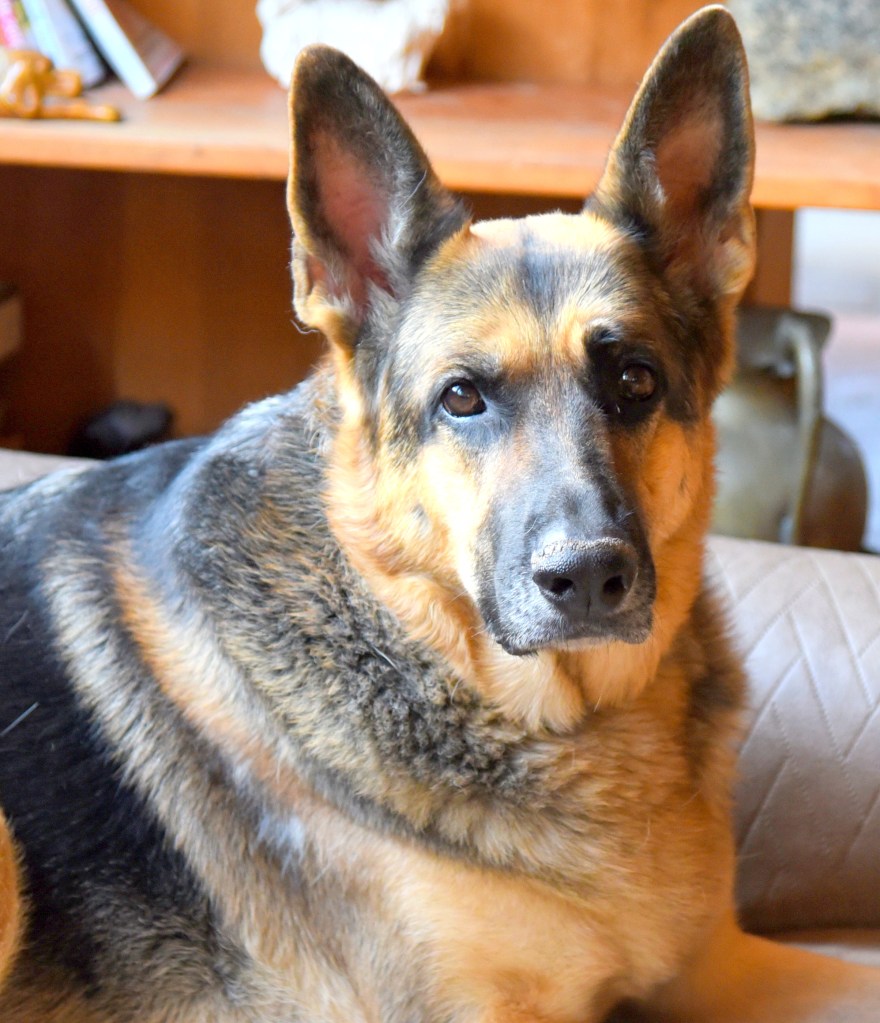
Cleo, the listening dog par excellence!

oooo

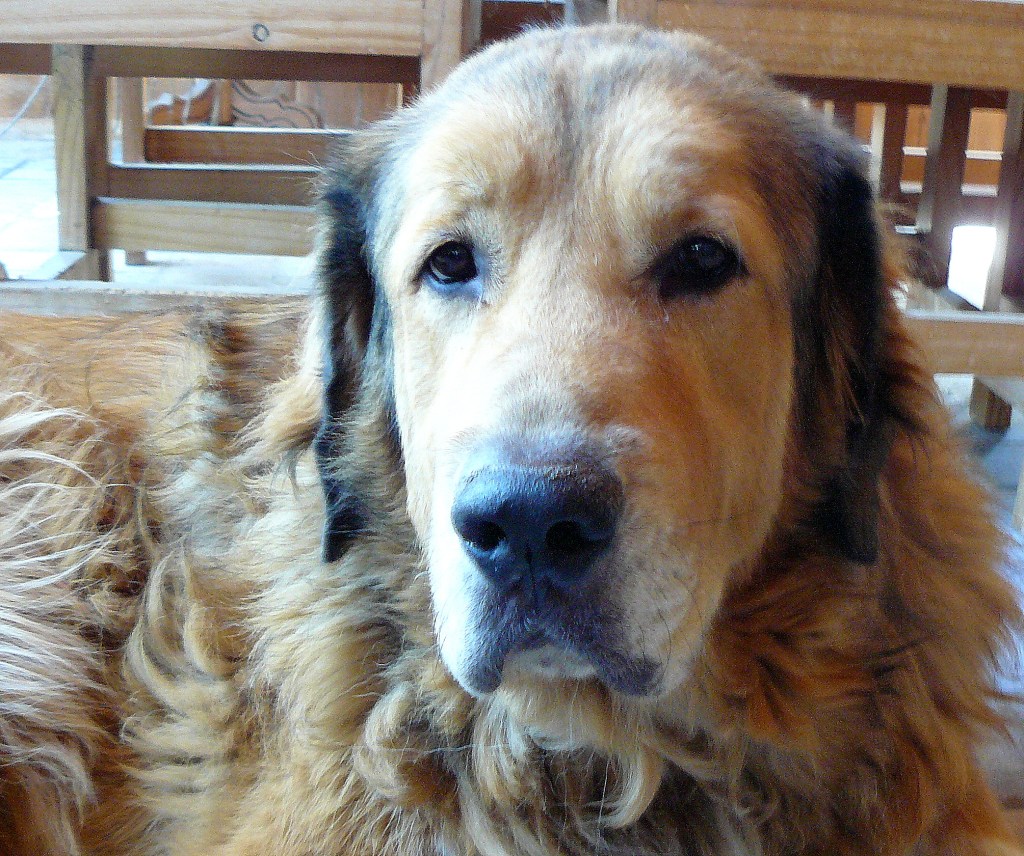
Brandy – as pure as it gets!

However, one of the sad aspects of our bigger dogs is that their lifespan is usually shorter than our smaller dogs.

Wouldn’t it be wonderful if they could live longer lives.

That is the reason that I didn’t hesitate for a moment in wanting to share an essay that was recently published on the Care2 site.

ooOOoo

Want Your Dog to Live to 30? Add This to Their Bowl

a Care2 favorite by Lisa Spector

About Lisa Follow Lisa at @throughadogsear

As I watched pet nutrition blogger Rodney Habib’s TedX video below, I found it simultaneously jaw-dropping and not surprising. After his dog, Sammie, was diagnosed with cancer, Habib went on a mission to find out why canine cancer is a growing epidemic. Currently, one out of every two dogs will be diagnosed with cancer at sometime in their life, mostly between age 6 and 12.

I have a 13-year-old Labrador. Admittedly, I’m obsessed with my awareness that he’s approaching the end of his life. But, what if he weren’t? What if he could live until he’s 30 like Maggie, the Kelpie, from Australia. Maggie was possibly the world’s oldest dog.

During Habib’s trek around the world, he spoke with researchers and scientists. He learned that dogs have a higher rate of cancer than any other mammal. In the ’70s, dogs lived to age 17; today the average life span is 11. Why?

Diabetes is up 900 percent in dogs in the last five years. Obesity is up 60 percent. While 10 percent of all cancer cases are genetic, 90 percent are the results of lifestyle and environmental influences, including stress, obesity, infection, sedentary lifestyle, toxins, pollution and most importantly diet.

Habib spoke with Norwegian scientist, Thomas Sandberg, who is conducting a 30-year-old study (the longest observational study to date). Sandberg is hoping to prove that poor quality food may cause cancer to develop in dogs and cats, mainly due to a compromised immune system.

Natural and dry dog's food

Here’s the part of Rodney’s TedX Talk that was jaw-dropping for me: Research shows that dogs on a diet of dry commercial pet food fed leafy green vegetables at least three times a week were 90 percent less likely to develop cancer than dogs that weren’t. And dogs fed yellow/orange vegetables at least three times a week were 70 percent less likely to develop cancer.

I feed Sanchez and Gina organic kale, spinach, green beans and carrots, along with many fruits. Personally, I wasn’t surprised by the benefits, but by the research showing that just a little bit of produce added to kibble could have such a profound effect on canine health.

Thomas Sandberg has Great Danes, who typically live only six to eight years. In a 6-year study of 80 dogs fed a completely raw diet with low amounts of carbs, only one dog developed cancer.

Another study at Purdue University showed a 90 percent decrease risk of cancer when they added green leafy vegetables to a bowl of processed food three times a week.

Remember Maggie, the world’s oldest dog? In addition to a diet that included raw fed grass milk, she also self fasted some days. She lived on a dairy farm and exercised all day long, often getting in 9 kilometers (5 1/2 miles ). Obesity is also now known to be a contributing factor to canine cancer, which is why exercising with your pet is so important.

We have dogs because we love them. We bring them into our human world and expect them to adjust. They do, because they want to please us. We expect them to follow our house rules, listen to the music we choose,  build their life around our schedules, and accept the food we choose for them. But, what if we knew more and chose differently for them? How long would they live?

Do your pets eat green leafy veggies?

ooOOoo

Now if you have read down to this point but not yet watched Rodney Habib’s talk then …. STOP!

Go back and watch that talk!

Then you can truly appreciate the value of looking at the diets of our beautiful dogs!

Love to hear your thoughts on this!

Oh, and both Brandy and little Pedy are great vegetable eaters. But we will be following the recommendations of Rodney Habib and will share our findings with you all later on.


Those deeper ways of listening

How humans and animals communicate with each other has more than an edge of mystery to it!

We sleep with our bedroom door open to the main run of the rest of the house. Generally, all six dogs sleep in our bedroom unless it is a very warm night when some of them may choose the cooler tiled surface of the kitchen floor.

Cleo, our female German Shepherd, has a bit of a sensitive stomach and it is not unknown for her to need to be let outside in the middle of the night. Just a couple of nights ago her need for a ‘poo’ break came at 02:40!

But the point of this is that no matter how deeply I am sleeping, all it takes is a short, quiet whimper next to my side of bed and I am instantly awake. I need no time at all to know that Cleo has to be let outside from our bedroom door that opens out onto the deck. A few minutes later I hear her feet padding along the wooden boards of the deck and she is let back in to the bedroom.

Thus this demonstrates how well I understand her and in turn how well she acutely listens to me.

Just look at this photograph.

The connection, the intensity, of her attention towards me. And this was just from me pointing the camera at her and ‘click, clicking’ my tongue.

Moving on!

My introduction today was inspired by an article that I recently read on the Care2 site and that I want to share with you. Here it is.

ooOOoo

Can Humans Understand When Animals Are in Distress?

By: Laura Burge   August 13, 2017

About Laura   Follow Laura at @literarylaura

Have you ever jumped at the sound of birds fighting or a squirrel screaming? Heard an animal make a sound somewhere nearby that made your heart race?

More than one hundred years ago, Darwin suggested that there was a universal understanding of certain animal vocalizations — a way of expressing emotion that went all the way back to the Earth’s earliest animals. Now, researchers are re-examining that theory, and they’re making some interesting headway.

In a study published in the journal “Proceedings of the Royal Society B: Biological Sciences,” researchers decided to explore the idea that animal vocalizations, including distress calls, might be recognizable across different species — and even into different animal classes.

Earlier research delved into whether or not humans could detect which emotion, or signal, another mammal was using, but this study is the first to examine other vertebrates as well. Amphibians and reptiles joined the club, and, perhaps surprisingly, humans did pretty well determining what these animals were trying to communicate.

The researchers primarily looked into whether or not people listening to certain animal sounds would be able to detect the level of arousal — high or low — that an animal expressed vocally. High arousal indicates an animal in distress, expressing desperate or negative screams, who might be calling out because of a fight, a predator in the area or another perceived danger. Scientists believe that these sounds are part of an old signaling system.

Researchers asked 75 college-aged individuals to listen to sounds from nine different species. In order to account for language differences, these people included English, German and Mandarin speakers.

Scientists collected 180 recordings of animal vocalizations, reflecting high or low levels of excitement, such as “the sounds of frogs in competition for mates, monkeys reacting to danger or ravens confronted by a dominant bird,” and included humans in that list, instructing actors to react neutrally or with different, heightened emotions while speaking Tamil.

The 75 people were then asked to identify which vocalization out of paired sounds from the same species represented the higher level of arousal.

In this study, the results showed that people identified the correct “emotion,” roughly speaking, better than expected by chance. Here is how the accuracy broke down across species:

  • Humans: 95 percent correct
  • Giant panda: 94 percent correct
  • Hourglass tree frog: 90 percent correct
  • African bush elephant: 88 percent correct
  • American alligator: 87 percent correct
  • Black-capped chickadee: 85 percent correct
  • Pig: 68 percent correct
  • Common raven: 62 percent correct
  • Barbary macaque (monkey): 60 percent correct

It seems strange that people were less able to identify the distress call of a monkey than a frog, but Harold Gouzoules, a bioacoustician and animal behavior expert at Emory University, posits that the monkey calls may have sounded less extreme in intensity than those of the other species, making it harder to tell the difference.

“Our study shows that humans are naturally able to recognize emotional arousal across all classes of vocalizing animals,” said Piera Filippi, who studies the evolution of cognition and communication at the Vrije University Brussels in Belgium.

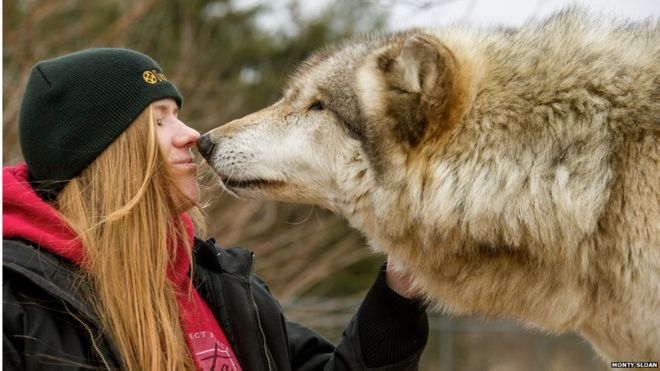
This doesn’t mean that humans should feel confident in interpreting animal emotions or body language in general, though. Those behaviors can vary greatly, and humans are prone to misinterpretation and anthropomorphism. You wouldn’t, for example, want to assume a wolf baring its teeth is simply smiling at you.

Naturally, much remains to be studied in the effort to understand a wider range of animal emotions. Filippi hopes to repeat the experiment, but with the black-capped chickadees taking the place of the college-aged humans in interpreting the distress calls. It will be interesting to see if this understanding between humans and other animals goes both ways.

Could there be a beneficial reason for animals to understand each other’s distress calls? What do you think?

Photo Credit: Valentino Funghi/Unsplash

ooOOoo

Just so long as too many different animals don’t all sound out distress calls at the same time around here!


Why Dogs Are Friendly

Yes, we know that they are but the science as to why this is nonetheless is fascinating!

Inevitably when you think about my cultural roots you would not be surprised to hear that I use the BBC News website as a key source of staying in touch with the world. But very rarely would I think of sharing a news item with you via these pages.

One of those rare exceptions greeted my eyes back on July 20th. It was an article published by Helen Briggs of the BBC under the Science & Environment news classification. I can’t imagine any reason why I can’t republish it here.

ooOOoo

Why dogs are friendly – it’s written in their genes

By Helen Briggs – BBC News, 20 July 2017

Some wolves are more sociable than others.

Being friendly is in dogs’ nature and could be key to how they came to share our lives, say US scientists.

Dogs evolved from wolves tens of thousands of years ago.

During this time, certain genes that make dogs particularly gregarious have been selected for, according to research.

This may give dogs their distinctive personalities, including a craving for human company.

“Our finding of genetic variation in both dogs and wolves provides a possible insight into animal personality, and may even suggest similar genes may have roles in other domestic species (maybe cats even),” said Dr Bridgett vonHoldt of Princeton University.

The researchers studied the behaviour of domestic dogs, and grey wolves living in captivity. They carried out a number of tests of the animals’ skills at problem-solving and sociability.

Captive wolves gave humans only brief attention.

These showed that wolves were as good as dogs at solving problems, such as retrieving pieces of sausage from a plastic lunchbox.

Dogs, however, were much more friendly. They spent more time greeting human strangers and gazing at them, while wolves were somewhat aloof.

DNA tests found a link between certain genetic changes and behaviours such as attentiveness to strangers or picking up on social cues.

Similar changes in humans are associated with a rare genetic syndrome, where people are highly sociable.

Dr Elaine Ostrander of the National Institutes of Health, who was a co-researcher on the study, said the information would be useful in studying human disease.

“This exciting observation highlights the utility of the dog as a genetic system informative for studies of human disease, as it shows how minor variants in critical genes in dogs result in major syndromic effects in humans,” she said.

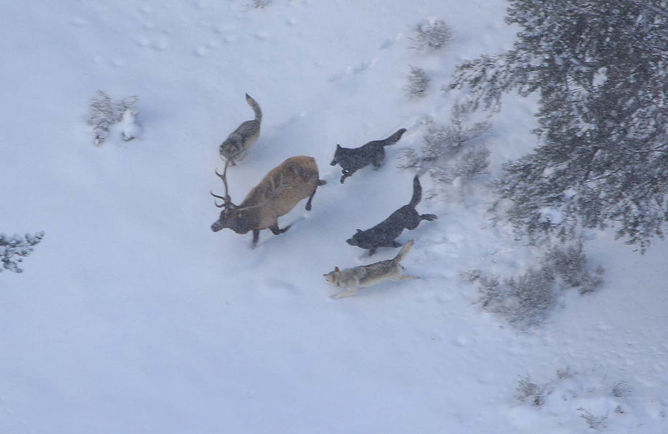
Wolves playing at Yellowstone.

Dogs were domesticated from wolves between 20,000 and 40,000 years ago.

New story for domestication of dogs

This process began when wolves that were tolerant of humans sneaked into hunter gatherer camps to feed on food scraps.

Over the course of history, wolves were eventually tamed and became the dogs we know today, which come in all shapes and sizes.

The finding of genetic changes linked to sociability in dogs shows how their friendly behaviour might have evolved.

“This could easily play into the story then of how these wolves leave descendants that are also ‘friendlier’ than others, setting the path for domestication,” said Dr vonHoldt.

The research is published in the journal, Science Advances.

Follow Helen on Twitter.

ooOOoo

When it comes to sociability in dogs, try this one for size!

Brandy – as pure as it gets!

Return to Predators!

The critical value of predators.

Not so long ago there was some discussion about how important it was for the natural way of things to include predators. I mentioned how this had been the topic of a post published some time ago in this place.

It was back in February, 2014 and I have republished it today.

oooo

The critical value of predators in our wild lands.

February 24th, 2014

The consequences of the reintroduction of wolves to Yellowstone National Park.

I have two people to offer my thanks to for today’s post: Suzann and Ginger. Both of them within hours of each other sent me an email recommending the following video. So, without further ado, here is that video. (Oh, would you believe this. The video was released on February 13th, 2014 and, at the time of me writing this post, has been viewed 1,453,345 times! Wow!)

Published on Feb 13, 2014

Visit http://sustainableman.org/ to explore the world of sustainability.

For more from George Monbiot, visit http://www.monbiot.com/ and for more on “rewilding” visit http://bit.ly/1hKGemK and/or check out George Monbiot’s book Feral: rewilding the land, the sea and human life: http://amzn.to/1dgdLi9

“When we try to pick out anything by itself, we find it hitched to everything else in the Universe.” – John Muir

When wolves were reintroduced to Yellowstone National Park in the United States after being absent nearly 70 years, the most remarkable “trophic cascade” occurred. What is a trophic cascade and how exactly do wolves change rivers? George Monbiot explains in this movie remix.

Narration from TED: “For more wonder, rewild the world” by George Monbiot. Watch the full talk, here: http://bit.ly/N3m62h

B-Roll Credits:
“Greater Yellowstone Coalition – Wolves” (http://bit.ly/1lK4LaT)
“Wolf Mountain” (http://bit.ly/1hgi6JE)
“Primodial – Yellowstone” (https://vimeo.com/77097538)
“Timelapse: Yellowstone National Park” (http://bit.ly/1kF5axc)
“Yellowstone” (http://bit.ly/1bPI6DM)
“Howling Wolves – Heulende Wölfe” (http://bit.ly/1c2Oidv)
“Fooled by Nature: Beaver Dams” (http://bit.ly/NGgQSU)

Music Credits:
“Unfoldment, Revealment, Evolution, Exposition, Integration, Arson” by Chris Zabriskie (http://bit.ly/1c2uckW)

FAIR USE NOTICE: This video may contain copyrighted material. Such material is made available for educational purposes only. This constitutes a ‘fair use’ of any such copyrighted material as provided for in Title 17 U.S.C. section 106A-117 of the US Copyright Law.

For any concerns or questions, you may contact us athttp://sustainableman.org/contact/

If you want to read more on a general level, then my post on the 11th January, 2014, An echo in the hills! may be worthwhile. It included this from William Ripple, of Oregon State University:

ooOOoo

Top dogs keep ecosystems in order

Many of these large carnivore species are endangered and some are at risk of extinction, either in specific regions or entirely. Ironically, they are vanishing just as we are learning about their important ecological effects, which is what led us to write a new paper in the journal Science to document their role.

From a review of published reports, we singled out seven species that have been studied for their important ecological role and widespread effects, known as trophic cascades. These are the African lion, leopard, Eurasian lynx, cougar, gray wolf, sea otter and dingo.

Based on field research, my Oregon State University co-author Robert Beschta and I documented the impact of cougars and wolves on the regeneration of forest tree stands and riverside vegetation in Yellowstone and other national parks in western North America. Fewer predators, we found, lead to an increase in browsing animals such as deer and elk. More browsing disrupts vegetation, reduces birds and some mammals and changes other parts of the ecosystem. From the actions of the top predator, widespread impacts cascade down the food chain.

Similar effects were found in studies of Eurasian lynx, dingoes, lions and sea otters. For example in Europe, absence of lynx has been closely tied to the abundance of roe deer, red fox and hare. In Australia, the construction of a 3,400-mile dingo-proof fence has enabled scientists to study ecosystems with and without dingoes which are closely related to gray wolves. They found that dingoes control populations of herbivores and exotic red foxes. The suppression of these species by dingoes reduces predation pressure, benefiting plants and smaller native prey.

In some parts of Africa, the decrease of lions and leopards has coincided with a dramatic increase in olive baboons, which threaten crops and livestock. In the waters off southeast Alaska, a decline in sea otters through killer whale predation has led to a rise in sea urchins and loss of kelp beds.

Predators are integral, not expendable

We are now obtaining a deeper appreciation of the impact of large carnivores on ecosystems, a view that can be traced back to the work of landmark ecologist Aldo Leopold. The perception that predators are harmful and deplete fish and wildlife is outdated. Many scientists and wildlife managers now recognise the growing evidence of carnivores’ complex role in ecosystems, and their social and economic benefits. Leopold recognised these relationships, but his observations were ignored for decades after his death in 1948.

op carnivores, at work keeping things in check. Doug Smith
Top carnivores, at work keeping things in check. Doug Smith

Human tolerance of these species is the major issue. Most would agree these animals have an intrinsic right to exist, but additionally they provide economic and ecological services that people value. Among the services documented in other studies are carbon sequestration, restoration of riverside ecosystems, biodiversity and disease control. For example, wolves may limit large herbivore populations, thus decreasing browsing on young trees that sequester carbon when they escape browsing and grow taller. Where large carnivore populations have been restored – such as wolves in Yellowstone or Eurasian lynx in Finland – ecosystems appear to be bouncing back.

I am impressed with how resilient the Yellowstone ecosystem is, and while ecosystem restoration isn’t happening quickly everywhere in this park, it has started. In some cases where vegetation loss has led to soil erosion, for example, full restoration may not be possible in the near term. What is certain is that ecosystems and the elements of them are highly interconnected. The work at Yellowstone and other places shows how species affect each another through different pathways. It’s humbling as a scientist to witness this interconnectedness of nature.

My co-authors and I have called for an international initiative to conserve large carnivores in co-existence with people. This effort could be modelled after a couple of other successful efforts including the Large Carnivore Initiative for Europe, a non-profit scientific group affiliated with the International Union for the Conservation of Nature, and the Global Tiger Initiative which involves all 13 of the tiger-range countries. With more tolerance by humans, we might be able to avoid extinctions. The world would be a scary place without these predators.

William Ripple does not work for, consult to, own shares in or receive funding from any company or organisation that would benefit from this article, and has no relevant affiliations.

ooOOoo

The ConversationMan! We are a strange species at times!
Starting Out on The Meditation Journey

If meditation really works then we want to engage in it.

Those who watched the video that was the central component of yesterday’s post will not have missed the references by Ted Meissner that scientific, double-blind evidence shows that meditation offers benefits for us humans.

Both Jean and I are especially interested in learning more and, hopefully, finding an appropriate meditation group in our nearest town, Grants Pass.

We would also welcome feedback and advice from any of you good people who have trod this path before.

For example, when one conducts a quick internet search into the different forms of meditation there are dozens of websites that are returned in the search findings. Almost choosing one website at random, the Visual Meditation website declares there are 7 Types of Meditation.  As in:

  • Transcendental Meditation (TM)
  • Heart Rhythm Meditation (HRM)
  • Kundalini
  • Guided Visualization
  • Qi Gong
  • Zazen
  • Mindfulness

To my uneducated eye, not one of those types seems to accord with the type supported by the American Meditation Society:

OUR MISSION

  • To provide instruction in meditation as taught by the founder of AMS, Gururaj Ananda Yogi.
  • To preserve and share the universal teachings of Gururaj with integrity and wisdom.
  • To provide a place where those who wish to unfold the inner self may do so in the company of other like-minded people.

Back to the plot! For this post is about the science.

The following video seemed worthy of sharing with you.

I watched the first 10 minutes before deciding it should be shared. By the time this post is published Jean and I will have watched it to the end. [20:45 yesterday evening. Jean and I have just finished watching the Bob Roth video below. It was both fascinating and very helpful!!]

The Aspen Institute

Published on Jun 26, 2016

Published studies have documented the many physical and mental health benefits of meditation, including decreased pain, better immune function, less anxiety and depression, a heightened sense of well-being, and greater happiness and emotional self-control. Google Scholar turns up almost 700,000 research documents on meditation, among them imaging studies that show increased activity in brain regions associated with attention, a higher volume of grey matter, and lessened amygdala response to emotional stimuli. What actually happens in the brain when we meditate? Why is meditation so nourishing to the mind, body and spirit?

Perri Peltz, Interviewer
Bob Roth

But a search of the YouTube website using the search term “meditation science” brought up many other links to shorter videos.

I selected the following (2:23 mins) because it is presented by Ferris Jabr who is an Associate Editor with Scientific American magazine.

Bottom line to my way of thinking is that this is something worth committing to once we know much more about engaging in meditation.

Your experiences most welcomed.

(And, of course, when it comes to chilling out for hours regularly each day then there’s another thing we can learn from our beloved dogs! No better demonstrated than by Brandy yesterday morning in the following photograph!)

Buddhism and Humanism

Reflections on a very interesting meeting of our local Freethinkers group.

Last Saturday was the regular monthly meeting of our local Rogue Valley Freethinkers and Humanists. Many know that Jean and I are secular humanists and go as often as we can to these meetings in Grants Pass, Oregon.

Saturday’s meeting was all about Buddhism or more accurately as Jerry Reed, the group’s administrator, put it in a recent email:

For Saturday, Aug 5: Brenda will be our presenter/discussion leader. She will introduce us to Secular Buddhism, including comments on basic principles of Buddhism, and how traditional and secular Buddhism compare with each other, as well as on overlapping philosophical views of Buddhism and Humanism.

This video link provides a discussion between a humanist, Scott Lohman, and a secular Buddhist, Ted Meissner, which may help to familiarize you with Brenda’s topic prior to our meeting. It is about 29 minutes long, all interesting, but if you are cramped for time, especially the segment from about 10:30 to 16:30 which discusses basic Buddhist principles that might also relate to humanism, and another segment from about 19:30 to 27:00 on advice to a beginner who might want to try meditation, and how Star Trek borrowed from Buddhism, and also about the similarity of ethical focus of Buddhism and Humanism.

What I would hope is that if any of you are interested in this subject, then do watch the interview with Ted Meisser conducted by Scott Lohman .
Here it is.

Here follow links to the organisations represented by Scott and Ted Meissner. For Scott the Humanists of Minnesota, and for Ted the Secular Buddhist Association.

If you do watch the video you will undoubtedly pick up on the science now discovering that meditation does change the brain … for the better!

More on that tomorrow!

Give the Mexican Wolf a single chance!

Picking up on Annie

Remember Kristin’s guest post just two days ago? Annie’s Second Chance?

I’m sure you do.

Well the reason I am using that connection is because I want to share with you an email that was received yesterday.

Paul

The Mexican gray wolf (also called lobo) is the rarest subspecies of gray wolf in the world.  With just 113 individuals in the wild, this federally endangered species needs your voice now.

Tell the U.S. Fish & Wildlife Service (USFWS) to draft a science-based recovery plan for endangered lobos!

Despite recommendations by the US Fish and Wildlife Service’s own scientists, they have released a highly politicized Draft Mexican Wolf Recovery Plan, which we fear will lead these severally endangered wolves to extinction.

Ask the USFWS to revise their Draft Mexican Wolf Recovery Plan to protect endangered lobos instead of protecting special interests.

The draft recovery plan ignores science, gives special interests controlling power over recovery, and outlines criteria which will prematurely remove Endangered Species Act protections from the wolf.

Already plagued by mismanagement, poaching, and declining genetic diversity, the Mexican wolf needs your help more than ever.  We only have until the close of the comment period on August 29th to generate opposition to this flawed plan. Please submit your comment today to ask the US Fish and Wildlife Service to draft a recovery plan that’s based on science, not politics!

Thank you for your commitment to wildlife and wild places.

Sincerely,

Hailey Hawkins
Southern Rockies Representative
Endangered Species Coalition
www.endangered.org

PS. Links not working? Take action for wolves at this URL: https://actionnetwork.org/letters/comment-on-the-draft-mexican-wolf-recovery-plan-sciencenotpolitics

Of course I wrote in support of the Lobo! And was delighted to notice that Action Network had set a goal of 3,200 letters and, as of yesterday morning, only a further 275 letters were needed to make that goal.

Please, dear reader, add your name. Thank you!

Have a wonderful weekend!

Our incredible world!

What to see in the night sky in August

You all understand that this blog, while predominantly about our special doggie friends, never hesitates to wander away from matters canine if I think it will be enjoyed by all you good people.

You will also all appreciate that August is the month where in the USA, on August 21st, there will be a total eclipse of the sun.

The reasons why I didn’t hesitate to republish a recent post that was presented on Mother Nature Network.

ooOOoo

What to see in the night sky in August

While the total solar eclipse is the highlight, there are other celestial fireworks to look forward to this month.

Michael d’Estries   August 1, 2017.

Michael d’Estries ( @michaeldestries ) covers science, technology, art, and the beautiful, unusual corners of our incredible world.

Celestial events for August 2017 include a total solar eclipse, Perseid meteor shower and the rise of the Sturgeon Moon. (Photo: Michael Seeley/Flickr)

Welcome to August, a month defined by loud cicadas, pool parties, humidity and children fretting about an impending return to school. When it comes to celestial happenings, however, there is no larger star this month that our own moon. From a partial lunar eclipse to the first coast-to-coast solar eclipse in almost a century, the moon will be the cause of most eyeballs drifting towards the heavens over the next several weeks.

Below is a small sampling of some of the night and day celestial events to look forward to this month. Wishing you all clear skies!

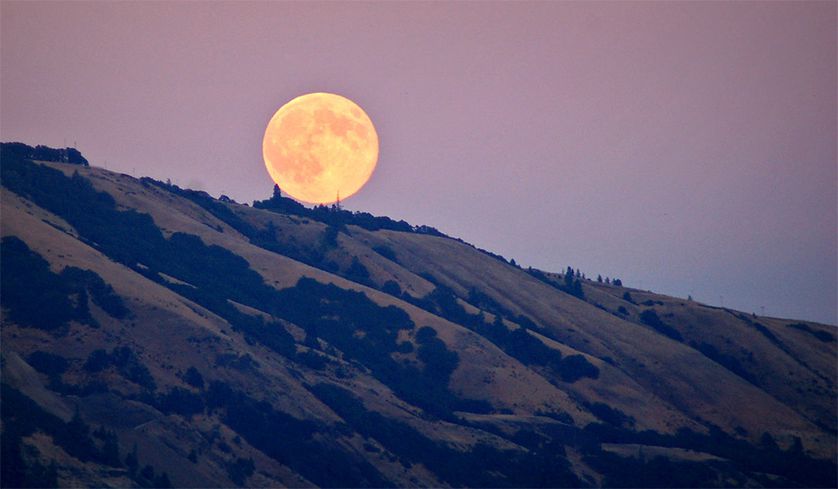
The rise of the full Sturgeon Moon (Aug. 7)

The full Sturgeon Moon is so-named for the fish that are easily caught in August and early September. (Photo: Paul Kline/flickr)

August’s full moon, nicknamed the Sturgeon Moon, will rise for the U.S. Eastern Seaboard on the evening of Aug. 7 at 8:05 p.m.

The Sturgeon Moon gets its name from the species of fish native to both Europe and the Americas that is easily caught this time of year. Other nicknames include the Corn Moon, Fruit Moon and Grain Moon. In countries experiencing winter, such as New Zealand, native Māori called this full moon “Here-turi-kōkā” or “the scorching effect of fire is seen on the knees of man.” This reference is to warm fires that glow during the Southern Hemisphere’s coldest month.

Partial lunar eclipse (Aug. 7 & 8)

Observers in Africa, Asia and Australia will see August’s partial lunar eclipse in its entirety. (Photo: Forrest Tanaka/flickr)

As a kind of consolation prize for missing out on this month’s total solar eclipse over North America, those living on the continents of Africa, Asia and Australia will bear witness to a partial lunar eclipse. Spectators in Europe will catch the tail end of the eclipse as the moon rises around 7:10 p.m. on Aug. 7.

This phenomenon occurs between two to four times a year when the moon passes through a portion of the Earth’s shadow. Because the shadow cast is more than 5,700 miles wide, lunar eclipses last much longer than solar eclipses. In some instances, totality can occur for as long as 1 hour and 40 minutes. As a reference, maximum totality for the Aug. 21 solar eclipse will top out a mere 2 minutes and 42 seconds. The longest, at over 7 minutes, won’t take place until the year 2186.

This month’s partial lunar eclipse is the last of the year. Next year, total lunar eclipses will take place in January and July.

Perseid meteor shower (Aug. 12)

A composite shot of last year’s Perseid meteor shower over Turkey. Notice how the path of the meteors appears to race from the constellation Perseus. (Photo: NASA)

Regarded as one of the best celestial light shows of the year, the Perseid meteor shower occurs from July 17 to Aug. 24 and peaks on the evening of Aug. 12.

The shower, sometimes creating as many as 60 to 200 shooting stars per hour, is produced as Earth passes through debris left over from the orbit of Comet Swift-Tuttle. This 16-mile-wide periodic comet, which completes an orbit around the sun every 133 years, has been described as “the single most dangerous object known to humanity.” This is because every instance of its return to the inner solar system brings it ever closer to the Earth-moon system. Though astronomers believe the comet bears no threat for at least the next 2,000 years, future impacts cannot be ruled out.

If the comet were to hit Earth, scientists believe Swift-Tuttle would be at least 27 times more powerful than the asteroid or comet that wiped out the dinosaurs. For now, you can take in the beauty of the debris from this harbinger of doom by looking north towards the constellation Perseus. Because the moon will be three-quarters full, you’ll need to search out a nice dark sky to escape any light pollution from urban environments.

Total solar eclipse (Aug. 21)

A total solar eclipse as captured over the Southern Hemisphere in November 2012. (Photo: NASA Goddard Space Flight Center)

By far the biggest celestial event in ages, Aug. 21 marks the first time since June 1918 that a total solar eclipse will race from coast to coast across the United States. Cities and towns along the 72-mile-wide path of totality are preparing for an influx of visitors, with millions of Americans expected to drive to view the rare phenomenon. Those outside totality will still experience a show, with partial solar eclipses happening over much of North America. Regardless, everyone will want to invest in a pair of special solar eclipse glasses to avoid ruining your eyesight.

Total solar eclipses occur when the new moon moves between the Earth and the sun and casts its shadow on the planet. This shadow is comprised of two concentric cones –– the larger penumbra, which from Earth only shows the sun partially blocked, and the much smaller umbra, which blocks the sun completely. It is within this latter cone that totality will occur, giving spectators on the ground what’s considered by many to be a “once-in-a-lifetime” experience.

The Great American Eclipse will actually first start out in the Pacific (at this point, it will actually, unbelievably rise while completely eclipsed!), making landfall on the Oregon community of Lincoln Beach at 10:16:01 a.m. (PDT). From there, the moon’s shadow will continue to race across the U.S. The point of greatest eclipse, where the axis of the moon’s shadow passes nearest to the center of Earth, will take place in Hopkinsville, Kentucky and last 2 minutes and 40.1 seconds. In celebration of the event, the town has temporarily renamed itself “Eclipseville,” and expects anywhere from 55,000 to 150,000 tourists to visit in advance of Aug. 21.

The next total solar eclipse over the U.S. will take place on April 8, 2024.

New moon (Aug. 21)

August’s new moon will not only create a show during the day, but also leave the heavens to glow unimpeded by night. (Photo: Coconino National Forest/flickr)

Fresh after wowing the U.S. during the day with its solar theatrics, August’s new moon will give way to dark skies for the next several nights. This is the perfect opportunity to grab a blanket and head outside into the still-warm summer evenings to enjoy the heavens in all their glory. With some remnants of the Perseids still visible, it will also offer a chance to catch some of the faintest shooting stars.

Look for Earth’s shadow (All year)

The Earth’s shadow and ‘Belt of Venus’ as captured above Mauna Kea, Hawaii. (Photo: Jay El Eskay/flickr)

Ever wonder what causes the beautiful bands of color in the eastern sky at sunset or the western sky at sunrise? The dark blue band stretching 180 degrees along the horizon is actually the Earth’s shadow emanating some 870,000 miles into space. The golden-red portion, nicknamed the “Belt of Venus,” is Earth’s upper-atmosphere illuminated by the setting or rising sun.

Now that you know about this phenomenon, choose a night or morning sometime to try and pick it out. You’ll need a western or eastern horizon that’s fairly unobstructed to get a clear view of our planet’s huge curved shadow.

Looking ahead to September

On Sept. 15, the Cassini spacecraft will end its 20-year mission to Saturn with a dramatic death dive into the ringed planet. (Photo: NASA)

As fall beckons, the biggest event next month will be the dramatic death dive of the Cassini spacecraft into Saturn. Taking place on Sept. 15, Cassini will make discoveries about Saturn right up until its fiery conclusion, with unprecedented photos and data captured and transmitted during its final moments.

ooOOoo

It is going to be quite a month!

Oh, and for those of you that want to know the timings of the eclipse over North America there is a useful reference site here, from which I republish the following table.

Eclipse Start & End: Local Time for US States

The eclipse will begin over the Pacific Ocean at 15:46 UTC, which corresponds to 8:46 am Pacific Time. It will reach the coast of Oregon at Lincoln City, just west of Salem, at 9:04 am local time. The eclipse will reach its maximum point here at 10:17 am.

From here, the Moon’s central shadow will move inland. The following table shows when the Moon will begin to move in front of the Sun and the moment it completely covers the Sun, as seen from some locations along the central path of the eclipse. All times are local.

Location Partial Eclipse Begins Sun Completely Obscured
Salem, OR 09:05 am PDT 10:18 am PDT
Idaho Falls, ID 10:15 am MDT 11:33 am MDT
Casper, WY 10:22 am MDT 11:43 am MDT
Lincoln, NE 11:37 am CDT 1:03 pm CDT
Sabetha, KS 11:38 am CDT 1:05 pm CDT
Jefferson City, MO 11:46 am CDT 1:14 pm CDT
Carbondale, IL 11:52 am CDT 1:21 pm CDT
Hopkinsville, KY 11:56 am CDT 1:25 pm CDT
Nashville, TN 11:58 am CDT 1:28 pm CDT
Talulah Falls, GA 1:07 pm EDT 2:37 pm EDT
Columbia, SC 1:13 pm EDT 2:43 pm EDT
Charleston, SC 1:16 pm EDT 2:47 pm EDT

Please note that this list includes only a small selection of locations where the total eclipse will be visible. You can look up more locations in our Eclipse Database or via the Eclipse Map.

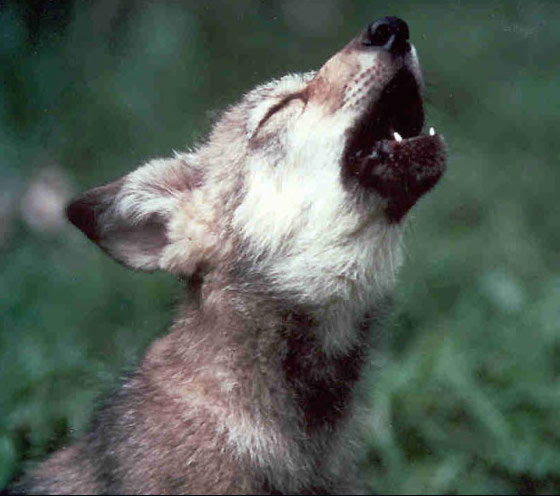
Enjoy your nights out there! And let your dogs howl their hearts out!