I confess to not having heard of this endangered species before.
But my son, Alex, sent me an email earlier in the week hoping I would post something on the blog.
ooOOoo
Dear Alex
Creating widespread awareness of the four African pangolin species is an important part of our mission, because if people don’t know what a pangolin is, why would they care enough to help save it?
It’s World Pangolin Day this Saturday and here are two easy ways you can get involved right now:
Share this newsletter
Forward this email to all your friends to encourage them to sign up and receive our updates too. Tag10ForPangolins
Share our latest Facebook campaign tagging at least 10 friends in your post, and help us reach our target of telling 100,000 people about pangolins by Saturday. We’ve just passed the 51,000 mark and with your help we can reach our goal!
With thanks,
Catherine and Team Pangolin
ooOOoo
Every little helps!
And guess what I found:
PANGOLIN – The Most Poached Animal in The World
Pangolins are the most heavily poached animal in the world, despite the fact that most people don’t even know that they exist.
The Pangolin is a small mammal, covered in large overlapping scales. It’s mainly a nocturnal animal with a diet consisting of insects such as ants and termites.
They may look like weird-scaly anteaters, but they are actually not part of the anteater family at all. The 2 most unique features of this animal are, that it is covered in plate armor scales from head to toe, and even though it has four legs, it walks predominantly on it’s hind legs, and uses it’s front legs for griping & digging.
So why are these creatures being so heavily poached? Well It’s all to do with their scales. The Pangolin’s scales & meat are used in traditional medicine, fashion and even eaten in high-end cuisine.
Thanks for watching
And then on Wednesday the BBC News had an extensive item about Pangolins. It’s a long article with a video. Please read it.
More than that how do you know if anything is real?
I was sitting in the living-room yesterday and watching Cleo dream. She was on the floor in front of the lit fire and happily involved in her dream.
Young Cleo, May 12th, 2012.
She was such a beautiful dog. It was natural of me to wonder of what she was dreaming. I could see her feet twitching and her eyelids flicking as though she was dreaming of chasing. But any more than that was pure speculation.
Then I mused about how the world looked for Cleo, and for the rest of our dogs come to that.
Then I went back to a philosophical article that I read quite recently.
What does it all mean? Are we real? What is reality?
ooOOoo
3 philosophers set up a booth on a street corner – here’s what people asked
The life choices that had led me to be sitting in a booth underneath a banner that read “Ask a Philosopher” – at the entrance to the New York City subway at 57th and 8th – were perhaps random but inevitable.
I’d been a “public philosopher” for 15 years, so I readily agreed to join my colleague Ian Olasov when he asked for volunteers to join him at the “Ask a Philosopher” booth. This was part of the latest public outreach effort by the American Philosophical Association, which was having its annual January meeting up the street.
I’d taught before – even given speeches – but this seemed weird. Would anyone stop? Would they give us a hard time?
I sat between Ian and a splendid woman who taught philosophy in the city, thinking that even if we spent the whole time talking to one another, it would be an hour well spent.
Then someone stopped.
At first glance, it was hard to tell if she was a penniless nomad or an emeritus professor, but then she took off her hat and psychedelic scarf and came over to the desk and announced, “I’ve got a question. I’m in my late 60s. I’ve just had life threatening surgery, but I got through it.”
She showed us the jagged scar on her neck. “I don’t know what to do with the rest of my life,” she said. “I’ve got a master’s degree. I’m happily retired and divorced. But I don’t want to waste any more time. Can you help?”
Wow. One by one, we all asked her to elaborate on her situation and offered tidbits of advice, centering on the idea that only she could decide what gave her life meaning. I suggested that she might reach out to others who were also searching, then she settled in for a longer discussion with Ian.
And then it happened: A crowd gathered.
At first I thought they were there to eavesdrop, but as it turned out they had their own existential concerns. A group of teenagers engaged the philosopher on my right. One young woman, who turned out to be a sophomore in college, stepped away from the group with a serious concern. “Why can’t I be happier in my life? I’m only 20. I should be as happy as I’m ever going to be right now, but I’m not. Is this it?”
It was my turn. “Research has shown that what makes us happy is achieving small goals one after the other,” I said. “If you win the lottery, within six months you’ll probably be back to your baseline of happiness. Same if you got into an accident. You can’t just achieve happiness and stay there, you have to pursue it.”
“So I’m stuck?” she said.
“No…” I explained. “Your role in this is huge. You’ve got to choose the things that make you happy one by one. That’s been shown from Aristotle all the way down to cutting-edge psychological research. Happiness is a journey, not a destination.”
She brightened a bit, while her friends were still puzzling over whether color was a primary or secondary property. They thanked us and moved on.
Suddenly, the older woman who had stopped by initially seemed satisfied with what Ian had told her, and said that she had to be on her way as well.
Again it was quiet. Some who passed by were pointing and smiling. A few took pictures. It must have looked odd to see three philosophers sitting in a row with “Ask a Philosopher” over our heads, amidst the bagel carts and jewelry stalls.
During the quiet I reflected for a moment on what had just happened. A group of strangers had descended upon us not to make fun, but because they were carrying around some real philosophical baggage that had long gone unanswered. If you’re in a spiritual crisis, you go to your minister or rabbi. If you have psychological concerns, you might seek out a therapist. But what to do if you don’t quite know where you fit into this world and you’re tired of carrying that burden alone?
And then I spotted her … an interlocutor who would be my toughest questioner of the day. She was about 6 years old and clutched her mother’s hand as she craned her neck to stare at us. Her mother stopped, but the girl hesitated. “It’s OK,” I offered. “Do you have a philosophical question?” The girl smiled at her mother, then let go of her hand to walk over to the booth. She looked me dead in the eye and said: “How do I know I’m real?”
Suddenly I was back in graduate school. Should I talk about the French philosopher Rene Descartes, who famously used the assertion of skepticism itself as proof of our existence, with the phrase “I think, therefore I am?” Or, mention English philosopher G.E. Moore and his famous “here is one hand, here is the other,” as proof of the existence of the external world?
Or, make a reference to the movie “The Matrix,” which I assumed, given her age, she wouldn’t have seen? But then the answer came to me. I remembered that the most important part of philosophy was feeding our sense of wonder. “Close your eyes,” I said. She did. “Well, did you disappear?” She smiled and shook her head, then opened her eyes. “Congratulations, you’re real.”
She grinned broadly and walked over to her mother, who looked back at us and smiled. My colleagues patted me on the shoulder and I realized that my time was up. Back to the conference to face some easier questions on topics like “Academic Philosophy and its Responsibilities in a Post-Truth World.”
You may have already seen this because it was very widely shown.
In the tail end of Deep Adaptation there is reference to Greta’s video because it was so powerful. Young Greta Thunberg is a 16-year-old person who passionately wants this world to change and to change soon.
Here’s the piece that accompanied that video:
In this passionate call to action, 16-year-old climate activist Greta Thunberg explains why, in August 2018, she walked out of school and organized a strike to raise awareness of global warming, protesting outside the Swedish parliament and grabbing the world’s attention. “The climate crisis has already been solved. We already have all the facts and solutions,” Thunberg says. “All we have to do is to wake up and change.”
All the more important as for us it was a cloudy night.
These images are taken from here. I sincerely hope I am not infringing copyright by republishing them.
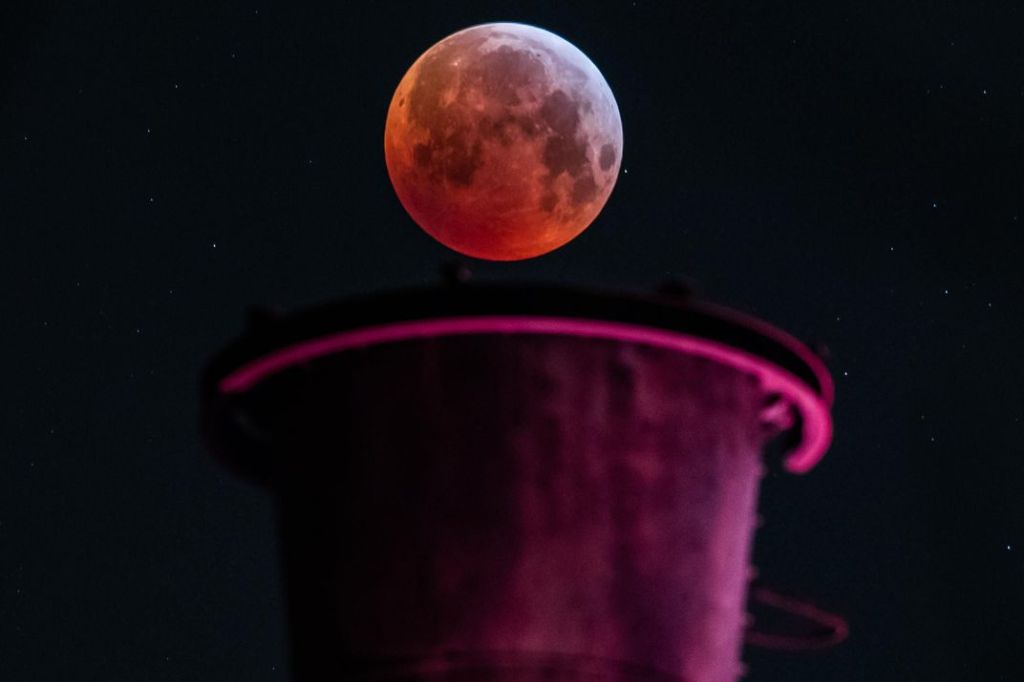
The lunar eclipse on January 21, 2019 before the moon is fully cast in shadow, hovering over the dome of the church St. Elisabeth in Nuremberg, Germany. ( Daniel Karmann / Picture Alliance / Getty Images)
oooo
The moon during the January 21, 2019 total lunar eclipse over the skyline of Frankfurt. (Frank Rumpenhorst / Picture Alliance / Getty Images)
oooo
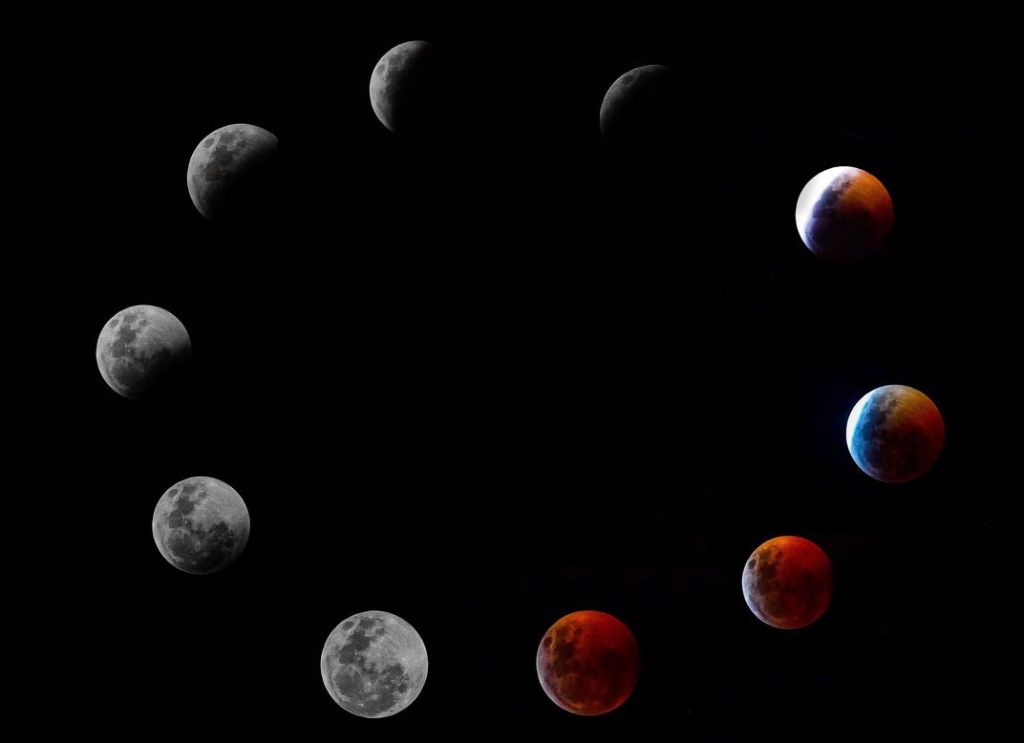
A composite photo shows all the phases of the so-called Super Blood Wolf Moon total lunar eclipse on Sunday January 20, 2019 in Panama City. (Luis Acosta / AFP / Getty Images)
oooo
The moon slips into Earth’s dark umbral shadow during a total lunar eclipse over Angel de la Independencia in Mexico City on January 20, 2019. (Alfredo Estrella / AFP / Getty Images))
oooo
The January 21, 2019 total lunar eclipse as seen over Laatzen, Germany. (Julian Stratenschulte / Picture Alliance / Getty Images)
oooo
A picture taken on January 21, 2019 the Super Blood Moon seen behind the equestrian statue of the Saxon king Johann during a lunar eclipse in Dresden, Germany. ( Sebastian Kahnert / AFP / Getty Images)
oooo
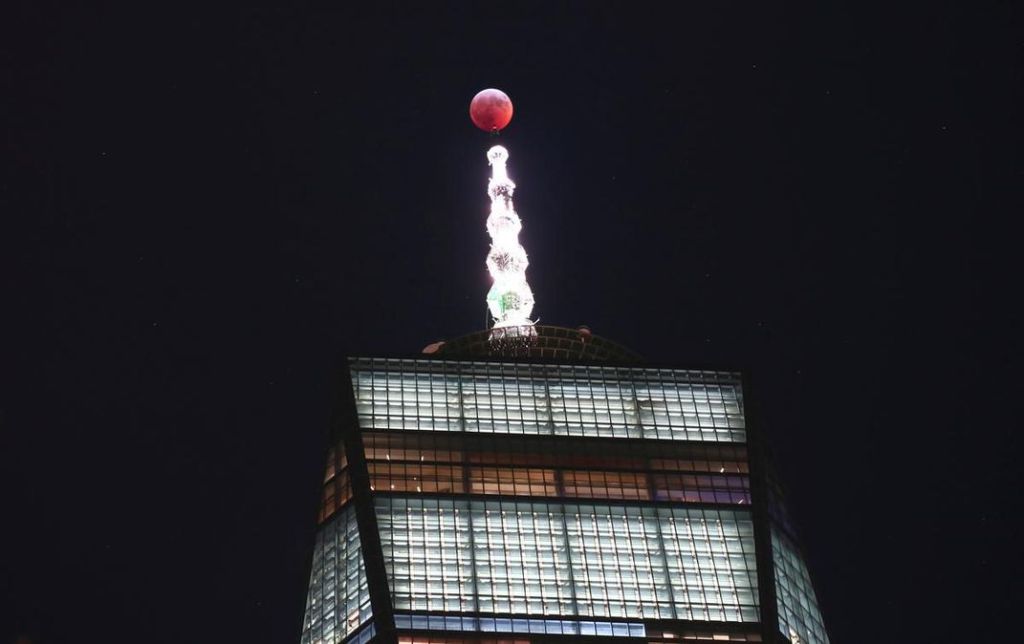
The Super Blood Wolf Moon lunar eclipse passes over One World Trade Center on January 20, 2019 in New York City. (Gary Hershorn / Getty Image)
oooo
A picture taken on January 21, 2019 in Cologne, Germany, shows the Super Blood Moon lunar eclipse above the landmark Dome.
oooo
The January 21, 2019 total lunar eclipse beside Naumburg Cathedral in Germany. (Hendrik Schmidt / Picture Alliance / Getty Images)
oooo
The lunar eclipse on January 21, 2019 before the moon is fully cast in shadow, hovering over the dome of the church St. Elisabeth in Nuremberg, Germany (Daniel Karmann/Picture Alliance/Getty Images)
These are really spectacular and very, very clever!
On January 21st this year I republished a post by Tom Engelhardt and called it The song this planet needs to hear. His post was essentially a piece written for Tom by Dahr Jamail. It was called A Planet in Crisis and it included reference to a recently published book The End of Ice.
Subsequently, I decided to order the book by Dahr Jamail, it arrived a week ago and I ended up finishing it last Saturday.
I was minded to publish a review of the book, and here it is:
The End of Ice by Dahr Jamail
This is a book that I wished I had not read.
Yet, this is a book that once started I wanted to finish, and finish quickly.
It’s a brilliant book. Very impressive and very readable. But I speak of it from a technical point-of-view.
Now that I have finished it life will never be quite the same again. Nor, for that matter, for anyone else who chooses to read it.
Dahr Jamail has a background as a reporter, with some other books under his belt. But his reporting skills really come to the fore with The End Of Ice. For he has travelled the world speaking to experts in their own field and listening to what they say about the future prognosis of the planet that you and I, and everyone else lives on.
Earth has not seen current atmospheric CO2 levels since the Pliocene, some 3 million years ago. Three-quarters of that CO2 will still be here in five hundred years. Given that it takes a decade to experience the full warming effects of CO2 emissions, we are still that far away from experiencing the impact of all the CO2 that we are currently emitting. (p.5)
And if you are below the age of 60 or thereabouts you are going to experience this changing world head on. To be honest, whatever age you are things are starting to change.
Take this:
We are already facing mass extinction. There is no removing the heat we have introduced into our oceans, nor the 40 billion tons of carbon dioxide we pump into the atmosphere every single year. There may be no changing what is happening, and far worse things are coming. (p.218)
It really is a grim read. A grim but necessary read.
The eight chapters in the book spell out what is already happening. The diminishing glaciers and rising snow levels, the loss of coral, the rise in sea level and the loss of vast tracts of land as a consequence. Then there is the future of forests around the world. As I said, it is a grim read but a necessary one.
Towards the end of the book Dahr Jamail quotes author and storyteller Stephen Jenkinson:
“Grief requires us to know the time we’re in,” Jenkinson continues. “The great enemy of grief is hope. Hope is a four-letter word for people who are willing to know things for what they are. Our time requires us to be hope-free. To burn through the false choice of being hopeful and hopeless. They are the two sides of the same con job. Grief is required to proceed.” (p. 218)
Upon finishing this superb book, that you really do need to read, the one emotion that I was left with was grief. For what we have done to this planet. For what we are doing to this one and only home of ours.
Grief.
P.S. Dogs would not have done this to our beautiful planet.
One of the Christmas cards that we received said this:
So glad we are friends and neighbors. And I will pray you will have a year full of the peace, love and hope that Jesus promises.
With Love, Hugs and Prayers.
Now I understand to a degree why the sender, a neighbour of ours, would write that. But at the same time I do not. We are clearly atheists. Indeed, back in 2012 on first meeting I happened to say that I was not a believer and it produced a shock; a reaction that how could anyone not be a believer.
And I think yesterday’s post supports the view that the reality of the existence of our solar system, all 2.6 billion years of it, shows that religious beliefs of all forms come from an age where the world beyond one’s doorstep was unknown and scary. Things are different now.
But to go back to the age of things.
That existence of our solar system came about some 9.2 billion years, give or take some 60 million years, after the Big Bang.
In other words, the Big Bang, that started the whole thing off, came about three and a half times earlier than the creation of the solar system.
Professor Emeritus of Ecology and Evolution, University of Chicago
As the West becomes more and more secular, and the discoveries of evolutionary biology and cosmology shrink the boundaries of faith, the claims that science and religion are compatible grow louder. If you’re a believer who doesn’t want to seem anti-science, what can you do? You must argue that your faith – or any faith – is perfectly compatible with science.
But I argue that this is misguided: that science and religion are not only in conflict – even at “war” – but also represent incompatible ways of viewing the world.
Opposing methods for discerning truth
My argument runs like this. I’ll construe “science” as the set of tools we use to find truth about the
The scientific method relies on observing, testing and replication to learn about the world. Jaron Nix/Unsplash, CC BY
universe, with the understanding that these truths are provisional rather than absolute. These tools include observing nature, framing and testing hypotheses, trying your hardest to prove that your hypothesis is wrong to test your confidence that it’s right, doing experiments and above all replicating your and others’ results to increase confidence in your inference.
And I’ll define religion as does philosopher Daniel Dennett: “Social systems whose participants avow belief in a supernatural agent or agents whose approval is to be sought.” Of course many religions don’t fit that definition, but the ones whose compatibility with science is touted most often – the Abrahamic faiths of Judaism, Christianity and Islam – fill the bill.
Next, realize that both religion and science rest on “truth statements” about the universe – claims about reality. The edifice of religion differs from science by additionally dealing with morality, purpose and meaning, but even those areas rest on a foundation of empirical claims. You can hardly call yourself a Christian if you don’t believe in the Resurrection of Christ, a Muslim if you don’t believe the angel Gabriel dictated the Qur’an to Muhammad, or a Mormon if you don’t believe that the angel Moroni showed Joseph Smith the golden plates that became the Book of Mormon. After all, why accept a faith’s authoritative teachings if you reject its truth claims?
Indeed, even the Bible notes this: “But if there be no resurrection of the dead, then is Christ not risen: And if Christ be not risen, then is our preaching vain, and your faith is also vain.”
Many theologians emphasize religion’s empirical foundations, agreeing with the physicist and Anglican priest John Polkinghorne:
“The question of truth is as central to [religion’s] concern as it is in science. Religious belief can guide one in life or strengthen one at the approach of death, but unless it is actually true it can do neither of these things and so would amount to no more than an illusory exercise in comforting fantasy.”
The conflict between science and faith, then, rests on the methods they use to decide what is true, and what truths result: These are conflicts of both methodology and outcome.
In contrast to the methods of science, religion adjudicates truth not empirically, but via dogma, scripture and authority – in other words, through faith, defined in Hebrews 11 as “the substance of things hoped for, the evidence of things not seen.” In science, faith without evidence is a vice, while in religion it’s a virtue. Recall what Jesus said to “doubting Thomas,” who insisted in poking his fingers into the resurrected Savior’s wounds: “Thomas, because thou hast seen me, thou hast believed: blessed are they that have not seen, and yet have believed.”
Two ways to look at the same thing, never the twain shall meet. Gabriel Lamza/Unsplash, CC BY
And yet, without supporting evidence, Americans believe a number of religious claims: 74 percent of us believe in God, 68 percent in the divinity of Jesus, 68 percent in Heaven, 57 percent in the virgin birth, and 58 percent in the Devil and Hell. Why do they think these are true? Faith.
But different religions make different – and often conflicting – claims, and there’s no way to judge which claims are right. There are over 4,000 religions on this planet, and their “truths” are quite different. (Muslims and Jews, for instance, absolutely reject the Christian belief that Jesus was the son of God.) Indeed, new sects often arise when some believers reject what others see as true. Lutherans split over the truth of evolution, while Unitarians rejected other Protestants’ belief that Jesus was part of God.
And while science has had success after success in understanding the universe, the “method” of using faith has led to no proof of the divine. How many gods are there? What are their natures and moral creeds? Is there an afterlife? Why is there moral and physical evil? There is no one answer to any of these questions. All is mystery, for all rests on faith.
The “war” between science and religion, then, is a conflict about whether you have good reasons for believing what you do: whether you see faith as a vice or a virtue.
Compartmentalizing realms is irrational
So how do the faithful reconcile science and religion? Often they point to the existence of religious scientists, like NIH Director Francis Collins, or to the many religious people who accept science. But I’d argue that this is compartmentalization, not compatibility, for how can you reject the divine in your laboratory but accept that the wine you sip on Sunday is the blood of Jesus?
Can divinity be at play in one setting but not another? Jametlene Reskp/Unsplash, CC BY
Others argue that in the past religion promoted science and inspired questions about the universe. But in the past every Westerner was religious, and it’s debatable whether, in the long run, the progress of science has been promoted by religion. Certainly evolutionary biology, my own field, has been held back strongly by creationism, which arises solely from religion.
What is not disputable is that today science is practiced as an atheistic discipline – and largely by atheists. There’s a huge disparity in religiosity between American scientists and Americans as a whole: 64 percent of our elite scientists are atheists or agnostics, compared to only 6 percent of the general population – more than a tenfold difference. Whether this reflects differential attraction of nonbelievers to science or science eroding belief – I suspect both factors operate – the figures are prima facie evidence for a science-religion conflict.
The most common accommodationist argument is Stephen Jay Gould’s thesis of “non-overlapping magisteria.” Religion and science, he argued, don’t conflict because: “Science tries to document the factual character of the natural world, and to develop theories that coordinate and explain these facts. Religion, on the other hand, operates in the equally important, but utterly different, realm of human purposes, meanings and values – subjects that the factual domain of science might illuminate, but can never resolve.”
This fails on both ends. First, religion certainly makes claims about “the factual character of the universe.” In fact, the biggest opponents of non-overlapping magisteria are believers and theologians, many of whom reject the idea that Abrahamic religions are “empty of any claims to historical or scientific facts.”
Nor is religion the sole bailiwick of “purposes, meanings and values,” which of course differ among faiths. There’s a long and distinguished history of philosophy and ethics – extending from Plato, Hume and Kant up to Peter Singer, Derek Parfit and John Rawls in our day – that relies on reason rather than faith as a fount of morality. All serious ethical philosophy is secular ethical philosophy.
In the end, it’s irrational to decide what’s true in your daily life using empirical evidence, but then rely on wishful-thinking and ancient superstitions to judge the “truths” undergirding your faith. This leads to a mind (no matter how scientifically renowned) at war with itself, producing the cognitive dissonance that prompts accommodationism. If you decide to have good reasons for holding any beliefs, then you must choose between faith and reason. And as facts become increasingly important for the welfare of our species and our planet, people should see faith for what it is: not a virtue but a defect.
I will do no more than to post the description of the film that was provided on Top Documentary Films.
STORYLINE
The long-awaited second part of the unauthorized documentary series based on Carl Sagan’s groundbreaking 1994 book has arrived. The insightful Pale Blue Dot: Humility examines how our perspective on the vastness of the cosmos has shaped our shifting sense of self through the ages.
Pieced together as a mosaic of pop culture clips, historical stills and footage, appealing animations, and Sagan’s own audio commentary, the film is a rebuke against the plague of bloated self-importance, and the need to claim superiority over others for control of insignificant specks of territory. Even the field of science has not immune to these selfish pursuits.
From that foundation, Sagan’s probing commentary provides a brief recap of our understanding of the heavens and the Earth throughout history. This evolution of discovery represents an epic and ongoing battle between our quest for supremacy and the reality of our insignificance. For many generations, the deeply held belief that the Earth was the center of the universe was impervious to reason or to revelations obtained through further investigation. Mainstream thinking was slow to evolve when it came to the correlation between the Earth and the Sun, for example, or the age of our planet in comparison to the universe at large. The widespread and steadfast acceptance of various theologies further clouded our capacity for reasoned judgment.
But the ceaseless canvas of the universe – adorned with hundreds of billions of galaxies, distant planets and brilliant stars – provides the ultimate lesson in humility. Our modern understanding of the universe demands a more nuanced and less conceited perspective. Yet our yearning to give special meaning to our existence is a barrier to these scientific discoveries. After all, we have to be here for a reason. As Sagan states during the course of the film, it is a battle between our quest for “deep knowledge and shallow reassurance”.
It is obvious that great care went in to assembling the film, and the flow of complex information is cleanly and artfully presented. Pale Blue Dot: Humility is an affectionate representation and tribute to Sagan’s trailblazing intellect.
But as well as wanting to share this with you it also serves as an introduction to tomorrow’s post.
OK, not in the sense of weather because the worse is yet to come I’m sure. But in terms of the movement of the Planet Earth in its orbit around the Sun. And that’s what matters!
This is a really ancient moment as the following article published in The Conversation explains in much more detail.
ooOOoo
What winter solstice rituals tell us about indigenous people
By Rosalyn R. LaPier Associate Professor of Environmental Studies, The University of Montana
December 13th, 2018.
On the day of winter solstice, many Native American communities will hold religious ceremonies or community events.
The winter solstice is the day of the year when the Northern Hemisphere has the fewest hours of sunlight and the Southern Hemisphere has the most. For indigenous peoples, it has been a time to honor their ancient sun deity. They passed their knowledge down to successive generations through complex stories and ritual practices.
As a scholar of the environmental and Native American religion, I believe, there is much to learn from ancient religious practices.
Ancient architecture
For decades, scholarshave studied the astronomical observations that ancient indigenous people made and sought to understand their meaning.
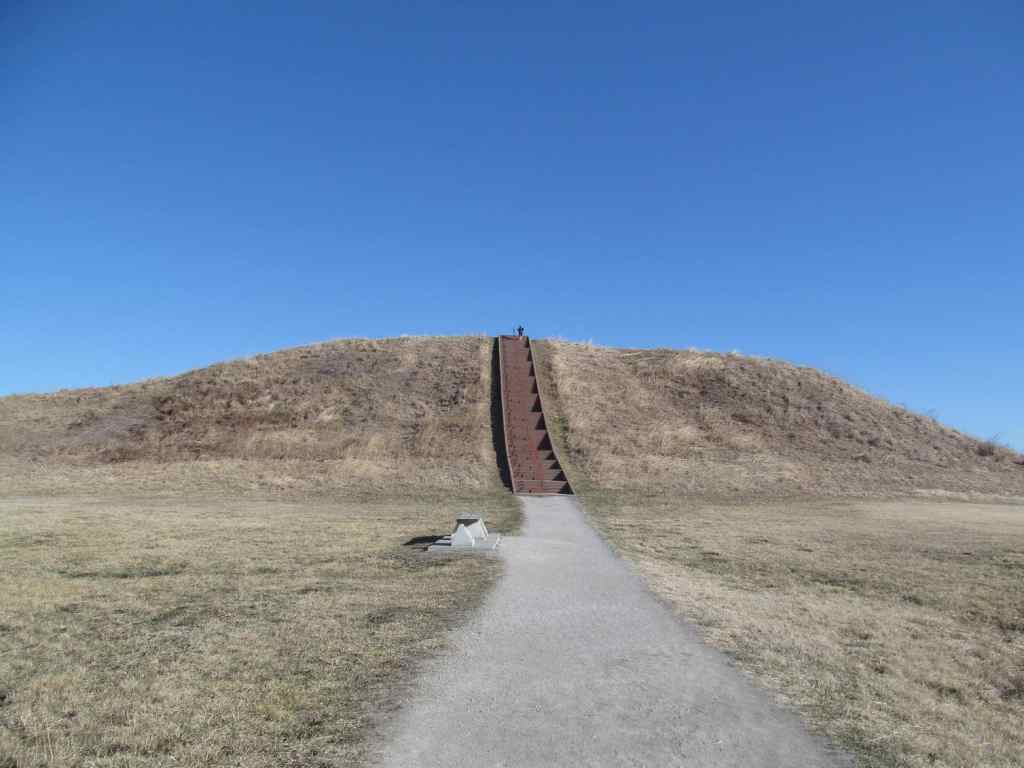
One such place was at Cahokia, near the Mississippi River in what is now Illinois across from St. Louis.
The Cahokia mounds. Doug Kerr, CC BY-SA
In Cahokia, indigenous people built numerous temple pyramids or mounds, similar to the structures built by the Aztecs in Mexico, over a thousand years ago. Among their constructions, what most stands out is an intriguing structure made up of wooden posts arranged in a circle, known today as “Woodhenge.”
To understand the purpose of Woodhenge, scientists watched the sun rise from this structure on winter solstice. What they found was telling: The sun aligned with both Woodhenge and the top of a temple mound – a temple built on top of a pyramid with a flat top – in the distance. They also found that the sun aligns with a different temple mound on summer solstice.
Archaeological evidence suggests that the people of Cahokia venerated the sun as a deity. Scholars believe that ancient indigenous societies observed the solar system carefully and wove that knowledge into their architecture.
Scientists have speculated that the Cahokia held rituals to honor the sun as a giver of life and for the new agricultural year.
Complex understandings
Zuni Pueblo is a contemporary example of indigenous people with an agricultural society in western New Mexico. They grow corn, beans, squash, sunflowers and more. Each year they hold annual harvest festivals and numerous religious ceremonies, including at the winter solstice.
At the time of the winter solstice they hold a multiday celebration, known as the Shalako festival. The days for the celebration are selected by the religious leaders. The Zuni are intensely private, and most events are not for public viewing.
But what is shared with the public is near the end of the ceremony, when six Zuni men dress up and embody the spirit of giant bird deities. These men carry the Zuni prayers for rain “to all the corners of the earth.” The Zuni deities are believed to provide “blessings” and “balance” for the coming seasons and agricultural year.
As religion scholar Tisa Wenger writes, “The Zuni believe their ceremonies are necessary not just for the well-being of the tribe but for “the entire world.”
Winter games
Not all indigenous peoples ritualized the winter solstice with a ceremony. But that doesn’t mean they didn’t find other ways to celebrate.
The Blackfeet tribe in Montana, where I am a member, historically kept a calendar of astronomical events. They marked the time of the winter solstice and the “return” of the sun or “Naatosi” on its annual journey. They also faced their tipis – or portable conical tents – east toward the rising sun.
They rarely held large religious gatherings in the winter. Instead the Blackfeet viewed the time of the winter solstice as a time for games and community dances. As a child, my grandmother enjoyed attending community dances at the time of the winter solstice. She remembered that each community held their own gatherings, with unique drumming, singing and dance styles.
Later, in my own research, I learned that the Blackfeet moved their dances and ceremonies during the early reservation years from times on their religious calendar to times acceptable to the U.S. government. The dances held at the time of the solstice were moved to Christmas Day or to New Year’s Eve.
The solstice. Divad, from Wikimedia Commons
Today, my family still spends the darkest days of winter playing card games and attending the local community dances, much like my grandmother did.
Although some winter solstice traditions have changed over time, they are still a reminder of indigenous peoples understanding of the intricate workings of the solar system. Or as the Zuni Pueblo’s rituals for all peoples of the earth demonstrate – of an ancient understanding of the interconnectedness of the world.
ooOOoo
Let me pick up on the last sentence: “Or as the Zuni Pueblo’s rituals for all peoples of the earth demonstrate – of an ancient understanding of the interconnectedness of the world.”
We are all of us interconnected across the world. We have been for a very long time.
The importance of understanding this, truly understanding this, is critical to our future.
I saw this on the BBC News site back in November and had been meaning to share it with you before now. But it’s still highly relevant.
Do no more than go straight into the article.
ooOOoo
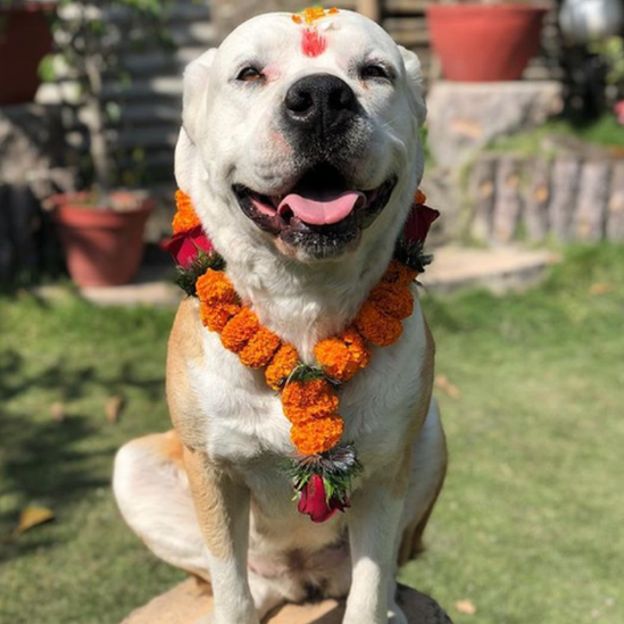
Nepal festival celebrates ‘day of the dogs’
The Nepalese festival Kukur Tihar celebrates dogs by blessing them with a red mark on their forehead
Every dog has its day, and for canines in Nepal that phrase could not be more literal.
The five-day Nepalese Hindu festival of Tihar started this week and the second day is known as Kukur Tihar or “day of the dogs”.
Dogs are celebrated and blessed with a Tika – a red mark applied to their forehead.
The animals are also given flowers, garlands and offered food as part of the festival.
Scooby the Japanese Spitz enjoyed being decorated with garlands of fresh marigold flowers
Hindus believe that dog is the messenger of Yamaraj – the God of death – and by keeping the dogs in good humour they will be able to appease Yamaraj himself.
Sumnima Maudas said Kukur Tihar is one of her “favourite Nepalese festivals” and added the day was all about her chihuahua Sanu
The festival, which shares some traditions with Diwali in India, also celebrates cows and crows.
Dog owner Umid Pokharel celebrated with his labrador Frieza but said “worshipping them for a day is not enough”
It is not just beloved pets who are involved in the celebrations. Stray dogs are honoured on the day too.
Kelsang Ongmu Tamang’s cat Missy joined in with the tradition as well as dogs Sweetie and Milly
Treats given to dogs during Kukur Tihar can range from meat, milk, eggs and good quality dog food.
Pappu the pug has been enjoying the food element of the festival
Tihar is also called Deepavali or the festival of lights.
Throughout this festival, people in Nepal clean their houses and courtyards; light up lamps and pray to Laxmi – the Goddess of Wealth – urging her to visit their houses and bless them.
Daisy Pie certainly looked pleased to be the centre of attention
 Dear Alex











 Learning from Dogs