Category: History

Day Eight, again, of Tom and Chica’s walk.

Yours truly can’t count!

For my previous post was entitled Day Eight etc. and this one is also called Day Eight.

Ah well, it’s the content that counts!

Which is to say that the next three days are, again, devoted to Tom’s walk along GR7.

ooOOoo

Day 8: Cerra de la Fantasia to Benacoaz 16k

By Tom and Chica, 27th January, 2020.

Written by Tom’s wife.
Authors note: Because we have had such a long weather delay, I have decided to number only the days that Tom and Chica actually walk otherwise it is going to give a very unrealistic idea of how long it takes. That is why today is Day 8 and the last walking day was originally Day 10 (but is now Day 7). I have updated all the blog references to correspond.

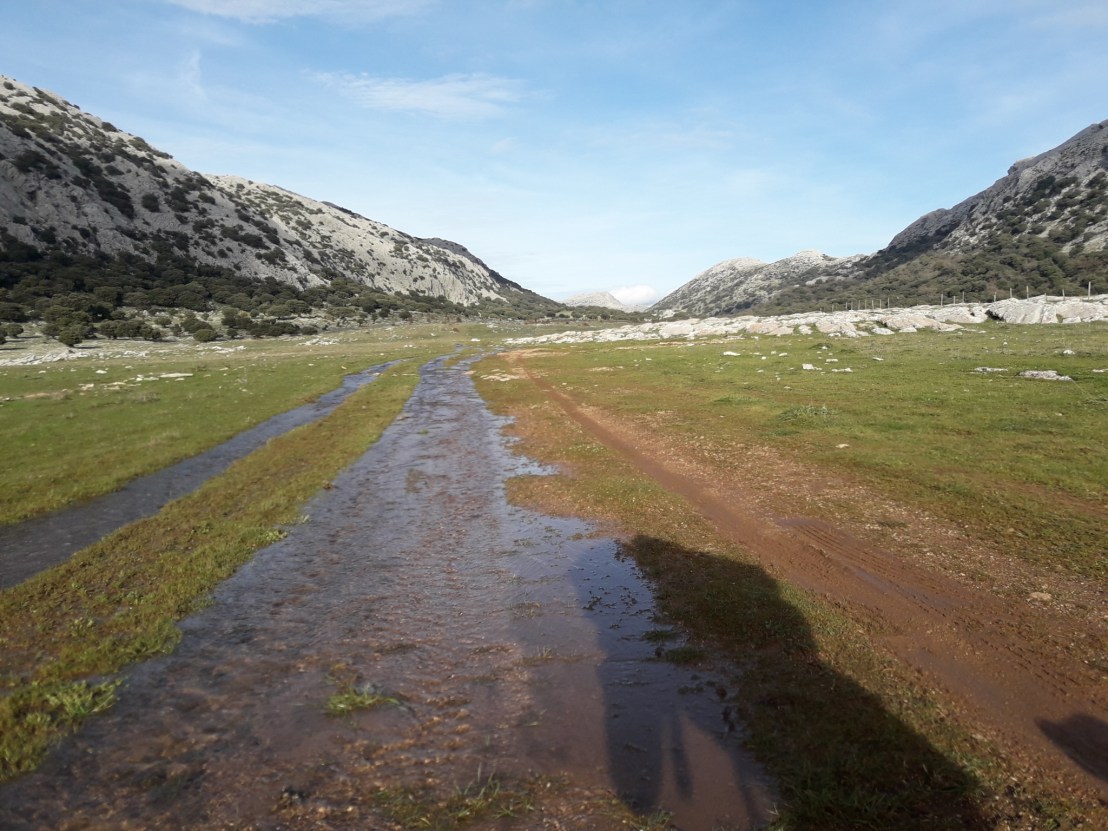
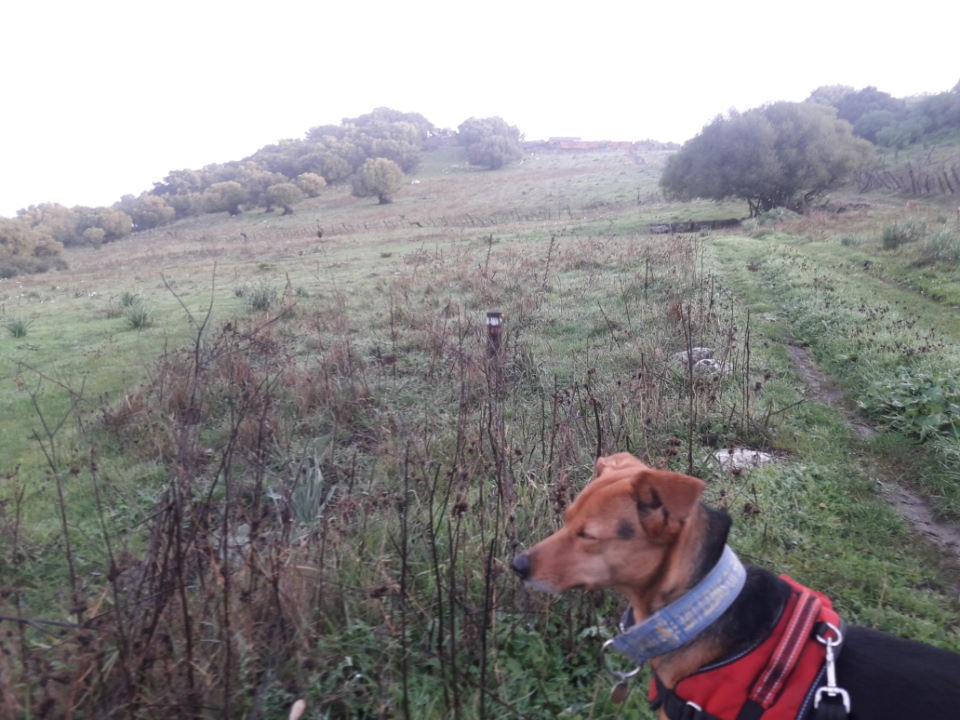
We were up with the lark this morning. Earlier in fact, as it was still dark but we were keen after such a long rain delay. We left the village in fog and went in and out of the sun and mist all the way up to the start point miles into the forest. It was still murky there too and we didn’t hang around as there was a gathering of hunters. Their dogs were in trailers, barking with excitement as this is probably the only time they ever get let out of their cages. But what happens to them after the end of the season next week? I can’t bear to think about it. But that’s why we’re doing this – so onwards and upwards my faithful duo!

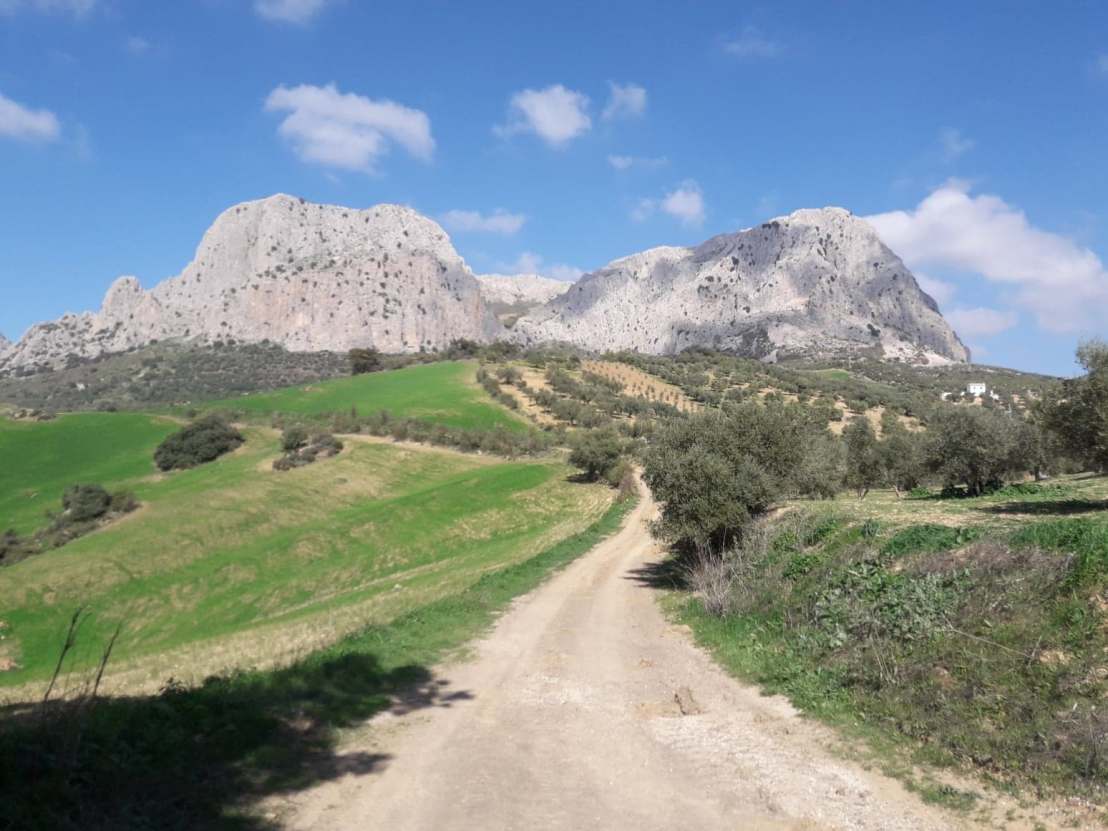
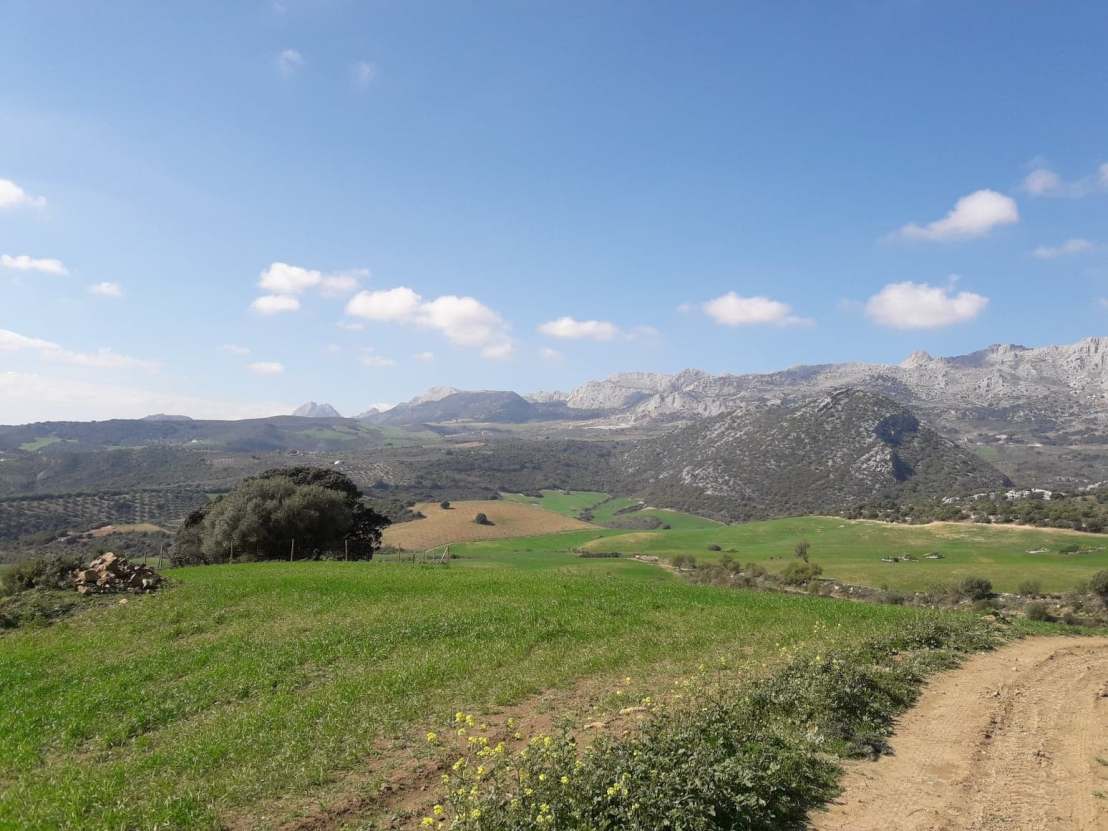
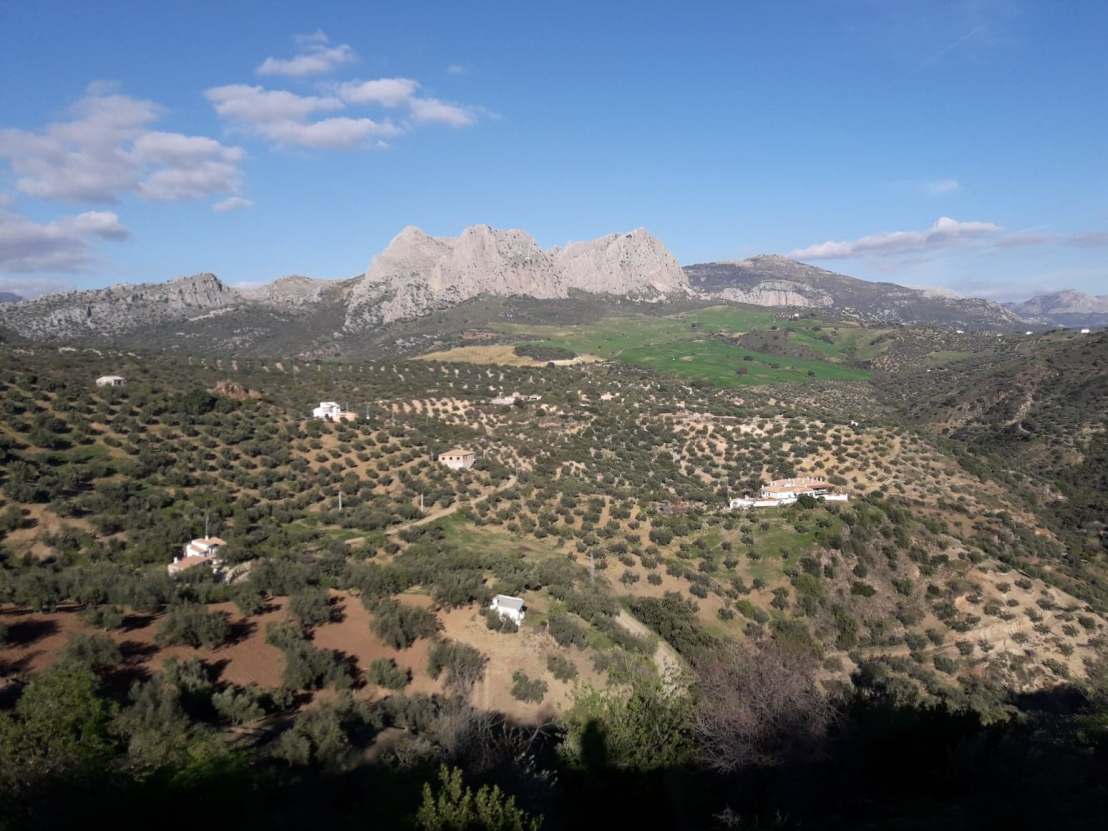
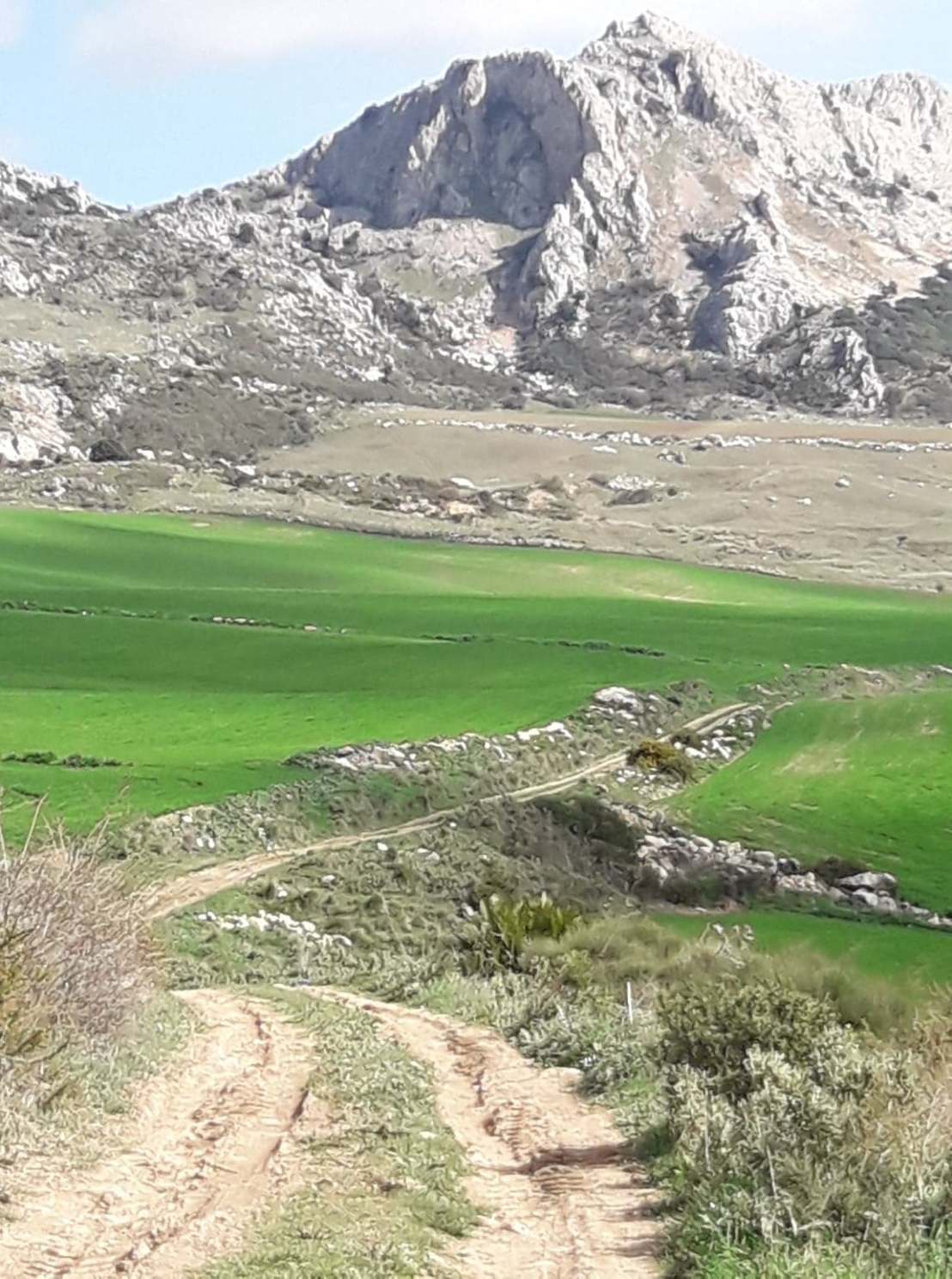
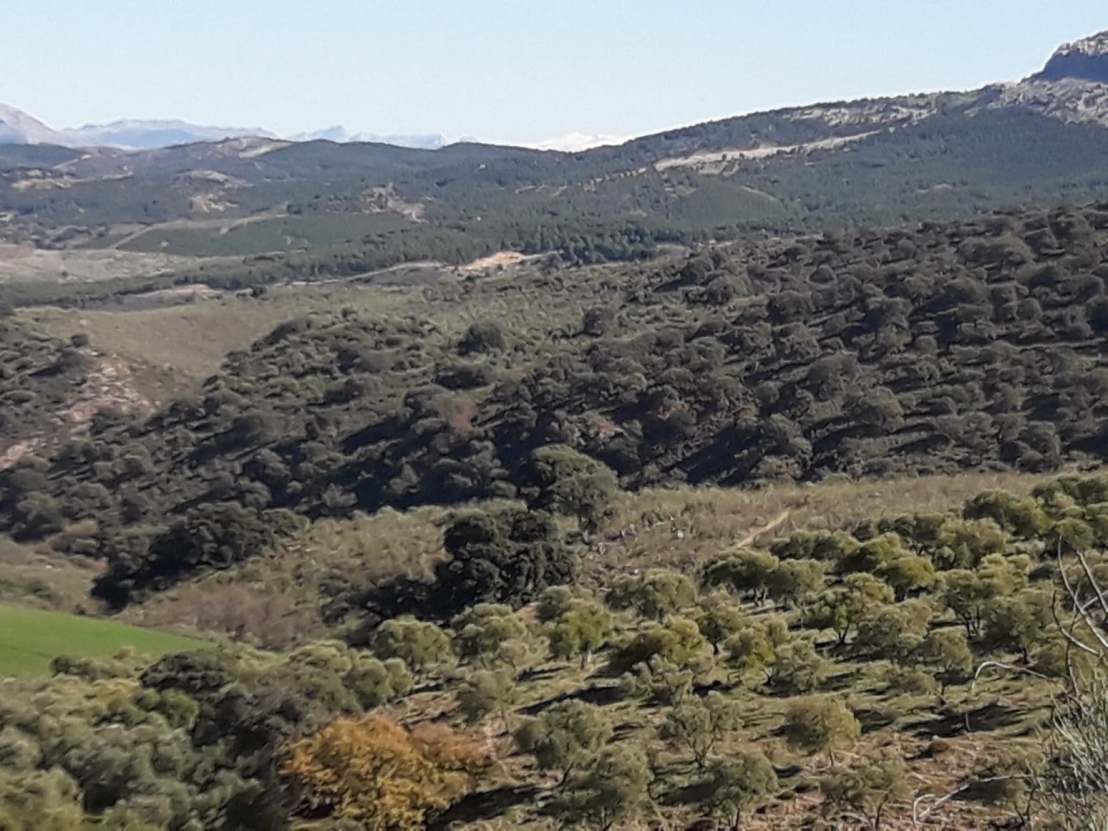
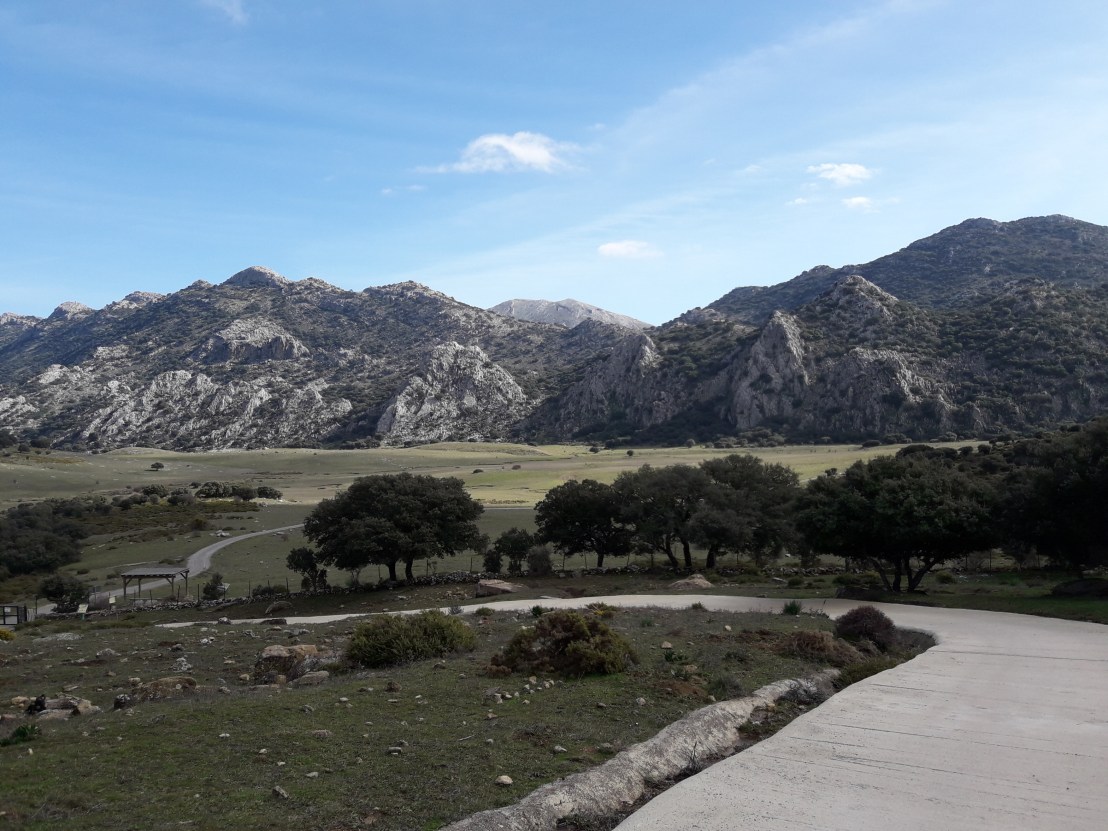
After coming out of the forest onto the road, the trees gave way to scrub and the track roughly followed the same route as the road. The mist made it hard to get a feel for the surrounding landscape at first but then as the mist became patchy there were glimpses of the majestic valley and surrounding mountains – a truly spectacular view but impossible to capture on a phone camera.

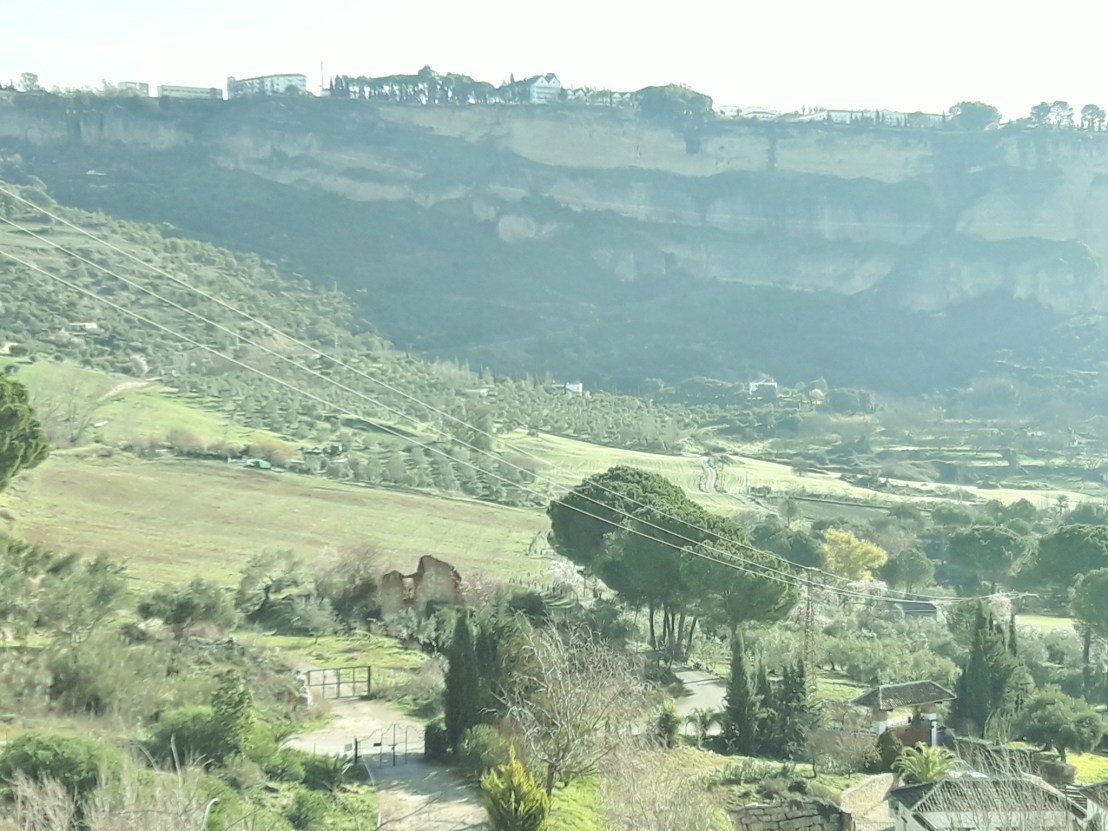
The track crossed the road and descended to the river – Rio de Ubrique – which heads towards the town of the same name. After a bit of a clamber up a steep, wet, rocky and rather unsavoury path between agricultural outbuildings, we popped out right next to the town sign.

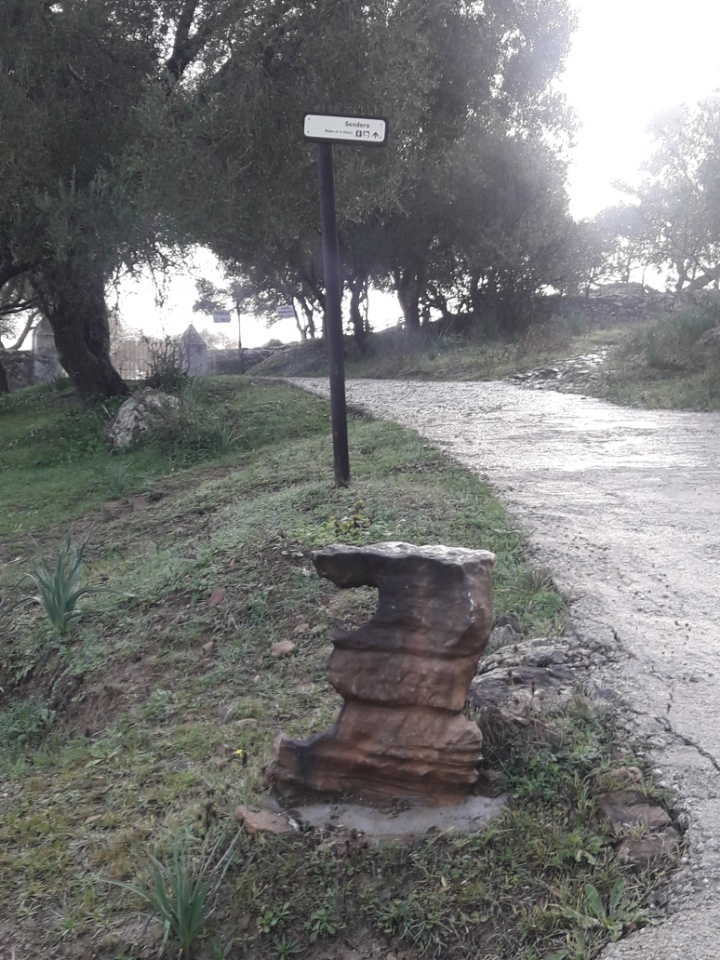
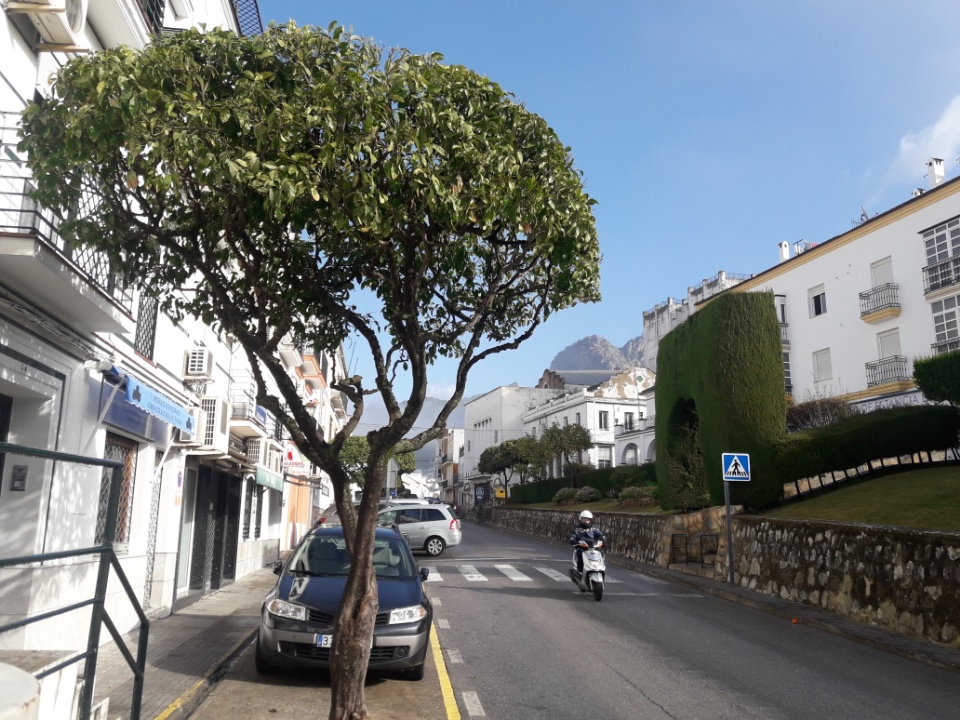
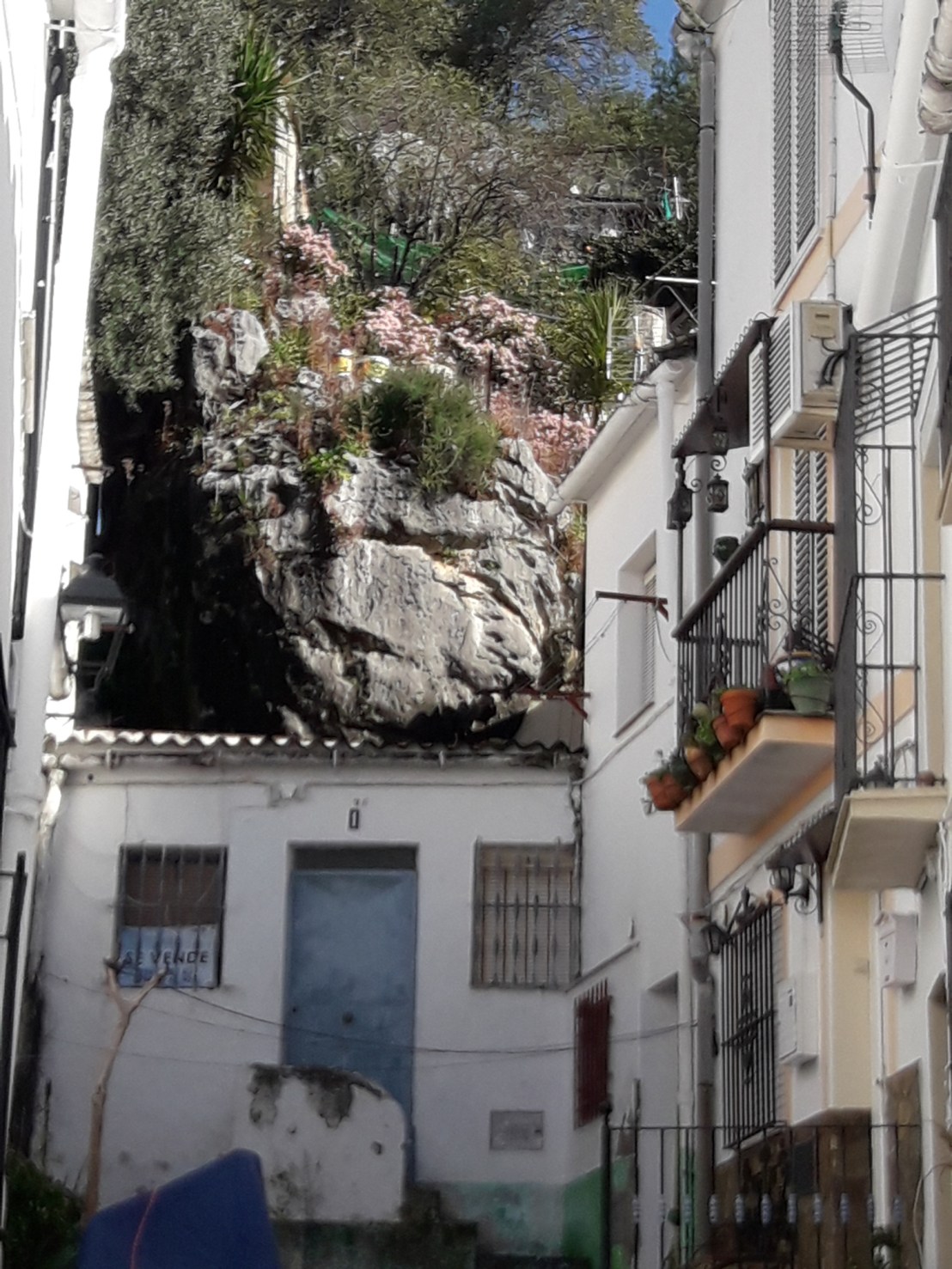
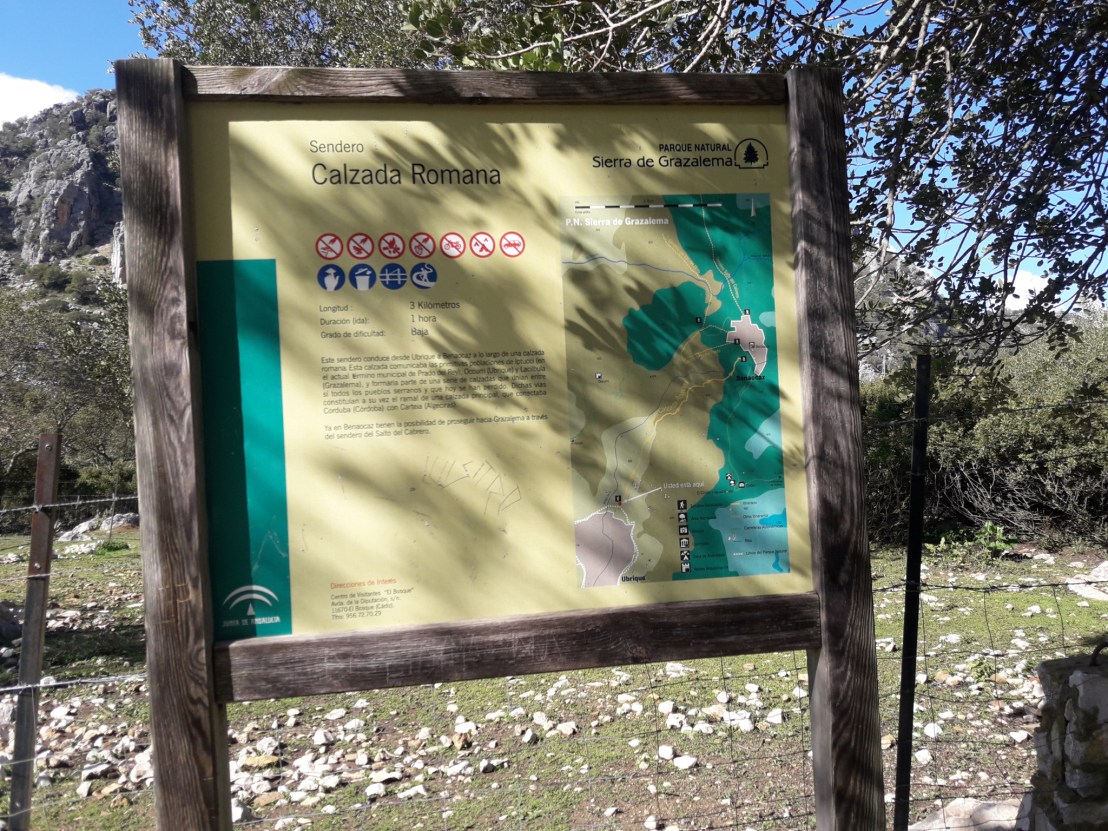
It was a pleasant stroll through the comparatively large and bustling town centre. The sun was now properly out and so Tom stopped in a plaza outside the Town Hall and had a coffee while Chica scrounged titbits by breathing in and contriving to look half starved! Carrying on up through the narrow streets, they arrived at the Convento de Capuchinos where a sign to Benacoaz pointed up a cobbled road: the Calzada Romana (Roman Road).

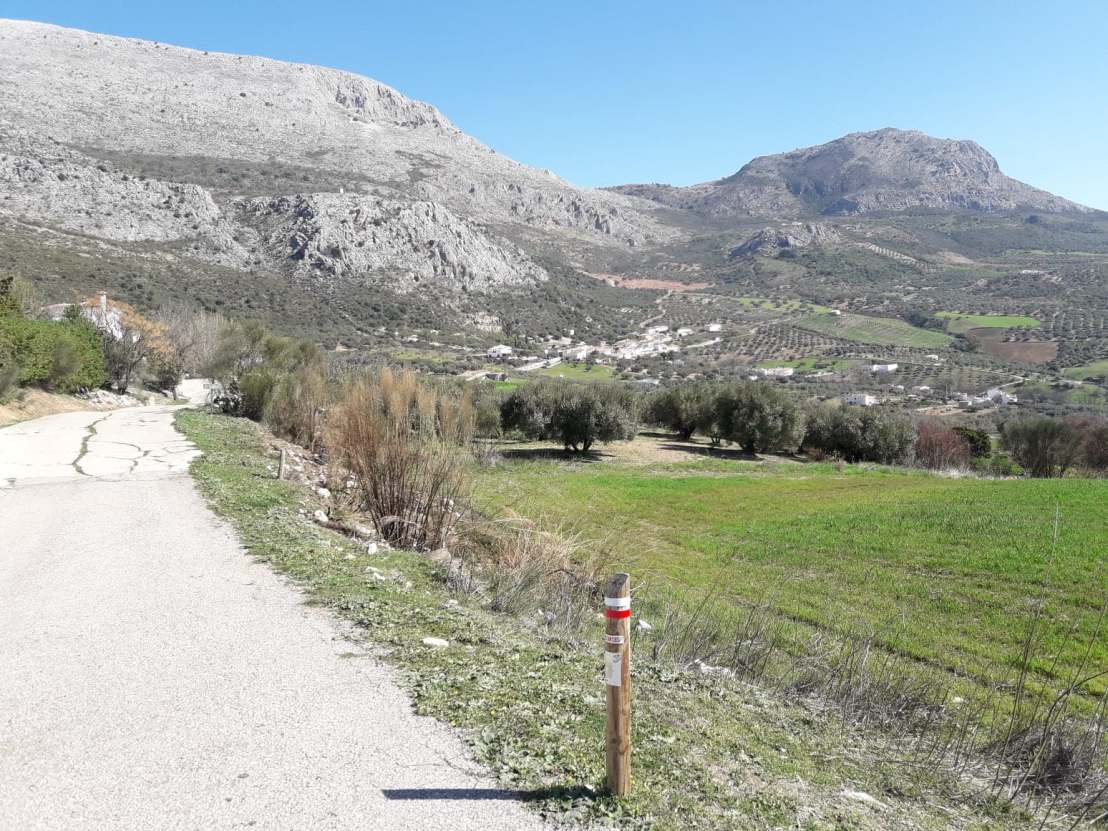
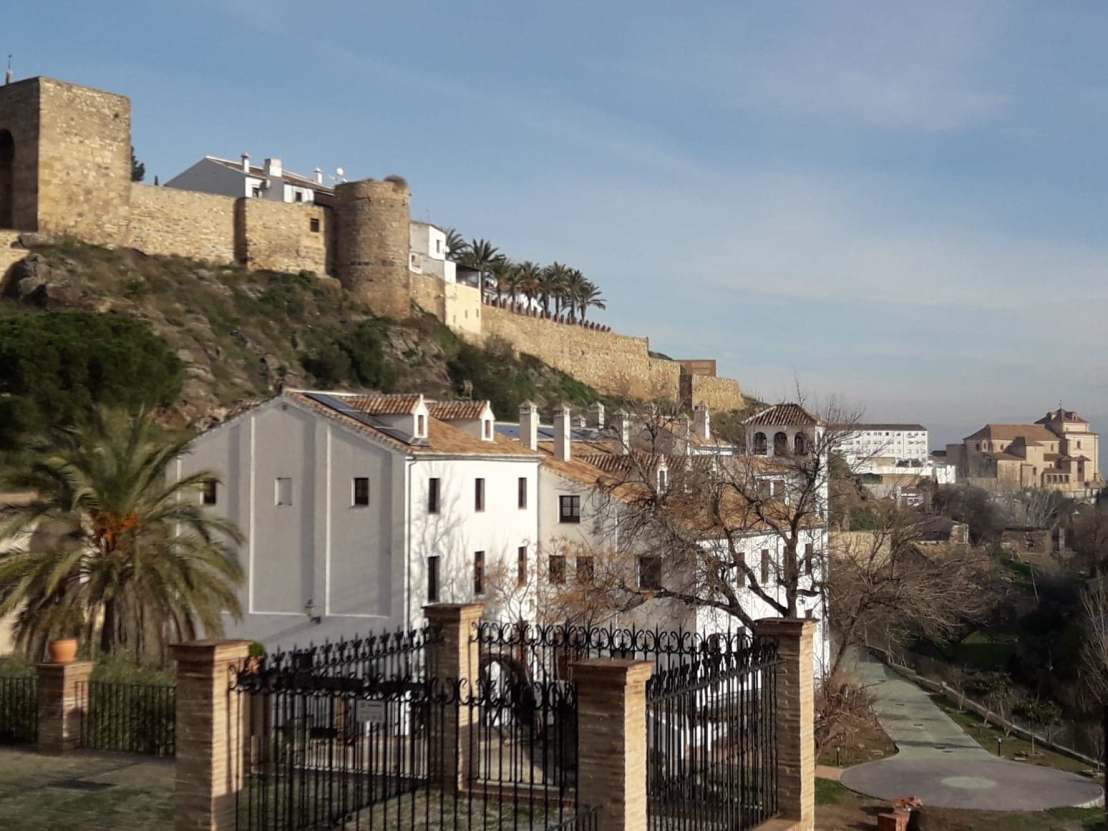
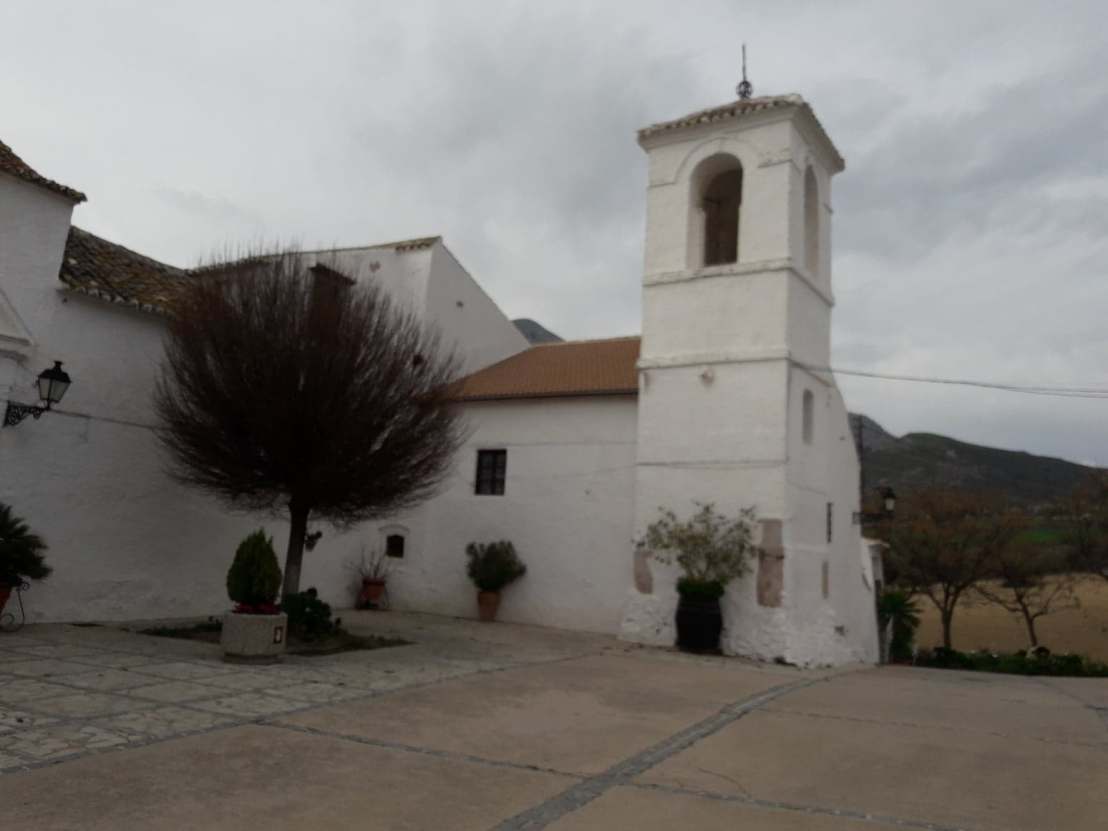
This proved quite tough on the feet as the cobbles were uneven and scattered but after 3.5k it emerged into the village of Bonacoaz, perched on the side of the mountain with vast panoramic views south –  stunning end to today’s beautiful walk.

ooOOoo

I know I have said it before, and undoubtedly I will say it again, but this account of Tom’s walk with his two dogs is astounding! They have been walking for over a week and they are experiencing countryside and more that must be unique to Spain.

Keep it coming!

(And thank you, Gilliwolfe, for penning it.)

A leap into the unknown!

A slight tongue-in-cheek title to today’s post.

Because it is a leap day!

So I’m going back a long time.

I was born towards the tail end of 1944; six months before the end of WWII in Europe.

As such I was in my early twenties when NASA came to the wider attention of millions of people with their effort to put a man on the moon. It was enthralling to look up at the night sky when a moon was present and think that in time there would be a man standing on the moon’s surface.

Now that I am 75 many things have changed. But one of them has not: Staring up at the night sky and getting lost in thought. Luckily we live in a rural location without artificial light anywhere nearby and the night skies are very clear.

All of which takes me back to my days of sailing. From 1986 until 1991 I lived on a deep-water ketch, a Tradewind 33, based in Larnaca, in Cyprus. Each Spring, I would solo across to the Turkish coast, or the Greek coast, and meet up with friends, or my son and daughter, and go coastal cruising. Then in the last year I sailed for England. I well recall seeing the night sky all around me with the stars practically down the watery horizon.

But more of that some other day. Now back to the moon.

All of which is to republish this post and I do hope you will be able to read it fully.

ooOOoo

NASA video reconstructs the harrowing lunar journey of Apollo 13

By Michael d’Estries, February 26, 2020

NASA’s reconstruction of the moon’s far side is based off images received by its Lunar Reconnaissance Orbiter spacecraft. (Photo: NASA/Snapshot from video/YouTube)

On April 15, 1970, NASA astronauts Jim Lovell, Jack Swigert and Fred Haise aboard Apollo 13 set a Guinness World Record for the highest absolute altitude attained by a crewed spacecraft at a distance of 248,655 miles from Earth. Nearly 50 years later, that unplanned record still stands as part of a mission beset by technical glitches and saved by engineering heroism.

“We didn’t slow down, unlike the others, when we got to the moon because we needed its gravity to get back, so we hold the altitude record,” Lowell told the Financial Times in 2011. “I never even thought about it. Records are only made to be broken.”

Gliding by the moon’s far side at an altitude of only 158 miles, the crew of Apollo 13 were, at the time, one of only a handful of humans to ever gaze upon this strange and relatively-unknown terrain of our closest neighbor. Because the moon is tidally locked, a phenomenon in which an orbiting body takes just as long to rotate around its own axis as it does to revolve around its partner, only one side ever faces the Earth.

Using imagery collected by its Lunar Reconnaissance Orbiter spacecraft, NASA has recreated views observed by Apollo 13 during the crew’s harrowing 25-minute journey around the moon’s far side.

“This video showcases visualizations in 4K resolution of many of those lunar surface views, starting with earthset and sunrise, and concluding with the time Apollo 13 reestablished radio contact with Mission Control,” the agency said in a release. “Also depicted is the path of the free return trajectory around the Moon, and a continuous view of the Moon throughout that path. All views have been sped up for timing purposes — they are not shown in ‘real-time.'”

This video uses data gathered from the Lunar Reconnaissance Orbiter spacecraft to recreate some of the stunning views of the Moon that the Apollo 13 astronauts saw on their perilous journey around the farside in 1970. These visualizations, in 4K resolution, depict many different views of the lunar surface, starting with earthset and sunrise and concluding with the time Apollo 13 reestablished radio contact with Mission Control. Also depicted is the path of the free return trajectory around the Moon, and a continuous view of the Moon throughout that path. All views have been sped up for timing purposes — they are not shown in “real-time.” Credits: Data Visualization by: Ernie Wright (USRA) Video Produced & Edited by: David Ladd (USRA) Music provided by Universal Production Music: “Visions of Grandeur” – Frederick Wiedmann

According to Lowell, despite the astronauts’ extremely close proximity, the moon was not the most awe-inspiring scene outside the spacecraft window.

“The impression I got up there wasn’t what the moon looked like so close up, but what the Earth looked like,” he said.

“The lunar flights give you a correct perception of our existence. You look back at Earth from the moon and you can put your thumb up to the window and hide the Earth behind your thumb. Everything you’ve ever known is behind your thumb, and that blue-and-white ball is orbiting a rather normal star, tucked away on the outer edge of a galaxy. You realize how insignificant we really all are. Everything you’ve ever known — all those arguments and wars — is right behind your thumb.”

ooOOoo

Did you watch the video? It’s amazing and is literally the dark side of the moon!

I will close by republishing a Wikipedia entry for Apollo 13.

Apollo 13 was the seventh crewed mission in the Apollo space program and the third meant to land on the Moon. The craft was launched from Kennedy Space Center on April 11, 1970, but the lunar landing was aborted after an oxygen tank in the service module (SM) failed two days into the mission. The crew instead looped around the Moon, and returned safely to Earth on April 17. The mission was commanded by Jim Lovell with Jack Swigert as command module (CM) pilot and Fred Haise as lunar module (LM) pilot. Swigert was a late replacement for Ken Mattingly, who was grounded after exposure to rubella.

Accidental ignition of damaged wire insulation inside the oxygen tank as it was being routinely stirred caused an explosion that vented the tank’s contents. Without oxygen, needed both for breathing and for generating electric power, the SM’s propulsion and life support systems could not operate. The CM’s systems had to be shut down to conserve its remaining resources for reentry, forcing the crew to transfer to the LM as a lifeboat. With the lunar landing canceled, mission controllers worked to bring the crew home alive.
Although the LM was designed to support two men on the lunar surface for two days, Mission Control in Houston improvised new procedures so it could support three men for four days. The crew experienced great hardship caused by limited power, a chilly and wet cabin and a shortage of potable water. There was a critical need to adapt the CM’s cartridges for the carbon dioxide removal system to work in the LM; the crew and mission controllers were successful in improvising a solution. The astronauts’ peril briefly renewed interest in the Apollo program; tens of millions watched the splashdown in the South Pacific Ocean by television.

An investigative review board found fault with preflight testing of the oxygen tank and the fact that Teflon was placed inside it. The board recommended changes, including minimizing the use of potentially combustible items inside the tank; this was done for Apollo 14. The story of Apollo 13 has been dramatized several times, most notably in the 1995 film Apollo 13.

Day Eight of Tom and Chica’s walk

Now it gets very interesting!

This is a longer post and with great interest.

For it covers the Park at Los Alcornacales as well as the Spanish cork industry.

As always, the post is a republication of the original and is gratefully offered to my readers.

ooOOoo

Los Alcornacales – cork and pork and much, much more.

By Tom and Chica, 24th January, 2020

Written by Tom’s wife.

So far, during this part of the walk, Tom and Chica have been travelling through the unique habitat of Los Alcornacales. We fell in love with this beautiful area the first time we visited back in 2013. As we are rained off at the moment, I thought I’d take the opportunity to research more about the area, especially the amazing cork oaks which comprise large areas of the forest.

 Granted natural park status in 1989, Natural Park Los Alcornacales occupies a protected area of 170,025 hectares in Andalusia. Soil, moisture and traditional uses have been the main factors in the conservation of the largest productive area of cork trees anywhere on the Iberian Peninsula. Located in the province of Cadiz and part of Malaga (mainly in the municipality of Jimena de la Frontera, where we have just been walking), it runs from the mountains down to the recently created Estrecho Nature Park on the coast and is home to a variety of landscapes, flora, fauna, history and folklore.

This rich diversity is mainly due to the many rivers, streams and reservoirs but also the moisture that comes from the coast. This latter accumulates to form banks of mist in the deep, narrow gorges known as ‘canutos’. In these conditions, the ancient laurel forest flora has flourished. Characterised by smooth, bright leaves, it can make the most of the moisture and limited light that penetrates the alders growing on the edge of the gorges. So, amidst the scent of laurel and the beauty of flowering rhododendrons, you can walk through this dense forest accompanied by the sound of dippers, kingfishers, blackcaps and finches.

Egyptian mongoose
Griffon vulture

In the more clay-rich areas lower down you can see the wild olive tree, cleared from time immemorial to make way for pasture for the region’s most typical livestock, the brown Retinta cow. On the valley sides, the Mediterranean scrub of rockrose, heather, lavender, daphne and hawthorn is perfect for Andalusian deer, as well as buck, roe deer and carnivores such as genets, badgers and also the Egyptian mongoose – the largest population anywhere on the Iberian Peninsula.

Cork production

Los Alcornacales and the surrounding areas are home to the Iberian cork industry. As well as its most well-recognised use as bottle-stoppers, cork is also found in many products from car construction to aeroplane insulation.

The cork oak, quercus suber, is a native of both the northern and southern shores of the Mediterranean. Its age is unknown, but quercus suber or its ancestors have been around for at least 147 million years. It is a prophyte, ie a species adapted to survive fire. While other species rely on seed propagation to survive fires, the cork layer protects the stem of the tree so it only has to regenerate branches. This makes it very well adapted to the fire-prone forest of southern Spain.

Archaeologists have found evidence of tribes actively working with cork oak in northern Africa before 6,000 BC. Early man would have used the various species of oak for fire wood, tools, weapons; and for building as the hunter-gatherers began to settle. Similar evidence has been found in Andalucía and other parts of southern Spain dating back 4,000 years BC or more.

However, it would take a few thousands more years before the special sealant qualities of cork would be utilised. This property is due solely to the presence of one particular constituent: suberin. Suberin is a fatty substance found in the cells of the denser forms of cork which stops the passage of air or liquid.

Cork was probably first used as a sealant in containers by the Greeks and Phoenicians, for wines and other liquids in pottery containers but it would take the invention of the glass bottle, a fairly recent innovation in historical terms, for cork to finally meet glass. Legend claims that Friar Perignon, a French monk, discovered this use for cork on a slender glass bottle neck in the seventeenth century. As news of its efficacy spread, so a new industry appeared.

Cutting the cork is a highly skilled task and requires two years training. It is unusual for a tree to survive ring barking (the bark being removed around the complete circumference) and it needs to be done with care and at the right time. The cutters’ experience tells them how far to cut up the tree to avoid harming it.  Cutting is only legally permitted between 15 June and 15 August which is when gangs roam the oak forests, each of the usually five members having a specific role, from chief cutter to lowly carrier.

These gangs traverse the forest in a nine-year cycle, allowing the trees they cut to regenerate the cork in the intervening period. Their mules roam free in the forest except for the two month harvest period when they trek back and forth between harvest site and cork factory. So expert is their knowledge of the routes that, once loaded, a tap on the back will send them off unaccompanied. The town of Cortes de la Frontera actually holds burro-loading contests at its annual summer feria, with a prize for the most ingenious loading of a burro.

What we see lying curled on the ground is still many stages away from fitting into the neck of a bottle. At the factory the cork is boiled in a vast, deep pool of water, which renders it malleable for flattening and then processing by machine. The cork then goes through several levels of compression, depending on its destination. It emerges as very thin sheets of varying sizes, perhaps thinner than a child’s little finger. It is then checked for quality – the oak trade has five levels, from excellent to poor – and the oak is assigned to an appropriate use.

Most interestingly, however, is how it does reach the bottles we uncork. Bottle corks are stamped out by machines at different widths for wine, champagne and cognac (Spanish cork is treasured by French brandy producers). When they pile up in the dumpers beneath the pressing machines, they look like big wooden pennies. These are graded by quality, and then carefully fed into further compressing machines. Cork makers reckon that it would be a waste of good cork to use it throughout a wine or champagne cork, so lower quality cork is placed in the middle, highest quality at either end, where the cork meets both wine and outside air. These layers are then compressed so tightly we do not even notice that a cork we pull is not one single unit but a compression of up to eight layers crushed together. The finished corks are then dispatched to bottling plants across Europe and beyond.

There have, of course, been concerns about the rise of the plastic cork. Its proponents say that it prevents a bottle being ‘corked’, ie, spoiled, by air penetrating the old-fashioned cork. Its detractors argue that, beyond the aesthetics of levering a wad of white plastic out of your favourite wine, it doesn’t allow the alcohol to breathe naturally. (French brandies breathe so profusely that the distilleries are wreathed in fumes which promote fungi on the roofs and keep nearby cattle happily sozzled year-round.) Yet with even the British supermarket buyer seemingly moving upmarket in their choice of corked drinks, and the Spanish and French keeping their noses in the air over plastic stoppers, it seems the Iberian peninsula can hold on to its two billion euro cork industry yet.

Other uses for cork include flooring. We have some of this in our bathroom at home. A long way from the basic dull cork tiles of old, now it comes in stunning patterns and looks beautiful. It is also sustainable, provides excellent insulation and is lovely and warm to walk on. If I could, I’d floor the whole house with this.

Iberian pigs

The Iberian pig is a traditional breed of the domestic pig (Sus scrofa domesticus) that is native to the Iberian Peninsula and is currently found in herds clustered in the central and southern part of Portugal and Spain. Its origins can probably be traced back to the Neolithic, when animal domestication started.

The most commonly accepted theory is that the first pigs were brought to here by the Phoenicians from the Eastern Mediterranean coast, probably along the old droving tracks one of which our route, the GR7, roughly follows. They interbred with wild boar and this cross gave rise to the ancestors of what are today’s Iberian pigs.

Prized Iberico ham

The production of Iberian pork is deeply rooted to the Mediterranean ecosystem. It is a rare example in world pig farming where the pig contributes so decisively to the preservation of the ecosystem. The Iberian breed is currently one of the few examples of a domesticated breed which has adapted to a pastoral setting where the land is particularly rich in natural resources, in this case acorns from the holm oak, gall oak and cork oak.

The numbers of the Iberian breed had been drastically reduced since 1960 due to several factors such as the outbreak of African swine fever and the lowered popularity of animal fats. In the past few years, however, the production of pigs of the Iberian type has increased to satisfy a renewed demand for top-quality meat and cured products. Now, though, there is controversy over the providence of the highly prized Iberico ham as breeders cash in on the market and produce a similar but much less sustainable product more cheaply, thus threatening this ancient livelihood.

The Iberian pig can be either red or black or in between. In traditional management, animals ranged freely in sparse oak forest (dehesa in Spain, montado in Portugal).  They are constantly on the move and therefore burn more calories than confined pigs. This, in turn, produces the fine bones typical of this kind of jamón ibérico. At least a hectare of healthy dehesa is needed to raise a single pig. True dehesa is a richly diverse habitat with four different types of oak that are crucial in the production of prime-quality ham. The bulk of the acorn harvest comes from the holm oak (Quercus ilex) but also the Pyrenean oak (Quercus pyrenaica) and Portuguese or gall oak (Quercus lusitanica) and the late cork oak season, which extends the acorn-production period from September almost to April.

Some recent research from Cordoba university concluded {the translation isn’t perfect but you get the idea}:

‘The couple Iberian pig and dehesa has proved to be very effective; so much [so] the Iberian pig is called the dehesa jewel, but the first needs this agro-ecosystem to reach its highest quality properties (organoleptic and nutritional ones); and the second needs a clear commercial differentiation for Iberian pork and cured products in order to receive a high price to maintain and conserve the dehesa. Spanish authorities should be responsible for protecting this traditional system from fraud and unfair competition. In this way, farmers economy could be enough to conserve this unique ecosystem and its values for the whole society.’*

Whether you eat pork or not you may still believe as I do, that this traditional and sustainable way of producing it is better for the ecosystem and the pigs than intensive farming on a huge scale. And we love seeing the black pigs snuffling through the forest. I hope it can be protected along with the rest of this remarkable and stunningly beautiful area.

ooOOoo

Well I must say that this is a tremendous post and a privilege to be able to republish it.

Gilliwolfe did an incredible job in composing the post and inserting all the photographs. Well done!

Well done!


How to live with uncertainty.

Another essay that is nothing to do with dogs!

I have long been a subscriber to The Conversation. They seem to be politically neutral as well as giving permission for their essays to be republished elsewhere.

This particular essay chimed with me because for some time, one or two years sort of time-span, the number of people agreeing with the statement, “It’s a strange world“, has measurably grown. At first I thought it was a question of politics, both sides of The Atlantic, but I have recently come to the opinion that it is deeper than that.

This encapsulates the idea perfectly.

ooOOoo

How CEOs, experts and philosophers see the world’s biggest risks differently

By   Professor of Ethics and Business Law, University of St. Thomas

January 27, 2020

We live in a world threatened by numerous existential risks that no country or organization can resolve alone, such as climate change, extreme weather and the coronavirus.

But in order to adequately address them, we need agreement on which are priorities – and which aren’t.

As it happens, the policymakers and business leaders who largely determine which risks become global priorities spent a week in January mingling in the mountainous resort of Davos for an annual meeting of the world’s elite.

I participated in a global risk assessment survey that informed those at the Davos summit on what they should be paying the most attention to. The results, drawn from experts in a broad range of disciplines including business, happen to be very different from what company CEOs specifically see as the biggest threats they face.

As a philosopher, I found the differences curious. They highlight two contrasting ways of seeing the world – with significant consequences for our ability to address societal risks.

Wildfires in Australia have destroyed more than 3,000 homes and razed more than 10.6 million hectares since September. AP Photo/Noah Berger

Two perspectives on the biggest risks

The World Economic Forum’s Global Risk Report consolidates the perceptions of about 800 experts in business, government and civil society to rank “the world’s most pressing challenges” for the coming year by likelihood and impact.

In 2020, extreme weather, a failure to act on climate change and natural disasters topped the list of risks in terms of likelihood of occurrence. In terms of impact, the top three were climate action failure, weapons of mass destruction and a loss of biodiversity.

The specific perspective of corporate leaders, however, is captured in another survey that highlights what they perceive as the biggest risks to their own businesses’ growth prospects. Conducted by consultancy PwC since 1998, it also holds sway in Davos. I’ve been involved in that report as well when I used to work for the organization.

In sharp contrast to the World Economic Forum’s risk report, the CEO survey found that the top three risks to business this year are overregulation, trade conflicts and uncertain economic growth.

President Trump’s trade war and other economic concerns tend to be the focus of corporate CEOs. AP Photo/Evan Vucci

Economic or ethical

What explains such a big difference in how these groups see the greatest threats?

I wanted to look at this question more deeply, beyond one year’s assessment, so I did a simple analysis of 14 years of data generated by the two reports. My findings are only inferences from publicly available data, and it should be noted that the two surveys have different methodologies and ask different questions that may shape respondents’ answers.

A key difference I observed is that business leaders tend to think in economic terms first and ethical terms second. That is, businesses, as you’d expect, tend to focus on their short-term economic situation, while civil society and other experts in the Global Risk Report focus on longer-term social and environmental consequences.

For example, year after year, CEOs have named a comparatively stable set of narrow concerns. Overregulation is among the main three threats in all but one of the years – and is frequently at the top of the list. Availability of talent, government fiscal concerns and the economy were also frequently mentioned over the past 14 years.

In contrast, the Global Risk Report tends to reflect a greater evolution in the types of risks the world faces, with concerns about the environment and existential threats growing increasingly prominent over the past five years, while economic and geopolitical risks have faded after dominating in the late 2000s.

A philosophical perspective

Risk surveys are useful tools for understanding what matters to CEOs and civil society. Philosophy is useful for considering why their priorities differ, and whose are likelier to be right.

Fundamentally, risks are about interests. Businesses want a minimum of regulations so they can make more money today. Experts representing constituencies beyond just business place a greater emphasis on the common good, now and in the future.

When interests are in tension, philosophy can help us sort between them. And while I’m sympathetic to CEOs’ desire to run their businesses without regulatory interference, I’m concerned that these short-term economic considerations often impede long-term ethical goals, such as looking after the well-being of the environment.

An uncertain world

Experts agree on at least one thing: The world faces dire risks.

This year’s Global Risk Report, titled, “An Unsettled World,” depicts on its cover a vulnerable earth in the shadow of a gigantic whirlpool.

The cover photograph of the Global CEO Survey, which reported the lowest CEO confidence in economic growth since the Great Recession, shows an incoming tide beneath looming dark clouds, with the words: “Navigating the Rising Tide of Uncertainty.”

Between the covers, however, the reports demonstrate a wide gap between two influential groups that need to be on the same page if we hope to resolve the world’s biggest threats.

Last century, in the same year that World War II drew to a close, Bertrand Russell proclaimed that

Bertrand Russell. Naci Yavuz/Shurterstock.com

the purpose of philosophy was to teach us “how to live without certainty, and yet without being paralyzed by hesitation.”

In the 21st century, philosophy can remind us of our unfortunate tendency to let economic priorities paralyze action on more pressing concerns.

[ You’re smart and curious about the world. So are The Conversation’s authors and editors. You can read us daily by subscribing to our newsletter. ]

ooOOoo

Bertrand Russell was a great philosopher. Well he was that and much more. Wikipedia remind us that he “was a British philosopher, logician, mathematician, historian, writer, essayist, social critic, political activist, and Nobel laureate.”

He died at the age of 97 on the 2nd February, 1970; fifty years ago as of yesterday.

I’ll close with another quote from the great man:

“The whole problem with the world is that fools and fanatics are always so certain of themselves, and wiser people so full of doubts. …”

Dogs observations of us humans

A widely-reported study shows the depth to which dogs understand us.

I have seen this reported both in The Smithsonian and Mother Nature News.

I have included both!

I’ll comment at the end of the articles.

ooOOoo

Stray Dogs May Understand Human Signals, Too

By Brigit Katz

Researchers in India studied whether 160 stray dogs would react to commands like gesturing toward a bowl. This image, taken in 2012, shows street dogs surrounding an Indian tea vendor in Allahabad. (AP Photo / Rajesh Kumar Singh)

Dogs are famously good at interpreting human signals, whether communicated verbally or through gestures. But much of what we know about our furry friends’ comprehension of social cues focuses on pet dogs, which share close relationships with their owners and are trained to follow commands. Now, a study published in Frontiers in Psychology, suggests that stray dogs can also understand human gestures, indicating that this ability might be innate.
The new research took place on the streets of several regions in India, which is home to some 30 million stray dogs. Coexistence between canines and humans there is not always peaceful; people have been known to attack street dogs, and vice versa. Around 36 percent of the world’s annual rabies deaths occur in India, most of them children who came into contact with infected dogs.

To better manage the country’s street dogs, it’s essential to gain further knowledge of their behavior, Anindita Bhadra, study co-author and animal behaviorist at the Indian Institute of Science Education and Research Kolkata, tells Liz Langley of National Geographic. So she and her colleagues set out to discover whether strays, which have never undergone specific training, are able to understand humans in a similar way to their pet counterparts.

The researchers took to the streets equipped with two bowls; one contained chicken and the other was empty but had been rubbed with raw chicken, transferring the food’s scent. The bowls were covered with pieces of cardboard and handed to an experimenter who did not know which one contained the snack. This researcher would approach a stray dog, place the bowls on the ground and point at one of them, sometimes momentarily, sometimes repeatedly.

In total, the researchers studied 160 adult strays. Around half of them refused to get close to either bowl, perhaps because they had negative interactions with humans in the past, the researchers speculate. But of the dogs that did approach the bowls, approximately 80 percent went to the one to which the experimenter had pointed. Whether the researcher had pointed to the bowl briefly or repeatedly did not seem to matter. This response, according to the study authors, suggests that untrained stray dogs are “capable of following complex pointing cues from humans.”

Dogs share an intertwined evolutionary history with humans, with domesticated pooches emerging at least 10,000 to 15,000 years ago, though some experts have argued for an even earlier date. This close contact has prompted dogs to develop a number of skills that allow them to communicate with people, including interpreting human emotion. Still, Bhadra says, the researchers found it “quite amazing” that stray dogs without a history of close human interaction were able to “follow a gesture as abstract as momentary pointing.”

“This means that they closely observe the human, whom they are meeting for the first time, and they use their understanding of humans to make a decision,” Bhadra adds. “This shows their intelligence and adaptability.”

Because some dogs seemed anxious and were wary of approaching the researchers, it’s not clear how a dog’s personality—and past experiences—might affect its ability to interpret human signals. But this ability does not appear to be entirely dependent on training, the study authors say, which in turn should inform efforts to manage stray dogs.

“They are quite capable of understanding our body language and we need to give them their space,” Bhadra says. “A little empathy and respect for another species can reduce a lot of conflict.”

ooOOoo

Mother Nature News had a second picture in their broadly-similar article. Indeed, I’m going to republish this article as well. For although they are of the same story they offer a slightly different account.

ooOOoo

Even stray dogs understand human cues

A new study shows these feral canines are paying close attention.

By Starre Vartan   January 21, 2020

Even untrained dogs can follow simple communications. (Photo: Abir Bhattacharya/Shutterstock)

Dogs were likely the first animals that human beings domesticated — scientific guesses vary as to whether that was 10,000 years ago in Europe or 30,000 years ago in Asia (or, as one theory goes, humans tamed grey wolves two separate times). Regardless, they have been our companions for much of human history, and all of modern history. We have evolved together.

And that longstanding connection shows up in feral dogs.

Behavioral biologist Dr. Anindita Bhadra of the Indian Institute of Science Education and Research in Kolkata, India, revealed this by studying stray dogs in several Indian cities. In the experiment, Bhadra and her colleagues would find a solo stray dog and put two covered bowls on the ground nearby. They they’d simply point to one of the bowls; some did this just once, others did it a few times.

The researchers, who published their work in Frontiers in Psychology, recorded the dogs’ reactions. Half the dogs seemed nervous, and didn’t look at or come close to either bowl. But the other half — noted as less anxious dogs by the researchers — approached the bowls. Of those friendlier dogs, about 80% went to the bowl the researcher pointed at. As long as the dogs weren’t too scared of the people, they were easily able to interpret what the pointing meant.

“We thought it was quite amazing that the dogs could follow a gesture as abstract as momentary pointing,” Bhadra said in a news release. “This means that they closely observe the human, whom they are meeting for the first time, and they use their understanding of humans to make a decision. This shows their intelligence and adaptability.”

Wolf puppies surprised researchers with their responses. (Photo: Bildagentur Zoonar GmbH/Shutterstock)

In another study, three out of 13 untrained 8-week-old wolf puppies spontaneously retrieved a ball for a person who threw it, as MNN’s Mary Jo DiLonardo explains. It was a small study, and a low percentage of retrieving puppies, but it was an unexpected result as these weren’t domesticated dogs. “It was so unexpected, and I immediately knew that this meant that if variation in human-directed play behavior exists in wolves, this behavior could have been a potential target for early selective pressures exerted during dog domestication,” Christina Hansen Wheat, a biologist at Stockholm University, said.

Her observations show that playing with people may be a very old trait for wolves, that could reflect how our human ancestors first got to know them. This playful behavior may have sparked humans’ interest in domestication. If a dog could fetch a stick or other thrown object, they could be quite useful to hunting humans.

Of course, their adorable, big puppy-dog eyes and floppy ears (both traits that have become accentuated over time as dogs evolved) are among the reason we are still drawn to dogs today. (It also helps that they’re great listeners.)

But long before that happened, dogs served an important purpose — assisting people in locating and retrieving prey, and serving as eyes and ears for an intruder. Simple tasks like showing they can follow directions or fetch an object may have moved prehistoric dogs from outside the fire circle to within it, which is why understanding these behaviors are so important.

ooOOoo

If we go back into the mists of time then prehistoric wolves (or dogs) learnt to bond with early humans because it served both their interests to so do. Humans became much more adept at hunting and wolves obviously became the benefactors of food!

Now dogs are so well bonded to human gestures that even non-domesticated dogs understand the signals that we humans put out. I say ‘non-domesticated’ but in a real sense all dogs are domesticated. It would be more accurate to say that these are dogs who do not have a home with humans.

The oldest human-animal relationship by far!

Speaking with wolves!

An insightful look at the way that baby wolves play.

I’m gradually getting ourselves organised following the power failure and, on cue, Chris Gomez sent the following in two days ago.

It shows beyond doubt that young wolves play like dogs and that the two animals are more alike than dis-alike.

You watch the following video and see what I mean.

Then there is the article that is reproduced below.

ooOOoo

Baby wolves like to play fetch too – what this says about your dog.

By Fermin Koop

Playing a game of fetch with a dog means they are following a human social cue to recover the ball. But fetch isn’t just for dogs, wolf puppies are down to play too, which means they can also understand human communication cues, according to a new study.

Credit Wikipedia Commons

The findings, published in the journal iScience, were made after researchers put 13 8-week-old wolf puppies from three different litters through a series of tests usually used to assess dog-puppy behavior. Three of the pups were interested in playing fetch with a stranger, which included bringing a ball back when encouraged to.

The discovery was quite a surprise for the team as it was believed that the cognitive abilities necessary to understand communication cues given by a human were presented in dogs only after humans domesticated them 15,000 years ago. Dogs differ from wolves physically, genetically and behaviorally.

“When I saw the first wolf puppy retrieving the ball, I literally got goosebumps,” said Christina Hansen Wheat of Stockholm University in a press release. “I immediately knew that this meant that if variation in human-directed play behavior exists in wolves, this behavior could have been a potential target for early selective pressures exerted during dog domestication.”

Wanting to learn more about the effects of domestication on behavior, Hansen Wheat and her team raised wolf and dog puppies from the age of 10 days and put them through various behavioral tests. In one of them, the pup was thrown a ball by an unknown person, encouraging the wolf to get it and bring it back.

Expectations of the wolf pups catching on weren’t high, with the first two litters showing no interest in the balls, let alone of playing fetch. But everything changed with the third litter. A few of the puppies went for the ball and even responded to the social cues and brought it back.

“It was very surprising that we had wolves actually retrieving the ball,” said Hansen Wheat. “I did not expect that. I do not think any of us did. It was especially surprising that the wolves retrieved the ball for a person they had never met before.”

In the past, other research showed that domesticated and non-domesticated species will follow human gestures if a food reward is given, Hansen Wheat and her team said. But in those cases, the animals were previously trained to follow the cues or knew the person conducting the study.

While the new research has a limitation over the size of its sample, it could reassess our interpretation that understanding human social cues came from domestication. Instead, it could be possible that this behavior can be traced back to an ancestral population before wolves were domesticated into dogs.

ooOOoo

Despite this being the twenty-first century there are still things being discovered that cause us humans to be amazed.

Such as this story about the young wolves, way before they evolved into dogs.

Those eyes!

Now to the wolf’s eyes!

I have written quite a few times about the eyes of dogs but never the wolf.

This was sent to me by Julie Thomas-Smith, the wife of my best friend, Richard Maugham, and it is just beautiful.

It comes from the Wolf Conservation Center and when one goes across to that website then one reads:

A wolf’s eyes have the power to speak a great language. Did you know that wolves possess certain ocular characteristics that allow them to communicate with other members of their species using their eyes alone? One can guess that this gives a new meaning to the common phrase “puppy-dog eyes!”

Enjoy your weekend.

The early beginnings.

Science has maybe found a clue to the ancestor of the dog and the wolf.

For an animal that means so much to us humans, the origins of the dog are still uncertain. Indeed, as this interesting article shows, the origins of the wolf are uncertain.

ooOOoo

Was This 18,000-Year-Old Puppy Frozen in Siberian Permafrost the Ancestor of Wolves, Dogs or Both?

DNA tests on the well-preserved remains can’t determine whether the little canine was wild or domestic

(Sergey Fedorov/NEFU)

By Jason Daley, smithsonianmag.com
Dec. 3, 2019, 10 a.m.”>December 3, 2019

Meet Dogor, an 18,000-year-old pup unearthed in Siberian permafrost whose name means “friend” in the Yakut language. The remains of the prehistoric pup are puzzling researchers because genetic testing shows it’s not a wolf or a dog, meaning it could be an elusive ancestor of both.

Locals found the remains in the summer of 2018 in a frozen lump of ground near the Indigirka River, according to the North-Eastern Federal University in Yakutsk. Parts of the animal are incredibly well-preserved, including its head, nose, whiskers, eyelashes and mouth, revealing that it still had its milk teeth when it died. Researchers suggest the animal was just two months old when it passed, though they do not know the cause of death.

The pup is so well-preserved that researchers at the Centre for Palaeogenetics in Sweden were able to sequence the animal’s DNA using a piece of rib bone. The results found that Dogor was male, but even after two rounds of analysis the team could not determine whether he was a dog or a wolf.

“It’s normally relatively easy to tell the difference between the two,” David Stanton, a Centre for Palaeogenetics research fellow, tells Amy Woodyatt at CNN. “We have a lot of data from it already, and with that amount of data, you’d expect to tell if it was one or the other. The fact that we can’t might suggest that it’s from a population that was ancestral to both—to dogs and wolves.”

The find is exciting, regardless of whether Dogor turns out to be a common canine ancestor, an early dog, or an early wolf. Hannah Knowles at The Washington Post reports that Dogor comes from an interesting time in canine evolution, when wolf species were dying out and early dogs were beginning to emerge.

“As you go back in time, as you get closer to the point that dogs and wolves converge, [it becomes] harder to tell between the two,” Stanton tells Knowles.

(Sergey Fedorov/NEFU)

The history of just how and when dogs split from wolves is unresolved. There’s a general agreement among scientists that modern gray wolves and dogs split from a common ancestor 15,000 to 40,000 years ago, explains Brian Handwerk previously for Smithsonian.com. How dogs became dogs, however, is contested. Some research suggests that dogs were domesticated by humans once, while other studies have found dogs were domesticated multiple times. Exactly where in the world wild canines became man’s best friend is also disputed. The origin of the human-animal bond has been traced to Mongolia, China and Europe.

Scientists disagree about how dogs ended up paired with people, too. Some suspect humans captured wolf pups and actively domesticated them. Others suggest that a strain of “friendly,” less aggressive wolves more or less domesticated themselves by hanging out near humans, gaining access to their leftover food.

Dorgor’s DNA could help unravel these mysteries. The team plans to do a third round of DNA testing that may help definitively place Dogor in the canine family tree, report Daria Litvinova and Roman Kutuko at the Associated Press.

ooOOoo

This is incredibly interesting, don’t you think?

Hopefully I will hear of that third round of DNA testing and, if so, will most definitely share it with you.

Picture Parade Three Hundred and Nineteen

A wonderful set of photographs for the new year!

These were taken by my son, posted on Facebook and with his permission reproduced here.

A Kingfisher!

Taken at the Moat, at Bishop’s Palace, Wells, U.K.

oooo

oooo

oooo

oooo

oooo

From the Royal Society of Protection for Birds (RSPB) website:

Kingfishers have stout bodies, very short tails, short, rounded wings, large heads and long, dagger-like bills.

Their feet are very small, with the two outer toes partly fused together. They nest in holes tunnelled into earth banks. There is only one UK species, but many more worldwide, most of which are dry-land birds rather than waterside ones like the UK kingfisher.

Beautiful!

It’s a New Year!

Well we have passed the Solstice!

Each year I try and promote the fact that we are in a New Year.

This year’s December Solstice took place at the moment this post was published: 20:19 PST .

Or in the words of EarthSky.org:

ooOOoo

All you need to know: December solstice

Posted by in | December 15, 2019

December solstice 2019 arrives on December 22 at 4:19 UTC.

That’s December 21 for much of North America. High summer for the Southern Hemisphere. For the Northern Hemisphere, the return of more sunlight!

Ian Hennes in Medicine Hat, Alberta, Canada, created this solargraph between a June solstice and a December solstice. It shows the path of the sun during that time period.

Late dawn. Early sunset. Short day. Long night. For us in the Northern Hemisphere, the December solstice marks the longest night and shortest day of the year. Meanwhile, on the day of the December solstice, the Southern Hemisphere has its longest day and shortest night. The 2019 December solstice takes place on Sunday, December 22, at 04:19 UTC (That’s December 21 at 10:19 p.m. CST; translate UTC to your time).

No matter where you live on Earth’s globe, a solstice is your signal to celebrate.

When is the solstice? The solstice happens at the same instant for all of us, everywhere on Earth. In 2019, the December solstice comes on December 21 at 10:19 p.m. CST. That’s on December 22 at 04:19 Universal Time (UTC). It’s when the sun on our sky’s dome reaches its farthest southward point for the year. At this solstice, the Northern Hemisphere has its shortest day and longest night of the year.

To find the time in your location, you have to translate to your time zone. Click here to translate Universal Time to your local time.

Just remember: you’re translating from 04:19 UT on December 22. For example, if you live in Perth, Australia, you need to add 8 hours to Universal Time to find out that the solstice happens on Sunday, December 22, at 12:19 p.m. AWST (Australian Western Standard Time).

Day and night sides of Earth at the instant of the December 2019 solstice (December 22, 2019, at 04:19 UTC). Image via EarthView.

What is a solstice? The earliest people on Earth knew that the sun’s path across the sky, the length of daylight, and the location of the sunrise and sunset all shifted in a regular way throughout the year. They built monuments such as Stonehenge in England – or, for example, at Machu Picchu in Peru – to follow the sun’s yearly progress.

But we today see the solstice differently. We can picture it from the vantage point of space. Today, we know that the solstice is an astronomical event, caused by Earth’s tilt on its axis and its motion in orbit around the sun.

Because Earth doesn’t orbit upright, but is instead tilted on its axis by 23 1/2 degrees, Earth’s Northern and Southern Hemispheres trade places in receiving the sun’s light and warmth most directly. The tilt of the Earth – not our distance from the sun – is what causes winter and summer. At the December solstice, the Northern Hemisphere is leaning most away from the sun for the year.

At the December solstice, Earth is positioned in its orbit so that the sun stays below the North Pole horizon. As seen from 23 1/2 degrees south of the equator, at the imaginary line encircling the globe known as the Tropic of Capricorn, the sun shines directly overhead at noon. This is as far south as the sun ever gets. All locations south of the equator have day lengths greater than 12 hours at the December solstice. Meanwhile, all locations north of the equator have day lengths less than 12 hours.

For us on the northern part of Earth, the shortest day comes at the solstice. After the winter solstice, the days get longer, and the nights shorter. It’s a seasonal shift that nearly everyone notices.

Earth has seasons because our world is tilted on its axis with respect to our orbit around the sun. Image via NASA.

Where should I look to see signs of the solstice in nature? Everywhere.

For all of Earth’s creatures, nothing is so fundamental as the length of daylight. After all, the sun is the ultimate source of all light and warmth on Earth.

If you live in the Northern Hemisphere, you can notice the late dawns and early sunsets, and the low arc of the sun across the sky each day. You might notice how low the sun appears in the sky at local noon. And be sure to look at your noontime shadow. Around the time of the December solstice, it’s your longest noontime shadow of the year.

In the Southern Hemisphere, it’s opposite. Dawn comes early, and dusk comes late. The sun is high. It’s your shortest noontime shadow of the year.

Around the time of the winter solstice, watch for late dawns, early sunsets, and the low arc of the sun across the sky each day. Notice your noontime shadow, the longest of the year. Photo via Serge Arsenie on Flickr.
Meanwhile, at the summer solstice, noontime shadows are short. Photo via the Slam Summer Beach Volleyball festival in Australia.

Why doesn’t the earliest sunset come on the shortest day? The December solstice marks the shortest day of the year in the Northern Hemisphere and longest day in the Southern Hemisphere. But the earliest sunset – or earliest sunrise if you’re south of the equator – happens before the December solstice. Many people notice this, and ask about it.

The key to understanding the earliest sunset is not to focus on the time of sunset or sunrise. The key is to focus on what is called true solar noon – the time of day that the sun reaches its highest point in its journey across your sky.

In early December, true solar noon comes nearly 10 minutes earlier by the clock than it does at the solstice around December 22. With true noon coming later on the solstice, so will the sunrise and sunset times.

It’s this discrepancy between clock time and sun time that causes the Northern Hemisphere’s earliest sunset and the Southern Hemisphere’s earliest sunrise to precede the December solstice.

The discrepancy occurs primarily because of the tilt of the Earth’s axis. A secondary but another contributing factor to this discrepancy between clock noon and sun noon comes from the Earth’s elliptical – oblong – orbit around the sun. The Earth’s orbit is not a perfect circle, and when we’re closest to the sun, our world moves fastest in orbit. Our closest point to the sun – or perihelion – comes in early January. So we are moving fastest in orbit around now, slightly faster than our average speed of about 18.5 miles per second (30 kilometers per second). The discrepancy between sun time and clock time is greater around the December solstice than the June solstice because we’re nearer the sun at this time of year.

Solstice sunsets, showing the sun’s position on the local horizon at December 2015 (left) and June 2016 (right) solstices from Mutare, Zimbabwe, via Peter Lowenstein.

The precise date of the earliest sunset depends on your latitude. At mid-northern latitudes, it comes in early December each year. At northern temperate latitudes farther north – such as in Canada and Alaska – the year’s earliest sunset comes around mid-December. Close to the Arctic Circle, the earliest sunset and the December solstice occur on or near the same day.

By the way, the latest sunrise doesn’t come on the solstice either. From mid-northern latitudes, the latest sunrise comes in early January.

The exact dates vary, but the sequence is always the same: earliest sunset in early December, shortest day on the solstice around December 22, latest sunrise in early January.

And so the cycle continues.

Solstice Pyrotechnics II by groovehouse on Flickr.

Bottom line: The 2019 December solstice takes place on Sunday, December 22, at 04:19 UTC (that’s December 21 at 10:19 p.m. CST; translate UTC to your time). It marks the Northern Hemisphere’s shortest day (first day of winter) and Southern Hemisphere’s longest day (first day of summer). Happy solstice, everyone!

ooOOoo

Well for many in the Northern Hemisphere the worst of the winter weather is yet to come.

But at least the days are drawing longer.

Welcome to the start of a New Year!