Now again this has nothing to do with dogs and I would be the first person to say that there are still some people out there who are not convinced that global warming is a major result of human activity.. But none other than the Union of Concerned Scientists are persuaded that humans are the major cause. See their website here. (From which the following is taken.)
Every single year since 1977 has been warmer than the 20th century average, with 16 of the 17 warmest years on record occurring since 2001, and 2016 being the warmest year on recorded history. A study from 2016 found that without the emissions from burning coal and oil, there is very little likelihood that 13 out of the 15 warmest years on record would all have happened.
And further on in the article, this:
Scientists agree that today’s warming is primarily caused by humans putting too much carbon in the atmosphere, like when we choose to extract and burn coal, oil, and gas, or cut down and burn forests.
Today’s carbon dioxide levels haven’t been seen in at least the last 800,000 years. Data assembled from Antarctic ice core samples and modern atmospheric observations.
So on to the film.
My son, Alex, sent me the following email on the 7th October.
Hi Dad
This is a really interesting film about climate change in the west coast mountains, USA. A bit skiing related but a good watch !
Lots of love
Alex
Included in the email was a link to the film available on YouTube.
The film is just under one hour in length and a great film to watch as well as having a clear, fundamental message: All of us must act in whatever ways we can if our children and grandchildren are to have a future. Indeed, do you believe you have another twenty or more years to live? Then include yourself as well.
ooOOoo
About The Film
Professional snowboarder and mountaineer Jeremy Jones has an intimate relationship with the outdoors. It’s his escape, his identity, and his legacy. But over the course of his 45 years in the mountains, he’s seen many things change: more extreme weather, fewer snow days, and economic strain on mountain towns.
Motivated by an urge to protect the places he loves, Jeremy sets out on a physical and philosophical journey to find common ground with fellow outdoor people across diverse political backgrounds. He learns their hopes and fears while walking a mile in their shoes on the mountain and in the snow.
With intimacy and emotion set against breathtaking backdrops, Purple Mountains navigates America’s divide with a refreshing perspective: even though we may disagree about climate policy, our shared values can unite us.
Funnily enough, Jeannie and I were speaking just recently about the creation of breeds, in particular because we were fascinated as to the breed origins of Oliver.
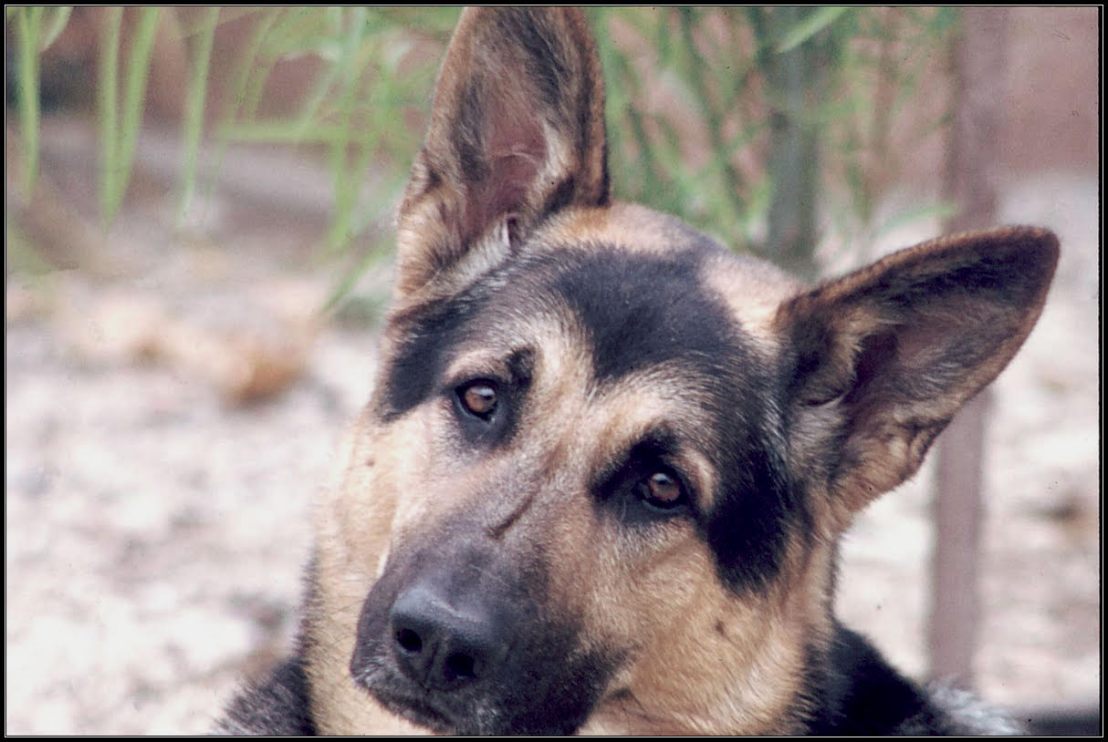
Oliver. Taken at home, 17th May, 2020.
Oliver’s eyes are to die for!
Well a recent article on the Treehugger blog threw some light on this.
I hope it is permissible to share it with you.
ooOOoo
Labradoodles Are More Poodle Than Lab
Study helps deepen understanding about how breeds are formed.
By Mary Jo DiLonardo
Published September 22, 2020
Australian Labradoodles aren’t officially recognized as a breed. Purple Collar Pet Photography / Getty Images
The Australian creator of the Labradoodle was trying to find the perfect guide dog for a blind woman whose husband was allergic to dog hair. He tried about a dozen poodles before breeding a poodle with a Labrador retriever. The resulting Australian Labradoodles became incredibly popular as a mix of two well-liked breeds.
But a new study finds that the breed that developed from that popular cross isn’t an even split of both breeds – it is primarily poodle.
Australian Labradoodles have been around for several decades and have been bred to each other and tinkered with since then. By contrast, many Labradoodles that are found in the U.S. are first-generation mixes of one Labrador and one poodle. These dogs were used as the control dogs in the study, researcher Elaine Ostrander, geneticist at the National Human Genome Research Institute of the National Institutes of Health, tells Treehugger.
“We were interested in taking a genomic snapshot of a breed in the making—the Australian Labradoodle. The breed has only been around since the 1980s as opposed to the many breeds we see at the dog park which have been around since Victorian times and were created in Western Europe,” she says.
The Australian Labradoodle has gone through several generations, with careful and thoughtful addition of Labradors and poodles added, reflecting what breeders and owners want. We wanted to see if genomics could be used to tell what was happening to the genome of these dogs as they evolved into a breed.
The Fédération Cynologique Internationale (FCI), an international federation of many national kennel clubs, recognizes about 350 dog breeds. The American Kennel Club (AKC) recognizes 195 breeds. The Labradoodle is not an official breed.
“We were also curious to see if the breed met the statistical definition of a breed. There are many measures in terms of genomic diversity and ability to ‘breed true’ that are taken into account when determining when a dog population is really a ‘breed’ at the genetic level,” Ostrander says.
Many of these breeds have been created through intense breeding programs focused on enhancing specific traits. When designer breeds are created, the genetic diversity is limited because there are a small number of animals being bred together. This often leads to a high incidence of disease and other problems. Lots of Poodle DNA
For the study, researchers analyzed genetic data from Australian Labradoodles, Labrador retrievers, poodles, and a number of other breeds. The results were published in PLOS Genetics.
Ostrander says they were somewhat surprised at what they found.
“First, the Australian Labradoodle meets the definition of a breed at the statistical level. Those arguing for it to have breed status with various registries have a good argument,” she says. “What we didn’t expect was the degree to which today’s Australian Labradoodle has such a large component of its genome from the poodle. While the breed started as a 50-50 mix, it is clear that poodle traits are highly valued and many more poodles than Labradors have been added to the breed at strategic points.”
That’s likely because poodles have a reputation for being hypoallergenic, she points out, and elicit a lower allergic reaction than many other dog breeds in people with allergies or asthma.
“Owners buy Labradoodles for many reasons including their trainability, family friendly traits, and, importantly, they want a dog that won’t make them sneeze or otherwise respond,” she says. “Interestingly, the Labrador is very much present in every Australian Labradoodle we tested. Likely people are seeking the family-friendly traits of the Labrador and breeders work hard to retain that as well.”
Labradoodles weren’t the first doodle dogs and definitely are not the last. The first poodle mixes were likely Cockapoos because Cocker spaniels and poodles were two of the most popular dog breeds in the U.S. in the 1940s. Today, you’ll find schnoodles (schnauzers), sheepadoodles (Old English sheepdog), and whoodles (soft-coated wheaten terrier). Poodles have been mixed with beagles, pugs, Australian shepherds, corgis, and even Saint Bernards.
The lore behind Australian Labradoodles is that English and American Cocker spaniels were mixed in with the breed early on.
“We did find some minor evidence for the addition of other breeds in some lineages of Australian Labradoodle. Likely this represents the historical relationship of those breeds with the poodle or Labrador more than anything else,” Ostrander says. “We did not see that in every lineage we looked at and where we did see it, the addition was very small and, likely, many generations ago.”
The findings are helpful, the researchers point out, because it shows how quickly genetics can be changed by thoughtful breeding.
“Imagine a breed has a significant risk for a disease. Careful breeding can reduce the incidence of those deleterious variants in just a few generations,” Ostrander says. “This is incredibly important to breeders who have taken very seriously the criticism they have received over the years regarding how established breeds are less healthy than mixes. We all want our dogs to be healthy, regardless of what breed they are.”
ooOOoo
This deserves a very careful read and, to those really interested in the subject, perhaps this will serve as an incentive to do more research. There are links in the article to the FCI and AKC.
And I will finish with the closing statement by Elaine Ostrander: “We all want our dogs to be healthy, regardless of what breed they are.“
When we have a clear night there are two occasions for me to gaze upwards and become lost in thought. One is in the evening when the dogs are outside just before going to bed. The other is in the morning because we are usually awake well before sunrise.
We are very lucky in that there is no light pollution locally.
So, in the evening, while I look at the broad expanse of stars, my eyes are drawn to the Big Dipper and to Orion.
In the morning, when we look to the East there is Venus sparkling bright in the night-sky over the hills.
I still vividly remember all those years ago when I was sailing in the Western Mediterranean coming on deck in the middle of the night to find the stars down to the horizon all 360 degrees about me. I am sure it will be one of the last memories of mine just before I die! I hope so!
But I speak of the solar system. Here’s an article that was recently published by EarthSky that goes way beyond the solar system. It is a wonderful essay and almost mystical.
ooOOoo
What is a galaxy?
Posted by Andy Briggs in ASTRONOMY ESSENTIALS, September 25, 2020
We live in a galaxy called the Milky Way. But there is so much more to know about these grand and glorious star islands in space! Click in here, and prepare to have your mind expanded.
This is a giant galaxy cluster known as Abell 2744, aka Pandora’s Cluster, located in the direction of the constellation Sculptor. The cluster is about 4 million light-years across and has the mass of 4 trillion suns. It appears to be the result of a simultaneous pile-up of at least 4 separate, smaller galaxy clusters that took place over a span of 350 million years. Read more about this image at HubbleSite. Image via NASA/ ESA/ J. Lotz/ M. Mountain/ A. Koekemoer/ the Hubble Frontier Fields Team.
A galaxy is a vast island of stars in an ocean of space. Galaxies are typically separated from one another by huge distances measured in millions of light-years. Galaxies are sometimes said to be the building blocks of our universe. Their distribution isn’t random, as one might suppose: galaxies are strung out along unimaginably long filaments across the universe, a cosmic web of star cities.
A galaxy can contain hundreds of billions of stars and be many thousands of light-years across. Our own galaxy, the Milky Way, is around 100,000 light-years in diameter. That’s about 587,900 trillion miles, nearly a million trillion kilometers.
Galaxies are of widely varying sizes, too.
There are an estimated two trillion galaxies in the universe.
Illustration showing snapshots from a simulation by astrophysicist Volker Springel of the Max Planck Institute in Germany. It represents the growth of cosmic structure (galaxies and voids) when the universe was 0.9 billion, 3.2 billion and 13.7 billion years old (now). Image via Volker Springel / MPE/ Kavli Foundation.
Galaxies group together in clusters. Our own galaxy is part of what is called the Local Group, for example: a cluster comprising 55 galaxies that we know of so far.
The “glue” that binds stars into galaxies, galaxies into clusters, clusters into superclusters and superclusters into filaments is – of course – gravity, the universe’s construction worker, which sculpts all the structures we see in the cosmos.
Distances from the Local Group for selected groups and clusters within the Local Supercluster, which is called the Virgo Supercluster.
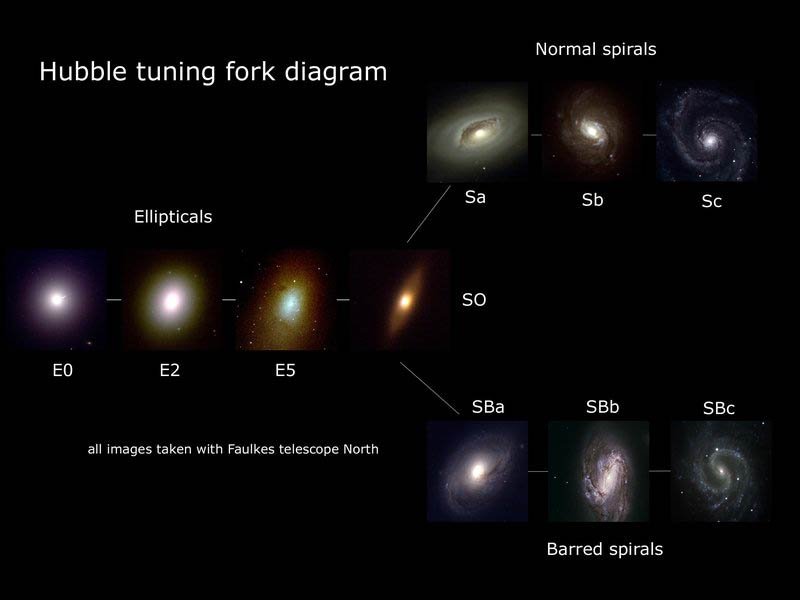
There are several basic types of galaxy, each containing sub-types. Galaxies were first systematically classified, based on their visual appearance, by the famous astronomer Edwin P. Hubble in the late 1920s and 30s, during years of painstaking observations. Hubble’s Classification of Galaxies, as it is known, is still very much in use today, although, since Hubble’s time, like any good classification system it has been updated and amended in the light of new observations.
Before Hubble’s study of galaxies, it was believed that our galaxy was the only one in the universe. Astronomers thought that the smudges of light they saw in their telescopes were in fact nebulae within our own galaxy and not, as Hubble discovered, galaxies in their own right. It was Hubble who demonstrated, by measuring their velocities, that they lie at great distances from us, millions of light-years beyond the Milky Way, distances so huge that they appear tiny in all but the largest telescopes. Moreover, he demonstrated that, wherever he looked, galaxies are receding from us in all directions, and the further away they are, the faster they are receding. Hubble had discovered that the universe is expanding.
A diagrammatic representation of Edwin Hubble’s “tuning fork diagram.” In the late 1920s and 30s, Hubble conducted the laborious observations needed to begin to classify galaxies. His original classification scheme was published in 1936 in a book called “The Realm of the Nebulae.” His original scheme is – like all scientific work – continually being modified. But his idea of a “tuning fork diagram” has continued to be useful. Image via Las Cumbres Observatory.
The most common type of galaxy is the one most people are familiar with: the spiral galaxy. The Milky Way is of this family. Spiral galaxies have majestic, sweeping arms, thousands of light years long, made up of millions upon millions of stars. Our solar system is situated about 2/3 of the way out from the galactic center towards the periphery of the galaxy, embedded in one of these spiral arms.
Spiral galaxies are also characterised by having a bright center, made up of a dense concentration of stars, so tightly packed that from a distance the galaxy’s center looks like a solid ball. This ball of stars is known as the galactic bulge. At the center of the Milky Way – within the galactic bulge – the density of stars has been calculated at 1 million per 34 cubic light-years, for example.
Meanwhile, in the vicinity of our sun, the stellar density has been estimated as 0.004 stars per cubic light-year. Big difference!
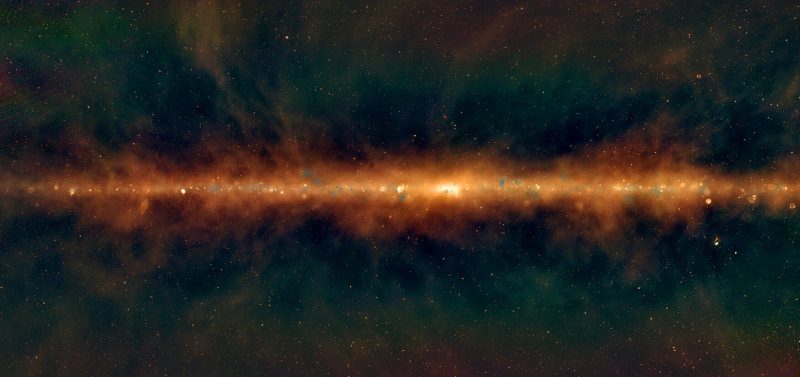
A stunning view of the center of our Milky Way galaxy as seen by the Murchison Widefield Array (MWA) telescope in Australia in 2019. Image via Natasha Hurley-Walker (ICRAR/ Curtin)/ GLEAM Team/ Phys.org.
The Milky Way is, in fact, in one of Hubble’s spiral galaxy sub-types: it’s a barred spiral, which means it has a bar of stars protruding out from either side of the center. The ends of the bar form the anchors of the spiral arms, the place from where they sweep out in their graceful and enormous arcs. This is a fairly recent discovery: how the bar forms in a galaxy is not yet understood.
Also established recently is the fact that the disk of the Milky Way is not, as most diagrams depict, flat: it is warped, like a long-playing vinyl record left too long in the sun. Exactly why is not known, but it is thought to be the result of a gravitational encounter with another galaxy early in the Milky Way’s history.
Artist’s illustration of our warped Milky Way. Image via Ogle/ Warsaw University/ BBC.
They come to be because – although most galaxies are flying apart from each other – those astronomically close to each other will be mutually gravitationally attracted. Caught in an inexorable gravitational dance, eventually they merge, passing through each other over millions of years, eventually forming a single, amorphous elliptical galaxy. Such mergers may result in the birth of new generations of stars as gravity’s shock-wave compresses huge clouds of interstellar gas and dust.
The Milky Way is caught in such a gravitational embrace with M31, aka the Andromeda galaxy, which is 2 1/2 million light-years distant. Both galaxies are moving toward each other because of gravitational attraction: they will merge in about 6 billion years from now. However, both galaxies are surrounded by huge halos of gas which may extend for millions of light-years, and it was recently discovered that the halos of the Milky Way and M31 have started to touch.
The two galaxies have had their first kiss.
Galaxy mergers are not uncommon: the universe is filled with examples of galaxies in various stages of merging together, their structures disrupted and distorted by gravity, forming bizarre and beautiful shapes.
Galaxies may take billions of years to fully merge into a single galaxy. As astronomers look outward in space, they can see only “snapshots” of this long merger process. Located 300 million light-years away in the constellation Coma Berenices, these 2 colliding galaxies have been nicknamed The Mice because of the long tails of stars and gas emanating from each galaxy. Otherwise known as NGC 4676, the pair will eventually merge into a single giant galaxy. Image via Wikimedia Commons.
At the lower end of the galactic size scale, there are the so-called dwarf galaxies, consisting of a few hundred to up to several billion stars. Their origin is not clear. Usually they have no clearly defined structure. Astronomers believe they were born in the same way as larger galaxies like the Milky Way, but for whatever reason they stopped growing. Ensnared by the gravity of a larger galaxy, they orbit its periphery. The Milky Way has around 20 dwarf galaxies orbiting it that we know of, although some models predict there should be many more.
The two most famous dwarf galaxies for us earthlings are, of course, the Small and Large Magellanic Clouds, visible to the unaided eye in Earth’s Southern Hemisphere sky.
Eventually, these and other dwarf galaxies will be ripped apart by the titanic maw of the Milky Way’s gravity, leaving behind a barely noticeable stream of stars across the sky, slowly dissipating over eons.
Lynton Brown captured this beautiful image of the Milky Way over Taylor’s Lake near Horsham, Australia, on April 22, 2019. The 2 objects on the right are the Magellanic Clouds. Thank you, Lynton!
It is believed that all galaxies rotate: the Milky Way takes 226 million years to spin around once, for example. Since its birth, therefore, the Earth has travelled 20 times around the galaxy.
At the center of most galaxies lurks a supermassive black hole, of millions or even billions of solar masses. The record holder, TON 618, has a mass 66 billion times that of our sun.
The origin and evolution of supermassive black holes are not well understood. A few years ago, astronomers uncovered a surprising fact: in spiral galaxies, the mass of the supermassive black hole has a direct linear relationship with the mass of the galactic bulge. The more mass the black hole has, the more stars there are in the bulge. No one knows exactly what the significance of this relationship is, but its existence seems to indicate that the growth of a galaxy’s stellar population and that of its supermassive black hole are inextricably linked.
This discovery comes at a time when astronomers are beginning to realize that a supermassive black hole may control the fate of its host galaxy: the copious amounts of electromagnetic radiation emitted from the maelstrom of material orbiting the central black hole, known as the accretion disk, may push away and dissipate the clouds of interstellar hydrogen from which new stars form. This acts as a throttle on the galaxy’s ability to give birth to new stars. Ultimately, the emergence of life itself may be tied to the activity of supermassive black holes. This is an area of much ongoing research.
While astronomers still know very little about exactly how galaxies formed in the first place – we see them in their nascent forms existing only a few hundred million years after the Big Bang – the study of galaxies is an endless voyage of discovery.
Less than a hundred years after it was realized that other galaxies beside our own exist, we have learned so much about these grand, majestic star cities. And there is still much to learn.
Bottom line: What is a galaxy? Learn about these starry islands in space.
ooOOoo
There are an estimated two trillion galaxies out there. It is beyond comprehension. Well it is to this mind sitting in front of his Mac in a rural part of Oregon. Two trillion! I can’t even get my mind around the fact that our local galaxy, our Milky Way, is 100,000 light years across. Although some would say that it is even larger; about 150,000 light years across. And what is a light year?
A light-year is a unit of distance. It is the distance that light can travel in one year. Light moves at a velocity of about 300,000 kilometers (km) each second. So in one year, it can travel about 10 trillion km. More precisely, one light-year is equal to 9,500,000,000,000 kilometers.
Why would you want such a big unit of distance? Well, on Earth, a kilometer may be just fine. It is a few hundred kilometers from New York City to Washington, DC; it is a few thousand kilometers from California to Maine. In the universe, the kilometer is just too small to be useful. For example, the distance to the next nearest big galaxy, the Andromeda Galaxy, is 21 quintillion km. That’s 21,000,000,000,000,000,000 km. This is a number so large that it becomes hard to write and hard to interpret. So astronomers use other units of distance.
In our solar system, we tend to describe distances in terms of the Astronomical Unit (AU). The AU is defined as the average distance between the Earth and the Sun. It is approximately 150 million km (93 million miles). Mercury can be said to be about 1/3 of an AU from the Sun and Pluto averages about 40 AU from the Sun. The AU, however, is not big enough of a unit when we start talking about distances to objects outside our solar system.
For distances to other parts of the Milky Way Galaxy (or even further), astronomers use units of the light-year or the parsec . The light-year we have already defined. The parsec is equal to 3.3 light-years. Using the light-year, we can say that :
The Crab supernova remnant is about 4,000 light-years away.
The Milky Way Galaxy is about 150,000 light-years across.
The Andromeda Galaxy is 2.3 million light-years away.
So here we are. In a remote part of our galaxy, the Milky Way, far, far from everywhere, on a pale blue dot. As Carl Sagan put it in his talk from The Age of Exploration given in 1994:
On it, everyone you ever heard of… The aggregate of all our joys and sufferings, thousands of confident religions, ideologies and economic doctrines, every hunter and forager, every hero and coward, every creator and destroyer of civilizations, every king and peasant, every young couple in love, every hopeful child, every mother and father, every inventor and explorer, every teacher of morals, every corrupt politician, every superstar, every supreme leader, every saint and sinner in the history of our species, lived there on a mote of dust, suspended in a sunbeam. …
Think of the rivers of blood spilled by all those generals and emperors so that in glory and triumph they could become the momentary masters of a fraction of a dot.
Carl Sagan, Cornell lecture in 1994
It all seems impossible for us mortals to understand.
But it won’t stop me from peering up into the night sky and wondering about the universe with total awe.
We humans love to be loved and, especially, by our dogs.
I am certain that all of the people who read Learning from Dogs on a regular basis are dog lovers and, just as important, your love for your dogs means that they in turn love you.
But unfortunately not everyone thinks of dogs in such a beautiful manner. For example, not far from here on Hugo Rd are a group of dogs, 4 or 5 I think, that I cycle past, and they live in outside kennels.
If you are an uncertain owner or a new owner you may want to understand more about your dog’s behaviour, or more accurately, whether your dog loves you. This article on The Dodo explains this very well.
ooOOoo
Does My Dog Love Me?
How to tell what those happy wiggles really mean ❤️️
Humans loveeee love. Which means we want the people — or animals — we love to show us they love us back.
But it’s sometimes hard for us to tell whether or not our dogs truly, deeply, madly love us — especially if you’re a new pet owner.
Who doesn’t want to feel all warm, fuzzy and loved by our pets?
To help you get that confirmation you’re looking for, The Dodo turned to Dr. Vanessa Spano, a veterinarian at Behavior Vets in New York City, to understand how dogs show their love.
“It is so important to understand your pets’ body language, as that is their way of communicating with us,” Dr. Spano said.
Here are some of the most common ways to tell that your dog, in fact, abso-freakin’-lutely loves you.
Your dog has a relaxed, wiggly body
“When interacting with your dog, body language signs to look out for that may indicate comfort and positivity include a relaxed body (or wiggly body during times of excitement, like play or you coming home), soft, forward ears and soft, rounded eyes,” Dr. Spano said.
He wiggles his eyebrows at you
You read that right! Doggos in love are known to raise their eyebrows when they see their owner. In fact, a 2013 Japanese study used a high-speed camera to record dogs’ faces when their humans walked into the room. It found that dogs raised their eyebrows when they saw their owners, but not when strangers walked in. *happy cry*
He wants your attention
“It is also a good sign if your dog is soliciting attention from you, such as with a play bow,” Dr. Spano said.
This can also be seen when he brings you one of his favorite toys.
He leans against you
A dog will lean on humans for a few different reasons — sometimes it’s because he’s anxious or he wants you to do something — but it’s also a sign of affection. And regardless — even if your dog is leaning against you because he’s nervous — it still indicates that he thinks of you as someone who can protect him and keep him safe.
Confusing body language to look out for
According to Dr. Spano, there are some things dogs do that humans typically consider to be signs of affection, but aren’t always.
“Confusing signs include wagging tails and exposed bellies,” Dr. Spano said. “A dog wagging his tail simply means he is aroused by the situation. This can be a good thing, but not necessarily; it depends on the context of the situation.”
This means that it’s good to notice the situations that cause each of your dog’s behaviors and begin to build an understanding of your individual dog’s moods.
For example, maybe you notice your dog always wags her tail when you walk into a room — you can equate that situation with her being happy in those moments. On the other hand, maybe you’ve also noticed she wags her tail just a bit stiffer when she sees a strange dog, and it’s almost always followed by raising her hair and growling. While she is wagging her tail in both of these situations, it’s not the same kind of tail wag.
“Similarly, a dog showing his belly may be asking for belly rubs, but it can also indicate fear,” Dr. Spano said. “Dogs do have the capability of trusting and loving you, but depending on their own fears, stress level and past experiences, it may take some time.”
So in general, look for those relaxed and wiggly bodies to know how happy your dog is to see you. Other behaviors you’ll learn over time — and it’ll just help your bond grow even stronger since you’ll be the only one who can truly detect your dog’s moods and emotions.
ooOOoo
Yes, it certainly takes time to really get to know a dog. Although one might think that having a number of dogs in the household makes it easier, and generally that is the case, even in a largish group one can have tensions that exist between a couple of the dogs. Knowing both dogs as well as you can enables one to adjust things so that the tension no longer exists or it becomes a very rare event.
But it is rare and, luckily, loving dogs is the normal!
I will close with a photograph of dear Oliver who is one of the most loving dogs I have come across.
A very interesting article in The Smithsonian Magazine.
There are countless breeds of dogs and they represent thousands of years of breeding.
But recent work in determining the genetic background behind the many different features of dogs has revealed so much.
The Smithsonian Magazine published an article nearly a month ago and hopefully it is alright to share it with you.
ooOOoo
What a Crowdsourced Study Taught Us About How Dogs Learn
A new study looks at the genes that underlie traits from self control to communication
Three dogs sit at attention ( MediaProduction
By Viviane Callier, July 31, 2020
Thousands of years of selective dog breeding has created a fantastic diversity of domestic canine companions, from the workaholic border collie to the perky Pomeranian. In cultures around the world, humans bred different dogs to be good at tasks including guarding, hunting and herding. Later, in Victorian England, kennel clubs established breed standards related not only to their behavior, but also their appearance.
As genomic sequencing has become more affordable, scientists have begun to understand the genes behind physical features such as body shape and size. But understanding the genes behind dog cognition—the mental processes that underlie dogs’ ability to learn, reason, communicate, remember, and solve problems—is a much trickier and thornier task. Now, in a pair of new studies published in Animal Cognition and in Integrative and Comparative Biology, a team of researchers has begun to quantify just how much variation in dog cognition exists, and to show how much of it has a genetic basis.
To study canine cognition, the studies’ authors turned to publicly available genetic information from a 2017 study, and a large community science project, Dognition.com, in which dog owners tested their own pets. “These papers offer an exciting integration of two forms of big data,” says Jeff Stevens, a psychologist at the University of Nebraska-Lincoln who was not involved in the study.
Previous studies often compared cognition in one breed against another using small sample sizes of dogs from each. This study, by contrast, is the first to examine the variation in cognition across three dozen breeds, and the genetic basis of that variation, explains Evan MacLean, a comparative psychologist at the University of Arizona who oversaw the pair of new studies. MacLean says dog breeds may be an ideal way to study the heritability of cognitive traits because breeds—all part of the same species—represent close genetic relatives with an incredibly diverse range of appearances and behaviors.
To gather a sufficient amount of data on how dogs reason and solve problems, the researchers looked to the Dognition.com portal. The initiative, created by Duke University dog researcher Brian Hare, started with tests in the lab. Researchers developed methods to understand how dogs think. They then stripped those methods down, and simplified them for dog owners to do themselves. In an earlier project, the researchers tested dogs in the lab and compared their results to those from owners testing the same dog at home. The results were the same, giving them confidence that the results from the citizen science project were reliable.
To participate in this project, dog owners tested their pups on 11 standardized tasks used by animal behaviorists on a variety of species that reflect four aspects of cognition: inhibitory control, communication, memory and physical reasoning. One task that measured inhibitory control, for example, involved having an owner put a treat on the floor in front of the dog and then verbally forbidding the dog from taking it. The owner then measured how long the dog would wait before eating the treat. In a task to assess communication skills, the dog owner placed two treats on the ground and gestured towards one of them. The owner then determined if the dog approached the indicated treat. To assess memory, the owner visibly placed food under one of two cups, waited for a few minutes, and then determined if the dog remembered which cup the food was placed under. To test physical reasoning, the owner hid food under one of two cups, out of view of the dog. The owner lifted the empty cup to show the dog that there was no food and then assessed whether the dog approached the cup with the food underneath.
The participating dog owners reported their dog’s scores and breed, producing a dataset with 1,508 dogs across 36 breeds. The researchers analyzed the scores and found that about 70 percent of the variance in inhibitory control was heritable, or attributable to genes. Communication was about 50 percent heritable, while memory and physical reasoning were about 20 percent heritable.
“What’s so cool about that is these two traits that are highly heritable [control and communication] are those that are thought to be linked to dogs’ domestication process,” says Zachary Silver, a graduate student in the Canine Cognition Center at Yale who was not involved in the study.
Dogs are better at following humans’ communicative cues than wolves, and this is something that seems to be highly heritable, explains Silver. In contrast, there’s some evidence that wolves are better than dogs at physical reasoning.
Some of these traits are also influenced by environment and how the dog was handled as a puppy, so there are both genetic and environmental components. In fact, there is so much environmental and experiential influence on these traits that Gitanjali Gnanadesikan, a graduate student in MacLean’s lab and lead author of the new studies, cautions against the idea that these findings support certain breed restrictions or stereotypes. “Even the highly heritable traits have a lot of room for environmental influence,” she says. “This shouldn’t be interpreted as, ‘each of these breeds is just the way they are, and there’s nothing that can be done about it.’”
In the same way that women are on average shorter than men, but there’s quite a lot of overlapping variation within each sex, dog breeds also show a lot of variation within each breed that overlaps with variation among breeds.
Previous work has linked differences in inhibitory control to the estimated size of dogs’ brains. Comparative studies across many different species, ranging from tiny rodents to elephants and chimpanzees, also show that some aspects of self-control are strongly related to brain size. The bigger the brain size, the more self-control the animals seem to have, MacLean says.
Stevens notes that a lot of things—not just inhibitory control—correlate with brain size across species. And brain size, metabolic rate, lifespan, home range size are all correlated with body size. When many traits are correlated with each other, it is not clear which of these factors may underlie the cognitive differences. So there are a number of questions remaining to be explored.
After showing the degree to which different aspects of dog cognition are heritable, Gnanadesikan and MacLean used publicly available information on the genomes of dog breeds to search for genetic variation that was associated with the cognitive traits of interest. The researchers found that, like many other complex traits, there were many genes, each with small effect, that contribute to dogs’ cognitive traits. That is in contrast to morphological features in dogs; about 50 percent of variation in dog body size can be accounted for by variation in a single gene.
One of the limitations of the study is that the researchers did not have cognitive and genetic information from the same dogs; the genomes were breed averages. In the future, the researchers are planning to collect genetic data from the very same dogs that are completing the cognitive tests, to get measures of cognitive and genetic variation at the level of individual dogs. “This gives us a roadmap for places that we might want to look at more carefully in the future,” MacLean explains.
ooOOoo
Now this is an article that deserves to be read carefully so if you are in a hurry bookmark this and wait until you can sit and absorb the messages the article contains.
I was minded to look up Gitanjali’s details and I am glad I did. These are the details:
Gitanjali Gnanadesikan
I am an evolutionary biologist and comparative psychologist who is interested in social behavior and cognition. I work with Evan MacLean in the Arizona Canine Cognition Center studying the development and evolution of behavior and cognition in dogs and wolves.
I think I will reach out to her and see if she has more information she would like to share with us all.
There was an article on the website EarthSky News yesterday that, literally, took me out of this world. It described the role of magnetic rivers in newly forming star clusters.
There’s not a dog in sight but nevertheless I wanted to share this article with you.
Astronomers have learned that the pull of gravity can sometimes overcome the strong magnetic fields found in great star-forming clouds in space. The resulting weakly magnetized gas flow can feed the growth of new stars.
See the lines – called streamlines by scientists – in this composite image of the Serpens South star cluster? They’re from magnetic fields in this great star-forming cloud. Notice the lower left, where magnetic fields have been dragged into alignment with a narrow, dark filament. In that area, astronomers say, material from interstellar space is flowing into the star-forming cloud and fueling star formation. Image via NASA/ SOFIA/ T. Pillai/ JPL-Caltech/ L. Allen/ USRA.
Astronomers have known for decades that stars like our sun form when giant clouds of gas and dust in space – sometimes called molecular clouds – collapse under their own gravity. But how does the material from interstellar space flow into these clouds, and what controls the collapse? The image above helps illustrate an answer to these questions. It’s a composite, made with data from SOFIA – an airborne telescope designed for infrared astronomy – overlaid on an image from the now-retired Spitzer Space Telescope. This composite shows that the pull of gravity can sometimes overcome the strong magnetic fields found in great star-forming clouds in space. And it shows that, when that happens, weakly magnetized gas can flow – as on a conveyor belt – to feed the growth of newly forming star clusters.
A statement from the Max Planck Institute in Bonn, Germany, explained:
A major finding in the last decade has been that extensive networks of filaments permeate every molecular cloud. A picture has emerged that stars like our own sun form preferentially in dense clusters at the intersection of filaments.
Now look back at the image above, which shows the Serpens South star cluster, a star-forming region located some 1,400 light-years from Earth. In that image, you see a dark filament in the lower left. Now notice the “stripes” on the image, which astronomers call streamlines. They represent magnetic structures, discovered by SOFIA. The astronomers said these magnetic structures act like rivers, channeling material into the great star-forming cloud.
As you can see in the image, these magnetic streamlines have been dragged by gravity to align with the narrow, dark filament on the lower left. Astronomers say this configuration helps material from interstellar space flow into the cloud.
This is different from the upper parts of the image, where the magnetic fields are perpendicular to the filaments; in those regions, the magnetic fields in the cloud are opposing gravity.
Astrophysicist Thushara Pillai led the study showing that magnetic rivers feed star birth in the Serpens South star-forming region.
The scientists said in a statement from Universities Space Research Association (USRA) that they are:
… studying the dense cloud to learn how magnetic fields, gravity and turbulent gas motions contribute to the creation of stars. Once thought to slow star birth by counteracting gravity, SOFIA’s data reveals magnetic fields may actually be working together with gravity as it pulls the fields into alignment with the filaments, nourishing the birth of stars.
The results were published in the peer-reviewed journal Nature Astronomy on August 17. The lead author of the new study is Thushara Pillai of Boston University and the Max Planck Institute for Radio Astronomy in Bonn, Germany.
In 1835, the French philosopher Auguste Comte wrote of the unknowable nature of stars:
On the subject of stars, all investigations which are not ultimately reducible to simple visual observations are … necessarily denied to us. While we can conceive of the possibility of determining their shapes, their sizes, and their motions, we shall never be able by any means to study their chemical composition or their mineralogical structure … Our knowledge concerning their gaseous envelopes is necessarily limited to their existence, size … and refractive power, we shall not at all be able to determine their chemical composition or even their density…
He was, famously, wrong.
He couldn’t have envisioned the range of tools available to modern astronomers. It’s a beautiful thing that, nowadays, astronomers can not only learn about the compositions of stars via their studies of their spectra, but also probe the deeper mysteries, going all the way to the births of these colossal, self-luminous balls in space.
SOFIA, the Stratospheric Observatory for Infrared Astronomy. The HAWC+ polarimeter on board SOFIA was used for the observations of the magnetic field in the Serpens South star-forming region. Image via NASA/ C. Thomas/ Max Planck Institute.
Bottom line: Astronomers have learned that the pull of gravity can sometimes overcome the strong magnetic fields found in great star-forming clouds in space. The resulting weakly magnetized gas flow can feed the growth of new stars.
Just read that paragraph just before the end of the article: “He couldn’t have envisioned the range of tools available to modern astronomers. It’s a beautiful thing that, nowadays, astronomers can not only learn about the compositions of stars via their studies of their spectra, but also probe the deeper mysteries, going all the way to the births of these colossal, self-luminous balls in space.”
What a long way we have come from just, say, 50 years ago.
It would be easy to get lost in the article in a scientific manner, and that would be entirely appropriate.
But there’s another beautiful way to get lost in the article; by dreaming of outer space and forgetting just for a moment or two this Earthly planet we all live on!
I was browsing the photographic forum Ugly Hedgehog the other day and saying thank you to some people who had said kind things about a few photographs I had shared. One person who had left a comment put in his signature block that he came from Adelaide, Australia. Part of my thank you was to inquire how things were in Adelaide.
Well blow me down when that person, Ron, came back to me and we then transferred to email and shared our backgrounds.
This is what Ron said in his first email:
Hi Paul,
You have had an interesting life over the years…
Love the Shepherd, we had one after we first got married..
Broke my heart so badly when he went I could never have another one.
I still think about him after all the years.
I retired at 55 years of age as I was with the government; I was a mechanical engineer with CSIRO designing new welding technologies along with many other projects over the years.
Sadly not the way I wanted to retire as my spinal injuries made it impossible to do the things I wanted to.
One of my biggest disappointments was having to give up my archery.
I’ve been doing photography for many and it has been a god send as it’s something I can still do.
We moved into a Lifestyle Village ( semi retirement) six and a half years ago as I was unable to look after the old house any more so I thought I’d let someone else worry about that..LOL
We try to get over to Sydney and Melbourne every year for a week or so but this year we missed out due to you know what.
Well, off to the shops now,
Cheers,
Ron.
And when I asked about the spinal injury, Ron added:
Hi Paul,
Hopefully you had no damage from your storm…
My spine, mostly my cervical spine, was damaged about 50 years ago in car stupidity.
I refuse to call it an accident.
I was sitting at a red light and a guy ran into my rear doing about 80-90 kilometers an hour without touching his brakes.
He was actually looking out of his side window!!
Over the years, and several operations and ongoing treatments, the pain got worse.
I’m now in pain all day every day.
At least the plates and screws keep things together.
Lorraine (wife) is my carer and when I get really bad, she gives me an injection of morphine mixed with some other “stuff”.
They discovered some years ago that my body doesn’t absorb oral meds very well.
My neurosurgeon then put me onto morphine.
Usually have one jab every two to three weeks.
At least I get one or two days of relief.
The rest of the time I just grin and bare it…LOL
I joined the Hog in 2012, November I think.
Sadly, my good friend, also a Hog, died earlier this year.
He lived in north NSW in a small coastal town called Maclean.
Say Hi to Jeannie for us.
Cheers,
Ron.
This is a photograph of Lorraine.
And this is a photograph of Harry.
And let me treat you with a few more photographs, some from “very old scanned film shots so not the best.”
oooo
oooo
oooo
oooo
But that’s a sharp reminder of the consequences of not paying attention to the road in front of you. All those years ago!
Dogs bring people together from all over the world!
We tend to watch many of the TED Talks that come our way.
But this one had me riveted to my seat. It’s a very powerful, nearly 9 minutes long, talk given by a person who doesn’t have legal citizenship.
Speaking on a personal basis, I was a person who went through the Citizenship test, successfully I might add, in March, 2019. So I watched this video with more than just academic interest.
See if you sense the feelings I had.
At age 16, journalist and filmmaker Jose Antonio Vargas found out he was in the United States illegally. Since then, he’s been thinking deeply about immigration and what it means to be a US citizen — whether it’s by birth, law or otherwise. In this powerful talk, Vargas calls for a shift in how we think about citizenship and encourages us all to reconsider our personal histories by answering three questions: Where did you come from? How did you get here? Who paid?
Jose Antonio Vargas, author of “Dear America: Notes of an Undocumented Citizen,” is the founder of Define American, a nonprofit organization that uses stories to shift the narrative on immigrants.
In the 10th July issue of Science magazine there was an Editorial written by Sudip Parikh, CEO of the American Association for the Advancement of Science (AAAS).
I am taking the liberty of republishing that Editorial here. For I think it needs to be widely shared.
I am a scientist. I am an American. And I am the product of special expert visas and chain migration—among the many types of legal immigration into the United States. On 22 June, President Trump issued a proclamation that temporarily restricts many types of legal immigration into the country, including that of scientists and students. This will make America neither greater nor safer—rather, it could make America less so.
The administration claims that these restrictions are necessitated by the coronavirus disease 2019 (COVID-19) outbreak to prevent threats to American workers. This reasoning is flawed for science and engineering, where immigrants are critical to achieving advances and harnessing the resulting economic opportunity for all Americans.
For decades, the United States has inspired both immigrants and nonimmigrants to make substantial contributions to science and technology that benefit everyone. Preventing highly skilled scientists and postdocs from entering the United States directly threatens this enterprise.
My uncle, a geologist, came to the United States in the 1960s to work at NASA. He then taught at Appalachian State University in North Carolina and later served as lead geochemist for the state of California. He sponsored my father to come to America in 1968. Leaving Mumbai, a city of millions, and arriving in Hickory, a town of thousands in North Carolina, my father came home to a place he had never been before. My parents worked in furniture factories and textile mills to put us though college and ensure we had opportunities. Today, my sister works at the U.S. Centers for Disease Control and Prevention, and I have the privilege of leading the American Association for the Advancement of Science (AAAS, the publisher of Science). We exist because of the Immigration and Nationality Act of 1965 and our parents’ belief in the vision of the United States as a shining city on a hill. My family’s story is repeated by thousands of American scientists.
These stories include uncertainty when an immigrant’s status in America is in question. This uncertainty causes stress and the possibility that immigrants will leave and take their skills, talents, and humanity elsewhere. For the successful, these stories culminate with relief, celebration, and the pride of becoming a naturalized citizen. As President Reagan said, the United States is the one place in the world where “anybody from any corner of the world can come…to live and become an American.” Naturalized citizens love the United States deeply because they chose to be American. They and other immigrants make huge contributions to science and engineering.
According to the National Science Foundation, more than 50% of postdocs and 28% of science and engineering faculty in the United States are immigrants. Of the Nobel Prizes in chemistry, medicine, and physics awarded to Americans since 2000, 38% were awarded to immigrants to the United States. I don’t know the number of prizes given to second-generation Americans but Steven Chu—current chair of the AAAS Board of Directors—is among them. The incredible achievements of the American scientific enterprise speak volumes about the vision and forethought of the American people who have worked to create a more perfect union.
Suspending legal immigration is self-defeating and breaks a model that is so successful that other nations are copying it. As Thomas Donohue, chief executive officer of the U.S. Chamber of Commerce, said regarding the administration’s proclamation, “Putting up a ‘not welcome’ sign for engineers, executives, IT experts, doctors, nurses, and other workers won’t help our country, it will hold us back. Restrictive changes to our nation’s immigration system will push investment and economic activity abroad, slow growth, and reduce job creation.”
To develop treatments and vaccines for COVID-19, cure cancers, go to Mars, understand the fundamental laws of the universe and human behavior, develop artificial intelligence, and build a better future, we need the brain power of the descendants of Native Americans, Pilgrims, Founding Mothers and Fathers, Enslaved People, Ellis Island arrivals, and immigrants from everywhere. The United States has thrived as a crossroads where people are joined together by ideas and contribute by choice to the freedom and opportunity provided by this wonderful, inspiring, and flawed country that is always striving to live up to its aspirations.
Scientists, look around your labs and offices. Think about your collaborations and friendships. We must ensure that this “temporary” restriction on legal immigration does not become permanent. Now is the time to speak up for your immigrant colleagues and for America.
Maybe because years ago he gave me blanket permission to republish his essays. Maybe because he and I are more or less the same age. Maybe because in my more quieter, introspective moments I wonder where the hell we are going. And Tom seems to agree.
Have a read of this.
ooOOoo
Tomgram: Engelhardt, The Unexpected Past, the Unknown Future
[Note for TomDispatch Readers:Even in this terrible moment, TD does its best to continue offering an alternate view of this increasingly strange planet of ours. And I can only do so because of the ongoing support of readers. (I just wish I could actually thank each of you individually!) If you have the urge to continue to lend a hand in keeping TomDispatch afloat, then do check out our donation page. For a donation of $100 ($125 if you live outside the U.S.), I usually offer a signed, personalized book from one of a number of TD authors listed on that page and you can certainly ask, but no guarantees in this pandemic moment. Still, you really do make all the difference and I can’t thank you enough for that! Tom]
It Could Have Been Different
My World and (Unfortunately) Welcome to It
By Tom Engelhardt
Let me be blunt. This wasn’t the world I imagined for my denouement. Not faintly. Of course, I can’t claim I ever really imagined such a place. Who, in their youth, considers their death and the world that might accompany it, the one you might leave behind for younger generations? I’m 76 now. True, if I were lucky (or perhaps unlucky), I could live another 20 years and see yet a newer world born. But for the moment at least, it seems logical enough to consider this pandemic nightmare of a place as the country of my old age, the one that I and my generation (including a guy named Donald J. Trump) will pass on to our children and grandchildren.
Back in 2001, after the 9/11 attacks, I knew it was going to be bad. I felt it deep in my gut almost immediately and, because of that, stumbled into creating TomDispatch.com, the website I still run. But did I ever think it would be this bad? Not a chance.
I focused back then on what already looked to me like a nightmarish American imperial adventure to come, the response to the 9/11 attacks that the administration of President George W. Bush quickly launched under the rubric of “the Global War on Terror.” And that name (though the word “global” would soon be dropped for the more anodyne “war on terror”) would prove anything but inaccurate. After all, in those first post-9/11 moments, the top officials of that administration were thinking as globally as possible when it came to war. At the damaged Pentagon, Secretary of Defense Donald Rumsfeld almost immediately turned to an aide and told him, “Go massive — sweep it all up, things related and not.” From then on, the emphasis would always be on the more the merrier.
Bush’s top officials were eager to take out not just Osama bin Laden’s al-Qaeda, whose 19 mostly Saudi hijackers had indeed attacked this country in the most provocative manner possible (at a cost of only $400,000-$500,000), but the Taliban, too, which then controlled much of Afghanistan. And an invasion of that country was seen as but the initial step in a larger, deeply desired project reportedly meant to target more than 60 countries! Above all, George W. Bush and his top officials dreamed of taking down Iraqi autocrat Saddam Hussein, occupying his oil-rich land, and making the United States, already the unipolar power of the twenty-first century, the overseer of the Greater Middle East and, in the end, perhaps even of a global Pax Americana. Such was the oil-fueled imperial dreamscape of George W. Bush, Dick Cheney, Donald Rumsfeld, and crew (including that charmer and now bestselling anti-Trump author John Bolton).
Who Woulda Guessed?
In the years that followed, I would post endless TomDispatch pieces, often by ex-military men, focused on the ongoing nightmare of our country’s soon-to-become forever wars (without a “pax” in sight) and the dangers such spreading conflicts posed to our world and even to us. Still, did I imagine those wars coming home in quite this way? Police forces in American cities and towns thoroughly militarized right down to bayonets, MRAPs, night-vision goggles, and helicopters, thanks to a Pentagon program delivering equipment to police departments nationwide more or less directly off the battlefields of Washington’s never-ending wars? Not for a moment.
Who doesn’t remember those 2014 photos of what looked like an occupying army on the streets of Ferguson, Missouri, after the police killing of a Black teenager and the protests that followed? And keep in mind that, to this day, the Republican Senate and the Trump administration have shown not the slightest desire to rein in that Pentagon program to militarize police departments nationwide. Such equipment (and the mentality that goes with it) showed up strikingly on the streets of American cities and towns during the recent Black Lives Matter protests.
Even in 2014, however, I couldn’t have imagined federal agents by the hundreds, dressed as if for a forever-war battlefield, flooding onto those same streets (at least in cities run by Democratic mayors), ready to treat protesters as if they were indeed al-Qaeda (“VIOLENT ANTIFA ANARCHISTS”), or that it would all be part of an election ploy by a needy president. Not a chance.
Or put another way, a president with his own “goon squad” or “stormtroopers” outfitted to look as if they were shipping out for Afghanistan or Iraq but heading for Portland, Albuquerque, Chicago, Seattle, and other American cities? Give me a break! How un-American could you get? A military surveillance drone overhead in at least one of those cities as if this were someone else’s war zone? Give me a break again. Never in my wildest dreams did I think I’d live to witness anything quite like it or a president — and we’ve had a few doozies — even faintly like the man a minority of deeply disgruntled Americans but a majority of electors put in the White House in 2016 to preside over a failing empire.
How about an American president in the year 2020 as a straightforward, no-punches-pulled racist, the sort of guy a newspaper could compare to former segregationist Alabama governor and presidential candidate George Wallace without even blinking? Admittedly, in itself, presidential racism has hardly been unique to this moment in America, despite Joe Biden’s initial claim to the contrary. That couldn’t be the case in the country in which Woodrow Wilson made D.W. Griffith’s Birth of a Nation, the infamous silent movie in which the Ku Klux Klan rides to the rescue, the first film ever to be shown in the White House; nor the one in which Richard Nixon used his “Southern strategy” — Republican presidential candidate Barry Goldwater had earlier labeled it even more redolently “Operation Dixie” — to appeal to the racist fears of Southern whites and so begin to turn that region from a Democratic stronghold into a Republican bastion; nor in the land where Ronald Reagan launched his election campaign of 1980 with a “states’ rights” speech (then still a code phrase for segregation) near Philadelphia, Mississippi, just miles from the earthen dam where three murdered civil rights workers had been found buried in 1964.
Still, an openly racist president (don’t take that knee!) as an autocrat-in-the-making (or at least in-the-dreaming), one who first descended that Trump Tower escalator in 2015 denouncing Mexican “rapists,” ran for president rabidly on a Muslim ban, and for whom Black lives, including John Lewis’s, have always been immaterial, a president now defending every Confederate monument and military base named after a slave-owning general in sight, while trying to launch a Nixon-style “law and (dis)order” campaign? I mean, who woulda thunk it?
And add to that the once unimaginable: a man without an ounce of empathy in the White House, a figure focused only on himself and his electoral and pecuniary fate (and perhaps those of his billionaire confederates); a man filling his hated “deep state” with congressionally unapproved lackies, flacks, and ass-kissers, many of them previously flacks (aka lobbyists) for major corporations. (Note, by the way, that while The Donald has a distinctly autocratic urge, I don’t describe him as an incipient fascist because, as far as I can see, his sole desire — as in those now-disappeared rallies of his — is to have fans, not lead an actual social movement of any sort. Think of him as Mussolini right down to the look and style with a “base” of cheering MAGA chumps but no urge for an actual fascist movement to lead.)
And who ever imagined that an American president might actually bring up the possibility of delaying an election he fears losing, while denouncing mail-in ballots (“the scandal of our time”) as electoral fraud and doing his damnedest to undermine the Post Office which would deliver them amid an economic downturn that rivals the Great Depression? Who, before this moment, ever imagined that a president might consider refusing to leave the White House even if he did lose his reelection bid? Tell me this doesn’t qualify as something new under the American sun. True, it wasn’t Donald Trump who turned this country’s elections into 1% affairs or made contributions by the staggeringly wealthy and corporations a matter of free speech (thank you, Supreme Court!), but it is Donald Trump who is threatening, in his own unique way, to make elections themselves a thing of the past. And that, believe me, I didn’t count on.
Nor did I conceive of an all-American world of inequality almost beyond imagining. A country in which only the truly wealthy (think tax cuts) and the national security state (think budgets eternally in the stratosphere) are assured of generous funding in the worst of times.
The World to Come?
Oh, and I haven’t even mentioned the pandemic yet, have I? The one that should bring to mind the Black Death of the fourteenth century and the devastating Spanish Flu of a century ago, the one that’s killing Americans in remarkable numbers daily and going wild in this country, aided and abetted in every imaginable way (and some previously unimaginable ones) by the federal government and the president. Who could have dreamed of such a disease running riot, month after month, in the wealthiest, most powerful country on the planet without a national plan for dealing with it? Who could have dreamed of the planet’s most exceptional, indispensable country (as its leaders once loved to call it) being unable to take even the most modest steps to rein in Covid-19, thanks to a president, Republican governors, and Republican congressional representatives who consider science the equivalent of alien DNA? Honestly, who ever imagined such an American world? Think of it not as The Decameron, that fourteenth century tale of 10 people in flight from a pandemic, but the Trumpcameron or perhaps simply Trumpmageddon.
And keep in mind, when assessing this world I’m going to leave behind to those I hold near and dear, that Covid-19 is hardly the worst of it. Behind that pandemic, possibly even linked to it in complex ways, is something so much worse. Yes, the coronavirus and the president’s response to it may seem like the worst of all news as American deaths crest 160,000 with no end in sight, but it isn’t. Not faintly on a planet that’s being heated to the boiling point and whose most powerful country is now run by a crew of pyromaniacs.
It’s hard even to fully conceptualize climate change since it operates on a time scale that’s anything but human. Still, one way to think of it is as a slow-burn planetary version of the atomic bombings of Hiroshima and Nagasaki. And by the way, if you’ll excuse a brief digression, in these years, our president and his men have been intent on ripping up every Cold War nuclear pact in sight, while the tensions between two nuclear-armed powers, the U.S. and China, only intensify and Washington invests staggering sums in “modernizing” its nuclear arsenal. (I mean, how exactly do you “modernize” the already-achieved ability to put an almost instant end to the world as we’ve known it?)
But to return to climate change, remember that 2020 is already threatening to be the warmest year in recorded history, while the five hottest years so far occurred from 2015 to 2019. That should tell you something, no?
The never-ending release of greenhouse gases into the atmosphere has been transforming this planet in ways that have now become obvious. My own hometown, New York City, for instance, has officially become part of the humid subtropical climate zone and that’s only a beginning. Everywhere temperatures are rising. They hit 100 degrees this June in, of all places, Siberia. (The Arctic is warming at twice the rate of much of the rest of the planet.) Sea ice is melting fast, while floods and mega-droughts intensify and forests burn in a previously unknown fashion.
And as a recent heat wave across the Middle East — Baghdad hit a record 125 degrees — showed, it’s only going to get hotter. Much hotter and, given how humanity has handled the latest pandemic, how will it handle the chaos that goes with rising sea levels drowning coastlines but also affecting inland populations, ever fiercer storms, and flooding (in recent weeks, the summer monsoon has, for instance, put one third of Bangladesh underwater), not to speak of the migration of refugees from the hardest-hit areas? The answer is likely to be: not well.
And I could go on, but you get the point. This is not the world I either imagined or would ever have dreamed of leaving to those far younger than me. That the men (and they are largely men) who are essentially promoting the pandemicizing and over-heating of this planet will be the greatest criminals in history matters little.
Let’s just hope that, when it comes to creating a better world out of such a god-awful mess, the generations that follow us prove better at it than mine did. If I were a religious man, those would be my prayers.
And here’s my odd hope. As should be obvious from this piece, the recent past, when still the future, was surprisingly unimaginable. There’s no reason to believe that the future — the coming decades — will prove any easier to imagine. No matter the bad news of this moment, who knows what our world might really look like 20 years from now? I only hope, for the sake of my children and grandchildren, that it surprises us all.
This is such a powerful essay written from the heart of a good man.
I, too, wonder and worry about the next twenty years. Indeed, there are the stirrings of a book in my head. How that younger generation are reacting to the present and, more importantly, how they will react and respond to the next few years?
I’m 75 and really hope to live for quite a few more years. Jean is just a few years younger.
But much more importantly I have a son, Alex, who is 49, and a daughter, Maija, who is 48, and a grandson, Morten, of my daughter and her husband, who is 9.
With thanks to Monika for the title of today’s post!
My father was born in 1901. He had two wives. Me and my sister, Elizabeth, are the result of the relationship between our father and his second wife; Betty. Our father died in 1956; December 20th.
My father first was married to Maud and they had two daughters, Rhona and Corinne. Rhona died in 2003 and Corinne died in 2014. Although Rhona and Corinne were half-sisters I prefer to think of them as sisters!
Both had children. But I want to concentrate on Rhona. She and Reider, Norwegian by birth, had four children: Rolv; Greta; Rikard; Marit.
As is the way in this modern world, Rikky who lives near Torquay in South Devon, recently called in to see my brother-in-law, John, and John remarked to me that Rikky’s new wife, Jazz, was gorgeous. I asked Greta for a telephone number and, hey presto, Rikky and I were in contact with each other.
This is a little bit from Rik’s bio.
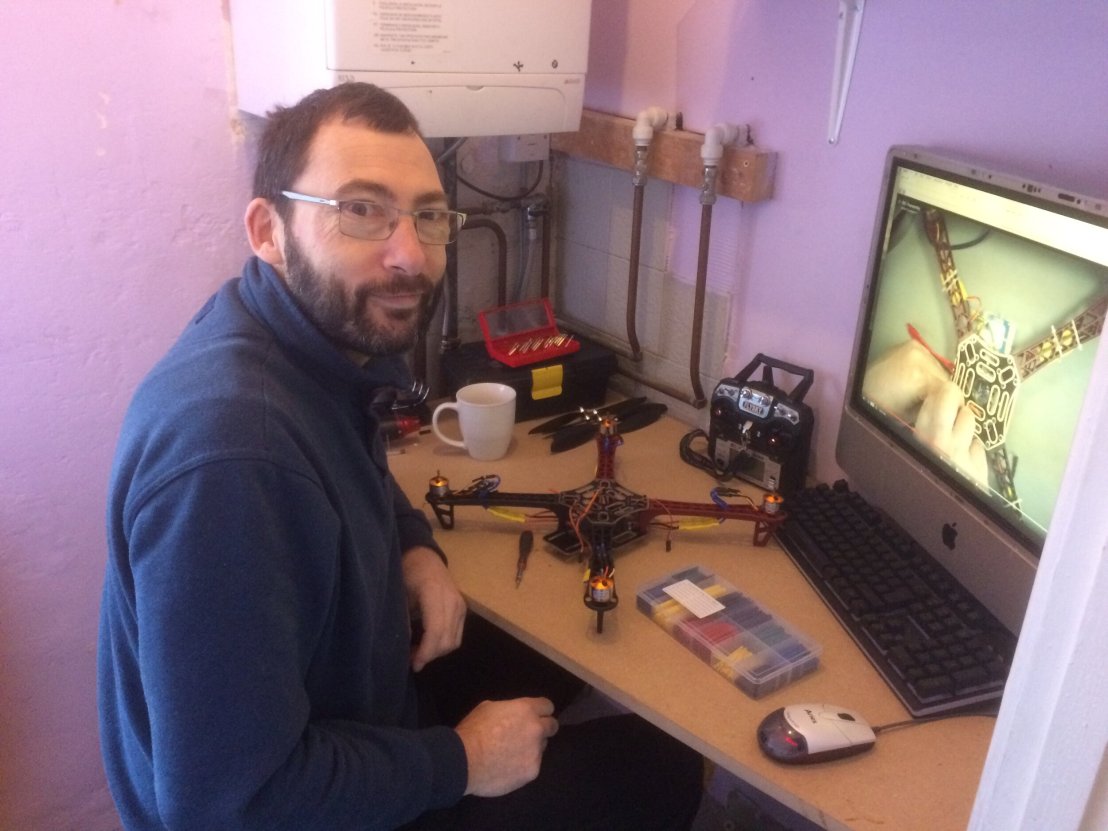
So you may remember I was with Amanda at the time of Mother’s passing, seems a long time ago now. Well that ultimately came to nothing and I ended up living alone with a couple of huskies in a small flat in Torquay. I had invested a large chunk of Mother’s inheritance into a PA system and set up and ran a sound engineering business for years as well as running quite a successful tribute band to ‘The Doors’. The PA company eventually ended after going into a partnership with a friend who also invested a chunk of cash allowing major upgrades to the kit.
Unfortunately I soon found out he was more interested in holidays to Spain than actual PA work, the problem being I had now sold vital parts of my rig which was replaced by his. We went separate ways and he took his gear with him leaving me without a full system, BIG lesson learnt.
At that point I went back to employment as an engineer for a company servicing and repairing lifting hoists to the health care industry. Four years in and the company went into administration.
Later Rikky says:
Back to work again this time to DPD as a delivery driver for a couple of years following in Rolv’s (Ed: brother) tyre tracks. This was when I also met Jazz on a random night out with friends. We immediately realised that we had many mutual friends and had actually met before many years ago when I was playing in her Dad’s Jazz band! This was around 19 years ago when I was 30 and Jazz was only 16. I only have a vague memory of her then sitting in a corner of the rehearsal room furiously scribbling in a sketch book.
Not much has changed there except she now holds a degree in Art and Design. She is also a Holistic Therapist and has trained in many holistic therapies including Reilki, Reflexology and Massage and is a very talented and beautiful woman. I feel incredibly blessed. She has two daughters Sanije and Latoja (nine and eleven) who I consider as mine; their father left the country last year and went back to Albania which actually has been a blessing for the girls as he is a difficult man to say the least.
So the driving job became another engineering position this time with a company specialising in fire alarms, a couple of years in and the contract I was working on was TUPED over to LiveWest which is one of the largest social housing companies in the South West. Two years after that and the company merged with another housing company, the role changed slightly so I was offered voluntary redundancy which I took giving me the financial opportunity to retrain as a commercial drone pilot and so here we are today.
We can accommodate all your aerial requirements from photography to cinematography, inspections to 3d mapping.
The name of Rik’s website is Ahead4Heights which strikes me as apt. And from the About page of that website, one reads:
Here at Ahead4Heights we have a passion for flying drones and creating visually stunning aerial films and photography. We are PfCO certified by the Civil Aviation Authority and hold full public liability insurance giving you complete confidence in us to provide the service you require.
With our post production studio facility we are able to add voice overs and original music written to your brief if required as we have our own in house composer and audio recording engineer.
Our UAV fleet consists of a variety of drones from the market leading DJI Inspire 2, capable of filming in incredible 5.2k resolution and producing the RAW file format standard for the film industry to our Pixhawk based quadcopter (equipt with a 4k camera) which we use for autonomous flight taking photos used to generate 3d mapping of locations useful for the construction industry.
Finally we have a heavy lift Tarot 680 hexacopter which is used as a backup drone and also for specialised payloads such as thermal cameras and high power lighting.
If you simply want aerial photos for property sales, photos and footage for weddings and events we will be happy to offer our services to you.
We can also carry out inspection work on roofs, tower masts and bridges etc where specialised safety equipment and scaffolding would otherwise be required. Utilizing both the high resolution and thermal imaging cameras we are able to identify problems with the insulation of properties, stress points in structures and damage to roofs and guttering.
Ahead4Heights also holds certificates in the building and setting up of drones so if you require a drone built to your special requirements we would be happy to discuss. We would also offer a full maintenance package with any build projects.
A couple more photographs.
oooo
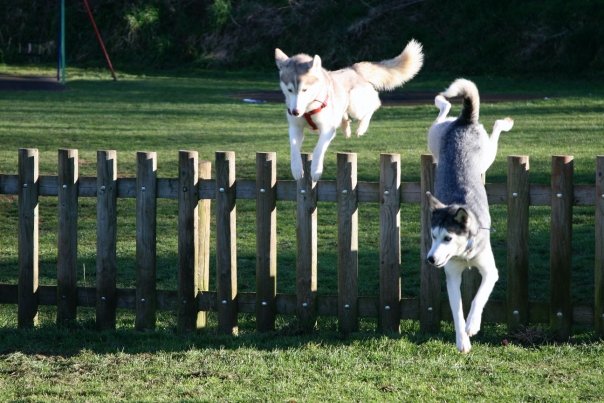
And, of course, one more of the dogs! That is Storm and Tia.


 About The Film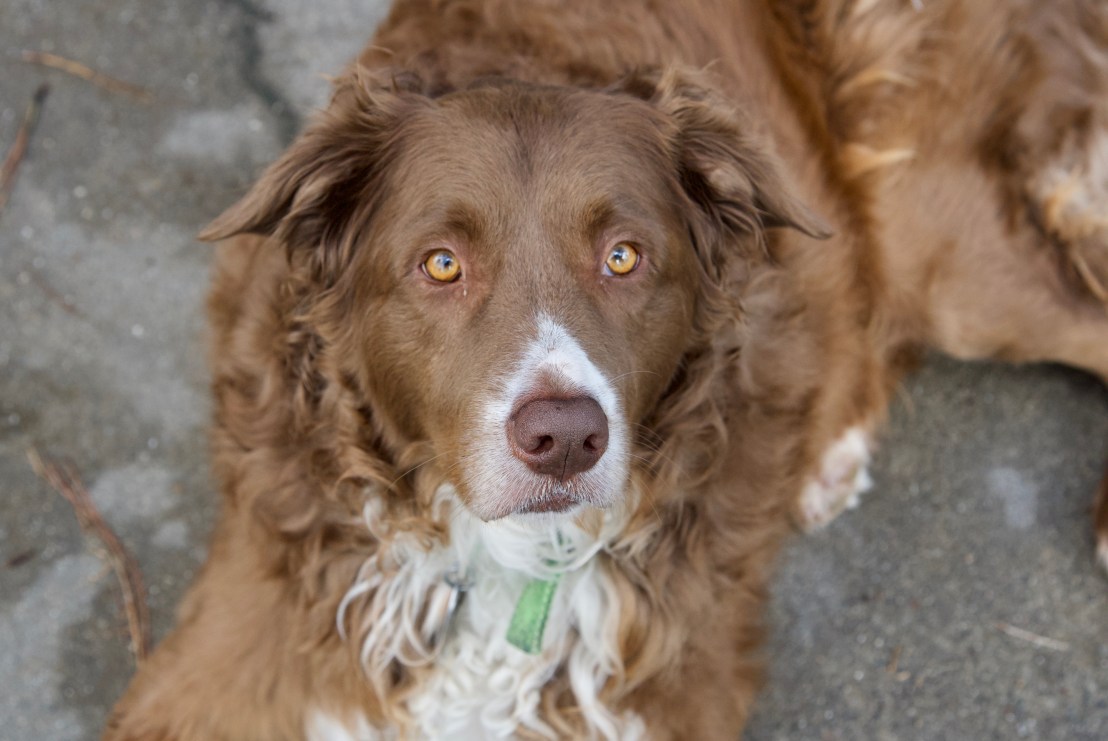

 This is a giant galaxy cluster known as Abell 2744, aka Pandora’s Cluster, located in the direction of the constellation
  Illustration showing snapshots from a simulation by astrophysicist