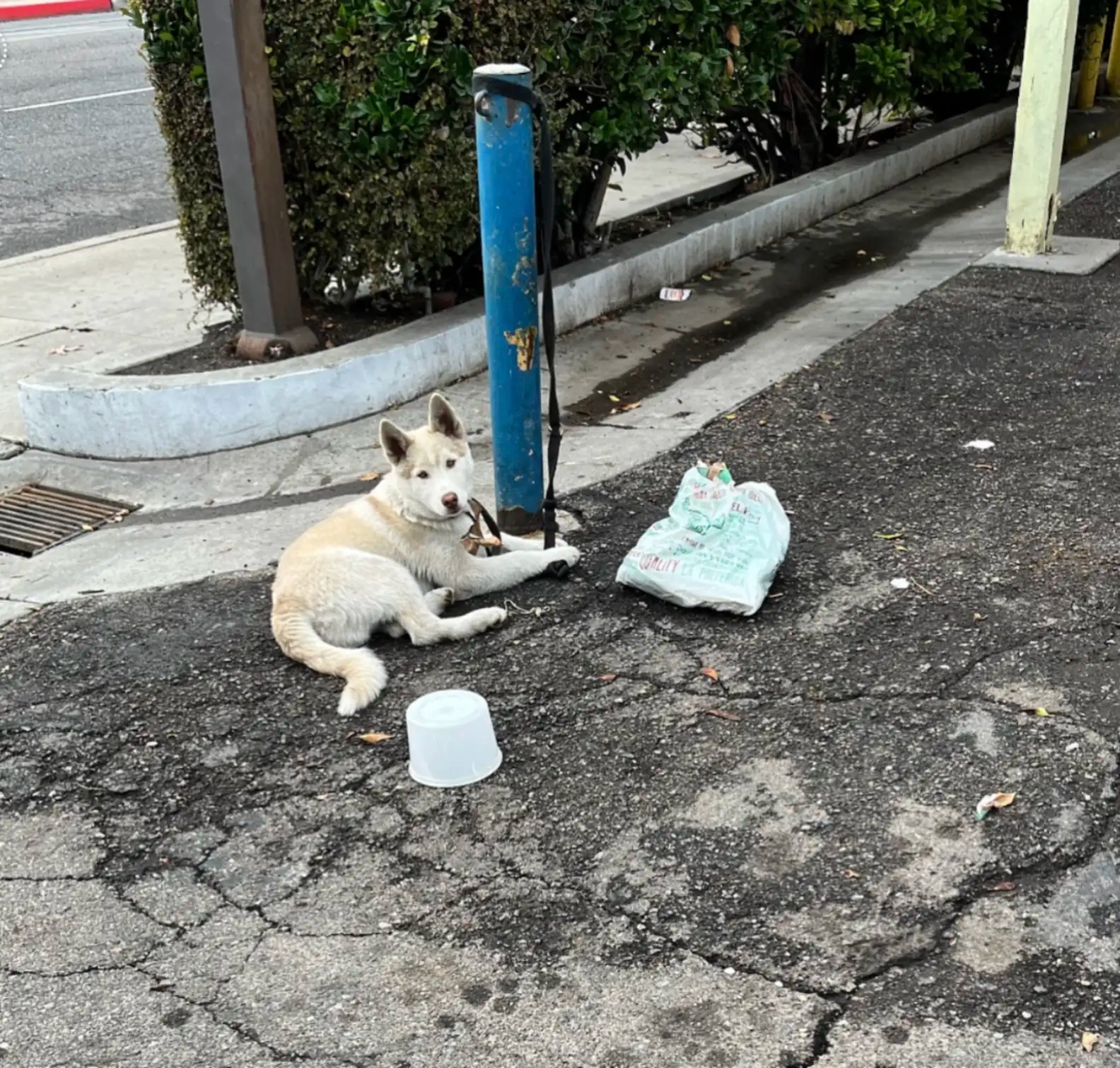
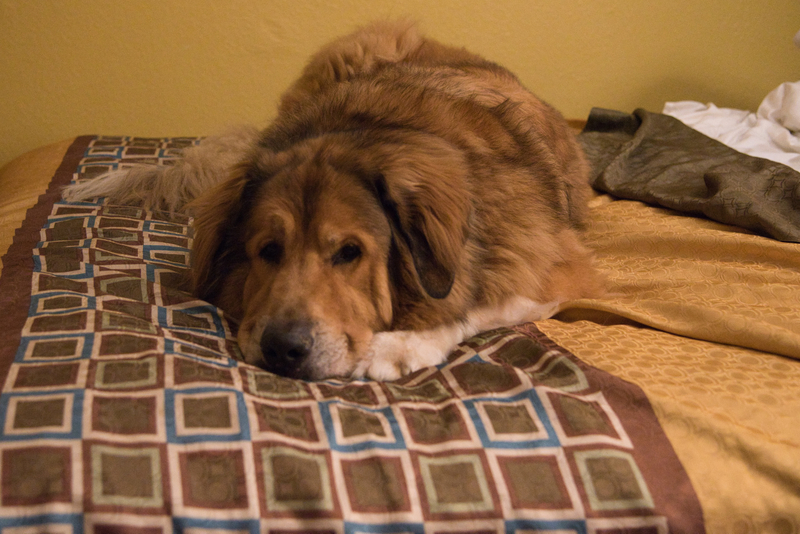
Alone on a cracked patch of cement, a white dog named Buckley stared up the street from where he was left tied to a pole in Santa Monica, California. For days, the gentle dog waited for someone to notice him, hoping they might take him somewhere safe.
LOVE LEO RESCUE
One day, a local rescuer passing by noticed Buckley’s big brown eyes. She couldn’t believe the 6-month-old husky puppy was alone without food or water. She knew she had to help.
Soon, Buckley was off the streets, safe in the expert hands of Love Leo Rescue.
LOVE LEO RESCUE
Meeting the pup for the first time, rescuers felt moved by Buckley’s warmth and resilience.
“Buckley is an exceptional dog,” Love Leo Rescue director Sasha Abelson told The Dodo. “He is well balanced and loving and didn’t let his previous experiences change his lovely personality.”
The wayward pup eventually moved in with a foster family. Lately, he’s enjoyed spending lots of time outside with his new friends.
“Buckley is a typical, happy-go-lucky husky,” Leo said. “He loves playing with his dog friends and learning new skills. He loves going for hikes and also cuddling near his humans. He is just a perfect family dog.”
LOVE LEO RESCUE
For now, Buckley is still searching for his forever home, hoping his family finds him soon.
“Buckley would love to go into a home that is active and preferably a home with another playful, balanced dog,” Leo said. “We think a dog brother or sister would be wonderful for him.”
With any luck, Buckley won’t be waiting very much longer.
As Stephen Messenger, the author of the article, says: “It was a moment of pure awe.” I am not going to waffle on in a prelude to this story, that was taken from The Dodo, so I am going straight into it.
ooOOoo
Animal Shelter Finds A Crate At The Door — And Most Touching Handwritten Note
Earlier this week, staff at North Carolina’s Fayetteville Animal Protection Society arrived to find that a crate has been placed outside their door, covered in a blanket.
In an instant, their hearts sank.
“Our first thought was, ‘Oh no, not another case of irresponsible pet ownership,’” Jackie Peery, executive director of the shelter, told The Dodo. “We were bracing for an accidental litter dumped at our doorstep due to not spaying/neutering, or someone moving and not willing to bring their pet.”
Inside the crate was indeed a litter of bouncy puppies. But there was more.
“Then we saw the note,” Peery said. “It was a moment of pure awe.”
As the note explained, this wasn’t an act of abandonment.
It was an act of love.
The letter reads as follows:
“Please help! I found these puppies sadly after noticing a local stray dog that I would often feed when I could, dead by the road. She had been hit by a car. I knew from feeding her that she had puppies somewhere and after searching where I would usually see her I found them. I’m sorry for leaving them like this but I myself am homeless and cannot afford to care for them …”
“My heart shatters for them and their mother. I just want them to be given the chance their mother, like myself, was never given. Please do not think poorly of me but it felt wrong leaving them alone in the cold waiting on a mother that would not be coming home. Sincerely, nameless man.”
He’d saved them.
Reading the note, Peery was stunned.
“This nameless man made it his mission to find these puppies to ensure their safety,” she said. “He remains a mystery — our very own nameless hero.”
Meanwhile, the puppies he rescued are now thriving, thanks to him.
“When they first arrived, you could tell they weren’t in the best shape. But now, it’s a whole different story,” Peery said. “It’s like they understand they’ve been given a second chance and are just soaking up all the love and joy.”
In time, Peery has no doubt that each of the puppies will be adopted into loving homes. But she hopes the unnamed hero will make himself known so he can be the recipient of the same sort of kindness he’s shown.
“We’re keeping our fingers crossed that he comes forward,” Peery said. “There’s a whole community here ready to support him just as I have supported these puppies. It would be wonderful to thank him in person and perhaps even help him in return.”
ooOOoo
I am almost lost for words that this event, that was written in 2024, is so beautiful.
Are there any persons who would like to adopt a puppy? Because I want to leave you with the address, email address and contact telephone number for the Fayetteville Animal Protection Society.
There have been so many disastrous activities on climate change, and I am not belittling them, but it was amazing to come across a TED Talk last Saturday that I watched. But first the speaker, Asmeret Asefaw Berhe, who was born in Asmara, Eritrea. Her bio (in part):
From WikiPedia:
ooOOoo
Asmeret Asefaw Berhe is a soil biogeochemist and political ecologist who is the current Director of the Office of Science at the US Department of Energy. She was previously the Professor of Soil Biogeochemistry and the Ted and Jan Falasco Chair in Earth Sciences and Geology in the Department of Life and Environmental Sciences; University of California, Merced.[1] Her research group worked to understand how soil helps regulate the Earth’s climate.
Advocacy and global impact work
Berhe’s work at the intersection of soil, climate change, and political ecology lends itself well to a number of global issues. During her graduate career, she was a member of the working group that produced the Millennium Ecosystem Assessment, which was called for by the United Nations Secretary Kofi Annan to assess the impact of humans on the environment. She was one of the lead authors on the 2005 report’s chapter on “Drivers of Change in Ecosystem Condition and Services.”[19] The Assessment received the Zayed International Prize for the Environment in 2005.[20]
In 2018, Berhe was selected as part of the inaugural National Academies of Sciences, Engineering, and Medicine New Voices in Sciences, Engineering, and Medicine cohort, as an early career leader working to advance the conversation around key emerging global issues and communicate the evidence base around those challenges.[21]
An advocate for women in science, Berhe is currently a co-Principal Investigator of ADVANCEGeo, which is working to transform the workplace climate of the geosciences to increase retention of women in the field and develop a sustainable model that can be transferred to other scientific domains. Currently, the Earth Science Women’s Network (ESWN), the Association for Women Geoscientists, and the American Geophysical Union (AGU) have partnered to address the issue of sexual harassment in the earth, space and environmental sciences.[22] The program led by Erika Marín-Spiotta and is run with support from a four-year $1.1 million grant from the National Science Foundation.[23]
She currently serves as an advisory board member of 500 Women Scientists, a grassroots organization working to make science open, inclusive, and accessible, and is on the leadership board of the Earth Science Women’s Network.
Earth’s soil can store vast amounts of carbon. Biogeochemist Asmeret Asefaw Berhe says soil could be a powerful tool for fighting climate change – if only we stopped treating it like dirt.
About Asmeret Asefaw Berhe
Asmeret Asefaw Berhe is a soil biogeochemist and President Biden’s nominee to lead the Department of Energy Office of Science. She is a professor of soil biogeochemistry at University of California, Merced. Her research group works to understand how soil helps regulate the earth’s climate.
Berhe’s work exists at the intersection of soil, climate change, and political ecology. During her graduate career, she was a member of the working group that produced the Millennium Ecosystem Assessment, which was called for by the United Nations to assess the impact of humans on the environment.
Berhe received a B.Sc. in Soil and Water Conservation at the University of Asmara in Eritrea. She has an M.Sc. in Political Ecology from Michigan State University and a Ph.D. in Biogeochemistry from University of California, Berkeley.
This segment of the TED Radio Hour was produced by Matthew Cloutier and Sylvie Douglis and edited by Rachel Faulkner and Katie Simon. You can follow us on Facebook @TEDRadioHour and email us at TEDRadioHour@npr.org.
Now that positive TED Talk:
We wish Asmeret the very best of fortune in bringing about these changes.
In our case our (remaining) dogs, Oliver and Cleopatra, are able to go outside but still remain on our land. But plenty of dog owners are not in such a privileged position and need to take their dogs on public pavements and the like.
Thus for all you dog owners in that position then Erik’s advice is for you.
ooOOoo
Dog care below freezing − how to keep your pet warm and safe from cold weather, road salt and more this winter
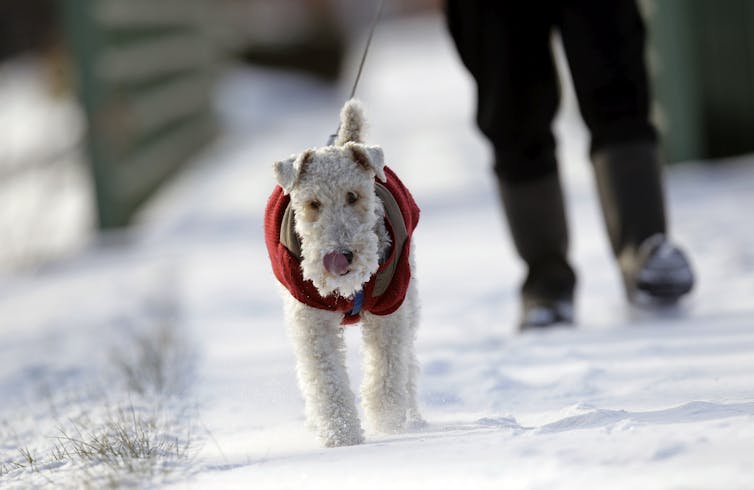
Dogs get cold in the winter too, but there are things pet owners can do to help them feel comfortable. AP Photo/David Duprey
Time outside with your dog in the spring, summer and fall can be lovely. Visiting your favorite downtown café on a cool spring morning, going to a favorite dog park on a clear summer evening or going on walks along a river when the leaves are changing color are all wonderful when the weather is favorable. But in much of the country, when winter rolls around, previously hospitable conditions can quickly turn chilly and dangerous for people and pups alike.
Winter brings some unique challenges for dog owners, since dogs still need activity and socialization during colder seasons. Studies have shown that dog owners are almost 50% less likely to walk their dogs when the weather gets cold. Knowing the basics of winter safety is critical to maintaining a healthy lifestyle for your dog.
I am an assistant professor at the University of California Davis School of Veterinary Medicine who weathered polar vortexes with my dog while living in Michigan early in my career. While I’ve since moved to sunny California, I’ve seen how quickly frigid temperatures can turn dangerous for pets.
Breed and age differences
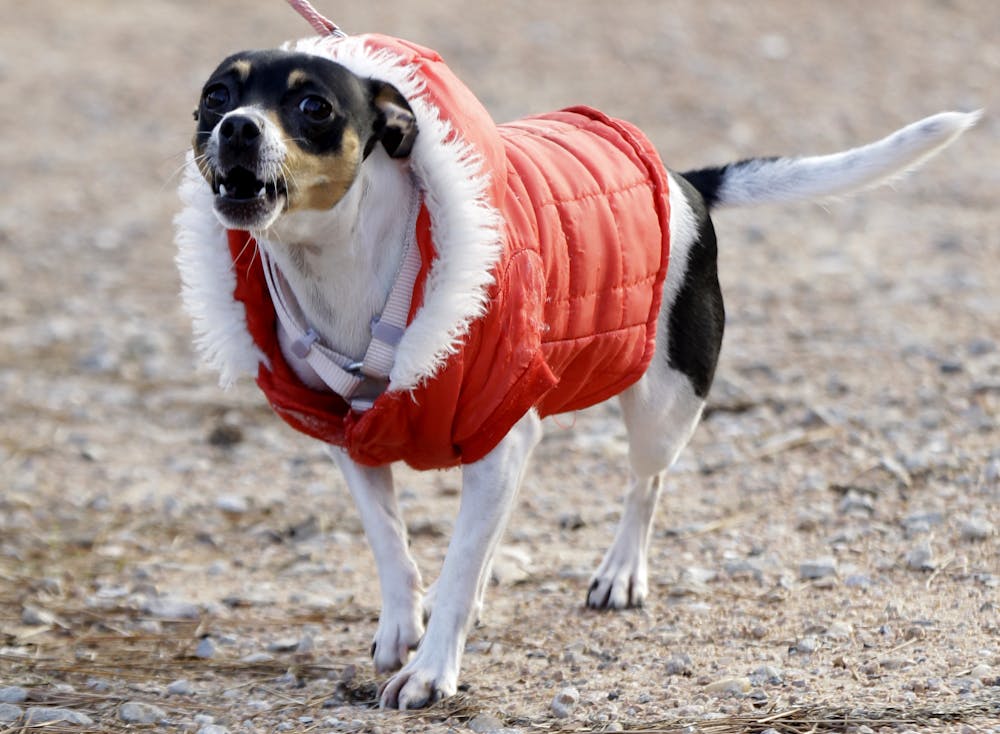
Not all dogs have the same abilities to deal with cold weather. A short-coated dog like a Chihuahua is much more susceptible to the dangers of cold weather than a thick-coated husky. When the weather dips below 40 degrees Fahrenheit (4 degrees Celsius), the well-acclimated husky may be comfortable, whereas the Chihuahua would shiver and be at risk of hypothermia.
Additionally, if your dog is used to warm weather, but you decide to move to a colder region, the dog will need time to acclimate to that colder weather, even if they have a thick coat.
Age also affects cold-weather resilience. Puppies and elderly dogs can’t withstand the chill as well as other dogs, but every dog is unique – each may have individual health conditions or physical attributes that make them more or less resilient to cold weather.
Pet owners should be able to recognize the symptoms of a dog that is getting too cold. Dogs will shiver, and some may vocalize or whine. Dogs may resist putting their feet down on the cold ground, or burrow, or try to find warmth in their environment when they are uncomfortable.
Just like people, dogs can get frostbite. And just like people, the signs can take days to appear, making it hard to assess them in the moment. The most common sites for frostbite in dogs are their ears and the tips of their tails. Some of the initial signs of frostbite are skin discoloring, turning paler than normal, or purple, gray or even black; red, blistered skin; swelling; pain at the site; or ulceration.
Other serious signs of hypothermia include sluggishness or lethargy, and if you observe them, please visit your veterinarian immediately. A good rule to live by is if it is too cold for you, it is too cold for your dog.
Getting your dog a sweater or jacket and paw covers can provide them with protection from the elements and keep them comfortable. Veterinarians also recommend closely monitoring your dog and limiting their time outside when the temperature nears the freezing point or drops below it.
Road salt dangers
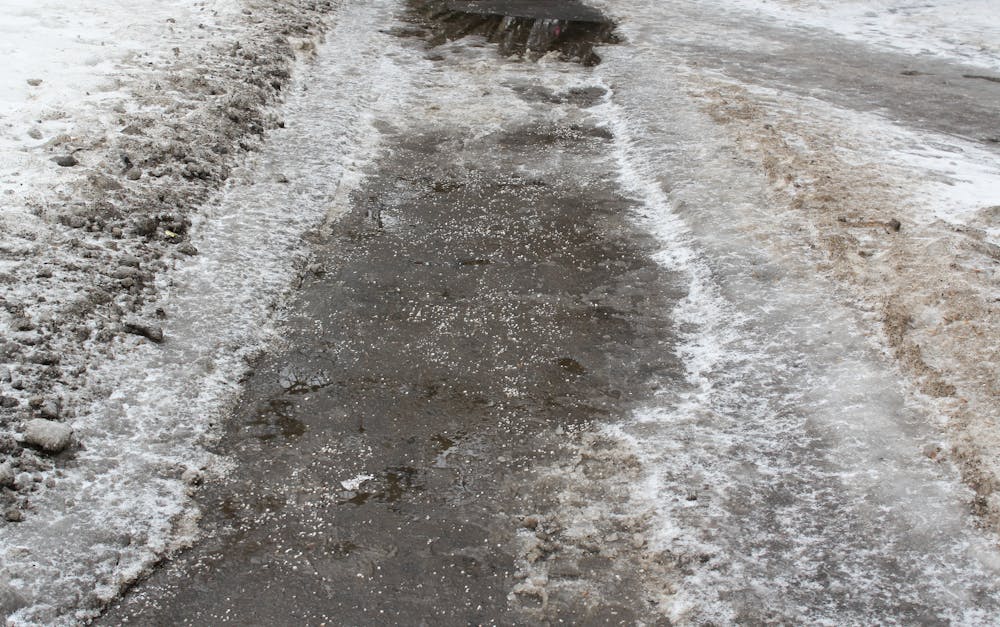
Road salt that treats ice on streets and sidewalks can also harm dogs. When dogs walk on the salt, the sharp, rough edges of the salt crystals can irritate the sensitive skin on their paws.
Paw covers for dogs can keep their feet warm and protected from road salt. AP Photo/Jim Cole
Dogs will often lick their feet when they’re dirty, wet or irritated, and if they ingest any salt doing that, they may face GI upset, dehydration, kidney failure, seizures or even death. Even small amounts of pure salt can disrupt critical body functions in dogs.
Some companies make pet-safe salt, but in public it can be hard to tell what type of salt is on the ground. After walking your dog, wash off their feet or boots. You can also keep their paw fur trimmed to prevent snow from balling up or salt collecting in the fur. Applying a thin layer of petroleum jelly or paw pad balm to the skin of the paw pads can also help protect your pet’s paws from irritation.
Antifreeze, or ethylene glycol, is in most vehicles to prevent the fluids from freezing when it gets cold out. Some people pour antifreeze into their toilets when away from their home to prevent the water in the toilet from freezing.
Antifreeze is an exceptionally dangerous chemical to dogs and cats, as it tastes sweet but can be deadly when ingested. If a pet ingests even a small amount of antifreeze, the substance causes a chemical cascade in their body that results in severe kidney damage. If left untreated, the pet may have permanent kidney damage or die.
There are safer antifreeze options on the market that use ingredients other than ethylene glycol. If your dog ingests antifreeze, please see your veterinarian immediately for treatment.
When temperatures dip below freezing, the best thing pet owners can do is keep the time spent outside as minimal as possible. Try some indoor activities, like hide-and-seek with low-calorie treats, fetch or even an interactive obstacle course. Food puzzles can also keep your dog mentally engaged during indoor time.
Although winter presents some unique challenges, it can still be an enjoyable and healthy time for you and your canine companion.
Erik’s comments about ethylene glycol (EG), or antifreeze as it more commonly known, and the incredible dangers to dogs EG possesses are vital to understand.
Please, please keep your dogs very safe in Winter! If Erik’s advice helps save even a single dog then me republishing this will have been worthwhile.
The challenge with writing posts, albeit not so often, about the global environment, especially when I am a non-scientist, is that one relies entirely on the words of others. In the case of a recent article, published by The Conversation, the authors are claimed to be specialists, and I do not doubt their credentials.
The three authors are René van Westen who is a Postdoctoral Researcher in Climate Physics, at Utrecht University, Henk A. Dijkstra who is a Professor of Physics, also at Utrecht University, and Michael Kliphuis, a Climate Model Specialist, again at Utrecht University.
So, here is their article:
ooOOoo
Atlantic Ocean is headed for a tipping point − once melting glaciers shut down the Gulf Stream, we would see extreme climate change within decades, study shows
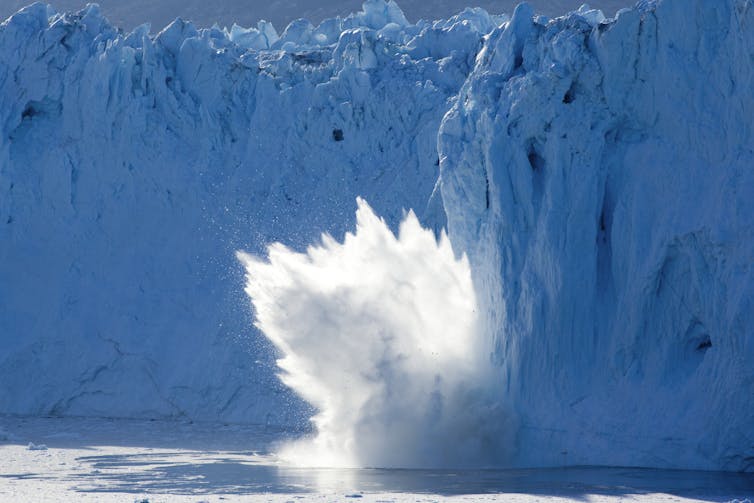
Superstorms, abrupt climate shifts and New York City frozen in ice. That’s how the blockbuster Hollywood movie “The Day After Tomorrow” depicted an abrupt shutdown of the Atlantic Ocean’s circulation and the catastrophic consequences.
While Hollywood’s vision was over the top, the 2004 movie raised a serious question: If global warming shuts down the Atlantic Meridional Overturning Circulation, which is crucial for carrying heat from the tropics to the northern latitudes, how abrupt and severe would the climate changes be?
In a new study using the latest generation of Earth’s climate models, we simulated the flow of fresh water until the ocean circulation reached that tipping point.
The results showed that the circulation could fully shut down within a century of hitting the tipping point, and that it’s headed in that direction. If that happened, average temperatures would drop by several degrees in North America, parts of Asia and Europe, and people would see severe and cascading consequences around the world.
We also discovered a physics-based early warning signal that can alert the world when the Atlantic Ocean circulation is nearing its tipping point.
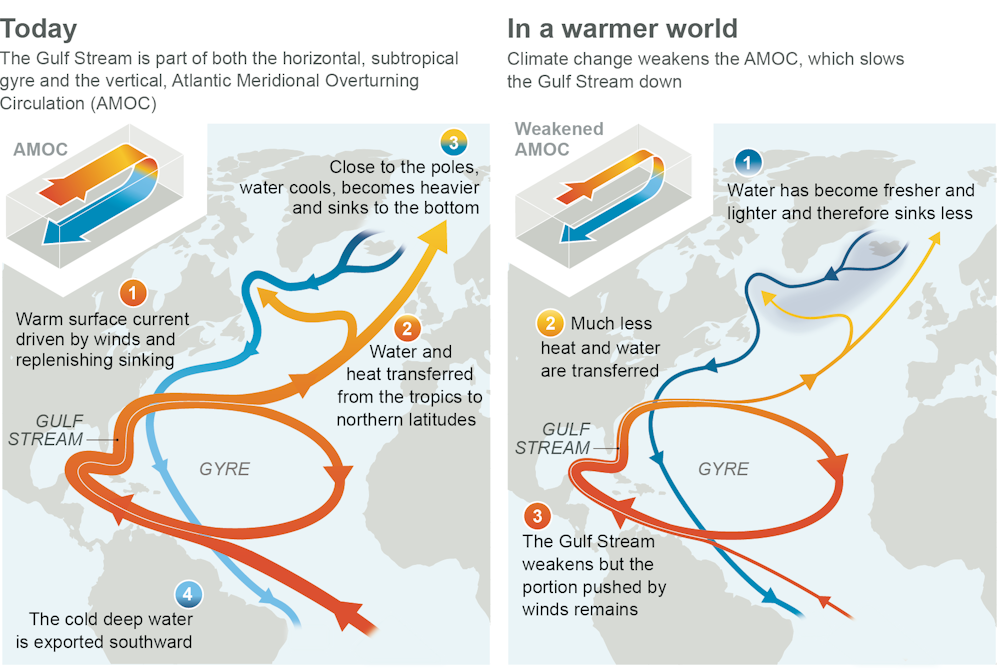
In the Atlantic Ocean circulation, the relatively warm and salty surface water near the equator flows toward Greenland. During its journey it crosses the Caribbean Sea, loops up into the Gulf of Mexico, and then flows along the U.S. East Coast before crossing the Atlantic.
This current, also known as the Gulf Stream, brings heat to Europe. As it flows northward and cools, the water mass becomes heavier. By the time it reaches Greenland, it starts to sink and flow southward. The sinking of water near Greenland pulls water from elsewhere in the Atlantic Ocean and the cycle repeats, like a conveyor belt.
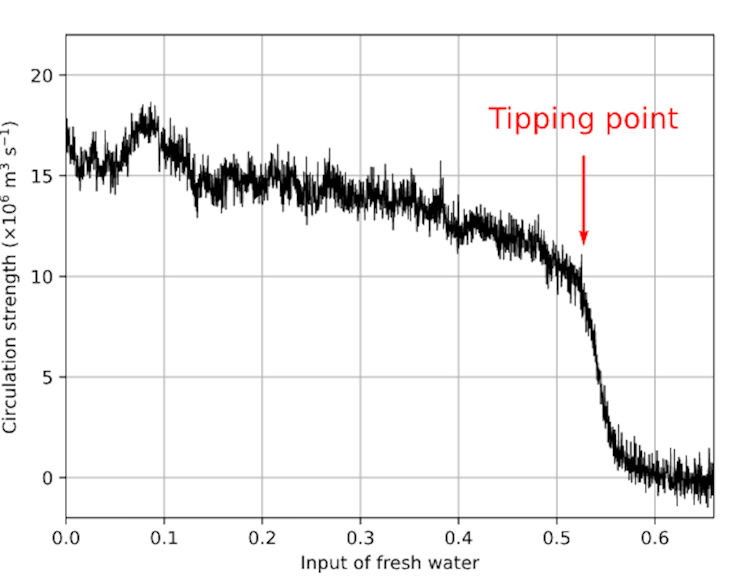
This is where our study comes in. We performed an experiment with a detailed climate model to find the tipping point for an abrupt shutdown by slowly increasing the input of fresh water.
We found that once it reaches the tipping point, the conveyor belt shuts down within 100 years. The heat transport toward the north is strongly reduced, leading to abrupt climate shifts.
The result: Dangerous cold in the North
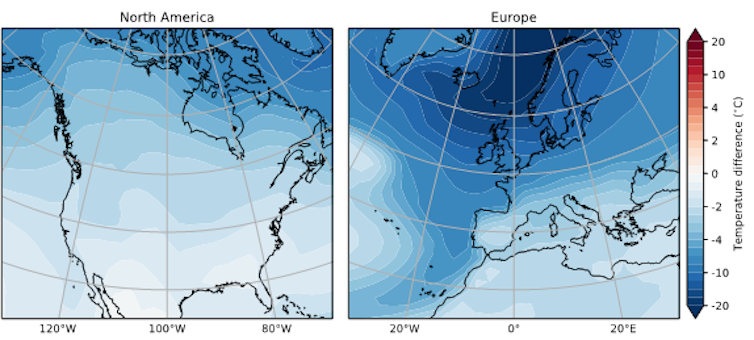
Regions that are influenced by the Gulf Stream receive substantially less heat when the circulation stops. This cools the North American and European continents by a few degrees.
The European climate is much more influenced by the Gulf Stream than other regions. In our experiment, that meant parts of the continent changed at more than 5 degrees Fahrenheit (3 degrees Celsius) per decade – far faster than today’s global warming of about 0.36 F (0.2 C) per decade. We found that parts of Norway would experience temperature drops of more than 36 F (20 C). On the other hand, regions in the Southern Hemisphere would warm by a few degrees.
The annual mean temperature changes after the conveyor belt stops reflect an extreme temperature drop in northern Europe in particular. René M. van Westen
These temperature changes develop over about 100 years. That might seem like a long time, but on typical climate time scales, it is abrupt.
The conveyor belt shutting down would also affect sea level and precipitation patterns, which can push other ecosystems closer to their tipping points. For example, the Amazon rainforest is vulnerable to declining precipitation. If its forest ecosystem turned to grassland, the transition would release carbon to the atmosphere and result in the loss of a valuable carbon sink, further accelerating climate change.
The Atlantic circulation has slowed significantly in the distant past. During glacial periods when ice sheets that covered large parts of the planet were melting, the influx of fresh water slowed the Atlantic circulation, triggering huge climate fluctuations.
So, when will we see this tipping point?
The big question – when will the Atlantic circulation reach a tipping point – remains unanswered. Observations don’t go back far enough to provide a clear result. While a recent study suggested that the conveyor belt is rapidly approaching its tipping point, possibly within a few years, these statistical analyses made several assumptions that give rise to uncertainty.
Instead, we were able to develop a physics-based and observable early warning signal involving the salinity transport at the southern boundary of the Atlantic Ocean. Once a threshold is reached, the tipping point is likely to follow in one to four decades.
A climate model experiment shows how quickly the AMOC slows once it reaches a tipping point with a threshold of fresh water entering the ocean. How soon that will happen remains an open question. René M. van Westen
The climate impacts from our study underline the severity of such an abrupt conveyor belt collapse. The temperature, sea level and precipitation changes will severely affect society, and the climate shifts are unstoppable on human time scales.
It might seem counterintuitive to worry about extreme cold as the planet warms, but if the main Atlantic Ocean circulation shuts down from too much meltwater pouring in, that’s the risk ahead.
This article was updated to Feb. 11, 2024, to fix a typo: The experiment found temperatures in parts of Europe changed by more than 5 F per decade.
I am 79! I like to think that whatever is coming down the wires, so to speak, will be after my death. But that is a cop out for a) I have a son and a daughter who are in their early fifties, b) I have a grandson, my daughter and son-in-law’s young man, who is a teenager, with his birthday next month, and c) I could possibly live for another twenty years.
The challenge is how to bring this imminent catastrophic global change in temperature to the fore. We need a global solution now enforced by a globally respected group of scientists and leaders, and, frankly, I do not see that happening.
All one can do is to hope. Hope that the global community will eschew the present-day extremes of warring behaviour and see the need for change. That is NOW!
So that the Hollywood movie, The Day After Tomorrow, remains a fictional story. And for those that have forgotten the film or who have never seen it, here is a small slice of a Wikipedia report:
Personal musings on what ‘live for the day’ means.
Jeannie wakes early on in the morning; it’s one of the characteristics of Parkinson’s Disease (PD). So last Sunday morning I was washed and dressed by 5am (PST), and listening to the BBC’s World at One. (No connection with today’s post.)
Later on I started writing this post with a first look at what ‘live for the day’ means in the eyes of others. At first I wanted to research the phrase; imagine my surprise when I found out there wasn’t a consistent meaning.
Dictionary.com came up with Concentrate on the present, with little or no concern for the future.
Merriam-Webster gave live for meaning one of three things: lived for; living for; lives for.
The English-Collins dictionary, according to Wikipedia: The dictionary uses language research based on the Collins Corpus, which is continually updated and has over 4.5 billion words. But it did not easily give me any answer to my question.
Quora was too complicated for me to easily search for this phrase.
Thus I abandoned that approach.
I also did not reach out to friends and ask them what they thought of the saying. But, to me, that meaning from Dictionary.com seemed the closest to what I had in mind. So let me settle on that.
Concentrate on the present, with little or no concern for the future.
But how can Jeannie and me live without ‘concern for the future‘?
The list of things that we think about that involve the future is enormous. Many of the things are relatively minor, such as do we have enough food in the house, or petrol in the car, going on to do have I enough COB (Corn, Oats, Barley) to feed the deer that come here each morning, etc., etc.
Then there are future plans such as keeping next Tuesday clear (that is today, in fact) for Jeannie and Dordie to be out together for a few hours. Plus, in a few months time, my son is coming over to stay with us in April, and Richard coming in May. (Richard is a great British friend who was diagnosed with PD the same time as Jean.)
Then there is the task of keeping the trees within fifty feet of the house safe. That involves cutting down the trees that are getting old and trimming off the lower branches in the others. This is part of our desire to stay safe if a forest fire comes through this part of Merlin. We would be evacuated if that happened and part of our preparation is to have an ‘exit pack’ at the ready. Something else that affects our ‘concern for the future‘.
Finally in this list of introspections comes the ultimate end! I am in my 80th year and Jean and I find ourselves talking about death more often than we did at a younger age. Is that normal? I do not know. We are both humanists; I hope I will outlive Jean because I love her to pieces and want to be the last person she sees and embraces. It is one of the reasons that I go bike riding on a regular basis and staying as healthy as we can embraces the fact that we are both pescatarian and attend the local Club Northwest two days a week. Jeannie goes to the Rock Steady Class held at the Club.
So that is a pretty good set of reasons why living for the day is not viable.
ooOOoo
Footnote
We lost our Brandy yesterday morning. He went out for his usual ‘whatever’ at a little after 5am and after he had been back in the house for no more than a minute, he shook his head and went to the front door to be let out again! I thought he had gone out for a poo.
After I was washed and dressed, but it was still dark, I started to look for him aided by my big torch. I could not see him anywhere. To cut a long story short here we are at 4pm and he hasn’t surfaced. My speculation was that his head shake was a brain problem and then he lost all sense of where he was. To continue that speculation, I believe he ended up being swept away in Bummer Creek, that crosses our property just in from the main gate, and was drowned.
Recovery from addiction is a complex and emotionally taxing process that involves much more than simply abstaining from substance use. It necessitates a holistic approach to healing, which often includes medical treatment, psychotherapy, lifestyle changes, and, for many people, the support of loved ones.
Another source of support that is increasingly recognized for its therapeutic benefits is the companionship of pets. Whether it’s a dog, a cat, or even a bird, pets offer emotional sustenance, non-judgmental companionship, and numerous practical advantages. In this article from Learning from Dogs, we delve into how the presence of a pet can be a transformative experience.
It’s All About a Good Routine
Establishing a stable routine is a cornerstone of addiction recovery. A routine not only provides structure to the day but also instills a sense of responsibility and purpose. Owning a pet naturally requires a routine for feeding, exercise, and care.
This routine can help an individual in recovery stay focused and reduce the void or emptiness often cited as a relapse trigger. Technologies like automated pet feeders can further support this routine, ensuring that your responsibilities are met even when you’re dealing with emotional ups and downs.
Pets Just Make You Feel Better
PsychCentral notes that interacting with pets has been scientifically shown to improve emotional health. Simple actions such as petting a dog or cat trigger the release of “feel-good” hormones like oxytocin, reducing stress and elevating mood.
These emotional benefits are invaluable, especially during the psychologically taxing phases of withdrawal and detoxification. Mental health tracking apps can provide real-time data on your emotional state, often reflecting an improvement correlated with increased time spent with your pet.
Pet-Friendliness and Rehab
Selecting the appropriate rehab facility is an essential step toward a successful recovery journey. An important criterion to consider is the availability of pet-friendly options or the incorporation of pet therapy in the facility’s treatment approach.
Many centers, including local resources for treatment and recovery, are increasingly acknowledging the multifaceted therapeutic advantages that pets can offer and are thus integrating them into their treatment regimens. Specialized online platforms provide comprehensive data about such pet-amicable facilities, empowering individuals to make a well-informed decision.
Diverting from Destructive Urges
Engaging with pets can provide a crucial distraction from cravings and negative thoughts. Whether it’s going for a walk, playing fetch, or simply cuddling on the sofa, these activities require engagement that diverts attention away from destructive patterns. There are even interactive pet toys available now, controlled via smartphone apps, that can keep both the pet and the owner engaged, further reducing idle time that might otherwise lead to cravings.
Pets Make You Social
HABRI points out that owning a pet often encourages social interaction, which can be particularly beneficial during recovery. Whether it’s through meeting other dog owners during walks or engaging in community pet events, these interactions foster a sense of community and belonging. These newly formed social connections can be a significant supportive element in staying sober. Social platforms and apps for pet owners offer a virtual space to connect, share experiences, and seek advice, contributing to a broader support system.
Enhancing Self-Image
Successfully caring for a pet significantly boosts self-esteem and self-worth. Taking responsibility for the well-being of another life generates a sense of accomplishment and purpose, which are foundational in rebuilding one’s life after addiction. Virtual training modules and online courses offer valuable insights into pet care, further increasing competence and confidence in this area.
The journey through addiction recovery is seldom straightforward. It’s a path fraught with challenges, emotional turbulence, and setbacks. However, the simple act of caring for a pet offers an unmatched emotional and practical support system that aids significantly in the recovery process. From establishing routine and boosting emotional well-being to providing a sense of purpose, the benefits are multi-layered and profound. As you navigate through the trials of addiction recovery, the companionship of a pet can become one of your most significant sources of comfort, strength, and hope.
Learning from Dogs serves as a reminder of the values of life and the power of unconditional love – as so many, many dogs prove each and every day. Read more informative articles today!
ooOOoo
HABRI stands for The Human Animal Bond Research Institute and their website is available if you click on the title. I am going to see if I can republish some of HABRI’s articles.
Anyway, thanks to Penny for another great guest post.
It just goes to show the importance of loving an animal, especially a cat or a dog.
First of all, let me quote the opening two paragraphs from the WikiPedia entry on ‘intellectual humility’:
Intellectual humility is the acceptance that one’s beliefs and opinions could be wrong. Other characteristics that may accompany intellectual humility include a low concern for status and an acceptance of one’s intellectual limitations.
Mark Twain apocryphally said, “I’m in favor of progress; it’s change I don’t like.” This quote pithily underscores the human tendency to desire growth while also harboring strong resistance to the hard work that comes with it. I can certainly resonate with this sentiment.
I was raised in a conservative evangelical home. Like many who grew up in a similar environment, I learned a set of religious beliefs that framed how I understood myself and the world around me. I was taught that God is loving and powerful, and God’s faithful followers are protected. I was taught that the world is fair and that God is good. The world seemed simple and predictable – and most of all, safe.
These beliefs were shattered when my brother unexpectedly passed away when I was 27 years old. His death at 34 with three young children shocked our family and community. In addition to reeling with grief, some of my deepest assumptions were challenged. Was God not good or not powerful? Why didn’t God save my brother, who was a kind and loving father and husband? And how unfair, uncaring and random is the universe?
This deep loss started a period where I questioned all of my beliefs in light of the evidence of my own experiences. Over a considerable amount of time, and thanks to an exemplary therapist, I was able to revise my worldview in a way that felt authentic. I changed my mind, about a lot things. The process sure wasn’t pleasant. It took more sleepless nights than I care to recall, but I was able to revise some of my core beliefs.
I didn’t realize it then, but this experience falls under what social science researchers call intellectual humility. And honestly, it is probably a large part of why, as a psychology professor, I am so interested in studying it. Intellectual humility has been gaining more attention, and it seems critically important for our cultural moment, when it’s more common to defend your position than change your mind.
What it means to be intellectually humble
Intellectual humility is a particular kind of humility that has to do with beliefs, ideas or worldviews. This is not only about religious beliefs; it can show up in political views, various social attitudes, areas of knowledge or expertise or any other strong convictions. It has both internal- and external-facing dimensions.
Within yourself, intellectual humility involves awareness and ownership of the limitations and biases in what you know and how you know it. It requires a willingness to revise your views in light of strong evidence.
Interpersonally, it means keeping your ego in check so you can present your ideas in a modest and respectful manner. It calls for presenting your beliefs in ways that are not defensive and admitting when you’re wrong. It involves showing that you care more about learning and preserving relationships than about being “right” or demonstrating intellectual superiority.
Another way of thinking about humility, intellectual or otherwise, is being the right size in any given situation: not too big (which is arrogance), but also not too small (which is self-deprecation).
I know a fair amount about psychology, but not much about opera. When I’m in professional settings, I can embrace the expertise that I’ve earned over the years. But when visiting the opera house with more cultured friends, I should listen and ask more questions, rather than confidently assert my highly uninformed opinion.
Four main aspects of intellectual humility include being:
Open-minded, avoiding dogmatism and being willing to revise your beliefs.
Curious, seeking new ideas, ways to expand and grow, and changing your mind to align with strong evidence.
Realistic, owning and admitting your flaws and limitations, seeing the world as it is rather than as you wish it to be.
Teachable, responding nondefensively and changing your behavior to align with new knowledge.
Intellectual humility is often hard work, especially when the stakes are high.
Starting with the admission that you, like everyone else, have cognitive biases and flaws that limit how much you know, intellectual humility might look like taking genuine interest in learning about your relative’s beliefs during a conversation at a family get-together, rather than waiting for them to finish so you can prove them wrong by sharing your – superior – opinion.
It could look like considering the merits of an alternative viewpoint on a hot-button political issue and why respectable, intelligent people might disagree with you. When you approach these challenging discussions with curiosity and humility, they become opportunities to learn and grow.
Why intellectual humility is an asset
Though I’ve been studying humility for years, I’ve not yet mastered it personally. It’s hard to swim against cultural norms that reward being right and punish mistakes. It takes constant work to develop, but psychological science has documented numerous benefits.
First, there are social, cultural and technological advances to consider. Any significant breakthrough in medicine, technology or culture has come from someone admitting they didn’t know something – and then passionately pursuing knowledge with curiosity and humility. Progress requires admitting what you don’t know and seeking to learn something new.
For example, intellectually humble people are more accepting of people who hold differing religious and political views. A central part of it is an openness to new ideas, so folks are less defensive to potentially challenging perspectives. They’re more likely to forgive, which can help repair and maintain relationships.
Finally, humility helps facilitate personal growth. Being intellectually humble allows you to have a more accurate view of yourself.
When you can admit and take ownership of your limitations, you can seek help in areas where you have room to grow, and you’re more responsive to information. When you limit yourself to only doing things the way you’ve always done them, you miss out on countless opportunities for growth, expansion and novelty – things that strike you with awe, fill you with wonder and make life worth living.
Despite these benefits, sometimes humility gets a bad rap. People can have misconceptions about intellectual humility, so it’s important to dispel some myths.
Intellectual humility isn’t lacking conviction; you can believe something strongly until your mind is changed and you believe something else. It also isn’t being wishy-washy. You should have a high bar for what evidence you require to change your mind. It also doesn’t mean being self-deprecating or always agreeing with others. Remember, it’s being the right size, not too small.
Researchers are working hard to validate reliable ways to cultivate intellectual humility. I’m part of a team that is overseeing a set of projects designed to test different interventions to develop intellectual humility.
Some scholars are examining different ways to engage in discussions, and some are exploring the role of enhancing listening. Others are testing educational programs, and still others are looking at whether different kinds of feedback and exposure to diverse social networks might boost intellectual humility.
Prior work in this area suggests that humility can be cultivated, so we’re excited to see what emerges as the most promising avenues from this new endeavor.
There was one other thing that religion taught me that was slightly askew. I was told that too much learning could be ruinous; after all, you wouldn’t want to learn so much that you might lose your faith.
But in my experience, what I learned through loss may have salvaged a version of my faith that I can genuinely endorse and feels authentic to my experiences. The sooner we can open our minds and stop resisting change, the sooner we’ll find the freedom offered by humility.
This dog catching a fish while his owner is away.. Dogs are the best..
It was originally posted on ‘X’ by but then I found it on YouTube. However the text that was shown on X read:
Buitengebieden,
Welcome to the positive side of X. I’m Sander from the Netherlands. All copyrights belong to their respective owners! DM for credits/removal/submission!