Category: Health

Being wrong can be right!

Another very interesting post courtesy of The Conversation.

First of all, let me quote the opening two paragraphs from the WikiPedia entry on ‘intellectual humility’:

Intellectual humility is the acceptance that one’s beliefs and opinions could be wrong. Other characteristics that may accompany intellectual humility include a low concern for status and an acceptance of one’s intellectual limitations.

Intellectual humility (IH) is often described as an intellectual virtue. It is considered along with other perceived virtues and vices such as open-mindednessintellectual couragearrogance, vanity, and servility. It can be understood as lying between the opposite extremes of intellectual arrogance/dogmatism and intellectual servility/diffidence/timidity.

Now to the article that was published by The Conversation.

ooOOoo

The curious joy of being wrong – intellectual humility means being open to new information and willing to change your mind

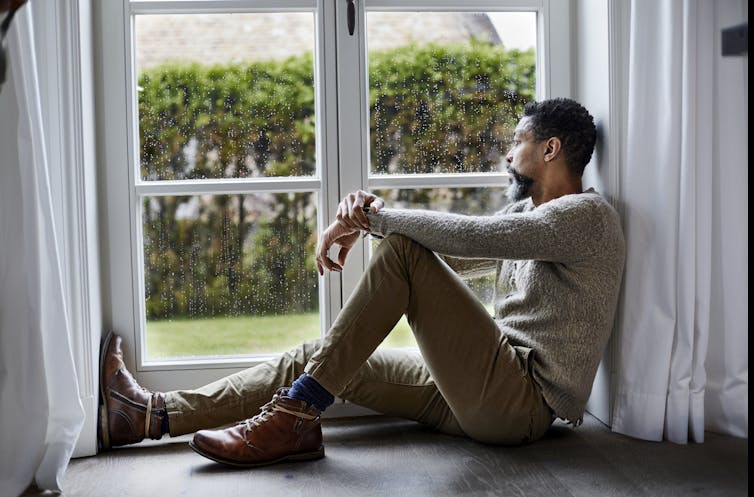
Sometimes the evidence points you in a new direction. Schon/Moment via Getty Images

Daryl Van Tongeren, Hope College

Mark Twain apocryphally said, “I’m in favor of progress; it’s change I don’t like.” This quote pithily underscores the human tendency to desire growth while also harboring strong resistance to the hard work that comes with it. I can certainly resonate with this sentiment.

I was raised in a conservative evangelical home. Like many who grew up in a similar environment, I learned a set of religious beliefs that framed how I understood myself and the world around me. I was taught that God is loving and powerful, and God’s faithful followers are protected. I was taught that the world is fair and that God is good. The world seemed simple and predictable – and most of all, safe.

These beliefs were shattered when my brother unexpectedly passed away when I was 27 years old. His death at 34 with three young children shocked our family and community. In addition to reeling with grief, some of my deepest assumptions were challenged. Was God not good or not powerful? Why didn’t God save my brother, who was a kind and loving father and husband? And how unfair, uncaring and random is the universe?

This deep loss started a period where I questioned all of my beliefs in light of the evidence of my own experiences. Over a considerable amount of time, and thanks to an exemplary therapist, I was able to revise my worldview in a way that felt authentic. I changed my mind, about a lot things. The process sure wasn’t pleasant. It took more sleepless nights than I care to recall, but I was able to revise some of my core beliefs.

I didn’t realize it then, but this experience falls under what social science researchers call intellectual humility. And honestly, it is probably a large part of why, as a psychology professor, I am so interested in studying it. Intellectual humility has been gaining more attention, and it seems critically important for our cultural moment, when it’s more common to defend your position than change your mind.

What it means to be intellectually humble

Intellectual humility is a particular kind of humility that has to do with beliefs, ideas or worldviews. This is not only about religious beliefs; it can show up in political views, various social attitudes, areas of knowledge or expertise or any other strong convictions. It has both internal- and external-facing dimensions.

Within yourself, intellectual humility involves awareness and ownership of the limitations and biases in what you know and how you know it. It requires a willingness to revise your views in light of strong evidence.

Interpersonally, it means keeping your ego in check so you can present your ideas in a modest and respectful manner. It calls for presenting your beliefs in ways that are not defensive and admitting when you’re wrong. It involves showing that you care more about learning and preserving relationships than about being “right” or demonstrating intellectual superiority.

Another way of thinking about humility, intellectual or otherwise, is being the right size in any given situation: not too big (which is arrogance), but also not too small (which is self-deprecation).

male standing with mic, seated audience, in a casual business seminar
Having confidence in your area of expertise is different than thinking you know it all about everything. Morsa Images/DigitalVision via Getty Images

I know a fair amount about psychology, but not much about opera. When I’m in professional settings, I can embrace the expertise that I’ve earned over the years. But when visiting the opera house with more cultured friends, I should listen and ask more questions, rather than confidently assert my highly uninformed opinion.

Four main aspects of intellectual humility include being:

  • Open-minded, avoiding dogmatism and being willing to revise your beliefs.
  • Curious, seeking new ideas, ways to expand and grow, and changing your mind to align with strong evidence.
  • Realistic, owning and admitting your flaws and limitations, seeing the world as it is rather than as you wish it to be.
  • Teachable, responding nondefensively and changing your behavior to align with new knowledge.

Intellectual humility is often hard work, especially when the stakes are high.

Starting with the admission that you, like everyone else, have cognitive biases and flaws that limit how much you know, intellectual humility might look like taking genuine interest in learning about your relative’s beliefs during a conversation at a family get-together, rather than waiting for them to finish so you can prove them wrong by sharing your – superior – opinion.

It could look like considering the merits of an alternative viewpoint on a hot-button political issue and why respectable, intelligent people might disagree with you. When you approach these challenging discussions with curiosity and humility, they become opportunities to learn and grow.

Why intellectual humility is an asset

Though I’ve been studying humility for years, I’ve not yet mastered it personally. It’s hard to swim against cultural norms that reward being right and punish mistakes. It takes constant work to develop, but psychological science has documented numerous benefits.

First, there are social, cultural and technological advances to consider. Any significant breakthrough in medicine, technology or culture has come from someone admitting they didn’t know something – and then passionately pursuing knowledge with curiosity and humility. Progress requires admitting what you don’t know and seeking to learn something new.

animated people talking over a meal
Intellectual humility can make conversations less adversarial. Compassionate Eye Foundation/Gary Burchell/DigitalVision via Getty Images

Relationships improve when people are intellectually humble. Research has found that intellectual humility is associated with greater tolerance toward people with whom you disagree.

For example, intellectually humble people are more accepting of people who hold differing religious and political views. A central part of it is an openness to new ideas, so folks are less defensive to potentially challenging perspectives. They’re more likely to forgive, which can help repair and maintain relationships.

Finally, humility helps facilitate personal growth. Being intellectually humble allows you to have a more accurate view of yourself.

When you can admit and take ownership of your limitations, you can seek help in areas where you have room to grow, and you’re more responsive to information. When you limit yourself to only doing things the way you’ve always done them, you miss out on countless opportunities for growth, expansion and novelty – things that strike you with awe, fill you with wonder and make life worth living.

Humility can unlock authenticity and personal development.

Humility doesn’t mean being a pushover

Despite these benefits, sometimes humility gets a bad rap. People can have misconceptions about intellectual humility, so it’s important to dispel some myths.

Intellectual humility isn’t lacking conviction; you can believe something strongly until your mind is changed and you believe something else. It also isn’t being wishy-washy. You should have a high bar for what evidence you require to change your mind. It also doesn’t mean being self-deprecating or always agreeing with others. Remember, it’s being the right size, not too small.

Researchers are working hard to validate reliable ways to cultivate intellectual humility. I’m part of a team that is overseeing a set of projects designed to test different interventions to develop intellectual humility.

Some scholars are examining different ways to engage in discussions, and some are exploring the role of enhancing listening. Others are testing educational programs, and still others are looking at whether different kinds of feedback and exposure to diverse social networks might boost intellectual humility.

Prior work in this area suggests that humility can be cultivated, so we’re excited to see what emerges as the most promising avenues from this new endeavor.

There was one other thing that religion taught me that was slightly askew. I was told that too much learning could be ruinous; after all, you wouldn’t want to learn so much that you might lose your faith.

But in my experience, what I learned through loss may have salvaged a version of my faith that I can genuinely endorse and feels authentic to my experiences. The sooner we can open our minds and stop resisting change, the sooner we’ll find the freedom offered by humility.

Daryl Van Tongeren, Associate Professor of Psychology, Hope College

This article is republished from The Conversation under a Creative Commons license. Read the original article.

ooOOoo

Nothing more to add to this most interesting article.

Dogs are the best!

This came in from our neighbour, Dordie!

You will love it!

ooOOoo

This dog catching a fish while his owner is away.. Dogs are the best..

It was originally posted on ‘X’ by but then I found it on YouTube. However the text that was shown on X read:

Buitengebieden,

Welcome to the positive side of X. I’m Sander from the Netherlands. All copyrights belong to their respective owners! DM for credits/removal/submission!

ooOOoo

Wonderful! Thanks Dordie!

This IS a rescue story.

A woman who knew no bounds when it came to rescuing three large dogs.

This is such a beautiful account of Veronica Shea taking action, and personal risks, to provide, firstly trust, and then love for Princess George, Grace and Steve, as they were named. The story was published on The Dodo.

Please read for yourself.

ooOOoo

Woman Visits Mountain Every Day To Convince Huge Dogs To Let Her Rescue Them

“They couldn’t be touched. They couldn’t be leashed. They were just terrified.”

By Elizabeth Claire Alberts

Published on the 26th October, 2023

In 2020, Veronica Shea was out hiking with her dog in the Angeles National Forest in California, when she spotted something strange moving ahead of them.

“We whip around the curve, and I look over and there was this huge black thing,” Shea told The Dodo. “He went up the side of a cliff.”

Veronica Shea

Shea followed the furry animal and came face to face with three malnourished dogs alone in the wilderness. Realizing the dogs had been abandoned, she knew she had to help them. Every day for several weeks, Shea trudged up the mountain to feed the dogs and work on gaining their trust.

Veronica Shea

Slowly, the dogs got used to her and even began eating out of her hand. But Shea had no idea how to get them off the mountain. If she trapped one dog, would the others flee? She knew she couldn’t do it alone.

Veronica Shea

When she asked for help, a whole team of rescuers stepped forward. Together, they carried equipment up the mountain and put together a makeshift cage. The rescuers carefully lured the dogs inside and carried them down the mountain.

The three dogs —mastiffs named Princess George, Grace and Steve, who are believed to be siblings — were safe now. But they still had a long journey ahead.

Veronica Shea

The rescuers approached Cheri Wulff Lucas, a well known dog behaviorist and trainer in California, to see if she could help the nervous dogs learn to trust again.

“They weren’t adoptable the way they came,” Lucas told The Dodo. “They couldn’t be touched. They couldn’t be leashed. They were just terrified.”

Princess George, Grace and Steve responded well to Lucas’ training. Still, they continued to have a “very strong startle reflex,” said Lucas. This made it difficult to find them the perfect home.

“It was going to take a very special home for them to go into because they’re not the kind of dogs that are going to go to the dog park,” Lucas said. “Even walking them on city streets would be a lot for them. And if they do spook, they weigh 125 pounds, so [they would be] very hard to contain.”

But Lucas knew the dogs were safe on her own property.

“I’m out in the middle of nowhere,” Lucas said. “There’s no traffic around here. You can’t even see another home from here. So if they did get out, they would just come back here to me.”

Veronica Shea

While Lucas never planned on keeping the dogs herself, that’s exactly what she ended up doing. This turned out to be the best decision for everyone. Princess George, Grace, and Steve continued to live in a safe and supportive environment. And Lucas discovered that the dogs could help her with her work as a trainer.

“If I get dogs that needs socialization — to be more familiar and less reactive with other dogs — I use my pack to help rehabilitate them,” Lucas said. “And all three of them are highly social with dogs. They know how to smell properly, how to not overpower the dog that needs the socialization. They’re just flawless. And that’s not something I taught them — they came that way.”

Veronica Shea

The threesome were particularly helpful when Lucas started working with another dog named Andi, who was rescued from a hoarding case.

“She had lived in a pen for seven years without human touch or being leashed or anything and she was terrified,” Lucas said. “They just came in and really made her feel comfortable. It was really sweet to see. They brought her around in a way that I never could as a human.”

Lucas ended up adopting Andi as well, bringing her personal pack of dogs to 12.

Princess George, Grace and Steve have been living with Lucas now for over three years, and they’re completely different dogs now.

“They’re incredibly playful,” Lucas said. “If you came to my house and did not know their backstory, you would think they were like any other dog.”

Lucas describes George as a “couch potato” who loves hanging around the house and socializing with the other dogs. Steve is the one who likes to play endless games of “chase” out in the yard. Grace remains a bit timid, but she shares a very close relationship with Steve.

“They’re pets — they’re really pets now,” she said. “They’re not cases for me anymore.”

ooOOoo

Lucas sums it up perfectly in that last sentence; “They’re pets – they’re really pets now,

Lucas reminds me of Jean for when we first met, in December 2007, Jean had more than twenty dogs at home, all rescues, and led to me publishing my first book in 2009: Learning from Dogs.

Six fabulous videos of dogs

A YouTube video presented to you all.

I came across this collection of videos, all short, that have been combined into a single YouTube video.

Here is the text that came with that video.

Many know that dogs are wonderful pets that quickly turn into family. These inspiring dog stories highlight the impact a dog rescue, recovery, or reunion can make in the lives of everyday Americans. From a veteran’s emotional reunion with his beloved dog to a dog surviving a bullet wound, here are great stories of dogs and the people who love them.

Very Local

Just ten minutes long it is nevertheless a fabulous account of our closest animal friend.

Just a wonderful video of a dog rescue

Perfect for the last day of November, 2023!

It is also Jean’s birthday and a happy day all round.

I saw this three minute video yesterday and just had to share it with you all!

I saw it first on The Dodo but then I found it was also on YouTube which is much easier from my blogging point of view.

Dogs are such perfect creatures.

A re-publishing of a post from 2009.

I was looking through posts from a few years ago and came across ‘Dogs – their deep ties to man” and thought it would be a grand post to publish again.

ooOOoo

Dogs – their deep ties to man!

It’s impossible not to admire, respect and love a dog

(First published on the 4th August, 2009 but it relates to an event even before I left the United Kingdom. I met Jean in December, 2007 and Pharaoh and me travelled out to Mexico a year later.)

An incident last night reminded me of the complexity of the dog’s mind.  It has not been the first time this has happened.

Our 6 year-old German Shepherd dog, Pharaoh, was given a bone as a treat during the previous day and, as sometimes happens, it was a bit tough on his stomach.  So at around 1.30 am, I was woken up.  Nothing so special about that.  But reflect on how this happened.

1.30 am is the part of night where, hopefully, we are in that very deep phase of sleep.  How then does Pharaoh calculate the best way of awakening me so that he can be let out into the yard?  One might consider the various options:

– He barks

– He paws at the bed

– He jumps on the bed

– He scratches at the door

and so on.

What Pharaoh did (and has done before, so this is a calculated behaviour) is very gently put his damp nose onto the side of my face, just below my left ear, which was the part of my face nearest to the edge of the bed.  It woke me so gently from my deep sleep but made me immediately aware (as a parent is when their young child cries) that Pharaoh required urgent attention.

A moment later he was standing by the bedroom door, letting out that soft, quiet whine that is only used when he needs to use the yard.  Within seconds his collar and lead were on and he was outside doing what nature was prompting him.

Pharaoh resting on an English lawn

No big deal but it stayed with me this morning as I reflected on the empathetic way that Pharaoh had communicated with me during the night.

Dogs sensitivity to the world around them is a powerful reminder that the less we focus in on ourselves the more we learn.

ooOOoo

Memories!

Keeping healthy in old age.

One has to work at it!

For most of us these days old age is part of the scene (and I am classifying old age as being over 70 years). Here are a few facts from the website of the World Health Organization.

Key facts

  • Worldwide obesity has nearly tripled since 1975.
  • In 2016, more than 1.9 billion adults, 18 years and older, were overweight. Of these over 650 million were obese.
  • 39% of adults aged 18 years and over were overweight in 2016, and 13% were obese.
  • Most of the world’s population live in countries where overweight and obesity kills more people than underweight.
  • 39 million children under the age of 5 were overweight or obese in 2020.
  • Over 340 million children and adolescents aged 5-19 were overweight or obese in 2016.
  • Obesity is preventable.

What are obesity and overweight Overweight and obesity are defined as abnormal or excessive fat accumulation that may impair health.

Body mass index (BMI) is a simple index of weight-for-height that is commonly used to classify overweight and obesity in adults. It is defined as a person’s weight in kilograms divided by the square of his height in meters (kg/m2).

Adults

For adults, WHO defines overweight and obesity as follows:

  • overweight is a BMI greater than or equal to 25; and
  • obesity is a BMI greater than or equal to 30.

BMI provides the most useful population-level measure of overweight and obesity as it is the same for both sexes and for all ages of adults. However, it should be considered a rough guide because it may not correspond to the same degree of fatness in different individuals.

World Health Organisation

This is the link for anyone who wants to use the BMI Calculator.

Now this is not a post about obesity or being overweight. It is a post taken from The Conversation about staying as healthy as one can in one’s older years.

ooOOoo

Steep physical decline with age is not inevitable – here’s how strength training can change the trajectory

Resistance training can take many forms and can be individualized to suit a person’s needs as they age. Jamie Grill/Tetra Images via Getty Images

Zachary Gillen, Mississippi State University

Raise your hand if you regularly find yourself walking up a flight of stairs. What about carrying heavy bags of groceries? How about picking up your child or grandchild? Most of us would raise our hands to doing at least one of those weekly, or even daily.

As people age, it can become more and more difficult to perform some physical tasks, even those that are normal activities of daily living. However, prioritizing physical fitness and health as you get older can help you go through your normal day-to-day routine without feeling physically exhausted at the end of the day.

It can also help you continue to have special memories with your family and loved ones that you might not have been able to have if you weren’t physically active. For example, I ran two half-marathons with my dad when he was in his 60s!

I am an exercise physiologist who studies how people can use resistance training to improve human performance, whether it be in sports and other recreational settings, in everyday life, or both. I am also a certified strength and conditioning specialist. My career has given me the opportunity to design exercise programs for kids, college athletes and elderly adults.

Staying physically active as you get older doesn’t need to include running a half-marathon or trying to be a bodybuilder; it could be as simple as trying to get through the day without feeling winded after you go up a flight of stairs. Although our muscles naturally get weaker as we age, there are ways we can combat that to help improve quality of life as we get older.

Man in his 60s, a middle-aged woman and a middle-aged man, all wearing race medals and running gear.
From left are the author’s father, who was age 61 at the time, the author’s wife and the author after completing the Lincoln Half Marathon. Zachary Gillen, CC BY-NC-ND

Muscle loss and chronic disease

One of the most important parts of exercise programming, no matter who I am working with, is proper resistance training to build muscle strength. Some amount of age-related loss of muscle function is normal and inevitable. But by incorporating resistance training that is appropriate and safe at any ability level, you can slow down the rate of decline and even prevent some loss of muscle function.

The medical term for a condition that involves age-related loss of muscle function and mass is sarcopenia. Sarcopenia can begin as early as age 40, but it tends to be more common in adults age 60 and older. Sarcopenia is associated with a number of health issues such as increased risk of falling, cardiovascular disease and metabolic disease, among others.

In one of our team’s previous studies, we saw that otherwise healthy individuals with sarcopenia had issues delivering vital nutrients to muscle. This could lead to greater likelihood of various diseases, such as Type 2 diabetes, and slow down recovery from exercise.

Recent estimates suggest that sarcopenia affects 10% to 16% of the elderly population worldwide. But even if a person doesn’t have clinically diagnosed sarcopenia, they may still have some of the underlying symptoms that, if not dealt with, could lead to sarcopenia.

Strength training is key

So the question is, what can be done to reverse this decline?

Recent evidence suggests that one of the key factors leading to sarcopenia is low muscle strength. In other words, combating or reversing sarcopenia, or both, may be best done with a proper resistance-training program that prioritizes improving strength. In fact, the decline in muscle strength seems to occur at a much faster rate than the decline in muscle size, underscoring the importance of proper strength training as people age.

Chart showing the general pattern for changes in muscle strength and size across stage of life.
Typical age-related changes in muscle strength and size with and without strength training. Zachary Gillen

Continuing to regularly strength train with moderate to heavy weights has been shown to be not only effective at combating the symptoms of sarcopenia but also very safe when done properly. The best way to make sure you are strength training properly is to seek out guidance from a qualified individual such as a personal trainer or strength and conditioning specialist.

Despite the clear benefits of strength training, it’s been shown that only about 13% of Americans age 50 and older do some form of strength training at least twice a week.

Finding what works for you

So how does a person properly strength train as they age?

The National Strength and Conditioning Association, a leading organization in advancing strength and conditioning around the world, states that for older adults, two to three days per week of strength training can be incredibly helpful for maintaining healthy muscle and bone and combating a number of chronic conditions.

The organization recommends that these workouts involve one to two exercises involving multiple joints per major muscle group, with six to 12 repetitions per set. These are done at an intensity of 50% to 85% of what’s known as one-repetition maximum – the most weight you could handle for a single repetition – with the exception of body weight exercises that use one’s own body weight as the resistance, such as pushups.

I would also recommend resting for about two to three minutes between sets, or even up to five minutes if the set was challenging. For older adults, particularly those age 60 and older, the National Strength and Conditioning Association guidelines suggest that a program like this be performed two to three days per week, with 24 to 48 hours between sessions.

An example of a strength training routine for older adults based on the National Strength and Conditioning Association guidelines

There are a great variety of exercises that could be done interchangeably in a strength training program like this.

ExerciseNumber of setsRepetitions per setIntensity
Barbell squat3670-85%
Barbell bench press3670-85%
Dumbbell lunges38 per leg50-70%
Dumbbell bent over row31050-70%
Double-leg hops212Body weight
Pushups212Body weight

Table: The Conversation Source: Zachary Gillen Get the data Created with Datawrapper

Making life’s tasks lighter

The guidelines above are only one example out of many options, but they provide a framework that you can use to build your own program. However, I would highly recommend seeking out a professional in the field to give specific exercise programming advice that can be tailored to your own needs and goals as you age.

Following such a program would give your muscles an excellent stimulus to enhance strength, while also allowing enough recovery, a very important consideration as people age. You might think it looks like a huge time commitment, but an exercise routine like this can be done in less than an hour. This means that in less than three hours of strength training per week you can help improve your muscle health and reduce the risk of getting sarcopenia and associated health issues.

It’s also important to note that there is no one right way to do resistance training, and it needn’t involve traditional weight equipment. Group classes like Pilates and yoga or those that involve circuit training and work with resistance bands can all produce similar results. The key is to get out and exercise regularly, whatever that entails.

Zachary Gillen, Assistant Professor of Exercise Physiology, Mississippi State University

This article is republished from The Conversation under a Creative Commons license. Read the original article.

ooOOoo

My wife, Jean, was diagnosed with Parkinson’s Disease (PD) in December, 2015. Many of you know that.

Fortunately at our local Club Northwest there was a group of PD sufferers who twice a week held a ‘Rock Steady Class’ under the instruction of a professional coach; Jean joined the group. It was a brilliant move for Jean and she gets a huge amount of care from being with them.

Luckily for me having to drive Jean into Club Northwest it made sense for me to sign up to a fitness class at the same time so I am put through a regular fitness routine under the coaching of Bruce. Plus I try and go bike riding three times a week.

In other words, we both try and stay as fit as we can.

A calmer mind – Wood

Concluding the series from BBC Radio 4

If you have not registered with the BBC then you will need to do so before the link at the bottom works.

This last time it is wood. Here it is:

In this episode – Wood – we visit the Woodwork for Wellbeing Workshop in Bethnal Green, London where every Tuesday people with mental health issues spend time making things with wood. They find it to be very therapeutic and fun. And Professor Miles Richardson of the University of Derby shares research from Japan which shows that simply touching wood is calming.

Produced and Presented by Helen Needham

Research by Anna Miles and Maud Start

Original Music by Anthony Cowie

Mixed by Ron McCaskill

BBC Radio 4

https://www.bbc.co.uk/sounds/play/m001np8k

This is the last one of this series from the Beeb and if any of you have noticed I chose to present these programmes in a different order to that presented by the BBC.

chose‘ is only slightly accurate – the true reason is that I screwed up!

A calmer mind – Earth

Another broadcast from BBC Radio 4 in this series!

As I said before, so far this has been a fascinating series of programmes and, hopefully, some of you have listened to the episodes.

In Episode 5 – Earth – we visit the Horticultural Therapy Trust allotment in Plymouth and discover how gardening can be soothing for people with severe mental illnesses. We also hear about how putting our hands in the earth can be good for our gut microbiome and potentially our mental health.

Produced and Presented by Helen Needham
Research by Anna Miles and Maud Start
Original Music by Anthony Cowie
Mixed by Ron McCaskill and Malcolm Torrie

A BBC Scotland Production made in Aberdeen for BBC Radio 4

BBC Radio 4

https://www.bbc.co.uk/programmes/m001p6vt

Tomorrow we publish another programme in this series.

A calmer mind – Air

The choice is now air.

This is about breathing and is something I know about. Because Bruce at our local ClubNorthwest has a session with me when I spend five minutes or so taking in through the nose the deepest breath that I can.

If you have not registered with the BBC then you will need to do so before the link at the bottom works.

In Episode 4 – Air – we visit an infant school in Nottingham where young children regularly learn breathing techniques to reduce stress and anxiety. We also hear about research from Italy showing how slowing our breathing impacts positively on brain activity. Plus breath coach and founder of School Breathe, Aimee Hartley, shares her experience of learning to breathe well.

Produced and Presented by Helen Needham
Research by Anna Miles and Maud Start
Original Music by Anthony Cowie
Mixed by Ron McCaskill and Malcolm Torrie

A BBC Scotland Production made in Aberdeen for BBC Radio 4

BBC Radio 4

https://www.bbc.co.uk/programmes/m001p1pg

Another programme tomorrow!