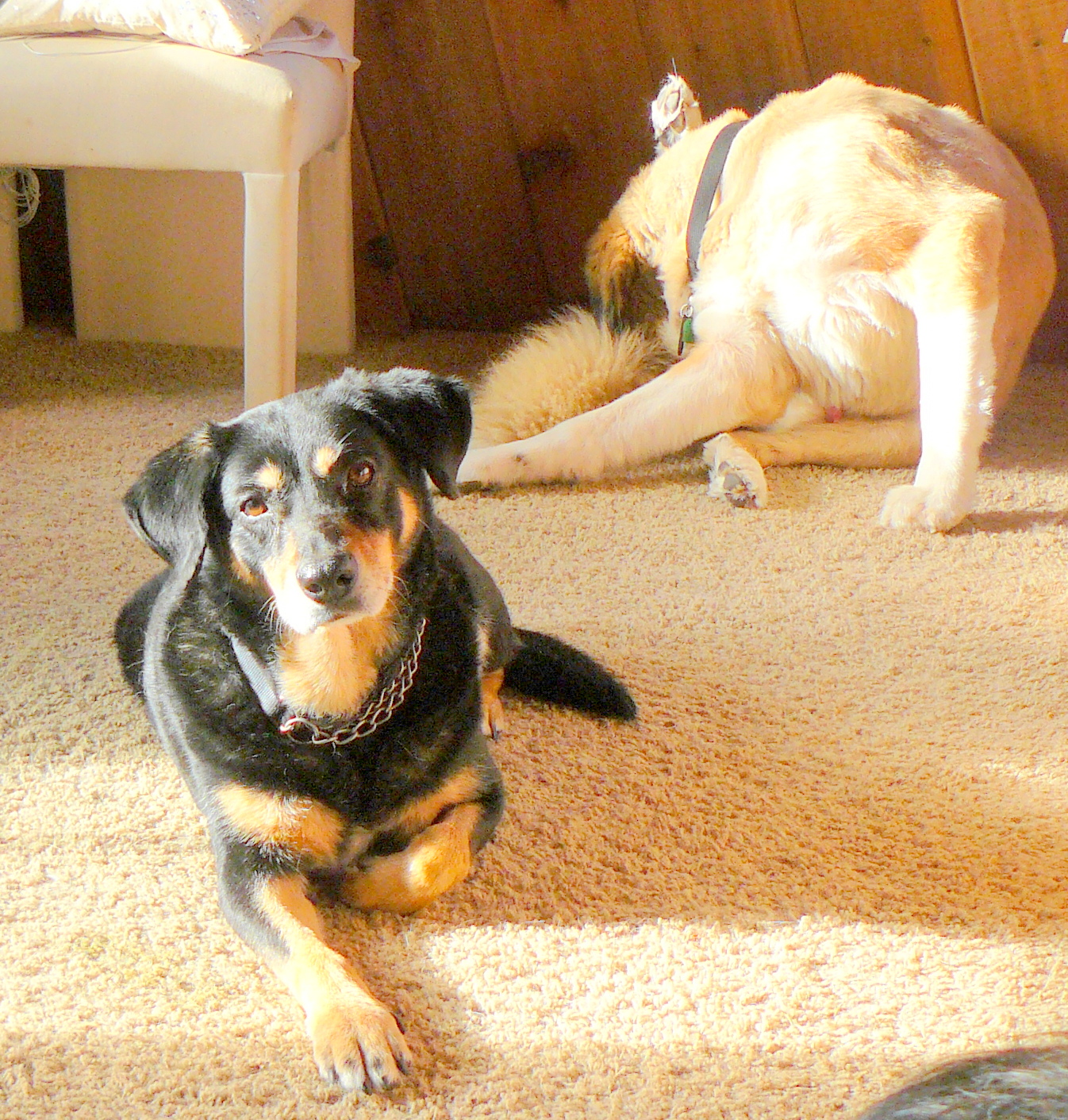
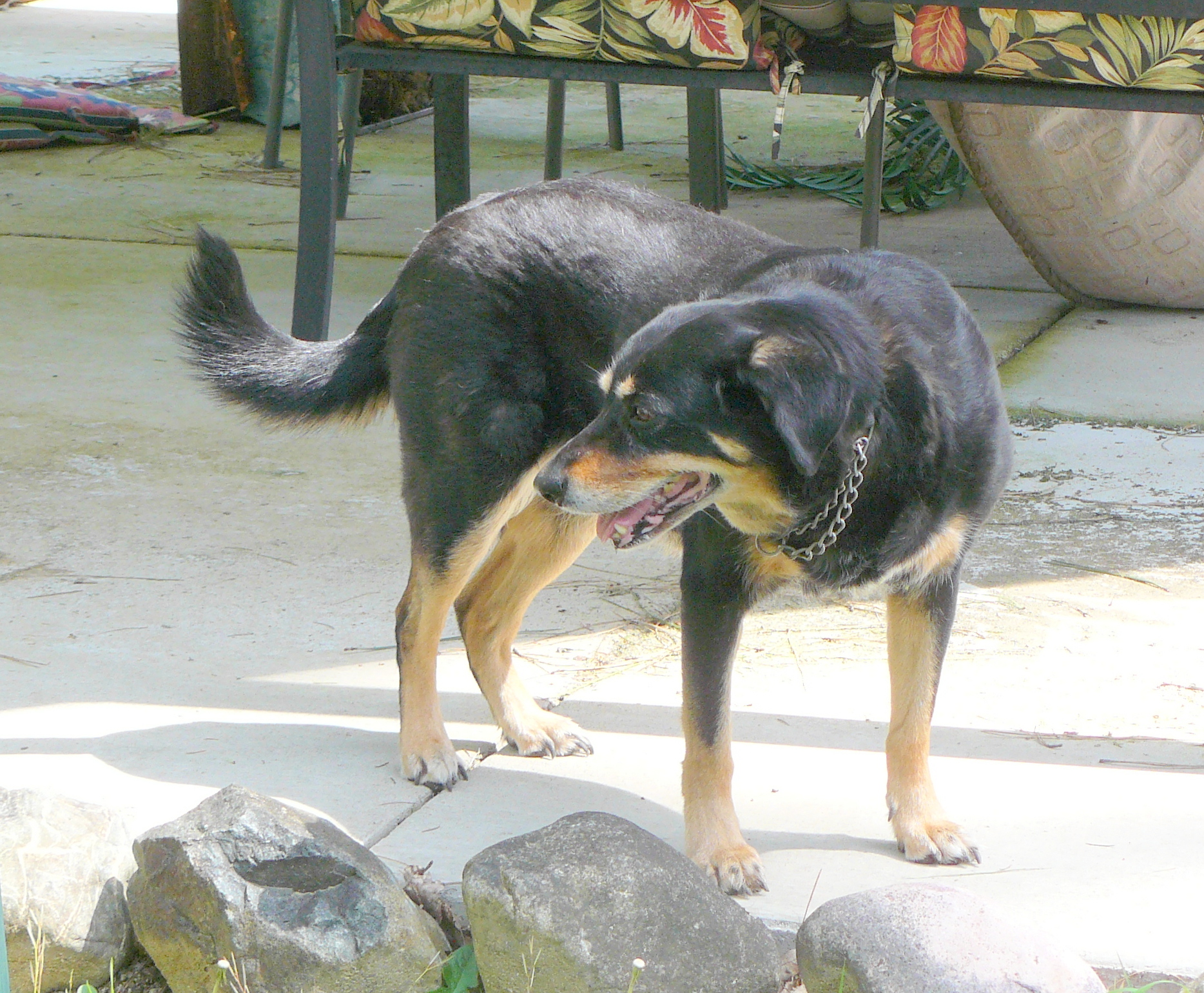
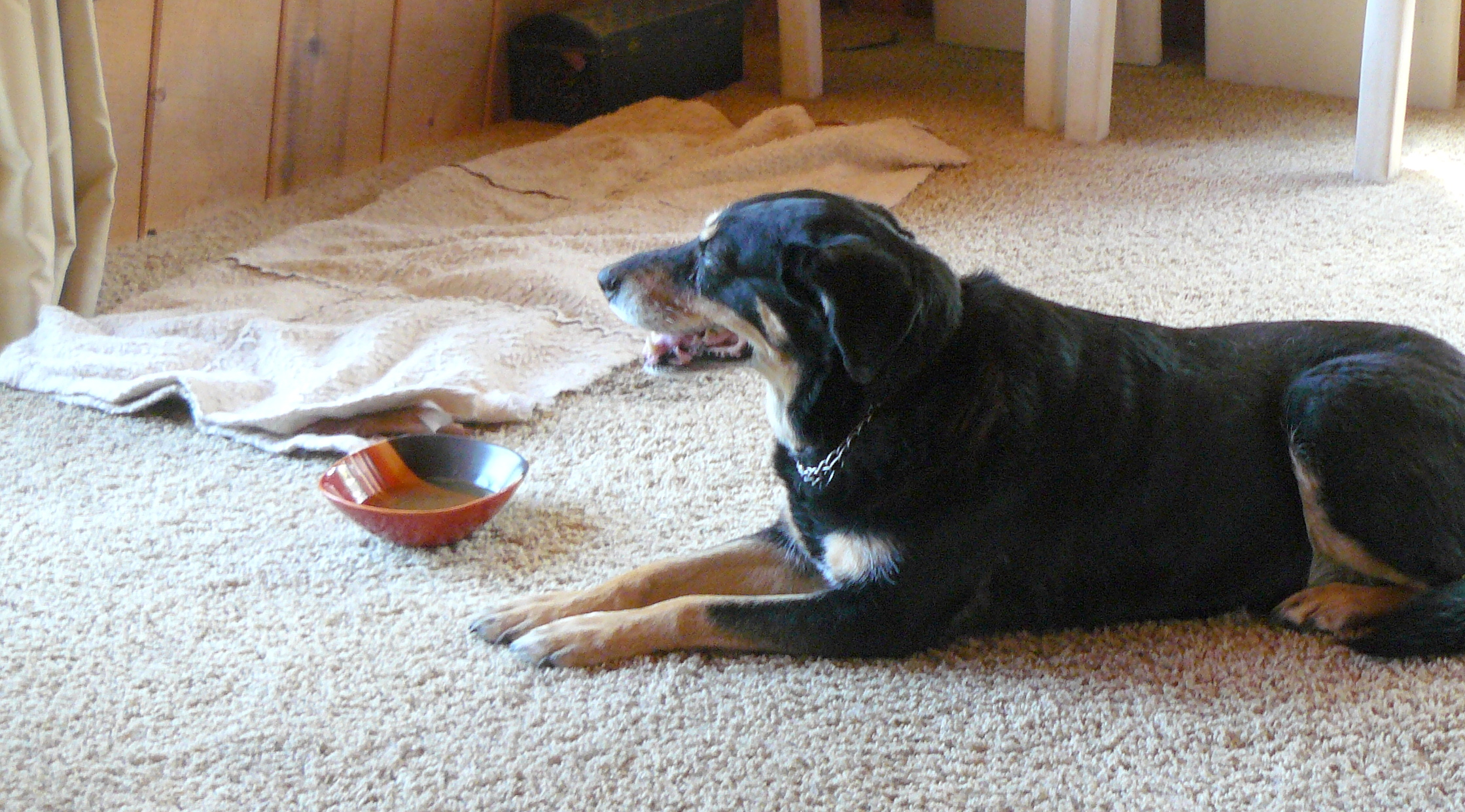
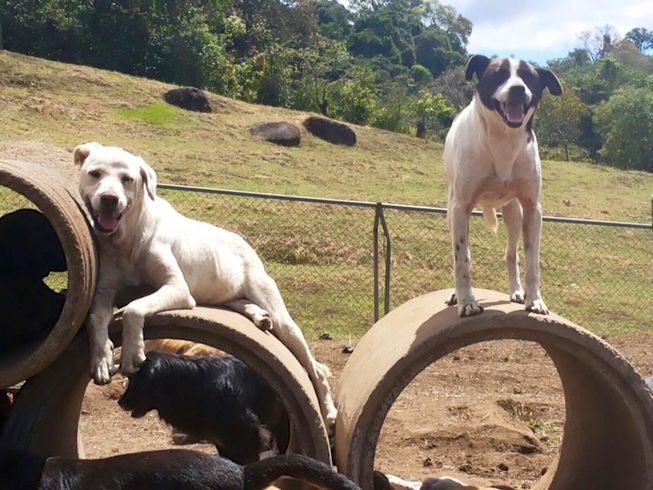
When it comes to animals it’s practically impossible to have one without the other.
Today’s post was inspired by a comment left on yesterday’s post The most beautiful bond of all by MargfromTassie. This is what she wrote (my emphasis):
Yes, these people are inspirational as are all the people who voluntarily give their time and efforts to animal welfare work, sometimes for years. For many, it can be emotionally traumatising as well as rewarding.
It didn’t take me long to agree that for most it will be emotionally traumatising. In fact, one of the great lessons that we learn from our dogs, and all the other animals that we love, is that unconditional love brings with it emotional trauma.
So much better expressed by Suzanne Clothier in her book Bones Would Rain from the Sky: Deepening Our Relationships with Dogs
There is a cycle of love and death that shapes the lives of those who choose to travel in the company of animals. It is a cycle unlike any other. To those who have never lived through its turnings or walked its rocky path, our willingness to give our hearts with full knowledge that they will be broken seems incomprehensible. Only we know how small a price we pay for what we receive; our grief, no matter how powerful it may be, is an insufficient measure of the joy we have been given.
Our grief is always an insufficient measure of the joy we receive!
Speaking of joy, when we pulled back the bedroom curtains this morning (Thursday) the nest was empty!
For the last too many weeks to remember a mother Canadian Goose has been sitting on her nest of eggs with Father Goose staying close. We like to think that the mother returned to this place after having been born here a year ago.
Overnight five young healthy goslings were born! 🙂
May their little lives be full of love with a total absence of trauma!
In case you’ve forgotten the section on the food web from high school biology, here’s a quick refresher.
Plants make up the base of every food chain of the food web (also called the food cycle). Plants use available sunlight to convert water from the soil and carbon dioxide from the air into glucose, which gives them the energy they need to live. Unlike plants, animals can’t synthesize their own food. They survive by eating plants or other animals.
Clearly, animals eat plants. What’s not so clear from this picture is that plants also eat animals. They thrive on them, in fact (just Google “fish emulsion”). In my new book, “A Critique of the Moral Defense of Vegetarianism,” I call it the transitivity of eating. And I argue that this means one can’t be a vegetarian.
Chew on this
I’ll pause to let the collective yowls of both biologists and (erstwhile) vegetarians subside.
A transitive property says that if one element in a sequence relates in a certain way to a second element, and the second element relates in the same way to a third, then the first and third elements relate in the same way as well.
Take the well-worn trope “you are what you eat.” Let’s say instead that we are “who” we eat. This makes the claim more personal and also implies that the beings who we make our food aren’t just things.
How our food lives and dies matters. If we are who we eat, our food is who our food eats, too. This means that we are who our food eats in equal measure.
Plants acquire nutrients from the soil, which is composed, among other things, of decayed plant and animal remains. So even those who assume they subsist solely on a plant-based diet actually eat animal remains as well.
This is why it’s impossible to be a vegetarian.
For the record, I’ve been a “vegetarian” for about 20 years and nearly “vegan” for six. I’m not opposed to these eating practices. That isn’t my point. But I do think that many “vegetarians” and “vegans” could stand to pay closer attention to the experiences of the beings who we make our food.
For example, many vegetarians cite the sentience of animals as a reason to abstain from eating them. But there’s good reason to believe that plants are sentient, too. In other words, they’re acutely aware of and responsive to their surroundings, and they respond, in kind, to both pleasant and unpleasant experiences.
Check out the work of plant scientists Anthony Trewavas, Stefano Mancuso, Daniel Chamowitz and František Baluška if you don’t believe me. They’ve shown that plants share our five senses – and have something like 20 more. They have a hormonal information-processing system that’s homologous to animals’ neural network. They exhibit clear signs of self-awareness and intentionality. And they can even learn and teach.
I suspect how some biologists may respond: first, plants don’t actually eat since eating involves the ingestion – via chewing and swallowing – of other life forms. Second, while it’s true that plants absorb nutrients from the soil and that these nutrients could have come from animals, they’re strictly inorganic: nitrogen, potassium, phosphorus and trace amounts of other elements. They’re the constituents of recycled minerals, devoid of any vestiges of animality.
As for the first concern, maybe it would help if I said that both plants and animals take in, consume or make use of, rather than using the word “eat.” I guess I’m just not picky about how I conceptualize what eating entails. The point is that plants ingest carbon dioxide, sunlight, water and minerals that are then used to build and sustain their bodies. Plants consume inasmuch as they produce, and they aren’t the least bit particular about the origins of the minerals they acquire.
With respect to the second concern, why should it matter that the nutrients drawn by plants from animals are inorganic? The point is that they once played in essential role in facilitating animals’ lives. Are we who we eat only if we take in organic matter from the beings who become our food? I confess that I don’t understand why this should be. Privileging organic matter strikes me as a biologist’s bias.
Then there’s the argument that mineral recycling cleanses the nutrients of their animality. This is a contentious claim, and I don’t think this is a fact of the matter. It goes to the core of the way we view our relationship with our food. You could say that there are spiritual issues at stake here, not just matters of biochemistry.
Changing how we view our food
Let’s view our relationship with our food in a different way: by taking into account the fact that we’re part of a community of living beings – plant and animal – who inhabit the place that we make our home.
We’re eaters, yes, and we’re also eaten. That’s right, we’re part of the food web, too! And the well-being of each is dependent on the well-being of all.
From this perspective, what the self-proclaimed “farmosopher” Glenn Albrecht calls sumbiotarianism (from the Greek word sumbioun, to live together) has clear advantages.
Sumbioculture is a form of permaculture, or sustainable agriculture. It’s an organic and biodynamic way of farming that’s consistent with the health of entire ecosystems.
Sumbiotarians eat in harmony with their ecosystem. So they embody, literally, the idea that the well-being of our food – hence, our own well-being – is a function of the health of the land.
In order for our needs to be met, the needs and interests of the land must come first. And in areas where it’s prohibitively difficult to acquire the essential fats that we need from pressed oils alone, this may include forms of animal use – for meat, manure and so forth.
Simply put, living sustainably in such an area – whether it’s New England or the Australian Outback – may well entail relying on animals for food, at least in a limited way.
All life is bound together in a complex web of interdependent relationships among individuals, species and entire ecosystems. Each of us borrows, uses and returns nutrients. This cycle is what permits life to continue. Rich, black soil is so fertile because it’s chock full of the composted remains of the dead along with the waste of the living.
Indeed, it’s not uncommon for indigenous peoples to identify veneration of their ancestors and of their ancestral land with the celebration of the life-giving character of the earth. Consider this from cultural ecologist and Indigenous scholar-activist Melissa Nelson:
The bones of our ancestors have become the soil, the soil grows our food, the food nourishes our bodies, and we become one, literally and metaphorically, with our homelands and territories.
You’re welcome to disagree with me, of course. But it’s worth noting that what I propose has conceptual roots that may be as old as humanity itself. It’s probably worth taking some time to digest this.
ooOOoo
In reflecting on how to close this post I couldn’t help thinking that “The bones of our ancestors have become the soil, ” presumably includes the bones of our dogs! Leading me to ponder that maybe our dogs from old are nourishing our bodies; I would like to think that is the case.
The powerful combination of good medicine and unconditional love.
In the last post on Hazel’s condition, back last Thursday, I passed on Dr. Codd’s observation, “… that by not having Hazel on her meds we were, of course, letting the fungal infection continue its damage.”
Dr. Codd also recommended reducing the dosage of the Fluconazole to lower its side effect of suppressing appetite.
So since then, with outstanding care and patience, Jean has been coaxing Hazel to eat just sufficient food for Hazel to be able to take the Fluconazole, for her fungal infection in her lungs, and Doxycycline, for her tick infection. (Mind you, Hazel is still a long way from eating reliably.)
Yesterday, (Saturday) Hazel was showing clear signs of feeling better but still having to be hand-fed by Jean.
Then this morning (Sunday) she really was perky and readily came out for a walk with the other dogs.
First time in recent days when Hazel has shown an interest in the world around her.
oooo
A return of a head gesture unique to Hazel that we haven’t seen in ages! 🙂
More generally, Dr. Jim was trying to track down supporting details to the observation made by Dr. Russ:
Namely, that there was evidence that fungal infections can lay dormat for quite long periods of time.
Jim sent me the following email:
Paul …
The following article is the one and only reference I have found so far that refers to the possible dormancy of this fungal infection. In paragraph 2 (Clinical Disease) I have highlighted it in red. I have to admit, I was skeptical.
Jim
The article was:
Coccidioidomycosis (Zoonotic) Last updated on 2/4/2011.
Contributors:
Rhea V. Morgan DVM, DACVIM, DACVO
Synonyms:
San Joaquin Valley Fever
Valley Fever
This is that domancy aspect from that paper that Jim highlighted (in red):
The incubation period in the dog is 1 to 3 weeks.1,2The organism can remain dormant, with exposure preceding the onset of clinical signs by 3 years or more.1,3 Although people may acquire the disease from the same sources as domestic animals and the mycelial forms are highly infectious, with one exception the disease has not been transmitted from animals to people. One published report exists of transmission to a veterinary assistant via the bite of an infected cat.15
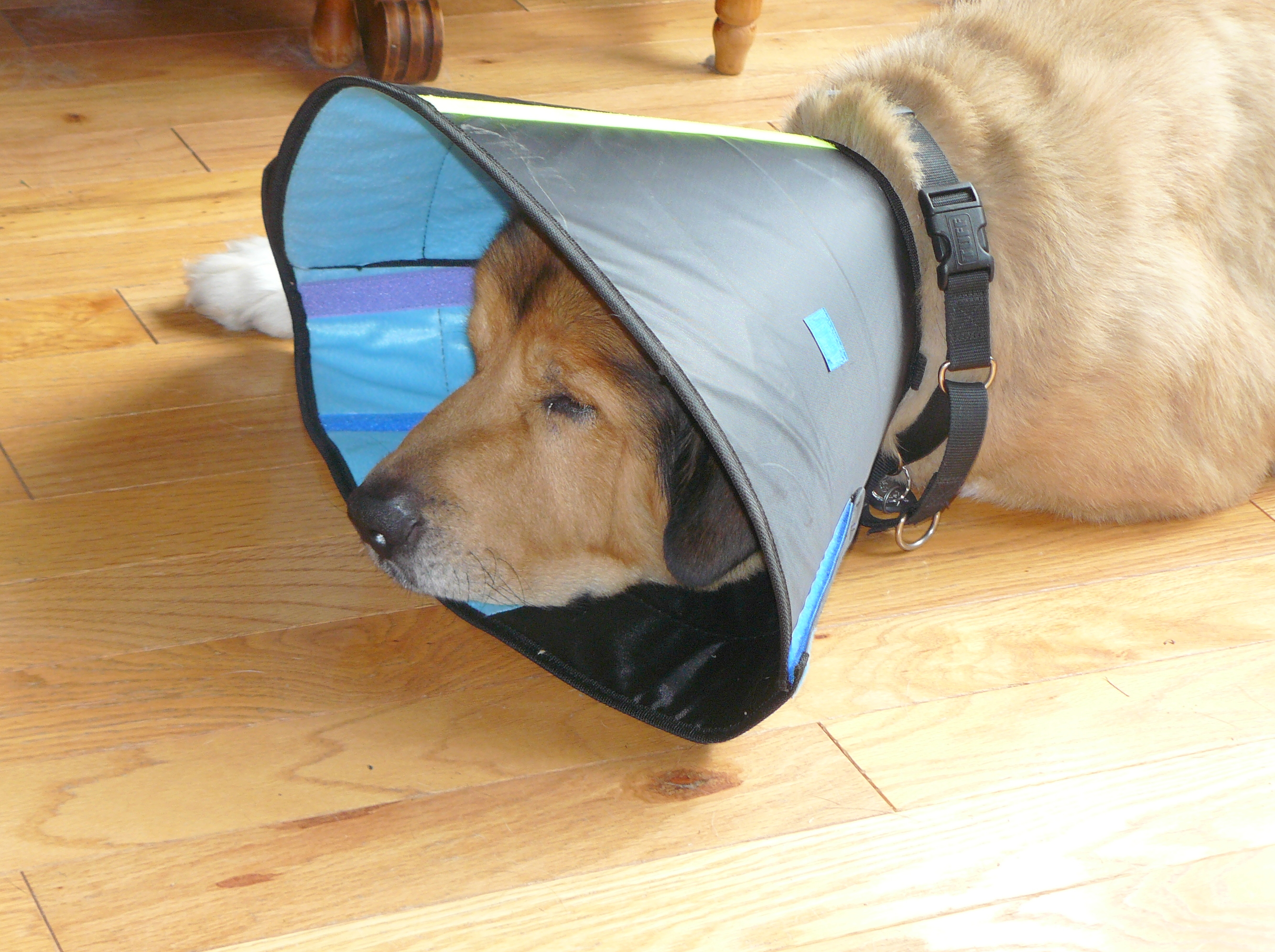
Meanwhile, over in Brandy’s corner, he has very quickly healed after his neutering operation last Thursday. It was fair to say that he was not a happy chappy when he arrived home that day.
Didn’t like that!
oooo
And I can’t even lick my balls!
But his cone was off by Saturday and he is back to the wonderful, bouncing dog we all love so much. (Can’t believe that last Saturday was only the second week that Brandy had been with us; he has so quickly woven his way into all our hearts.)
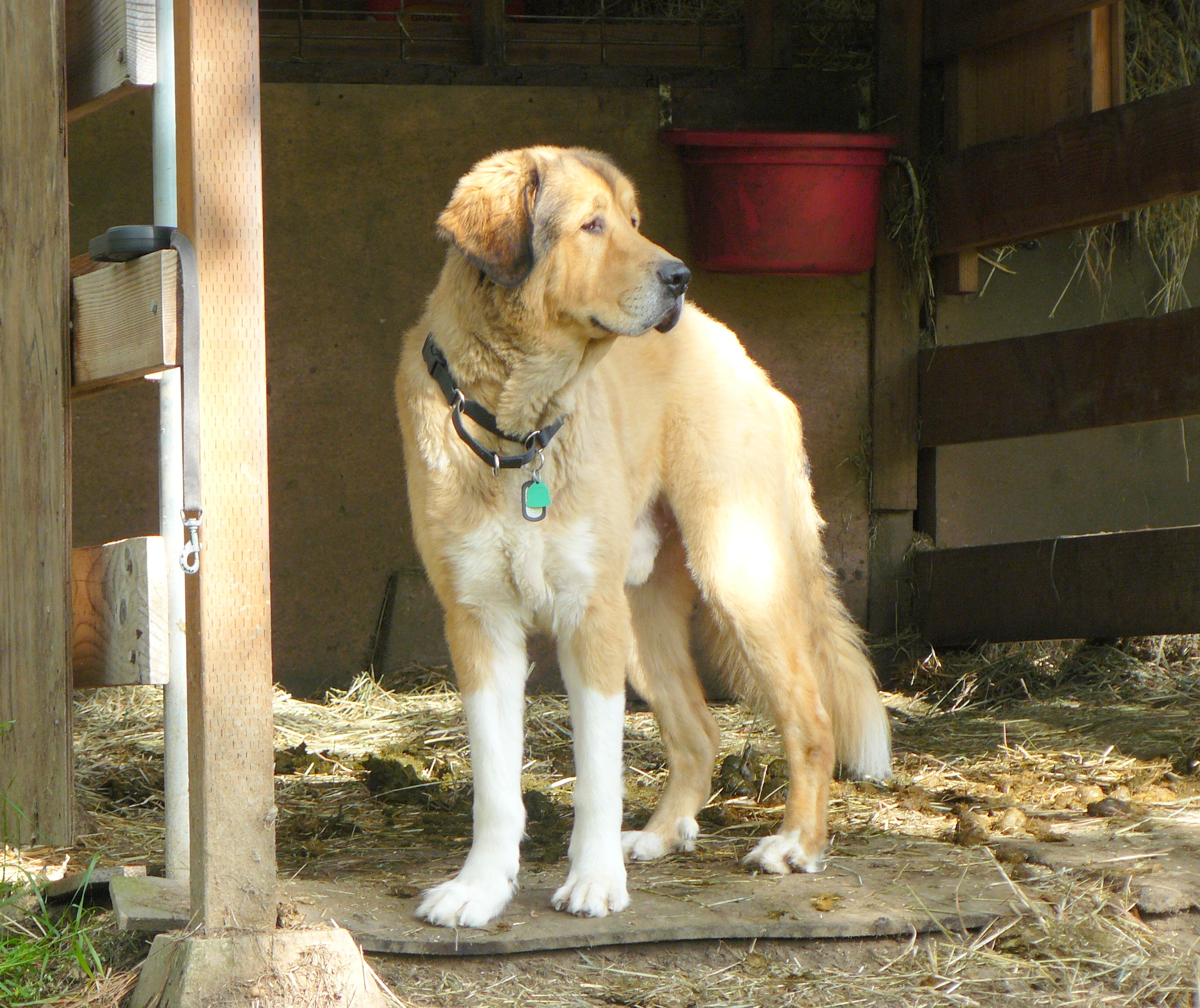
Checking out the stables yesterday (Sunday) morning.
oooo
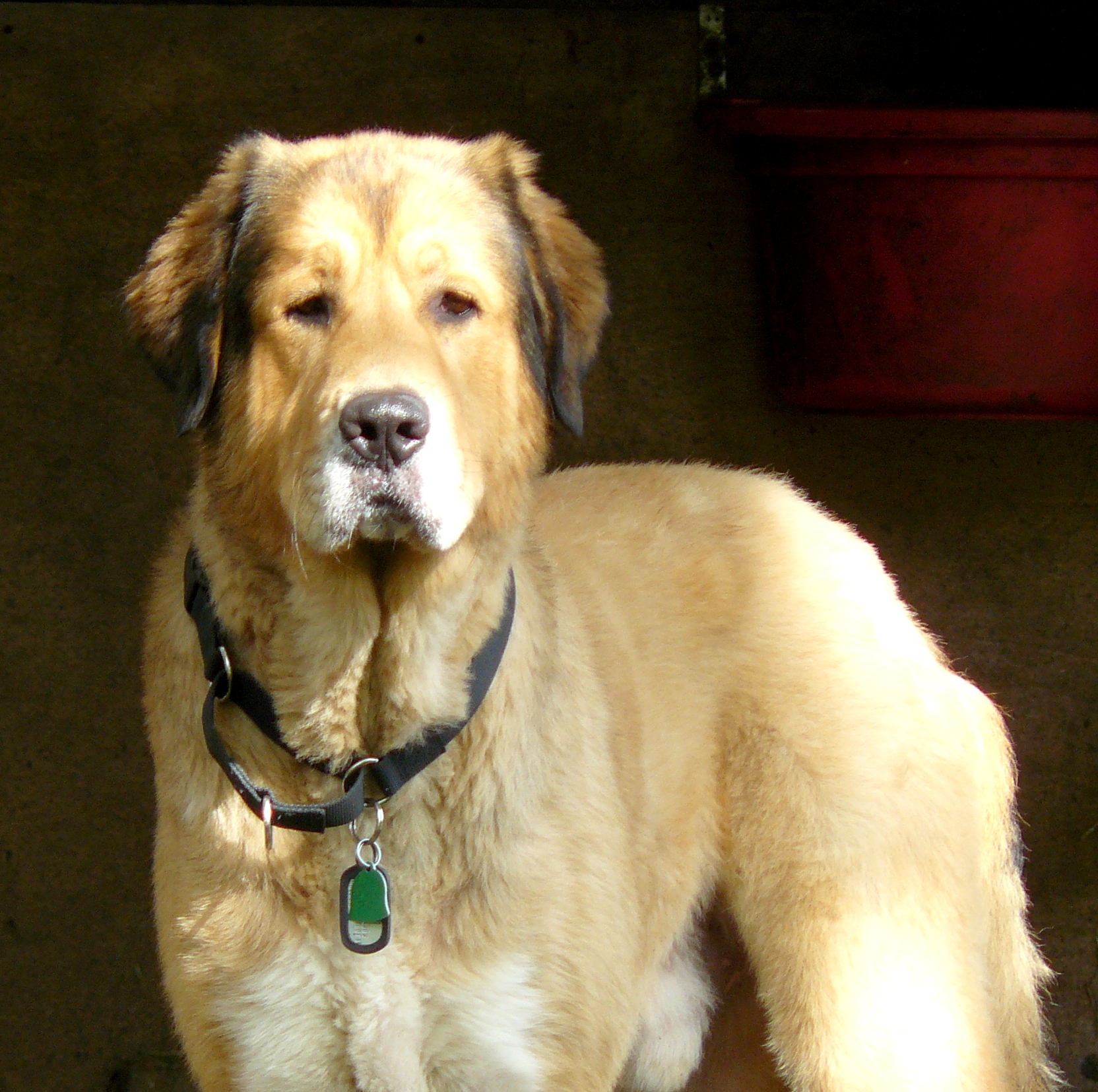
Behind that placid expression is the most docile, loving brain and heart one could ever wish for!
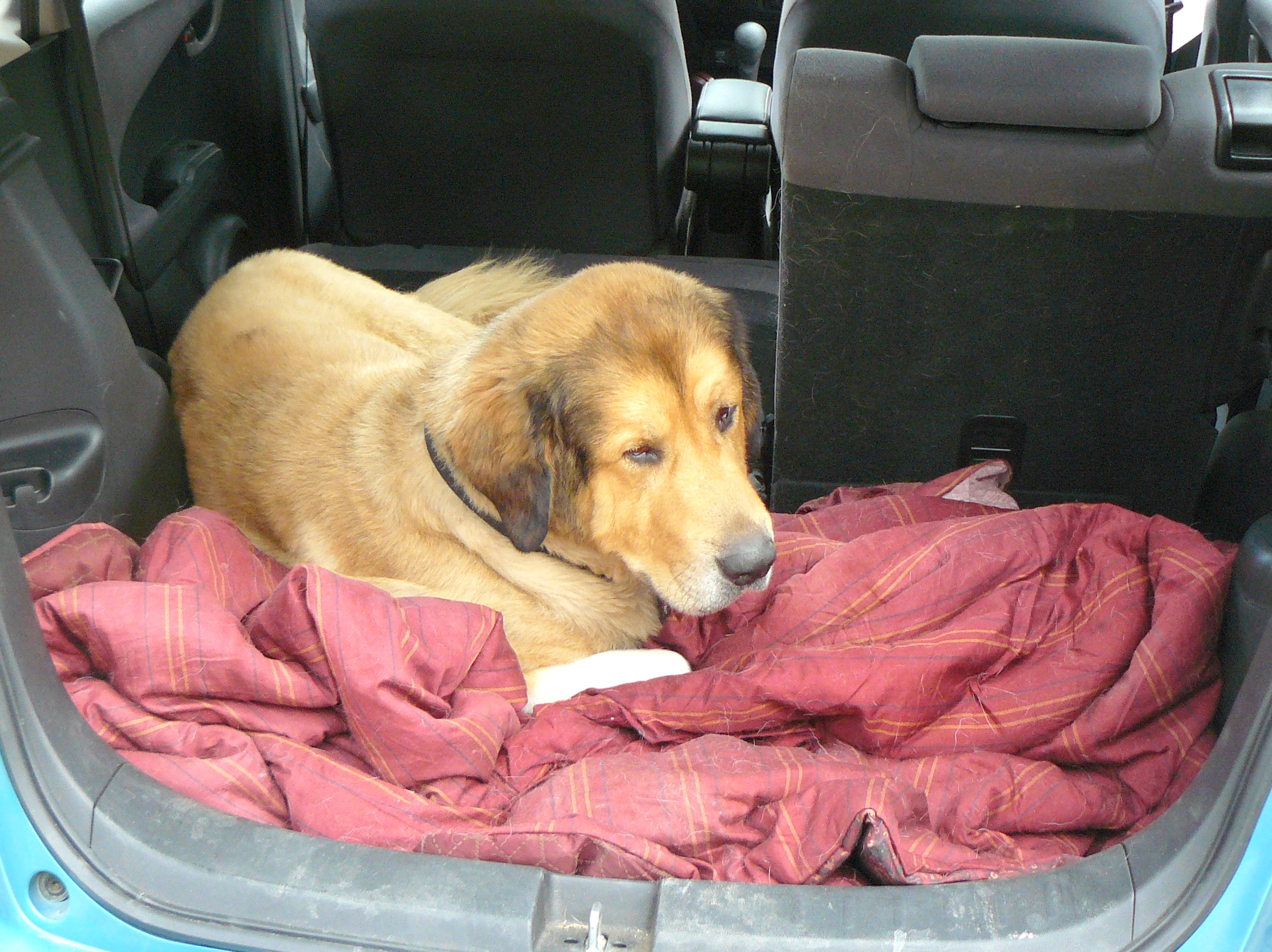
Returning to Hazel we are still some way from knowing that she has returned to a fully fit dog but the love and caring sent her way by all of you out there has been precious beyond imagination.
Giving back, in so many different ways, is fundamental to who we are, and to whom we must be!
I introduced yesterday’s Earth Day post with the sub-heading, “A fabulous example of how we reach out to others across the internet!” Today’s post is another fabulous example.
I just had to share this lovely post with you all from a beautiful friend. You have to explore her blog to see all the transformations she does when she gives a new lease of life to furniture. And her home.. What is even more remarkable, and I hope Lois will not mind me mentioning this is that Lois does all of this work from the confines of a wheelchair..
I hope you visit and see just how generous a nature she has ..
Love and Blessings
Sue
Curious, I went across to Lois’s blog Living in Denim and to the particular post that Sue had spoken about. Without hesitation I asked if I might republish that post here and share it with you all. Lois was delighted to offer me such permission.
Read it and you will see why I asked so quickly.
ooOOoo
Giving Back: A Yard Sale Redo for a Deserving Child
We had a beautiful weekend, if I didn’t know it was April I could have easily believed this was summer. I headed outside thinking I would finally get some work done on the exterior of the house when my phone rang.
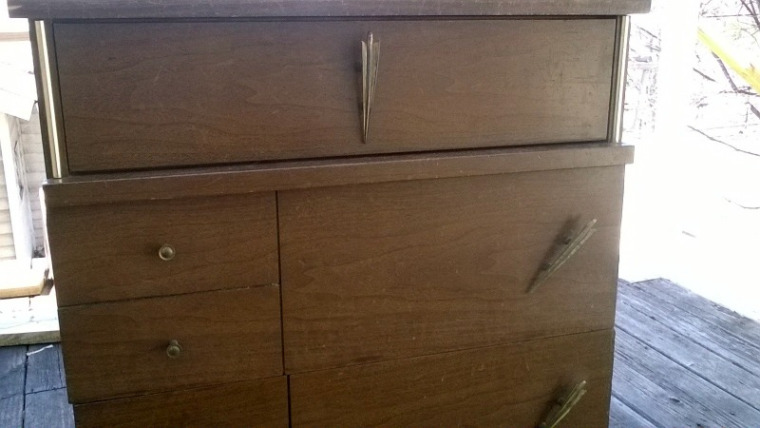
The caller wanted to know if I could redo and paint a dresser for a foster child that has been placed with her family long term. I took that to mean, can you fix then paint a dresser. My answer was probably. A few minutes later this was delivered
The family shared many of the details surrounding this little eight-year old child’s placement with them. I was informed they were trying really hard with limited funds to give her a room personalized for her so she would feel welcome and comfortable.
How could I say no?
When asked how much I would charge, I ignored the question by changing the subject and asked if the foster parent was looking for a grown-up dresser (aka Pottery Barn painted look) for the child or something more whimsical an eight-year old would like now. I was informed I could do whatever I wanted and they were concerned with giving the child a dresser she would love today not a few years down the road.
With permission I asked a few questions of the child to see what her likes were. I was careful in how I phrased my questions and took it slow to see how open she was. I began with her favorite colors. She was outgoing and friendly, happy to answer. Her favorite colors were (in order) blue, red and black. Not good, I don’t have those colors in any significant quantity on hand. Then she added white. That I had.
My next question was the most sensitive. Foster care children often are taken from their homes with nothing but the clothes on their backs but I needed to know what she liked. Instead of asking what her favorite toys were, afraid to bring up feelings of loss, I asked What she liked to do for fun.
She stumbled and admitted she didn’t know.
I decided to turn my attention to the family member who brought the dresser to me to give the child a moment to think. I asked a bit about the rest of the child’s room. Was there a theme or color scheme when suddenly the child mentioned she liked swimming pools and flowers.
Now I had something to work with.
I didn’t give my house or the work I’d planned to do a second thought, my poor house was abandoned for this dresser.
The dresser is circa 1960. It’s a cheap laminate that the family picked up for $5 at a yard sale. I shouldn’t be too judgemental the dresser has lasted for more than 50 years. The knobs and pulls had to go. The pulls were so close to the drawer faces that I couldn’t get a finger in to pull the drawers open. My fingers are rather small, being that I comfortably wear size 5 rings and when I glanced at the child’s hands I thought her fingers could have been a bit bigger than mine, I knew the pulls wouldn’t work.
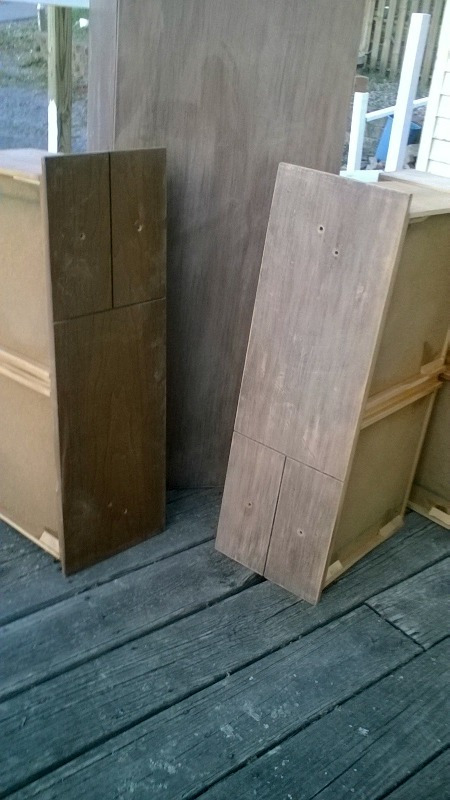
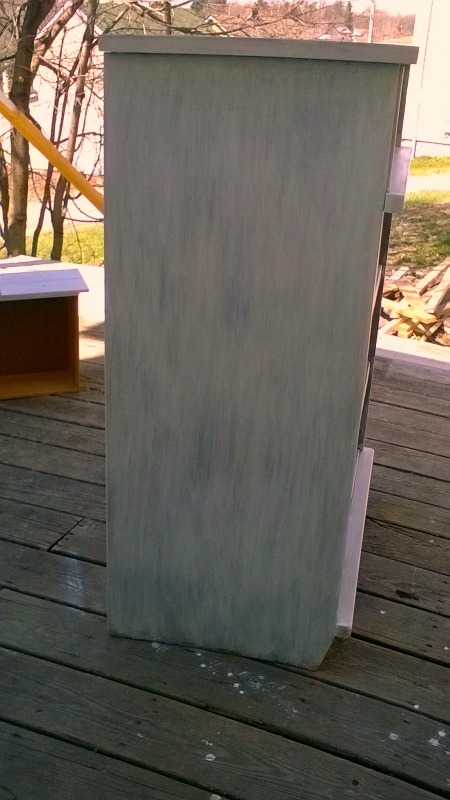
You can see here how the laminate was assembled on to a wooden frame.
I repaired a couple of the drawers by adding glue and screws to keep the sides attached. Then came the sanding. I didn’t get far when the neighbor boy stopped to ask if he could help. I explained how he would have to have a very gentle touch and then we were hard at work.
The moment I saw the dresser the first thought that crossed my mind was that I wanted to white wash it. I’ve worked on several of these types of laminate dressers from this period but never tried a white wash. When the child told me she liked swimming pools I knew a white-washed finish was perfect. It would give that beach-y, driftwood look that would become my background.
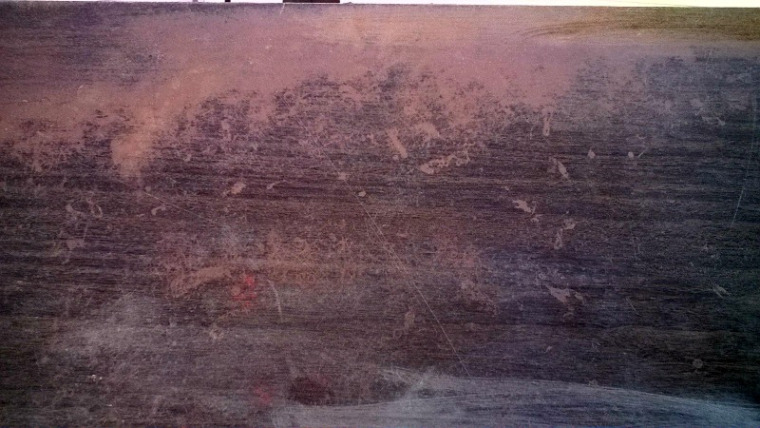
Comparison of what the finish looked like before and after a good sanding.
I mixed equal parts white satin latex paint and water, then wearing gloves soaked a rag in the paint and rubbed it on to the dresser.
You must apply the paint in the same direction, with the grain of the “wood” for the best results. It took 2-3 coats of paint to get the desired effect. When the dresser was dry I added two coats of polycrylic to seal the finish, but I’m getting ahead of myself a bit.
I was told flowers were important to this child. As I sanded the dresser down I contemplated the best way to add flowers to the piece. At first I thought maybe I’d sketch grass using green milk paint to the lower drawer then stems up the drawer fronts to use the knobs as the center of the flowers and sketch around them different colored flowers. This didn’t feel right to me but still I played with the idea.
Then I realized I didn’t have enough colors of paint to do this. I briefly considered heading to the store to purchase an assortment of different colored permanent markers, but again I dismissed this. I worked until I lost daylight on Saturday and woke with an idea.
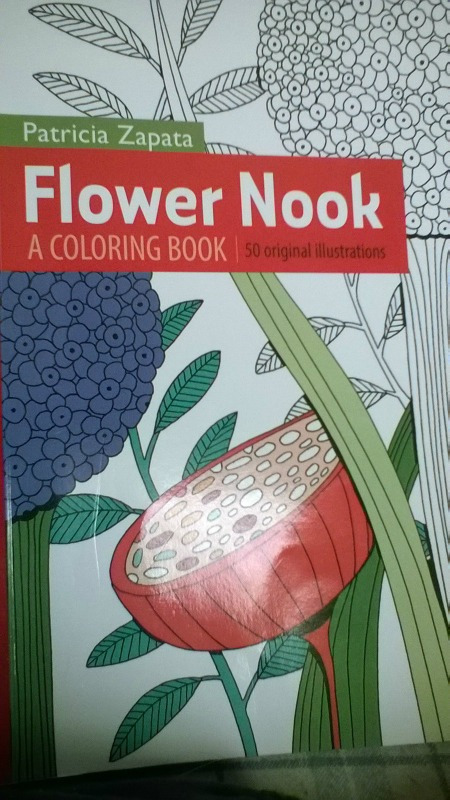
For months now my granddaughters and I have enjoyed coloring Patricia Zapata’s Flower Nook. Patricia is a well-known blogger at A Little Hut. I’ve already removed some of the completed pages to frame for the girl’s room upstairs, now I would remove more and use them on the dresser.
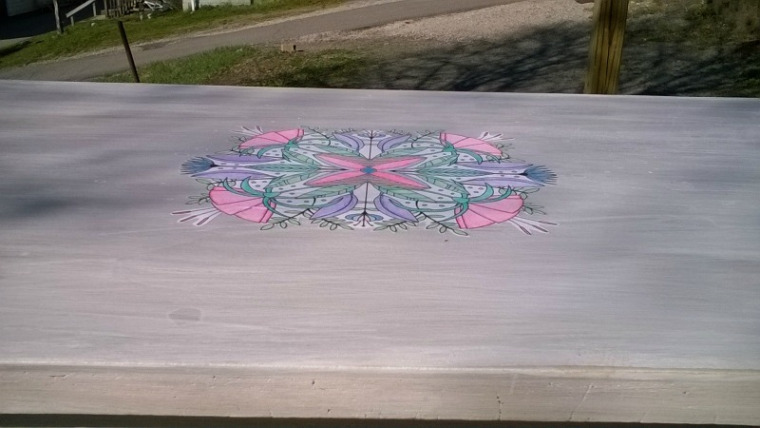
I added three designs to the drawers and one to the top of the dresser.
Top of the dresser.
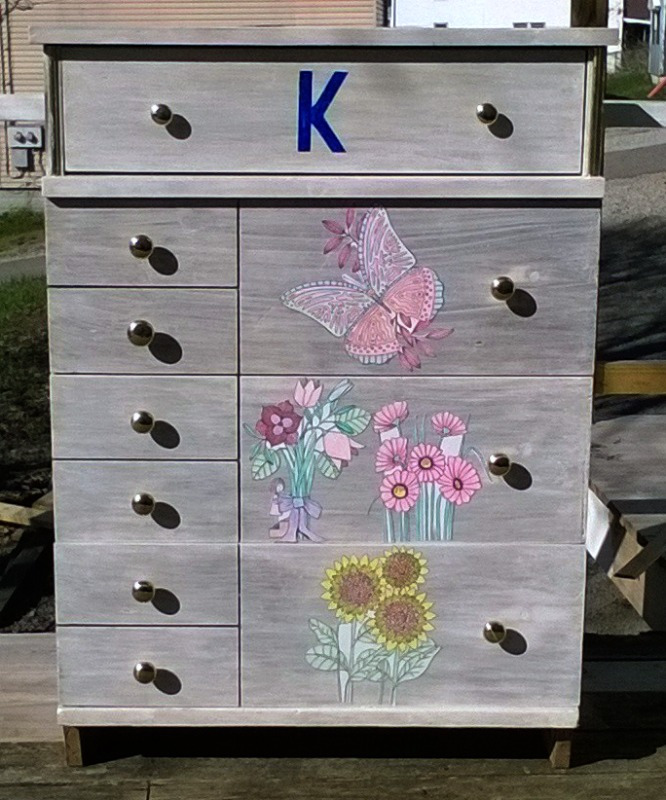
These are the designs I used on the drawer fronts.
The most time consuming part of this was trimming the designs to remove the excess white paper. I laid them out and when I was happy with the placement decoupaged them on and sealed the entire drawer fronts with polycrylic.
In questioning the little girl I learned she liked gold over silver so I headed to my hardware stash and pulled out all the heavy substantial gold knobs. I toyed around with using two knobs on the left with one pull on the right, the way the drawers were to begin with. In the end I didn’t have enough gold pulls I liked and decided to use only knobs. I used wood filler to fill in the holes from the original pulls then drilled new holes. I kept the distance from the side of the drawer for the new knobs the same as the existing knobs on the other side and then centered them on the fronts.
Once I took this photo I saw that I hadn’t painted the very bottom and did go back and paint them, if you were wondering.
The top drawer I simply used a permanent marker, I have a couple in the house, and a four inch stencil to add her first initial.
By Sunday at 3pm I called to let the family know the dresser was ready to pick up. They arrived with the little girl and a friend of hers. I wish I could show you their faces, but I can’t. The girls didn’t miss a thing. They spotted the little girl on the middle drawer, they loved the heavy gold knobs and the white washed paint effect.
I know a little about this foster parent, I know she adopted a previous foster child and raised him as her own even though she has very little disposable income. She herself is on disability. She loves these children and has given this little child so much love that when the question arose again as to how much they owed me, I informed her the child’s expression was well worth the work and I wanted to make this a gift from me to them. Thankfully, the family accepted my gift as long as I promised to call if there is ever anything they can do for me.
Tonight I am tired and even sore. I did get a bit of work done outside after all but while I thought getting more accomplished on the house would perk me up, in reality it was the dresser that made the weekend a success for me.
A fabulous example of how we reach out to others across the internet!
A week-and-a-half ago in came an email to me:
Hi Paul,
Just came across a post of yours for Earth Day 2014.
Absolutely love the fact that you’ve written about a “Green” topic!
In fact, I wanted to reach out and let you know that in honor of this year’s Earth Day (April 22), I just finished designing an infographic about 14 easy ways dog owners can become more environmentally friendly people.
Would it be okay with you if I passed it along? I’d love to hear your thoughts on it!
Best,
Mike
Mike was Mike Shannon, about which more at the bottom of this guest post. Of course, I was delighted to receive his lovely guest post and infographic. Over to Mike.
ooOOoo
In its 46th anniversary to date, Earth Day is bound to continue to do what it has always succeeded in doing, help raise awareness among† individuals from all across the globe about environmentally-friendly topics so they work together to make this† world a better place to live in for the future generations to come.
In honor of this year’s Earth Day, which happens to be on Friday, April the 22nd, Ultimate Home Life have designed an info-graphic† that explains the most important 14 steps you can take as of today to go green with your dog.
This topic is certainly nothing to be taken lightly, and most certainly nothing of the impossible. Just look at the statistic provided at the beginning of the info-graphic – nearly 50% of families in the United States alone have a dog at home, which makes for more than 70 million dogs!
Let’s kick off our “going green” mission this year by making our dogs greener, one dog at a time.
If you have any tips for going green with your dog, make yourself heard in the comments!
Bio: Michael is the creator, editor, webmaster – alright, let’s just say he runs the show over at UltimateHomeLife.Com! He regularly blogs about anything and everything dog related, with an emphasis on trying to cover all questions that dog owners tend to worry about. So, hop over and give him a bark!
ooOOoo
What a fabulous and highly pertinent post for these times.
Happy Earth Day to all of us and our wonderful dogs right across this magnificent planet.
So said Sophocles. But too slow a decision, or no decision is, of course, a decision in its own right.
Last Tuesday in my update on Hazel Of art, and science I wrote:
It seemed to make sense that until we had confirmation of whether or not Hazel had a lung fungal infection, for which taking Fluconazole would be an excellent course of action, we should pause in her dose until the results were in.
At 08:45 this morning we had to take Brandy in to Lincoln Road Clinic for his neutering operation (that we heard a short time ago has gone well with no complications – he will be collected in about an hour). Dr. Codd asked after Hazel and we said that she was brighter but still not eating sufficient for her to be taking her medications.
Dr. Codd then made the eminently sensible observation that by not having Hazel on her meds we were, of course, letting the fungal infection continue its damage.
In response to the query as to why a fungal infection from either Mexico or Arizona had taken so long to appear, Dr. Codd added more sense to the situation. Namely, that there was evidence that fungal infections can lay dormat for quite long periods of time. Possibly in Hazel’s case the trigger for the infection becoming active was the additional stress on Hazel’s body systems from her recently contracting an Ehrlichia Infection from a local tick.
The final element for the argument of not delaying any longer Hazel’s healing medications was that the titre results would only be a result of one particular ‘brand’ of fungal infection. Dr. Codd said that it may well have been one of many other fungal infections that took hold of Hazel’s lungs.
So the decision was made to try Hazel on an oral anti-nausea med that would be much easier to administer. It is Ondansetron Orally. Also to cut down the dosage of the Fluconazole so that it doesn’t dampen Hazel’s appetite for food, a known side effect of Fluconazole, in quite such a dramatic fashion. (Note: Fluconazole is the least appetite suppressant compared to alternatives.)
So there we are.
We hang on to the fact that Hazel is still with us and coping with what is ailing her, albeit with a heightened stomach sensitivity that is complicating eating. Time is on our side.
A thousand thanks to all of you that have shown so much love and concern for our dear hazel.
Dear people, I must add this: CAUTION: The following is offered by way of information reaching out to other loving dog owners. Please do not assume I have any specialist veterinarian knowledge and please do not take the following as a replacement for seeing your own vet.
Finally, Mike Shannon is my guest blogger with a lovely post for Earth Day 2016 that will be published in a little under 10 hours time. That is why this post has been published now.
Today’s post was inspired by something yesterday I read, not for the first time, over on The People Workshop site. (As an aside, I know that many regulars of this place are familiar with the history of my friendship with Jon.) On the page that explains more of Jon Lavin’s approach to his work with clients, he writes:
“We can’t solve problems by using the same kind of thinking we used when we created them.”
Thus said Albert Einstein (1879-1955).
Intuitively, it strikes one as correct. However, reflect for a few moments on how you think and very quickly it becomes clear that how you think is based on deep-seated experiences and the learnings that flow from those experiences.
As it is for all of us.
Just as relevantly, perhaps more so, is that how we behave is based on those same deep-seated experiences and subsequent learnings. This offers a clue as to why bringing about lasting, behavioural change can often feel like pushing water uphill!
That prompted me to look up a previous time when I had written a post about feelings. It was last December when in a post called Feelings – Of Both Humans and Animals, I wrote this:
There couldn’t have been a better answer to that ponder than a recent video that was presented by TED Talks. It was a talk by Carl Safina about what is going on inside the brains of animals: What are animals thinking and feeling? Or in the fuller words of that TED Talk page:
What’s going on inside the brains of animals? Can we know what, or if, they’re thinking and feeling? Carl Safina thinks we can. Using discoveries and anecdotes that span ecology, biology and behavioral science, he weaves together stories of whales, wolves, elephants and albatrosses to argue that just as we think, feel, use tools and express emotions, so too do the other creatures – and minds – that share the Earth with us.
So back to what inspired today’s post. It was the challenge of really knowing why we behave the way we do, both humans and dogs. With dogs, however, we accept they cannot speak to us clearly. Or as Esme put it in a recent reply to an update on Hazel: “Well you’re getting there, half the battle is diagnosis with dogs because they can’t actually tell us how they feel.” (My emphasis.)
Back to humans. When Jon wrote on his site, “…. how you think …… is based on deep-seated experiences ….”, what I heard is that for us humans there are many times when we cannot actually tell ourselves what we are feeling. That is why we need the counselling of someone who has the professional training and experience to expose those deep emotional and psychological drivers within us; those drivers that are normally out of sight from us.
In my own case, how my father’s death was managed by my mother back in December, 1956 left an emotional wound that was totally out of sight from my conscious mind for 50 years. The emotional crisis that I went through back then was discovered by Jon to have its roots back in December, 1956. By a massive stroke of fortune Jon gave me the insight into that mental place of old and a year later I met Jean down in Mexico.
In other words, to return to Albert Einstein:
“We can’t solve problems by using the same kind of thinking we used when we created them.”
The challenge is having sufficient self-awareness to know when an aspect of our behaviour requires the support of the Jon Lavins of this world.
So what would we require from a counsellor, from a therapist, who was working with us to uncover those hidden aspects? In other words, in terms of assessing that therapist what’s the difference that would make the difference?
Naturally, I don’t have the skills to answer that question in any direct, professional manner. But if I look down at our dogs then a form of answer does ‘speak’ to me. Dogs are creatures of integrity, openness and trust. They relate to us humans and other known dogs around them through friendship and love; frequently unconditional love.
A therapist who embraces those values; nay, lives those values, would display that very quickly after meeting with the ‘client’. Any person seeing that in a therapist would be seeing the difference that makes the difference.
Good people, I’m not asking any of you who read this to divulge any personal stuff but, nonetheless, I would love to hear your thoughts on what I have written today!
The learning and healing journey continues with Hazel.
The title to today’s post came from Dr. Jim Goodbrod, DVM. When he and I were taking a walk yesterday Jim mentioned that diagnosing exactly what an animal is suffering from is as much an art as it is a science.
Jim and Janet are close friends and neighbours who live a couple of roads away. Jim also attends the Lincoln Road Vet Clinic on a part-time basis. Off his own volition he has been speaking with Dr. Codd (Russ) about the situation with Hazel and the pair of them are showing incredible devotion to getting to the bottom of what is happening.
So, like yesterday’s post, today is being offered to you in the spirit of information. Forgive me if I repeat the caution from yesterday. (This is being written at 4pm on April 19th, 2016.)
CAUTION: The following is offered by way of information reaching out to other loving dog owners. Please do not assume I have any specialist veterinarian knowledge and please do not take the following as a replacement for seeing your own vet.
Late on Sunday afternoon Hazel was becoming so weak and lethargic that Jean and I feared that she wouldn’t make it through the night. So it was wonderful to see that she was alive and still connected to the world at 6am yesterday; Monday. Nonetheless, Hazel had not eaten since Saturday afternoon and was only drinking very small amounts of water. We made the decision to ring the Clinic as soon as they opened on Monday at 8am. They recommended that Hazel be brought in to go on to an IV drip to boost her anti-fungal intake and also to receive an anti-nausea intake to help her regain an appetite. But there was the question hanging over everyone that if this was a fungal infection, as in Coccidioidomycosis, that is not present in the Oregonian soil but is found in the drier parts of the USA and Mexico then why had it been such a long time before it brought Hazel down?
Jean also had this suspicion that Hazel might be suffering from a form of ‘Tick Fever’ that is very common in Mexico.
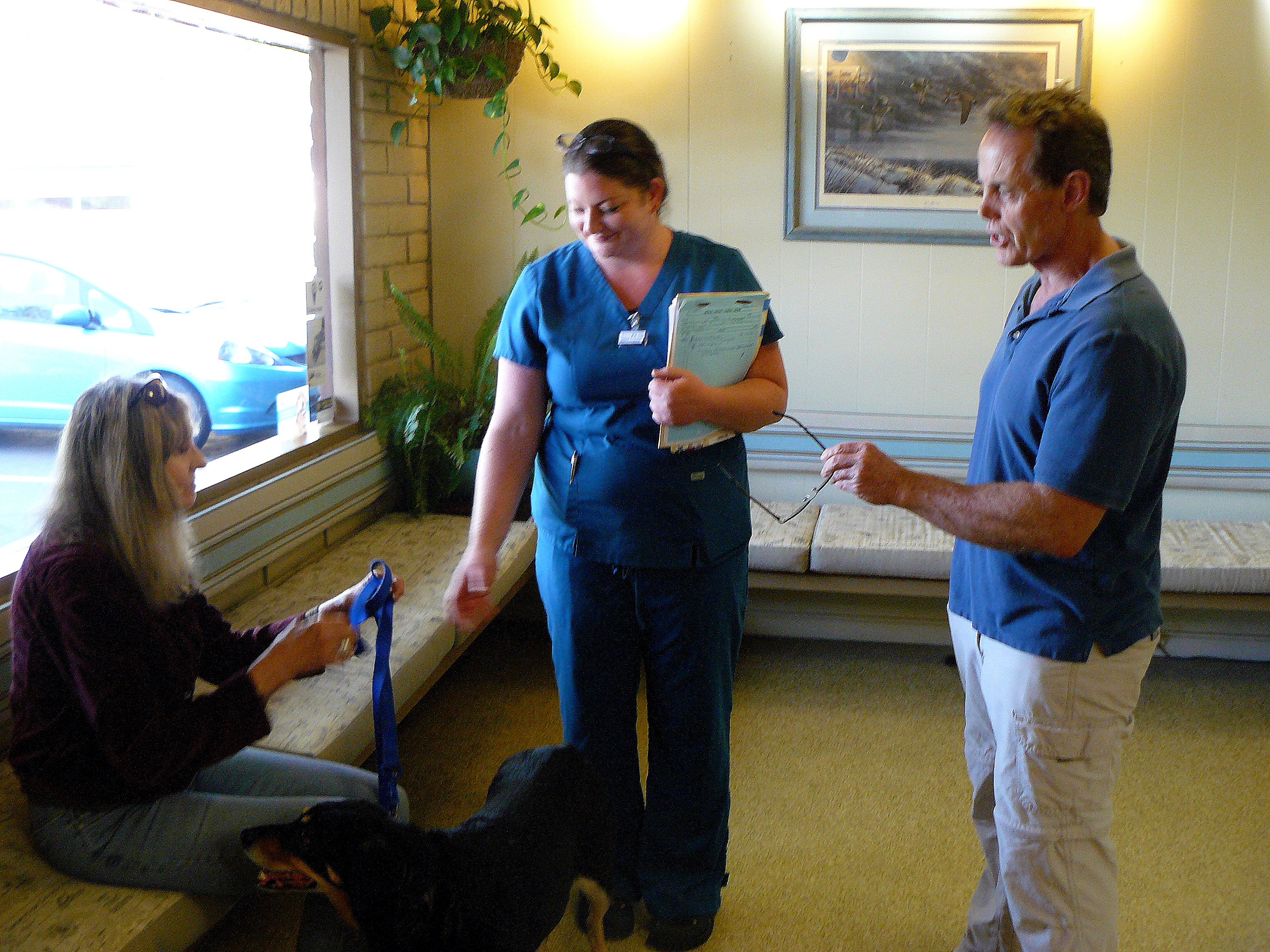
So off we went to the Clinic again. There were discussions about the whole situation.
Dr. Codd (RHS) speaking with Jean at the Clinic.
Dr. Codd took a quick blood test and, bingo, it revealed that Hazel was showing that she had, or had had in the past, an Ehrlichia Infection; a tick-borne infection.
The lower of the left-hand spots is the indicator of a past or present Ehrlichia Infection.
The cure for that was a course of Doxycycline.
So now we are looking at battling two separate diseases.
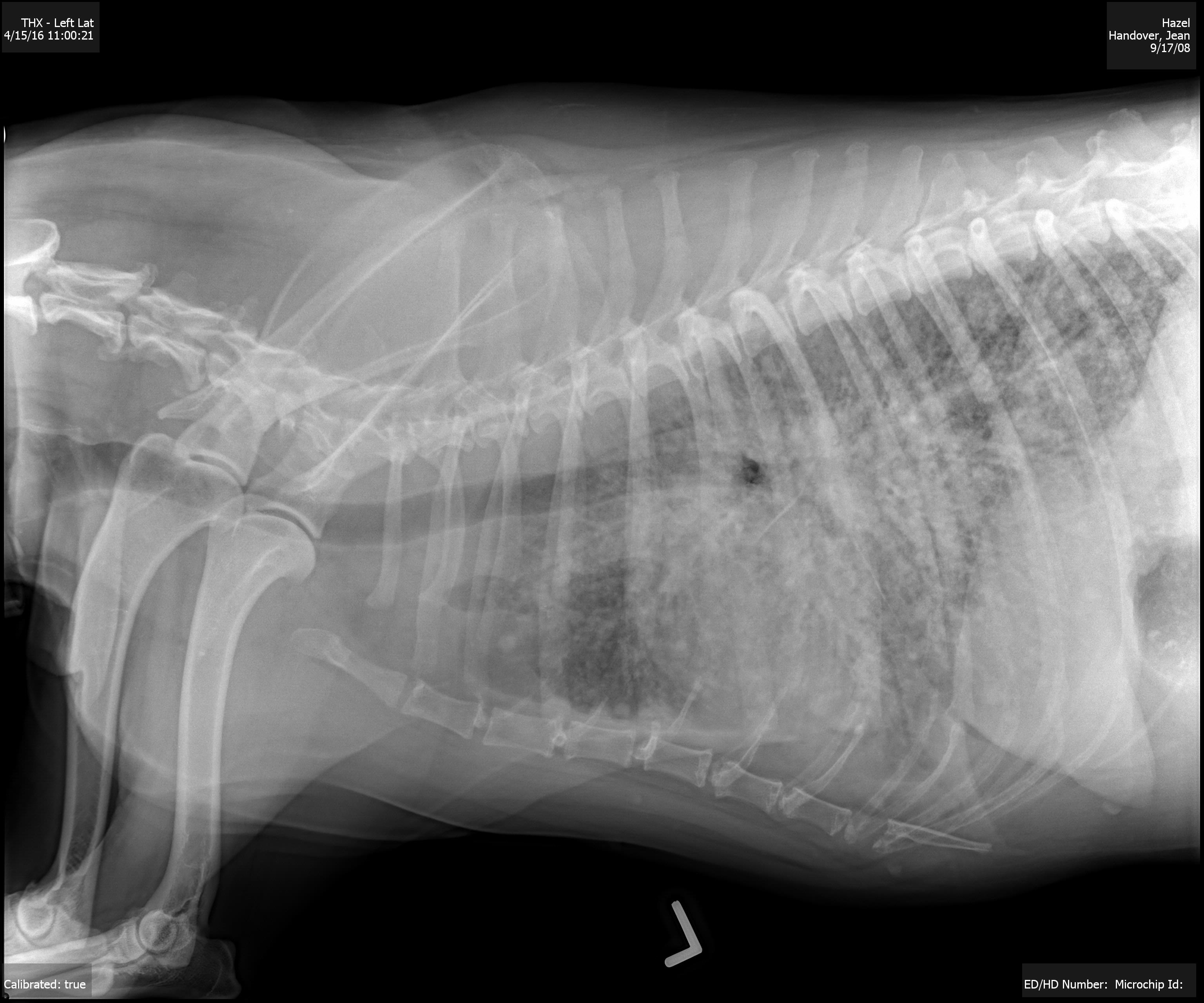
The blood that was taken from Hazel last Friday, when she also had radiographs taken of her lungs, had been sent for a ‘titre’ that would confirm one way or another if her lungs were suffering from a fungal infection. Those results will be available on Wednesday or Thursday of this week.
One of the radiographs taken of Hazel.
Back to Hazel’s lack of appetite. One of the side-effects of Fluconazole is that it depresses appetite. Getting Hazel eating again was becoming a priority. It seemed to make sense that until we had confirmation of whether or not Hazel had a lung fungal infection, for which taking Fluconazole would be an excellent course of action, we should pause in her dose until the results were in. To speed up the return of an appetite Dr. Jim prescribed a short course of Mirtazipine.
So that’s about it for the time being. Except for Jean and me to say how much we appreciate the art and the science that is being so skillfully offered by the Clinic. (As of 19:00 PDT yesterday Hazel was eating again! 🙂 )
Great team effort!
Their “Special Love of Animals” comes over in spades!
CAUTION: The following is offered by way of information reaching out to other loving dog owners. Please do not assume I have any specialist veterinarian knowledge and please do not take the following as a replacement for seeing your own vet.
About three or four weeks ago we noticed that Hazel’s bark was changing, almost as though she had a sore throat. In every other way she continued being the happy, lively dog that she is.
Then very suddenly last Thursday she started sicking up white, foamy bile and went off her food. Hazel rapidly became lethargic and lacking any vigour. Last Friday we took Hazel to our local Lincoln Road Vet Clinic and she was seen by Dr. Russ Codd, DVM. He took xrays that showed that Hazel’s lungs were far from being as clear as they should be. Potentially, Dr. Codd said that we could be looking at one of three things:
Some form of bronchial pnemonia,
A fungal infection of the lungs,
Cancer.
In view of the fact that Hazel hadn’t been coughing that ruled out 1.
Dr. Codd forwarded the xray pictures to a specialist. Later came the information that the spherules in her lungs, as seen on the xray pictures, were not as would be expected with a cancer diagnosis. Dr. Codd concluded that Hazel was indicating a fungal lung infection. Especially as this is commonly found in hot, drier parts of the USA and Mexico. Hazel was an ex-rescue from Mexico and for a couple of years we lived in Payson, Arizona.
The medical term for the disease is Coccidioidomycosis and I republish a little of what may be read over on the Pet MD website:
Coccidioidomycosis in Dogs
Mycosis is the medical term for any disorder caused by a fungus. Coccidioidomycosis comes from inhalation of a soil-borne fungus which normally affects the dog’s respiratory system. However, it is known (even likely) to spread out into other body systems.
The fungus spores begin in the lungs as round spherules, and live in a parasitic stage in the lungs until they grow large enough to rupture, releasing hundreds of endospores, which then begin a parasitic stage in the tissues, growing and rupturing, spreading out (disseminating) into the body perpetually. Endospores can also take a faster route through the body by way of the lymphatic and blood vessel systems, resulting in systemic infection — meaning the entire body will be affected. Coccidioidomycosis sets in from 7 to 20 days after exposure, though some dogs can develop immunity and never show any symptoms, especially younger dogs.
Dogs that are susceptible to the infection can become ill from only a small amount of the Coccidioides fungus, and fewer than 10 fungus spores are needed to cause the disorder. And though uncommon, Coccidioidomycosis is a deadly disease that originates mainly in the arid, hot regions of the western and southwestern regions of the U.S., and in several Central and South American countries. Coccidioidomycosis affects many different types of mammals, but tends to occur more commonly in dogs than cats. This infection is also known as valley fever, California fever, Cocci, and desert fever.
The condition or disease described in this medical article can affect both dogs and cats. If you would like to learn more about how this disease affects cats, please visit this page in the PetMD health library.
Dr. Codd recommended getting Hazel on a course of antibiotics with Fluconazole being his first choice. That commenced on Friday afternoon.
Early today (Monday) Dr. Codd will be seeking to narrow down the diagnosis with further analysis of Hazel’s blood being undertaken because while he was confident that it is a fungal infection he wanted to confirm precisely the nature of the infection.
I will publish more information as it comes to hand and close with these photographs taken yesterday afternoon.
Hazel taking a very slow walk outside.
oooo
But most of the time she just wanted to be left on her own in our bedroom.
We are holding Hazel very close to our hearts just now.
Welcome to Territorio de Zaguates, or “Land of the Strays”.
When it comes to loving stray dogs I thought that the friends of John Zande and his wife were showing the rest of the world how to do it. For it is my understanding that Sandra and her partner down in Brazil are providing a home for around 300 ex-rescue dogs.
Dogs frolic in a lush green field at the Territorio de Zaguates dog sanctuary in Costa Rica. (Photo: Territorio de Zaguates)
Welcome to Territorio de Zaguates, or “Land of the Strays,” an amazing, privately funded, volunteer-run animal sanctuary in Costa Rica where no mutt is turned away.
Located less than an hour outside the bustling capital city of San José, this doggie safe haven is home to hundreds of abandoned canines that have been given a second chance at life.
This is no ordinary animal sanctuary, though. After all, when you live in a place as beautiful as Costa Rica, you take advantage of what the landscape provides. That’s why volunteers lead the ragtag pack of rescued mutts on scenic hikes through the gorgeous mountains nearly every day. It’s a sight to behold.
A volunteer at Territorio de Zaguates leads a pack of dogs up a hill. (Photo: Territorio de Zaguates)
Aside from the free-range mountain hikes with breathtaking scenery, Territorio de Zaguates functions just like any other animal rescue or sanctuary.
“First thing we do when a new dog gets here is spay/neuter, vaccinate and get rid of parasites,” the organization explains on its Facebook page. “Then we assess if the dog requires any other type of special treatment [and] put them in quarantine if necessary.”
Once this initial processing is completed, the new dog is released into the general population, where it can either be adopted by a loving human or spend the rest of its days frolicking in what is essentially a doggy paradise.
There are all kinds of mutts living at Territorio de Zaguates. (Photo: Territorio de Zaguates)
What makes Territorio de Zaguates even more special is the creative approach to finding the dogs forever homes.
To encourage adoption, every doggie resident at the sanctuary is not only given a name, but also a customized “breed” name based on the dog’s phenotypic traits. These one-of-a-kind breed monikers include memorable titles like “Alaskan collie fluffy terrier” and the “chubby-tailed German doberschnauzer.”
The resounding message behind this strategy is that when you adopt a mutt, you’re adopting a unique breed. Learn more about this clever campaign in the video below:
As any animal rescuer will know, maintaining such an massive sanctuary requires an enormous amount of time, money and labor. But thanks to a host of charitable donors and an eager base of volunteers, the sanctuary is a great success.
“We have a very small staff but still we manage to do everything from daily picking up the poo and disposing of it properly, to feeding and medicating the dogs, and everything in between,” a spokesperson for the organization writes.
Continue below for just a glimpse of what life is like for these adorable pups at Territorio de Zaguates:
Mattresses are provided for the dogs to lounge on throughout the day. (Photo: Territorio de Zaguates)
Mattresses provide natural lounge spots for the dogs throughout the day.
A pack of rescued dogs take a leisurely walk in the woods with a few of the sanctuary’s hard-working volunteers. (Photo: Territorio de Zaguates)
The pack takes a leisurely hike in the woods with a few of the sanctuary’s hard-working volunteers and some prospective dog adopters
Photo: Territorio de Zaguates)
Lunch time at Territorio de Zaguates means serious business, which is why kibble donations are so important!
Cushy bed donations are also very important for the sanctuary. (Photo: Territorio de Zaguates)
In addition to food, comfy dog beds are also a much welcomed donation item for the sanctuary!
A volunteer leads the pack downhill. (Photo: Territorio de Zaguates)
A sanctuary volunteer leads the pack downhill during a scenic hike through the mountains.
(Photo: Territorio de Zaguates)
In case you were wondering where all those yummy kibble donations went … behold the trough
(Photo: Territorio de Zaguates)
A few of the sanctuary’s senior residents rest on the steps of the facility. Even if the pups aren’t adopted out, they’ll always be guaranteed a luxurious forever home at the sanctuary.
(Photo: Territorio de Zaguates)
Concrete drainage pipes makes excellent (and sturdy!) makeshift dog houses
(Photo: Territorio de Zaguates)
Rescued dogs hang out in the shade of the sanctuary’s many trees
(Photo: Territorio de Zaguates)
A nice refreshing dip … in some drinking water
(Photo: Territorio de Zaguates)
After a long, fun-filled day of being a dog, there’s nothing like cuddling up with a friend and snoozing before dinner time
ooOOoo
Well it certainly puts our ten dogs in the shade!
In doing a trawl through YouTube I came across this video that I will use to close off today’s post. Chances are that, as with me, you won’t understand the voice-over but it won’t diminish your pleasure at looking at these dogs.
Published on Jul 3, 2014
“Territorio de Zaguates” ubicado en las hermosas montañas de Costa Rica, es un albergue de animales donde se le da casa, comida, atención veterinaria, ejercicio, esparcimiento y cariño a 700 perros callejeros víctimas del maltrato, el abuso, el abandono y la negligencia humana.
–ENGLISH– “Territorio de Zaguates” is a No-kill-shelter in the beautiful mountains of Costa Rica that provides home, food, vet care, exercise, recreation and affection to over 700 stray dogs, victims of neglect, abandonment and abuse.
Actually, let me close off today’s post with these two sets of words from the story above:
Once this initial processing is completed, the new dog is released into the general population, where it can either be adopted by a loving human or spend the rest of its days frolicking in what is essentially a doggy paradise.
“essentially a doggy paradise.”
The resounding message behind this strategy is that when you adopt a mutt, you’re adopting a unique breed.
That is so true! Each and every dog, especially an ex-rescue dog, is a unique breed.
 For the last too many weeks to remember a mother Canadian Goose has been sitting on her nest of eggs with Father Goose staying close. We like to think that the mother returned to this place after having been born here a year ago.
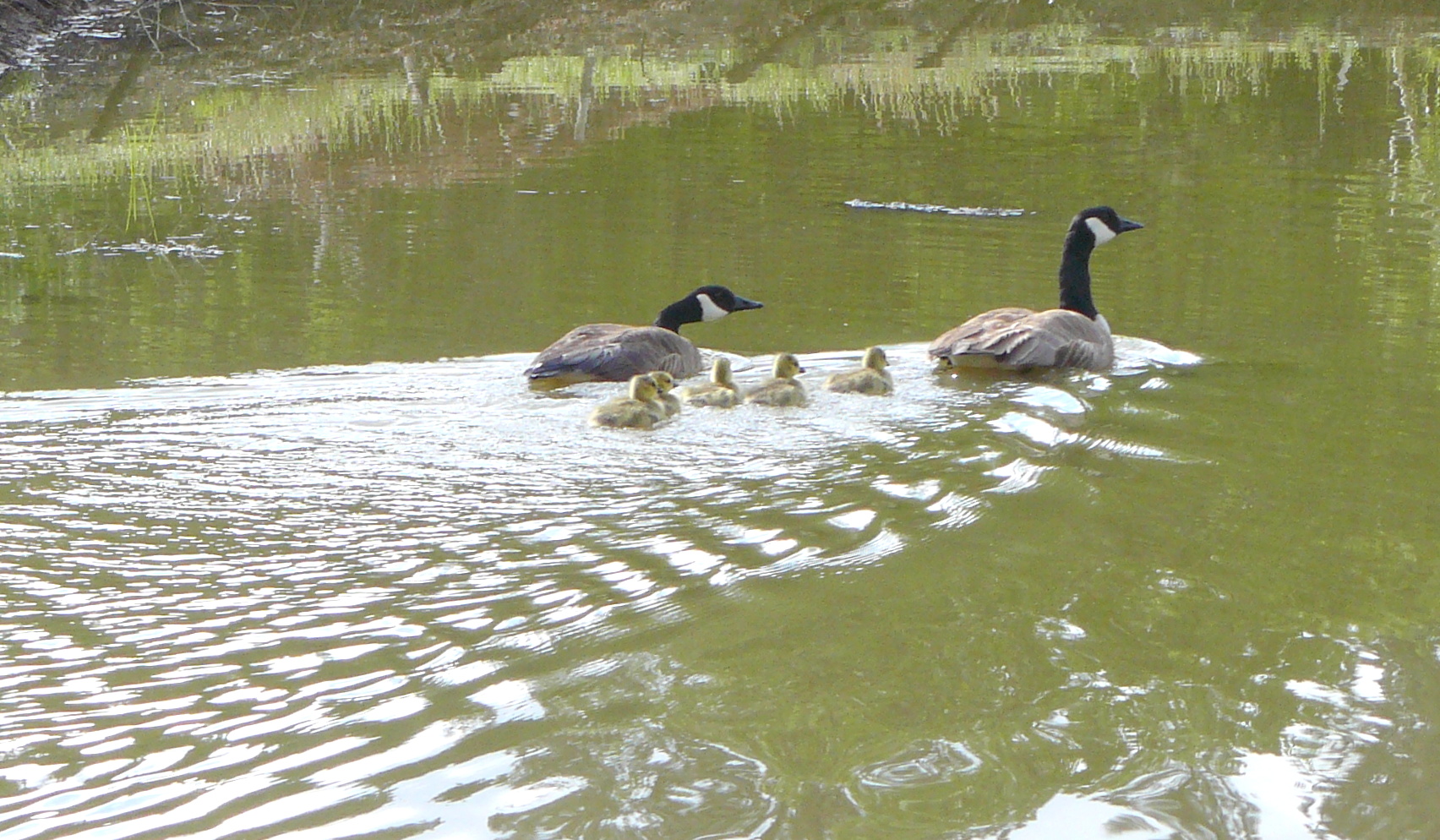 May their little lives be full of love with a total absence of trauma!