Category: Government

Droning on!

With thanks to Monika for the title of today’s post!

My father was born in 1901. He had two wives. Me and my sister, Elizabeth, are the result of the relationship between our father and his second wife; Betty. Our father died in 1956; December 20th.

My father first was married to Maud and they had two daughters, Rhona and Corinne. Rhona died in 2003 and Corinne died in 2014. Although Rhona and Corinne were half-sisters I prefer to think of them as sisters!

Both had children. But I want to concentrate on Rhona. She and Reider, Norwegian by birth, had four children: Rolv; Greta; Rikard; Marit.

As is the way in this modern world, Rikky who lives near Torquay in South Devon, recently called in to see my brother-in-law, John, and John remarked to me that Rikky’s new wife, Jazz, was gorgeous. I asked Greta for a telephone number and, hey presto, Rikky and I were in contact with each other.

This is a little bit from Rik’s bio.

So you may remember I was with Amanda at the time of Mother’s passing, seems a long time ago now. Well that ultimately came to nothing and I ended up living alone with a couple of huskies in a small flat in Torquay. I had invested a large chunk of Mother’s inheritance into a PA system and set up and ran a sound engineering business for years as well as running quite a successful tribute band to ‘The Doors’. The PA company eventually ended after going into a partnership with a friend who also invested a chunk of cash allowing major upgrades to the kit.

Unfortunately I soon found out he was more interested in holidays to Spain than actual PA work, the problem being I had now sold vital parts of my rig which was replaced by his. We went separate ways and he took his gear with him leaving me without a full system, BIG lesson learnt.

At that point I went back to employment as an engineer for a company servicing and repairing lifting hoists to the health care industry. Four years in and the company went into administration.

Later Rikky says:

Back to work again this time to DPD as a delivery driver for a couple of years following in Rolv’s (Ed: brother) tyre tracks. This was when I also met Jazz on a random night out with friends. We immediately realised that we had many mutual friends and had actually met before many years ago when I was playing in her Dad’s Jazz band! This was around 19 years ago when I was 30 and Jazz was only 16. I only have a vague memory of her then sitting in a corner of the rehearsal room furiously scribbling in a sketch book.

Not much has changed there except she now holds a degree in Art and Design. She is also a Holistic Therapist and has trained in many holistic therapies including Reilki, Reflexology and Massage and is a very talented and beautiful woman. I feel incredibly blessed. She has two daughters Sanije and Latoja (nine and eleven) who I consider as mine; their father left the country last year and went back to Albania which actually has been a blessing for the girls as he is a difficult man to say the least.
So the driving job became another engineering position this time with a company specialising in fire alarms, a couple of years in and the contract I was working on was TUPED over to LiveWest which is one of the largest social housing companies in the South West. Two years after that and the company merged with another housing company, the role changed slightly so I was offered voluntary redundancy which I took giving me the financial opportunity to retrain as a commercial drone pilot and so here we are today.

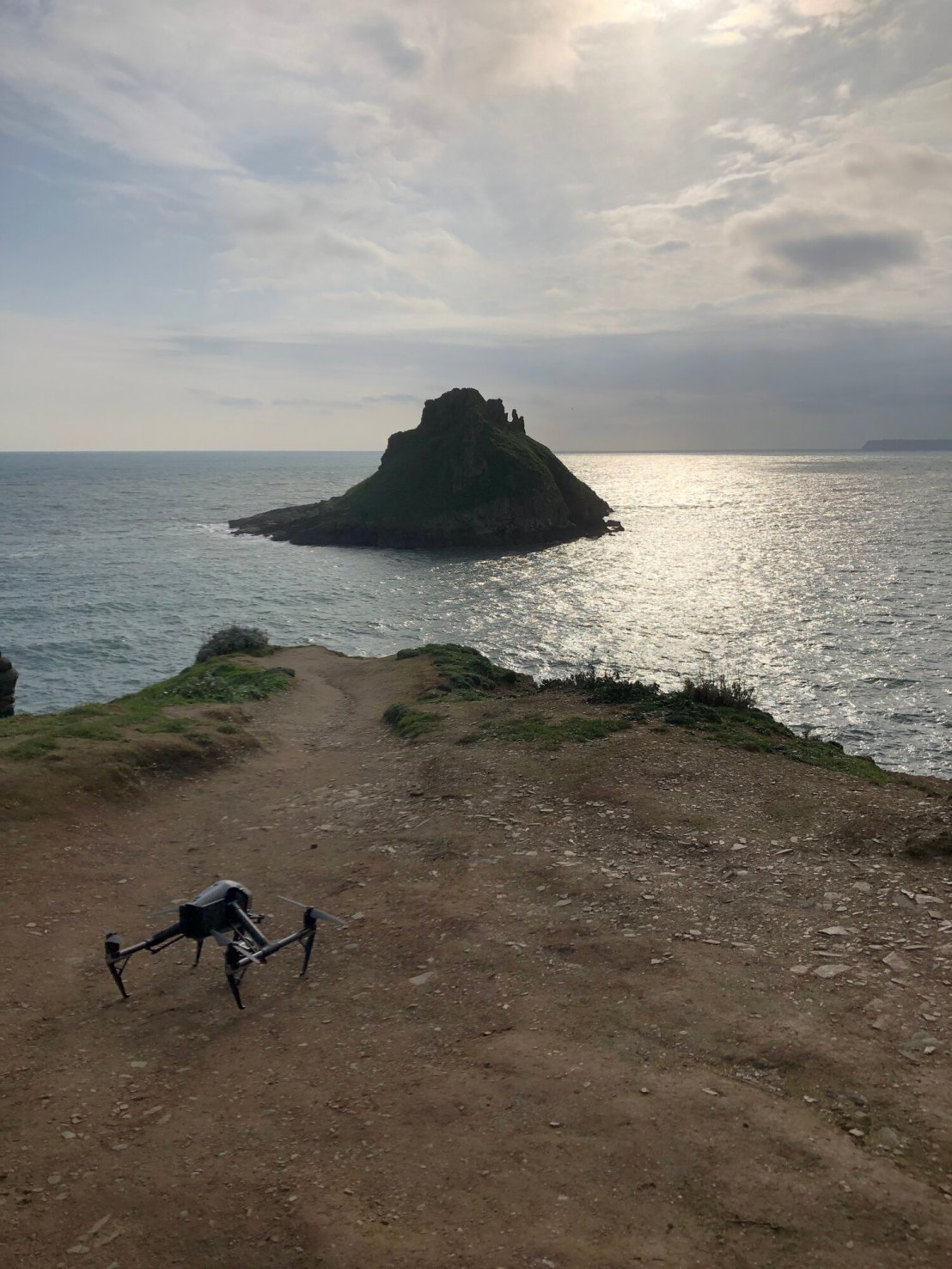
Thus Rik became a commercial drone pilot and as the home page of his website declares:

We can accommodate all your aerial requirements from photography to cinematography, inspections to 3d mapping.

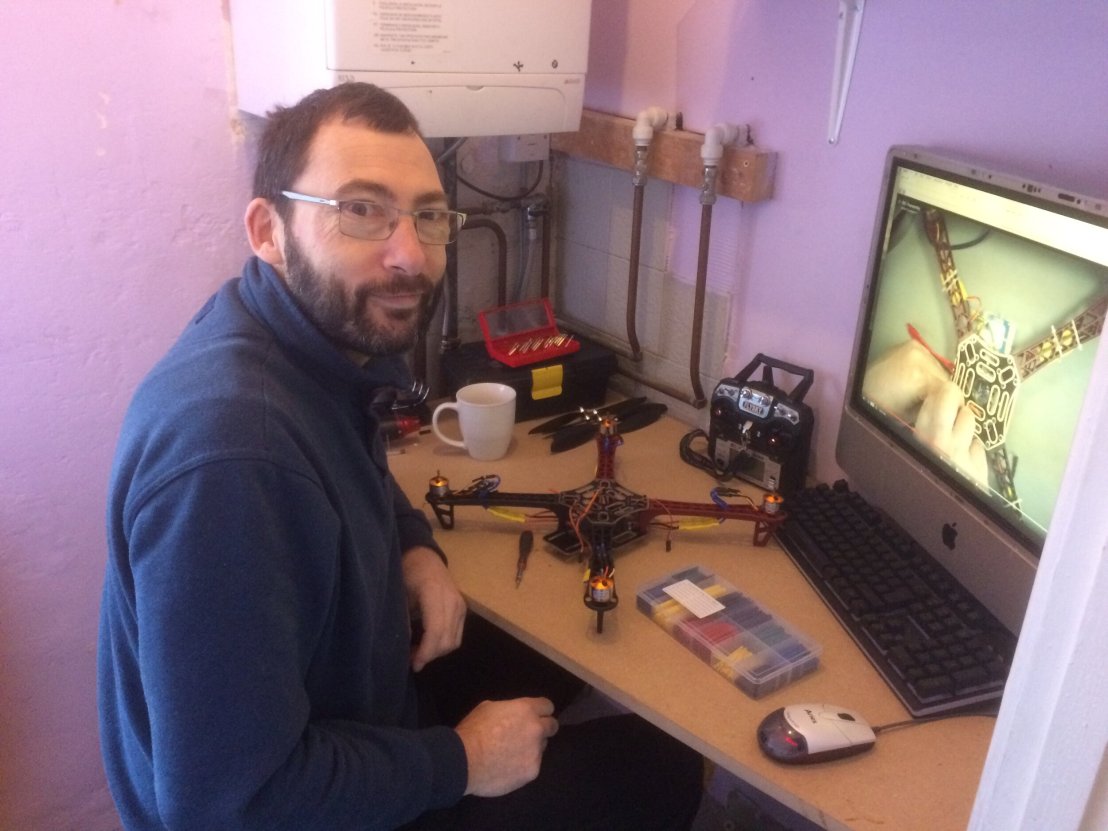
The name of Rik’s website is Ahead4Heights which strikes me as apt. And from the About page of that website, one reads:

Here at Ahead4Heights we have a passion for flying drones and creating visually stunning aerial films and photography. We are PfCO certified by the Civil Aviation Authority and hold full public liability insurance giving you complete confidence in us to provide the service you require.
With our post production studio facility we are able to add voice overs and original music written to your brief if required as we have our own in house composer and audio recording engineer.
Our UAV fleet consists of a variety of drones from the market leading DJI Inspire 2, capable of filming in incredible  5.2k resolution and producing the RAW file format standard for the film industry to our Pixhawk based quadcopter (equipt with a 4k camera) which we use for autonomous flight taking photos used to generate 3d mapping of locations useful for the construction industry.
Finally we have a heavy lift Tarot 680 hexacopter which is used as a backup drone and also for specialised  payloads such as thermal cameras and high power lighting.
If you simply want aerial photos for property sales, photos and footage for weddings and events we will be happy to offer our services to you.
We can also carry out inspection work on roofs, tower masts and bridges etc where specialised safety equipment and scaffolding would otherwise be required. Utilizing both the high resolution and thermal imaging cameras we are able to identify problems with the insulation of properties, stress points in structures and damage to roofs and guttering.
Ahead4Heights also holds certificates in the building and setting up of drones so if you require a drone built to your special requirements we would be happy to discuss. We would also offer a full maintenance package with any build projects.

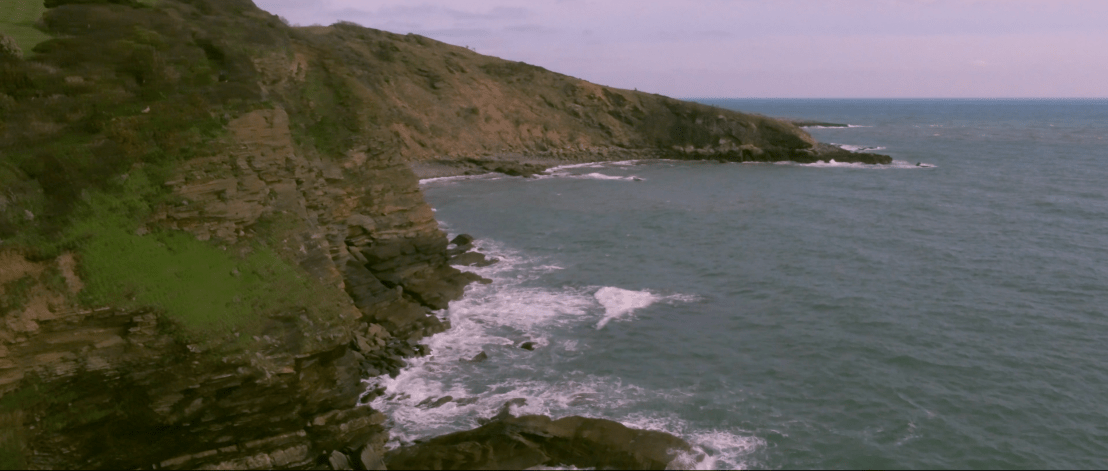
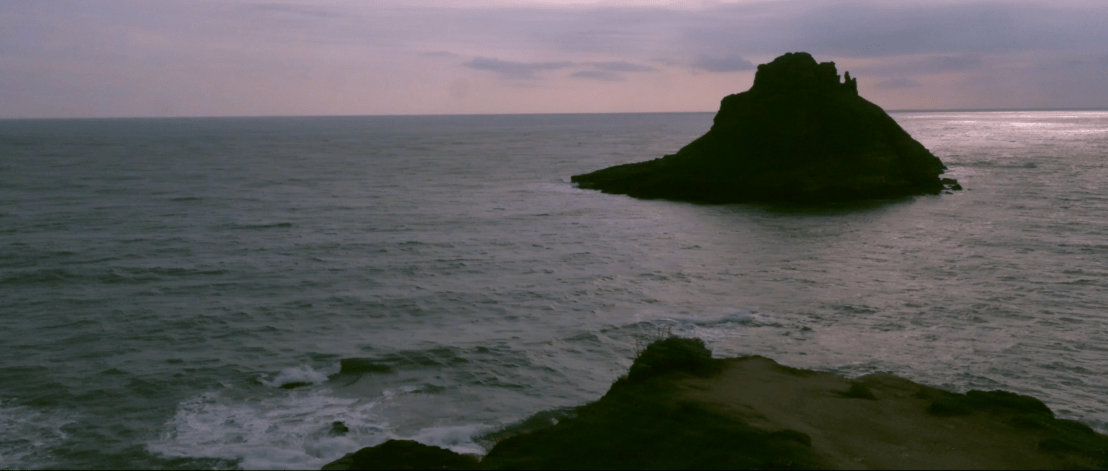
A couple more photographs.

oooo
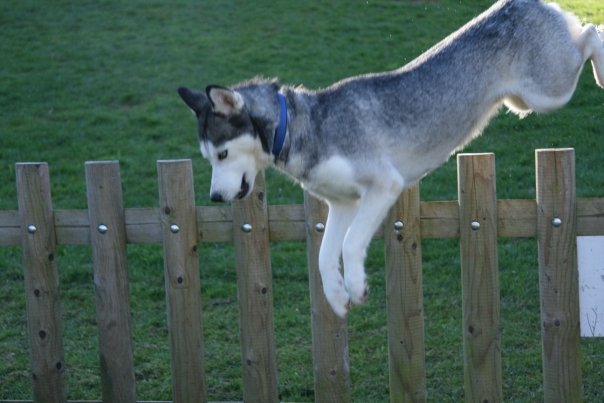
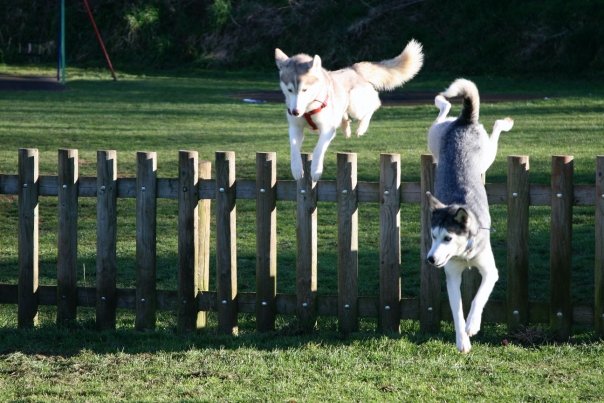
And, of course, one more of the dogs! That is Storm and Tia.
More tomorrow!

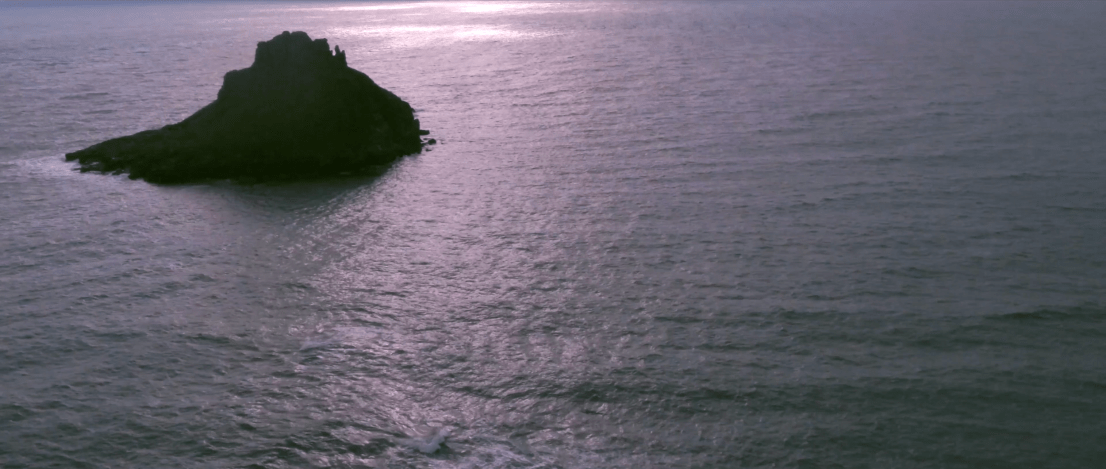
Picture Parade Three Hundred and Forty-Eight

I won’t explain more until tomorrow!

oooo

oooo

oooo

oooo

oooo

oooo

There’s quite a story behind this!

And behind this one!

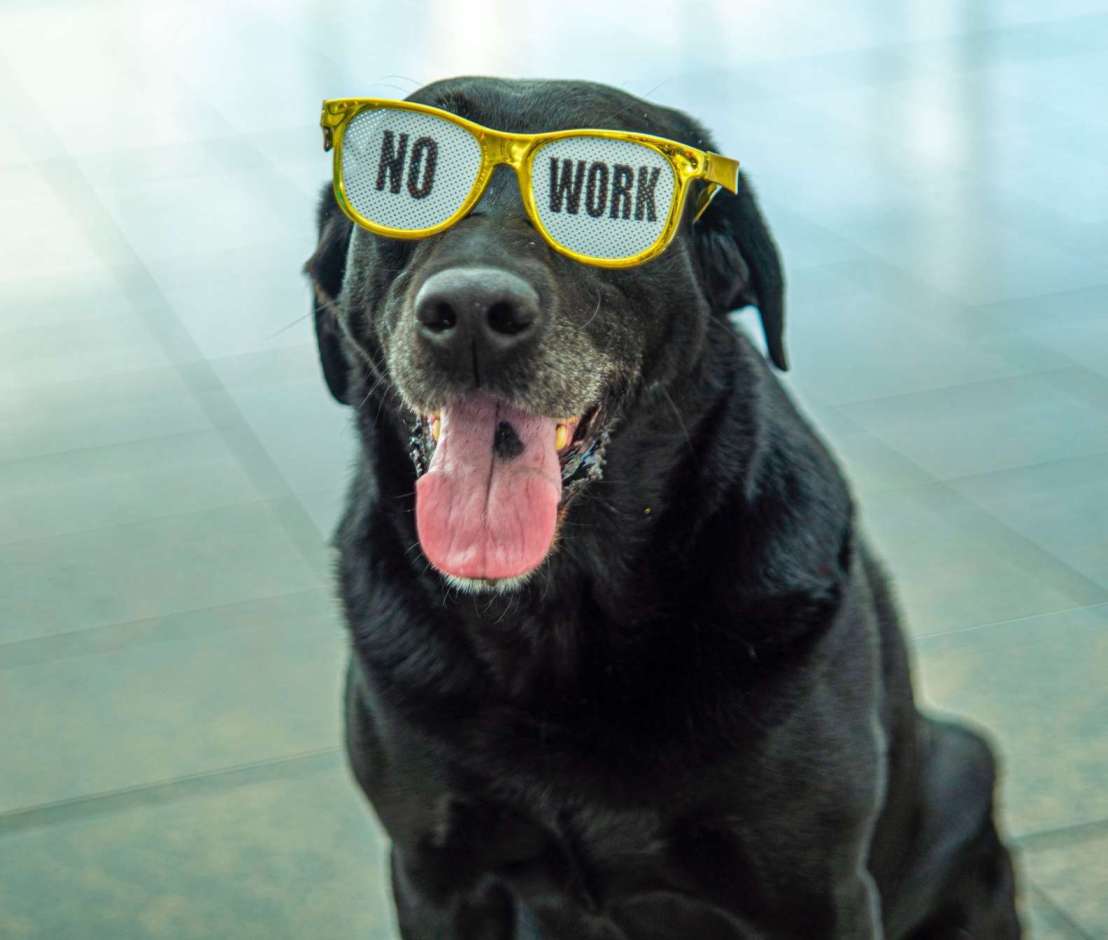
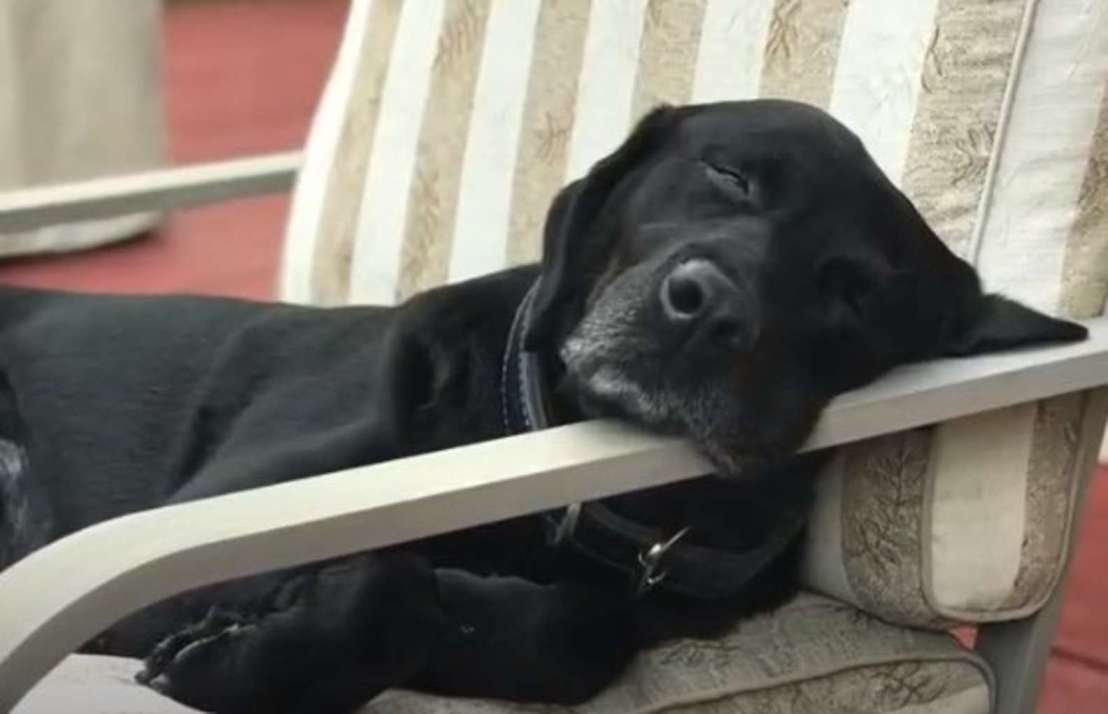
Long may he have a happy retirement!

A treat for an explosive detection dog!

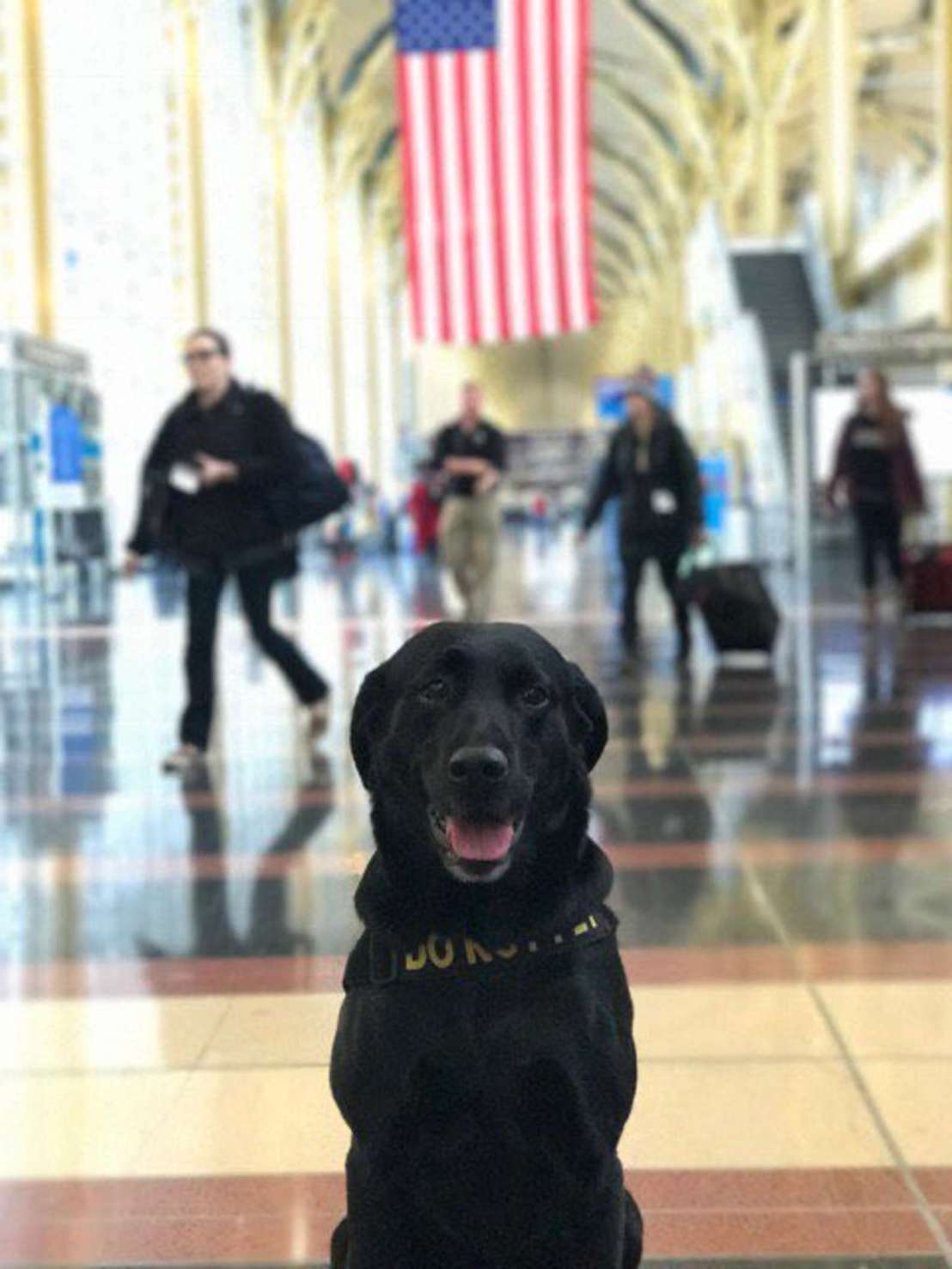
This is another story from The Dodo blogsite. And, yes, about a dog. But not any old dog; he used his sense of smell to protect us humans. He has, in my opinion, an unusual name but it is still his name: TTirado. TTirado was an explosive detection dog at Indianapolis Airport and after eight years of service he was retired.

Here’s the full story!

ooOOoo

TSA Detection Dog Gets A Huge Surprise Before He Retires

His last find was a good one 😁

By Lily Feinn
Published on the 18th June, 2020

As an explosive detection canine, TTirado isn’t always allowed to play with tennis balls like normal pets. Tennis balls — his favorite toy — are used as a reward for a job well done at the Indianapolis Airport.

So when it came time for TTirado to retire after eight long years of service, his handler came up with the perfect way to celebrate — with a massive ball drop.

Keith Gray

“It’s a coveted item during their career,” Keith Gray, TTirado’s handler, told The Dodo. “They know that they have to work for it to get it and that’s what keeps them going and keeps their motivation up.”

Keith Gray

TTirado is top of the class when it comes to detection, and has passed every single evaluation and test. For TTirado, scent detection is a game, and he’s always been happy to go into work with his dad.

“He was the first dog that was assigned to me and the dog I kept my entire career,” Gray said. “He’s a black Lab, so he’s a fantastic, lovable pup. He’s been such a great dog to work with and I’ve learned so much from him over the years.”

Keith Gray

To surprise the pup on his special day, Gray ordered 200 tennis balls online and set up a special final search for him.

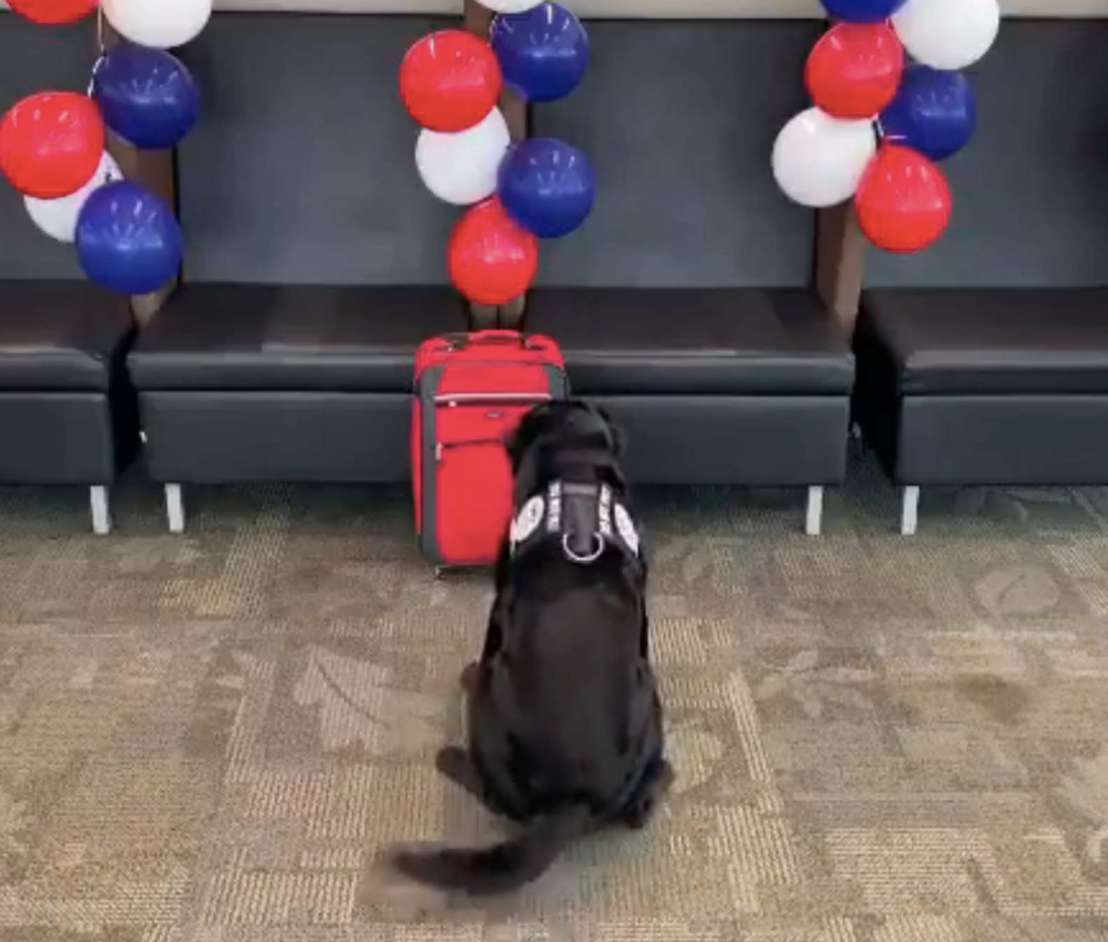
“We had a couple of handlers that were behind the scenes ready to drop the balls when he showed up,” Gray said. “The handlers knew what to do when the dog alerts, which is basically him coming around the corner, sniffing that bag like he’s supposed to and dropping his butt to sit down.”

Keith Gray

When TTirado signaled to his dad that he had found something, all 200 tennis balls dropped from the sky. TTirado was in heaven.

TTirado loves to play fetch, and everyone joined in throwing balls for the senior dog to chase.

After putting in countless 40-hour workweeks, TTirado is finally learning to enjoy his retirement. While TTirado was always part of the family, Gray has officially adopted him and plans on taking the pup on lots of fun trips in the future.

But perhaps the biggest change for TTirado is that he gets to hang out on the couch with his favorite toy every single day: “Now that he’s retired, he can have all the toys and tennis balls he wants and play around with them at home,” Gray said.

ooOOoo

It’s a wonderful story about a great dog. TTirado, you have a fantastic retirement and may you live happily for a long time to come!

Dog & Cat food recall

A food recall that came in yesterday!

We haven’t had a recall for some time but here’s one from Health Canada.

ooOOoo

Carnivora Dog and Cat Food Recall

June 15, 2020 — Health Canada is recalling Carnivora Fresh Frozen Patties for Dogs and Cats due to a possible contamination with E. coli O157.

E. coli O157 is a particularly dangerous strain of bacteria that can cause serious and life-threatening illness in both pets and humans after eating or handling the affected food.

What’s Recalled?

The recall includes 6 varieties of Carnivora brand raw pet food.

Approximately 1,803 packages of the affected products were sold nationwide in Canada between January 13, 2020 and June, 2020.

As of June 12, four cases of illness related to the recalled product have been reported.

About E. Coli Bacteria

E. coli O157 is a bacteria that can cause serious, sometimes life-threatening illness.

Some people infected with E. coli O157 do not get sick at all, though they can still spread the infection to others.

Common symptoms observed after infection include nausea, vomiting, headache, mild fever, severe stomach cramps, and watery or bloody diarrhea.

Most symptoms end within five to ten days.

Pregnant women, those with weakened immune systems, young children and older adults are most at risk for developing serious complications and might need hospitalization.

There is no real treatment for E. coli infections, other than monitoring the illness, providing comfort, and preventing dehydration.

People should contact their health care provider if symptoms persist or worsen with time.

What to Do?

Health Canada advises consumers to stop using any of the affected pet food products and contact the retailer where it was purchased from for a full exchange or refund.

U.S. citizens can report complaints about FDA-regulated pet food products by calling the consumer complaint coordinator in your area.

Or go to the FDA’s “Report a Pet Food Complaint” page.

Canadians can report any health or safety incidents related to the use of this product by filling out the Consumer Product Incident Report Form.

Get Lifesaving Recall Alerts by Email

Get free dog and cat food recall alerts sent to you by email. Subscribe to The Dog Food Advisor’s emergency recall notification system.

There’s no cost. No spam. Cancel any time.

ooOOoo

There you are good people. I trust none of you is affected.

These are very strange times!

A Grist article raises a core question.

On June 4th this year Grist published an article written by Eve Andrews. It is not about dogs at all. Yet, it seems to me to ask a fundamental question about us humans. The article speaks of America but certainly it applies to my old country, the U.K., and it probably applies to most of the countries in the world.

I recently wrote to Annelise McGough, the Growth and Engagement Editor at Grist asking if I could republish the article. She kindly said yes!

So here it is!

ooOOoo

Grist / Windy Kelly / EyeEm

Why is everything falling apart in 2020?

By on Jun 4, 2020

Dear Umbra,

Did any aspect of climate change cause the pandemic to happen this year (versus last year or next year)? Could pandemics happen more often?

— Which Oracle Read Rightly Imminent, Existential Doom?

A. Dear WORRIED,

2020: what a year so far! As anyone who witnessed the crowds of face mask-clad people show up in the middle of a deadly pandemic to protest police violence this weekend can attest, a lot seems to be terrible all at once. You’re asking, in a sense, why now? It almost seems like it must be a rhetorical question. But it’s not — by understanding how we got into this mess, we might presumably be able to find our way out.

This doesn’t just apply to the pandemic.

Let’s start by taking your question at face (mask) value: There are multiple factors that have contributed to the rise of zoonotic illnesses — those of animal origin — over recent years, as my very sharp colleague Shannon Osaka delineated in an article and video earlier in the spring. Scientists believe COVID-19, like several other SARS viruses, likely originated in a bat. It turns out many strains of coronavirus can be traced back to bats! Who knew those little guys were such harbingers of destruction?

It’s not really on the bats, of course. Warmer temperatures (an established feature of climate change) and environmental degradation (often attributed to climate change, industrialization, or other products of human development) have driven a lot of animals to migrate out of their normal habitats and into human ones. Those factors have also contributed to different species coming into close contact with each other, which makes viruses normally contained to one species more likely to “spill over,” or jump to a new type of animal.

So clearly, the lead-up to the novel coronavirus’s outbreak was a gradual one. But perhaps 2019 was just warm enough to kill off enough of the insect population that some COVID-19-carrying bat depended on for food, and that drove it out to wreak some (unintentional) havoc on humanity. The bat’s habitat could have been destroyed by a new coal mine development. It could have woken up one morning and thought: This is my time to fuck shit up! Revenge on those humans that messed up my home! (OK, there was also probably a pangolin involved, but let’s keep things simple.)

According to the Centers for Disease Control and Prevention, COVID-19 is the fourth major pandemic caused by a novel virus to hit the United States since the 1918 “Spanish flu” that killed 50 million people worldwide. And there are so many factors and variables that lead to the sprout of a pandemic that you could very well argue that, “Yes, of course it happened at this exact point in time” or “No, it could have happened at any point in time.” It’s impossible to know for sure. But climate change and habitat destruction are certainly working together to create circumstances more favorable to the spread of disease, and that means pandemics will likely become more common as the world grows warmer.

The thing is, highly contagious, devastating illnesses have always been a part of human life, even though a real pandemic is a few-times-per-century event. It’s a fact of sharing the Earth with other living things; it just happens. But humans are ostensibly equipped with the means to contain the spread of diseases and help heal those who become sick. At this moment, thanks to advances in medicine and information-sharing and communication, that’s more true than ever before!

And yet. The United States, an astonishingly wealthy nation with ostensibly the most advanced — certainly the most expensive! — medical system in the world, has lost around 100,000 people to COVID-19, with many more surely to come. That doesn’t even take into account the far-reaching hardship caused by an economic collapse as drastic, by some metrics, as the Great Depression. The current unemployment rate, for example, exceeds 20 percent.

The reality is that what some have referred to as “the lost spring” (and what could very well be “the lost year”) is not the product of a single infectious disease, but the boiling over of many long-standing crises, including structural forms of injustice. Like everything else in American society, the damage done by the coronavirus is unevenly distributed across race. The death rate of black Americans from COVID is three times that of whites, and 40 percent of black-owned businesses have shuttered due to social distancing measures. As of April, rates of black and Latino unemployment were 16.7 and 18.9 percent, respectively, compared to 14.2 percent for whites. These hardships continue to feed into the cycle of racial inequality in this country.

The devastation to American society that we are witnessing in real time, one could argue, could only have happened at the present moment. That’s due to the nightmarish confluence of horrific leadership, centuries of racial oppression, unprecedented wealth inequality, the erosion of the social safety net, privatization of medicine, a far-too-consolidated supply chain, politicization of science, a highly globalized economy, and one misguided or mischievous bat. Oh, and the climate change and environmental degradation that could have led to said bat’s misbehavior.

COVID-19 could have popped up at any time, as viruses do. The degree to which it’s ravaged American society, however, has little to do with the virus itself. Other countries such as New Zealand and South Korea, faced the same disease and came out the other side with far fewer deaths and less severe economic devastation. This is, to a significant degree, about governance and leadership.

It’s also a preview of what climate change can do. A very contagious respiratory virus is an unfortunate fact; it’s not going away, and it is a challenge to be dealt with. Climate change, just the same, is coming whether or not we pay attention to it. Communities, cities, and states are going to have to put measures into place to ensure that it doesn’t literally kill us all. That’s what adaptation means, and that’s why people talk about things like seawalls and tree cover and managed retreat.

But creating a climate-resilient society requires a lot more than just building or planting stuff! This is where I would normally tell you to vote for leaders who support all that building and planting and, more importantly, cutting carbon emissions in the first place. Yes, do that. And additionally, vote for leaders who will feed our starving public systems to make it so they actually support the people who need them. Vote for those who understand and want to change what non-white people experience, what poor people experience, what immigrants experience. Without all of these things, there cannot be a climate-resilient civilization.

If anything were made clear by the unique, mind-boggling suffering that the United States has seen in the past week, brought about by the collision of a viral pandemic and police brutality, it’s that voting is a necessary condition but it is not enough. You, WORRIED, wrote to me to ask why the pandemic happened right now, possibly because it seems like such a uniquely terrible moment for the country to have to deal with it. We not only have the worst possible leader, but also a general absence of leadership altogether.

Going back just a few months, I believe there was an opportunity for an alternate version of this moment in American history in which one incredibly dangerous virus did not kill as many people nor ruin as many lives. But even in that universe, it’s important to acknowledge that pre-pandemic life wasn’t so great for most people. Undoing this path and “restoring order” is a ridiculous hope, since the order that has existed for so long has created a society that is wholly unsustainable judging from almost any social, environmental, or economic perspective.

So what can we do with this knowledge? One, you should be angry. Be angry that leaders missed opportunities to fortify the nation beyond its military, to break down racist systems and promote equality, and to instate laws and policies designed to help prevent crises that, by all accounts, were utterly predictable.

Then I think you should show your anger, whether that’s through protesting, hurling money or your time or whatever you have at worthy organizations that will put it in the right hands, or just screaming and yelling, if you have to. And while voting might not feel like enough when so much feels so wrong, it’s a necessary condition for change — force people in power to know that they created that mess and that they are accountable for it.

Furiously,

Umbra

ooOOoo

Climate change or global warming is with us NOW. It is time to make fundamental changes to the way we live NOW. While many individuals are doing their bit we need international agreement, especially international support for the United Nations, for all the nations in the world NOW.

Thank you for reading this!

It breaks my heart.

Let me not stop with that. I want to hear from you. Are you worried? Or not quite as concerned as me and Umbra? Do you think it is in the hands of our leaders or is it an international problem?

Let’s have a bit of a discussion.

Out of the mouths of young people!

A young man aged eight asks a very deep question.

Now the answer, that I am about to republish, is written to Tristan, aged 8. But frankly I have no doubt that the answer will be keenly read by persons of all ages. Certainly, this 75-year-old found the answer of great interest.

But to the question:

How can a Big Bang have been the start of the universe, since intense explosions destroy everything? – Tristan S., age 8, Newark, Delaware

And the answer:

ooOOoo

How could an explosive Big Bang be the birth of our universe?

April 30, 2020
By Michael Lam, Assistant Professor of Physics and Astronomy, Rochester Institute of Technology

Pretend you’re a perfectly flat chess piece in a game of chess on a perfectly flat and humongous chessboard. One day you look around and ask: How did I get here? How did the chessboard get here? How did it all start? You pull out your telescope and begin to explore your universe, the chessboard….

What do you find? Your universe, the chessboard, is getting bigger. And over more time, even bigger! The board is expanding in all directions that you can see. There’s nothing that seems to be causing this expansion as far as you can tell – it just seems to be the nature of the chessboard.

But wait a minute. If it’s getting bigger, and has been getting bigger and bigger, then that means in the past, it must have been smaller and smaller and smaller. At some time, long, long ago, at the very beginning, it must have been so small that it was infinitely small.

Let’s work forward from what happened then. At the beginning of your universe, the chessboard was infinitely tiny and then expanded, growing bigger and bigger until the day that you decided to make some observations about the nature of your chess universe. All the stuff in the universe – the little particles that make up you and everything else – started very close together and then spread farther apart as time went on.

Our universe works exactly the same way. When astronomers like me make observations of distant galaxies, we see that they are all moving apart. It seems our universe started very small and has been expanding ever since. In fact, scientists now know that not only is the universe expanding, but the speed at which it’s expanding is increasing. This mysterious effect is caused by something physicists call dark energy, though we know very little else about it.

A visualization of tiny energy fluctuations in the early universe. ESA, Planck Collaboration, CC BY

Astronomers also observe something called the Cosmic Microwave Background Radiation. It’s a very low level of energy that exists all throughout space. We know from those measurements that our universe is 13.8 billion years old – way, way older than people, and about three times older than the Earth.

If astronomers look back all the way to the event that started our universe, we call that the Big Bang.

Many people hear the name “Big Bang” and think about a giant explosion of stuff, like a bomb going off. But the Big Bang wasn’t an explosion that destroyed things. It was the beginning of our universe, the start of both space and time. Rather than an explosion, it was a very rapid expansion, the event that started the universe growing bigger and bigger.

This expansion is different than an explosion, which can be caused by things like chemical reactions or large impacts. Explosions result in energy going from one place to another, and usually a lot of it. Instead, during the Big Bang, energy moved along with space as it expanded, moving around wildly but becoming more spread out over time since space was growing over time.

Back in the chessboard universe, the “Big Bang” would be like the beginning of everything. It’s the start of the board getting bigger.

It’s important to realize that “before” the Big Bang, there was no space and there was no time. Coming back to the chessboard analogy, you can count the amount of time on the game clock after the start but there is no game time before the start – the clock wasn’t running. And, before the game had started, the chessboard universe hadn’t existed and there was no chessboard space either. You have to be careful when you say “before” in this context because time didn’t even exist until the Big Bang.

You also have wrap your mind around the idea that the universe isn’t expanding “into” anything, since as far as we know the Big Bang was the start of both space and time. Confusing, I know!

Astronomers aren’t sure what caused the Big Bang. We just look at observations and see that’s how the universe did start. We know it was extremely small and got bigger, and we know that kicked off 13.8 billion years ago.

What started our own game of chess? That’s one of the deepest questions anyone can ask.

ooOOoo

Before the Big Bang then there was “no space and there was no time.” Michael Lam says that is confusing. I think that’s a gigantic understatement.

There there’s Dark Energy!

I wonder if we humans will ever come to the point where it is all understood!

More on the magnificent Hubble!

More on the magnificent Hubble!

The BBC have published an excellent article.

There was such a good response to the article on the Hubble that I published on April 27th that it was an easy decision to republish the article that was presented on the BBC website on the 24th, and this time the photographs can be downloaded.

ooOOoo

Hubble telescope delivers stunning 30th birthday picture

By Jonathan Amos, Science correspondent, 24 April 2020

It’s 30 years ago to the day that the Hubble telescope was launched – and to celebrate its birthday, the veteran observatory has produced another astonishing image of the cosmos.

This one is of a star-forming region close to our Milky Way Galaxy, about 163,000 light-years from Earth.

The larger object is the nebula NGC 2014; its companion is called NGC 2020.

But astronomers have nicknamed the scene the “Cosmic Reef” because it resembles an undersea world.

[There is an audio by Antonella Nota that is a little under 10 minutes long. I cannot embed it into this post for some unclear reason. Go here if you want to listen to it! It’s well worth listening to.]

Antonella Nota: “It’s called the people’s telescope because it brought the Universe to the people”

Famously blighted by blurred vision at the outset of its mission in 1990, Hubble was eventually repaired and upgraded.

The remarkable pictures it has taken of planets, stars, and galaxies have transformed our view of the cosmos.

Indeed, there are those who think Hubble is the most important scientific tool ever built.

It’s still far from retirement.

The US space agency (Nasa), which runs the observatory in partnership with the European Space Agency (Esa), says operations will be funded for as long as they remain productive.

Last year, its data resulted in almost 1,000 scientific papers being published – so it continues to stand at the forefront of discovery.

For its 25th birthday, Hubble imaged a giant cluster of stars called Westerlund 2

Engineers obviously keep a watching brief on the health of Hubble’s various systems. Pleasingly, all four instruments onboard – the two imagers and two spectrographs – work at full tilt.

In the past, the telescope’s Achilles heel has been the six gyroscopes that help turn and point the facility, maintaining a rock-steady gaze at targets on the sky.

These devices have periodically failed down the years, and during their final servicing mission in 2009 space shuttle astronauts were tasked with replacing all six.

Three have subsequently shut down again, but Nasa project scientist Dr Jennifer Wiseman says this is not yet an issue for serious concern.

“Nominally, we need three gyroscopes, but we can operate on just one due to the ingenuity of the engineers,” she asserted.

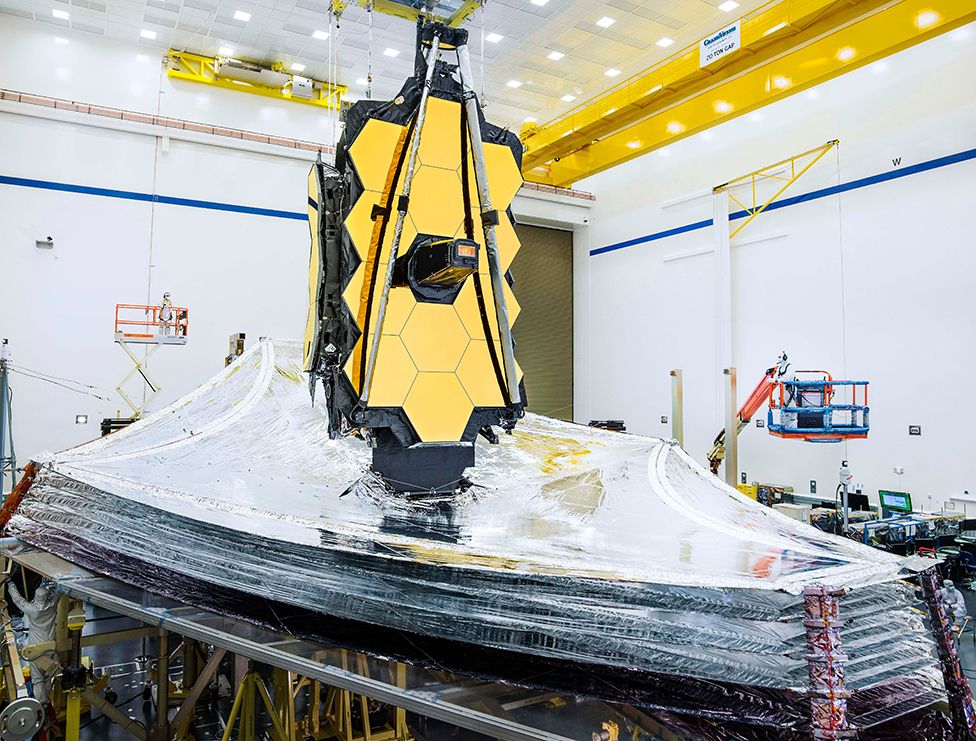
There’s a quiet confidence that Hubble can keep working well into the 2020s. Its supposed “successor” – the James Webb Space Telescope (JWST) – is due for launch next year, but the presence in orbit of this more modern observatory will in truth merely just extend capability; it won’t make Hubble redundant.

That’s because the new facility has been designed to see the cosmos at longer wavelengths of light than Hubble. The duo will be complementary and will on occasion actually pursue targets together to get a fuller perspective.

This is an exciting prospect for astronomers everywhere – but especially for those in Europe where Hubble has been such a rewarding endeavour, says Esa project scientist Dr Antonella Nota.

“From the memorandum of understanding there was a guarantee that European astronomers would get 15% of observing time for the duration of the mission. If I look back at how much time European astronomers got – on average it’s 22%. And it is a peer-reviewed process so we never needed to put a finger on the scales. European astronomers are creative; they’re smart; they’re doing leading-edge science,” she told BBC News.

What has Hubble contributed to science?

It’s a bit of a cliche, but Hubble has truly been a “discovery machine”.

Before the telescope launched in 1990, astronomers didn’t know whether the Universe was 10 billion years old or 20 billion years old.

Hubble’s survey of pulsating stars narrowed the uncertainty, and we now know the age extremely well, at 13.8 billion.

The observatory played a central role in revealing the accelerating expansion of the cosmos – a Nobel Prize-winning breakthrough – and it provided the definitive evidence for the existence of super-massive black holes at the centre of galaxies.

The Deep Field images require Hubble to stare at the same patch of sky for days on end

It’s amazing to think that when Hubble launched, scientists had yet to detect the first exoplanet, the name given to a planet orbiting a star other than our Sun. Today, Hubble is pioneering the study of these far-off worlds, examining their atmospheres to try to gauge their nature.

And although the sparkling eight-metre-class ground-based telescopes can now match – and even exceed – Hubble’s skill in certain fields of study, the space telescope remains peerless in going super-deep.

Its so-called Deep Field observations in which it stared at a small patch of sky for days on end to identify the existence of very distant, extremely faint galaxies is one of the towering achievements in astronomy.

These studies have shown us what the Universe was like just a few hundred million years after the Big Bang. Only JWST, with its finely-tuned infrared detectors, will go deeper still.

A Hubble classic: The Veil Nebula is the expanding debris of an exploded star

Kathryn Sullivan was one of the astronauts onboard Space Shuttle Discovery when it released Hubble into its 612km-high orbit on 25 April, 1990 – a day she recounts in a recent book, Handprints On Hubble.

“Hubble’s scientific impact has just been immense. But what I had not really appreciated until I started writing my book was the extent to which Hubble – because of its gorgeous images and their mind-bending implications – has really permeated popular culture,” she told BBC News.

“I see Hubble on the side of U-Haul (rental) trailers, on tattoos, on lunchboxes, on shirts, in advertisements, almost ubiquitously.

“And I think part of that is down to Hubble coming into service just as the internet was becoming the thing we now know it to be.

“That’s put the pictures right in front of people.”

JWST will study the Universe at longer wavelengths of light

ooOOoo

This is the most amazing invention and regular missions to service the telescope including regular updates to the technology have kept it current.

It has produced the most distant and beautiful photographs. It has also refined our knowledge of when the universe came into existence – 13.8 billion years ago.

Staggering!

Returning to a theme – May!

The years click by!

We are coming up to the month of May!

Then in a very short time it will be May 8th. Not only my half-birthday but considerably of more note the anniversary of the end of World War II.

I am certain that I am the only one who puts meaning into these dates. I can do no better than to re-post something that I published on May 1st, 2017.

ooOOoo

For all my life this has felt like a very special month.

And, dear friends, at the risk of repeating myself to many of you, this is why the month of May is special for me.

Simply that I was born in London during the closing months of the Second World War. Inevitably, I was unaware of the number of German bombs that were falling on London during those last few months. But there were thousands.

On May 8th. 1945, the day that WWII ended and six months to the day from when I was born, my mother looked down at me and said aloud to me: “You are going to live”. Despite the fact that I don’t recall my mother saying that, it was verified many times later when I was growing up.

Now here we are approaching May 8th. 2017 (now May, 2020) and in a very real sense it seems that we are in another war.

A war of consequence.

A war that we have been engaged in for many, many years.

A war where we are inadvertently fighting on a global battlefield.

A war where 99.99% of us don’t consciously identify the weapons we are using. Weapons that are incredibly effective. So much so that we are in sight of winning the last battle; winning the war.

Yet a war where winning is no win at all. Indeed, where winning this war, this global war, spells the end. The end of life for 99.99% of us humans (and much else besides).

Now what on earth has got me so fired up?

Two things have:

The first is that I am living in my 73rd year of life. (Now 75th.) I have no idea of when my life comes to an end. But that death is a guarantee. Indeed, if one takes note of the average life expectancy of a male today in the USA (75.6 years) , it may not be that far away.

The second thing is that before my death I truly want to know that humankind has laid down its weapons of war against our planet and that there really is an unstoppable mission, a united wave of passion, to live in peace on this planet. Perhaps better put to live in peace with this planet.

Or in the words of an organization that I now want to introduce:

A mission which will require the hard work and dedication of each and every one of us as we do everything in our power as individuals, but also as we galvanize businesses, entrepreneurs, innovators, city planners, communities, people and politicians—all those who share our purpose.

OK! Thank you if you are still reading this! (Someone give Fred in that soft arm-chair over there a nudge; I can hear his snores from here!)

In the last Smithsonian electronic newsletter that I was reading yesterday morning there was a reference to an organization that I hadn’t previously come across. Here is the link to that item on The Smithsonian website. I am republishing it in full in this place. As you read it you will understand why I am republishing it.

ooOOoo

Using a New Roadmap to Democratize Climate Change

A new tool aims to bypass governments and put the power of climate action in the people’s hands

By Anne Glusker Smithsonian.com April 28, 2017

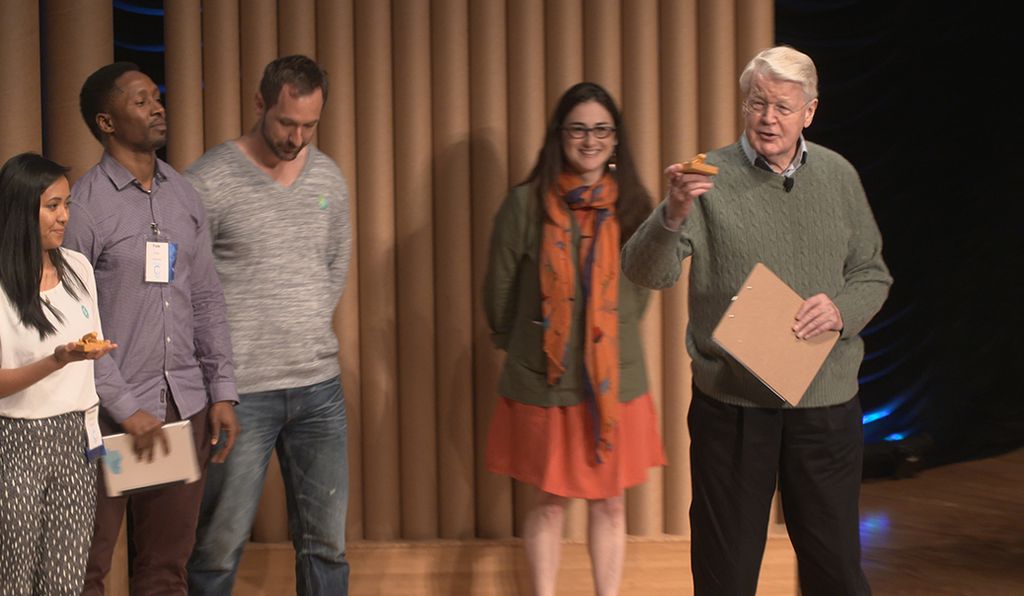
Olafur Grimsson, who was president of Iceland from 1996 to 2016 and saw his country through the worst economic crisis in its history, making headlines all over the world as banks collapsed and the country fell into a depression, is the very picture of an urbane statesman. Collected and poised, with a striking full head of white hair, as comfortable in English as in his native Icelandic, he seems an unlikely revolutionary, not the sort of person you’d look at and immediately find yourself thinking: “Power to the People.”

But Grimsson is one of the primary architects of a quietly radical new idea whose aim is to facilitate action on climate change without any of the usual suspects—governments, countries, international bodies, negotiating parties.

He and several other veterans of the historic 2015 Paris Agreement on climate change were in Washington, D.C., last year, just before COP22, the climate meeting held in Marrakesh in 2016. They were pondering next steps when the conversation took a new and interesting turn, Grimsson says, addressing the question: “Was it possible to have the success of Paris without governments necessarily being in the leading role?”

The group included movers and shakers such as Peter Seligmann, the chairman of Conservation International; Laurene Powell Jobs, president of the philanthropic organization the Emerson Collective; and Andy Karsner, an assistant energy secretary during the administration of George W. Bush. Galvanized by their own query, they decided to try to answer it—to set about creating a new tool to aid in achieving the goals of the Paris accord.

At the Smithsonian’s Earth Optimism Summit, a gathering this past weekend of conservation-minded citizens, scientists and activists, Grimsson explained: “You get governments that are opposed or even hostile to climate action. We decided to bring together in Marrakesh a gathering of thinkers and scientists and innovators and policymakers from different countries in order to discuss a new model of securing the success of the future of the climate movement.”

At the Smithsonian’s Earth Optimism Summit, the former president of Iceland Olafur Grimsson encouraged new solutions to climate change, awarding cash prizes to the winners of the “Make for the Planet” challenge. (The Roadmap)

Grimsson’s group felt that due to changes in information technology and social transformations, the large organizations and structures that used to be necessary to effect change were now not needed. And thus was born Roadmap, a new crowdsourcing tool for anyone and everyone interested in climate action. Still in its very early stages, Roadmap’s founders envision it as a platform for those working on climate issues—from scientist and policymaker to farmer and fisherman—to facilitate the sharing of knowledge and ideas, methods and techniques.

“A new political model is possible—where everyone can be a doer, where you no longer need big government or big enterprises to bring about success,” Grimsson says.

This new model for social change that skips the usual cumbersome channels and processes has been seen everywhere from public health, where the Bill & Melinda Gates Foundation has redefined the sector, to the hospitality industry, which is working to combat the human trafficking that plagues its businesses, to perhaps most famously the Arab Spring, where the role of social media in bringing about political change is still being debated today.

And this new model is complemented by technological changes. “The innovation in energy technology is such that we no longer have to wait for the big energy breakthrough,” Grimsson says. “We already have the available technologies. Every individual, home, village, community, town and region can execute change. The good news from the climate point of view is that, in addition to the information technology revolution, there has now also taken place an energy revolution. A house can be a power station: If the people who live in that house have extra energy, they can sell their energy through the smart grid. The notion that every house can be a power station is as revolutionary as saying that every mobile phone can be a media company.”

Grimsson admits that it may seem odd for someone in his position to be advocating that ordinary citizens take action apart from the conventional corridors of governmental power.

“For me to say that these traditional political organizations and positions are somewhat outdated is perhaps a strange statement: I was a professor of political science, I’ve been a member of parliament, I’ve been a minister of finance, I was president for 20 years,” he says.

It was during Iceland’s financial meltdown that he first experienced this new kind of social change: “I saw this very strongly through the financial crisis in my own country, which led to a big social economic uprising. All those activities were engineered by unknown people, people who were not part of a big organization, who used Facebook and the information media to bring thousands of people together in one day.”

Right now, Roadmap consists of a website and a lofty manifesto that speaks of raising the value of “moral currency” and creating a “best practices warehouse.” Visitors to the site can fill out a form if they want to become part of its community of “doers.” The practical part of the manifesto speaks of identifying the best methodologies and models; implementing a “real-time system of measurement” and a way to “gauge and understand what is working, what is not, and exactly what is being achieved.” As the platform develops, it will be interesting to see exactly what form these gauges, measurement systems, and warehouses take.

After the Paris Agreement, Grimsson says of himself and his Roadmap co-founders, “We were all optimistic, but we are all also realists.” It is his belief that if you “give people the tools, they can execute the transformation and the change—without governmental leadership.” Perhaps Roadmap will be one of those tools.

ooOOoo

Here’s a video that spells it out in ways that I find impossible to ignore.

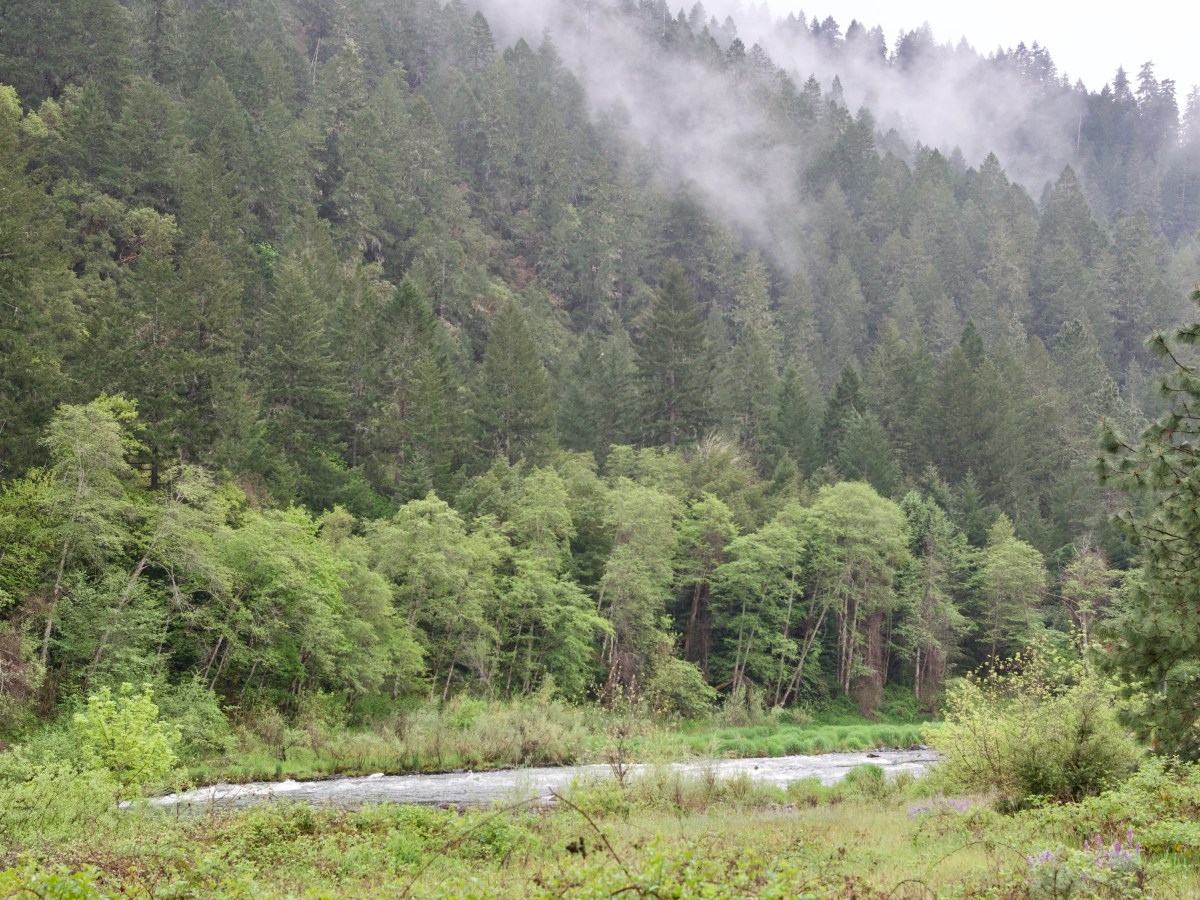
Because in hundreds of years time I want others to look at the following picture of Troutbeck Valley in England and know how precious is this one and only planet we live on.

Or in the words of Sue Dreamwalker that I read yesterday evening:

We are witnessing more storms, more unseasonal weather patterns, and I just hope that we wake up soon to the damage we are doing to our beloved Mother that has held us in her eternal arms for so long..

Photo credit: Getty Images

Enjoy the month of May wherever you are in the world!

Closing by repeating a key pronouncement in that RoadMap video above:

Why We?

Who Else!

Thirty Years of the Hubble Space Telescope

My how the years go by!
Back in 2010 I wrote about the Hubble, wishing it Happy Birthday!

Now here we are in 2020 and, again, I want to feature this most amazing space telescope ever.

The thirtieth anniversary of the launch of the Hubble Space Telescope was on the 24th April, 2020, just three days ago.

The challenge is that the photographs that go with the article are not permitted to be shared with you. So I have grabbed some others that, apparently, are alright.

ooOOoo

How the Hubble Space Telescope opened our eyes to the first galaxies of the universe

April 24, 2020
By Professor Rodger Thompson, Professor of Astronomy, University of Arizona

The Hubble Space Telescope launched on the 24th of April, 30 years ago. It’s an impressive milestone especially as its expected lifespan was just 10 years.

One of the primary reasons for the Hubble telescope’s longevity is that it can be serviced and improved with new observational instruments through Space Shuttle visits.

When Hubble, or HST, first launched, its instruments could observe ultraviolet light with wavelengths shorter than the eye can see, as well as optical light with wavelengths visible to humans. A maintenance mission in 1997 added an instrument to observe near infrared light, which are longer wavelengths than people can see. Hubble’s new infrared eyes provided two new major capabilities: the ability to see farther into space than before and see deeper into the dusty regions of star formation.

I am an astrophysicist at the University of Arizona who has used near infrared observations to better understand how the universe works, from star formation to cosmology. Some 35 years ago, I was given the chance to build a near infrared camera and spectrometer for Hubble. It was the chance of a lifetime. The camera my team designed and developed has changed the way humans see and understand the universe. The instrument was built at Ball Aerospace in Boulder, Colorado, under our direction.

Seeing further and earlier

Edwin Hubble, HST’s namesake, discovered in the early 1900s that the universe is expanding and that the light from distant galaxies was shifted to longer, redder wavelengths, a phenomenon called the redshift. The greater the distance, the larger the shift. This is because the further away an object is, the longer it takes for the light to reach us here on Earth and the more the universe has expanded in that time.

The Hubble ultraviolet and optical instruments had taken images of the most distant galaxies ever seen, known as the Northern Hubble Deep Field, or NHDF, which were released in 1996. These images, however, had reached their distance limit due to the redshift, which had shifted all of the light of the most distant galaxies out of the visible and into the infrared.

One of the new instruments added to Hubble in the second maintenance mission has the awkward name, the Near Infrared Camera and Multi-Object Spectrometer, NICMOS, pronounced “Nick Moss.” The near infrared cameras on NICMOS observed regions of the NHDF and discovered even more distant galaxies with all of their light in the near infrared.

Astronomers have the privilege of watching things happen in the past which they call the “lookback time.” Our best measurement of the age of the universe is 13.7 billion years. The distance that light travels in one year is called a light year. The most distant galaxies observed by NICMOS were at a distance of almost 13 billion light years. This meant that the light that NICMOS detected had been traveling for 13 billion years and showed what the galaxies looked like 13 billion years ago, a time when the universe was only about 5% of its current age. These were some of the first galaxies ever created and were forming new stars at rates that were more than a thousand times the rate at which most galaxies form stars in the current universe.

Hidden by dust

Although astronomers have studied star formation for decades, many questions remain. Part of the problem is that most stars are formed in clouds of molecules and dust. The dust absorbs the ultraviolet and most of the optical light emitted by forming stars, making it difficult for Hubble’s ultraviolet and optical instruments to study the process.

The longer, or redder, the wavelength of the light, the less is absorbed. That is why sunsets, where the light must pass through long lengths of dusty air, appear red.

The near infrared, however, has an even easier time passing through dust than the red optical light. NICMOS can look into star formation regions with the superior image quality of Hubble to determine the details of where the star formation occurs. A good example is the iconic Hubble image of the Eagle Nebula, also known as the pillars of creation.

The optical image shows majestic pillars which appear to show star formation over a large volume of space. The NICMOS image, however, shows a different picture. In the NICMOS image, most of the pillars are transparent with no star formation. Stars are only being formed at the tip of the pillars. The optical pillars are just empty dust reflecting the light of a group of nearby stars.

The dawning of the age of infrared

When NICMOS was added into the HST in 1997 NASA had no plans for a future infrared space mission. That rapidly changed as the results from NICMOS became apparent. Based on the data from NICMOS, scientists learned that fully formed galaxies existed in the universe much earlier than expected. The NICMOS images also confirmed that the expansion of the universe is accelerating rather than slowing down as previously thought. The NHDF infrared images were followed by the Hubble Ultra Deep Field images in 2005, which further showed the power of near infrared imaging of distant young galaxies. So NASA decided to invest in the James Webb Space Telescope, or JWST, a telescope much larger than HST and completely dedicated to infrared observations.

On Hubble, a near infrared imager was added to the third version of the Wide Field camera which was installed in May of 2009. This camera used an improved version of the NICMOS detector arrays that had more sensitivity and a wider field of view. The James Webb Space Telescope has much larger versions of the NICMOS detector arrays that have more wavelength coverage than the previous versions.

The James Webb Space Telescope, scheduled to be launched in March 2021, followed by the Wide Field Infrared Survey Telescope, form the bulk of future space missions for NASA. These programs were all spawned by the near infrared observations by HST. They were enabled by the original investment for a near infrared camera and spectrometer to give Hubble its infrared eyes. With the James Webb Space Telescope, astronomers expect to see the very first galaxies that formed in the universe.

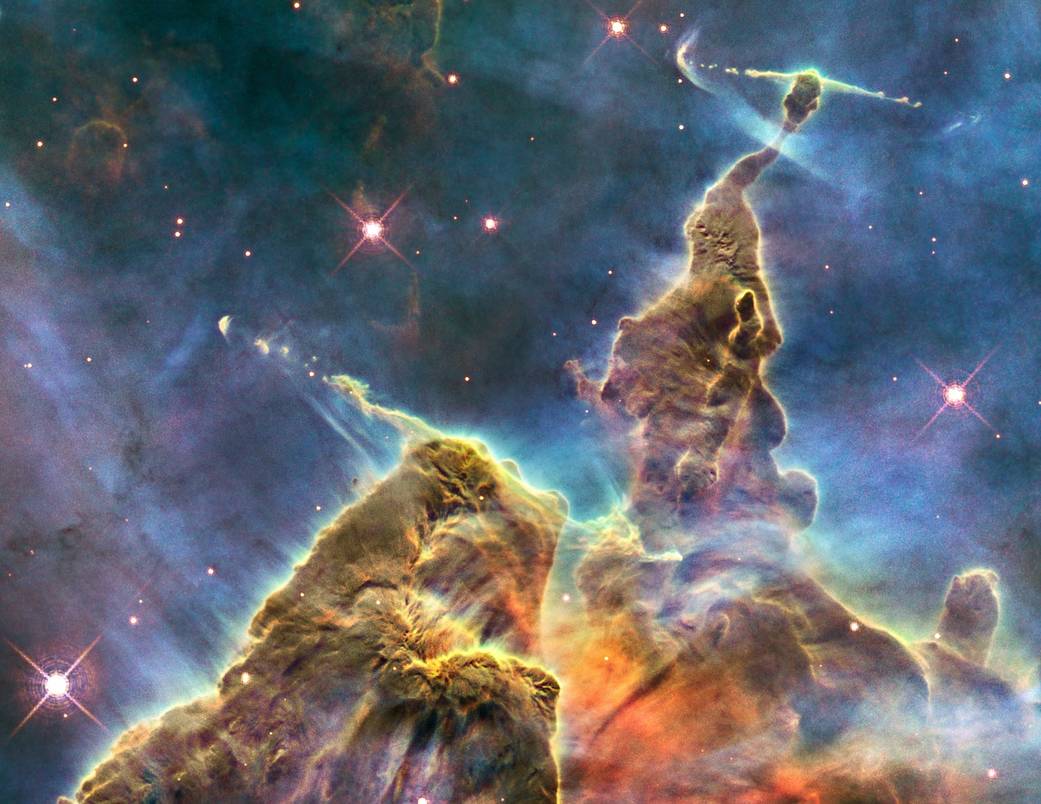
The Eagle Nebula in visible light. NASA, ESA and the Hubble Heritage Team (STScI/AURA)

oooo

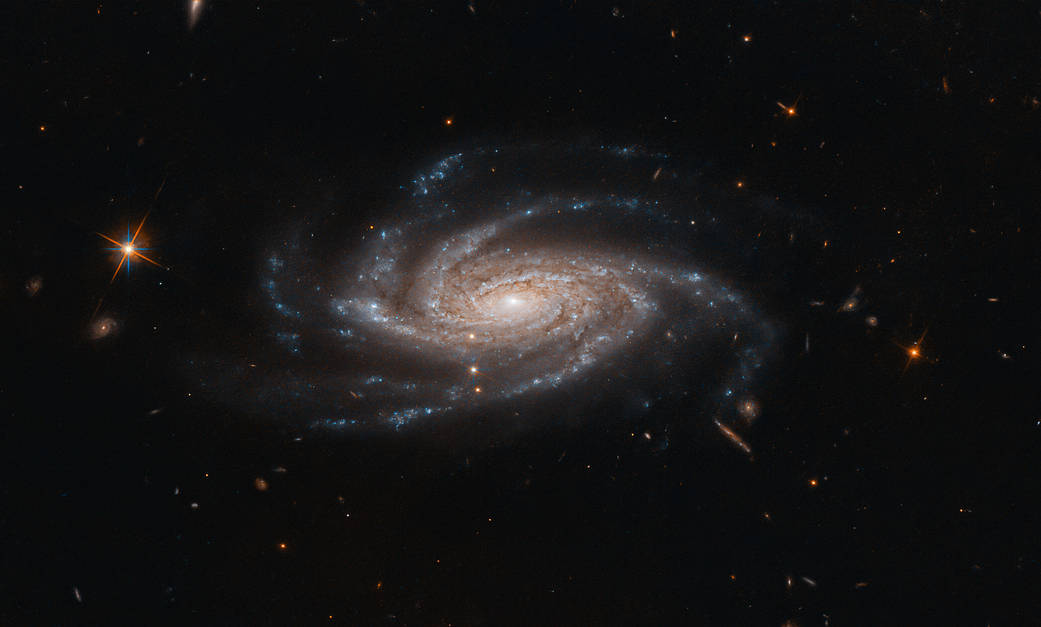
The spiral galaxy NGC 2008 sits centre stage, its ghostly spiral arms spreading out towards us, in this image captured by the NASA/ESA Hubble Space Telescope.  This galaxy is located about 425 million light-years from Earth in the constellation of Pictor (The Painter’s Easel). Discovered in 1834 by astronomer John Herschel, NGC 2008 is categorised as a type Sc galaxy in the Hubble sequence, a system used to describe and classify the various morphologies of galaxies. The “S” indicates that NGC 2008 is a spiral, while the “c” means it has a relatively small central bulge and more open spiral arms. Spiral galaxies with larger central bulges tend to have more tightly wrapped arms, and are classified as Sa galaxies, while those in between are classified as type Sb. Spiral galaxies are ubiquitous across the cosmos, comprising over 70% of all observed galaxies — including our own, the Milky Way. However, their ubiquity does not detract from their beauty. These grand, spiralling collections of billions of stars are among the most wondrous sights that have been captured by telescopes such as Hubble, and are firmly embedded in astronomical iconography.

oooo

The NASA/ESA Hubble Space Telescope has revisited one of its most iconic and popular images: the Eagle Nebula’s Pillars of Creation. This image shows the pillars as seen in infrared light, allowing it to pierce through obscuring dust and gas and unveil a more unfamiliar — but just as amazing — view of the pillars. In this ethereal view the entire frame is peppered with bright stars and baby stars are revealed being formed within the pillars themselves. The ghostly outlines of the pillars seem much more delicate, and are silhouetted against an eerie blue haze. Hubble also captured the pillars in visible light.

Rodger I. Thompson was the Principal Investigator for the Near Infrared Camera and Multi-Object Spectrometer, NICMOS. He was responsible for the execution of a contract to Arizona Board of Regents from NASA to deliver NICMOS as a Hubble Space Telescope Instrument and carry out a scientific investigation with it. Prof. Thompson received summer salary from this contract at his University pay rate during the execution of the contract which ended in 2004. Prof. Thompson is not currently receiving any external funding.

ooOOoo

Now for two YouTube videos.

The first is a celebration of the 30th anniversary.

And the second is slightly longer but conveys images taken from the telescope. I have no doubt that you will love them as we did!

Both these videos are beyond words! That we are alive today and can share these videos on this blog is stupendous!

See you tomorrow!

Questions; questions; questions!

About the position of our pet dogs and cats in this current pandemic.

So many of us are spending time at home. Lots of time!

And so many are asking questions about CORVID-19 and out pets.

Therefore I think it’s worthwhile to republish this article that appeared on Mother Nature Network yesterday.

ooOOoo

Removed because of an alleged copyright infringement.

ooOOoo

Now it is quite a long article but then again you probably have much more time to read this post! And, frankly, there is a lot of good information contained within it!

So, be safe and look after your pets!