Category: Government

Who are you? How did you get here?

That is to the United States of America.

We tend to watch many of the TED Talks that come our way.

But this one had me riveted to my seat. It’s a very powerful, nearly 9 minutes long, talk given by a person who doesn’t have legal citizenship.

Speaking on a personal basis, I was a person who went through the Citizenship test, successfully I might add, in March, 2019. So I watched this video with more than just academic interest.

See if you sense the feelings I had.

At age 16, journalist and filmmaker Jose Antonio Vargas found out he was in the United States illegally. Since then, he’s been thinking deeply about immigration and what it means to be a US citizen — whether it’s by birth, law or otherwise. In this powerful talk, Vargas calls for a shift in how we think about citizenship and encourages us all to reconsider our personal histories by answering three questions: Where did you come from? How did you get here? Who paid?
Jose Antonio Vargas, author of “Dear America: Notes of an Undocumented Citizen,” is the founder of Define American, a nonprofit organization that uses stories to shift the narrative on immigrants.

In the 10th July issue of Science magazine there was an Editorial written by Sudip Parikh, CEO of the American Association for the Advancement of Science (AAAS).

I am taking the liberty of republishing that Editorial here. For I think it needs to be widely shared.

ooOOoo

Immigrants help make America great

Sudip Parikh

Science  10 Jul 2020:
Vol. 369, Issue 6500, pp. 120
DOI: 10.1126/science.abd6868

I am a scientist. I am an American. And I am the product of special expert visas and chain migration—among the many types of legal immigration into the United States. On 22 June, President Trump issued a proclamation that temporarily restricts many types of legal immigration into the country, including that of scientists and students. This will make America neither greater nor safer—rather, it could make America less so.

The administration claims that these restrictions are necessitated by the coronavirus disease 2019 (COVID-19) outbreak to prevent threats to American workers. This reasoning is flawed for science and engineering, where immigrants are critical to achieving advances and harnessing the resulting economic opportunity for all Americans.

For decades, the United States has inspired both immigrants and nonimmigrants to make substantial contributions to science and technology that benefit everyone. Preventing highly skilled scientists and postdocs from entering the United States directly threatens this enterprise.

My uncle, a geologist, came to the United States in the 1960s to work at NASA. He then taught at Appalachian State University in North Carolina and later served as lead geochemist for the state of California. He sponsored my father to come to America in 1968. Leaving Mumbai, a city of millions, and arriving in Hickory, a town of thousands in North Carolina, my father came home to a place he had never been before. My parents worked in furniture factories and textile mills to put us though college and ensure we had opportunities. Today, my sister works at the U.S. Centers for Disease Control and Prevention, and I have the privilege of leading the American Association for the Advancement of Science (AAAS, the publisher of Science). We exist because of the Immigration and Nationality Act of 1965 and our parents’ belief in the vision of the United States as a shining city on a hill. My family’s story is repeated by thousands of American scientists.

These stories include uncertainty when an immigrant’s status in America is in question. This uncertainty causes stress and the possibility that immigrants will leave and take their skills, talents, and humanity elsewhere. For the successful, these stories culminate with relief, celebration, and the pride of becoming a naturalized citizen. As President Reagan said, the United States is the one place in the world where “anybody from any corner of the world can come…to live and become an American.” Naturalized citizens love the United States deeply because they chose to be American. They and other immigrants make huge contributions to science and engineering.

According to the National Science Foundation, more than 50% of postdocs and 28% of science and engineering faculty in the United States are immigrants. Of the Nobel Prizes in chemistry, medicine, and physics awarded to Americans since 2000, 38% were awarded to immigrants to the United States. I don’t know the number of prizes given to second-generation Americans but Steven Chu—current chair of the AAAS Board of Directors—is among them. The incredible achievements of the American scientific enterprise speak volumes about the vision and forethought of the American people who have worked to create a more perfect union.

Suspending legal immigration is self-defeating and breaks a model that is so successful that other nations are copying it. As Thomas Donohue, chief executive officer of the U.S. Chamber of Commerce, said regarding the administration’s proclamation, “Putting up a ‘not welcome’ sign for engineers, executives, IT experts, doctors, nurses, and other workers won’t help our country, it will hold us back. Restrictive changes to our nation’s immigration system will push investment and economic activity abroad, slow growth, and reduce job creation.”

To develop treatments and vaccines for COVID-19, cure cancers, go to Mars, understand the fundamental laws of the universe and human behavior, develop artificial intelligence, and build a better future, we need the brain power of the descendants of Native Americans, Pilgrims, Founding Mothers and Fathers, Enslaved People, Ellis Island arrivals, and immigrants from everywhere. The United States has thrived as a crossroads where people are joined together by ideas and contribute by choice to the freedom and opportunity provided by this wonderful, inspiring, and flawed country that is always striving to live up to its aspirations.

Scientists, look around your labs and offices. Think about your collaborations and friendships. We must ensure that this “temporary” restriction on legal immigration does not become permanent. Now is the time to speak up for your immigrant colleagues and for America.

ooOOoo

I hope you read it!

What a nose, again!

Why should we not be surprised!

At the power of smell that a dog has.

I have written about the dog’s nose before. Or rather I have written about the dog’s sense of smell;

Dogs’ noses just got a bit more amazing. Not only are they up to 100 million times more sensitive than ours, they can sense weak thermal radiation—the body heat of mammalian prey, a new study reveals. The find helps explain how canines with impaired sight, hearing, or smell can still hunt successfully.

But I wanted to draw your attention to an article in 2017; June 26th to be precise. In an article called What a nose!

Here’s how that post opened.

Two items that recently caught my eye.

The power of a dog’s nose is incredible and it is something that has been written about in this place on more than one occasion.

But two recent news items reminded me once again of the way we humans can be helped by our wonderful canine partners.

The first was a report that appeared on the Care2 website about how dogs are being used to search for victims in the burnt out ruins following that terrible Grenfell Tower fire. That report opened, thus:

By: Laura Goldman June 24, 2017
About Laura Follow Laura at @lauragoldman

Wearing heat-proof booties to protect their feet, specially trained dogs have been dispatched in London’s Grenfell Tower to help locate victims and determine the cause of last week’s devastating fire that killed at least 79 people.

Because they’re smaller and weigh less than humans, urban search-and-rescue dogs with the London Fire Brigade (LFB) are able to access the more challenging areas of the charred 24-story building, especially the upper floors that sustained the most damage.

Because I read recently, on the EarthSky website, about dogs in Australia that are being trained to detect Covid-19 in humans.

ooOOoo

These dogs are trained to sniff out the coronavirus

Posted by in Human World, August 10, 2020

Scientists have been working with professional trainers in South Australia, Victoria and New South Wales to train dogs to sniff out Covid-19. Most of the dogs have a 100% success rate.

Image via Shutterstock/ The Conversation.

Susan Hazel, University of Adelaide and Anne-Lise Chaber, University of Adelaide

What does a pandemic smell like? If dogs could talk, they might be able to tell us.

We’re part of an international research team, led by Dominique Grandjean at France’s National Veterinary School of Alfort, that has been training detector dogs to sniff out traces of the novel coronavirus (SARS-CoV-2) since March.

These detector dogs are trained using sweat samples from people infected with Covid-19. When introduced to a line of sweat samples, most dogs can detect a positive one from a line of negative ones with 100% accuracy.

Across the globe, coronavirus detector dogs are being trained in the United Arab Emirates (UAE), Chile, Argentina, Brazil and Belgium.

In the UAE, detector dogs – stationed at various airports – have already started helping efforts to control Covid-19’s spread. This is something we hope will soon be available in Australia too.

A keen nose

Our international colleagues found detector dogs were able to detect SARS-CoV-2 in infected people when they were still asymptomatic, before later testing positive.

On average, dogs have about 220 million scent receptors. Image via Shutterstock/ The Conversation .

When it comes to SARS-CoV-2 detection, we don’t know for sure what the dogs are smelling.

The volatile organic compounds (VOCs) given off in the sweat samples are a complex mix. So it’s likely the dogs are detecting a particular profile rather than individual compounds.

Sweat is used for tests as it’s not considered infectious for Covid-19. This means it presents less risk when handling samples.

Covid-19 sniffing dogs in Australia

Here in Australia, we’re currently working with professional trainers of detector dogs in South Australia, Victoria and New South Wales. The most common breed used for this work so far has been the German shepherd, with various other breeds also involved.

We are also negotiating with health authorities to collect sweat samples from people who have tested positive for the virus, and from those who are negative. We hope to start collecting these within the next few months.

We will need to collect thousands of negative samples to make sure the dogs aren’t detecting other viral infections, such as the common cold or influenza. In other countries, they’ve passed this test with flying colors.

Once operational, detector dogs in Australia could be hugely valuable in many scenarios, such as screening people at airports and state borders, or monitoring staff working in aged care facilities and hospitals daily (so they don’t need repeat testing).

To properly train a dog to detect SARS-CoV-2, it takes:

– 6-8 weeks for a dog that is already trained to detect other scents, or
– 3-6 months for a dog that has never been trained.

Coronavirus cases recently peaked in Victoria, Australia. Having trained sniffer dogs at hand could greatly help manage future waves of Covid-19. Image via Daniel Pockett/ AAP/ The Conversation.

Could the dogs spread the virus further?

Dogs in experimental studies have not been shown to be able to replicate the virus (within their body). Simply, they themselves are not a source of infection.

Currently, there are two case reports in the world of dogs being potentially contaminated with the Covid-19 virus by their owners. Those dogs didn’t become sick.

To further reduce any potential risk of transmission to both people and dogs, the apparatus used to train the dogs doesn’t allow any direct contact between the dog’s nose and the sweat sample.

The dog’s nose goes into a stainless steel cone, with the sweat sample in a receptacle behind. This allows free access to the volatile olfactory compounds but no physical contact.

Furthermore, all the dogs trained to detect Covid-19 are regularly checked by nasal swab tests, rectal swab tests and blood tests to identify antibodies. So far, none of the detector dogs has been found to be infected.

Dogs are not susceptible to the negative effects of the novel coronavirus. Image via Eyepix/ Sipa USA/ The Conversation.

Hurdles to jump

Now and in the future, it will be important for us to identify any instances where detector dogs may present false positives (signaling a sample is positive when it’s negative) or false negatives (signaling the sample is negative when it’s positive).

We’re also hoping our work can reveal exactly which volatile olfactory compound(s) is/are specific to Covid-19 infection.

This knowledge might help us understand the disease process resulting from Covid-19 infection – and in detecting other diseases using detector dogs.

This pandemic has been a huge challenge for everyone. Being able to find asymptomatic people infected with the coronavirus would be a game-changer – and that’s what we need right now.

A Covid-19 detector dog enrolled in the NOSAIS program led by professor Dominique Grandjean and Clothilde Julien from the Alfort Veterinary School (France). Image via The Conversation.

A friend to us (and science)

Perhaps we shouldn’t be surprised about dogs’ ability to detect Covid-19, as we already know their noses are amazing.

Dogs can help detect hypoglycemia in diabetics, warn people who are about to have an epileptic seizure and have been used to sniff out some cancers.

Their great potential in dealing with the current pandemic is just one of myriad examples of how dogs enrich our lives.

We acknowledge Professor Riad Sarkis from the Saint Joseph University (Beirut) and Clothilde Lecoq-Julien from the Alfort Veterinary School (France) for first conceiving the idea underpinning this work back in March.

Susan Hazel, Senior Lecturer, School of Animal and Veterinary Science, University of Adelaide and Anne-Lise Chaber, One Health Lecturer, School of Animal and Veterinary Science, University of Adelaide

This article is republished from The Conversation under a Creative Commons license. Read the original article.

Bottom line: Dogs are being trained to use their sense of smell to detect the novel coronavirus that causes Covid-19.

ooOOoo

To be honest, we humans just cannot fathom out what it is like to have a sense of smell that is 100 million times more sensitive than us!

So I can republish articles, such as this one, and we can be amazed, or whatever. But in truth we don’t have a clue. Not a clue!

I hope those scientists down under have a smooth experience with their very clever dogs!

The Unknown Future.

The latest essay from Tom Engelhardt!

You all know that for a great percentage of my time I write about dogs and republish other articles about dogs.

For dogs are precious. Dogs are sensitive. Dogs read us humans. Dogs play. They sleep. And much more!

Pharaoh enjoying Bummer Creek, March 20th, 2013. He was born on June 3rd., 2003 and died on June 19th., 2017.

But just occasionally I like to republish an essay from Tom Engelhardt.

Maybe because years ago he gave me blanket permission to republish his essays. Maybe because he and I are more or less the same age. Maybe because in my more quieter, introspective moments I wonder where the hell we are going. And Tom seems to agree.

Have a read of this.

ooOOoo

Tomgram: Engelhardt, The Unexpected Past, the Unknown Future

Posted by Tom Engelhardt at 3:50pm, August 9, 2020.
Follow TomDispatch on Twitter @TomDispatch.

[Note for TomDispatch Readers: Even in this terrible moment, TD does its best to continue offering an alternate view of this increasingly strange planet of ours. And I can only do so because of the ongoing support of readers. (I just wish I could actually thank each of you individually!) If you have the urge to continue to lend a hand in keeping TomDispatch afloat, then do check out our donation page. For a donation of $100 ($125 if you live outside the U.S.), I usually offer a signed, personalized book from one of a number of TD authors listed on that page and you can certainly ask, but no guarantees in this pandemic moment. Still, you really do make all the difference and I can’t thank you enough for that! Tom]

It Could Have Been Different

My World and (Unfortunately) Welcome to It
By Tom Engelhardt

Let me be blunt. This wasn’t the world I imagined for my denouement. Not faintly. Of course, I can’t claim I ever really imagined such a place. Who, in their youth, considers their death and the world that might accompany it, the one you might leave behind for younger generations? I’m 76 now. True, if I were lucky (or perhaps unlucky), I could live another 20 years and see yet a newer world born. But for the moment at least, it seems logical enough to consider this pandemic nightmare of a place as the country of my old age, the one that I and my generation (including a guy named Donald J. Trump) will pass on to our children and grandchildren.

Back in 2001, after the 9/11 attacks, I knew it was going to be bad. I felt it deep in my gut almost immediately and, because of that, stumbled into creating TomDispatch.com, the website I still run. But did I ever think it would be this bad? Not a chance.

I focused back then on what already looked to me like a nightmarish American imperial adventure to come, the response to the 9/11 attacks that the administration of President George W. Bush quickly launched under the rubric of “the Global War on Terror.” And that name (though the word “global” would soon be dropped for the more anodyne “war on terror”) would prove anything but inaccurate. After all, in those first post-9/11 moments, the top officials of that administration were thinking as globally as possible when it came to war. At the damaged Pentagon, Secretary of Defense Donald Rumsfeld almost immediately turned to an aide and told him, “Go massive — sweep it all up, things related and not.” From then on, the emphasis would always be on the more the merrier.

Bush’s top officials were eager to take out not just Osama bin Laden’s al-Qaeda, whose 19 mostly Saudi hijackers had indeed attacked this country in the most provocative manner possible (at a cost of only $400,000-$500,000), but the Taliban, too, which then controlled much of Afghanistan. And an invasion of that country was seen as but the initial step in a larger, deeply desired project reportedly meant to target more than 60 countries! Above all, George W. Bush and his top officials dreamed of taking down Iraqi autocrat Saddam Hussein, occupying his oil-rich land, and making the United States, already the unipolar power of the twenty-first century, the overseer of the Greater Middle East and, in the end, perhaps even of a global Pax Americana. Such was the oil-fueled imperial dreamscape of George W. Bush, Dick Cheney, Donald Rumsfeld, and crew (including that charmer and now bestselling anti-Trump author John Bolton).

Who Woulda Guessed?

In the years that followed, I would post endless TomDispatch pieces, often by ex-military men, focused on the ongoing nightmare of our country’s soon-to-become forever wars (without a “pax” in sight) and the dangers such spreading conflicts posed to our world and even to us. Still, did I imagine those wars coming home in quite this way? Police forces in American cities and towns thoroughly militarized right down to bayonets, MRAPs, night-vision goggles, and helicopters, thanks to a Pentagon program delivering equipment to police departments nationwide more or less directly off the battlefields of Washington’s never-ending wars? Not for a moment.

Who doesn’t remember those 2014 photos of what looked like an occupying army on the streets of Ferguson, Missouri, after the police killing of a Black teenager and the protests that followed? And keep in mind that, to this day, the Republican Senate and the Trump administration have shown not the slightest desire to rein in that Pentagon program to militarize police departments nationwide. Such equipment (and the mentality that goes with it) showed up strikingly on the streets of American cities and towns during the recent Black Lives Matter protests.

Even in 2014, however, I couldn’t have imagined federal agents by the hundreds, dressed as if for a forever-war battlefield, flooding onto those same streets (at least in cities run by Democratic mayors), ready to treat protesters as if they were indeed al-Qaeda (“VIOLENT ANTIFA ANARCHISTS”), or that it would all be part of an election ploy by a needy president. Not a chance.

Or put another way, a president with his own “goon squad” or “stormtroopers” outfitted to look as if they were shipping out for Afghanistan or Iraq but heading for Portland, Albuquerque, Chicago, Seattle, and other American cities? Give me a break! How un-American could you get? A military surveillance drone overhead in at least one of those cities as if this were someone else’s war zone? Give me a break again. Never in my wildest dreams did I think I’d live to witness anything quite like it or a president — and we’ve had a few doozies — even faintly like the man a minority of deeply disgruntled Americans but a majority of electors put in the White House in 2016 to preside over a failing empire.

How about an American president in the year 2020 as a straightforward, no-punches-pulled racist, the sort of guy a newspaper could compare to former segregationist Alabama governor and presidential candidate George Wallace without even blinking? Admittedly, in itself, presidential racism has hardly been unique to this moment in America, despite Joe Biden’s initial claim to the contrary. That couldn’t be the case in the country in which Woodrow Wilson made D.W. Griffith’s Birth of a Nation, the infamous silent movie in which the Ku Klux Klan rides to the rescue, the first film ever to be shown in the White House; nor the one in which Richard Nixon used his “Southern strategy” — Republican presidential candidate Barry Goldwater had earlier labeled it even more redolently “Operation Dixie” — to appeal to the racist fears of Southern whites and so begin to turn that region from a Democratic stronghold into a Republican bastion; nor in the land where Ronald Reagan launched his election campaign of 1980 with a “states’ rights” speech (then still a code phrase for segregation) near Philadelphia, Mississippi, just miles from the earthen dam where three murdered civil rights workers had been found buried in 1964.

Still, an openly racist president (don’t take that knee!) as an autocrat-in-the-making (or at least in-the-dreaming), one who first descended that Trump Tower escalator in 2015 denouncing Mexican “rapists,” ran for president rabidly on a Muslim ban, and for whom Black lives, including John Lewis’s, have always been immaterial, a president now defending every Confederate monument and military base named after a slave-owning general in sight, while trying to launch a Nixon-style “law and (dis)order” campaign? I mean, who woulda thunk it?

And add to that the once unimaginable: a man without an ounce of empathy in the White House, a figure focused only on himself and his electoral and pecuniary fate (and perhaps those of his billionaire confederates); a man filling his hated “deep state” with congressionally unapproved lackies, flacks, and ass-kissers, many of them previously flacks (aka lobbyists) for major corporations. (Note, by the way, that while The Donald has a distinctly autocratic urge, I don’t describe him as an incipient fascist because, as far as I can see, his sole desire — as in those now-disappeared rallies of his — is to have fans, not lead an actual social movement of any sort. Think of him as Mussolini right down to the look and style with a “base” of cheering MAGA chumps but no urge for an actual fascist movement to lead.)

And who ever imagined that an American president might actually bring up the possibility of delaying an election he fears losing, while denouncing mail-in ballots (“the scandal of our time”) as electoral fraud and doing his damnedest to undermine the Post Office which would deliver them amid an economic downturn that rivals the Great Depression? Who, before this moment, ever imagined that a president might consider refusing to leave the White House even if he did lose his reelection bid? Tell me this doesn’t qualify as something new under the American sun. True, it wasn’t Donald Trump who turned this country’s elections into 1% affairs or made contributions by the staggeringly wealthy and corporations a matter of free speech (thank you, Supreme Court!), but it is Donald Trump who is threatening, in his own unique way, to make elections themselves a thing of the past. And that, believe me, I didn’t count on.

Nor did I conceive of an all-American world of inequality almost beyond imagining. A country in which only the truly wealthy (think tax cuts) and the national security state (think budgets eternally in the stratosphere) are assured of generous funding in the worst of times.

The World to Come?

Oh, and I haven’t even mentioned the pandemic yet, have I? The one that should bring to mind the Black Death of the fourteenth century and the devastating Spanish Flu of a century ago, the one that’s killing Americans in remarkable numbers daily and going wild in this country, aided and abetted in every imaginable way (and some previously unimaginable ones) by the federal government and the president. Who could have dreamed of such a disease running riot, month after month, in the wealthiest, most powerful country on the planet without a national plan for dealing with it? Who could have dreamed of the planet’s most exceptional, indispensable country (as its leaders once loved to call it) being unable to take even the most modest steps to rein in Covid-19, thanks to a president, Republican governors, and Republican congressional representatives who consider science the equivalent of alien DNA? Honestly, who ever imagined such an American world? Think of it not as The Decameron, that fourteenth century tale of 10 people in flight from a pandemic, but the Trumpcameron or perhaps simply Trumpmageddon.

And keep in mind, when assessing this world I’m going to leave behind to those I hold near and dear, that Covid-19 is hardly the worst of it. Behind that pandemic, possibly even linked to it in complex ways, is something so much worse. Yes, the coronavirus and the president’s response to it may seem like the worst of all news as American deaths crest 160,000 with no end in sight, but it isn’t. Not faintly on a planet that’s being heated to the boiling point and whose most powerful country is now run by a crew of pyromaniacs.

It’s hard even to fully conceptualize climate change since it operates on a time scale that’s anything but human. Still, one way to think of it is as a slow-burn planetary version of the atomic bombings of Hiroshima and Nagasaki. And by the way, if you’ll excuse a brief digression, in these years, our president and his men have been intent on ripping up every Cold War nuclear pact in sight, while the tensions between two nuclear-armed powers, the U.S. and China, only intensify and Washington invests staggering sums in “modernizing” its nuclear arsenal. (I mean, how exactly do you “modernize” the already-achieved ability to put an almost instant end to the world as we’ve known it?)

But to return to climate change, remember that 2020 is already threatening to be the warmest year in recorded history, while the five hottest years so far occurred from 2015 to 2019. That should tell you something, no?

The never-ending release of greenhouse gases into the atmosphere has been transforming this planet in ways that have now become obvious. My own hometown, New York City, for instance, has officially become part of the humid subtropical climate zone and that’s only a beginning. Everywhere temperatures are rising. They hit 100 degrees this June in, of all places, Siberia. (The Arctic is warming at twice the rate of much of the rest of the planet.) Sea ice is melting fast, while floods and mega-droughts intensify and forests burn in a previously unknown fashion.

And as a recent heat wave across the Middle East — Baghdad hit a record 125 degrees — showed, it’s only going to get hotter. Much hotter and, given how humanity has handled the latest pandemic, how will it handle the chaos that goes with rising sea levels drowning coastlines but also affecting inland populations, ever fiercer storms, and flooding (in recent weeks, the summer monsoon has, for instance, put one third of Bangladesh underwater), not to speak of the migration of refugees from the hardest-hit areas? The answer is likely to be: not well.

And I could go on, but you get the point. This is not the world I either imagined or would ever have dreamed of leaving to those far younger than me. That the men (and they are largely men) who are essentially promoting the pandemicizing and over-heating of this planet will be the greatest criminals in history matters little.

Let’s just hope that, when it comes to creating a better world out of such a god-awful mess, the generations that follow us prove better at it than mine did. If I were a religious man, those would be my prayers.

And here’s my odd hope. As should be obvious from this piece, the recent past, when still the future, was surprisingly unimaginable. There’s no reason to believe that the future — the coming decades — will prove any easier to imagine. No matter the bad news of this moment, who knows what our world might really look like 20 years from now? I only hope, for the sake of my children and grandchildren, that it surprises us all.

Tom Engelhardt is a co-founder of the American Empire Project and the author of a history of the Cold War, The End of Victory Culture. He runs TomDispatch and is a fellow of the Type Media Center. His sixth and latest book is A Nation Unmade by War.

Follow TomDispatch on Twitter and join us on Facebook. Check out the newest Dispatch Books, John Feffer’s new dystopian novel (the second in the Splinterlands series) Frostlands, Beverly Gologorsky’s novel Every Body Has a Story, and Tom Engelhardt’s A Nation Unmade by War, as well as Alfred McCoy’s In the Shadows of the American Century: The Rise and Decline of U.S. Global Power and John Dower’s The Violent American Century: War and Terror Since World War II.

Copyright 2020 Tom Engelhardt

ooOOoo

This is such a powerful essay written from the heart of a good man.

I, too, wonder and worry about the next twenty years. Indeed, there are the stirrings of a book in my head. How that younger generation are reacting to the present and, more importantly, how they will react and respond to the next few years?

I’m 75 and really hope to live for quite a few more years. Jean is just a few years younger.

But much more importantly I have a son, Alex, who is 49, and a daughter, Maija, who is 48, and a grandson, Morten, of my daughter and her husband, who is 9.

They cannot escape the future!

Droning on!

With thanks to Monika for the title of today’s post!

My father was born in 1901. He had two wives. Me and my sister, Elizabeth, are the result of the relationship between our father and his second wife; Betty. Our father died in 1956; December 20th.

My father first was married to Maud and they had two daughters, Rhona and Corinne. Rhona died in 2003 and Corinne died in 2014. Although Rhona and Corinne were half-sisters I prefer to think of them as sisters!

Both had children. But I want to concentrate on Rhona. She and Reider, Norwegian by birth, had four children: Rolv; Greta; Rikard; Marit.

As is the way in this modern world, Rikky who lives near Torquay in South Devon, recently called in to see my brother-in-law, John, and John remarked to me that Rikky’s new wife, Jazz, was gorgeous. I asked Greta for a telephone number and, hey presto, Rikky and I were in contact with each other.

This is a little bit from Rik’s bio.

So you may remember I was with Amanda at the time of Mother’s passing, seems a long time ago now. Well that ultimately came to nothing and I ended up living alone with a couple of huskies in a small flat in Torquay. I had invested a large chunk of Mother’s inheritance into a PA system and set up and ran a sound engineering business for years as well as running quite a successful tribute band to ‘The Doors’. The PA company eventually ended after going into a partnership with a friend who also invested a chunk of cash allowing major upgrades to the kit.

Unfortunately I soon found out he was more interested in holidays to Spain than actual PA work, the problem being I had now sold vital parts of my rig which was replaced by his. We went separate ways and he took his gear with him leaving me without a full system, BIG lesson learnt.

At that point I went back to employment as an engineer for a company servicing and repairing lifting hoists to the health care industry. Four years in and the company went into administration.

Later Rikky says:

Back to work again this time to DPD as a delivery driver for a couple of years following in Rolv’s (Ed: brother) tyre tracks. This was when I also met Jazz on a random night out with friends. We immediately realised that we had many mutual friends and had actually met before many years ago when I was playing in her Dad’s Jazz band! This was around 19 years ago when I was 30 and Jazz was only 16. I only have a vague memory of her then sitting in a corner of the rehearsal room furiously scribbling in a sketch book.

Not much has changed there except she now holds a degree in Art and Design. She is also a Holistic Therapist and has trained in many holistic therapies including Reilki, Reflexology and Massage and is a very talented and beautiful woman. I feel incredibly blessed. She has two daughters Sanije and Latoja (nine and eleven) who I consider as mine; their father left the country last year and went back to Albania which actually has been a blessing for the girls as he is a difficult man to say the least.
So the driving job became another engineering position this time with a company specialising in fire alarms, a couple of years in and the contract I was working on was TUPED over to LiveWest which is one of the largest social housing companies in the South West. Two years after that and the company merged with another housing company, the role changed slightly so I was offered voluntary redundancy which I took giving me the financial opportunity to retrain as a commercial drone pilot and so here we are today.

Thus Rik became a commercial drone pilot and as the home page of his website declares:

We can accommodate all your aerial requirements from photography to cinematography, inspections to 3d mapping.

The name of Rik’s website is Ahead4Heights which strikes me as apt. And from the About page of that website, one reads:

Here at Ahead4Heights we have a passion for flying drones and creating visually stunning aerial films and photography. We are PfCO certified by the Civil Aviation Authority and hold full public liability insurance giving you complete confidence in us to provide the service you require.
With our post production studio facility we are able to add voice overs and original music written to your brief if required as we have our own in house composer and audio recording engineer.
Our UAV fleet consists of a variety of drones from the market leading DJI Inspire 2, capable of filming in incredible  5.2k resolution and producing the RAW file format standard for the film industry to our Pixhawk based quadcopter (equipt with a 4k camera) which we use for autonomous flight taking photos used to generate 3d mapping of locations useful for the construction industry.
Finally we have a heavy lift Tarot 680 hexacopter which is used as a backup drone and also for specialised  payloads such as thermal cameras and high power lighting.
If you simply want aerial photos for property sales, photos and footage for weddings and events we will be happy to offer our services to you.
We can also carry out inspection work on roofs, tower masts and bridges etc where specialised safety equipment and scaffolding would otherwise be required. Utilizing both the high resolution and thermal imaging cameras we are able to identify problems with the insulation of properties, stress points in structures and damage to roofs and guttering.
Ahead4Heights also holds certificates in the building and setting up of drones so if you require a drone built to your special requirements we would be happy to discuss. We would also offer a full maintenance package with any build projects.

A couple more photographs.

oooo

And, of course, one more of the dogs! That is Storm and Tia.

More tomorrow!

Picture Parade Three Hundred and Forty-Eight

I won’t explain more until tomorrow!

oooo

oooo

oooo

oooo

oooo

oooo

There’s quite a story behind this!

And behind this one!

Long may he have a happy retirement!

A treat for an explosive detection dog!

This is another story from The Dodo blogsite. And, yes, about a dog. But not any old dog; he used his sense of smell to protect us humans. He has, in my opinion, an unusual name but it is still his name: TTirado. TTirado was an explosive detection dog at Indianapolis Airport and after eight years of service he was retired.

Here’s the full story!

ooOOoo

TSA Detection Dog Gets A Huge Surprise Before He Retires

His last find was a good one 😁

By Lily Feinn
Published on the 18th June, 2020

As an explosive detection canine, TTirado isn’t always allowed to play with tennis balls like normal pets. Tennis balls — his favorite toy — are used as a reward for a job well done at the Indianapolis Airport.

So when it came time for TTirado to retire after eight long years of service, his handler came up with the perfect way to celebrate — with a massive ball drop.

Keith Gray

“It’s a coveted item during their career,” Keith Gray, TTirado’s handler, told The Dodo. “They know that they have to work for it to get it and that’s what keeps them going and keeps their motivation up.”

Keith Gray

TTirado is top of the class when it comes to detection, and has passed every single evaluation and test. For TTirado, scent detection is a game, and he’s always been happy to go into work with his dad.

“He was the first dog that was assigned to me and the dog I kept my entire career,” Gray said. “He’s a black Lab, so he’s a fantastic, lovable pup. He’s been such a great dog to work with and I’ve learned so much from him over the years.”

Keith Gray

To surprise the pup on his special day, Gray ordered 200 tennis balls online and set up a special final search for him.

“We had a couple of handlers that were behind the scenes ready to drop the balls when he showed up,” Gray said. “The handlers knew what to do when the dog alerts, which is basically him coming around the corner, sniffing that bag like he’s supposed to and dropping his butt to sit down.”

Keith Gray

When TTirado signaled to his dad that he had found something, all 200 tennis balls dropped from the sky. TTirado was in heaven.

TTirado loves to play fetch, and everyone joined in throwing balls for the senior dog to chase.

After putting in countless 40-hour workweeks, TTirado is finally learning to enjoy his retirement. While TTirado was always part of the family, Gray has officially adopted him and plans on taking the pup on lots of fun trips in the future.

But perhaps the biggest change for TTirado is that he gets to hang out on the couch with his favorite toy every single day: “Now that he’s retired, he can have all the toys and tennis balls he wants and play around with them at home,” Gray said.

ooOOoo

It’s a wonderful story about a great dog. TTirado, you have a fantastic retirement and may you live happily for a long time to come!

Dog & Cat food recall

A food recall that came in yesterday!

We haven’t had a recall for some time but here’s one from Health Canada.

ooOOoo

Carnivora Dog and Cat Food Recall

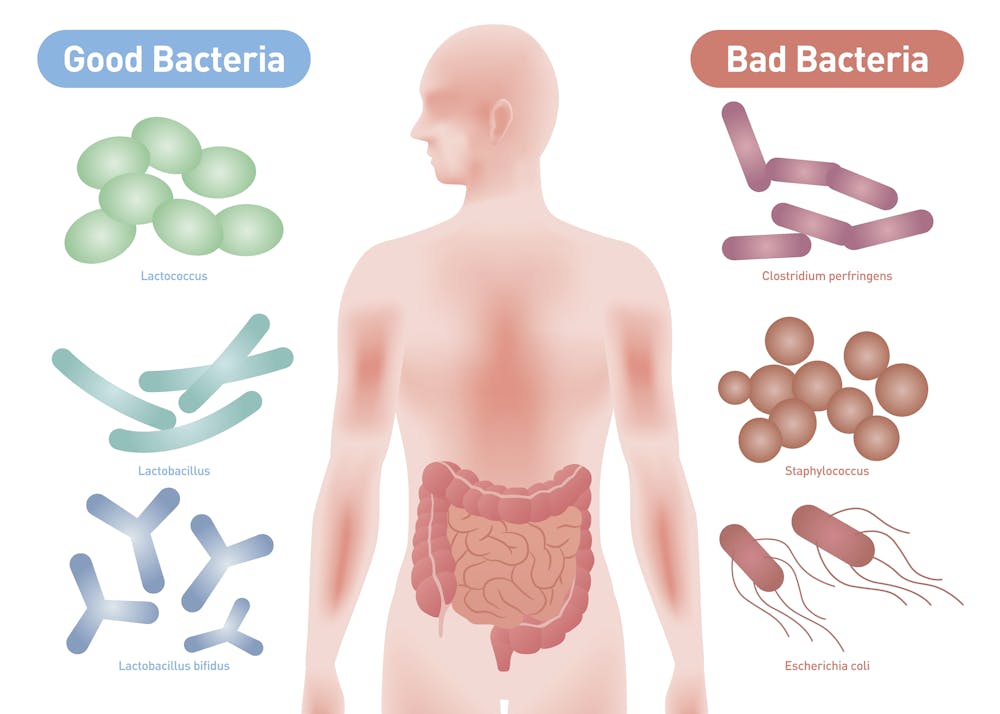
June 15, 2020 — Health Canada is recalling Carnivora Fresh Frozen Patties for Dogs and Cats due to a possible contamination with E. coli O157.

E. coli O157 is a particularly dangerous strain of bacteria that can cause serious and life-threatening illness in both pets and humans after eating or handling the affected food.

What’s Recalled?

The recall includes 6 varieties of Carnivora brand raw pet food.

Approximately 1,803 packages of the affected products were sold nationwide in Canada between January 13, 2020 and June, 2020.

As of June 12, four cases of illness related to the recalled product have been reported.

About E. Coli Bacteria

E. coli O157 is a bacteria that can cause serious, sometimes life-threatening illness.

Some people infected with E. coli O157 do not get sick at all, though they can still spread the infection to others.

Common symptoms observed after infection include nausea, vomiting, headache, mild fever, severe stomach cramps, and watery or bloody diarrhea.

Most symptoms end within five to ten days.

Pregnant women, those with weakened immune systems, young children and older adults are most at risk for developing serious complications and might need hospitalization.

There is no real treatment for E. coli infections, other than monitoring the illness, providing comfort, and preventing dehydration.

People should contact their health care provider if symptoms persist or worsen with time.

What to Do?

Health Canada advises consumers to stop using any of the affected pet food products and contact the retailer where it was purchased from for a full exchange or refund.

U.S. citizens can report complaints about FDA-regulated pet food products by calling the consumer complaint coordinator in your area.

Or go to the FDA’s “Report a Pet Food Complaint” page.

Canadians can report any health or safety incidents related to the use of this product by filling out the Consumer Product Incident Report Form.

Get Lifesaving Recall Alerts by Email

Get free dog and cat food recall alerts sent to you by email. Subscribe to The Dog Food Advisor’s emergency recall notification system.

There’s no cost. No spam. Cancel any time.

ooOOoo

There you are good people. I trust none of you is affected.

These are very strange times!

A Grist article raises a core question.

On June 4th this year Grist published an article written by Eve Andrews. It is not about dogs at all. Yet, it seems to me to ask a fundamental question about us humans. The article speaks of America but certainly it applies to my old country, the U.K., and it probably applies to most of the countries in the world.

I recently wrote to Annelise McGough, the Growth and Engagement Editor at Grist asking if I could republish the article. She kindly said yes!

So here it is!

ooOOoo

Grist / Windy Kelly / EyeEm

Why is everything falling apart in 2020?

By on Jun 4, 2020

Dear Umbra,

Did any aspect of climate change cause the pandemic to happen this year (versus last year or next year)? Could pandemics happen more often?

— Which Oracle Read Rightly Imminent, Existential Doom?

A. Dear WORRIED,

2020: what a year so far! As anyone who witnessed the crowds of face mask-clad people show up in the middle of a deadly pandemic to protest police violence this weekend can attest, a lot seems to be terrible all at once. You’re asking, in a sense, why now? It almost seems like it must be a rhetorical question. But it’s not — by understanding how we got into this mess, we might presumably be able to find our way out.

This doesn’t just apply to the pandemic.

Let’s start by taking your question at face (mask) value: There are multiple factors that have contributed to the rise of zoonotic illnesses — those of animal origin — over recent years, as my very sharp colleague Shannon Osaka delineated in an article and video earlier in the spring. Scientists believe COVID-19, like several other SARS viruses, likely originated in a bat. It turns out many strains of coronavirus can be traced back to bats! Who knew those little guys were such harbingers of destruction?

It’s not really on the bats, of course. Warmer temperatures (an established feature of climate change) and environmental degradation (often attributed to climate change, industrialization, or other products of human development) have driven a lot of animals to migrate out of their normal habitats and into human ones. Those factors have also contributed to different species coming into close contact with each other, which makes viruses normally contained to one species more likely to “spill over,” or jump to a new type of animal.

So clearly, the lead-up to the novel coronavirus’s outbreak was a gradual one. But perhaps 2019 was just warm enough to kill off enough of the insect population that some COVID-19-carrying bat depended on for food, and that drove it out to wreak some (unintentional) havoc on humanity. The bat’s habitat could have been destroyed by a new coal mine development. It could have woken up one morning and thought: This is my time to fuck shit up! Revenge on those humans that messed up my home! (OK, there was also probably a pangolin involved, but let’s keep things simple.)

According to the Centers for Disease Control and Prevention, COVID-19 is the fourth major pandemic caused by a novel virus to hit the United States since the 1918 “Spanish flu” that killed 50 million people worldwide. And there are so many factors and variables that lead to the sprout of a pandemic that you could very well argue that, “Yes, of course it happened at this exact point in time” or “No, it could have happened at any point in time.” It’s impossible to know for sure. But climate change and habitat destruction are certainly working together to create circumstances more favorable to the spread of disease, and that means pandemics will likely become more common as the world grows warmer.

The thing is, highly contagious, devastating illnesses have always been a part of human life, even though a real pandemic is a few-times-per-century event. It’s a fact of sharing the Earth with other living things; it just happens. But humans are ostensibly equipped with the means to contain the spread of diseases and help heal those who become sick. At this moment, thanks to advances in medicine and information-sharing and communication, that’s more true than ever before!

And yet. The United States, an astonishingly wealthy nation with ostensibly the most advanced — certainly the most expensive! — medical system in the world, has lost around 100,000 people to COVID-19, with many more surely to come. That doesn’t even take into account the far-reaching hardship caused by an economic collapse as drastic, by some metrics, as the Great Depression. The current unemployment rate, for example, exceeds 20 percent.

The reality is that what some have referred to as “the lost spring” (and what could very well be “the lost year”) is not the product of a single infectious disease, but the boiling over of many long-standing crises, including structural forms of injustice. Like everything else in American society, the damage done by the coronavirus is unevenly distributed across race. The death rate of black Americans from COVID is three times that of whites, and 40 percent of black-owned businesses have shuttered due to social distancing measures. As of April, rates of black and Latino unemployment were 16.7 and 18.9 percent, respectively, compared to 14.2 percent for whites. These hardships continue to feed into the cycle of racial inequality in this country.

The devastation to American society that we are witnessing in real time, one could argue, could only have happened at the present moment. That’s due to the nightmarish confluence of horrific leadership, centuries of racial oppression, unprecedented wealth inequality, the erosion of the social safety net, privatization of medicine, a far-too-consolidated supply chain, politicization of science, a highly globalized economy, and one misguided or mischievous bat. Oh, and the climate change and environmental degradation that could have led to said bat’s misbehavior.

COVID-19 could have popped up at any time, as viruses do. The degree to which it’s ravaged American society, however, has little to do with the virus itself. Other countries such as New Zealand and South Korea, faced the same disease and came out the other side with far fewer deaths and less severe economic devastation. This is, to a significant degree, about governance and leadership.

It’s also a preview of what climate change can do. A very contagious respiratory virus is an unfortunate fact; it’s not going away, and it is a challenge to be dealt with. Climate change, just the same, is coming whether or not we pay attention to it. Communities, cities, and states are going to have to put measures into place to ensure that it doesn’t literally kill us all. That’s what adaptation means, and that’s why people talk about things like seawalls and tree cover and managed retreat.

But creating a climate-resilient society requires a lot more than just building or planting stuff! This is where I would normally tell you to vote for leaders who support all that building and planting and, more importantly, cutting carbon emissions in the first place. Yes, do that. And additionally, vote for leaders who will feed our starving public systems to make it so they actually support the people who need them. Vote for those who understand and want to change what non-white people experience, what poor people experience, what immigrants experience. Without all of these things, there cannot be a climate-resilient civilization.

If anything were made clear by the unique, mind-boggling suffering that the United States has seen in the past week, brought about by the collision of a viral pandemic and police brutality, it’s that voting is a necessary condition but it is not enough. You, WORRIED, wrote to me to ask why the pandemic happened right now, possibly because it seems like such a uniquely terrible moment for the country to have to deal with it. We not only have the worst possible leader, but also a general absence of leadership altogether.

Going back just a few months, I believe there was an opportunity for an alternate version of this moment in American history in which one incredibly dangerous virus did not kill as many people nor ruin as many lives. But even in that universe, it’s important to acknowledge that pre-pandemic life wasn’t so great for most people. Undoing this path and “restoring order” is a ridiculous hope, since the order that has existed for so long has created a society that is wholly unsustainable judging from almost any social, environmental, or economic perspective.

So what can we do with this knowledge? One, you should be angry. Be angry that leaders missed opportunities to fortify the nation beyond its military, to break down racist systems and promote equality, and to instate laws and policies designed to help prevent crises that, by all accounts, were utterly predictable.

Then I think you should show your anger, whether that’s through protesting, hurling money or your time or whatever you have at worthy organizations that will put it in the right hands, or just screaming and yelling, if you have to. And while voting might not feel like enough when so much feels so wrong, it’s a necessary condition for change — force people in power to know that they created that mess and that they are accountable for it.

Furiously,

Umbra

ooOOoo

Climate change or global warming is with us NOW. It is time to make fundamental changes to the way we live NOW. While many individuals are doing their bit we need international agreement, especially international support for the United Nations, for all the nations in the world NOW.

Thank you for reading this!

It breaks my heart.

Let me not stop with that. I want to hear from you. Are you worried? Or not quite as concerned as me and Umbra? Do you think it is in the hands of our leaders or is it an international problem?

Let’s have a bit of a discussion.

Out of the mouths of young people!

A young man aged eight asks a very deep question.

Now the answer, that I am about to republish, is written to Tristan, aged 8. But frankly I have no doubt that the answer will be keenly read by persons of all ages. Certainly, this 75-year-old found the answer of great interest.

But to the question:

How can a Big Bang have been the start of the universe, since intense explosions destroy everything? – Tristan S., age 8, Newark, Delaware

And the answer:

ooOOoo

How could an explosive Big Bang be the birth of our universe?

April 30, 2020
By Michael Lam, Assistant Professor of Physics and Astronomy, Rochester Institute of Technology

Pretend you’re a perfectly flat chess piece in a game of chess on a perfectly flat and humongous chessboard. One day you look around and ask: How did I get here? How did the chessboard get here? How did it all start? You pull out your telescope and begin to explore your universe, the chessboard….

What do you find? Your universe, the chessboard, is getting bigger. And over more time, even bigger! The board is expanding in all directions that you can see. There’s nothing that seems to be causing this expansion as far as you can tell – it just seems to be the nature of the chessboard.

But wait a minute. If it’s getting bigger, and has been getting bigger and bigger, then that means in the past, it must have been smaller and smaller and smaller. At some time, long, long ago, at the very beginning, it must have been so small that it was infinitely small.

Let’s work forward from what happened then. At the beginning of your universe, the chessboard was infinitely tiny and then expanded, growing bigger and bigger until the day that you decided to make some observations about the nature of your chess universe. All the stuff in the universe – the little particles that make up you and everything else – started very close together and then spread farther apart as time went on.

Our universe works exactly the same way. When astronomers like me make observations of distant galaxies, we see that they are all moving apart. It seems our universe started very small and has been expanding ever since. In fact, scientists now know that not only is the universe expanding, but the speed at which it’s expanding is increasing. This mysterious effect is caused by something physicists call dark energy, though we know very little else about it.

A visualization of tiny energy fluctuations in the early universe. ESA, Planck Collaboration, CC BY

Astronomers also observe something called the Cosmic Microwave Background Radiation. It’s a very low level of energy that exists all throughout space. We know from those measurements that our universe is 13.8 billion years old – way, way older than people, and about three times older than the Earth.

If astronomers look back all the way to the event that started our universe, we call that the Big Bang.

Many people hear the name “Big Bang” and think about a giant explosion of stuff, like a bomb going off. But the Big Bang wasn’t an explosion that destroyed things. It was the beginning of our universe, the start of both space and time. Rather than an explosion, it was a very rapid expansion, the event that started the universe growing bigger and bigger.

This expansion is different than an explosion, which can be caused by things like chemical reactions or large impacts. Explosions result in energy going from one place to another, and usually a lot of it. Instead, during the Big Bang, energy moved along with space as it expanded, moving around wildly but becoming more spread out over time since space was growing over time.

Back in the chessboard universe, the “Big Bang” would be like the beginning of everything. It’s the start of the board getting bigger.

It’s important to realize that “before” the Big Bang, there was no space and there was no time. Coming back to the chessboard analogy, you can count the amount of time on the game clock after the start but there is no game time before the start – the clock wasn’t running. And, before the game had started, the chessboard universe hadn’t existed and there was no chessboard space either. You have to be careful when you say “before” in this context because time didn’t even exist until the Big Bang.

You also have wrap your mind around the idea that the universe isn’t expanding “into” anything, since as far as we know the Big Bang was the start of both space and time. Confusing, I know!

Astronomers aren’t sure what caused the Big Bang. We just look at observations and see that’s how the universe did start. We know it was extremely small and got bigger, and we know that kicked off 13.8 billion years ago.

What started our own game of chess? That’s one of the deepest questions anyone can ask.

ooOOoo

Before the Big Bang then there was “no space and there was no time.” Michael Lam says that is confusing. I think that’s a gigantic understatement.

There there’s Dark Energy!

I wonder if we humans will ever come to the point where it is all understood!

More on the magnificent Hubble!

More on the magnificent Hubble!

The BBC have published an excellent article.

There was such a good response to the article on the Hubble that I published on April 27th that it was an easy decision to republish the article that was presented on the BBC website on the 24th, and this time the photographs can be downloaded.

ooOOoo

Hubble telescope delivers stunning 30th birthday picture

By Jonathan Amos, Science correspondent, 24 April 2020

It’s 30 years ago to the day that the Hubble telescope was launched – and to celebrate its birthday, the veteran observatory has produced another astonishing image of the cosmos.

This one is of a star-forming region close to our Milky Way Galaxy, about 163,000 light-years from Earth.

The larger object is the nebula NGC 2014; its companion is called NGC 2020.

But astronomers have nicknamed the scene the “Cosmic Reef” because it resembles an undersea world.

[There is an audio by Antonella Nota that is a little under 10 minutes long. I cannot embed it into this post for some unclear reason. Go here if you want to listen to it! It’s well worth listening to.]

Antonella Nota: “It’s called the people’s telescope because it brought the Universe to the people”

Famously blighted by blurred vision at the outset of its mission in 1990, Hubble was eventually repaired and upgraded.

The remarkable pictures it has taken of planets, stars, and galaxies have transformed our view of the cosmos.

Indeed, there are those who think Hubble is the most important scientific tool ever built.

It’s still far from retirement.

The US space agency (Nasa), which runs the observatory in partnership with the European Space Agency (Esa), says operations will be funded for as long as they remain productive.

Last year, its data resulted in almost 1,000 scientific papers being published – so it continues to stand at the forefront of discovery.

For its 25th birthday, Hubble imaged a giant cluster of stars called Westerlund 2

Engineers obviously keep a watching brief on the health of Hubble’s various systems. Pleasingly, all four instruments onboard – the two imagers and two spectrographs – work at full tilt.

In the past, the telescope’s Achilles heel has been the six gyroscopes that help turn and point the facility, maintaining a rock-steady gaze at targets on the sky.

These devices have periodically failed down the years, and during their final servicing mission in 2009 space shuttle astronauts were tasked with replacing all six.

Three have subsequently shut down again, but Nasa project scientist Dr Jennifer Wiseman says this is not yet an issue for serious concern.

“Nominally, we need three gyroscopes, but we can operate on just one due to the ingenuity of the engineers,” she asserted.

There’s a quiet confidence that Hubble can keep working well into the 2020s. Its supposed “successor” – the James Webb Space Telescope (JWST) – is due for launch next year, but the presence in orbit of this more modern observatory will in truth merely just extend capability; it won’t make Hubble redundant.

That’s because the new facility has been designed to see the cosmos at longer wavelengths of light than Hubble. The duo will be complementary and will on occasion actually pursue targets together to get a fuller perspective.

This is an exciting prospect for astronomers everywhere – but especially for those in Europe where Hubble has been such a rewarding endeavour, says Esa project scientist Dr Antonella Nota.

“From the memorandum of understanding there was a guarantee that European astronomers would get 15% of observing time for the duration of the mission. If I look back at how much time European astronomers got – on average it’s 22%. And it is a peer-reviewed process so we never needed to put a finger on the scales. European astronomers are creative; they’re smart; they’re doing leading-edge science,” she told BBC News.

What has Hubble contributed to science?

It’s a bit of a cliche, but Hubble has truly been a “discovery machine”.

Before the telescope launched in 1990, astronomers didn’t know whether the Universe was 10 billion years old or 20 billion years old.

Hubble’s survey of pulsating stars narrowed the uncertainty, and we now know the age extremely well, at 13.8 billion.

The observatory played a central role in revealing the accelerating expansion of the cosmos – a Nobel Prize-winning breakthrough – and it provided the definitive evidence for the existence of super-massive black holes at the centre of galaxies.

The Deep Field images require Hubble to stare at the same patch of sky for days on end

It’s amazing to think that when Hubble launched, scientists had yet to detect the first exoplanet, the name given to a planet orbiting a star other than our Sun. Today, Hubble is pioneering the study of these far-off worlds, examining their atmospheres to try to gauge their nature.

And although the sparkling eight-metre-class ground-based telescopes can now match – and even exceed – Hubble’s skill in certain fields of study, the space telescope remains peerless in going super-deep.

Its so-called Deep Field observations in which it stared at a small patch of sky for days on end to identify the existence of very distant, extremely faint galaxies is one of the towering achievements in astronomy.

These studies have shown us what the Universe was like just a few hundred million years after the Big Bang. Only JWST, with its finely-tuned infrared detectors, will go deeper still.

A Hubble classic: The Veil Nebula is the expanding debris of an exploded star

Kathryn Sullivan was one of the astronauts onboard Space Shuttle Discovery when it released Hubble into its 612km-high orbit on 25 April, 1990 – a day she recounts in a recent book, Handprints On Hubble.

“Hubble’s scientific impact has just been immense. But what I had not really appreciated until I started writing my book was the extent to which Hubble – because of its gorgeous images and their mind-bending implications – has really permeated popular culture,” she told BBC News.

“I see Hubble on the side of U-Haul (rental) trailers, on tattoos, on lunchboxes, on shirts, in advertisements, almost ubiquitously.

“And I think part of that is down to Hubble coming into service just as the internet was becoming the thing we now know it to be.

“That’s put the pictures right in front of people.”

JWST will study the Universe at longer wavelengths of light

ooOOoo

This is the most amazing invention and regular missions to service the telescope including regular updates to the technology have kept it current.

It has produced the most distant and beautiful photographs. It has also refined our knowledge of when the universe came into existence – 13.8 billion years ago.

Staggering!