A closer look at the excellent work undertaken by Dr. Krista Varady.
Back on the 16th I wrote a post that was a follow-up to the previous day’s post about living a long life. My follow-up was called, hardly surprisingly, Postscript to Long Life post.
In that follow-up post, I wrote this,
Over on the Healthy Fellow blogsite, there’s an interview with Dr. Varady. The web link of that interview is here and crossing over and reading the full interview is much recommended. Here’s a taste, pardon the pun, of that interview:
JP: Can you help explain the distinctions between alternate day fasting and caloric restriction?
Dr. Varady: Caloric restriction is basically daily calorie restriction where an individual would restrict themselves by about 15% to 40% of their energy needs daily. So basically every single day you’re undergoing the same amount of restriction, whereas alternate day fasting involves a fast day wherein the individual would only eat 25% of their energy needs. So about 500 calories or so and that’s alternated with something called a “feed day” where the individual would eat ad libitum – so as much as they want. However in our studies we show that people end up losing weight because they can’t fully make up for the lack of food on the fast day on the feed day.
I’ve been in touch with JP wondering if I might have permission to republish the full interview. Unfortunately that wasn’t possible. However JP did say that republishing a couple of paragraphs would be fine and I’m going to be cheeky in adding a couple to the one I already published above!
Anyway, before inserting those paragraphs, let me set the scene. A very quick web search comes across the fact that Dr. Varady is an Assistant Professor at the UIC College of Applied Health Sciences. Her research work is described thus,
Research Interests
Dr. Varady, PhD
My research investigates the ability of novel dietary restriction strategies to facilitate weight loss and decrease cardiovascular risk in obese subjects. The most common dietary restriction protocol implemented is daily calorie restriction (CR), which involves reducing energy intake by 15 to 40% of needs daily. Another dietary restriction regimen employed, although far less commonly, is alternate day fasting (ADF). ADF regimens include a “feed day” where food is consumed ad-libitum over 24-h, alternated with a “fast day”, where food intake is partially or completely reduced for 24-h. ADF regimens were created to increase adherence to dietary restriction protocols since these regimens only require energy restriction every other day, rather than every day, as with CR. Recent findings from our lab demonstrate that ADF is an effective means of facilitating weight loss and improving several indicators of cardiovascular disease risk in overweight and obese subjects. Our findings also show that changes in adipose tissue physiology during weight loss may mediate these improvements in vascular health.
Current research activities
Developing novel diet and exercise regimens to facilitate weight loss and decrease cardiovascular disease risk in humans; Examining the intermediate role of adipose tissue in mediating the cardio-protective effects of diet and exercise; Investigating the behavioral factors that influence adherence to dietary restriction strategies.
So this is one lady that ought to understand the effects of what we shovel down our mouths. OK, on to that interview. From Part One, I selected this exchange,
JP: How long does it generally take for people to adapt to this new way of eating?
Dr. Varady: A lot of the subjects were saying that for the first two weeks it was pretty tough to basically change from a 3 meal a day eating pattern to just eating 1 meal a day and then 3 slightly bigger meals the next day. But they said that about after two weeks they totally got used to it and weren’t that hungry on the fast day anymore. They could undergo these really long periods of fasting without really feeling deprived. The other interesting thing that they were telling us was with regard to the feed day. The people didn’t binge. They only ate about 100% to 110% of their calorie needs.
Then from the second part of the interview, JP underlines an important point, “The truth of the matter is that research into ADF is still in its infancy and Dr. Varady is the first person to admit it. ” I then went on to select this exchange between JP and Dr. Varady,
JP: It seems as though ADF provides a very broad array of health benefits. Do you have a theory about why this is possible?
Dr. Varady: In the human data the main thing you see is weight loss. Even if it’s done in normal weight people. The minute you start losing weight you all of a sudden see an improvement in the majority of these factors. A lot of the effects of alternate day fasting are mediated through weight loss. Losing weight is so tightly correlated with your blood pressure, your cholesterol levels and heart rate, etc.
Fasting May Reduce Age-Related Disease Risk Factors
So this is not something of trivial interest, it’s serious research that could have a remarkable effect on the huge problems of obesity and poor diet that affect millions. Do yourself a favour and read the interview now. Part One and Part Two.
Finally, in that post on the 16th, I owned up to having got my weight down to 161.6 lbs (73.30 kgs). Now here we are having completed my third week of 5:2 fasting and last Saturday morning my weight was 159.0 lbs (72.12 kgs). The routine is very comfortable and as Dr. Varady mentioned, there is no sense of wanting to binge after the two days of fasting.
More information about fasting, not about being female!
In yesterday’s post on Learning from Dogs, I wrote that there are two important aspects of living a longer life. The first one was be a female and the second one was about fasting. I propose to expand a little on that second aspect because of the number of people who found the topic so interesting.
Valter D. Longo and students.
In yesterday’s post there was reference to the work that Professor Valter D. Longo of the University of Southern California (USC) has been undertaking. As the USC web reference explains, Valter Longo is the Director of the Longevity Institute, a Professor of Gerontology and Biological Sciences and the Edna Jones Chair of Biogerontology, so if anyone understands how humans tick, it’s likely to be this man! As his research overview states,
He is interested in understanding the mechanisms of aging in organisms ranging from yeast to humans. The focus is on the conserved nutrient signaling pathways that can be modulated to protect against age-dependent oxidative damage and delay or prevent diseases of aging including cancer, diabetes and neurodegenerative diseases.
(Any questions, ask Prof. Longo not me!)
BBC Presenter Michael Mosley with Dr Krista Varady
The other learned person referred to in yesterday’s post was Dr. Krista Varady. This is what was written,
Dr Krista Varady of the University of Illinois at Chicago carried out an eight-week trial comparing two groups of overweight patients on ADF. (ADF = Alternative Day Fasting)
Over on the Healthy Fellow blogsite, there’s an interview with Dr. Varady. The web link of that interview is here and crossing over and reading the full interview is much recommended. Here’s a taste, pardon the pun, of that interview:
JP: Can you help explain the distinctions between alternate day fasting and caloric restriction?
Dr. Varady: Caloric restriction is basically daily calorie restriction where an individual would restrict themselves by about 15% to 40% of their energy needs daily. So basically every single day you’re undergoing the same amount of restriction, whereas alternate day fasting involves a fast day wherein the individual would only eat 25% of their energy needs. So about 500 calories or so and that’s alternated with something called a “feed day” where the individual would eat ad libitum – so as much as they want. However in our studies we show that people end up losing weight because they can’t fully make up for the lack of food on the fast day on the feed day.
Let me add a personal perspective on this. On the morning of the first day after our two-day fast, my weight was 162.5 lbs (73.71 kg), on the morning of the second day after our fasting days my weight was 161.8 lbs (73.39 kgs) and on the morning of the third day after our fasting, my weight was 161.6 lbs (73.30 kgs). Ergo even though we were back to eating normally for three days after our two days of fasting, I continued to lose 0.9 lbs (0.4 kgs).
So if you have any concerns over cardiovascular health or want to explore a realistic way of losing excess weight, then do read the interview. Part One of that interview is here and Part two here.
As is said, we are what we eat and I shall close this postscript with a link to an article on the Mother Nature Network website that was published a little over a year ago: 18 foods that fight common ailments – Try healthy eats that help fight diabetes, heart disease, migraines and more.
OK, a change to the theme of the last few days, to a topic that must cross the minds of practically every single human being at some point; what is our lifespan going to be? Who doesn’t want to live a long and healthy life, and I don’t wish to be insensitive to those who labour under mental and physical troubles, of course.
So a recent couple of fascinating stories have given an insight into just how to live that longer and healthier life.
The first one is easy – be a woman!
Actress Michelle Ryan as the Bionic Woman was destined to live even longer!
OK, a bit of an issue if you are a man like me but did you realise, because I didn’t, that being the female of many species offers a significant advantage. This came from a BBC item published on the 2nd August, from which I quote,
Scientists believe they have discovered a clue to why women tend to live longer than men – by studying fruit flies.
Writing in Current Biology, they focus on mutations in mitochondrial DNA – the power source of cells.
Mitochondria are inherited only from mothers, never from fathers, so there is no way to weed out mutations that damage a male’s prospects.
Then came an extraordinary fact [my italics below],
By the age of 85, there are approximately six women for every four men in the UK, and by 100 the ratio is more than two to one.
And females outlive males in many other species.
If you are of the scientific bent and/or a woman! you can read a fuller account of the research findings on the Science Daily website. As well as that link you can also read the Monash University press release on those research findings.
As a fella’ I think I’m moving on!
The second one is almost as easy – Fasting
Again, this news came from the BBC website, the news about the power of fasting. In an article promoting the showing of a BBC Horizon programme, Michael Mosley wrote this,
Scientists are uncovering evidence that short periods of fasting, if properly controlled, could achieve a number of health benefits, as well as potentially helping the overweight, as Michael Mosley discovered.
I’d always thought of fasting as something unpleasant, with no obvious long term benefits. So when I was asked to make a documentary that would involve me going without food, I was not keen as I was sure I would not enjoy it.
But the Horizon editor assured me there was great new science and that I might see some dramatic improvements to my body. So, of course, I said, “yes”.
I am not strong-willed enough to diet over the long term, but I am extremely interested in the reasons why eating less might lead to increased life span, particularly as scientists think it may be possible to get the benefits without the pain.
For obvious reasons I can’t republish the full BBC article but I encourage you to read it here. And stay with me for some more research links that are most interesting.
But I will just include this part from the BBC item,
The IGF-1 hormone (insulin-like growth factor) is one of the drivers which keep our bodies in go-go mode, with cells driven to reproduce. This is fine when you are growing, but not so good later in life.
There is now evidence suggesting that IGF-1 levels can be lowered by what you eat. Studies on calorie restrictors suggest that eating less helps, but it is not enough.
As well as cutting calories you have to cut your protein intake. Not entirely – that would be a very bad idea. It’s about sticking to recommended guidelines, something most of us fail to do.
The reason seems to be that when our bodies no longer have access to food they switch from “growth mode” to “repair mode”.
As levels of the IGF-1 hormone drop, a number of repair genes appear to get switched on according to ongoing research by Professor Valter Longo of the University of Southern California.
Intermittent fasting
One area of current research into diet is Alternate Day fasting (ADF), involving eating what you want one day, then a very restricted diet (fewer than 600 calories) the next, and most surprisingly, it does not seem to matter that much what you eat on non-fast days.
Dr Krista Varady of the University of Illinois at Chicago carried out an eight-week trial comparing two groups of overweight patients on ADF.
“If you were sticking to your fast days, then in terms of cardiovascular disease risk, it didn’t seem to matter if you were eating a high-fat or low-fat diet on your feed (non-fast) days,” she said.
Michael Mosley explains how he couldn’t manage Alternate Day Fasting and found it was just too impractical.
Instead I did an easier version, the so-called 5:2 diet. As the name implies you eat normally 5 days a week, then two days a week you eat 500 calories if you are a woman, or 600 calories, if you are a man.
The BBC Horizon programme was screened on the 6th August but is available on the BBC iPlayer for UK viewers. Here’s how it was promoted on the BBC website,
Michael Mosley has set himself a truly ambitious goal: he wants to live longer, stay younger and lose weight in the bargain. And he wants to make as few changes to his life as possible along the way. He discovers the powerful new science behind the ancient idea of fasting, and he thinks he’s found a way of doing it that still allows him to enjoy his food. Michael tests out the science of fasting on himself – with life-changing results.
This programme clip will also attract your attention, trust me!
and if you would prefer a more inspiring antidote then here’s another clip from the programme,
Tomorrow, I’m going to link to the scientists behind these new findings because this is very significant research that could revolutionize the future health for millions.
Finally, I’m here to tell you that Jean and I have ‘signed up’ to the 5:2 pattern and had our fast days last Thursday and Friday. They were much easier than I expected and, frankly, will be fun to maintain. Leave a comment if you would like details of the food and calorific values of what Jean served those two days.
Four days ago, there was a post on Learning from Dogs under the heading of We are what we eat! As is often the way, subsequently after writing that article (back on the 8th), there was a flurry of other associated items that I wanted to bring to your attention today.
The first was on the website of The Permaculture Research Institute of Australia. It was a very inspiring two-part article written by Anthea Hudson under the title of Preparing Our Children For a Resilient Future.
Part One was all about recycling and our role as facilitators. Here’s a little challenge for you, lifted from that first part,
Landfill — Our Dirty Legacy
Let’s begin by understanding a bit about how long the things we send to landfill last, before they break down.
Have a look at the list below and see if you can guess the order these items should be placed in, from the things that break down quickest, to those that take the longest. Then have a guess as to how long you think each one will take to break down.
paper bag
plastic jug
cigarette butt
glass bottle or jar
banana
aluminium can (soft drink can)
leather boot or shoe
plastic 6-pack rings
Styrofoam cup
cotton pillowcase
rubber sole of the leather boot (above)
wool sock or scarf
tin can (e.g. baked beans or soup can)
Don’t cheat by looking at the answers below, until you have made your own list.
Think you have worked it out? Now go here and check your answers! You may be suprised.
Part One is very comprehensive and Part Two even more so. Indeed, it serves as a wonderful check-list of all the reasons why and how we can be more responsible for what goes into our stomachs. It really is a most comprehensive review, nay tutorial, on how to grow your own. It includes such gems as this,
This video was created by the 2009 spring plant physiology class at Plymouth State University.
Next to the bad and ugly stuff.
Anyone who was shocked by the revelation of the harm being done to bees highlighted in my recent Post (the full article is on Food Freedom News) and to us humans,
A recent study showed that every human tested had the world’s best-selling pesticide, Roundup, detectable in their urine at concentrations between five and twenty times the level considered safe for drinking water.
will be further shocked, alarmed and (fill in your words) by this two-hour film introduced by Gary Null. We all need to watch it and yet I’m bound to say it will ruin your day! Jean and I have watched it in full and to all my readers, especially American ones, I say this – do watch this video, Please!
Progressive Radio Network presents
A Gary Null Production
WAR ON HEALTH: The FDA’s Cult of Tyranny
Introduced by the director (from his speech at the world premiere in New York City, June 15, 2012)
In the near future, American medical practice may change dramatically for the worse. No longer will maximal dose natural supplements—vitamins, natural compounds, and scientifically proven medicinal herbs—be available over the counter in local health and grocery stores. Holistic practice, which relies upon non-prescription natural treatments instead of Big Pharma drugs prescribed life-long, will diminish. American healthcare will be imprisoned, patients will be forced to abide by a single medical paradigm defined by corporate drug and food executives and dictated by a government enforcement agency, the Food and Drug Administration (FDA). This is the bleak scenario if the FDA succeeds in limiting Americans’ options to prevent and treat diseases.
‘War on Health’ is the first documentary detailing and challenging the FDA agenda and its allegiance with the international Codex Alimentarius, which hopes to establish a monolithic food and health regime. Betraying its founding mandate to assure drug, food and chemical safety in the interests of public health, the FDA today is a repressive bureaucracy serving pharmaceutical and agricultural greed and profits. Vaccines, medical devices, prescription drugs are fast tracked at alarming rates through the FDA at the expense of scientific oversight to assure their efficacy and safety. The
result is hundreds of thousands premature deaths annually from pharmaceutical drugs, vaccines and medical devices and an epidemic of medical incompetence and fraud sanctioned by federal health officials.
Featuring many pioneering American and European attorneys, physicians, medical researchers and advocates of health freedom, War on Health lifts the veil on FDA’s militaristic operations against organic food providers and alternative physicians. The film’s conclusion is perfectly clear: the FDA is a tyrannical cult founded upon the denial of sound medical science with little intention to improve the nation’s health and prevent disease.
Written and Directed by Gary Null
Produced by Valerie Van Cleve
Associate Producer: Richard Gale
Editor: Richie Williamson
Offline Editing: Valerie Van Cleve, L.A. Jones
Camera Operators: Marcello Coppuchino, Peter Bonilla, David Grier, L.A. Jones
Gregory Jason Russ, Jake Hammer Mesmire, Edson Tanakae, Valerie Van Cleve, Richie Williamson
As my dear friend of many, many years, Richard M., has a habit of saying, “Must go now, need to get back to Planet Earth!“
I am indebted to Schalk Cloete who has been leaving some very thoughtful comments on Learning from Dogs. Schalk writes the blog, One in a Billion and more information about him can be learned here. One of the very generous aspects of Schalk’s Blog is that his material is free from copyright, so I gratefully offer the following from his blog.
oooOOOooo
Perfect health the traditional way
There are a number of very special traditional communities around the world that enjoy amazing health and longevity completely without the help of modern medicine. People still contribute actively to their communities in their 80′s and 90′s and often surpass the magical age of 100 sometimes without ever visiting a doctor.
The most well-documented of these communities is the Okinawa islands in Japan, but a number of other such communities also exist. These include the region of Abkhasia in the Soviet Union, the Symi island in Greece, the Italian village Campodimele, and the mountain communities of Hunza in Pakistan, Vilcabamba in Ecuador and Bama in China.
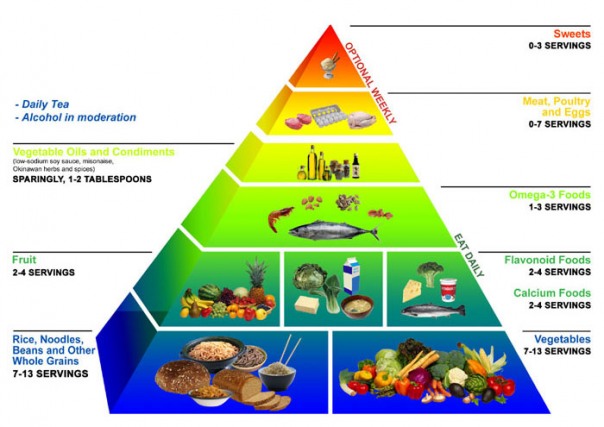
So, what are the secrets of these amazingly healthy people? Well, I don’t really think we can call them “secrets”, but here they are: these people simply eat a healthy, nutrient dense and predominately plant-based diet (Okinawan food pyramid given below), they never over-eat, they live very active lifestyles and they have a very strong sense of community. Basically, they live the polar opposite of the modern western lifestyle.
These healthy lifestyle choices have some pretty impressive results. One fun statistic about Okinawa is that they boast 15% of the world’s confirmed super-centenarians (those over 110) while having only 0.0002% of the worlds people, thereby giving them a concentration of super-elders close to 100,000 times greater than the rest of the world. Wow…
In John Robbins’ excellent book “Healthy at 100″, he discloses a lot of well documented research on Okinawa, stating that they are about 15% as likely to die of heart disease and cancer as Americans. They also live 5 years longer on average.
When it comes to healthcare spending, Okinawa has the lowest healthcare costs in all of Japan, which already has a three times smaller per-capita healthcare expense than the USA. Thus, they have about a 7 times smaller chance of dying from degenerative disease and live 5 years longer, all while incurring about 5 times fewer healthcare expenses. Not bad, I’d say.
Unfortunately, the younger generation of Okinawans are rapidly screwing up these awesome stats by succombing to the American lifestyle brought by the US troops stationed on Okinawa. It really is quite sad how many grandparents have to bury their grandchildren in Okinawa nowadays.
But this just shows how alluring our modern consumerist lifestyle really is. These young Okinawans saw the vibrant health of their parents and grandparents first hand, but still chose to consume their bodies into oblivion. Unthinking consumerism is indeed a very powerful enemy…
oooOOOooo
Fascinating article from Schalk, as I’m sure you will agree.
Our fate is also wrapped up in the ocean – another cause for tears.
In a very real sense, this Post continues from my writings of yesterday concerning James Hansen.
A year ago, the BBC reported the shocking state of our oceans. It included this:
“The rate of change is vastly exceeding what we were expecting even a couple of years ago,” said Ove Hoegh-Guldberg, a coral specialist from the University of Queensland in Australia.
“So if you look at almost everything, whether it’s fisheries in temperate zones or coral reefs or Arctic sea ice, all of this is undergoing changes, but at a much faster rate than we had thought.”
But more worrying than this, the team noted, are the ways in which different issues act synergistically to increase threats to marine life.
Some pollutants, for example, stick to the surfaces of tiny plastic particles that are now found in the ocean bed.
This increases the amounts of these pollutants that are consumed by bottom-feeding fish.
Plastic particles also assist the transport of algae from place to place, increasing the occurrence of toxic algal blooms – which are also caused by the influx of nutrient-rich pollution from agricultural land.
In a wider sense, ocean acidification, warming, local pollution and overfishing are acting together to increase the threat to coral reefs – so much so that three-quarters of the world’s reefs are at risk of severe decline.
We have always been fish eaters, from the dawn of civilization, but in the last twenty years we have transformed the oceans beyond recognition. Putting our exploitation of the seas into historical context, Roberts offers a devastating account of the impact of modern fishing techniques, pollution, and climate change, and reveals what it would take to steer the right course while there is still time. Like Four Fish and The Omnivore’s Dilemma, The Ocean of Life takes a long view to tell a story in which each one of us has a role to play.
That book was recently reviewed in The Economist, from which I reproduce the following extracts,
The Ocean of Life: The Fate of Man and the Sea. By Callum Roberts.
Traditional attitudes towards the sea, as something immutable and distant to humanity, are hugely out of date. The temperature change that harmed the corals was not caused by human activity; yet it was a foretaste of what man is now doing to the sea. The effects of overfishing, agricultural pollution and anthropogenic climate change, acting in concert, are devastating marine ecosystems. Though corals are returning to many reefs, there is a fair chance that in just a few decades they will all be destroyed, as ocean temperatures rise owing to global warming. The industrial pollution that is cooking the climate could also cause another problem: carbon dioxide, absorbed by the sea from the atmosphere, turns to carbonic acid, which is a threat to coral, mussels, oysters and any creature with a shell of calcium carbonate.
The reviewer explains that, “The enormity of the sea’s troubles, and their implications for mankind, are mind-boggling. Yet it is equally remarkable how little this is recognised by policymakers—let alone the general public.” and then adds, to the author’s credit, ” There is also a dearth of good and comprehensive books on a subject that can seem too complicated and depressing for any single tome. Callum Roberts, a conservation biologist, has now provided one.”
The book review then continues,
He [Callum Roberts] starts with a bold claim: that anthropogenic stresses are changing the oceans faster than at almost any time in the planet’s history. That may be putting it too strongly. Yet there is no quibbling with the evidence of marine horrors that Mr Roberts presents.
Take overfishing. The industrialisation of fishing fleets has massively increased man’s capability to scoop protein from the deep. An estimated area equivalent to half the world’s continental shelves is trawled every year, including by vast factory ships able to put to sea for weeks on end. Yet what they are scraping is the bottom of the barrel: most commercial species have been reduced by over 75% and some, like whitetip sharks and common skate, by 99%. For all the marvellous improvements in technology, British fishermen, mostly using sail-power, caught more than twice as much cod, haddock and plaice in the 1880s as they do today. By one estimate, for every hour of fishing, with electronic sonar fish finders and industrial winches, dredges and nets, they catch 6% of what their forebears caught 120 year ago.
Overfishing is eradicating the primary protein source of one in five people, many of them poor. It also weakens marine ecosystems, making them even more vulnerable to big changes coming downstream.
For example, there is the matter of chemical pollution, mostly from agricultural run-off. This has created over 400 dead-zones, where algal tides turn the sea anoxic for all or part of the year. One of the biggest, at the mouth of the Mississippi Delta in the Gulf of Mexico, covers 20,000 square km (7,700 square miles) of ocean. An annual event, mainly caused by the run-off of agricultural fertilisers from 40% of America’s lower 48 states, it makes the one-off Deepwater Horizon oil-spill look modest by comparison.
Global warming is another problem. Hitherto, the sea has been a buffer against it: because the heat capacity of water is several times that of air, the oceans have sucked up most of the additional heat, sparing the continents further warming. Yet this is now starting to change—faster than almost anyone had dared imagine.
One effect of the warming ocean, for example, is to increase the density difference between the surface and the chilly deep, which in turn decreases mixing of them. That means less oxygen is making it down to the depths, reducing the liveability of the oceans. Off America’s west coast, the upper limit of low-oxygen water is thought to have risen by 100 metres. Where strong winds bring this water nearer to the surface, there are mass die-offs of marine life. Such events will proliferate as the climate warms.
This is a poor lookout for already put-upon fish. “Fish under temperature and oxygen stress will reach smaller sizes, live less long and will have to devote a bigger fraction of their energy to survival at the cost of growth and reproduction,” writes Mr Roberts. And that is before he gets to the effects of ocean acidification, which could be very bad indeed. Without dramatic action to reverse these processes, he predicts a catastrophe comparable to the mass extinctions of the Palaeocene-Eocene Thermal Maximum, when carbon-dioxide levels, temperature and ocean acidity all rocketed. He writes: “Not for 55m years has there been oceanic disruption of comparable severity to the calamity that lies just a hundred years ahead.” That would be hard to prove; it would be better not to try.
So what is to be done? Mr Roberts provides a hundred pages of answers, occupying roughly a third of the book. They range from the obvious—curbing carbon emissions—to technical fixes, like genetic improvements to aquaculture stocks. None is impossible; and Mr Roberts, almost incredibly, describes himself as an optimist. He writes, “We can change. We can turn around our impacts on the biosphere.” We had better do so.
Amen to that!
So want to know where to start? Here’s a snippet of advice in terms of protecting our fish stocks,
Reflecting more than a casual interest in this fascinating topic.
Yesterday, I referred to a recent visit to my doctor and the ‘system’ not being able to address two aspects at the same time, Vestibular Migraine and possible memory issues. Then later on, in response to a comment from Michelle of Dogkisses Blog, I owned up to having been advised that I may have early-onset Alzheimer’s Disease.
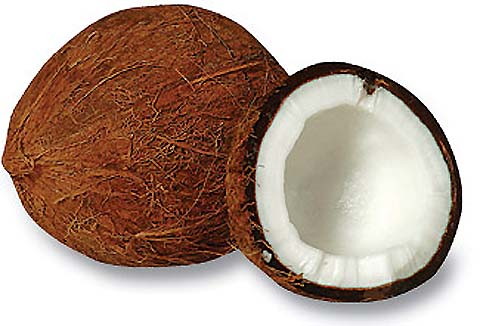
But very quickly friends responded to that ‘news’ by asking me if I had come across the information about coconut oil. So here are my findings about the possible curative effects of coconut oil and, clearly, I wanted to draw this to the attention of as many people as I can. Please feel free to republish this information; all I would ask is that you link back to the URL for this Post – thank you.
Let me take you to a website called Coconut Ketones and to a page on that website where there are a number of articles on the possible major healing effect of coconut oil. The primary article, written in 2008, starts thus,
WHAT IF THERE WAS A CURE FOR ALZHEIMER’S DISEASE AND NO ONE KNEW?
A Case Study by Dr. Mary Newport
July 22, 2008
There is a growing epidemic of obesity, type II diabetes, cardiovascular disease, and predictions that 15,000,000 people in the United States alone will have Alzheimer’s Disease by the year 2050.
In 2001, Dr. Richard L. Veech of the NIH, and others, published an article entitled, “Ketone bodies, potential therapeutic uses.”1 In 2003, George F. Cahill, Jr. and Richard Veech authored, “Ketoacids? Good Medicine?”2 and in 2004, Richard Veech published a review of the therapeutic implications of ketone bodies.3 These articles are not found in journals that the average physician would read, much less the lay public. Unless you are researching the topic, it is unlikely that you would ever randomly come across this information.
My husband Steve, age 58, has had progressive dementia for at least five years. He had an MRI in May 2008 showing a diffuse involutional change of the frontal and parietal lobes and moderate left-sided and severe right-sided amygdala and hippocampal atrophy with no ischemic change, which would support a clinical diagnosis of Alzheimer’s Disease. For non-medical people, this means that he has shrunken areas of the brain. Many days, often for several days in a row, he was in a fog; couldn’t find a spoon or remember how to get water out of the refrigerator. Some days were not so bad; he almost seemed like his former self, happy, with his unique sense of humor, creative, full of ideas. One day I would ask if a certain call came that I was expecting and he would say, “No.” Two days later he would remember the message from so-and-so from a couple of days earlier and what they said. Strange to have no short-term memory and yet the information was filed somewhere in his brain. My gut feeling is that diet has something to do with the fluctuation, but what. I knew that he was locked up in there somewhere, if only there was a key to open up the areas of his brain that he didn’t have access to.
The article goes on to show the amazing and positive differences that came about for Steve as a result of incorporating coconut oil and other dietary aspects. Please go here to view and download a pdf of the full article. But I will give you the closing paragraphs.
If you are using any type of hydrogenated vegetable oil or any oil with transfat, do not use any more and get rid of it! Extra virgin olive oil, butter and other natural, non-hydrogenated oils are okay to use along with the coconut oil. It is possible to use coconut oil in place of all other oils, however, since it contains no omega-3 fatty acids, it is very important to eat salmon twice a week or get enough omega-3 fatty acid from other rich sources such as fish oil capsules, flax meal, flax oil (not for cooking) or walnuts.
It is inconceivable that a potential dietary prevention and cure for Alzheimer’s disease, and other neurodegenerative diseases, has been out there for so many years, and yet has gone unnoticed. It is very likely that these diseases are becoming more prevalent due our current diet. The American diet has changed drastically from what it was before the 1950’s, when our parents and grandparents used lard and coconut oil to cook. Cardiovascular disease was rare at the beginning of the 20th century, and has skyrocketed, along with other devastating diseases, such as Alzheimer’s, diabetes type II, obesity, since mass produced hydrogenated vegetable oils containing trans fats were introduced into our diets and replaced these other natural fats. Sadly, the incidences of cardiovascular and other serious diseases are becoming more and more common among people in other areas of the world who have changed over from their indigenous foods to the “western” diet.
I plan to tell everyone I can and get this information to persons in positions to investigate this with the hope that Dr. Veech and other MCT oil and ketone body researchers get the funding they need. Feel free to make copies and pass this write-up on. If you have a loved one or a patient with Alzheimer’s or one of these other degenerative neurologic diseases, consider trying coconut oil. Dr. Veech suggests that, if possible, a videotape of the person before starting and at various points after starting the coconut oil would be very useful to document change. He suggests including segments of the persons face, speech and gait (walking). He also advises to have ketone bodies measured. What have you got to lose?
So in between eating spoonfulls of cold-compressed coconut oil, let me also give you some more information.
Here’s a video of Dr. Newport on CBN,
And here’s Part One of a video series all about Dr. Newport’s effective work on memory loss and Alzheimer’s with coconut oil.
Then I came across a paper delivered by Mary G. Enig, PhD on the Weston A. Price Foundation website. Here’s a flavour, pardon the pun, of this paper,
A New Look at Coconut Oil
Written by Mary G. Enig, PhD
January 1, 2000
Health and Nutritional Benefits from Coconut Oil: An Important Functional Food for the 21st Century
Presented at the AVOC Lauric Oils Symposium, Ho Chi Min City, Vietnam, 25 April 1996
Abstract
Coconut oil has a unique role in the diet as an important physiologically functional food. The health and nutritional benefits that can be derived from consuming coconut oil have been recognized in many parts of the world for centuries. Although the advantage of regular consumption of coconut oil has been underappreciated by the consumer and producer alike for the recent two or three decades, its unique benefits should be compelling for the health minded consumer of today. A review of the diet/heart disease literature relevant to coconut oil clearly indicates that coconut oil is at worst neutral with respect to atherogenicity of fats and oils and, in fact, is likely to be a beneficial oil for prevention and treatment of some heart disease. Additionally, coconut oil provides a source of antimicrobial lipid for individuals with compromised immune systems and is a nonpromoting fat with respect to chemical carcinogenesis.
The long and detailed document ends, thus,
Among the critical foods and nutrition “buzz words” for the 21st Century is the term “functional foods.” Clearly coconut oil fits the designation of a very important functional food.
Dr. Newport has a Blog which, despite not being added to since December 28th last, still has much interesting information.
Finally, I came across an Organic Coconut Oil Information website that opens up with,
Organic Coconut Oil is rich in vitamins and minerals and especially rich (60%+) in important fatty acids, the medium chain triglycerides (MCTs). It has been used by Asian and Pacific populations both as a source of dietary oil and in their traditional medical practices. Praised for its many and various healing properties, to a Pacific Islander, Coconut Oil is believed to be the cure of all illnesses and is so highly valued they refer to the coconut palm as “The Tree of Life.” Western modern science has only recently begun to uncover and understand the miracle healing value of the coconut.
Indeed, the website provides links to the health benefits of coconut oil for more than 17 other issues and, without lowering the tone too far, reminds me of an old joke.
Doctor, I’ve come to you about a bladder problem.
Sit down, Mr. Smith and tell me the details.
Well it’s just that I’m passing urine regularly every morning at 7am.
Mr. Smith, at your age that’s commendable having such a regular control, why would you regard that as a problem?
Professor Nicole Darnall, ASU, outlines what can be done.
At home, we subscribe to the Payson Roundup, our local newspaper, and in the April 10th edition there was a full back-page article written by Pete Ayleshire, Editor, about …. well let me quote from the on-line copy,
ASU professor Nicole Darnall taught a session on living a sustainable lifestyle at the Women’s Wellness Forum. Photo by Pete Aleshire.
Save money.
Get healthy.
Save the planet.
Why wait?
That’s the message Arizona State University professor Nicole Darnall delivered recently to a roomful of savvy planet
Prof. Nicole Darnall
huggers at the Women’s Wellness Forum. The daylong event drew about 240 women to listen to speakers on an array of topics.
Darnall offered a gripping presentation that started with global disaster, but ended with a reassuringly doable list of steps individuals can take to solve the seemingly overwhelming problems.
As I wrote at the end of last Friday’s article on Autism and bees, “I hope to publish a summary of a fascinating presentation given to a local women’s group here in Payson that shows the many obvious and easy steps we can all take to revert back to a resilient life on this planet.”
It’s so easy to be overwhelmed by the barrage of ‘doom and gloom’ stories that abound and, make no mistake, if each of us do nothing, the future does look ‘interesting’!
I don’t know about you but the degree of awareness of the changes we all need to make is huge and growing. So Prof. Darnall was right on the button when she spoke to that women’s forum. For instance,
“Livestock generates more greenhouse gases than all the planes, trains and automobiles on the planet,” said Darnall. In part, that’s because the methane from, well, the other end of cows, has 21 times the greenhouse gas warming effect as carbon dioxide.
Darnall’s solution? Meatless Mondays — to start curving that scary trend line.
A few paragraphs later,
The average person generates 4.5 pounds of trash daily. Of that, 75 percent can be recycled — but less than 30 percent actually ends up recycled.
Worse yet, we discard half of the food we produce, which works out to 474 pounds of wasted food per person.
Once again: The answer lies surprisingly close to home.
Start a composting bin: That would reduce discarded trash by about one-third — while increasing the health of your garden, not to mention averting the production of chemical fertilizers.
Then there’s this …..
Quit buying the plastic water bottles that add 25 million items to the waste stream every day. After all, tap water must meet higher health and purity standards than bottled water.
And not forgetting …..
Worried about all the bleach and other chemicals used in household cleaning products? No problem, said Darnall — before offering up a recipe for environmentally friendly scouring involving vinegar and baking soda. You can also ditch the ammonia in the window cleaner, with a mixture of corn starch — great for smudged mirrors and spots in the carpet.
Then this touched the spot for this part of Arizona with this year’s rainfall already far below the 30-year average.
Worried about the reckless use of fresh water, with predictions of longer deeper droughts well established?
Shorter showers can save 150 gallons each time — and a low-flow shower head can save 175 gallons a month. Get rid of the lawn, cut the water bill by 60 percent.
Rounding off by …..
But here’s the kicker, she said — you can save your wallet by saving the planet.
Make your cleaning products and you not only protect streams you also save money.
Change over to LED lights, you not only reduce greenhouse gas emissions — you save money.
Install solar tubes and you reduce greenhouse gases — and save money.
Eat less meat and reduce global warming — and also lose weight.
And heck: You might even make the cows happy.
Delightful close to the article that is Pete Ayleshire all over. (Pete teaches the creative writing class at the local extension college that Jean and I have been attending for two terms.)
It seems to me that one of the many lucky aspects of living in Payson is having the Arizona State University (ASU) School of Sustainability in the area and being able to draw on the expertise of people such as Prof. Darnall.
So look around and see what small steps you can take to make a difference, and start those small changes. As in the words of an old saying from my England days, ‘By the inch, it’s a cinch, by the yard it’s hard!‘
If you eat food, and hope to do so in the future, read this!
I subscribe to Food Freedom News and often read their articles when they appear in my ‘in-box’. Especially so yesterday morning when the headline jumped off the ‘page’ at me: Autism and Disappearing Bees: A Common Denominator?
So, in a sense, hand-in-hand with the article in yesterday’s Learning from DogsFood, glorious food! Because if trying to feed 9 billion people living on a planet where ‘farmers holding seeds that won’t sprout‘ means the even greater use of chemicals then ….. then, I don’t know what!
The Food Freedom website showed that the article came from Brian Moench of the Common Dreams website. Not a website I had come across before but one that quickly impressed me!
A few days ago the Salt Lake Tribune’s front page headline declared, “Highest rate in the nation, 1 in 32 Utah boys has autism.” This is a national public health emergency, whose epicenter is Utah, Gov. Herbert. A more obscure story on the same day read: “New pesticides linked to bee population collapse.” If you eat food, and hope to do so in the future, this is another national emergency, Pres. Obama. A common denominator may underlie both headlines.
A honeybee pollinates a flower in a citrus grove just coming into blossom. (Photograph: David Silverman/Getty Images)
A Stanford University study with 192 pairs of twins, with one twin autistic and one not, found that genetics accounts for 38% of the risk of autism, and environmental factors account for 62%.
Supporting an environmental/genetic tag team are other studies showing autistic children and their mothers have a high rate of a genetic deficiency in the production of glutathione, an anti-oxidant and the body’s primary means of detoxifying heavy metals. High levels of toxic metals in children are strongly correlated with the severity of autism. Low levels of glutathione, coupled with high production of another chemical, homocysteine, increase the chance of a mother having an autistic child to one in three. That autism is four times more common among boys than girls is likely related to a defect in the single male X chromosome contributing to anti-oxidant deficiency. There is no such thing as a genetic disease epidemic because genes don’t change that quickly. So the alarming rise in autism must be the result of increased environmental exposures that exploit these genetic defects.
During the critical first three months of gestation a human embryo adds 250,000 brain cells per minute reaching 200 billion by the fifth month. There is no chemical elixir that improves this biologic miracle, but thousands of toxic substances can cross the placenta and impair that process, leaving brain cells stressed, inflamed, less well developed, fewer in number and with fewer connections with each other all of which diminish brain function. The opportunity to repair the resulting deficits later on is limited.
The list of autism’s environmental suspects is long and comes from many studies that show higher rates of autism with greater exposure to flame retardants, plasticizers like BPA, pesticides, endocrine disruptors in personal care products, heavy metals in air pollution, mercury, and pharmaceuticals like anti-depressants. [my emphasis] (Utah’s highest in the nation autism rates are matched by the highest rates of anti-depressant use and the highest mercury levels in the country in the Great Salt Lake).
Doctors have long advised women during pregnancy to avoid any unnecessary consumption of drugs or chemicals. But as participants in modern society we are all now exposed to over 83,000 chemicals from the food we eat, the water we drink, the air we breathe and the consumer products we use. Pregnant women and their children have 100 times more chemical exposures today than 50 years ago. The average newborn has over 200 different chemicals and heavy metals contaminating its blood when it takes its first breath. 158 of them are toxic to the brain. Little wonder that rates of autism, attention deficit and behavioral disorders are all on the rise.
How does this relate to vanishing bees and our food supply? Two new studies, published simultaneously in the journal Science, show that the rapid rise in use of insecticides is likely responsible for the mass disappearance of bee populations. The world’s food chain hangs in the balance because 90% of native plants require pollinators to survive.
The brain of insects is the intended target of these insecticides. They disrupt the bees homing behavior and their ability to return to the hive, kind of like “bee autism.” But insects are different than humans, right? Human and insect nerve cells share the same basic biologic infrastructure. Chemicals that interrupt electrical impulses in insect nerves will do the same to humans. But humans are much bigger than insects and the doses to humans are miniscule, right?
During critical first trimester development a human is no bigger than an insect so there is every reason to believe that pesticides could wreak havoc with the developing brain of a human embryo. But human embryos aren’t out in corn fields being sprayed with insecticides, are they? A recent study showed that every human tested had the world’s best selling pesticide, Roundup, detectable in their urine at concentrations between five and twenty times the level considered safe for drinking water.
The autism epidemic and disappearing bees are real public health emergencies created by allowing our world to be overwhelmed by environmental toxins. Environmental protection is human protection, especially for the smallest and most vulnerable among us.
Please bring this to the notice of any couples who you know are planning for a family!
If all this sort of information makes you want to curl up and kiss your backside goodnight, then hold on. Next week I hope to publish a summary of a fascinating presentation given to a local women’s group here in Payson that shows the many obvious and easy steps we can all take to revert back to a resilient life on this planet.
This Post includes the details of a live broadcast of an important event Feeding the World While the Earth Cooks from Washington D.C. If you would like to watch that broadcast then it starts at:
6am US Mountain Time Zone
9am US Eastern Daylight Time
13:00 Greenwich Mean Time (GMT/UTC)
2pm British Summer Time
Full details below.
H’mm, maybe the days of Oliver are well and truly numbered!
A quick ‘search’ found the lyrics of the famous song from the musical Oliver. Here’s a part of the chorus:
Food, glorious food!
Don’t care what it looks like —
Burned!
Underdone!
Crude!
Don’t care what the cook’s like.
Just thinking of growing fat —
Our senses go reeling
One moment of knowing that
Full-up feeling!
Not to be taken for granted.
However, a recent announcement from Arizona State University quite rightly points out the challenges that lay ahead in terms of feeding the world’s population. Here are the details of that ASU announcement.
The future of food: feeding the world while the Earth cooks
Editor’s Note: This event is presented by Future Tense, a partnership between Arizona State University, the New America Foundation and Slate, that examines emerging technologies, public policy and society.
The event considers the agricultural crisis that may ensue when today’s toddlers are parents themselves – a time when the world population will reach 9 billion. “A growing global middle class will demand more food. And climate change will leave farmers holding seeds that won’t sprout. By 2050, will our global appetite outgrow our agricultural capacity?”
Tune in to find out how everyone – growers, technologists, governments, business leaders, and carbon-conscious consumers – will be part of the solution.
Speakers include Nina Fedoroff, special advisor on science and technology to the Secretary of State; Fred Kirschenmann, Distinguished Fellow at the Leopold Center for Sustainable Agriculture and President of Stone Barnes Center; Debra Eschmeyer, founder and program director of FoodCorps; and Bill Hohenstein, director of the USDA Global Change Program Office.
Let me highlight that the event is being carried live and is available to view.
The link you need to that ASUtv programme is here. From where you will see that:
Arizona State University, the New America Foundation , and Slate present “Feeding the World While the Earth Cooks” live from Washington, D.C., this April 12 from 6:00 am to 12:15 pm. The program will air in it’s entirety onASUtv.
(From the New America Foundation): When today’s toddlers are parents themselves, they will face an agricultural crisis. The world population will reach 9 billion. A growing global middle class will demand more food. And climate change will leave farmers holding seeds that won’t sprout. By 2050, will our global appetite outgrow our agricultural capacity?
Join us to find out how everyone—growers, technologists, governments, business leaders, and carbon-conscious consumers—will be part of the solution.
The day’s speakers include Dr. Nina Fedoroff, Special Advisor on Science and Technology to the Secretary of State; Dr. Fred Kirschenmann, Distinguished Fellow at the Leopold Center for Sustainable Agriculture and President of Stone Barnes Center; Debra Eschmeyer, Founder and Program Director of FoodCorps; Bill Hohenstein, Director of the USDA Global Change Program Office; and many more.
So if you want to watch that event then here are the UTC times.
April 12 from 6:00 am to 12:15 pm US Mountain Time equates to 13:00 – 19:15 UTC (2 pm to 8:15 pm British Summer Time)