Category: Food

Changing the world.

The problem is not plastic. It is consumerism.

I closed yesterday’s Letter to the Moon with the last sentence from a recent essay from George Monbiot: “Defending the planet means changing the world.

Shortly, I will be republishing, with Mr. Monbiot’s generous permission, the whole of that essay.

But first I am going to reproduce in full what arrived via email from George in the early hours of yesterday morning.

If you are within reach of London please go, or if not do leave a comment on the wall.

Hi Paul,

I’m contacting you because you’re one of the people who emailed me as part of the overwhelming response to my columns In Memoriam, and Incompetence By Design, where I mentioned that ‘some of us are now mobilising to turn the great enthusiasm for wildlife and natural beauty in this country into political action, and to fight the dismantling of the laws that protect our precious wild places’.

Many of you asked what I meant by ‘Watch this space’. The mobilisation starts next Saturday, in London, with The People’s Walk for Wildlife. It’s not a demonstration, nor a rally – it’s a gentle, family-friendly day. The only kind of strength we need is strength in numbers – to show that many thousands of us care deeply about the vanishing of wild mammals, butterflies, mayflies, songbirds and fish, and that we want the Government to commit properly to protecting those that remain.

On Saturday 22nd September, we’ll gather at Reformers Tree, Hyde Park at 10.00am; entertainment will start at 12 noon. At 1pm we’ll walk from Hyde Park Corner, via Piccadilly, St James, Pall Mall, and Cockspur St, to Whitehall. Please come along if you can. Download the birdsong app to play as we go. Bring friends, dress up as your favourite plant or animal or just come as yourself!

I’m looking forward to walking for the missing millions – I hope you can join me!

George
P.S. If you can’t make it, you can still contribute by adding your message of support to the Walk’s Wonder Wall – every post is valuable proof that you care.

Now on to that post.

ooOOoo

Plastic Soup

The problem is not plastic. It is consumerism.

By George Monbiot, published in the Guardian 5th September 2018

Do you believe in miracles? If so, please form an orderly queue. Plenty of people imagine we can carry on as we are, as long as we substitute one material for another. Last month, a request to Starbucks and Costa to replace their plastic coffee cups with cups made from corn starch was retweeted 60,000 times, before it was deleted.

Those who supported this call failed to ask themselves where the corn starch would come from, how much land is needed to grow it or how much food production it will displace. They overlooked the damage this cultivation would inflict: growing corn (maize) is notorious for causing soil erosion, and often requires heavy doses of pesticides and fertilisers.

The problem is not just plastic. The problem is mass disposability. Or, to put it another way, the problem is pursuing, on the one planet known to harbour life, a four-planet lifestyle. Regardless of what we consume, the sheer volume of consumption is overwhelming the Earth’s living systems.

Don’t get me wrong. Our greed for plastic is a major environmental blight, and the campaigns to limit its use are well-motivated and sometimes effective. But we cannot address our environmental crisis by swapping one over-used resource for another. When I challenged that call, some people asked me, “so what should we use instead?”. The right question is “how should we live?”. But systemic thinking is an endangered species.

Part of the problem is the source of the plastic campaigns: David Attenborough’s Blue Planet II series. The first six episodes had strong, coherent narratives. But the seventh episode, which sought to explain the threats facing the wonderful creatures the series revealed, darted from one issue to another. We were told we could “do something” about the destruction of ocean life. We were not told what. There was no explanation of why the problems are happening, what forces are responsible and how they can be engaged.

Amid the general incoherence, one contributor stated “It comes down, I think, to us each taking responsibility for the personal choices in our everyday lives. That’s all any of us can be expected to do.” This perfectly represents the mistaken belief that a better form of consumerism will save the planet. The problems we face are structural: a political system captured by commercial interests and an economic system that seeks endless growth. Of course we should try to minimise our own impacts, but we cannot confront these forces merely by “taking responsibility” for what we consume.

Unfortunately, these are issues that the BBC in general, and David Attenborough in particular, avoid. I admire Attenborough in many ways, but I am no fan of his environmentalism. For many years, it was almost undetectable. When he did at last speak out, he consistently avoided challenging power, either speaking in vague terms or focusing on problems for which powerful interests are not responsible. I believe this tendency may explain Blue Planet’s skirting of the obvious issues.

The most obvious is the fishing industry, that turns the astonishing lifeforms the rest of the series depicted into seafood. Throughout the oceans, this industry, driven by our appetites and protected by governments, is causing cascading ecological collapse. Yet the only fishery the programme featured was among the 1% that are in recovery. It was charming to see how Norwegian herring boats seek to avoid killing orcas, but we were given no idea of how unusual it is.

Even marine plastics is in large part a fishing issue. It turns out that 46% of the Great Pacific Garbage Patch, that has come to symbolise our throwaway society, is composed of discarded nets, and much of the rest consists of other kinds of fishing gear. Abandoned fishing materials tend to be far more dangerous to marine life than other forms of waste. As for the bags and bottles contributing to the disaster, the great majority arise in poorer nations, without good disposal systems. But because this point was not made, we look to the wrong places for solutions.

From this misdirection arise a thousand perversities. One prominent environmentalist posted a picture of the king prawns she had just bought, celebrating the fact that she had persuaded the supermarket to put them in her own container, rather than a plastic bag, and linking this to the protection of the seas. But buying prawns causes many times more damage to marine life than any plastic in which they are wrapped. Prawn fishing has the highest rates of bycatch of any fishery: scooping up vast numbers of turtles and other threatened species. Prawn farming is just as bad, eliminating great tracts of mangrove forests, crucial nurseries for thousands of species.

We are kept remarkably ignorant of such issues. As consumers, we are confused, bamboozled and almost powerless. This is why corporate power has gone to such lengths to persuade us to see ourselves this way. The BBC’s approach to environmental issues is highly partisan, siding with a system that has sought to transfer responsibility for structural forces to individual shoppers. It is only as citizens, taking political action, that we can promote meaningful change.

The answer to the question “how should we live?” is “simply”. But living simply is highly complicated. In Aldous Huxley’s Brave New World, the government massacred the Simple Lifers. This is generally unnecessary: today they can be safely marginalised, insulted and dismissed. The ideology of consumption is so prevalent that it has become invisible: it is the plastic soup in which we swim.

One-planet living means not only seeking to reduce our own consumption, but also mobilising against the system that promotes the great tide of junk. This means fighting corporate power, changing political outcomes and challenging the growth-based, world-consuming system we call capitalism.

As the famous Hothouse Earth paper published last month, that warned of the danger of flipping the planet into a new, irreversible climatic state, concluded, “incremental linear changes … are not enough to stabilize the Earth system. Widespread, rapid, and fundamental transformations will likely be required to reduce the risk of crossing the threshold”. Disposable coffee cups made from new materials are not just a non-solution. They are a perpetuation of the problem. Defending the planet means changing the world.

http://www.monbiot.com

ooOOoo

Share this! Please!

Examining one’s navel!

Venturing into strange lands. A collection of items has been crossing my ‘in-box’ in recent weeks and while many of the topics are, on the face it, not connected, for reasons I am not entirely sure about they seem to fall under the same umbrella; as in being of the same coherent theme. Let me list some of these topics: the age of the universe; climate change; CO2 levels; the certainty of death; the history of the last half-million years; what our dogs teach us; and more! Naturally, Jeannie and I have been kicking around these topics, aided and abetted by Dan Gomez, my Californian friend of some 40 years (and my ‘Best Man’ when Jean and I were married in 2010 and, more or less directly, the catalyst of me and Jean meeting in 2007!) But I get the sense that many of you wonderful people that follow this place also scratch your head not infrequently and ponder on these ‘interesting’ times. I don’t have any answers. But I do want to share how, over the last few weeks, I have been seeking some meaning, some peace, to the big issues that have the potential to make these times pretty uncomfortable if not a tad scary. I shall not be extending this introspection each day but probably ( and I’m guessing) a couple of times a week I shall be dipping into the barrel! Starting off with climate change, maybe tomorrow or Wednesday. But what of today! Today I am publishing another Dog Food Recall alert that came out late last week!

ooOOoo

Performance Dog Pet Food Recall

September 12, 2018 — Bravo Packing, Inc. of Carneys Point, New Jersey, is recalling all Performance Dog products, a frozen raw pet food, because they have the potential to be contaminated with Salmonella.

What’s Recalled?

The following products are affected by the recall:
  • Performance Dog Package Size: 2-pound plastic sleeve Mfg Date Code: 071418
  • Performance Dog Package Size: 5-pound plastic sleeve Mfg Date Code: 071418
Performance Dog comes frozen in 2-pound and 5-pound plastic sleeves. The recalled product has manufacture date code 071418. The manufacture date codes are printed on the boxes that contain the plastic sleeves, but not on the individual plastic sleeves. Therefore, if the cardboard box has been discarded, there are no unique identification numbers on the individual sleeves that allow customers to determine that they possess the recalled products. If you purchased this product since July 14, 2018 and cannot determine whether it is affected by the recall, the FDA recommends that you exercise caution and throw the product away.

About Salmonella

Salmonella can cause illness in animals eating the products, as well as people who handle contaminated pet products, especially if they have not thoroughly washed their hands after having contact with the products, infected animals or any surfaces exposed to these products. Healthy people infected with Salmonella should monitor themselves for some or all of the following symptoms: nausea, vomiting, diarrhea or bloody diarrhea, abdominal cramping and fever. Rarely, Salmonella can result in more serious ailments, including arterial infections, endocarditis (an infection of the heart muscle), arthritis, muscle pain, eye irritation and urinary tract symptoms. People who have these symptoms after having contact with this product or an animal that has eaten this product should contact their healthcare providers. Pets with Salmonella infections may be lethargic and have diarrhea or bloody diarrhea, fever, and vomiting. Some pets will have decreased appetite, fever and abdominal pain. Pets exposed to contaminated food can be infected without showing symptoms. If your pet has consumed the recalled product and has these symptoms, please contact your veterinarian. Infected animals can also shed Salmonella through their feces and saliva, spreading pathogens into the home environment and to humans and other animals in the household. No human or animal illnesses have been reported to date.

What Caused the Recall?

Bravo Packing, Inc. is voluntarily recalling this product after a sample of Performance Dog, collected during an FDA inspection, tested positive for Salmonella. Performance Dog generally works with the distributor Tefco, located in Brooklyn , New York, that fills orders to brick-and-mortar retail stores or to consumers directly.

What to Do?

Consumers with questions should contact Bravo Packing, Inc. at 856-299-1044 (Monday thru Friday, 6 AM to 2 PM, Saturday 4 AM to 9 AM ET) or through the company’s website at http://www.bravopacking.com. U.S. citizens can report complaints about FDA-regulated pet food products by calling the consumer complaint coordinator in your area. Or go to http://www.fda.gov/petfoodcomplaints. Canadians can report any health or safety incidents related to the use of this product by filling out the Consumer Product Incident Report Form.

Get Dog Food Recall Alerts by Email

Get free dog food recall alerts sent to you by email. Subscribe to The Dog Food Advisor’s emergency recall notification system.

ooOOoo

So there we are! Wonder if I get the prize for the most weird of topics brought together in the same post!

Dog and Cat food recall

Steve’s Real Food Recalls Dog and Cat Foods

This came in yesterday and is shared with you as per normal.

Steve’s Real Food Recalls Dog and Cat Foods

September 7, 2018 — Steve’s Real Food of Salt Lake City, Utah is voluntarily recalling limited quantities of its raw frozen dog and cat foods due to possible contamination with Salmonella and Listeria bacteria.

What’s Recalled?

The affected products were nationally distributed and are identified with the following UPC codes and “Best by” dates located on the front of the bag.

  • Steve’s Real Food Turducken Recipe
    Package size: 5-pounds
    Lot number: J155
    Best By Date: 6/4/19
    UPC: 6-91730-15304-5
  • Quest Emu Diet
    Package size: 2-pounds
    Lot number: B138
    Best By Date: 5/18/19
    UPC: 6-91730-17103-2
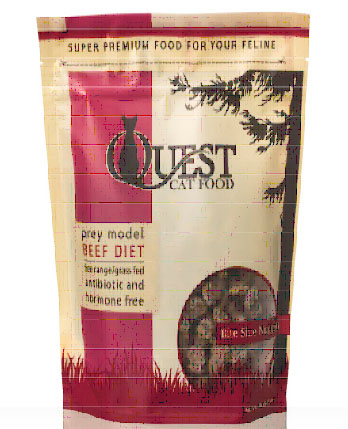
  • Quest Beef Diet
    Package size: 2-pounds
    Lot number: A138
    Best By Date: 5/18/19
    UPC: 6-91730-17101-8

About Salmonella and Listeria

Salmonella and L. mono can affect animals eating the products and there is risk to humans from handling contaminated pet products.

Symptoms of infection in people include nausea, vomiting, diarrhea or bloody diarrhea, abdominal cramping and fever.

Consumers exhibiting these signs after having contact with this product should contact their healthcare providers.

Pets with Salmonella and/or L. mono infections may be lethargic and have diarrhea or bloody diarrhea, fever, and vomiting.

Some pets will have only decreased appetite, fever and abdominal pain.

Infected, but otherwise healthy pets can be carriers and infect other animals or humans.

If your pet has consumed the recalled product and has these symptoms, please contact your veterinarian.

What Caused the Recall?

This recall is being initiated after the firm was notified by the Washington Department of Agriculture when sample was collected and tested positive for Salmonella and/or Listeria.

The firm did conduct its own test which produced a negative result for both Salmonella and Listeria monocytogenes.

However, because of the company’s commitment to overall safety and quality, Steve’s Real Food is conducting a voluntary recall of these products.

Consumers should also follow the safe handling tips published on the Steve’s Real Food packaging, when disposing of the affected product.

No pet or human illnesses from this product have been reported to date.

This recall is being made with the knowledge of the U.S. Food and Drug Administration.

What to Do?

Consumers are encouraged to check the lot code and best buy date of the affected pet foods.

Any product with the noted lot code and best buy dates should be returned to the specialty retailer where product was purchased for a full refund.

Consumers with questions may contact Steve’s Real Food at 888-526-1900, Monday through Friday, 9 am to 4 pm MT.

U.S. citizens can report complaints about FDA-regulated pet food products by calling the consumer complaint coordinator in your area.

Or go to http://www.fda.gov/petfoodcomplaints.

Canadians can report any health or safety incidents related to the use of this product by filling out the Consumer Product Incident Report Form.

Get Dog Food Recall Alerts by Email

Get free dog food recall alerts sent to you by email. Subscribe to The Dog Food Advisor’s emergency recall notification system.

Again, as I usually say, do share this with all the dog and cat lovers you know/

Thanks.

A little birdie told me!

… not to be in such a hurry to shut the garage door!

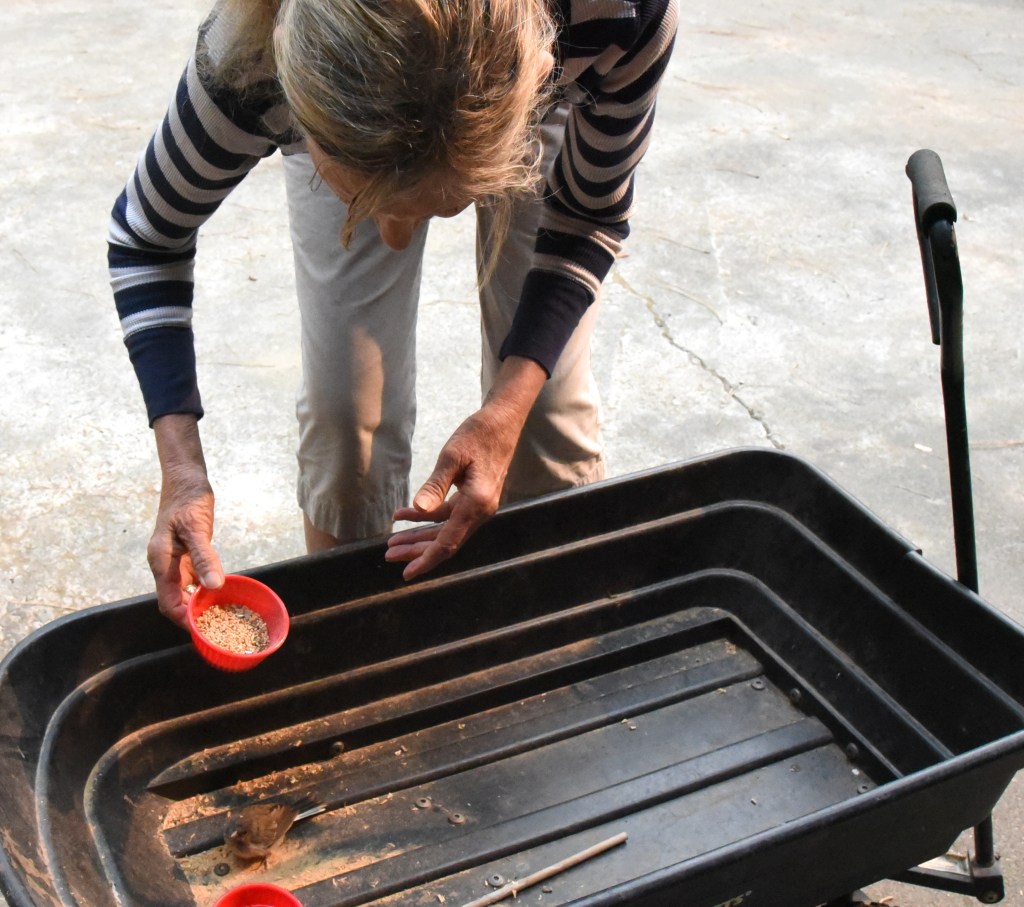
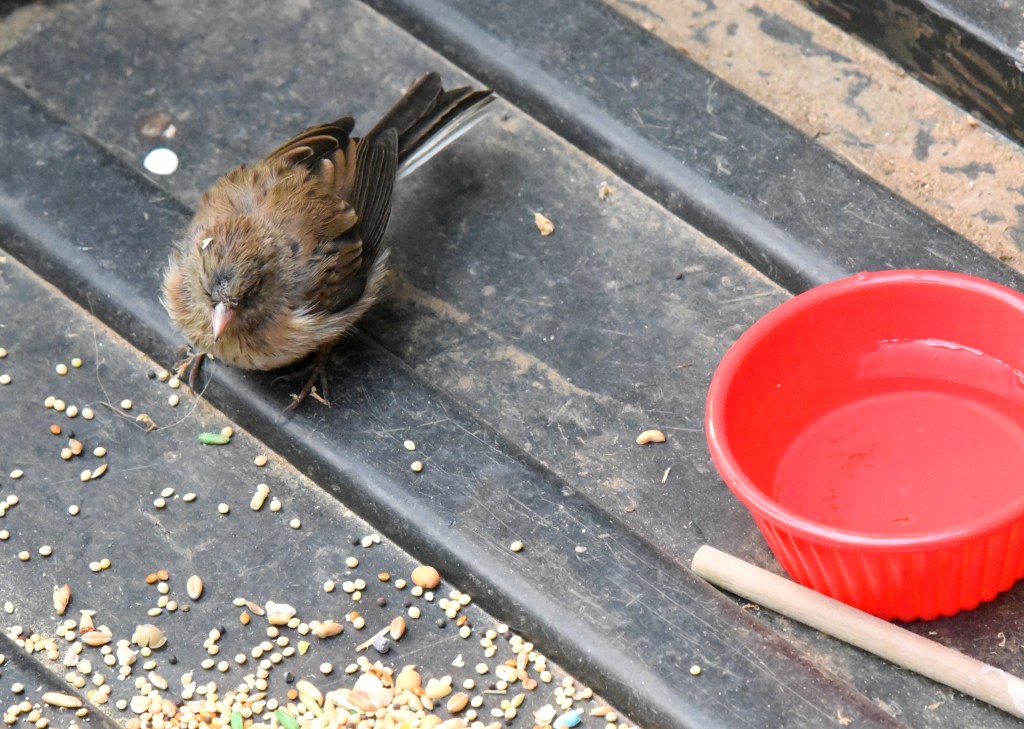
I went out to the garage yesterday morning to sort out a few things and found a small bird almost fast asleep in a trolley cart I use about the place.

It clearly had got caught inside the garage when I closed the electric door the previous evening. (Some of the local birds do come in to the garage to feast on insects and spiders that they come across.)

(That’s sawdust in the bottom of the cart.)

I called Jeannie to come out and look at the little chap and she had the brilliant idea of feeding the bird some of the bird food we give our two parakeets. Plus, she brought out a bowl of water.

It worked!

In next to no time the aforesaid bird had had sufficient to eat and it was time to relax in the warm air.

Twenty minutes later he had flown away!

OK!!

The real point of today’s post is to advise you that my son, Alex, and his longterm partner, Lisa, are staying with us for a few days and quite naturally blogging is going to be on the back-burner.

Rather than go ‘silent’ I am going to share with you over the next six days a beautiful series of posts on the clouds.

Will explain more tomorrow!

Raw Dog and Cat Food recall

This was received yesterday afternoon regarding G and C Raw Dog and Cat Food Recall

ooOOoo

G and C Raw Dog and Cat Food Recall

August 3, 2018 — G & C Raw of Versailles, OH is recalling 30 1–pound containers of Pat’s Cat Turkey Cat Food and 40 2-pound containers of Ground Lamb Dog Food because they have the potential to be contaminated with Listeria monocytogenes.

About Listeria Infections

Listeria monocytogenes can cause serious and sometimes fatal infections in animals eating the products.

Furthermore, there is risk to humans from handling contaminated pet products, especially if they have not thoroughly washed their hands after having contact with the products or any surfaces exposed to these products.

Healthy people infected with Listeria monocytogenes should monitor themselves for some or all of the following symptoms: nausea, vomiting, aches, fever, and diarrhea.

Listeria monocytogenes infections can also spread through the bloodstream to the nervous system (including the brain), resulting in meningitis and other potentially fatal problems.

Pregnant women are especially susceptible to Listeria infection, which can result in abortion.

The young, the elderly, and people with weakened immune systems also are more vulnerable.

Consumers exhibiting these signs after having contact with this product should contact their healthcare providers.

Pets with Listeria monocytogenes infections are rare, and pets may display symptoms such as mild to severe diarrhea, anorexia, fever, nervous, muscular and respiratory signs, abortion, depression, shock, and death.

In addition to the possibility of becoming sick, such infected animals can shed Listeria monocytogenes through their feces onto their coats and into the home environment and thus serve as sources of infection to humans and other animals in the household.

If your pet has consumed the recalled product and has these symptoms, please contact your veterinarian.

Where Was the Product Sold?

Pat’s Cat Turkey and Ground Lamb Dog Food products were distributed in OH, MI, IN, PAN, KY, NC, and GA.

They were also distributed by direct delivery by G & C Raw, LLC.

What’s Being Recalled?

The Pat’s Cat Turkey is sold in 1-pound clear plastic containers with the Lot number WWPKTF051618.

The Ground Lamb product is sold in a 2-pound plastic container with the Lot number MFF022718.

The Lot number codes are listed on the bottom right corner of the label.

No illnesses have been reported to date.

About the Recall

The recall was as the result of a routine sampling program by the Ohio Department of Agriculture which revealed that the finished products contained the bacteria

The company has ceased the production and distribution of the product as the company continues its investigation as to what caused the problem.

What to Do?

Consumers who have purchased Pat’s Cat Turkey Cat Food with the lot number, WWPKTF051618, OR Ground Lamb Dog Food with the lot number MFF022718 are urged to return it to G & C Raw, 225 N. West Street, Versailles, OH, for a full refund.

Consumers with questions may contact: G & C Raw, LLC at 937-827-0010 ET, or by email at gcrawdogfood@yahoo.com.

U.S. citizens can report complaints about FDA-regulated pet food products by calling the consumer complaint coordinator in your area.

Or go to http://www.fda.gov/petfoodcomplaints.

Canadians can report any health or safety incidents related to the use of this product by filling out the Consumer Product Incident Report Form.

Get Dog Food Recall Alerts by Email

Get free dog food recall alerts sent to you by email. Subscribe to The Dog Food Advisor’s emergency recall notification system.

ooOOoo

Sincerely hope that no-one out there has a dog or cat that has eaten this potentially suspect food.


Maintaining the good life in later years!

Living well as we age.

TIME magazine published a double-issue in February of this year How To Live Longer Better!

The article, on Page 47, opens:

Old age demands to be taken very seriously – and it usually gets its way!

Then later on in that same article one reads:

Exactly how much – or how little – exercise it takes to begin paying dividends has been one of the happy surprises of longevity research. A 2016 study found that elderly people who exercised for just 15 minutes a day, at an intensity level of a brisk walk, had a 22% lower risk of early death compared to people who did not exercise.

Then two sentences later:

Researchers from McMaster University in Canada even found that breaking a sweat for just 60 seconds may be long enough to improve health and fitness (as long as it’s a tough workout).

As part of Jean’s commitment to slowing down the progression of her Parkinson’s Disease (PD) she attends every Monday and Wednesday a special class at our local Club Northwest in Grants Pass. The class runs for 90 minutes and is a boxing class! The instructor, Mark Whiting, is a boxing coach and the class, called the Rock Steady class, is specifically for PD sufferers. One of the exercises involves rapid punching of a punch bag.

Dr. Laurie Mischley of SIM had a telephone consultation with Jean a few days ago. It was Dr. M following up Jean’s consultation with Dr. Nutt in Portland on the 10th that I wrote about in my post Jeannie’s PD Journey.  Dr. M commented as to how well Jean was doing.

Possibly, vigorous exercise seems to be offering something that many in their elder years may not have cottoned on to.

Readers may recall Patrice Ayme leaving a comment in my recent Facing up to PD post:

The one and only countermeasure we have is violent neurological activity. As in powerlifting. This has been indicated by research published in 2018… But it was long obvious. So the way to “comfort” is the discomfort of maximum motor-neurological… hmmm… violence. Too much local gentleness doesn’t optimize overall comfort and gentleness… I guess that’s one of my overall philosophical messages… Not one popular with the PC crowd…

Now I’m still trying to get to bottom of this link between vigorous exercise and long-term health and have reached out to McMaster University in Canada seeking academic backing for the link.

More from me as I learn more.

Turning to diet.

In that same TIME magazine, on page 53, there is a single page listing five places around the world known as Blue Zones.

Global life expectancy averages out to 71.4 years. That means. of course, that some parts of the world see much shorter spans, while others enjoy far greater longevity.

Five places, in particular, fall into the latter category. They’re know as Blue Zones – named for the blue circles researchers drew to identify the first one on a map – and they’re home to some of the oldest and healthiest people in the world. Dan Buettner, author of The Blue Zones and The Blue Zones Solution, told TIME why residents of these places live so long – and how you can steal their habits

Those five places are listed below with me republishing just a small extract regarding diet from four of those five place descriptions.

Sardinia, Italy – “A largely plant-based diet ….”

Okinawa, Japan – No mention of diet.

Nicoya, Costa Rica – “The Costa Rican people traditionally get the majority of their caloric intake from beans, squash and corn, plus tropical fruits. This plant-forward, nutrient-dense diet ……”

Loma Linda, Calif., USA – “Adventists live 10 years longer than their fellow Americans. Many avoid meat and eat plenty of plants, whole grains and nuts.”

Ikaria, Greece – ” …. and a strict adherence to the Mediterranean diet – eating lots of fruits, vegetables, beans, whole grains, potatoes and olive oil – propels 1 in 3 ikarians to live into their 90s, often free of dementia and chronic disease.”`

I will return to this topic!

Meanwhile, stay fit and healthy!

My Heart Dog

A guest post from Terri DeVore

You will just love this story about Terri and Zero.

Enough said!

ooOOoo


My Heart Dog

So what is a “heart dog”? I have heard this saying in the past and was never sure of exactly what it meant. I found a great description and definition from the site Jenna and Snickers. Here is what she writes…

“In my opinion, your heart dog is that once in a lifetime – maybe twice if you’re truly blessed – soul mate dog. He or she is the one you click with similarly to, but different from, how people in love click. There’s an understanding, a bond stronger than most, and a special level of communication. Your heart dog “gets” you and you get him or her right back.”

This is so me and Zero! I have had a couple of dogs in the past when I was growing up, but none have been my dog … my heart dog … like Zero has.

So how did I end up with this amazing dog in my life?

When my son ,Dylan, was younger he started going through that phase of wanting a little brother or a sister. Well, since I wasn’t even dating at the time, I knew that wasn’t going to happen so I figured it was time for a dog!
Side Note: I often joke that if I had the dog first, I might not have had the kid. I mean, if I tell Zero to sit, she just sits…right then…no questions, no complaining, no whining, she just does it. So much easier! LOL

We found Zero at our local Humane Society. She was just under a year and a half old and had been picked up as a stray so they didn’t know anything about her. When we got her out of her kennel and into the big yard so we could see her more, she hardly even came over to us. There was just something about her, though, and we knew she was the one.
We brought her home and the next day when we took her to the vet, learned that she had heart worms…bad. My mom reminded me that the humane society said they would take her back if it was within 72 hours but I just couldn’t do that. First, I was afraid nobody else would adopt her knowing she had heart worms, and second, she was my dog. Like we already totally bonded and I just knew she was my dog.
Long story short, we put her though the pretty intensive heart worm treatment, killed all those little buggers off and she was healthy!

We also learned that she was a pretty fearful dog…scared of so much. She would not walk up the stairs to our apartment so I had to carry her up and down for about a month until we finally coaxed her to walk up and down the entire flight by herself. She had no idea what the TV was and would hide behind my chair whenever it was on. She had no idea how to play with toys. When I would try to teach her fetch and I would throw the ball she would just look at me like, “well, that was stupid…why did you do that?. She had no idea of anything.

To help socialize her more and build her confidence, we put her in agility with Dylan as the handler. They did great! He was about nine at the time and they even competed and won a couple of times! After that she continued to blossom. She learned how to play with toys, learned a ton of commands (she’s so super smart!) and she even got her CGC (Canine Good Citizen) certificate.

It was so great seeing her come out of her shell and watch her confidence grow. Also during this time she was becoming closer and closer to Dylan and I. We were her pack and she was not happy unless we were all together. In fact, when Dylan would run her in agility trials, I would have to go hide because if she saw me she would stop in the middle of her run and charge over to me. Same would happen if I ran her…she would have to search for Dylan. She likes it when all three of us are together.

Now she is thirteen years old and still going strong. The vet even told me at Zero’s last check up that she can’t believe Zero is thirteen and would never guess she was that old by looking at her. She “checks out” to appear much younger. That is 100% okay with me. I have already told Zero she cannot get any older and she must live forever.

She truly is my heart dog. We just know what the other one is thinking. We have our routine, our habits, and our quirks. She loves me unconditionally and I love her back just the same.

Zero Facts:

What type of breed is she? I don’t know for sure. Someone asked me once if she was a kelpie. I had not even heard of that breed before so I looked it up and found pictures online that I could swear were Zero! So, by looks alone yes, I would think she is kelpie. What do you think?

ooOOoo

Of course, I was interested in Terri’s background and this what she wrote me:

As far as my background…had many jobs in the past but the longest was most recent when I worked as a personal trainer. I was in the fitness industry for about 10 years. Got a little burned out and was trying to figure out what’s next. Knew I wanted to roam and when my son moved out I figured now is the time, so I started planning.  Zero and I will be taking off in mid-August to roam and explore the US in my Honda Civic and a tent.  Can’t wait!!

Plus Terri explained how Zero took on that name:

One of our favorite movies at the times was ‘The Nightmare Before Christmas’ (I still jam out to that soundtrack #soGood). The main character (Jack Skellington) has a dog named…yep…you guessed it…Zero.

With Terri going on to add the commands and tricks that Zero has learnt.

Sit
Stay
Bang aka Play Dead
Be a bear (stands up on back feet)
Be sneaky (crawls with her belly on the floor)
Shake Hands
High Five
Roll Over
Here (Runs to me and sits at my feet)

Then a list of Zero’s favorite games:

Hide and Seek (with me and/or Dylan)
Find It : basically hide and seek except I hide her toy and make her find it
Keep Away with her frisbee (Dylan and I throw her frisbee back and forth and she’s in the middle jumping up and trying to get it..she freaking loves that game!)
Fetch with her tennis ball

Finally, Terri offers some random facts [Ed: “she” being Zero not Terri!!]:

She likes apples but wont eat a piece unless it’s peeled #soPicky
She looks up at the sky more than any dog I’ve ever seen. She loves gazing at the sky day or night.
She does not like any delivery truck. Fed Ex, UPS, Mailman, etc…Other trucks are fine
She hates storms and shakes like a leaf when there’s thunder
She’s awesome at soccer and it’s almost impossible to get the ball past her
Her favorite toy is her tennis ball
Her middle name is “Marie”. Not sure why, it just slipped out of my mouth one day when she was in trouble..lol….Zero Marie…
She would always help me get Dylan up in the mornings by burrowing under him and raising him up out of bed

So there you have it; a little bit about my heart dog and my best friend. I really can’t imagine life without her. She’s my protector, my companion, my best friend, my partner in crime … pretty much my everything. She makes my life so much better and I have learned as much from her as she has me.

(All the photographs are by Terri.)

ooOOoo

There are millions out there that have the most beautiful and loving relationships with their dogs.

There are far, far fewer who can articulate just what that love means to the level that Terri has done!

Jeannie’s PD journey

“Happiness resides not in possessions, and not in gold, happiness dwells in the soul.”

So wrote the philosopher Democritus who was born in 460 BCE (although some claim his year of birth was 490 BCE). He acquired fame with his knowledge of the natural phenomena that existed in those times and history writes that he preferred a contemplative life to an active life, spending much of his life in solitude. The fact that he lived to beyond 100 suggests his philosophy didn’t do him any harm.

OK! Before I continue, please let me state, as before, that I write to you purely as Jean’s husband. I have no medical skills or knowledge at all and if you are at all affected by any of the following make an appointment to see your own doctor!

The crux of this post is Jean’s relationship with a naturopathic doctor at a practice in Seattle. The practice is Seattle Integrative Medicine (SIM) and a number of the doctors at SIM specialise in patients with PD. That’s how Jean was connected with Dr. Laurie Mischley. (Dr. M)

When one goes to the web page for Dr. M one reads:

Clinical Specialties – Parkinson’s Disease (PD)/Parkinsonism

Dr M conducted tests including testing her ear wax*, extensive blood analysis and an analysis of a sample of Jean’s hair.

* Dr. M has a dog that can reliably smell the presence of PD in human ear wax!

The favourite drug for those with PD is Levadopa.  Within 48 hours of Jean taking Levadopa she had a serious allergic response to that drug.

Back to Dr. M’s tests. All three tests were non-indicative of PD. A while later, in a subsequent telephone conversation, Dr. M wondered if Jean really did have PD. She recommended a referral to the Oregon Health and Science University (OHSU) in Portland. Specifically to their Department of Neurology and to Dr. John Nutt. His background may be viewed here.  From which one notes:

John Nutt, M.D.

Co-founder and Director Emeritus of the OHSU Parkinson Center and Movement Disorders Program

Professor of NeurologySchool of Medicine
Expertise

Neurology

Special focus on
Parkinson’s and Movement Disorders

Jean’s appointment was at 08:30 on Tuesday, 9th July. In terms of the timeline of all of us, Jean was diagnosed as suspected of having PD in December, 2015.

Dr. Nutt saw us promptly at 8:30 and immediately revealed a listening, caring attitude. He also quietly admitted that he had been a doctor specialising in neurology and movement disorders for 39 years! There was no question in my mind that we had landed in front of the ideal physician under these circumstances.

Over the next hour, Dr. Nutt examined Jean in a great number of ways. From her stretching her arms out, Dr. Nutt examining Jean’s arm joints, watching Jean walk along the corridor outside his examining room, and much more.

Eventually he paused and looked us both in the eyes. He then spoke quietly: “Jean is displaying a number of classic symptoms of Parkinson’s disease. I have no doubt that Jean does have the disease.”

Of course it wasn’t long before I mentioned Laurie Mischley’s opinion that Jean might not have PD. But Dr. Nutt was very clear with his reply. Namely that PD cannot be determined from hair and blood tests alone and that the potential sufferer must be examined physically.

Dr. Nutt asked me if I had noticed that when Jean held her arms straight out in front of her at shoulder height the tremors in her right hand ceased yet when she was relaxed with her hands in her lap the tremor in her right hand was very noticeable? I had not spotted that.

“Paul, that is a classic Parkinson’s characteristic.”

Dr. Nutt went on to say that watching Jean walk gave him another indicator of PD. Because although Jean walks well she doesn’t swing her arms. Classic PD!

Without doubt, Dr. Nutt’s impression was Idiopathic Parkinson’s disease.

But Dr. Nutt also said that Jean was doing incredibly well taking into account that she would have been suffering from the disease for at least 4 to 5 years and that her commitment to lots of exercise including her RockSteady class, that he was aware of, and her vegetarian diet was critically valuable.

It was now time to turn to medication for Jean. Dr. Nutt said that of all the drugs Levadopa was the ideal to combat the loss of dopamine in the brain. He was puzzled as to why Jean had had such a strong allergic reaction to the drug. He wondered if it was a reaction to the Carbidopa that in the USA was so often a component of the Levadopa medication. If so, that could be worked around. Dr. Nutt even mused that he had known of a patient who was allergic to the yellow dye that is sometimes in that medication.

His medication plan for Jean was for her to start on a 1/2 tablet of carbidopa-levadopa 25-100 mg tablets just once a day and if she has no bad reaction in a week then up that to two 1/2 tablets a day. If no adverse effects then increase by 1/2 tablet every week until taking 1 tablet three time a day.

So here we are, a week and a day after we returned from OHSU and, touch wood, Jean has had no adverse effects and is now on two 1/2 tablets a day.

But a postscript to that consultation with Dr. Nutt. At the very end I said that I had two questions. Dr. Nutt welcomed me to ask them.

“My first question is to do with the trend for PD. Is it getting worse?”

“Paul, here in the USA we are seeing a slow but definite decline in the incidence of Parkinson’s. What was your second question?”

“Dr. Nutt, my next question was whether or not science was pointing a finger at the cause of Parkinson’s disease?”

He replied without hesitating: “We are seeing a strong correlation between pesticides and Parkinson’s disease.”

Upon hearing that, Jeannie immediately spoke up recalling her times out in the Mexican fields when the crop-spraying aircraft flew right overhead. Adding that she had at times been drenched by the spray.

But, please, let us not forget: Association is not causation!

That’s enough for today. Because I was going on to include information about the importance of exercise. About managing one’s life really well. About the importance of diet and overall health. In a sense, not just for PD sufferers but for anyone the wrong side of 60 years old!!

That will be coming along soon!

I will close by thanking everyone at OHSU. The quality of care, attentiveness and experience of the staff backed by world-class resources was second-to-none!

To be in their system, so to speak, is a privilege.

Facing up to P.D.

Revisiting that personal journey.

I deliberately chose that sub-heading because Wednesday’s post is going into the details of a consultation that Jean had with Dr. John Nutt, MD, a neurologist at the Oregon Health and Science University (OHSU) in Portland, last Monday, 9th July.

Jean wants me to share the details with you because it is quite likely, nay, almost certainly, that some of you dear readers know of someone close to you that has Parkinson’s Disease (P.D.).

The balance of today’s post, to be continued tomorrow, is a reposting of something I published on February 24th, 2016.

ooOOoo

 Life is a one-way track.

Those of you who follow this place on a regular basis know that last Friday I published a post under the title of Friday Fondness. You will also know that later that same day I left this comment to that post:

Sue, and everyone else, we returned from seeing Dr. Lee, the neurologist, a little under two hours ago. Dr. Lee’s prognosis is that Jean is showing the very early signs of Parkinson’s disease, and Jean is comfortable with me mentioning this.

Everyone’s love and affection has meant more than you can imagine. I will write more about this next week once we have given the situation a few ‘coatings of thought’.

Jean sends her love to you all!

Thus, as heralded, I am going to write some more.

You would not be surprised to hear that the last few days have been an emotional roller-coaster, for both Jean and me. Including on Monday Jean hearing from our local doctor here in Grants Pass, OR, that a recent urine test has shown that Jean has levels of lead in her bones some three times greater than the recommended maximum. While our doctor is remaining open-minded it remains to be seen whether Jean is exhibiting symptoms of lead poisoning, whether the lead is a possible cause of the Parkinson’s disease (PD), see this paper, or whether it is a separate issue to be dealt with.

However, I want to offer some more from the consultation that Jean had with the neurologist Dr. Eric Lee last Friday. Shared with the full support of Jean who has read the whole of today’s post yesterday evening; as she does with every post published in this place.

But before so doing, please understand that while I was present throughout the complete examination of Jean, what you are about to read carries no more weight than that of any casual onlooker. If you are at all affected by any of the following make an appointment to see your own doctor!

Jean’s examination lasted for about an hour. It consisted of a great number of checks and tests on how her body responded to many different tests and stimulations. At the end of the examination Dr. Lee said that while he wasn’t 100% certain the balance of probability was that Jean was demonstrating the very early signs of PD. For example, showing such signs as walking and not swinging both arms in a normal, balanced manner. Or having a very slow blink rate. Then she was exhibiting some difficulty with rapid finger-to-thumb taps.

However, Dr. Lee did say that Jean was at the very early stages of PD and that we would have to wait another six months to see if the PD indicators were firming up. He also said that he had PD patients who had had the disease for twenty, even thirty years. Some of the general indicators that PD is progressing include a stooped gait, decreasing size of handwriting, and a quieter speaking tone. The NINDS website has more information on this. Here’s a little of what they explain about PD:

What is Parkinson’s Disease?

Parkinson’s disease (PD) belongs to a group of conditions called motor system disorders, which are the result of the loss of dopamine-producing brain cells. The four primary symptoms of PD are tremor, or trembling in hands, arms, legs, jaw, and face; rigidity, or stiffness of the limbs and trunk; bradykinesia, or slowness of movement; and postural instability, or impaired balance and coordination. As these symptoms become more pronounced, patients may have difficulty walking, talking, or completing other simple tasks. PD usually affects people over the age of 60.  Early symptoms of PD are subtle and occur gradually.  In some people the disease progresses more quickly than in others.  As the disease progresses, the shaking, or tremor, which affects the majority of people with PD may begin to interfere with daily activities.  Other symptoms may include depression and other emotional changes; difficulty in swallowing, chewing, and speaking; urinary problems or constipation; skin problems; and sleep disruptions.  There are currently no blood or laboratory tests that have been proven to help in diagnosing sporadic PD.  Therefore the diagnosis is based on medical history and a neurological examination.  The disease can be difficult to diagnose accurately.   Doctors may sometimes request brain scans or laboratory tests in order to rule out other diseases.

But here’s the good news regarding my darling wife – there are three things that Dr. Lee strongly recommends:

  1. Hang on to a positive mental attitude for the body actively produces dopamine when in a positive mental state.
  2. At least 30-minutes of good aerobic exercise three times a week,
  3. And physiotherapy.

In addition, Dr. Lee said to always THINK BIG! Big in voice, big in attitude, big in stature.

Finally, let me share with you what was posted on the Visible Procrastinations blog back in 2009. Reposted with the author’s permission.

ooOOoo

That article first seen on Visible Procrastinations will be republished tomorrow. Once more I must stress that I write to you purely as Jean’s husband. I have no medical skills or knowledge at all and if you are at all affected by any of the following make an appointment to see your own doctor!

Can we really avoid the ‘train crash’?

The idea that humanity will not prevent the approaching disaster is beyond belief!

One of the results of all you great people signing up to follow Learning from Dogs is that it encourages me to share things that strike me as so, so important.

Another of the results in there being, as of today, 3,349 following this place, is that I get the sense of what many of you good people also feel is important. Ergo, it is clear to me, clear beyond doubt, that caring and loving a dog or two makes you a person who cares and loves passionately this beautiful planet that is our home.

The emotion that is spilling out of me via these words to you is a result of having just read an essay published recently on The Conversation site and shared with you today.

Directly, it has nothing to do with our dear dogs. Yet, in a way, it does!

ooOOoo

7.5 billion and counting: How many humans can the Earth support?

By Associate Professor of Mathematics, College of the Holy Cross, July 9th 2018.

Humans are the most populous large mammal on Earth today, and probably in all of geological history. This World Population Day, humans number in the vicinity of 7.5 to 7.6 billion individuals.

Can the Earth support this many people indefinitely? What will happen if we do nothing to manage future population growth and total resource use? These complex questions are ecological, political, ethical – and urgent. Simple mathematics shows why, shedding light on our species’ ecological footprint.

The mathematics of population growth

In an environment with unlimited natural resources, population size grows exponentially. One characteristic feature of exponential growth is the time a population takes to double in size.

Exponential growth of world population

It took 127 years for the world population to double from one billion to two. By contrast, it took only 47 years, from 1927 to 1974, to double from two billion to four. Since 1960, world population has grown by about one billion every 13 years. Each point represents an additional one billion people.

[Ed: Text taken from a chart displayed in the article.]

Exponential growth tends to start slowly, sneaking up before ballooning in just a few doublings.

To illustrate, suppose Jeff Bezos agreed to give you one penny on Jan. 1, 2019, two pennies on Feb. 1, four on March 1, and so forth, with the payment doubling each month. How long would his $100 billion fortune uphold the contract? Take a moment to ponder and guess.

After one year, or 12 payments, your total contract receipts come to US$40.95, equivalent to a night at the movies. After two years, $167,772.15 – substantial, but paltry to a billionaire. After three years, $687,194,767.35, or about one week of Bezos’ 2017 income.

The 43rd payment, on July 1, 2022, just short of $88 billion and equal to all the preceding payments together (plus one penny), breaks the bank.

Real population growth

For real populations, doubling time is not constant. Humans reached 1 billion around 1800, a doubling time of about 300 years; 2 billion in 1927, a doubling time of 127 years; and 4 billion in 1974, a doubling time of 47 years.

On the other hand, world numbers are projected to reach 8 billion around 2023, a doubling time of 49 years, and barring the unforeseen, expected to level off around 10 to 12 billion by 2100.

This anticipated leveling off signals a harsh biological reality: Human population is being curtailed by the Earth’s carrying capacity, the population at which premature death by starvation and disease balances the birth rate.

World population projections

In 2020, the UN predicts that there will be 7,795,482 people worldwide.

[Ed: Text taken from a chart displayed in the article.]

Ecological implications

Humans are consuming and polluting resources – aquifers and ice caps, fertile soil, forests, fisheries and oceans – accumulated over geological time, tens of thousands of years, or longer.

Wealthy countries consume out of proportion to their populations. As a fiscal analogy, we live as if our savings account balance were steady income.

According to the Worldwatch Institute, an environmental think tank, the Earth has 1.9 hectares of land per person for growing food and textiles for clothing, supplying wood and absorbing waste. The average American uses about 9.7 hectares.

These data alone suggest the Earth can support at most one-fifth of the present population, 1.5 billion people, at an American standard of living.

A man works recycling plastic bottles outside Hanoi, Vietnam. REUTERS/Kham

Water is vital. Biologically, an adult human needs less than 1 gallon of water daily. In 2010, the U.S. used 355 billion gallons of freshwater, over 1,000 gallons (4,000 liters) per person per day. Half was used to generate electricity, one-third for irrigation, and roughly one-tenth for household use: flushing toilets, washing clothes and dishes, and watering lawns.

If 7.5 billion people consumed water at American levels, world usage would top 10,000 cubic kilometers per year. Total world supply – freshwater lakes and rivers – is about 91,000 cubic kilometers.

World Health Organization figures show 2.1 billion people lack ready access to safe drinking water, and 4.5 billion lack managed sanitation. Even in industrialized countries, water sources can be contaminated with pathogens, fertilizer and insecticide runoff, heavy metals and fracking effluent.

Freedom to choose

Though the detailed future of the human species is impossible to predict, basic facts are certain. Water and food are immediate human necessities. Doubling food production would defer the problems of present-day birth rates by at most a few decades. The Earth supports industrialized standards of living only because we are drawing down the “savings account” of non-renewable resources, including fertile topsoil, drinkable water, forests, fisheries and petroleum.

The drive to reproduce is among the strongest desires, both for couples and for societies. How will humans reshape one of our most cherished expectations – “Be fruitful and multiply” – in the span of one generation? What will happen if present-day birth rates continue?

Population stays constant when couples have about two children who survive to reproductive age. In some parts of the developing world today, couples average three to six children.

We cannot wish natural resources into existence. Couples, however, have the freedom to choose how many children to have. Improvements in women’s rights, education and self-determination generally lead to lower birth rates.

As a mathematician, I believe reducing birth rates substantially is our best prospect for raising global standards of living. As a citizen, I believe nudging human behavior, by encouraging smaller families, is our most humane hope.

ooOOoo

This essay from Professor Hwang is one of those articles that one frequently sees online that comes across as really interesting but, in the end, only gets a skim read; at best.

So if you didn’t fully comprehend what the good Professor included then ‘Stop‘ and go back and read it all very carefully.

Don’t just be alarmed at Professor Hwang writing:

This anticipated leveling off signals a harsh biological reality: Human population is being curtailed by the Earth’s carrying capacity, the population at which premature death by starvation and disease balances the birth rate.

Or:

Though the detailed future of the human species is impossible to predict, basic facts are certain. Water and food are immediate human necessities. Doubling food production would defer the problems of present-day birth rates by at most a few decades. The Earth supports industrialized standards of living only because we are drawing down the “savings account” of non-renewable resources, including fertile topsoil, drinkable water, forests, fisheries and petroleum.

Be concerned that each and every one of us, as in you and me, can only prevent the train crash by making a change in how we live: Today!

Otherwise ….

In so many ways we are such a clever and inventive race, capable of exploring the farthest reaches of outer space and the innermost aspects of quantum mechanics. Surely we must learn to live sustainably on beautiful Planet Earth!