I had to look twice at this but it wasn’t April 1st and it appeared to be a serious article. It’s from the BBC website.
Will say no more. You have a read of it.
ooOOoo
Climate change: Will insect-eating dogs help?
By Roger Harrabin, BBC environment analyst
10th January, 2019
Do you fret that your pet pooch is blamed by environmentalists for turning rainforests into poo in the park?
Have no fear – you can now fatten Fido on black soldier flies instead of Brazilian beef.
A pet food manufacturer now claims that 40% of its new product is made from soldier flies.
It’s one of many firms hoping to cash in on the backlash against beef by people concerned that the cattle are fed on soya.
These soya plantations are responsible for the release of greenhouse gases in significant quantities.
Is it good for the dog?
The key question is whether a diet of 40% soldier flies meets the nutritional needs of your beloved canine.
We put the question to a pet diet expert at the Royal Veterinary College, Aarti Kathrani. Her conclusion was a cautious “yes”.
“Insects can be a very useful source of protein,” she told us. “More studies are needed to show how much of these nutrients can actually be absorbed by a dog’s body – but some studies suggest that insects can provide nutrients for dogs.”
Does it help the climate if dogs eat flies?
At first sight it seems obvious that feeding your dog meaty food is bad for the environment. The link between humans eating meat and the allied emissions of CO2 and methane is well established – and pets are estimated to eat 20% of global meat.
It’s also true that flies produce protein much more efficiently than cows – using a small percentage of the water and land.
But actually the analysis is more subtle than that – because as societies become more wealthy, people often turn to muscle meat and reject the animal’s offal.
The flies are brought to maturity in about 14 days
That offal is just as nutritious – and it gets made into pet food. That means that dog food is just as sustainable – or unsustainable – as humans eating meat.
In fact, if dogs were weaned off meat and on to insects, the industry would have to find another purpose for the offal. More sausage, perhaps? Or more humans eating insect protein. Or more going vegan?
Could cat food be made out of insects, too?
Dogs are omnivores – they eat more or less anything. Cats are much more choosy, because they can’t make an essential amino acid, taurine. They find it instead in meat and fish.
But Dr Kathrani says studies show that insects do contain taurine, so it’s possible that insects could also form a useful part of the moggie diet.
The new product is from Yora, a UK start-up. The insect grubs are fed on food waste in the Netherlands.
There are several competitors which also produce pet food incorporating fly protein. They include Insectdog, Entomapetfood, Chippin and Wilderharrier.
ooOOoo
Now I have heard of some strange things but in essence this does make very good sense.
I can’t recall whether I have previously shown this to you …
I don’t think so.
(But see my note at the end of the piece.)
ooOOoo
Why people become vegans: The history, sex and science of a meatless existence.
By Joshua T. Beck Assistant Professor of Marketing, University of Oregon
November 19th, 2018.
At the age of 14, a young Donald Watson watched as a terrified pig was slaughtered on his family farm. In the British boy’s eyes, the screaming pig was being murdered. Watson stopped eating meat and eventually gave up dairy as well.
Later, as an adult in 1944, Watson realized that other people shared his interest in a plant-only diet. And thus veganism – a term he coined – was born.
Flash-forward to today, and Watson’s legacy ripples through our culture. Even though only 3 percent of Americans actually identify as vegan, mostpeople seem to have an unusually strong opinion about these fringe foodies – one way or the other.
As a behavioral scientist with a strong interest in consumer food movements, I thought November – World Vegan Month – would be a good time to explore why people become vegans, why they can inspire so much irritation and why many of us meat-eaters may soon join their ranks.
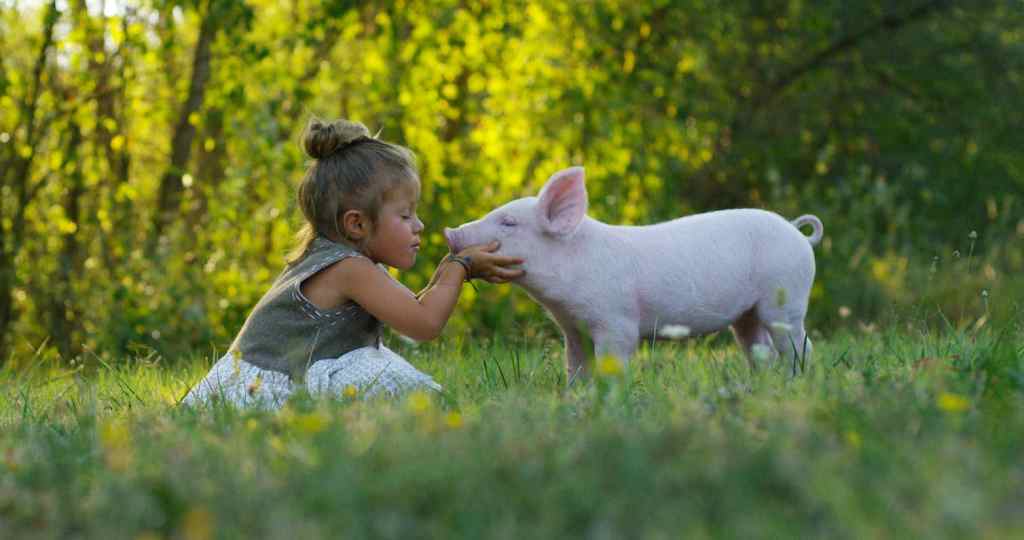
Early childhood experiences can shape how we feel about animals – and lead to veganism, as it did for Donald Watson. HQuality/Shutterstock.com
It’s an ideology not a choice
Like other alternative food movements such as locavorism, veganism arises from a belief structure that guides daily eating decisions.
They aren’t simply moral high-grounders. Vegans do believe it’s moral to avoid animal products, but they also believe it’s healthier and better for the environment.
Also, just like Donald Watson’s story, veganism is rooted in early life experiences.
Psychologists recently discovered that having a larger variety of pets as a child increases tendencies to avoid eating meat as an adult. Growing up with different sorts of pets increases concern for how animals are treated more generally.
Thus, when a friend opts for Tofurky this holiday season, rather than one of the 45 millionturkeys consumed for Thanksgiving, his decision isn’t just a high-minded choice. It arises from beliefs that are deeply held and hard to change.
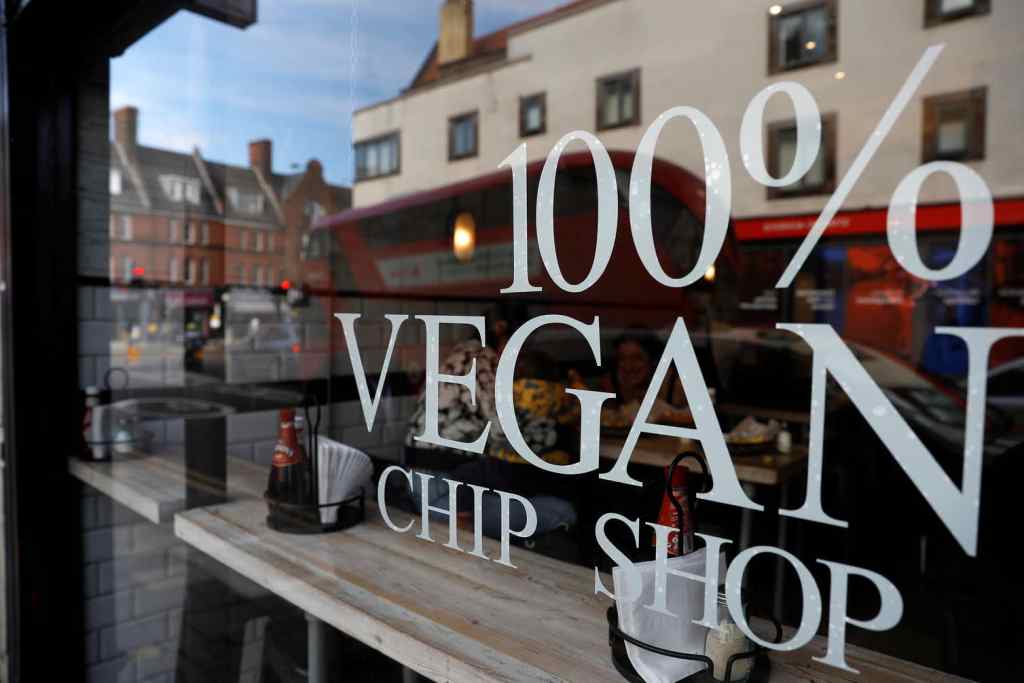
Sutton and Sons is a vegan fish and chip restaurant in London. Reuters/Peter Nicholls
Veganism as a symbolic threat
That doesn’t mean your faux-turkey loving friend won’t seem annoying if you’re a meat-eater.
The late celebrity chef Anthony Bourdain famously quipped that meat avoiders “are the enemy of everything good and decent in the human spirit.”
Why do some people find vegans so irritating? In fact, it might be more about “us” than them.
Most Americans think meat is an important part of a healthy diet. The government recommends eating 2-3 portions (5-6 ounces) per day of everything from bison to sea bass. As tribal humans, we naturally form biases against individuals who challenge our way of life, and because veganism runs counter to how we typically approach food, vegans feel threatening.
Humans respond to feelings of threat by derogating outgroups. Two out of 3 vegans experience discrimination daily, 1 in 4 report losing friends after “coming out” as vegan, and 1 in 10 believe being vegan cost them a job.
Veganism can be hard on a person’s sex life, too. Recent research finds that the more someone enjoys eating meat, the less likely they are to swipe right on a vegan. Also, women find men who are vegan less attractive than those who eat meat, as meat-eating seems masculine.
The fake meat at one Fort Lauderdale restaurant supposedly tastes like real meat. AP Photo/J. Pat Carter
Crossing the vegan divide
It may be no surprise that being a vegan is tough, but meat-eaters and meat-abstainers probably have more in common than they might think.
Vegans are foremost focused on healthy eating. Six out of 10 Americans want their meals to be healthier, and research shows that plant-based diets are associated with reduced risk for heart disease, certain cancers, and Type 2 diabetes.
It may not be surprising, then, that 1 in 10 Americans are pursuing a mostly veggie diet. That number is higher among younger generations, suggesting that the long-term trend might be moving away from meat consumption.
In addition, several factors will make meat more costly in the near future.
Meat production accounts for as much as 15 percent of all greenhouse gas emissions, and clear-cutting for pasture land destroys 6.7 million acres of tropical forest per year. While some debate exists on the actual figures, it is clear that meat emits more than plants, and population growth is increasing demand for quality protein.
Seizing the opportunity, scientists have innovated new forms of plant-based meats that have proven to be appealing even to meat-eaters. The distributor of Beyond Meat’s plant-based patties says 86 percent of its customers are meat-eaters. It is rumored that this California-based vegan company will soon be publicly traded on Wall Street.
Even more astonishing, the science behind lab-grown, “cultured tissue” meat is improving. It used to cost more than $250,000 to produce a single lab-grown hamburger patty. Technological improvements by Dutch company Mosa Meat have reduced the cost to $10 per burger.
Watson’s legacy
Even during the holiday season, when meats like turkey and ham take center stage at family feasts, there’s a growing push to promote meatless eating.
London, for example, will host its first-ever “zero waste” Christmas market this year featuring vegan food vendors. Donald Watson, who was born just four hours north of London, would be proud.
Watson, who died in 2006 at the ripe old age of 95, outlived most of his critics. This may give quiet resolve to vegans as they brave our meat-loving world.
ooOOoo
Jeannie has been a vegetarian all her life and I willingly adopted the lifestyle back in 2008 when we first started living together. Then in 2017 we took the final step to becoming vegan on account of there being too much uncertainty about fish, chicken and dairy products.
We both feel great on a vegan diet and more and more people seem to be coming across to this position.
(N.B. And this post has been published before – oh well it won’t do any harm in being repeated.)
Columbia River Natural Pet Foods of Vancouver, WA, is expanding its recall to include 2 of its dog and cat food products because they have the potential to be contaminated with Salmonella and Listeria bacteria.
ooOOoo
December 24, 2018 — Columbia River Natural Pet Foods of Vancouver, WA, is expanding its recent recall to include additional dog and cat foods due to their potential to be contaminated with Salmonella and Listeria monocytogenes.
What’s Recalled?
The following products are being recalled:
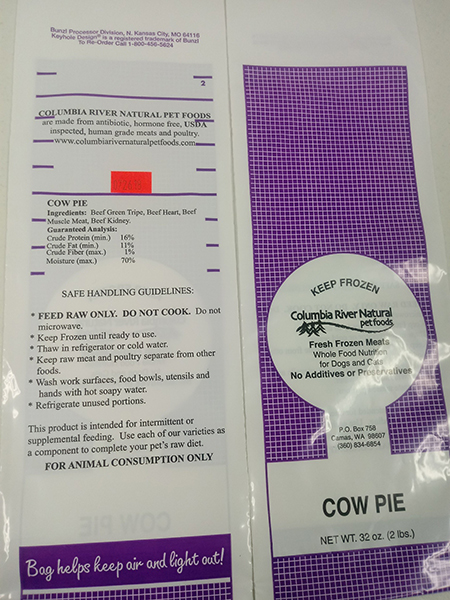
Columbia River Cow Pie Food for Dogs and Cats
Package Size: 2 pounds
Lot Number: 72618
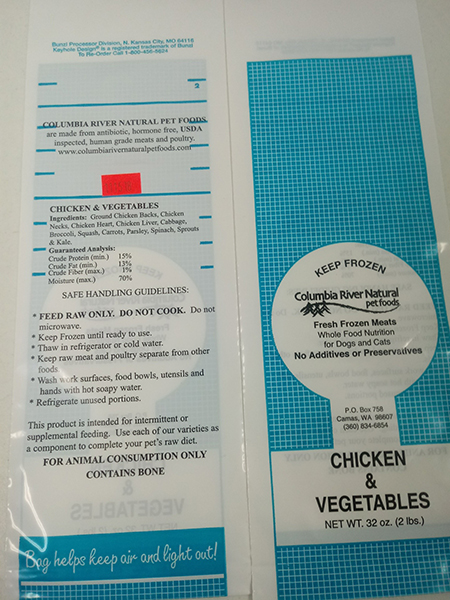
Columbia River Chicken and Vegetables Food for Dogs and Cats
Package Size: 2 pounds
Lot Number: 111518
The recall includes 261 packages of Cow Pie Lot # 72618 and 82 packages of Chicken & Vegetables Lot# 111518 fresh frozen meats for dogs and cats, produced in July 2018 and November 2018.
Cow Pie and Chicken and Vegetables are fresh frozen meat products intended to be fed raw to dogs and cats.
Both were distributed in Alaska, Oregon, and Washington through retail stores and direct delivery.
The Cow Pie product comes in frozen 2-pound purple and white plastic bags with Lot# 72618 found on an orange sticker.
The Chicken and Vegetables product comes in frozen 2-pound turquoise and white plastic bags with Lot # 111518 found on an orange sticker.
No illnesses have been reported to date.
About Salmonella and Listeria
Salmonella and Listeria monocytogenes can affect animals eating the products and there is risk to humans from handling contaminated pet products, especially if they have not thoroughly washed their hands after having contact with the products or any surfaces exposed to these products.
Healthy people infected with Salmonella and Listeria monocytogenes should monitor themselves for some or all of the following symptoms: nausea, vomiting, diarrhea or bloody diarrhea, abdominal cramping and fever.
Rarely, Salmonella and Listeria monocytogenes can result in more serious ailments, including arterial infections, endocarditis, arthritis, muscle pain, eye irritation, and urinary tract symptoms.
Consumers exhibiting these signs after having contact with this product should contact their healthcare providers.
Pets with Salmonella and Listeria monocytogenes infections may be lethargic and have diarrhea or bloody diarrhea, fever, and vomiting.
Some pets will have only decreased appetite, fever and abdominal pain.
Infected but otherwise healthy pets can be carriers and infect other animals or humans.
If your pet has consumed the recalled product and has these symptoms, please contact your veterinarian.
What Caused the Recall?
The potential for contamination was noted after testing by the Washington State Department of Agriculture revealed the presence of Listeria monocytogenes and Salmonella in one package of Cow Pie and Salmonella in one package of Chicken & Vegetables.
What to Do?
Consumers who purchased the product should discontinue use of the product and return for a full refund or exchange by returning the product in its original packaging to place of purchase.
Consumers with questions may contact the company at 360-834-6854 Monday to Friday from 8 AM to 4 PM PT.
This recall is being made with the knowledge of the U.S. Food and Drug Administration.
U.S. citizens can report complaints about FDA-regulated pet food products by calling the consumer complaint coordinator in your area.
Dangerous Levels of Vitamin D Discovered in Several Dog Food Brands
CAUTION — ONGOING SITUATION
Last Updated December 7, 2018
December 7, 2018 — The FDA is alerting pet owners and veterinary professionals about recalls of several dry dog foods after receiving complaints that dogs eating the food experienced vitamin D toxicity.Testing found that samples of the affected foods contained as much as 70 times the intended amount of vitamin D.
Very high levels of vitamin D can cause serious health problemsin dogs, such as kidney failure or death.
Veterinarians should be aware that vitamin D toxicity may present as hypercalcemia, similar to dogs that have consumed a rodent killer.
At this time, the only pet products that are affected by this recall are foods made for dogs.
About Vitamin D Toxicity
Excess vitamin D in the diet can cause vomiting, loss of appetite, increased thirst, increased urination, excessive drooling and weight loss.
Vitamin D at toxic levels can cause kidney failure and death.
Pet owners whose dogs have been eating the recalled brands and are showing these symptoms should contact their veterinarians.
What Caused the Recalls?
The FDA has become aware of reports of vitamin D toxicity in dogs that ate dry dog food produced by the same manufacturer and marketed under several different brand names.
The FDA is working with the manufacturer to provide a comprehensive list of affected brands.
Important Warning
This is a developing situation. Additional recalls may be announced.
The Dog Food Advisor will update this page as the FDA makes further information available.
What Brands Are Recalled?
This is a developing situation and this list may not be complete.
The list of recalled dry dog food products provided to the FDA include:
Ahold Delhaize (company has not issued press release)
Ahold Delhaize (company has not issued recall bulletin)
Nature’s Promise Chicken & Brown Rice Dog Food
Size: 14-lb bag
UPC: 068826718472
All lot codes
Nature’s Promise Chicken & Brown Rice Dog Food
Size: 28-lb bag
UPC: 068826718471 – 28 lb. bag
All lot codes
Nature’s Promise Chicken & Brown Rice Dog Food
Size: 4-lb bag
UPC: 068826718473
All lot codes
Nature’s Place Real Country Chicken and Brown Rice Dog Food
Size: 5-lb bag
UPC: 72543998959
All lot codes
Nature’s Place Real Country Chicken and Brown Rice Dog Food
Size: 15-lb bag
UPC: 72543998960
All lot codes
A very useful article published by The Smithsonian.
SMARTNEWS published by The Smithsonian yesterday confirmed what we were starting to suspect; there was a widespread problem with excessive Vitamin D in dog food.
ooOOoo
Excessive Vitamin D in Pet Food May Be Making Dogs Sick
A number of brands, including Nutrisca and Natural Life, have issued recalls of certain products
The Food and Drug Administration is warning dog owners to keep a close watch on their furry friends, after several brands of dry dog food were found to contain potentially toxic levels of vitamin D.
According to NPR’s Amy Held, the FDA has received reports of dogs falling ill after eating certain foods, which are made by an unnamed manufacturer and sold under at least eight different brands. Nutrisca and Natural Life issued recalls in early November, reports Shelby Lin Erdman of the Atlanta Journal-Constitution, and several other brands have followed suit. The full list, which includes products by Sunshine Mills and ELM Pet Foods, can be seen here.
The FDA says the situation is developing, and its scientists are still working to definitively link the dogs’ illnesses to their diet. But when the agency sampled some of the questionable products, it found that the foods contained as much as 70 times the amount of intended vitamin D.
As it does in humans and other mammals, vitamin D helps dogs maintain calcium and phosphorus levels in their bodies, which is essential for bone formation, along with heart, muscle and nerve function.
But if pooches ingest excessive doses of the nutrient—which happens most often when dogs accidentally eat vitamin D-containing rodenticide —their calcium and phosphorous levels can get thrown off balance, according to the veterinary company VCA. Very high amounts of vitamin D can have a number of serious health effects on dogs, including kidney disease and even death.
Symptoms of vitamin D poisoning in dogs include vomiting, loss of appetite, increased thirst, increased urination, excessive drooling and weight loss. The FDA says that pet owners who notice these symptoms in dogs that have been eating the recalled brands should contact their vets right away—there are treatments that can help.
The agency also recommends disposing of recalled products in a way that makes them inaccessible to pets, wildlife and children. And owners who suspect that their dogs have fallen sick from vitamin D poisoning can report the illness to the FDA through an online portal.
November 28, 2018 — ANF, Inc. is issuing a voluntary recall of select products of ANF Pet Food due to potentially elevated levelsof vitamin D, which can cause serious health issues in dogs.
No product images were provided with this recall.
What’s Recalled?
The following products have been recalled:
ANF Lamb and Rice Dry Dog Food
Size: 3 kg bag
UPC: 9097231622
Best by date: NOV 23 2019
ANF Lamb and Rice Dry Dog Food
Size: 7.5 kg bag
UPC: 9097203300
Best by date: NOV 20 2019
The above products were distributed in retail stores within Puerto Rico.
No other ANF Products are affected by this recall.
This voluntary recall is being conducted in cooperation with the U.S. Food and Drug Administration.
About High Levels of Vitamin D
Consumers should stop feeding the products listed above.
Dogs ingesting elevated levels of Vitamin D may exhibit symptoms such as vomiting, loss of appetite, increased thirst, increased urination, excessive drooling, and weight loss.
Vitamin D, when consumed at very high levels can lead to serious health issues in dogs including renal dysfunction.
Consumers with dogs who have consumed any of the products listed above and are exhibiting any of these symptoms, should contact their veterinarian.
What to Do?
Consumers who have purchased any of the products affected by this recall should dispose of it or return it to the retailer for a full refund.
Consumers may contact ANF, Inc. customer service at 936-560-5930 from 8 AM to 5 PM Central Time, Monday through Friday.
Or by email at mwhite@anf.com for additional information.
U.S. citizens can report complaints about FDA-regulated pet food products by calling the consumer complaint coordinator in your area.
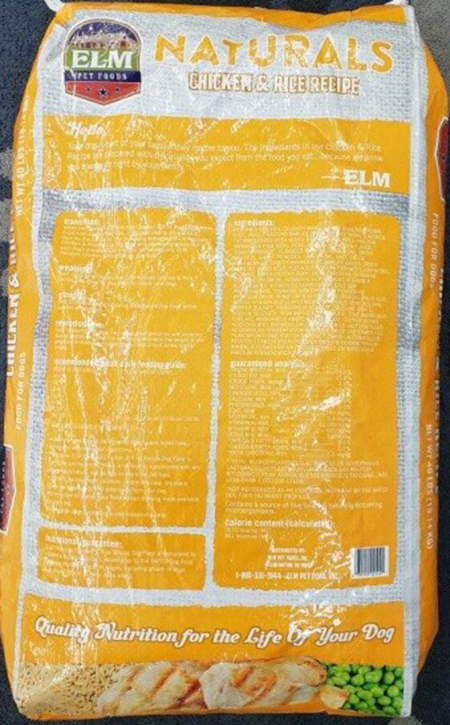
November 29, 2018 — ELM Pet Foods, Inc. is issuing a voluntary recall of certain products of Elm Dog Food because the products could contain elevated levels of vitamin D, which can cause serious health issues.
What’s Recalled?
The recall includes products manufactured between February 25, 2018 and October 31, 2018 with the following “Best By” dates:
3lb Elm Chicken and Chickpea Recipe
Size: 3-pound pkg
UPC Code: 0-70155-22507-8
TD2 26 FEB 2019
TE1 30 APR 2019
TD1 5 SEP 2019
TD2 5 SEP 2019
Elm Chicken and Chickpea Recipe
Size: 28-pound pkg
UPC Code: 0-70155-22513-9
TB3 6 APR 2019
TA1 2 JULY 2019
TI1 2 JULY 2019
Consumers, who have purchased the specific product above, during these dates, should stop feeding it to their dogs.
All Bags in the recall are yellow with the Elm Pet Foods Tag on the front of the bag and have a silhouette of a chicken at the bottom of the front side of the bag.
Consumers can check the lot codes on the back of the bag at the bottom center on the 3-lb bags and in the center of the back of the bag on the 28-lb bags.
The 40-lb bag lot numbers can be found on the bottom right of the back of the bag.
No other ELM Pet Foods products are impacted.
This is a voluntary recall and is being conducted in cooperation with the U.S. Food and Drug Administration.
Where Was the Product Sold?
Lot codes in this voluntary recall were distributed in the following states:
Delaware
Maryland
New Jersey
Pennsylvania
About Elevated Vitamin D
Dogs ingesting elevated levels of Vitamin D may exhibit symptoms such as vomiting, loss of appetite, increased thirst, increased urination, excessive drooling and weight loss.
Vitamin D when consumed at very high levels can lead to serious health issues in dogs including renal dysfunction.
Consumers with dogs who have consumed the product listed above are exhibiting these symptoms, should contact their veterinarian.
What to Do?
If consumers have questions or would like a refund they should call ELM Pet Foods at 800-705-2111 from 8 AM to 5 PM ET Monday through Friday or by email at customerservice@elmpetfoods.com.
U.S. citizens can report complaints about FDA-regulated pet food products by calling the consumer complaint coordinator in your area.
A dog naps in the Ikea store in Catania, Italy. (Photo: rewintageboudoir/Instagram)
There’s something particularly homey about the living room vignettes and kitchen setups in the Ikea store in Catania, Italy. Sprawled on the occasional braided rug or curled up under the sleek dining tables are sleeping homeless dogs. They’ve been welcomed into the store by employees who offer them comfort when the temperatures drop.
Giovanna Pecorino says she takes a photo of the dogs each time she visits the store.
“I know those dogs well,” says Pecorino, who owns a vintage clothing shop in Catania. “You find them at the entrance sleeping between the racks, or at the exit between the tables of their restaurant, always with their sweet eyes. I love them. They give me a sense of peace.”
[There are two more photographs on Instagram that I am unable to copy into this post.]
Linda Chartier Scala, an American from Rhode Island who now lives in Noto, Italy, also photographed one of the dogs that made a temporary home in a makeshift Ikea living room. She is very familiar with the pups, who are mainstays in the store through the seasons.
“Dogs are there year-round,” says Chartier Scala. “They love the air conditioning during the summer. They are sterilized and looked after by an animal welfare group. Fat and happy, they don’t wander from there.”
Shoppers like Scala often post photos of the resting pets on social media, lauding the store and its employees for feeding the homeless dogs and offering them shelter.
“Yesterday, going to the Ikea of Catania I came across this sweet scene, a stray puppy had found shelter in one of the store’s exhibits, this image was wonderful!” wrote mannilvers. “Giving shelter to a stray dog and making it feel at home is simply amazing!”
According to reports on some posts, the dogs are well cared for and quite popular with visitors, who often stop by the store just to check on their favorite canines. And the dogs, who seem to be very respectful of their surroundings, enjoy the attention.
“This is the best story I’ve read in a long time. Human kindness at it’s best,” writes ihelpanimals12018. “THANK YOU.”
ooOOoo
“Human kindness at it’s best … ”
This is such a wonderful account of people being loving towards dogs that were homeless.
Last, but no means least, Happy Birthday to Jeannie!
More on the elevated vitamin D issue in our dog food.
Here are the details.
ooOOoo
Evolve, Sportsman’s Pride, and Triumph Dog Food Recall
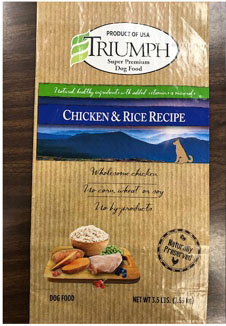
November 27, 2018 — Sunshine Mills, Inc., of Red Bay, Alabama, is voluntarily recalling select products of Evolve, Sportsman’s Pride, and Triumph dog foods due to elevated levels of vitamin D, which can cause serious health issues.
What’s Recalled?
The following products are being recalled:
Evolve Chicken & Rice Puppy Dry Dog Food
Size: 14-pound bag
UPC: 0-73657-00862-0
Evolve Chicken & Rice Puppy Dry Dog Food
Size: 28-pound bag
UPC: 0-73657-00863-7
Sportsman’s Pride Large Breed Puppy Dry Dog Food
Size: 40-pound bag
UPC: 0-70155-10566-0
Sportsman’s Pride Large Breed Puppy Dry Dog Food
Size: 40-pound bag
UPC: 0-70155-10564-0
Triumph Chicken & Rice Recipe Dry Dog Food
Size: 3.5 pound bag
UPC: 0-73657-00873-6
Triumph Chicken & Rice Recipe Dry Dog Food
Size: 16-pound bag
UPC: 0-73657-00874-3
Triumph Chicken & Rice Recipe Dry Dog Food
Size: 30-pound bag
UPC 0-73657-00875-0
Bags affected have a Best Buy Date Code of November 1, 2018 through November 8, 2019.
The Best Buy Code can be located on the back of each bag.
No other Evolve, Sportsman’s Pride or Triumph products are affected by this recall.
Where Was Product Sold?
The above products were distributed in retail stores within the United States as well as some export distributors in Japan, Puerto Rico, Colombia, Israel, Canada and South Korea.
This recall is being conducted in cooperation with the U.S. Food and Drug Administration.
About High Levels of Vitamin D
Dogs ingesting elevated levels of Vitamin D may exhibit symptoms such as vomiting, loss of appetite, increased thirst, increased urination, excessive drooling, and weight loss.
Vitamin D, when consumed at very high levels can lead to serious health issues in dogs including renal dysfunction.
Consumers with dogs who have consumed any of the products listed above and are exhibiting any of these symptoms, should contact their veterinarian.
What to Do?
Consumers should stop feeding the products listed above.
Consumers who have purchased any of the affected product should dispose of it or return it to the retailer for a full refund.
Consumers may contact Sunshine Mills, Inc. customer service at (800) 705-2111 from 7AM to 4PM Central Time, Monday through Friday.
Or by email at customer.service@sunshinemills.com for additional information.
ooOOoo
Phew!
Maybe that is the last of the recalls with regard to Vitamin D.
November 19, 2018 — Harris Teeter of Matthews, NC, is recallingAbound Chicken and Rice Dog Food due to elevated levels of vitamin D, which may cause renal failure.
No graphic was supplied with the official bulletin.
The following image was retrieved from the internet and is provided in good faith by The Dog Food Advisor.
The graphic below may or may not be an accurate representation of the actual recalled product.
What’s Recalled?
The following products are being recalled by Harris Teeter.
Abound Chicken & Brown Rice Dog Food
Size: 4 lb package
UPC Code: UPC 0001111083556
Abound Chicken & Brown Rice Dog Food
Size: 14 lb package
UPC Code: 0001111083573
Batch information and Best By dates were not provided by the company in its recall bulletin.
About Elevated Levels of Vitamin D
Dogs ingesting elevated levels of Vitamin D may exhibit symptoms such as vomiting, loss of appetite, increased thirst, increased urination, excessive drooling, and weight loss.
Vitamin D, when consumed at very high levels, can lead to serious health issues in dogs including renal dysfunction.
Customers with dogs who have consumed any of the products listed above and are exhibiting any of these symptoms, should contact their veterinarian.
What to Do?
Harris Teeter has removed the recalled products from its shelves.
If you purchased these items, please do not allow your pet to consume them. Instead, return them to your Harris Teeter store for a full refund.
Customers may contact Sunshine Mills, Inc. customer service (the maker) at 800-705-2111 from 7 am to 4 pm Central Time, Monday through Friday.
Or by email at customer.service@sunshinemills.com for additional information.
U.S. citizens can report complaints about FDA-regulated pet food products by calling the consumer complaint coordinator in your area.
I don’t know what to make of these. Part of me thinks there are too many dog-food recalls and part of me thinks it is much better that we have this service. Oh well.
Giant and Martin’s Recall Nature’s Promise Dog Food
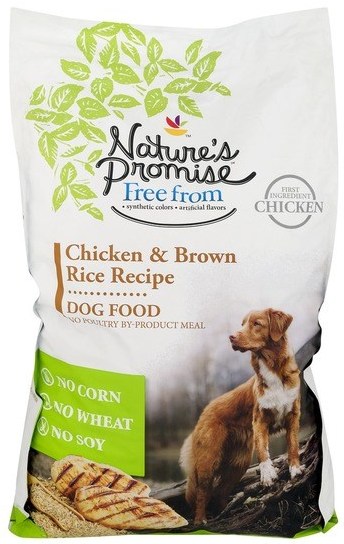
November 20, 2018 — Giant Food Stores and Martin’s Food Markets are voluntarily recalling certain lots of Nature’s Promise Dog Food because they may contain excessive amounts of Vitamin D, which may cause renal failure.
No graphic was supplied with the official news wire. The following image was retrieved from the internet and is provided in good faith by The Dog Food Advisor.
What’s Recalled?
The following products are included in this recall event:
Nature’s Promise Chicken & Brown Rice Dog Food
Size: 4 lb package
Best By Dates: November 1, 2018 to November 8, 2019
Nature’s Promise Chicken & Brown Rice Dog Food
Size: 14 lb package
Best By Dates: November 1, 2018 to November 8, 2019
Nature’s Promise Chicken & Brown Rice Dog Food
Size: 28 lb package
Best By Dates: November 1, 2018 to November 8, 2019
Giant/Martin’s has removed all affected product from its shelves and urges customers to return the product to their local store for a full refund.
The companies have received no reports of illnesses to date.
About Elevated Levels of Vitamin D
Dogs ingesting elevated levels of Vitamin D may exhibit symptoms such as vomiting, loss of appetite, increased thirst, increased urination, excessive drooling, and weight loss.
Vitamin D, when consumed at very high levels, can lead to serious health issues in dogs including renal dysfunction.
Customers with dogs who have consumed any of the products listed above and are exhibiting any of these symptoms, should contact their veterinarian.
What to Do?
Customers should stop feeding the products listed above.
Customers may contact Sunshine Mills, Inc. customer service at 800-705-2111 from 7 am to 4 pm Central Time, Monday through Friday.
Or by email at customer.service@sunshinemills.com for additional information.
In addition, customers may call Giant/Martin’s Customer Support Center at 888-814-4268.
U.S. citizens can report complaints about FDA-regulated pet food products by calling the consumer complaint coordinator in your area.