Category: Food

More on a healthy gut!

A continuation from yesterday!

I wasn’t going to post anything today but then in response to Val Boyco’s comment: “Good stuff Paul. Thank you! Please do more research and share here 💛 My gut will thank you!” I did do some more research and quickly came upon another article that was published recently and is worth of a read!

ooOOoo

How to prepare and protect your gut health over Christmas and the silly season

December 20, 2020

By


Senior Lecturer, Edith Cowan University

Disclosure statement
Claus T. Christophersen receives funding from NHMRC and WA Department of Health. He is a co-author of The Gut Feeling Cookbook linked in this article – all proceeds from sales of this cookbook go directly back into supporting our research, no personal financial interest.It’s that time of year again, with Christmas parties, end-of-year get-togethers and holiday catch-ups on the horizon for many of us — all COVID-safe, of course. All that party food and takeaway, however, can have consequences for your gut health.

Gut health matters. Your gut is a crucial part your immune system. In fact, 70% of your entire immune system sits around your gut, and an important part of that is what’s known as the gut-associated lymphoid tissue (GALT), which houses a host of immune cells in your gut.

Good gut health means looking after your gut microbiome — the bacteria, fungi, viruses and tiny organisms that live inside you and help break down your food — but also the cells and function of your gastrointestinal system.

We know gut health can affect mood, thanks to what’s known as the gut-brain axis. But there’s also a gut-lung axis and a gut-liver axis, meaning what happens in your gut can affect your respiratory system or liver, too.

Here’s what you can do to bolster your gut microbiome in the coming weeks and months.

Read more: Gut health: does exercise change your microbiome?

How do silly season indulgences affect our gut health?

You can change your gut microbiome within a couple of days by changing your diet. And over a longer period of time, such as the Christmas-New Year season, your diet pattern can change significantly, often without you really noticing.

That means we may be changing the organisms that make up our microbiome during this time. Whatever you put in will favour certain bacteria in your microbiome over others.

We know fatty, sugary foods promote bacteria that are not as beneficial for gut health. And if you indulge over days or weeks, you are pushing your microbiome towards an imbalance.

For many of us, Christmas is a time of indulgence. Shutterstock

Is there anything I can do to prepare my gut health for the coming onslaught?

Yes! If your gut is healthy to begin with, it will take more to knock it out of whack. Prepare yourself now by making choices that feed the beneficial organisms in your gut microbiome and enhance gut health.

That means:

  • eating prebiotic foods such as jerusalem artichokes, garlic, onions and a variety of grains and inulin-enhanced yoghurts (inulin is a prebiotic carbohydrate shown to have broad benefits to gut health)
  • eating resistant starches, which are starches that pass undigested through the small intestine and feed the bacteria in the large intestine. That includes grainy wholemeal bread, legumes such as beans and lentils, firm bananas, starchy vegetables like potatoes and some pasta and rice. The trick to increasing resistant starches in potato, pasta and rice is to cook them but eat them cold. So consider serving a cold potato or pasta salad over Christmas
  • choosing fresh, unprocessed fruits and vegetables
  • steering clear of added sugar where possible. Excessive amounts of added sugar (or fruit sugar from high consumption of fruit) flows quickly to the large intestine, where it gets gobbled up by bacteria. That can cause higher gas production, diarrhoea and potentially upset the balance of the microbiome
  • remembering that if you increase the amount of fibre in your diet (or via a supplement), you’ll need to drink more water — or you can get constipated.

For inspiration on how to increase resistant starch in your diet for improved gut health, you might consider checking out a cookbook I coauthored (all proceeds fund research and I have no personal interest).

Good gut health is hard won and easily lost. Shutterstock

What can I do to limit the damage?

If Christmas and New Year means a higher intake of red meat or processed meat for you, remember some studies have shown that diets higher in red meat can introduce DNA damage in the colon, which makes you more susceptible to colorectal cancer.

The good news is other research suggests if you include a certain amount of resistant starch in a higher red meat diet, you can reduce or even eliminate that damage. So consider a helping of cold potato salad along with a steak or sausage from the barbie.

Don’t forget to exercise over your Christmas break. Even going for a brisk walk can get things moving and keep your bowel movements regular, which helps improve your gut health.

Have a look at the Australian Guide to Healthy Eating and remember what foods are in the “sometimes” category. Try to keep track of whether you really are only having these foods “sometimes” or if you have slipped into a habit of having them much more frequently.

The best and easiest way to check your gut health is to use the Bristol stool chart. If you’re hitting around a 4, you should be good.

If you’re hitting around a 4, you should be good. Shutterstock

Remember, there are no quick fixes. Your gut health is like a garden or an ecosystem. If you want the good plants to grow, you need to tend to them — otherwise, the weeds can take over.

I know you’re probably sick of hearing the basics — eat fruits and vegetables, exercise and don’t make the treats too frequent — but the fact is good gut health is hard won and easily lost. It’s worth putting in the effort.

A preventative mindset helps. If you do the right thing most of the time and indulge just now and then, your gut health will be OK in the end.

ooOOoo

That book that Claus refers to, the one on the gut Gut feeling: Mindful menus for the microbiome is here. It looks a very good book.

Well Val (and many others), did you find this interesting? It was a rhetorical question because I know that you did.

I will continue to republish these posts and, especially, the one on exercise. Because as I have often said: Diet and exercise are key!

Onwards and upwards!

Being healthy in your later years.

This is a key article!

Now this has nothing to do with dogs. Well not directly but the longer we humans live the longer we can have dogs as pets.

I was having an email ‘conversation’ with Jon over in England and he pointed me to Professor Tim Spector. Prof. Spector writes on his website that he:

Tim Spector is a Professor of Genetic Epidemiology and Director of the TwinsUK Registry at Kings College, London and has recently been elected to the prestigious Fellowship of the Academy of Medical Sciences. He trained originally in rheumatology and epidemiology.

In 1992 he moved into genetic epidemiology and founded the UK Twins Registry, of 13,000 twins, which is the richest collection of genotypic and phenotypic information worldwide. He is past President of the International Society of Twin Studies, directs the European Twin Registry Consortium (Discotwin) and collaborates with over 120 centres worldwide.

He has demonstrated the genetic basis of a wide range of common complex traits, many previously thought to be mainly due to ageing and environment. Through genetic association studies (GWAS), his group have found over 500 novel gene loci in over 50 disease areas. He has published over 800 research articles and is ranked as being in the top 1% of the world’s most cited scientists by Thomson-Reuters.

He held a prestigious European Research Council senior investigator award in epigenetics and is a NIHR Senior Investigator. His current work focuses on omics and the microbiome and directs the crowdfunded British Gut microbiome project.

Together with an international team of leading scientists including researchers from King’s College London, Massachusetts General Hospital, Tufts University, Stanford University and nutritional science company ZOE he  is conducting the largest scientific nutrition research project, showing that individual responses to the same foods are unique, even between identical twins.

You can find more on https://joinzoe.com/ He is a prolific writer with several popular science books and a regular blog, focusing on genetics, epigenetics and most recently microbiome and diet (The Diet Myth). He is in demand as a public speaker and features regularly in the media.

That is quite a CV!

Then I came across an essay on The Conversation website about being healthier in one’s old age.

Read it!

ooOOoo

Keen to be healthier in old age? Tend your inner garden

By

Clinical Senior Lecturer, King’s College London

Professor of Genetic Epidemiology, King’s College London

January 29, 2016

Grub’s up. Lunch by Shutterstock

The world’s oldest man, Yasutaro Koide recently died at the age of 112. Commentators as usual, focused on his reported “secret to longevity”: not smoking, drinking or overdoing it. No surprises there. But speculation on the basis of one individual is not necessarily the most helpful way of addressing this human quest for the Philosopher’s Stone.

The “very old” do spark our interest – but is our search for a secret to longevity actually misguided? Wouldn’t you rather live healthier than live longer in poor health? Surely, what we really want to know is how do we live well in old age.

Clearly as scientists we try to illuminate these questions using populations of people not just odd individuals. Many previous attempts have approached this question by looking for differences between young and old people, but this approach is often biased by the many social and cultural developments that happen between generations, including diet changes. Time itself should not be the focus – at least, in part, because time is one thing we are unlikely to be able to stop.

Yasutaro Koide made 112. Kyodo/Reuters

The real question behind our interest in people who survive into old age is how some manage to stay robust and fit while others become debilitated and dependent. To this end, recent scientific interest has turned to investigating the predictors of frailty within populations of roughly the same age. Frailty is a measure of how physically and mentally healthy an individual is. Studies show frailer older adults have an increased levels of low grade inflammation – so-called “inflammaging”.

New research published in Genome Medicine by Matt Jackson, from our group at King’s College London, investigated this question in an unlikely place – poo. Recent evidence indicates that our immune and inflammatory systems are trained and educated in our gut, through key interactions with gut bacteria. So we asked if changes in our gut bacteria could be part of the process of inflammation driving frailty.

Our recent work found that the frailer an individual, the lower the diversity of gut bacteria they have. We looked at stool samples from more than 700 healthy British twins and found that a group of bacteria belonging to the species with a tricky and slightly unpleasant name, Faecalibacterium prausnitzii, were found in higher amounts in the healthier twins. This is a particularly interesting microbe as it has been linked with good health in many other diseases such as inflammatory bowel disease and is believed to reduce inflammation of the gut. Could this bug help protect against frailty?

Putting in the research. Paper by Shutterstock

There were other microbes seen in increased amounts within the frailer twins. One was Eubacterium dolichum, which has been seen to increase in unhealthy Western diets. We found the same picture when comparing frailer, more elderly, individuals from the ELDERMET study, by the University of Cork. This suggests that dietary changes might be an easy way to encourage healthy ageing.

Our study does not yet clarify whether the changes to the gut bacteria are a cause of poor ageing itself or are just a consequence of frailty – longitudinal studies that follow people over several years will be needed to sort this out. But these results are exciting for researchers in the ageing field and suggest that if you want to age well you should perhaps do fewer crosswords and spend more time looking after your microbial garden, for example by eating plenty of plant fibre, for example in a Mediterranean-type diet.

ooOOoo

Well this essay was published nearly 5 years ago and one wonders if more information has come to light.

Certainly Jeannie and me are heavily into a plant-based diet with a small selection of fish from time to time.

I will do more research and see if there are any updates that may be published.

In the meantime stay as healthy and as happy as you can be!


Yet another dog food alert!

This is regarding Sportmix.

This alert came into my inbox on December 30th.

The FDA has announced that Midwestern Pet Food is recalling select lots of Sportmix dog and cat foods because they contain potentially deadly levels of aflatoxin.

FDA is aware of at least 28 deaths and 8 illnesses in dogs who ate the affected products.

So this is extremely important.

The full details now follow:

ooOOoo

Sportmix Dog and Cat Foods Recalled Due to Deadly Mold Toxin

December 30, 2020 — The FDA is alerting consumers that Midwestern Pet Foods, Inc. is recalling nine lots of Sportmix pet food products because they contain potentially fatal levels of aflatoxin.

FDA is aware of at least 28 deaths and 8 illnesses in dogs that ate the recalled products.

This is an ongoing investigation. Case counts and the scope of this pending recall may expand as new information becomes available.

What’s Recalled?

The dry pet food products to be recalled by Midwestern Pet Foods, Inc. on December 30, 2020 include:

  • Sportmix Energy Plus, 50 lb. bag
    Exp 03/02/22/05/L2
    Exp 03/02/22/05/L3
    Exp 03/03/22/05/L2
  • Sportmix Energy Plus, 44 lb. bag
    Exp 03/02/22/05/L3
  • Sportmix Premium High Energy, 50 lb. bag
    Exp 03/03/22/05/L3
  • Sportmix Premium High Energy, 44 lb. bag
    Exp 03/03/22/05/L3
  • Sportmix Original Cat, 31 lb. bag
    Exp 03/03/22/05/L3
  • Sportmix Original Cat, 15 lb. bag
    Exp 03/03/22/05/L2
    Exp 03/03/22/05/L3

Lot code information may be found on the back of bag and will appear in a three-line code, with the top line in format “EXP 03/03/22/05/L#/B###/HH:MM”.

As new information becomes available, the product list above may continue to expand.

FDA and the Missouri Department of Agriculture are working with the firm to determine whether any additional products may have been made with the same ingredients containing potentially fatal levels of aflatoxin.

About Aflatoxin

Aflatoxin is a toxin produced by the mold Aspergillus flavus and at high levels it can cause illness and death in pets.

The toxin can be present even if there is no visible mold.

Pets are highly susceptible to aflatoxin poisoning because, unlike people, who eat a varied diet, pets generally eat the same food continuously over extended periods of time.

If a pet’s food contains aflatoxin, the toxin could accumulate in the pet’s system as they continue to eat the same food.

Pets with aflatoxin poisoning may experience symptoms such as sluggishness, loss of appetite, vomiting, jaundice (yellowish tint to the eyes, gums or skin due to liver damage), and/or diarrhea.

In some cases, this toxicity can cause long-term liver issues and/or death.

Some pets suffer liver damage without showing any symptoms.

Pet owners whose pets have been eating the recalled products should contact their veterinarians, especially if they are showing signs of illness.

There is no evidence to suggest that pet owners who handle products containing aflatoxin are at risk of aflatoxin poisoning.

However, pet owners should always wash their hands after handling pet food.

What to Do?

Affected products may still be on store shelves, online, or in pet owners’ homes.

Pet owners should stop feeding their pets the recalled products listed above and consult their veterinarian, especially if the pet is showing signs of illness.

The pet owner should remove the food and make sure no other animals have access to the recalled product.

Further information regarding this recall can be found in the related FDA Bulletin.

U.S. citizens can report complaints about FDA-regulated pet food products by calling the consumer complaint coordinator in your area.

Or go to the FDA’s “Report a Pet Food Complaint” page.

Canadians can report any health or safety incidents related to the use of this product by filling out the Consumer Product Incident Report Form.

ooOOoo

Please, please take note of this and wherever possible please share this email around.

Part Two of the wonderful world of Border Collies

The concluding part of this delightful tale.

And while it is really delightful it is also a lot shorter than Part One!

ooOOoo

The Wonderful World of Border Collies – Part 2

An absolute casserole of nonsense.

ooOOoo

Be happy; be safe; love your pets especially your dogs.

The wonderful world of Border Collies

Part One of a two-part post.

This is an account of blogger Auntysocial’s post about her Border Collie. Part Two will be on Tuesday.

ooOOoo

The wonderful world of Border Collies

I love the sheer time, care and patience these dogs have for things. This one stealing a bottle of Coke kills me because it has the same careful creeping side eye Puddi had as a puppy when she was in pure arsehole mode and determined to get on my nerves.

Back then she wasn’t allowed inside the kitchen and knew the line was drawn at the physical point where wood floor met ceramic tiles. Most of the time she stood there cos she knew the rules but when she was that way out she would stand there for a bit, then put one paw so it was literally half in and half out.

I could see her out the corner of my eye but carried on chopping veg or whatever I was doing and reckoned not to have noticed which was a similar technique I used with the kids when they were little. Would allow them to take things to a point they knew they’d already broken a rule but gave them a minute or so to decide if they should quit while ahead or try pushing it further.

Puddi just didn’t know the meaning of quitting so this one day as I chopped veg and made tea pretending not to notice, in came the paw. The half in – half out lingered a moment but because it go no reaction, in came the whole paw.

Then came the second paw with her head peering round the side of the wall looking and no doubt expecting me to suddenly see and tell her off. Nothing.

So in came the third then after what felt like an eternity she moved that last one and all four paws were now on the kitchen tiles. OFFICIAL REBEL

Me casually without even glancing her way “Out you go”

She stood there momentarily, casually started backing up, scanned her immediate surroundings and did the old “Yeah well I’m going anyway… don’t wanna be in your shit kitchen BUT I’M HAVING THIS SO SCREW YOU BITCH!!!!”

The nearest thing happened to be a used train ticket that had fallen next to the bin so she grabbed that and legged it feeling thoroughly pleased and satisfied I’d been one-upped.

This was what we went through all day every day until she was about a year old.

And another

ooOOoo

Simply put: A puppy’s start to a happy life! Certainly for puppy Puddi!

Of pigs and other animals

Another guest post from John Brooks.

It really is delightful when someone comes along and reliably offers to submit a guest post or two, or three, or more. That person is John Brooks and he has submitted many posts; the last one being Ageing Gracefully Applies To Our Dogs As Well. It may be found here.

But before going on I would just like to say thank you to the very helpful comments about Pedi and his diabetes.

So without any further ado here is John’s latest:

ooOOoo

Pigs, Dogs, and Other Pets: Do They Get Along?

By John Brooks, December 3rd, 2020

Pigs are extremely intelligent animals, and this intelligence makes them great, loving and attentive pets. Most people opt for American miniature pigs as pets. This breed is a descendant of potbelly pigs and other small feral pig breeds. Breeders have specifically created miniature pigs to be smaller and lighter than full-sized pigs, so they can trot around the house like a dog or cat would. Most American miniature pigs will weigh between 50-75 pounds and stand 12-15-inches tall.

Ultimately however, it does not matter whether you have a full-sized or miniature pig, their ability to interact with other animals remains the same. Bringing a pig into a situation with other pets or bringing home a new pet when you already have a pet pig can be a stressful time. Pigs are prey animals. They typically react to new situations with fear.

But, you can cut down on your pet pig stress by choosing the right companion animal for them. Pigs can get along with other pets, you just need to make the introduction and relationship as safe and healthy as possible. Here we explain how to do just that.

Pigs and Dogs
Pigs and dogs living together in harmony is a big concern for most pet owners. There are plenty of photos online of pigs and dogs as best friends. But, do not count on your pig and dog getting along. Pigs are prey animals and dogs are predators. It is very easy for instinct to take over for both animals, especially if you are not there to supervise the interaction.

In addition to their instinctual behaviors, pigs and dogs have different social cues. Both are playful and intelligent animals, but their body language will be completely different. Your pig may annoy your dog and vice versa because they are unable to understand that the other animal needs a break.

These complications do not mean a pig and dog can get along. You just have to take precautions. If you do have a dog and pig together in the same household, it is essential that you supervise all of their interactions. Ultimately, if you are going to let your piggy roam free, your dog will need to be in a crate while you do so, or in another room or outside.

Pigs and Other Pets
As far as other pets are concerned, pigs will do well with almost any other prey animal. If you are searching for a friend for your piggy, here are the most common pig and pet relationships, and tips for making these relationships work:

Cats
In general, pigs and cats do well together. Despite cats being predators, the website All About Cats state that pigs have similar personality traits to cats. Additionally, cats are much less likely to hurt a pig than a dog. Even miniature pigs weigh from 50-100 pounds. It will be very hard for a common housecat to injure this size animal.

As with all animals, you will need to ensure the personalities of your cat and pig work well together. A lazy cat and playful pig will not be a good combination. However, a cat and pig with complementary personalities will likely get along just fine.

Farm Animals
Personality will come into play when introducing pigs to other farm animals. Animals that tend to buck or head-butt can hurt a pig. Similarly, pigs can bite if they feel threatened. Always test out a farm animal with a pig under supervision before putting them in a pasture together.

Farm animals that work well with pigs include sheep, goats, cows, donkeys, horses, and llamas. Obviously, you will need a lot of property to house any of these animals. Pigs work well in the same pasture as other farm animals, but it is better to give them their own living quarters in a barn or lean-to.

Conclusion
Pigs can be an amazing pet. They are trainable and affectionate. You can even teach them to walk on a harness. But, you will need to take some care in finding them a friend. Pigs can become close to many different species of animals. Some just work better than others.

Keep the personality of your pig in mind when looking for a companion. You will also want to keep early interactions short. Finally, supervision is key when it comes to successful relationships between your pig, dog, and other pets.

ooOOoo

Another brilliant essay.

Thank you to John and I write on my own behalf and, I am certain, on behalf of many, many other people.

Thank you, John.

Obsessed with food!

Doodle is not the only one we can think of!

Here at home our latest dog, Sheena, is rather obsessed with food. Actually not only Sheena but also Pedi.

But here’s another example of a dog who is led by their tummy! Once again, taken from The Dodo.

ooOOoo

Woman Can’t Find Her Dog Anywhere — Until She Checks The Food Container

“I knew that crunching sound was her but I didn’t know where it was initially coming from.”

By Caitlin Jill Anders>
Published on 11/12/2020

Doodle is a super happy, loving tripod dog who is absolutely obsessed with food. Her family has to keep an eye on her when she’s around food, because she’s always on a mission to try and steal it.

BRANDY STENZEL

One day, Doodle’s mom was doing laundry when she suddenly realized that she had no idea where Doodle was.

“I first noticed she was missing after I didn’t see her next to me which she’s normally pretty close to me when I’m home,” Brandy Stenzel, Doodle’s mom, told The Dodo.

For the next half hour, Stenzel searched everywhere for Doodle. She ran all around the house, searching from top to bottom, and even checked outside to see if she’d somehow escaped. She was at a loss and starting to panic — when suddenly, she heard a crunching sound.

“I knew that crunching sound was her but I didn’t know where it was initially coming from,” Stenzel said.

Finally, the crunching sound led her to the food bin, and there was Doodle. She had somehow squeezed herself inside and was very happily eating to her heart’s content.

BRANDY STENZEL

The lid had shut behind her, and while Doodle could have easily pushed it off and hopped out again, she was enjoying herself way too much. If her mom hadn’t found her, she may have never stopped eating.

“The food bin was hinged on one side so she easily could have hopped right out if she wanted to, but she’s a pork chop so she didn’t want to,” Stenzel said.

BRANDY STENZEL

As soon as Doodle saw her mom, she knew she was in trouble, but of course, it was still worth it.

“She knew she got caught so when that happens she puts her ears back and it makes her look like Dobby the house elf of ‘Harry Potter,’” Stenzel said.

BRANDY STENZEL

To avoid losing Doodle in the food bin again, her family got one that locks, much to her dismay. Whenever someone forgets to lock it, she’ll try to hop in and repeat her great food bin feast, but her mom is now always close by to stop her.

Doodle loves food, and she’ll never stop trying to steal it, no matter what.

ooOOoo

Yes, that’s a duplication of our Sheena.

Here’s a photograph of Sheena looking very serene and relaxed.

Sheena

Sheena is the most friendly of dogs and while we are uncertain of her age that is of no consequence.

Dog food alert!

Yet another one.

This came in yesterday afternoon, Pacific time, and it is shared with you all.

ooOOoo

Albright’s Raw Dog Food Recall

November 13, 2020 — Albright’s Raw Dog Food of Fort Wayne, Indiana, is voluntarily recalling 67 cases of Chicken Recipe for Dogs because it has the potential to be contaminated with Salmonella bacteria.

What’s Being Recalled?

The product is labeled Albright’s Raw Dog Food Chicken Recipe for Dogs and is packaged in 2-pound chubs/rolls (see image above).

Each chub/roll is printed with:

  • Lot number C000185
  • Best By 19 May 2021

Product was sold frozen, and was distributed from the company to distributors from 7/8/20 to 8/27/20.

One animal illness has been reported. No human illnesses have been reported to date.

Where Was It Sold?

Albright’s Raw Dog Food Chicken Recipe for Dogs was distributed in CA, FL, IL, IN, NH, NJ, NV, NY, PA, and TN.

The affected product was also distributed through retail stores, mail order, and direct delivery.

What Caused the Recall?

The problem bacteria was revealed after testing conducted by the FDA.

The problem was confined to this batch and the company has ceased the distribution of the batch as FDA and the company continue their investigation as to what caused the problem.

About Salmonella in Humans

Salmonella can affect animals eating the products and there is risk to humans from handling contaminated pet products, especially if they have not thoroughly washed their hands after having contact with the products or any surfaces exposed to these products.

Healthy people infected with Salmonella should monitor themselves for some or all of the following symptoms: nausea, vomiting, diarrhea or bloody diarrhea, abdominal cramping and fever.

Rarely, Salmonella can result in more serious ailments, including arterial infections, endocarditis, arthritis, muscle pain, eye irritation, and urinary tract symptoms.

Consumers exhibiting these signs after having contact with this product should contact their healthcare providers.

About Salmonella in Pets

Pets with Salmonella infections may be lethargic and have diarrhea or bloody diarrhea, fever, and vomiting.

Some pets will have only decreased appetite, fever and abdominal pain.

Infected but otherwise healthy pets can be carriers and infect other animals or humans.

If your pet has consumed the recalled product and has these symptoms, please contact your veterinarian.

What to Do?

Due to the frozen condition of the product, it is possible that retailers and end users may still have the product in their freezers.

Consumers who have purchased Albright’s Raw Dog Food Chicken Recipe for Dogs are urged to return it to the place of purchase for a full refund.

Consumers with questions may contact the company at 260-422-9440 Monday through Friday, 8 AM to 4 PM ET.

U.S. citizens can report complaints about FDA-regulated pet food products by calling the consumer complaint coordinator in your area.

Or go to the FDA’s “Report a Pet Food Complaint” page.

Canadians can report any health or safety incidents related to the use of this product by filling out the Consumer Product Incident Report Form.

ooOOoo

Once again, please share this as far and wide as you can.

A stray dog gets a treat.

This is yet another great story about a dog.

I came to my desk a little late in the day but wanted to share this article. Again it is from The Dodo and, apologies, I am going straight into it. It’s a very lovely story.

ooOOoo

Dog Gives Woman The Sweetest Hug When He Realizes He’s Being Rescued

“I think he was just really happy that someone was being nice to him.”

By Lily Feinn
Published on 10/31/2020.

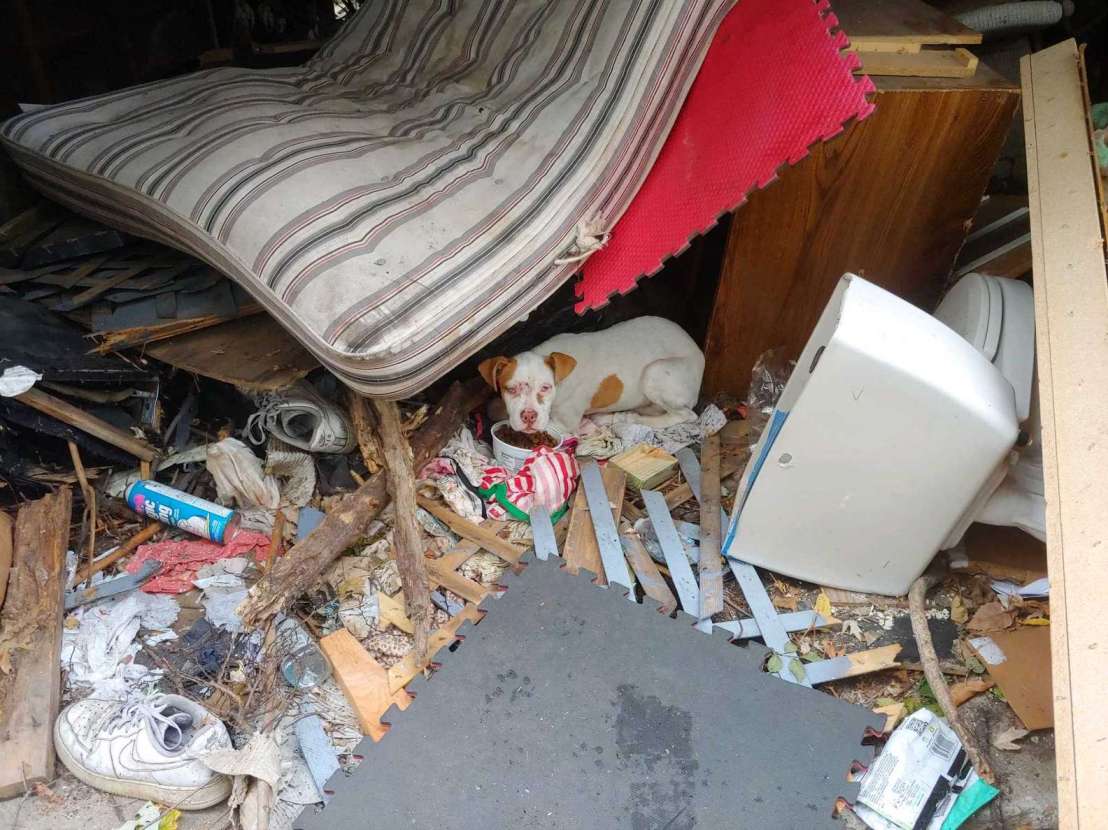
On a cold rainy day, a little puppy named Chowder thought he’d found the perfect spot to stay dry. A garage behind an abandoned building had become a dumping ground for neighborhood furniture and trash, and that’s where Chowder discovered a discarded mattress and crawled underneath.

But things were about to get a whole lot better for the little stray.

STRAY RESCUE OF ST. LOUIS

“[There’s a] super nice couple who lives in the area, and the husband had apparently gone out to the alley to throw some trash away,” Donna Lochmann, a rescuer with Stray Rescue of St. Louis, told The Dodo. “When the husband went out, he noticed that this white dog had found shelter underneath this corner of a mattress … and he gave him a little bit of food and water.”

The man called Stray Rescue of St. Louis, and Lochmann and her fellow rescuer rushed to the scene. When Lochmann met the 4-month-old puppy, she was shocked by how trusting he was.

“When we got out [of the car] he ran right up to me,” Lochmann said. “He was just the friendliest little guy. He wasn’t afraid of us or anything like that. I think he was just really happy that someone was being nice to him.”

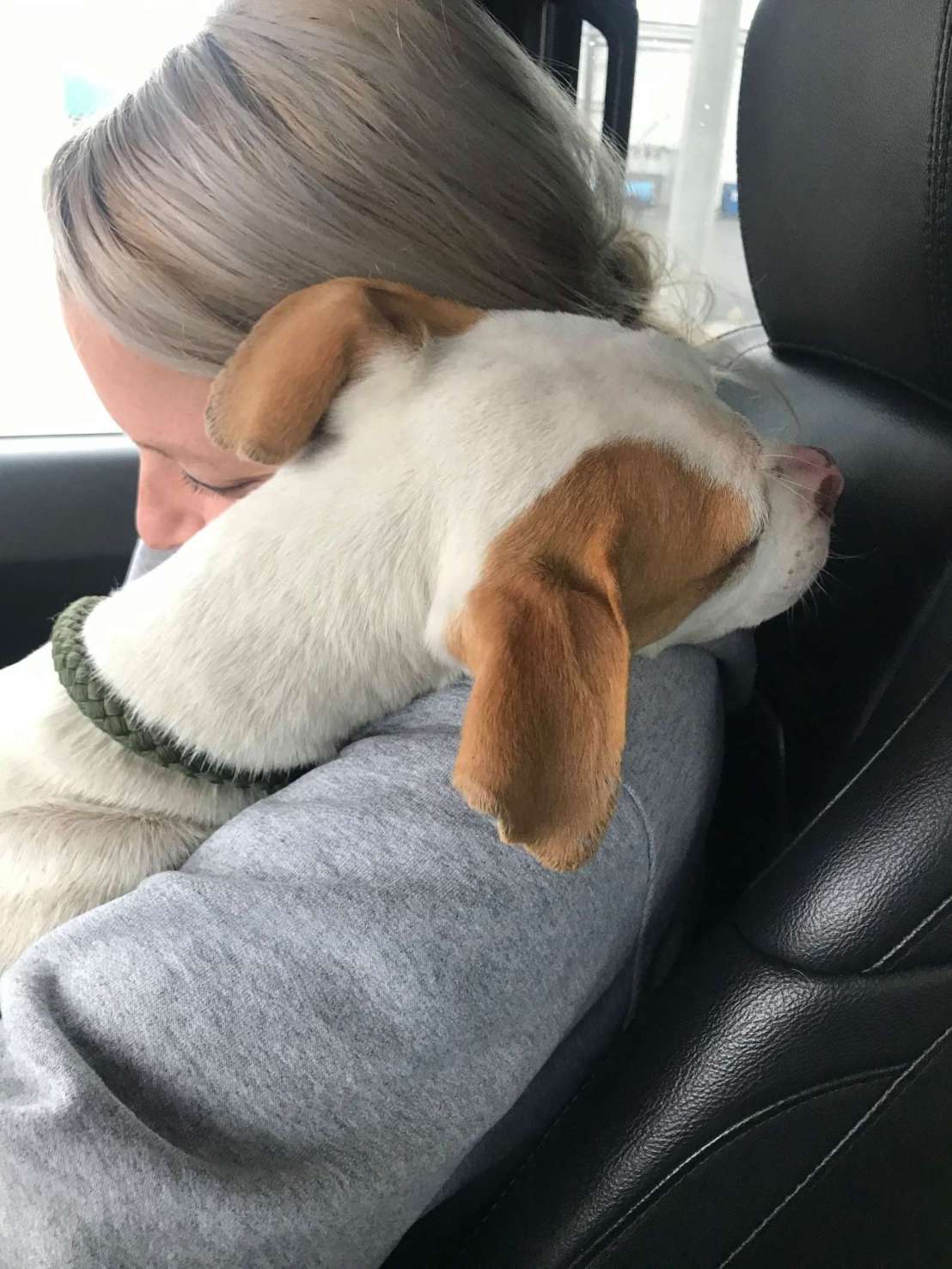
Lochmann clipped a leash around Chowder’s neck, and the puppy was immediately excited. He put his paws on her shoulders as she picked him up to help him into the car and handed him over to her fellow rescuer.

STRAY RESCUE OF ST. LOUIS

“He went up and sat on her lap and just snuggled with her,” Lochmann said. “He had his head on her shoulder and just buried his face in her arm. He was just so thankful to be warm and to have people be nice to him.”

STRAY RESCUE OF ST. LOUIS

Chowder snuggled his rescuers the whole drive to the shelter as if he knew he was finally safe.

STRAY RESCUE OF ST. LOUIS

At the shelter, Chowder started to relax and let his puppy personality shine. The energetic dog became even happier to see people, get attention and play with toys.

Now in a foster home, Chowder is adjusting to indoor life and learning how to live with people.

STRAY RESCUE OF ST. LOUIS

Once he is neutered and his eye infection has cleared up, he will be ready to find his forever family. And his rescuers know whoever ends up adopting the grateful puppy will be in for plenty of snuggles and hugs in the years to come.

ooOOoo

Please, please someone adopt this puppy. He is a beautiful dog. That comes out even via these blog pages.

In case you or someone you know wants to know more then:

If you’re interested in adopting Chowder, you can fill out an adoption application here. To help other stray dogs like Chowder find their forever homes, you can make a donation to Stray Rescue of St. Louis.

Please!