Category: Finance

Death – it comes to all of us!

Irrespective of our believe.

There are only two days in our lives when we live for less than twenty-four hours: the day we are born and the day when we die!

I was born in November, 1944 and that makes me eighty-one. I was born as a result of an affair between my mother and my father. The family genes favour girls over boys, as in seven girls for every boy, and the son is normally the first born. My mother lost her first child, it was a boy. Then my mother had a second baby. Surprise, surprise, it was another son – me!!

I say this as an introduction to a post on The Conversation.

ooOOoo

Americans are unprepared for the expensive and complex process of aging – a geriatrician explains how they can start planning

It’s important for older adults to plan for their care as they age. Maskot/Maskot via Getty Images

Kahli Zietlow, University of Michigan

Hollywood legend Gene Hackman and his wife, Betsy Arakawa, were found dead in their home in February 2025. Hackman had been living with Alzheimer’s and depended on Arakawa as his full-time caregiver.

Disturbingly, postmortem data suggests that Arakawa died of complications from pulmonary Hantavirus several days before her husband passed. The discordant times of death point to a grim scenario: Hackman was left alone and helpless, trapped in his home after his wife’s death.

The couple’s story, while shocking, is not unique. It serves as a warning for our rapidly aging society. The U.S. population is aging, but most Americans are not adequately planning to meet the needs of older adulthood.

As a geriatric physician and medical educator, I care for older adults in both inpatient and outpatient settings. My research and clinical work focus on dementia and surrogate decision-making.

In my experience, regardless of race, education or socioeconomic status, there are some universal challenges that all people face with aging and there are steps everyone can take to prepare.

Aging is inevitable but unpredictable

Aging is an unpredictable, highly individualized process that varies depending on a person’s genetics, medical history, cognitive status and socioeconomic factors.

The majority of older Americans report a strong sense of purpose and self-worth. Many maintain a positive view of their overall health well into their 70s and 80s.

But at some point, the body starts to slow down. Older adults experience gradual sensory impairment, loss of muscle mass and changes in their memory. Chronic diseases are more likely with advancing age.

According to the U.S. Census Bureau, 46% of adults over age 75 live with at least one physical disability, and this proportion grows with age. Even those without major health issues may find that routine tasks like yard work, housekeeping and home repairs become insurmountable as they enter their 80s and 90s.

Some may find that subtle changes in memory make it difficult to manage household finances or keep track of their medications. Others may find that vision loss and slowed reaction time make it harder to safely drive. Still others may struggle with basic activities needed to live independently, such as bathing or using a toilet. All of these changes threaten older adults’ ability to remain independent.

The costs of aging

Nearly 70% of older Americans will require long-term care in their lifetime, whether through paid, in-home help or residence in an assisted living facility or nursing home.

But long-term care is expensive. In 2021, the Federal Long Term Care Insurance Program reported that the average hourly rate for in-home care was US$27. An assisted living apartment averaged $4,800 per month, and a nursing home bed cost nearly double that, at a rate of $276 per day.

Many Americans may be shocked to discover that these costs are not covered by Medicare or other traditional medical insurance. Long-term care insurance covers the cost of long-term care, such as in-home care or nursing home placement. However, what is covered varies from plan to plan. Currently, only a small minority of Americans have long-term care insurance due to high premiums and complex activation rules.

I am not aware of any high-quality, peer-reviewed studies that have demonstrated the cost effectiveness of long-term care insurance. Yet, for many Americans, paying for care out of pocket is simply not an option.

Medicaid can provide financial support for long-term care but only for older adults with very low income and minimal assets – criteria most Americans don’t meet until they have nearly exhausted their savings.

Those receiving Medicaid to cover the costs of long-term care have essentially no funds for anything other than medical care, room and board. And proposed federal financial cuts may further erode the limited support services available. In Michigan, for example, Medicaid-covered nursing home residents keep only $60 per month for personal needs. If individuals receive monthly income greater than $60 – for instance, from Social Security or a pension – the extra money would go toward the cost of nursing home care.

Those who don’t qualify for Medicaid or cannot afford private care often rely on family and friends for unpaid assistance, but not everyone has such support systems.

A nurse helps an older man shave.
Older adults may end up needing help with day-to-day personal care. Klaus Vedfelt/DigitalVision via Getty Images

Planning for the care you want

Beyond financial planning, older adults can make an advance directive. This is a set of legal documents that outlines preferences for medical care and asset management if a person becomes incapacitated. However, only about 25% of Americans over 50 have completed such documentation.

Without medical and financial powers of attorney in place, state laws determine who makes critical decisions, which may or may not align with a person’s wishes. For instance, an estranged child may have more legal authority over an incapacitated parent than their long-term but unmarried partner. Seniors without clear advocates risk being placed under court-appointed guardianship – a restrictive and often irreversible process.

In addition to completing advance directives, it is important that older adults talk about their wishes with their loved ones. Conversations about disability, serious illness and loss of independence can be difficult, but these discussions allow your loved ones to advocate for you in the event of a health crisis.

Who’s going to care for you?

Finding a caregiver is an important step in making arrangements for aging. If you are planning to rely on family or friends for some care, it helps to discuss this with them ahead of time and to have contingency plans in place. As the Hackman case demonstrates, if a caregiver is suddenly incapacitated, the older adult may be left in immediate danger.

Caregivers experience higher rates of stress, depression and physical illness compared with their peers. This is often exacerbated by financial strain and a lack of support. It helps if the people you will be relying on have expectations in place about their role.

For instance, some people may prefer placement in a facility rather than relying on a loved one if they can no longer use the bathroom independently. Others may wish to remain in their homes as long as this is a feasible option.

Connecting with available resources

There are local and federal initiatives designed to help aging adults find and get the help they need. The Centers for Medicare & Medicaid Services recently launched the GUIDE Model to improve care and quality of life for both those suffering from dementia and their caregivers.

This program connects caregivers with local resources and provides a 24-hour support line for crises. While GUIDE, which stands for Guiding an Improved Dementia Experience, is currently in the pilot stage, it is slowly expanding, and I am hopeful that it will eventually expand to provide enhanced coverage for those suffering from dementia nationwide.

The Program for All-Inclusive Care of the Elderly helps dual-eligible Medicare and Medicaid recipients remain at home as they age. This program provides comprehensive services including medical care, a day center and home health services.

Area agencies on aging are regionally located and can connect older adults with local resources, based on availability and income, such as meals, transportation and home modifications that help maintain independence.

Unfortunately, all of these programs and others that support older adults are threatened by recent federal budget cuts. The tax breaks and spending cuts bill, which was signed into law in July 2025, will result in progressive reductions to Medicaid funding over the next 10 years. These cuts will decrease the number of individuals eligible for Medicaid and negatively affect how nursing homes are reimbursed.

The government funding bill passed on Nov. 13 extends current Medicare funding through Jan. 30, 2026, at which point Medicare funding may be reduced.

Even as the future of these programs remains uncertain, it’s important for older adults and their caregivers to be intentional in making plans and to familiarize themselves with the resources available to them.

Kahli Zietlow, Physician and Clinical Associate Professor of Geriatrics & Internal Medicine, University of Michigan

This article is republished from The Conversation under a Creative Commons license. Read the original article.

ooOOoo

This article is a wakeup call for me, because I have no plan in place.

While I think about death more frequently than I used to, the fact that I don’t have plan is naive: I must get myself to a stage where I have a plan, and soon! I guess I am not the only person in their 80s without a plan!

What if we die before our pets?

We love our dogs and can never envisage being without one.

So what happens to them after the last one of us die?

I have just turned 81 and, although I am fit, think more seriously about this matter than I used to. Jean has no children and my son and daughter, from a previous marriage, are living in the U.K.

So an article from The Conversation caught my eye and I wanted to share it with you.

ooOOoo

Diane Keaton’s $5M pet trust would be over the top if reports prove true – here’s how to ensure your beloved pet is safe after you are gone

Allison Anna Tait, University of Richmond

Diane Keaton loved her dog, Reggie.

The award-winning actor, director and real estate entrepreneur frequently posted photos and video clips of the golden retriever on her social media accounts. After she died on Oct. 11, 2025, at 79, some news outlets reported that she left US$5 million of her estimated $100 million estate to her dog.

I’m a law professor who teaches about wills, trusts and other forms of inheritance law. Every semester, I teach my students how they can help clients provide for their pets after death. Because they, like many Americans, love their pets and want to know how to take care of them, this topic always piques their interest. https://www.youtube.com/embed/FYJGCvpJIV0?wmode=transparent&start=0 Diane Keaton was very open about her devotion to her dog, Reggie.

Writing pets into a will

An estimated 66% of all U.S. households include at least one pet. Many Americans consider their cats, dogs, tortoises or other animals to be part of their family, and their spending on those nonhuman relatives is immense. In 2024, they paid a total of about $152 billion for goods and services to feed and otherwise support their pets.

Taking good care of your pets can go beyond buying them treats and sweaters. It can include leaving clear directions to ensure their needs are met once you’re gone. There are several ways that you can do this.

The first is through your will. You can’t give your pet money directly in your will, because the law says that pets are property, like your books or your dishes.

You can, however, leave a bequest, the technical term for a gift to a person or a cause listed in a will, to someone who will be the animal’s caretaker. That bequest can include directions that the money be spent meeting the pet’s needs.

It’s worth it to also name an alternate or contingent caretaker in case the first person you name does not want to or cannot take on that responsibility, or they die before you or the animals you’ve provided for in the will.

Choupette’s life of luxury

German fashion designer, photographer and creative director Karl Lagerfeld, who died in 2019 at 85, was someone who made the mistake of leaving money directly to his fluffy Birman cat, Choupette. It worked out for Choupette, though.

The cat was, according to several reports, still alive in 2025 and eating meals out of the porcelain bowls that Lagerfeld bought for her. Choupette is cared for at great expense and in the utmost luxury by Françoise Caçote, the designer’s former housekeeper. The cat even had a 13th birthday party at Versailles.

Another pet owner who did right by her pet was the comedian, producer and red carpet interviewer Joan Rivers.

Rivers had two rescue dogs in Manhattan and two more dogs in California when she died in 2014 at age 81. Rivers had made provisions for their care in her will.

A petite woman holding a tiny dog stands next to three men on a TV set.
The late Joan Rivers, right, seen on the set of her short-lived talk show in 1987, planned ahead for her dogs’ care. Bettmann via Getty Images

Creating pet trusts

If you’d like an arrangement that’s more secure than a will, then you might want to opt for a pet trust, another celebrity favorite. These kinds of trusts were not possible until the 1990s, because pets were not considered true beneficiaries – meaning they couldn’t sue the trustee.

But in the 1990s, states began to change their rules to allow for pet trusts. Today, pet trusts are valid in the whole country, although the rules vary slightly from state to state.

To establish a pet trust, you or a lawyer must draw up a trust document that names two important people: a trustee and a caretaker. The trustee is the person who will manage the money you leave in trust. They will make distributions to the caretaker that you select.

You must also specify how the money is to be spent meeting the animal’s needs and who would get any money that could be left in the trust when the pet dies. Typically, these trusts take effect at the owner’s death, just like other provisions in a will.

Drafting a pet trust can be free, if you use an online template and get no legal guidance. The same thing might cost around $100 if you use an online service such as Legal Zoom that provides directions. More commonly, however, pet trusts are part of a broader estate plan, and costs range depending on how complicated your estate is.

When the rich go overboard

One of the most over-the-top pet trusts came from Leona Helmsley, the New York hotel and real estate mogul known widely as the “Queen of Mean.” She was famous for her pettiness and tough management style and for landing in prison for tax evasion.

When Helmsley died in 2007, she left her dog, a Maltese named Trouble who had reportedly bitten members of her staff, a $12 million trust fund. Most of Helmsley’s estate went to the Helmsley Charitable Trust, but she made individual gifts to several relatives, and the gift to Trouble was larger than any of those.

The grandchildren, upset that Trouble got more money than they did, took the case to court, where the probate judge was less than impressed by Trouble’s luxury lifestyle and knocked down the amount in trust to $2 million. The other $10 million flowed back to her family’s foundation, where the bulk of the estate went in the first place.

Lesson learned: Your dog can have a trust fund, but don’t go overboard.

Bequests for pets can be challenged – in which case it’s up to courts to determines how much they think is reasonable for the pet’s need. In Helmsley’s case, $12 million was found to be excessive. And maybe with good reason. Trouble still had a nice life with fewer millions. The dog died in December 2010 after several years in Sarasota, Florida, at a Helmsley-owned hotel.

Other pet owners who aren’t celebrities have used pet trusts as well, such as Bill Dorris, a Nashville businessman without any human heirs. He left his dog, Lulu, $5 million.

Pet-loving celebrities who loved all the pets

Finally, there’s a lesson to be learned from British fashion designer and icon Alexander McQueen, who was worth £16 million ($21 million) when he died in 2010 at the age of 40. McQueen left £50,000 ($66,000) in a trust for his two bull terriers so that they would be well cared for during the remainder of their lives.

McQueen also included a bequest of £100,000 ($132,000) to the Battersea Dogs and Cats Home in his will to help fund the care of some of the millions of other animals out there that need the basics of food and shelter.

Animal shelters, in the U.K., the United States and other countries, help rescue and protect animals, and these animals need more help than the Choupettes and Troubles of the world.

So, my advice is that you go ahead and create a pet trust for your cat. But don’t forget to give some money in your will – and ideally while you’re alive – to help the vast majority of the millions of companion animals who need new homes every year. None of them have trust funds.

What becomes of Reggie, Keaton’s golden retriever, and her estate remains to be seen. Keaton, who starred in hit movies such as “Annie Hall,” “Reds” and “The First Wives Club,” isn’t the first celebrity to leave millions of dollars to a pet. And it’s unlikely that she will be the last.

Allison Anna Tait, Professor of Law, University of Richmond

This article is republished from The Conversation under a Creative Commons license. Read the original article.

ooOOoo

Amending our Will to create a pet trust seems like a very good idea! And making sure there is money for the trust as well.

The Federal Reserve

To all people that live outside the US, and quite a few as well who don’t!

The Federal Reserve is the central banking system of the USA. I am going to republish most of the article that appears on WikiPedia. It is yet another example of how the United States set itself up taking the best from all around the world.

(And apologies for not posting a Picture Parade yesterday.)

ooOOoo

 The Federal Reserve System (often shortened to the Federal Reserve, or simply the Fed) is the central banking system of the United States. It was created on December 23, 1913, with the enactment of the Federal Reserve Act, after a series of financial panics (particularly the panic of 1907) led to the desire for central control of the monetary system in order to alleviate financial crises.[list 1] Although an instrument of the U.S. government, the Federal Reserve System considers itself “an independent central bank because its monetary policy decisions do not have to be approved by the president or by anyone else in the executive or legislative branches of government, it does not receive funding appropriated by Congress, and the terms of the members of the board of governors span multiple presidential and congressional terms.”[11] Over the years, events such as the Great Depression in the 1930s and the Great Recessionduring the 2000s have led to the expansion of the roles and responsibilities of the Federal Reserve System.[6][12]

Congress established three key objectives for monetary policy in the Federal Reserve Act: maximizing employment, stabilizing prices, and moderating long-term interest rates.[13] The first two objectives are sometimes referred to as the Federal Reserve’s dual mandate.[14] Its duties have expanded over the years, and include supervising and regulating banks, maintaining the stability of the financial system, and providing financial services to depository institutions, the U.S. government, and foreign official institutions.[15] The Fed also conducts research into the economy and provides numerous publications, such as the Beige Book and the FRED database.[16]

The Federal Reserve System is composed of several layers. It is governed by the presidentially appointed board of governors or Federal Reserve Board (FRB). Twelve regional Federal Reserve Banks, located in cities throughout the nation, regulate and oversee privately owned commercial banks.[17] Nationally chartered commercial banks are required to hold stock in, and can elect some board members of, the Federal Reserve Bank of their region.

The Federal Open Market Committee (FOMC) sets monetary policy by adjusting the target for the federal funds rate, which generally influences market interest rates and, in turn, US economic activity via the monetary transmission mechanism. The FOMC consists of all seven members of the board of governors and the twelve regional Federal Reserve Bank presidents, though only five bank presidents vote at a time: the president of the New York Fed and four others who rotate through one-year voting terms. There are also various advisory councils.[list 2] It has a structure unique among central banks, and is also unusual in that the United States Department of the Treasury, an entity outside of the central bank, prints the currency used.[23]

The federal government sets the salaries of the board’s seven governors, and it receives all the system’s annual profits after dividends on member banks’ capital investments are paid, and an account surplus is maintained. In 2015, the Federal Reserve earned a net income of $100.2 billion and transferred $97.7 billion to the U.S. Treasury,[24] and 2020 earnings were approximately $88.6 billion with remittances to the U.S. Treasury of $86.9 billion.[25] The Federal Reserve has been criticized for its approach to managing inflation, perceived lack of transparency, and its role in economic downturns.[26][27][28]

Purpose

The primary declared motivation for creating the Federal Reserve System was to address banking panics.[6] Other purposes are stated in the Federal Reserve Act, such as “to furnish an elastic currency, to afford means of rediscounting commercial paper, to establish a more effective supervision of banking in the United States, and for other purposes”.[29] Before the founding of the Federal Reserve System, the United States underwent several financial crises. A particularly severe crisis in 1907 led Congress to enact the Federal Reserve Act in 1913. Today the Federal Reserve System has responsibilities in addition to stabilizing the financial system.[30]

Current functions of the Federal Reserve System include:[15][30]

  • To address the problem of banking panics
  • To serve as the central bank for the United States
  • To strike a balance between private interests of banks and the centralized responsibility of government
    • To supervise and regulate banking institutions
    • To protect the credit rights of consumers
  • To conduct monetary policy by influencing market interest rates to achieve the sometimes-conflicting goals of
    • maximum employment
    • stable prices, interpreted as an inflation rate of 2 percent per year on average[31]
    • moderate long-term interest rates
  • To maintain the stability of the financial system and contain systemic risk in financial markets
  • To provide financial services to depository institutions, the U.S. government, and foreign official institutions, including playing a major role in operating the nation’s payments system
    • To facilitate the exchange of payments among regions
    • To respond to local liquidity needs
  • To strengthen U.S. standing in the world economy
Unemployment vs Inflation vs Inverted yield curve  Unemployment rate  Inflation CPI  10 year bond minus 2 year bond Inverted yield curve

Addressing the problem of bank panics

Further information: Bank run and Fractional-reserve banking

Banking institutions in the United States are required to hold reserves‍—‌amounts of currency and deposits in other banks‍—‌equal to only a fraction of the amount of the bank’s deposit liabilities owed to customers. This practice is called fractional-reserve banking. As a result, banks usually invest the majority of the funds received from depositors. On rare occasions, too many of the bank’s customers will withdraw their savings and the bank will need help from another institution to continue operating; this is called a bank run. Bank runs can lead to a multitude of social and economic problems. The Federal Reserve System was designed as an attempt to prevent or minimize the occurrence of bank runs, and possibly act as a lender of last resort when a bank run does occur. Many economists, following Nobel laureate Milton Friedman, believe that the Federal Reserve inappropriately refused to lend money to small banks during the bank runs of 1929; Friedman argued that this contributed to the Great Depression.[32]

Check clearing system

Because some banks refused to clear checks from certain other banks during times of economic uncertainty, a check-clearing system was created in the Federal Reserve System. It is briefly described in The Federal Reserve System‍—‌Purposes and Functions as follows:[33]

By creating the Federal Reserve System, Congress intended to eliminate the severe financial crises that had periodically swept the nation, especially the sort of financial panic that occurred in 1907. During that episode, payments were disrupted throughout the country because many banks and clearinghouses refused to clear checks drawn on certain other banks, a practice that contributed to the failure of otherwise solvent banks. To address these problems, Congress gave the Federal Reserve System the authority to establish a nationwide check-clearing system. The System, then, was to provide not only an elastic currency‍—‌that is, a currency that would expand or shrink in amount as economic conditions warranted‍—‌but also an efficient and equitable check-collection system.

Lender of last resort

In the United States, the Federal Reserve serves as the lender of last resort to those institutions that cannot obtain credit elsewhere and the collapse of which would have serious implications for the economy. It took over this role from the private sector “clearing houses” which operated during the Free Banking Era; whether public or private, the availability of liquidity was intended to prevent bank runs.[34]

Fluctuations

Through its discount window and credit operations, Reserve Banks provide liquidity to banks to meet short-term needs stemming from seasonal fluctuations in deposits or unexpected withdrawals. Longer-term liquidity may also be provided in exceptional circumstances. The rate the Fed charges banks for these loans is called the discount rate (officially the primary credit rate).

By making these loans, the Fed serves as a buffer against unexpected day-to-day fluctuations in reserve demand and supply. This contributes to the effective functioning of the banking system, alleviates pressure in the reserves market and reduces the extent of unexpected movements in the interest rates.[35] For example, on September 16, 2008, the Federal Reserve Board authorized an $85 billion loan to stave off the bankruptcy of international insurance giant American International Group (AIG).[36]

Central bank

Further information: Central bank

Obverse of a Federal Reserve $1 note issued in 2009

In its role as the central bank of the United States, the Fed serves as a banker’s bank and as the government’s bank. As the banker’s bank, it helps to assure the safety and efficiency of the payments system. As the government’s bank or fiscal agent, the Fed processes a variety of financial transactions involving trillions of dollars. Just as an individual might keep an account at a bank, the U.S. Treasury keeps a checking account with the Federal Reserve, through which incoming federal tax deposits and outgoing government payments are handled. As part of this service relationship, the Fed sells and redeems U.S. government securitiessuch as savings bonds and Treasury bills, notes and bonds. It also issues the nation’s coinand paper currency. The U.S. Treasury, through its Bureau of the Mint and Bureau of Engraving and Printing, actually produces the nation’s cash supply and, in effect, sells the paper currency to the Federal Reserve Banks at manufacturing cost, and the coins at face value. The Federal Reserve Banks then distribute it to other financial institutions in various ways.[37] During the Fiscal Year 2020, the Bureau of Engraving and Printing delivered 57.95 billion notes at an average cost of 7.4 cents per note.[38][39]

Federal funds

Main article: Federal funds

Federal funds are the reserve balances (also called Federal Reserve Deposits) that private banks keep at their local Federal Reserve Bank.[40] These balances are the namesake reserves of the Federal Reserve System. The purpose of keeping funds at a Federal Reserve Bank is to have a mechanism for private banks to lend funds to one another. This market for funds plays an important role in the Federal Reserve System as it is the basis for its monetary policy work. Monetary policy is put into effect partly by influencing how much interest the private banks charge each other for the lending of these funds.

Federal reserve accounts contain federal reserve credit, which can be converted into federal reserve notes. Private banks maintain their bank reserves in federal reserve accounts.

Bank regulation

The Federal Reserve regulates private banks. The system was designed out of a compromise between the competing philosophies of privatization and government regulation. In 2006 Donald L. Kohn, vice chairman of the board of governors, summarized the history of this compromise:[41]

Agrarian and progressive interests, led by William Jennings Bryan, favored a central bank under public, rather than banker, control. However, the vast majority of the nation’s bankers, concerned about government intervention in the banking business, opposed a central bank structure directed by political appointees. The legislation that Congress ultimately adopted in 1913 reflected a hard-fought battle to balance these two competing views and created the hybrid public-private, centralized-decentralized structure that we have today.

The balance between private interests and government can also be seen in the structure of the system. Private banks elect members of the board of directors at their regional Federal Reserve Bank while the members of the board of governors are selected by the president of the United States and confirmed by the Senate.

Government regulation and supervision

Ben Bernanke (lower right), former chairman of the Federal Reserve Board of Governors, at a House Financial Services Committee hearing on February 10, 2009. Members of the board frequently testify before congressional committees such as this one. The Senate equivalent of the House Financial Services Committee is the Senate Committee on Banking, Housing, and Urban Affairs.

The Federal Banking Agency Audit Act, enacted in 1978 as Public Law 95-320 and 31 U.S.C. section 714 establish that the board of governors of the Federal Reserve System and the Federal Reserve banks may be audited by the Government Accountability Office (GAO).[42]

The GAO has authority to audit check-processing, currency storage and shipments, and some regulatory and bank examination functions–though there are restrictions to what the GAO may audit. Under the Federal Banking Agency Audit Act, 31 U.S.C. section 714(b), audits of the Federal Reserve Board and Federal Reserve banks do not include (1) transactions for or with a foreign central bank or government or non-private international financing organization; (2) deliberations, decisions, or actions on monetary policy matters; (3) transactions made under the direction of the Federal Open Market Committee; or (4) a part of a discussion or communication among or between members of the board of governors and officers and employees of the Federal Reserve System related to items (1), (2), or (3). See Federal Reserve System Audits: Restrictions on GAO’s Access (GAO/T-GGD-94-44), statement of Charles A. Bowsher.[43]

The board of governors in the Federal Reserve System has a number of supervisory and regulatory responsibilities in the U.S. banking system, but not complete responsibility. A general description of the types of regulation and supervision involved in the U.S. banking system is given by the Federal Reserve:[44]

The Board also plays a major role in the supervision and regulation of the U.S. banking system. It has supervisory responsibilities for state-chartered banks[45] that are members of the Federal Reserve System, bank holding companies(companies that control banks), the foreign activities of member banks, the U.S. activities of foreign banks, and Edge Act and “agreement corporations” (limited-purpose institutions that engage in a foreign banking business). The Board and, under delegated authority, the Federal Reserve Banks, supervise approximately 900 state member banks and 5,000 bank holding companies. Other federal agencies also serve as the primary federal supervisors of commercial banks; the Office of the Comptroller of the Currency supervises national banks, and the Federal Deposit Insurance Corporation supervises state banks that are not members of the Federal Reserve System.

Some regulations issued by the Board apply to the entire banking industry, whereas others apply only to member banks, that is, state banks that have chosen to join the Federal Reserve System and national banks, which by law must be members of the System. The Board also issues regulations to carry out major federal laws governing consumer credit protection, such as the Truth in LendingEqual Credit Opportunity, and Home Mortgage Disclosure Acts. Many of these consumer protection regulations apply to various lenders outside the banking industry as well as to banks.

Members of the Board of Governors are in continual contact with other policy makers in government. They frequently testify before congressional committees on the economy, monetary policybanking supervision and regulationconsumer credit protectionfinancial markets, and other matters.

The Board has regular contact with members of the President’s Council of Economic Advisers and other key economic officials. The Chair also meets from time to time with the President of the United States and has regular meetings with the Secretary of the Treasury. The Chair has formal responsibilities in the international arena as well.

Regulatory and oversight responsibilities

The board of directors of each Federal Reserve Bank District also has regulatory and supervisory responsibilities. If the board of directors of a district bank has judged that a member bank is performing or behaving poorly, it will report this to the board of governors. This policy is described in law:

Each Federal reserve bank shall keep itself informed of the general character and amount of the loans and investments of its member banks with a view to ascertaining whether undue use is being made of bank credit for the speculative carrying of or trading in securities, real estate, or commodities, or for any other purpose inconsistent with the maintenance of sound credit conditions; and, in determining whether to grant or refuse advances, rediscounts, or other credit accommodations, the Federal reserve bank shall give consideration to such information. The chairman of the Federal reserve bank shall report to the Board of Governors of the Federal Reserve System any such undue use of bank credit by any member bank, together with his recommendation. Whenever, in the judgment of the Board of Governors of the Federal Reserve System, any member bank is making such undue use of bank credit, the Board may, in its discretion, after reasonable notice and an opportunity for a hearing, suspend such bank from the use of the credit facilities of the Federal Reserve System and may terminate such suspension or may renew it from time to time.[46]

National payments system

The Federal Reserve plays a role in the U.S. payments system. The twelve Federal Reserve Banks provide banking services to depository institutions and to the federal government. For depository institutions, they maintain accounts and provide various payment services, including collecting checks, electronically transferring funds, and distributing and receiving currency and coin. For the federal government, the Reserve Banks act as fiscal agents, paying Treasury checks; processing electronic payments; and issuing, transferring, and redeeming U.S. government securities.[47]

In the Depository Institutions Deregulation and Monetary Control Act of 1980, Congress reaffirmed that the Federal Reserve should promote an efficient nationwide payments system. The act subjects all depository institutions, not just member commercial banks, to reserve requirements and grants them equal access to Reserve Bank payment services. The Federal Reserve plays a role in the nation’s retail and wholesale payments systems by providing financial services to depository institutions. Retail payments are generally for relatively small-dollar amounts and often involve a depository institution’s retail clients‍—‌individuals and smaller businesses. The Reserve Banks’ retail services include distributing currency and coin, collecting checks, electronically transferring funds through FedACH (the Federal Reserve’s automated clearing house system), and beginning in 2023, facilitating instant payments using the FedNow service. By contrast, wholesale payments are generally for large-dollar amounts and often involve a depository institution’s large corporate customers or counterparties, including other financial institutions. The Reserve Banks’ wholesale services include electronically transferring funds through the Fedwire Funds Service and transferring securities issued by the U.S. government, its agencies, and certain other entities through the Fedwire Securities Service.

ooOOoo

There is more in that article including Structure, Board of Governors, the Federal Reserve Banks (there are 12), and more subjects. So if you want to read these then, please, go here.

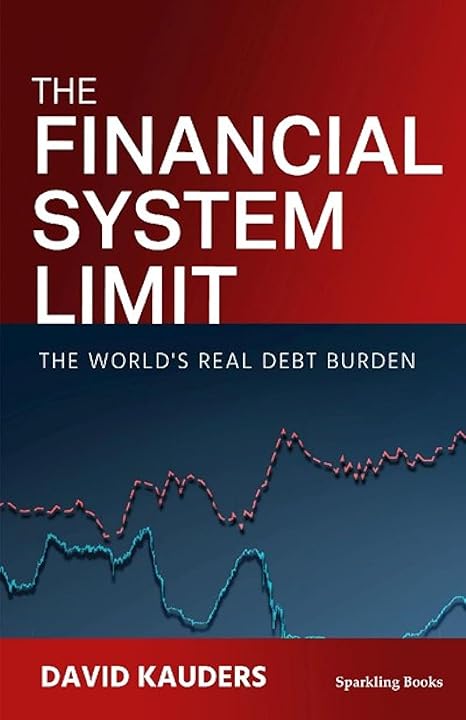
And I am bound to say that I have recently finished reading The FINANCIAL SYSTEM LIMIT by David Kauders. The sub-title of the book is The World’s Real Debt Burden. If you are at all interested in the subject then read the book.

Making your vet clinic profitable

The second guest post from Penny Martin.

ooOOoo

Image: Freepik

Vision to Reality: Building a Profitable Vet Clinic

Launching a veterinary clinic is a significant endeavor that requires meticulous planning and strategic decision-making. This venture combines a passion for animal care with the intricacies of managing a successful business. Aspiring clinic owners must navigate several critical steps to lay a strong foundation and ensure operational excellence. Starting your own clinic promises not only to fulfill a dream of helping animals but also to establish a thriving enterprise in the community.

Build a Strong Foundation with an Effective Marketing Strategy

A robust marketing strategy is essential to attract potential clients in the digital era. Establishing a professional online presence through a user-friendly website that details your services, team, and location builds trust among pet owners. Engage actively on social media with regular updates and client testimonials to showcase your expertise and commitment to animal care. Forge partnerships with local pet-related businesses to increase visibility and drive traffic to your clinic, enhancing both your and your partners’ customer bases.

Craft a Clear and Detailed Business Plan

A well-constructed business plan acts as your clinic’s roadmap, detailing your mission, services offered, and the specific target market. Identify your niche early—whether it’s specializing in certain animals or treatments—to attract the appropriate clientele. Include comprehensive financial projections and a marketing budget in your plan to ensure financial preparedness and support your clinic’s promotional activities.

Enhance Your Business Knowledge by Pursuing an MBA

Running a veterinary clinic demands a blend of clinical and business expertise. Pursuing a master’s of business administration online can boost your proficiency in key business areas such as strategy, management, and finance. An MBA not only deepens your understanding of business operations but also enhances leadership skills and self-assessment capabilities. These competencies are essential for balancing the medical and business demands of your clinic, ensuring its long-term success.

Safeguard Your Business with Proper Insurance

Operating a veterinary clinic comes with inherent risks, making comprehensive insurance coverage essential. Essential policies include malpractice insurance to handle legal issues and general liability insurance for accidents on your premises. Property insurance is crucial to protect your clinic’s infrastructure and equipment against unexpected events. Consulting with an insurance expert can ensure that you have thorough coverage to protect against potential financial setbacks.

Invest in High-Quality Veterinary Equipment

Providing top-tier care necessitates investing in high-quality veterinary equipment. Essential tools like X-ray machines, surgical instruments, and lab equipment should be of the highest standard to ensure accurate diagnoses and treatments. Modern technologies, such as digital imaging systems, not only enhance patient care but also improve operational efficiency. While the initial cost may be higher, investing in quality equipment pays off in the long run by boosting efficiency and minimizing errors.

Secure the Necessary Funding for Your Clinic

Securing sufficient funding is critical when starting a veterinary clinic. Estimate your startup costs accurately to understand your financial needs, including equipment, premises, staffing, and marketing. Explore diverse financing options, such as bank loans, private investors, and specialty medical practice loans that might offer favorable terms. Adequate initial funding prevents cash flow problems and supports your clinic’s growth trajectory.

Choose the Right Location for Your Clinic

The location of your clinic is pivotal to its success, necessitating a spot with a high demand for veterinary services. Conduct thorough market research to choose a community rich in pet owners who need your services. Select a location that is accessible, visible, and has ample parking to ensure convenience for your clients. Proximity to complementary services like pet groomers or dog trainers can further enhance client traffic and provide expansion opportunities.

Opening a veterinary clinic is both challenging and rewarding, demanding a careful blend of dedication and strategic foresight. Success in this field not only enhances the well-being of pets but also contributes positively to the local community. It requires ongoing commitment to adapt and grow in a dynamic environment. Ultimately, the fulfillment of running a successful veterinary clinic comes from both the impact on animal health and the achievement of entrepreneurial goals.

Discover the timeless wisdom that dogs offer at Learning from Dogs, where integrity and living in the present are celebrated. Dive into our content and embrace the lessons from our four-legged friends.

ooOOoo

This is all very sound advice. Thank you, Penny.

Introspection.

A recent article by George Monbiot gets me thinking.

George Monbiot is 61; his birthday is on January 27th. Thus he is 14 years younger than me. He is an experienced writer for The Guardian newspaper. Plus he has authored quite a few books and founded a charity, and given TED Talks, and I am sure more than this.

I read all of the articles that are published by him. His website is widely read. Please read his biography. Some of his many articles really get me thinking.

Some time ago I asked Mr. Monbiot for permission to republish his articles and that was granted. A small number of them have been republished on Learning from Dogs.

Today I want to republish an article that was presented on July 3rd.

ooOOoo

The Fight Against Oligarchy

Oligarchy is the default state of politics, and it is surging back. How do we stop it?

By George Monbiot, published in the Guardian  27th June 2024

We are about to return to normal politics. After 14 years of Tory corruption and misrule, a Labour government will put this country back on track. Justice and decency will resume, public services will be rebuilt, our global standing will be restored, we will revert to a familiar state. Or so the story goes.

What is the “normal” envisaged by pundits and politicians of the left and centre? It is the most anomalous politics in the history of the world. Consciously or otherwise, they hark back to a remarkable period, roughly 1945 to 1975, in which, in certain rich nations, wealth and power were distributed, almost everyone could aspire to decent housing, wages and conditions, public services were ambitious and well-funded and a robust economic safety net prevented destitution. There had never been a period like it in the prior history of the world, and there has not been one since. Even during that period, general prosperity in the rich nations was supported by extreme exploitation, coups and violence imposed on the poor nations. We lived in a bubble, limited in time and space, in which extraordinary things happened. Yet somehow we think of it as normal.

Those “normal” politics were the result of something known to economic historians as the “great compression”: a drastic reduction in inequality caused by two world wars. In many powerful countries, a combination of the physical destruction of assets, the loss of colonial and overseas possessions, inflation, very high taxes, wage and price controls, requisitioning and nationalisation required by the wartime economy, as well as the effects of rising democracy and labour organisation, greatly reduced the income and assets of the rich. It also greatly improved, once the wars had ended, the position of the poor. For several decades, we benefited from the aftermath of these great shocks. Now the effect has faded. We are returning to true “normality”.

The history of many centuries, including our own, shows that the default state of politics is not redistribution and general welfare, but a spiral of accumulation by the very rich, the extreme exploitation of labour, the seizure of common resources and exaction of rent for their use, extortion, coercion and violence. Normal is a society in which might is right. Normal is oligarchy.

In his magisterial book The Great Leveler, published in 2017, the historian Walter Scheidel explains that only four forces have ever significantly reversed inequality: mass-mobilisation warfare (such as the two world wars), total and violent revolution, state collapse and devastating plagues. Decisions, decisions.

He shows how warfare economies were turned into welfare economies, sometimes by force. For example, following the defeat of Japan, the US occupation government, led by General Douglas MacArthur, sought what it called “the democratization of Japanese economic institutions” to ensure “a wide distribution of income and ownership of the means of production and trade”. To this end, it imposed high property taxes, with a top marginal rate of 90%; broke up business conglomerates; demanded a labour union law enabling the right to organise and strike, and higher wages for workers; organised comprehensive land reform, which dissolved large holdings and distributed them to peasants; and introduced fiscal reform that led eventually to taxes on the highest incomes of 75% and an inheritance tax on the largest estates of 70%. These programmes resulted in the near-total destruction of income from capital and the creation in Japan of a political and economic democracy, almost from scratch.

All the major combatants were similarly transformed. In the US, the top rate of estate (inheritance) tax rose to 71% in 1941, and income tax to 94% in 1944. The National War Labor Board raised workers’ pay while holding down executive pay. Union membership soared. In the UK, the top rate of income tax was held at 98% from 1941 to 1952. It took decades to decline to current levels. A purchase tax on luxury goods was introduced in 1940, with rates that later rose to 100%. The share of incomes captured by the richest 0.1% fell from 7% in 1937 to just over 1% in 1975.

In the absence of one of the four great catastrophes, income and capital inexorably accumulate in the hands of the few, and oligarchy returns. Oligarchs are people who translate their inordinate economic power into inordinate political power. They build a politics that suits them. Scheidel shows that as inequality rises, so does polarisation and political dysfunction, both of which favour the very rich, as a competent, proactive state is a threat to their interests. Dysfunction is what the Tories delivered and Donald Trump promises.

Oligarchs seek the destruction of oversight, which is why UK bodies such as the Environment Agency and the Health and Safety Executive have been comprehensively gutted. The same desire was the driving force behind Brexit. They want the cessation of protest. They want a failing NHS, to justify privatisation. They want malleable politiciansand a tame BBC. They get what they want, distorting every aspect of national life. They pour money into neoliberal and far-right political movements, which help capital to solve its perennial problem: democracy. The arc of history bends towards injustice. But every so often it is broken over the knee of catastrophe.

If you want a return to the rich nations’ “normality” of 1945 to 1975 – in other words, to redistribution, a shared sense of national purpose, robust public services and a strong economic safety net, high employment and good wages – and I think most people would, you need a politics that is not just abnormal, but unprecedented. Snapping the arc of injustice would mean going way beyond Jeremy Corbyn’s 2019 manifesto, let alone Keir Starmer’s limp offering, which treads so carefully around the interests of the rich. We would need to do what the world wars did, without the violence and physical destruction: a peacetime MacArthur programme for overthrowing the oligarchs.

Political parties would need to overcome their fear of economic power: of the newspaper barons, the property developers, the fossil fuel companies, hedge funds, private equity bosses and assorted oligarchs who now fund and influence our politics. The longer we leave this confrontation, the more extreme and entrenched oligarchic power becomes. If we want even a modicum of democracy, equality, fairness and a functioning state, we need not the accommodation with economic power that Starmer seeks, but the mother of all battles with it.

ooOOoo

Let me repeat a sentence from the article: “Oligarchs are people who translate their inordinate economic power into inordinate political power.”

I am towards the end of my life. Whether or not things will change politically, as Monbiot suggests above, I do not know. But if asked to guess I would say probably not.

I would love to see a different, as in a better way, of us humans running things. I can’t put it better than how George Monbiot expressed it in that last sentence: “If we want even a modicum of democracy, equality, fairness and a functioning state, we need not the accommodation with economic power that Starmer seeks, but the mother of all battles with it.”

Finally, George Monbiot has a saying on his website: “I love not man the less, but Nature more.” I wish that were not the case, I wish oligarchy was a dead word, but Nature is so beautiful.

Photo by Daniel Beilinson on Unsplash

A study on dog aging

It is very likely to lose funding.

I am reading the latest issue of Science, the magazine put out by AAAS – the American Academy for the Advancement of Science. One of the news items in that issue is entitled Massive study of dog aging likely to lose funding.

One reads, in part, a remark by biogerontologist, Steve Austed of the University of Alabama at Birmingham: “It was going to be the most informative study of aging that was not done in humans.

The project has a website, Dog Aging Project, from which one finds, under Project Details:

Science’s Best Friend

DOGS & HUMANS

Studying aging in humans is challenging and expensive, but dogs truly are science’s best friends. Even though they age more rapidly than humans, they experience the same diseases of aging, they are genetically diverse, and they share our environment. By studying aging in dogs, we can more quickly expand our knowledge of the aging process not just in dogs but in humans too!

It is a great shame that the likelihood is that the project will cease.

Photo by Hannah Lim on Unsplash

A repeat of my post ‘Being scammed’.

I thought it very worthwhile to repeat this, plus a real treat at the end of the post!

Scamming in all its forms has only got worse in the last couple of years, since I parted with $9,000 in 2021!

As a direct result of that error, I changed my bank, installed a VPN at home (Proton), changed my email account to ProtonMail, and also changed my calendar (also to Proton).

But I still do not take it as important as it is. I guess because it is not my first thought whenever I come across an unfamiliar email.

ooOOoo

Please read this; and do not make the same mistake as me!

The Story of a Scam

(or how I lost the thick end of $10,000.)

On Friday, 6th August, 2021 at 05:51 in came the following email:

Norton Customer ,

User name:paulhandover

*we like to confim you that the NortonDesk re-newal. has been done on your request*

It is very easy to unsubscribe it,

and related to your any query,  reach us at +1-(860) – (852) – (6259).

Product-Name : NortonDesk

……………………………………………………………………………………………………..

Price : $475.04

……………………………………………………………………………………………………..

Subscription ID : 8837-77942826-947192-8126

……………………………………………………………………………………………………..

Expiration Date : 3 Year from the Date of Purchase

………………………………………………………………………………………………

* If you wish to Cancel this Membership then please feel free to Contact our Billing department as soon as Possible*

……………………………………………………………………………………………………..

*Please do not write to this mail address, that will not help*

Reach us on +1 – (860) – (852) – (6259)

……………………………………………………………………………………………………..

Regards,

Billing department

Contact: +1 – (860) – (852) – (6259)

693 Amwell Rd, Hillsborough, NJ 


My first mistake was not to check the incoming email address. It was mahaliashomakerxhv928@gmail.com

I telephoned the number given and told the person that I wanted to cancel this membership. Indeed that I had never subscribed for this membership in the first place.

I spoke with ‘Adam’. I was then asked to go to a webpage where I filled in a Refund Application Order form. I filled in my details including the refund amount and my bank details: Sort Code & Account Number.

I then submitted the form and imagine my surprise when a few minutes later I was informed that I had received the sum of $10,000. I quickly checked our bank account online and there was the $10,000 credit in our checking account. 

My second mistake was me not examining the total in our accounts. I have the facility to show the total funds in our accounts. Why I didn’t do that I can not explain.

Then it was back on the telephone and Adam also was surprised (later I realised that this was a feigned surprise and all part of the scam) and said could I go to the bank and fill in an International Wire Transfer for the amount of $9,500. Adam also said that he would give me the details of the person in Thailand that was to receive the funds, and could I say this was for a medical operation because it would save ‘Norton’ the taxation.

My third mistake was not to discuss this with Jeannie and to assume that it was just a harmless error.

The details came through and I went to our bank in Grants Pass. I got to the bank a little after 09:00. I saw a staff member of the bank and explained what I needed to do. The bank member queried this and said that it sounded like a scam. I lied and said I knew the woman in Thailand and wanted to go ahead. That was what I had been instructed to say.

My fourth mistake was not listening to the woman at the bank. (And I still thought that the ‘Norton’ funds were in my account.)

The International Wire Transfer was completed and I signed it. I also asked the balances on our two accounts. It was about $10,000 less than I expected and I queried it but was told that there had been a transfer from my savings account to my checking account of $10,000 for Norton. I thought that this was still a little low but that I could check it carefully once I got home. I had a thirty-minute window to change my mind.

Mistake number five, a huge mistake, was while at the bank not to ask them carefully to go through all my transactions that day because that would have revealed that the receipt of $10,000 that I had seen online had mysteriously disappeared. Indeed had never been received. That would have enabled me to stop the wire transfer within the thirty-minute window.

I returned home and found out the truth. I had been scammed out of $9,500.

The strange thing was that ‘Adam’ of the billing department of so-called Norton kept ringing me throughout the day to say that the funds would be sent back to me and gave me the details of three wires and that the funds would be back in my bank account on Monday, 9th August!

Later that morning I rang Kevin Dick who manages our investments and told him the tale. He said that there was a huge amount of scamming about and that I should make three phone calls: to the bank and report the fraud; to the Sheriff’s office and report the fraud; and to my insurance company. The first two were done straight away. Kevin also told me to close my bank accounts and amend my email address. Alex, my son, said to use my Proton mail account and straight away I started to make the change.

A person from the humanists group that we belong to said also to inform The Daily Courier.

Kevin also sent me the following links:

From a recent Podcast I created:

 https://pivot-with-kdi-wealth.simplecast.com/episodes/financial-fraud-and-how-to- keep-from-being-a-victim

A video from our site:

https://www.kdiwealth.com/resource-center/money/data-thieves-from-outer-space

From Finra on Fraud to dos:

https://www.finra.org/investors/insights/investment-fraud-awareness

On Monday morning Ryan of ‘Norton’ called me at 07:15 and said that Adam Prescott was no longer with the firm. Ryan said that their General Manager, Ron Cooper, would call me shortly. Ron did indeed call me and said that they would return the money but that the minimum cheque they could write was $30,000. I was then told that in advance of me receiving the money I would have to pay a small amount to them. At this point I put the phone down for it was clearly a second attempt to steal more funds from me.

Finally we went back to the bank on Monday morning. We were informed that there was never a credit of $10,000 but that a clever switch of the money from one account to another made it look as though the money had been credited. The event had been reported to the bank’s fraud department.

On Tuesday morning, the 10th August, the bank said that as well as our two accounts being locked out from us and that only cheques and cash withdrawals would be honoured for the time being, the fraud department had made the decision to issue us with a ten-day notice to terminate our accounts. In other words, within ten days the bank would no longer want us as customers. Since then I have done much research and found out via the Forbes website that this was more to do with the bank being ultra conservative than anything else. Indeed Kevin said that he had spoken with his IT department and they thought that it was strange that my ex-bank had terminated us so quickly. The IT department thought that the teller at the bank realised that she had been partly culpable.

However the bank did recommend another bank to go to in Grants Pass.

I have since reset my iMac and changed my email address.

It is a most humiliating affair. I have beaten myself up several times over and have at last understood the frame of mind that I had gotten myself into.

To explain that, first of all I thought that I needed to stop the billing urgently and because it was early on a Friday morning thought that the best thing to do was to call immediately.

Secondly, during the call that scammers spoke to me in friendly tones and quietly complimented me on my integrity. I am sure that this ‘spoke’ to my psychological fear of rejection that I have had since I my father died in 1956.

Then in the morning of the 11th August I received a call from a regular contact at the English company who manage my UK SIPP. He wanted to check if I had tried to log on at 09:00 UK time and I replied that there was no way that was me for that UK time was 01:00 Pacific time. There were apparently three attempts to log on. Unsuccessfully as it turned out and my SIPP account is temporarily closed as a result.

The scammers are very thorough in their crooked craft!

Now as of Thursday, the 12th August, we are pretty much out of the grim shadow of this event. We have new accounts at The People’s Bank here in Grants Pass. I have changed my email address and yesterday afternoon I decided that the only safe way of protecting myself was to get another iMac. I was speaking to the sales department of Apple and mentioned the scam and the woman immediately said I should speak with their Technical Support and transferred me. Then I was helped via screen sharing to go through many pages deleting unnecessary files and other stuff. And the helpful woman found another item of malware that was deleted and removed. She spent 54 minutes getting me properly cleaned out and then forwarded an email with all the links for me to do the same process at a later date. It was a superb experience.

So that is it.

Now watch these two YouTube videos. The first is just 5 minutes long and is important to all who use computers and want to be protected against scammers. (NB: This first video is now not included.)

and then watch this slightly longer video from Jim

Be safe! Please!

An addendum dated Saturday, 14th August, at 7am Pacific Time.

Only to say that I also posted my scamming report on Ugly HedgeHog under their General Chit Chat forum. Of the many responses that came in I wanted to post here two of them.

The first from ‘Stanikon’:

Sorry you had to go through this. Your first clue should have been the grammar and phrasing of the original email. That would have given it away. Legitimate companies go to great lengths to make sure their grammar, phrasing and language are correct. I have avoided several scams by paying attention to that so there is some value in being slightly OCD.

and the second from ‘Red6’:

The safest thing to do in these situations is simply not to open the email. I receive on a daily basis, emails telling me that the items I ordered are being shipped, my subscription to something has been renewed etc, etc. 99.9% of these are scams and nothing bad will happen if you just delete them. Older working people often have the fear that there’s a bill out there that has not been paid and they are afraid of getting a bad credit report. So they aggressively try to send someone money for something they cannot even recognize. If it is a true debt, you will be reminded of it several times before any reports are made.

I follow several simple rules in preventing scams. There are many more but this will take care of most of them.

1. Examine the sender’s email address, if you do not recognize it then DO NOT OPEN and DELETE immediately. Most of these scammer’s email addresses will not have the company name in the email address OR it will be combined with other names. Most will not have the .com, .org, etc but will be gmail, Hotmail, or other generic URL. Many of these scammers “broadcast” their emails to everyone on a purchased email list not knowing whether some or valid or not. If you open or reply to these it verifies your email as valid and active and worthy of more attention. Also, if it is an unknown email address, it could be a carrier of a virus or some other bad computer/software infection.

2. If you do get involved with something that does not feel right and you take it to the bank – TRUST THE BANK if they tell you it is suspicious. They see these things every day and develop a feel for them. I received a cashier’s check for something I sold on craigslist. I took it to the bank to deposit and the bank rep immediately recognized the cashier’s check as a fake. She even called the bank the check was supposed to be drawn on and they checked the records and told her that it was counterfeit. You trust your bankers, credit union, etc with your money every day so trust them when they tell you something does not seem right.

3. Scammers know that many older people do NOT like to use credit cards. So a lot of their dealings involve checks, bank transfers, and other forms of older less secure payment methods that older citizens are comfortable with. I NEVER, NEVER send money for something I purchase or order online unless it is through a credit card. In fact, I rarely buy ANYTHING anymore that does not go on the credit card. They are safer, quicker, and easier. If somehow you do get something on your bill that you did not authorize, the credit card company will investigate and go after the person or company that charged you. This is one more safety step that protects the consumer. This does not always apply to debit cards. Debit cards are issued by individual banks or credit unions and some have policies in the fine print that they do NOT have the same policies as the big credit card companies and may not forgive or relieve the user for bad charges made to their debit card.

4. Just do not believe anyone or any company that says they sent you a huge refund or overpayment or some amount of money by mistake. That rarely happens. It is even rarer if they also tell you to return the money to some foreign address, email, or wire transfer. When in doubt, wait for a week or so before you do ANYTHING. If they sent you the check, transfer etc, wait to see if it clears or is valid. We are conditioned by TV and movies that we need to act immediately in situations such as this. This is rarely the case. Take time to see what happens. During this cooling-off period check them out, research the internet to see if others have experienced this scam. It is almost a sure thing that if you are being scammed, others have been also and it has been reported somewhere with law enforcement agencies or on websites on the internet. Check them out before acting. Or better yet, do nothing for a while and most likely they will just go away. Much like the telephone scammers, they make their money on volume, calling as many as possible in the least amount of time. Scammers will not waste time working on you for days, they have thousands of other emails, accounts to call. Remember, they are after the fastest, easiest targets – the low-hanging fruit.

If it is a true mistake or debt you owe then most likely you will receive some official correspondence in regards to the debt. A good example is the IRS and Social Security phone scams in the past couple of years. You get a call from the IRS or Social Security informing you that you may have committed fraud and law enforcement is on their way to arrest you. But if you arrange repayment with their representative, an arrest can be avoided. The IRS and Social Security NEVER take action without first sending several official US Postal letters to you.
If you are still inclined to send money to someone in a foreign country then discuss it with your bank and listen.

Hope this helps.

ooOOoo

All very sound advice and as relevant today as it was when first published.

Finally, for something completely different; have a look at the recent Hunter’s Moon as featured on YouTube.

Why is intelligent life so rare?

Maybe it is because of a ‘Great Filter‘.

Like so many others I read many items online. One of the websites that I follow is the EarthSky site because for a long time I have been interested in space.

So when I saw an article on why intelligent life is so rare in our Milky Way I read it fully. And hoped it would be of interest to others.

Here it is:

ooOOoo

What is the Great Filter, and can we survive it?

Posted by

Kelly Kizer Whitt and Deborah Byrd

November 17, 2022

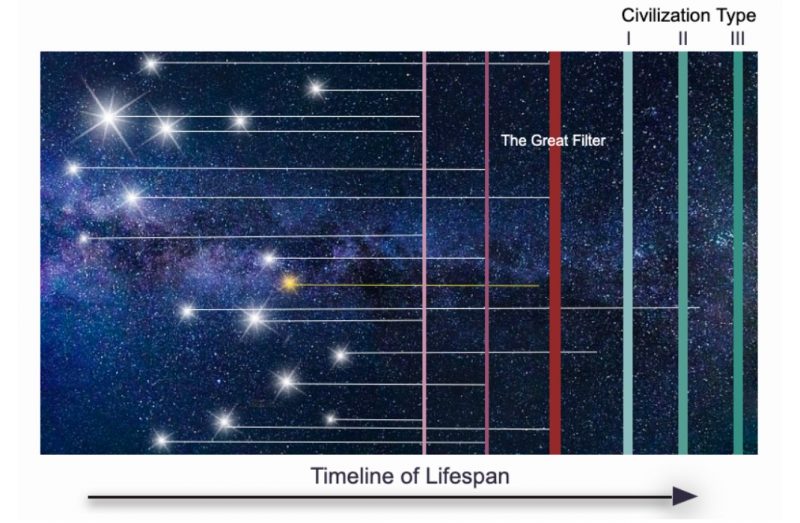
This graphic depicts intelligent civilizations as stars. The vertical lines represent Great Filters that civilizations do or don’t survive. This graphic depicts Earth’s human population (the yellow “star”) approaching its own Great Filter. How would we surpass it, and keep going? Image via NASA/ arXiv.

What is the Great Filter?

Is intelligent life common, or rare in our Milky Way galaxy? If it’s common, why haven’t we encountered it? While discussing UFOs on a walk to lunch in the year 1950, the physicist Enrico Fermi is famously said to have asked, “But where is everybody?” Scientists today call that riddle Fermi’s Paradox. Now a new paper by NASA scientists explores one possible answer to the paradox. The answer may be what’s called the Great Filter.

Economist Robin Hanson first proposed the Great Filter, in the late 1990s. It’s the idea of that – even if life forms abundantly in our Milky Way galaxy – each extraterrestrial civilization ultimately faces some barrier to its own survival. The barrier might come from without (for example, an asteroid striking a planet, and wiping out all life forms). Or it might come from within (for example, all-out nuclear war).

Hanson proposed that a Great Filter might be at work within our Milky Way galaxy. He argued – from what we can see here on Earth – life expands to fill every niche. And so, he argued, we should see signs of intelligent life beyond Earth in nearby star systems, perhaps even in our solar system. But we don’t see this.

Is humanity facing a Great Filter?

The authors of the new paper take Hanson’s idea further. They explore the idea that humanity may now be facing a Great Filter. The authors wrote:

We postulate that an existential disaster may lay in wait as our society advances exponentially towards space exploration, acting as the Great Filter: a phenomenon that wipes out civilizations before they can encounter each other … In this article, we propose several possible scenarios, including anthropogenic and natural hazards, both of which can be prevented with reforms in individual, institutional and intrinsic behaviors. We also take into account multiple calamity candidates: nuclear warfare, pathogens and pandemics, artificial intelligence, meteorite impacts, and climate change. 

And they offer solutions, beginning with, as they say:

… a necessary period of introspection, followed by appropriate refinements to properly approach our predicament, and addressing the challenges and methods in which we may be able to mitigate risk to mankind and the nearly 9 million other species on Earth.

In a sense, the authors of the new paper – including lead author Jonathan H. Jiang of NASA’s Jet Propulsion Laboratory in Pasadena, California – are engaging in a “necessary period of introspection” by the act of writing their paper.

And, with their paper, they’re laying out the challenges we’re facing and methods of addressing them.

We’ve already survived some ‘filters’

The scientists point to life’s resilience. Life on Earth has already survived a number of filters in the form of mass extinction events. The Permian-Triassic extinction – aka the Great Dying – occurred 250 million years ago and nearly ended all life on the planet. This extinction event wiped out about 96% of marine life and 70% of land species. The exact cause of the Great Dying is still a matter of study, but some scientists have said it was a combination of warming temperatures and decreasing oxygen.

But these previous filters, or extinction events, have been natural, arising from the evolution of our planet and solar system, including volcanic eruptions and asteroid impacts

A Great Filter of our own making

But now, clearly, humanity may be facing a Great Filter of our own making, and one that other intelligent civilizations in the galaxy have faced … and failed to withstand. Perhaps it’s no surprise that the technological advancements humans have achieved might ultimately lead to our undoing. Perhaps that’s nature’s way. As the new paper said:

It seems as though nearly every great discovery or invention, while pushing back the borders of our technological ignorance, is all too quickly and easily turned to destructive ends. Examples such as splitting the atom, biomedical innovations and resource extraction and consumption come to mind with disconcerting swiftness. Still, some have suggested artificial intelligence (AI) as yet another factor, which, pending substantial technical hurdles, may yet have its chance to prove friend or foe.

Here’s a look at some of the issues that might compose Earth’s Great Filter.

Unchecked population growth

One of the factors Earth faces, according to the paper, is unchecked population growth. Earth just passed a milestone on November 15, 2022, when it reached 8 billion human inhabitants. The paper said with our current population figures, Earth has experienced:

… an exponential rise from about 1.6 billion [people] at the start of the 20th century.

Technological advancements in farming, energy production and distribution have made such a large population possible on Earth. But, as the paper said, these advancements cannot:

… indefinitely offset the multifaceted stresses imposed by an ever-escalating population.

When will Earth’s human population reach its peak size? Some projections report that education in developing nations might allow Earth’s population to peak at 10 billion in the 2060s. But, of course, no one really knows.

Nuclear war

While warfare has long been a factor of life on Earth, only in the past century has humanity had a weapon that could destroy all nations, not just those participating in a nuclear war. The scientists said the greater the number of democracies in the world, the better our chances for avoiding nuclear war. The scientist also saw other encouraging signs, including:

Peace agreements in the historically troubled Middle East, a vast reduction in nuclear warheads since the height of the Cold War and a wide coalition of nations rallying their support for the besieged in Eastern Europe.

Pathogens and pandemics

The threat of illness and pandemics continues to grow simply because our world is so interconnected. Spreading diseases have a much easier time in our global society. But on the positive side, advancements in medicine have also given us an edge. The scientists said that having current and reliable data is crucial:

… in predicting how future pandemics will spread, how deadly they will be and how quickly and effectively we will be able to leverage our knowledge of the life sciences to counter this manifestation of the Great Filter.

Artificial intelligence

While true artificial intelligence as a separate sentient being is not yet reality, the authors of the paper urge a proactive plan to peacefully share Earth. They project that computer sophistication will one day rival that of the human mind. The scientists said:

As for whether AI would be benign or otherwise, self-imposing a Great Filter of our own invention, that will depend on the evolving nature and disposition of Earth’s first high-tech species.

Asteroid and comet impacts

Here’s an extinction event from the past that could still spell our doom in the future. While large impacts are exceedingly rare, there is, as the scientists said:

… a non-zero percentage [of asteroids or comets] which are large enough to survive passage through the atmosphere and, impacting the surface, cause catastrophic destruction to our sensitive biosphere.

The odds of a mass extinction level event in the coming years is vanishingly small. But, over time periods extending into the very distant future, the odds increase toward 100%. Meanwhile, with projects such as the DART mission, and given enough lead time, humanity has a way of defending itself.

Climate change

Climate change has become one of the most studied threats to life on Earth. Because the threats from climate change happen on a slower time scale than, say, the time it takes to launch a nuclear weapon, the efforts to curb these effects have not been as rapid as they could have been. The scientists said:

The major impediment to taking more decisive actions, however, are the challenges imposed by transitioning to non-carbon-based energy sources such as solar, wind, nuclear power. Here again, rapidly advancing technologies in areas such as modularized nuclear power plants and carbon capture and sequestration (CCS) are among the best hopes for avoiding slow-motion ensnarement by this lulling but lethal Great Filter.

Avoiding the Great Filter

So you see there’s not just one possible Great Filter for Earth, but many. Any one of them could be our downfall. These scientists are suggesting something that sounds simple on its face, but is (apparently) hard to do. That is, in order to avoid the Great Filter, humans must work together and recognize the big picture. As the paper said:

History has shown that intraspecies competition and, more importantly, collaboration, has led us toward the highest peaks of invention. And yet, we prolong notions that seem to be the antithesis of long-term sustainable growth. Racism, genocide, inequity, sabotage … the list sprawls.

Meanwhile, we continue to look outward, peering at the dark depths between the stars, hoping for a sign that we aren’t alone in the universe. Ultimately, our quest to find life beyond Earth is part of trying to understand life on our planet and where we fit in. As Carl Sagan said:

In the deepest sense, the search for extraterrestrial intelligence is a search for ourselves.

Bottom line: Scientists say the reason we haven’t found intelligent civilizations in the galaxy is that they may not have survived the Great Filter. And they say we may be facing down our own Great Filter.

Source: https://arxiv.org/ftp/arxiv/papers/2210/2210.10582.pdf

ooOOoo

We are a funny bunch! As was said just a couple of paragraphs ago we humans must work together and recognise the big picture. But we do not!

Why do we not do that?

I wish I knew the answer to that conundrum! Nevertheless, I hope you enjoyed the article.

Herman Daly.

A recent article in The Conversation

I was short of time yesterday when I turned my mind to Tuesday’s post. So I hope you won’t mind if I leave you with this very interesting article.

ooOOoo

The inconvenient truth of Herman Daly: There is no economy without environment

The economy depends on the environment. Economics can seem to forget that point. Ines Lee Photos/Moment via Getty Images

Jon D. Erickson, University of Vermont

Herman Daly had a flair for stating the obvious. When an economy creates more costs than benefits, he called it “uneconomic growth.” But you won’t find that conclusion in economics textbooks. Even suggesting that economic growth could cost more than it’s worth can be seen as economic heresy.

The renegade economist, known as the father of ecological economics and a leading architect of sustainable development, died on Oct. 28, 2022, at the age of 84. He spent his career questioning an economics disconnected from an environmental footing and moral compass.


In an age of climate chaos and economic crisis, his ideas that inspired a movement to live within our means are increasingly essential.

The seeds of an ecological economist

Herman Daly grew up in Beaumont, Texas, ground zero of the early 20th century oil boom. He witnessed the unprecedented growth and prosperity of the “gusher age” set against the poverty and deprivation that lingered after the Great Depression.

To Daly, as many young men then and since believed, economic growth was the solution to the world’s problems, especially in developing countries. To study economics in college and export the northern model to the global south was seen as a righteous path.

Headshot photo of Daly as an older man, with glasses and thinning hair,
Economist Herman Daly (1938-2022) Courtesy of Island Press

But Daly was a voracious reader, a side effect of having polio as a boy and missing out on the Texas football craze. Outside the confines of assigned textbooks, he found a history of economic thought steeped in rich philosophical debates on the function and purpose of the economy.

Unlike the precision of a market equilibrium sketched on the classroom blackboard, the real-world economy was messy and political, designed by those in power to choose winners and losers. He believed that economists should at least ask: Growth for whom, for what purpose and for how long?

Daly’s biggest realization came through reading marine biologist Rachel Carson’s 1962 book “Silent Spring,” and seeing her call to “come to terms with nature … to prove our maturity and our mastery, not of nature but of ourselves.” By then, he was working on a Ph.D. in Latin American development at Vanderbilt University and was already quite skeptical of the hyperindividualism baked into economic models. In Carson’s writing, the conflict between a growing economy and a fragile environment was blindingly clear.

After a fateful class with Nicholas Georgescu-Roegen, Daly’s conversion was complete. Georgescu-Roegen, a Romanian-born economist, dismissed the free market fairy tale of a pendulum swinging back and forth, effortlessly seeking a natural state of equilibrium. He argued that the economy was more like an hourglass, a one-way process converting valuable resources into useless waste.

Daly became convinced that economics should no longer prioritize the efficiency of this one-way process but instead focus on the “optimal” scale of an economy that the Earth can sustain. Just shy of his 30th birthday in 1968, while working as a visiting professor in the poverty-stricken Ceará region of northeastern Brazil, Daly published “On Economics as a Life Science.”

His sketches and tables of the economy as a metabolic process, entirely dependent on the biosphere as source for sustenance and sink for waste, were the road map for a revolution in economics.

Economics of a full world

Daly spent the rest of his career drawing boxes in circles. In what he called the “pre-analytical vision,” the economy – the box – was viewed as the “wholly owned subsidiary” of the environment, the circle.

When the economy is small relative to the containing environment, a focus on the efficiency of a growing system has merit. But Daly argued that in a “full world,” with an economy that outgrows its sustaining environment, the system is in danger of collapse.

Illustrations of a square (economy) inside a circle (ecosystem). Energy and matter go into and out of the economy square, and some is recycled. Meanwhile solar energy enters the ecosystem circle and some heat escapes. In one, the square is too large.
Herman Daly’s conception of the economy as a subsystem of the environment. In a ‘full world,’ more growth can become uneconomic. Adapted from ‘Beyond Growth.’ Used with permission from Beacon Press.

While a professor at Louisiana State University in the 1970s, at the height of the U.S. environmental movement, Daly brought the box-in-circle framing to its logical conclusion in “Steady-State Economics.” Daly reasoned that growth and exploitation are prioritized in the competitive, pioneer stage of a young ecosystem. But with age comes a new focus on durability and cooperation. His steady-state model shifted the goal away from blind expansion of the economy and toward purposeful improvement of the human condition.

The international development community took notice. Following the United Nations’ 1987 publication of “Our Common Future,” which framed the goals of a “sustainable” development, Daly saw a window for development policy reform. He left the safety of tenure at LSU to join a rogue group of environmental scientists at the World Bank.

For the better part of six years, they worked to upend the reigning economic logic that treated “the Earth as if it were a business in liquidation.” He often butted heads with senior leadership, most famously with Larry Summers, the bank’s chief economist at the time, who publicly waved off Daly’s question of whether the size of a growing economy relative to a fixed ecosystem was of any importance. The future U.S. treasury secretary’s reply was short and dismissive: “That’s not the right way to look at it.”

But by the end of his tenure there, Daly and colleagues had successfully incorporated new environmental impact standards into all development loans and projects. And the international sustainability agenda they helped shape is now baked into the U.N. Sustainable Development Goals of 193 countries, “a plan of action for people, planet and prosperity.” In 1994, Daly returned to academia at the University of Maryland, and his life’s work was recognized the world over in the years to follow, including by Sweden’s Right Livelihood Award, the Netherlands’ Heineken Prize for Environmental Science, Norway’s Sophie Prize, Italy’s Medal of the Presidency, Japan’s Blue Planet Prize and even Adbuster’s person of the year.

Today, the imprint of his career can be found far and wide, including measures of the Genuine Progress Indicator of an economy, new Doughnut Economics framing of social floors within environmental ceilings, worldwide degree programs in ecological economics and a vibrant degrowth movement focused on a just transition to a right-sized economy.

I knew Herman Daly for two decades as a co-author, mentor and teacher. He always made time for me and my students, most recently writing the foreword to my upcoming book, “The Progress Illusion: Reclaiming Our Future from the Fairytale of Economics.” I will be forever grateful for his inspiration and courage to, as he put it, “ask the naive, honest questions” and then not be “satisfied until I get the answers.”

Jon D. Erickson, Professor of Sustainability Science and Policy, University of Vermont

This article is republished from The Conversation under a Creative Commons license. Read the original article.

ooOOoo

I found this to be absolutely fascinating and I am sure many besides me agree.

Keeping your dog safe and happy.

Without breaking the bank!

Another very useful guest post from Penny Martin who is becoming a very regular contributor to this place. This time Penny writes about being on a budget, aren’t we all, but still keeping your dog safe and happy.

ooOOoo

Image: Pexels

Six Ways to Make Your Home and Yard Dog-Friendly on a Budget

By Penny Martin.

Dogs add many wonderful things to their owners’ lives; however, owning a dog can be a drain on your bank account. According to statistics, the average American dog owner spends $1,480 per year on dog expenses. These tips can help you make your home and yard more dog-friendly without breaking the bank.

1. Add a Fence

Dogs need exercise, a place to go to the bathroom and a chance to sniff around and be a dog. However, if you don’t have a yard with a secure fence, it isn’t safe to allow your dog outside without a leash. Even a well-trained dog may run off to chase a squirrel, greet a strange dog or go exploring. This puts your dog at risk of being hit by a car, getting in a fight with another dog or animal or becoming lost. Adding a fence to your yard allows you to enjoy time with your pet off leash without risking your pet’s safety.

2. Add a Backyard Pool

Not every dog loves to swim, but many do. You can give your dog a place to cool off and have some fun without spending a lot of money by purchasing a wading pool or a small stock tank. If you think your dog would enjoy more than splashing around, search for a dog-friendly place in your area where you can inexpensively take your dog to swim. However, don’t just toss your pup into the deep end. Not all dogs are natural swimmers. Many facilities that have pools for dogs offer swimming lessons.

3. Create Shady Spots

Dogs love to run and play and on hot days they can easily overheat. Help your dogs stay cool by making sure they have plenty of shady spots to hang out. One inexpensive way to do this is to purchase a portable awning. You can set the awning up anywhere in your yard and put it away when you no longer need it. Trees are also a good source of shade, but it is important to keep your trees maintained.

4. Remove Dead Trees and Branches

Dead trees create a safety hazard and provide a home for pests. Have a professional local tree service remove any dead trees and branches in your yard before they cause an injury or accident. Do not try to remove the tree yourself. Professionals have the right gear, tools and safety training to remove the tree safely and without damaging your property. Read online reviews before you reach out to contractors. Get at least three estimates and make sure to ask whether stump grinding and disposal are included in the price.

5. Buy Trash Cans With Lids

Trash cans are smelly, full of tasty food and plenty of stuff to shred. It is no wonder that most dogs love to root through them. However, spoiled food, sharp objects or toxic materials can injure or sicken your dog. Avoid this problem by purchasing trash cans with lids that lock. 

6. Remove Dangerous Plants

Many plants can be harmful to dogs who ingest them. Research the plants in your yard and remove any that could cause a problem.

Owning dogs is not a cheap endeavor. However, you can make your home safe and comfortable for them without spending all your savings by adding a fence and pool, creating shady spots, removing dead trees, purchasing garbage cans with lockable lids, and getting rid of poisonous plants.

ooOOoo

Here at home, because we live in a rural location, dead trees and branches are an ever-present problem. Luckily our dogs don’t seem to be drawn to them but the issue of pests is a different matter. We have thirteen acres of which half is forest and it is all too much for a contractor. Correction: It is all too expensive for us!

For the wider audience of readers this, I am sure, offers very good advice and is another great post from Penny.