Category: Education

Synchronicity of minds, part two

“There IS very intelligent life, but somehow it can’t seem to achieve dominance over the other kind.” Chris Snuggs.

In yesterday’s Part One, I offered three independent essays, about the USA, the UK and Europe, that contained a common message.  A message of “the abject failure of modern nation-state democracy — not only in Europe, but across the globe.“ (In the words of one of the essayists: Don Quijones.)

As with Part One, Part Two brings together disconnected commentators offering an interconnected theme.

One of the commentators was Chris Snuggs who writes the blog Nemo Insula Est.  It was his post about the slaughter of elephants for their tusks that I featured last Tuesday: Legitimate anger.  Chris and I recently exchanged emails on the curious issue of why those who are charged with governing our democratic societies so often fail to do so in a fair and balanced manner; to put it mildly.

Here’s some of that exchange from Chris:

My theory is that intelligent people are too nice. Take you, for example – someone so intelligent, informed and civilised should be in government, but you are not ruthless, nasty and/or ambitious enough!!!

Another way to put it is that people like you – and I on a more modest, brutish and disorganised level – are doing their bit to spread civility in general, but we have NO POWER because we are too nice.

A related theory is that most people are in fact basically nice but that the rest have a disproportionate influence, both because a greater proportion of them have power and because of the “rotten apple” theory – one apple rots the barrel eventually.

I should open a school to teach nice and intelligent people how to be more nasty to nasty people! ………. Indeed, it is our duty to be more ruthless to stand up to the bad guys.

Moving swiftly over the flattery of yours truly, there is a strong message from Chris.  The message that nice people are not being sufficiently active in registering their disgust over what is being done in the supposed name of the people.

The next item, as part of this theme, was a recent article on Permaculture News.  The article was called Majority Voting is Inadequate and was based around an interview with Peter Emerson.  I hadn’t heard of Mr. Emerson before but very quickly established that Peter Emerson is the director of the de Borda Institute in Belfast, Northern Ireland. He is a leading authority on voting systems for use in both decision-making and elections.

Here is a flavour of that interview.

Marcin Gerwin (Poland): There are many divisions and even hostility in the Polish parliament. The ruling coalition currently has 232 votes in a parliament with 460 seats. This slight majority allows them to run all the ministries, and they can pass almost any bill they want. Do you think that creating an all-inclusive government, where all parties have their representatives, could help to tone down the atmosphere and create a more cooperative environment?


Peter Emerson

Peter Emerson: In a word – yes. However, I think I should argue the other point first. There is no justification for majority rule. When I was in Russia, it was quite interesting, because when Gorbachev started perestroika, all sorts of experts rushed over to Moscow, to tell him what to do to be democratic. They advised the system that we have here in Northern Ireland and that you now have in Poland and pretty well everyone else has as well – and that is that you elect your parliament by one of many electoral systems, apparently they all are democratic, even though some are bad and some are worse. But when it comes to what happens in parliament, nearly every parliament in the world debates things and then takes a majority vote.

These experts talked in Russia about majority rule but Mikhail Sergeyevich doesn’t speak English, so they had to use the Russian word. And the Russian word for majoritarianism is bolshevism. It comes from the Russian word for majority which is bolshinstvo, so the member of the majority was a bolshevik and a member of the minority was a menshevik. The decision to split into bolsheviks and mensheviks was taken in 1903 in London by the mathematical accident of just one vote. The whole thing was nonsense. But God, such a dangerous one.

MG: If not a majority vote, what are the other ways that decisions can be made?

PE: There are lots of voting methodologies – Borda count, Condorcet…. One of these could be used. And in fact Dublin City Council recently took a vote by means of a Borda count, which is brilliant. It was partly because they had more than two options on the agenda, so you almost have to move beyond majority voting.

And when you look at it, the majority vote is actually the most inaccurate measure of collective opinion ever invented. It’s over two thousand years old, it was used by the Greeks and the Chinese. But there is no justification to for its use today because it’s so inaccurate.

You did register what Peter said in that last paragraph? “the majority vote is actually the most inaccurate measure of collective opinion ever invented.”

If you have only the slightest curiosity about better methods of voting then do read the interview in full.  For the interview contains links to other voting systems, most of which I hadn’t heard of before.  There is the Borda count, the Condorcet method, the Ranked voting system (otherwise known as Preferential voting), and the proportional voting process known as the Matrix vote.

Moving on.

The final coincidence was John Hurlburt sending me the following essay, that is published with his permission.

ooOOoo

Apocalypse and Epiphany

Apocalypse, n. [Gr. apokalypsis, from apokalypto, to disclose and to discover.] Revelation; discovery; disclosure.  (The New Webster Encyclopedic Dictionary)

Apocalypse is a word which describes a human awakening to change.  Change is a constant. Our species has been living through apocalypse for fourteen million years.  Conservative groups deny change.  For example financial interests spent 14 million dollars to refute the scientific reality of climate change during 2013.  We are in the midst of worldwide financial wars, energy wars, cultural wars, and political wars.  Has there been progress in emerging human species intelligence?

Perhaps more importantly, has there been progress in human morality?   We’ve been around as a species for roughly 14 million years.  Have we truly learned anything in the process?   For the last two hundred years we’ve been industrially poisoning the environment which sustains our existence at a steadily increasing rate.

We’re needlessly killing ourselves and a significant portion of the life on our shared garden planet in the pursuit of artificial symbols of trust we call money.   No one knows for sure how deep and how devastating an impending economic, cultural, political and geophysical collapse may become.

We’ve reached a critical tipping point between species survival and a severely diminished quality of human life. We’re in the process of falling off the edge.  The good news is that we know what needs to be done and we know how to do it.  So why don’t we do what we know needs to be done?

There are a variety of reasons.  The seven deadly sins are a starting point for systemic corruption.  The seven deadly sins are pride, greed, lust, anger, gluttony, envy and sloth.  Add ignorance, denial and indifference.  Serve bread and circuses for dessert.  In terms of action, compete more than cooperate.  Rush ever faster without reflection, contemplation or meditation.  As a final touch, become consumed by “now” without regard for the future.

Epiphany, n. [Gr. epiphaneia, appearance; from epiphanio, to appear] an appearance or a becoming manifest. (The New Webster Encyclopedic Dictionary)  Epiphany provides us a way to deal with apocalypse.  As what’s going on is revealed, we realize that something needs to be done about it and that we are capable of creating and implementing solutions in concert with Nature.

To paraphrase Shakespeare’s “Hamlet”, “The fault, Dear Brutus, lies not in our stars but in ourselves.” What do we need to personally change both spiritually and practically?  Today is the tomorrow – we imagined yesterday.

Considering our steadily increasing demographic and our systemic global failure, it’s half past time to clean house.  We begin with our “self”.  We take inventory.  We honestly look at our thoughts and actions.  What do we personally have to offer that’s useful and productive in terms of a resilient tomorrow?  What’s standing in our way today?

We accept that we are a very young consciously aware species on a fragile garden planet that’s 14 Billion years old in a universe that’s roughly 33 billion years old.  We accept that we are a species component of the matter and energy of Creation. We accept responsibility for sustaining our being and by extension responsibility for the being of life on earth.

We realize our purpose as stewards of Creation.

an old lamplighter

ooOOoo

So put those three perspectives together and the message is clear.  This is a period of significant change and, as with previous periods in history, change only comes along when there is dissatisfaction with the present.  Ergo, there is widespread acceptance that the present way of life is not working for millions and millions around the world.

Reinforced only this morning (Thursday) by a recent announcement from Gallup regarding the voting intentions of Americans.

January 8, 2014

Record-High 42% of Americans Identify as Independents

Republican identification lowest in at least 25 years

by Jeffrey M. Jones

PRINCETON, NJ — Forty-two percent of Americans, on average, identified as political independents in 2013, the highest Gallup has measured since it began conducting interviews by telephone 25 years ago. Meanwhile, Republican identification fell to 25%, the lowest over that time span. At 31%, Democratic identification is unchanged from the last four years but down from 36% in 2008.

Let me include this section:

Fourth Quarter Surge in Independence

The percentage of Americans identifying as independents grew over the course of 2013, surging to 46% in the fourth quarter. That coincided with the partial government shutdown in October and the problematic rollout of major provisions of the healthcare law, commonly known as “Obamacare.”

gallup

The 46% independent identification in the fourth quarter is a full three percentage points higher than Gallup has measured in any quarter during its telephone polling era.

Taking everything into consideration, from yesterday’s evidence and what is presented today, it’s hardly surprising to read in that Gallup report [my italics]:

The rise in political independence is likely an outgrowth of Americans’ record or near-record negative views of the two major U.S. parties, of Congress, and their low level of trust in government more generally.

The increased independence adds a greater level of unpredictability to this year’s congressional midterm elections. Because U.S. voters are less anchored to the parties than ever before, it’s not clear what kind of appeals may be most effective to winning votes. But with Americans increasingly eschewing party labels for themselves, candidates who are less closely aligned to their party or its prevailing doctrine may benefit.

Fascinating times!  Thank goodness there’s always a dog to remind us of how to cope!

Cleo dealing with stress!
Cleo coping with these fascinating times!

Food and health

How less can be so much more.

I came at today’s post from a number of directions.

A few days ago I was catching up with a good friend back in the UK, Peter M.  We hadn’t spoken in a couple of months.  One of the items from my end was mentioning that I had converted to a vegetarian diet, verging on trying to be a vegan.  Jeannie has been a vegetarian for almost her entire life. Having made the change to a vegetarian diet, to my surprise I had gained 12 lbs (5.4 kgs) in the last month.  Peter then mentioned that he, too, had put on 8 kgs before deciding to try and cut back.  Peter and I are of the same age and motivated to stay as fit and healthy as we can.  Anyway, Peter’s route for losing some weight was to commit to the fasting arrangement promoted and recommended by Dr. Michael Mosley – more of this later.

The conversation also reminded me of an essay by George Monbiot back at the end of November: Wrong About Being Wrong. Mr. Monbiot wrote of his mind changes about being vegetarian.  With his permission, here is that essay.

oooOOOooo

Wrong About Being Wrong

November 27, 2013

The argument seems, once more, decisively to favour veganism.

By George Monbiot, published on the Guardian’s website 27th November 2013

He did it quietly, and the decision is the better for that: Al Gore, according to reports in the US press, has gone vegan.

Certain things could be said about other aspects of his lifestyle: his enormous houses and occasional use of private jets, for example. While we can’t demand that everyone who espouses green causes should live like a Jain monk, I think we can ask that they don’t live like Al Gore. He’s a brilliant campaigner, but I find the disjunction between the restraint he advocates and the size of his ecological footprint disorienting.

So saying, if he is managing to sustain his vegan diet, in this respect he puts most of us to shame. I tried it for 18 months and almost faded away. I lost two stone, went as white as a washbasin and could scarcely concentrate. I think I managed the diet badly; some people appear to thrive on it. Once, after I had been unnecessarily rude about vegans and their state of health (prompted no doubt by my own failure), I was invited to test my views in an unconventional debate with a vegan cage fighter. It was a kind invitation, but unfortunately I had a subsequent engagement.

In 2010, after reading a fascinating book by Simon Fairlie, a fair part of which was devoted to attacking my views, I wrote a column in which I maintained that I’d been wrong to claim that veganism is the only ethical response to what is arguably the world’s most urgent social justice issue. Diverting grain that could have fed human beings to livestock, I’d argued, is grotesque when 800 million go hungry.

Fairlie does not dispute this, and provides many examples of the madness of the current livestock production system. But he points out that plenty of meat can be produced from feed which humans cannot eat, by sustaining pigs on waste and grazing cattle and sheep where crops can’t grow. I was swayed by his argument. But now I find myself becoming unswayed. In the spirit of unceasing self-flagellation I think I might have been wrong about being wrong.

Part of the problem is that while livestock could be fed on waste and rangelands, ever less of the meat we eat in the rich nations is produced this way. Over the past week, a row has erupted between chefs and pig farmers over the issue of swill. The chefs point out – as Simon Fairlie does – that it is ridiculous to feed pigs on soya grown at vast environmental cost in the Amazon instead of allowing them to dispose of our mountain of waste food. Feeding pigs on swill has been forbidden since the foot and mouth outbreak of 2001.

The farmers respond that the risks of spreading disease are too great and that pigs fed on waste grow more slowly than pigs fed on soya. I side with the chefs: I believe that a society capable of identifying the Higgs boson should be able to sterilise waste food. But I suspect that they’re not going to win: the industry and its regulators are firmly against them.

I should have seen it coming, but I watched in horror as the meat industry used my article to justify the consumption of all meat, however it was produced, rather than just the meat raised on food that humans can’t eat. A potential for good is used to justify harm.

While researching my book Feral, I also came to see extensive livestock rearing as a lot less benign than I – or Simon Fairlie – had assumed. The damage done to biodiversity, to water catchments and carbon stores by sheep and cattle grazing in places unsuitable for arable farming (which means, by and large, the hills) is out of all proportion to the amount of meat produced. Wasteful and destructive as feeding grain to livestock is, ranching appears to be even worse.

The belief that there is no conflict between this farming and arable production also seems to be unfounded: by preventing the growth of trees and other deep vegetation in the hills and by compacting the soil, grazing animals cause a cycle of flash floods and drought, sporadically drowning good land downstream and reducing the supply of irrigation water.

So can I follow Al Gore, and do it better than I did before? Well I intend at least to keep cutting my consumption of animal products, and to see how far I can go. It’s not easy, especially for a person as greedy and impetuous as I am, but there has to be a way.

http://www.monbiot.com

oooOOOooo

Back to the conversation with Peter M. about fasting.  He spoke enthusiastically about Dr. Mosley who one quickly discovers,

Dr. Michael Mosley.
Dr. Michael Mosley.

Michael J. Mosley (born 22 March 1957) is a British journalist, medical doctor, producer and TV presenter. He is probably best known as a television presenter of programmes on biology and medicine, particularly his series on the workings of the human body, Inside the Human Body and his regular appearances as the friendly medic on The One Show.

He was interviewed by Steve Wright of BBC Radio 2 back in January, 2012 and that interview is on YouTube:

That BBC Horizon programme is no longer available to watch but a 4-minute extract may be seen here:

Inevitably, Dr. Mosley has a website Fast Diet that is packed full of valuable information.

So just as soon as we have the water back to the house and I can have a long, hot shower I intend to adopt the 5:2 diet.

Magic!

The old and the new.

Like thousands of others, Jean and I are regular viewers of the TED Talks.

So first the old. Here’s a reminder of the inspiring nature of mathematics; in this case Fibonacci numbers.

Published on Nov 8, 2013

Math is logical, functional and just … awesome. Mathemagician Arthur Benjamin explores hidden properties of that weird and wonderful set of numbers, the Fibonacci series. (And reminds you that mathematics can be inspiring, too!)

Now to the new. Innovation at its very best.

Published on Jul 11, 2013

The development of new medicine is problematic because laboratories cannot replicate the human body’s environment, making it difficult to determine how patients will respond to treatment. At TEDxBoston, Geraldine Hamilton demonstrates how scientists can implant living human cells into microchips that mimic the body’s conditions. These “organs-on-a-chip” can be used to study drug toxicity, identify potential new therapies, and could lead to safer clinical trials.

Smart animals!

It’s not just dogs who can read us so well.

Millions of dog owners know how well their animals can read us humans; it’s been mentioned on Learning from Dogs many times before.

Try elephants.

There was a fascinating article on the BBC news website a few weeks ago that went on to explain:

10 October 2013

Elephants ‘understand human gesture’

By Victoria GillScience reporter, BBC News
African elephants have demonstrated what appears to be an instinctive understanding of human gestures, according to UK scientists. In a series of tests, researcher Ann Smet, of the University of St Andrews, offered the animals a choice between two identical buckets, then pointed at the one containing a hidden treat.

From the first trial, the elephants chose the correct bucket.

The results are published in the journal Current Biology.

The item included a short video that I am delighted to say is on YouTube.  Here it is:

Published on Oct 10, 2013

African elephants have demonstrated what appears to be an instinctive understanding of human gestures, according to UK scientists.

In a series of tests, researcher Ann Smet, of the University of St Andrews, offered the animals a choice between two identical buckets, then pointed at the one containing a hidden treat.

From the first trial, the elephants chose the correct bucket.

The results are published in the journal Current Biology.

The scientists worked with captive elephants at a lodge in Zimbabwe.

Prof Richard Byrne, a co-author on the research, said the elephants had been rescued from culling operations and trained for riding.

“They specifically train the elephants to respond to vocal cues. They don’t use any gestures at all,” said Prof Byrne.

“The idea is that the handler can walk behind the elephant and just tell it what to do with words.”

Despite this, the animals seemed to grasp the meaning of pointing from the outset.

Ms Smet added that she had been impressed by the animals’ apparently innate understanding of the gesture.

“Of course we had hoped that the elephants would be able to learn to follow human pointing, or we wouldn’t have done the experiment in the first place,” she said.

“But it was really surprising that they didn’t seem to have to learn anything.

“It seems that understanding pointing is an ability elephants just possess naturally and they are cognitively much more like us than has been realised.”

Prof Byrne said studying elephants helped build a map of part of the evolutionary tree that is very distant from humans.

“They’re so unrelated to us,” he told BBC News. “So if we find human-like abilities in an animal like an elephant, that hasn’t shared a common ancestor with people for more than 100 million years , we can be pretty sure that it’s evolved completely separately, by what’s called convergent evolution.”

The researchers said their findings might explain how elephants have successfully been tamed and have “historically had a close bond with humans, in spite of being potentially dangerous and unmanageable due to their great size”.

But the scientists added the results could be a hint that the animals gesture to one another in the wild with their “highly controllable trunks”.

Ms Smet told BBC News: “The next step [in our research] is to test whether when an elephant extends its trunk upwards and outwards – as they regularly do, such as when detecting a predator, this functions as a point.”

That BBC article goes on to highlight:

Prof Byrne said studying elephants helped build a map of part of the evolutionary tree that is very distant from humans.

“They’re so unrelated to us,” he told BBC News. “So if we find human-like abilities in an animal like an elephant, that hasn’t shared a common ancestor with people for more than 100 million years , we can be pretty sure that it’s evolved completely separately, by what’s called convergent evolution.”

The researchers said their findings might explain how elephants have successfully been tamed and have “historically had a close bond with humans, in spite of being potentially dangerous and unmanageable due to their great size”.

But the scientists added the results could be a hint that the animals gesture to one another in the wild with their “highly controllable trunks”.

Ms Smet told BBC News: “The next step [in our research] is to test whether when an elephant extends its trunk upwards and outwards – as they regularly do, such as when detecting a predator, this functions as a point.”

Now just where did I pack my old trunk.

EMF exposure.

A warning of the dangers of cell phones and the like!

Yesterday, I simply ran out of time to write to write a more personal post for today.  So I looked at some of the news items that I had collected recently and two jumped out as being both deeply connected and worthy of posting.

The first was an item that was seen on Natural News a little more than a couple of months ago.  It had the title of EMF exposures destroy health and well-being, claims panel of top international scientists.  The link to that article is here.  It opens, thus:

(NaturalNews) Nearly 8 million people worldwide die from cancer on an annual basis. Cardiovascular disease is the number one cause of death, killing almost 17 million people in 2011; both of these statistics are spiraling out of control. Now three top scientists, Dr. Panagopoulos of the University of Athens , Associate Prof. Johansson of the Karolinska Institute, and Dr. Carlo of the Science and Public Policy Institute, are sounding the alarm bell.

Leaders in their respective fields, Panagopoulos, Johansson, and Carlo, claim electromagnetic field (EMF) exposures significantly below international safety levels exposures are destroying the public’s health and well-being.

Recent study findings

This latest study concluded the present standard of measuring EMFs, Specific Absorption Rate (SAR), to be totally inappropriate. SAR measures the heating effect of EMF based technologies like microwave ovens, cell phones, cordless phones, Wi-Fi and the like. But countless studies have brought to light adverse biological effects at radiation levels significantly below levels where a thermal effect is detected.

Please do go here and read the full article.  Because as one reads from the closing advice, as below, whom these days isn’t being affected?

Basic EMF protection

Reducing personal exposure to EMFs is a fairly easy endeavor. Basic EMF protection can be achieved by:

• Texting instead of talking with cell phones
• Setting cell phones on airplane mode when not in use
• Clearing the bedroom of electrical devices
• Replacing Wi-Fi with a hard-wired connection

Taking these simple steps is well worth the effort; the power to reduce EMF exposure and the adverse health effects that stem from them are truly right there at your fingertips.

The second was a specific warning for women [my emphasis, Ed]:

Multifocal Breast Cancer in Young Women with Prolonged Contact between Their Breasts and Their Cellular Phones

Abstract

Breast cancer occurring in women under the age of 40 is uncommon in the absence of family history or genetic predisposition, and prompts the exploration of other possible exposures or environmental risks. We report a case series of four young women—ages from 21 to 39—with multifocal invasive breast cancer that raises the concern of a possible association with nonionizing radiation of electromagnetic field exposures from cellular phones. All patients regularly carried their smartphones directly against their breasts in their brassieres for up to 10 hours a day, for several years, and developed tumors in areas of their breasts immediately underlying the phones. All patients had no family history of breast cancer, tested negative for BRCA1 and BRCA2, and had no other known breast cancer risks. Their breast imaging is reviewed, showing clustering of multiple tumor foci in the breast directly under the area of phone contact. Pathology of all four cases shows striking similarity; all tumors are hormone-positive, low-intermediate grade, having an extensive intraductal component, and all tumors have near identical morphology. These cases raise awareness to the lack of safety data of prolonged direct contact with cellular phones.

Strongly recommend you read the case reports.

This is a definite No! No!

So all you lovely ladies with your cell phones, mobile phone, smart phones, et al.  Don’t carry them in your bra!

And watch this!

Food matters, and our lives matter.

Thought this might be of interest to some of you.

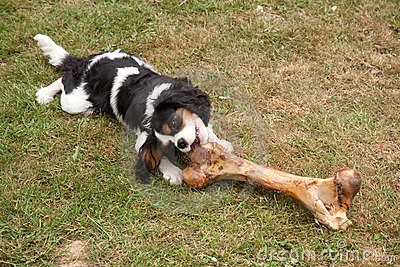
Now that's what I call a chew!
Now that’s what I call a chew!

Although not my usual type of post here on Learning from Dogs a forthcoming event regarding GMOs seemed worthy of greater promotion, especially as it includes concerns about possible ‘contaminated’ dog food.  The event was mentioned on the Permaculture News blog; a blog that I follow.

What was described was a free, 3-day online ‘summit’ about genetically modified organisms.  Let me quote from the blog post:

The scary truth about Genetically Modified Organisms (GMOs) is being deliberately kept from you….

Fact: Your food has been unnaturally changed. These changes have very serious consequences.

Your family’s health is at risk and you deserve the truth….

We’re going to share with you the true effects of genetically engineered food on human health and the environment. You’re invited to join our panel of experts, researchers and activists in an inspirational and free, 3-day GMO Summit — October 25-27, 2013.

This is a virtual event you can enjoy at no cost from the comfort and convenience of your own home.

If you want to know the truth about GMOs and the risks Monsanto, the government, their paid advisors and the media are deliberately hiding from you, then join in this unique, free summit.

There’s an impressive line-up of 10 main speakers and another 10 supplementary speakers.  And, as the blog post goes on to say:

We didn’t want to overwhelm you in just 3 days, so once the GMO Mini Summit is complete, you’ll get even more empowered by 10 more experts in interviews over the next 5 weeks (2 per week) who will share even more about this crucial topic. When you register for free you will gain access to all 20 speakers!

So you need to go here to sign up, after which you will be directed to a welcome page.  There you will learn more about the way that GMOs are affecting so many aspects of our lives and of the lives of our beloved dogs.

Being philosophical about philosophy!

Two more examples of deep thinking.

Note: We have a flooring contractor in the house all week and it’s making it a little tricky to spend the couple of hours a day that is my usual pattern for writing posts for LfD.  So apologies if this week’s posts are more dependent on the thoughts of others than is usual.

Alain de Botton
Alain de Botton

Alain de Botton is a familiar face on British television.  WikiPedia’s entry describes him, thus:

Alain de Botton, FRSL (born 20 December 1969) is a Swiss/British writer, philosopher, television presenter and entrepreneur, resident in the United Kingdom. His books and television programmes discuss various contemporary subjects and themes, emphasizing philosophy’s relevance to everyday life.

He has been the presenter of a BBC Six-part series called Philosophy: A Guide To Happiness.  And who wouldn’t be turned on by that!

Luckily, all six episodes are available on YouTube, at this overall link.

But I wanted to share the first episode because despite the title being Socrates on Self-Confidence it really speaks to our lives in this year of 2013.

Moving on.

A recent item on Big Think, again about philosophy, jumped off the page at me. It specifically looked at making our life, as in mental health, easier in these demanding times.  It was by Daniel Dennett and was called The Philosopher’s Self-Help Book. 

Daniel Dennett
Daniel Dennett

oooo

The Philosopher’s Self-Help Book (with Daniel Dennett)

by JASON GOTS

JULY 13, 2013,

While Silicon Valley and Silicon Alley busy themselves making every aspect of our lives more efficient (except, perhaps, for the process of discovering these new technologies, learning them, and integrating them into our lives), Daniel Dennett sits up at Tufts University in  Massachusetts, philosophizing. His latest book, Intuition Pumps and Other Tools for Thinking is an attempt to make transparent some of the tricks of the philosopher’s trade. In an accelerating age, it’s a self-help book designed to slow the reader down and improve our ability to think things through.

The kinds of things Mr. Dennett likes to think about include the nature of consciousness, evolution, and religious belief. But the mind-training his new book offers is applicable to any problem you want to consider thoroughly. In an age of quick fixes and corner-cutting, we’re in constant danger of bad decision making – of overreliance on what cognitive psychologist Daniel Kahneman calls “system 1”, and what most of us call intuition. This rapid decision making channel of the brain is helpful when we are in mortal danger, or pressed for a quick decision within our areas of expertise. But for most decisions, the slower, more deliberate channel (system 2) is much more reliable. What Dennett offers, then, in Intuition Pumps, is a workout for system 2 – a series of thought experiments you can apply to puzzles real and imagined to bulk up the slower, wiser parts of your consciousness.

Some of the tools Dennett offers in the book are more familiar than others. Reductio ad absurdum arguments, for example, in which we test the validity of a claim by taking it to its most outrageous illogical extreme (a: “all living things have a right to liberty.” b: “so let me get this straight – a blade of grass has a right to liberty? What does that even mean?”). But the true delights of the book are the far-out exercises Dennett and his colleagues have dreamed up in the course of their work, such as “Swampman Meets A Cow-Shark”, from Donald Davidson, which begins:

Suppose lightning strikes a dead tree in a swamp; I am standing nearby. My body is reduced to its elements, while entirely by coincidence (and out of different molecules) the tree is turned into my physical replica. My replica, The Swampman, moves exactly as I did; according to its nature it departs the swamp, encounters and seems to recognize my friends, and appears to return their greetings in English.

Walking us through Davidson’s considerations about whether and to what extent the Swampman is anything like Davidson, and related ones about a cow that gives birth to something that looks exactly like a shark (yet has cow DNA in all of its cells), Dennett teaches us a surprising lesson about the utility of wild philosophical speculation.

Cloaked in the breezy, familiar trappings of a self-help book, Intuition Pumps is in actuality a dark mirror of that genre – a field of rabbit holes designed to leave the reader with more questions than answers, and wiser for the long and indirect journey.


Watch for Daniel Dennett’s Tools For Better Thinking – a Big Think Mentor workshop coming soon. 

 oooOOOooo

I’m tempted to put the book on my own reading list.  If you want to drop into the appropriate Amazon page there is an audio link plus the option to read an extract.  Amazon describe the book, as follows:

One of the world’s leading philosophers offers aspiring thinkers his personal trove of mind-stretching thought experiments.

Over a storied career, Daniel C. Dennett has engaged questions about science and the workings of the mind. His answers have combined rigorous argument with strong empirical grounding. And a lot of fun.

Intuition Pumps and Other Tools for Thinking offers seventy-seven of Dennett’s most successful “imagination-extenders and focus-holders” meant to guide you through some of life’s most treacherous subject matter: evolution, meaning, mind, and free will. With patience and wit, Dennett deftly deploys his thinking tools to gain traction on these thorny issues while offering readers insight into how and why each tool was built.

Alongside well-known favorites like Occam’s Razor and reductio ad absurdum lie thrilling descriptions of Dennett’s own creations: Trapped in the Robot Control Room, Beware of the Prime Mammal, and The Wandering Two-Bitser. Ranging across disciplines as diverse as psychology, biology, computer science, and physics, Dennett’s tools embrace in equal measure light-heartedness and accessibility as they welcome uninitiated and seasoned readers alike. As always, his goal remains to teach you how to “think reliably and even gracefully about really hard questions.”

A sweeping work of intellectual seriousness that’s also studded with impish delights, Intuition Pumps offers intrepid thinkers—in all walks of life—delicious opportunities to explore their pet ideas with new powers.

Speaking of ‘pet ideas with new powers’ prompts one to reflect on the amount of time that dogs spend thinking!  As the following picture confirms!

Pharaoh contemplating the meaning of life!

The power of thinking

It’s easy to underestimate just how powerful the brain can be.

Last Friday’s post was called Instinctive behaviours and explored the notion of instinct, coming to the conclusion that almost everything the brain does is a result of learning rather than genetics.  Yet acknowledging the vast amount of brain activity that runs in ‘background’ mode or subconsciously.

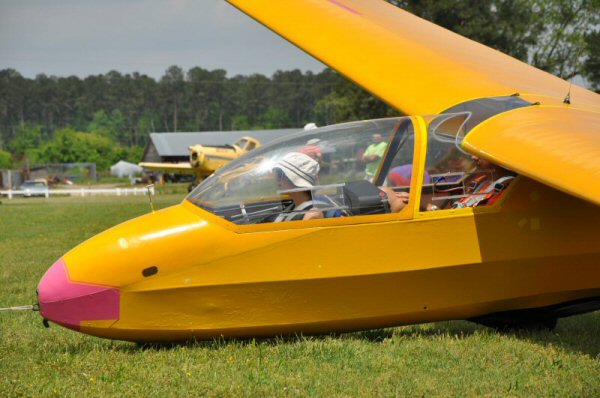
That was brought home to me in spades as a result of being introduced to the flying of gliders, or sailplanes in American speak.  The year was 1981 and working near to me in my offices in Colchester, Essex was a gentlemen running his own company, like yours truly.  His name was Roger Davis and we were sharing a beer one day when the subject of flying came up.  It piqued my interest so, as my logbook declares, on the 7th June, 1981 I had the first of two flights in a glider with Roger at the controls.  The place was Rattlesden Airfield, an old wartime airfield near Felsham, Bury St. Edmunds in Suffolk.  The gliding club was Rattlesden Gliding Club.

RGC header

The glider we were in was known as a K-7, a high-wing, two-seater (naturally!) glider with the instructor sitting behind the student.
A K-7 typical of the glider I first flew in at Rattlesden GC.

Anyway, some 43 flights later, I was signed off to conduct my first solo flight in the K-7.  The date was 5th September, 1981 and my flight time was just 4 minutes!  I was hooked.

In over 10 years of flying amounting to more than 1,400 flights I had the great fortune to experience much of the magic of flying relying on nothing more than the currents of air.

Ahh! Memories!  Over 10 years of glider flying, amounting to more than 200 hours of flight-time, 17 different types of glider.  Longest flight was 5 hours, 16 minutes including a climb to over 6000 feet above sea-level on the 7th July, 1985 in a single-seater LS4 glider type.

So what’s this got to do with subconscious thinking?  Simply this.

One quickly learnt that once the decision had been made to land, most frequently because one was unable to find further, or any, rising air currents the brain had a major computing task in hand.  As the aircraft descends, the air currents change and the direction and velocity of the wind changes.  There is no engine to allow one to abort the landing; to do a ‘go round’!

One of the key visual judgments was determining the point of touchdown: not too early that might risk a ground contact before the start of the runway, and not too late which might risk running out of landing space.

Thus the brain was operating clearly in two modes.  Consciously, computing second by second where the touch-down point was going to be and, subconsciously, the flying of the glider as in operating the joystick and rudder pedals in support of the touch-down ‘computations’.

Moving on.

In last Friday’s post, I also wrote this: “Plus something that could just possibly be the key to mankind having a long-term sustainable future on this planet: The Power of Thinking.”

That ‘something’ was me reflecting on an article in the October 7th edition of FORTUNE magazine.  Not something I read on a normal basis but just happened to come across that edition – and glad I did.  Because there was an article about IBM’s new supercomputer Watson.  The link to the summary is here, from which I republish this:

Dr. Mark Kris is among the top lung cancer specialists in the world. As chief of thoracic oncology at Memorial Sloan-Kettering (MSK) Cancer Center in New York City, he has been diagnosing and treating patients for more than 30 years. But even he is overwhelmed by the massive amount of information that goes into figuring out which drugs to give his patients — and the relatively crude tools he has to decipher that data. “This is the standard for treatment today,” he says, passing me a well-worn printout of the 2013 treatment guidelines in his office. We choose a cancer type. A paragraph of instructions says to pair two drugs from a list of 16. “Do the math,” he says. It means more than 100 possible combinations. “How do you figure out which ones are the best?”

It’s a huge problem. More than 230,000 Americans will be diagnosed with lung cancer this year. Almost all of them will receive chemotherapy. As crude as the existing guidelines are, says Kris, they won’t be followed more than half the time. If we bumped up adherence by just 10% to 20%, he says, as many as 30,000 people might live longer. Never mind curing cancer — shouldn’t we be able to get the best available combinations of medications to sick people now?

That’s the question that led Kris to IBM. He saw that more information was not the answer. What doctors needed was a better brain — one that could instantly vacuum up facts, draw deeper connections between data points, and remember everything. They needed Watson.

Just read that last paragraph again.  That it’s not about information, it’s about offering humanity computing power that can see things that humans might not easily see.

Thus, I mused that when mankind gets to the point where there is total and complete commitment to finding a non-carbon-burning way ahead for every living thing on this planet we won’t have the luxury of countless years working out the new journey directions.  Maybe, just maybe, computing power a la Watson might just be our saving grace.

Curious to learn more about IBM Watson?  Then here’s the relevant website.

Instinctive behaviours.

We see instinct as common across all species including man, so why is so little known about it.

There was an item seen on the BBC Capital website.  It was an article about intuition:

Trusting your gut: Smart management or a fool’s errand?

by Eric Barton*

Photographer Mindy Véissid woke up one winter morning in 2010 with a simple idea: dogs running in the snow.

“That’s all I had,” she recalled.

The Manhattan resident followed her gut and went across town to Central Park. There, Véissid found three dogs jumping around in a couple of inches of new snow covering the famed park’s Great Lawn. She plopped down in the field and waited. That’s when the dogs headed right for her. She snapped off a shot just before they barrelled over her.

The picture she took that morning, of happy-looking pups charging through a cloud of snow with the New York City skyline behind them, has become one of Véissid’s calling cards, maybe her most recognisable shot. It’s a photo she would have missed if she had not trusted her gut.

“What I realised is that if I follow my heart, if I follow my feelings, I get good photographs,” Véissid said. “We try to control everything in our lives, and sometimes you have to let go.”

It wasn’t long ago that decision-by-intuition would have been regarded as little more than magical thinking or a try at luck. But research has changed that and intuition has been embraced as a key component to business decision making.

There is, however, an inherent danger to it, and blindly following your gut can be worse than ignoring it altogether. For managers, that means learning how to trust your own instincts and encouraging employees to do the same. But it also means learning to recognise when careful planning trumps sudden inspiration.

Perhaps the thing that most changed the way businesses think about inspiration was a 2008 study co-authored by Gerard Hodgkinson, professor at Leeds University Business School in the United Kingdom. Hodgkinson found that intuition can be beneficial in specific circumstances. First, it’s best to rely on a gut feeling when you need to make a quick decision. Second, and this is the important part, trust your intuition only when you have extensive knowledge on the subject. In other words, the best intuition is pulled from a well of deep knowledge and expertise.

“A lot of people think intuition is general purpose, but intuition is actually domain specific,” said Massimo Pigliucci, a philosophy professor at City University of New York, and author of Answers for Aristotle: How Science and Philosophy Can Lead Us to A More Meaningful Life. “Intuition is the result of your subconscious brain picking up on clues and hints and calculating the situation for you, and that’s based solely on experience.”

(The rest of the story may be read here.)

Wrong to republish the whole piece, however I do want to republish the closing paragraphs as they are so relevant to today’s post.

Western cultures began to embrace intuition only recently, Pigliucci said, while research suggests Southeast Asian countries have long given credit to gut feelings being a good guide to decision making. Eastern managers, for instance, are more likely to rely on hunches and give them credit for successes afterward.

After photographer Véissid learned to rely on her gut feelings, she wanted to teach others how to do it. Her class, the Art of Intuitive Photography, teaches the photography basics, but her instruction is more about following hunches.

“You can get a good photograph and it will be technically correct,” she said. “But if you follow your heart, you can take photos that can be wonderful.”

Follow BBC Capital on Twitter @BBC_Capital or follow us and join the conversation about this or any other Capital story on Facebook: BBC Capital on Facebook.

—-

* Eric is a freelance journalist who lives in Fort Lauderdale, Florida. He is formerly a writer and editor at New Times in Fort Lauderdale and The Pitch in Kansas City, Missouri. His work has been featured by  the Florida Center for Investigative Reporting.

To my mind, what Eric Barton has written about is not instinctive.  That is if one believes that instinct is something that is ‘hard-wired’, so to speak, into our psyche at birth, a function of our genetic heritage.

When one reflects on the start of life, ergo for all warm-blooded species that are the result of a successful copulation between the two genders of that species, then one realises that there is little functioning at birth beyond those bodily functions vital to that new life.

But if we mean by instinctive those behaviours that are subconsciously acted out while the mind is engaged on other mental processes, then that’s different.

Read that last opening paragraph again [my emphasis]:

“A lot of people think intuition is general purpose, but intuition is actually domain specific,” said Massimo Pigliucci, a philosophy professor at City University of New York, and author of Answers for Aristotle: How Science and Philosophy Can Lead Us to A More Meaningful Life. “Intuition is the result of your subconscious brain picking up on clues and hints and calculating the situation for you, and that’s based solely on experience.”

Think of when we drive a car how much of what we are doing in the ‘hand-eye’ department is being managed by our subconscious brain.  Think about the way we use a language, especially the language of our birth country.  One will immediately recognise that the brain is on auto-pilot.  Yet we were born unable to speak, or to drive a car!

Coincidentally, over at Patrice Ayme’s blog there was a post published yesterday on the same theme.  It was called Instinct is Fast Learning.  Here’s an extract:

INSTINCT IS FAST LEARNING.

SMALL ANIMALS, FAST MINDS.

HOW FORCE BECOMES THE TRUTH OF MAN.

Abstract: “Innate Knowledge” is a stupid idea. The truth is the exact opposite: KNOWLEDGE IS EVERYWHERE, OUT THERE.Knowledge is the opposite of innate. This insight has tremendous consequences on our entire prehension of the world.

(It will not escape the cognoscenti that Socrates, Plato, and Aristotle, were partisans of innateness. And that believing in the superiority of inheritance is a necessary condition for racism, fascism, slavery, and hereditary plutocracy as fairness. That makes the likes of Chomsky and Dawkins self contradictory)

Subjective time slows down in smaller brains.

Fastest Wings, Fastest Brains. Anna Hummingbird California
Fastest Wings, Fastest Brains.  Anna Hummingbird California

Those wings go at 100 Hertz, four time the human perception limit.

Thus time is relative; just as light-clock time slows down in a fast reference frame, or in a heavy gravitational field, neurological timeslows down in a small neurology.

(Interestingly, the deepest reason for the slowing of time… boils down to the same in the Relativity case as in the Neurological one! It’s all about energy.)

A lot of ideas on instinct came from studying insects: insects seem to know all, without having studied anything. However, if insect time flows slowly, insects actually have time to learn.

And that’s rendered easier by having brains adapted to their environment. If they have only a few tricks to learn, and what looks like ten seconds for us is an hour for them, no wonder they learn lots. Thus slow in small explains how “instinct” works.

Hence behaviors one describes as “instinctive” are just fast studies. A lot of the silliness about “genes” is thus dispelled, and the mind comes on top.

It’s an essay that deserves the full reading.  This is how it closes:

Conclusion:

Instinct As Fast Learning solves the nature-nurture problem. It also shows something else, even more important. It shows that the force of nature makes not just the force, but even the very geometry, of our minds.

(The construction of neuromorphology itself being forced by feedback from nature.)

The minds of sentient species, from bees to hummingbirds, are exquisitely tuned to be programmed by the (part of) nature they are made to respond to, all the way to the speed of time they need.

If we kill the environment, we kill out instruction set. The usual reason given to save the environment is that we would not want our descendants to live in a bad world. But what we see now is that a poor world gives poor minds, and that even time may go askew. Another, deeper than ever, reason to be a fanatical ecologist. Nature is not just our temple. Nature is where, and how, time itself is built, one neurological impulse at a time.

***

Patrice Ayme

On Monday, I have a sequel to this post.  It’s an insight into the conscious and unconscious skills that come from flying a glider, or sailplane in American speak!  Plus something that could just possibly be the key to mankind having a long-term sustainable future on this planet: The Power of Thinking.

But back to today.

You will recall that the item from the BBC website opened with photographer Mindy Véissid waking up one winter morning in 2010 with a simple idea: dogs running in the snow.  Too good not to miss for a blog called Learning from Dogs.

Mindy’s website is here and do go across there and browse.  You will quickly discover, for example:

we teach small sized group and private digital photography classes and workshops in fun locations throughout nyc, focusing on how to use your camera, how intuition can help guide you to images, and compositional improvement

So having given Mindy that small, but well-deserved, plug, I don’t feel too bad closing today with Mindy’s picture of those dogs running in the snow.

Picture by Mindy Veissid Photography