Yesterday, I posted about the prediction that in four billion years the Milky Way galaxy would collide with the Andromeda galaxy. I called the post Not of immediate concern.
Today, I am writing about something that is of immediate concern. That is if you regard the next couple of decades as ‘immediate’.
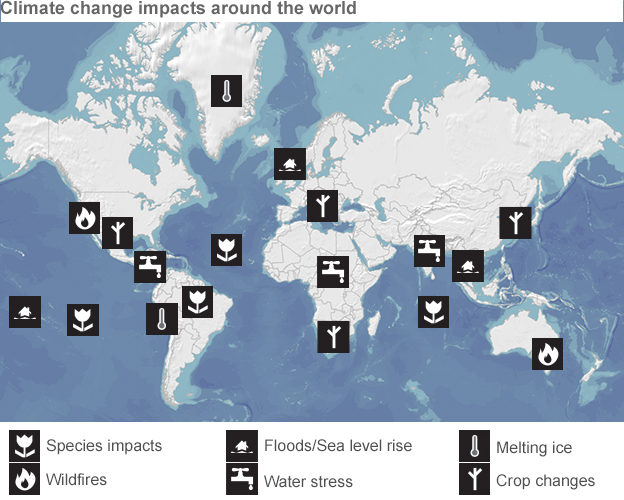
The post is prompted by an item that was published on the BBC News website two days ago. It carried the title Climate inaction catastrophic – US
Climate inaction catastrophic – US
By Matt McGrath
Environment correspondent, BBC News, Yokohama, Japan
The costs of inaction on climate change will be “catastrophic”, according to US Secretary of State John Kerry.
Mr Kerry was responding to a major report by the UN which described the impacts of global warming as “severe, pervasive and irreversible”.
He said dramatic and swift action was required to tackle the threats posed by a rapidly changing climate.
Our health, homes, food and safety are all likely to be threatened by rising temperatures, the report says.
Scientists and officials meeting in Japan say the document is the most comprehensive assessment to date of the impacts of climate change on the world.
In a statement, Mr Kerry said: “Unless we act dramatically and quickly, science tells us our climate and our way of life are literally in jeopardy. Denial of the science is malpractice. There are those who say we can’t afford to act. But waiting is truly unaffordable. The costs of inaction are catastrophic.”
Putting to one side the mild irony of a representative of the US Government wringing his hands about what mankind is doing to our climate, the report is valuable and potentially significant.
The report was from the Intergovernmental Panel on Climate Change (IPCC) which is, as their website explains:
The Intergovernmental Panel on Climate Change (IPCC) was established by the United Nations Environmental Programme (UNEP) and the World Meteorological Organization (WMO) in 1988 to assess the scientific, technical and socio-economic information relevant for the understanding of human induced climate change, its potential impacts and options for mitigation and adaptation.
Watch this 5-minute video of Stanford professor Dr. Chris Field, co-chair of that IPCC working group, addressing some of the key questions raised by this latest report. In particular, focus on Dr. Field discussing the potential of the loss of the Greenland ice cap around 3 min 30 seconds.
Back to the BBC report (which you should read in full!). Back to Dr. Chris Field being quoted as saying:
I think the really big breakthrough in this report is the new idea of thinking about managing climate change as a problem in managing risks. Climate change is really important but we have a lot of the tools for dealing effectively with it – we just need to be smart about it.
It would be easy to get into the mindset that humanity is not going to change its ways in time.
But, then again, the pace of growing awareness about what the changes are that we all need to make, and make relatively soon, is dramatic.
Maybe, just maybe, this will turn out alright!
For all the young people in the world, I do so hope!
But being careful about what our dogs eat is another story!
This is not the first time that I have used this title for a blog post. The previous time was almost eighteen months ago when I highlighted a fascinating talk about the green revolution by Raj Patel, the award-winning writer, activist, and academic.
However, today is a first in that it looks at what our dogs eat. It was inspired by a recent article by Brady Dennis in the Washington Post. Here’s how that article opened:
Mystery of pet deaths related to jerky treats made in China continues to stump FDA
By Brady Dennis, Published: March 28
Andy lost his appetite. Then came the vomiting, the unquenchable thirst, the constant need to urinate. Over several days last year, the spunky 4-year-old West Highland white terrier grew lethargic and lost more than 10 percent of his weight.
“It got bad,” said Andy’s owner, Alfredo Gude, a retiree in Cape Coral, Fla. “I knew that he was in trouble.”
Gude and his wife rushed Andy to their veterinarian, who referred him to a clinic 15 miles away. Doctors there sent a urine sample to a specialized metabolic lab at the University of Pennsylvania. Days later, test results confirmed the diagnosis: Fanconi syndrome, a rare, often fatal illness that affects the kidneys. The suspected cause: chicken jerky pet treats manufactured in China.
The incident is part of a troubling mystery lasting more than seven years, with reports of at least 600 dogs dying and thousands of others sickened. It has outraged unsuspecting pet owners, confounded the Food and Drug Administration and put the pet food industry’s manufacturing practices under a microscope.
A little later on in the article, Brady Dennis writes:
Bernadette Dunham, director of the FDA’s Center for Veterinary Medicine, has called it “one of the most elusive and mysterious outbreaks we’ve encountered,” a sentiment echoed by others at the agency.
“We are frustrated,” said Martine Hartogensis, who oversees the FDA’s ongoing investigation. “It’s been a long, winding, twisting road . . . [But] we haven’t given up.”
The FDA says it has tested more than 1,200 jerky treats in recent years, looking for salmonella, mold, pesticides, toxic metals, outlawed antibiotics, nephrotoxins and other contaminants. Federal officials have inspected factories in China that manufacture chicken jerky products for U.S. companies and sought input from academics, state and university research labs, foreign governments and the pet food industry. The agency even made its own jerky treats to try to duplicate the commercial process.
This is not some minor issue reinforced by the huge increase in dog food imports into the USA from China. Back to Brady:
The long-running investigation has paralleled a striking increase in the amount of pet food China exports to the United States. That volume increased from barely 1 million pounds in 2003 to an estimated 86 million pounds by 2011, according to the FDA.
Pet treats, including the jerky treats at the heart of the current investigation, have made up a fast-growing sliver of the pet food market. Part of the reason many U.S. companies have looked to China to produce chicken jerky treats, industry officials say, is that unlike in America, people in China overwhelmingly prefer dark meat. That leaves a larger supply of the white meat used in pet treats available for exporting.
Then a few paragraphs later, he adds:
“It’s maddening that it has gone on this long,” said Susan Thixton, who runs the Web site TruthAboutPetFood.com, which has repeatedly demanded that the agency do more. “If this were humans dying, and they couldn’t figure out a cause for seven years, members of Congress would be screaming at them.”
The home page of her site displays a clock tracking how long jerky treats from China have been killing and sickening pets. It asks: “When will FDA make this clock stop?” As of Friday, the count stood at 2,643 days.
“My job is to point out that they aren’t doing their job,” Thixton said. “I have a lot of respect for what they have to accomplish. They have huge responsibilities, but this is one of them.”
When I read out the article to Jean what then jumped ‘off the page’ was this paragraph [my emphasis]:
Angry pet owners also have heaped criticism on U.S. companies that continue to manufacture jerky treats with ingredients from China. The backlash includes everything from skepticism over the industry’s assurances that the treats have never posed health risks to lawsuits alleging harm.
As Susan Thixton was reported earlier: “If this were humans dying, and they couldn’t figure out a cause for seven years, members of Congress would be screaming at them.” Quite so!
Luckily, owners are responding as Brady highlights in these paragraphs:
Nina Leigh Krueger, head of the Waggin’ Train brand, said most retailers and customers have welcomed the treats back. “Thousands of consumers have been calling and asking us for Waggin’ Train treats to be back on the market,” she said.
Terry Safranek is not one of them.
“It’s a kick in the gut to see them back on the shelf,” said Safranek, whose 9-year-old fox terrier, Sampson, who had eaten jerky treats, died of kidney failure in 2012. Since then, Safranek has become a plaintiff in a class-action lawsuit against Nestlé Purina and retailers including Target and Wal-Mart. She helped create Animal Parents Against Pet Treats and Food Made in China, a group that has petitioned the FDA to do better in alerting people about the potential dangers of jerky treats produced in Chinese factories.
The link in the last paragraph takes the reader to the Facebook page for that group. Do go there and ‘Like’ the page.
I will close by recommending you read the Washington Post article in full and then spend some time perusing the website Truth about Pet Food. This is not just about ‘Made in America’ but fighting to ensure that animal treats made in the USA are also using ingredients from the USA!
Remember how Brady opened his article? With Alfredo Gude learning that their dog, Andy, had been diagnosed with Fanconi syndrome, a rare and often fatal illness that affects the kidneys of dogs.
Well last words left with Brady Dennis:
For now, on Florida’s west coast, Andy the terrier has returned to normal after months of treatments — about $3,500 worth — to restore his kidney function. “We feel very lucky,” said Gude, who has taken the advice of many vets around the country to steer clear of pet jerky treats altogether. “It could have gone another way.”
Our dogs (and cats) have a right to be fed to the same standards as us humans!
A whole clutch of things happened yesterday to conspire in me running out of creative time. Indeed, it was after 4pm when I sat down in front of my computer wondering about today’s LfD blog post.
Luckily (well for me!), amongst the list of draft posts was this one from January 1st, 2014. So I cheated by grabbing it and offering it for you today. I just hope you find it of interest. It was originally presented on Big Think on the 1st January, 2014.
According to the Anno Domini designation, the year is now 2014. But the Earth has been around a lot longer than that – about 4.567 billion years. The first evidence of life dates back to around 3.8 billion years ago. Homo sapiens first appeared on the planet around two hundred thousand years – or ten thousand generations – ago.
How’s that for perspective?
Kirk Johnson, director of the National Museum of Natural History, calls this perspective “deep time.” This is the story of our planet preserved in “the DNA of living things,” Johnson explains, as well as “in the fossils we find, in the geologic structures of our planet, in the meteorites we scavenge from the ice fields in Antarctica. Those things together give us an incredible manual for thinking about the planet.”
Why is this manual useful? We are facing a century that will be an incredibly challenging one for humanity. We now live on a planet with seven billion people, which is up from 1.7 billion people just three or four generations ago. So we have more people, and a greater need for resources.
Fortunately we have the bodies of extinct plants and animals that lived for the last three-and-a-half billion years. These fossils are not only a source of energy, but also a source of knowledge about how this planet works. Over its history the Earth has seen an incredible diversity of life – maybe as many as fifty million species. Johnson says we’re learning “as much about the evolution of life on Earth by looking at what happened in the past as we are at looking at the breakthroughs in genomics and DNA of living things.” Furthermore, Johnson sees the sequencing of the human genome as the vanguard for what will eventually be “the study of the genomics of all living things.”
We have the opportunity right now, Johnson says, to choose what our future will be. Our understanding of the diversity of life on this planet, he says, will be our guide. This story is being told at a current exhibition at the National Museum of Natural History called “Genome: Unlocking Life’s Code.”
In the video below, Johnson shares a unique perspective on deep time in the form of a timeline of life on this planet in just three minutes.
ooOOoo
Don’t know about you but I found the video fascinating.
Yesterday, I published a post and called it Dogs and wolves – fascinating research. Then blow me down in yesterday’s online BBC News, there was an article headlined: Dogs’ brain scans reveal vocal responses This is how it opened.
Dogs’ brain scans reveal vocal responses
By Rebecca Morelle, Science reporter, BBC World Service
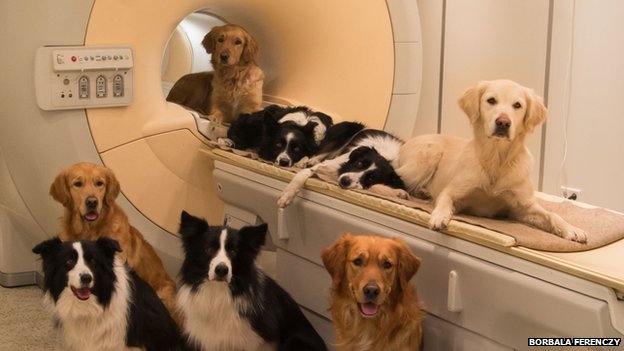
Pet dogs took part in the MRI scanning study.
Devoted dog owners often claim that their pets understand them. A new study suggests they could be right.
By placing dogs in an MRI scanner, researchers from Hungary found that the canine brain reacts to voices in the same way that the human brain does.
Emotionally charged sounds, such as crying or laughter, also prompted similar responses, perhaps explaining why dogs are attuned to human emotions.
Lead author Attila Andics, from the Hungarian Academy of Science’s Eotvos Lorand University in Budapest, said: “We think dogs and humans have a very similar mechanism to process emotional information.”
Eleven pet dogs took part in the study; training them took some time.
During the approximately 18–32 thousand years of domestication [1], dogs and humans have shared a similar social environment [2]. Dog and human vocalizations are thus familiar and relevant to both species [3], although they belong to evolutionarily distant taxa, as their lineages split approximately 90–100 million years ago [4]. In this first comparative neuroimaging study of a nonprimate and a primate species, we made use of this special combination of shared environment and evolutionary distance. We presented dogs and humans with the same set of vocal and nonvocal stimuli to search for functionally analogous voice-sensitive cortical regions. We demonstrate that voice areas exist in dogs and that they show a similar pattern to anterior temporal voice areas in humans. Our findings also reveal that sensitivity to vocal emotional valence cues engages similarly located nonprimary auditory regions in dogs and humans. Although parallel evolution cannot be excluded, our findings suggest that voice areas may have a more ancient evolutionary origin than previously known.
The canine brain reacted to voices in the same way that the human brain does.
“There were 12 sessions of preparatory training, then seven sessions in the scanner room, then these dogs were able to lie motionless for as long as eight minutes. Once they were trained, they were so happy, I wouldn’t have believed it if I didn’t see it.”
For comparison, the team looked at the brains of 22 human volunteers in the same MRI scanners.
The scientists played the people and pooches 200 different sounds, ranging from environmental noises, such as car sounds and whistles, to human sounds (but not words) and dog vocalisations.
The researchers found that a similar region – the temporal pole, which is the most anterior part of the temporal lobe – was activated when both the animals and people heard human voices.
“We do know there are voice areas in humans, areas that respond more strongly to human sounds that any other types of sounds,” Dr Andics explained.
“The location (of the activity) in the dog brain is very similar to where we found it in the human brain. The fact that we found these areas exist at all in the dog brain at all is a surprise – it is the first time we have seen this in a non-primate.”
Emotional sounds, such as crying and laughter also had a similar pattern of activity, with an area near the primary auditory cortex lighting up in dogs and humans.
Likewise, emotionally charged dog vocalisations – such as whimpering or angry barking – also caused a similar reaction in all volunteers,
Dr Andics said: “We know very well that dogs are very good at tuning into the feelings of their owners, and we know a good dog owner can detect emotional changes in his dog – but we now begin to understand why this can be.”
However, while the dogs responded to the human voice, their reactions were far stronger when it came to canine sounds.
They also seemed less able to distinguish between environmental sounds and vocal noises compared with humans.
About half of the whole auditory cortex lit up in dogs when listening to these noises, compared with 3% of the same area in humans.
Commenting on the research, Prof Sophie Scott, from the Institute of Cognitive Neuroscience at University College London, said: “Finding something like this in a primate brain isn’t too surprising – but it is quite something to demonstrate it in dogs.
“Dogs are a very interesting animal to look at – we have selected for a lot of traits in dogs that have made them very amenable to humans. Some studies have show they understand a lot of words and they understand intentionality – pointing.”
But she added: “It would be interesting to see the animal’s response to words rather than just sounds. When we cry and laugh, they are much more like animal calls and this might be causing this response.
For the full report, as it was posted on the BBC website, click here.
Plus, do watch this five-minute video abstract.
Published on Feb 20, 2014
The video presents the first study to compare brain function between humans and any non-primate animal. Scientists at MTA-ELTE Comparative Ethology Research Group in Hungary found that dogs and humans use similar neural mechanisms to process social information in voices. The fact that dogs can be trained to lie motionless during fMRI tests opens up the space for a new branch of comparative neuroscience.
The first study to compare brain function between humans and any non-primate animal shows that dogs have dedicated voice areas in their brains just as people do. Dog brains, like those of people, are also sensitive to acoustic cues of emotion, according to a study in the Cell Press journal Current Biology.
The findings suggest that voice areas evolved at least 100 million years ago, the age of the last common ancestor of humans and dogs, the researchers say. It also offers new insight into humans’ unique connection with our best friends in the animal kingdom, perhaps explaining how our two species have lived and worked together so effectively for tens of thousands of years.
“Our findings suggest that dogs and humans not only share a similar social environment, but they also use similar brain mechanisms to process social information,” said Atilla Andics of MTA-ELTE Comparative Ethology Research Group in Hungary. “This may help the successfulness of vocal communication between the two species.”
Andics and his colleagues trained eleven dogs to lay motionless in an fMRI brain scanner. That made it possible to run the very same neuroimaging experiment on dog and human participants — something that had never been done before. They captured both dogs’ and humans’ brain activities while they listened to dog and human sounds, ranging from whining or crying to playful barking or laughing.
The images show that dog and human brains include voice areas in similar locations. Not surprisingly, the voice area of dogs responds more strongly to other dogs, while that of humans responds more strongly to other humans. The researchers also noted striking similarities in the ways the dog and human brain processes emotionally loaded sounds. In both species, an area near the primary auditory cortex lit up more with happy sounds than unhappy ones. Andics said they were most struck by the common response to emotion across species.
There were some differences too: in dogs, 48 percent of all sound-sensitive brain regions respond more strongly to sounds other than voices. That’s in contrast to humans, in which only three percent of sound-sensitive brain regions show greater response to non-vocal versus vocal sounds.
The study is the first step to understanding how it is that dogs can be so remarkably good at tuning into the feelings of their human owners. “This method offers a totally new way of looking at neural processing in dogs,” Andics said. “At last we begin to understand how our best friend is looking at us and navigating in our social environment.”
I have been saving this report for a few weeks. Following yesterday’s great news about the latest concerning wolves in Oregon, today seemed a perfect follow-on with a report first published in online journal PLOS ONE. However, what follows is a full republication of the report as I read it on the Science Daily website.
ooOOoo
Teaching young wolves new tricks: Wolves are considerably better imitators than dogs
Date: January 31, 2014
Source: Veterinärmedizinische Universität Wien
Summary: Although wolves and dogs are closely related, they show some striking differences. Scientists have undertaken experiments that suggest that wolves observe one another more closely than dogs and so are better at learning from one another. The scientists believe that cooperation among wolves is the basis of the understanding between dogs and humans.
Wolves are considerably better imitators than dogs. Credit: Walter Vorbeck
Although wolves and dogs are closely related, they show some striking differences. Scientists from the Messerli Research Institute at the University of Veterinary Medicine, Vienna have undertaken experiments that suggest that wolves observe one another more closely than dogs and so are better at learning from one another. The scientists believe that cooperation among wolves is the basis of the understanding between dogs and humans.
Their findings have been published in the online journal PLOS ONE.
Wolves were domesticated more than 15,000 years ago and it is widely assumed that the ability of domestic dogs to form close relationships with humans stems from changes during the domestication process. But the effects of domestication on the interactions between the animals have not received much attention. The point has been addressed by Friederike Range and Zsófia Virányi, two members of the University of Veterinary Medicine, Vienna (Vetmeduni Vienna) who work at the Wolf Science Center (WSC) in Ernstbrunn, Niederösterreich.
Wolves copy other wolves solving problems
The scientists found that wolves are considerably better than dogs at opening a container, providing they have previously watched another animal do so. Their study involved 14 wolves and 15 mongrel dogs, all about six months old, hand-reared and kept in packs. Each animal was allowed to observe one of two situations in which a trained dog opened a wooden box, either with its mouth or with its paw, to gain access to a food reward. Surprisingly, all of the wolves managed to open the box after watching a dog solve the puzzle, while only four of the dogs managed to do so. Wolves more frequently opened the box using the method they had observed, whereas the dogs appeared to choose randomly whether to use their mouth or their paw.
Watch closely …
To exclude the possibility that six-month old dogs fail the experiment because of a delayed physical or cognitive development, the researchers repeated the test after nine months. The dogs proved no more adept at opening the box than they were at a younger age. Another possible explanation for the wolves’ apparent superiority at learning is that wolves might simply be better than dogs at solving such problems. To test this idea, the researchers examined the animals’ ability to open a box without prior demonstration by a dog. They found that the wolves were rarely successful. “Their problem-solving capability really seems to be based on the observation of a dog performing the task,” says Range. “The wolves watched the dog very closely and were able to apply their new knowledge to solve the problem. Their skill at copying probably relates to the fact that wolves are more dependent on cooperation with conspecifics than dogs are and therefore pay more attention to the actions of their partners.”
The researchers think that it is likely that the dog-human cooperation originated from cooperation between wolves. During the process of domestication, dogs have become able to accept humans as social partners and thus have adapted their social skills to include interactions with them, concomitantly losing the ability to learn by watching other dogs.
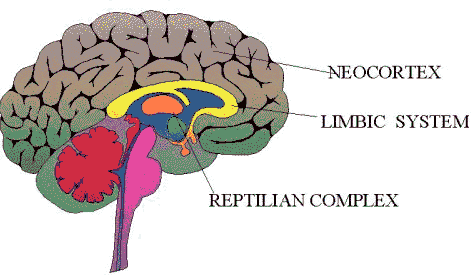
Now of all the things I am not, I am neither a biologist nor a scientist of any description. However, general knowledge told me years ago that the human brain is composed of three areas, as the following diagram shows.
The first time you observe the anatomy of the human brain, its many folds and overlapping structures can seem very confusing, and you may wonder what they all mean. But just like the anatomy of any other organ or organism, the anatomy of the brain becomes much clearer and more meaningful when you examine it in light of the evolutionary processes that created it.
The most efficient model for understanding the brain in terms of its evolutionary history is the famous triune brain theory developed by Paul MacLean. According to this theory, the following three distinct brains emerged successively in the course of evolution and now co-inhabit the human skull:
The reptilian brain, the oldest of the three, controls the body’s vital functions such as heart rate, breathing, body temperature and balance. Our reptilian brain includes the main structures found in a reptile’s brain: the brainstem and the cerebellum. The reptilian brain is reliable but tends to be somewhat rigid and compulsive.
The limbic brain emerged in the first mammals. It can record memories of behaviours that produced agreeable and disagreeable experiences, so it is responsible for what are called emotions in human beings. The main structures of the limbic brain are the hippocampus, the amygdala, and the hypothalamus. The limbic brain is the seat of the value judgments that we make, often unconsciously, that exert such a strong influence on our behaviour.
The neocortex first assumed importance in primates and culminated in the human brain with its two large cerebral hemispheres that play such a dominant role. These hemispheres have been responsible for the development of human language, abstract thought, imagination, and consciousness. The neocortex is flexible and has almost infinite learning abilities. The neocortex is also what has enabled human cultures to develop.
These three parts of the brain do not operate independently of one another. They have established numerous interconnections through which they influence one another. The neural pathways from the limbic system to the cortex, for example, are especially well developed.
I’m well into reading the book Waking The Tiger: Healing Trauma authored by Peter A. Levine. As early as Chapter One, Peter Levine explains [my emphasis]:
The involuntary and instinctual portions of the human brain and nervous system are virtually identical to those of mammals and even reptiles. Our brain, often called the ‘triune brain,’ consists of three integral systems. The three parts are commonly known as the ‘reptilian brain’ (instinctual), the ‘mammalian or limbic brain (emotional), and the ‘human brain or neo-cortex’ (rational). Since the parts of the brain that are activated by a perceived life threatening situation are the parts we share with animals, much can be learned by studying how certain animals, like the impala, avoid traumatization. To take this one step further, I believe that the key to healing traumatic symptoms in humans lies in our being able to mirror the fluid adaptation of wild animals as they ‘shake out’ and pass through the immobility response and become fully mobile and functional.
Unlike wild animals, when threatened, we humans have never found it easy to resolve the dilemma of whether to fight or flee. This dilemma stems, at least in part, from the fact that our species has played the role of both predator and prey. Prehistoric peoples, though many were hunters, spent long hours each day huddled together in cold caves with the certain knowledge that they could be snatched up at any moment and torn to shreds.
Anyway, to get back to what triggered today’s post.
If you read yesterday’s post you will recall me chatting with Jon Lavin and Jon reminding me that humans are drawn to positive messages. But in stark contrast, the news media industry excels in promoting ‘doom and gloom’. Why is this? Why are we so fascinated by danger?
Well here’s my theory.
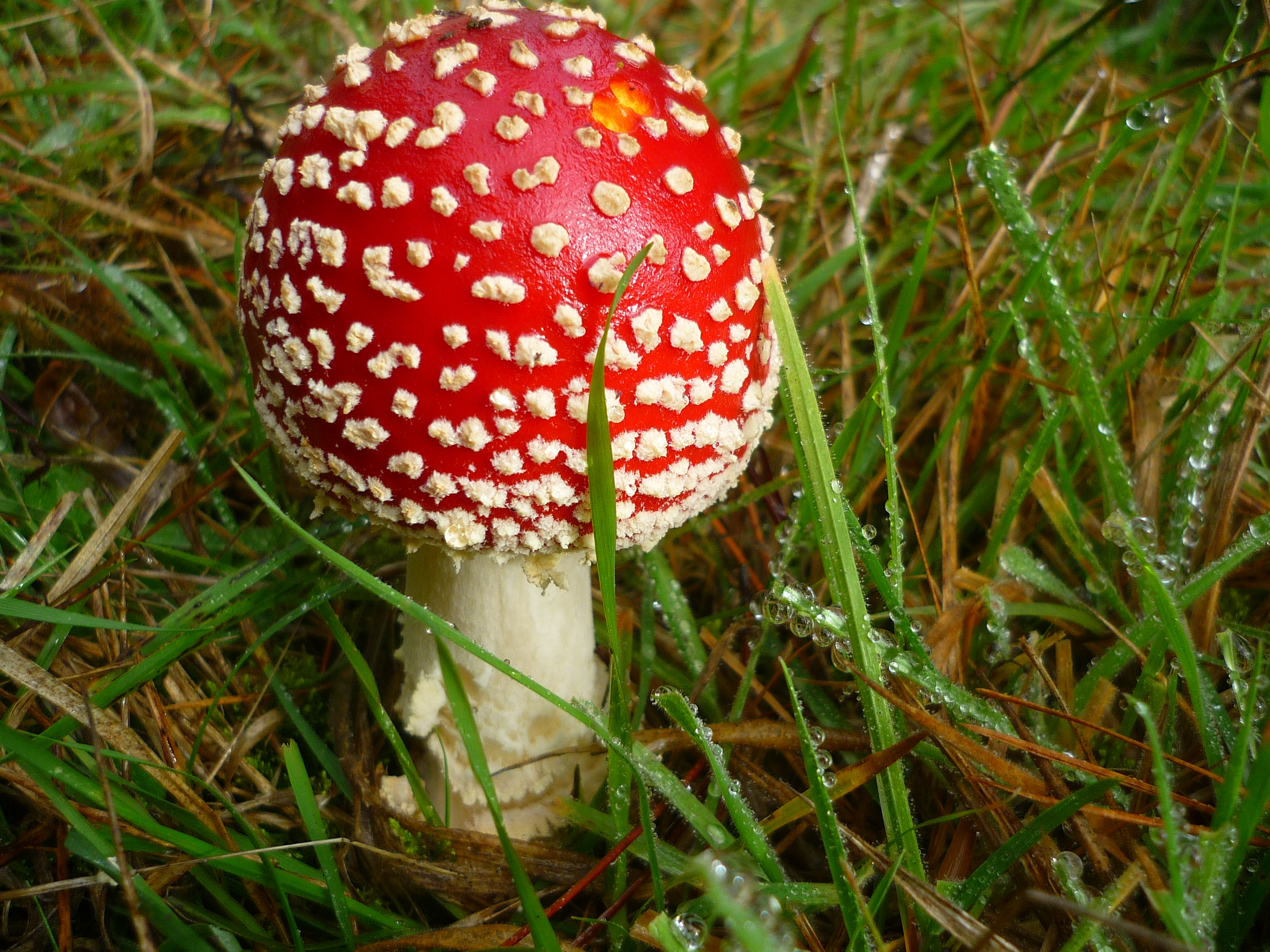
That is our evolution would not have succeeded if early man didn’t become pretty smart at identifying animal behaviours and plants and fruits that had the capacity to harm or even kill. For example, what parent hasn’t made it a priority to teach their children the difference between harmful fungi and edible mushrooms. Indeed to the extent that most of us would think long and hard before eating any fungi found in the wild unless we were 150% certain it was edible. Look at the following picture. Your instinct tells you if it’s safe to eat or not – it’s not!
So early man became over-sensitised to dangers to his health for his own good and continued existence. While modern man functions in ways almost unrecognisable from early man, that good old reptilian brain still is doing it’s best to protect us (flight, fight or freeze). Think how we all respond to a sudden alarming sound, such as a gun shot or a scream, to know that the old reptilian brain is still alive and well.
Thus while all of us hate negativity we all seem to have this fascination with doom and gloom – just in case it helps us and our loved ones survive.
Back to Jon Lavin. He makes it very clear that anything more than a small amount of ‘doom and gloom’ speaking to our consciousness increases the odds of depression and introversion.
Thus the message is that we humans should allow our Neocortex to tell our Reptilian ‘neighbour’ to go easy on the bad news, go and open a beer and watch the world go by! Whoops! Watch the world go by with a smile!
Our weather systems are entirely driven by the laws of science.
“Come forth into the light of things, let nature be your teacher.“
So wrote William Wordsworth.
The last twelve months has been a period of untypical weather in many parts of the world. It’s easy to scratch one’s head with puzzlement and blame it on the most convenient and fashionable theory of the moment. Unusual jet stream pattern; polar vortex; aliens! You get the idea! However, the principle behind what is happening to the weather systems across our planet is very straightforward. Our weather systems are described by the laws of science.
Thus it is a great pleasure to offer the following guest post from a scientist: Martin Lack. Martin should be no stranger to readers of Learning from Dogs; his most recent contribution was the major three-part essay From Environmentalism to Ecologism.
I must admit that I am rather fond of quoting Sir Arthur Eddington as having once said, “…if your theory is found to be against the Second Law of Thermodynamics, I can give you no hope; there is nothing for it but to collapse in deepest humiliation.” Without quibbling over the detail, the Law of Conservation of Mass is pretty darn close; but what, you may ask, has this got to do with climate change denial?
Conservation of mass of water
Well, consider for a moment that scientists seem to agree that there has been a 4% increase in the average moisture content of the Earth’s atmosphere since 1970. That being the case, I am bound to say that this extra 4% is making its presence felt in the UK at the moment! This year we have had the wettest 3 months (April – June) in over 100 years; the wettest June on record; the rain is still falling (sometimes as much as 80mm in a day); and – we are now being told – there is no change anticipated in coming weeks. So, if you’re coming over for the Olympics, expect to get wet!
However, whilst the UK suffers from near Biblical levels of flooding, if the Law of Conservation of Mass is to be upheld and – all other things like terrestrial ice volume remaining equal(!) – the volume of water in the oceans is to remain constant, then it must be failing to rain somewhere else. If so, is there any evidence to support this theory Law? Well, funnily enough, there is: Whilst the UK continues to receive more rain than it wants or needs (all hose pipe bans and drought restrictions have now been lifted), many parts of the World continue to suffer from persistent drought (in sub-Saharan West Africa) and/or record-breaking temperatures (in most of North America).
Sadly, none of this seems to stop self-confessed scientifically-illiterate English graduates such as James Delingpole from ridiculing the entire notion of global warming simply because it is raining a lot here at the moment. It may seem that he has just got a nasty case of tunnel vision and/or short-term memory loss but this is what the fake sceptics always do; they never look at the big picture: Rather than look at daily, monthly, or even annual average temperatures over multi-decadal periods to determine significant long-term trends; they just cherry pick data to reach fallacious conclusions such as “global warming stopped in 1998″.
I am therefore left hoping that the 57% of the British adult population that seem to fall for this kind of nonsense will soon decide that it is time to stop running down the up escalator and, by embracing the reality of what is happening, decide to become part of the solution rather than being part of the problem. If not, climate change denial may well lead to a failure to conserve mass; with the mass in question being the sustainable number of humans this planet can support in the long-term.
Conservation of mass of carbon
If the Law of Conservation of Mass explains why anthropogenic global warming climate disruption is not invalidated by any amount of cold weather or torrential rainfall in one place; can it be used to validate concern regarding a 40% increase CO2 in the Earth’s atmosphere? Funnily enough, it can: Since the Industrial Revolution began in the mid-18th Century, a vast amount of fossilised carbon has been burnt; with the carbon it contained combining with oxygen in the air to form CO2. Note here that the oxygen was in the air anyway; whereas the carbon had been out of circulation for hundreds of millions of years. All this new carbon has to go somewhere and, given that it will be many more millions of years before any of it gets taken back out of circulation by nature, it is either making the atmosphere warm-up or it is reducing the pH of seawater (just enough to make life very difficult for corals and shellfish).
So then, what is the human response to all this? Shall we stop burning the fossil fuels now we know we’re causing a problem? It doesn’t look like it! It seems far more likely that we shall gamble the future habitability of all the planets diverse ecosystems on finding a way to defeat the Law of Conservation of Mass by artificially removing this carbon from the biosphere: Carbon Capture and Storage (CCS). And do you know what I find most astonishing about CCS? It is the fact that our governments are spending huge sums of money on long-term tests to simulate the effects of CO2 leaking from a submarine CCS repository – to see if it has any noticeable effects on marine life?
Errr, hello-oh? If any CO2 ever escapes from any CCS repository, the entire exercise will have been a complete waste of time and money! The CO2 will be back in circulation and the Law of Conservation of Mass will have won (again). If the genie will not stay in the bottle we will all be in big trouble: Rather than being likely to“collapse in deepest humiliation”; such a failure to defeat the Law of Conservation of Mass will probably result in the collapse of the entire planetary ecosystem; because of our other big problem – the Law of Conservation of Energy: The reason the atmosphere is warming up in the first place; more energy is coming in from the Sun than is getting out into Space!
Conclusions
So, this year’s weather should be a wake-up call to all of us: Irrespective of the actual kind of extreme weather being experienced in any one place, the impacts on agriculture seem to be equally destructive and spiralling food costs the inevitable end result: All just as was predicted by people dismissed for decades as doomsayers: People like Garrett Hardin, Paul Ehrlich, Dennis Meadows, E.F. Schumacher, William Ophuls, Mathis Wackernagel, Ernest Callenbach, and Lester Brown… It looks like that darn ‘wolf’ finally showed up!
Funnily enough, it turns out that a doubling in the size of the global human economy every 50 years is not sustainable after all; and worshipping at the Temple of the God of Growth has got us in some serious trouble; otherwise known as a global debt crisis (see the short video embedded below). We thought we could just lend imaginary money to each other indefinitely but someone blinked and the spell was broken. Sadly, it turns out the Emperor was naked after all; it’s just a shame that by the time we realised this we were all completely sold on the latest fashion ourselves: The New Clothes are everywhere; and we have all been left looking for fig leaves to cover our genitals.
Just as The Limits to Growth (Meadows et al) predicted all those years ago, the Earth is running out of the ability to cope with the effects of our chronically dysfunctional mis-management of it. This was why, as I pointed out six months ago, the failure of food harvests in 2010 led to the Arab Spring of 2011… Are you, like me, wondering what is going to happen this time around? My prediction is that some economist such as Tim Worstall will get himself on TV and tell everyone that the Second Law of Thermodynamics is a load of old rubbish; and that technology will save us from the consequences of our selfish pursuit of profit at any cost; and from our failure to recognise that we humans are not superior to nature – we are part of it – and we cannot survive without it. Or, to put it another way, as a Native American tribal leader once did: When all the trees have been cut down, when all the animals have been hunted, when all the waters are polluted, when all the air is unsafe to breathe, only then will you discover you cannot eat money.
ooOOoo
I can add nothing to the above other than to thank Martin for giving me the opportunity to republish his post.
I have a policy of not allowing Learning from Dogs to promote commercial interests. I need those who visit this place to trust the integrity of what they find here.
Then back on the 19th December last, in came the following email.
Dear LearningfromDogs (I think Paul!),
Greetings from Florence, Tuscany!
We are sending you a piece that we hope will be considered for publication on your blog: we begin by talking about making pet food at home (and then go on to list some of the risks – essentially the message here is don’t do it!), we then talk about buying products off the shelf, and explain about food labeling and what different types of labeling will mean in terms of the meat content. I’ve also included some pictures that we purchased from DepositPhotos to help support with its publication. You can verify the usage terms on Deposit photos, but I can tell you that for your website they will be considered appropriate use.
Our shop first opened it doors in 1962 and we’ve just started an English website where we (wait for it!) are making dog beds, and collars to order. We’ve got the most amazing fabrics from a town in Tuscany that has been producing fabrics from the 13th Century. The quality is (as I hope you will take a look) of the highest standard.
Please take a read through the article and if you would like to publish it we would be thrilled.
Best regards from Tuscany,
Glyn
The email offered me a potential conflict. Glyn was clearly promoting his company and yet the information struck me as valuable to pet owners. On balance, it seemed worthwhile to publish the article.
ooOOoo
We only want what’s best for our dogs.
There have been substantial changes in the market of pet foods over the last decade, and so this article sets out to demystify pet food labelling in layman’s terms. We also consider whether or not preparing the food your pet eats in your own home is really a viable option, if you want to have a healthy pet.
Preparing food at home
If you have decided to undertake the mission of preparing your pet’s food at home, it’s important that you take some time to look up what exactly is needed in your pet’s diet. You have to ensure that your pet gets all the nutrients it needs, and that you don’t provide it with too much of one food group or another as this could cause it serious health problems (Hypervitaminosis A, Hypervitaminosis D).
A short thought for the cat!
Cats require a varied diet, consisting mainly of meat. One of the most important amino acids for cats is Taurine which is only found in meat – a lack of this in a cat’s diet could cause cardiac dysfunction, blindness, etc. Other essential nutrients for our feline friend include: arginine (also important for dogs too), arachidonic acid, niacin, vitamin A, vitamin D, vitamin E. You should not forget to provide the right amount of calcium, phosphorus, and magnesium. Reading this you probably get the sense that taking on the task of being your pet’s personal cook is not as simple as it sounds. Our pets have very specific dietary needs, just like us, and you wouldn’t want to risk endangering them with the wrong food. The plate of scraps after a large meal is clearly not enough.
Purchasing food off the shelf
As the vast majority of consumers opt for buying their food from either the supermarket or their local pet store, it’s important to highlight that the range of dietary foods being produced today means that, if you don’t read the label carefully, you can really do harm to your pet feeding them food that is not matched to their actual dietary needs. We’ve seen dogs that look emaciated and thin simply because they have not been given the correct advice when feeding their dog (we then saw the same dog a few weeks later looking great!).
For example, ‘ash’ is often included in the ingredient list of pet foods. This refers to the inorganic component of the food, and it shouldn’t make up more than 6.5%-7% of dry foods and 1%-2% of wet foods. The lower the concentration of ash, the higher the quality of the food.
Labelling in pet food and what it means
Specifically regarding meat in packaged pet foods, there are a few things to keep an eye open for while studying the labels. The amount of meat included in pet food changes from brand to brand, but as a general rule the following serves as a guide:
– products that have the word ‘flavour’ or ‘aroma’ in their name contain under 4% of meat;
– when the product name declares ‘with meat’ it should contain over 4% of meat;
– when the name contains ‘rich in meat’ or ‘extra meat’ the percentage of meat is between 14% and 25%. Anything above 14% and 25% and the product takes on the name of the meat it’s made up of.
In dry foods, sometimes meat flour or fish flour are included. These sometimes contain offal and discarded meat so a better option is dehydrated meat.
Author Bi line
We hope that this article has provided you the reader with greater detail on some of the nuances involved in planning your pet’s diets. At ZEIPET in Florence, Tuscany, we have been serving customers in our little pet shop since 1962. We are most known for our luxury dog beds which are made to order and from some of the finest fabrics in Italy. So, after you pet has eaten and it’s time to stretch out, they are guaranteed to do so on a bed of doggie paradise.
Now what!
ooOOoo
Hope this has been helpful. If you have any questions, leave them as comments and I’ll ask Glyn to reply.
Back on the 1st November, I started out on the journey to write, before the end of November, a novel of a minimum of 50,000 words. It was part of the NaNoWriMo annual encouragement for new writers. To my amazement, I completed a first draft.
However, now comes the hard work! For as Stephen King explains in his book, On Writing,
When you write a story, you’re telling yourself the story, when you rewrite, your main job is taking out all the things that are not the story. (p. 57)
Or as I read somewhere else: Your first write is for you, your rewrite is for your readers.
Either way it doesn’t get around the fact that for the next several weeks I need to be spending hours rewriting the first draft.
Which is my way of saying that until that rewrite is complete I won’t be able to spend so much time writing posts for Learning from Dogs. In other words, there will be more republication of other articles and essays that catch my interest, repeat posts back from the earlier days of the blog and the publication of essays that you, dear reader, have sent me (hint!!).
TED Talks is an amazing resource that thousands use. Not infrequently, a TED Talk finds its way to these pages; as indeed one on dieting will be offered tomorrow.
For today, however, enjoy this wonderful, and powerful, TED Talk by Benjamin H. Bratton.
On Monday and Tuesday of the week I posted Legitimate Anger and Legitimate Hope. (And please see the footnote to today’s post)
Patrice Ayme left the following comment to the Legitimate Hope post:
It’s hard to live with elephants, especially in poor, crowded conditions. I remember bathing in Africa as a child with a bull elephant 200 meters away, on the other side of a stream, and being extremely worried, with all in attendance.
Europe used to have elephants, and North America, two species. Time to reintroduce them, and live according to our discourse.
Rewilding Euramerica can be done, and should be done, for the deepest philosophical and emotional reasons, and will create new, very productive jobs.
PA
Then on Friday came an email from reader and blogger Martin Lack:
It was but a moment to go across to The Conversation website (rather liked what I saw, by the way) and find the article that Martin linked to. It is republished here within the terms of The Conversation site.
ooOOoo
Restore large carnivores to save struggling ecosystems
By William Ripple, Oregon State University
We are losing our large carnivores. In ecosystems around the world, the decline of large predators such as lions, bears, dingoes, wolves, and otters is changing landscapes, from the tropics to the Arctic. Habitat loss, persecution by humans and loss of prey have combined to inflict great losses on these populations.
In fact more than 75% of the 31 largest carnivore species are declining, and 17 species now occupy less than half their former ranges. Southeast Asia, southern and East Africa, and the Amazon are among areas in which multiple large carnivore species are declining. And with only a few exceptions, large carnivores have already been exterminated from much of the developed world, including areas of Western Europe, and the eastern United States.
Top dogs keep ecosystems in order
Many of these large carnivore species are endangered and some are at risk of extinction, either in specific regions or entirely. Ironically, they are vanishing just as we are learning about their important ecological effects, which is what led us to write a new paper in the journal Science to document their role.
From a review of published reports, we singled out seven species that have been studied for their important ecological role and widespread effects, known as trophic cascades. These are the African lion, leopard, Eurasian lynx, cougar, gray wolf, sea otter and dingo.
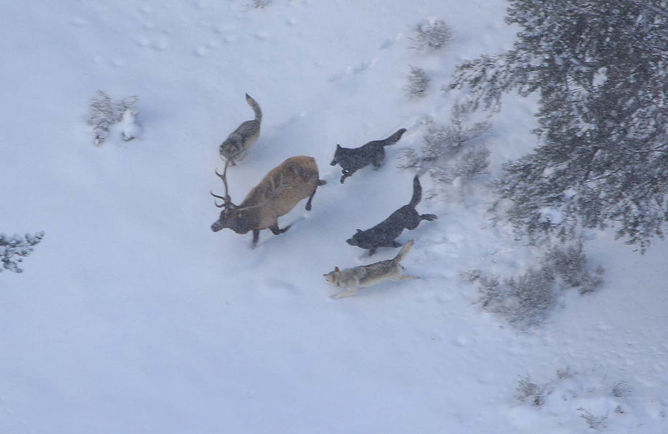
Based on field research, my Oregon State University co-author Robert Beschta and I documented the impact of cougars and wolves on the regeneration of forest tree stands and riverside vegetation in Yellowstone and other national parks in western North America. Fewer predators, we found, lead to an increase in browsing animals such as deer and elk. More browsing disrupts vegetation, reduces birds and some mammals and changes other parts of the ecosystem. From the actions of the top predator, widespread impacts cascade down the food chain.
Similar effects were found in studies of Eurasian lynx, dingoes, lions and sea otters. For example in Europe, absence of lynx has been closely tied to the abundance of roe deer, red fox and hare. In Australia, the construction of a 3,400-mile dingo-proof fence has enabled scientists to study ecosystems with and without dingoes which are closely related to gray wolves. They found that dingoes control populations of herbivores and exotic red foxes. The suppression of these species by dingoes reduces predation pressure, benefiting plants and smaller native prey.
In some parts of Africa, the decrease of lions and leopards has coincided with a dramatic increase in olive baboons, which threaten crops and livestock. In the waters off southeast Alaska, a decline in sea otters through killer whale predation has led to a rise in sea urchins and loss of kelp beds.
Predators are integral, not expendable
We are now obtaining a deeper appreciation of the impact of large carnivores on ecosystems, a view that can be traced back to the work of landmark ecologist Aldo Leopold. The perception that predators are harmful and deplete fish and wildlife is outdated. Many scientists and wildlife managers now recognise the growing evidence of carnivores’ complex role in ecosystems, and their social and economic benefits. Leopold recognised these relationships, but his observations were ignored for decades after his death in 1948.
Top carnivores, at work keeping things in check. Doug Smith
Human tolerance of these species is the major issue. Most would agree these animals have an intrinsic right to exist, but additionally they provide economic and ecological services that people value. Among the services documented in other studies are carbon sequestration, restoration of riverside ecosystems, biodiversity and disease control. For example, wolves may limit large herbivore populations, thus decreasing browsing on young trees that sequester carbon when they escape browsing and grow taller. Where large carnivore populations have been restored – such as wolves in Yellowstone or Eurasian lynx in Finland – ecosystems appear to be bouncing back.
I am impressed with how resilient the Yellowstone ecosystem is, and while ecosystem restoration isn’t happening quickly everywhere in this park, it has started. In some cases where vegetation loss has led to soil erosion, for example, full restoration may not be possible in the near term. What is certain is that ecosystems and the elements of them are highly interconnected. The work at Yellowstone and other places shows how species affect each another through different pathways. It’s humbling as a scientist to witness this interconnectedness of nature.
My co-authors and I have called for an international initiative to conserve large carnivores in co-existence with people. This effort could be modelled after a couple of other successful efforts including the Large Carnivore Initiative for Europe, a non-profit scientific group affiliated with the International Union for the Conservation of Nature, and the Global Tiger Initiative which involves all 13 of the tiger-range countries. With more tolerance by humans, we might be able to avoid extinctions. The world would be a scary place without these predators.
William Ripple does not work for, consult to, own shares in or receive funding from any company or organisation that would benefit from this article, and has no relevant affiliations.
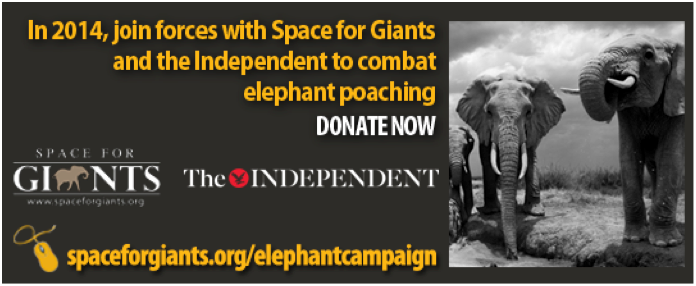
In 2011, more African elephants were killed than any other year in history. The figures for 2012 and 2013 are not yet known, but are likely to be even higher. At current rates, in twelve years, there will be none left.
It is a familiar cause, but it has never been more urgent. Poaching has turned industrial. Armed militia fly in helicopters over jungle clearings, machine gunning down entire herds. Their tusks are then sold to fund war and terrorism throughout the continent and the wider world. Ivory is still illegal, but as China booms, it is more popular than ever.
This campaign will raise money to support rangers on the ground to protect Kenya’s elephants from armed poachers, together with Space for Giants’ longer term work to create new wildlife sanctuaries where elephants will be safe, forever. More can be found about the charity at Space for Giants
The article above includes two videos. A shorter one that can be viewed on the paper’s campaign website. Then there is a longer, five-minute, video also on YouTube and included below.
Jean and I wanted to make a donation but found that without a UK bank account/UK Visa card it wasn’t possible. We contacted Space for Giants and received the following email from Amy.
Hi Paul
Sorry for the difficulties and thank you for your perseverance!
You can donate in USD through our CrowdRise page at www.crowdrise.com/spaceforgiants1. These funds are sent to TUSK USA who will then allocate them to us.
Alternatively, you can make out a cheque to ‘TUSK USA’ and send to TUSK USA, 40 East 94th Street, Apt 3A, New York, NY 10128 – please attach a covering note confirming that you would like your donation to be used to support the work of Space for Giants.
Many thanks,
Amy.
So if there’s anyone else out there not in the UK who would like to donate, here’s another option.
Please, for all our sakes, help these beautiful creatures.