Category: Education

Listening furry ears!

Returning to the fascinating topic of how dogs understand us humans.

At the beginning of the month I published a post called Be Careful What You Say. It featured an item on BBC Radio Four regarding the science report from a team in Hungary seeking better to understand how dogs process human vocal sounds, as in speech. (The science report was rapidly featured in many other media outlets.)

Anyway, I am delighted to say that the Rights & Permissions Department of the AAAS pointed out that:

Virginia’s article is freely available on our open news website (http://www.sciencemag.org/news)  so rather than post, please link to it (http://www.sciencemag.org/news/2016/08/video-your-dog-understands-more-you-think). Your site visitors will encounter no barriers to viewing the article on our website.  We welcome hyperlinks to Science articles provided a plain text link is used and providing our content is not framed. We also ask that the text surrounding the hyperlink not imply any endorsement of your website, products or services by AAAS/Science.

The article, written by Virginia Morell, primarily features a video (see below) but I will just republish Virginia’s opening paragraphs.

Video: Your dog understands more than you think


It’s the eternal question for pet owners: Does your dog understand what you’re saying? Even if Fido doesn’t “get” your words, surely he gets your tone when you let loose about another accident on the carpet. But a new imaging study shows that dogs’ brains respond to actual words, not just the tone in which they’re said. The study will likely shake up research into the origins of language, scientists say, as well as gratify dog lovers.

“It’s an important study that shows that basic aspects of speech perception can be shared with quite distant relatives,” says Tecumseh Fitch, a cognitive biologist at the University of Vienna, who was not involved in the work.

It’s not a long article but for any dog lover it is a most interesting read.

So here’s that video.

Virginia concludes her article, thus:

The new results add to scientists’ knowledge of how canine brains process human speech. Dogs have brain areas dedicated to interpreting voices, distinguishing sounds (in the left hemisphere), and analyzing the sounds that convey emotions (in the right hemisphere).

The finding “doesn’t mean that dogs understand everything we say,” says Julie Hecht, who studies canine behavior and cognition at City University of New York in New York City and who was not involved in the study. “But our words and intonations are not meaningless to dogs.” Fitch hopes that similar studies will be done on other domestic animals and on human-raised wolves to see how much of this ability is hardwired in dogs and how much is due to growing up among talking humans.

What a wonderful relationship dogs and humans have with each other!

That fickle finger of fate!

Coping with an emergency includes looking after our dogs.

Most of us live our daily lives without paying too much attention to the likelihood of an emergency. But as Hurricane Hermine and the recent explosion of that SpaceX rocket show the unexpected does come along.

All of which is my preamble to a recent item over on the Mother Network Nature site that reviewed taking care of our beloved pets when an emergency does strike.

I have pleasure in sharing it with you.

ooOOoo

5 steps to ensure your pet is cared for in an emergency


Jaymi Heimbuch August 31, 2016

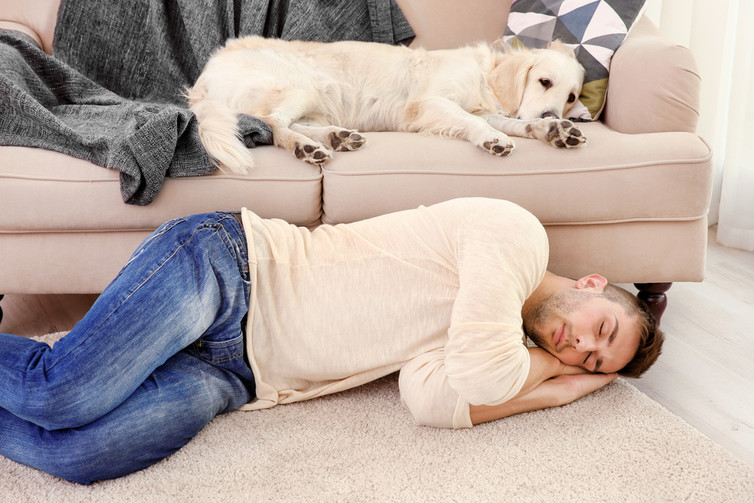
When an unexpected problem pops up, have a back-up plan for your pet. (Photo: Africa Studio/Shutterstock)

A car crash, an arrest, a natural disaster or a medical emergency. While no one wants to think about these awful possibilities, sometimes we should to protect and provide for those we love, in case one day we can’t make it home as planned. And those we love include our pets.

Imagine something happens to you and you can’t get home to your dogs, cats, birds or other critters. You need a way to not only alert others to the fact that you have pets at home, but also the information they need to care for your pets in your absence. Here are five ways you can ensure that your pets will be looked after.

Carry a card in your wallet

Create a card that you can carry in your wallet or purse. If you’re ever in a medical emergency, a rescue worker or paramedic looking through your wallet for identification will also know that there are animals at your home that need care.

The card can be as simple as a note that you have pets at home on one side, and on the other side lists contact information for friends or family members you’ve designated to care for them. Or it can be detailed, listing how many pets you have at home, their names and the kind of animal each pet is, your address, and emergency contact information for two people you trust to care for your pets. How much information you want to include is entirely up to you.

You can create your own card, download a free template online to print out, or buy cards online that you can fill in information with a pen.

Add a sign on your door or windows to save your pet

Another place to put an alert card is in your window or on the door to your home. An emergency emergency-pet-sign.jpg.838x0_q80pet alert sticker is ideal when you can’t get to your home but someone like a firefighter or rescue worker can.

Like a wallet card, a sticker should list how many pets are inside and what species they are, so any rescue worker would know if they’d found all the animals inside.

This is a small but potentially life-saving step in preparing for emergency situations such as after an earthquake, tornado, fire or flood, so that someone who is searching through homes can rescue your pet even if you can’t — or aren’t allowed — to get back to your home.

Ensure at least 2 separate people you trust have access to your home

Your emergency wallet card states contact information for people you trust to care for your pet if you’re in an emergency situation and can’t get home to them. The next step is ensuring they can get to your pet when needed.

Make sure each person listed as an emergency guardian has a set of keys, or that they know the secret hiding place for your spare set of keys. If you have an alarm system on your home, you’ll need to provide these friends with the access code.

Because these friends or family members not only have access to your home but also will take responsibility for your animal companion, you’ll need to put some thought into who you’ll have in place as a temporary caregiver or as a permanent caregiver.

The ASPCA notes:

When choosing a temporary caregiver, consider someone who lives close to your residence. He or she should be someone who is generally home during the day while you are at work or has easy access to your home. When selecting a permanent caregiver, you’ll need to consider other criteria. This is a person to whom you are entrusting the care of your pet in the event that something should happen to you. Be sure to discuss your expectations at length with a permanent caregiver, so he or she understands the responsibility of caring for your pet.

You may want to put down temporary caregiver contact information on your emergency cards, and ensure they know who is designated as the permanent caregiver should you not be able to return home to your pets for a long time, or at all.

An emergency kit with your pet's medical information, extra food and other supplies will help rescuers. (Photo: rSnapshotPhotos/Shutterstock)
An emergency kit with your pet’s medical information, extra food and other supplies will help rescuers. (Photo: rSnapshotPhotos/Shutterstock)

Create a kit for your pet

A disaster preparedness kit is a great idea both for you and your pet. This also benefits your pet not just for a natural disaster, but if you’re in an emergency and can’t get to them.

An emergency supply kit should include a document that a temporary caregiver or potential permanent guardian can use to understand your pet’s needs. This includes:

  • vet and vaccination records
  • pet insurance details
  • information about any medications your pet needs
  • an extra leash and collar
  • a carrier if you have a smaller pet
  • information on any behavior problems, quirks or habits that a caregiver should know about

Be sure to tell your emergency contacts and temporary caregivers where this information is located in your home, so they can access it should they need it.

Make formal long-term arrangements for your pet

We briefly discussed designating someone as a permanent caregiver for your pet should you not be able to return to them. You may want to consider setting up a formal arrangement for this to ensure that your pet definitely goes to the person you’ve designated and receives the care they need.

This could be a formal written arrangement with a permanent caregiver or it may be part of your will. You might also consider creating a trust or other financial arrangement to ensure your pet is cared for if you’re incapacitated. However, Petfinder notes:

Before making formal arrangements to provide for the long-term care of your pet, seek help from professionals who can guide you in preparing legal documents that can protect your interests and those of your pet. However, you must keep in mind the critical importance of making advance personal arrangements to ensure that your pet is cared for immediately if you die or become incapacitated. The formalities of a will or trust may not take over for some time.

Such a document may at first seem like a lot to handle for a “what if” situation, but by taking the appropriate precautions ahead of time, you can be sure that your pets are immediately cared for should something occur that prevents you from returning home to them.

ooOOoo

This all seems like very sound advice and, believe me, advice that Jeannie and I will review and adopt wherever we can.

Please, good people, do take care of yourselves including all your pets.

Senior Smiles

Adopting dogs who are no longer young animals.

A trip to your local animal shelter reveals that dogs of all types, backgrounds, and ages may usually be seen. Inevitably, those dogs that are no longer in ‘the first flush of youth’ are frequently seen as less adoptable than younger animals. While that is understandable from a prospective owner’s point of view there’s no reason at all to disfavor the older dog.

Both Casey and Pedy were dogs that Jean and I adopted when they were well into their middle years, or six-years-old to put a number to it.

Casey, shown above, had been in the animal shelter for over a year and on top of being six had the added burden of being a Pit Bull breed.

Hi Pedy, I'm the bossman around here. Name's Pharaoh and you'll be OK.
Hi Pedy, I’m the bossman around here. Name’s Pharaoh and you’ll be OK.

So when the Care2 blogsite published a post about adopting senior dogs I thought that this was most certainly something to be shared with you.

Here it is.

ooOOoo

What Advice Would You Offer Someone Adopting a Senior Dog?

1388615.large

By: Vetstreet.com August 18, 2016

About Vetstreet.com
Those of us who have been fortunate enough to share our hearts and homes with a senior dog know just how special those gray-muzzled darlings can be. Earning the love of an aging pup who truly needs you creates a special bond that’s hard to put into words.

True, they may have some age-related health issues (like arthritis, dental disease or failing vision or hearing) that require attention or treatment. But older dogs have lots of pros, too, like the fact that they’re likely to be better trained than a puppy and they’re probably game to lounge around with you and take it easy. And when it comes to adopting a senior dog, you have the benefit of knowing what you’re getting in terms of size and in most cases, personality.

Our readers recently shared some great tips for people getting their first dog or cat — and in fact, we know that many of you have opened your homes to adult dogs. So when we wanted to offer tips to people looking to welcome an older canine into the family, we turned to our Vetstreet Facebook followers and asked: What’s the one piece of advice you’d give someone adopting a senior dog? And, as we suspected, our readers came through with some excellent — and touching — words of wisdom.

Advice for Someone Adopting a Senior Dog

Many readers expressed the importance of showering your senior dog with love. “Love them unconditionally, as you don’t know how long you will have them,” said Peggy Lowe-Brooks. “Enjoy each day they are in your life.”

Rich Dunn agreed, saying, “Love them, love them. Treat them like family, be there to the end and hope someday to see them on the other side!” Dee Davis added, “Make sure you’re committed to love, care and cater to them for them the rest of their lives.”

Mike Carroll suggested remembering that, for some dogs, age might be just a number: “Have fun with them; they still have a lot of energy and the desire to do most anything they ever did before. Baby them big time and be ready to be on the receiving end of some serious love and affection from them. Just let them enjoy the rest of their life like never before.”

William West Patience’s experience backs up Carroll’s suggestion. “I have had dogs that lived until 15, then I adopted one that was 16 because no one else would,” he said. “It has been a rewarding experience and has taught me so much. Except for some mobility issues he doesn’t know he’s an old dog.”

Of course, it’s important to remember that taking on a dog during his golden years can be a big responsibility, and potential owners should be ready for that. “…Remember they may have expensive medical bills; be prepared to give them the medical care they will need,” said Priscilla Leuliette.

Susan Holt Stanley was of a similar mind, saying, “Love them with your heart, care for them medically and tell them a million times how special they are!”

And Sarah Vaughn reminded us of the golden rule: “Be patient! One day you’re going to be elderly and you don’t want someone yelling at or getting frustrated with you because you move so slowly and have accidents because you can’t make it outside (or to the facilities) in time.”

If you’re considering bringing a senior dog into your home, there are numerous things you can do to help him enjoy his senior years. You might take steps to pet-proof your home in a way that makes it easier for him to get around. And believe it or not, teaching your old dog new tricks isn’t only possible, it’s a great way to help your new-old pup stay mentally and physically sharp! Getting him to the vet for regular exams and keeping an eye out for any physical or behavioral changes is important for dogs of all ages, but becomes perhaps even more important as he ages.

Care2 readers, what advice do you have for people adopting senior dogs? Tell us below in the comments. [Ed: as comments left on this post.]

By Kristen Seymour | Vetstreet.com

ooOOoo

Keeping an eye out for any physical or behavioral changes doesn’t just apply to aging dogs! 😉

Spreading love and kindness

The huge gift we receive from therapy animals.

Our Brandy is a Pyrenean Mastiff!

I know there are times when giving Brandy a big hug feeds something very deep inside me. That unconditional affection Brandy shows me has a very strong healing sense.

I know that Jean shares my sense of being loved by Brandy, and by all our other dear dogs.

I am without doubt that hundreds of thousands of other people experience this.

Yet there must always be room for more therapy dogs which is why an item on Care2 just a few days ago is being shared with you today.

(P.S. When a photo of me hugging Brandy was sought his nibs did not comply!)

ooOOoo

Could Your Pet Become a Therapy Animal?

3187027.large

If you have a pet who’s mellow and loves being around people, and the idea of helping your pet bring joy to others appeals to you, you might just have a therapy animal in the making.

Accompanied by their owners, therapeutic visitation animals – which are most commonly dogs, but can also be cats, rabbits, pot-bellied pigs, horses, etc. – regularly visit people in hospitals, nursing homes, schools and other facilities, providing furry comfort and compassion.

“Four-footed therapists give something special to enhance the health and well-being of others,” says the website of  Therapy Dogs International (TDI), a nonprofit organization that regulates, tests and registers therapy dogs and their handlers. “It has been clinically proven that through petting, touching and talking with animals, patients’ blood pressure is lowered, stress is relieved and depression is eased.”

What It Takes to Be a Therapy Animal

Therapy animals are “born, not made,” according to TDI. They must have an outstanding temperament, and be outgoing and friendly to people of all ages. They must also behave well with other animals.

 In general, therapy animals must also be at least one year old; current on all vaccines required by local laws; and be clean and well groomed when visiting people.

As for dogs, along with the ability to obey basic commands like “Sit,” “Stay,” “Come” and “Leave it,” they are tested by therapy dog certification organizations to ensure they can do the following, according to TDI (most of these requirements apply to other species of potential therapy animals as well):

  • Listen to their handlers
  • Allow strangers to touch them all over
  • Not jump on people when interacting
  • Not mind strange noises and smells
  • Be calm for petting
  • Not be afraid of people walking unsteadily

Getting Your Pet Certified as a Therapy Animal

Think your pet has the right stuff to be a therapy animal? To get an idea of the type of testing involved, this TDI brochure describes each of the 13 tests a dog must pass in order to be certified. The tests are similar for other animals.

Some therapy animal organizations, including Pet Partners, offer workshops so you and your pet can practice the required skills before being tested for certification.

The AKC website has a list of therapy animal organizations all across the U.S. from which your pet can receive certification. Contact the one nearest you for further information.

The Difference Between Therapy and Service Animals

Although the two are often confused, therapy animals are not the same as service animals, which “have been individually trained to do work or perform tasks for the benefit of a person with a disability,” according to the Americans with Disabilities Act (ADA).

“An example of a service dog is a dog who guides an owner who is blind or assists someone who has a physical disability,” the American Kennel Club (AKC) explains. “Service dogs stay with their person and have special access privileges in public places such as planes, restaurants, etc.”

Therapy dogs, on the other hand, are privately owned. Unlike service animals and their handlers, in most U.S. states, therapy animals and their owners don’t have protections under federal law (ADA, the Fair Housing Act, etc.), reports the National Service Animal Registry.

Additional Resources

You can find out more about therapy animals and getting your pet certified from these organizations:

Photo credit: Thinkstock

ooOOoo

Closing this post with some photographs Jean took yesterday afternoon. Me with Pharaoh and Cleo.

(OK, they were staged for this post as the look on Cleo’s face rather suggests!)

P1160423oooo

P1160414oooo

P1160419Have a very huggable weekend!

Kate Humble and Teg

Following on from yesterday.

In yesterday’s post I included the full documentary that was recently broadcast by the BBC. It was really interesting and a great insight into the uniqueness of the Welsh Sheepdog. More of that in a moment but first some details about Kate. As WikiPedia puts it:

Katherine “Kate” Humble (born 12 December 1968) is an English television presenter, mainly for the BBC, specialising in wildlife and science programmes. She was also the President of the RSPB until 2013.

Inevitably, Kate has her own website where one reads on the ‘home’ page:

kate&tegKate Humble and her sheepdog Teg set off to learn about the threats to British herding dogs. Filmed over a year, and with an exclusive insight into Kate’s shepherding life,  ‘Kate Humble: My Sheepdog and Me’, unveils the story of the Welsh Sheepdog, explores the challenges of breed recognition and celebrates the simple joy of a handful of puppies.

‘Kate Humble: My Sheepdog and Me’ will be on BBC 2 on the 15th August 2016 at 9pm.

As changing farming practices, cross breeding and dog shows came about, so too did the decline of Britain’s working dogs.  Of 22 British herding dog breeds, 12 are now extinct and the 10 remaining are mostly show dogs or pets. Kate sets out to discover if Teg belongs to one of these rare breeds, criss-crossing Wales as she uncovers the story of the Welsh Sheepdog and tries to find a mate for Teg.

From sheepdog trials to droving, from DNA profiling to a nationwide search for a mate, Kate and Teg’s journey is a celebration of the Welsh landscape and rural traditions. It also delves into the hi-tech, hi-value world of breeding rare dogs, and explores the timeless bond between humans and their dogs.

Join Kate and Teg as they play their part in the continuing survival of Britain’s herding dogs.

Now we hear a great deal about this endangered animal and that endangered animal but British herding dog breeds wouldn’t for me come to mind as one such endangered breed.

Clearly the effort to save the future of the Welsh sheepdog is significant underpinned by the fact that there is a society devoted exclusively to the breed: The Welsh Sheepdog Society. The website of the Welsh Sheepdog Society also has a page where registered sheepdogs are for sale. I’m going to republish the details on that page not only to show readers what the dogs look like but also to promote them to a wider audience.

ooOOoo

FOR SALE

Registered Welsh Sheepdogs of Sale from Society Members

Red and white welsh sheepdog pups for sale, pictured below. 6 bitches and 2 dogs by Fferm Mynydd Morgan out of Safn y Coed Erin. Both parents good workers. Ready to go now. Contact Edward Hopkins phone 07867 474 866.

hopkins pups
Welsh sheepdog pups for sale. Black and white and red and white. By Wilden Gel out of Fron Felen Fflei. Good working stock. Contact Bob Williams 01745 550 304.

Welsh sheepdog pups for sale. By Hendrerhys Gelert out of Fron Felen Nel. Both parents good workers. Contact John Williams 01745 5870 657.

Welsh sheepdog pups for sale, picture below, ready December. Sire Ty Llwyd Bonnie trophy winner Penlanlwyd Tango. Dam Glyngwilym Rose. Contact Simon and Emma Mogford, 07846 017 669

mogs pupsooOOoo

Here’s hoping they all find wonderful loving homes.

Let me finish off today’s post by extensively quoting from the WikiPedia page about the Welsh Sheepdog.

The Welsh sheepdog (Welsh: ci defaid Cymreig, pronounced [kiː dɛˈvaɪd kəmˈrɛɨɡ]) is a landrace of herding dog from Wales.

Like other types of working dog, Welsh sheepdogs are normally bred for their herding abilities rather than appearance, and so they are generally somewhat variable in build, colour and size. Welsh sheepdogs are of collietype, usually black-and-white, red-and-white or tricolour, and merle markings may occur over any of these combinations. The coat may be short or fairly long, and the ears are pricked, but usually folded at the tip. They are longer in leg, broader in chest and wider in muzzle than the Border Collie. They are extremely active and intelligent, and therefore need much exercise and mental stimulation, if they are to be kept as pets. Welsh sheepdogs are more commonly known as Welsh collies, however these are the same breed.

Over many decades the Welsh sheepdog has largely been replaced for working sheep in Wales by the Border Collie, a standardised breed. However, in more recent years, efforts have been made to maintain the indigenous Welsh sheepdog as a distinct variety.

Welsh sheepdogs are usually of loose-eyed action, not fixing the stock with their gaze like the strong-eyed (de)Border Collie. They are able to work independently without necessarily being under direct human control. Welsh sheepdogs are most often used for herding sheep, but also readily work cattle, goats, and even horses and pigs. Traditionally they were often used as droving dogs to take cattle and sheep to markets locally or elsewhere in Britain.

The Welsh sheepdog’s life span is 12–15 years.

History

At one time there existed many sheep-herding dogs peculiar to Wales; during the 18th century Welsh drovers taking sheep for sale took with them five or six Welsh sheepdogs as “herders on the narrow roads, guards against highwaymen, and providers of game on the route”. These were an early type of Welsh sheepdog, higher on the leg and more racily built than the modern day breed.

However, by the 1940s the group had decreased to two or three breeds only. The ancient pure breeds of black-and-tan sheepdog and Welsh hillman were almost extinct, and were scarcely ever seen working. The type best known in Wales at that time was mostly descended from the old black-and-tan with an infusion of working Border Collie blood.

In the 1940s the Welsh sheepdog was still common throughout the north and central Welsh counties. In herding activities, it did not normally work low to the ground in “the showy manner sometimes seen in the work of the working [Border] Collies”, as British dog fancier C. L. B. Hubbard put it in 1948. It was variable in type; approximately 18 in (46 cm) in height, but the weight ranged from the lighter built, leggier dog of North Wales at 35 lb (16 kg) to the more solid 40 to 45 lb (18 to 20 kg) dogs of Glamorganshire and Monmouthshire. There were no dog show classes for the Welsh sheepdog as it was purely a working breed.

Finally another picture of Kate and Teg.

JS50109203Fabulous animals!

Returning to happy dogs!

A republication of a post from exactly one year ago.

Yesterday, I was at our local Three Rivers Hospital having a colonoscopy. The procedure was a breeze but I wouldn’t recommend the bowel prep one has to take before the procedure! 😦

However, it ran on much longer than we expected and, consequently, there wasn’t sufficient time to do a new post for you good people for today.

So as I do in these situations, I republish the post that came out exactly a year ago: on the 12th August, 2015. As it happens it seemed a wonderful follow-on to yesterday’s post: Have A Lovely Day.

ooOOoo

More on those happy dogs.

Indebted, again, to Chris Gomez.

Jean and I were out for much of yesterday resulting in me not sitting down to compose today’s post until nearly 5pm (PDT) in the afternoon. I must admit I didn’t have a clue as to what to write about. Then sitting in my email inbox was another email from Chris Gomez with this short but valuable sentence, “Love is real….Check this out! (via ABC7 Los Angeles local news iOS app) Study reveals scientific reason your dog is happy to see you.” Chris included a link to the ABC7 news item. I’m republishing it here.

ooOOoo

STUDY REVEALS SCIENTIFIC REASON YOUR DOG IS HAPPY TO SEE YOU

A new study explains why your dog gets so happy to see you. (Shutterstock)

Tuesday, August 11, 2015 11:04AM

Is your dog overwhelmed with joy anytime you walk through the door? There’s a scientific reason behind their excitement, a new study shows, and it’s not just because you feed them.

Researchers at Emory University used functional magnetic resonance imaging (fMRI) to scan dogs’ brains for activity when they were shown images of dog faces, human faces and ordinary objects.

The dogs’ temporal lobes lit up “significantly more” when presented with the faces than with the objects. These findings suggest that dogs may recognize both human and dog faces.

Facial recognition causes dog brains to activate in the same areas as in monkey and human brains, the study found. This is separate from the “reward areas” that would be triggered by anticipation of food.

“What we’re finding with the imaging work is that dogs love their humans-and not just for food,” researcher Gregory Berns told io9. “They love the company of humans simply for its own sake.”

“The existence of a face-selective region in the temporal dog cortex opens up a whole range of new questions to be answered about their social intelligence,” the researchers explained, such as whether dogs can understand different facial expressions and whether they can read body language.

This isn’t the first time scientists have explored what makes dogs’ tails wag with excitement when reunited with their owners. A January study that Berns was also involved in found that dogs have a positive reaction to the scent of familiar humans compared with other smells, even those of other dogs.

The results of that study “suggested that not only did the dogs discriminate that scent [of familiar humans] from the others, they had a positive association with it.”

A 2013 behavioral study found that dogs can show when they’re happy to see their owners by lifting their eyebrows. Their left eyebrow went up when they saw their respective owners, the study found. They didn’t have this reaction for other things that may excite them, such as attractive toys.

….

Granted there was some overlap with Monday’s post but there was more than enough in the ABC7 article to warrant sharing it with you.

Thanks again, Chris.

ooOOoo

You all stay happy with your dogs!


We are what we think of most!

A republication of a recent post from Val Boyko.

Yesterday, Val published a post over on her blog Find Your Middle Ground that really ‘spoke’ to me. That’s not to imply, by the way, that her other posts don’t very often reach out to me and, undoubtedly, to many others.

Val’s post was called The Depths of our Relationships and explored the different levels of relationships that we have with others in and around our lives.

Instinctively most people would regard us humans as far more complex than our animal companions. As the old Devon (South-West England) expression goes, “There’s now’t so queer as folk.”

Yet, once we have really got to know a dog there will be many who will see behind those fabulous eyes a sense of a depth of character, a soul comes to mind, that suggests that the brain of the dog offers a canine psychological complexity most of us don’t allow for.

To support that proposition just look at the eyes of Pharaoh in this photograph going back to June, 2007.

Pharaohjun2007However, today I am  republishing Val’s recent post and I do so with great pleasure.

ooOOoo

The Depths of our Relationships

The ways our dogs speak to the world.

Dogs are very vocal creatures.

Anyone who has been close to dogs in their lives knows that they are frequently very vocal creatures. Likewise, anyone who has been close to a dog or two quickly learns to understand the basic emotions being conveyed by a dog’s vocal sounds.

But, nonethless, there was an item over on the Care2.com site recently that provided a comprehensive tutorial on listening and interpreting the sounds from our dogs. I wanted to share it with you today.

ooOOoo

How to Interpret Your Dog’s Growls

1387750.large By: Vetstreet.com August 3, 2016

Freedom with a capital ‘F’.

Sometimes the most obvious solutions take the longest to find.

I feel a little embarrassed that this introduction may come across as rather self-indulgent; I don’t intend that.

My purpose is to offer an introduction to a recent blogpost from Sue Dreamwalker that explains why her post really ‘spoke’ to me and why it felt important to share Sue’s post with all you good people.

Yesterday morning I left a comment to a Transition Times article, penned by Jennifer Browdy. The article was headed: Hillary Clinton: Holding the Center in These Complex Transition Times, So We Can Do the Essential Work of Creating a Better World.

Subsequently, I left a follow-up to my first comment, replying to a comment from Diane Husic. This is what Diane wrote:

Many of us realize what a critical junction the country faces in this election cycle. As an academic, I am trying to figure out the appropriate role I should play. We need to teach students to be respectful of difference, to be tolerant, to be problem solvers, and to be civically engaged, but we aren’t supposed to use our positions to “force” our political views on them. But given the magnitude of issues confronting the planet and humanity and the importance of having leadership that “gets it” (and displays compassion and empathy), this is a tough balance to try to find.

and this was my reply to Diane:

Diane, as someone who previously has run his own business and then, after selling it in 1986, spent a number of years as a mentor with the Prince’s Youth Business Trust in the UK, I have come to the conclusion that the best role model we adults can offer our ‘students’ is this: “Be the best you can be!” That flows from being fully aware of the person that one is. For self-awareness is the key to understanding oneself and, consequently, of understanding others. Understanding why people think and behave the way they do, for good and bad, is the only effective way of engaging with others and seeking that ‘civic engagement’ so critically important.

Apologies, that paragraph sounds like a damn speech! I didn’t intend it to be so. Plus, my own journey of self-awareness has been a long and tortuous one – but that doesn’t change my view just expressed.

Coincidentally, I have been having some informal chats with Jan Schmuckle: http://www.janconsults.com/home

Her recently released book on the effectiveness of Role Montage in building leadership skills is highly relevant to today’s students. In Jan’s words (and I have no commercial or financial link with Jan):

Role Montage: A Creative New Way to Discover the
Leader Within You is written from Jan’s experience
with her client work and her research. It helps
leaders explore self-awareness and leadership using
the role montage process.

I’ll creep back into my hole!😉

You can see why I offered a warning about coming across as self-indulgent!

But if you have stayed with me so far (and thank you) you will now understand why Sue’s post spoke so clearly to me. Republished here with Sue’s very kind permission.

ooOOoo

Set Yourself Free..

by Sue Dreamwalker. July 28th, 2016.

This morning I switched on the radio and the first record I heard was this one.. It was the very first time I had listened to this recording, never hearing it before.. It made me smile.. Especially when it mentioned taking Calcium and taking care of our knees..  So I decided to YouTube it to listen to again and to my delight found several versions..

Life has been busy within the Dreamwalker’s Domain this last week.. Last night I was so tired I went to bed at 7pm and slept for 12 hours.

Today the Universe thought to allow me to cool  down in the showers of rain,  so I thought I would share about my Busy time in the Sun on my Gardening Blog. And to share what brought such a smile to my face first thing this morning..

I particularly enjoyed the lyrics in the middle of this narrative of the inclusion of Rozalla’s Song Everybody’s Free to Feel Good, which is an old favourite of mine..

 So Go On FEEL GOOD and DANCE.. LAUGH and SING..

And SHARE THE FEEL GOOD FACTOR 

Sending Love and Blessings

Next time I will share with you the village I grew up in as we went  back to see the Well Dressings.. Along with some of my thoughts..

Sue

ooOOoo

Feeling good about ourselves is the result of knowing and liking who we are. The foundation stone of knowing and liking all the many good people we interact with throughout our lives.

And now go and hug a dog!

Underground magic

A trip to the Oregon Caves National Monument & Preserve.

A week ago when our family guests were staying with us we decided it would be a treat for all of us to visit the very famous Oregon Caves – it was not a disappointment.

P1160302
Morten and Marius gathering information.

The history of the caves does involve a dog.

Apparently Elijah Davidson discovered the caves in 1874 when he was out with Bruno, his dog, and it disappeared. The dog had fallen down a fissure that Elijah managed to squeeze into and, bingo!, there was the most incredible deep cave ahead of him. (Watch the video below for a fuller description of how the cave was discovered.)

Joaquin Millers Chapel This is a room seen on the cave tour. It is called Joaquin Miller's Chapel and it is named after the author, Joaquin Miller because he wrote about Oregon Caves in Sunset magazine.
Joaquin Millers Chapel
This is a room seen on the cave tour. It is called Joaquin Miller’s Chapel and it is named after the author, Joaquin Miller because he wrote about Oregon Caves in Sunset magazine.

Clearly today’s visitors to the cave enter in a more gentle fashion!

P1160309WikiPedia has a very good description of the caves, from which I quote:

Oregon Caves National Monument and Preserve is a National Monument and Preserve in the northern Siskiyou Mountains of southwestern Oregon in the United States. The main part of the 4,558-acre (1,845 ha) park, including the marble cave and a visitor center, is located 20 miles (32 km) east of Cave Junction, on Oregon Route 46. A separate visitor center in Cave Junction occupies 4 acres (1.6 ha) of the total. Both parts of the monument, managed by the National Park Service, are in southwestern Josephine County, near the Oregon–California border. The climate is generally mild even at the cave’s elevation of about 4,000 feet (1,200 m) above sea level, but icicles can form at the cave entrance, and winter snow sometimes blocks the park highway.

Elijah Davidson, a resident of nearby Williams, discovered the cave in 1874. Over the next two decades, private investors failed in efforts to run successful tourist ventures at the publicly owned site. After passage of the Antiquities Act by the United States Congress, President William Howard Taft established Oregon Caves National Monument, to be managed by the United States Forest Service, in 1909. The popularity of the automobile, construction of paved highways, and promotion of tourism by boosters from Grants Pass led to large increases in cave visitation during the late 1920s and thereafter. Among the attractions at the remote monument is the Oregon Caves Chateau, a six-story hotel built in a rustic style in 1934. It is a National Historic Landmark and is part of the Oregon Caves Historic District within the monument. The Park Service, which assumed control of the monument in 1933, offers tours of the cave from mid-April through early November. In 2014, the monument was expanded by about 4,000 acres (1,600 ha) and re-designated a National Monument and Preserve. In addition, the River Styx, which flows through the cave and emerges as Cave Creek, was named to the National Wild and Scenic Rivers System.

Oregon Caves is a solutional cave, with passages totaling about 15,000 feet (4,600 m), that formed in marble. The parent rock was originally limestone that metamorphosed to marble during the geologic processes that created the Klamath Mountains, including the Siskiyous. Although the limestone formed about 190 million years ago, the cave itself is no older than a few million years. Valued as a tourist cave, the cavern also has scientific value; sections of the cave that are not on tour routes contain fossils of national importance.

Daughter Maija, grandson Morten and your truly just having exited the cave.
Daughter Maija, grandson Morten and yours truly just having exited the cave.

Between Marius and myself we took a great number of photographs but many of them can’t compare to the quality of photos found on the web.

For example here’s one of my pictures:

P1160322and here’s one taken from the National Parks Service website:

These are formations known as soda straws and like soda straws they are hollow tubes. They are made up of the mineral calcite.

Won’t go on! (But I will post a collection of photographs, both from me and Marius and found online in a future Picture Parade.)

What I will do is to close with this YouTube video. It is 17 minutes long but very interesting and, hopefully, an inspiration to others to come and visit this incredible geological site.

Happy Holidays to all!