Alok Sharma on why COP26 is our best chance for a greener future.
I wanted to share the eight-minute video that appeared on TED Talks. But it hasn’t appeared on YouTube as yet.
But the link is embedded above so if you don’t want to watch the slightly longer version (just 22 minutes) then that is fine.
I will share the words that came with the TED Talks video.
Something powerful is happening around the world. The issue of climate change has moved from the margins to the mainstream, says Alok Sharma, the President-Designate of COP26, the United Nations climate conference set to take place in November 2021 in Glasgow, Scotland. He unpacks what this shift means for the world economy and the accelerating “green industrial revolution” — and lays out the urgent actions that need to happen in order to limit global temperature rise.
Plus on the speaker, Alok Sharma.
Alok Sharma is a British politician, Cabinet Minister and President-Designate of COP26, the United Nations Climate Change Conference being held in Glasgow from 31 October until 12 November.
Sharma was previously UK Secretary of State for Business, Energy and Industrial Strategy. Before that, he was UK Secretary of State for International Development. He has also served in ministerial roles in the Department of Work and Pensions, Department for Communities and Local Government, and at the Foreign and Commonwealth Office. Prior to politics, he worked in finance.
Please watch the video for all our sakes.
For the sake of our dogs, and for the sake of everyone on this planet.
It’s even a difficult title to write for today’s story.
There are some despicable people for whom having a dog is not a loving companion nor a humane business interest. I can’t define them and, frankly, they are not even worth the mental effort required to think of a term.
That makes it all the more important to share this article with you.
ooOOoo
Dogs Are Not Disposable
Some people dump pets that are too old, not ‘perfect,’ or to go on vacation.
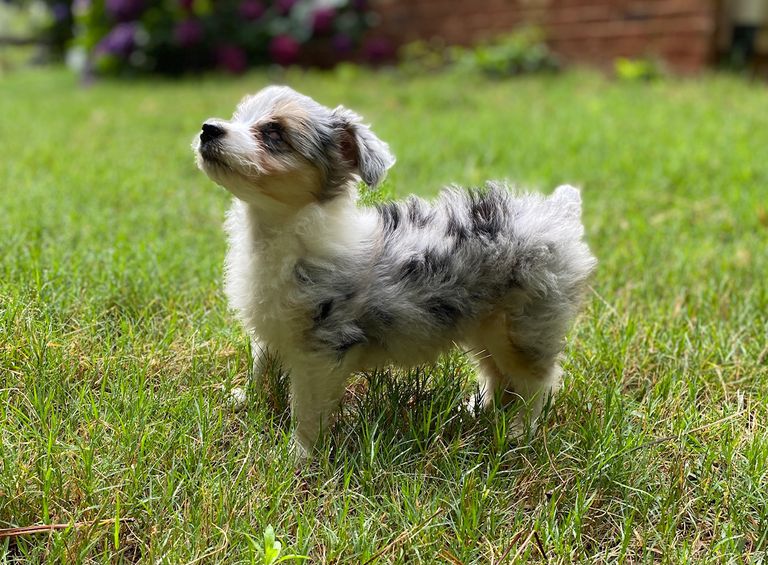
Blind puppy Gertie weighs just over 2 pounds. Mary Jo DiLonardo
This may seem like a no-brainer, but with all the news from overwhelmed shelters and rescues this summer, it’s probably worth saying out loud.
Dogs are not disposable.
Disreputable breeders toss out puppies that aren’t “perfect.” Some people give up the family pet when they go on vacation so they don’t have to pay for boarding. Others give up an older puppy whose cute behaviors are now obnoxious or a senior dog who may have other health issues.
That little mouse you see at the top of the page is one of two special needs puppies I’m fostering right now. She’s actually a 2.1-pound puppy that we were told is an Aussiedoodle. I still think she might be an exotic guinea pig.
Gertie was dropped off by a breeder at a vet’s office to be euthanized because she was blind. The vet contacted a rescue instead.
I also have a deaf puppy that was given up by a breeder. Many other fosters are also doubling up because the need is so great right now. Probably the biggest reason is that it’s the summer and people are traveling for the first time again in more than a year. That means it’s hard to find adopters and it’s hard to find fosters. Everyone wants out of the house.
I’ve seen messages and social media posts from rescuer and shelter workers who say they feel helpless because the requests for help right now are so crushing.
“My rescue cannot keep up trying to save them,” one wrote.
“I’m sickened at the number of rescue and surrender requests we are getting and I am completely heartbroken,” wrote another.
“We need a lifeline,” said another rescuer.
There are some news stories that claim many pandemic puppies are being returned, but the numbers don’t back that up. Instead, it’s just a crush of other reasons, many involving summer travel.
I think the hardest thing for most loving pet owners to fathom is the idea that some people would drop off their dog at a shelter on their way out of town. There’s just anecdotal evidence and no statistics about how often it happens, but it’s cited very often from disheartened rescuers and shelter workers.
The people who surrender their pets say they don’t want to pay for boarding and they’ll just get a new one when they return. Shelter workers say it’s heart-wrenching to hold a dog while they watch their person drive away. Some will stare out the door for hours, thinking for sure their family will return.
“Unfortunately, it doesn’t surprise us anymore which is really sad,” says Jen Schwarz, one of the directors of Speak! St. Louis, the special needs rescue I foster for. The rescuers hear the story often from shelter and humane society workers.
“They don’t want to pay for boarding or can’t find anybody to take their dog,” says Schwarz. “It’s basically being selfish.”
And people might think they’re doing their dog a favor by taking it to a shelter, hoping they’ll get adopted by someone else. But typically, if shelters have to euthanize for space, they’ll turn to owner-surrendered pets before strays because they know no one is looking for them.
“That’s the sad reality,” Schwarz says.
The other thing that happens often is people asking to have the family pet put to sleep because they’re too much hassle.
“That happens a lot. The kids are gone, they want to travel, the dog’s too much, and they have it euthanized,” Schwarz says. “That’s worse than dumping it at the shelter.”
Rescuers are saving as many as they can and that’s why I have one puppy sleeping behind me in my office and one napping in a playpen in the living room. Soon everyone will head outside for a game of tag where I’ll make sure everyone gets a chance to win.
And the only thing disposable here is an awful lot of very tiny puppy poo.
ooOOoo
When Jen Schwarz says: “That happens a lot. The kids are gone, they want to travel, the dog’s too much, and they have it euthanized,” I wonder what a lot is numerically. Anyone know?
The stories from the shelter workers breaks hearts here as well. Dogs are so intuitive; so smart. It is no surprise that they will stare for hours trying to work out what has happened.
Now of course the majority of people reading the title to today’s post would think of us humans. And what I am about to republish is for us. But dogs require exercise just as much as we humans. The question is whether dog’s brains are better protected with exercise?
The exercise pill: How exercise keeps your brain healthy and protects it against depression and anxiety.
By Arash Javanbakht, Associate Professor of Psychiatry, Wayne State University, February 25th, 2021
As with many other physicians, recommending physical activity to patients was just a doctor chore for me – until a few years ago. That was because I myself was not very active. Over the years, as I picked up boxing and became more active, I got firsthand experience of positive impacts on my mind. I also started researching the effects of dance and movement therapies on trauma and anxiety in refugee children, and I learned a lot more about the neurobiology of exercise.
I am a psychiatrist and neuroscientist researching the neurobiology of anxiety and how our interventions change the brain. I have begun to think of prescribing exercise as telling patients to take their “exercise pills.” Now knowing the importance of exercising, almost all my patients commit to some level of exercise, and I have seen how it benefits several areas of their life and livelihood.
We all have heard details on how exercise improves musculoskeletal, cardiovascular, metabolic and other aspects of health. What you may not know is how this happens within the brain.
Brain biology and growth
Working out regularly really does change the brain biology, and it is not just “go walk and you will just feel better.” Regular exercise, especially cardio, does change the brain. Contrary to what some may think, the brain is a very plastic organ. Not only are new neuronal connections formed every day, but also new cells are generated in important areas of the brain. One key area is the hippocampus, which is involved in learning and memory and regulating negative emotions.
A molecule called brain-derived neurotrophic factor helps the brain produce neurons, or brain cells. A variety of aerobic and high-intensity interval training exercises significantly increase BDNF levels. There is evidence from animal research that these changes are at epigenetic level, which means these behaviors affect how genes are expressed, leading to changes in the neuronal connections and function.
Finally, there is evidence for the positive effects of exercise on the neurotransmitters – brain chemicals that send signals between neurons – dopamine and endorphins. Both of these are involved in positive mood and motivation.
Exercise improves clinical symptoms of anxiety and depression
Exercise could even potentially desensitize people to physical symptoms of anxiety. That is because of the similarity between bodily effects of exercise, specifically high-intensity exercise, and those of anxiety, including shortness of breath, heart palpitation and chest tightness. Also, by reducing baseline heart rate, exercise might lead to signaling of a calmer internal physical environment to the brain.
It is important to note that the majority of studies examined the effects of exercise in isolation and not in combination with other effective treatments of clinical anxiety and depression, such as psychotherapy and medication. For the same reason, I am not suggesting exercise as a replacement for necessary mental health care of depression or anxiety, but as part of it, and for prevention.
There are other perks besides the neurobiological impacts of exercise. When going out for a walk, one gets more exposure to sunlight, fresh air and nature. One of my patients befriended a neighbor during her regular walks, leading to regular taco Tuesdays with that new friend. I have made some great friends at my boxing gym, who are not only my motivators, but also a great supporting social network. One might pick a dog as their running mate, and another might meet a new date, or enjoy the high energy at the gym. Exercise can also function as a mindfulness practice and a respite from common daily stressors, and from our electronic devices and TV.
So how can you find time to exercise, especially with all the additional time demands of the pandemic, and the limitations imposed by the pandemic such as limited access to the gyms?
Pick something you can love. Not all of us have to run on a treadmill (I actually hate it). What works for one person might not work for another. Try a diverse group of activities and see which one you will like more: running, walking, dancing, biking, kayaking, boxing, weights, swimming. You can even rotate between some or make seasonal changes to avoid boredom. It does not even have to be called an exercise. Whatever ups your heartbeat, even dancing with the TV ads or playing with the kids.
Use positive peer pressure to your advantage. I have created a group messaging for the boxing gym because at 5:30 p.m., after a busy day at the clinic, I might have trouble finding the motivation to go to the gym or do an online workout. It is easier when friends send a message they are going and motivate you. And even if you do not feel comfortable going to a gym during the pandemic, you can join an online workout together.
Do not see it as all or none. It does not have to be a one-hour drive to and from the gym or biking trail for a one-hour workout vs. staying on the couch. I always say to my patients: “One more step is better than none, and three squats are better than no squats.” When less motivated, or in the beginning, just be nice to yourself. Do as much as possible. Three minutes of dancing with your favorite music still counts.
Merge it with other activities: 15 minutes of walking while on the phone with a friend, even around the house, is still being active.
When hesitant or low on motivation, ask yourself: “When was the last time I regretted doing it?”
Although it can help, exercise is not the ultimate weight loss strategy; diet is. One large brownie might be more calories than one hour of running. Don’t give up on exercise if you are not losing weight. It is still providing all the benefits we discussed.
Even if you do not feel anxious or depressed, still take the exercise pills. Use them for protecting your brain.
ooOOoo
This is a very good post. Arash Javanbakht is a scientist of the first order and we all should do as she advises. I’m going to close today’s post by republish the first two paragraphs of his bio that is also published by The Conversation:
Associate Professor of Psychiatry, Wayne State University Arash Javanbakht, M.D., is the director of the Stress, Trauma, and Anxiety Research Clinic (STARC; https://www.starclab.org) at Wayne State University. Dr Javanbakht and her work have been featured on the National Geographic, The Atlantic, CNN, Aljazeera, NPR, Washington Post, Smithsonian, PBS, American Psychiatric Association, Anxiety and Depression Association of America, American Academy of Child and Adolescent Psychiatry, and tens of other media.
Her clinical and research work is mainly focused on anxiety and trauma related disorders, and PTSD. She often helps civilians and first responders with PTSD. Her clinic utilizes pharmacotherapy (medication), psychotherapy, exercise, and lifestyle modification to help patients achieve their full capacity for a fulfilling life.
Lots of people who don’t have a yard still want a dog!
We are incredibly lucky in that we have many acres for our dogs, and our horses, to play in. Mind you, it is at times like the present where our acres are not such a brilliant idea. Times in the Summer that bring drought and the ever-present risk of a fire storm.
But taken in the round we are grateful that we ended up living in this property.
Not all people are as lucky as us but for them a dog or two is just as important. So what is the truth of having a dog in an apartment.
That is why I am so pleased to share this recent article from The Dodo with you.
So you’re dying to have a dog, but you’re worried he won’t be happy in your apartment.
Do you really need a giant house with a big yard to give your dog the best life?
The Dodo spoke with Mikayla Park, director of adoptions and education at Wags & Walks, to bust that myth wide open.
Is living in an apartment worse for your dog?
Great news! The idea that a dog can’t be happy in an apartment is totally a myth.
“There is no one perfect environment in which to introduce a new dog,” Park told The Dodo. “Everyone has the ability to give a dog a happy and fulfilling life regardless of the size of their home, and the presence of an outdoor yard space.”
If you’re waiting to adopt a dog until you have your own yard due to personal preference, that’s totally understandable.
But the only real requirement for having a pup of your own is a willingness to love and take care of him — even if that means getting creative about outdoor time.
“Adopting a dog is about making a commitment to give that dog everything they need for the rest of their life,” Park said. “It might be a bit more work if you don’t have the ability to open a door and let your pup go outside, but it is by no means impossible, nor does it make your home any lesser a home in which to have a dog.”
Getting your dog outside when you live in an apartment
But just because you don’t have a backyard or live in an apartment, that doesn’t mean your pup can’t get that quality outside time.
“Outdoor time is a vital part of this daily routine, but it’s more about the way you spend that outdoor time than the mere presence of it,” Park explained. “Dogs thrive on having jobs, on pleasing their humans, on working their brains! Challenge them to work while they are outside with you.”
So instead of just idly letting your dog get his zoomies out when you pop outside, you can actually use this time to engage his brain — such as by slipping some training time in on your daily walks.
This will help tire him out so he’s not bursting with energy when you return to your apartment. And with enough active walks or dog park trips, any pup can be happy (regardless of where he lives).
Things that’ll make your dog happy inside an apartment
While your dog definitely needs outdoor enrichment, there are plenty of things that will help keep him entertained while he’s inside your apartment.
“There are lots of wonderful products out there to help you in maintaining a happy and balanced dog without a yard,” Park said. “Brain games like treat puzzles and Kongs are fabulous ways to create some mentally stimulating entertainment.”
Plus, believe it or not, your dog’s bed can even help with that indoor enrichment.
“Buy a raised-place bed and practice having your dog stay there while you cook dinner,” Park explained, noting that this can actually be a fun mental game for some pups. “If they get up, lead them right back onto the bed. They cannot move until you give them the signal to do so. Sound boring? You would be surprised how hard it is for some dogs to make their bodies sit still for 20 minutes.”
So, there are plenty of ways you can give your dog a happy life with lots of enrichment while living in an apartment.
“Not having a backyard is certainly a bit of a challenge, but one that any adopter is capable of rising to meet, with dedication and time,” Park said.
We independently pick all the products we recommend because we love them and think you will too. If you buy a product from a link on our site, we may earn a commission.
ooOOoo
As was said earlier on in the article: “But the only real requirement for having a pup of your own is a willingness to love and take care of him.“
My experience is that huge numbers of people are really committed to loving their dogs. Simply because a dog offers in return unconditional love. It’s a short statement of just two words. But it is a profound quality of our dogs and one that at frequent times has Jeannie and me, and tons of other people, lost for words!
We had a high of 112 deg F. (44.4 deg C.) here in Merlin on the 27th June, 2021. That is hot in anyone’s language.
Fortunately first thing in the morning it was cooler, down in the low 60’s (F), and our dogs were alright with that. But in the afternoon it was too hot for them.
So it seemed like a good idea to republish an article from The Dodo about walking your dog in this heat.
Have you ever felt like it was just too hot outside to walk your dog?
To make sure you’re keeping your dog safe — and his paws free from burns or irritation — it’s important to know how to tell when it actually is too dangerous to take your dog on a walk.
The Dodo spoke to Dr. Jessica Romine, a veterinarian at BluePearl Pet Hospital in Southfield, Michigan, to get some answers and tips to make sure your walks are always safe — and fun — for you and your pup.
How to test if it’s too hot out to walk your dog
According to Dr. Romine, there’s a simple test you can do to check if it’s too hot out to walk — and all you need is your hand.
“A good rule of thumb is to place your hand on the sidewalk or asphalt for 5 seconds; if it becomes uncomfortable to the touch, it is probably also uncomfortable for your dog to walk on,” Dr. Romine told The Dodo.
Signs your dog is uncomfortable
If you do need to take a walk on a hot day — or if it starts to heat up after you’ve already left home — keep a close eye on your pup.
“Dogs can suffer burns from very hot surfaces, usually in direct sunlight,” Dr. Romine said.
Signs to look out for include your dog starting to slow down or limp, or not wanting to keep walking.
If this happens, Dr. Romine recommends “checking their paw pads for tenderness, redness, or erosions and try[ing] to get them into the grass or at least shade.”
Tips for walking your dog in the heat
If you live in an area where hot concrete is unavoidable, you can try a paw wax to protect your pup’s paws. If you’d like to try one, Musher’s Secret Paw Wax is highly recommended by one of The Dodo’s editors, who uses it on her own pup.
“If you dog tolerates them, they are a fine option,” Dr. Romine said about protective products, “but remember that prolonged contact can still cause damage, and dogs still need to be monitored for signs of overheating.”
So in general, try to stick to the grass or at least the shade on your summer walks — and going out in the morning or evenings, when most surfaces aren’t in direct sun, will be much more comfortable for your dog.
(We independently pick all the products we recommend because we love them and think you will too. If you buy a product from a link on our site, we may earn a commission.)
ooOOoo
I must say that is a good piece of advice about placing one’s hand on the sidewalk.
We are lucky here because there is only grass to play on but not everyone is so fortunate.
Personally, I think these should be banned in all countries!
Yes, I know that sub-heading is me being away with the fairies, but one can always hope.
The reason behind the heading and the topic is that on the 21st June this year Dexter sent me a guest post for including in this blog. Nothing gives me greater pleasure, so on with the show!
ooOOoo
Well well, Fancy that.
By Dexter.
This blog is on a subject that I have wanted to tackle but haven’t had the chance or insight to do so. Until now.
Puppy mills are an abhorrent method of producing large sums of money at the detriment to the dogs involved. I discovered that Fancy, who is one of the Wirral & Cheshire Beagles was used in a puppy mill. As I wanted to write something on this subject, I asked for the kind assistance of her mum, auntie Karen, who has been wonderful and extremely helpful in helping me write this blog. I cannot say “enjoy it” as I hope that you find it predominantly thought provoking and enlightening as to these terrible practices.
Thank you for allowing me to ask some questions about Fancy. When we spoke you told me that she was a puppy mill dog. Can you let me know a little more about her position before she came to live with you?
She had been in a puppy farm, kept in a concrete pig pen and had 3-4 litters in just over 3 years. Many of her pups died of Parvo either there or within 24 hours of being picked up for their new homes.
That sounds awful. Do you know how old she was when you met her?
They told us she was about 5 but she turned out to be 3.6 years. She was 4 on Valentine’s Day.
So, by my calculations, she was about one year old when she would have been forced to have her first litter. This makes me feel very sad.
How did you find out that Fancy was up for rescue and rehoming?
We saw Fancy on a “Beagles missing, found and in need ” site on FaceBook and we fell in love with her immediately. She had such sad, dark eyes and it occurred to us that she had never known a day’s happiness or been loved. There were so many people applied for her we didn’t think we stood a chance. However we were contacted by Many Tears twice that week and, because I’d previously had a home check and had 2 kind caring beagles, we were chosen.
Please help me, please!
We drove over 10 hours that day to Llanelli, Camarthenshire and met her in an area used for meet and greets. She was petrified of us but not my beagles, Eddie & George. She just ignored them. There was no eye contact with us, nothing. She just paced up and down and cowered in a corner. When it was time to take her home she had to be cornered and caught to get a slip lead on her. She just wet herself. It was heartbreaking. My husband Alan carried her to the car where she laid down in the travel crate. She didn’t sleep but just kept very quiet all the way home. She came from a real lowlife puppy farmer. He’s a multi millionaire who posts “his” beagles or pups running free on fields. In actual fact they’ve never seen a blade of grass. The BBC did an undercover investigation on him.
In any case, when she arrived it was a lovely Sunday evening last July 2020. So we sat outside and watched her exploring and sniffing around the garden. She kept hiding in a corner if we looked at her so we stopped. It took 8 long days before I touched her and that was only because there was a wall behind her. She went to the toilet in the house but thanks to Eddie & George she soon got the hang of going outside. They were fabulous with her and soon realised she wasn’t a boarder but a new sister. I certainly couldn’t have done this without them and the beagle field.
Is this OK? Is this what I am allowed to do?
What sort of condition was Fancy in when she arrived? I am going to assume she wasn’t in the greatest shape, given her life up to her time coming home with you?
She was in a bad condition when we got her. She had a dull dry coat and was very underweight with her ribs showing and tail between her legs. It took a few days for her to eat and she’d only do that if we weren’t around. When I first took her to the beagle field she spent the whole time pinned up against the fence. Nothing the beagles did bothered her, only the actions of the humans. I think it took about a month for her to trust one person and let them touch her. Eleven months later and she is still very wary of people she doesn’t know and she will cower away.
That sounds awful, and so sad. Looking at the pictures she seems to have come some way on her path to rehabilitation.
Yes,it doesn’t take much to win her round. A belly tickle, something tasty and she’s your best friend.
Give us a cuddle, says Jay.
How long did it take for Fancy to stop going toilet in the house? Was she called Fancy when you met her at the meet & Greet?
She did her toilets in the house for about 4 days. Maybe twice a day then just first thing in the morning. It tailed off after that as she went out every time with her brothers. Yes she already had the name Fancy I rescued a kitten on the A55 motorway many years ago and she was called Fancy.
You’re safe now, Fancy!
You said that Eddie & George immediately knew Fancy was in need of some help. Did they act as if they were guardians to her, showing her the ropes if you like, and making sure that she felt at least some comfort with them.
Definitely. They gave her space from day one when she needed it. Even at the busy beagle field the others knew as well. She never got the initial newbie rough welcome. They all love her very much. Beagles know these things.
Welcome to the clan, Fancy.
Erm, when did you start to see a real breakthrough in her feeling more at home and less scared of all sorts of situations? What was the thing that made you think “you know, Fancy is feeling a bit happier”.
I lay that lead next to her for about a week. I started to show it to her and make a big fuss like it was a toy. She was petrified as she’d only been put in a “rape harness”. She’s still wary of it but can’t get out of it thank dogness.
A week from A to B
If you could give people a simple message regarding getting pups from a mill what would it be? Apart from “dont do it” that is.
I’ve given many messages of support to people thinking of puppy farm rescues. Don’t ever give up on them because of their fear. Beagles are so loving and trusting of us the good times far outweigh the bad and no mistake. I have a friend who 12 days ago adopted one with identical problems and the difference in her each day is amazing. Day 12 today and she was dying to jump into his arms when he got home but held back and did an excited dance. We all love his daily updates.
I wish I knew the answer to the puppy mills question I really do. They’re clever people who advertise their pups as living in loving happy homes with caring owners. When in reality they use dirty filthy concrete pig pens where they receive no vet care whatsoever. People see the advertisement and pay a large deposit, when the time comes most travel hours and they won’t leave their puppy their a minute longer so will take them home and face the consequences. Many die over 24 hours and some will be saved by a good vet. One of Fancys pups and owner I know so I know how she was fooled. She knows others.
May I ask about Wirral & Cheshire Beagles generally. Are you a registered charity and, if so, with whom do you work and co-operate?
Yes the beagle group is a charity. We give £1000’s away to beagle charities each year. Mainly Unite to Care where we got ex laboratory George from and Many Tears who are absolutely fabulous and rescue so many ex breeding beagles.
Beautiful!
To sum up I am so happy that Fancy is now safe and loved. It is wonderful that she will never again suffer the privations of puppy mill life. It is sad and wholly awful that she had to suffer in the first place. If people didn’t buy from puppy mills, then there might be a chance that they are prevented of their ability to operate. Please please think before making a decision to adopt a dog. Puppy mills are awful and make our lives a misery.
Thank you to Fancy’s mum for her wonderful help on what is a very difficult subject. Without her help, I couldn’t have written this.
Rescue dogs sometimes have a bad reputation. Cross breed rescue dogs sometimes seem to have a worse reputation. I wasn’t dangerous or bad. I was unlucky. Now I am enjoying life in my forever home and I am sharing my contentment with whoever will read my tails.
This is the essence of what having a dog in one’s life means.
I can’t voice Jean’s and my disgust at puppy mills. It is beyond terrible. All you and I can do is to never entertain buying a puppy where the commercial legitimacy is uncertain.
John is becoming a regular contributor to Learning from Dogs. He was last here on March 26th, this year with a guest post Reasons to get a pet portrait.
This is a timely and pertinent post.
ooOOoo
Five Questions you need to ask a Boarding Kennel
If you’re planning a vacation or a work trip, you’ll need to decide what to do with your beloved pooch. This can be a stressful event for both you and your pup, but things will go a lot easier if you pick the right boarding kennel.
How do you know whether you’ve picked a good kennel?
The best way to determine the quality of a kennel is by asking appropriate questions. Not sure what those would be? Never fear! We’ve got you covered!
Read on to learn what questions to ask to help you choose the best available pet hotels or kennels.
Five Questions to Ask a Kennel or Pet Hotel
One – Is Your Kennel or Pet Hotel Certified?
Certification is not mandatory for kennels. However, certified kennels have to comply with 250 standards in 17 areas of pet care facility operation. This certification is known as the Voluntary Facilities Accreditation (VFA) certificate. If they have a certificate, you can assume several things about the facility:
They have put time and money into making sure they have the best facility possible for the animals they care for. They care about reassuring pet parents that their dogs will be well cared for. They have all the necessary space and equipment to take excellent care of your pooch. Your pup will be secure and safe while you’re away.
Two – Can I Tour The Kennel?
You must always ask to tour the facilities. Just like you put in research when you book a hotel, you need to be equally as fastidious when you book a kennel. Therefore, you should look for the following:
Is the kennel odor-free?
A clean kennel will not smell because all urine and feces will have been cleaned up quickly and appropriately.
Is it loud or quiet?
Dog kennels will be noisy, but an extreme amount of noise usually signals that the pups are unhappy.
Are there enough staff?
There should be a 1-to-10 staff to dog ratio. The higher the people to animal ratio, the more individual attention your dog will get.
Are the living and playing areas clean?
Are there feces, urine, and debris? Or are the areas open and clean?
Do all animals have proper bedding and water?
The pooches should look content and stress-free and have both comfortable bedding and ample water. If a kennel doesn’t let you take an impromptu tour, do not leave your pup there.
Three – What Will the Facility Do if Your Dog Gets Sick?
The kennel must have a procedure in place for dealing with small issues like diarrhea and broken toenails and more significant problems like medical emergencies. Ideally, they will ask you to pre-approve an amount for vet services. They should also know basic pet first-aid.
Four – How Knowledgeable Are the Staff?
Kennel staff, like the facility, are not required to be certified in animal behavior or training. However, what’s more, important than a certificate is the staff’s attitude and attentiveness. Good staff can tell you details about each animal under their care.
When you enter the kennel, staff should welcome your dog and take meticulous notes about your pup’s diet, exercise needs, medications, and any other pertinent information. Take note of whether they are patient, friendly, and seem genuinely interested in your pooch’s welfare.
Five – What Do the Exercise and Play Programs Look Like?
You must look at the package your kennel is offering. Some kennels have one playtime, whereas others don’t include any in their base fee.
Good kennels will have a system for playtime where they divide dogs by style, size, age, etc., to keep the pups safe and happy.
Dogs that need more exercise should get walked by a kennel assistant. So, if you own a dog that needs regular walking, make sure that the kennel offers this service and has enough staff to meet your pup’s needs.
Furthermore, not all kennels offer toys for your pooch to play with. So it’s important to find out ahead of time if you need to provide your own toys.
To Sum Up…
We know you love your dog, so you should plan where they will stay while you’re away as carefully as you planned your vacation. The most essential thing to look for when visiting different kennels or pet hotels is how the environment makes you feel. Listen to your gut. If you feel comfortable and you get along well with the staff, then there’s a high probability that your pup will feel at ease there as well. While no kennel can replace the feeling of home for your dog, it should come close. This way, you’ll be able to go on your trip knowing your pooch is safe, sound, and well cared for.
ooOOoo
This is a very useful list from John. One that will provide guidance to everyone but especially to the new dog owners.
To be honest this is more about the Spitfire! The Spitfire SX336.
Raymond was working on the design of his dog tags and to nail stuff about the way to make them, the material thickness, how to work with it (2MM thick brass) and how to stop them failing, when he turned to a contact he had who is a Spitfire Engineer. At that point Ian, the contact, was up the road from Hertfordshire at The Shuttleworth Collection, getting AR501 back in the air.
However, mid-2019 he moved across the airfield to Kennet Aviation. That’s the home of Spitfire XVII.
At that point Raymond was still pestering for help with a fair few aspects of the manufacturing, from working with the five-ton fly-press that was recommended (from a closed aircraft factory south of Birmingham) to using high-speed polishing tools, but – above all – the position of the hole in relation to the edge of the tag, which is the same distance rivets are from the edge of the wing in a Spitfire.
In return, Raymond offered to build a few websites, one for Kennet Engineering and one for Kennet Aviation. Both the same company really, the Engineering one to try and get more work for a few huge and expensive CNC machines they’ve recently acquired to make spitfire parts they couldn’t get hold of.
Anyway, it was when researching regarding the Spitfire that he, Raymond, came across my Spitfire content and obviously noticed the title of the website he was looking at: LearningFromDogs.com, saw I had a tremendous-looking book and thought ‘hang on a minute!’ this is all too much of a coincidence, he must say hello AND introduce me (Paul) to the SX336.
So Raymond finally said ‘hello’ and let me know there is indeed another Spitfire still flying somewhere in the world.
At approximately 3pm on Tuesday 25 April 2017 The Shuttleworth Collection’s Spitfire under restoration fired into life for the first time in 12 years.
A first stage engine run took place on the airfield with volunteers who have been working on the project watching with fingers crossed. The Spitfire has recently been fitted with new propeller and spinner, with testing on all systems from hydraulics, electrical, coolant and air being undertaken in the engineer workshop where visitors have been able to follow the project’s progress.
Project engineer Ian Laraman expressed his relief that all had gone to plan, saying, “With any engine being tested for the first time you always hope it will run smoothly, and happily today the Spitfire’s first engine run couldn’t have gone any better. Higher power runs will now follow, which will give us a better indication of how close we are to flight testing, but for now hearing this aircraft powered up again after all the work that’s gone into it has just been fantastic!”
The coolant systems will now be flushed out, and checks carried out on the oil filters in advance of further testing of the Spitfire’s 1,440hp Rolls Royce Merlin V12 engine in the next fortnight. To follow the progress of AR501 as it moves toward the end of its restoration come along to see the aircraft in the engineering hangar or follow The Collection’s Facebook and Twitter pages!
Seafire FXVII, SX336, G-KASX, acquired in 2001 and put on the Civil Register by Kennet Aviation in 2006.
A real blast from the past!
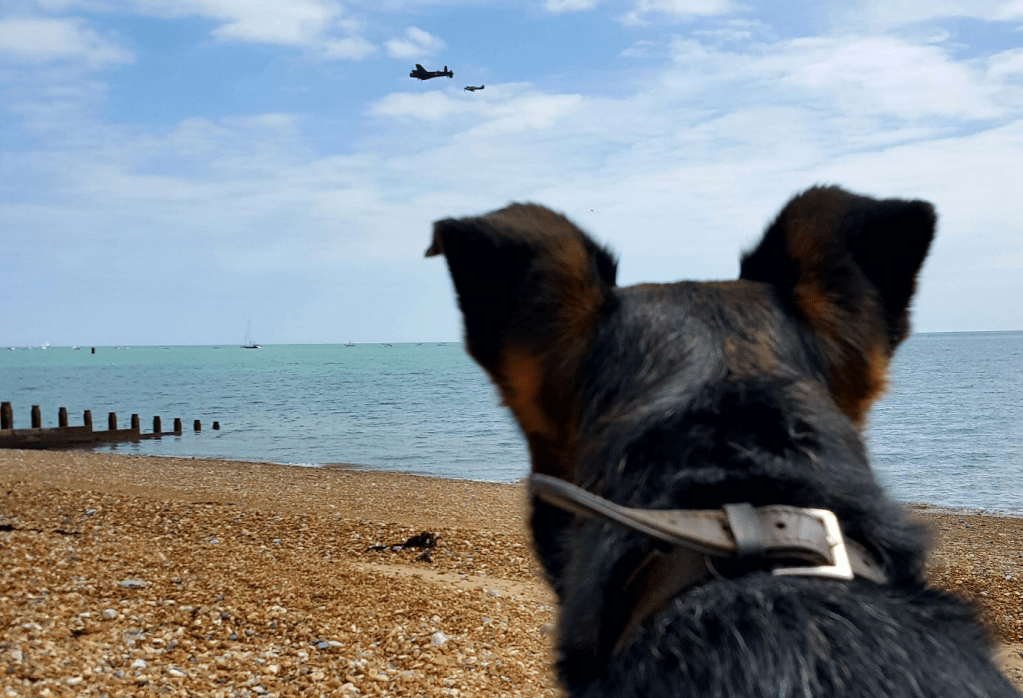
I will finish the post be repeating the photograph that Raymond took at the Eastbourne Air Show.
Lulu loved an air show, going to several with us over the years. Here she is at Eastbourne air show, enjoying the Lancaster Bomber and a Spitfire from the Battle of Britain Memorial Flight.
A report from BBC Future suggests there is a hidden reason
With six dogs feeding them is quite an exercise. I don’t really take much notice of what Jeannie does although I do know that we feed them kibbles, canned food and Jean cooks up beef for the dogs as well.
Recently BBC Future had a report saying that there is a hidden reason that processed foods are addictive. I am going to share that article with you.
ooOOoo
The hidden reason processed pet foods are so addictive
From potently smelly additives to offal concentrates, pet food companies turn to some surprising ingredients in the quest to make kibble delicious.
The cue might be a hand in a pocket, the opening of a cupboard door, or even a word said carelessly aloud – “dinner”. Before you know it, you’re tripping over a pet excitedly awaiting a portion of… dull-brown dried pellets. What’s in these mysterious morsels, that makes them as delectable as roasted chicken, wild salmon, or bundles of fresh herbs?
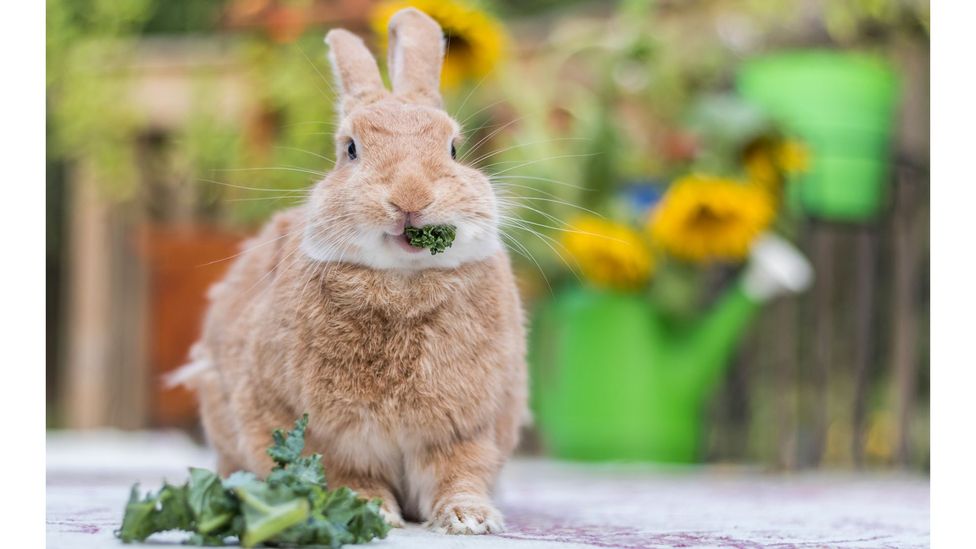
Take my flatmate, a small black rabbit. For a large part of every day, he can be found sitting attentively with his paws on his empty food bowl, awaiting his next portion of kibble – even though it looks like his droppings and smells equally unappetising. He used to have an automatic dispenser with a timer, but he learnt to throw it across the room to access its contents prematurely. No matter what delicacies I place before him – home-grown parsley, soft-cut hay, fresh carrot-tops, organic kale – he would always rather eat processed pet food.
It seems that this is not unusual. Anecdotes abound about pets whose thoughts are largely preoccupied with kibble, such as the cat that has a daily panic attack when it realises it has eaten all its pellets and the pragmatic German shepherd found carrying a bag of dog food around the streets of Houston after Hurricane Harvey.
As it happens, this addictive quality is carefully engineered. Big Pet Food is a multi-billion-dollar industry which invests heavily in research into “palatants” – ingredients that make our pets want to eat their products. And from potently smelly chemicalsusually found in rotting meat to an additive commonly added to potatoes to stop them discolouring, the quest to make the most scrumptious pet food has led to some surprising insights.
“Big [pet food] companies have huge departments that make palatants,” says Darren Logan, head of research at the Waltham Petcare Science Institute, part of the company Mars Petcare. “Just like we make them for humans, we make them for pets as well.”
Upper-class dogs
The first pet food was invented in 1860 by James Spratt, an enterprising lightning-rod salesman from the US state of Ohio. Legend has it that he had travelled to England for his business, and was looking out over the docks of Liverpool one day when he noticed stray dogs knocking back leftover hardtack biscuits.
This was a revelation for two reasons.
Rabbits eat fresh vegetables in the wild, but many kept as pets feast instead on processed pellets (Credit: Getty Images)
Firstly, hardtack were famously unappealing – loathed by generations of the soldiers and sailors who ate them, these simple slabs of baked flour and water were tougher than wood and sometimes hard enough to break your teeth. Their nicknames included “sheet iron” and “worm castles“, the latter because of the high proportion that were infested with maggots and weevils. The oldest piece of surviving hardtack was baked just nine years before Spratt’s dock visit, and still looks suspiciously well-preserved 170 years later.
Secondly, until that moment it hadn’t occurred to anyone to check what their pets would like to eat – or that this could be monetised. For as long as we had kept domesticated animals, they had been fed more or less the same food as humans, or expected to fend for themselves.
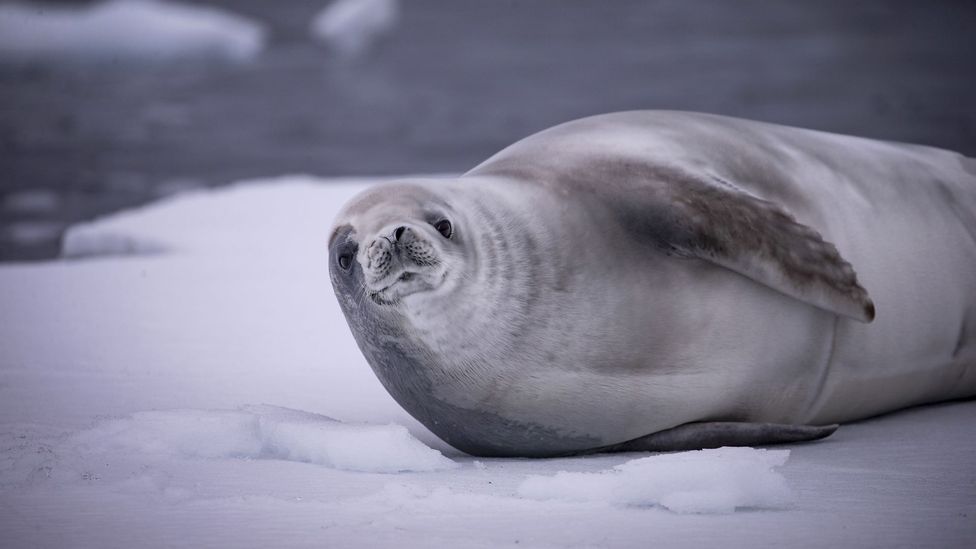
One striking example is the husky. In their native territory of Arctic Greenland, Canada and Alaska, Inuit hunter-gatherers have traditionally fed these dogs on seal meat, which comprises the majority of their own diet. Sled-dogs are so well-adapted to this that when the British Antarctic Survey brought them to Antarctica as a form of transport in 1945, they found that they struggled to digest commercial dog food. In the end, they had to kill a number of local seals each year, just to feed the dogs, before they were largely replaced with skidoos in the 1960s and 70s.
Spratt’s innovation coincided with a cultural revolution in the way people saw their pets
Meanwhile in Victorian London, dogs that were lucky enough to be looked after were either given table scraps or gruel. Even specialist exotic animals were fed everyday human food – the 20,000 or more tortoises imported from Morocco each year were mostly expected to survive on ordinary garden vegetables or bread soaked in water. Cats were considered street animals and rarely fed.
But Spratt had hit upon something entirely new. Over the coming months he developed the “Meat Fibrine Dog Cake”, a biscuit-like concoction of beetroot, vegetables, grains and beef of dubious origins that claimed to meet all the nutritional needs of his customers’ hounds. (While its packaging implied that it was the finest prairie beef, what it was actually made from was a secret he took to his grave.)
Spratt’s innovation coincided with a cultural revolution in the way people saw their pets – dogs and cats went from being viewed as mere utility animals or borderline-vermin to beloved family members to be coddled. Consequently, the Meat Fibrine Dog Cake was marketed as a luxury food for aristocratic pets.
The husky dogs taken on early Antarctic voyages had to be fed with freshly killed seals (Credit: Ozge Elif Kizil/Anadolu Agency/Getty Images)
The adverts labelled them “Dog’s Delight” and included gushing testimonials from wealthy customers. Ironically, Spratt’s also promoted the fact that they were chosen to feed the sled dogs on Captain Scott’s 1901 trip to the Antarctic, though we now know they would much rather have eaten seal.
Eventually the company branched out into cat food – “Spratt’s puts pussy into fine form!”, they said – and the rest is history. However, the science of pet food palatants still had some way to go.
Disgusting smells
Today it’s possible to buy specialised kibble for almost any kind of pet, from frogs to sugar gliders (a small marsupial). Most follow roughly the same formula – they usually contain some kind of base carbohydrate, assorted proteins and fats, sugars, a source of fibre, antioxidants or other preservatives, emulsifiers (which keep the fat in the food and prevent it from separating), vitamins and minerals, and colouring agents
More sophisticated versions may also contain probiotics or digestibility enhancers – such as chicory, which is often added to dog food – as well as enzymes, anti-parasitic compounds and minerals to prevent the build-up of tartar on teeth.
Oddly, there is very little relationship between how healthy a pet food is and its inherent deliciousness
To turn these ingredients into a dry pet food, it’s formed into a paste and “extruded” via a process that involves heating it up and forcing it through a plate with holes in it, to form an aerated product that matches the shape of the holes. It’s the same process that’s used to make puffed snack foods, with flavourings added in the final step – in the case of pet food, they’re either sprayed on or added as a powder.
Oddly, there is very little relationship between how healthy a pet food is and its inherent deliciousness. That’s because in the US, the EU and many other parts of the world, in order to describe one as “complete” – containing everything the body needs to be healthy – it must meet certain nutritional standards. These set out acceptable ranges for most ingredients, so manufacturers can’t just load up on sugar and fat to make it compelling.
“From my standpoint as a nutritionist, all pet foods are the same,” says Marion Nestle, professor emerita of nutrition, food studies, and public health at New York University.
The first processed dog foods were luxury products which ushered in the idea of the “pampered pet” (Credit: Kirn Vintage Stock/Corbis via Getty Images)
Instead, companies turn to chemistry.
Many animals rely heavily on smell to navigate the world around them, and this is often the main sense that’s targeted. While human noses contain around 50 million olfactory receptors, cats have 67 million, rabbits have 100 million and dogs have around 220 million. On the other hand, their sense of taste is generally less discriminating than ours – our relatively high density of taste receptors is thought to have evolved to help us cope with our diverse omnivorous diets.
The catch is that appealing to animals that find the smell of roadkill, sweaty socks, and vomit utterly enchanting – as carnivorous pets often do – while not making their human companions feel violently ill, is extremly tricky. “There is a slight paradox there, because the smells that cats particularly but also dogs seem to like are often the opposite of what humans like,” says Logan.
Nestle puts it more bluntly – “animals eat faeces”, she says. “They like strong animal odours and pet food manufacturers have a really difficult time, because they have to make it disgusting enough so that the animal will eat it, but not so disgusting that the owners won’t buy it.”
Pet food manufacturers have a really difficult time, because they have to make it disgusting enough so that the animal will eat it, but not so disgusting that the owners won’t buy it – Darren Logan
Examples include putrescine and cadaverine, colourless chemicals produced naturally by the breakdown of proteins. They’re largely responsible for the revolting smell of rotting flesh – and cats love them. While in human food, their levels are sometimes closely monitored as a way of ensuring the freshness and safety of meat, they’re often actively added to cat and dog food, either as offal extracts or lab-made additives.
In the case of naturally vegan animals, such as rabbits and guinea pigs, irresistible smells such as mint and oregano are sometimes added in the form of concentrates.
Japanese-inspired cuisine
Other insights are arguably more surprising. A recent study identified nine volatile compounds in common pet food flavourings that are linked to how delicious they are to dogs, including heptanal, nonanal, and octanal, which all have strong, fruity odours.
However, taste is also important – and here the preferences of carnivorous pets are not so different from ours.
One of the most popular additives in human food is the enigmatic “hydrolysed protein”, which is formed by breaking down the long strands of proteins into their constituent amino acids, usually using enzymes or hydrochloric acid. It imparts a flavour similar to that achieved by meat or vegetable stock, and often comes with MSG, which is produced as a by-product of the same reaction and is responsible for the savoury taste of tomatoes, cheese and Iberico ham.
Though hydrolysed proteins are produced artificially, the process is similar to what happens when you cook food for a long period of time – it’s a kind of pre-digestion, and is thought to contribute to the enticing smell of many brands of kibble.
Early processed dog food resembled the tooth-challenging hard-tack biscuits often taken on long sea voyages (Credit: Getty Images)
“The understanding of cat palatability is very similar to Japanese or Asian cuisine, where there’s a lot of focus on umami and another taste modality called kokumi,” says Logan.
Kokumi was discovered in Japan in 1989, and has been proposed as the sixth taste in humans, after sweetness, saltiness, bitterness, sourness and umami. It’s described as a kind of mouth-feel rather than a flavour per se – a texture that imparts richness and “thickness” to foods. Unlike the others, kokumi hasn’t yet been linked to a specific set of compounds, but foods that conjure this sensory experience include scallops, soy sauce, shrimp paste, yeast and beer.
While cats are particularly drawn to Japanese food, which is rich in meat and seafood, you’re unlikely to find them stealing ice-creams or doughnuts
The sixth taste is thought to be particularly popular with carnivorous animals, which may discern it via receptors in their mouths that evolved to detect calcium. And as you would expect, pet food companies have already begun targeting it with cocktails of flavour-enhancing chemicals.
But there are some flavours that you will never find in certain pet foods.
For example, most wild carnivorous animals lack the receptors for tasting sugar or carbohydrates. And unlike dogs, which have been living around humans and feasted off our scraps for up to 40,000 years, domestic cats have only been around for about 4,300. For the majority of that time, they were considered a kind of free pest-control that could fend for themselves.
So, while cats are particularly drawn to Japanese food, which is rich in meat and seafood, you’re unlikely to find them stealing ice-creams or doughnuts – unlike dogs, they simply haven’t been around humans for long enough to have evolved the ability to taste sugar.
Cats are irresistibly drawn to the chemical compounds found in rotting fish (Credit: Getty Images)
On the other hand, because vegan animals eat exclusively vegetable matter, which is often rich in fibre and carbohydrates, they tend to prefer sweeter pet food.
Finally, no list of palatants would be complete without pyrophosphate, described in Popular Science as “cat crack”. This common additive performs a number of roles in human food, such as preventing potato products from going dark after they’re cooked – none of which involve improving its taste. Nevertheless, cats go nuts for it, possibly because it intensifies the flavour of amino acids.
Pet food companies are now so successful at making food delicious that they’re increasingly encountering a dilemma – it’s almost too good. “The danger for cats and dogs today is the same as for people, it’s overconsumption,” says Andrew Knight, a professor of animal welfare and ethics at the University of Winchester.
Pet obesity is a growing problem in the developed world, with one survey of veterinary professionals at a vet show in London suggesting that around 51% of dogs, 44% of cats and 29% of small mammals are now overweight or obese.
Pet foods made from more sustainable ingredients such as insects or soya are generally just as acceptable to carnivorous pets as the real deal
According to Logan, this is not down to the way pet food is formulated, but humans succumbing to their beloved pets’ pleading gazes. “The reason we make pet food palatable is that if they don’t eat all the food that we give them, it won’t meet the nutritional needs that they require,” he says. “The real problem is owners feeding them too much – pets can’t open the packets themselves.”
However, there is an upside. There are mounting concerns about the environmental impact of pet food, too – in 2009, two New Zealand scientists estimated the planetary cost of keeping a dog as roughly twice that of having a medium-sized SUV.
Pets given too much calorific processed food may, just like humans, put on extra weight (Credit: Getty Images)
This is where palatants come in. Because most pet foods comprise a fairly tasteless base that is spruced up with delicious flavourings and smells, pet foods made from more sustainable ingredients such as insects or soya are generally just as acceptable to carnivorous pets as the real deal. (Though cats cannot be fed a diet that is meat free.)
“According to this really large-scale study that we’ve just finished, the animals on vegan pet foods seem to be just as happy as animals on meat ones,” says Knight, who is hopeful about their future potential.
“There is a broad recognition that the need to be more sustainable will have a big impact on the pet food business,” says Logan, who explains that the pet food company he works for has just released its own brand of insect-based pet food.
So, why do our pets find pet food so addictive? Well, because it’s been made that way. Just like us, our pets find it hard to say no to the food we have designed to be tasty.
* Zaria Gorvett is a senior journalist for BBC Future and tweets at @ZariaGorvett
ooOOoo
That is a really useful article that goes a very long way to explaining how ‘big business’ interferes with the food that our pets eat.
And did you read right at the end of the article: “According to this really large-scale study that we’ve just finished, the animals on vegan pet foods seem to be just as happy as animals on meat ones,” says Knight.
Dog owners might not be too impressed when they’re able to point out a fallen piece of chicken or a thrown stick to their pooch, but dogs’ ability to follow that seemingly simple gesture places them in rare air in the animal kingdom. Some research suggests that even chimpanzees, our closest evolutionary relatives, don’t understand pointing as well as dogs.
For decades, researchers have debated whether dogs obtain their ability to understand pointing by spending time with humans and learning it or if our furry companions are born with a capacity to comprehend this deceptively complex feat of communication.
ooOOoo
And if one follows that link above then one comes to Current Biology and, again, an extract:
ooOOoo
Summary
Human cognition is believed to be unique in part because of early-emerging social skills for cooperative communication.1Comparative studies show that at 2.5 years old, children reason about the physical world similarly to other great apes, yet already possess cognitive skills for cooperative communication far exceeding those in our closest primate relatives.2,3 A growing body of research indicates that domestic dogs exhibit functional similarities to human children in their sensitivity to cooperative-communicative acts. From early in development, dogs flexibly respond to diverse forms of cooperative gestures.4,5 Like human children, dogs are sensitive to ostensive signals marking gestures as communicative, as well as contextual factors needed for inferences about these communicative acts.6, 7, 8 However, key questions about potential biological bases for these abilities remain untested. To investigate their developmental and genetic origins, we tested 375 8-week-old dog puppies on a battery of social-cognitive measures. We hypothesized that if dogs’ skills for cooperating with humans are biologically prepared, then they should emerge robustly in early development, not require extensive socialization or learning, and exhibit heritable variation. Puppies were highly skillful at using diverse human gestures, and we found no evidence that their performance required learning. Critically, over 40% of the variation in dogs’ point-following abilities and attention to human faces was attributable to genetic factors. Our results suggest that these social skills in dogs emerge early in development and are under strong genetic control.
ooOOoo
And I am going to sneak one of the photographs in the original article!
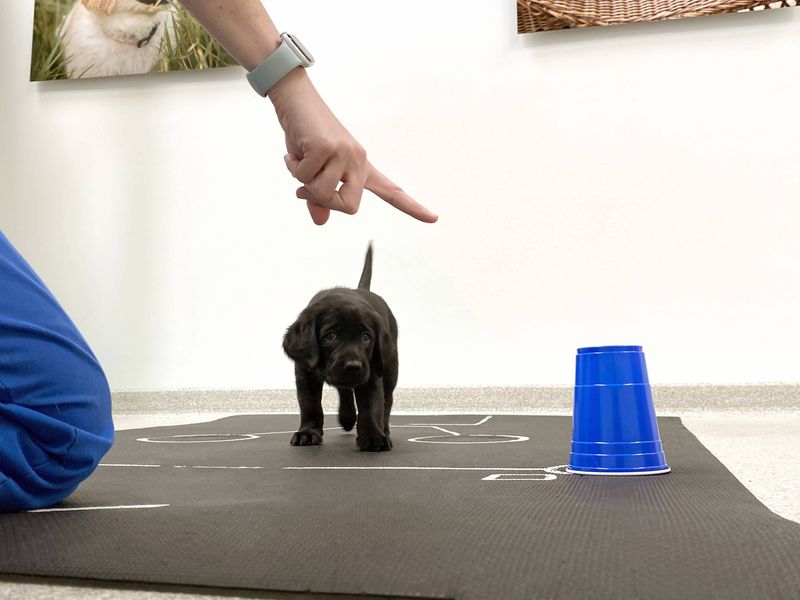
A young puppy responds to a human pointing to a treat during an experiment conducted by scientists at the University of Arizona. (Canine Companions for Independence)
And what better to close the post that one of the photos I showed yesterday of dear Joy.
:max_bytes(150000):strip_icc()/MaryJoDiLonardo-bw-treehugger-6d5044d7d4ae44298fb31df11a3d5a66.jpg)