The fourth selection of these wonderful photographs and the story behind each one.
ooOOoo
Second Place, Portrait
‘Waiting Beauty’ featuring Thalia, a Nova Scotia Duck Tolling Retriever. (Photo: Katarzyna Siminiak)
“This photo was taken during session around Old Market Square in Poznań. I’m still amazed how Thalia was calm and focus despite the city noise,” said Katarzyna Siminiak.
Second Place, Puppies
‘Sticking Together’ featuring Beagle mix puppies. (Photo: Charlie Nunn)
“Since early last year, my partner Raymond Janis and I have had the honour of supporting the Vanderpump Dogs Foundation in Los Angeles by photographing their adoptable dogs. In July 2017, we met these adorable beagle mix puppies,” said Charlie Nunn. “As Raymond tried to wrangle them, something magical happened and I was able to capture a perfect moment of a puppy family sticking together.”
Second Place, Rescue Dogs and Dog Charities
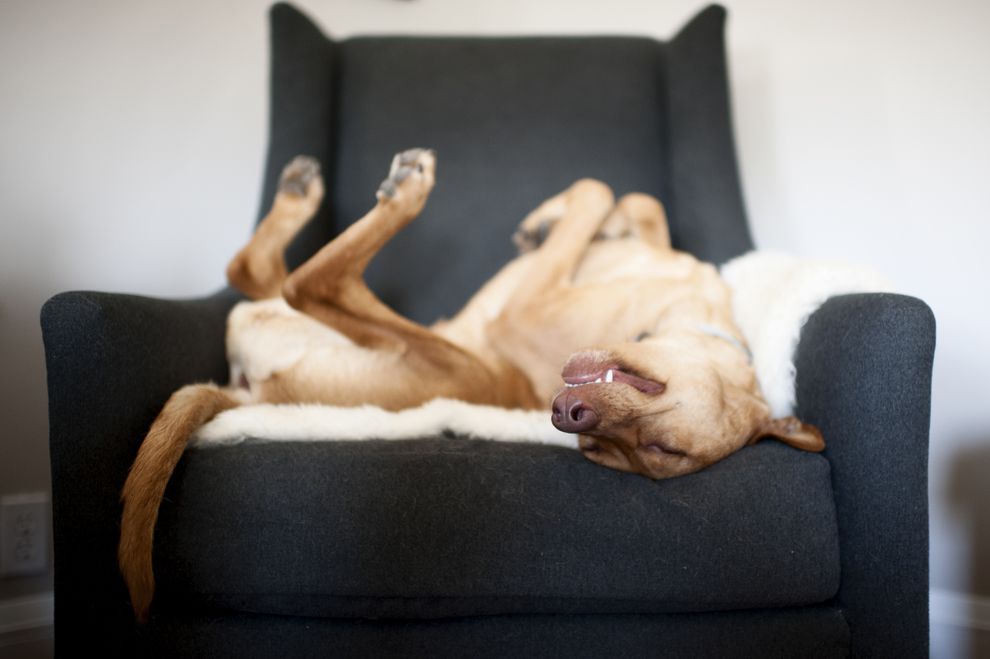
‘Happy Girl Rescued’ featuring Magda, a rescue dog cross breed (Hungarian Vizsla and Labrador Retriever). (Photo: Leslie Plesser)
“This particular image is of my own rescue dog, Magda. She was a bit hesitant and shy when my husband and I came home with our baby, but when the baby went off to nursery school, she would curl up on his rocking chair and roll her fur all over, settling in for a nice nap,” said Leslie Plesser.
Second Place, Young Pup Photographer
‘Dinner?’ featuring Dallas, a Whippet. (Photo: Sienna Millward)
“My name is Sienna Wemyss, I’m 10 years old and I’m from England, UK. When I grow up, I want to be a fashion photographer and designer. I have loved dogs since I first encountered one! There are so many different kinds of dogs and they are all so unique,” said Wemyss. “My dream came true in January this year when I became the proud owner of Dallas, a pedigree Whippet puppy. I was overjoyed!”
“I was relaxing on the sofa one day when Dallas crawled beside me. I put my arms out, expecting him to come and cuddle me. Instead, he gazed at the kitchen dreamily! If he could speak then, I bet he would have said, ‘Dinner?’ He looked very curious, so I grabbed my mum’s phone and captured the moment.”
Third Place, Assistance Dogs and Dog Charities
‘A Veterans Best Friend’ featuring Delta, a White Swiss Shepherd. (Photo: Craig Turner-Bullock)
“I am an ambassador for the Kotuku Foundation for Assistance Animals Aotearoa, who source, train and place dogs with people who have any diagnosed condition that dogs are known to be capable of assisting with. This includes diabetes, head injuries, depression and PTSI and many more,” said Craig Turner-Bullock. “Dion is a veteran who fought, and was injured, at the battle of Baghak in 2012. He experienced PTSI and says that ever since Delta came into his life she has made a huge difference. Dogs assisting veterans are now common around the world, but Delta is the first of her kind here in New Zealand.”
Third Place, Dogs at Play
‘Snowy Shenanigans’ featuring Daffy, Taz, and Wile E., Nova Scotia Duck Tolling Retrievers. (Photo: Sarah Beeson)
“We had just moved from one of the snowiest cities (Erie, PA) to the middle of nowhere USA (yes, I love you dear Indiana). I didn’t expect much snow, but come on! It was nearly mid-February and not a flake! My boys were used to lots of snow having lived in Erie but Daffy hadn’t a clue,” said Sarah Beeson. “And then, it happened: Old man winter arrived. Shame on him, while I was at work, no less! By the time 5 pm rolled around, I was in our backyard – Frisbee soaring and camera in hand. Meet Daffy, Taz, and Wile E. We LOVE frisbee!”
Third Place, Dogs at Work
‘I’ve got your back’ featuring Nyx, a German Shepherd Dog. (Photo: Ian Squire)
“For me, the title sums up the image perfectly from both sides. This is a young trainee Police Dog undergoing some initial training. Taken on a miserable, damp day, it shows elements of the bond, trust and relationship that is vital for the partnership between Police Dog and handler,” said Ian Squire.
ooOOoo
Just one more Sunday’s worth to come. Don’t know about you but I shall miss these. They are going to be a hard act to follow!
This was received yesterday afternoon regarding G and C Raw Dog and Cat Food Recall
ooOOoo
G and C Raw Dog and Cat Food Recall
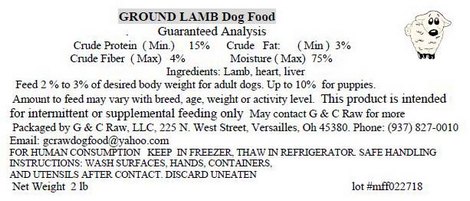
August 3, 2018 — G & C Raw of Versailles, OH is recalling 30 1–pound containers of Pat’s Cat Turkey Cat Food and 40 2-pound containers of Ground Lamb Dog Food because they have the potential to be contaminated with Listeria monocytogenes.
About Listeria Infections
Listeria monocytogenes can cause serious and sometimes fatal infections in animals eating the products.
Furthermore, there is risk to humans from handling contaminated pet products, especially if they have not thoroughly washed their hands after having contact with the products or any surfaces exposed to these products.
Healthy people infected with Listeria monocytogenes should monitor themselves for some or all of the following symptoms: nausea, vomiting, aches, fever, and diarrhea.
Listeria monocytogenes infections can also spread through the bloodstream to the nervous system (including the brain), resulting in meningitis and other potentially fatal problems.
Pregnant women are especially susceptible to Listeria infection, which can result in abortion.
The young, the elderly, and people with weakened immune systems also are more vulnerable.
Consumers exhibiting these signs after having contact with this product should contact their healthcare providers.
Pets with Listeria monocytogenes infections are rare, and pets may display symptoms such as mild to severe diarrhea, anorexia, fever, nervous, muscular and respiratory signs, abortion, depression, shock, and death.
In addition to the possibility of becoming sick, such infected animals can shed Listeria monocytogenes through their feces onto their coats and into the home environment and thus serve as sources of infection to humans and other animals in the household.
If your pet has consumed the recalled product and has these symptoms, please contact your veterinarian.
Where Was the Product Sold?
Pat’s Cat Turkey and Ground Lamb Dog Food products were distributed in OH, MI, IN, PAN, KY, NC, and GA.
They were also distributed by direct delivery by G & C Raw, LLC.
What’s Being Recalled?
The Pat’s Cat Turkey is sold in 1-pound clear plastic containers with the Lot number WWPKTF051618.
The Ground Lamb product is sold in a 2-pound plastic container with the Lot number MFF022718.
The Lot number codes are listed on the bottom right corner of the label.
No illnesses have been reported to date.
About the Recall
The recall was as the result of a routine sampling program by the Ohio Department of Agriculture which revealed that the finished products contained the bacteria
The company has ceased the production and distribution of the product as the company continues its investigation as to what caused the problem.
What to Do?
Consumers who have purchased Pat’s Cat Turkey Cat Food with the lot number, WWPKTF051618, OR Ground Lamb Dog Food with the lot number MFF022718 are urged to return it to G & C Raw, 225 N. West Street, Versailles, OH, for a full refund.
Consumers with questions may contact: G & C Raw, LLC at 937-827-0010 ET, or by email at gcrawdogfood@yahoo.com.
U.S. citizens can report complaints about FDA-regulated pet food products by calling the consumer complaint coordinator in your area.
From Lassie to Balto, pop culture loves stories of a dog coming to a person’s rescue. Anecdotally, people experience their dogs coming to their aid every day, like when one of us found herself “trapped” by her children under a pile of pillows only to be “rescued” by her noble collie, Athos.
But is there any scientific evidence behind these sorts of tales?
We recruited 34 pet dogs and therapy dogs – that is, those who visit people in hospitals and nursing homes – to take part in our study. Dogs included a variety of breeds and ages, from an elderly golden retriever therapy dog to an adolescent spaniel mix.
When they got to the lab, each owner filled out a survey about the dog’s training and behaviors while we attached a heart rate monitor to the dog’s chest to measure its stress responses.
In the experimental setup, dogs could see and hear their owners.
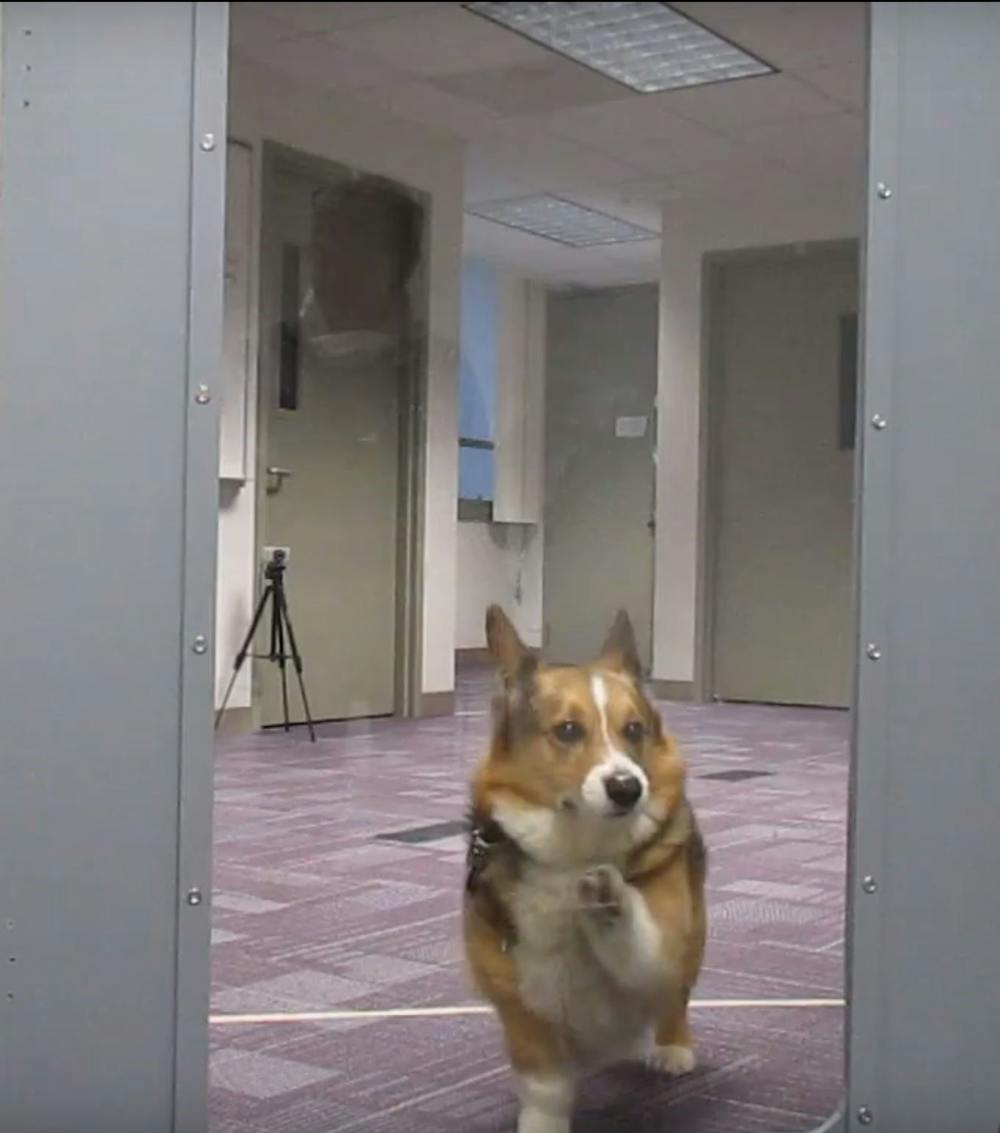
Next, we instructed the owner on how to behave during the experiment. Each owner sat in a chair behind a clear door that was magnetized shut – there as a barrier separating the dog from its owner – that the dog could easily push open. We assigned half the people to cry loudly and say “Help” in a distressed voice every 15 seconds. The other half of our volunteers we assigned to hum “Twinkle, Twinkle, Little Star” and say “Help” in a calm voice every 15 seconds. We ran the test until the dog opened the door or, if it didn’t, until five minutes elapsed.
Past research seemed to indicate that dogs would not help their human companions in distress, but it’s possible that the tasks to demonstrate “help” were too difficult for a dog to understand. So we adapted this straightforward task from previous researchin rats. It seemed like dogs would be capable of nudging open a door to access their owners.
Lassie, Timmy’s crying in the other room
We expected to find that dogs would open the door more often if their owner was crying than if they were humming. Surprisingly, that isn’t what we found: About half the dogs opened the door, regardless of which condition they were in, which tells us that dogs in both conditions wanted to be near their owners.
I’m on my way! Emily Sanford and Julia Meyers-Manor, CC BY-ND
When we looked at how quickly the dogs who opened the door did so, we found a stark difference: In the crying condition, dogs took an average of 23 seconds to open the door, while in the control condition, they took more than a minute and a half. The humans’ crying seemed to affect the dogs’ behaviors, taking just a quarter as long to push open the door and get to their human if they seemed distressed. We did not find any differences between therapy dogs and other pet dogs.
Other interesting results came when we looked into how the dogs were behaving in each condition. In the crying condition, we found the dogs that opened the door showed fewer signs of stress – and were reported by their owners to be less anxious – than dogs that did not open it. We also found that dogs that opened the door more quickly were less stressed than dogs that took longer to open it.
In contrast, dogs in the humming condition showed a slight tendency to open more quickly if they were reported to be more anxious. This may mean that dogs who opened in the humming condition were seeking their owners for their own comfort.
Helping requires more than just empathy
Because both humans and animals tend to be more empathetic toward individuals with whom they are more familiar or close, we thought that the strength of a dog’s bond with its owner might explain some of the differences we saw in dogs’ empathetic responses.
As soon as the test was over, we let the dog and owner reunite and cuddle for a few minutes to make sure everyone was calm before the next part of the experiment. Next, we turned to a test called the Impossible Task to learn a bit more about each dog’s emotional bondwith its person.
Hey, a little help down here for your furry friend? Julia Meyers-Manor and Emily Sanford, CC BY-ND
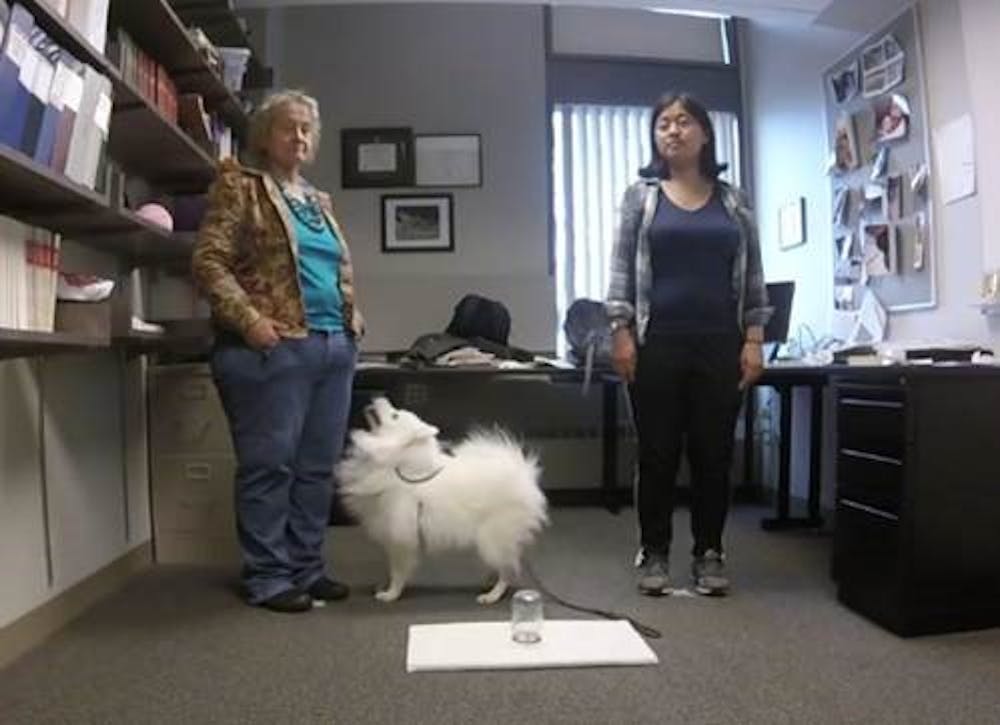
In this task, the dog learns to tip over a jar to get to a treat; then we lock the jar onto a board with a treat inside and record whether the dog gazes at its owner or a stranger. There have been some mixed results with this test, but the idea is that a dog who spends more time looking at their owner during this task may have a stronger bond with their owner than a dog that doesn’t spend much time looking at their owner.
We found that dogs who opened the door in the crying condition did gaze at their owner more during the Impossible Task than non-openers. On the other hand, it was the dogs who didn’t open the door in the humming condition that gazed at their owners more than those who opened it. This suggests that openers in the crying condition and non-openers in the humming condition had the strongest relationships with their owners.
Taken together, we interpreted these results as evidence that dogs were behaving empathetically in response to their crying owners. To behave empathetically toward another individual, you must not only be aware of the distress of another person, but also suppress your own stress enough to help out. If you are overwhelmingly stressed, you might either be incapacitated or try to leave the situation entirely. This pattern has been seen in children, where the most empathetic kids are the ones who are skilled at regulating their own emotional states enough to give help.
It appears to be the case with these dogs as well. Dogs with weaker emotional bonds to their owners, and those that perceived their owners’ distress but were unable to suppress their own stress response, may have been too overwhelmed by the situation to provide any help.
While everyone hopes their dog would help them if they ever were in trouble, we found that many of the dogs did not. People involved in our experiment, particularly those with dogs that didn’t open the door, told us many stories of their dogs coming to their aid in the past. Our study suggests that in some cases if your dog doesn’t help you, it’s not a sign he doesn’t love you; Fido might just love you too much.
It was the fickle finger of fate that led me to the arms, metaphorically speaking, of a core process psychotherapist back in Devon in the first half of 2007. That counselling relationship that revealed a deeply hidden aspect of my consciousness: a fear of rejection that I had had since December, 1956. That finger of fate that took me to Mexico for Christmas 2007 and me meeting Jean and all her dogs. That finger of fate that pointed me to the happiest years of my life and a love between Jeannie and me that I could previously never ever have imagined.
Here’s the full account. (But this is quite a long post and has the potential to cause some pain. Of course, I don’t intend that. But it’s best to mention that now.)
First we need to go back to that evening of December 19th, 1956. I had turned 12 on November, 8th and had just completed my first term at a nearby Grammar School. Then the family, as in Mum, Dad, me and my younger sister Elizabeth, were living comfortably in a detached house in Toley Avenue, a road off the main street that comprises Preston Road.
Preston Road is one of the outer suburbs of London to the North-West, sandwiched between Wembley, closer in to London, and Harrow, a little further out.
Anyway, on that evening of the 19th my mother came into my bedroom, located at the front of the house and next to Mum and Dad’s bedroom, at the usual time to say ‘Good night’ to me.
But while it was the usual time for Mum to be saying goodnight to me, clearly something was different this particular evening.
Mum sat down on the edge of my bed, just where my knees were, looked at me, and said, with pain in her voice: “Paul, you do know your father isn’t very well. He may not live for much longer.”
To be honest, all these many years later, I have no recollection as to whether or not I was aware that my father wasn’t very well.
Mum then leaned over to me, gave me my goodnight kiss, got up, and went out of my bedroom switching off the room light as she closed the door. As she always did and no different to any other evening.
Likewise, as with any other evening, I went off to sleep within a few minutes.
However, when I awoke the following morning, the morning of December 20th, it was clear that something terrible had happened during the night. Let me explain that my father had had two daughters with his first wife, prior to meeting Mum, and I loved them both and saw them as elder sisters. The eldest was Rhona and she was a registered nurse (SRN). (My other ‘sister’ was Corinne.) Of course, Rhona was helping Mum care for Dad.
I got up and went downstairs. There was Rhona in the kitchen. Rhona came up to me and held me very tightly and then quietly told me that our father had died during the night. Rhona went on to add that Mum had thought it best not to wake me and Elizabeth and somehow arranged not only for the doctor to come in to certify Dad’s death but also for our father’s body to be removed from the home. Elizabeth and I had slept through it all!
I don’t recall having any emotional reaction to Rhona’s news; not even crying. It was if it was all just too unreal to take in.
A few days later, Mum, very clearly in her own mind doing her best to protect me and Elizabeth from pain, subsequently thought it wise that we didn’t go to our father’s funeral and cremation.
Now I have not the slightest doubt that many, if not all, of you will have cringed on reading the above.
Once back at school for the first term of 1957, I soon became aware of being the target of a degree of bullying, presumably because I was showing my grief through my behaviour and attitude, that my academic performance rapidly fell apart leading on to me leaving school before I went on to the Sixth Form.
The other thing that I was aware of in 1957, and for every December 20th thereafter, that this day was always a tough one. A day when I remembered with a degree of sadness and emotional pain that fateful night and morning in 1956.
Nevertheless, my adult life really was (is!) a wonderful journey for me. It included a period working as a freelance journalist out in Australia in the late 1960s, becoming an Office Products salesman for IBM UK after returning from Australia to England and then in 1978 starting my own company, Dataview Ltd., in the early days of the personal computer revolution. Then after eight whirlwind years with Dataview growing in leaps and bounds each year, being approached in 1986 by a group of investors who wished to buy me out: I said “Yes”. That resulted in me going to live on a yacht, Songbird of Kent, a Tradewind 33, out in Cyprus (Larnaca Marina).
Tradewind 33 – Songbird of Kent. My home for five years.
While in Cyprus I got to know really well the wonderful, inspiring Les Powells, a three-times solo circumnavigator on his yacht Solitaire, and that thanks directly to Les offering me some very good advice, me experiencing the beauty, and the fear, of solo sailing out in The Atlantic and returning to Plymouth, in Devon, England, via Horta in The Azores, on the 16th June, 1994.
But! But! But!
But there was another part of my adult life that wasn’t such a wonderful journey. My relationships with the opposite sex! Culminating in my third wife, Julie, announcing on the day of the 50th anniversary of my father’s death, as in December 20th, 2006, that she was leaving me. (The reality of what she did to me was not pretty but I will spare you the details.)
Let me explain a little more.
After I had returned to England, sailing into Plymouth, in 1994, I subsequently sold Songbird of Kent and purchased a small house in the little village of Harberton, just a few miles out of Totnes, in South Devon. An easy decision to stay in South Devon because both Rhona and Corinne had their family homes close to Totnes.
Upper Barn, My home in Harberton.
I quickly became involved in the local business community undertaking a variety of coaching roles under the umbrella of Sales and Marketing; I was then a Chartered Member of the Institute of Marketing. In turn, Julie and I met each other and we became married.
In the Autumn of 2006, a Core Process Psychotherapist came to me seeking some business advice. ‘J’ had had many years of coaching individuals one-to-one but had the idea, the good idea to my mind, of coaching the directors of companies in the whole process of listening to their employees and offering advice and guidance whenever there was the potential of conflict. If the employees worked more effectively together then ‘J’ believed the company as a whole would be more effective in reaching their goals.
‘J’ had no idea how companies worked, for want of a better term, and my role was teach ‘J’ the fundamentals of operating the sort of company that was common to South Devon.
That’s what I was doing up to that fateful day of December 20th, 2006.
Because upon hearing the news that my then wife was leaving me, I simply blew apart emotionally. In the most terrible manner that I had never experienced before.
Very early on in January, 2007 I felt that I was descending into some bottomless pit of despair. In desperation I rang ‘J’ and explained what had happened on the 20th. ‘J’ listened and then said, quite properly, that he couldn’t see me as his client because we already had a working relationship. I pleaded and pleaded with ‘J’ to allow me to be his psychotherapy client. Finally, ‘J’ agreed but on the very strict condition that if he thought the counselling relationship wasn’t working then we would terminate it. He asked, and received, my understanding and agreement to that condition.
It wasn’t long thereafter before ‘J’ was asking me a little of my early experiences and I recounted that night of December 19th-20th and how I had not been able to say ‘Goodbye’ to my father.
‘J’ was quiet for a few minutes and then said:
“Paul, you have a son don’t you?”
I silently nodded.
“How do you think Alex would react if your death was handled for him in the same manner as your mother handled it for you?”
I gasped, conscious of how much I loved Alex, and Maija my daughter, and could hardly get the words out of my mouth: “He, he, … he would think he had been emotionally rejected ….”, continuing, “Oh my goodness! Oh! Oh! Oh! Oh, my sainted aunt! That’s it! I interpreted what happened back then when father died as rejection. That I wasn’t important to my father. So that’s what I have been experiencing all my adult life – a fear of rejection! But until now that fear has been completely submerged in my subconscious! Wow!”
That is the reason why, not to sound too immodest, I have been successful in all matters to do with my working life: I did everything to be accepted by my customers, my managers, my associates, and so on.
But it was also the reason why I had been so unsuccessful in my many, many relationships with women. Why I was unfaithful to my first wife. Why I could never say “No” to an emotional relationship with a woman, whether or not that woman had the potential to be a good long-term companion. Because I behaved in ways that minimised the chances of that woman rejecting me. That was why my last wife, Julie, before I met Jean, so gravely affected me when she chose, quite deliberately, to tell me she was leaving me on the 50th anniversary of my father’s death.
So that’s how ‘J’ held my hand, metaphorically speaking, and walked me into the light of how the past had affected me.
Dear, dear reader of Learning from Dogs, I do hope this makes sense and possibly in some small way this post holds out a hand to you.
I will close with this. Heard on a film that Jean and I recently watched.
Unless you understand yourself, can you be truthful to yourself?
The journey inwards is the most important and rewarding journey we can take!
You will just love this story about Terri and Zero.
Enough said!
ooOOoo
My Heart Dog
So what is a “heart dog”? I have heard this saying in the past and was never sure of exactly what it meant. I found a great description and definition from the site Jenna and Snickers. Here is what she writes…
“In my opinion, your heart dog is that once in a lifetime – maybe twice if you’re truly blessed – soul mate dog. He or she is the one you click with similarly to, but different from, how people in love click. There’s an understanding, a bond stronger than most, and a special level of communication. Your heart dog “gets” you and you get him or her right back.”
This is so me and Zero! I have had a couple of dogs in the past when I was growing up, but none have been my dog … my heart dog … like Zero has.
So how did I end up with this amazing dog in my life?
When my son ,Dylan, was younger he started going through that phase of wanting a little brother or a sister. Well, since I wasn’t even dating at the time, I knew that wasn’t going to happen so I figured it was time for a dog!
Side Note: I often joke that if I had the dog first, I might not have had the kid. I mean, if I tell Zero to sit, she just sits…right then…no questions, no complaining, no whining, she just does it. So much easier! LOL
We found Zero at our local Humane Society. She was just under a year and a half old and had been picked up as a stray so they didn’t know anything about her. When we got her out of her kennel and into the big yard so we could see her more, she hardly even came over to us. There was just something about her, though, and we knew she was the one.
We brought her home and the next day when we took her to the vet, learned that she had heart worms…bad. My mom reminded me that the humane society said they would take her back if it was within 72 hours but I just couldn’t do that. First, I was afraid nobody else would adopt her knowing she had heart worms, and second, she was my dog. Like we already totally bonded and I just knew she was my dog.
Long story short, we put her though the pretty intensive heart worm treatment, killed all those little buggers off and she was healthy!
We also learned that she was a pretty fearful dog…scared of so much. She would not walk up the stairs to our apartment so I had to carry her up and down for about a month until we finally coaxed her to walk up and down the entire flight by herself. She had no idea what the TV was and would hide behind my chair whenever it was on. She had no idea how to play with toys. When I would try to teach her fetch and I would throw the ball she would just look at me like, “well, that was stupid…why did you do that?”. She had no idea of anything.
To help socialize her more and build her confidence, we put her in agility with Dylan as the handler. They did great! He was about nine at the time and they even competed and won a couple of times! After that she continued to blossom. She learned how to play with toys, learned a ton of commands (she’s so super smart!) and she even got her CGC (Canine Good Citizen) certificate.
It was so great seeing her come out of her shell and watch her confidence grow. Also during this time she was becoming closer and closer to Dylan and I. We were her pack and she was not happy unless we were all together. In fact, when Dylan would run her in agility trials, I would have to go hide because if she saw me she would stop in the middle of her run and charge over to me. Same would happen if I ran her…she would have to search for Dylan. She likes it when all three of us are together.
Now she is thirteen years old and still going strong. The vet even told me at Zero’s last check up that she can’t believe Zero is thirteen and would never guess she was that old by looking at her. She “checks out” to appear much younger. That is 100% okay with me. I have already told Zero she cannot get any older and she must live forever.
She truly is my heart dog. We just know what the other one is thinking. We have our routine, our habits, and our quirks. She loves me unconditionally and I love her back just the same.
Zero Facts:
What type of breed is she? I don’t know for sure. Someone asked me once if she was a kelpie. I had not even heard of that breed before so I looked it up and found pictures online that I could swear were Zero! So, by looks alone yes, I would think she is kelpie. What do you think?
ooOOoo
Of course, I was interested in Terri’s background and this what she wrote me:
As far as my background…had many jobs in the past but the longest was most recent when I worked as a personal trainer. I was in the fitness industry for about 10 years. Got a little burned out and was trying to figure out what’s next. Knew I wanted to roam and when my son moved out I figured now is the time, so I started planning. Zero and I will be taking off in mid-August to roam and explore the US in my Honda Civic and a tent. Can’t wait!!
Plus Terri explained how Zero took on that name:
One of our favorite movies at the times was ‘The Nightmare Before Christmas’ (I still jam out to that soundtrack #soGood). The main character (Jack Skellington) has a dog named…yep…you guessed it…Zero.
With Terri going on to add the commands and tricks that Zero has learnt.
Sit
Stay
Bang aka Play Dead
Be a bear (stands up on back feet)
Be sneaky (crawls with her belly on the floor)
Shake Hands
High Five
Roll Over
Here (Runs to me and sits at my feet)
Then a list of Zero’s favorite games:
Hide and Seek (with me and/or Dylan)
Find It : basically hide and seek except I hide her toy and make her find it
Keep Away with her frisbee (Dylan and I throw her frisbee back and forth and she’s in the middle jumping up and trying to get it..she freaking loves that game!)
Fetch with her tennis ball
Finally, Terri offers some random facts [Ed: “she” being Zero not Terri!!]:
She likes apples but wont eat a piece unless it’s peeled #soPicky
She looks up at the sky more than any dog I’ve ever seen. She loves gazing at the sky day or night.
She does not like any delivery truck. Fed Ex, UPS, Mailman, etc…Other trucks are fine
She hates storms and shakes like a leaf when there’s thunder
She’s awesome at soccer and it’s almost impossible to get the ball past her
Her favorite toy is her tennis ball
Her middle name is “Marie”. Not sure why, it just slipped out of my mouth one day when she was in trouble..lol….Zero Marie…
She would always help me get Dylan up in the mornings by burrowing under him and raising him up out of bed
So there you have it; a little bit about my heart dog and my best friend. I really can’t imagine life without her. She’s my protector, my companion, my best friend, my partner in crime … pretty much my everything. She makes my life so much better and I have learned as much from her as she has me.
(All the photographs are by Terri.)
ooOOoo
There are millions out there that have the most beautiful and loving relationships with their dogs.
There are far, far fewer who can articulate just what that love means to the level that Terri has done!
Simply because it offers some very interesting insights into the history of canines in The Americas.
Enjoy!
ooOOoo
European Dogs Devastated Indigenous American Pup Populations
Disease, cultural change wiped out pre-contact populations, leaving no trace of ancient dogs’ DNA in modern counterparts
A dog buried in Western Illinois 10,000 years ago is one of the oldest dogs known in the Americas, and the oldest dog burial in the world. These native American dogs were almost entirely wiped out when European colonists arrived. (Del Baston, courtesy of the Center for American Archeology)
The first humans to populate the Americas arrived from Siberia via the Bering land bridge around 16,000 years ago. Man’s best friend, the domesticated dog, didn’t arrive for another 6,000 years or so, crossing over just in time to avoid the land bridge’s collapse, but archaeological evidence suggests that the two species lived in harmony for thousands of years—at least until 1492, the year Columbus sailed the ocean blue.
According to a study published in Science on Thursday, “pre-contact” American dogs possessed a unique genetic signature derived not from the North American wolf, as previously thought, but from domesticated Siberian ancestors. Today, that singular genome has all but disappeared, eradicated by the 15th-century arrival of European settlers and their canine companions.
National Geographic’s Maya Wei-Haas explains that European dogs, like their human owners, probably carried diseases that pre-contact dogs were unequipped to fend off. The colonists preferred European breeds and discouraged their pets from mating with the native dogs, which study co-author Angela Perri, a zooarchaeologist at Durham University, says were viewed as “wild” and “vicious.”
“This study demonstrates that the history of humans is mirrored in our domestic animals,” Greger Larson, director of the Palaeo-BARN at Oxford and senior author of the study, said in a statement. “People in Europe and the Americas were genetically distinct, and so were their dogs. And just as indigenous people in the Americas were displaced by European colonists, the same is true of their dogs.”
To trace the story of these pre-contact dogs, researchers studied DNA found in the mitochondria of 71 North American and Siberian dog bones. The remains, which date from roughly 10,000 to 1,000 years ago, included those of the Koster dogs, a group of four domesticated canines discovered at a burial site in western Illinois during the 1970s. (A second study, newly published in pre-print server Biorxiv, further discusses these early dogs.) As Science’s David Grimm notes, the Koster pups lived about 10,000 years ago, making them the oldest known dogs in the Americas. Perri, referencing the animals’ small, slender stature, tells Grimm that “it wouldn’t be surprising if they were all used as hunting dogs.”
DNA analysis allowed the scientists to identify pre-contact dogs’ closest relatives: a group of dogs native to Zhokhov Island, a frigid Arctic site situated about 300 miles north of the Russian mainland. The Atlantic’s Ed Yong writes that these dogs were the first to be bred for a specific purpose, namely pulling their humans’ sleds.
In addition to shedding light on the first American dogs’ origins, the study offers insights on pre-contact dogs’ connections—or rather, lack of connections—with modern dogs. Researchers compared the 71 ancient genomes with DNA from more than 5,000 modern dogs, including breeds like chihuahuas and Carolina dogs, which are commonly thought to be descended from indigenous populations. The highest level of pre-contact DNA conclusively found in any of the modern dogs was four percent, a negligible result, the New York Times’ James Gorman reports.
The team’s findings suggest that modern American dogs are descended solely from Eurasian breeds introduced by European settlers. Perri tells Wei-Haas that the scientists expected to find evidence of interbreeding between the pre-contact pups and the new arrivals. Instead, they realized that the native dogs had virtually vanished.
“It is fascinating that a population of dogs that inhabited many parts of the Americas for thousands of years, and that was an integral part of so many Native American cultures, could have disappeared so rapidly,” Laurent Frantz, study co-author and evolutionary geneticist at Queen Mary University of London, said in a statement.
Oddly enough, scientists found that the closest surviving trace of pre-contact dogs’ DNA is found in a sexually transmitted canine cancer. The Los Angeles Times’ Deborah Netburn writes that the disease, known as canine transmissible venereal tumor, stems from the genetic mutation of a single North American dog that lived up to 8,225 years ago. The tumor cells spread through mating and carry a copy of that original DNA, allowing researchers to paint a clear picture of the “founding dog,” or patient zero.
Elaine Ostrander, chief of the cancer genetics and comparative genomics branch at the National Human Genome Research Institute, tells Wei-Haas, “It’s the world’s oldest continuously propagated cell line, which is really, really remarkable.”
More evidence that supports the sense, the very great sense, in going vegan!
Some three weeks ago, on June 15th to be exact, I published a post called On Veganism. Jean and I had just watched a film What The Health and what it presented in terms of eating chicken and fish convinced us to immediately go the final step, as in going from being vegetarians to vegans.
Many of you offered kind words and encouragement. Colette Bytes included a link to a blog post that she published in April, 2017. It is called Vegan Future and with her kind permission that post is republished today.
It is chock full of information and videos so do settle down and let all the information provided by Colette ‘speak’ to you! This is really worthy of an evening spent watching all the videos!
ooOOoo
Vegan Future
by Colette Bytes, April 21st 2017
Seventeen percent of human caused greenhouse gases, come from meat and dairy production. It is actually a greater figure than all CO2 produced by global transportation!
Posted by The Daily Conversation
But is it enough, just to reduce our animal consumption, or should we look at the compelling evidence that we need a Vegan future!
Animal and Environmental Ethics
On a previous blog, I mention the documentary ‘Earthlings’ narrated by Hollywood actor, and lifelong Vegan, Joachim Phoenix. ‘Earthlings’ is the definitive Vegan film on exposing the meat and dairy industry in the US. And while other countries may not have factory farming on such a broad scale, many of the same procedures occur on a smaller scale. No member of the general public is allowed into the kill sections of slaughter houses for a very good reason. It is horrendous to watch a fear-ridden animal that wants to live, face its painful death.
This filmed reaction of a viewer watching ‘Earthlings’ is an average reaction. It is a moving experience for anyone with compassion. Posted by Raw Vegan, Fruitarian, Michael Lanfield, it is worth watching if you cannot bring yourself to actually watch the devastating, but common images of the meat, dairy and egg industry.
Switching your food intake to a plant-based Vegan diet, (eliminating all meat, dairy, egg and seafood), is the biggest change with the most impact that you can possibly make to reduce climate warming, land and water degradation, extinction rates, deforestation, pollution, human and animal suffering, and war (often over lack of food and water resources). And It is the number one thing you can do to improve your own health. It can also cut the cost of your food bill while you continue to eat a healthy diet.
There is no downside to this change if you keep your diet healthy and balanced. You can even eat processed plant-based, meat-like products if you want, but they may cost a similar amount to having meat in your diet.
The United Nations has already stated that we need to switch to a plant based diet if we are to survive.
Australian, James Aspey, a survivor of thyroid cancer, has become a Vegan Speaker (on ending animal cruelty) with his own Youtube channel, but he is also one of an exponentially growing number of people who have improved their own health through a plant based diet switch.
Lots of new Ethical, Healthy Vegan Ready Made meals like this brand are appearing now on Super market shelves. So even if you don’t ‘do cooking’ you can still find nutritious Vegan options. And Vegan restaurants, holidays and lifestyles are all available now.
And new research is beginning to show that meat and dairy are actually toxic to our body.
Meat is a neurotoxin, Posted by 8/10/10 in London
And for when you have time, do listen to this amazing and life changing Cardiologist’s 1:20:00 hrs talk…on your likelihood of developing heart disease, diabetes, and other life threatening diseases on a meat based diet…and also look at doctor Greger’s work and videos too (links below)
Robert Ostfeld, Cardiologist and Director of a US Cardiology Centre. Posted by Jeanne Schumacher, ‘Plant Power’ YouTube channel
Elite Athletes and Hollywood Icons
You’d be surprised how many top athletes eat a vegan diet just to be at the top of their sport…Names like Serena and Venus Williams, Novak Djokovic, and Andy Murray, are all Vegans. Winner of the world Strongman competition is Vegan. Many top boxers eat vegan. Look at PlantBased News on YouTube for lots of informative videos on who is Vegan. And see their 100 countdown of awesome Vegan celebrities.
Top 2017 Vegans posted by PlantBased News
Making the change to Vegan
Eating junk plant-based foods is not advisable as it will lead to nutrient deficiencies…and ultimately a disease state, so you can’t survive on potato crisps, popcorn, and bread….there is a responsibility to eat a balanced fresh food diet to be healthy.
You do need to eat proteins (nuts, legumes, grains, beans, some veggies). You will need to supplement with Vitamin B12, a soil- based, active nutrient essential for our brain & nervous system which we do not get in our diet as we no longer forage and eat unwashed food like our ape ancestors. And you may need to supplement Vit D3 for bone health as we no longer spend enough time outside in the sunshine. Essential oil, Omega 3 can be obtained from flax and hemp seeds. The rest, you should be able to get from a ‘good’ Vegan diet with lots of vegetables, fruits, legumes, beans, grains and nuts. Just 15 grams of nuts per day will give you enough protein to be healthy. Eating Kale and other dark leafy plants, beans, whole grain rice, legumes and some nuts, sweet potatoes are all sources of Calcium. The key to health is to have a full, varied selection of whole plant-based food!
Meat and Dairy Industry Scare Tactics
The Meat and Dairy industry packers are worried that they will lose their industry and are fighting back with their political power and disinformation campaigns designed to scare us, but the smart companies will begin to think about how they can profit from exponential growth in the Vegan food industry.
Corporate Panick, posted by PlantBased News Research
There are so many online sources to help you buy, and cook a healthy plant-based diet. Just type ‘Vegan Recipies’ into a search engine and you will find fantastic yummy recipes. You will love the variety and the taste of your new diet. And if you are not into cooking, mainstream supermarkets are now starting to stock a growing variety of vegan ready made meals, and starting to label Vegan choices.
An all round informative website on Vegan trends, news headlines, and increasing popularity of healthy lifestyles including a plant- based diet. Medical based RESOURCES on how to stay healthy on a Vegan diet
Dr Michael Greger, MD, author of Best Seller, ‘How Not to Die’ and distributer of free videos and research on how plant based diets affect us. I have followed his work for years and he backs it all up with science based studies…his short videos and reports are packed with hundreds of supportive reports for a plant based diet.
Vegan Junction list of Plant-Based Diet health professionals More Videos
Open Your Eyes – Toronto Pig Save posted by Bite-Size-Vegan
How not To Die – plant based diet by Dr Michael Greger Latest documentaries to look up
Carnage (only on BBC iPlayer)
The Game Changers
Eating our way to Extinction
What the Health!
Plant Pure Nutrition
And there are so many more resources out there ! Join the growing trend to make this a better world for everyone, by making the biggest difference you can when you shop for food. Pick whole, plant-based, foods and kick the ‘animal eating’ habit to be healthy, stop animal cruelty, and save the environment and reduce global greenhouse gases. What could be a more worthy goal?
This is so much more than just a blog post from Colette. It is a fantastic source of information, from a variety of sources, about why it makes such good sense to become a vegan.
I shall include it as a link from the home page of Learning from Dogs so it may serve as a reference long after it was republished today.
Then what about dogs eating a vegan diet? Sounds a bit strange? Maybe not! I shall be exploring that option with Halo, a company based in Florida, who claim:
Can dogs be vegan? Unlike cats, who are obligate carnivores, dogs can be fed a vegan diet as long as it’s high quality and nutritionally balanced like Halo®Garden of Vegan® dog food.
More on this next week.
In the meantime, I’m taking a day off tomorrow but please do read George Monbiot’s latest post, being republished here on Friday, 6th July.
Why it’s time to curb widespread use of neonicotinoid pesticides
ByJohn F. Tooker Associate Professor of Entomology and Extension Specialist, Pennsylvania State University
Planting season for corn and soybeans across the U.S. corn belt is drawing to a close. As they plant, farmers are participating in what is likely to be one of the largest deployments of insecticides in United States history.
Almost every field corn seed planted this year in the United States – approximately 90 million acres’ worth – will be coated with neonicotinoid insecticides, the most widely used class of insecticides in the world. The same is true for seeds in about half of U.S. soybeans – roughly 45 million acres and nearly all cotton – about 14 million acres. In total, by my estimate, these insecticides will be used across at least 150 million acres of cropland, an area about the size the Texas.
Neonicotinoids are very good at killing insects. In many cases they require only parts per billion, equivalent to a few drops of insecticide in a swimming pool of water.
In recent years, concerns have been raised about the influence of neonicotinoids on bee populations. As an applied insect ecologist and extension specialist who works with farmers on pest control, I believe the focus on bees has obscured larger concerns. In my view, U.S. farmers are using these pesticides far more heavily than necessary, with potential negative impacts on ecosystems that are poorly understood.
Pesticides on seeds
Most neonicotinoids in the United States are used to coat field crop seeds. Their role is to protect against a relatively small suite of secondary insect pests – that is, not the main pests that tend to cause yield loss. National companies or seed suppliers apply these coatings, so that when farmers buy seed, they just have to plant it.
The percentage of corn and soybean acreage planted with neonicotinoid seed coatings has increased dramatically since 2004. By 2011, over 90 percent of field corn and 40 percent of soybeans planted were treated with a neonicotinoid. Between 2011 and 2014, the area treated crept toward 100 percent for corn and 50 percent for soybeans. And the mass of neonicotinoids deployed in each crop doubled, indicating that seed suppliers applied about twice as much insecticide per seed. Unfortunately, many farmers are unaware of what is coated on their seeds, while others like the peace of mind that comes from an apparently better protected seed.
Unlike most insecticides, neonicotinoids are water soluble. This means that when a seedling grows from a treated seed, its roots can absorb some of the insecticide that coated the seed. This can protect the seedling for a limited time from insects. But only a small fraction of the insecticide applied to seeds is actually taken up by seedlings. For example, corn seedlings only take up about 2 percent, and it only persists in the plant for two to three weeks. The critical question is where the rest goes.
Clothianidin is a neonicotinoid used almost exclusively as a coating on seed corn. Maps from USGS.
Pervading the environment
Because neonicotinoids are water soluble, the leftover insecticide not taken up by plants can easily wash into nearby waterways. Neonicotinoids from seed coatings are now routinely found polluting streams and rivers around the country.
Neonicotinoids also can strongly influence pest and predator populations in crop fields. My lab’s research has revealed that use of coated seeds can indirectly reduce crop yield by poisoning insect predators that usually kill slugs, which are important crop pests in mid-Atlantic corn and soybeans fields.
Slugs, shown here on a soybean plant, are unaffected by neonicotinoids, but can transmit the insecticides to beetles that are important slug predators. Nick Sloff/Penn State University, CC BY-ND
An exaggerated need
Neonicotinoid advocates point to reports – often funded by industry – which argue that these products provide value to field crop agriculture and farmers. However, these sources typically assume that insecticides of some type are needed on every acre of corn and soybeans. Therefore, their value calculations rest on comparing neonicotinoid seed coatings to the cost of other available insecticides.
History shows that this assumption is clearly faulty. In the decade before neonicotinoid seed coatings entered the market, only about 35 percent of U.S. corn acres and 5 percent of soybean acres were treated with insecticides. In other words, pest populations did not cause economically significant harm very often.
Importantly, the pest complex attacking corn today is more or less the same as it was in the 1990s. This suggests that it is not necessary to treat hundreds of millions of acres of crops with neonicotinoid seed coatings.
Neonicotinoids can harm birds via multiple pathways, sometimes in very small quantities.
From overkill to moderation
Should the United States follow the European Union’s lead and pass a broad ban on neonicotinoids? In my view, action this drastic is not necessary. Neonicotinoids provide good value in controlling critical pest species, particularly in vegetable and fruit production. However, their use on field crops needs to be reined in.
In the Canadian province of Ontario, growers can only use neonicotinoid seed treatments on 20 percent of their acres. This seems like a good start, but does not accommodate farmers’ needs very well.
Integrated Pest Management (IPM), a control strategy based on using pesticides only when they are economically justified, offers valuable guidelines. It was introduced in the late 1950s in response to issues stemming from overuse of insecticides, including environmental damage and pest populations that had evolved resistance. Field-crop growers have a good history of using IPM, but current use of neonicotinoids ignores pest risk and conflicts with this approach.
To implement IPM in field crops with neonicotinoids, seed companies need to acknowledge that the current approach is overkill and poses serious environmental hazards. Extension entomologists will then need to provide growers with unbiased information on strengths and limitations of neonicotinoids, and help farmers identify crop acres that will benefit from their use. Finally, the agricultural industry needs to eliminate practices that encourage unnecessary use of seed coatings, such as bundling together various seed-based pest management products, and provide more uncoated seeds in their catalogs.
These steps could end the ongoing escalation of neonicotinoid use and change the goal from “wherever possible” to “just enough.”
Today through to Wednesday is all about increasing awareness of the risk of not being ultra-careful as to what we put into the mouths of both ourselves and our beloved dogs.
Thus, on Wednesday I will be republishing a recent post from Colette about the power of eating a vegan diet. Tomorrow will be a post about curbing the widespread use of neonicotinoid pesticides. Today is a republication of an important article that appeared on the Healthy Pets website on June 25th. (Thank you Belinda for the ‘heads up’!)
ooOOoo
Dozens of Dog Deaths Now Linked to This Pentobarbital-Tainted Food
By Dr. Karen Shaw Becker, June 25th, 2018
Earlier this year I wrote about a second incident of the euthanasia drug pentobarbital discovered in dog food. The first incident was in 2017 and involved Evanger’s formulas. Then came the more recent recall of Gravy Train tainted with pentobarbital.
Background on Contaminated Gravy Train Dog Food
The Gravy Train situation was investigated by WJLA ABC 7 in Washington D.C. The station teamed up with Ellipse Analytics, a laboratory that specializes in testing food for contaminants. They tested 62 samples of over 24 brands of wet (canned) dog food for pentobarbital.
“After months of tests and re-tests, one brand repeatedly came back positive for pentobarbital,” says WJLA. “In total, we tested 15 cans of Gravy Train. Nine cans — 60 percent of the sample — were positive for pentobarbital. And while the levels detected were not lethal, under federal law they are also not permitted at any concentration.”1
The WJLA investigation resulted in a class action lawsuit against J.M. Smucker/Big Heart Pet Brands filed on February 9 of this year in a U.S. District Court in California by a Missouri woman who believes Gravy Train may have contributed to the death of her Miniature Schnauzer.2
The lawsuit wants Smucker/Big Heart to “… disclose its pet food sold throughout the United States is adulterated and contains pentobarbital and to restore monies to the consumers and businesses who purchased the Contaminated Dog Foods ….”3
Later in February, Smucker/Big Heart voluntarily withdrew 10 varieties of Gravy Train dog food, along with certain shipments of Kibbles ‘N Bits, Ol’ Roy and Skippy.4 A complete list of the products pulled from store shelves — all of it canned dog food — can be found here. In early March, the FDA notified Smucker/Big Heart that its voluntary removal of products was now considered a recall, based on a test confirming the presence of pentobarbital in the tallow the company used in the recalled pet foods.
The Plot Thickens
My friend and pet food consumer advocate Susan Thixton of Truth About Pet Food recently wrote an update regarding the class action lawsuit, noting a Master Consolidated Complaint filed on May 1.5 The newly filed document names 11 additional plaintiffs (pet owners), and as Susan says, “… reveals some damning information against pet food manufacturer Smucker.”6
The updated filing asserts that “… Defendant [Smucker/Big Heart] knew the Contaminated Dog Foods contained pentobarbital.” The plaintiffs did not make this claim in the initial lawsuit, which means that between February 9 and May 1, their investigation revealed additional unfavorable details about Smucker’s business practices.
On February 16, 2018, the FDA issued an alert to consumers about the recalled Gravy Train dog foods, stating very clearly that pentobarbital should not be in pet food.
A week or so later, Smucker issued a press release stating it had identified the source of the pentobarbital and described it as “a single ingredient (beef fat).” According to the updated filing, Smucker was less than forthcoming about what they tested to arrive at their conclusion:
“Defendant did not identify what exactly was tested — whether it was cans of the food pulled from the shelves, cans shipped directly from the manufacturing plant, and/or isolated samples of beef fat from the supplier. Defendant did claim the tested beef fat was sourced from cattle from the United States. However, Defendant has offered no information about how it identified this particular ingredient or whether it tested any other ingredients included in the recalled pet foods.
Defendant also did not specify what animals they tested the Contaminated Dog Foods for beyond cattle. When doing DNA testing, it must be determined beforehand what species will be looked for (i.e. dog, cat, cattle, horse, etc.). Defendant has not disclosed whether its testing looked for dog, cat, or horse DNA.”
In early March, Smucker updated the above statement, claiming the animal fat was from “cow, pig and chicken and no other animal of the nine types tested.” Smucker still didn’t identify what types of animals were included in the testing, nor did it disclose the name of the manufacturing plant and/or supplier that is the suspected source of the tainted raw materials.
Later the same day, Smucker changed its statement yet again, now claiming the source of contamination was pig and chicken fat (no cow this time) and “no other animal of the nine types tested,” again neglecting to name the nine types of animals tested. From the updated filing:
“In the end, over ninety million cans of food manufactured and distributed by Defendant were recalled because of the inclusion of pentobarbital.
Moreover, the testing results showed alarmingly high levels of pentobarbital in the tallow. Specifically, the current supply tested showed levels ranging from 801 ppb to 852 ppb, and the retained sample from 2017 contained pentobarbital at the level of 529 ppb.
Despite this, Defendant has publicly represented that the testing showed ‘extremely low levels of pentobarbital do not pose a threat to pet safety’ but failed to disclose or acknowledge the testing results that showed the high levels of pentobarbital in the tallow.”
Smucker/Big Heart ‘Knew or Recklessly Chose to Ignore That the Contaminated Dog Foods Were Adulterated Pet Food’
Smucker ultimately named the source of the contaminated tallow as a single supplier, JBS USA Holdings, Inc. and its rendering facility. According to the plaintiffs, JBS “knowingly” works with meat byproduct recycling, including animal byproducts not suitable for human consumption.
And in addition, JBS “has been plagued by investigations, recalls, and other red flag situations.” This should have alerted Smucker that it needed to routinely confirm the safety and quality of products purchased from this supplier, especially since it claims to “regularly audit our suppliers and have assurances from them about the quality and specifications of the materials they supply us.” From the updated filing:
“Yet Defendant chose to utilize JBS as a supplier even though it maintains that it keeps rigorous quality and supplier standards from ‘start to finish’ and performs three-tier auditing that includes third party auditors, to ensure pure ingredients and fair labor are used in its products, including the Contaminated Dog Foods.
Given this rigorous auditing process, Defendant knew or recklessly chose to ignore that the Contaminated Dog Foods were adulterated pet food as it retained samples of the tallow that should have been tested based on the claimed practices and standards by Defendant.”
According to Susan Thixton, who’s been conducting her own investigation of Big Pet Feed business practices for years, these clearly shady dealings are commonplace.
“Audits of pet food ingredient suppliers, [and] testing of ingredients for safety and quality are mostly to support a paper trail,” she writes. “Little to no true quality control testing is ever performed.
Truck drivers delivering ingredients to pet food facilities have been instructed to carry in the truck cab ‘clean’ samples provided for testing; not a sample of what is actually delivered to the plant. Drivers have also shared that when a load of pet food ingredients is actually tested and fails, lot numbers are changed and the delivery is then accepted without question.
It has been shared multiple times from multiple individuals — the main goal is to keep the pet food plant in production … not the quality of ingredients.”
At an AAFCO meeting Susan attended a few years ago, pet food company employees shared that manufacturers keep a supply of clean samples on hand in the event regulatory authorities or auditors ask to test ingredients. “Rarely, if ever, are the actual ingredients used in a pet food tested by regulatory or auditors,”she writes.
Naming the Dead
Sadly, the victims of Big Pet Food’s unconscionable business practices and lack of regulatory oversight by the FDA and individual State Departments of Agriculture are innocent pets and their unsuspecting owners. From the Master Consolidated Complaint:
“In August 2017, Plaintiff Sebastiano’s dog became weak and confused, began vomiting, had blood in his stool, lost weight, no longer wanted to eat, and had trouble standing and walking. At only [7] and a half years old, Samson died, on December 4, 2017.
Plaintiff Johnson … fed the Contaminated Dog Foods to his thirteen border collie and Australian shepherd mixes he used as herding dogs for his cattle. Plaintiff Johnson had seven males and six female dogs that ranged from [10] months to approximately [7] years old. … Devastatingly, Plaintiff Johnson lost all thirteen dogs, including one pregnant female, on January 14 and 15, 2018.
At that time, all of his dogs were showing symptoms of kidney failure so the veterinarian recommended that all thirteen be put down. All of the dogs were fed the Contaminated Dog Foods at the same time and all were sick within hours after eating the Contaminated Dog Foods. They subsequently all died within two days of eating the Contaminated Dog Foods.
Plaintiff Williamson purchased certain lines of the Contaminated Dog Foods … and fed the Contaminated Dog Foods to her two Great Danes, Nova and Sadie. Sadie passed away on Wednesday, September 7, 2016, and Nova passed away on Sunday, January 22, 2017.
Plaintiff Todd purchased certain lines of the Contaminated Dog … and fed the Contaminated Dog Foods to his American pit bull, Tito. Tito passed away on November 18, 2017.” Plaintiff Brown purchased certain lines of the Contaminated Dog Foods … She rescues stray dogs and has fed all of them the Contaminated Dog Foods.
Several of her dogs have died over the course of the class period, including: Speedy, a [2]-year-old Chihuahua mix who died in December 2016; Humpty, an [8]– or [9]-year-old lab-chow mix who died in November 2017; Elly Mae, a [10]-year-old lab-chow mix who died in December 2017; Sara, an [8]-year-old lab who died in October 2017; Red, an [8]-year-old lab who died November 2017; Mary, a [9]-year-old lab-chow mix who died in August 2017; Duke, a [7]-year-old Great Pyrenees who died in August 2017.
Plaintiff Mayo purchased the Contaminated Dog Foods … and fed the Contaminated Dog Foods to her dogs, including Cocheese (a lab mix), Glory B (a chocolate lab mix), and Blade (an Alaskan husky mix). Most recently, Glory B passed away on or around February 2, 2018, two days after she consumed a can of Gravy Train with Chicken Chunks on or around January 31, 2018. On February 5, 2018, Plaintiff Mayo’s cat, Midnight, also passed away after having accidentally ingested some of the Contaminated Dog Food fed to Glory B on January 31st.”
Plaintiff Collins purchased the Contaminated Dog Foods … and fed the Contaminated Dog Foods to his miniature poodle, Duffy. Duffy passed away in February 2018, soon after consuming a can of Gravy Train.”
As Susan Thixton points out, had it not been for intrepid reporters at WJLA ABC 7 in D.C., specifically Lisa Fletcher, the deaths of these precious pets and probably many more would have gone unnoticed by the FDA and others.
“Nobody cared … until they got caught,” writes Susan. “That is the real crime of pet food — nobody cares if ingredients contain pentobarbital, violate law, or pets die … until they get caught.”
Protecting Furry Family Members From Poisoned Pet Food
Between low-grade ingredients, too-frequent recalls, and an exploding population of pets with chronic digestive issues, allergies and degenerative disease, it’s no wonder so many pet parents are exploring homemade diets, fresh food diets made by smaller, transparent pet food producers, raw diets, and other alternatives to the dead, rendered, dubious, processed stuff.
My advice? Search this website for more information on choosing the best diet for your pet. There are dozens of videos and articles here that can help you become more knowledgeable about pet nutrition so that you can make the best diet choices for your own dog or cat.
If you want to help change the deceptive practices occurring in the pet food industry, I recommend becoming a member of the Association for Truth in Pet Food, which is the only organization out there committed to holding the regulatory agencies and AAFCO accountable.
ooOOoo
Dr. Becker opens up her important article with a summary of the situation.
I have chosen to close the post with that summary.
Story at-a-glance
Dog food contaminated with pentobarbital triggered a class action lawsuit that has been recently updated to reveal several additional plaintiffs and jaw-dropping allegations of pet food manufacturer misconduct
Over 90 million cans of Gravy Train were recalled due to alarmingly high levels of pentobarbital in tallow (animal fat)
Smucker/Big Heart Brands, manufacturer of Gravy Train products, has not been forthcoming with information about the company’s business practices or testing methods as requested by plaintiffs in the class action lawsuit
It seems likely Smucker knew it was selling dog food contaminated with pentobarbital
The Master Consolidated Complaint lawsuit update filed on May 1 reveals that tragically, many dogs fed pentobarbital-tainted Gravy Train diedGravy
Day Four…I’m calling it this when in reality, it’s actually Day Seven. We needed a few days to adjust back into life in the UK, recover from the early morning flight followed by subsequent early get-ups (tomorrow will be my first full day of doing absolutely nothing and I CANNOT wait) and also, to spread the news of Luna throughout both of our families. Writing this one feels different, it’s the first blog about Luna…but without Luna.
Although we know she is having the time of her life right now; regular walks, a paddling pool to splash in, being pampered and pedicured, spending time with an abundance of four-legged friends and overrun with all kinds of toys, we can’t help but miss her, a dog we have known for one week. It’s funny how quickly you can fall in love.
We also can’t help but feeling like a pair of anxious parents who have sent their only child off to their first day of school. This little lady was now whole-heartedly ours, our responsibility, our family member, our precious girl. I found myself texting Olga in the same way I might a teacher, ‘Is she settling in? Has she made friends? Has she eaten all of her dinner? It’s ridiculous, and yet we can’t help but laugh at ourselves. The reality is she’s most likely sunbathing, with a full belly and waggy tail, and harbouring no bother in the world for our wellbeing, thoughts such as ‘Did they get home okay? Did the plane take off on time? Are they well rested?’, never occurring or simply overtaken by ‘When’s dinner?’ Olga did however tend to the needs of the soppy Brits, and on Thursday, we received a lovely message to say that she had settled in well. Yay! This was followed by an email from Ally on Friday with the below picture, stating ‘this was Luna minutes after you left’.
Confirmed, she is now a carefree, lady of luxury. Ally also added that she would try to send some more pictures today so fingers crossed we will receive some (which I will post the second they come through).
We also learned that her veterinary appointment had been postponed after an emergency came up at the Vets and has been rescheduled to Monday. In a way, this could be seen as a blessing in disguise because it gives her a few more days to really get comfortable before they start with the prodding and poking, although based on her unconditional love of people, I imagine she’ll be the vet’s best friend in no time.
So, now that we’ve covered the latest from across the waters, what’s been happening at home? Well, my mum has already begun to accumulate items for ‘Luna’s Bag’ including pink poo bags, treats and toys, and the general feeling across both sides of our families is one of excitement. On Sunday, I posted the blog to Facebook and we were overwhelmed with such lovely messages of support. It seems that she is going to have bred a fully-fledged fan club by the time she arrives. Through the blog, we have also begun to make a whole bunch of new friends who are keen to follow Luna’s story. Our first new pals include, Tails Around the Ranch (who gave our blog its first ever like – thanks guys!) and also Paul Handover, of Learning from Dogs, whom we have received several emails of encouragement, advice and support from, along with his lovely wife Jean. We highly recommend you check both of their blogs out at https://tailsaroundtheranch.blog and https://learningfromdogs.com
Finally, I’d like to end on a high by saying that we are now officially one day past the ‘under three weeks to go’ marker until Luni arrives (Luni – a nickname we’ve already coined for her). My part-time job covers Saturdays and Sundays and I find myself looking forward to my shifts even more so now, in that each weekend, each shift signifies another passing of a marker, another week which has come and gone, and brings us that little closer to our very exciting delivery.
#HurryHomeLuna
ooOOoo
Footnote:
This is part of an email sent to me by Charlotte on June 26th.
All is okay – we had some slightly bad news today. Luna’s vaccinations, micropchipping and blood tests all went well however she could not be neutered due to her being in season. As a result we are left with two options-
1. She stays in Greece for another 6-8 weeks until she can be neutered.
2. She comes to the UK on the same date however we would need to arrange different travel to the ferry as she won’t be able to go in the van with the other dogs.
It’s been a tough decision, and disappointing for us both, but you cannot control nature and we must do what is right for her.
With that in mind, we are 90% sure that we are going to ask Olga to hold her in Greece for the treatment to be carried out there as planned. For several reasons,
She can recover under Olga’s 24/7 supervision and then come to the UK and start a fresh, rather than one of her first experiences over here being a more negative one.
We won’t have to make alternative arrangements for transport which may prove complicated and costly.
She is already settled with Olga and so it involves less upset for her, as we want to make her transition as smooth as possible.
Also, the cost of neutering in the UK is much higher, and therefore even with paying for the extra boarding, it will most likely work out more cost effective. Although money is no concern in regards to her, we must also remember that we are saving for a house for the three us.
So potentially, we are looking at a longer wait, although good things come to those who are patient! We did think things were running far too smoothly so there was bound to be a bump in the road. Nevertheless, she is safe, healthy and happy and we could not ask for more.
Many thanks
P.S. If there are others who like Jean thought the 6-8 weeks seemed like a long time, a relevant article over on the Australian VetWest website included the following: [my italics]
How soon after an oestrous cycle can a bitch be desexed?
When an animal is in season, there is an increased blood supply to both the uterus and the ovaries. Dogs can be desexed whilst they are in season, but generally we try to do the surgery 8 weeks after the start of their last oestrous cycle.
Rest assured that I will share the rest of Luna’s story with you just as soon as it is published over on Loving Luna.
 JACQUELINE GULLEDGE July 17, 2018.




 Toley Avenue, a road off the main street that comprises Preston Road.


 We found Zero at our local Humane Society. She was just under a year and a half old and had been picked up as a stray so they didn’t know anything about her. When we got her out of her kennel and into the big yard so we could see her more, she hardly even came over to us. There was just something about her, though, and we knew she was the one.


 Learning from Dogs