A fascinating essay courtesy of Transition Network in the UK
I have very little doubt that I share with the majority of ‘common folk’ out there a feeling of these being dark and desperate times. I’m not even going to list the things that, on an almost daily basis, come along under the category of ‘doom and gloom’.
Yet it is also pretty widely known that change is embraced much more easily through reward. In other words, we commit to change, in a thousand different ways, from the expectation of reward: reward in many varied and numerous ways, many of them non-financial, of course.
The challenge for us all is that the negative has great pulling power. If we read news websites, watch television, read newspapers, and more, we are exposed essentially to wall-to-wall bad news.
So how on earth do we keep our spirits up? How on earth do we maintain hope in there being a positive way forward? Whatever ‘way forward’ translates to in terms of the individual?
Over in the UK there is the website of the Transition Network. From that home page one can link across to a number of blogs. Anyway, recently on Rob Hopkins’ blog there was a very interesting essay by Chris Johnstone about the power of celebration. Read it and reward yourself for so doing! 😉
Chris Johnstone works in the area of the psychology of resilience, sustainable happiness and is co-author, with Joanna Macy, of Active Hope: how to face the mess we’re in without going crazy. [1.] Chris appeared at both the Unleashing of Transition Town’s Totnes and Lewes, and has interacted with different Transition groups ever since. He’s also an accomplished musician (you can hear him playing briefly at the end of the podcast of our interview). I started by asking him why celebration matters:
“I’m just thinking about how important food is. Without food, we wither away. Food is nourishment. We also have needs for psychological nourishment or psycho-spiritual nourishment, emotional nourishment. I see celebration as one of those things that nourishes us psychologically, emotionally, spiritually. I was thinking about this also in terms of how important celebration is in keeping us going.
One of the thought blocks that people bump into sometimes is the voice that says “well what’s the point of doing this?” What celebration does is it gives us an answer to that. I think of it as helping shifting us from a going nowhere story where we feel we’re making no progress and have no direction to what I think of as a going somewhere story, where we feel that we’re on the way somewhere because we’re celebrating and marking important steps along the way.
What are the risks of not pausing to celebrate, do you think?
If you don’t pause to first of all notice that you’ve made any progress, it’s very easy to feel that you’re not making any progress. If you’re not making any progress, one of the risks for burnout is that loss of meaning where you lose the sense that there’s a point to what you do. Basically you run dry.
I see one of the parallels here as sustainable agriculture. One of the keys of sustainable agriculture is to nourish the soil. If you look after the soil, you get good crops. In terms of personal productivity, I think it would be to have sustainable activism. The parallel to topsoil is, I guess, our enthusiasm. We need to look after our enthusiasm for something. If we don’t, our enthusiasm gets thin like thin topsoil and you can get to a point where there’s no enthusiasm left and you just have that sense of, well what’s the point. You lose the oomph, you lose the energy, and you lose the plot.
What does good celebration look like? What for you would be the ingredients of a good celebration?
You can do it alone. It’s good to have ways where we notice the steps that we’re taking by ourselves and find some way of marking those and reinforcing those, but I’d say that celebration generally is much better in company. It’s also socially bonding and there’s very interesting research here about what really makes a difference in relationships.
There’s a psychologist called Shelley Gable who worked at the University of California, Los Angeles, and she was trying to work out what are the vital things that really make a difference and she recorded lots and lots of relationships. One area of communication that seemed to make a key difference in relationships was the response to good news.
If one person had good news and shared it with the other and the other person responded to the good news by being ‘joy in the joy of another’, by celebrating the good news, that deepened trust, that deepened the sense of satisfaction in the relationship. But if somebody shared good news and it passed by without notice or even worse, the person tried to persuade them that really it was bad news, that led to a drop in the level of satisfaction in the relationship that was so strong that Shelley Gable found that she could work who was at higher risk of breaking up over the next 12 months just by looking at their response to good news, whether somebody celebrated the good news when it was shared, or whether somebody passed it by or poured cold water on it.
There was a thing that I wrote for this month’s framing editorial that was my attempt at what some of the ingredients of good group celebrations might look like. What does celebration on a more day to day basis in a group like a Transition group – how can we design it into our meetings, our everyday rather than having something we just do once a year?
I’d say there’s something here about celebration needing to be meaningful. It’s asking yourself “what exactly is it that we are celebrating?” What we’re doing with celebration is celebrating the things we appreciate, the things that we value. By having a shared celebration, what you’re doing is reinforcing the system of values, the shared system of values within that group. In terms of what keeps us going, it’s really important to celebrate success. So what comes up there is we need to look at how do we notice success, how do we notice progress and how do we define that?
It’s particularly important when working for social change, for social and ecological justice, that we can often have a lot of disappointment and frustration along the way. If we only celebrate the really big things, the really big victories, we can have long gaps between the celebrations which makes us feel that we’re losing, that we’re not making progress. And so therefore I think what’s really important is to look at the mini victories along the way, and to both celebrate the positive outcomes that happen, but also to celebrate the effort put in, and one way of doing that is just to find some way of appreciating what has been done, so for example research on our mood shows that one of the things that improves mood is both the experience and also the expression of gratitude.
One of the ways that you can build celebration into everyday meetings and things is just finding some way to appreciate each other, appreciate the steps that we’ve been taking. If you’ve noticed that someone’s worked really hard on something, to have some gap in a meeting, some agenda item in the meeting where you just notice the things that have been done and the effort put in, and find some way of valuing them, marking them, noting them.
It might be first of all there’s a slot for anyone who’s got any good news to share and then to celebrate that, but also has anyone got any appreciations of gratitude to express. To actually build that into part of a group culture that we take time to notice and celebrate the steps we notice each other taking, and also if somebody has noticed a step that we’ve taken, for it to be completely more than fine, I’d say brilliant, for us to step forward and say – one thing I’m pleased about, you may not have seen this but one thing I’ve done is… where we take time to notice and to celebrate the steps we’ve taken ourselves.
It’s great when other people can notice it, but we don’t want to end up feeling resentful because no one cheered for this hard piece of work I did. We actually get better at stepping out there and saying – yes, I’m really pleased that I did this, I’m really pleased that I did that, because when we mark the steps that we’re taking, we reinforce that in a way that helps us keep taking those steps.
The environmental movement, in as much as I’ve been around it for the last 25 years or so, feels to be fairly spectacularly bad at stopping and celebrating. The culture is like a marathon, “got to keep going, got to keep going”, so there’s lots of burnout. Why do you think the environmental movement has been so poor at that?
Partly it’s the scale of the tasks that we face. We can’t have a party to celebrate climate change being sorted out, because that’s probably not going to happen in our lifetime. There’s already problems in the post, as it were, from the carbon that’s already been released into the atmosphere. The task is so huge that we could be working, well, there’s 168 hours in the week and we could be working all of those for a whole year and still feel that there’s more and more to do. There’s two things here.
There’s the to-date thinking which is where we look at what we’ve done so far, but there’s also to-go thinking where we look at what we’ve still got to go, the distance we’ve still got to cover. When we look at the distance we’ve still got to cover, it’s further than we can get in our lifetime, so that’s the trouble as I see it. We can just be working, working, working, and feel that there’s always more to go.
But also if we only focus on the work that’s still to be done, the danger is we just get exhausted. We become like what we’re doing to the fields of wheat around the world – we harvest them unsustainably and end up depleting the soil. I’d say that activist enthusiasm is a vital renewable resource, and we need to get much more skilful about how we treasure it. How we look after it in a way that can help it grow.
My last question is, can you think of one celebratory event that you were particularly moved by or inspired by which could be a story that might be useful for Transition groups to hear?
I’ve shared a number with you that I really delight in. One that comes to mind is when the two of us spoke together at the launch of Transition Town Totnes. It was the official unleashing of Transition Town Totnes and that was years ago now. But I think that was in 2006, so eight years ago now. What we do is celebrate launches of things in a way that we’re marking them and saying – hey, this is the beginning of something. We don’t know what will happen, but we’re marking our very clear intention.
There’s a form of energy, I call it ACACI which means A Clear and Committed Intention. It’s like a form of psychological energy. When you have strong, clear and committed intention, it drives you on. One of the ways of building that up is to have a launching celebration. I really enjoyed that event with you. We spoke together at the unleashing of Transition Town Lewes as well and we’ve both been back there since then. You wrote recently in your July 1st blog about being at their 7 year celebration and I was there at their 5 year celebration.
If you have a party to begin something, then you can also revisit that point some years on. So they become markers in time. We can say yes, we were here when this began, we celebrated the launch of this. And now here we are meeting again, this number of years later and we also celebrate the effort put in and the steps taken and the distance covered in that between time.
What you do there is build in the journey approach to change. This sense that we’re on a cultural migration. That’s why I love the term Transition. Transition is about moving from one place to another and we mark the steps along the way. So we celebrate when we begin this journey with the unleashing, the launch, but we keep coming back to that at periodic intervals and say – hey, we’re still on this journey. It’s still important to us.
While there might be some steps forward and some steps back and frustrations and disappointments along the way, there will always be things that we can look at and say yeah, that’s what we did and I feel really good about that.
When you mark the things that you feel good about, you get something which I call afterglow. This is the warm feeling of satisfaction after you’ve done something or noticed something that you feel good about. That’s what keeps us going, it’s fuel for the journey. So back to that original idea that celebration is a form of psychological nourishment and it’s absolutely vital to keep ourselves going.
You’re a very gifted musician and you managed to weave music and getting everybody moving and joining in as well. What’s the role of music in that, do you think?
It’s so interesting, because they’ve found bits of bone that have been turned into flutes that are 20,000 years old. I see music as a form of social glue. It draws people together. There’s something very remarkable that can happen when people move rhythmically together. It’s where we shift out of just seeing ourselves as separate individuals to where we sing and dance together it reinforces our connectivity, our sense of being part of something larger.
That’s great – actually ‘great’ is an understatement. I talked about psychological nourishment, also how do we reinforce and grow social capital? Social capital is the wealth that comes out of relationships. Shared music and dance is one of the ways that happens.
I wanted to know more about Chris and very quickly came to this place, from where I read:
Chris Johnstone
Chris Johnstone is a medical doctor, author, and coach who worked for nearly twenty years as an addictions specialist in the UK National Health Service. A former Senior Teaching Fellow at Bristol University Medical School, he trains health professionals in behavioral medicine and gives courses exploring the psychological dimensions of planetary crisis. Chris is known for his work pioneering the role of resilience training in promoting positive mental health, developing self-help resources and setting up the Bristol Happiness Lectures. He is author of Find Your Power: A Toolkit for Resilience and Positive Change (2nd Ed, 2010) and co-presenter of The Happiness Training Plan CD (2010).
Chris has been a trainer in the Work That Reconnects for more than two decades, working with Joanna on many occasions and running facilitator trainings in the United Kingdom. In 2004 he set up the free email newsletter [2.] The Great Turning Times, which is now read by thousands of people throughout the world. He has been active in the Transition movement since its very beginnings and contributed to a chapter on the psychology of change in The Transition Handbook by Rob Hopkins.
After many years living in Bristol, Chris recently moved to the North of Scotland, where he lives with his wife, Kirsty, their dogs and chickens, pursuing his love of growing fruit in their evolving forest garden. He continues his coaching and training work, as well as his writing and music. His website is at www.chrisjohnstone.info
He runs workshops and a facilitator training in the Work That Reconnects in the UK. Details at: www.facilitationforlifeonearth.org.
He also offers online courses in Active Hope, Resilience, Sustainable Happiness and Change-Making Skills at www.resiliencehappinesschange.com.
[1.] The following video is from the Active Hope theme.
[2.] If you wish to subscribe to the newsletter, then the link may be found on this page. (I have just done so.)
A republication of an essay on the history of dogs.
Dr. George Johnson
For some time I have been aware of an essay authored by Dr. George Johnson under his On Scienceseries page umbrella. As that page explains:
ON SCIENCE is a weekly science column written by me (George Johnson), published initially in the St. Louis Post Dispatch, and now in the online newspaper St. Louis Beacon (stlbeacon.org). For over 30 years I taught biology to college students at Washington University. For the last decade of these years, I taught a freshman course that introduced nonscience majors to current issues where science plays a key role, issues such as AIDS, the environment, cloning, genetic engineering, and evolution.
The course was intended to give them the tools to think about these issues as citizens and voters. I write my column as a way of teaching the general public about these same issues.
Most people are very interested in science, but put off by the terminology. When you don’t know what the words mean, it’s easy to slip into thinking that the matter is difficult, when actually the ideas are simple, easy to grasp, and fun to consider. It’s the terms that get in the way, that stand as a wall between citizens and science.
It is the intent of my column to turn those walls into windows, so that readers can peer in and join the fun. Analogies are my tool. In each column I look for simple analogies that relate the matter at hand to things we all know. As science, analogies are not exact, but I do not count myself compromised. Analogies trade precision for clarity. If I do my job right, the key idea is not compromised by the analogy I use to explain it, but rather revealed.
Anyway, the particular essay that I was very interested in was, unsurprisingly, one about the history of the domestic dog.
I wrote Dr. Johnson asking for permission to publish his essay here on Learning from Dogs and promptly received such permission. Indeed, better than that, here is his reply email:
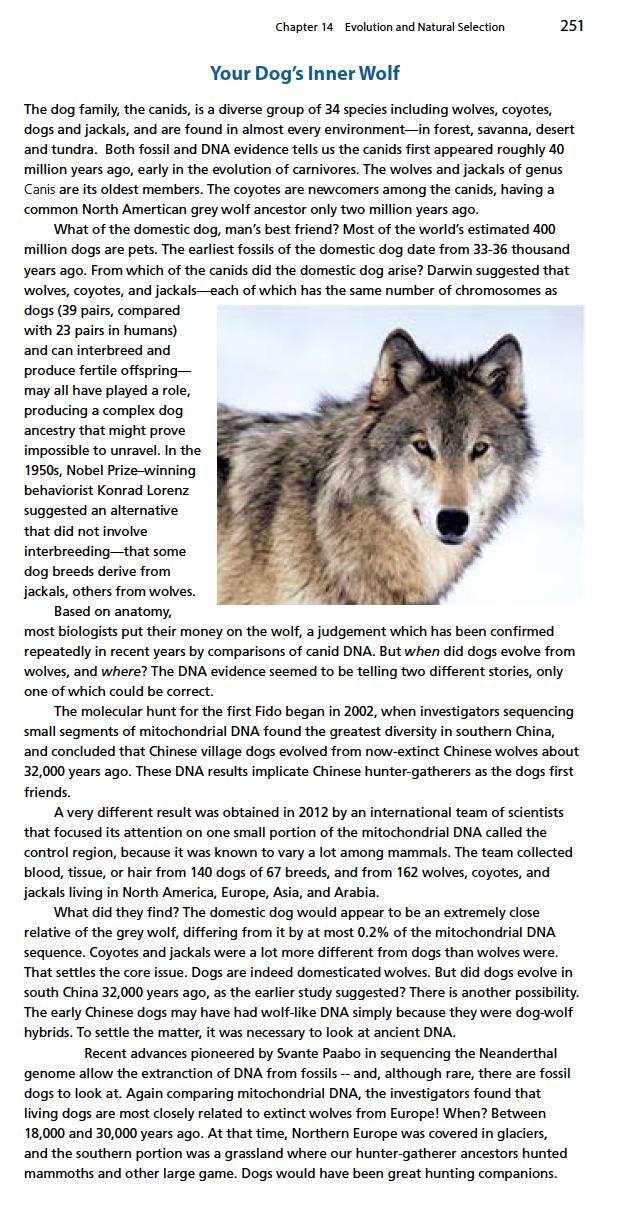
By all means, but please cite a revised version of the article (in ESSENTIALS OF THE LIVING WORLD, 5e, George B Johnson, McGraw Hill Publ., 2015). It is somewhat shorter, but more up-to-date. I enclose a copy of the relevant page below.
When you are a WordPress user, as is Learning from Dogs, you can pay $30 a year to stop advertisements from appearing on one’s blogsite.
This is how WordPress explain their policy on advertising:
We sometimes display advertisements on your blog to help pay the bills. This keeps free features free! We only run them in limited places, and we do not show ads to logged-in readers, which means only a very small percentage of your page views will actually contain ads. To eliminate ads on your blog entirely, you can purchase the No-Ads Upgrade for a single blog (per year).
I choose not to pay that upgrade, despite the ads being annoying; of that I have no doubt.
For this reason.
WordPress pay an amount of their advertising income to the owner of the blog. Thus twenty-four hours ago, WordPress sent me an email:
Just thought you’d like to know WordPress.com sent you $106.23 USD.
I’m not sure but I think that covers the last twelve months.
That $106 will be divided into two with $53 staying with Jean and me and $53 going to our nearest humane society; Rogue Valley Humane Society.
Just last Tuesday, I posted the news that we had welcomed young puppy Ollie. (It was later that day that we decided on the renaming from ‘Smokey’ to ‘Ollie’.)
Anyway, at the end of that post I said that Sunday’s picture parade would be devoted to some further pictures of the young man. So here they are!
First, a further couple of pictures from that same day that Ollie arrived; the 16th.
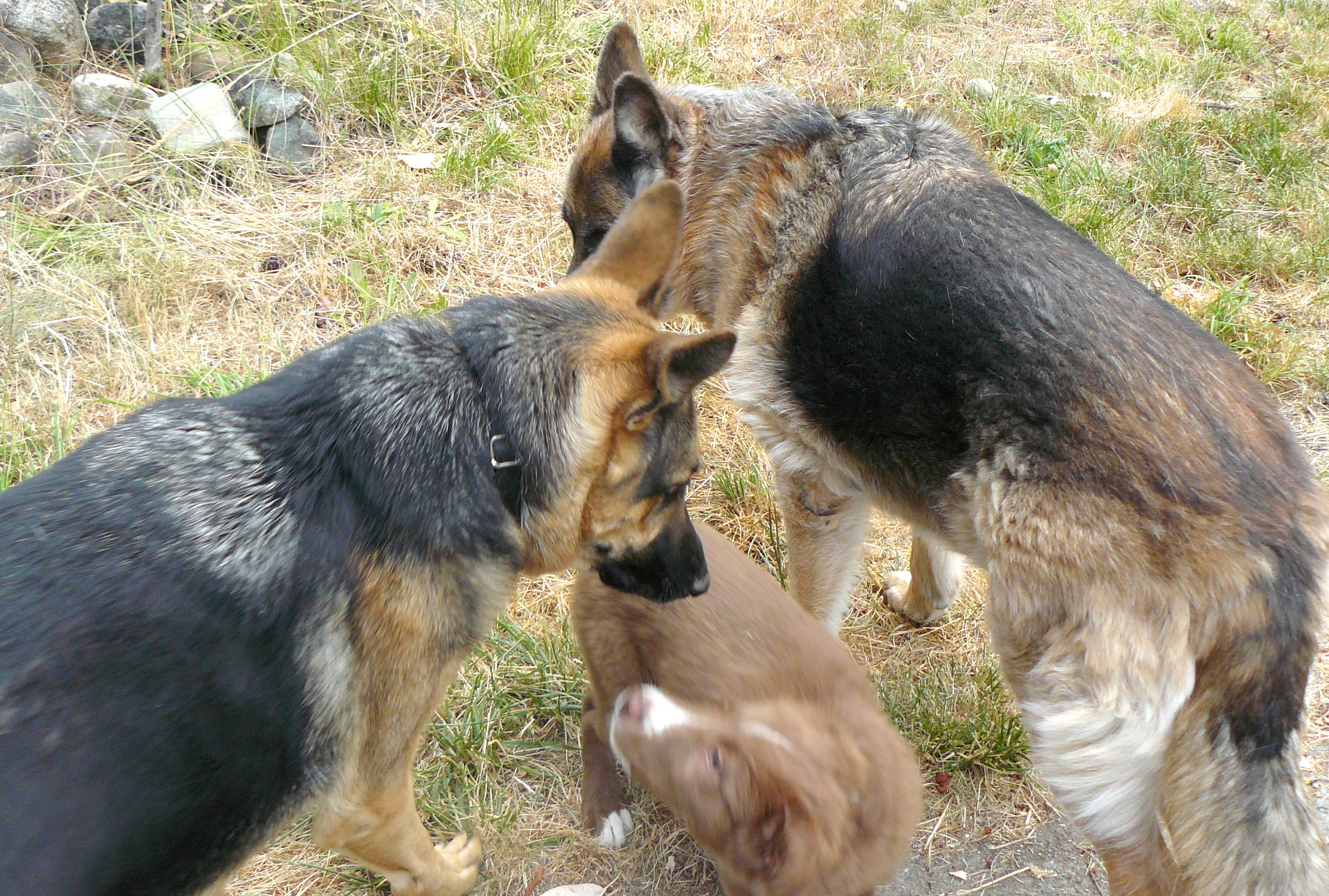
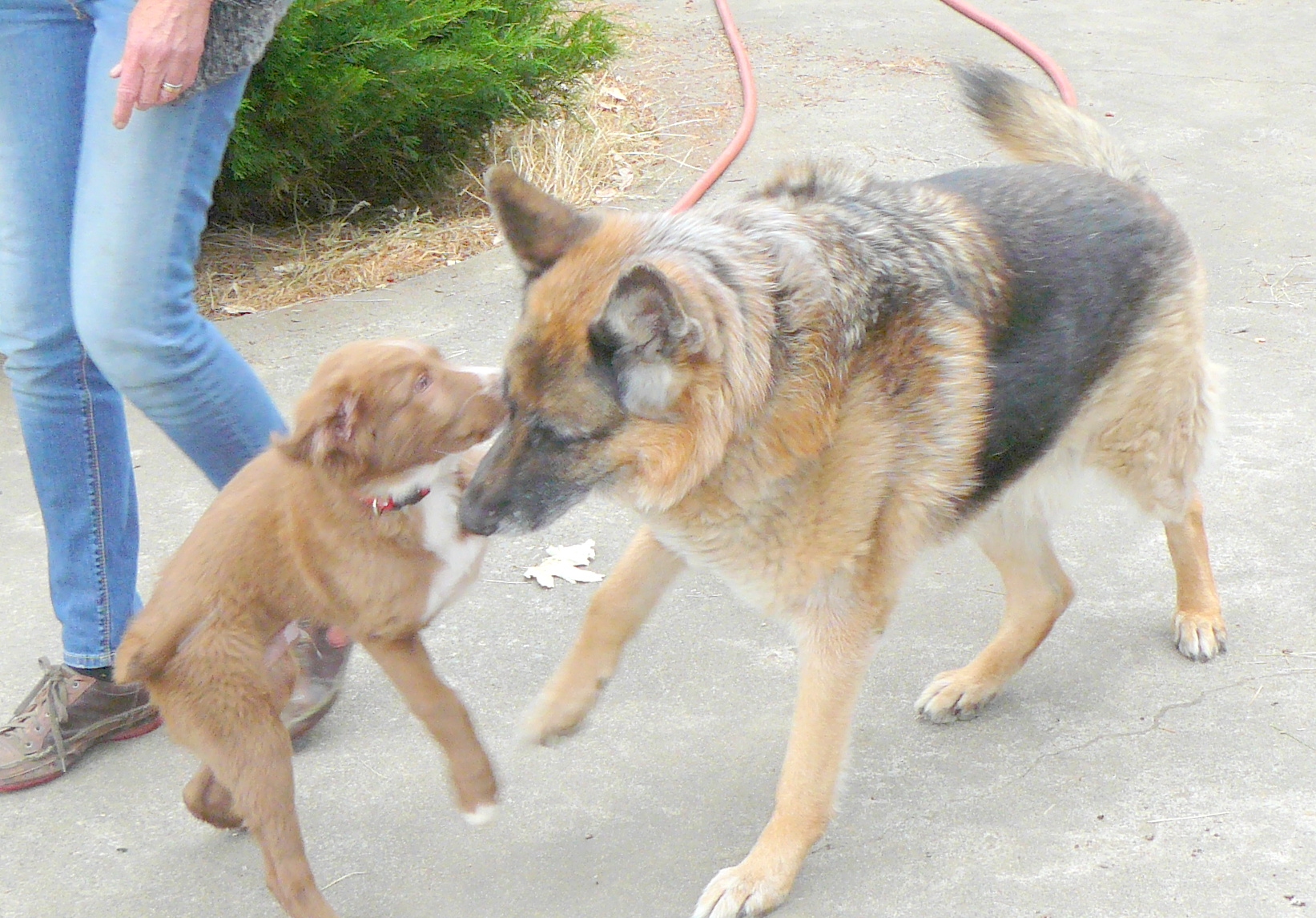
As may be seen, Pharaoh (RHS) and Cleo accepted this young puppy in moments. A real delight to see how smoothly it went.
A Shepherd Sandwich!
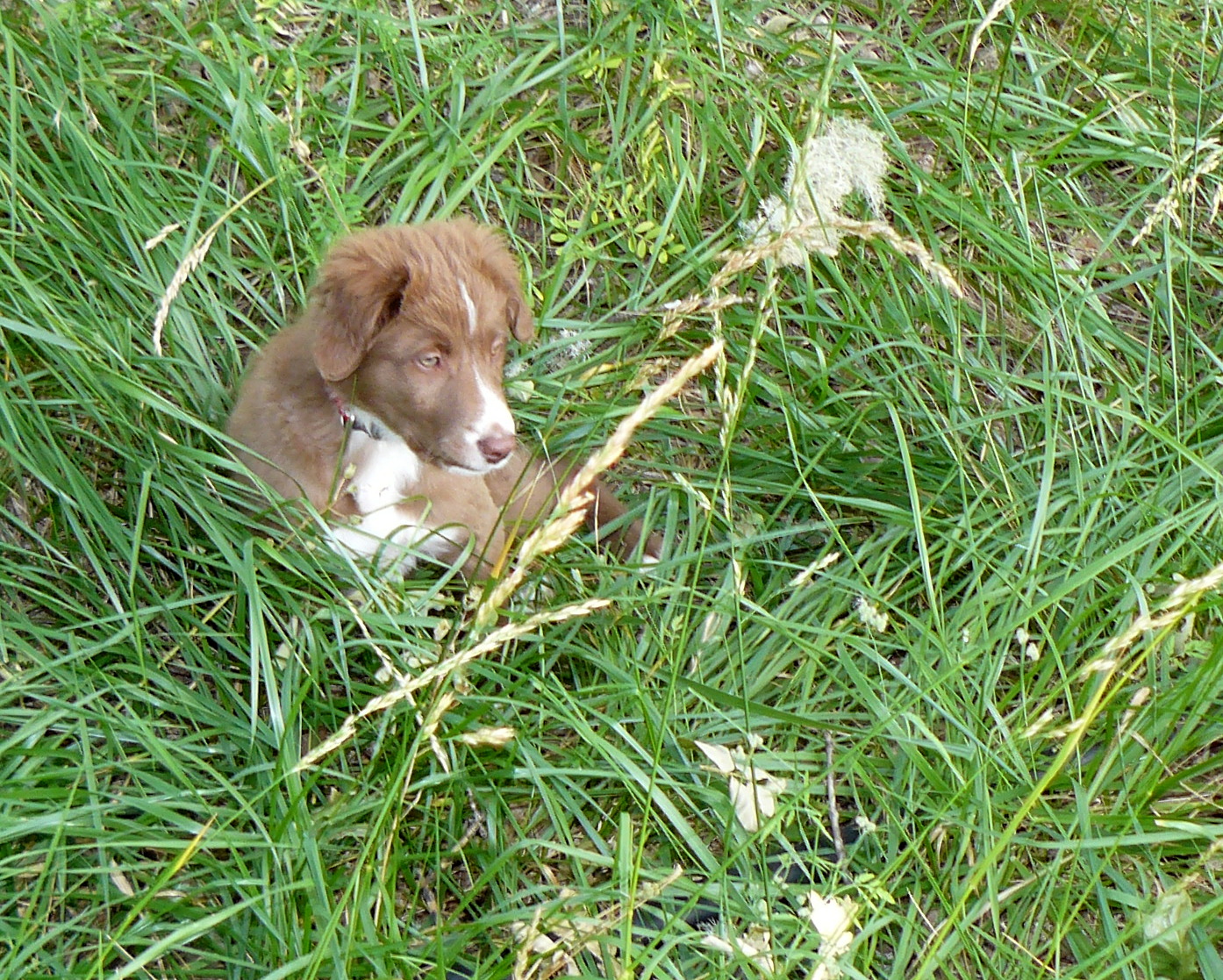
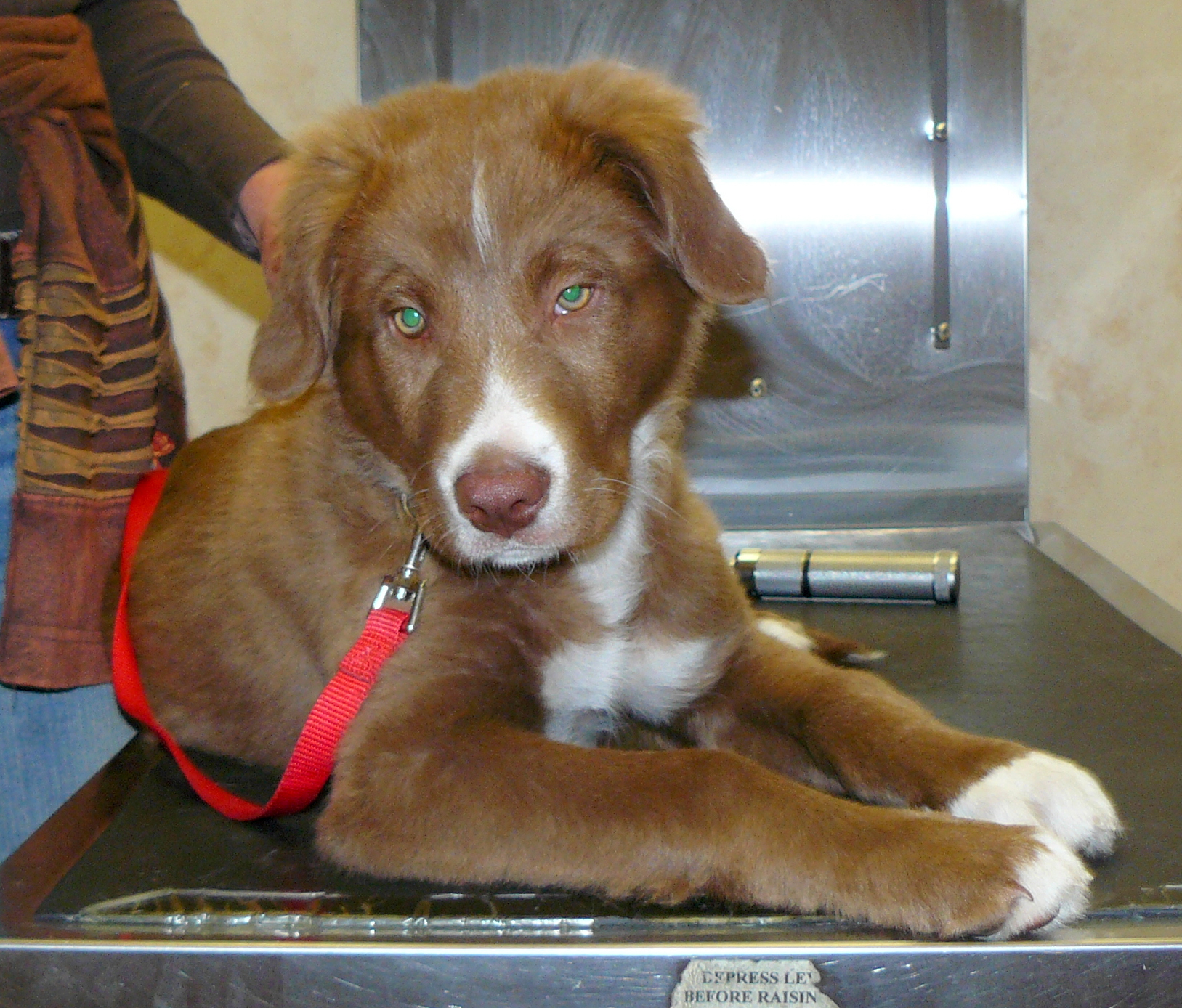
Then during the afternoon of the 16th, I grabbed this lovely study of Ollie looking out over new pastures; so to speak!
Just a gorgeous picture of the young lad!
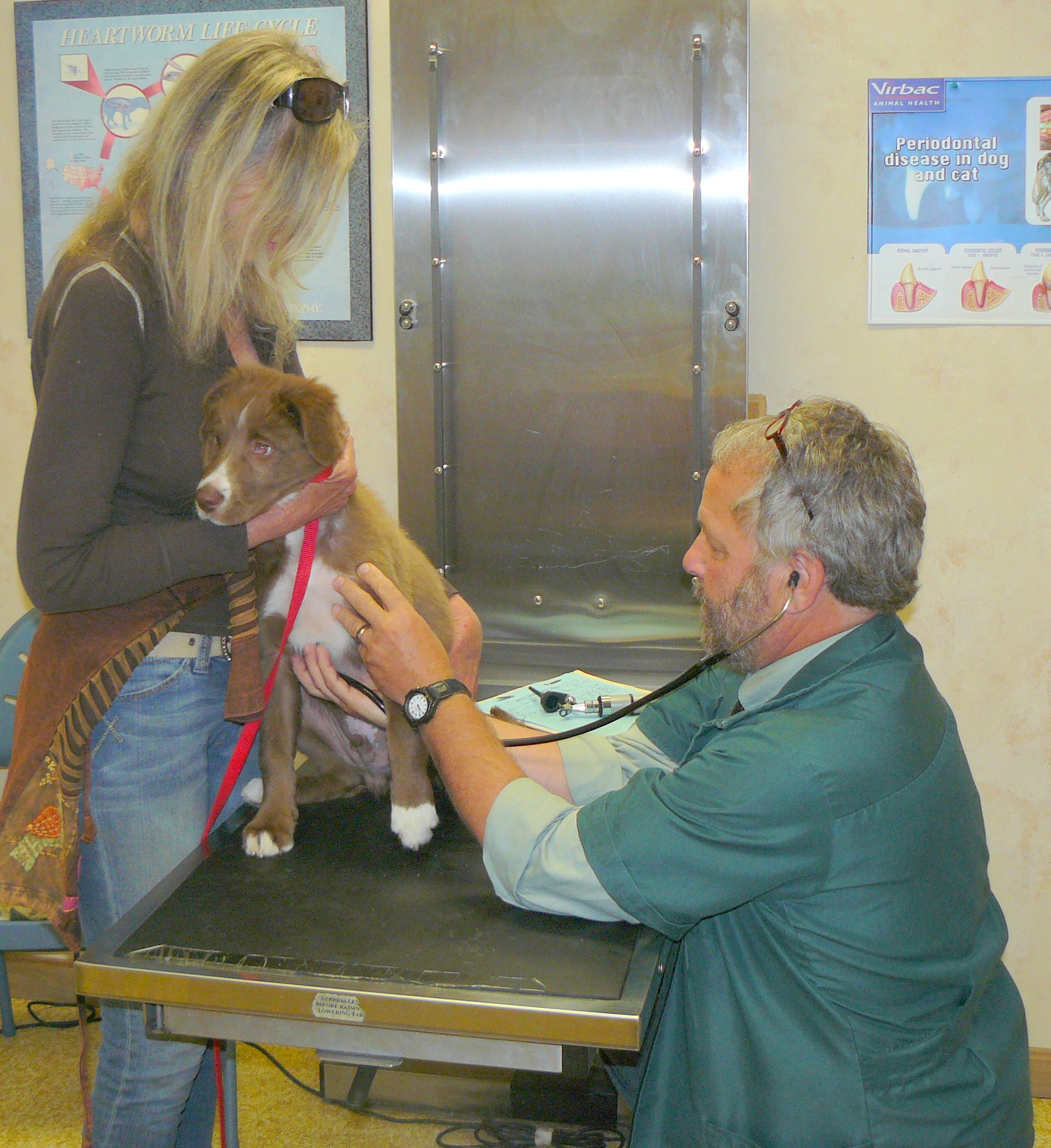
Ollie was due a couple of injections so on the 19th he was taken to our local veterinarian establishment.
Mummy, I feel a bit uncertain of all this!
(Aren’t those eyes of his just beautiful!)
Before Ollie could say ‘bone’ it was all done and time to go home!
The good Doctor Goodbrod!
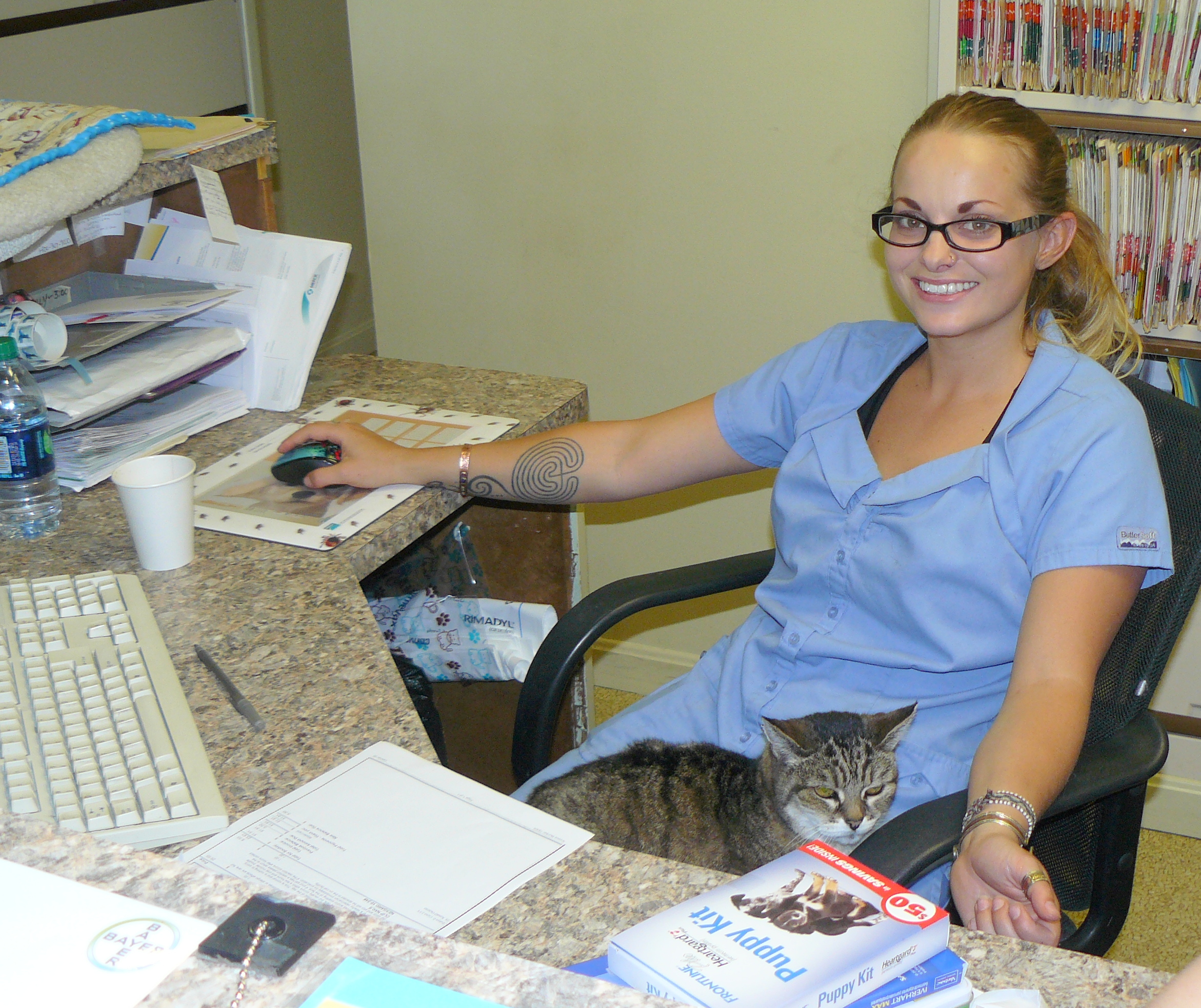
But not before Ollie was given his puppy kit by Jasmine! (Who is a bit of an animal person as well!)
Jasmine and NutNut.
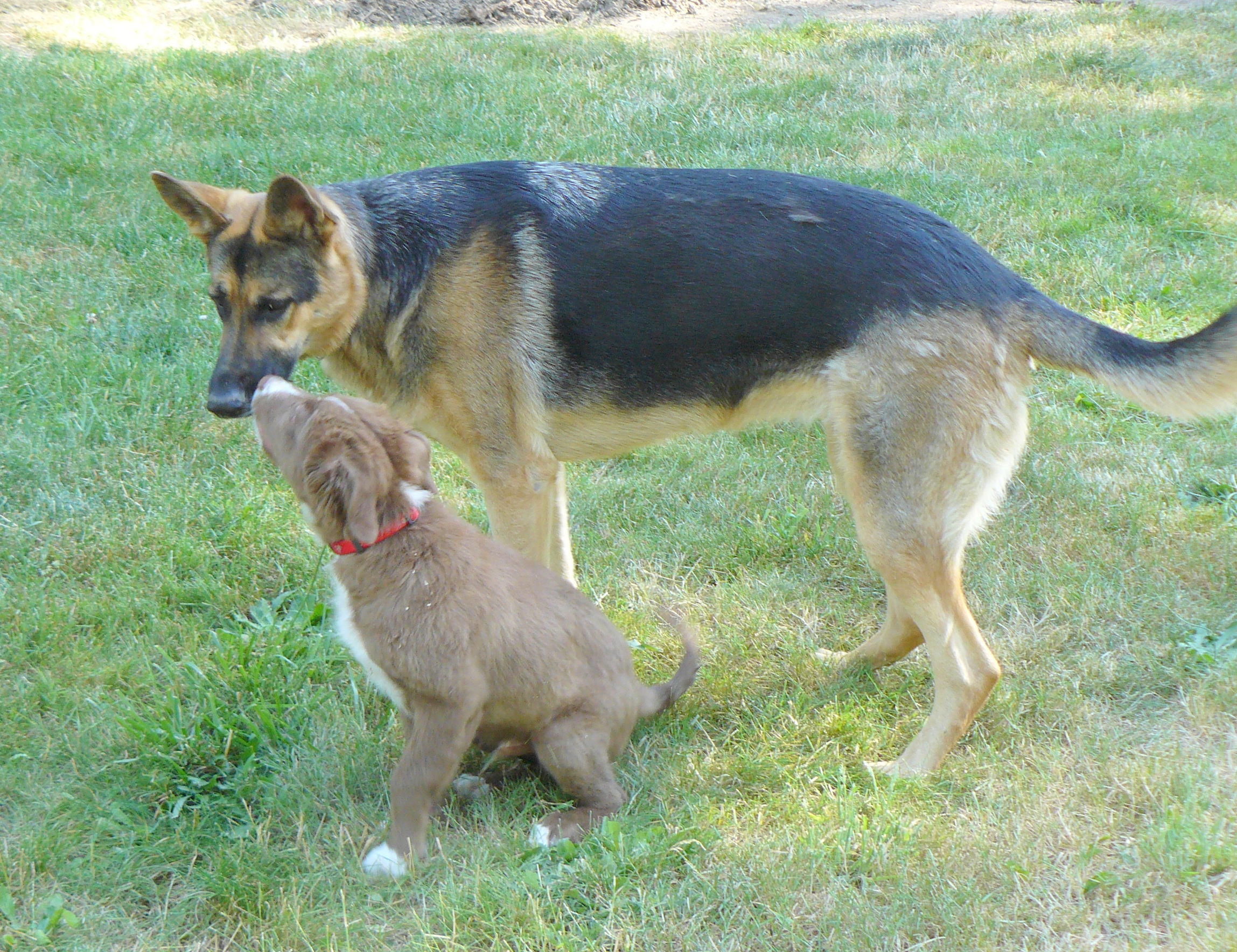
The day after the visit to the Vet’s office, I chose the following shot from number of photographs taken on the 20th. It just seemed to convey the friendship and trust that had so quickly developed between Ollie and Cleo.
Ollie and Cleo!
The final photograph for today was taken early in the morning on Mid-Summer’s Day.
A contemplative moment!
Make no mistake, Ollie is full of all the wonderful ‘charms’ of a young puppy dog but he is a very smart, sensitive individual and a wonderful addition to our home. Very difficult to believe that today, this Sunday, we haven’t even had him for one week.
Our new young puppy is consuming a great deal of attention and time!
As regular readers will know (and your readership is so much appreciated) last Tuesday I published the news that we had taken on a new puppy. He is settling in incredibly well but consuming heaps of attention; as well he should.
So rather than struggle to be creative with today’s post, I’m cheating by going back to the last time I wrote about a new arrival to our flock; namely puppy Cleo. If you will forgive me, I’m going to republish the post I wrote for puppy Cleo back on April 8th, 2012.
But before so doing, let me explain that our latest arrival has gone through a name change. The previous owners had named the young pup Smokey but we were not comfortable with that name; Jean especially so. So Smokey is now Ollie!
ooOOoo
The arrival of Cleo brings us back to eleven dogs.
Way back in 2003 when I became the proud ‘Dad’ of Pharaoh, my German Shepherd dog that you see on the home page of Learning from Dogs, Sandra Tucker who ran the GSD Breeders Jutone, where Pharaoh was born, gave me some advice. Sandra said that when Pharaoh was getting on in life, then bring in a German Shepherd puppy. Apparently, there were two solid reasons why this made sense. The first was that Pharaoh would teach the new puppy many of the skills and disciplines that Pharaoh had learnt as a young dog and, secondly, the puppy would keep Pharaoh active.
Now we know this to be true because years later when Pharaoh had his own mini pack here in Payson, we introduced a new ‘rescue’ puppy called Sweeny. Pharaoh took an instant like to him and became very tolerant to Sweeny’s ‘games’.
Hi! I’m Pharaoh, going to be my buddy? (February, 2011)
But as adorable as Sweeny is, Jean understood the deep reasons why I always wanted a German Shepherd in our lives. So when a chance encounter in Payson Feed Store between Jean and Brendon S. revealed that Brendon had a litter of German Shepherd puppies for sale, just a couple of miles outside Payson, the temptation was irresistible!
Thus a few days ago, Jean and I went round to Brendon’s home and spent a couple of hours mingling with the puppies and their GSD mother. They all looked excellent dogs and a review of their blood lines showed that their genetic background included German stock not too far back. It was difficult to select any one pup as they were all wonderful animals. But one youngster seemed to catch Jean’s eye.
Little bit of bonding going on!
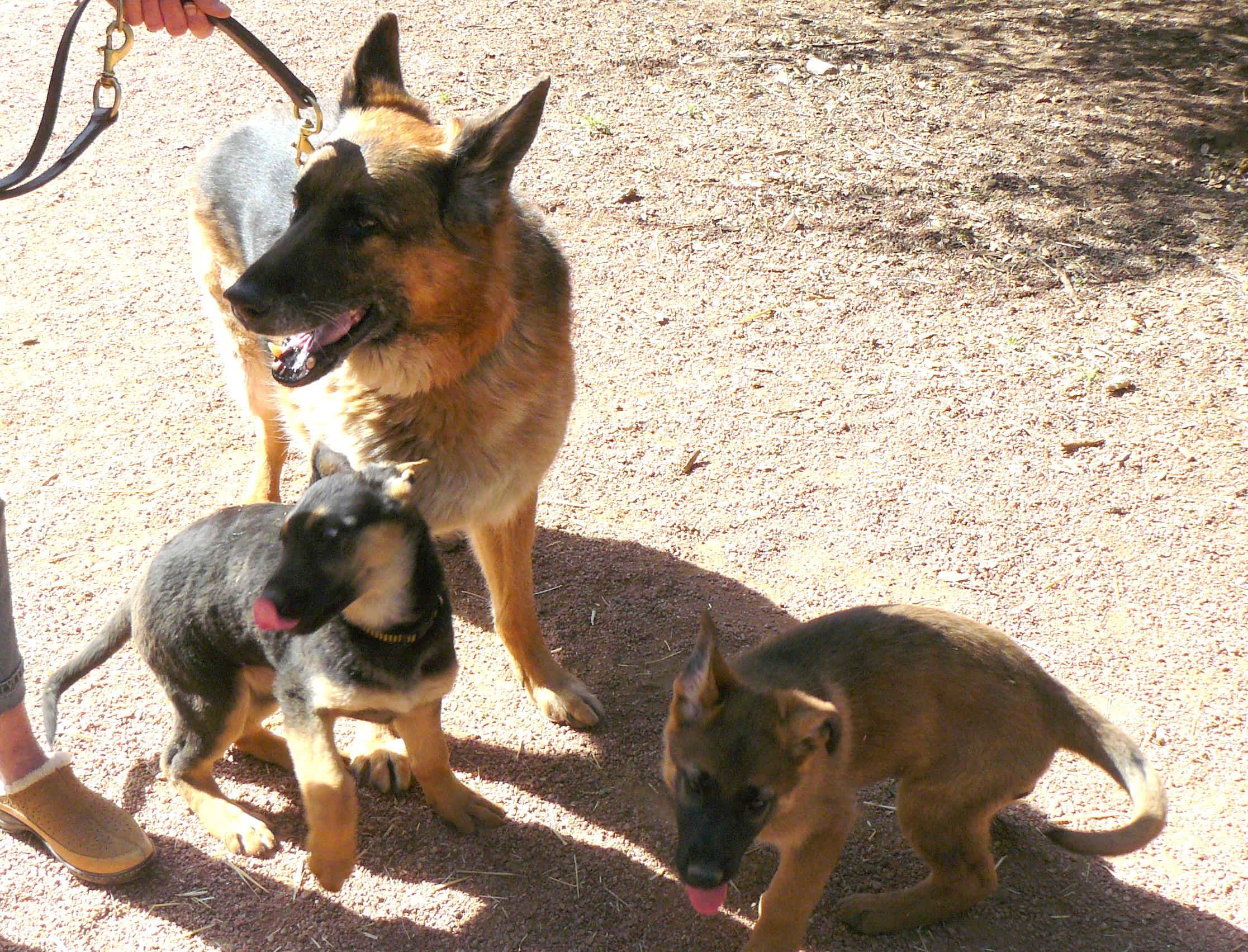
Then the next test was to introduce Pharaoh to the puppies. That took place last Friday and it was wonderful to see how well he coped with the onslaught of puppies!
More puppies that one could shake a stick at!
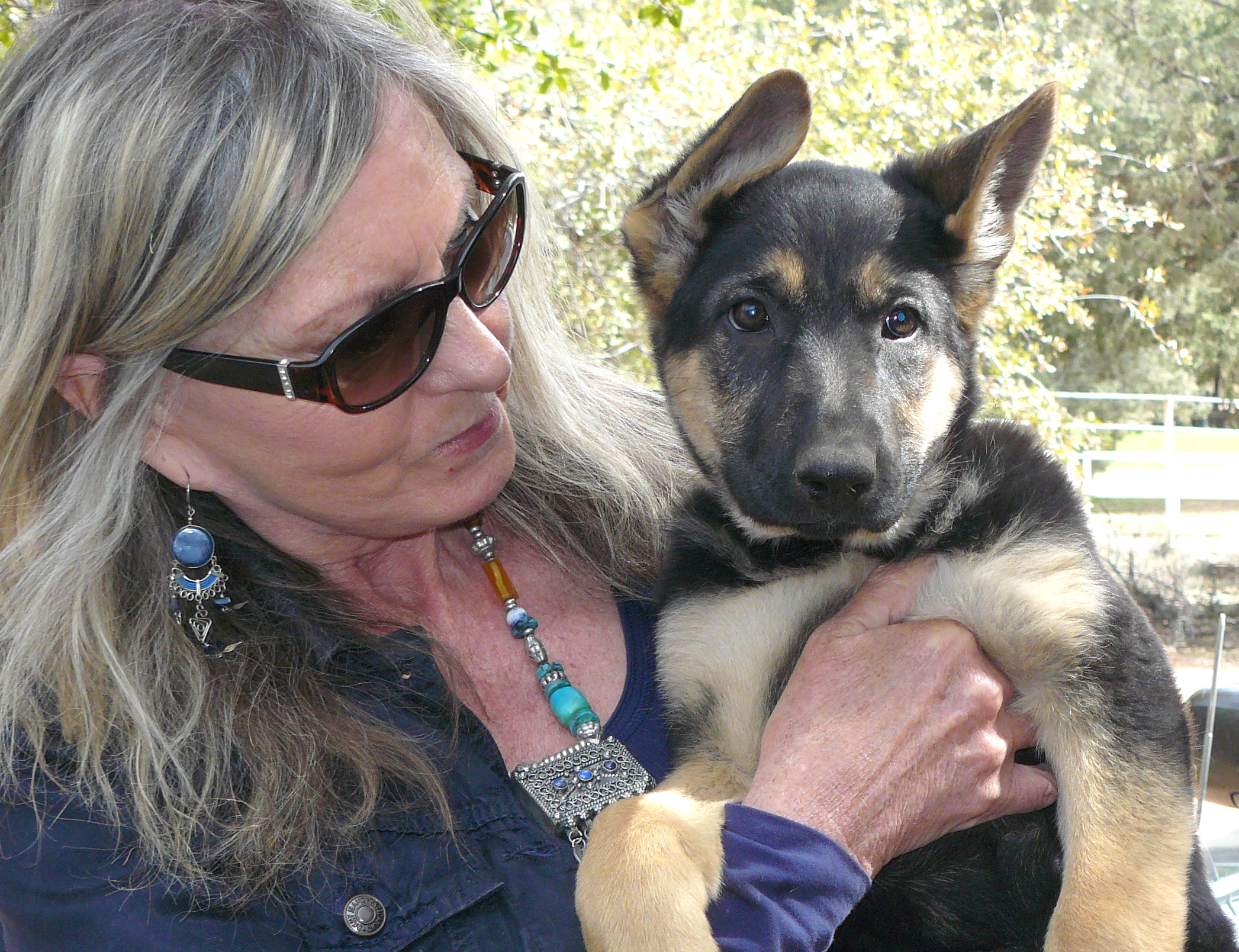
In the end, we ran out of reasons not to follow Sandra’s advice from all those years ago and we agreed terms on a young female GSD that, inevitably, was christened Cleopatra (Cleo) by Jean!
Cleo meet your new Mum!
Then yesterday, Saturday, we went back round to collect young Cleo, meeting Brendan’s wife Ebony in the process. The following photographs record some of the key moments.
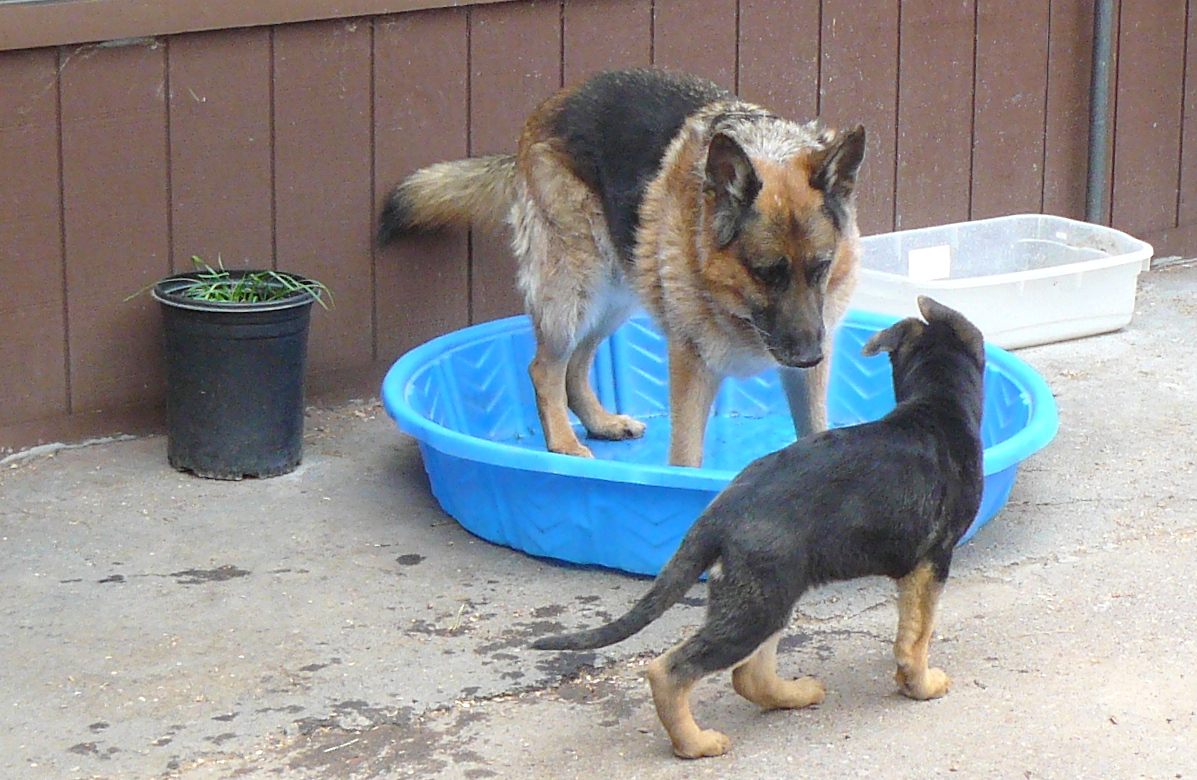
Homeward bound to a new life!Next step is to meet the gang!Welcome, young lady. I’m the boss around here!It’s my pool but you can use it!Hey Sweeny, fancy having one’s own woods to play in!She’ll do! Nice addition to my family!
So there we are. Back up to eleven dogs, five chickens, six cats, and a fish!
Finally, a big thanks to Sandra of Jutone for her guidance in the last few days.
ooOOoo
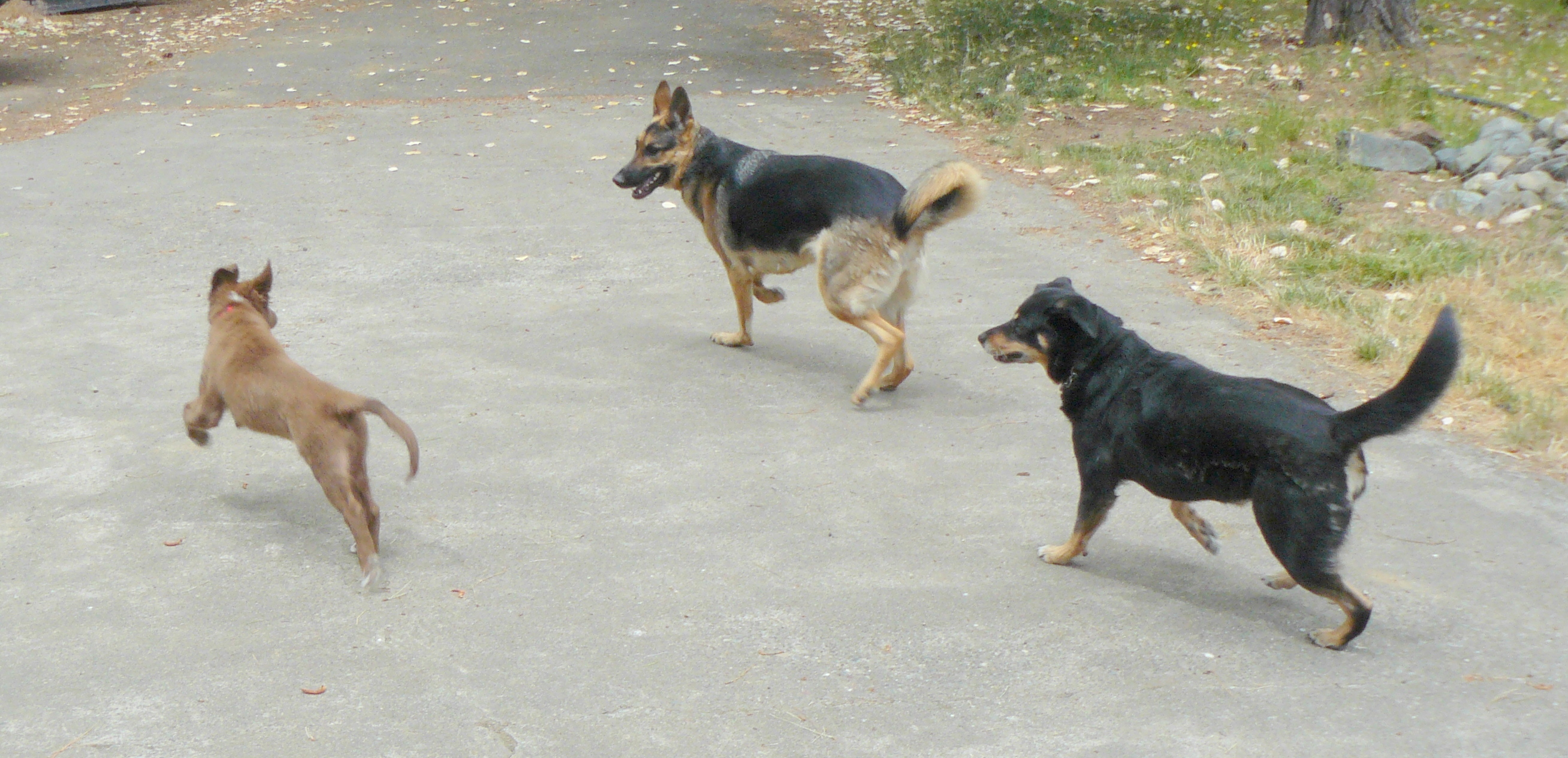
Back to the present to leave you with a picture of puppy Ollie happily playing with Cleo and Hazel. More pictures of Ollie on Sunday.
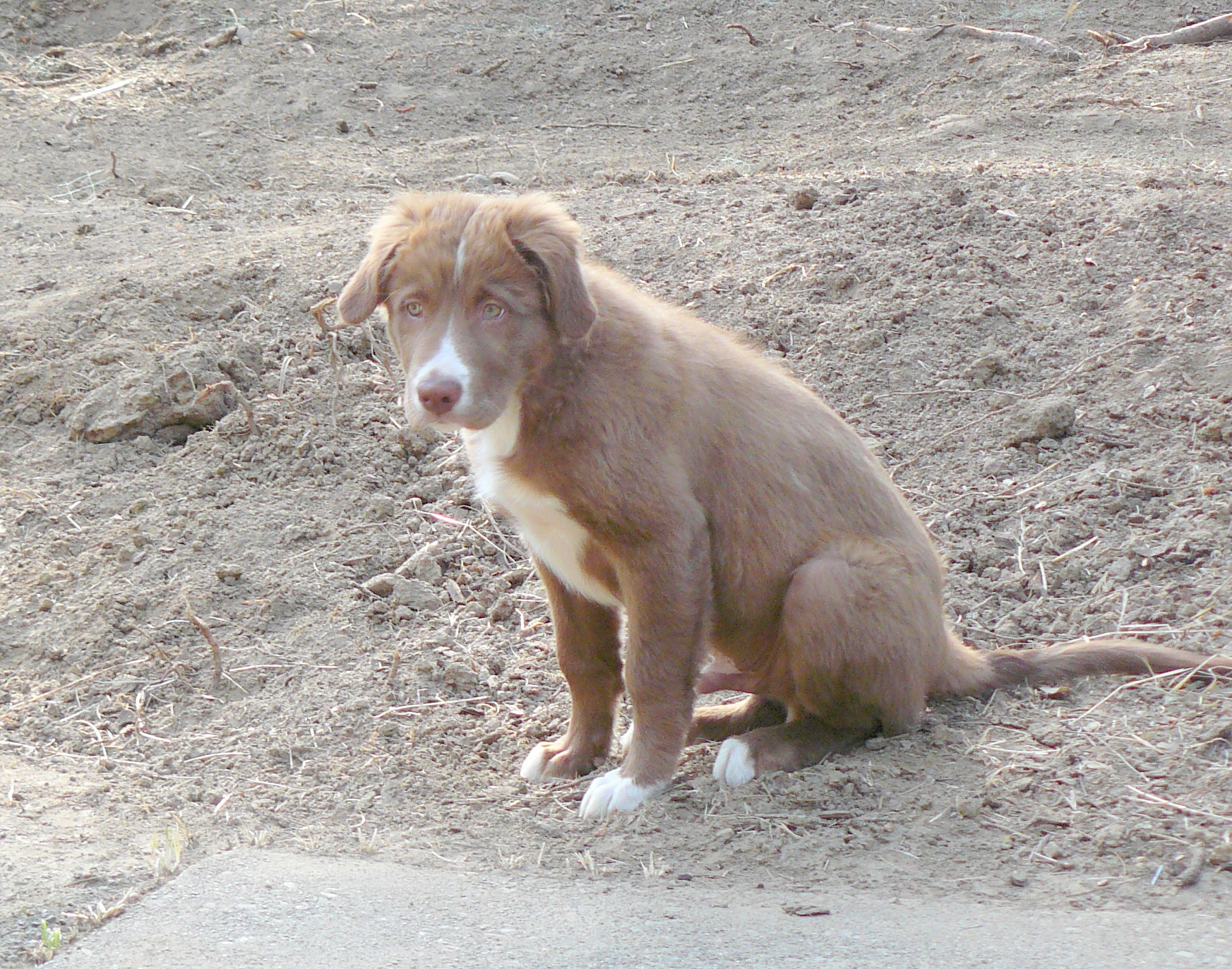
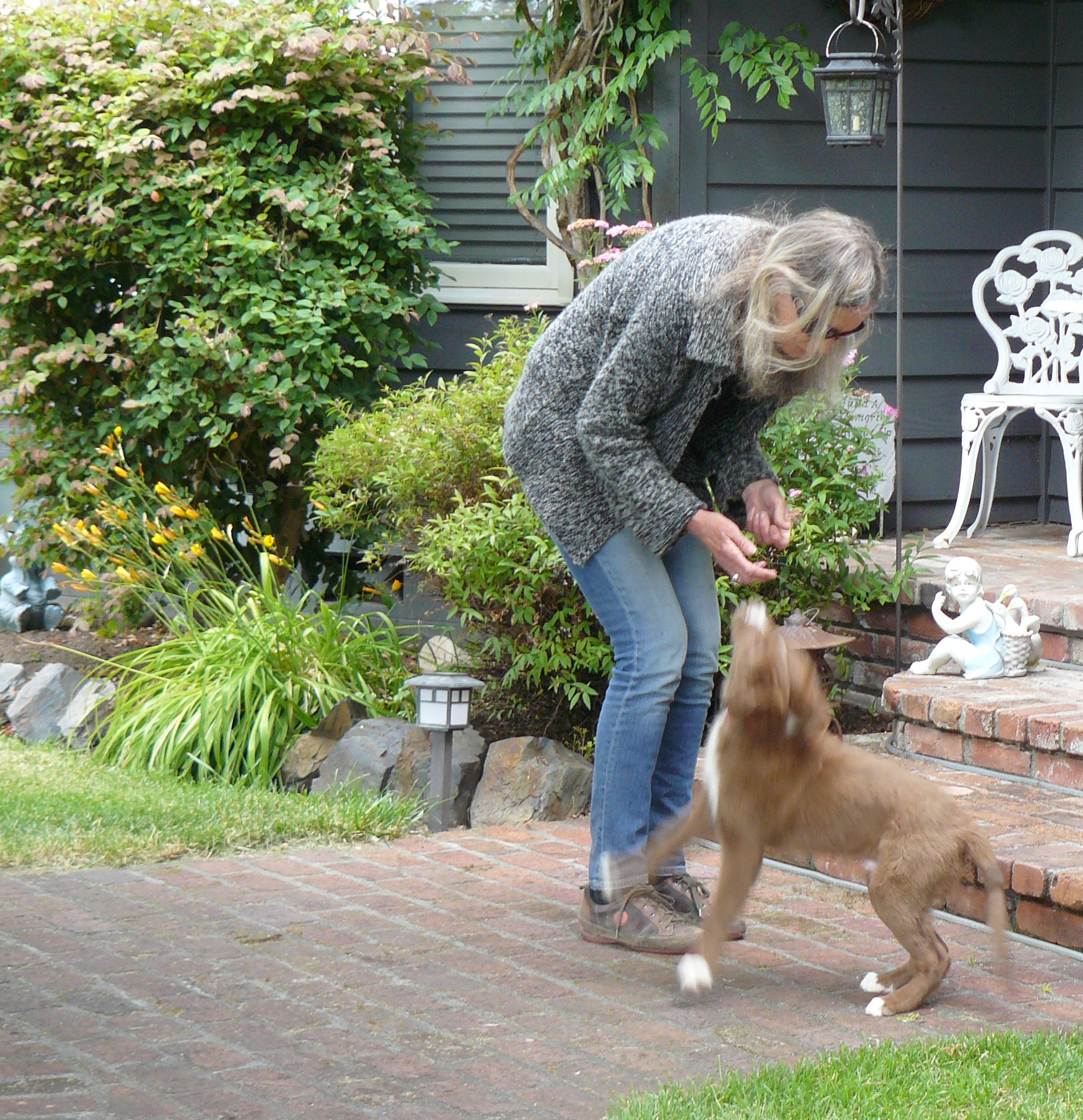
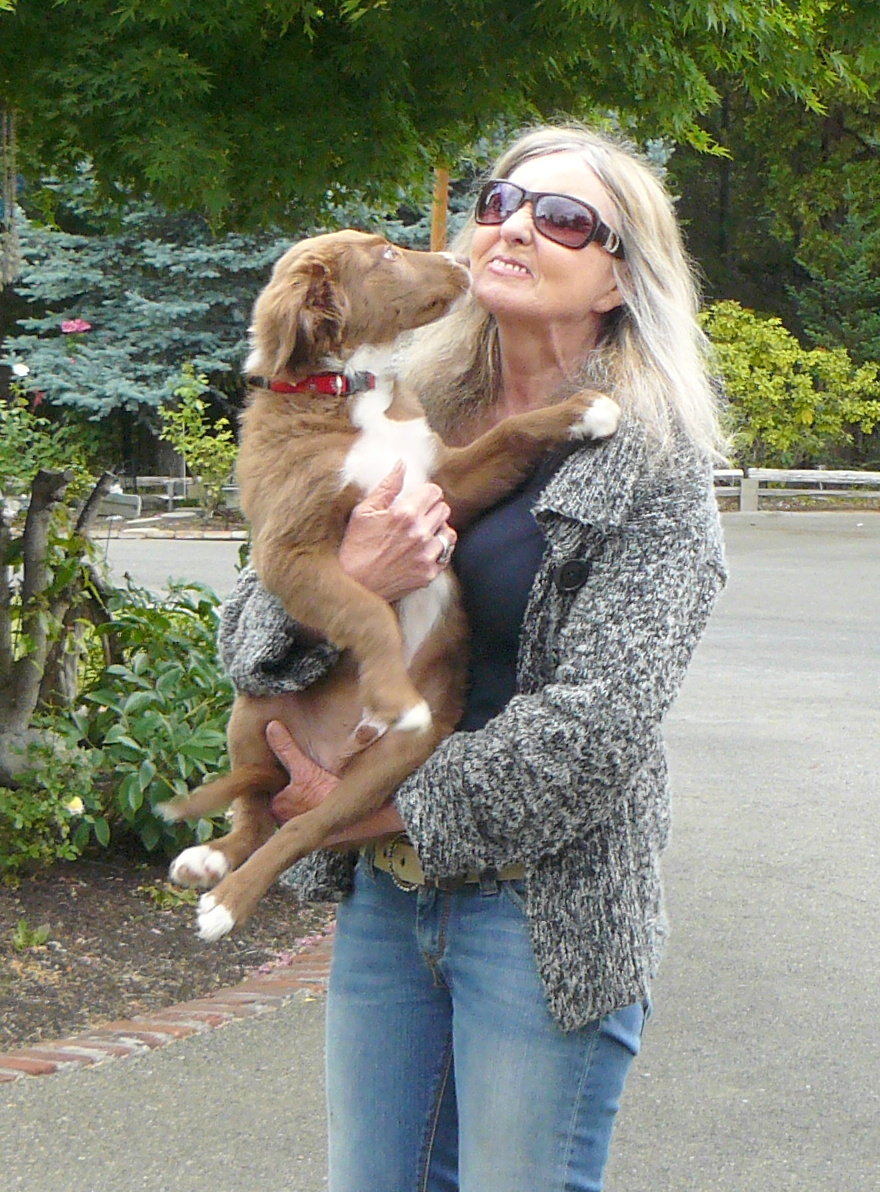
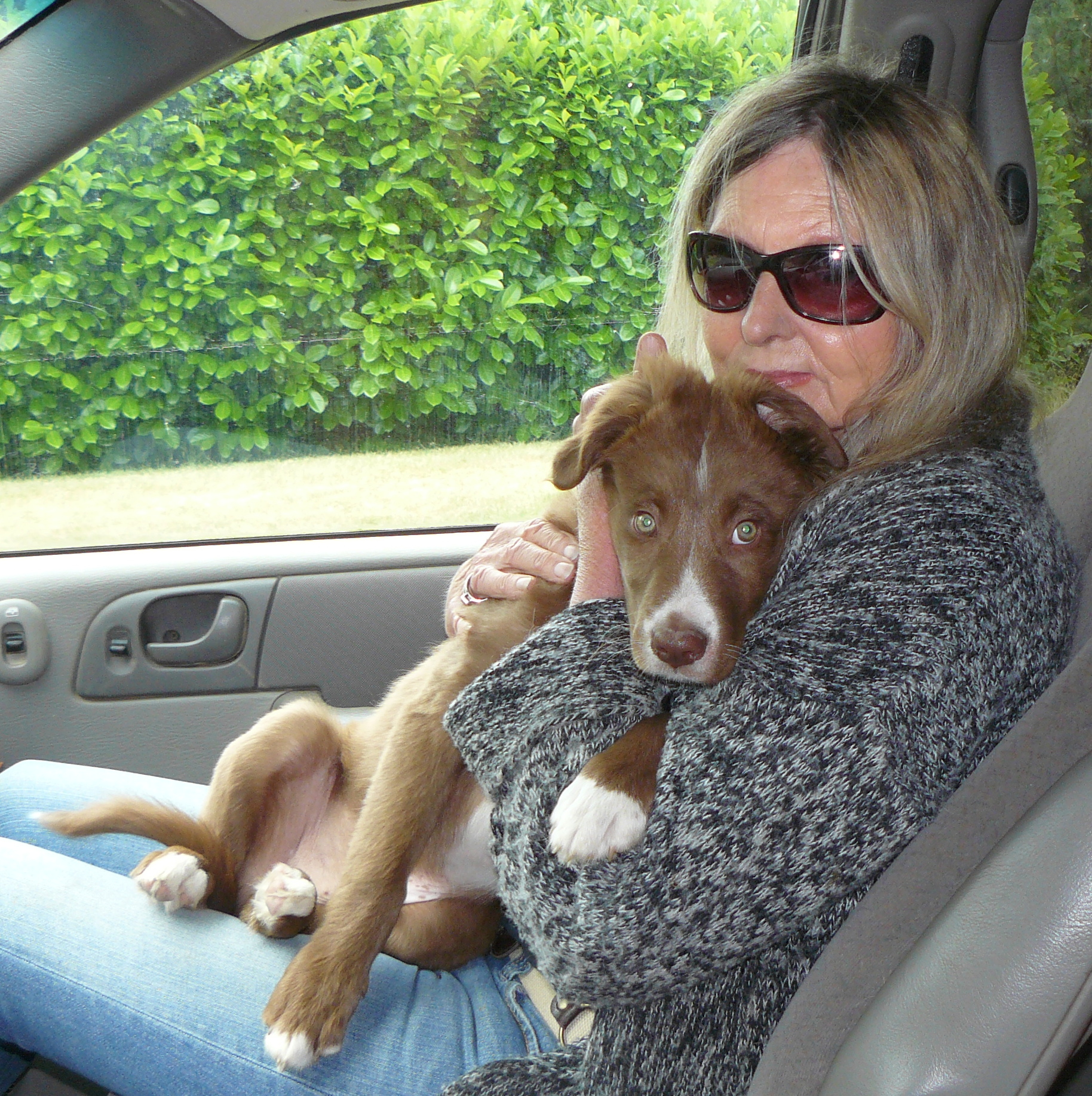
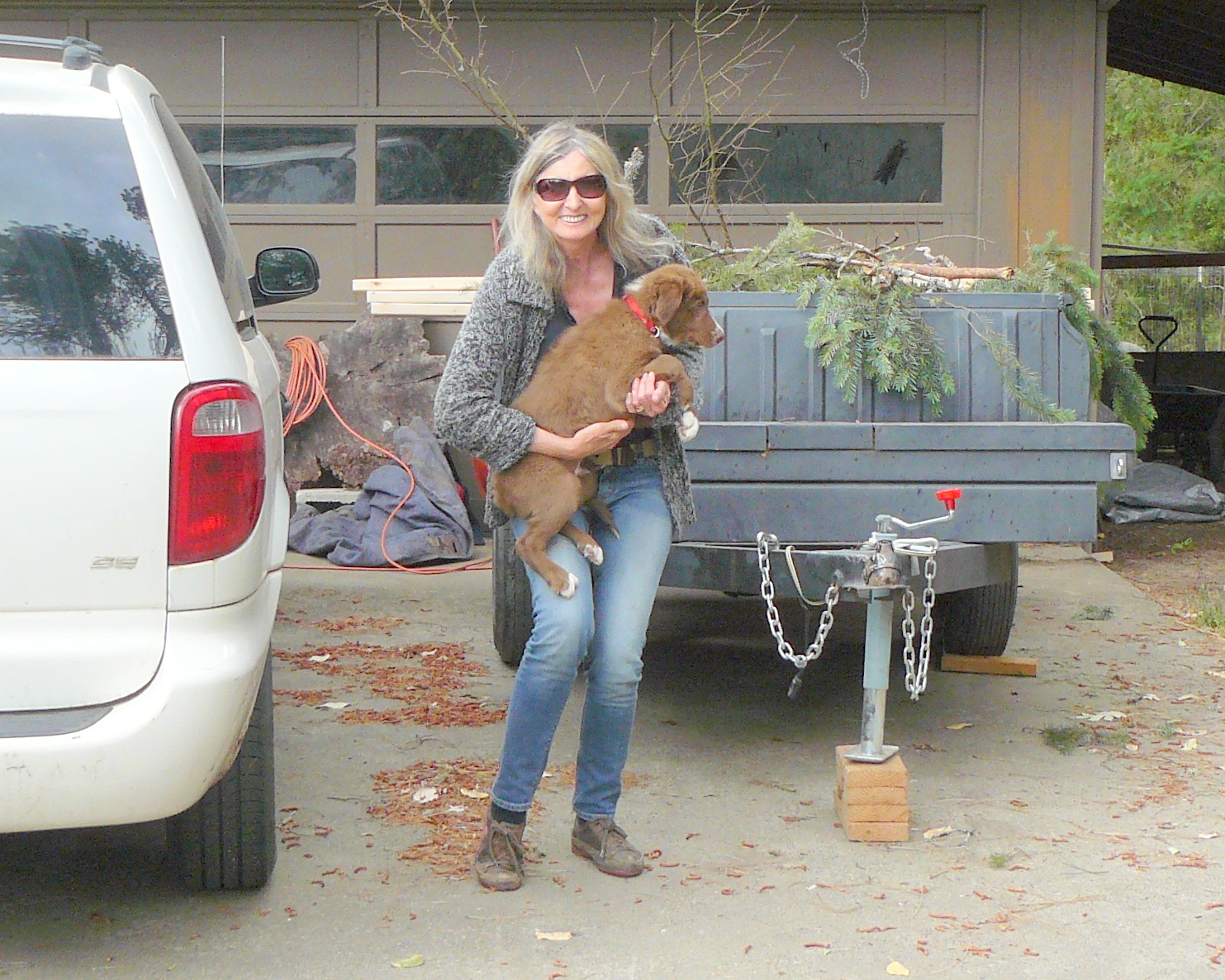
A few weeks ago Jean and I were invited to a social gathering with a couple who live about a mile further along Hugo Road. We couldn’t help admiring their young dog; a delightful puppy by the name of Smokey. Smokey appeared to be about ten weeks old and, despite being very puppy-like was, nevertheless, a sweet, friendly, young male dog. Apparently, a mix of a Labrador and a Bordie Collie.
Anyway, last week there was a call from them to say that they were finding the puppy to be too much of a handful and were looking to find Smokey a new home: Did we want first refusal?
Thus it came about that yesterday morning Jean and I drove the short distance to collect Smokey and introduce him to the dog’s circus that is home for us all!
Naturally, the key question would be how would Pharaoh take to Smokey.
A few pictures to tell the tale.
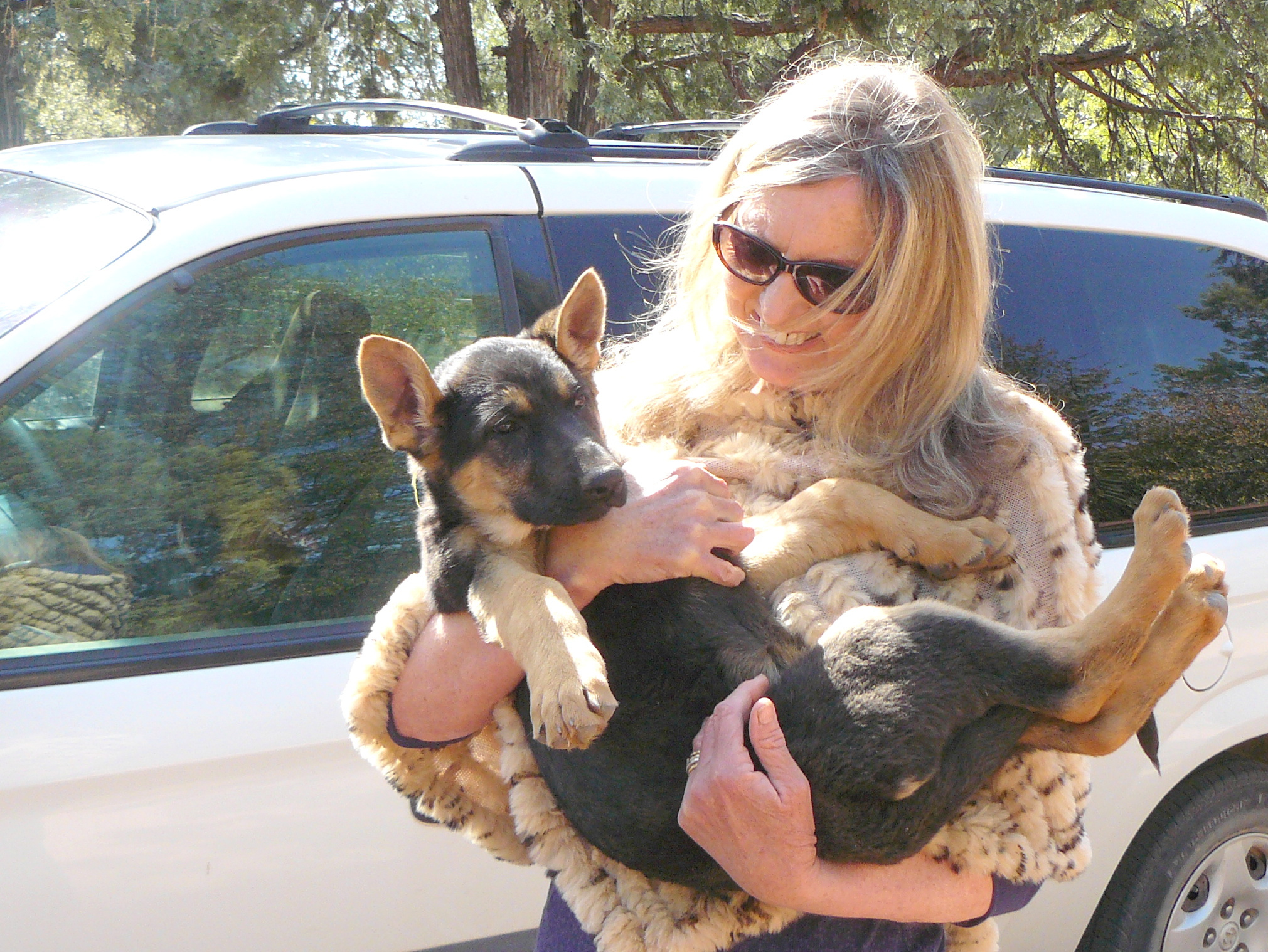
Hello Smokey, I’m Jean and we are hoping you will come home with us and be part of our family.
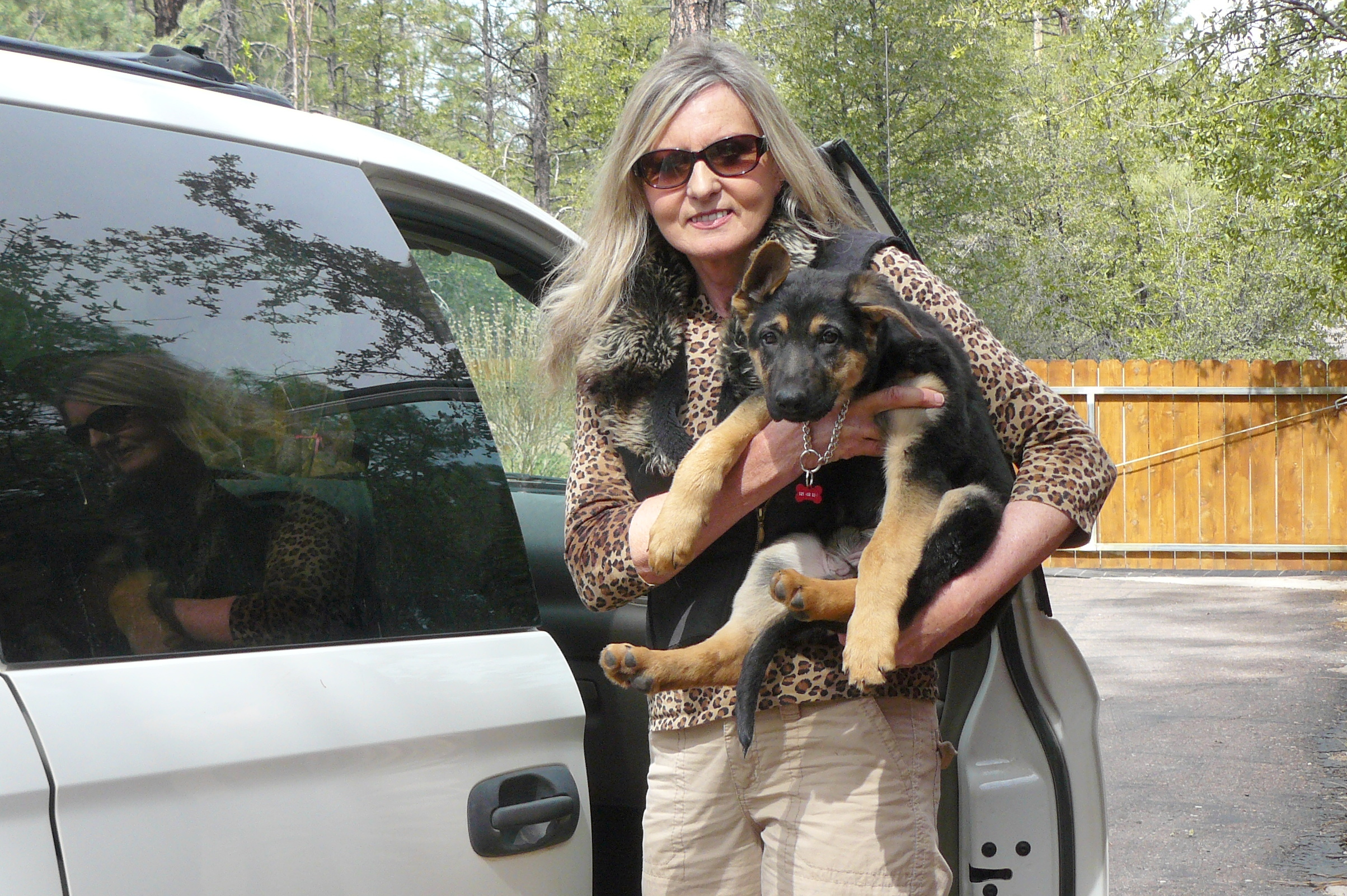
Well, you certainly seem like a friendly little chap. Let me carry you across to the car.
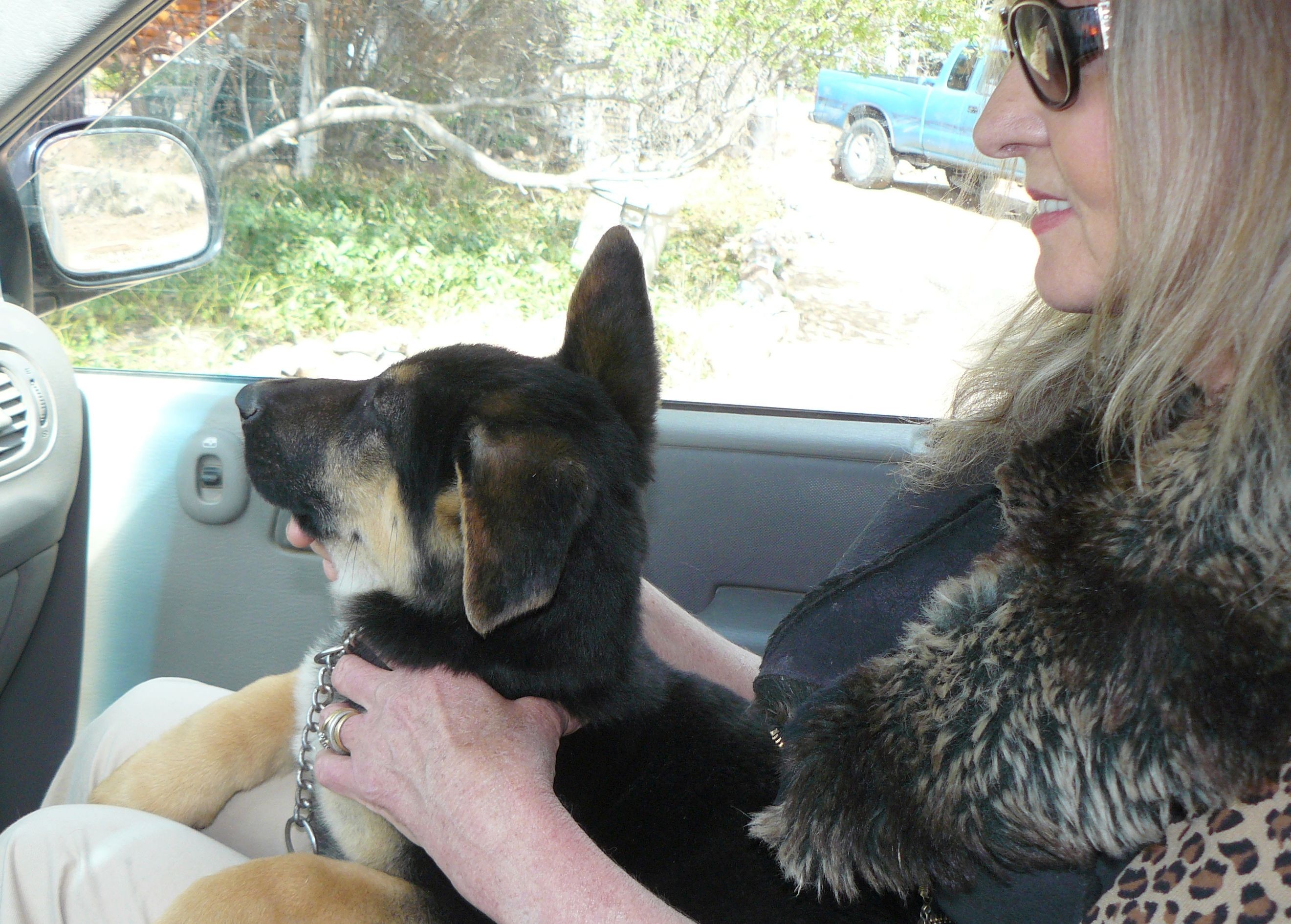
That’s Paul, your new Daddy! Hold on tight; it’s only for ten minutes.
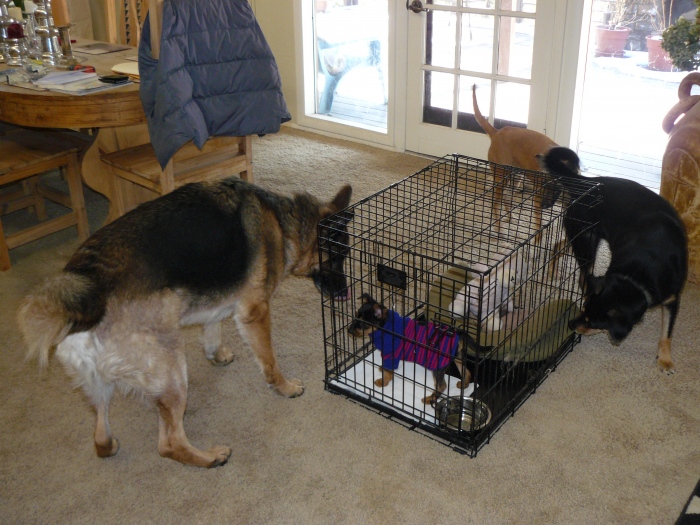
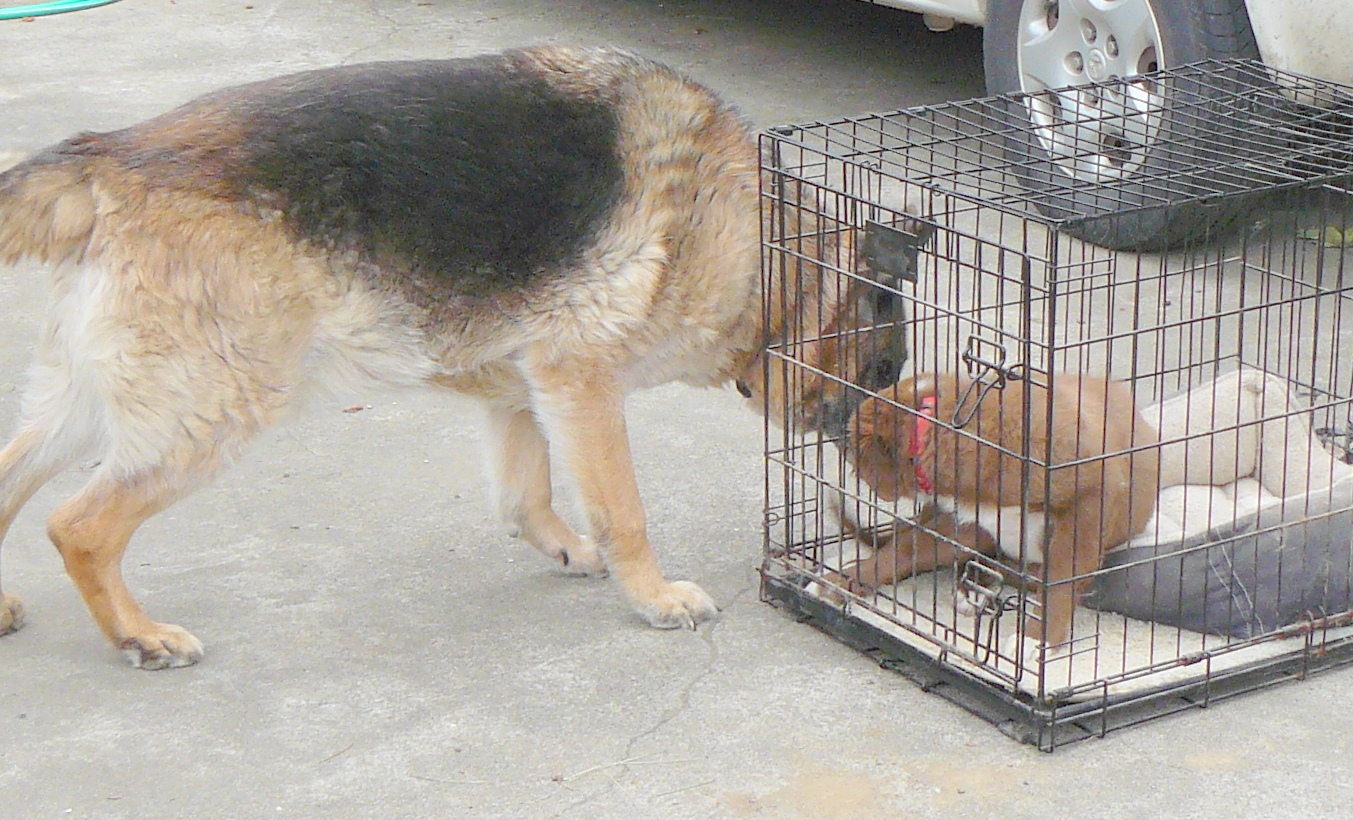
And here we are at your new home. Going to pop you into a dog crate so Pharaoh can come out and meet you.
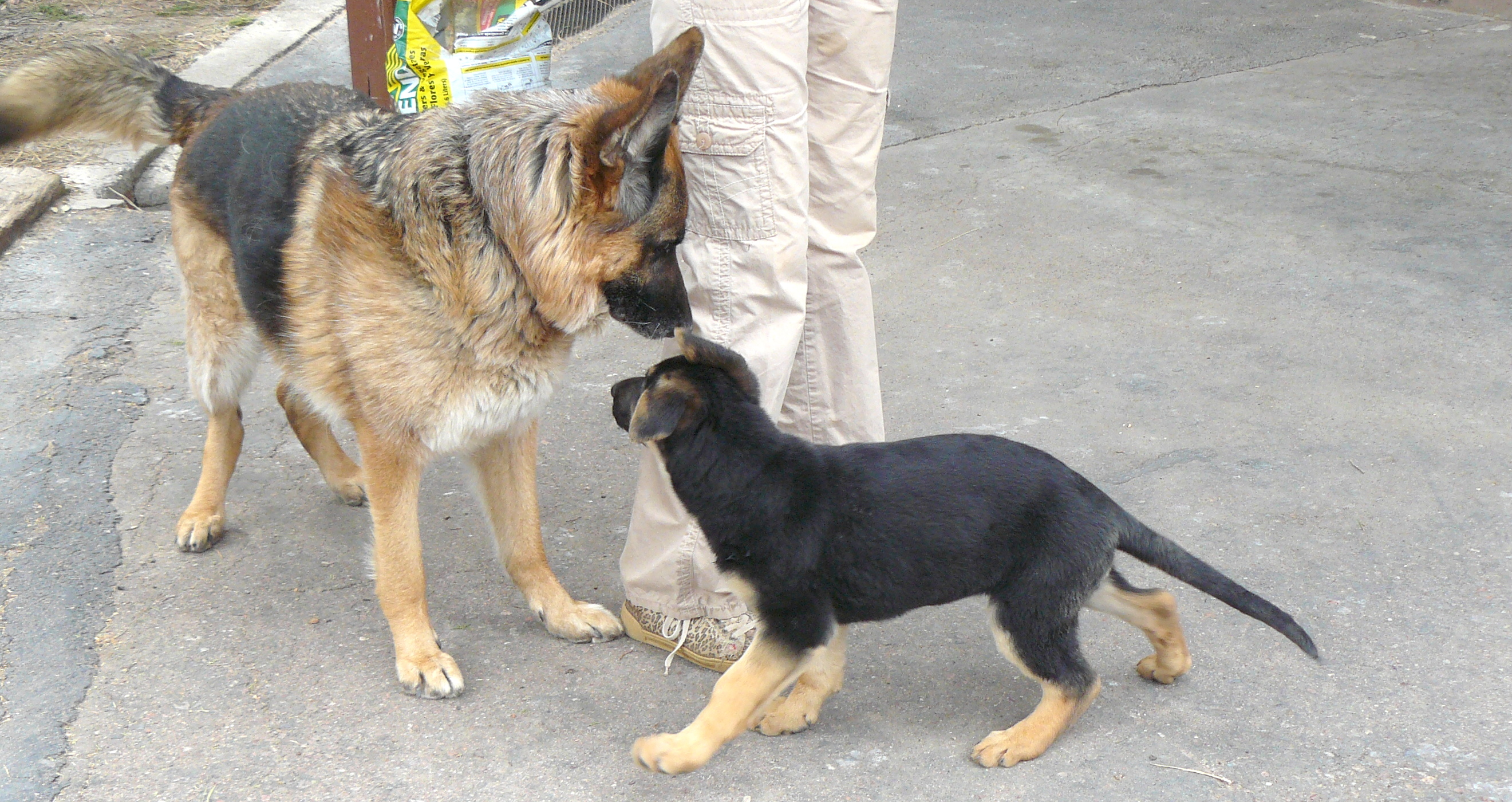
So what do we have here? I’m Pharaoh and despite my age, I’m still the boss around here! M’mm, you seem to pick things up quickly!
Ah, that’s good my little friend. You may be young but you seem like a smart puppy. Welcome to the clan!
Many more pictures of Smokey successfully meeting the rest of Pharaoh’s ‘team’ but I will make those a special ‘Smokey’ set of pictures for this coming Sunday.
Let me close this by saying that as I write this post at 2pm yesterday afternoon, Jean is reading a book and about her, in perfect silence and contentment, are Pharaoh, Hazel, Cleo, Sweeny ….. and Smokey!
A range of ideas that elevate our understanding of dogs.
Last Thursday, I wrote the opening to what became a two-part essay. The essence of that first part was the conclusion by Marc Bekoff, Professor Emeritus of Ecology and Evolutionary Biology at the University of Colorado, Boulder, that, “Clearly dogs and many other animals can truly teach us about traits such as trust, friendship, forgiveness, love, and hope.”
You will recall that the reference to Marc Bekoff came from an article written by David Grimm (1) in The Washington Post. Let me refer back to that article:
In the wild, coyotes ostracize pack members that don’t play by the rules. Something similar happens in dog parks: If three dogs are playing and one bites or tackles too hard, the other two are likely to give him the cold shoulder and stop playing with him, Bekoff says. Such behavior, he says, suggests that dogs are capable of morality, a mind-set once thought to be uniquely human.
Even morality hints at something deeper, however. To enforce moral conduct, dogs must be able to experience a spectrum of emotions, from joy to indignation, guilt to jealousy. They must also be able to read these emotions in others, distinguishing accident from intent, honesty from deceit. And indeed, recent studies by other scientists have shown evidence of these abilities (confirming what many dog owners already feel about their pets).
Scientists have found, for example, that dogs trained to shake hands with humans will stop shaking if they notice that they aren’t being rewarded for the trick although a nearby dog is — a sign, the researchers suggested, that dogs can sense inequity.
Other studies have revealed that dogs yawn when they see humans yawning and that they nuzzle and lick people who are crying; scientists consider both behaviors displays of empathy, a rarely documented trait in the animal kingdom. Dogs have even been shown to be pessimistic: When a group of canines in one study learned that a bowl placed on one side of the room contained a treat and a bowl on the other side contained nothing, some of the dogs just sat there when the empty bowl was placed in the center of the room; they figured it was empty and didn’t waste their time. These same dogs evinced what researchers said was a similar pessimistic attitude when their masters left for work: They were more likely to howl and tear up the couch when their owner disappeared, possibly because they didn’t believe their master would return.
Most, if not all, dog owners would be very familiar with many of the behavioural traits that Marc Bekoff covers. Take this next aspect, for instance:
Bekoff’s recent work suggests another remarkable canine skill: the ability to know what another animal is thinking — a so-called “theory of mind.”
Dogs seem to display a rudimentary form of this skill during play. He has noticed, for example, that one dog won’t begin trying to play with another dog until he has her attention. To get her to notice, he may nip the other dog or run into her field of view. That, Bekoff says, shows that the one wanting to play knows that she’s not paying attention to him. Though this may seem like a simple skill, it’s incredibly important to our species. Without it, we can have a hard time learning or interacting with the world around us.
From the above, it was but a short step, in web-search terms, to discover the Duke Canine Cognition Center at Duke University.
Duke Canine Cognition Center
The Duke Canine Cognition Center (DCCC) is dedicated to the study of dog psychology. Our goal is to understand the flexibility and limitations of dog cognition. In doing so, we gain a window into the mind of animals as well as the evolution of our own species. We can also apply our knowledge of dog cognition to improving programs in which dogs are bred and trained to help humans (i.e. service dogs for the disabled, etc.).
We study dog cognition by inviting dog owners living in the vicinity of Duke University (Raleigh-Durham-Chapel Hill) to volunteer their pet dog(s) to play fun problem solving games where they can win treats (food or toys). The Duke Canine Cognition Center has the highest acceptance rate and cheapest tuition at Duke! So join hundreds of others and sign up today so that your dog can help us gain an even better understanding of our very best friends.