Yesterday, a wonderful number of readers ‘Liked’ my set of photographs on the theme of being a wildlife photographer. Thus it was providential, when deliberating on what to write for today’s post, to see that George Monbiot had published an article covering his recent interview with Sir David.
Before republishing that interview, let’s take a look at the man; Sir David that is!
Wikipedia has a comprehensive and fulsome description of him, that opens, thus:
He is best known for writing and presenting the nine Life series, in conjunction with the BBC Natural History Unit, which collectively form a comprehensive survey of animal and plant life on the planet. He is also a former senior manager at the BBC, having served as controller of BBC Two and director of programming for BBC Television in the 1960s and 1970s. He is the only person to have won BAFTAs for programmes in each of black and white, colour, HD, and 3D.
From across YouTube, Twitter and Facebook, we’ve taken your comments during #AttenboroughWeek and made this video as a thank you to everyone who got involved. Click on the annotations to see each of the clips in full.
Now on to the George Monbiot interview, republished here with Mr. Monbiot’s kind and generous permission.
ooOOoo
Rare Specimen
23rd January 2016
My interview, in his 90th year, with Sir David Attenborough
By George Monbiot, published in the Guardian 23rd January 2016
You cannot meet David Attenborough without reflecting on the lottery of life. He bounces into the room unaccompanied, a little stiff in the lower back perhaps, but otherwise breezy and lithe. He is sound in wind and limb, vision and hearing, his eyes sparkle, his face is scarcely rumpled by time. Yet in three months he will celebrate his 90th birthday.
While other people’s worlds tend to shrink with age, his seems to expand. His curiousity ranges as widely as ever. His ability to understand and assimilate new information seems unabated. “Oh, I forget things,” he claims. When I press him for examples, he tells me, “Well, where I put my glasses, I had them about three minutes ago and they have simply evaporated, they’ve dematerialised. Oh yeah, and I forget engagements.”
But these, surely, are afflictions suffered by anyone immersed in the world of ideas. He has no diffulty remembering the things that fascinate him. When I ask him about his new project, his body bundles up with excitement.
“Luminous earthworms! Did you know about luminous earthworms? Aaah, aaah, yes, very interesting. I’m doing a thing on bioluminescence … and with a little research we discovered that there are earthworms in France that are luminous – in the earth! Why? Yes, why?! Well at the moment I am just thinking about it. As you well know there’s a gene for luminosity and it’s very widespread, and so you would like to suppose that it has some antiquity. So maybe luminosity was a by-product of digestive processes or energy processes or something.
“And if it is, the exciting thing is – what about all those graptolites, what if they were luminous?! In which case, now you suddenly realise that trilobites have bloody good eyes, so maybe they were there too! Wow!” (Graptolites and trilobites are long-extinct marine animals).
I mention his latest film, which will air on Sunday, about the excavation and reconstruction of the skeletons of Titanosaurs, the biggest terrestrial animals known to have walked the Earth. Why, I ask, do dinosaurs exert such a grip, especially on the minds of children?
“Partly because nearly all the adults have got it wrong. It’s one of the easiest subjects for a kid – or it was when I was a kid – for you to expose your parents, because you had just read the new cigarette card and there was a name there, a polysyllabic name, your parents had never heard of.”
And there he still was, I realised, the boy with his cigarette cards, his excitement about creatures that lived many millions of years ago undimmed by the passage of mere decades.
So this is what must have happened. On one of his early expeditions through a remote tract of rainforest, he stumbled across the elixir of life. He has been hoarding it ever since and surreptitiously sipping a little every day. Either that, or he is simply the luckiest man alive: fit, bright, relevant, in love with life, the last man standing.
He has the decency to be aware of his luck. “People sitting in corners doing nothing aren’t there because they want to sit in the corner doing nothing. They would much rather be doing [things]. And I am lucky enough to be able to do them. It would be very ungrateful to have that facility and not use it.” He has, of course, no intention of retiring.
There is only one lifeform he is reluctant to discuss, the scientific curiosity known as Sir David Attenborough. He created a powerful sense, when talking, of intimacy and candour, leaning in, holding my gaze, twinkling and gurning, speaking in his confidential whisper. But when I came to read the transcript of our interview I found that what had felt like frank confession was nothing of the kind. What he said with his body bore no relation to what he said with his words.
I pressed him several times on an issue with which I have long been struggling. How do those of us who love the natural world cope with its loss? He must have seen more than his fair share of devastation.
“Oh yes, of course. You go to Borneo and see oil palms everywhere where there was forest. You see people everywhere where there weren’t people.”
“And how does it affect you, seeing those changes?”
“Well you feel apprehensive for the future, of course you do.”
“So how do you cope?”
“I don’t have a rosy view of life, of the future, I look at my grandchildren and think ‘what are they going to have to deal with?’, of course I do. How could you not?”
But what about the emotional impact? Does he not get depressed? Does he have a mechanism for avoiding depression? He answered by bouncing the issue onto someone else.
“I once asked exactly the same question of Peter Scott [the great British conservationist, who died in 1989]. And he said, ‘Well you can only do what you can do.’ So what I do is what I can, but I wish to goodness I had done a tenth of what Peter did.”
While his self-deprecation is charming, it also seems defensive. I pictured those two quintessentially English men stroking their chins and repeating “you can only do what you can do” to each other, and thought of a scene in Monty Python’s The Meaning of Life. An army captain pays a call on one of his men, who is lying in bed, nonchalently reading a book. “What’s all the trouble, then?”. “Bitten, sir. During the night”. “Hmm. Whole leg gone, eh … Any idea how it happened?”. “None whatsoever. Complete mystery to me. Woke up just now, one sock too many.” Monty Python made their television debut on BBC2, commissioned by the controller at the time, a certain David Attenborough.
When talking in general terms, he uses the word “I”. When asked to talk about his feelings, he says “you”. Some of this is perhaps generational: it was once considered vulgar to discuss such matters. But perhaps his great fame has also obliged him to develop a carapace. I asked whether his public life has blurred the boundaries of his private self.
“There has always been the private and the public thing in you, in everybody”, he replies. “You are different things to different people, to your children, to your television producer.”
Can he go anywhere in public without being mobbed?
“I have to confess the ubiquity of the selfie is, er – On occasion when they say ‘do you mind’, I say ‘well, I am off duty at the moment’, and they say ‘oh are you?’, by which time I’m three yards down the road. But I do have to remember that they are the people who … listen to me, you know, and so you try not to be rude.”
I asked him if he ever gets lonely. His wife, Jane Oriel, died almost 20 years ago.
“Hmm? Oh. My daughter lives in the same house as me now and has done for many years. So once a day I see her, she runs my business affairs and, you know, I’m very lucky.”
He is just as discreet about the politics surrounding his work. On the day I met him, the controller of BBC2 and BBC4, Kim Shillinglaw, lost her post. He was plainly delighted, chuckling and winking and grinning when he asked me whether I had read that morning’s news. But he was careful to say nothing quotable. Television producers I know expressed intense frustration at her instant and unexplained dismissal of programmes they proposed on environmental themes.
But the problem, as I perceive it, is much wider than that: has there not been a systemic failure by television to cover the great crisis of our age: the gradual collapse of the Earth’s living systems?
“I am absolutely certain that the general public at large is more aware of the natural world than it was even before the industrial revolution,” he replies, “and that people are well informed about not only what the world contains but the processes that go on. Television has made a contribution to that. … I greatly regret the fact that there are no or very few regular – ”
He stops himself, and plunges into a more general discussion of scheduling. Surely, I persist, there’s a real problem here? Entire years have passed without a single substantial programme on environmental issues.
“Well,” he says, more crisply than at any other time in the interview, “you’ll have to take that up with the controllers.”
I suggest that his own interest in the state of the world appears to have intensified in recent years.
“That’s not an interest. I wish I didn’t have it. I wish there was no need to have it. It’s not an interest, it’s an obligation.”
But he has surely been more prominent as an environmental voice in the past twenty years than he was before?
“Well yeah, and that is very simple in that I have been in the BBC all my working life, practically, and you knew very well … that if you said something, just because you are on the damn box people thought it was true and you’d better be bloody well sure that it is true.”
(I used to curse this reticence, willing him to get off the fence and denounce the destruction of all he loved.)
He explains that his views on climate change crystallised when he attended a lecture – he could tell me when it was if he had his diary to hand – by the president of the US National Academy of Sciences, Ralph Cicerone. After that, he made two programmes, called Are We Changing Planet Earth? and Can We Save Planet Earth?
Attenborough is not just a master of the art of television, but also one of the medium’s pioneers, producing programmes almost from its launch in this country, and guiding the development of some of its treasured strands, first as controller of BBC2 (from 1965 to 1969), and then as the BBC’s director of programmes (until 1973). Has he helped to create a monster?
“Well it depends how you define a monster. And are all monsters malign?”
Has it not encouraged us to be more sedentary, I ask: to spend less time engaging with the world about us? He laughs and winks: “And we gave up sitting in pubs for three or four hours a day! How awful!”. Would he lay any ills at the door of television? “Oh yes, of course. Adipose tissue.” Anything else? “What you might call visual chewing gum, in that it stops you thinking about anything else. But then I feel that about music. I mean I cannot understand how people want to go round with -” he mimes a pair of headphones and shifts the conversation onto a safer subject.
I was packing my things after saying goodbye when suddenly he sprang back into the room, this time wearing his glasses and holding a small leather filofax. “I’ve found the details of that lecture by Ralph Cicerone. I thought you’d want to know.” He showed me the address and the date: 2004. The old scientific habit – record your facts, check your facts – had not deserted him. As I marvelled at his recollection that he had left something hanging, and his determination to resolve it, this remarkable specimen of life on earth skipped away to his next appointment.
So let me continue on a little more by offering a short clip of Sir David as millions will have seen him from the wonderful animal partnerships BBC series.
Then it’s only natural for this blog to offer this item:
Then I am going to close today’s post by presenting a video that was first shown in this place back in September 2012.
If you need a reminder of how beautiful our planet is (and I’m sure the majority of LfD readers don’t require that reminder) then go back and watch David Attenborough’s video and voice-over to the song What a Wonderful World. This short but very compelling video shows why the planet is so worth protecting. Enjoy!
So make a diary note to celebrate Sir David’s 90th birthday on May 8th.
I was looking up stories on German Shepherds, a breed we just adore, and quite by chance came across a lovely follow-up to my post last Tuesday Dogs and Dolphins.
Published on Mar 9, 2012
This is a video of a German Shepherd jumping in on some dolphins while we were underway in our boat. I guess he wanted to play with the dolphins lol
Thanks for watching
After that video had come to an end, YouTube then automatically went on to this one:
(The soundtrack quality is poor but, nevertheless, it was been viewed over six million times!)
Showing how very easy it is to be drawn into poor advice.
A close friend, who for all the right reasons has to remain nameless, recently sent me the following:
Self-performed C P R
Because we care for you!!!
1. Let’s say it’s 7:25 pm and you’re going home (alone of course) after an unusually hard day on the job.
2. You’re really tired, upset and frustrated.
3. Suddenly you start experiencing severe pain in your chest that starts to drag out into your arm and up in to your jaw. You are only about five km from the hospital nearest your home.
4. Unfortunately, you don’t know if you’ll be able to make it that far.
5. You have been trained in CPR, but the guy that taught the course did not tell you how to perform it on yourself.
6. HOW TO SURVIVE A HEART ATTACK WHEN ALONE?
Since many people are alone when they suffer a heart attack without help, the person whose heart is beating improperly and who begins to feel faint, has only about 10 seconds left before losing consciousness.
7. However, these victims can help themselves by coughing repeatedly and very vigorously. A deep breath should be taken before each cough, and the cough must be deep and prolonged, as when producing sputum from deep inside the chest.
A breath and a cough must be repeated about every two seconds without let-up until help arrives, or until the heart is felt to be beating normally again.
8. Deep breaths get oxygen into the lungs, and coughing movements squeeze the heart and keep the blood circulating. The squeezing pressure on the heart also helps it regain normal rhythm. In this way, heart attack victims can get to a hospital.
9. Tell as many other people as possible about this. It could save their lives!
10. A cardiologist says if everyone who gets this mail, kindly sends it to 10 people, you can bet that we’ll save at least one life.
11. Rather than sending jokes, please..contribute by forwarding this mail which can save a person’s life!
12. If this message comes around to you more than once, please don’t get irritated. You should be happy that you have many friends who care about you and your well-being.
I thought that it would be good to pass this on to all you dear readers; a la Point 11. So I did a quick web search to find a reliable and authentic source for this advice. Very quickly I came to the American Heart Association’s website and read the following:
Cough CPR
Updated:Dec 10,2014
The American Heart Association does not endorse “cough CPR,” a coughing procedure widely publicized on the Internet. As noted in the 2010 American Heart Association Guidelines for Cardiopulmonary Resuscitation and Emergency Cardiovascular Care, “cough CPR” is not useful for unresponsive victims and should not be taught to lay rescuers.During a sudden arrhythmia (abnormal heart rhythm), it may be possible for a conscious, responsive person to cough forcefully and repetitively to maintain enough blood flow to the brain to remain conscious for a few seconds until the arrhythmia is treated. Blood flow is maintained by increased pressure in the chest that occurs during forceful coughs. This has been mislabeled “cough CPR,” although it’s not a form of traditional resuscitation.
Why isn’t “cough CPR” appropriate in CPR training courses? “Cough CPR” should not be taught in lay-rescuer CPR courses because it is generally not useful in the prehospital setting. In virtually all lay-rescuer CPR courses, the finding that signals an emergency is the victim’s unresponsiveness. Unresponsive victims will not be able to perform “cough CPR.”
Are there situations when “cough CPR” is appropriate? “Cough” CPR may be considered in settings such as the cardiac catheterization laboratory where patients are conscious and constantly monitored (for example, with an ECG machine). A nurse or physician is also present who can instruct and coach the patients to cough forcefully every one to three seconds during the initial seconds of a sudden arrhythmia. However, as this is not effective in all patients, it should not delay definitive treatment.
This content was last reviewed on 11/14/2014.
AHA Recommendation
The best strategy is to be aware of the warning signs for cardiac arrest – sudden loss of responsiveness and no normal breathing – and respond to them by calling 9-1-1.
CoughCPR is the subject of a hoax email that began circulating in 1999.[citation needed] It is described as a “resuscitation technique” in which through prolonged coughing and deep breathing every 2 seconds, a person suffering a cardiac dysrhythmia immediately before cardiac arrest can keep conscious until help arrives (or until the person can get to the nearest hospital). Neither the American Heart Association nor the American Red Cross endorses cough CPR during a heart attack.[1].
This confusion appears to revolve primarily over the public’s failure to discriminate between a heart attack, cardiac arrest and cardiac dysrhythmias. A heart attack occurs when an occlusion (e.g. blood clot) of an artery in the heart slowly causes tissue to die. This can result in chest pain and discomfort, and requires immediate medical attention to resolve the occlusion by emergency surgery or cardiac clot-busting drugs. A cardiac dysrhythmia is primarily an electrical problem within the heart, and is sometimes treated with electrolytes, vagal maneuver, or electrical cardioversion. Many dysrhythmias may herald an impending heart attack.[medical citation needed]
So good people, be careful and make a note of the AHA’s recommendation above.
(Apologies for such a short post – I got badly squeezed timewise yesterday – it doesn’t detract from this delightful video.)
Dog sees Dolphins from boat; What happens next will touch your heart forever.
Published on Aug 10, 2015
http://www.DolphinWhisperer.org : Sandy meets the dolphins!
I’ve been bringing people to swim with wild dolphins for years, this was the first time I brought a dog. Sandy was a stray taken in by friends here in Bimini. Sandy is a strong swimmer (she can swim over a kilometer). Last week she came out on the ocean with me, it was her first time ever on a boat. The next time I went out, she wanted to come, even jumped off the dock and swam after me, so I scooped her up and off we went.
Sandy was very curious about the dolphins, it was clear she wanted to go in. The following footage is of her first wild dolphin swim!
Special thanks to Jwala, Amlas, Atmo, Sukhama and of course Sandy!
Joebaby aka Joe Noonan is a shamanic nature guide, author and dolphin whisperer who leads private custom ocean adventures swimming with wild dolphins for small groups and families in Hawaii and the Bahamas. Visit his website at http://www.DolphinWhisperer.org
A fascinating new study offering insight into the health of our gut!
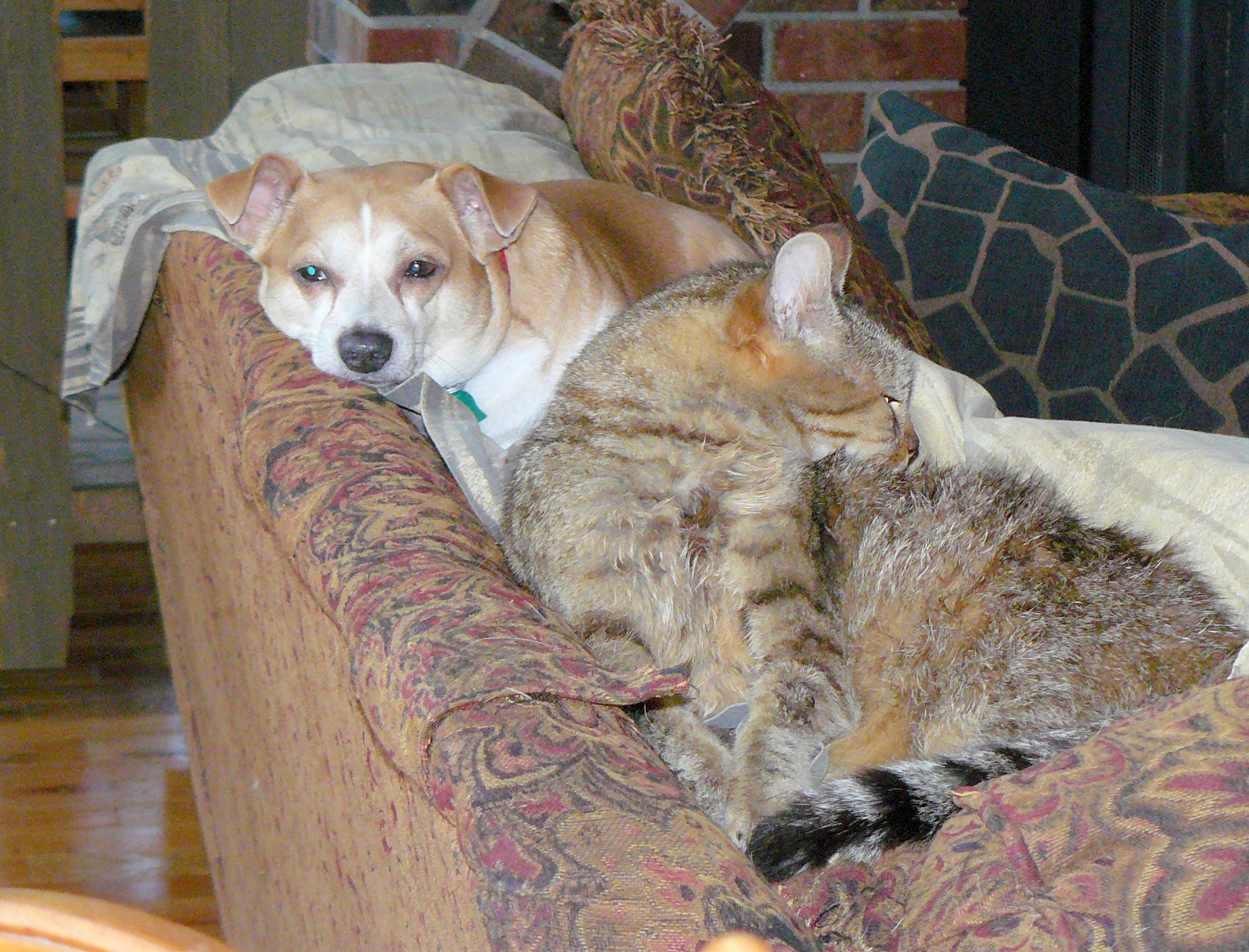
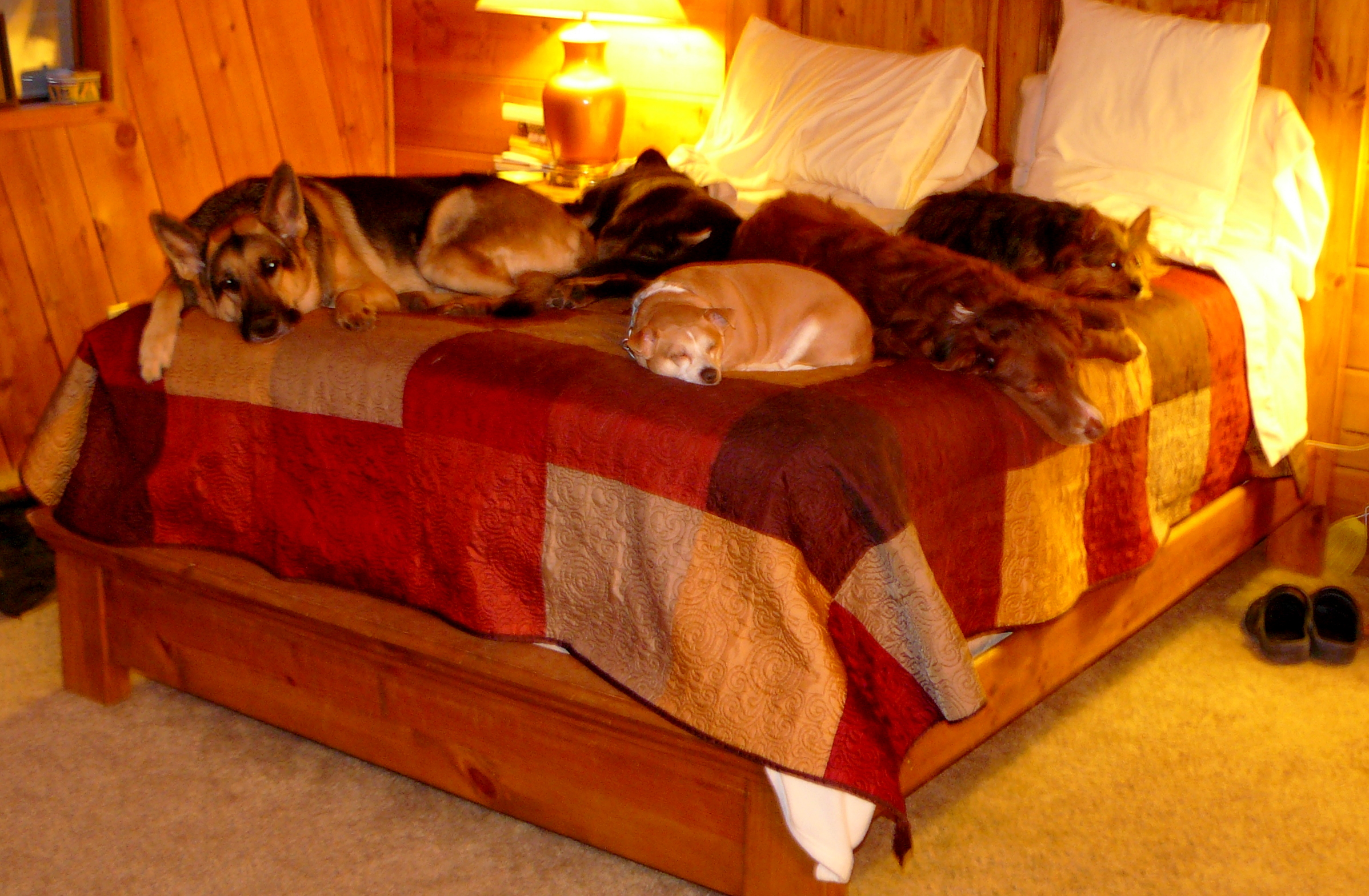
It doesn’t take too much imagination to appreciate that living in a house and sharing it with nine dogs and four cats doesn’t lend itself to perfect hygiene! Indeed, just yesterday morning we found evidence of mice in one of our bedroom cabinets. Plus both the bedroom and the main living room are never completely free of fleas, as my skin attests to. Then let’s not even speak of the hair and dust around the house!
Plus we live in a very rural location and the dog traffic in and out of the house is a consequence of our lifestyle choices that we do accept (99% of the time! 😉 ).
But possibly living a healthier life as a consequence of our ‘dirty’ animals was not something that would have ever crossed my mind until now, thanks to a recent essay published over on The Conversation site.
Read it and come to your own conclusion. It is republished within the generous terms of The Conversation; viz:
We believe in the free flow of information. We use a Creative Commons Attribution NoDerivatives licence, so you can republish our articles for free, online or in print.
ooOOoo
If being too clean makes us sick, why isn’t getting dirty the solution?
January 13, 2016 5.59am EST
Author: William Parker, Associate Professor of Surgery, Duke UniversityWash up. Riccardo Meneghini/Flickr, CC BY-NC-ND.
Today rates of allergic, autoimmune and other inflammatory diseases are rising dramatically in Western societies. If that weren’t bad enough, we are beginning to understand that many psychiatric disorders, including depression, migraine headaches and anxiety disorders, are associated with inflammation. Perhaps the most startling observation is that our children are afflicted with the same inflammatory problems, contributing to the fact that over 40 percent of US children are on medications for some chronic condition.
And the cause, according to the “hygiene hypothesis,” is that being too clean causes a malformation of the immune system, leading to a wide range of inflammatory diseases. The original idea was that decreased infections in childhood due to hygiene led to a weak immune system, prone to become allergic and inflamed.
If the problem is that we are too clean, then, hypothetically, the issue can be easily resolved. We just need to get dirty, right? Wrong.
Getting dirty doesn’t help our immune system and generally makes inflammation worse. Much worse. That means there is something very wrong with the hygiene hypothesis.
Biodiversity is the real issue
What we actually have is a biodiversity problem. Our clean, indoor-centered lives and a Western diet rich in processed foods have depleted our biomes – the bacteria and worms that naturally live in our bodies, our guts in particular. These organisms play a role in the development and regulation of our immune systems, and scientists have identified the loss of biodiversity as being central to the high rates of inflammatory disease in the developed world.
An increase in inflammatory disorders, like allergies, was first observed about 150 years ago among the aristocracy in Europe, then reached the entire population of the industrialized world by the 1960s, and seems only to have climbed steadily since then.
But times change. After generations of living with toilets and water treatment facilities, some of the wildlife in our bodies has been driven to the point of extinction. Our loss of contact with the soil due to indoor working environments has further depleted the wildlife of our bodies. And the typical Western diet doesn’t help either.
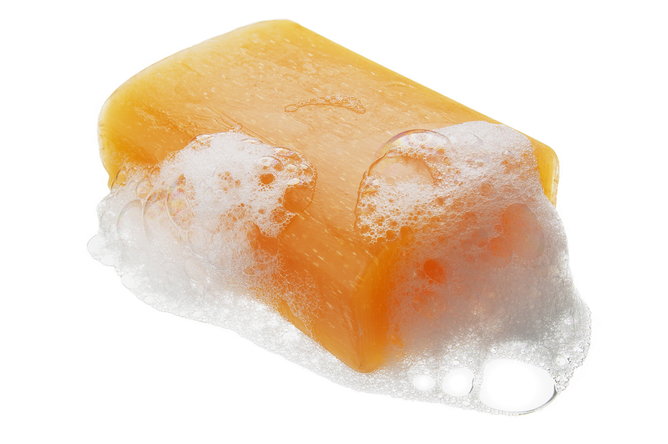
Even if you were to never use soap again for the rest of your life, you would not recover the wildlife your body is missing. Many of the lost organisms of our body don’t exist in North America in the wild, and others you simply won’t come across in your daily life.
On top of tremendous social difficulties imposed by a lack of soap, you’d likely increase your exposure to a lot of aggravating and even dangerous germs. The bacteria and viruses deposited on your shopping cart handle or the light switch at a hotel are generally not good. Those are often the germs of modern society that cause infection and inflammation. Your immune system would remain inflamed, and perhaps be even more agitated than before.
So what exactly are we missing? For practical purposes, it’s important to divide the wildlife of our bodies into two groups: microbes and more complex organisms such as worms. Microbes and worms affect our immune systems in different ways and both are important to be healthy. Biodiversity is the key.
A healthy crop of microbes and a few good worms
What would the gut biomes in our hunter-gatherer ancestors have looked like? A study by Jeffrey Gordon at Washington University in St. Louis showed that people living in modern preindustrial societies had more diverse micriobiome compositions than people living in the United States today. Seventy bacterial species Gordon found in preindustrial people’s biomes were present in very different amounts from those found in the modern U.S. participants.
While each group may have been exposed to different kinds of bacteria in their day-to-day life, the primary reason for the difference in diversity was attributed to diet. The preindustrial folks ate a diet rich in corn and cassava, compared to a U.S. diet rich in animal fat and protein.
And you might think that antibiotics are an issue, but they are usually less of a long-term problem for biodiversity. They can deplete bacteria in the gut microbiome, but the dangerous and disease-inducing tailspin is generally temporary. The microbiome usually recovers quite nicely, for the most part, although some lingering effects can remain.
The second group of organisms that we need are intestinal worms called helminths. These worms are called mutualists, because they benefit from us and we benefit from having them hanging around in our intestines. They used to naturally live in our gut. In fact, only 150 years ago most people in the West had intestinal worms that helped regulate immune function and prevent inflammatory disease. The culprit here isn’t diet, but cleanliness and sanitation.
Eat some fiber. Ali Karimian/Flickr, CC BY-SA.
If getting dirty won’t help your biome, what can you do?
When it comes to bacteria, a healthy diet is the critical ingredient. We can actually achieve a good mixture of gut bacteria very similar to that of our hunter-gatherer ancestors by adopting a good diet high in fiber and low in processed foods. The right diet helps the good bacteria in your gut flourish, and might make it easier for new varieties of good bacteria to take root.
In addition, there are some products that might, in theory, support a more hunter-gatherer-like bacterial flora, by exposing us to the kind of bacteria we don’t encounter anymore, but they haven’t been tested in clinical trials.
Worms are a bit more challenging. There are two schools of thought on how to help helminth-less guts: one is to figure out what makes good worms good for us, and develop a drug that can do the same thing. The other is just to have these good worms living in your intestines.
Personally, I don’t think we can replicate complex biological relationships using a drug. My view is that modern medicine will eventually embrace the actual worm or maybe complex single-celled organisms called protozoans that work the same way, but research in this field is still in the early stages of development.
In the meantime, some intrepid people are going straight for the worm. As in actually acquiring worms in their gut. The challenge for these adventurers is to find a worm that has more benefits than disadvantages.
For instance, the same species of worm can have different effects in different people. The human hookworm, for instance, is commercially available and easily cultured at home. It has been found to treat multiple sclerosis and severe airway hypersensitivity but can also cause severe gastrointestinal distress in many patients.
For now, most individuals interested in immune health will focus on those factors that are risk-free, like avoiding chronic psychological stress, eating well and exercising, and watching out for vitamin D deficiency. These factors, all within our control, are important for avoiding a wide range of inflammation-related diseases, including allergy, autoimmunity, depression and cancer.
ooOOoo
It seems to me that another solution is having more and more dogs and fully embracing them into our lives.
Carnivore Meat Company of Green Bay, Wisconsin, has announced it is voluntarily recalling a single lot of its Vital Essentials Frozen Chicken Entrees for Dogs due to contamination with Salmonella bacteria.
To learn which products are affected, please visit the following link:
Please be sure to share the news of this alert with other pet owners.
Mike Sagman, Editor
The Dog Food Advisor
That link above explains:
January 15, 2016 — Carnivore Meat Company of Green Bay, Wisconsin, has announced it is voluntarily recalling a single lot of Vital Essentials Frozen Chicken Patties Entrée for Dogs due to possible contamination with Salmonella bacteria.
What’s Being Recalled?
The single lot involved in this voluntary recall is:
Vital Essentials Frozen Chicken Patties Entrée for Dogs
Net weight 6 pounds
UPC 33211 00807
Lot # 11475
Best by date 20161108 (11/08/16)
The “Best By” date code and lot # is located on the back of the package.
Where Was It Distributed?
The affected product was distributed in the following states:
California
Florida
Georgia
Rhode Island
Texas
Washington
Why Was It Recalled?
The Federal Food and Drug Administration (FDA) selected and tested product as part of a national collection initiative, which was issued by the Center of Veterinary Medicine (CVM) on June 3, 2015.
The Agency notified Carnivore Meat Company that one of the samples collected, tested positive for Salmonella, bacteria commonly associated with fresh and frozen poultry, in human and in pet products.
There have been no customer complaints reported.
No other product manufactured by Carnivore is involved in this recall.
About Salmonella
Salmonella can cause serious illness or fatal infection in young children, frail or elderly people, and others with weakened immune systems.
Although healthy individuals may suffer only short term symptoms such as high fever, severe headache, stiffness, nausea, abdominal cramping and diarrhea.
Consumers exhibiting these signs after having contact with this product should contact their healthcare providers.
What to Do?
If you are a consumer and have purchased a bag of the affected product, please call the the company at 920-370-6542 Monday-Friday, 9 AM to 4 PM CST.
The company will assist you in obtaining replacement or a full refund from your local retailer for your original purchase.
If your package has been opened, the company suggests that you dispose of the raw food in a safe manner. This can be accomplished by securing it in a covered trash receptacle.
U.S. citizens can report complaints about FDA-regulated pet food products by calling the consumer complaint coordinator in your area.
Then the second is a video that was brought to my attention thanks to Neil in South Devon. As Neil so rightly said, “Leaving aside the captions it’s quite moving….”. (And, trust me, believers and non-believers alike, you are going to weep from start to finish, just as Jean and I did!)
In a world where so much is so utterly screwed up it is the most blissful miracle that we have our dogs!


![Image[147]](https://learningfromdogs.com/wp-content/uploads/2016/01/image147.jpg)
![Image[148]](https://learningfromdogs.com/wp-content/uploads/2016/01/image148.jpg)
![Image[150]](https://learningfromdogs.com/wp-content/uploads/2016/01/image150.jpg)
![Image[151]](https://learningfromdogs.com/wp-content/uploads/2016/01/image151.jpg)
![Image[152]](https://learningfromdogs.com/wp-content/uploads/2016/01/image152.jpg)
![Image[153]](https://learningfromdogs.com/wp-content/uploads/2016/01/image153.jpg)
![Image[154]](https://learningfromdogs.com/wp-content/uploads/2016/01/image154.jpg)
![Image[155]](https://learningfromdogs.com/wp-content/uploads/2016/01/image155.jpg)
![Image[149]](https://learningfromdogs.com/wp-content/uploads/2016/01/image149.jpg)


 Learning from Dogs