Category: Dogs

Bath time!

Not just for dogs!!

At 11am this morning I am checking in to the local hospital in nearby Grants Pass for a colonoscopy. I am very hopeful that this routine examination will not find anything to worry about.

However, yesterday evening I had to take the first of two doses of Bowel Preparation ‘Kit’. That was after a full day staying off solids!! The second dose is being taken at 7am PDT this morning. One could take a tongue-in-cheek view that the results will not be a pretty site.  Once back home a decent shower and a lovely meal will be the order of the day.

So with bathing in my mind, let me share this recent delightful item that was published by Mother Nature News.

ooOOoo

Rub a dub dub, 2 dogs have very different experiences in the tub

Noel Kirkpatrick   April 4, 2017.

Getting pets into the bath can be a tricky endeavor, but these two dogs seem content to be in the tub. Now if they only had the same idea of how to behave there …

The husky on the right is just there for a relaxing soak and maybe a good shampooing. Its pal, on the other hand, wants to dig through the water the entire time as if there’s a bone somewhere buried just below the water.

To the husky’s credit, it allows its puppy companion to live in its own bath tub truth, but we all know that deep down it’s thinking, “I just wanted some quiet time and some cucumbers on my eyes. Is that too much to ask?”

Apparently, yes, it is.

ooOOoo

See you tomorrow!

A Hop, Skip and a Jump!

Actually it’s just about skipping! A dog skipping!!

This was seen on the BBC News website yesterday and I am delighted that the video clip is on YouTube.

Here’s how the story was reported by the BBC.

Devon dog sets skipping world record

3 April 2017 Last updated at 12:17 BST

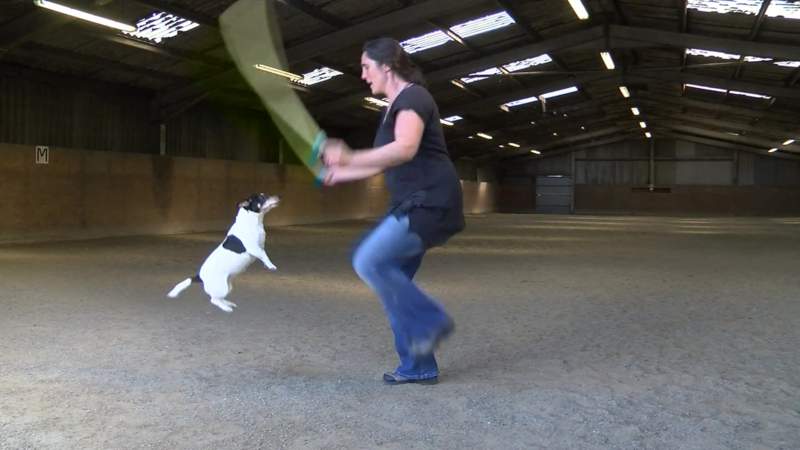
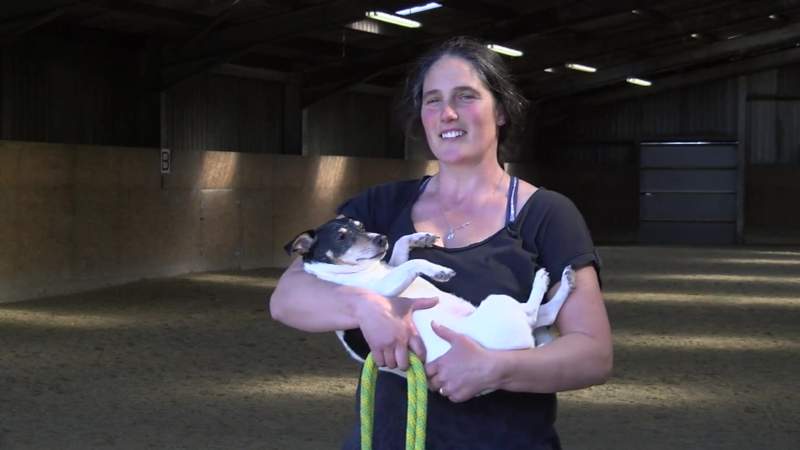
A skipping Jack Russell and her owner have set a new world record.

Eight-year-old Jessica and her owner Rachael Grylls, from Lewdown in Devon, clocked up 59 skips in one minute.

The owner of a skipping Jack Russell dog says she is “really, really, really pleased” she and her pet have set a new world record.

Rachael said: “It’s quite hard to keep jumping, talking and rewarding her at the same time. I think I’m more unfit than Jessica!”

Lovely to see this news item from my old County of Devon.

You see, I used to live just a few miles out of Totnes in Devon; in the village of Harberton. Lewdown is also in Devon, as the news item reported, but it is the other side of Dartmoor. In other words, North-West of Dartmoor as opposed to Totnes being to the South-East of Dartmoor.

But if any of you dear readers fancy a vacation in the UK you should make a point of going to see Dartmoor. It’s a very beautiful place. (Sue, you have probably been to Dartmoor? Yes?)

Classic Dartmoor view


The Scent Angels

The endless miracles of having dogs in our lives.

I have two sisters: Elizabeth and Eleanor. Elizabeth lives in Tokyo, Japan and Eleanor lives in Johannesburg, South Africa. They are both dear sisters and we all love each other as brothers and sisters should!

Anyway, Eleanor’s husband, Warwick, has a brother and this story is about Warwick’s brother’s step-daughter, Stacey Maguire.

It was Eleanor who sent this story to me to be published in this place.

ooOOoo

My dog saves my life every day

Stacey Maguire’s life is always in danger.

A severe Type 1 Diabetic, her body doesn’t produce the insulin it needs to control her blood sugar, leaving her vulnerable to catastrophic changes in sugar levels. But as long as her dog, Gretchen, is around she has nothing to fear. For Gretchen is a trained Diabetic Assist Dog (DAD).

Gretchen is a Swiss Shepherd who saves her owner’s life on a daily basis by warning her whenever her blood sugar is at a dangerous level. Incredibly, Gretchen does this by smell.
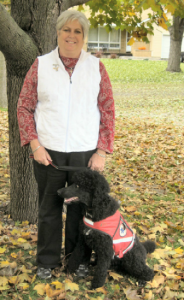
Stacey’s chronic condition is so severe that she’s on the best monitoring technology in South Africa. But before Gretchen came into her life, and even with that monitoring technology, Stacey still experienced hypoglycemic episodes and seizures at least once a week when changes in her blood sugar levels weren’t detected in time.

Thus when Gretchen arrived from America her sole objective was sniffing out the problem as fast as possible. And Gretchen does that – a full hour ahead of that best available technology!

Her method? An urgent paw to the knee, followed by a bark. Gretchen takes no nonsense, delivering the testing kit to Stacey’s hand if her response is sluggish. If anything goes wrong Gretchen, as a trained service animal is taught to so do, sounds an alarm or alerts the nearest person to the danger. Stacey couldn’t ask for better care.

Stacey is the first South African to benefit from a Diabetic Assist Dog. Stacey Maguire’s dream is to start a facility to train more dogs to help diabetics like her. That’s something South Africa can get behind.

ooOOoo

Eleanor also added the following by way of background:

We found a phenomenal lady called Diane Marquette in Minnesota who agreed to train a dog for export – her first time for such an undertaking.

A three-year-old white Swiss Alsatian called Gretchen made the grade for the initial training after which Di started the diabetic training. In preparation, whenever Stacey felt unwell she spat into cotton-wool and put these samples into the freezer. When Stacey had collected a bundle she sent them via courier to Di who then trained Gretchen on Stacey’s scent.

This process took ten months. Then Stacey  flew to Minnesota to meet Gretchen, to be bonded with Gretchen, to be trained and, finally, to sit and pass a very stringent exam before being allowed to bring Gretchen back home. Ten days later we met them at Cape Town International, after twenty-one hours of flying for Stacey with Gretchen at her feet in the aeroplane. SA’s first DAD had landed!

In an email to me, Eleanor included:

Stacey and Gretchen have now been together for several years with their bond just strengthening and strengthening! Gretchen alerts Stacey continuously and in recent times has started alerting at night too. Thus even accounting for the fact that, as with all dogs, Gretchen sleeps at night coinciding, unfortunately, with when Stacey is most vulnerable to shocking lows, this fabulous dog maintains awareness of Stacey’s body scents during the night hours.

Stacey’s wish is to bring trainer Di of Scent Angels to Cape Town to train trainers, and then to roll this life-saving program out to fellow diabetics.

Diane Marquette

Eleanor also included the link to the website for Scent Angels. I shall pass on the link to this post to Diane Marquette with the request that she might allow me to share some more stories of these incredible dogs with you all.

Snow time is smile time

These dogs are most definitely not suffering from depression!

Good people, I was late to my desk yesterday and was looking for something to present to you without it taking too much time.

The Care2 site came to the rescue with the following video. Plus, such a bonus following last Saturday’s article about dogs suffering from depression and how to cure them when they are down.

It doesn’t get farther from depression than this!

Hopefully back to normal tomorrow!

Picture Parade One Hundred and Eighty-Nine

The final set of these wonderful pictures.

oooo

oooo

oooo

oooo

Sometimes I think a particular Picture Parade series will be impossible to follow. So let’s see what I can find for next week. Dear Bob, thank you for these!

Meantime, you all take care out there.

Putting a smile on your dog’s face!

Dogs do suffer from depression.

OK, in many cases I’m sure it is because dogs are watching too much television; especially the news!

OK: Only kidding!

Some may be surprised that dogs can express sadness and suffer from depression but it is true.

Only a few days ago there was a bit of a ‘punch up’ between Brandy and Ruby. Ruby was feeding and Brandy approached her food bowl. Ruby gave a short, throaty “stay away from my food” growl and the next instant Brandy had Ruby’s face in his mouth and it was quickly turning into a Grade A dog fight.

Luckily Jean and I were on hand and had the two of them separated within seconds. But it was still sufficient time for Brandy to have drawn blood from a small bite to the side of Ruby’s face.

However, the point I was coming to was that since that incident Ruby has clearly been very depressed and withdrawn.

So on to today’s topic. Recently published on Mother Nature Network.

ooOOoo

Is my dog depressed? The warning signs and solutions

Find out what causes doggy depression and how to fix it.

Jaymi Heimbuch March 30, 2017.

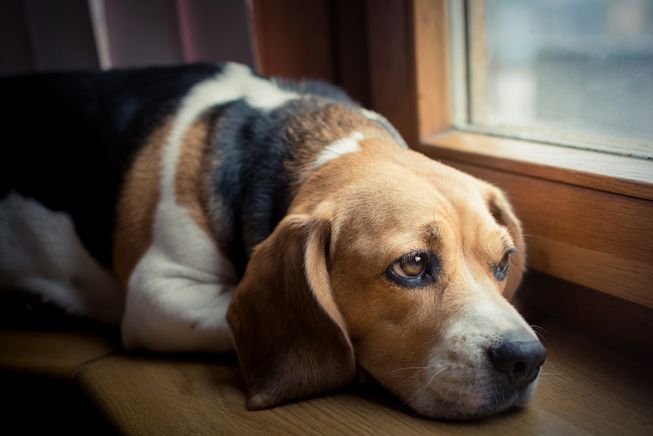
Dogs can get the doldrums. But there are ways to help them come out of it with a wagging tail. (Photo: Iuliubo/Shutterstock)

Yes, dogs can get depressed. Whether or not it’s the same as what humans experience, we may never know since we can’t ask a dog. But there are signs and symptoms from a dog’s behavior that reveal when a dog is in the doldrums. If you’ve noticed a sudden change in your four-legged friend’s behavior and are worried, you may need to see if the change is a clue that your dog needs some psychological TLC.

Common triggers for dog depression

Dogs are creatures of habit, activity and loyalty. A sudden change that affects their world can cause a dog to have a spat of depression. Triggers include:

  • The addition of a new person or pet to the family
  • A sudden drop in attention from an owner or family members
  • A sudden change in the household schedule
  • The loss of an owner or companion
  • Moving to a new home
  • A traumatic injury

Dogs may also suffer from Seasonal Affective Disorder, or SAD, during the winter months. Stanley Coren reports in Psychology Today: “Do dogs suffer from SAD? Some data comes from a survey conducted by a leading veterinary charity in the UK. PDSA (The People’s Dispensary for Sick Animals) found that approximately 40 percent of dog owners saw a considerable downturn in their pet’s moods during the winter months. In addition, half of the dog owners felt that their dogs slept longer, with around two in five reporting their pets to be less active overall.”

Some dogs may suffer depression simply for not having a job to do. The Guardian notes:

“In the not too distant past, dogs mostly had to work for a living and were probably very often physically and mentally fatigued at the end of the day – which is why we have the expression ‘dog-tired’. Could the stress of being made redundant be the source of this apparent unhappiness? Dog behaviourist Penel Malby told me: ‘Dogs live very differently to the way they used to. Lots more dogs, lots more people, lots more stress for everyone, I think. If you think back even just 50 years, dogs were allowed to roam free every day, socialise with their neighbourhood friends. Now they either go out with a dog walker or go out for an hour if they’re lucky, and the rest of the time is spent at home.'”

The upside is that canine depression usually isn’t permanent, or even necessarily long-lived, and there are ways to combat it to help your dog get back to normal in due time.

What are the warning signs?

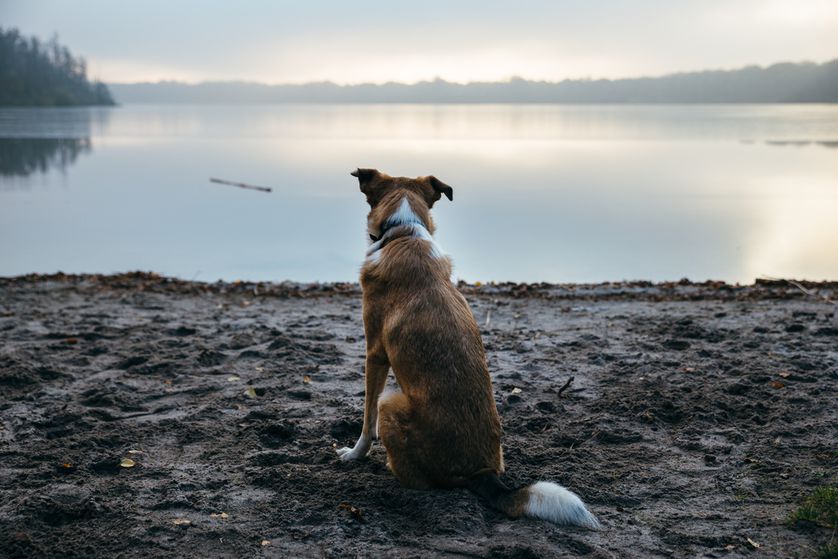
Watch for warning signs of depression so you can catch the trouble early and help your dog recover. (Photo: DREIDREIEINS Foto/Shutterstock)

The most common symptoms dogs display when they’re depressed mirror those that humans experience during a depression. They include:

  • Sleeping much more than usual
  • A change in eating habits, including a loss or gain in appetite and in weight
  • A refusal to drink water
  • A lack of interest in usual energetic activities like going for walks or playing
  • Excessive licking of their paws
  • Excessive shedding
  • Become withdrawn or hiding in the house
  • Suddenly showing signs of aggression or anxiety

Unfortunately, these symptoms also occur with a range of other medical issues. A dog might have a change in appetite because of a thyroid or kidney issue, or the dog might not want to go on a walk because of joint pain or arthritis flaring up. So if you notice any changes in your dog’s behavior, the first thing to do is visit the vet to rule out any serious health-related issues before assuming it comes down to depression.

How to help your dog out of a depression

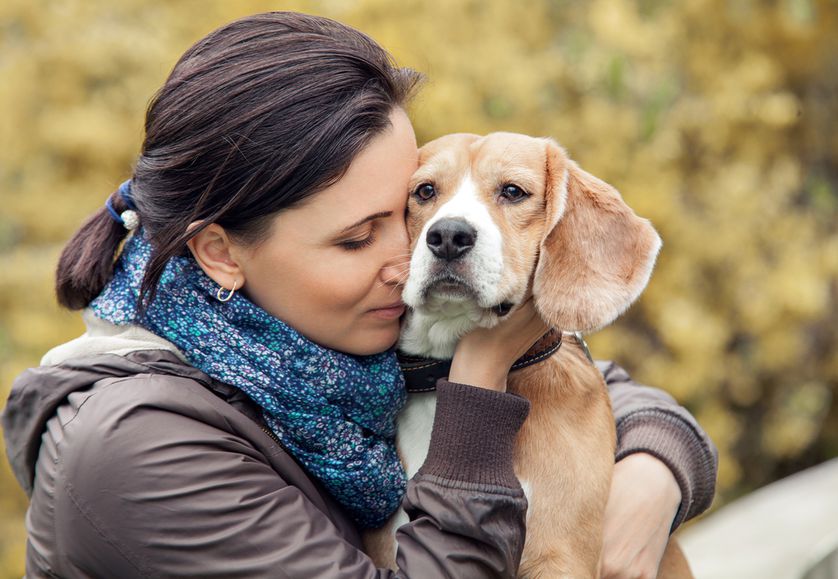
Sometimes time, extra love and a steady routine is all that’s needed. (Photo: Soloviova Liudmyla/Shutterstock)

If you have determined your dog is feeling depressed, there are many things you can do to help them pull out of it.

– Take your dog on more frequent walks during the day to favorite places, allowing them to sniff around and enjoy the scenery. It’s also helpful to do this first thing in the morning to start the day out with a bit of fresh air and energy.

– Try to keep a schedule as much as possible. Dogs are creatures of habit and having a predictable routine can be an enormous source of comfort for a stressed or depressed dog, especially if the trigger for the depression was a sudden change in routine.

– Reward your dog when he shows signs of improved mood or energy. Rather than babying the dog during the down times — which reinforces that behavior — reward him with extra special treats or a favorite toy when he shows a bit of enthusiasm about life to amplify the mood even more.

– Bring home a new toy, such as a squeaker or puzzle toy that stimulates the senses and encourages play.

– If the cause of depression is the loss of a companion, like another household pet, consider adopting another dog that can be a companion. However, only do this if you’ve seriously considered the needs of your household and your depressed dog. It isn’t an option to be taken lightly.

As a last resort, medication could be an option. There are antidepressants for dogs that you can discuss with your veterinarian. However, catching depression early on and trying for behavioral changes first is the best solution. Bonnie Beaver, DVM, notes in a WebMD article, “[I]t can take up to two months for drugs to become effective. But unlike people, who often remain on antidepressants for years, most dogs can get better in six to 12 months and then be taken off the drugs.”

And finally, give it time. As Wag Walking notes, “Be Patient: Sometimes — especially if the issue was a loss of a companion or master — the only thing that will heal a dog’s heart is time. It may be as few as a couple days or as much as a few months, but most dogs will be able to pull themselves out of depression with a little time and understanding.”

ooOOoo

May you, your family and all your wonderful animals have a wall-to-wall happy weekend!

Picture Parade One Hundred and Eighty-Eight

Stay Happy Good People!

Returning to the pictures sent in by ‘Captain Bob’.

oooo

oooo

oooo

oooo

oooo

The final set of Bob’s Happy-Making pictures next Sunday.

Distracted by Happiness!

Dear Ruby joins the crowd.

When Paloma died on the 16th, a little over a week ago, and, in turn, just a couple weeks after the sad loss of Casey, she was the last of the ‘kitchen’ group. To explain to newcomers, ever since we moved to Oregon in 2012 we had our dogs divided into two groups: the ‘kitchen’ and ‘bedroom’ groups. Primarily to ensure the minimum of any tensions between what at times has been 12 dogs.

There is a gate between the living room and the kitchen area and we have been leaving that open hoping that Ruby would work out when it was the right time to join the others.

That right time was yesterday afternoon around 4:30.

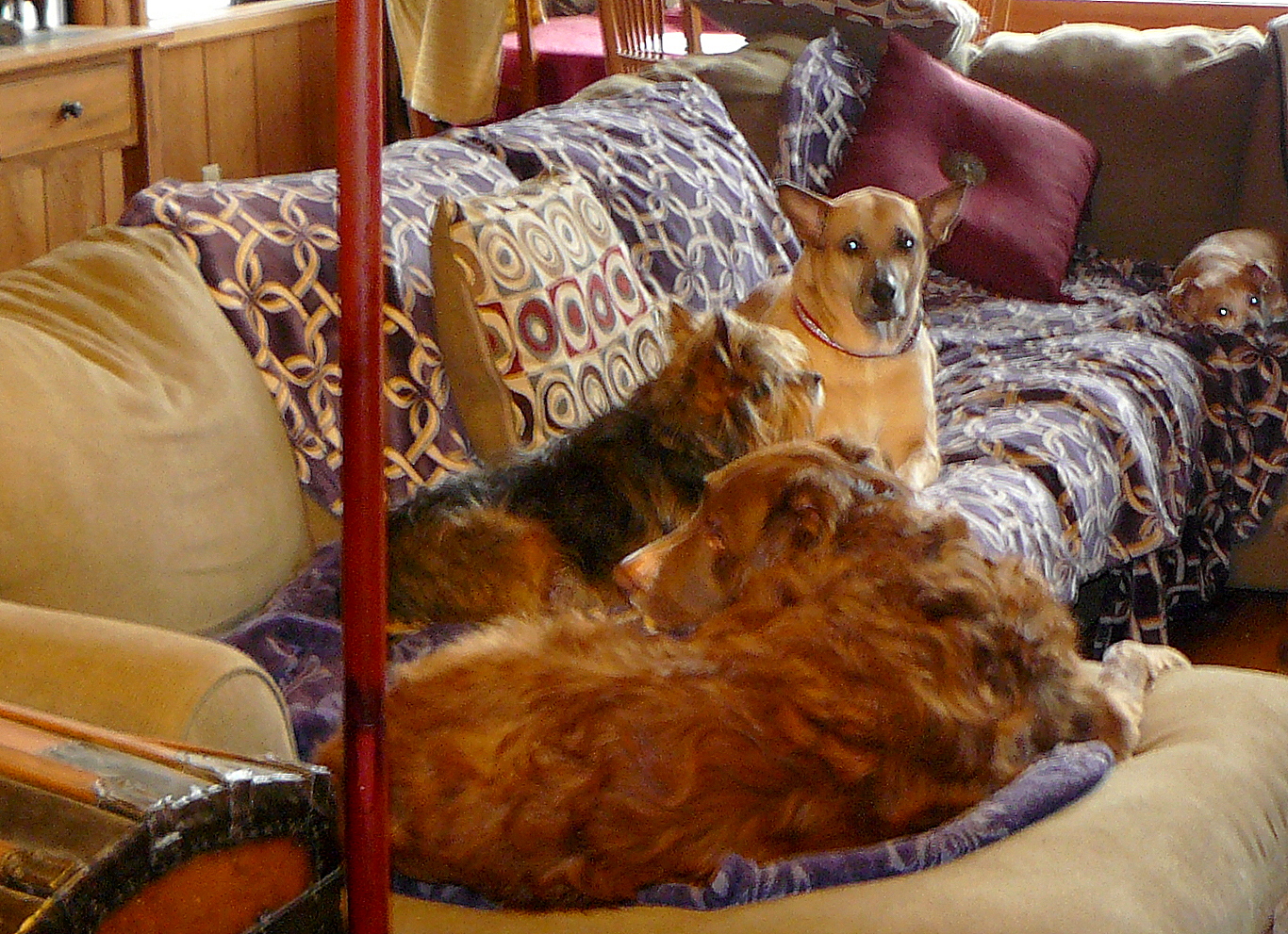
I grabbed my camera and quickly took a few flash photographs. They weren’t very good because Ruby is upset by camera flashguns. But the following is the best of the set and Jean and I wanted to share the lovely occasion with you.

From the foreground: Oliver, Sweeny, Ruby and to the right little Pedy.

Why did I choose the title I did?

Because a few moments before Ruby jumped up on to the settee Jean and I had been giggling about something silly.

Dogs know!

Rebecca’s Ode To Her Dog

What a wonderful postscript to yesterday’s post.

There was an exchange of comments yesterday to my post This Is The Dog.

Rebecca offered:

I just wrote an ode to my dog…. she is everything.

I responded:

Rebecca, please share your ode with everyone.

Rebecca then provided the link:

Here ya go 😀
https://myfacesoflife.wordpress.com/2017/03/21/ode-to-my-dog/

If you go to that place, you will read this.

ooOOoo

Ode to my Dog.

on March 21, 2017

This is Raya.

She is perfect. Even with her imperfections.


Wherever I go, so does she.

For 11 years she has been in my life.

For 11 years she has comforted me through my troubles.

For 11 years she has filled me with love.

For 11 years she has loved me.

For 11 years I treasured every moment.

For 11 years now… and I am fully aware that we are running out of time.

Here she lies, sleeping next to me on the sofa.

Dreaming a dogs dream with all paws moving.

She is perfect.

How will I ever do this without her sleeping next to me on the sofa?

This is Raya.

She is perfect. Even with her imperfections.

She keeps me safe when I am scared.

She watches over me as she sleeps on the foot of my bed.

This is Raya.

She is perfect. Even with her imperfections.

When she is happy, I smile with her.

When she is hurt, I fix her pain.

When she needs help, I stop what I am doing and I help.

When I am sad, she comforts me.

She makes what I do possible. She makes the bad days good. She makes the good days fantastic. She makes the horrible days bearable. Through every move, through every fight, through every depression, through every tear, through every laugh, through every moment of joy, through every moment of peace, through every moment of serenity, through every nightmare, through every feeling of desperately wanting to run away, through all of the times that I wanted to scream at the top of my lungs, through all of the times I prayed for death, through all of the times my insides were screaming so hard it made me feel like I was going to burst, through all of the times I felt my heart break, through all of the times I felt my heart mend again. She was there. Depression has many faces and she has seen them all and helped me overcome. She has given me reason because her love deserves attention.

….. and we are running out of time. The possible will become impossible.

This is Raya.

She is perfect.

She is mine and I am hers.

I am hers and she is mine.

We are equal in love, in pain, in joy, in life.

I am proud to be her human. All of the mistakes I have made in the past… with Raya, I did it right.

She is perfect.

When you look into her eyes you can see her soul. Her character, her goofiness, her lust for life, her love, her mind, her cleverness. Her loyalty. I sometimes wonder what she sees when she looks back into my eyes. Does she see everything that I see? Would she also call me perfect? All I see in that connection is love.

She is perfect.

My Raya, my girl. All my love. We will live forever.


~ Becca ~


ooOOoo

Stunningly beautiful and, yes, perfect!

This is the dog!

Perhaps the loss of a loved dog explains so much!

The posts for the last two days have carried separate and very different stories of terrible cruelty to dogs, the second one involving terrible cruelty to a dog and a bull! As a tradition! Ouch!!

Readers of this place know what they feel about dogs. It is felt deep within their hearts. Those feelings are poured out when, either from me or someone else, there’s a post lamenting the loss of their dog.

Just as a tiny example of that love we all have for our dogs, here’s a response from Marina Kanavaki and, trust me, Marina is far from being alone in this regard.

Oh, no, Paul!!! I’m so sorry my friend! It is hard to believe and not so long ago, Casey. I know words can’t take away the pain but you have my thoughts and I’m sending you both my love and hugs.

So a recent essay published on The Conversation site is a must to share with you today. As usual, it is republished within the terms of The Conversation.

ooOOoo

Why losing a dog can be harder than losing a relative or friend

March 9, 2017
Frank T. McAndrew,   Cornelia H. Dudley Professor of Psychology, Knox College.

Recently, my wife and I went through one of the more excruciating experiences of our lives – the euthanasia of our beloved dog, Murphy. I remember making eye contact with Murphy moments before she took her last breath – she flashed me a look that was an endearing blend of confusion and the reassurance that everyone was ok because we were both by her side.

When people who have never had a dog see their dog-owning friends mourn the loss of a pet, they probably think it’s all a bit of an overreaction; after all, it’s “just a dog.”

However, those who have loved a dog know the truth: Your own pet is never “just a dog.”

Many times, I’ve had friends guiltily confide to me that they grieved more over the loss of a dog than over the loss of friends or relatives. Research has confirmed that for most people, the loss of a dog is, in almost every way, comparable to the loss of a human loved one. Unfortunately, there’s little in our cultural playbook – no grief rituals, no obituary in the local newspaper, no religious service – to help us get through the loss of a pet, which can make us feel more than a bit embarrassed to show too much public grief over our dead dogs.

Perhaps if people realized just how strong and intense the bond is between people and their dogs, such grief would become more widely accepted. This would greatly help dog owners to integrate the death into their lives and help them move forward.

An interspecies bond like no other

What is it about dogs, exactly, that make humans bond so closely with them?

For starters, dogs have had to adapt to living with humans over the past 10,000 years. And they’ve done it very well: They’re the only animal to have evolved specifically to be our companions and friends. Anthropologist Brian Hare has developed the “Domestication Hypothesis” to explain how dogs morphed from their grey wolf ancestors into the socially skilled animals that we now interact with in very much the same way as we interact with other people.

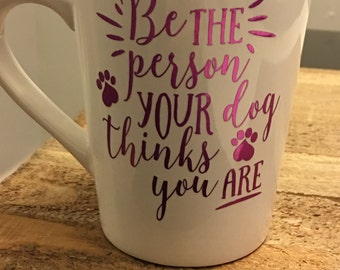
Perhaps one reason our relationships with dogs can be even more satisfying than our human relationships is that dogs provide us with such unconditional, uncritical positive feedback. (As the old saying goes, “May I become the kind of person that my dog thinks I already am.”)

This is no accident. They have been selectively bred through generations to pay attention to people, and MRI scans show that dog brains respond to praise from their owners just as strongly as they do to food (and for some dogs, praise is an even more effective incentive than food). Dogs recognize people and can learn to interpret human emotional states from facial expression alone. Scientific studies also indicate that dogs can understand human intentions, try to help their owners and even avoid people who don’t cooperate with their owners or treat them well.

Not surprisingly, humans respond positively to such unrequited affection, assistance and loyalty. Just looking at dogs can make people smile. Dog owners score higher on measures of well-being and they are happier, on average, than people who own cats or no pets at all.

Like a member of the family

Our strong attachment to dogs was subtly revealed in a recent study of “misnaming.” Misnaming happens when you call someone by the wrong name, like when parents mistakenly calls one of their kids by a sibling’s name. It turns out that the name of the family dog also gets confused with human family members, indicating that the dog’s name is being pulled from the same cognitive pool that contains other members of the family. (Curiously, the same thing rarely happens with cat names.)

It’s no wonder dog owners miss them so much when they’re gone.

Psychologist Julie Axelrod has pointed out that the loss of a dog is so painful because owners aren’t just losing the pet. It could mean the loss of a source of unconditional love, a primary companion who provides security and comfort, and maybe even a protégé that’s been mentored like a child.

The loss of a dog can also seriously disrupt an owner’s daily routine more profoundly than the loss of most friends and relatives. For owners, their daily schedules – even their vacation plans – can revolve around the needs of their pets. Changes in lifestyle and routine are some of the primary sources of stress.

According to a recent survey, many bereaved pet owners will even mistakenly interpret ambiguous sights and sounds as the movements, pants and whimpers of the deceased pet. This is most likely to happen shortly after the death of the pet, especially among owners who had very high levels of attachment to their pets.

While the death of a dog is horrible, dog owners have become so accustomed to the reassuring and nonjudgmental presence of their canine companions that, more often than not, they’ll eventually get a new one.

So yes, I miss my dog. But I’m sure that I’ll be putting myself through this ordeal again in the years to come.

ooOOoo

Just let the messages of this essay reverberate around your heart. I’ll say no more!