Category: Dog lessons

Relationships.

Everything comes down to our relationships.

It is not the first time that I have written on the theme of the importance of relationships. However, I am inspired by a number of separate and discrete outcomes in the last couple of days that compell me to return to this most important principle of all: We are what we think about most.

The first outcome was a lovely reply left by Hariod Brawn to yesterday’s post. This is what she wrote:

My GSD had hip dysplasia too, Paul – if that’s what you’re alluding to with Pharaoh. He still was able to die a natural death though, as his rear quarters became paralysed with the dysplasia and he felt no pain. There were plenty of other problems resulting from his immobility, but I wouldn’t have traded those difficulties and the incredible communication we shared as a result of them, for anything – his last few weeks were some of the most powerful and precious of my entire life.

Then after my response, Hariod went on to say:

It was a deeply profound time for me, and I honestly wouldn’t have believed anyone had they told me what I experienced, but experience it I did. It was not the product of fanciful imagination, much as it might sound so in words. The communication between the two of us was quite incredible, and which really was empathic in nature, in the deepest sense of the word. We always had great communication and understanding, which all dog lovers do with their charges, of course, but this was another level altogether. Some might call it ‘psychic’, as if that meant something mystical and woo-like, but it just means ‘of the mind’. The question is, does the mind have the psychical power to share in understanding across physical borders? You will doubtless know of J. Allen Boone:

I will return to that mention of J. Allen Boone at the end of the post.

Then later on there was a further reply to the post from Barb of Passionate About Pets :

Thanks for re-publishing Gina’s post here, I found it interesting because Poppy, my little shih-tzu is an old dame now – she will be 17 in two months time. She has developed serious separation anxiety in the last year and if I am working in the garden, she barks for me to get back inside even though my husband is inside with her – she wants us BOTH with her. She is weak in her back legs so her walks are shorter. All these signs of old age make me so sad. Just like you and Pharoah, old age is creeping up on us all.
A special thank you to Hariod for including that video clip of J. Allen Boone’s dog Strongheart and the very special connection they had; he was so wise about Strongheart’s qualities – they never die. It really resonated with me.
Thank you for a wonderful post.

You can see why I entitled today’s post Relationships!

Then earlier on in my day I had a call with Jon Lavin, a friend from my days when I lived in Devon, South-West England. Jon and I still speak on a regular basis and yesterday I was complimenting Jon on a wonderful post he had written on his own business blog The People Workshop.

Jon’s post was about relationships in the workplace, his area of professional experience, and I was struck by how far the messages were relevant to all of us, in all areas of our lives. But just as key it was another reminder of the importance of all of us who express themselves on blogs; both as authors and as commentators. Because those expressions make, build and maintain great relationships.

Jon’s post is republished here with his full permission.

ooOOoo

Relationships in the workplace

Posted on

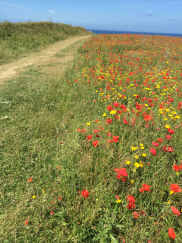
Poppies and sea
Poppies and sea

When you look at how much of our lives we spend at work it’s really quite attention-grabbing. I did a very rough calculation based on 40 years and 40 hours a week – and I took out holidays and weekends. It works out approximately at 4900 hours. That’s a lot of hours, especially if you do lots of overtime and weekends. All of that time, you’re probably going to be mixing with people – usually, quite a large number of people.

We are ‘relationship seeking’, says Eric Berne, originator of Transactional Analysis. So for all of that time, we’re moving in and out of relationships with other people. So here, I’m categorising any interaction with another as ‘relationship’.

Then there’s what happens when we go home, another set of relationships, and where we came from – our parents and families.

So how we are in relationship with others is very important and has a major impact on the results we get generally and particularly in the context of this article, at work.

I hear a lot of talk about ’employee engagement’ at the moment. I believe that for employees to be ‘engaged’, so actively involved in what they’re doing, thinking about it, in the ‘here and now’, they’ve got to be in relationship with their manager and probably, the team they’re part of, at least, if the job is being done properly.

I see it as the role of the manager or team leader that they have the skills and ability to develop these relationships with as many team members as possible, any exclusions being the exception. This requires a lot of self-awareness and confidence, plus the ability to build high levels of trust with a wide range of character types. I think it also requires the ability to see the world from the view point of the other person – ‘putting yourself in somebody else’s shoes’, we say. That’s quite difficult to do in my experience. However, we can donate the time to get to know the people in our team and so increase the likelihood of all of us coming from the same angle.

I think this is about the ability to value the uniqueness of others in all the different forms and approaches that manifests in, and finding ways of harnessing those skills and abilities.

These are not easy things and I am aware of the relatively few, good people managers I come across in my work but it is possible to develop these skills. You need to have the intention to want the best from ALL relationships. Also, to be prepared to use the feedback we all get, especially when things don’t go to plan in a relationship, and be continually revisiting and adjusting your approach so that you get more of what works. This way, you automatically get less of what doesn’t work.

Never under estimate the power of intention.

Stormy seas
Stormy seas

ooOOoo

I am now going to close today’s post with those words of  J. Allen Boone that Hariod had in her second reply:

To echo Jon’s closing message, let us never cease our intention of having wonderful relationships; with our dogs, with others and, not least of all, with ourselves.

Foreign lands.

These seem like times where very little makes sense.

Blogger Patrice Ayme posted an item on Wednesday under the title of Doomed Dems. It was, inevitably, a commentary on the recent news regarding Donald Trump. Here’s how Patrice’s post opens:

So Donald Trump will be the Republican committee ( 😉 ) for the presidency. And Trump will, probably, be elected US president. Why? Because people want change, and they did not get it. Instead they got more of the drift down, after the reign of the teleprompter reading president. Average family income is DOWN $4,000 since (“Bill”) Clinton’s last year as president. According to a FOX News poll, 64% of Americans blame Wall Street. Meanwhile in a vast report in the New York Times, Obama celebrates, in May 2016, the alliance he said he made with Wall Street in 2008.

Later on in that same post, Patrice goes on to write about the horrific fire in Alberta, Canada, and the damage to trees in Yosemite National Park in California. At first sight those two events would appear disconnected. But not according to Patrice:

Meanwhile a friend of mine went to Yosemite ten days ago. She told me she could not believe the devastation of the forest. Most of it is fiery red. It is devastated by the Pine Bark Beetle. To kill the Beetle, one needs twenty days well below freezing. However, this hard freeze is now a memory. So the Beetle invades, and kills forest. Treating tree by tree is hopelessly expensive, and futile. Yes, the forests will burn soon, adding to CO2 in the atmosphere. And it is all the way like that to Alaska.

Fort McMurray, Alberta may not have seen the worst of a devastating wildfire.

Massive walls of flames prompted authorities to order the evacuation of all the city’s more than 80,000 residents last night. The blaze has been caused by un-naturally high temperatures. Such giant fires are our immediate future. Nobody said the Greenhouse crisis was going to be nice. More evacuations coming.

Anything to do with dogs? Well, yes!

For this coming Saturday I am giving a talk about my book, Learning from Dogs, to our local Rogue Valley Humanist and Freethinkers (both Jean and I are members) and it struck me that what Patrice wrote about and what we see all around us are part of the same big picture. That we need to be reminded of a few fundamentals. As I will be saying in my talk:

Dogs are creatures of integrity! Wow! Now you might see where this is leading to!

But more than that, much more than that, they offer us humans a model for a range of behavioural qualities that we ignore at our peril:

I then list the qualities that we see in our dogs, and continue:

Hold those values close to you for just a few moments. Imagine what would flow out across the world if those were the characteristics, the behavioural values, of us humans!

Finally, towards the end of that talk on Saturday I will be saying:

Nature will always have the last word regarding her natural world, to which we humans are so intricately linked. Standing alongside and respecting nature as the future comes to us will be so much wiser than pushing back against nature, and ultimately failing, trying to “convert” nature to some form of materialistic human resource. Because that route will only return those of us who survive to a life of hunting and gathering. Which, so many thousands of years previously, is where early dogs started humankind on the long journey leading to now.
Dogs have been the making of humans and a viable future for humankind on this beautiful planet depends on us never forgetting this oldest relationship of all, the one between dog and human.

Because if we, as a global society, don’t understand that when it comes to power all the plutocrats and all of their money come to naught in contrast to the power of nature then these present lands are going to become very strange indeed!

And nature is rapidly encroaching on these lands that we are now traversing.

Of love, and trauma.

When it comes to animals it’s practically impossible to have one without the other.

Today’s post was inspired by a comment left on yesterday’s post The most beautiful bond of all by MargfromTassie. This is what she wrote (my emphasis):

Yes, these people are inspirational as are all the people who voluntarily give their time and efforts to animal welfare work, sometimes for years. For many, it can be emotionally traumatising as well as rewarding.

It didn’t take me long to agree that for most it will be emotionally traumatising. In fact, one of the great lessons that we learn from our dogs, and all the other animals that we love, is that unconditional love brings with it emotional trauma.

So much better expressed by Suzanne Clothier in her book Bones Would Rain from the Sky: Deepening Our Relationships with Dogs

There is a cycle of love and death that shapes the lives of those who choose to travel in the company of animals. It is a cycle unlike any other. To those who have never lived through its turnings or walked its rocky path, our willingness to give our hearts with full knowledge that they will be broken seems incomprehensible. Only we know how small a price we pay for what we receive; our grief, no matter how powerful it may be, is an insufficient measure of the joy we have been given.

Our grief is always an insufficient measure of the joy we receive!

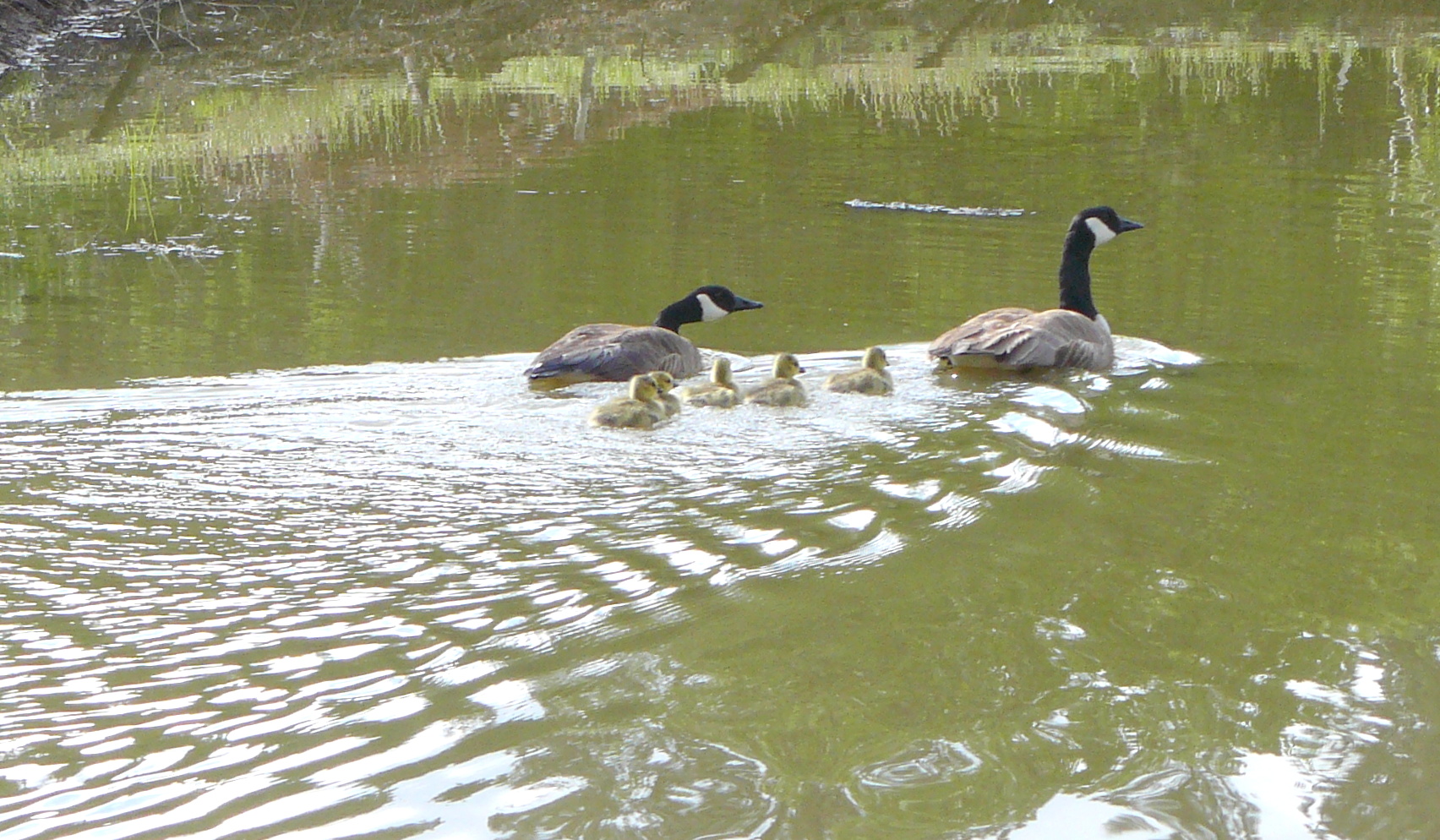
Speaking of joy, when we pulled back the bedroom curtains this morning (Thursday) the nest was empty!

P1160060For the last too many weeks to remember a mother Canadian Goose has been sitting on her nest of eggs with Father Goose staying close. We like to think that the mother returned to this place after having been born here a year ago.

Overnight five young healthy goslings were born! 🙂

P1160059May their little lives be full of love with a total absence of trauma!

The difference that makes the difference!

A nice reminder of past scribblings!

Yesterday, a visitor to this place left a comment to a post published in September, 2012. Simply, he wrote, “Some food for thought midst all the drivel and crap.” The post was under the heading of The Charles Schulz Philosophy. I had forgotten about it. I thought it would be nice to republish it today (or rather the essence of that post).

 ooOOoo

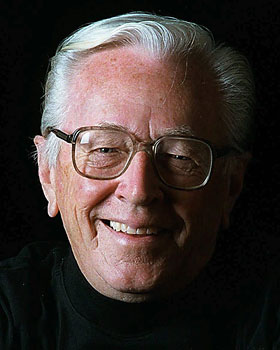
Charles Schulz

The following is the philosophy of Charles Schulz, the creator of the ‘Peanuts’ comic strip.

You don’t have to actually answer the questions. Just ponder on them. It will make very good sense!

Here’s A Little Quiz

You don’t have to actually answer the questions. Just read them straight through, ponder a tad, and you’ll get the point.

  • Name the five wealthiest people in the world.
  • Name the last five Heisman trophy winners.
  • Name the last five winners of the Miss America pageant.
  • Name ten people who have won the Nobel or Pulitzer Prize.
  • Name the last half dozen Academy Award winners for best actor and actress.
  • Name the last decade’s worth of World Series Winners.

How did you do?

The point is, none of us remember the headliners of yesterday. These are no second-rate achievers. They were the best in their fields.

But the applause dies. Awards tarnish over time. Achievements are forgotten and accolades and certificates are buried with their owners.

Here’s another quiz. See how you do on this one:

  • List a few teachers who aided your journey through school.
  • Name three friends who have helped you through a difficult time.
  • Name five people who have taught you something worthwhile.
  • Think of a few people who have made you feel appreciated and special!
  • Think of five people you enjoy spending time with.

Did you find that Easier? Of course you did!

So here’s the lesson!

The people who make a difference in your life are not the ones with the most credentials, or the most money…or the most awards…they simply are the ones who care the most.

ooOOoo

You all have a very wonderful weekend.

Rogue Valley TV

Huge thank you to Producer John Letz and the whole crew.

A week ago last Saturday Jean and I travelled down to Ashland and to the studios of Rogue Valley Community Television (RVTV). This is how RVTV describe themselves:

Based at the Southern Oregon Digital Media Center, RVTV provides access television and streaming media services for the citizens and local governments of Jackson and Josephine Counties. Please visit rvtv.sou.edu for more information.

John Letz, the Producer for Adventures in Education and Ramping Up your English, had read my book and thought it might make a good programme.

I’m both delighted and flattered to say that the programme is now available and published under a Commons Creative Licence. Here it is!

Personal journeys

Life is a one-way track.

Those of you who follow this place on a regular basis know that last Friday I published a post under the title of Friday Fondness. You will also know that later that same day I left this comment to that post:

Sue, and everyone else, we returned from seeing Dr. Lee, the neurologist, a little under two hours ago. Dr. Lee’s prognosis is that Jean is showing the very early signs of Parkinson’s disease, and Jean is comfortable with me mentioning this.

Everyone’s love and affection has meant more than you can imagine. I will write more about this next week once we have given the situation a few ‘coatings of thought’.

Jean sends her love to you all!

Thus, as heralded, I am going to write some more.

You would not be surprised to hear that the last few days have been an emotional roller-coaster, for both Jean and me. Including on Monday Jean hearing from our local doctor here in Grants Pass, OR, that a recent urine test has shown that Jean has levels of lead in her bones some three times greater than the recommended maximum. While our doctor is remaining open-minded it remains to be seen whether Jean is exhibiting symptoms of lead poisoning, whether the lead is a possible cause of the Parkinson’s disease (PD), see this paper, or whether it is a separate issue to be dealt with.

However, I want to offer some more from the consultation that Jean had with the neurologist Dr. Eric Lee last Friday. Shared with the full support of Jean who has read the whole of today’s post yesterday evening; as she does with every post published in this place.

But before so doing, please understand that while I was present throughout the complete examination of Jean, what you are about to read carries no more weight than that of any casual onlooker. If you are at all affected by any of the following make an appointment to see your own doctor!

Jean’s examination lasted for about an hour. It consisted of a great number of checks and tests on how her body responded to many different tests and stimulations. At the end of the examination Dr. Lee said that while he wasn’t 100% certain the balance of probability was that Jean was demonstrating the very early signs of PD. For example, showing such signs as walking and not swinging both arms in a normal, balanced manner. Or having a very slow blink rate. Then she was exhibiting some difficulty with rapid finger-to-thumb taps.

However, Dr. Lee did say that Jean was at the very early stages of PD and that we would have to wait another six months to see if the PD indicators were firming up. He also said that he had PD patients who had had the disease for twenty, even thirty years. Some of the general indicators that PD is progressing include a stooped gait, decreasing size of handwriting, and a quieter speaking tone. The NINDS website has more information on this. Here’s a little of what they explain about PD:

What is Parkinson’s Disease?

Parkinson’s disease (PD) belongs to a group of conditions called motor system disorders, which are the result of the loss of dopamine-producing brain cells. The four primary symptoms of PD are tremor, or trembling in hands, arms, legs, jaw, and face; rigidity, or stiffness of the limbs and trunk; bradykinesia, or slowness of movement; and postural instability, or impaired balance and coordination. As these symptoms become more pronounced, patients may have difficulty walking, talking, or completing other simple tasks. PD usually affects people over the age of 60.  Early symptoms of PD are subtle and occur gradually.  In some people the disease progresses more quickly than in others.  As the disease progresses, the shaking, or tremor, which affects the majority of people with PD may begin to interfere with daily activities.  Other symptoms may include depression and other emotional changes; difficulty in swallowing, chewing, and speaking; urinary problems or constipation; skin problems; and sleep disruptions.  There are currently no blood or laboratory tests that have been proven to help in diagnosing sporadic PD.  Therefore the diagnosis is based on medical history and a neurological examination.  The disease can be difficult to diagnose accurately.   Doctors may sometimes request brain scans or laboratory tests in order to rule out other diseases.

But here’s the good news regarding my darling wife – there are three things that Dr. Lee strongly recommends:

  1. Hang on to a positive mental attitude for the body actively produces dopamine when in a positive mental state.
  2. At least 30-minutes of good aerobic exercise three times a week,
  3. And physiotherapy.

In addition, Dr. Lee said to always THINK BIG! Big in voice, big in attitude, big in stature.

Finally, let me share with you what was posted on the Visible Procrastinations blog back in 2009. Reposted with the author’s permission.

ooOOoo

My Change Journey

Some notes from My Change Journey: This workshop is designed to help you understand your emotional and psychological needs during times of change and strategies you can use to take control of your own change journey. It also focuses on creating opportunities and seeing possibilities in the new world of work.

change – an event that occurs when something passes from one state or phase to another;

transition – the act of passing from one state or place to the next

The Big Picture

You are not always seeing the bigger picture;

Experiencing Transitions

When change is implemented at any level in an organisation, people typically respond by moving through a series of phases. People will spend different times in each phase.
Bridges (1995)
William Bridges (1995) Bridges’ three-phase transition framework: The first phase, the Ending phase, is about letting go of an old identity, an old reality or an old strategy. The Neutral Zone is akin to crossing the wilderness between the old way and the new. The final phase is making a new beginning and functioning effectively in a new way.

The Process of Transition

John Fisher’s model of personal change – The Transition Curve – is an excellent analysis of how individuals deal with personal change.
J.M.Fisher’s ‘transition curve’

John Fisher’s transition curve – the stages of personal transition – and introduction to personal construct psychology. http://www.businessballs.com

http://www.businessballs.com/personalchangeprocess.htm

Influencing and exploring options

“You should only worry about things that are within your sphere of influence.”

You should only worry about things that are within your sphere of influence.

From The Seven Habits of Highly Effective People – you should only worry about things in your “sphere of influence.” If you have no control over certain aspects of your life, why bother worrying about them?

circle of concern

Mental Models: our way of seeing the world

Mental models are usually tacit, existing below the level of awareness – they should be tested, examined and evaluated.

Joel Barker pioneered the concept of paradigm shifts to explain profound change and the importance of vision to drive change within organizations. View The Power of Paradigms [SWF].

Take 1000
add 40 to it
Now add another 1000
Now add 30
Add another 1000
Now add 20
Now add another 1000
Now add 10
What is the total?

Did you get 5000 ? The correct answer is actually 4100 .

The Fifth Discipline Fieldbook by Peter M. Senge

References

Amado, G., & Ambrose A. (Eds.) (2001) The Transitional Approach to Change. London: Karnac

Amado, G., & Vansina, L. (Eds.) (2004) The Transitional Approach in Action. London: Karnac

Bridges, W. (1998) Managing Transitions: Making the Most of Change London: Nicholas Brealey.

Bridges, W. & Associates (online resources to articles and assessment tools for ‘Managing Transitions’) www.wmbridges.com

Bunker, K. (2008) Responses to Change: Helping People Make Transitions San Francisco: Jossey-Bass

Covey, S.R. (1990) The Seven Habits of Highly Successful People Melbourne: The Business Library

Duck, J. (1993) Managing Change: the art of balancing Harvard Business Review, 71 (Nov/Dec): pp.109-118

Ethical work and life learning (Free online education for ethical work, business, career and life learning; training materials for entrepreneurs, organizations, seflf-development, business management, sales, marketing, project management, communications, leadership, time management, team building and motivation) www.businessballs.com

Fischer, P. (2008) The New Boss: How to Survive the First 100 Days. London: Kogan Page.

Johnson, S. (1999) Who Moved My Cheese? An amazing way to deal with change in your work and in your life London: Vermillion

O’Hara, S. & Sayers, E. Organizational change through individual learning. Career Development International, 1 (4): pp. 38-41

Rogers, C.R. & Roethlisberger, F.J (1991) Barriers and gateways to communication. Harvard Business Review (Nov-Dec): pp.105-111

Stuart, R (1995) Experiencing organizational change: triggers, processes and outcomes of change journeys Personnel Review, 24 (2): pp.3-88

Vansina, L. & Vansina-Cobbaert, J-M (2008) Psychodynamics for Consultants and Managers: From Understanding to Leading Meaningful Change. Chichester: John Wiley & Sons

Williams, D (1999, 2008 update) Transitions: Managing Personal and Organisational Change.

ooOOoo

LearningFromDogs_3DBook_500x

Let me close today’s post with the opening and closing paragraphs from Chapter 25 of my book: A Way into Our Own Soul.

“Happiness resides not in possessions, and not in gold, happiness dwells in the soul.”

So wrote the philosopher Democritus who was born in 460 BCE (although some claim his year of birth was 490 BCE). He acquired fame with his knowledge of the natural phenomena that existed in those times and history writes that he preferred a contemplative life to an active life, spending much of his life in solitude. The fact that he lived to beyond 100 suggests his philosophy didn’t do him any harm.

………..

In humans, that part of the brain in which self-awareness is thought to arise is called the ventromedial prefrontal cortex. Apparently, that just happens to be located behind the eyes. Ergo, we learn[1] to associate the identity of others with our eyes. Then as we mature, our eyes take on more importance because we develop awareness and a better understanding of the social cues that other people convey with their eyes.
Therefore, is it any surprise that dogs, being the intuitive creatures that they are, soon learn to read us humans and the feelings and emotions that we transmit from our eyes? There’s a knowing in my mind, albeit an unscientific knowing, that dogs, too, give out emotions and feelings from their own eyes.

That loving a dog and being loved back by that dog truly does offer us a way into our own souls. No better put than in the exquisite words of Anatole France,

Until one has loved an animal, a part of one’s soul remains unawakened.


[1] Refer to Christina Starmans and Paul Bloom of the Mind and Development Lab at Yale University.

ooOOoo

Oh, and a postscript. Having a loving contact with another person or your dog also releases dopamine within the body – so go and hug your partner or your dog! Now! 🙂

Theo19


Life is a terminal disease!

What can we learn from the world’s oldest dog?

I’m seventy-one years old and aware that the ageing process is “alive and well” within me. It primarily is revealed by a degree of brain atrophy that is evidenced by very poor recall. There is no question that it worries Jean and, at times, worries me as well.  Adding to the recognition that these are my “senior” years is the awareness that the people that one knows all tend to be a similar sort of age and, inevitably, you don’t have to go far to hear of someone who is very ill, or has recently died.

So the motivation is very strong to stay as fit and healthy; both in body and mind.

Thus a recent article over on the Care2 site about the world’s oldest dog seemed more than a tad relevant to yours truly and will hopefully connect with others who know they are never going to see twenty-one again!

ooOOoo

World’s Oldest Dog Reveals 3 Secrets to Long Life

3165238.largeBy: Laura S. January 24, 2016

About Laura

It’s often said that happiness is the key to a long life, but is the same true in the lives of dogs?

Let’s take a look at the world’s oldest living dog. His name was Bluey and he lived to be an astounding 29 1/2 years old. As a puppy in 1910, Bluey joined the household of Les Hall in Victoria, Australia.

Every morning, Bluey went to work among the cattle and sheep. He enjoyed the great outdoors and had constant companionship. He ate a diet that largely consisted of wild kangaroo and emu (not unhealthy animals raised in factory farms). Retiring from his official ‘job’ several years before his death, Bluey remained valued and respected even though he was no longer “useful.”

Oldest_Animals_2a12Ask Yourself These Three Questions

 So what about your dog? Are you providing the essential building blocks for a long life? It all boils down to these three questions. Answer honestly, and if you don’t like what you find, today may be the day to turn over a new “leash.”

1. Am I Listening to My Dog?

ThinkstockPhotos-200359349-0011No, your dog can’t speak in full sentences but how hard is it to understand his needs? Chances are, it’s pretty easy. Is your dog full of anxiety because you’ve worked a 10 hour day leaving him alone in the house, or worse yet, locked in a cage? When your dog greets you with excitement at the door, do you take the time to grab the leash and go for a long walk or do you scold him for bothering you? Is your dog getting up very, very slowly from painful joints?

Try listening, really listening, to the things your dog is telling you over and over again. Try this exercise. Think of two memories of times when your dog was happiest. Chances are that you were being active outdoors together. Could you re-create those experiences, even on a small scale, each week?

2. Do I Break My Promises?

ThinkstockPhotos-1224645481Are you guilty of breaking promises to yourself and to your dog?  Do you procrastinate? Make a dedicated practice of fulfilling your promises to your dog, the same way as you would care for your own needs. It’s just like brushing your teeth. Schedule in items like these:
  • A  20 minute walk in the morning before you leave for work.
  • A neighbor to come and let your dog outside at lunchtime.
  • Adhering to a schedule of six month veterinary check-ups, especially for mature dogs.
  • Washing food and water bowls daily.
  • A long walk at the end of the day.
  • And most of all, doing those things you know your dog loves most.

3. Am I Putting My Stress Onto My Dog?

piIf you’ve had a bad day, do you let it spill over? Can you check your troubles at the front door or do you bring them with you and spread your grief? Although it is difficult, take a few deep breaths and remind yourself that your truest friend in the world is not the one you want to hurt today.
ooOOoo
This business of learning from our dogs just goes on and on!

I am what I learn!

Reflections on the old and the new.

So here we are on the last day of 2015, the cusp of a new year and who knows what the next twelve months have in store.

All I am going to do is to reflect on the huge potential our modern ‘wired-up’ world offers for learning.

Most will know the saying, “You can’t teach an old dog new tricks.”

But it is wrong!

Here at home, where a number of the dogs are in their old age (Pharaoh is the equivalent in age of 100 human years; one dog year being approximately the same as eight human years) Jean and I see no difficulty in these elderly dogs learning new tricks.  Staying with Pharaoh, as an example, his hearing is pretty poor now but he has learnt a whole range of hand signals in recent months and he still communicates very well with us.

There is much in this new world that concerns me and I know I am not alone with this view. But the rewards of reading the thoughts of others right across the world are wonderful beyond measure.

Here’s a tiny dip into some fascinating items and articles that have graced my in-box in just the last twenty-four hours.

  • Eckhart Tolle’s Moment Reminder: “As far as inner transformation is concerned, there is nothing you can do about it. You cannot transform yourself, and you certainly cannot transform your partner or anybody else. All you can do is create a space for transformation to happen, for grace and love to enter.”
  • Val Boyco, “Everything comes to us that belongs to us, if we create the capacity to receive it.” ~ Rabindranath Tagore
  • John Zande in his Sketches on Atheism, “Theism’s most potent, pervasive, irresistibly enchanting gift to frightened but otherwise sane individuals is a belief—a promise—that upon their death they will go home.”
  • Mother Nature Network, “7 ways to meditate while you move – If you don’t have time for sitting meditation, give one of these active meditations a try.”
  • George Monbiot, (on the UK floods), “These floods were not just predictable. They were predicted. There were clear and specific warnings that the management of land upstream of the towns now featuring in the news would lead to disaster.”

and my final selection:

  • Patrice Ayme: (from an essay on Brain & Consciousness) “The best microprocessors you can buy in a store now can do 10 to the power 11 (10^11; one hundred billions) operations per second and use a few hundred watts,” says Wilfred van der Wiel of the University of Twente in the Netherlands, a leader of the gold circuitry effort. “The human brain can do orders of magnitude more and uses only 10 to 20 watts.  That’s a huge gap in efficiency.”

So here’s to a new year of wonderful new learnings.  And let me leave you with this additional message for 2016.

Namely that The Nation weekly journal are celebrating their 150 years of publishing the magazine. They recently published a 150th Anniversary edition and the front editorial is written by Katrina Vanden Heuval. There is a ‘break out’ to one side on Page 2 of that editorial that reads:

Change is inevitable, but the one constant in The Nation‘s history has been a faith in what can happen if you tell people the truth.

Finding out the truth and sharing it so we can all see what can happen is my wish for 2016.

Happy New Year to all of you, and to all of your friends and loved ones.

What is Love?

Today’s post is inspired by something I read that is very special.

The last time I published a post headed What is love?, back in 2012, I included this:

I would imagine that there are almost as many ideas about the meaning of love as there are people on this planet.  Dictionary.com produces this in answer to the search on the word ‘love’.

love

[luhv]  noun, verb, loved, lov·ing.
noun

  1. a profoundly tender, passionate affection for another person.
  2. a feeling of warm personal attachment or deep affection, as for a parent, child, or friend.
  3. sexual passion or desire.
  4. a person toward whom love is felt; beloved person;sweetheart.
  5. (used in direct address as a term of endearment, affection,or the like): Would you like to see a movie, love?

But, I don’t know about you, those definitions leave something missing for me.  Here’s my take on what love is, and it’s only by having so many dogs in my life that I have found this clarity of thought.

Love is trust, love is pure openness, love is knowing that you offer yourself without any barriers.  Think how you dream of giving yourself outwardly in the total surrender of love.  Reflect on that surrender that you experience when deeply connecting, nay loving, with your dog.

One of the very special qualities of our dogs is their natural and instinctive ability to love, unconditionally, both us humans and other animals around them (with some notable exceptions; of course.)

Yet as much as we want to learn unconditional love from our dogs, there is something just too complex about us humans to manage that. Possibly rooted in our inability to really live in the present, another quality our dogs also demonstrate so perfectly.

In doing research for today’s post, I was amused by an article in The Guardian newspaper back in 2012, What is love? Five theories on the greatest emotion of all. Amused by there being just five theories!

That article opens:

“What is love” was the most searched phrase on Google in 2012, according to the company. In an attempt to get to the bottom of the question once and for all, the Guardian has gathered writers from the fields of science, psychotherapy, literature, religion and philosophy to give their definition of the much-pondered word.

So I sub-titled today’s post by saying that I was inspired by something.

Here it is, recently published over on The Conversation and republished within their terms. I think you are going to love it!

ooOOoo

The life-changing love of one of the 20th century’s greatest physicists

December 9, 2015

Author: Richard Underman, Chancellor’s Professor of Medicine, Liberal Arts, and Philanthropy, Indiana University

Love is for everyone. mawazeFL/Flickr, CC BY-NC

One of the great short stories of the 20th century is Nobel Laureate Isaac Bashevis Singer’s The Spinoza of Market Street. It tells of an aged scholar who has devoted his life to the study of Spinoza’s great work, Ethics. Protagonist Dr Fischelson has lost his library job and, like his hero, been expelled from his religious community for his heretical views. Looking down from his garret with disdain at the crowded street below him, he devotes his days to solitary scholarship. At night he gazes up through his telescope at the heavens, where he finds verification of his master’s wisdom.

Then one day Dr Fischelson falls ill. A neighbor, an uneducated “old maid,” nurses him back to health. Eventually, though the good doctor never understands exactly how or why, they are married. On the night of the wedding, after the unlikeliest of passionate consummations, the old man gazes up at the stars and murmurs, “Divine Spinoza, forgive me. I have become a fool.” He has learned that there is more to life than the theoretical speculations that have preoccupied him for decades.

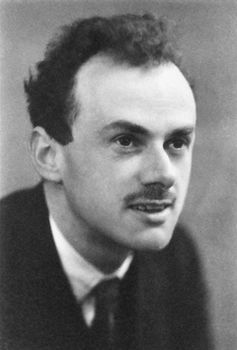
The history of modern physics boasts its own version of Fischelson. His name was Paul Dirac. I first encountered Dirac in physics courses, but was moved to revisit his life and legacy through my service on the board of the Kinsey Institute for the Study of Human Sexuality and teaching an undergraduate course on sexuality and love.

A brilliant but very strange man

Born in Bristol, England, in 1902, Dirac became, after Einstein, the second most important theoretical physicist of the 20th century. He studied at Cambridge, where he wrote the first-ever dissertation on quantum mechanics. Shortly thereafter he produced one of physics’ most famous theories, the Dirac equation, which correctly predicted the existence of antimatter. Dirac did more than any other scientist to reconcile Einstein’s general theory of relativity to quantum mechanics. In 1933 he received the Nobel Prize in Physics, the youngest theoretical physicist ever to do so.

At the time Dirac received the Nobel Prize, he was leading a remarkably drab and, to most eyes,

Paul Dirac in 1933. Nobel Foundation via Wikimedia Commons

unappealing existence. As detailed in Graham Farmelo’s wonderful biography, The Strangest Man: The Hidden Life of Paul Dirac, Mystic of the Atom, on which I rely heavily in this article, Dirac was an incredibly taciturn individual. Getting him to utter even a word could prove nearly impossible, leading his mischievous colleagues to introduce a new unit of measure for the rate of human speech, the Dirac, which amounted to one word per hour.

Dirac was the kind of man who would “never utter a word when no word would do.” Farmelo describes him as a human being completely absorbed in his work, with absolutely no interest in other people or their feelings, and utterly devoid of empathy. He attributes this in part to Dirac’s tyrannical upbringing. His father ruthlessly punished him for every error in speech, and the young Dirac adopted the strategy of saying as little as possible.

Dirac was socially awkward and showed no interest in the opposite sex. Some of his colleagues suspected that he might be utterly devoid of such feelings. Once, Farmelo recounts, Dirac found himself on a two-week cruise from California to Japan with the eminent physicist Werner Heisenberg. The gregarious Heisenberg made the most of the trip’s opportunities for fraternization with the opposite sex, dancing with the flapper girls. Dirac found Heisenberg’s conduct perplexing, asking him, “Why do you dance?” Heisenberg replied, “When there are nice girls, it is always a pleasure to dance.” Dirac pondered this for some minutes before responding, “But Heisenberg, how do you know beforehand that the girls are nice?”

Love finds the professor

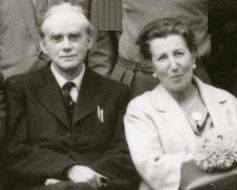
Then one day, something remarkable entered Dirac’s life. Her name was Margit Wigner, the sister of a Hungarian physicist and recently divorced mother of two. She was visiting her brother at the Institute for Advanced Study in Princeton, New Jersey, where Dirac had just arrived.

Known to friends and family as “Manci,” one day she was dining with her brother when she observed a frail, lost-looking young man walk into the restaurant. “Who is that?” she asked. “Why that is Paul Dirac, one of last year’s Nobel laureates,” replied her brother. To which she replied, “Why don’t you ask him to join us?”

Thus began an acquaintance that eventually transformed Dirac’s life. Writes Farmelo:

His personality could scarcely have contrasted more with hers: to the same extent that he was reticent, measured, objective, and cold, she was talkative, impulsive, subjective, and passionate.

A self-described “scientific zero,” Manci embodied many things that were missing in Dirac’s life. After their first meeting, the two dined together occasionally, but Dirac, whose office was two doors down from Einstein, remained largely focused on his work.

After Manci returned to Europe, they maintained a lopsided correspondence. Manci wrote letters that ran to multiple pages every few days, to which Dirac responded with a few sentences every few weeks. But Manci was far more attuned than Dirac to a “universally acknowledged truth” best expressed by Jane Austen: “A single man in possession of a good fortune must be in want of a wife.”

She persisted despite stern warnings from Dirac:

I am afraid I cannot write such nice letters to you – perhaps because my feelings are so weak and my life is mainly concerned with facts and not feelings.

When she complained that many of her queries about his daily life and feelings were going unanswered, Dirac drew up a table, placing her questions in the left column, paired with his responses on the right. To her question, “Whom else should I love?” Dirac responded, “You should not expect me to answer this question. You would say I was cruel if I tried.” To her question, “Are there any feelings for me?” Dirac answered only, “Yes, some.”

Realizing that Dirac lacked the insight to see that many of her questions were rhetorical, she informed him that “most of them were not meant to be answered.” Eventually, exasperated by Dirac’s lack of feeling, Manci wrote to him that he should “get a second Nobel Prize in cruelty.” Dirac wrote back:

You should know that I am not in love with you. It would be wrong for me to pretend that I am, as I have never been in love I cannot understand fine feelings.

Yet with time, Dirac’s outlook began to change. After returning from a visit with her in Budapest, Dirac wrote, “I felt very sad leaving you and still feel that I miss you very much. I do not understand why this should be, as I do not usually miss people when I leave them.” The man whose mathematical brilliance had unlocked new truths about the fundamental nature of the universe was, through his relationship with Manci, discovering truths about human life that he had never before recognized.

Soon thereafter, when she returned for a visit, he asked her to marry him, and she accepted immediately. The couple went on two honeymoons little more than month apart. Later he wrote to her:

Manci, my darling, you are very dear to me. You have made a wonderful alteration in my life. You have made me human… I feel that life for me is worth living if I just make you happy and do nothing else.

A Soviet colleague of Dirac corroborated his friend’s self-assessment: “It is fun to see Dirac married, it makes him so much more human.”

In Dirac, a thoroughly theoretical existence acquired a surprisingly welcome practical dimension.

Paul and Manci in 1963. GFHund via Wikimedia Commons, CC BY

A man who had been thoroughly engrossed in the life of the mind discovered the life of the heart. And a human being whose greatest contributions had been guided by the pursuit of mathematical beauty discovered something beautiful in humanity whose existence he had never before suspected.

In short, a brilliant but lonely man found something new and wonderful that had been missing his entire life: love. As my students and I discover in the course on sexuality and love, science can reveal a great deal, but there are some aspects of reality – among them, love – that remain largely outside its ambit.

ooOOoo

Picking up on that last sentence, “there are some aspects of reality – among them, love – that remain largely outside its ambit.” all I can offer is to introduce dogs to the students!

I struggled for ages wondering how to close today’s post. In the end, decided on the following:

And more tricks for senior dogs.

The concluding part to yesterday’s post.

ooOOoo

Open a door

Your dog can cue to you open the door by ringing a bell, but how about taking it to the next level and teaching your dog to open the door by himself? In fact, there’s a handy trick built into this that we will introduce later on! This video walks you through all the steps to opening doors and drawers:

Hold an object

If your dog likes to play fetch or tug, it may be a great idea to teach him how to hold and carry an object. It’s a new way for a dog to think about holding a toy, since once the dog has a grip on it, he needs to wait for you to give the cue to release it. This trick is also included in a more complicated trick, which is next on our list. But first, here’s a video that shows you how to master this trick:

Fetch something from the fridge or cupboard

When you have the training down for touch, opening the door, knowing the names of objects, and holding an object, it’s just a matter of putting the steps together to teach your dog to fetch an item from somewhere in the house. A popular version of this trick is of course to fetch a beer from the fridge! But maybe start out with a less fizzy drink option, just in case.

http://www.youtube.com/watch?v=amkZItU9TP0

Back up

An interesting trick to teach your senior dog is how to walk backwards. It’s a great one to help with getting him to think about using his body a little differently. Most dogs aren’t really aware of where their hind end is — it’s just the part that follows their front end. By teaching your dog to walk backward, you’re teaching him to be aware of where his back legs are going. It’s great for both mental and physical agility.

Find it

Keep life interesting for your dog by creating a game around using his nose to find a reward. This is a great trick especially for dogs whose hearing or sight has diminished with age. The trick teaches them to use their noses even more purposefully, using scent work to find the hidden treat or toy. Once you teach your dog how to find it, you can have the “it” be something different every time you play to keep your dog at the top of his game. This video shows an older Labrador learning the steps to the “find it” game and having fun playing:

Tuck himself in bed

It’s surprising how much fun you can have with a trick that only requires your dog to grab a blanket and roll over. This adorable trick is great for dogs of any age, and is an easy (and cozy) trick for your senior dog to learn. You simply teach your dog to lie down on a blanket, grab and hold the corner of it, and roll over so he tucks himself into bed. For senior dogs who like to snooze in extra warm blankets, this is a dream trick. Here’s how it works:

ooOOoo

So there you are. Plenty to keep you and your senior dogs engaged for a long time. Once again, if you missed part one then that was published yesterday.