There’s something almost beyond the world of words, pictures and blogging. That’s when a dog goes missing and then is found. Especially if the lover of the dog is a young boy who fears the worst.
Dogs bring out so much that is good in us. Dogs cross gender, age, country and ethnic boundaries.
This is what struck me with some force I will admit when I read this article on the Daily Dodo yesterday. It is republished for your own delight!
The holidays aren’t about what’s under the tree; it’s who you’re with that matters. And no one understands that better than Carter Licata and his dog, Piper.
The 2-year-old pug loves everyone in her family, but her bond with her brother is special. “It was love at first sight for the two of them,” April Licata, Carter’s mom, told The Dodo.
But the family’s holiday season was nearly destroyed when the unthinkable happened — Piper went missing.
Photo Credit: April Licata
Last month, Licata let Piper and her other dog outside to use the bathroom. But when she opened the door to let them back in, Piper was nowhere to be seen.
The family searched everywhere, posted on social media, and reached out to neighbors and community groups. They prayed for Piper’s safe return, but as days turned to weeks, they feared that they would never see their pug again.
“We were all sick,” Licata said. “The older kids wanted nothing to do with decorating the Christmas tree and it was a very somber Thanksgiving for them.”
Then, Licata received a Facebook message from the Genesee County Animal Shelter. A dog matching Piper’s description had been dropped off at the shelter by a person who wanted to remain anonymous. “My husband and I were going out to dinner and honestly, there was an outcry of joy in the truck,” Licata said. “We were shocked and elated!”
Carter was out of town when they learned about Piper, so they decided to keep it a secret and surprise him with a special reunion when he returned. Piper, meanwhile, wandered around the house looking for her brother, until finally, their reunion day arrived.
Photo Credit: Facebook/April Licata
When Carter saw Piper in the front seat of the truck, decked out in bows, he immediately broke down in tears.
Piper’s tail went crazy at the sight of her brother and as soon as he stepped in the truck, she jumped in his arms, showering him with kisses.
The family couldn’t be happier to have Piper back again — and just in time for Christmas.
“My son loves his dog so much, was sick while she was gone, and tonight she’s sleeping next to him again,” Licata wrote on Facebook. “What a Christmas miracle for our family.”
You can see the heart-warming video below.
ooOOoo
I know that for the main part I just republish the work that others do. But that doesn’t mean that I’m not affected by the articles. This one in particular had me in tears.
Winner of the ‘I Love Dogs Because…’ category (Photo: Jade Hudson/Dog Photographer of the Year Competition.
Hugo the puppy is the subject of this winning image by 16-year-old Jade Hudson.
Winner of the Oldies category (Photo: Kevin Smith/Dog Photographer of the Year Competition)
The gray faces of old dogs speak to all the love and friendship they’ve provided over the years as Lizzie, a 12-year-old mixed breed dog, shows us. Curling up with a cracking fire and your four-legged BFF is one of life’s great joys.
Winner of the Dog Portrait category (Photo: Jamie Morgan/Dog Photographer of the Year Competition)
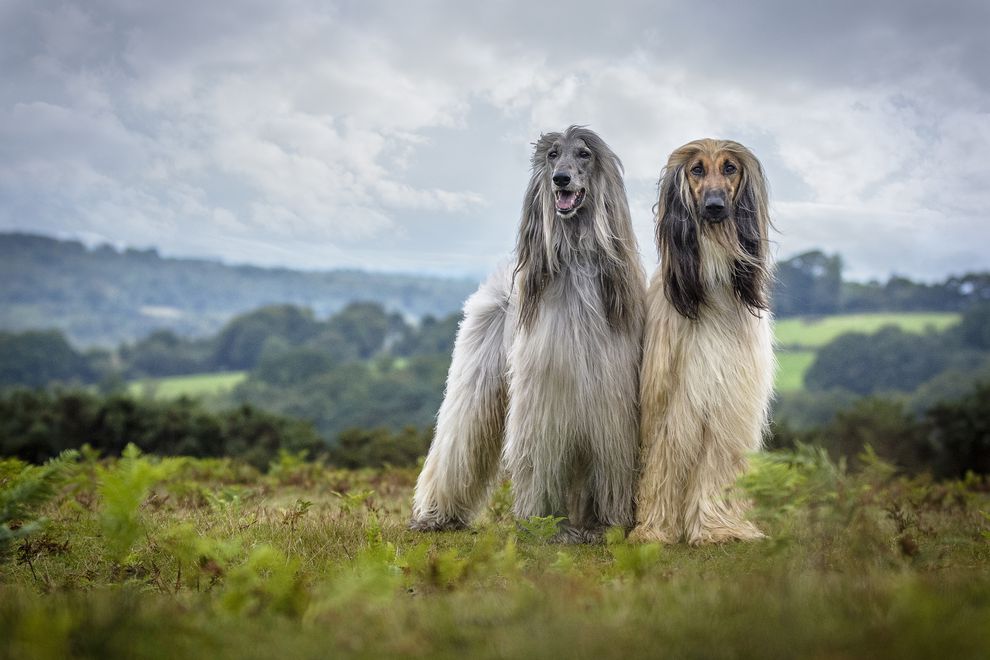
This portrait of two Afghan hounds named Ozzie and Elvis took first place for the Dog Portrait category. The setting is the idyllic Ashdown Forest in Sussex.
Winner of the Puppy category (Photo: Linda Storm/Dog Photographer of the Year Competition)
And finally, the winner of the Puppy category is little rescue puppy Buddy enjoying a bowl of milk. The photo was taken by Colorado-based photographer Linda Storm.
“The entries for this year’s Dog Photographer of the Year competition were some of the best we have ever seen,” says Rosemary Smart, Kennel Club chief executive. “Choosing the winners was an incredibly challenging task and we commend every photographer who entered. Each of the winning photographers beautifully captured the essence of their canine subjects on camera, demonstrating how important dogs are to us in every walk of life.”
If you’re a photographer who loves dogs as your subject, keep an eye on the opening date for next year’s competition!
ooOOoo
I should say so! These photographs are the very best of pictures taken by very talented photographers.
There’s a science background to being healthy and happy.
Especially as one gets older.
It’s Jean’s birthday today and we are grateful for our lot. I’m 75 now and Jean is a few years younger. But more importantly we are so grateful to have met and, subsequently, fallen in love.
As well as Jean’s love in return we have our gorgeous dogs as well (not to count in addition the two horses, the two parakeets and the cat) and they reinforce the feelings of happiness that surround us.
All of which is an introduction to an article on The Conversation that caught my eye yesterday.
I’m afraid it doesn’t mention dogs but then again we dog owners know for sure how they benefit us humans.
ooOOoo
Are you as grateful as you deserve to be?
November 26, 2019
By Richard Gunderman
Chancellor’s Professor of Medicine, Liberal Arts, and Philanthropy, Indiana University
Gratitude is not only a great feeling but a healthy one. Aaron Amat/Shutterstock.com
As a physician, I have helped to care for many patients and families whose lives have been turned upside down by serious illnesses and injuries. In the throes of such catastrophes, it can be difficult to find cause for anything but lament. Yet Thanksgiving presents us with an opportunity to develop one of the healthiest, most life-affirming and convivial of all habits – that of counting and rejoicing in our blessings.
Gratitude’s benefits
Research shows that grateful people tend to be healthy and happy. They exhibit lower levels of stress and depression, cope better with adversity and sleep better. They tend to be happier and more satisfied with life. Even their partners tend to be more content with their relationships.
Perhaps when we are more focused on the good things we enjoy in life, we have more to live for and tend to take better care of ourselves and each other.
When researchers asked people to reflect on the past week and write about things that either irritated them or about which they felt grateful, those tasked with recalling good things were more optimistic, felt better about their lives and actually visited their physicians less.
It is no surprise that receiving thanks makes people happier, but so does expressing gratitude. An experiment that asked participants to write and deliver thank-you notes found large increases in reported levels of happiness, a benefit that lasted for an entire month.
Philosophical roots
Giving thanks is important for our psyches and our souls. Love You Stock/Shutterstock.com
One of the greatest minds in Western history, the Greek philosopher Aristotle, argued that we become what we habitually do. By changing our habits, we can become more thankful human beings.
If we spend our days ruminating on all that has gone poorly and how dark the prospects for the future appear, we can think ourselves into misery and resentment.
But we can also mold ourselves into the kind of people who seek out, recognize and celebrate all that we have to be grateful for.
This is not to say that anyone should become a Pollyanna, ceaselessly reciting the mantra from Voltaire’s “Candide,” “All is for the best in this, the best of all possible worlds.” There are injustices to be righted and wounds to be healed, and ignoring them would represent a lapse of moral responsibility.
But reasons to make the world a better place should never blind us to the many good things it already affords. How can we be compassionate and generous if we are fixated on deficiency? This explains why the great Roman statesman Cicero called gratitude not only the greatest of virtues but the “parent” of them all.
Religious roots
Gratitude is deeply embedded in many religious traditions. In Judaism, the first words of the morning prayer could be translated, “I thank you.” Another saying addresses the question, “Who is rich?” with this answer: “Those who rejoice in what they have.”
From a Christian perspective, too, gratitude and thanksgiving are vital. Before Jesus shares his last meal with his disciples, he gives thanks. So vital a part of Christian life is gratitude that author and critic G.K. Chesterton calls it “the highest form of thought.”
Gratitude also plays an essential role in Islam. The 55th chapter of the Quran enumerates all the things human beings have to be grateful for – the Sun, Moon, clouds, rain, air, grass, animals, plants, rivers and oceans – and then asks, “How can a sensible person be anything but thankful to God?”
In his 1994 book, “A Whole New Life,” the Duke University English professor Reynolds Price describes how his battle with a spinal cord tumor that left him partially paralyzed also taught him a great deal about what it means to really live.
After surgery, Price describes “a kind of stunned beatitude.” With time, though diminished in many ways by his tumor and its treatment, he learns to pay closer attention to the world around him and those who populate it.
Reflecting on the change in his writing, Price notes that his books differ in many ways from those he penned as a younger man. Even his handwriting, he says, “looks very little like that of the man he was at the time of his diagnosis.”
“Cranky as it is, it’s taller, more legible, and with more air and stride. And it comes down the arm of a grateful man.”
A brush with death can open our eyes. Some of us emerge with a deepened appreciation for the preciousness of each day, a clearer sense of our real priorities and a renewed commitment to celebrating life. In short, we can become more grateful, and more alive, than ever.
Practicing gratitude
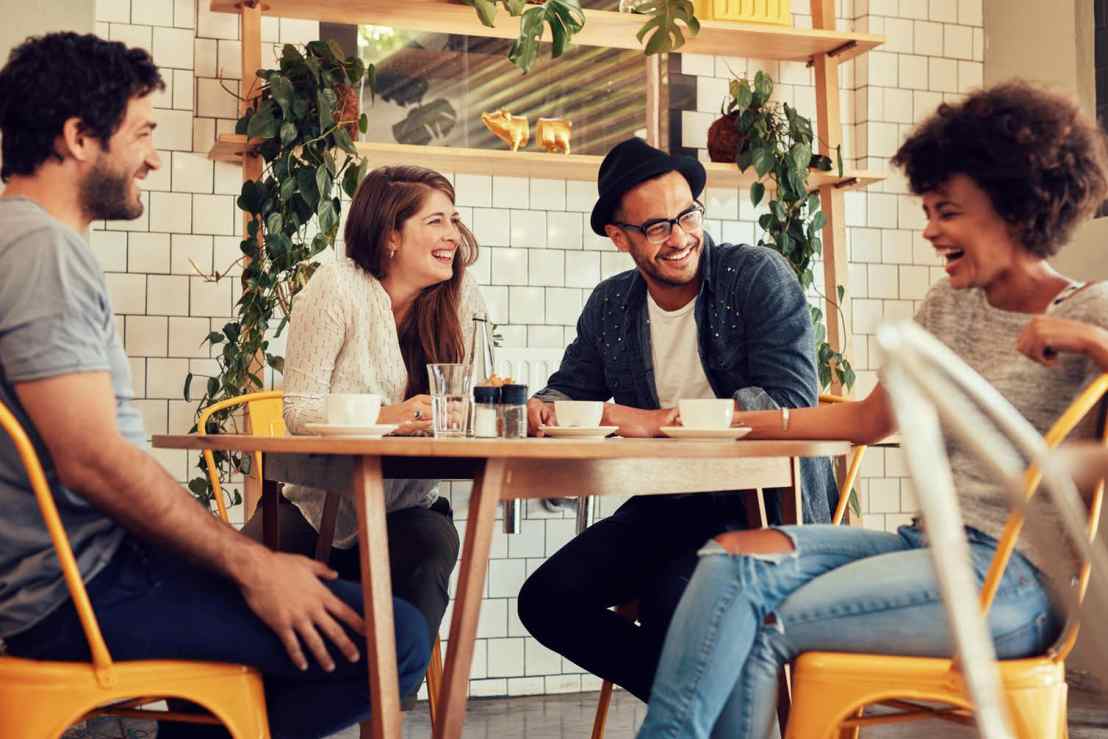
Good conversation, good friends and connections – not material possessions – bring great joy. Jacob Lund/Shutterstock.com
When it comes to practicing gratitude, one trap to avoid is locating happiness in things that make us feel better off – or simply better – than others. In my view, such thinking can foster envy and jealousy.
There are marvelous respects in which we are equally blessed – the same Sun shines down upon each of us, we all begin each day with the same 24 hours, and each of us enjoys the free use of one of the most complex and powerful resources in the universe, the human brain.
Much in our culture seems aimed to cultivate an attitude of deficiency – for example, most ads aim to make us think that to find happiness we must buy something. Yet most of the best things in life – the beauty of nature, conversation and love – are free.
There are many ways to cultivate a disposition of thankfulness. One is to make a habit of giving thanks regularly – at the beginning of the day, at meals and the like, and at day’s end.
Likewise, holidays, weeks, seasons and years can be punctuated with thanks – grateful prayer or meditation, writing thank-you notes, keeping a gratitude journal and consciously seeking out the blessings in situations as they arise.
Gratitude can become a way of life, and by developing the simple habit of counting our blessings, we can enhance the degree to which we are truly blessed.
That reference to Reynolds Price and his challenges make one think. I have been fortunate that nothing really dreadful has happened to me; apart from my father’s death when I had just turned 12. I’m getting a little hazy in terms of certain memories but that’s an old age thing rather than an illness. But to go through what he did; I just don’t know the person that I am, in terms of how I wold react to that.
But to the general tone of the article, I would hope that I can get better and better.
For it’s splendid to cultivate that disposition.
One is to make a habit of giving thanks regularly – at the beginning of the day, at meals and the like, and at day’s end.
I don’t know. What with wood splitting ahead of the rain and snow, and working hard at editing the completed book, I didn’t seem to have the creative urge to publish a new Picture Parade.
So I’m once again republishing one that was first published on July 17th, 2016.
Enjoy!
ooOOoo
Incredible, prize-winning, images of dogs.
The following was read over on Mother Nature News on June 30th. The item, and especially the photographs, just had to be shared with you.
However, to ensure the integrity of republication and the identity of the photographers, I’m going to include the photographs and the words of the original MNN piece, and split it across today and next Sunday.
Trust me you will adore these photographs.
ooOOoo
These prize-winning images of dogs will steal your heart.
10th annual Dog Photographer of the Year competition drew entries from photographers in 90 countries.
Winner of the Man’s Best Friend category (Photo: Fiona Sami/Dog Photographer of the Year Competition)
The love of a dog is a universal joy, as the latest photography competition from The Kennel Club illustrates. The 10th annual competition drew over 13,000 entries from photographers in 90 countries. The photographs show the beauty, loyalty, companionship, dignity and, of course, the adorableness of dogs around the world.
The competition features eight categories, including Puppies, Oldies, Dogs at Work, Dogs at Play, Man’s Best Friend (winner pictured above), Assistance Dogs and Dog Charities, Dog Portraits and I Love Dogs Because.
Winner of the Dogs At Work category as well as overall winner of the competition (Photo: Anastasia Vetkovskaya/Dog Photographer of the Year Competition)
This image of Sheldon the English springer spaniel enjoying a mist-shrouded pond early one morning is the work of Anastasia Vetkovskaya from Russia. Not only did it win for the Dogs At Work category, but it also placed as the overall winner of the competition.
Vetkovskaya states, “I have loved animals from an early age, which is why I went to Moscow Veterinary Academy and became a veterinary surgeon in 2007. Around this period of time, my husband gave me my first SLR camera, and since then I have devoted all of my free time to photography. My specialty is pets, and I am inspired most by horses and dogs.”
Winner of the Dogs at Play category (Photo: Tom Lowe/Dog Photographer of the Year Competition)
Baxter the Westie inspired his photography-loving human, Tom Lowe, to snap this image of Baxter playing in the water of Loch Lomond in Scotland.
Winner of the Assistance Dogs and Dog Charities category (Photo: Michael Higginson/Dog Photographer of the Year Competition)
This poignant image was taken by Michael Higginson, and features his brother Dale with Esta the dog. The win not only benefits the photographer but also a charity of his choice. The Kennel Club is making a donation to Higginson’s favorite charity, Dogs for Good.
Higginson states, “Winning the Assistance Dog category has made it even more special. It’s an honor to be able to show the world what a difference a dog can make to someone else’s life.”
ooOOoo
Aren’t they breath-takingly beautiful!
The rest of these fabulous photographs in a week’s time.
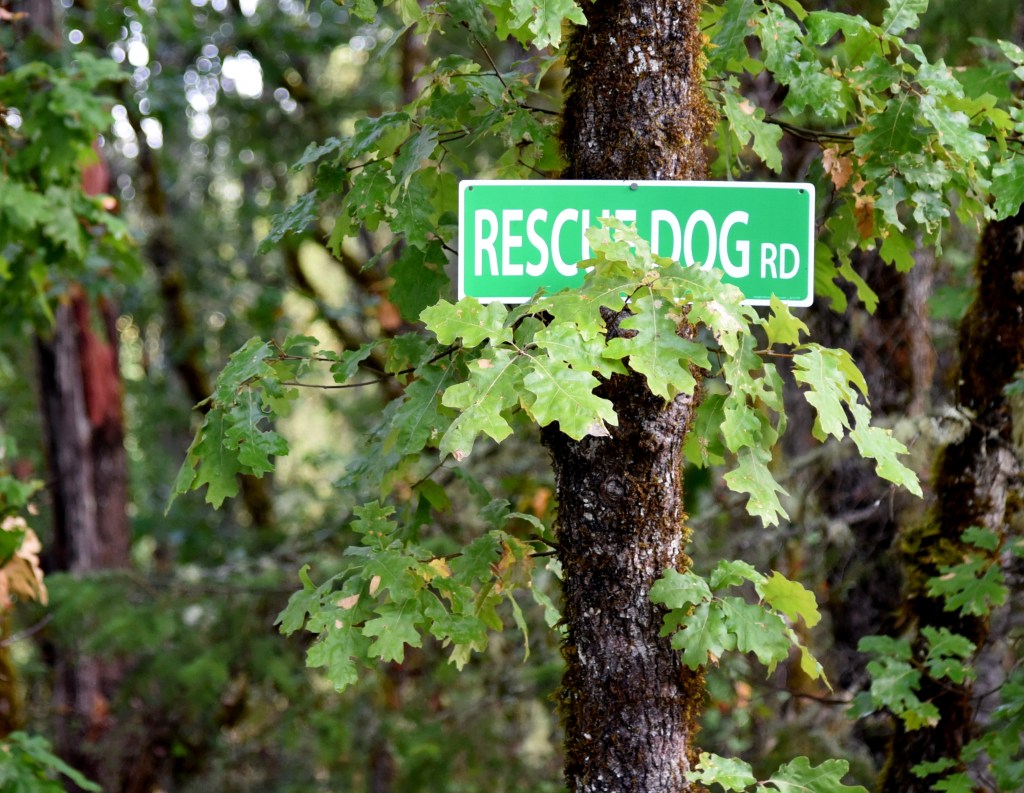
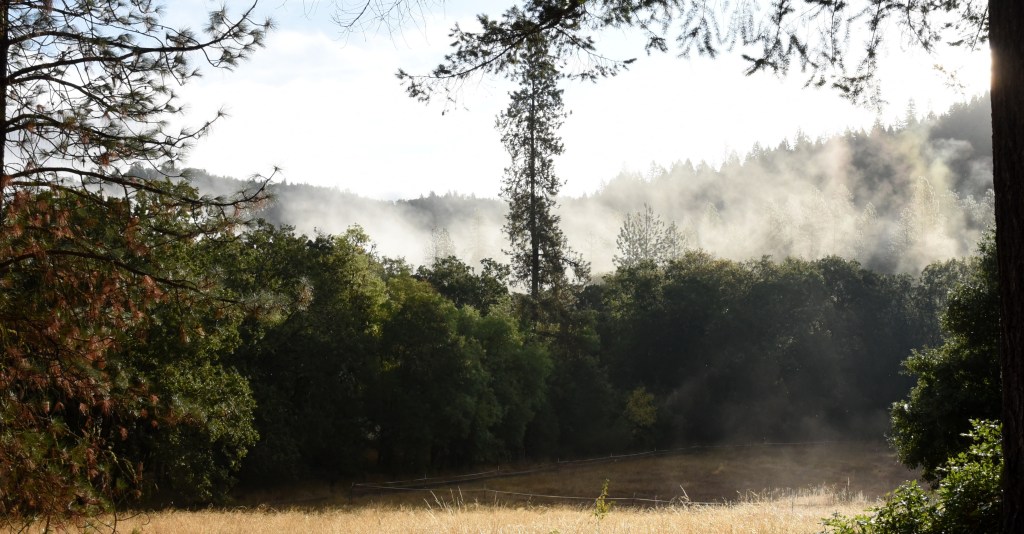
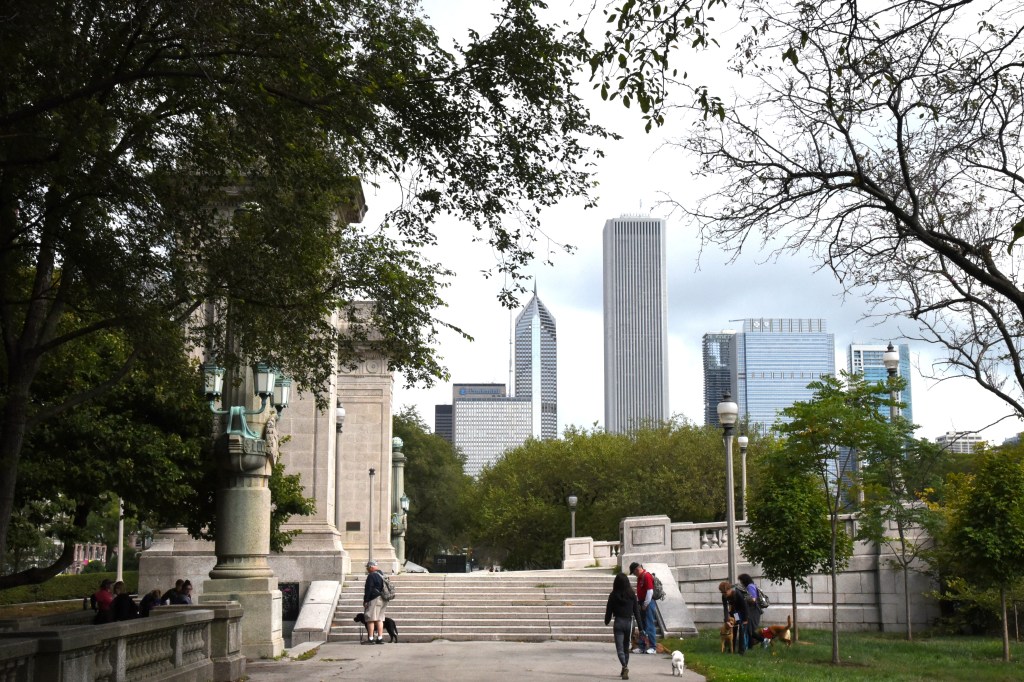
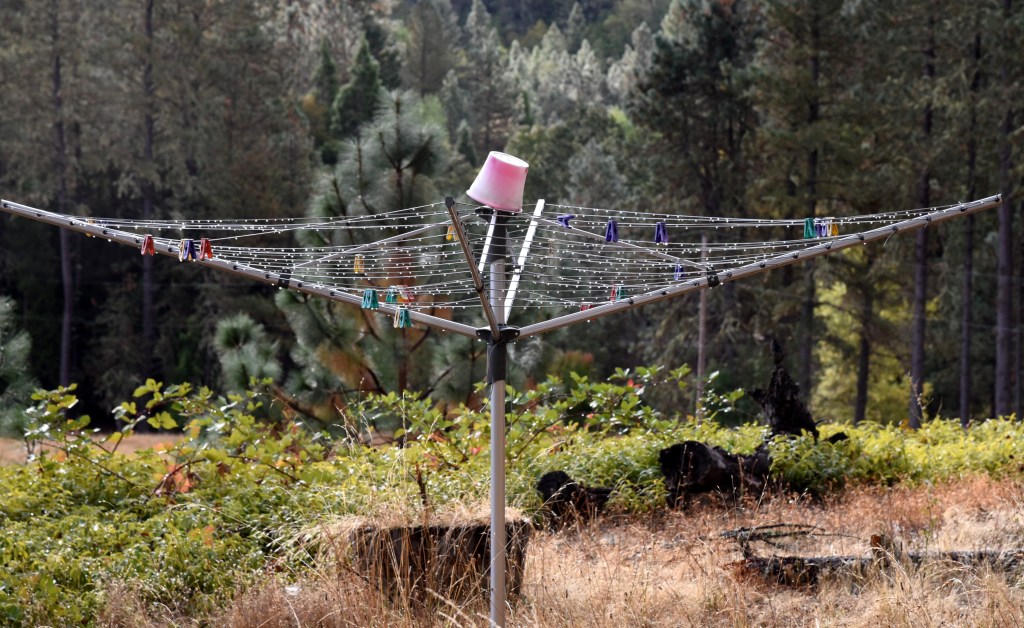
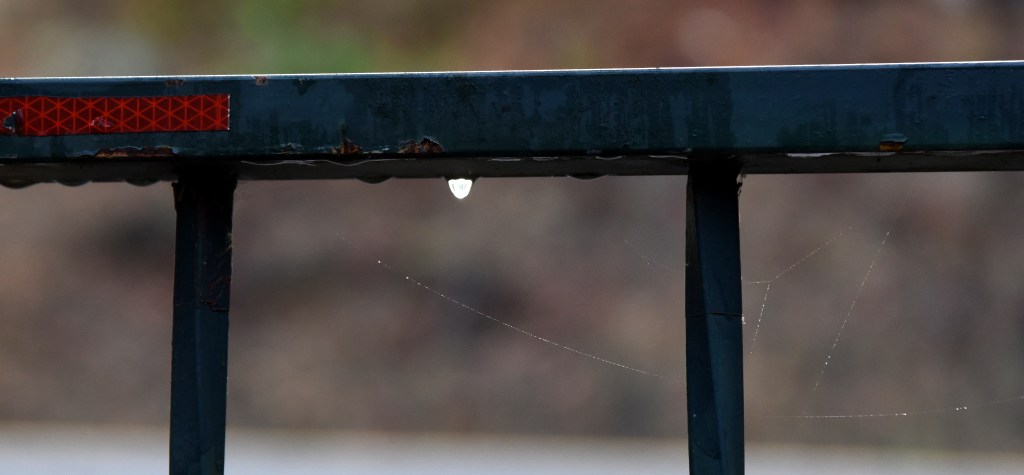
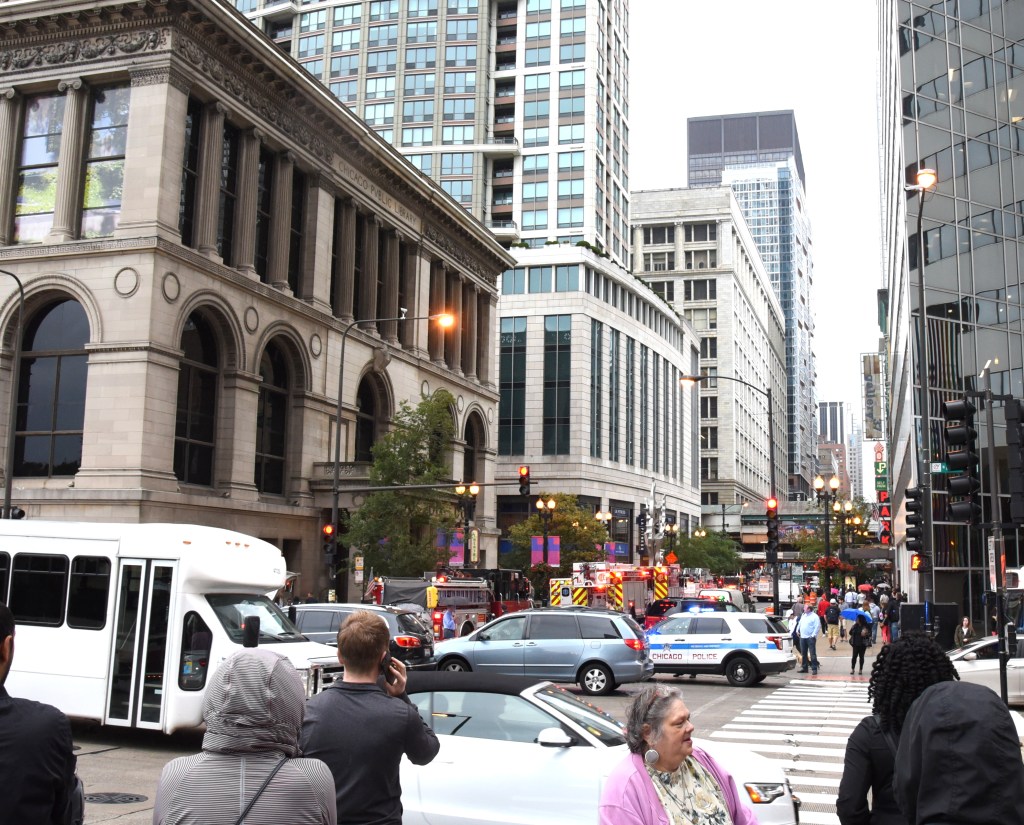
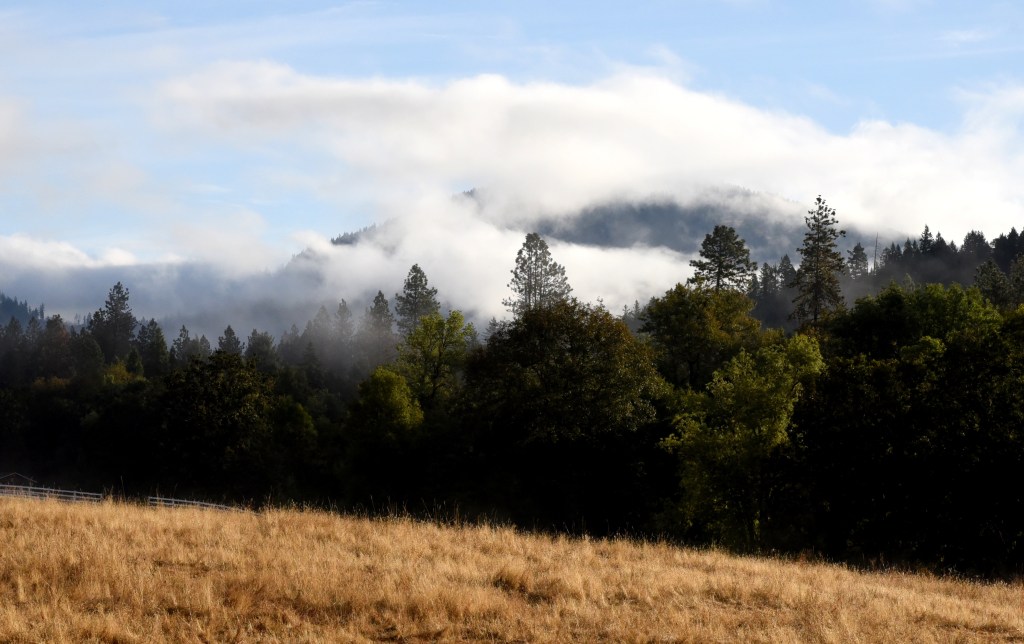
The first weekend of this month saw Jeannie and me in Chicago. Then back home in Merlin, earlier this week, half-an-inch of rain fell to break a long spell of dry weather. I went out last Thursday morning to capture some sights of the first misty morning of Autumn. The contrast between our rural home and Chicago was dramatic; to say the least! Enjoy!
(P.S. I sensed there was no need to describe each photograph in terms of which one was taken in Merlin or in Chicago!)
On Monday when Jeannie and I went to our regular session at Club Northwest, Jean to her Rock Steady class, and me to spend 45 minutes with Austin Raymond, one of the fitness coaches, he and I were speaking of health in general and veganism in particular. Austin, Jean and I are vegans.
Austin mentioned had we watched the film The Game Changers on Netflix? I replied that we had not but we were subscribers to Netflix and would watch it in the evening.
Well what an incredible film! I mean really incredible!
P.S. If you are a Netflix subscriber then you may watch it without any fuss.
(So I taken time out from book writing to publish this post; I’m over 9,000 words already written in November!)
Here’s a YouTube trailer to the film:
Have you ever seen an ox eating meat!
But apart from the solid science that we never were meat-eaters were the facts about illness being so much prevalent in those eating meat compared to vegans. That was just one aspect of the film that grabbed our attention! There were many more.
Back to fundamentals!
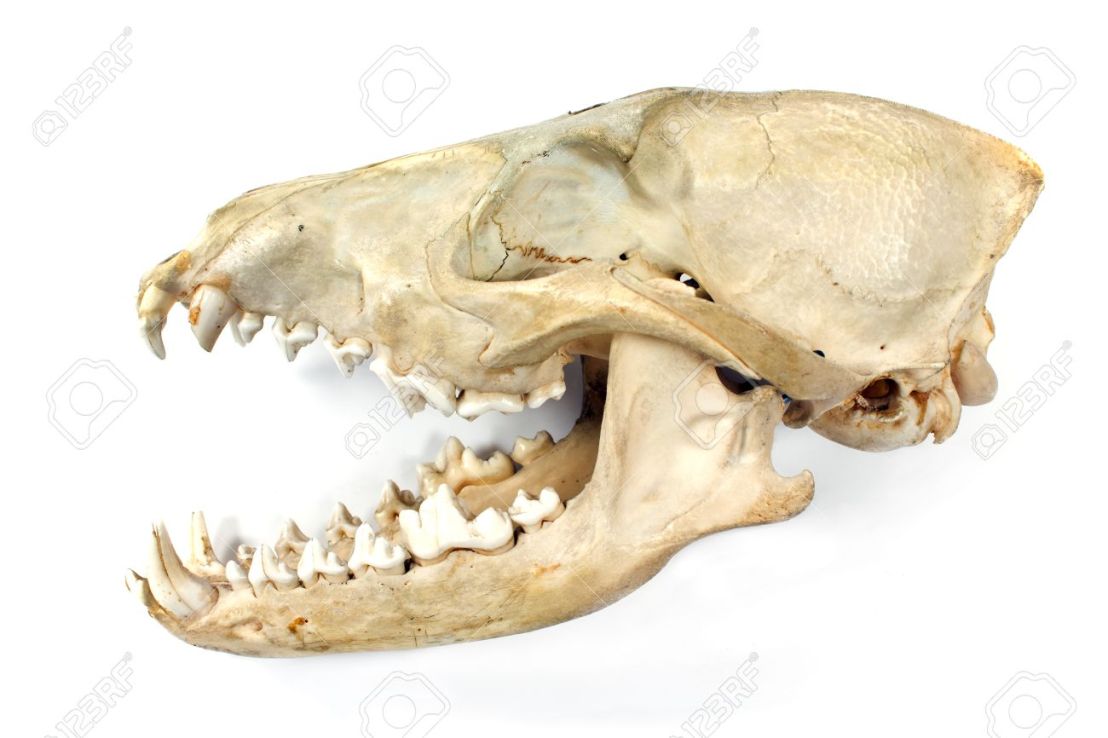
Let’s examine one fact, the jaw shape.
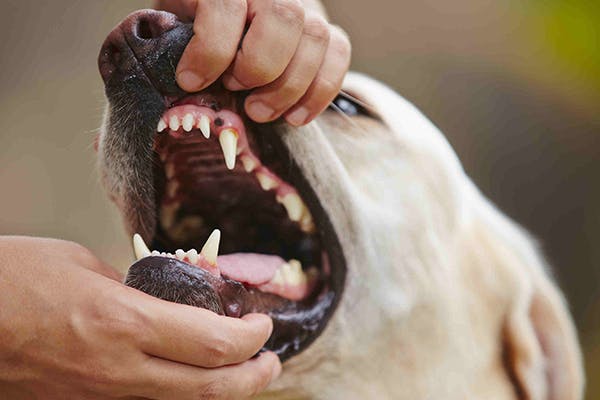
Here’s the jaw of a dog.
Dog skull and jaw isolated on white
and here’s another:
That is a mouth that has evolved to tear meat from an animal.
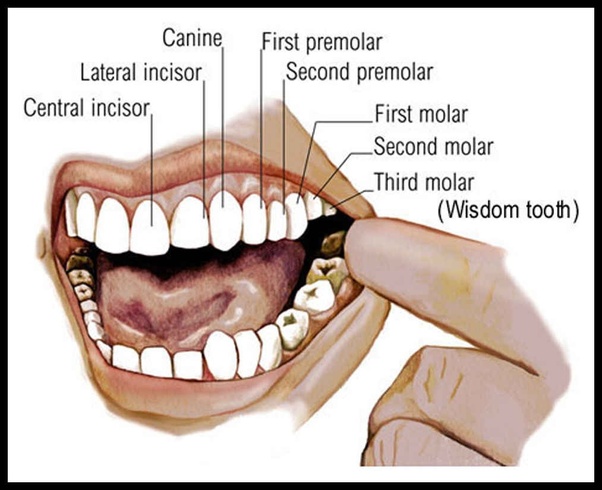
And here’s the jaw of a human:
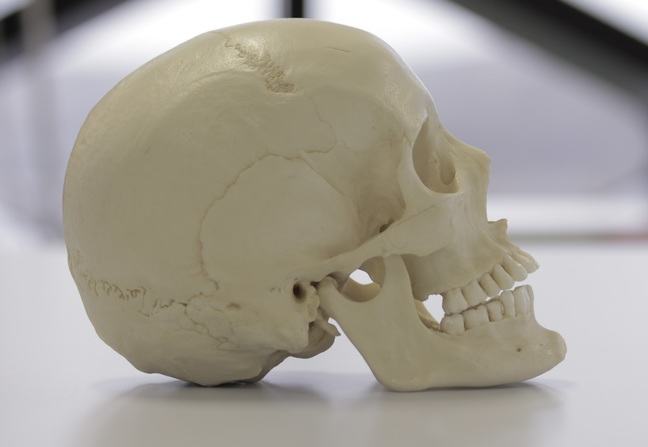
and the picture of the whole skull.
Notice that the teeth have always been adapted to eat fruit and vegetables.
And that’s before we think how much land has been converted from natural land and forest to grazing land for cattle and sheep!
Now I don’t know how long the full documentary will remain for free on YouTube but here it is:
Photographers Kelly Pratt and Ian Kreidich frequently work with professional dancers, capturing their gorgeous movements and their breathtaking abilities. But in a random moment, Pratt suggested to her husband, Kreidich, that they throw a few dogs into the mix for an unusual collaboration.
“We definitely didn’t fully know what to expect with this project,” Pratt tells MNN. “We started very small — at first we worked with our friends at the St. Louis Ballet — and just slowly tried to figure out what worked and what didn’t, when it came to working with dogs. No one had ever done this before, so it was all trial and error.”
Pratt and Kreidich spent more than two years photographing 100 dancers and 100 dogs in more than 10 cities across the U.S. Now the images of graceful dancers and furry companions are in the book “Dancers & Dogs.”
There’s no shortage of good news about the benefits of a dog in your life.
I have been reading recently about how having a dog, or six, in your life is linked to that life being extended. As I shall be 75 in eleven days time this was not a casual thought.
The reading was as a result of two new studies being published recently: Cardiovascular Quality and Outcomes. I was going to ‘top and tail’ one of these articles and publish it in this place.
I was blown away by the results. Using their own search facility I put in the word ‘dog’ and received 313 responses. Top of the list were the two articles that I just mentioned.
But first a word about the Association. As their History page very comprehensively says (just a small extract from me):
Before the American Heart Association existed, people with heart disease were thought to be doomed to complete bed rest — or destined to imminent death.
But a handful of pioneering physicians and social workers believed it didn’t have to be that way. They conducted studies to learn more about heart disease, America’s No. 1 killer. Then, on June 10, 1924, they met in Chicago to form the American Heart Association — believing that scientific research could lead the way to better treatment, prevention and ultimately a cure. The early American Heart Association enlisted help from hundreds, then thousands, of physicians and scientists.
“We were living in a time of almost unbelievable ignorance about heart disease,” said Paul Dudley White, one of six cardiologists who founded the organization.
In 1948, the association reorganized, transforming from a professional scientific society to a nationwide voluntary health organization composed of science and lay volunteers and supported by professional staff.
Since then, the AHA has grown rapidly in size and influence — nationally and internationally — into an organization of more than 33 million volunteers and supporters dedicated to improving heart health and reducing deaths from cardiovascular diseases and stroke.
Here is a timeline of American Heart Association milestones in more than 90 years of lifesaving history:
Now I’m going to republish the first two articles from that long list of published items. The first is Do dog owners live longer?
ooOOoo
Do dog owners live longer?
As dog lovers have long suspected, owning a canine companion can be good for you. In fact, two recent studies and analyses published in Circulation: Cardiovascular Quality and Outcomes, a scientific journal of the American Heart Association, suggest your four-legged friend may help you do better after a heart attack or stroke and may help you live a longer, healthier life. And that’s great news for dog parents!
Dog owners have better results after a major health event.
The studies found that, overall, dog owners tend to live longer than non-owners. And they often recover better from major health events such as heart attack or stroke, especially if they live alone.
Some exciting stats for dog owners:
Heart attack survivors living by themselves had a 33% reduced risk of death if they owned a dog, while survivors living with someone else (a partner or child) had a 15% reduced risk.
Stroke survivors living by themselves had a 27% reduced risk of death if they owned a dog, while survivors living with someone else (a partner or child) had a 12% reduced risk.
Dog owners are 31% less likely to die from a heart attack or stroke than non-dog owners.
Interacting with dogs can boost your production of “happy hormones” such as oxytocin, serotonin and dopamine. This can lead to a greater sense of well-being and help lower levels of the stress hormone cortisol. And having a dog can help lower blood pressure and cholesterol, ease depression and improve fitness.
Studies show that people who walk their dogs get significantly more exercise than those who don’t. And there’s a bonus: our pets can also help us feel less social anxiety and interact more with other humans. Maybe that’s why dog owners report less loneliness, depression and social isolation.
Make the most of dog ownership.
Here are some tips to make the most of your four-legged companion time:
Playing and interacting with your pooch will bring the most health benefits for both of you.
Get out with your pet. Not only are the walks good for both of you, you may find yourself meeting other dog owners in your area. And socializing can be a good thing!
Some dogs love to travel. Research pet-friendly hotels so you and your furry friend can have all sorts of adventures together.
Everybody loves a good snuggle. Give lots of scratches behind the ears, belly rubs or good old-fashioned head pats. The more you love your pet, the more they’ll love you back.
The second is also very recent, about the findings from Sweden.
ooOOoo
Here’s more evidence your dog might lengthen your life
By American Heart Association News
(filadendron/E+, Getty Images)
Letting your health go to the dogs might turn out to be a great idea: New research bolsters the association between dog ownership and longer life, especially for people who have had heart attacks or strokes.
Earlier studies have shown dog ownership alleviates social isolation, improves physical activity and lowers blood pressure. The new work builds on that, said Dr. Glenn N. Levine, who led a committee that wrote a 2013 report about pet ownership for the American Heart Association.
“While these non-randomized studies cannot prove that adopting or owning a dog directly leads to reduced mortality, these robust findings are certainly at least suggestive of this,” he said in a news release.
The two new studies were published Tuesday in Circulation: Cardiovascular Quality and Outcomes.
One study, from Sweden, compared dog owners and non-owners after a heart attack or stroke. Records of nearly 182,000 people who’d had heart attacks and nearly 155,000 people who’d had strokes were examined. Dog ownership was confirmed with data from the Swedish Board of Agriculture, where registration of dog ownership has been mandatory since 2001, and the Swedish Kennel Club, where pedigree dogs have been registered since 1889.
When compared with people who didn’t own dogs, owners who lived alone had a 33% lower risk of dying after being hospitalized for a heart attack. For dog owners who lived with a partner or child, the risk was 15% lower.
Dog-owning stroke survivors saw a similar benefit. The risk of death after hospitalization for those who lived alone was 27% lower. It was 12% lower if they lived with a partner or child.
What’s behind the canine advantage?
“We know that social isolation is a strong risk factor for worse health outcomes and premature death,” said study co-author Dr. Tove Fall, a doctor of veterinary medicine and a professor at Uppsala University in Sweden. “Previous studies have indicated that dog owners experience less social isolation and have more interaction with other people. Furthermore, keeping a dog is a good motivation for physical activity, which is an important factor in rehabilitation and mental health.”
The second set of researchers reviewed patient data from more than 3.8 million people in 10 separate studies.
Compared to non-owners, dog owners had a 24% reduced risk of dying from any cause; a 31% reduced risk of dying from cardiovascular-related issues; and a 65% reduced risk dying after a heart attack.
The study did not account for factors such as better fitness or an overall healthier lifestyle that could be associated with dog ownership, said co-author Dr. Caroline Kramer, an endocrinologist and clinician scientist at Leadership Sinai Centre for Diabetes at Mount Sinai Hospital in Toronto. “The results, however, were very positive.”
As a dog owner herself, Kramer said adopting her miniature Schnauzer, Romeo, “increased my steps and physical activity each day, and he has filled my daily routine with joy and unconditional love.”
Tove, however, cautioned more research needs to be done before people are prescribed dogs for health reasons. “Moreover, from an animal welfare perspective, dogs should only be acquired by people who feel they have the capacity and knowledge to give the pet a good life.”
If you have questions or comments about this story, please email editor@heart.org.
American Heart Association News Stories
American Heart Association News covers heart disease, stroke and related health issues. Not all views expressed in American Heart Association News stories reflect the official position of the American Heart Association.
Copyright is owned or held by the American Heart Association, Inc., and all rights are reserved. Permission is granted, at no cost and without need for further request, to link to, quote, excerpt or reprint from these stories in any medium as long as no text is altered and proper attribution is made to the American Heart Association News. See full terms of use.
HEALTH CARE DISCLAIMER: This site and its services do not constitute the practice of medical advice, diagnosis or treatment. Always talk to your health care provider for diagnosis and treatment, including your specific medical needs. If you have or suspect that you have a medical problem or condition, please contact a qualified health care professional immediately. If you are in the United States and experiencing a medical emergency, call 911 or call for emergency medical help immediately.
The problem with coming up to the age of 75, and aware that I am close to the average life expectancy in the US, is that one increasingly worries about stuff. Such as it seems like the world is becoming more unsettled. But then it is put down to age!
But this article does imply that it is a more unsettled world and we should take notice. Republished with permission.
ooOOoo
5 tips for surviving in an increasingly uncertain world
What does the future hold – and how will you handle what comes next? Svetlana Lukienko/Shutterstock.com
The U.S. presidential impeachment inquiry has added another layer of uncertainty to an already unstable situation that includes political polarization and the effects of climate change.
As a clinical psychologist in the Washington, D.C. area, I hear people report being stressed, anxious, worried, depressed and angry. Indeed, an American Psychological Association 2017 survey found that 63% of Americans were stressed by “the future of our nation,” and 57% by the “current political climate.”
Humans dislike uncertainty in most situations, but some deal with it better than others. Numerous studies link high intolerance of uncertainty to anxiety and anxiety disorders, obsessive-compulsive disorder, depression, PTSD and eating disorders.
While no one person can reduce the uncertainty of the current political situation, you can learn to decrease intolerance of uncertainty by implementing these scientifically sound strategies.
When unsure how to best proceed with a work assignment, you might either immediately seek help, over-research or procrastinate. As you prepare for the day, uncertainty about the weather or traffic is quickly short-circuited by checking a phone. Similarly, inquiries about family or friends’ whereabouts or emotions can be instantly gratified by texting or checking social media.
Tolerance for uncertainty is like a muscle that weakens if not used. So, work that muscle next time you face uncertainty.
Start gradually: Resist the urge to reflexively check your GPS the next time you are lost and aren’t pressured for time. Or go to a concert without Googling the band beforehand. Next, try to sit with the feelings of uncertainty for a while before you pepper your teenager with texts when he is running late. Over time, the discomfort will diminish.
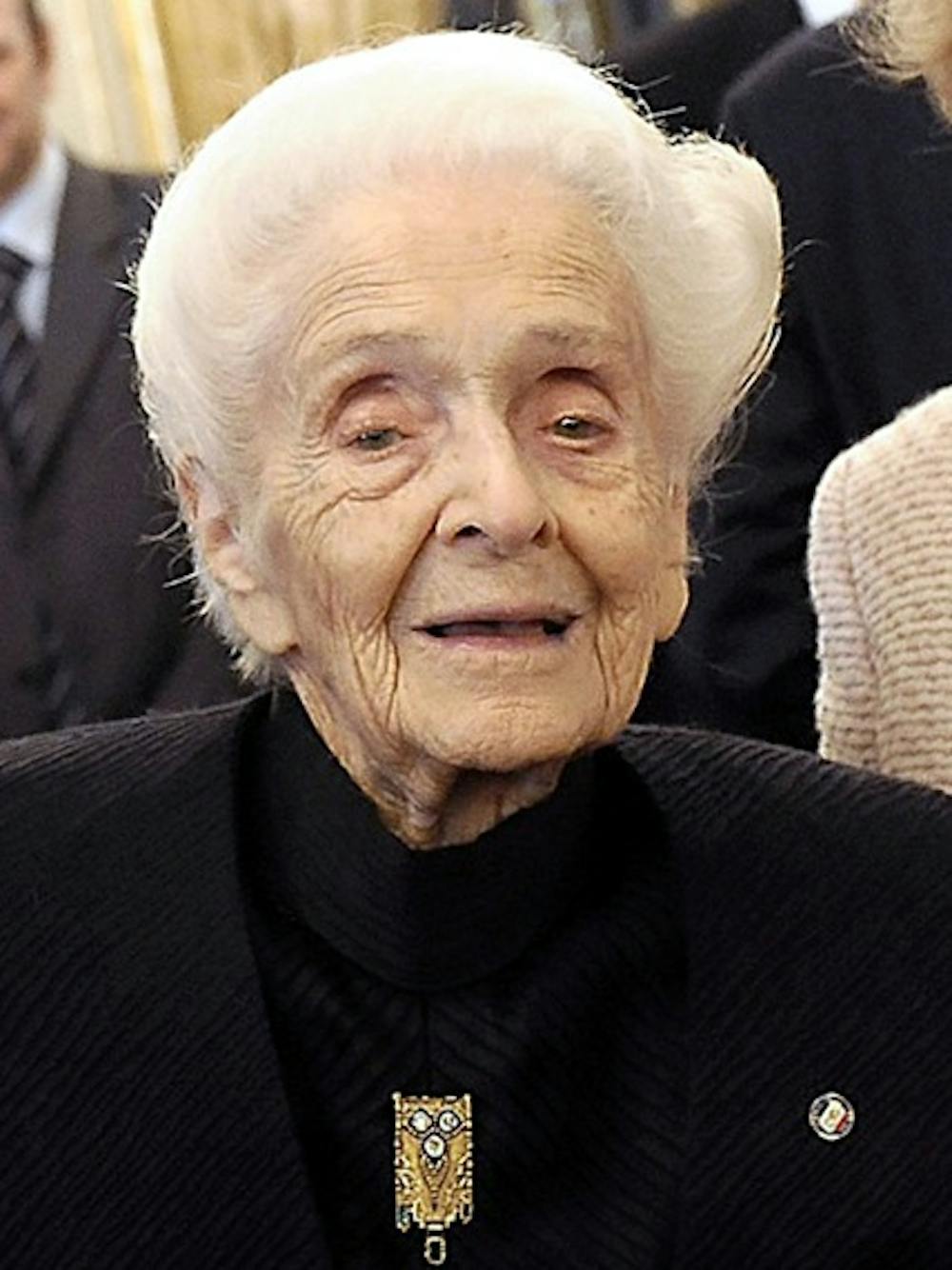
Rita Levi-Montalcini was a promising young Jewish scientist when fascists came to power in Italy and she had to go into hiding. As World War II was raging, she set up a secret lab in her parents’ bedroom, studying cell growth. She would later say that the meaning that she derived from her work helped her to deal with the evil outside and with the ultimate uncertainty of whether she would be discovered.
Focusing on what can transcend finite human existence – whether it is religion, spirituality or dedication to a cause – can decrease uncertainty-driven worry and depression.
3. Don’t underestimate your coping ability
You might hate uncertainty because you fear how you would fare if things went badly. And you might distrust your ability to cope with the negative events that life throws your way.
It turns out that humans are generally resilient, even in the face of very stressful or traumatic events. If a feared outcome materializes, chances are you will deal with it better than you could now imagine. Remember that the next time uncertainty rears its head.
4. Bolster resilience by increasing self-care
You have probably heard it many times by now: Sleep well, exercise and prioritize social connections if you want to have a long and happy life.
Possibly the best tool for coping with uncertainty is making sure that you have an active and meaningful social life. Loneliness fundamentally undermines a person’s sense of safety
and makes it very hard to deal with the unpredictable nature of life.
In spite of civilization’s great progress, the fantasy of humankind’s absolute control over its environment and fate is still just that – a fantasy. So, I say to embrace the reality of uncertainty and enjoy the ride.